

I haven’t seen the Supergirl movie yet. From everything I’ve heard and read about the promotional run and the way the numbers have come in, I’m not in any rush. It’s the same old story playing out again, the one that keeps repeating itself in Hollywood these days like a bad loop on an old VHS tape. The actress, Milly Alcock, went out there during the press cycle and made some comments that landed exactly the way these things always do when the people in charge forget who actually buys the tickets. She talked about online critics and how a lot of them were just “Dad of four, Christian” types with no profile picture or burner accounts, and she said it was hilarious to her. Then she added that if you’re pissing off the right kind of people, you’re doing okay.
That kind of talk might play well in certain rooms in Los Angeles or New York, but it doesn’t play well with the people who were supposed to be the core audience for a big summer superhero movie built around Superman’s cousin. Christian dads with a couple of kids aren’t some fringe group you can mock on the way to the bank. They’re the ones who used to load up the minivan, buy the tickets, get the popcorn, and make these movies cultural events. When you go out of your way to signal that their worldview is a punchline, they notice. And they stay home. Then the box office comes in soft, everybody starts pointing fingers, and the same executives who greenlit the messaging act surprised.
This is the same playbook that wrecked the live-action Snow White over at Disney. Rachel Zegler went out there and called the original story dated, took shots at the prince character, and sprinkled in enough political commentary that a big chunk of the traditional family audience decided they had better things to do with their Saturday afternoon. The movie opened okay but collapsed fast, and Disney ended up losing something like $170 million on it once you factored in the budget, the reshoots after the set fire, and the marketing. It wasn’t just one actress. It was a whole system that decided the audience needed re-education more than it needed entertainment.
Supergirl opened the weekend of June 26, 2026, to about $37 million domestically. That was well below the $50 million range some trackers were expecting and a steep drop from what Superman did the year before under James Gunn’s watch. Superman opened to $125 million domestically and finished with roughly $355 million here in the States and over $618 million worldwide. Supergirl, with a reported $170 million production budget plus heavy marketing, was tracking toward the low $60s, or maybe $70 million, domestically if it held on through the holiday frame, with worldwide totals hovering around $110-115 million. That’s not enough to break even on a movie this size. It’s the kind of number that makes everybody downstream from the studio—crew, vendors, theater chains—feel the pain while the people who made the decisions move on to the next project.
The demographic split on opening weekend told the story in real time. The audience was skewed heavily male and over 25. The young women and families the movie was supposed to bring in large numbers didn’t show up in force. That’s what happens when the lead actress spends part of the promotional cycle telling a big slice of the potential audience that their very existence as profile pictures with kids and a faith is funny to her. You don’t have to agree with every dad out there. You don’t even have to like them. But if you’re getting paid millions to stand in front of a camera in a cape and sell a $200 million piece of intellectual property, your job during promo is to get as many people as possible to buy a ticket. Not to litigate culture war points from a Variety interview conducted months earlier.
I’ve been around this business enough over the years to know how it works. I had a stretch where I thought I might direct or at least write and produce films. I wrote a few things, got them in rooms, and sat across from people who controlled real money. What I saw up close was that a certain faction had already decided the product came second to the politics. I remember one conversation where I pitched something and the response wasn’t about whether the story would connect or make money. It was about whether the script had the right messaging baked in. When I realized the game was rigged that way, I made a decision. I wasn’t going to spend my life compromising on things that mattered to me to get a seat at a table that was already serving a different meal. I walked away from chasing that particular brass ring and put my energy into the Tea Party and then the broader movement that became MAGA. The checks in Hollywood can be big for a minute, but they don’t buy back your integrity once you’ve traded pieces of it away.
That’s why these promotional disasters keep happening. The people in charge keep hiring talent who treat the job as a personal activism platform rather than a professional obligation. Zendaya is the counterexample people should study. She’s a good actress; she’s in big franchises; she married Tom Holland; and she mostly keeps her head down and does the work. She doesn’t feel the need to go out on every carpet and unload on half the country. That’s why she keeps getting hired. The ones who treat every interview like a chance to settle scores or signal to the online choir end up with one big movie and then a lot of quiet time afterward.
James Gunn has been in an interesting spot through all of this. He came in with real goodwill from the Guardians movies, which proved you could take obscure characters, give them personality and humor, and make a fortune. Superman last year was a genuine hit—fun, hopeful, well-reviewed, and profitable. It looked like maybe the new DCU under Gunn and Peter Safran had found a lane. Supergirl was supposed to build on that momentum. Instead, it landed with a thud. Gunn didn’t direct this one—Craig Gillespie did—but he and Safran produced it and shaped the vision. The character on screen is described as more jaded, sarcastic, impulsive, a bit of an anti-hero who parties on red-sun planets where she can actually get drunk. That’s a valid take on the comics, but when you pair it with a promotional tone that mocks the audience that grew up on the classic Superman ideal of truth, justice, and the American way, you’re asking for trouble.
There’s already talk in the trades about whether this soft opening puts Gunn’s position under more scrutiny. Some agents are whispering that another miss like this and the corporate structure might decide it’s time for a change, even though Superman succeeded and the long-term plan is still being sold as sound. That’s how it goes in these big studios now. One regime comes in promising to fix the mess left by the last one, spends a fortune on a new slate, and then the same underlying problems—audience alienation, messaging over story, talent who can’t or won’t sell the product—show up again. Gunn has more runs on the board than most, but the Supergirl numbers are a reminder that goodwill has a shelf life when the results don’t follow.
I keep coming back to the Indiana Jones situation because it shows the pattern so clearly. In the last film, there were persistent rumors that the original plan involved killing the character off or erasing him in some way that felt like a deliberate gut punch to the legacy. The director denied reshoots for that specific reason, but a lot of us who watched the sausage get made over the years didn’t buy the full denial. Extra money got spent, the ending got massaged, and the movie still underperformed relative to what an Indiana Jones picture should do. The people in charge wanted to make a statement. The audience wanted one more ride with the character they loved. When those two things collide, the audience usually wins by staying home, and the studio eats the difference.
Captain Marvel followed the same arc. Brie Larson went out and did the whole “toxic masculinity” circuit after the first movie made money. The sequel, The Marvels, became one of the bigger bombs in recent Disney history. The pattern is consistent: the first project coasts on existing goodwill and curiosity, the star or the messaging starts treating the core audience like the enemy, and the follow-up craters. Then the same executives who approved the approach acted shocked that families and longtime fans didn’t line up again.
What’s happening now is bigger than any single movie or actress. Hollywood went hard left years ago, and the corporate layer that runs these places decided DEI checklists and cultural re-education were more important than selling tickets. They hired people who shared that worldview, gave them big platforms, and then acted surprised when the people who actually pay for the content walked away. The trust erosion is real. Once families decide a brand doesn’t have their kids’ best interests at heart—whether it’s live-action remakes that lecture them or kids’ programming that slips in stuff no parent asked for—they don’t come back easily. You see it in the vinyl revival, the return to physical media, people wanting to own their libraries instead of renting everything from a streaming service that can memory-hole a title whenever it wants. We went through this with music. The industry told everybody they’d rent forever from iTunes and Spotify. Now people are buying records again because they want something they can actually hold when the power goes out or when the algorithm decides they shouldn’t hear a certain song anymore.
The same principle applies to movies. These big corporate entities keep treating the audience like a resource to be mined and then scolded. The audience is responding by treating Hollywood as an optional expense rather than a weekly habit. Supergirl didn’t fail because the character is unlikable in the comics or because superhero fatigue is total. It failed because the promotional campaign handed the opposition free ammunition and because the underlying calculation—that you could insult a big chunk of the paying public and still get their money—turned out to be wrong.
I’ve said for years that the best movies, the ones that actually shaped generations, came from people who cared more about the story than the politics of the moment. Star Wars in its original run was a phenomenon because it gave people something to line up for, something to argue about in the schoolyard, something that felt bigger than the daily grind. The merch drops were events. Families participated together. When the machine decided it needed to lecture instead of entertain, the cultural grip loosened. The same thing is happening across the board now. The pushback isn’t coming from some organized cabal. It’s coming from millions of individual decisions by people who are tired of paying premium prices to be told their values are the problem.
James Gunn still has a runway because Superman worked and because he has a track record of making things people actually want to watch. But the Supergirl results are a warning shot. If the next projects keep treating the core audience as something to be managed or mocked rather than served, the DCU experiment will end up in the same pile as every other attempt to force-feed ideology through expensive capes. The audience has options now. They can wait for streaming, skip it entirely, or see something else that doesn’t require them to check their beliefs at the door.
Look, I’m not saying every actor has to be a robot with no opinions. I’ve got plenty of my own, and I’ve never been shy about sharing them on my own platforms. The difference is I built those platforms myself. When you’re handed a lead role in a $170 million studio movie, the job description includes not actively driving away the people who are supposed to fill the seats. That’s not censorship. That’s basic professionalism and basic math. The Christian dads with kids aren’t asking for a sermon from the screen. They’re asking for two hours where the good guys win, the hero stands for something worth standing for, and nobody on the promotional tour calls their existence hilarious. When Hollywood forgets that simple transaction, the box office reminds them. And the reminders are getting more expensive every year.
I’ve watched this industry from the outside for a long time now, close enough to see the decisions but far enough away that I didn’t have to compromise to keep a seat. What I see is a system that keeps choosing the same losing strategy and then acting confused when the results don’t change. The audience didn’t leave because they hate superheroes. They left because the people making the movies began to hate the audience. Until that calculation flips, these soft openings and outright disasters will keep happening. The ones who figure it out first—the ones who treat the job like a privilege instead of a pulpit—will be the ones still standing when the dust settles. The rest will explain to their next meeting why the numbers didn’t work out again.
That’s the reality on the ground in the middle of 2026. Superman proved there’s still an appetite for hopeful, well-made comic book movies. Supergirl proved that even a strong foundation can be undermined in a single promotional cycle when the people involved forget who they’re talking to. The pushback is real; it’s measurable at the ticket window, and it’s not going away until the people writing the checks decide that making money and telling stories people actually want to see matter more than scoring points with the crowd that already agrees with them. I’ve made my peace with walking away from that table years ago. Watching it wobble from a distance confirms I made the right call.
Sources and Further Reading
• Box office figures and analysis for Supergirl (2026): TheWrap, Box Office Mojo, USA Today, ComicBook.com reports from late June and early July 2026.
• Milly Alcock Variety interview comments on critics and “Dad of four, Christian” profiles: Originally conducted mid-April 2026, widely discussed after May publication and post-release.
• Snow White (2025) financial losses and promotional controversies: Forbes, Variety, Box Office Mojo.
• James Gunn DCU context and insider speculation post-Supergirl: Slashfilm, Screen Daily, ComicBook.com.
• Broader industry patterns around audience alienation, DEI priorities, and promotional missteps: Multiple trade coverage 2023–2026 on Captain Marvel/The Marvels, Indiana Jones and the Dial of Destiny rumors and reshoots (director denials notwithstanding), and shifting audience behavior toward physical media and selective viewing.
Rich Hoffman
More about me
Click Here to Protect Yourself with Second Call Defense https://www.secondcalldefense.org/?affiliate=20707
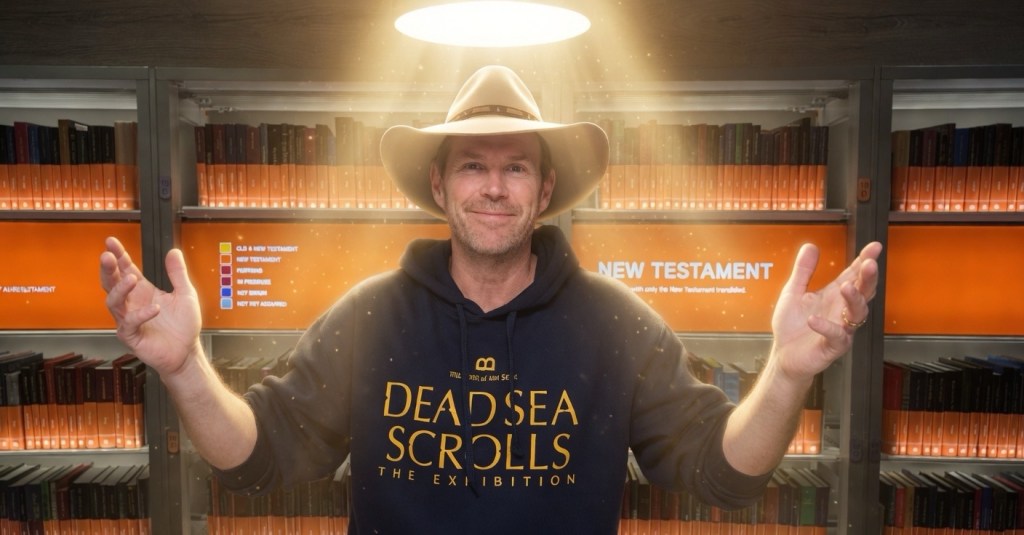
About the Author: Rich Hoffman
Rich Hoffman is an author, political consultant, and strategic advisor based in Cincinnati, Ohio, and the creator of The Politics of Heaven—a unique framework that connects biblical theology, ancient history, and modern power structures to explain how moral alignment and spiritual forces shape global events. Blending real-world political experience with deep research into archaeology, UFO phenomena, and suppressed historical narratives, Hoffman offers compelling commentary on topics ranging from ancient civilizations and the Dead Sea Scrolls to modern populist movements, paranormal continuity, and leadership strategy in chaotic environments. As the author of The Gunfighter’s Guide to Business and the forthcoming Politics of Heaven, he brings a grounded yet provocative voice to media discussions, supported by firsthand experiences and a cross-disciplinary approach that bridges science, history, and theology. For interviews, speaking engagements, or expert analysis, visit richhoffmanbooks.com or contact directly via phone at 513-307-5815 or email at rhoffman@richhoffmanbooks.com. If you’ve seen the movie, Disclosure Day and want to talk about it and the implications of Presidnet Trump’s UAP disclosures, let me know and we can bring some color to your coverage. https://richhoffmanbooks.com/media-inquiries-broadcast-topics-and-contact-info/?frame-nonce=ad51e7ecba I do have a firsthand UFO encounter to discuss.


