
The Litigation Profiteers: How Election Lawyers and Government Legal Firms Thrive on Political Chaos and Taxpayer Funds

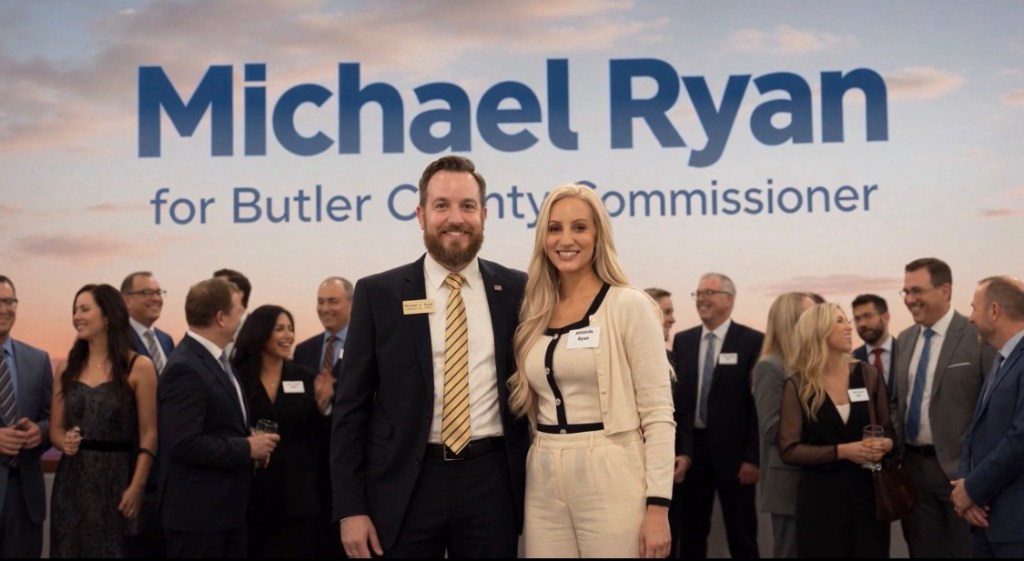
As I drove past the law practice in Beckett Ridge the other day, I noticed the big sign out front supporting Cindy Carpenter in the Republican primary for Butler County Commissioner. It struck me as odd. The lawyer who runs that firm shows up at Republican events, associates with Republican circles, and presents himself as one of us. Yet here he was, publicly backing a candidate the party had dumped in favor of its endorsed choice, Michael Ryan. That sign crystallized something I’ve observed for years in Ohio politics: certain legal professionals operate in the shadows, injecting themselves into local disputes not out of ideological consistency but because chaos creates billable hours. This isn’t isolated to one small firm or one county. It scales up dramatically when you reach the national level, where figures like Marc Elias have built entire practices—and substantial wealth—by turning election law into a high-volume litigation machine that drains public resources while advancing partisan goals. What follows is my endeavor to shed light on this system, drawing on personal experiences in Ohio and broader patterns affecting taxpayers nationwide. 

Marc Elias, the prominent Democratic election law attorney (often referred to in shorthand as “Mark” in casual conversation), stands as the archetype of this phenomenon. Elias, a partner at Elias Law Group, and is a direct supporter of Amy Acton in Ohio, which he founded after leaving Perkins Coie in 2021, has positioned himself as the go-to litigator for voting rights challenges. He founded Democracy Docket in 2020 as a platform to track and analyze these cases, and his firm has been extraordinarily active. In October 2025, Elias publicly stated that his team of fewer than 60 lawyers was litigating 63 voting and election cases across 30 states. By May 2026, that number had climbed to 85 cases in 43 states plus the District of Columbia. His side claims victories in the overwhelming majority of post-2020 challenges to Republican-backed election measures, framing them as defenses against “voter suppression.” Critics, however, see a deliberate strategy of lawfare: filing lawsuits in multiple jurisdictions to force states, counties, and local governments to expend vast sums to defend laws that enjoy broad public support, such as voter ID requirements. Elias himself has acknowledged the volume, noting in one Democracy Docket piece that his firm’s work is relentless and expanding. 

This isn’t new for Elias. In 2020, he led the Democratic legal response to more than 60 lawsuits filed by Donald Trump and his allies challenging election results. Nearly all of those suits failed, often on procedural grounds or for lack of evidence. Elias’s team prevailed in the lion’s share, cementing his reputation. But the pattern predates 2020. He has challenged voter ID laws, early voting restrictions, ballot-collection rules, and redistricting efforts in dozens of states. In Ohio specifically, Elias Law Group filed suit in January 2023 against House Bill 458, signed by Republican Governor Mike DeWine. The law included photo voter ID requirements and other provisions that the plaintiffs—groups like the Northeast Ohio Coalition for the Homeless, Ohio Federation of Teachers, Ohio Alliance for Retired Americans, and Union Veterans Council—called “voter suppression.” The suit argued the measures disproportionately harmed young, elderly, Black, military, and overseas voters. Elias’s firm has also targeted Ohio’s rules on drop boxes and foreign funding in ballot measures. These actions align with a national playbook: challenge decentralized election administration in as many venues as possible, knowing that even if many suits are dismissed, the cumulative cost to defenders mounts. 

What makes this infrastructure so effective—and so corrosive—is the decentralized nature of American elections. Unlike a centralized national system, voting rules are set and administered at the state and county levels. A single law, such as Ohio’s voter ID requirement or restrictions on “Golden Week” early voting and registration (which Elias’s earlier work also targeted), can trigger parallel lawsuits in federal and state courts. Each filing forces election officials, secretaries of state, and attorneys general to respond. Defense isn’t cheap. Routine election litigation for a state or county can run between $50,000 and $250,000 per case, according to estimates from officials who have faced these challenges. When emergency injunctions, appeals, and discovery are involved, costs balloon into the hundreds of thousands or even millions per major dispute. Multiply that across dozens or hundreds of suits nationwide, and the taxpayer burden becomes enormous. Many of these expenses are buried in general budgets, election administration line items, or outside counsel contracts rather than isolated as “litigation defense.” There is no national requirement to itemize plaintiff-specific legal fees, making the full picture opaque. Reporters rarely dig into the granular accounting, so the public seldom sees the true price tag. 

I have seen this dynamic play out up close in Ohio. During my involvement with local issues, particularly around Lakota Local Schools in Butler County, I witnessed how legal strategies can be weaponized to remove elected officials who don’t align with certain interests. A school board member endorsed by the Republican Party faced removal efforts involving coordinated complaints, legal maneuvering, and outside pressure. The board ultimately acted against her amid disputes over absences and other procedural issues. Public records battles followed, including a case that reached the Ohio Supreme Court, where Lakota was ordered to pay thousands in fees for failing to promptly release documents related to legal spending and threats of litigation. The district also settled other suits involving residents barred from speaking at meetings, covering plaintiff legal fees. These aren’t abstract costs. They come out of the same budgets funded by local property taxes—the very taxes that already strain families and businesses. School boards negotiate collective bargaining agreements with unions, and the legalisms involved in those contracts, disputes, and related litigation generate substantial revenue for outside firms. Chaos in the public school system, whether over board composition, curriculum, or operations, keeps the meter running. 

The same lawyer I saw with the Carpenter sign had previously inserted himself into the school board removal effort. He helped craft or advise on the legal strategy that contributed to ousting a Republican-backed member. It surprised me at first—someone who attends Republican events playing along with what appeared to be an effort to shift the board toward more liberal control. But it makes sense once you follow the money. Law firms that specialize in government work—whether at the school board, county, or state level—thrive when there is perpetual conflict. They represent municipalities in defense matters, advise on contracts, and sometimes moonlight on partisan challenges. The incentive is clear: more lawsuits mean more retainers, more billable hours, more settlements. In Lakota’s case, the legal spend tied to board disputes and public records requests added up quickly, all ultimately borne by taxpayers.

This pattern repeats at the state and national scale. Elias’s firm has received tens of millions in payments from Democratic committees and campaigns. OpenSecrets data for the 2024 cycle alone shows Elias Law Group receiving over $40 million in legal services from various Democratic entities. These funds don’t come from thin air; they originate with donors who expect results in the form of favorable court rulings, delayed or blocked reforms, and sustained pressure on Republican-led election administrations. When states settle early to avoid mounting defense costs—as some attorneys general have done rather than fight every challenge to the bitter end—the litigation achieves its strategic goal without a full trial. The threat of bankruptcy through legal fees is real for smaller jurisdictions. Communities facing multiple simultaneous suits often lack the resources to defend aggressively, leading to procedural changes or policy retreats that might not have occurred on the merits. 

Critics of voter ID and other common-sense reforms frequently point to the absence of widespread fraud findings in court as proof that the measures are unnecessary. But that misses the point. Many challenges never reach a full evidentiary hearing on fraud because the sheer expense of litigation forces capitulation or dismissal on narrower grounds. Elias and similar litigators understand this leverage perfectly. They file suits knowing that even meritless claims impose real costs. One notable example involved sanctions against Elias and co-counsel. In a Texas case concerning the elimination of straight-ticket voting, the Fifth Circuit Court of Appeals sanctioned the team for filing redundant and misleading motions. The court ordered payment of opposing attorney fees and double costs, describing the conduct as problematic. While Elias’s defenders called it a technicality or good-faith error, the episode illustrates how aggressive tactics can cross lines—and still generate fees along the way. A federal court in another context also addressed Elias-related conduct with fee-shifting orders. 

The broader legal profession has learned to mine government budgets in similar ways. Public sector collective bargaining, school board disputes, redistricting battles, and election administration all require specialized counsel. Firms embed themselves in these ecosystems, often representing both sides of the table at different times. The result is a self-perpetuating cycle: policies that invite litigation create demand for lawyers; lawyers file suits that generate more litigation; governments pay to defend or settle, raising taxes or cutting services elsewhere. Property taxes, in particular, become a reliable revenue stream for these activities because they are local and somewhat insulated from immediate voter backlash. In Ohio, where property taxes fund much of local government and schools, the inability to rationalize budgets amid endless legal challenges keeps rates elevated. Media rarely connect the dots between litigation infrastructure and tax burdens, but the connection is direct.

I’ve dealt with my share of lawyers and consultants lately, both personally and in observing public affairs. They are expensive—often prohibitively so. They jump between contracts, charge premium rates, and extract significant value from the top of any deal or dispute. When legal issues arise, they can drain bank accounts with astonishing speed. In government contexts, this dynamic is amplified because the payer is diffuse: the taxpayer. Most citizens don’t have the expertise or resources to challenge the system themselves. Self-representation is possible but risky and time-consuming; hiring specialists is the default for institutions. Judges, many of whom come from the same legal circles or socialize with attorneys at events, often defer to the professionals. The result is a clubby environment where loyalty to the bar most of the time trumps accountability to the public.

Nationally, the scale is staggering. Democracy Docket’s own tracking shows hundreds of voting and election lawsuits filed in recent cycles—228 in 2024 alone, part of a total of 306 from early 2023 through Election Day. While Elias frames these as necessary defenses of democracy, the cumulative burden of defense falls on public coffers. States like Texas have spent millions defending voter ID and redistricting laws over the years. North Carolina expended roughly $5 million on voter ID litigation between 2011 and 2016. Local Voting Rights Act Section 2 suits have cost jurisdictions millions apiece in defense and settlements—Charleston County, South Carolina, spent $2 million unsuccessfully; Yakima, Washington, nearly $3 million. These figures represent conservative estimates; appeals and repeated filings multiply the impact. When aggregated across the country, the high single digits of millions—or likely far more—disappear into budgets without clear public accounting. 

Elias’s involvement in Ohio is not abstract. Beyond the 2023 HB 458 challenge, his network has engaged with issues such as foreign money in ballot campaigns and drop box rules. He has also sued to overturn certain restrictions on foreign nationals’ spending in Ohio ballot measures. These actions, while presented as principled stands for access, have the practical effect of complicating administration and forcing expenditure. Meanwhile, at the local level, analogous tactics play out in school boards and county commissions. The removal of a Republican-endorsed school board member in Lakota, the public records fights, and the legal maneuvering around board composition all illustrate how law can be used to reshape governance without direct voter input at the ballot box. The lawyer with the Carpenter sign understood the game: support the candidate who sustains the ecosystem of disputes.

This is not to say every lawsuit is frivolous or that voting rights concerns are imaginary. Legitimate disputes exist, and courts rightly resolve them. But the volume, the targeting of popular reforms like voter ID (supported by large majorities in polls), and the financial incentives create a corrosive feedback loop. Democrats benefit from the chaos because it undermines Republican-led integrity measures. Law firms benefit regardless of the outcome because fees accrue during the process. Taxpayers lose either way—directly through documented legal bills and indirectly through higher taxes, diverted election funds, and eroded trust. When cases settle or procedural changes are mandated to avoid further expense, the public rarely sees the full ledger.

The decentralized structure of elections is a feature of federalism, but it becomes a vulnerability when exploited systematically. Each county must defend its own processes. State attorneys general face a barrage. The strategy is clear: file enough suits to overwhelm capacity, force settlements, and normalize the idea that basic safeguards are legally suspect. Elias has coordinated responses to dozens of cases, and affiliated litigation has filed over 100 suits in a single year. His personal involvement in 64 election cases during the 2020-2021 period is well-documented. The goal, from the critic’s perspective, is not merely to win discrete cases but to make enforcement of election laws so costly that officials stop trying.

Personal experiences reinforce the systemic view. Dealing with consultants and attorneys in various contexts has shown me how quickly costs escalate. They take a large cut off the top, move from job to job, and thrive on complexity. In government, this is magnified. School board members who push back against the status quo often find themselves targeted legally. Elected officials hesitate to fight because they fear draining community resources. The result is a shadow governance where law firms exert outsized influence.

To break the cycle, we need structural changes. Stronger voter ID laws with clear, unambiguous standards reduce litigation fodder. Meaningful sanctions for abusive filings, greater transparency in government legal spending, and centralized tracking of litigation costs would help. Term limits or ethics rules for government attorneys might limit revolving-door incentives. Most importantly, voters must recognize that these “phantom costs” are real and fund them through taxes. Integrity in elections isn’t free, but neither is the endless litigation that undermines it.

As someone who has watched this play out from the ground level in Ohio—seeing yard signs that reveal divided loyalties, school board battles that consume resources, and national players like Elias shaping the battlefield—I believe the public deserves better. The litigation infrastructure built on chaos benefits a small class of professionals at the expense of representative government. Taxpayers foot the bill, often without realizing the full scope. Shining a light on these practices, demanding accountability, and supporting reforms that prioritize clarity over ambiguity are essential. Otherwise, the parasites will continue to thrive while the body politic weakens. We have the tools to fix it; what remains is the will to use them.

Footnotes

1.  Personal observation of law practice signage and political involvement in Butler County, Ohio, 2026 primary context.

2.  Democracy Docket reports and Elias public statements on case volume.

3.  Ohio Capital Journal coverage of HB 458 lawsuit filed by Elias Law Group.

4.  Estimates drawn from public official reports and historical litigation defense data (e.g., Texas, North Carolina voter ID cases).

5.  Ohio Supreme Court ruling in Lakota Local Schools public records case, 2024.

6.  OpenSecrets vendor payment data for Elias Law Group, 2024 cycle.

7.  Fifth Circuit sanctions order in Texas straight-ticket voting litigation.

8.  Washington Post compilation of election-related public expenditures.

9.  Additional sources: Wikipedia entry on Marc Elias; Brennan Center and Campaign Legal Center litigation trackers; local Butler County reporting on Carpenter/Ryan primary and Lakota board disputes.

Bibliography

•  Elias, Marc. Various articles, Democracy Docket (2020–2026).

•  “Marc Elias,” Wikipedia.

•  Ohio Capital Journal articles on Elias Law Group Ohio lawsuits (2023).

•  OpenSecrets.org vendor profile: Elias Law Group.

•  Washington Post, “Trump’s false election claims cost taxpayers over $500 million” (2021, updated analyses).

•  Court documents: Fifth Circuit sanctions ruling; Ohio Supreme Court Lakota records case (2024).

•  Additional reporting: Cincinnati Enquirer, WLWT, Ballotpedia on Butler County and Lakota Local Schools.

Rich Hoffman

More about me

Click Here to Protect Yourself with Second Call Defense https://www.secondcalldefense.org/?affiliate=20707
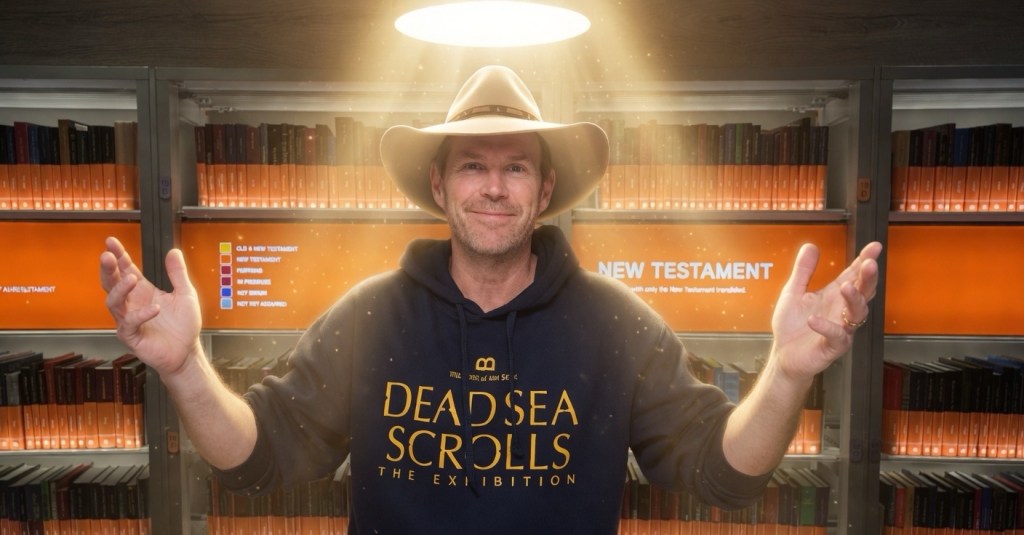
About the Author: Rich Hoffman

Rich Hoffman is an aerospace executive, political strategist, systems thinker, and independent researcher of ancient history, the paranormal, and the Dead Sea Scrolls tradition. His life in high‑stakes manufacturing, high‑level politics, and cross‑functional crisis management gives him a field‑tested understanding of power — both human and unseen.

He has advised candidates, executives, and public leaders, while conducting deep, hands‑on exploration of archaeological and supernatural hotspots across the world.

Hoffman writes with the credibility of a problem-solver, the curiosity of an archaeologist, and the courage of a frontline witness who has gone to very scary places and reported what lurked there. Hoffman has authored books including The Symposium of JusticeThe Gunfighter’s Guide to Business, and Tail of the Dragon, often exploring themes of freedom, individual will, and societal structures through a lens influenced by philosophy (e.g., Nietzschean overman concepts) and current events.
Amy Acton, the Puppet of Marc Elias: When they can’t defend their record, they send cease and desist letters, hoping to hide their past

In the bustling parking lot of Ohio’s brand-new Buc-ee’s just north of Dayton off I-70, Dr. Amy Acton posed for what was meant to be a wholesome campaign snapshot—a smiling physician-turned-politician standing beside the gleaming Texas-sized travel center, projecting the image of a nice, relatable lady who shops where everyday Buckeyes shop. The first Ohio Buc-ee’s opened in Huber Heights in early April 2026, drawing massive crowds and national attention for its clean restrooms, fresh brisket, and over-the-top convenience. Acton’s team seized the moment, posting the photo to humanize her, to say, “See? She’s just like you.” But the optics couldn’t paper over the deeper story unfolding in this 2026 gubernatorial race. While Acton tried to reset her image with photo ops and bedside-manner charm, Vivek Ramaswamy was drawing genuine, overflowing crowds of longtime Ohio friends, family, and supporters who have known him since he was a boy in Cincinnati—people who remember his parents’ immigrant journey, his entrepreneurial drive, and the decades of personal relationships that speak louder than any staged picture. You can judge a person by the company they keep, and Ramaswamy’s circle spills over with proud, authentic voices from his past who have stuck with him through every chapter of his life. Acton’s campaign, by contrast, feels increasingly desperate, resorting to high-powered Washington lawyers to silence critics rather than defend her record. 

To understand why this race matters so much to Ohio’s future, you have to go back to the spring of 2020, when Dr. Amy Acton served as Director of the Ohio Department of Health under Republican Governor Mike DeWine. She wasn’t elected; she was appointed. Yet she became the public face of some of the nation’s most aggressive COVID-19 policies. On March 22, 2020—when Ohio had reported just a handful of deaths—Acton helped lead the state into one of the earliest and strictest lockdowns anywhere. Schools closed statewide for the rest of the academic year. “Non-essential” businesses shuttered overnight. Stay-at-home orders restricted movement. Nursing homes were locked down, isolating vulnerable residents from loved ones. Capacity limits, mask mandates, and social-distancing rules followed, all modeled closely on guidance from the CDC and Dr. Anthony Fauci. Acton appeared in daily press briefings alongside DeWine, projecting calm authority while estimating infection numbers that frightened the public into compliance. She resigned in June 2020 amid growing protests outside her home, but the policies she championed reshaped Ohio in ways the state is still recovering from six years later. 

The human and economic toll of those decisions has been documented in mounting data. Ohio’s unemployment rate rocketed from 4.9 percent to 16.4 percent in a single month—the sharpest spike in modern state history. Thousands of small businesses, restaurants, gyms, and retailers never reopened. Hospitality and tourism sectors collapsed. Learning loss among schoolchildren, especially in low-income districts, was catastrophic; studies projected lifetime economic losses in the hundreds of billions for Ohio alone due to missed instruction and widened achievement gaps. Mental health crises exploded: overdoses rose sharply, youth depression and suicide ideation increased, and isolation in nursing homes contributed to excess deaths beyond the virus itself—many from untreated conditions, delayed care, or despair. Nationwide analyses, including those examining excess mortality, have increasingly questioned whether the most restrictive measures saved more lives than they cost, when indirect harms are weighed. In Ohio, the early modeling that justified the lockdowns proved overly pessimistic, yet the policies remained locked in place longer than in many peer states. Acton has never fully reckoned with this in her campaign. Instead, she positions herself as “a doctor, not a politician,” emphasizing her roots in working-class Youngstown and her compassion. But for families who lost businesses, kids who fell behind, or elderly residents who died alone, those words ring hollow. The statistics don’t lie: the lockdown playbook—drawn from federal guidance influenced by international models—inflicted measurable, lasting damage on Ohio’s economy, education system, and social fabric. 

Fast-forward to 2026, and Acton is the presumptive Democratic nominee for governor, running with David Pepper—former chair of the Ohio Democrat Party—as her lieutenant governor pick. Polls show the race tightening or even tilting her way slightly in some surveys, despite Ohio’s deep Republican lean. Her campaign message focuses on affordability, families, and pushing back against “special interests.” Yet when journalists and commentators like Jack Windsor of the Ohio Press Network dig into her record—whether the 2020 policies, the resurfaced 2019 Bexley police report, or other public details—her team doesn’t debate the substance. They deploy heavy legal artillery. The Acton/Pepper campaign has retained Elias Law Group, the Washington, D.C., firm founded by Marc Elias, the Democratic election lawyer infamous for his role in the 2016 Clinton campaign’s Steele dossier efforts, post-2020 litigation challenging election integrity claims, and aggressive legal maneuvers nationwide. Elias’s firm has sent cease-and-desist letters to outlets and commentators questioning Acton, framing routine investigative reporting as defamation or libel. These aren’t polite corrections; they are designed to intimidate, to force journalists and critics into defensive silence rather than risk costly litigation—even when the recipients know the claims lack merit. 

This tactic is classic lawfare, and it’s especially galling because Acton is now a public figure running for the highest office in the state. Under the landmark U.S. Supreme Court precedent New York Times v. Sullivan (1964), public officials and candidates must prove “actual malice”—knowledge of falsity or reckless disregard for the truth—to win defamation suits. The bar is deliberately high to protect robust political debate and press freedom. Elias’s team knows this, yet the letters keep coming. They mirror the same playbook used in the 2020 election challenges: procedural delays, technical objections, and resource-draining threats to bury inconvenient truths under paperwork and fear. David Pepper, Acton’s running mate, has long been a fixture in Democratic politics, and his involvement signals the campaign’s strategy—control the narrative through insiders rather than earn voter trust through transparency. When a police report from August 2019 resurfaced—detailing a verbal domestic dispute at the Acton home over her long work hours, where both she and her husband admitted to drinking, she had taken prescription medication, she shattered a large mirror in frustration, and she was heading toward her car until her husband physically intervened—no charges were filed, and officers noted no physical violence. It was a private family moment turned public by her candidacy. Yet instead of addressing it head-on or releasing more context, the campaign and its allies dismiss questions as “attacks” while Elias’s firm fires off warnings. The report is public record. Citizens have every right to weigh it when evaluating a candidate who once directed public health policy affecting millions. 

Contrast this with Vivek Ramaswamy. The Republican frontrunner grew up in Ohio, built a successful biotech company from scratch, and ran a high-profile 2024 presidential campaign that put him in the national spotlight. His support isn’t manufactured through consultants or photo ops. Crowds at his events include people who knew him as a kid, family friends who watched him navigate his Indian-immigrant parents’ sacrifices, and longtime associates who have seen his character tested over decades. That kind of organic loyalty doesn’t come from polling consultants or law-firm intimidation. Ramaswamy’s platform emphasizes prosperity, limited government, school choice, economic freedom, and a rejection of the bureaucratic overreach that defined the COVID era. He has visited every county, secured endorsements from sheriffs, unions in some cases, and grassroots conservatives who remember exactly who was at the podium issuing orders in 2020. His running mate, Senate President Rob McColley, brings institutional knowledge and legislative heft. Together, they represent a future-oriented conservatism rooted in Ohio values—innovation, hard work, and accountability—rather than nostalgia for the administrative state. 

The deeper issue here transcends one race. When campaigns hire the likes of Marc Elias to muzzle journalists covering a candidate’s public record—whether COVID policies that harmed families or personal incidents that raise legitimate character questions—they erode the very foundation of representative government. Free speech and a free press exist precisely so voters can vet those who seek power. Ohioans paid a steep price for Acton’s lockdown decisions: lost livelihoods, educational setbacks that will echo for generations, and a lingering sense that government overstepped its bounds under the banner of “following the science.” Data now shows that many of those measures delivered marginal or questionable benefits relative to their costs. Excess mortality studies and economic analyses continue to reveal the trade-offs. Yet instead of debating that record openly, the campaign seeks to shut down the conversation. That’s not leadership; it’s the same insider playbook that has eroded trust in institutions nationwide. Elias’s history—tied to efforts to litigate away election challenges in 2020 and beyond—only underscores the pattern: when the facts are uncomfortable, deploy lawyers to redefine reality. 

Ramaswamy, by contrast, invites scrutiny of his record because it stands on merit—entrepreneurial success, family values, and a clear-eyed rejection of the bureaucratic excesses that hurt working families. His supporters aren’t fringe; they’re the backbone of Ohio communities who remember the pre-lockdown economy, the joy of school events, and the freedom to live without constant government edict. They see in him someone who judges people by character and results, not by elite credentials or media spin. The 2026 race is more than a choice between two candidates; it’s a referendum on whether Ohio learns from 2020 or repeats the mistakes. Voters who value prosperity, honest accountability, and open debate have every reason to reject the politics of intimidation and nostalgia for administrative control.

Acton’s team may believe a few more Buc-ee’s photo ops and some strategic legal letters will paper over the past. But Ohioans have long memories. The lockdown lady’s policies didn’t just inconvenience people—they upended lives, and the data backs that up. Police reports, public records, and economic statistics don’t vanish because a Washington law firm sends a letter. When the votes are counted in November 2026, character, record, and authenticity will decide it. Vivek Ramaswamy brings the relationships, the vision, and the backbone to move Ohio forward. Amy Acton’s campaign, built on image management and legal threats, reveals exactly why voters should send a different message. The truth doesn’t need cease-and-desist letters to survive—it just needs voters willing to remember.

Footnotes

1.  Ohio’s first Buc-ee’s location details and Acton’s visit: Campaign site and local news coverage, April 2026.

2.  Acton’s role as Health Director and lockdown timeline: Contemporary reporting and her Wikipedia entry.

3.  Economic and educational impacts of 2020 lockdowns in Ohio: Unemployment data from state labor statistics; learning loss projections from education analyses.

4.  2019 Bexley police report: Public records as covered by NBC News and Ohio outlets, April 2026.

5.  Elias Law Group retainers and cease-and-desist letters: Reporting by Jack Windsor/Ohio Press Network and related commentary, 2026.

6.  New York Times v. Sullivan precedent: U.S. Supreme Court, 376 U.S. 254 (1964).

7.  Vivek Ramaswamy’s Ohio roots and campaign: Polling and news coverage of his events and endorsements.

8.  Broader COVID policy critiques: Peer-reviewed studies on excess mortality, mental health, and economic costs (various sources, including PMC and state-specific analyses).

Bibliography for Further Reading

•  Wikipedia: 2026 Ohio gubernatorial election (for candidate overview and polling).

•  Ohio Capital Journal and Dispatch articles on the 2019 police incident and campaign responses (April 2026).

•  NBC News coverage of Acton’s domestic dispute report.

•  Jack Windsor/Ohio Press Network commentary on Elias Law Group letters.

•  Signal Ohio and local reporting on Buc-ee’s opening and Acton’s photo op.

•  Historical coverage of Ohio COVID response (Washington Post, NBC4, 2020).

•  Economic analyses of lockdown impacts (state labor data, education studies).

•  U.S. Supreme Court case New York Times Co. v. Sullivan (full opinion available via legal archives).

Extended Footnote on New York Times Co. v. Sullivan (1964) and the “Sullivan Doctrine”

The landmark U.S. Supreme Court decision in New York Times Company v. Sullivan, 376 U.S. 254 (1964), fundamentally reshaped American libel law and remains the cornerstone of First Amendment protections for political speech and press freedom. Often called the “Sullivan case,” it gave rise to what legal scholars refer to as the “Sullivan doctrine” or “actual malice” rule—a constitutional standard that has been extended and refined in a line of subsequent Supreme Court cases (collectively the “Sullivan cases”). This body of law was born directly out of the Civil Rights Movement and was designed to prevent public officials from using defamation suits as a weapon to silence criticism. 

Facts and Historical Context

In March 1960, amid the escalating sit-in protests and violence against Black students in Montgomery, Alabama, the Committee to Defend Martin Luther King and the Struggle for Freedom in the South placed a full-page advertisement titled “Heed Their Rising Voices” in The New York Times. The ad solicited donations to support King’s legal defense and the broader civil rights cause. It criticized “an unprecedented wave of terror” by Southern officials and police, describing incidents such as the padlocking of a dining hall at Alabama State College and police actions against demonstrators. The advertisement contained several minor factual inaccuracies (e.g., the exact number of times King had been arrested, the songs sung by students, and whether the dining hall was actually padlocked). It was signed by 64 prominent figures (including Eleanor Roosevelt and Jackie Robinson) and listed the names of four Alabama ministers associated with King’s Southern Christian Leadership Conference—some of whose names had been added without their explicit prior approval. 

L.B. Sullivan, the elected Montgomery Public Safety Commissioner who oversaw the police department, was not named in the ad. Nevertheless, he sued The New York Times and the four ministers in Alabama state court, claiming the criticism of police conduct defamed him by implication. Under then-prevailing Alabama common-law libel rules, a plaintiff could recover substantial damages merely by showing the statement was false and tended to harm reputation; no proof of actual harm or malicious intent was required, and damages were often presumed. An all-white jury awarded Sullivan $500,000—a staggering sum in 1960. The Alabama Supreme Court affirmed the verdict. Similar libel suits were filed by other Alabama officials, part of a coordinated “libel attack” strategy by segregationists to bankrupt newspapers and intimidate national coverage of the Civil Rights Movement. 

The Supreme Court’s Unanimous Ruling

On March 9, 1964, the U.S. Supreme Court reversed the judgment in a 9-0 decision written by Justice William J. Brennan Jr. The Court held that Alabama’s libel law unconstitutionally infringed on the First and Fourteenth Amendments when applied to criticism of public officials’ conduct. Brennan famously declared that the First Amendment “prohibits a State from awarding damages to a public official for defamatory falsehood relating to his official conduct unless he proves that the statement was made with ‘actual malice’—that is, with knowledge that it was false or with reckless disregard of whether it was false or not.” The standard must be proven with “convincing clarity.” 

The opinion emphasized that “debate on public issues should be uninhibited, robust, and wide-open, and that it may well include vehement, caustic, and sometimes unpleasantly sharp attacks on government and public officials.” Erroneous statements, Brennan noted, are “inevitable in free debate” and must be protected lest the fear of liability chill essential political discourse. The ruling explicitly rejected the idea that the press could be held to the strict liability standards of ordinary private libel suits when reporting on matters of public concern. 

Expansion to Public Figures and the “Sullivan Progeny”

The Sullivan rule was not limited to elected officials. In the companion cases Curtis Publishing Co. v. Butts and Associated Press v. Walker (388 U.S. 130, 1967), the Court extended the actual-malice requirement to “public figures”—prominent private citizens who thrust themselves into public controversies or are drawn into them. Justice Harlan’s plurality opinion refined the standard slightly but preserved the core protection.

Later, in Gertz v. Robert Welch, Inc. (418 U.S. 323, 1974), the Court drew a clearer line: private individuals (who have not voluntarily entered the public arena) need only show negligence by the defendant for compensatory damages, but public figures and officials must still meet the higher actual-malice threshold. Subsequent cases such as Time, Inc. v. Hill (1967) applied similar protections to false-light privacy claims, and Hustler Magazine v. Falwell (1988) extended First Amendment safeguards to parody and emotional-distress claims involving public figures. 

Enduring Significance

Sullivan and its progeny were a direct response to the use of libel law as a tool of political suppression during the Civil Rights era. By placing the burden of proof on the plaintiff and raising the fault standard dramatically, the doctrine has made it extraordinarily difficult for public officials or public figures to win defamation suits against the press or critics—precisely the point. It has shielded investigative journalism, opinion writing, and robust political debate for more than six decades, even as critics (including some modern Supreme Court justices) have questioned whether the internet age requires recalibration. 

In the context of modern political campaigns, the rule remains vital: candidates who voluntarily seek public office become public figures and must tolerate sharp scrutiny of their records, statements, and character. Cease-and-desist letters or threats of litigation that rely on pre-Sullivan common-law standards rarely survive constitutional review when aimed at commentary on a candidate’s official acts or fitness for office. The doctrine ensures that voters—not lawyers—ultimately decide the truth through open debate.

This historical and legal framework underscores why public-figure plaintiffs today face such a high bar: the Supreme Court deliberately chose to err on the side of protecting speech to safeguard democracy itself. For further reading, see the full opinion at 376 U.S. 254 and analyses in Actual Malice by Samantha Barbas (2023) or the Stanford Martin Luther King, Jr. Research and Education Institute’s primary-source collection.

Rich Hoffman

More about me

Click Here to Protect Yourself with Second Call Defense https://www.secondcalldefense.org/?affiliate=20707

About the Author: Rich Hoffman

Rich Hoffman is an aerospace executive, political strategist, systems thinker, and independent researcher of ancient history, the paranormal, and the Dead Sea Scrolls tradition. His life in high‑stakes manufacturing, high‑level politics, and cross‑functional crisis management gives him a field‑tested understanding of power — both human and unseen.

He has advised candidates, executives, and public leaders, while conducting deep, hands‑on exploration of archaeological and supernatural hotspots across the world.

Hoffman writes with the credibility of a problem-solver, the curiosity of an archaeologist, and the courage of a frontline witness who has gone to very scary places and reported what lurked there. Hoffman has authored books including The Symposium of JusticeThe Gunfighter’s Guide to Business, and Tail of the Dragon, often exploring themes of freedom, individual will, and societal structures through a lens influenced by philosophy (e.g., Nietzschean overman concepts) and current events.