I Disagree with Erika Kirk: Forgiveness is not an option, the world will never be the same

The psychology of the Charlie Kirk memorial service at State Farm Stadium in Glendale, Arizona, will forever change America.  While I disagree with Erika Kirk, as she said she forgave her husband’s killer, I’m not that kind of person.  It might be a good “Christian” thing to do, but when it comes to professional religions, that’s where my off ramp is.  I might share values with people who have deep religious convictions, but I am not humble or forgiving.  And as I said recently in answer to what many tried to point out to me in the wake of the Charlie Kirk murder, I simply love war, fighting, and destroying enemies.  And I don’t want to live in a world, or in an everlasting state in Heaven, where I am not at war with my enemies and destroying them for the injustice they do in the world.  I would be bored to death.  But I get what she and the more than 277,000 people who filled up the football stadium and the surrounding area where the Arizona Cardinals play NFL games were thinking.  It was one of the most significant public memorials for a public political figure in history, and the impact of that violence had changed the American consciousness.  Many millions more people watched the proceedings all over the world, and it’s safe to say that life will never be the same after the murder and brutal assassination of Charlie Kirk.  Forgiveness is not appropriate.  But it’s a nice gesture.  For people seeking meaning in their lives and who had been considering organized religion, I think this event gave them a reason to take the plunge, and that America changed for the better in the wake of the tragedy.  Almost as if the whole terrible thing were part of God’s plan all along. 

But let’s talk about the many firings that have been going on of teachers and other public officials working for the government who have been celebrating this assassination.  We almost came to this point with President Trump when he was nearly shot in the same way at Butler, Pennsylvania.  Nobody should celebrate a murder of another person.  If the shoe were on the other foot, I wouldn’t celebrate the killing of Barack Obama, Joe Biden, or anybody I can’t stand in politics.  The people celebrating the killing of a really good person in Charlie Kirk have no redeeming value.  They aren’t worth saving, or working with.  And any notions that Democrats had about living in a coexistence under government with such radical notions of right and left politics are now over.  They crossed a line, and people will never want to work with them again, because they showed themselves for what they really are: terrible people out for the destruction of the human race.  And perpetuators of a vile evil that deserves to be eradicated from society.  If there is any good that came from this horrendous murder, it is because of people’s unified reaction to it in a mass way.  There aren’t many people who could fill a stadium like that for a memorial service, and the silent majority that has always been out there has some extreme opinions on the matter.  Religion might tell them to forgive the vile creatures of evil disposition.  Erika Kirk might not have room in her grief to nurture conditions that combat evil itself.  But America will never go back to what it was, a country with a high tolerance for different beliefs, even if those beliefs were destructive and vile, as many of the thoughts of Democrats are.  There has always been an assumption of tolerance that has now been ripped away. 

It’s not a free speech protection to disclose to the world as a school teacher that you support violence where a public assassination took place, and to expect to keep their jobs.  It is a statement of what a lowlife the protestor is, and we don’t want to share space with those kinds of people.  We don’t want to see them at the grocery store.  We don’t want to work with them.  We don’t want our kids going to school with them and sharing a peanut butter and jelly sandwich.  We don’t want to know about their dumb parents or their lives in any way.  We don’t want to share elections with them where they vote for open communists and socialists for political offices.  We have reached a breaking point, where, for too many years, we have been too forgiving of terrible people, and we have watched as they have grown in confidence in working against America’s values, to the point where it has made us miserable.  And while forgiveness is an admirable trait, I think of Joshua and the wrath of Yahweh in these kinds of times, and I don’t believe the father of Jesus wants such horrible people to continue to exist, and that we are justified to eliminate them from our lives because they are beyond redemption.  We may not go out and slaughter them all under the sword and put their heads on a pike for people to spit on, which is what my advice would be if I were talking at the Charlie Kirk memorial.  But we certainly don’t want to pay them with public money to do jobs in government if that is how they really feel.  The times of live and let live are now over. 

The corruption of the Israelites after the conquest of Canaan, as the Book of Judges begins to explore, especially in the story of Samson and Delilah, who he sought to use as an excuse to love, comes to mind.  You cannot unify with treachery.  They will seek to take away your strength at every juncture and to blind you to observe their vast evil by cutting out your eyes.  And they do not deserve the benefit of the doubt.  And when the Jewish people failed to kill the evil doers in their society as God had instructed, and let them hang around and live in a shared space with them, God punished them many times over with their destruction.  Because they didn’t listen.  History has many Jezebels who became entangled in evil because society did not apply justice to their wicked deeds, and many people suffered unjustly as a result.  And I think the Charlie Kirk memorial was the end of the line for that mistaken approach over many thousands of years.  And that evil showed itself in the wake of the Charlie Kirk assassination, and we have decided we don’t like it.  And we don’t want to employ them.  We don’t want to share a country with them.  We don’t want them clogging up our jails and our welfare system.  There is no saving such evil, and now that we know what they really think in polite society, it’s time not to be so courteous.  And this isn’t a time for forgiveness.  It’s a time to draw a line in the sand and not share the earth with such evil people who cannot be reasoned with.  We can’t live with cancer cells taking over our body and we can’t have people with such hate that killed Charlie Kirk roaming around our streets and sharing a box of chicken nuggets with us at a local Dairy Queen.  And the judgments that are about to come are healthy and correct.  But not forgivable. 

Rich Hoffman

Click Here to Protect Yourself with Second Call Defense https://www.secondcalldefense.org/?affiliate=20707
The Painted Concrete: Let the lover leave and learn the hard way

In the unfolding political drama of New York City, Zohran Mamdani has emerged as a compelling figure—a charismatic, progressive candidate whose platform promises sweeping reforms aimed at increasing affordability, promoting equity, and advancing social justice. As a self-described democratic socialist, Mamdani has galvanized a significant portion of the electorate, particularly younger voters and working-class communities, with proposals that include rent freezes, city-owned grocery stores, fare-free public transportation, and a $30 minimum wage by 2030. His campaign is not just a political movement; it is a cultural moment, a rebellion against the status quo, and a romanticized vision of a city reimagined through socialist ideals.

But beneath the surface of this enthusiasm lies a more profound concern—one that echoes through history and personal experience alike. The allure of radical change, especially when framed as a rebellion against perceived injustice, often blinds people to the long-term consequences of their decisions. Just as the excitement of an affair might tempt a spouse, voters may be seduced by the promises of a candidate like Mamdani, not because they fully understand or agree with his policies, but because they are rebelling against what they see as a broken system. The danger is not in the ideas themselves, but in the romanticization of rebellion, in the belief that anything different must be better.

And I would argue that sometimes the most effective way to confront such movements is not through resistance, but through allowance. Let the people vote for Mamdani. Let them experience the reality of his policies. Let them see, before it’s too late, what socialism and communism look like when implemented in a city as complex and economically diverse as New York. The goal is not to punish or shame, but to reveal—to strip away the green paint from the concrete and expose the cold, hard surface beneath.  When they say the grass is always greener on the other side, let them discover that it’s really just painted concrete, a cold and complex reality.

Mamdani’s platform is a communist one. He proposes freezing rent for nearly a million New Yorkers, building 200,000 affordable housing units, and strengthening tenant protections through expanded enforcement. He wants to create city-owned grocery stores that bypass traditional market mechanisms, eliminate bus fares, and provide free childcare for all children under the age of five. These ideas are undeniably appealing, especially to those struggling with the city’s high cost of living. But they also represent a fundamental shift away from market capitalism toward centralized control—a shift that history has shown to be fraught with unintended consequences.

I would attribute this lucrative challenge to the heartbreak of a cheating spouse. When someone is determined to leave, to chase the illusion of something better, no amount of pleading or logic will stop them. The best course of action, I would argue, is to open the window and let them go. Let them discover that the grass on the other side is not greener, but painted. Let them roll around in it and feel the concrete beneath. Only then will they understand the value of what they left behind.

This metaphor applies seamlessly to the current political climate. Mamdani’s rise is not just about policy—it’s about emotion, rebellion, and the seductive appeal of radical change. His supporters are not merely voting for a candidate; they are voting against a system they believe has failed them. They are climbing out the window, chasing a lover across town, convinced that the romance of socialism will heal their wounds. But romance fades, and reality sets in. The cost of these policies—economic stagnation, reduced investment, increased taxation, and bureaucratic inefficiency—will eventually become clear. And when it does, the pain will be real.

Rather than trying to stop this movement through opposition, a wiser strategy may be to let it unfold. Let Mamdani win. Let his policies be implemented. Let New York become the case study in what happens when idealism overrides pragmatism. This is not a call for sabotage or cynicism, but for strategic patience. Just as a parent might let a child touch a hot stove to learn a lesson, the city may need to feel the heat of socialism to understand its consequences.

This approach is not without risk. The damage could be significant, including economic decline, increased dependency, and a loss of competitiveness. But the alternative—prolonged resistance that only fuels the romanticism of rebellion—may be worse. By fighting against Mamdani’s movement, opponents risk turning him into a martyr, a symbol of suppressed hope. By letting him lead, they allow reality to do the teaching.

In business, this principle is well understood. Companies that fail to address cultural issues—such as a lack of motivation, poor work ethic, and resistance to change—cannot be saved by spreadsheets and whiteboards. They must confront the root of the problem, even if it means letting certain elements fail. Only then can proper restructuring occur. The same applies to politics. If voters are determined to embrace a candidate like Mamdani, let them. Let them see the results. Let them learn.

This strategy also respects the intelligence and autonomy of the electorate. It does not treat voters as children to be protected from themselves, but as adults capable of learning through experience. It acknowledges that people are not always honest with themselves or others, that they often need to see the consequences of their actions before they can change. It is a strategy rooted in respect, not condescension.

Mamdani’s campaign is built on the promise of a better life. He speaks to the pain of working-class families, the frustration of workers, and the despair of renters. He offers solutions that are bold, compassionate, and deeply appealing in their communist utterances. But he also represents a shift toward centralized control, higher taxes, and reduced market freedom. These are not just policy choices—they are philosophical ones. And they carry consequences that must be understood, not just imagined.

My advice—to let people go, to let them experience the consequences—is not about giving up. It is about choosing the most effective path to truth. It is about trusting that reality, not rhetoric, will ultimately shape public opinion. It is about believing that people, once they see the results of their choices, will return with a clearer understanding of what works and what doesn’t.

In the case of New York, this means allowing Mamdani’s vision to be put to the test. Let the city-owned grocery stores open. Let the rent freezes take effect. Let the buses run for free. And then, let the city measure the impact. Let businesses respond. Let investors react. Let residents feel the impact of these changes in their daily lives. The results will speak louder than any campaign ad or political debate.

This is not a strategy of cruelty, but of clarity. It is rooted in the belief that truth is the most potent force in politics. And sometimes, the only way to reach it is through experience. Just as a spouse who leaves for an affair may eventually return with a new appreciation for what they had, voters who embrace socialism will look back and see the value of market capitalism. But they must be allowed to make that journey.

Do not romanticize rebellion. Do not make it more appealing by resisting it. Instead, strip away the romance. Let reality do the work. Let people see the painted grass for what it is. Let them feel the concrete. And when they do, be there to help them rebuild—not with bitterness, but with wisdom.  Zohran Mamdani’s campaign represents a decisive moment in New York’s political history. It is a movement driven by hope, frustration, and the desire for change. But it is also a test—a test of ideas, of governance, and of the electorate’s ability to learn through experience. The best way to meet this moment is not through resistance, but through revelation. Let Mamdani lead. Let his policies be implemented. Let the city feel the consequences. And then, let the truth emerge. In that truth lies the path to real progress, grounded not in fantasy but in reality.

Rich Hoffman

Click Here to Protect Yourself with Second Call Defense https://www.secondcalldefense.org/?

The Department of War: Its time to take the fight to the enemy

In the realm of global power and national identity, the names we assign to our institutions carry profound meaning. They reflect not only the purpose of those institutions but also the philosophy and strategic posture of the nation itself. One such institution—the Department of Defense—has long stood as a symbol of American military might, yet its name belies a deeper issue. Originally known as the Department of War, its rebranding in 1947 marked a significant shift in how the United States viewed its role in the world. Today, as threats to American sovereignty and values grow more complex and aggressive, it is time to reconsider that change and restore the Department of War to its rightful place in our national framework.

The Department of War was established in 1789, shortly after the founding of the United States. Its mission was clear: to organize and execute military operations in defense of the nation’s sovereignty. It was a department built on the premise that America, as a free and independent republic, must be prepared to confront adversaries and secure its interests through strength and resolve. This clarity of purpose was essential in the early years of the republic, when threats were immediate and existential.

In 1947, following the end of World War II, the department was renamed the Department of Defense. This change was not merely semantic—it reflected a broader ideological shift. The United States, having emerged victorious and possessing unmatched military power, sought to reassure the world that it would not become an aggressor. The new name was intended to project restraint, signaling that America’s vast arsenal would be used only in defense. However, this rebranding coincided with the rise of globalism, the formation of the United Nations, and the beginning of America’s role as the world’s de facto police force. The Cold War, Korean War, Vietnam War, and numerous Middle Eastern conflicts followed, many of which were rooted in ideological battles stemming from the post-WWII global order. Ironically, the Department of Defense presided over some of the most prolonged and controversial military engagements in American history.

The term “defense” implies passivity. It suggests that the United States will only act when provoked, that it will wait for threats to materialize before responding. This posture has led to strategic ambiguity and has emboldened adversaries who perceive America as hesitant or unwilling to assert its interests proactively. Consider the psychological impact of the name “Department of Defense.” It evokes an image of a nation on its heels, waiting for an attack before it responds. It suggests a reluctance to engage, a preference for negotiation over action, and a tolerance for provocation. This perception has allowed hostile actors—whether state-sponsored or non-state entities like drug cartels—to operate with impunity, confident that the United States will not strike unless directly threatened.

In contrast, the name “Department of War” conveys strength, readiness, and resolve. It signals to the world that America is prepared to take decisive action against those who threaten its sovereignty, values, or citizens. It projects a posture of deterrence, not weakness—a message that is sorely needed in today’s geopolitical climate. The world has changed dramatically since 1947. The threats facing the United States are no longer confined to conventional warfare. They include cyberattacks, economic manipulation, ideological subversion, and transnational criminal enterprises. These threats require a proactive, assertive response—one that is better aligned with the mission of a Department of War.

Take, for example, the growing influence of drug cartels operating across the southern border. These organizations are not merely criminal; they are strategic threats to American stability. They poison communities, undermine law enforcement, and exploit weaknesses in border security. Yet under the current “defense” paradigm, the response is often reactive and constrained by diplomatic considerations. A Department of War would approach such threats differently. It would recognize them as hostile actors and treat their actions as acts of aggression. It would empower the United States to take the fight to the enemy’s doorstep, rather than waiting for the damage to be done. This shift in posture is not about promoting violence—it is about restoring deterrence and protecting American lives.

The renaming of the Department of War was part of a broader globalist agenda that sought to integrate the United States into a centralized international order. Institutions like the United Nations and NATO were created to manage global conflicts and promote collective security. While these organizations have had some success, they have also constrained American sovereignty and led to costly entanglements. Wars in Korea, Vietnam, Iraq, and Afghanistan were all influenced by globalist ideologies—fighting communism, securing oil, promoting democracy. These conflicts drained American resources, cost countless lives, and often failed to achieve lasting peace. They were not wars fought for direct national interest, but for abstract global ideals.

The Department of Defense, under this paradigm, became a tool of global management rather than national defense. It was used to enforce international norms, protect foreign borders, and stabilize regions far from American soil. Meanwhile, domestic threats—like the rise of socialism, the erosion of personal freedoms, and the spread of narcotics—were often neglected. Renaming the Department of Defense back to the Department of War is more than a symbolic gesture—it is a strategic realignment. It reasserts America’s commitment to its own sovereignty and sends a clear message to adversaries: aggression will be met with force.

This change also reflects a broader philosophical shift. It rejects the notion that peace is the ultimate goal at any cost. Peace is valuable, but not when it comes at the expense of justice, freedom, or national integrity. A nation must be willing to fight for its values, and it must make that willingness known. Critics may argue that such a change is provocative, that it sends the wrong message to the international community. But who decided that America’s role is to usher in peace while others plot its downfall? Who said that restraint is more virtuous than resolve? These are questions worth asking, especially in a world where hostile regimes and criminal networks operate without fear of reprisal.

President Trump’s executive order to restore the Department of War is a bold and necessary step. It acknowledges the failures of the post-WWII globalist framework and seeks to correct them. Congress’s support for this initiative indicates a growing recognition that America must reclaim its strategic identity. When one visits the Pentagon—a massive, imposing structure across from the National Mall—it should represent a nation prepared to defend itself through strength, not hesitation. The Department of War, housed within that building, would embody the spirit of a sovereign republic willing to confront threats head-on.

The renaming of the Department of Defense to the Department of War is not about glorifying conflict—it is about restoring clarity, purpose, and strength to America’s military posture. It is about recognizing that the world is not always peaceful, that threats are real, and that the United States must be prepared to act decisively. This change marks the end of an era defined by globalist entanglements and passive defense. It signals the beginning of a new chapter—one in which America reclaims its role as a sovereign power, committed to protecting its people, its values, and its future.

In a world filled with hostile actors, weak governments, and ideological adversaries, the Department of War stands as a beacon of resolve. It tells the world that America will no longer wait to be attacked—it will act to prevent aggression, secure its interests, and defend its way of life. And that, ultimately, is the message that must be sent—not just through words, but through the very institutions that define our national character.

Rich Hoffman

Click Here to Protect Yourself with Second Call Defense https://www.secondcalldefense.org/?affiliate=20707

Trump Hosting the Tech Bros: Making enemies work for you, instead of against you

A lot of people from the MAGA side of things had a lot of problems with Trump hosting the Tech Bros in the White House, the Bill Gates types, along with Zuckerbucks, and many others.  All the big tech companies, such as Microsoft, Facebook, Google, Apple, and many others, worked hard against Trump to destroy him, not just to beat him in an election.  And with Bill Gates, he has his hands all over COVID, and many deaths that resulted from the created bioweapon.  Why was he sitting next to Melania?  He should be in jail!  I get it.  I don’t like any of them.  But I understand what Trump is doing, and I think it’s a great idea.  It would be hard to cheerlead a dominant, thriving economy and to leave those guys out of it.  And there is a bigger point to make about it that we’ll get to.  However, the wealth creation that comes from the tech sector is truly massive – the kind of economy that most European countries would love to have from just one of the people sitting at that table.  And here was Trump getting all of them, former enemies, cheerleading his efforts to expand economic opportunity through the use of AI.  As I have been saying from the beginning of AI, our experience isn’t going to be Skynet from the Terminator movies; it’s going to be more servant-oriented, like Star Wars, where bandwidth expansion will make human beings busier than ever.  AI is going to want to serve the human race, not to take it over, and the people at that dinner were happy to have a President who could put differences aside and help bring their passion projects to life.  I personally love Apple products, and it has bothered me to see them working against the Trump administration all this time, except for recently.  Watching everyone at that big table praise the Trump administration was more than a little satisfying.  And I only see good things coming out of it.  Should we trust any of them?  Of course not.  But it’s good to get your enemies to work on your behalf, any time you can.

Now, there are many things to consider, especially regarding technology.  The downside to AI and computer software in general is the impact on the human mind as it attempts to adapt to it.  The Furry Culture that people are discovering now, as a result of Tyler Robinson, is very sexually disturbing, but emerges from a mind incorporating these new changes from technology to reality.  Tyler Robinson is the killer of Charlie Kirk and his boyfriend, who was a persistent gamer who seldom ever left the house, and lived in that virtual world, losing touch with reality, obviously.  If there weren’t so much anxiety between this new technical gamer culture and reality, would Charlie Kirk be alive today?  Would the world be better off?  And many would say that technology is the root of evil, corrupting the youth.  And there is a lot of evidence in that direction that is perfectly justified.  However, with all these new elements comes the need to ground all thinking in the traditions of the past that have proven effective, and to build a future around them.  And that responsibility comes directly from leadership, which is what President Trump is providing.  In many ways, Trump’s embracing of those who have worked against him allows rebellion to be pushed aside and for the human race to accommodate the changes it needs for its own sake much better.  With leadership, people will find their way through the changes, rather than letting them emerge in a vacuum where everyone loses touch with reality.

But even more important is the notion that the Trump administration is a fascist one, that suddenly has all kinds of implications after the murder of Charlie Kirk.  Why do young people think that Trump is a fascist, or anybody from the MAGA movement, for that matter?  Elon Musk obviously fell off the wagon as a tech leader, which has continued to mystify people who wonder why Musk was ever drawn to Trump at all.  But why would Trump let these crazy characters near him in any way when they have shown themselves to be enemies?  Well, because it’s better to have people close than isolated.  And nothing dispels the fascist accusation more than not being one, and being accommodating of all people with all kinds of different beliefs and working them toward a common goal that they share with many other people.  When Trump sits down with people who have not been friendly toward MAGA positions, he is building the party.  Elon Musk, for instance, is leaning against trying to start a new party, but is considering getting behind J.D. Vance after the Vice President did a nice job hosting The Charlie Kirk Show podcast after his assassination.  You do much better in life bringing people together than in driving them apart, and in so doing, Trump takes the air out of any fears leveled at him that he wants to rule as a dictator.  The argument falls apart whenever Trump does these big meetings with people many think he should make enemies out of, or pay back with revenge.  That kind of thinking is what holds back the world.  As a businessman, Trump believes he can utilize everyone as an asset that benefits the task at hand.  In this case, a thriving economy that benefits all people, providing many with upward mobility.

I personally have a lot of enemies, and people I wouldn’t trust with a 30-foot pole.  However, in my day-to-day life, I don’t let everyone know who my enemies are.  If they want to talk to me, I accommodate them and measure if there is anything useful that can come from the experience.  But I don’t trust them.  And I’m sure that is the case with Trump.  If you are powerful, you don’t need the approval of others, and Trump doesn’t need the approval of the Tech Bros.  But they need him, and if he can bring them all to a table to expand the economy and work with him instead of against him, then so be it.  We don’t have to prove anything by putting them in jail.  There is still time for Bill Gates to atone for the harm he has caused to the world and many others.  But if there is a benefit to be extracted from them in some way, you will never know it if you don’t open the door to the possibility.  And that traditional way of validating honor is what we’re talking about.  When people mean to do you wrong, we measure a resistance to them as the only ethical outcome.  However, building larger entities, such as an economy or a political party that truly affords people personal freedoms, is even better.  And people shouldn’t know where they stand with you.  Conflicting with people you hate isn’t always the best thing. Instead, it seldom is.  However, if you can get them working in a direction you support and can guide them in that direction without compromising yourself in the process, then that is best.  And that’s undoubtedly what Trump is doing.  And I think it’s a good idea that many good things will come from it.  Not without their challenges, but they are things that will improve the world we live in.  And that is always a good idea.   

Rich Hoffman

Click Here to Protect Yourself with Second Call Defense https://www.secondcalldefense.org/?affiliate=20707
The Killer Tyler Robinson: And his professional gamer, transgender lover

We know enough now of the killer, Tyler Robinson, to understand what happened in the assassination of Charlie Kirk.  The legal system will eventually catch up, and everything will come to light.  But what we have here is the confirmation that the trans movement is even more dangerous than we have been warning it to be.  The attempt by the radical Marxist left to desecrate the human temple of procreation has descended the world into madness and murder.  And when we study how a kid who looked to have had a pretty everyday life, with pretty standard parents and exposure to the finer things in life, could have fallen off the rocker so drastically, to the point where he was living with a guy in an apartment sexually, and that the guy was trying to become a girl.  And that the pressures of living that lifestyle outside of the gamer culture were too much to deal with.  And like a lot of these trans shooters have become, they turn to violence, in the case of Tyler Robinson of Utah, who was still a young person with all the options of life ahead of him.  That he would turn to obvious violence to eliminate a big personality directly associated with the Trump administration, in Charlie Kirk, as he spoke at a local college on the benefits of MAGA values, Robinson turned himself in to authorities after he essentially confessed to his father, and a Mormon family friend.  At 22 years old, his life was over the moment he pulled that trigger and then ran home to confess to his family and to his boyfriend.  Now that the lawyers have gotten a hold of him, he isn’t talking much, but his roommate is, Lance Twiggs—an aspiring professional gamer.  Based on the bullet casings left behind at the murder, Robinson was clearly down the rabbit hole of gamer culture that tends to lose touch with reality. 

No matter how smart you are, once you dip into the well of homosexuality and non-traditional sex with a member of the same gender, you can’t take it back.  Many people make this mistake in the early years before starting a family and having children.  And given the way Robinson grew up with very engaged parents, his father, who owned a family construction business, was also a 27-year veteran of the Washington County Sheriff’s Department.  So he had a duty to turn his son in, which is unusual.  But it also gives insight into just how difficult it would be to be close to parents who had spent a lot of their lives actively with him, going on vacations to Hawaii and Disney, on exotic fishing trips, and having a mother who was deeply involved in his life.  Taking trips to the Grand Canyon.  Getting good grades in school, maintaining a 4.0 GPA in high school.  Being close to his two younger brothers.  His grandmother described Tyler Robinson as being “squeaky clean.”  They were a Republican, Trump-supporting family, and they spoke every day, right up until the moment of the murder.  So what happened that such a kid with so many opportunities in life, and having a loving family, would grab a gun and pull the trigger on Charlie Kirk during a public speech at Utah Valley University?  The parents appeared to have done everything right, but how could such a kid fall off the edge like that, even to the point of killing someone so brutally in public, surrounded by thousands of other people?  We are dealing with a real evil here that is looming in the background.

I know quite a few people in law enforcement and several people who used to work for me are members of Trump’s Secret Service, so I have good understanding of security protocols, and as popular as Charlie Kirk is, his security should have never set that venue up like they did, where he was speaking from a tent down in a bowl with so many high distances in the background.  It allowed Tyler Robinson to get on top of a roof and take a sniper shot at Charlie Kirk just as the speech had turned toward trans rights.  When the bullet struck Charlie in the neck and blood poured out of the grotesque wound, nobody yet knew that the shooter was having a sexual relationship with a trans roommate, who would very shortly confess to the location of the gun and the radical left-wing politics of his lover.  I also recently hosted an event featuring Vivek Ramaswamy, which allowed me to meet his personal security team, who face similar challenges to those of Charlie Kirk.  Not having a presidential-level Secret Service is tough for these very popular people who speak under private security.  It’s always better to set up on a hill so that a bullet dropped from 200 yards would be much more dramatic than shooting down into a bowl, as it was at the college where this assassination took place.  But part of Charlie’s effectiveness was in being personable and vulnerable.  To put trust in the public and, through that trust, to reach them with the values of God, family, and the Trump administration.  Taking too many precautions at these public events would erode the purpose of engaging with the audience.  And Tyler Robinson took advantage of that vulnerability with an act of terror that would forever change the world.

So I’ll offer, which will come out as we learn more, that having a sexual relationship with a trans lover was too far of a jump for an otherwise normal kid in Tyler Robinson, who had done most everything expected of him right in life up until that point.  But the embarrassment that he felt in having that relationship was too much, and he sought to shelter himself from social judgment through left-winged politics.  And he and his lover could get away with it so long as they lived in the unreal world of professional gamer culture, which is home to many lost kids who struggle to function well in the real world.  In video games, you can easily switch genders with your avatars, and you can be as violent as you want without consequences.  And when you embarrass your family, you can hide in that world and shield yourself from judgment with Democrats and their social approach.  Once you cross that line sexually with another man, you can’t ever live it down, and many young people have been convinced to embarrass themselves socially in much the same manner.  And they can’t live with the result.  And they certainly don’t want to hear Charlie Kirk talk about the Bible and the benefits of family when they have made personal decisions that they can never take back or live with—further eroding their minds from reality.  And the really terrible thing about Tyler Robinson, now that we know more about him.  The further they are from their families, the more vulnerable they are to liberal influences, especially in colleges, once they move out and away from their families.  And becoming politically radicalized then becomes a replacement for the family they left behind, which they still crave desperately, and they’ll do anything for them, even kill.  When social judgments then become the enemy, to quiet the voices, they turn to violence, which is why so many of these trans shooters are turning to terror to express their anger at the world for judging them for their terribly bad decisions.  And it keeps happening because Democrats have justified their anger and bad choices to exploit their weakness for party power and control.  Leaving young kids feeling like they have no other option but to kill those who look down on them.  And if it can happen to Tyler Robinson, it can happen to anybody.  And there are many more people like him who are considering doing the same thing for the same reasons.

Rich Hoffman

https://www.signupgenius.com/go/10C0B4AA4A728A1F49-58659927-help#/

Click Here to Protect Yourself with Second Call Defense https://www.secondcalldefense.org/?affiliate=20707
Butler Tech Must Fire Brandi Robertson: The Murder of Charlie Kirk has changed the world forever

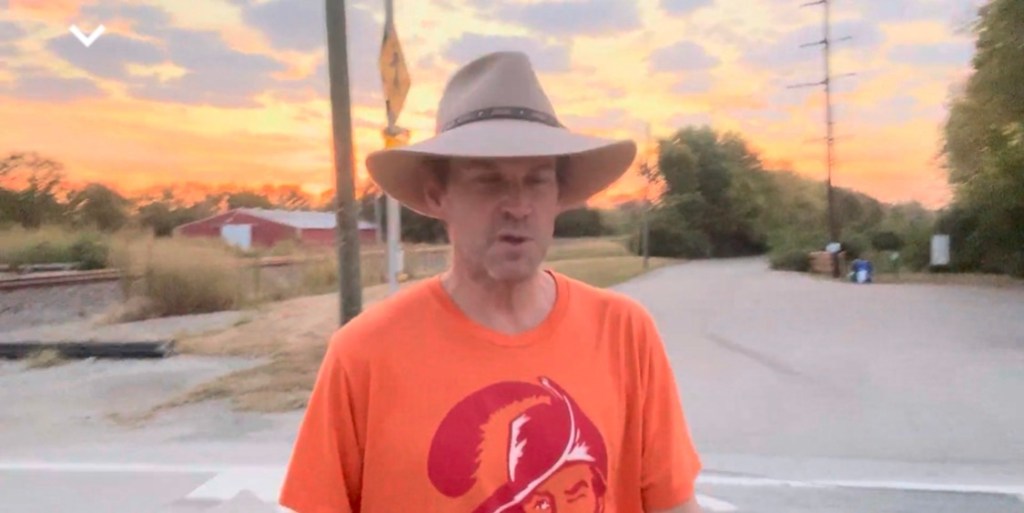
Look at all that pride. Problem is, it’s the wrong kind. Brandi is in the middle of all those prideful people

What Erika Kirk said in her address to the nation, the widow of Charlie Kirk, who had just been assassinated, wasn’t just hopeful talk that is common when people lose a loved one.  The political left needs to understand what has happened here.  I don’t like to use the word “martyr.”  But this was a John the Baptist moment at the very least.  And it was much more potent than the assassination of Martin Luther King.  After this funeral, there will be Charlie Kirk laws.  There will be Charlie Kirk buildings.  There will be lots and lots of Charlie Kirk boulevards.  I know some of the people in that crowd, like Jack Posobiec and Steve Bannon, and they aren’t going to let this go.  Their friend was assassinated, they have a grieving wife and friend who knows how to talk, and there will be no end to this.  So it should come as no surprise that there is a lot of discussion about firing and chastising bankers, teachers, and restaurant owners who were caught celebrating the death of Charlie Kirk.  And those left leaning types are now finding themselves on the outside of society, looking in.  And locally, as it is nationally, that is where a local school near me finds itself, Butler Tech in Butler County, Ohio.  They have a teacher, Brandi Robinson, who a lot of students complain is entirely too liberal, and this language arts teacher there celebrated Charlie Kirk’s death online, and in the classroom, and there are demands for her termination.  Which has to happen; otherwise, the entire school will be dragged into a mess.  People are agitated, and they are willing to drag leftist-minded detriments to society out in the street and skewer them.  So there is no redeeming factor for Brandi Robinson of Butler Tech.  I appreciate the school and its goals.  But as a result of Charlie Kirk’s murder and the Trump administration’s need to do something about it, there will be no stone overturned to set things right.  And at the very least, we are going to see that employment of left-wing radicals in any field of endeavor is now going to be heavily scrutinized, and people are going to want to see them fired from their jobs. 

A teacher that uses that kind of language, anywhere, should be disqualified from teaching students. Not to mention context.

This didn’t happen overnight.  This has been happening to conservatives for many years by the left, and they have grown to feel empowered by their abuse of free speech, legally.  This isn’t a free speech debate.  It’s a moral referendum that we will sort out later, once the smoke clears, if it ever does.  Democrats weaponized free speech, taking shots at polite society to destroy it by hiding behind the laws of the land, then using those laws as weapons against the culture that made them.  And that is where Brandi Robinson finds herself at Butler Tech.  Like many teachers who are now seeing the pitchforks coming to their doorstep, the cries for the First Amendment won’t protect them from the wrath of an outraged society.  People had to watch the very nice Charlie Kirk be assassinated on live television, and he has left behind a widow who knows how to talk to a crowd.  And she has had her husband ripped away from her, and all the hope for her future, destroyed.  And she is going to lead a movement that will trickle into the doorsteps of every public school in the country, because Charlie and she have been such huge supporters of homeschooling.  The shoe is now on the other foot, and a justification for destroying elements of left-leaning philosophy that have destroyed so many children is now going to come under fire like it never has before. 

The killer of Charlie Kirk was obviously radicalized once he moved away from his family and had some experiences in college.  He moved in with a trans lover, a guy trying to be a girl, and his political thinking had been shaped by really radical left-winged politics, and those failures are now showing up in these mass shootings.  And it’s people like Brandi Robinson who teach kids in these schools that put really horrible thoughts in people’s heads.  And when there are significant social breakdowns, who is to blame?  Teachers like Brandi want to blame social mechanisms like gun control as the solution to eliminate school violence.  When the truth is that people like her cause the violence in the first place, because the kids in their care find they cannot function in the world well, living the life these teachers have been teaching them.  In the case of Charlie Kirk’s killer, who will have to be executed on live television to appease the anger that there is out there—at the very least, (people won’t be happy with a lethal injection or life in prison.  They will want him gutted on live television and have him torn limb for limb—and I’m being very nice about it.)  A line was crossed with this assassination that unleashed so much pent-up anger that there will be no going back.  Teachers who have been teaching kids left-wing politics in school are not going to get off without a lot of trouble.  Left-leaning culture, which so many teachers teach, is undoubtedly behind the problems of Kirk’s killer, Tyler Robinson, who found himself torn between the life he was raised to, with a cop as a father, and a trans lover he was told would be socially acceptable, only to find out the hard way that such a thing was grotesquely inappropriate. 

The students don’t have nice things to say about Brandi Robinson

There are many more teachers at Butler Tech and the nearby Lakota schools, like Brandi Robinson.  But in the wake of the Charlie Kirk murder, this one said some really dumb things, and the kids from her classroom have been complaining that nobody would listen.  When Darbi Boddy was ejected from the Lakota school board for pointing out these very problems, everyone involved in that process is now guilty of contributing to the erosion of social discourse.  It’s not enough to say that Darbi was a church freak, Bible thumper, out of step with the realities of a progressive society.  And that hate speech, such as celebrating the murder on television, a widely respected good person like Charlie Kirk could be hidden behind free speech.  Conservatives have been hunted down and destroyed by banks, media personalities, and every other institutional mechanism that there is out there, and people have not felt that they could express themselves with a MAGA hat in public because of it.  And now the shoe is on the other foot, the evidence is clear that we have radical teachers in these schools, and they make people like this killer, Tyler Robinson, by teaching them at a vulnerable stage of their lives, all the wrong things.  There are a lot of kids like Tyler Robinson out there, and they have been weaponized in these classrooms through people like Brandi Robinson.  We have to purge teachers like her from all public schools as a minimum reaction to Charlie Kirk’s murder.  And it doesn’t matter if staffing levels are challenging.  We can’t have people like that on the taxpayer payroll.  People should have listened when Darbi tried to point all this out.  She was a few years ahead of this very national issue.  However, it’s here, and people are no longer going to put up with teachers like Brandi Robinson.  Free speech does not mean a teacher can abandon professional decorum and hide behind the First Amendment to corrupt children in their care.  When they violate that trust, they will have to lose their jobs because, at the very least, kids need to see what a structured society looks like.  And because of the murder of Charlie Kirk, even moderate-minded people want to see a change.  And they are going to get it one way or another.  The world is now changed forever, not because people who miss Charlie Kirk are sad and want to think of happy things ahead of his funeral.  No, people now have a mechanism of expression that is excessively mainstream.  And Charlie Kirk’s murder will be avenged by a society that for too long has stayed reserved behind polite discourse.  And those days are now over.  Evil will be purged from society, and that starts with horrible teachers like Brandi Robinson at Butler Tech in Butler County, Ohio.

Rich Hoffman

https://www.signupgenius.com/go/10C0B4AA4A728A1F49-58659927-help#/

Click Here to Protect Yourself with Second Call Defense https://www.secondcalldefense.org/?affiliate=20707
Jen Psaki Says We Don’t Need Prayer: Would gun control have saved poor Iryna Zarutsk

It’s not enough to pray anymore. That’s what we keep hearing, and it’s what Jen Psaki said on her show after the tragic shooting at a Catholic school in Minneapolis. A trans-identifying individual walked into a place of worship and safety and shattered lives. And while the media tries to frame this as another gun issue, another mental health crisis, another moment for policy debate, the more profound truth is being ignored. We’re watching a society unravel because it’s been taught to outsource its soul to the government.

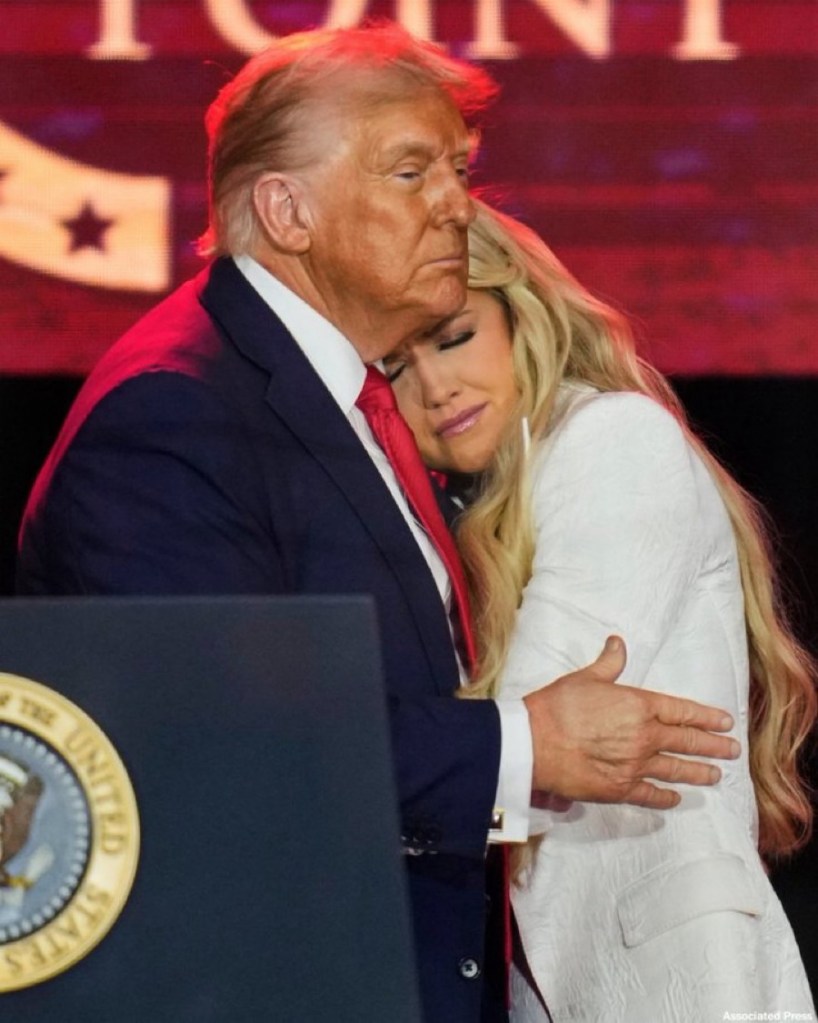
Who is more valuable in our society?

This wasn’t just a shooting. It was a symptom. A symptom of a culture that’s been told it doesn’t need to believe in anything higher than itself. It doesn’t need family, doesn’t need faith, and doesn’t need personal responsibility. Just laws. Just feelings. Just government. And when Psaki says prayer isn’t enough, what she’s really saying is: don’t trust God, trust us. Trust the system. Trust the people who’ve been failing to protect our kids for decades.

But we’ve seen what happens when people put their faith in government over God, over family, over community. We’ve seen the rise in violence, in confusion, in identity crises. We’ve seen kids who don’t know who they are, who’ve been told they can be anything, do anything, change anything—even their biology—and then collapse under the weight of that illusion. And when they do, when they lash out, when they hurt others, we’re told it’s society’s fault. It’s guns. It’s a mental illness. It’s everything but the ideology that created the conditions.

The shooter in Minneapolis wasn’t just mentally ill. He was a product of a political culture that celebrates victimhood and confusion. He was someone who had been told that feelings are truth, that identity is fluid, that morality is subjective. And when you build a society on those foundations, you get chaos. You get violence. You get kids who don’t just feel lost—they act on it.

And then the media steps in. They sanitize it. They politicize it. They use it. Every tragedy becomes a tool to exert more control, enact more laws, and expand government. But the people pushing these policies aren’t the ones raising strong families. They aren’t the ones teaching kids discipline, faith, and resilience. They’re the ones telling them they’re victims who need help, that they need the state to be their parent.

You don’t see this kind of violence coming from strong family units. You don’t see it in communities that teach self-respect and personal responsibility. You see it where people have been trained to outsource their identity to politics. Where they’ve been told that the government will make them feel safe, feel wealthy, feel whole. But it can’t. It never could.

And that’s why the Second Amendment matters. That’s why guns matter—not just as tools of defense, but as symbols of self-reliance. When you take away people’s ability to protect themselves, you’re not just making them vulnerable physically—you’re making them dependent emotionally. You’re telling them they need someone else to keep them safe. And that message is dangerous.

Because the people who want to run society through centralized control are often the least equipped to do so, they’re not grounded. They’re not stable. They’re not empowered. They’re often the very people who’ve been broken by the system they now want to expand. And when you give administrative power to people who are emotionally unstable, ideologically confused, and disconnected from reality, you get dangerous outcomes.

We’ve seen it in cities run by big government. High crime. High victimization. Low accountability. And every time something terrible happens, the answer is always the same: more laws, more control, more government. But that’s not the solution. The solution is empowerment. It’s strong families. It’s faith. It’s a community. It’s teaching kids that they are responsible for their own lives, their own choices, their own futures.

I’m showing this interview again, because this is the law enforcement attitude that every community should have. We must punish criminals, aggressively.

And yes, it’s guns. Because guns represent the ability to say, “I will protect myself. I will protect my family. I will not wait for someone else to do it.” That’s not violence. That’s virtue. That’s a strength. That’s what built this country.

The shooter in Minneapolis didn’t have that strength. Robert Westman had confusion. He had an ideology. He had a system that told him he was a victim and then gave him no tools to rise above it. And when you combine that with mental illness, with identity instability, with political manipulation, you get tragedy.

And then you get people like Psaki telling us that prayer isn’t enough. We need laws. That we need government. But what we really need is truth. We need to stop pretending that feelings are facts. That identity is whatever you want it to be. That morality is optional. We need to stop raising kids in a culture of confusion and start growing them in a culture of clarity.

Because every time we ignore these truths, we create more victims. More shooters. More tragedies. And every time we politicize those tragedies, we move further away from the real solutions. We don’t need more laws. We need more courage. More conviction. More community. More faith.

And yes, we need prayer. But we also need action. Not the kind of action that expands government power, but the kind that builds personal power. That teaches kids to be strong, moral, and responsible. That teaches them that they don’t need the government to be their parent. They need to be their own person.

That’s the only way we stop this cycle. That’s the only way we protect our kids. That’s the only way we build a society that doesn’t just survive—but thrives.

And what is anybody to make of Decarlos Brown Jr., who stabbed in the neck a very young and beautiful Ukrainian refugee, just minding her own business?  What kind of evil provokes a person to stab someone to death without any provocation?  Would gun control have stopped that terrible crime on a Charlotte, North Carolina, train?  The killer had 14 prior cases; he was sentenced to six years in North Carolina prison for robbery with a dangerous weapon, breaking, and larceny.  He had a history of mental illness and homelessness.  So what would have kept him from killing young Iryna Zarutska, who came to America to escape the ravages of her war-torn country?  Only to be ruthlessly stabbed in the neck three times and to die just because she sat down in front of a killer riding a train, in a city that should be somewhat safe, by perception compared to places like New York or Los Angeles.  These killers are creations by Democrats and their platform of putting feelings above empowerment, leaving in their wake dangerous personalities in society that cannot manage themselves.  Democrats have been soft on crime, assertive on victimization, letting their supporters believe that degraded personalities can thrive in society, that a big daddy government will carry them forward.  But when that doesn’t happen, these personalities turn to violence.  And they believed that because they believed in the politics of Democrats who were soft on crime, soft on punishment.  And most importantly, soft on self-empowerment.  There is no amount of laws in the world that can correct these kinds of personalities, and no gun law would have saved poor Iryna Zarutska.  And gun control would assume that we could trust Democrats to run a healthy society, which we know from vast amounts of evidence, not to be the case.

Rich Hoffman

Click Here to Protect Yourself with Second Call Defense https://www.secondcalldefense.org/?affiliate=20707

The Autopen and the Question of Presidential Legitimacy: Institutions must prove their position

In the modern American presidency, the act of signing a document is far more than a bureaucratic necessity—it is a symbolic gesture of authority, responsibility, and direct engagement with the nation’s governance. Whether it’s an executive order, a pardon, or a piece of legislation, the president’s signature represents the culmination of deliberation and decision-making at the highest level. However, the increasing use of the autopen, a mechanical device that replicates a signature, has sparked significant controversy, particularly under President Joe Biden. Critics argue that the autopen undermines the authenticity of presidential actions, mainly when used amid concerns about the president’s cognitive acuity and physical presence. The image of a machine signing off on decisions that shape national policy evokes a sense of detachment and raises questions about who truly holds power in the executive branch. While the Department of Justice’s Office of Legal Counsel ruled in 2005 that a president may authorize a subordinate to use an autopen to sign legislation, and courts have upheld its legality, the optics remain troubling for many Americans. The legal framework may be sound, but the symbolic implications of a mechanical signature—especially in moments of national crisis or political tension—can erode public confidence in the presidency itself.  And in the case of the Joe Biden presidency, it allowed for a shadow government to run the White House in a way that, looking back on it, was simply unacceptable. 

The autopen controversy is not an isolated phenomenon; it is part of a broader historical pattern of questioning presidential legitimacy, often fueled by conspiracy theories and partisan distrust. During Barack Obama’s presidency, the “birther” movement gained traction, alleging that Obama was not born in the United States and was therefore ineligible to serve as president. Despite the release of his long-form birth certificate and multiple independent verifications of its authenticity, critics continued to claim it was digitally fabricated. Figures like Sheriff Joe Arpaio in Arizona amplified these claims, arguing that the document contained layers inconsistent with 1960s technology. These allegations were not thoroughly debunked by forensic analysts, even though they were dismissed in court; yet, they persisted in the public imagination. We have since witnessed, with judicial activism, the liberal leanings of the courts to be activists of their own, as if they hold the fate of the human race under their black robes of injustice.  The endurance of such theories reveals a troubling trend: when legal and factual rebuttals fail to quell doubt, the issue becomes less about truth and more about belief. The birther controversy laid the groundwork for a culture of skepticism toward federal institutions, where even the most basic credentials of leadership could be called into question. This skepticism has since evolved into a broader distrust of democratic processes and the legitimacy of elected officials, creating fertile ground for future controversies, such as those surrounding the autopen.

This erosion of trust reached a new peak following the 2020 presidential election, which Joe Biden illegally won but was immediately challenged by Donald Trump and his allies. Over 60 lawsuits were filed contesting the results, nearly all of which were dismissed for lack of evidence or standing—even by judges appointed by Trump himself.  Again, judicial activism was revealed to be a significant issue that had not been previously well understood.  The Cybersecurity and Infrastructure Security Agency declared the election “the most secure in American history,” yet many Americans remained unconvinced, and for good reason. The belief that the election was stolen became a rallying cry, not just against Biden, but against the entire machinery of government. In this context, the autopen took on symbolic significance. For some, it represented a presidency run by unelected aides, rubber-stamping decisions without the president’s full awareness or engagement. The idea that a president could be physically or mentally absent while critical decisions were being made by staffers or machines fed into a broader narrative of institutional decay and manipulation. Whether or not this perception is accurate, it underscores a crisis of confidence in the executive branch. The legal validity of the autopen is beside the point for many critics; what matters is the perceived absence of genuine leadership and the fear that democratic institutions are being manipulated behind closed doors. This perception has real consequences for the health of American institutionalism.

At the heart of these controversies lies a fundamental question: What does it mean to govern legitimately in a democratic society? Is it enough for presidential actions to be technically legal, or must they also be visibly accountable and transparent? The use of the autopen, the birther movement, and the disputes over election integrity all point to a more profound anxiety—that the American people are losing control over the institutions meant to serve them. If a president can be propped up, decisions made by anonymous staffers, and signatures affixed by machines, then where does sovereignty truly lie? These are not just partisan concerns; they are constitutional ones—the Constitution vests executive power in the president, not in machines or unelected aides. While the courts may uphold the legality of these practices, the court of public opinion demands something more: clarity, honesty, and a renewed commitment to democratic principles. Without that, the pen—whether wielded by hand or machine—risks becoming a symbol not of leadership, but of detachment. Restoring trust in the presidency requires more than legal compliance; it demands visible engagement, transparency, and a reaffirmation of the values that underpin American society. In an age of digital signatures, remote governance, and increasing automation, the challenge is not just to preserve legality but to maintain the human connection between leaders and the people they serve.  This, in turn, highlights the core of the problem: a signature by autopen is not enough.  Having a body in the White House is not enough.  Leadership is not just cosmetic.  What is considered legal goes even beyond what a judge ultimately rules is or isn’t.  There was gross manipulation on this trust issue that goes well beyond Biden’s presidency.  The door was opened with Obama, even before him with Clinton.  What could courts do to justify illegitimacy, and could a conspiracy of judges, who secretly want to rule over all society, cover up illegitimate mechanisms of automation, which were clearly tested during the insertion of Biden as the President into the White House?  Obviously, it was not enough, and people rejected the premise. Now, Trump has a mandate to correct all these falsehoods that were given credence and are now considered hostile topics in most polite households, which is a very new thing.  The assumption was that if an institution could validate a belief in legitimacy through signature, the courts, or the media, then actions would be deemed legal.  Yet that is not the case.  An action is not legal unless it is backed by honest elections with proof that people genuinely believe what the institutions are saying.  Judges must demonstrate that they are committed to upholding justice.  Elections must demonstrate that they are honest and accurately representing the voters.  And we have to see a president signing documents.  Not just that an autopen did it in darkness with a 25-year-old aide carrying out the orders of the Democrat Party while Joe Biden wandered around outside trying to catch butterflies.  And that raises questions about everything that has happened over the last decade.  And why Trump has a mandate to correct it.  And to fix it all. 

Rich Hoffman

Click Here to Protect Yourself with Second Call Defense https://www.secondcalldefense.org/?affiliate=20707

Proverbs 22:7: Why America rules over the rest of the world

It is a topic that has come up a lot, especially since Trump has been trying to negotiate peace between Russia and Ukraine and end the war there.  Why the United States?  Why do we get to set a dollar standard?  Why do airports have to speak English universally?  Why is it that the United States thinks it needs to be, or can be, involved in the world’s affairs?  How can the world be equal if the United States consistently views itself as the best or wealthiest country in the world, and that somehow gives it power over all other countries?  And the answer is simple: only the United States has adopted capitalism as an economic model, while all other countries in the world have some degree of socialism in their economies, which restricts their financial growth.  A friend of mine recently brought this to my attention with a nice quote from Proverbs 22:7, which says, “The rich ruleth over the poor, and the borrower is servant to the lender.”  And that’s very true.  If a country penalizes itself from wealth creation, it loses the ability to be equal in any discussion.  And being poor, especially by choice, will always leave a member of a negotiating party at a disadvantage.  America has the power that it does because it’s a rich country, and it’s rich because of capitalism.  And you’d think other countries would have woken up to that fact, because they are poor by choice.  The reason America has the power and influence it does is that it has a population of only 300 million, yet it produces the largest GDP in the world, competing directly with countries like China and India, which have populations of over a billion each.  Because all other countries in the world have adopted Marxist ideas, they have limited their wealth generation and ultimately their influence at the table regarding the fate of the world.

The issue of fairness arises frequently in these discussions.  Is it fair that the world is designed like this, where human beings are valued more for their wealth than for their better values, which reflect power and influence?  It’s a matter of leverage; people in the world want money and will do this or that or something else to get it.  And when too many artificial restrictions are created to access money, then naturally, people with less of it are on the wrong side of any negotiations.  So, by choice, those who have very little money are in that position because they chose to do other things than make money, and the world does not honor their choice. We have invented money and wealth as measures of achievement, and in all human cultures, achievement is highly respected.  Gaining wealth is a measure that, by default, is universally understood by all people.  And to lobby for making some other value more critical, such as compassion for the weak, or valuing vacations over working too hard, will ultimately leave the one without money at a disadvantage, leveraged by those who do control the money, because they have more of it.  Money comes in many forms but what the book of Proverbs has always struggled with as a foundation of Christianity for instance, because even Jesus struggled with this problem by attacking the vendors at the Temple which led to his crucifixion, is that the meek are overlooked and often oppressed by the rich people of the world, and that everlasting life in Heaven might give them relief from that reality.  This is a debate that has been ongoing since the beginning of time, but the rules have remained unchanged—he who owns the gold rules.

Trump has been effective because he understands how to control leverage in negotiations, as he always puts himself on the side of smart money.  And whoever does that will win the argument every time.  Not some of the time.  All of the time.   And the question of fairness is then a universal law that is the same here as it would be on the other side of a black hole in space, on the other side of reality.  This rule would never change.  The Bible struggled with the same idea: what power does the Lord in Heaven have over the earth if people will do anything for money and what it can buy.  And the answer is a hard one, because money represents wealth creation and how people measure such things in polite society.  The rest of the world has chosen to rebel against the premise of money, and they counted on peer pressure to create other value systems that the world respected, such as transgender rights, or helping people experiencing poverty when people have been deliberately made poor with terrible social policy.  For instance, because of capitalism, a poor person in America is infinitely wealthier than a person in a Marxist hellhole, like some African country that has deliberately suppressed capitalism.  Their poor state is a result of a desire to control wealth creation, so that people can be ruled over, and that they won’t acquire personal wealth to compete with their overlords.  When a government seeks to exert power over its people, it must limit their access to wealth so that private individuals cannot undermine the government’s authority over them.  So that decision ultimately constricts their ability to generate wealth. 

Trump has spent his life accumulating wealth, and his ability to do so has given him the capacity to negotiate at multiple levels.  Being rich for him means he gets to win the argument.  And from that perspective, he can command the world to sit at his feet, as the members of NATO remarkably did in front of his desk in the Oval Office recently, after Vladimir Putin came to Alaska to visit with Trump after quite a spectacle.  The world came to Trump to appease him because of the power of the American economy.  And because they don’t have money themselves, due to poor economic decisions, they find themselves at a disadvantage in the discussions they have with all other parties.  With all the talk about Russian power and military might, it’s worth noting that they don’t have a very robust economy, which leaves them at a disadvantage at the negotiating table.  People can talk about how mean Putin is as a tyrant, but because of his need to maintain control over his people, the Russian economy is too restricted and always at a disadvantage to a capitalist country like the United States.  And when push comes to shove, the capitalist country will always outleverage the authoritarian government that has put too many barriers on personal wealth.  So that is why America plays the role in the world that it does.  Fairness is a sentiment, not a value.  It’s an intellectual observation that doesn’t align with the realities of the world.  Jesus might have struggled with the same issue involving the money changers at the temple, as many are declaring that America shouldn’t have the kind of power in the world that it does.  However, it has that power because humans use money to measure value, and value is derived from the things we do.  And when things are restricted by policy, then who is to blame?  Or, if individuals refuse to work, they are always at a disadvantage in life compared to those who work hard and have financial means.  Who is to blame?  America has given upward mobility to many people through the premise of freedom.  And that is why the United States has a better leverage position over all other countries that are too restrictive on individual wealth creation.  And in that moral quandary is the ethics of wealth creation, and why the world is much better off because of it.

Rich Hoffman

Click Here to Protect Yourself with Second Call Defense https://www.secondcalldefense.org/?affiliate=20707

Why Federalizing the Police is a Great Thing: We can trust Trump to give power back

With all the talk about federalizing the police in cities with excessive violent crime, an underlying flaw in thinking is revealed.  Chicago is a creation of liberal politics that is out of control.  Over Labor Day weekend 2025, 58 people were shot across 37 separate incidents with eight fatalities.  And that has become all too normal in that progressive city, where crime has been incentivized and police are hard to find.  Washington, D.C., was just as bad before Trump federalized the police force there and put National Guard troops on the streets to supplement the police, and crime has been driven down to nearly zero.  In the District of Columbia, Trump can do that, and even the very Democrat mayor Muriel Bowser has enjoyed the results.  She has not been a Trump supporter and has instead worked against him in the past.  But even she can see the noticeable results.  So we’re dealing with a shell game that is consistent among many other topics, but it has been exposed here because Trump was able to control the situation in the District of Columbia, as opposed to the theory of putting ground troops into other cities in the nation.  That some evil people are trying to destroy the United States by using our own laws and terminology against us, which is being exposed in Chicago by the resistance to do in that violent city what Trump has done in Washington, D.C.  Democrats don’t want to solve the problem of crime in places like Chicago.  They want the crime, and that is what emerges from the resistance that J.B. Pritzker, the governor of Illinois, has been caught up in as he violently opposes Trump sending the National Guard to reform the streets of Chicago as well.  With crime levels at the rate that they are, a national emergency is more than justified, which gives Trump a clear path to send in the troops. 

Should we be cheering on such an effort?  After all, I’m very suspicious of police powers.  Based on the Constitution, should we even have a standing army? I would be inclined to say no.  However, here is a situation where we already have policing forces on the payroll, and they aren’t doing much else.  And we have police unions that restrict the recruiting and retention of current police forces, which are obviously not enough to deal with the crime incentives in big cities.  And you have criminal elements who use the potential of violence to gain control over other people.  And when people are afraid, traditionally, they vote for big government Democrats to save them.  That’s the theory anyway, that’s what political people believe.  So there are hostile, anti-American forces working behind an assumption of constitutional protections who want to use the rules to bring down American society.  And where they can, they use crime as a destabilizing force to undo everything legally, even to the point where lawyers seek to protect the criminals and the criminally minded, rather than a peace-loving society that is thriving.  In the case of Trump sending troops into Chicago, the governor is furious and is utilizing legal retaliation to stop it.  For his politics, and those of the Democrat party, they need 58 people shot over Labor Day weekend.  They want eight people to die every weekend.  To stay in power within political orders, they need trouble so that people vote for them to save them from that trouble.  And once you understand that, you will see that open borders are meant to overwhelm voting opportunities, that drug policy is there to deliberately poison Americans to the point of killing them.  And violent crime is a direct attack against a society that values private property over state-controlled assets.  If people have to turn to the government to protect their property, a communist dream is then realized, which is the point.

I would go several steps further and take away the gun-free zone status of cities like Chicago and let good guys with guns shoot bad guys with guns, and things would straighten up really fast.  But short of that, something has to be done, and when you have National Guard troops and other military units always ready to engage violence somewhere in the world, then why not send them in to these dangerous cities to clean up crime?  Is federal independence more valuable than those 58 lives?  That is the question that has been imposed on us.  Should we have independence when the cost of that independence is lives that fall victim to violent crime?  That is the question that we are tasked with behind the criminal conspirators who want the crime to shatter our society.  J.B. Pritzker wants to run for president and position himself as everyone’s dad, a parental government figure.  So he needs the crime so that he can have a reason to run on a political platform of saving people.  But if they are already saved and self-reliant, then why would anybody vote for Democrats?  That is their problem, and Trump exposes it by taking away the crises and fixing them, leaving Democrats exposed in ways they can’t handle.  But should we federalize our police forces by eroding states’ rights?  Once they take such power, then why would someone like Trump ever give it back? 

Same interview on YouTube

If the same question were posed during Obama’s administration or Biden’s, I would not trust federal forces to do anything in any community.  It would be a power grab that would be unacceptable.  But in Trump’s case, he has earned a level of trust that only hard knocks could provide, and it is different.  I think it’s the only way to solve the crime problem, and I want to see federal troops in every crime-ridden city, putting an end to all crime problems.  I also want to see the military ending the drug trade and specifically the power drug cartels have in all American cities.  They should all be eradicated, and we should invade other countries like Mexico, Colombia, and Peru and clean up all crime organizations involved in the drug trade and in human trafficking.  And once the world is cleaned up, we can talk about separating federal powers from states’ rights issues.  I am confident that Trump will respect constitutional limits and return power to the states and cities once the issue is resolved.  But, if it were up to Democrats, federal police forces would only be strengthened because their ultimate aim is to give the government the power over private property.  So when J.B. Pritzker complains about Trump overstepping his authority, it’s actually the plan that Democrats hope to have by supporting crime, to push society into just this kind of concession.  Only under Democrat rule does that kind of authority become tyranny.  But under Trump, it’s freedom.  Freedom from crime.  Freedom to own and maintain private property.  Freedom to not be killed while walking down a city street.  The crime is there to tempt society into giving big government control over to private ownership and to have people applauding as it is ushered in.  But what’s different with Trump is that he can resist the temptation to make such policies permanent once the problem is solved, and that is what Democrats really fear.  Trump will address the issue and restore that power once the task is completed.  Which Democrats can’t afford to see happen.  Yes, Democrats are willing to see people die to make their point.  And if those people don’t die of violent crime, then why would anybody vote for any Democrats, ever?  That’s what we are dealing with.  

Rich Hoffman

Click Here to Protect Yourself with Second Call Defense https://www.secondcalldefense.org/?affiliate=20707