
Make Sure to Judge and Judge Often: Kristi Noem and Pam Bondi couldn’t get the job done–find someone who can

I have been watching the second Trump administration unfold over the first few months of 2026 with a mixture of hope and growing frustration, the kind that comes from someone who has spent years in the political trenches here in Butler County, Ohio, and across the country. When President Trump tapped Pam Bondi for Attorney General, I thought it was a strong move. I had followed her work as Florida’s Attorney General, where she showed real backbone against some of the progressive nonsense that was infecting state governments. She talked a tough game on television—promising to go after the Russia hoax crowd, the January 6 committee members who turned a legitimate protest into a political persecution, the FBI insiders who abused FISA warrants, and the broader network of Democrats who had spent years twisting the law to target conservatives. I believed she had the smarts and prosecutorial experience to drag some of these cases to a close finally. But as the weeks turned into months, I saw the same old pattern: lots of sound bites, plenty of tough talk, but not nearly enough action. Cases that should have been fast-tracked sat gathering dust. Indictments that the American people desperately needed to see—real accountability for those who weaponized government—never quite materialized. By early April 2026, I wasn’t surprised when Trump made a change. I respect Pam Bondi, and I still think she’s intelligent, but if you’re not getting the job done at that level, you have to go. The Department of Justice is a swamp all its own, filled with careerists who know how to slow-walk everything, and it takes a special kind of resolve to push through. I believe Trump is doing a good job overall, but these personnel decisions matter. You can’t have people in the highest offices who talk the talk but can’t deliver results when the country is counting on real justice.

This whole situation with Bondi got me thinking deeper about what it really takes to succeed in this environment, and it brought me straight to Kristi Noem. I have always liked Kristi Noem. I thought she did a great job as governor of South Dakota. Her policies weren’t bad at all—I agreed with her on border security, crime, education, and pushing back against the radical transgender agenda that’s confusing so many kids. She had that independent Western spirit that resonated with many of us. I loved the campaign ads where she was riding horses around Mount Rushmore in a cowboy hat; it captured something authentic about American strength and freedom. When Trump brought her into the administration and eventually placed her at Homeland Security, I was optimistic. She seemed like the kind of no-nonsense leader who could secure the border and dismantle some of the chaos the previous administration had allowed to persist. But then the personal scandals hit, and everything changed. Reports surfaced about an affair with Corey Lewandowski, one of Trump’s longtime aides. I have met Corey Lewandowski several times over the years. He’s a sharp, charismatic guy who throws himself completely into the fight. He shares that same passion for the cause that many of us feel. When you’re away from home a lot, traveling constantly, surrounded by people who understand your mission at the deepest level, it becomes really easy to make bad judgments. I know how it happens. The adrenaline is high, the hours are long, and suddenly you’re sharing late-night strategy sessions with someone who gets the fire in your belly like your spouse back home sometimes can’t. It’s human nature, but it’s still bad judgment. You should be able to fight off temptation, especially when you’re married. I have been married to a good woman for a long time, and I know it takes work, especially when life gets busy, and the spotlight pulls you in different directions. But that’s exactly why character matters so much at the top.

What made the Noem situation even messier was what came out about her husband, Bryon. Nearly forty years of marriage, kids grown, grandkids in the picture, and suddenly the public learned he had been sending sexually charged pictures of himself online—cross-dressing, some boob fetish, the kind of private behavior that, once exposed, destroys trust on every level. I don’t think it was a complete surprise to everyone around them; neighbors in South Dakota apparently called it an open secret. Kristi expressed shock, but the damage was immediate and devastating. Her husband’s actions left her vulnerable, and the combination of the reported affair and the family embarrassment became too much under the national microscope. I believe she was devastated by it all. When you put yourself out there the way she did—national media, international travel, constant public appearances—the little cracks in a marriage get magnified. You’re gone too much. The empty nest, which should be a time to reconnect with your spouse, becomes filled with politics, rallies, and crises. It’s hard to maintain an intimate relationship when you’re living in the public eye every day. I have seen this pattern before with people who rise fast in the Tea Party or MAGA movements. They come into office with big ideas and good intentions, but the pressure and temptations of Washington or high-level administration roles test them in ways they never expected. Some handle it; many don’t. That’s why I hold people to a rigorous standard on their personal lives, especially when they seek high office. If you can’t keep your marriage straight, if you can’t manage your own household, there’s something wrong that will eventually show up in how you handle the bigger responsibilities.

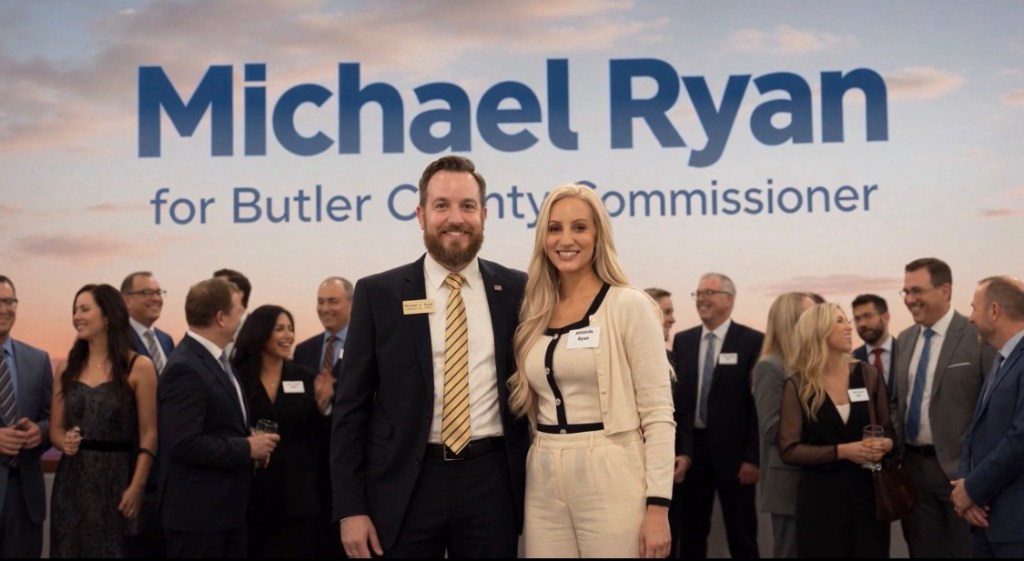
I remember talking to JD Vance early on, back when he was making the rounds pitching himself to folks like me in Ohio. I had read Hillbilly Elegy and appreciated his story, but I wasn’t fully sold yet. I looked him in the eye and asked him directly: “You’re heading to Washington in your 40s with all this attention. How are you going to handle the temptations? Are you going to fight for justice, or are you just going to become another pastry in the lucrative swamp?” He didn’t flinch. His wife, Usha, was right there—super nice, super sweet, super solid. You could tell they genuinely liked each other, not just for the cameras. The way they interacted, even when the event was over and no one was watching, told me a lot. They share a real affection and partnership. That matters to me. I have seen the same thing with George Lang here in Ohio—his wife Debbie is a rock, a good person who keeps him grounded. Michael Ryan in Butler County has that same solid family foundation, which is one reason I support him so strongly. I could say the same thing about Congressman Warren Davidson and his wonderful wife, Lisa.  These are the kinds of people I trust in positions of power because they have proven they can manage the most important thing first: their own home. Trump himself has learned this lesson across his marriages. Melania has been a steady, classy presence for him, someone who understands the pressure and stands by him without needing constant validation. It takes time to figure these things out, especially in a high-profile life, but once you do, it becomes your armor against the temptations that come with power.

With Kristi Noem, I think the combination of the affair and her husband’s public embarrassment created a perfect storm. She had put herself out there so visibly that any weakness became ammunition for the enemies. Lewandowski is a nice, charismatic guy, and when you share that highest-level passion for the mission, it’s easy to cross lines you shouldn’t. I don’t condone it, but I understand how it happens. The marriage was already strained by years of public life. When your spouse isn’t as engaged or interested, and you’re out there chasing big goals, loneliness can creep in. But that doesn’t excuse the bad judgment. If your home life is dysfunctional—if your husband is caught cross-dressing and sending fetish photos online—then how can you possibly lead something as critical as Homeland Security without becoming a liability? The bad guys are always watching. They look for any crack to exploit. Noem’s situation wasn’t just personal; it raised real questions about judgment, vulnerability to blackmail, and the ability to focus under pressure. I still like her as a person. I think she has good intentions and did a lot of positive things in South Dakota. But when the scandals broke, Trump had no choice but to move her out. The administration can’t afford that kind of distraction at the top. It’s not about being perfect—but about having the discipline to keep your house in order so you can focus on the nation’s house.

I have thought a lot about why these kinds of failures happen so often in politics, especially at the federal level. It starts with the nature of the job itself. You’re constantly in the spotlight. Public relations, media appearances, international travel—it all pulls you away from the simple, intimate things that keep a marriage strong. When the kids are grown, and the grandkids are pulling at your heart, that space in your life gets filled with the next campaign event or policy fight. It becomes easy to seek validation or connection with people who share your daily battles. Corey Lewandowski and Kristi Noem apparently found that connection in each other. I have met Lewandowski enough times to know he’s passionate and committed. But passion without boundaries leads to trouble. The same thing happened in countless administrations before this one. History is full of leaders whose personal indiscretions undermined their public work. In the Trump era, with the media and Democrats armed and ready to pounce on any weakness, the margin for error is razor-thin. That’s why I believe we need to rigorously evaluate people’s family lives before giving them these roles. If you can’t protect your own family, if you can’t keep your marriage intact despite the pressures, then you’re not equipped to protect the country or deliver justice for the American people.

Look at what happened with the January 6 defendants. Many of them sat in jail for over a year while the January 6 committee ran its circus and the media turned a protest into an “insurrection” narrative. I believe those responsible for the selective prosecution and the weaponization of government should face real consequences. The FBI, the DOJ under previous leadership, and the congressional Democrats who pushed the narrative all deserve scrutiny. Yet under Bondi, those big cases didn’t move with the urgency I expected. I still support Trump’s overall direction—he has been really good on many fronts—but I want to see people in key positions who can actually prosecute the real criminals and get results. The same standard applies to every cabinet role. At Homeland Security, we needed someone who could secure the border without personal scandals becoming distractions. Noem’s situation showed how quickly good intentions can be derailed by poor personal management.

I have met a lot of these people over the years. I have talked with Tea Party and MAGA leaders who rose fast and then struggled under the weight of Washington. Some come out stronger; others fall apart. That’s why, when I get the chance to speak with a candidate or someone rising in the ranks—as I did with JD Vance—I ask the personal questions. I want to know how they handle temptation when the lights are off and no one is watching. I look at how they treat their spouse when the event is over, and the crowd is gone. Do they genuinely like each other? Do they share a real partnership? That tells me more than any policy paper ever could. JD Vance passed that test in my eyes. His wife is solid, and you can see the mutual respect and affection. George Lang and his wife, Debbie, show the same thing. Michael Ryan has that foundation, too. These are the people I trust to stay focused when the pressure hits. Trump has clearly learned this over time. He knows he needs people who can handle the spotlight without their personal lives becoming liabilities. Melania has been a great example of that steadiness for him.

Kristi Noem’s story is a cautionary tale, but I don’t write her off completely. She made many positive contributions, and I believe she wanted to do good for the country. The dysfunction in her home life—whether it was her husband’s online behavior or the strains of long absences—created vulnerabilities she couldn’t overcome in that high-pressure role. When the affair with Lewandowski became public knowledge, and the photos of her husband surfaced, it all became too much. The family unit is supposed to be the first line of defense. When that breaks down, enemies exploit it, the media feasts on it, and the mission suffers. I think Trump did the right thing by making the change. The administration needs people who can deliver without unnecessary drama. It’s not easy living under that kind of scrutiny.  That’s why maintaining strong family relationships is non-negotiable for me when evaluating leaders. If you can’t keep your own house in order, you won’t keep the nation’s house in order.

There is a deeper philosophical layer here that I have often reflected on. In a world where power attracts temptation like moths to flame, character becomes the ultimate filter. Let’s support people who want to do good things, even if they stumble, but when they seek the highest levels of administration, the standard must be higher. Bad judgment in personal matters signals deeper issues—weakness under pressure, inability to prioritize, vulnerability to manipulation. Noem’s case, like others before it, shows that you can have the right policies and the right rhetoric, but without personal discipline, the weight of the office will expose every crack. Trump has surrounded himself with some strong people who seem to understand this. JD Vance, with his solid marriage, gives me confidence. Others in the orbit who keep their families first will likely endure. For those who don’t, the door eventually closes, as it did with Bondi when results lagged and with Noem when the personal scandals exploded.

I still believe in the broader mission. Trump is moving the country in the right direction on many fronts, but personnel is policy. We need fighters who can actually prosecute the January 6 cases, hold the deep state accountable, secure the borders, and resist the cultural pressures that have weakened us. That requires people with the character to resist temptation when it comes knocking in hotel rooms and late-night meetings. It requires marriages that can withstand the absences and the spotlight. It requires leaders who understand that their first responsibility is to their own household before they take responsibility for the nation’s. I have seen too many good people with big ideas falter because they couldn’t manage the personal side. Kristi Noem had a lot going for her, but the combination of the Lewandowski affair and her husband’s embarrassing public behavior created a situation she couldn’t survive in that role. Pam Bondi talked a good game but couldn’t deliver the decisive actions needed. Both cases reinforce the same lesson: in high-stakes politics, especially in a second Trump term, where expectations are sky-high, character and execution must go hand in hand.

As I look ahead, I hope the administration continues to learn from these early stumbles. Bring in people who have proven they can handle pressure without personal meltdowns. Reward those who keep their families strong and their judgment sharp. The country needs real justice, secure borders, and leadership that doesn’t hand ammunition to the opposition on a silver platter. I still support Trump’s vision because I believe he is fighting for the right things. But I also believe he needs warriors around him who won’t crumble when the temptations or scandals hit. That’s the standard I apply when I evaluate anyone seeking my support, whether it’s here in Ohio or at the national level. Manage your home well, resist the easy temptations, deliver results, and you’ll have my backing. Fail at the personal level, and no amount of policy agreement will make up for it in the long run. Politics at the top is brutal, and only those with strong foundations survive. I have seen it up close, and that’s why I judge so rigorously. The republic deserves nothing less.

Footnotes

1.  Observations on Pam Bondi’s tenure drawn from public reporting on DOJ activities in early 2026 and Trump administration personnel changes.

2.  Details of Kristi Noem’s governorship and policies based on her public record in South Dakota, including border and cultural issues.

3.  Reports on the Lewandowski-Noem relationship and Bryon Noem’s online activities appeared in major outlets in early 2026.

4.  Personal conversations with JD Vance referenced from local Ohio political events.

5.  Broader reflections on family, temptation, and leadership informed by years of observing Tea Party and MAGA figures.

Bibliography for Continued Reading

•  Noem, Kristi. Not My First Rodeo: Lessons from the Heartland.

•  Vance, J.D. Hillbilly Elegy: A Memoir of a Family and Culture in Crisis.

•  Lewandowski, Corey. Let Trump Be Trump: The Inside Story of His Presidency.

•  Trump, Donald J. Crippled America and subsequent campaign materials.

•  Various reporting from The Daily Mail, New York Post, and Fox News on 2025-2026 administration personnel stories.

•  Biblical references: Proverbs 4:23 (“Guard your heart, for everything you do flows from it”).

•  Local Ohio political coverage on figures like George Lang and Michael Ryan from Butler County and state sources.

Rich Hoffman

More about me

Click Here to Protect Yourself with Second Call Defense https://www.secondcalldefense.org/?affiliate=20707
About the Author: Rich Hoffman

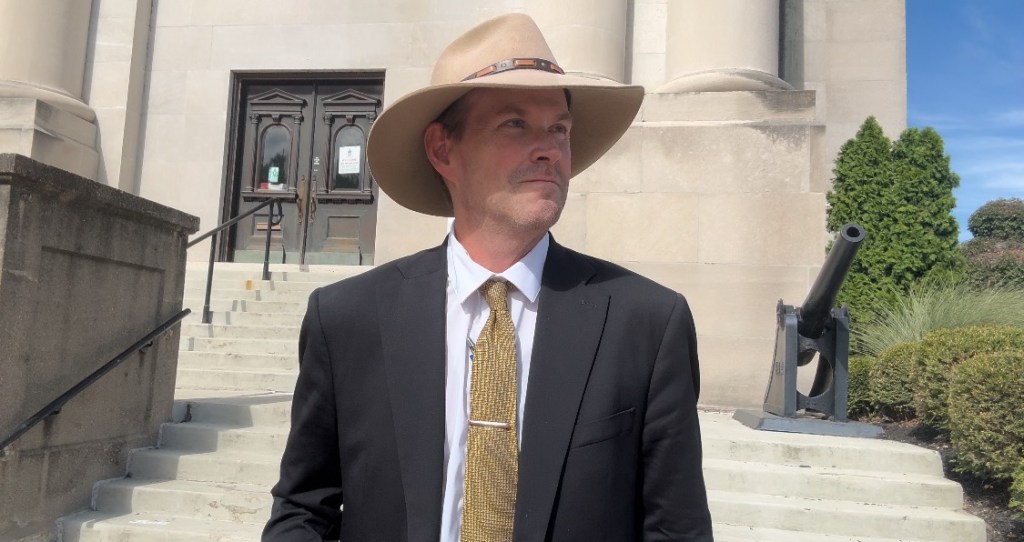
Rich Hoffman is an aerospace executive, political strategist, systems thinker, and independent researcher of ancient history, the paranormal, and the Dead Sea Scrolls tradition. His life in high‑stakes manufacturing, high‑level politics, and cross‑functional crisis management gives him a field‑tested understanding of power — both human and unseen.

He has advised candidates, executives, and public leaders, while conducting deep, hands‑on exploration of archaeological and supernatural hotspots across the world.

Hoffman writes with the credibility of a problem-solver, the curiosity of an archaeologist, and the courage of a frontline witness who has gone to very scary places and reported what lurked there. Hoffman has authored books including The Symposium of JusticeThe Gunfighter’s Guide to Business, and Tail of the Dragon, often exploring themes of freedom, individual will, and societal structures through a lens influenced by philosophy (e.g., Nietzschean overman concepts) and current events.
Criminals Don’t Get To Hide Behind the Law: The teachers of treachery are guilty of weaponizing bad decisions for political sedition of our country

What often gets missed in the immediate debate over use‑of‑force standards, escalation protocols, and whether a moving vehicle constitutes a weapon, is the deeper cultural ecosystem that produces these confrontations in the first place. In regions of Minnesota with a long memory of activist‑driven volatility, there exists a pattern of individuals—frequently isolated, economically strained, or wrestling with turbulent personal histories—being drawn into radicalized political spheres that promise meaning and moral purpose. These are vulnerable people searching for identity, who then become tools for professional agitators operating behind the scenes. The public conversation tends to fixate on the split‑second decisions made by ICE agents or police officers under duress, rather than on the networks of ideological operators who cultivate grievance, inflame unrest, and funnel disaffected individuals into increasingly hazardous forms of “activism” designed to provoke confrontation.

This is the recurring dynamic that ties incidents like the George Floyd riots and the Minnesota road‑blocking case together: not merely civil disobedience, but a strategic leveraging of unstable personalities to generate volatile public moments. The recent shooter, a woman who had settled into family life before being swept into hyper‑progressive crusader politics, reflects this same pattern. Her transformation wasn’t spontaneous; it was cultivated. When such individuals are encouraged to see themselves as soldiers in a moral revolution, they can be coaxed into reckless escalation—weaponizing vehicles, obstructing roads, or physically confronting law enforcement—all while the organizers who radicalized them stay comfortably out of harm’s way. Those hidden hands are the real accelerants of social disorder. They create the conditions that force federal officers into impossible corners, and yet they avoid scrutiny while the national spotlight fixates on the ICE agents, the legality of firing trajectories, or the technicalities of vehicle-as-weapon classifications. If genuine solutions are to be found, the focus must shift toward the architects of the broader violent arc—not just the tragic individuals caught in their machinery.

On the morning of January 7, 2026, an Immigration and Customs Enforcement (ICE) agent fatally shot Renee Nicole Good, 37, near East 34th Street and Portland Avenue in south Minneapolis—blocks from where George Floyd was killed in 2020. Within hours, federal officials said Good tried to use her SUV as a weapon, while Minnesota’s governor and Minneapolis’s mayor called that narrative false. The FBI asserted sole control over the investigation, as Minnesota’s Bureau of Criminal Apprehension (BCA) said it was abruptly shut out of access to case materials. Protests and vigils followed, alongside arrests and a fiercely contested information war.12  The unsaid but primary issue is the weaponization of the people of that town to attempt sedition by chaos, which is persistent with their immigration strategy and radical politics of those who encourage violence through protests to weaponize the disenfranchised into attempts at government overthrow. 

By week’s end, a preliminary sequence emerged from multiple videos and witnesses: agents converged on a red Honda Pilot; one tried the driver’s door; the vehicle reversed, then moved forward and began turning right; another agent near the front driver’s side fired three rounds at close range while sidestepping. The SUV rolled forward and crashed. Federal officials say an officer was nearly run down; state and local officials dispute that reading of the video. Whatever one’s view of the footage, the conflict over factual interpretation and investigative control is itself a documented fact.345

Good’s identity and life quickly became part of the public record: a Minneapolis mother and U.S. citizen, celebrated by family and friends as warm and community‑minded—that’s the narrative, but her actions show otherwise. Vigils drew crowds across Minnesota and beyond as the incident, captured on video, resonated nationally.67

Control of the investigation became a second flashpoint. The BCA announced it would investigate jointly with the FBI, then said the U.S. Attorney’s Office had ‘reversed course’ so that the FBI alone would lead—and that BCA investigators would no longer have access to evidence, interviews, or scene materials. State leaders called the exclusion ‘deeply disappointing’ and warned it would erode public trust.8910

High‑profile figures framed the shooting through starkly different lenses. Former Minnesota governor Jesse Ventura called it a ‘murder’ and denounced the administration; Vice President JD Vance repeatedly amplified a new angle of the video and said it vindicated the agent as acting in self‑defense. Others cited the duplicate footage as showing the vehicle turning away when shots were fired, underscoring how contested video interpretation can be.11121314

Two U.S. Supreme Court precedents govern excessive‑force analysis. Graham v. Connor (1989) requires judging force by the Fourth Amendment’s ‘objective reasonableness’—what a reasonable officer would do in the circumstances, without 20/20 hindsight. Tennessee v. Garner (1985) bars using deadly force simply to stop flight; officers must have probable cause that the suspect poses a significant threat of death or serious physical injury to the officer or others.1516

Minnesota law overlays that federal floor. Statute § 609.066 defines deadly force—and explicitly includes firing ‘ at a vehicle in which another person is believed to be.’ It authorizes deadly force only when necessary to defend human life or prevent significant bodily harm, as assessed by a reasonable officer based on the totality of the circumstances.17

Minnesota’s high court has also clarified that vehicles, when used in a manner ‘likely to produce death or great bodily harm,’ can constitute ‘dangerous weapons’ under the criminal code—without requiring proof that a driver specifically intended to hit someone. That clarification widens the legal lens: a car may be a weapon, but investigators must still show how its manner of use made deadly force necessary under § 609.066’s standard.1819

Policy guidance has, for decades, cautioned against shooting at moving vehicles, which is why these liberal methods have been encouraged to erode our system of law and order.  Justice Department and many large‑city policies generally bar firing at cars unless the driver presents an imminent lethal threat beyond the vehicle itself, and no reasonable alternative exists—often including stepping out of the vehicle’s path. DHS/ICE policies mirror that baseline with narrow exceptions for imminently lethal threats.20212223

What, then, should decision‑makers evaluate in this case? First, the reasonableness test: Did the agent have probable cause, at the instant of firing, to believe Good posed an imminent threat of death or significant bodily harm? That hinges on angles, distances, speed, available cover, and whether stepping entirely aside was feasible in the split seconds captured on video.45

Second, policy alignment: DOJ/DHS guidance disfavors shooting at moving vehicles absent a reasonable alternative. If investigators conclude that such an alternative existed—e.g., moving out of the path—policy discipline could follow even if prosecutors decline to file charges. Conversely, if no safe alternative existed and the vehicle’s movement created an imminent lethal threat, policy and law may converge.2022

The First Amendment thread is separate but related. Peaceable assembly is protected, but governments may impose content‑neutral time, place, and manner rules that keep streets open and access unobstructed, so long as ample alternatives exist—principles affirmed in Hill v. Colorado. Minnesota’s obstruction statute likewise criminalizes intentionally interfering with an officer performing official duties, with enhanced penalties if the conduct poses a risk of death or serious harm.242526

The information environment matters. Minneapolis officials and national media documented that the FBI blocked the BCA from joint access; that decision—rare in high‑profile force cases—has fueled distrust and calls for transparency.210

One striking data point that shaped early discourse: as of Jan. 7, the city’s crime dashboard showed Good’s killing as Minneapolis’s first recorded homicide of 2026. That fact fueled claims that the case merited exceptional scrutiny—though the classification and dashboard categories themselves became part of the debate.27

Bottom line: The legal questions here are not answered by slogans. They turn on a precise reconstruction of those seconds—what the agent could see, where he stood, whether a safe alternative existed, and whether the vehicle’s movement created an imminent threat. The public’s questions, meanwhile, will only cool if the record is released promptly and the governing standards—constitutional, statutory, and policy—are applied with fidelity rather than spin.  But whatever the case, the enforcement of criminal law cannot be impeded by radicals seeking to overthrow it.  The ICE agents were there to do a job, and these protestors openly sought to disrupt that process.  Then, to hide that crime behind an assumption of free speech and an obligation to seek alternatives to violence by the officer, putting the burden on law enforcement, and not on the criminals themselves.  Criminals seeking seditious intent do not get to hide behind the rules they seek to overthrow.  And that is the merit of this case, and Jesse Ventura should know better. 

Endnotes

1. MPR News, ‘Renee Good killed by ICE agent in Minneapolis,’ Jan. 7, 2026. https://www.mprnews.org/story/2026/01/07/shooting-south-minneapolis-ice-agents-federal-operation

2. Associated Press, ‘Minnesota officials say they can’t access evidence after fatal ICE shooting…,’ PBS NewsHour, Jan. 8, 2026. https://www.pbs.org/newshour/nation/minnesota-officials-say-they-cant-access-evidence-after-fatal-ice-shooting-and-fbi-wont-work-jointly-on-investigation

3. FOX 9 Minneapolis, ‘Video shows Minneapolis ICE shooting,’ Jan. 7, 2026. https://www.fox9.com/news/video-shows-minneapolis-ice-shooting-woman-dead-jan-7

4. USA TODAY, ‘Experts analyze videos showing use of force,’ Jan. 8–9, 2026. https://www.usatoday.com/story/news/nation/2026/01/08/ice-shooting-minneapolis-use-of-force/88082677007/

5. Star Tribune, ‘What we know about the fatal ICE shooting in Minneapolis,’ Jan. 11, 2026. https://www.startribune.com/what-we-know-as-questions-grow-about-the-fatal-ice-shooting-in-minneapolis/601559966

6. CBS News, ‘Renee Good… what we know,’ Jan. 10, 2026. https://www.cbsnews.com/news/renee-good-killed-ice-minneapolis-what-we-know/

7. ABC News, ‘What to know about Renee Good…,’ Jan. 9, 2026. https://abcnews.go.com/US/renee-good-37-year-woman-killed-minneapolis-ice/story?id=129018464

8. FOX 9 Minneapolis, ‘BCA won’t have access; FBI will lead investigation,’ Jan. 8, 2026. https://www.fox9.com/news/minneapolis-ice-shooting-fbi-investigation

9. CBS Minnesota, ‘BCA withdraws after FBI blocks access,’ Jan. 8, 2026. https://www.cbsnews.com/minnesota/news/bca-withdraws-renee-good-ice-shooting-investigation/

10. POLITICO, ‘Minnesota officials, Trump administration battle over investigation,’ Jan. 8, 2026. https://www.politico.com/news/2026/01/08/minnesota-ice-shooting-investigation-00716296

11. USA TODAY, ‘Jesse Ventura calls Trump a “coward”…,’ Jan. 9, 2026. https://www.usatoday.com/story/news/politics/2026/01/09/jesse-ventura-trump-minnesota-governor-ice/88098645007/

12. The Independent, ‘Jesse Ventura calls Trump “a draft-dodging coward”…,’ Jan. 9, 2026. https://www.independent.co.uk/news/world/americas/us-politics/jesse-ventura-trump-minnesota-governor-ice-b2897278.html

13. USA TODAY, ‘New ICE shooting video; JD Vance defends agent,’ Jan. 9, 2026. https://www.usatoday.com/story/news/nation/2026/01/09/new-video-ice-shooting-minneapolis-jd-vance/88104371007/

14. Fox News, ‘Vance doubles down on press after new footage,’ Jan. 9, 2026. https://www.foxnews.com/media/vance-doubles-down-disgusting-press-new-footage-from-ice-shooting-surfaces-accuses-outlets-lying

15. Graham v. Connor, 490 U.S. 386 (1989). https://supreme.justia.com/cases/federal/us/490/386/

16. Tennessee v. Garner, 471 U.S. 1 (1985). https://supreme.justia.com/cases/federal/us/471/1/

17. Minn. Stat. § 609.066 (Authorized use of deadly force by peace officers). https://www.revisor.mn.gov/statutes/cite/609.066

18. Courthouse News Service, ‘Cars can be “dangerous weapons,” Minnesota high court rules,’ Jan. 24, 2024. https://www.courthousenews.com/cars-can-be-dangerous-weapons-minnesota-high-court-rules/

19. State v. Abdus-Salam, A22-1551 (Minn. Jan. 24, 2024). https://law.justia.com/cases/minnesota/supreme-court/2024/a22-1551.html

20. Associated Press via WBUR, ‘What to know about the rules for officers firing at a moving vehicle,’ Jan. 8, 2026. https://www.wbur.org/news/2026/01/08/what-to-know-rules-officers-firing-moving-vehicle

21. Associated Press via U.S. News & World Report, ‘Minneapolis Shooting… Raises Questions About Officers Firing at Moving Vehicles,’ Jan. 7, 2026. https://www.usnews.com/news/politics/articles/2026-01-07/fatal-shooting-by-ice-agent-in-minneapolis-raises-questions-about-officers-firing-at-moving-vehicles

22. ABC News, ‘What to know about ICE use-of-force policy,’ Jan. 9, 2026. https://abcnews.go.com/US/ice-force-policy/story?id=129016014

23. The Conversation, ‘ICE killing… tactics many police warn against,’ Jan. 8, 2026. https://theconversation.com/ice-killing-of-driver-in-minneapolis-involved-tactics-many-police-departments-warn-against-but-not-ice-itself-271907

24. Hill v. Colorado, 530 U.S. 703 (2000). https://supreme.justia.com/cases/federal/us/530/703/

25. First Amendment Encyclopedia (MTSU), ‘Hill v. Colorado (2000),’ last updated Jan. 11, 2025. https://firstamendment.mtsu.edu/article/hill-v-colorado/

26. Minn. Stat. § 609.50 (Obstructing legal process, arrest, or firefighting). https://www.revisor.mn.gov/statutes/cite/609.50

27. Snopes, ‘ICE shooting of Renee Good was 1st recorded Minneapolis homicide of 2026,’ Jan. 10, 2026. https://www.snopes.com/fact-check/renee-good-ice-shooting-2026-minneapolis-homicides/

Bibliography

ABC News, ‘What to know about ICE use-of-force policy,’ Jan. 9, 2026. https://abcnews.go.com/US/ice-force-policy/story?id=129016014

ABC News, ‘What to know about Renee Good…,’ Jan. 9, 2026. https://abcnews.go.com/US/renee-good-37-year-woman-killed-minneapolis-ice/story?id=129018464

Associated Press via U.S. News & World Report, ‘Minneapolis Shooting… Raises Questions About Officers Firing at Moving Vehicles,’ Jan. 7, 2026. https://www.usnews.com/news/politics/articles/2026-01-07/fatal-shooting-by-ice-agent-in-minneapolis-raises-questions-about-officers-firing-at-moving-vehicles

Associated Press via WBUR, ‘What to know about the rules for officers firing at a moving vehicle,’ Jan. 8, 2026. https://www.wbur.org/news/2026/01/08/what-to-know-rules-officers-firing-moving-vehicle

Associated Press, ‘Minnesota officials say they can’t access evidence after fatal ICE shooting…,’ PBS NewsHour, Jan. 8, 2026. https://www.pbs.org/newshour/nation/minnesota-officials-say-they-cant-access-evidence-after-fatal-ice-shooting-and-fbi-wont-work-jointly-on-investigation

CBS Minnesota, ‘BCA withdraws after FBI blocks access,’ Jan. 8, 2026. https://www.cbsnews.com/minnesota/news/bca-withdraws-renee-good-ice-shooting-investigation/

CBS News, ‘Renee Good… what we know,’ Jan. 10, 2026. https://www.cbsnews.com/news/renee-good-killed-ice-minneapolis-what-we-know/

Courthouse News Service, ‘Cars can be “dangerous weapons,” Minnesota high court rules,’ Jan. 24, 2024. https://www.courthousenews.com/cars-can-be-dangerous-weapons-minnesota-high-court-rules/

First Amendment Encyclopedia (MTSU), ‘Hill v. Colorado (2000),’ last updated Jan. 11, 2025. https://firstamendment.mtsu.edu/article/hill-v-colorado/

FOX 9 Minneapolis, ‘BCA won’t have access; FBI will lead investigation,’ Jan. 8, 2026. https://www.fox9.com/news/minneapolis-ice-shooting-fbi-investigation

FOX 9 Minneapolis, ‘Video shows Minneapolis ICE shooting,’ Jan. 7, 2026. https://www.fox9.com/news/video-shows-minneapolis-ice-shooting-woman-dead-jan-7

Fox News, ‘Vance doubles down on press after new footage,’ Jan. 9, 2026. https://www.foxnews.com/media/vance-doubles-down-disgusting-press-new-footage-from-ice-shooting-surfaces-accuses-outlets-lying

Graham v. Connor, 490 U.S. 386 (1989). https://supreme.justia.com/cases/federal/us/490/386/

Hill v. Colorado, 530 U.S. 703 (2000). https://supreme.justia.com/cases/federal/us/530/703/

Minn. Stat. § 609.066 (Authorized use of deadly force by peace officers). https://www.revisor.mn.gov/statutes/cite/609.066

Minn. Stat. § 609.50 (Obstructing legal process, arrest, or firefighting). https://www.revisor.mn.gov/statutes/cite/609.50

MPR News, ‘Renee Good killed by ICE agent in Minneapolis,’ Jan. 7, 2026. https://www.mprnews.org/story/2026/01/07/shooting-south-minneapolis-ice-agents-federal-operation

POLITICO, ‘Minnesota officials, Trump administration battle over investigation,’ Jan. 8, 2026. https://www.politico.com/news/2026/01/08/minnesota-ice-shooting-investigation-00716296

Snopes, ‘ICE shooting of Renee Good was 1st recorded Minneapolis homicide of 2026,’ Jan. 10, 2026. https://www.snopes.com/fact-check/renee-good-ice-shooting-2026-minneapolis-homicides/

Star Tribune, ‘What we know about the fatal ICE shooting in Minneapolis,’ Jan. 11, 2026. https://www.startribune.com/what-we-know-as-questions-grow-about-the-fatal-ice-shooting-in-minneapolis/601559966

State v. Abdus-Salam, A22-1551 (Minn. Jan. 24, 2024). https://law.justia.com/cases/minnesota/supreme-court/2024/a22-1551.html

Tennessee v. Garner, 471 U.S. 1 (1985). https://supreme.justia.com/cases/federal/us/471/1/

The Conversation, ‘ICE killing… tactics many police warn against,’ Jan. 8, 2026. https://theconversation.com/ice-killing-of-driver-in-minneapolis-involved-tactics-many-police-departments-warn-against-but-not-ice-itself-271907

The Independent, ‘Jesse Ventura calls Trump “a draft-dodging coward”…,’ Jan. 9, 2026. https://www.independent.co.uk/news/world/americas/us-politics/jesse-ventura-trump-minnesota-governor-ice-b2897278.html

USA TODAY, ‘Experts analyze videos showing use of force,’ Jan. 8–9, 2026. https://www.usatoday.com/story/news/nation/2026/01/08/ice-shooting-minneapolis-use-of-force/88082677007/

USA TODAY, ‘Jesse Ventura calls Trump a “coward”…,’ Jan. 9, 2026. https://www.usatoday.com/story/news/politics/2026/01/09/jesse-ventura-trump-minnesota-governor-ice/88098645007/

USA TODAY, ‘New ICE shooting video; JD Vance defends agent,’ Jan. 9, 2026. https://www.usatoday.com/story/news/nation/2026/01/09/new-video-ice-shooting-minneapolis-jd-vance/88104371007/

Rich Hoffman

Click Here to Protect Yourself with Second Call Defense https://www.secondcalldefense.org/?affiliate=20707

The Privacy Paradox and the Digital ID Debate: 2028’s presidential platform

The question of privacy in the modern era is no longer theoretical—it’s a daily decision. Every time we swipe a loyalty card, sign up for a rewards program, or accept a digital convenience, we trade a piece of our autonomy for a discount or a faster checkout. For many, this trade-off seems harmless. But for those of us who value privacy as a cornerstone of freedom, the implications are profound. I recently visited a new Barnes & Noble near my home—a store I frequent so often that my purchases probably keep the lights on. Yet, when asked if I wanted to join their rewards program, I declined, as I always do. Not because I don’t appreciate saving money, but because I refuse to surrender my personal data for a 10% discount. This small act reflects a larger resistance to the creeping normalization of digital IDs—a system designed to consolidate personal information under the guise of convenience. From Apple’s digital ID initiatives to Real ID requirements at airports, the infrastructure for a fully digitized identity system is being laid brick by brick. And while older generations instinctively recoil from this erosion of privacy, younger generations—raised in a world of constant connectivity—see it as the natural order of things. For them, convenience trumps confidentiality.

This generational divide poses a strategic challenge for political movements, particularly the Republican Party as it looks beyond 2028. Simply saying “no” to digital IDs will not resonate with voters who prioritize ease over encryption. To win the argument, conservatives must dismantle the premise that makes digital IDs seem indispensable: the centralized control of healthcare. The pandemic revealed the authoritarian potential of health-based governance. When government controls your medical access, it controls your life. Digital IDs are marketed as tools for streamlining health records, insurance claims, and prescription tracking—but their true function is to tether individual freedom to bureaucratic oversight. The antidote is not nostalgia for paper records; it is innovation that renders such control obsolete. If the most convenient healthcare option is not to get sick, then the rationale for universal health IDs collapses. And that is where regenerative medicine enters the conversation—not as a niche scientific curiosity, but as a political game-changer.

Regenerative medicine is no longer science fiction; it is a rapidly expanding industry poised to redefine healthcare economics and human longevity. The global regenerative medicine market was valued at $35.47 billion in 2024 and is projected to reach $90.01 billion by 2030, growing at a CAGR of 16.8%. Some forecasts are even more aggressive, predicting a market size of $233.5 billion by 2033. This growth is fueled by breakthroughs in stem cell therapy, tissue engineering, and gene editing—technologies that promise not just treatment, but prevention. Imagine a future where nanobots patrol your bloodstream, repairing cellular damage before symptoms appear. According to futurists like Ray Kurzweil, this reality could arrive by 2030, with DNA-based nanorobots already in animal trials for cancer treatment. AI-powered nanobots are being designed to deliver drugs with pinpoint accuracy, unclog arteries, and even perform microsurgeries autonomously. These innovations, combined with wearable health monitors like the Apple Watch—which now predicts health conditions with up to 92% accuracy using behavioral data—signal a paradigm shift: healthcare will move from reactive to proactive, from treatment to optimization.

The implications for cost and convenience are staggering. Traditional healthcare is built on a model of chronic intervention—doctor visits, prescriptions, surgeries—all of which generate revenue streams for insurers, hospitals, and pharmaceutical giants. Regenerative medicine disrupts this model by reducing the need for ongoing care. While stem cell therapy today can cost between $5,000 and $50,000 per treatment, its long-term savings are significant, eliminating recurring expenses for medications and procedures. Platelet-rich plasma (PRP) treatments, often priced between $4,500 and $9,000 per session, offer similar benefits. Compare this to the lifetime cost of managing conditions like diabetes or heart disease, which can exceed $100,000 per patient. As regenerative therapies scale and automation reduces labor costs, these prices will fall—especially as AI-driven surgical robots, already performing 1.8 million procedures annually worldwide, become standard practice. Hospitals adopting robotic systems report 30% fewer complications, 15–25% less postoperative pain, and 20% shorter recovery times, all of which translate into lower systemic costs.

For Republicans seeking to define the post-Trump era, regenerative medicine offers more than a healthcare solution—it offers a narrative that aligns with core conservative values: freedom, innovation, and individual empowerment. Democrats have staked their future on preserving a centralized, insurance-driven model of care, pouring trillions into socialized medicine schemes like Obamacare. Their argument hinges on fear: fear of losing coverage, fear of job displacement in healthcare, fear of change. And indeed, the healthcare sector is a major employer—12.1% of Butler County’s workforce is in health care and social assistance. Nationwide, millions of jobs depend on the current system. But clinging to inefficiency for the sake of employment is economic malpractice. Automation will reshape these roles regardless; AI is already reducing administrative burdens, diagnostic errors, and surgical risks, while creating new tech-driven positions in data analysis and robotics oversight. The question is not whether disruption will occur, but who will lead it—and how they will frame it.

Republicans can lead by making health freedom synonymous with privacy. Instead of forcing citizens into digital ID systems that track every prescription and procedure, offer them a future where such tracking is unnecessary because illness itself is rare. Position regenerative medicine as the ultimate convenience: no insurance battles, no bureaucratic gatekeepers, no invasive data collection—just a healthier life enabled by cutting-edge science. This approach neutralizes the Democrat platform, which depends on perpetuating dependency. It also resonates with younger voters, for whom convenience is king. If the GOP becomes the party that delivers both convenience and privacy, it wins not just the next election, but the next generation.  There is no benefit into holding on to the old model, the way healthcare has been.  This is the issue that will shape social discourse for the 2028 election.  The authority-based systems wore out their welcome during 2020 with COVID-19. 

The debate over digital IDs, privacy, and healthcare is not a technical argument—it is a cultural one. It asks whether Americans will accept a future of centralized control or demand a future of decentralized freedom. Regenerative medicine tilts the scales toward freedom by attacking the root premise of authoritarian health systems: the inevitability of sickness. By embracing technologies that prevent disease rather than manage it, we eliminate the need for surveillance-based care models. This is not speculative; it is imminent. The regenerative medicine market is doubling every few years, nanobot trials are underway, and AI-driven diagnostics are already in consumers’ hands. The party that seizes this moment—framing it not as a scientific curiosity but as a moral imperative—will own the political high ground for decades. For JD Vance, Vivek Ramaswamy, and the rising generation of conservative leaders, the message is clear: don’t just say no to digital IDs. Make them irrelevant. Offer a vision of health so advanced, so convenient, and so private that the old debates dissolve. In doing so, Republicans can transform healthcare from a liability into a legacy—and redefine what it means to make America great again.

Rich Hoffman

Click Here to Protect Yourself with Second Call Defense https://www.secondcalldefense.org/?affiliate=20707

The Fake Kamala Harris Campaign: Getting caught using AI to look more like Trump

One thing about communist cultures, no matter where they are, is that they always must resort to copying their competition because they don’t have any fundamental ideas of their own.  That’s certainly how it is in China, and that is certainly what’s happening with the Kamala Harris campaign.  That has been the joke recently with Kamala Harris essentially trying to steal all of Trump’s political platforms to escape her dismal past, especially in regard to No Tax on Tips.  But it was pretty audacious when the Harris campaign tried to launch a few campaign events in Wisconsin, and they got caught trying to hide her actual numbers of public support.  I don’t know what they were thinking.  Did they think people wouldn’t notice in this day and age?  But they got caught using AI to try and make her crowds look bigger.  To look more like President Trump’s crowds, especially in Wisconsin and Las Vegas.  There were several methods used, but the bottom line was that to make the crowds look bigger, they used AI to fill in the vast gaps where there weren’t any people.  And especially at that airport rally in Wisconsin, there were no reflections of people in the plane’s paint, where the photo showed a sea of people for as far as the eye could see.  It looked like a Trump rally, but we were supposed to believe that it was massive support for Harris.  It looked good at first, but they got caught, and now the story of Harris is that she is a copycat with no new ideas of her own, and that’s not going to be enough to move the needle for Democrats.  And this is the best that they are going to do.  It will never get better from here.

So, in the news flash, there were thousands of people who knew those photos were fake, including the Kamala Harris campaign itself, and they put them out anyway as a fact.  Well, now you can see what they did with the election of 2020; that was fake, with fake votes closing the gap between reality and fantasy in just the same fashion.  And many of these polls that we are seeing with Harris surging out in front of Trump are just as fake and by the same type of methods.  We have a very organized effort to hide reality, to win people over because they think we are all stupid.  They know they can’t win honestly, so they aren’t even trying now.  When in doubt, they are turning to technology to push them over the top, which is what AI can do these days so easily.  But you can’t fake the real thing, where people wait for days to see a Trump rally.  Harris doesn’t have anything close to that kind of support because she and Biden were put in office by completely fake pretense.  The attempt to sell away doctored-up pictures as a reality is where it really gets embarrassing.  When people like me have been saying all that I have about how Democrats perform election fraud, and even how the liberal media conducts polling to make lipstick on a pig look appealing.  They still can’t get past their communist problem of propaganda that free people will consume on their own volition.  It is their only option, and it’s not very good.  The cracks in the walls showed when they pushed Joe Biden aside due to his age and tried to slide Kamala Harris under the door and prop her up with complete propaganda that they couldn’t sustain with reality.  And they really thought that was their best option.

You are the leader when you are copied, which Trump is the standard now in politics.  You are the one to beat.  I always tell people my story about the gunfighter at the bar with his back to the room.  That’s the same thing here; when you are Trump, you don’t look at what other people are doing.  You do your thing and let all the copycats chase after you.  Even with this copycat scandal of AI-generated images, and you can do the same with video these days, Trump did a Spaces interview on “X” with Elon Musk that went on for hours, talking about various topics.  Kamala Harris could never do that, because she doesn’t really have anything on her mind.  She’s a fake in every way that a person can be fake.  And this idea that a person lacking authenticity can project their way into high office without merit or scrutiny is a thing of the past.  It worked back when people trusted each other more.  When people were in Elks memberships or belonged to Masonic lodges as extensions of their community presence.  Or went to church on Sunday.  When there was some foundation of trust to work with, people were more vulnerable to exploitations of that trust.  But these days, with all those social elements letting us down, people spot quickly a fraud, and Harris got caught right out of the gate.  And what’s worse, that was her entire campaign strategy.  If they can’t manipulate the images, she has no chance; she can’t give speeches.  She can’t talk to reporters.  She can’t interact with anybody off-script.  The people behind Harris believe she can be completely propped up and driven into office by the choice of a mass population because they think so little of people that they don’t think authenticity is part of the process.  Obviously, it is.

Harris has such a bad past with so many radical leftist policies that she is running from all those now trying to sell essentially a Trump platform just to get elected.  She has switched her positions on economics, border security, and even regulatory policy.  She is not talking about wild lefty ideas now because they know people are supporting Trump.  So, like the AI photos of her rallies, her fake poll numbers, and the fake enthusiasm for her Democrat base, they are trying to steal Trump’s policy ideas to hide her own radical past, hoping just enough people are suckered into voting for her.  But when you look at the polling crosstabs, all Democrats have big problems.  And they won’t be able to fake their way out of it.  Like the lessons of all communist countries who have run into this same problem, there is no way for Kamala Harris to hide reality.  The arrogance of even trying is audacious enough.  It’s all they have.  And remember, we have had the last four years of a bad economy because people were suckered into believing that Biden and Harris were elected correctly.  The same effort that has been putting out these fake pictures and policy positions are the same people who told you that electronic voting machines could be trusted and mail-in ballots validated and that we could trust those counting implicitly.  Somehow, in a free culture, they thought nobody would ever find out.  Which is why the First Amendment is so important.  With people having the ability to scrutinize others, we have a communist assumption that is falling on its face, just as it has everywhere else in the world where it has been tried.  And that Democrats have tried to copy the enthusiasm for Trump in their campaigns tells you all you need to know about reality.  AI can’t change people’s minds.  It can just trick you into thinking the truth you are seeing is authentic.  And when people figure out it isn’t, the wheels come off quickly, as it is now for Harris.

Rich Hoffman

Click Here to Protect Yourself with Second Call Defense https://www.secondcalldefense.org/?affiliate=20707