
Lakota is Blind to the Coming Change: No Levy in May, but soon.

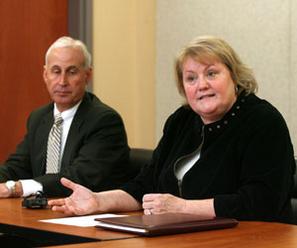
At first I was ready to praise the Lakota School Board when they made the announcement that they were going to wait and look at the numbers from the state budget before placing the next levy attempt on a ballot. Until Mike Taylor commented, “Lakota needs new revenue, there’s no question about it. That need has not diminished, but no matter when a levy is passed, May, August, or November, funds would not be collected until 2012.”
What??????

What is the plan if Lakota doesn’t get another revenue stream, because the community hasn’t shown that it wants to add to their tax burden of $11 dollars per $1000 evaluation. Any more than that would actually be detrimental to home values of the community because people won’t move here in droves for a good school if they can’t afford the property tax. The school system needs to look hard at itself and figure out how it can survive on a $155 million dollar budget.

What will happen to the revenue stream if people decide they can’t live in the district because the taxes are too high, and they leave, collapsing the housing market? It’s happened in cities, it could happen to West Chester, and Liberty Twp. If the tax base left, where would the revenue stream come from? Another levy on top of the one they intend to pass sometime in 2011?

These are questions the arrogant school administrators just aren’t willing to look at. And I say arrogant because there are still comments to the effect that schools going well into the future will still be Zip Code oriented. Such a position is a refusal to look at the facts of what’s to come. In fact, the whole concept of public education has become less about reading, writing and arithmetic, but more of “social justice.”

That guy is out of his mind, but if you talk to most people who head up public education, especially union leaders, they think the same way. They just want to give children a good life. But they do so at the expense of individuality, and that costs money. A lot of money. What happens if parents don’t want their children’s individuality educated out of them into some collective ant colony that is perpetuated by public education? It’s a question that comes up by many parents that are deeply religious, or parents that take an active interest in their children’s lives.

Many moons ago, my wife and I home-schooled our children for about a year, I had to pay for the cost of educating them, and I still had to pay the property tax to the local school district, which I shouldn’t have had to do. Now it was important to us that the kids were home-schooled, because I felt the school system was holding them back, and we didn’t want our kids to feel that wall in front of them. I wanted my kids to want an exceptional life. Not just some silly life tossed into a big pot with everybody else like discussed in the above video. So we took the wall away, much to the opposition of friends and family. They just didn’t understand why we’d do such a thing. After all, wasn’t the school experience going to football games on a Friday night? Wasn’t it having a school jacket, a sense of belonging to a group identity?  (check out what Bill Ayers says at that link, 4th video down) Wasn’t part of the school experience graduating with your class mates and tossing your hat into the air? Isn’t it all about school year books and other social aspects of the education process, because that’s what people told my wife and I when we were home-schooling our kids. They really didn’t understand our whole reluctance to the “social justice” concern.

I accomplished pretty much what I wanted after a year, and we re-enrolled our kids into Lakota. My kids had friends in school, but many of them have since fallen away now that they are all grown. Anymore, if they don’t speak to people on Facebook, they don’t care to maintain friendships with the kids they went to school with. Out of all the members of our family, only I graduated with my class-mates, and to be honest, I thought the whole experience was a waste of time. My wife graduated early, even though she was an honor roll student. And both my kids did the same, graduating a whole year early, finishing their senior years with online courses. To this day, my wife expresses no regrets about missing her graduation ceremonies; she and I went to dinner at The Golden Chain Restaurant as a married couple while her classmates were running around like idiots on their graduation night. We had fun in a way many of those people couldn’t even imagine at the time. Both of my children had similar experiences exploring Europe while the kids they went to school with were opening graduation presents and trying to figure out what party to go to that night. My kids find school pride sentiments to be trivial, and rather childish.

The reason I support alternative education methods is because I’ve seen the benefit. And obviously I have no sentimental value to those other social aspects of the school experience. Because of that, I don’t see why anyone would value any of those things. If you want to have friends, talk to them on Facebook, or Xbox. Why do you have to have relationships established in the halls of a school building? In the age we live in, it really doesn’t make any sense any more.

So why is there so much focus on a “revenue stream?” And why does Lakota have to increase it?

What happens to Lakota’s revenue stream if the money they get from the state doesn’t just go to the district but to the student, for the parents to use any way they see fit. Because a group I’m involved with, School Choice is about just that very issue. That’s the article I wrote that had all the giant sand castles only to have them wash away in the ocean. That’s really an appropriate metaphor for the situation. Most school systems are just elaborate sand castles that communities have grown attached to out of sentiment, and they are willing to spend infinite amounts of money to fight back the encroaching waves.

What’s going to happen as more and more people move into the country working from their home computers and aren’t needed in a centralized building as is currently required. Or because of the efficiency of cars and other transportation devices that are emerging, people move further away out of the districts. What’s going to happen to the revenue at schools like Lakota when that happens?

If we look at the sentimental avenue of education being all about the “experience” of school, so it’s football games, class-rings, and school jackets, then paying extraordinary amounts of money to educating children is something to entertain. But increasingly, the world we live in is becoming less centralized, and people will want the options of that freedom. Sentimentality has a terrible cost, and these days, fewer people are willing to pay it. I’m certainly not alone in my lack of sentiment.

I’m strictly a performance based individual. I expect an education that continues throughout life, and doesn’t just end at grade 12, or even college. My experience with college is that people are putting their lives on hold to fulfill the dreams and market sentiment of the baby boomer generation that swallowed whole the pill of a college degree will be a cure-all and is a life-time of security. We’re learning now that’s not the case. I’ve had to give job interviews to grown adults with 4 to 6 year degrees trying to get a job paying ten to twelve dollars an hour, and wanting the job badly. The world that was promised to those recipients of degrees isn’t there. It is for some, but more and more, people are discovering that they are terribly in debt after their college experience, because the tuition is just too expensive for what you get, and the jobs available in the marketplace are not paying the type of wages that will allow those people to pay off their debts.

According though to the Lakota School Board, they seem to think everything will always be as it has been, and that’s not very forward-looking. To survive, they need to look hard at their expenses and not only consider a loss of revenue because of the next failed levy, but also the loss of revenue from parents that take their money from the state and use it on a program like School Choice. The only real hindrance to School Choice has been the union lobby in Columbus, and given the inefficiency in schools and the continuing increase per pupil of the cost of education, and the continuing problem of our state funding structure being unconstitutional, the new Governor could go a long way to solving all those problems by using School Choice to create competition and using that competition to drive down the cost of education per pupil. Think about it, $10K per kid is out of control. The state funding issue can never be addressed when the cost per pupil is that high. Changes to that perception have to be implemented now.

That’s what’s coming, and why comments like the Lakota School System will need further revenue streams, are arrogant. Lakota needs to prepare for less revenue streams, not more. To assume that education is so central to the community, not just the parents that enjoy watching their kids play sports, but the entire community, is audacious, and short-sighted.

Innovation and the embrace of technology will bring down the cost of education in the future. It will start first with parents that take an active role in their children’s education, which will put pressure on parents that are basically using the schools as a day care facility, or possible scholarship generator, clinging to the education methods that have been in place since frontiersman settled the North American Continent is expensive, archaic, and will be phased out soon. The schools that survive will be the ones that adapt to those changing circumstances. The ones that stand in the way will find themselves on the outside looking in.

If I ran the LEA, I’d renegotiate that expensive contract quickly, before I became irrelevant. Just some friendly advice.

Rich Hoffman
http://twitter.com/#!/overmanwarrior
www.overmanwarrior.com

Yes Lakota is Misleading People: Painting over the dirt

Georgetta
voteyeslakota@aol.com
75.185.0.41
Submitted on 2011/01/20 at 11:14 pm
Evil prevails when good people do nothing. I am a good person and I am about good education. I am doing something: speaking out. Rich Hoffman is misleading people. Teachers teach children so they DON’T end up working themselves into an early grave and barely making payments on a lot in a trailer park. The good teachers will go elsewhere in order to make a living wage. Rich Hoffman raised children and his wife didn’t work. Apparently he is making too much money. Yet, I hear no one attacking him. Some of us have to have both parents work in order to put food on the table.

Georgetta here reflects many of the comments that I get from people who think just like her. The premise is this, that education is a right, they hide the actual numbers in the scribble of government bureaucracy, and if you show that you don’t support it, or if you even question their reasoning, they use “peer pressure” to shape the community to their will, just like kids on a playground. That’s the mentality. They end up sounding like children with their minds wrapped up in extreme assertions to make their points seem to carry more weight.

The first thing they do is attack you “the tax payer” and your ability to pay the increase in tax. They’ll say, “Public education was there for your children, but now that you don’t have children in the school, you don’t want to pay.” They do the same with business leaders, “We built the good schools and you provided the homes, and now you don’t want to pay.” What doesn’t get said is that as all this growth was going on, the LEA, the teachers union at Lakota, negotiated an aggressive contract in October of 2008 that was focused on wages and that contract is bankrupting the community because at the same time, indications were that state funding was on a decreasing trend. So the contract was irresponsible, and what is happening now, is the community is establishing the parameters of future contract negotiations, because we can’t trust school officials to do the job, otherwise it wouldn’t have gotten this far out of control.

These pro levy people will attempt to proclaim that nobody but them can look at the numbers and understand the situation. They sadly put out apologist groups to plead the case like what you will hear in the below interview. What they don’t want to discuss is why there is a financial crises. They simply discuss finance as if it were beyond their control. When listening to this interview ask these questions, if cutting only a million here, or there isn’t much because the numbers are so large, then why is it such a large savings that cutting busing to 9000 students will only save $600,000, then why cut busing? And how has Lakota done everything it can do before cutting busing. Did the LEA come to the bargaining table to renegotiate their contract? And how does the tax dollars stay in the district when the union spends the union dues on political candidates. One of the reasons the LEA wants its teachers to make so much is so that the teachers will want to pay their union dues without hardship. But nobody talks about any of that here. The sum of this discussion is that there isn’t an answer. These are nice parents that just want the system to work long enough for their children to get an education. Nobody wants to play the hot potato game when the music stops, and the music is stopping. All they can really do in an interview like this is paint over the dirt.

All businesses whether they are service oriented or manufacturing oriented have a responsibility to keep their costs in line. One way that businesses do that is to use the 10-80-10 rule as it’s applied to labor. That rule states that 10% of your workforce will be your typical “top” performers, and they will get the most dramatic increases, 4% to 15% depending on the situation. 80% of your workers are average, and will typically get a standard 2% to 3% increase, otherwise considered a “cost of living” increase. And of course every place of business has approximately 10% that are poor performers and they won’t get an increase of any kind. Why? Because those bottom 10% you want to look for another job, and you want them to leave so you don’t have to pay them. It gives you a chance to hire somebody that might want to compete for the top 10% percentile. If you manage things correctly, your bottom 10% are the kind of people that your competition is hiring at the middle 80%, and you want that so you can maintain a competitive edge.

What you don’t do is uniformly advance everyone in your place of business with some socialist “everybody is equal” policy like what we have in school systems, and unions advocate. That’s a disastrous concept and gives employees like Ryan Fahrenkemp time and the luxury of job security to participate in an evil deed like child pornography. I would argue from experience that if Ryan had to fear for his job, and didn’t feel comfortable hiding in the muddy 80%, he probably would have not indulged in his warped perversion while at school. He might have done it in hiding, or in his mother’s basement, but not with his students, and not with school equipment. And he certainly wouldn’t have been making 70K at only age 42 no matter how much experience he had with the amount of tenure he’d accumulated in a relatively short time.

I used Fahrenkemp as an example because he belonged in the bottom 10% and somebody didn’t do their job in the review process of weeding him out. And that didn’t happen because he was protected by the complicated process created by the OEA which the president of the LEA had been a big part of, and knew how to manipulate the system to the advantage of her members.

So I’d say to you Yes Lakota people, who say that I am misleading people. Who is doing the misleading?

I’d say you are, by telling the tax payers that the budget just “grows” on its own. That the school system had no way to deal with people like Fahrenkemp, and that all teachers are worth over 62K, and if the community doesn’t pay it, those beloved teachers will leave the district for another one.

I would say any teacher that would leave Lakota is only in it for the money, and those are personalities that I would rate low on a review, and may be tempted to put them on the bottom 10% anyway, so for them to leave would be desirable.

All the Yes Lakota people have to argue with is emotion,
• “The money is for the kids.” No it’s not, if it was, the LEA wouldn’t have threatened to strike in 2008 to get more money, and again in the spring of 2010.
• “We have to offer top pay for top teachers or they will leave.” No they won’t because the other districts are broke too and are getting ready to go through the same process Lakota is.
• “We have to protect property values by voting for the schools.” No you don’t. If taxes keep increasing that will kill real estate values anyway, tax payers in the district already pay $11 per $1000 assessment on their property.
• “I’m for education.” No you’re not. If you were, you’d keep the budget under $160 million. Throwing money at something doesn’t mean you’re for education. It means you don’t value the source of the money but want what the money can buy.
• “We have had explosive growth and must adjust to it.” Growth, like budgets can be controlled. If the cost is too high, growth will slow down, and growth will slow down because of the economy. Growth will also slow down from parents wanting to go to Lakota who aren’t willing to pay for the extra things they want, too. One of the reasons Yes People want sports and extracurricular activities is so enrollment will increase, so parents looking for those items can move to the district and participate cheaply. It’s all about job creating and getting parents used to programs that the district tax payers fund collectively. No different from colleges with NCAA programs that are nationally known for their sports, will see increases in enrollment. It’s always about increased enrollment so money can be justified.
• “The state is forcing us to all-day kindergarten.” No, the OEA lobbied to get all-day kindergarten passed, and the Republicans in the state house are getting ready to eliminate that unfunded mandate along with many other mandates lacking funding. So that anticipated requirement will be taken away from district budgets.
• “We have to spend $50,000 dollars to get the best superintendent we can get.” No, you are throwing money at the situation like you do everything else. It’s that kind of mentality that locked us into the contract with the LEA that is causing the current financial crises. Money does not equal quality. It seldom does. Money can be used to create competition, but it is useless without competition. If money is not getting you dramatic results, it is simply killing your budget.
• “Paying for a school levy keeps your money in the community.” No it doesn’t. The union dues collected by school unions are directly applied to liberal politicians that further perpetuate the bureaucratic mess creating expensive economic necessity. The OEA had revenue of over $62 million dollars in 2008. Where did that money come from? They don’t make any products that they can sell? Check the info for yourself here. http://teachersunionexposed.com/state.cfm?state=OH All that money comes from union dues, paid from the salaries of teachers that are paid exceptionally well by the local tax payers. The average pay at Lakota for teachers is 62K per year. So the money doesn’t stay in the community.

Those are just some examples of how the Yes Lakota people are misleading the good people of the Lakota District. And they will continue to treat the voters like the fools they believe they are as long as it works.

Get ready for the next levy announcement for May. They’ll do it because they don’t know how to do anything else but ask for more money.

And you Yes Lakota people go ahead and leave your comments. I’ll post them, and I’ll use them. People need to see your thoughts. For those of you wanting to see some of them, read the comments here. I am quite aware that there are many people at many levels reading all the posts I’ve put up here and you’re looking for a way to spin it to your advantage. For an example, have a look at the work David Little from Progress Ohio attempted. I’m happy to fight your sloppy facts with the truth and if you want to spin the community around and make them so dizzy they can’t tell which way is up or down, I’ll continue to prevent it, as I have. And I’ll do it because I love my community, and I want to see education continue to be an option for families in the future. But it won’t be in a form controlled by organized labor. Those days are over.

Don’t believe me; read this from your parent union the OEA, this is how bad the financial situation is. Even the union staff is threatening to strike and the union itself is participating in union busting strategies.

The Ohio Education Association and Its Goose

The executives of the Ohio Education Association sent a memo informing local presidents that if the union gave in to striking staffers’ demands, it would require an $80 to $90 dues increase per member. Such an increase would raise roughly $10 million. That sounded familiar to me, so I checked the archives and found this, in the May 8, 2000 EIA Communiqué:
Ohio Education Association in Severe Financial Straits. The last time the Ohio Education Association negotiated a staff contract, in September 1997, it resulted in a two-week strike, restraining orders against picketers, and a lot of bad publicity. That contract expires this year and it’s bad financial news all around for OEA, its members, and the staff. OEA recently informed its local presidents that the union is facing a projected deficit of $6.3 million for next year. The union is asking staff to accept benefit cuts totaling $4 million. The rest of the deficit would be eliminated through a dues increase of up to $25 per member.

“Specifically, and regrettably, we can no longer afford to sustain the current number of OEA employees at their current level of compensation and benefits and continue to provide the expected level of services and programs without significantly raising OEA dues for you and every other member,” reads a memo from OEA President Mike Billirakis and Executive Director Robert Barkley.

Read the rest of the article here:
http://www.eiaonline.com/intercepts/2010/09/03/the-ohio-education-association-and-its-goose/

If our community is going to continue to be a “great” and “excellent” district, we have to get in front of this problem. Not avoid it by tossing more money at the problem. And the Yes Lakota people need to listen to the No Lakota People, because the solution is in good business strategy. The same tired old bullet points won’t be valid any longer. I’ll make sure of it.

Now, these video links exist elsewhere on this site, but I’ll put links here for your convenience. These are radio spots specifically dealing with education issues. Feel free to listen to the hours and hours of debate so you can form your own opinion about things. There are many radio personalities here, so the view points are varied. But the topics and discussions are fantastic.
http://www.youtube.com/watch?v=1sIDwFW6tFA
http://www.youtube.com/watch?v=Vxd5XO54o68
http://www.youtube.com/watch?v=HPwhFbsTmww
http://www.youtube.com/watch?v=uXEIUPRRxAQ
http://www.youtube.com/watch?v=r09fAoSAQhM
http://www.youtube.com/watch?v=YbJETAE1iXw
http://www.youtube.com/watch?v=TAX20OsiIS0
http://www.youtube.com/watch?v=UHPjBY8UY98
http://www.youtube.com/watch?v=X7f6iBfFxV0
http://www.youtube.com/watch?v=tDvFo_v24Y0
http://www.youtube.com/watch?v=CG9vYWHO6OM
http://www.youtube.com/watch?v=RynERHb3jBU
http://www.youtube.com/watch?v=sU57EDXLxtw
http://www.youtube.com/watch?v=nhAeyuLovtk
http://www.youtube.com/watch?v=yoviASrmQBw
http://www.youtube.com/watch?v=CDW98mhSyPQ
http://www.youtube.com/watch?v=-vtoC9QosaA
http://www.youtube.com/watch?v=2w9zXhNdw_M
http://www.youtube.com/watch?v=qrblE1gu4lU

Rich Hoffman
http://twitter.com/#!/overmanwarrior
www.overmanwarrior.com
The Superintendent of Tomorrow

Bill Cunningham had on a superintendent from Clermont Northeastern that has been very successful at saving his district money by thinking “outside the box.” Listen to that interview here.

Here is a link to the district website: http://www.cneschools.org/

What’s interesting about that interview is the superintendent is actively pursuing innovative cost savings as opposed to the approach at Lakota where they spent over $50,000 just searching for a new superintendent to replace the retiring Mike Taylor. The Lakota method is the “old” way, where inflated costs are built into every step of the process, and the footprints most always lead to organized labor.

The superintendent of tomorrow will find ways to save money at every turn, including the elimination of such extraordinary candidate searches as Lakota participated in. The School Board elected to spend $40,000 looking for a treasurer, and $50,000 looking for a superintendent that they haven’t yet hired.

The superintendent of tomorrow will not be bullied by union leaders as what happened at Lakota on the last Thursday of October 2008 where the teacher’s union of 1,200 members threatened to walk out on all 18,000 students they profess to think so much of. What was the primary issue in that proposed strike? Pay!

The superintendent of tomorrow wouldn’t have paid into the union system for 25 years or more and then take a passive position at the negotiating table as what happened when both sides, the LEA and the Lakota officials sat down after school that memorable Wednesday just before Halloween and finally hammered out an agreement at 12:30 AM Thursday morning, the day the LEA was ready to walk off the job.

I know quite a few teachers around the country. Specifically, in Oldham County, KY, which is one of Kentucky’s most exclusive communities, there is a teacher with a master’s degree in science that teaches geology, and his rate of pay is just shy of 50K. Doc Thompson a few weeks ago had on another teacher that was from Atlanta that was making wages in the mid-40’s, and I thought he had some valid arguments.

At Lakota, the LEA has been successful at convincing the School Board and the Superintendent that teachers should be paid on average over 62K per year, which is what they are currently being paid at Lakota. In fact, Mike Taylor is quoted saying, “I don’t think teachers are paid enough.” Such superintendents have recklessly encouraged the extraordinary wage rates that are occurring at Lakota.

And the economic disaster that is being described which is hitting Lakota is caused by these same wages that are too high if it is considered that state money is not a factor and that the communities must fund the budget on their own. The superintendent of tomorrow will help keep wage cost in line to protect the communities they serve and still maintain great teachers for a good price.

The superintendent of tomorrow will reflect the community, and will build an administration that does the same, and not be lap dogs for powerful unions, that takes the union dues collected from each teacher and applies those funds to progressive political candidates that only exacerbate the situation further at the state level. When it’s said that our tax money stays local, it does not. Those union dues work in a way to support democratic and progressive candidates, and are only a cleaver way invented by organized labor to prop up the candidates they support. The money originally comes from the local tax payer that just wants to have the community schools teach their children.

When we find this superintendent of tomorrow, we can begin to solve some of the problems of today, but not until then.

Now for those of you that want more information check out this press release from from the Buckeye Institute. I’m not the only one saying this stuff. Feel free to check the link at the end of the press release.   Oh, and you YesLakota people, I’m for education too.  Keep it under our 160 million dollar budget and we’ll all get along.  But don’t ask the community to pay for your poor business understanding.  Go ahead, check the link below. 

Buckeye Institute News Alert
Where Transparency Is More Than A Slogan And Ideas Really Do Matter

PRESS RELEASE January 18, 2010

Contact: Matt Mayer,

2010 K-12 Teacher Salary and Estimated Pension Data added to Searchable Database along with Search Counter

COLUMBUS – The Buckeye Institute for Public Policy Solutions today released on its website the 2010 K-12 salary and estimated pension data for all Ohio public school teachers. Unlike the data collected for previous years, the 2010 data includes salary and pension information for many superintendents, principals, and other administrative staff members. The pension data includes each teacher’s salary based on a 2,080-hour year (40 hour work-week, 52 week year) so users can properly evaluate teacher pay, as most teachers are contractually limited to working 1,350 hours per year.

In 2010, approximately 1,800 school employees earned over $100,000 per year. Due to increasing staffing costs, Ohio’s 613 public school districts are expected to face a $7.6 billion funding deficit by 2015, with personnel expenses consuming 96 percent of tax revenues.

In the last election, citizens used the Teacher Salary Database to hold their school districts accountable for spending choices, citing that average teacher salaries had grown at rates that, in many cases, far outpaced inflation.

In addition to the new data, the website now contains a search counter which records the number of searches performed in the eight database tools (State Salary, Federal Salary, Higher Ed Salary, Teacher Salary, Local Salary, School Data, County Data, and State Lobbyists). Since the website’s launch on April 30, 2010, visitors from 473 Ohio cities, the 49 other states, and 119 foreign countries have spent over 20,000 hours conducting almost 1.5 million data searches.

Buckeye Institute President Matt A. Mayer stated: “With so many school districts under financial duress, it is now even more important than ever that taxpayers know how school districts are spending their money. Instead of cutting staff positions, sports, bussing, and other programs, most school districts could balance their budgets without raising taxes through cutting staff compensation packages by a small percentage.”

The Teacher Salary data tool is available at www.buckeyeinstitute.org.

Rich Hoffman
http://twitter.com/#!/overmanwarrior
www.overmanwarrior.com

The Lakota Busing Cuts: Going Forward in Reverse

Seeing miles and miles of backed up traffic the morning that Lakota’s busing cuts were implemented was like watching a world of sanity coming undone and going backwards into a time of primeval foolishness. Scott Sloan and Tracy Jones capture the lunacy wonderfully.

It was the day after the dreaded “B Day” busing cuts at Lakota when I discussed the aftermath on The Big One with Doc Thompson.

So what’s the next step? Without question, the school system is poised to put another levy issue on the ballot targeting the roughly 10% that are anti-tax but only moderately. Those people will have to decide if they will be steadfast, or buckle under the pressure extorted by the busing cut strategy, because it’s all about converting a few percentage points in voter turnout, into a “yes” vote.

Oh, and click here to get a taste of what Doc was talking about regarding college education.

Rich Hoffman
http://twitter.com/#!/overmanwarrior
www.overmanwarrior.com
The Taxpayers Deserve Better: Evil Prevails When Good People Do Nothing

It was a busy weekend and there was a lot of mud getting slung on the eve of the busing cuts. Once the owner of the Starkerz Bar and Grill, discussed in the audio clip from the Darryl Parks show on January 17, 2011, stated that she was willing to provide a statement that she’d stand behind, I felt comfortable to tell the story.

Even so, telling that story made me sick, because the whole event seems so petty. I don’t like being in the middle of that kind of thing, “mudslinging” but I am often reminded of how the Pro Side came after me when David Little was hired to attempt to smear my name with obvious attempts at slander. For instance, in that now famous six paragraph letter, there were 4 complete lies about me proclaimed in the body of the letter, along with several statements not even closely rooted to the truth, but designed to anger the people reading the letter.

I confronted Little about what he wrote, and he lied to me again, telling me that he hadn’t sent that letter to anyone. What he didn’t know was that I was tipped off by more than one person in the press, and Little confirmed my suspicions when he assumed the leak was WLW, which it wasn’t.

But that’s the game these people chose to play and every time I see them perpetuating the games progress, it reminds me of why these out-of-control budgets need to be brought into a realistic expectation.

Darryl mentioned that I did the Lakota Levy all by myself. It feels that way some of the time, but that’s not the case. There are lots of good people behind me. Most of them wanted to think about something else after the election, and to enjoy the holidays. The outrage over the bar and grill story brought many people’s minds back into the subject lately because that story is a very personal issue with many involved and is so openly wrong.

I’ve stayed with this topic all this time because the education system needs to be fixed, and the people getting in the way are bullies. They may wear perfume and dress nice. They may have a smile on their faces when they do the bullying, but the behavior I keep seeing has no other name.

And tax payers deserve better. And they are going to have it…………………………………….

So those of you that are up to no good, and want to play these games, remember, there will be leaks. And when I get them, I’ll post them. I won’t do it until someone is willing to stand behind the statements. There has to be proof. But I will hold those accountable that wish to bully others into turning a blind eye to the disingenuous behavior exhibited toward our community tax payers.

Rich Hoffman
http://twitter.com/#!/overmanwarrior
www.overmanwarrior.com

Forensic Anthropology Jobs Needed: Another Government Debacle

My wife and I had dinner with an instructor for Forensic Anthropology on Saturday and I learned how there is a shortage of Forensic Anthropologists. That little fact surprised me. “How can that be? Where do you find Forensic Anthropology employment? Who’s paying for them?” It was an honest question.

I received an honest answer. “The shortage is due to museums and other research facilities that are trying to comply with the “Native American Graves Protection and Repatriation Act”

“The what?” I asked. “What the hell is that?”

He proceeded to educate me which is most accurately described in this definition from Wikipedia.
________________________________________________________________________________________________________
The Native American Graves Protection and Repatriation Act (NAGPRA), Pub.L. 101-601, 104 Stat. 3048, is a United States federal law passed on 16 November 1990 requiring federal agencies and institutions that receive federal funding[1] to return Native American cultural items and human remains to their respective peoples. Cultural items include funerary objects, sacred objects, and objects of cultural patrimony. In addition, it authorizes a program of federal grants to assist in the repatriation process. It is now the strongest federal legislation pertaining to aboriginal remains and artifacts.
_________________________________________________________________________________________________________
“Are you kidding me?” I asked. “What bunch of idiots passed that law? That has to cost a fortune.”

My dinner guest was agreeing with me, but being a man of science, he is eternally sympathetic to funding needs. Then I remembered when he and I had watched John Dunbar’s epic journey into the land of the Sioux Nation together around that time, then it came back to me. The film Dances with Wolves by Kevin Costner came out on November 21st of 1990. And the NAGPRA was passed just days before the release of the film.

The Heard Museum Report had been debated for three years starting in 1987 and had been passed by the 101st Congress as advanced copies of Dances With Wolves was circulating around Washington, after all Costner has just had a wild success with Field of Dreams. So there was a lot of buzz around the new movie about Native Americans. So with the usual sentimentality that engulfs the puffy coffee enriched minds of bureaucracy, they passed the NAGPRA without thinking much about the cost to science, or the tax payer.

“That is one of the dumbest ideas I’ve ever heard in the history of bad ideas,” I stated in clichéd fashion, knowing it was a cliché when I said it.

My dinner guest proceeded to educate me on various cases and pointed me in the direction of an article by Jan Bernstein:
________________________________________________________________________________________________________

NAGPRA – Future Applicability Rule
Article written for SPNHC by Jan Bernstein
Does the institution that you work for have Native American cultural items under its control or in its possession and does it also receive Federal funds? If so, more than likely you already know that your institution is a “museum” and therefore is legally required to comply with 25 U.S.C. 3001, which is more commonly known as the Native American Graves Protection and Repatriation Act or NAGPRA. But what you might not know is that there are new NAGPRA compliance rules for what is known in the Act as Future Applicability.

These rules apply to the following situations: 1) The museum or Federal agency acquires a new collection item or finds a previously unreported item that may be covered by the Act (covered items are Native American human remains, funerary objects, sacred objects, and objects of cultural patrimony; 2) A previously unrecognized Indian group is recognized by the Federal government as an Indian tribe. 3) An institution in possession or control of an item or items that may be covered by the Act receives Federal funds for the first time; and 4) The museum or Federal agency revises a decision previously published in the Federal Register.

The Native American Graves Protection and Repatriation Act (NAGPRA) was signed into law on November 16, 1990, but it wasn’t until March 21, 2007 that the final rule for §10.13 Future Applicability of NAGPRA was promulgated. It was published in Federal Register Volume 72, Number 54 and it applies to existing and newly acquired museum collections. Those are Sections Five, Six, and Seven of the Act. It does not apply to inadvertent discoveries or planned excavations which are addressed in Section Three of the Act.

The Future Applicability rules became effective on April 20, 2007. And on that date it established statutory deadlines for completion of NAGPRA Section Five Human Remains Inventories/Notices of Inventory Completion and NAGPRA Section Six Summaries (unassociated funerary objects, sacred objects, and objects of cultural patrimony). For you organization, the first deadline may be October 20, 2007. The rule set a six months deadline to produce and distribute a NAGPRA Section Six Summary for a new holding or a previously unreported holding newly located that may be unassociated funerary objects, sacred objects, or objects of cultural patrimony. October 20, 2007 is the deadline for the Summary distribution if the new holding was acquired or found prior to April 20, 2007. Your organization has two years from the promulgation date or acquisition/discovery date to prepare a NAGPRA Section Five Human Remains Inventory/Notice of Inventory Completion in consultation with affiliated Indian tribes or Native Hawaiian organizations. If the new holding was acquired or located prior to April 20, 2007, you have until April 20, 2009 to do culturally affiliation consultation and distribute a NAGPRA Section Five Human Remains Inventory and publish a Notice of Inventory Completion in the Federal Register.

A newly Federally recognized Indian tribe has standing under NAGPRA and museums and Federal agencies covered by the Act are required by the Future Applicability Rule to send Section Six Summaries to these Tribes within six month of recognition. Federal Agencies and museums are also required within two years of recognition to prepare in consultation with culturally affiliated Indian tribes NAGPRA Section Five Inventories/Notices of Inventory Completion.

Maybe your organization didn’t receive any Federal funds between November 16, 1990 when the law passed and November 16, 1995 when the last deadline occurred. But since that time it began to receive such funds. Those funds may be flowing directly to your organization or to your parent organization. For example, maybe you are working for private college anthropology or art department and another department at the college started to accept Federal contracts or grants after 11/16/1995. Those funds have redefined your department as a museum covered by NAGPRA. If this is the case, your organization is required to comply with NAGPRA. If you find your organization is in this situation, you must within three years from the time the Federal funds were received or from the effective date of the Rule (4/10/07), whichever is later provide a Section Six Summary to Indian tribes or Native Hawaiian organizations that are most likely to be culturally affiliated. Within Five years of the date of receipt of Federal funds, or within five years of the effective date of this Rule, whichever is later, you must prepare, in consultation with affiliated Indian tribes or Native Hawaiian organizations, a Section Five Human Remains Inventory/Notice of Inventory Completion.

If your organization previously published a Notice of Inventory Completion, but the information has since substantively changed, the Future Applicability Rule requires a Notice of Inventory Completion Correction be published in the Federal Register. A substantive change is a change in the culturally affiliated Indian tribes or a change in the minimum number of individuals count. The National NAGPRA Program will assist you with this process.

What does this mean for those of you who represent a Federally Recognized Indian tribe? Well, I hope you will see some new Summaries hitting your desk as well as an increase in the number of requests to consult in preparation of new human remains Inventories.
The rules can be found on the National NAGPRA Program’s web site. I wish you all great success in your NAGPRA compliance efforts.
________________________________________________________________________________________________________
“How can an anthropologist or archeologist be expected to return the remains of Indian Tribes when much of the tribal movements aren’t even understood by anybody yet? There are still completely mysterious cultures that no science organization understands regarding Native Americans.” I was thinking of Cahokia outside of St. Louis, and several of the mound builders in the Ohio Valley. The Shawnee had in fact migrated from Florida before settling in Ohio. Few tribes could be traced back for thousands of years.

The instructor laughed. “That’s part of the problem. There are a lot of finds and burial relics that predate 1492, so it is nearly impossible to return cultural items to specific tribes.”

I was getting angry. “What about the ancestors of Anglo Saxons that were fleeing tyrants of Europe to settle the frontier that were cannibalized in giant kettles and eaten like soup, entire families were slain for no reason what-so-ever.”

“That’s not politically correct,” he laughed at me.

“That’s politics, which is the same as what comes out of an elephants ass.”

“Well,” he said, “its business. Laws like that put people to work and make people feel like they’re doing something important.”

He mentioned Bernstein and Associates, who I looked up and read their literature.
_____________________________________________________________________________________________________
Bernstein & Associates, LLC
We work with Indian tribes, museums, universities, and governmental agencies on Native American Graves Protection and Repatriation Act (NAGPRA) compliance projects.

Services we provide to our clients

NAGPRA Grant Writing
We write successful Consultation/Documentation and Repatriation grant proposals.
Our clients have received over $1,000,000 (one million dollars) in
NAGPRA Consultation/Documentation and Repatriation Grant grant awards.
Annually since 1999, we have written at least one NAGPRA Consultation/Documentation grant for clients and every year we’ve had a grant funded.

Jan Bernstein teaches a two-day NAGPRA Grant Writing Seminar for the National Preservation Institute.

NAGPRA Consultation Support
There is a tremendous amount of work that goes into NAGPRA consultation planning, implementation, documentation, and follow-up. Official tribal representatives frequently praise our culturally sensitive, insightful, respectful approach to consultation. Bernstein & Associates helps Indian tribes, museums, and federal agencies with all phases to whatever degree suits your needs:
• Meeting planning
• Consultation preparation including document research and assembly
• Consultation documentation
• Consultation follow-up

Since 1990, we have organized and facilitated several hundred individual and group consultations with tribes that have traditional territory in all regions of the country including Alaska and Hawaii.

Repatriation, Physical Transfer, and Reburial
We have worked with tribal leaders, official tribal NAGPRA representatives, and traditional religious leaders in the Southwest, Plains, Great Basin, and Southeastern US as well as Peru (non-NAGPRA) to facilitate the repatriation and reburial of nearly 1000 individuals and hundreds of cultural items. Bernstein & Associates is available to:
• Write repatriation grant proposals for up to $15,000 to defray the costs associated with reburial
• Provide assistance in writing valid repatriation requests and repatriation claims
• Write draft notices of intent to repatriate
• Facilitate the development and implementation of reburial plans and agreements

NAGPRA Summary and Human Remains Inventory Preparation
Because of the long-standing, positive working relationships that we have built with the tribes throughout the U.S since the mid 1980s, we are extremely successful in aiding clients in the preparation of culturally sensitive NAGPRA Summaries and Inventories. Every client utilizes our services in a slightly different way. Some of the many services we provided to clients are:
. Assess collections to determine which tribes should receive summaries and invitations to consult on cultural affiliation for development of Inventories
– Write letters to tribes using our tribal contact database, which is constantly updated with current contact information for tribal leaders and NAGPRA reps, as well as consultation style preferences
– Initiate Summary consultation after initial correspondence
– Facilitate NAGPRA consultation conferences

Strategic Planning

We help clients assess what needs to be done to comply with NAGPRA, how long it will take, and develop a chronology. We then break it down into manageable projects that could be funded by grants for museum clients. We provide clients with a written plan that can be used to track progress.

____________________________________________________________
“So it’s all about getting federal grants,” I asked.

He smiled and sipped his wine. “It’s always about money, and that’s why there’s a need for Forensic Anthropologists.”
Then our conversation over the rest of the wine migrated to the Kennewick Man, which I found a nice back story below.
__________________________________________
Source World of Forensic Science
The remains of an ancient human found along a river in Kennewick, Washington, in 1996 set off a heated debate about the ownership and future of the skeleton. Scientists argued that the skeleton, dubbed Kennewick Man, could provide new information about human migration in North America, while Native Americans claimed him as an ancestor and wanted to bury him according to their rites. Forensic anthropological findings and cultural evidence were presented in court procedures over the course of nine years while the fate of the Kennewick Man was debated.

The story of Kennewick Man began in July 1996, when two college students watching hydroplane races found a human skeleton along the Columbia River. The young men turned the remains over to local police, who realized that they were probably very old. The bones were then given to forensic anthropologist James Chatters for evaluation. Chatters reconstructed the skeleton, which was 80–90% complete. He determined that it was from a man who was probably five feet nine or 10 inches and about 40–50 years old when he died. He showed little evidence of arthritis, indicating that he wasn’t used to carrying heavy weights and that he might have been a wandering hunter. Dental examinations showed that the skull contained 30 of the 32 teeth and that they were in good shape, indicating that he probably had a diet that included lots of soft foods like meat. He was taller and thinner than most ancient Native Americans and the back of his skull was not flattened from a cradleboard as is commonly observed in skeletons of ancient Native Americans. In addition, the man had a stone spear point lodged in his pelvis and there was evidence of severe trauma to his rib cage that probably limited the use of his arm. Using computerized tomography (CT), Chatters determined that the spear point was serrated and leaf-shaped and typical of the types of spears used between 8500–4500 years ago. He hypothesized that the skeleton was either from a European pioneer who had been attacked by native people using stone-age weapons or from an ancient human. Chatters sent pieces of the bones to a laboratory for carbon dating, which determined that the age of the skeleton was between 9,200–9,400 years old, making the skeleton one of the oldest, and most complete, ever found in North America.
Once the age of the skeleton was determined, several groups came forward, vying for control of the remains. A group of five Native American tribes in the region, the Umatilla, the Yakama, the Nez Perce, the Wanapum, and the Colville, wanted to accord the remains the same rites given to any Native American, namely a speedy burial. They cited the legal authority of the Native American Graves and Repatriation Act (NAGRA), which requires the return of American Indian remains to tribes. As news of the unique find spread throughout the scientific community, a coalition of eight anthropologists and archaeologists petitioned for their right to study the ancient remains prior to burial. The scientists believed that study of the Kennewick Man could reveal important information about early human migrations into North America. The Native American group believed that any manipulation of the remains would show enormous disrespect to the dead and vehemently opposed scientific investigation of the skeleton, which they called the Ancient One. Because some of the features of the Kennewick Man, such as his height and the shape of his skull, indicated that he might not be of Native American ancestry but rather of European descent, a group of people representing the ancient Norse religion called Asatru also petitioned the court for the right to the remains.

The ensuing legal battle raged for more than nine years. One of the key questions of debate in the courts concerned whether or not the skeleton was subject to NAGRA. NAGRA requires that all Native American remains be returned to the tribe for burial, however it was unclear if the Kennewick man was of Native American ancestry. Eventually the court ruled that some scientific study was required in order to establish the origin of the skeleton and between 1998 and 2000, the Department of the Interior coordinated these studies. A 1999 physical examination of the bones established that the Kennewick Man shared most physical characteristics with people from Southern Asia. In April 2000, samples of bone from the Kennewick Man’s skeleton were removed and sent to two different laboratories for DNA testing. Because of the age of the bones, it was impossible to extract sufficient DNA for analysis and the results of the study were inconclusive. After a series of appeals by all sides, in February 2004, a U.S. Federal judge ruled that it was impossible to prove that the Kennewick Man’s ancestry was culturally affiliated to any of the Native American tribes in the region and gave scientists the right to go forward with their investigation. In 2005, plans were outlined for study three-phase study involving as many as 23 different scientists.

The dinner was over and it was time to go home. The impact of this NAGPRA has seriously hampered science by bringing politics into the whole business and allowed ourselves to be hampered by sensitivity. America had allowed our guilt over pushing the Native American’s westward to cripple us the same way we currently do over slavery, neither of which we can do anything about now. All we can do is learn from those experiences, which is what science is all about.

Instead of learning and expanding our worldly knowledge, we’re wasting time appeasing political factions, getting grants so we can move some bones around the country and argue over bones that pre-date our known understanding of history, which is shallow at best.

But that is the nature of politics. It’s equivalent to living life in a straight jacket. All I can do is shake my head at the invention of yet another useless government created position, a Forensic Anthropologist that spends less time digging and understanding the past, and more time filling out papers to qualify for federal grants.

Rich Hoffman
http://twitter.com/#!/overmanwarrior
www.overmanwarrior.com

Things Will Never Be the Same! Educate Ohio is Uniting the State

I’ve been working with a group of reform minded people all over Ohio. In fact there are a number of these types of movements going on, while sadly, the school systems are playing the same old game. Here is an article from Larry Budd, writer for the Dayton Daily News.

To give a bit of background, Kelly is a board member for Springboro whom I’ve had some great discussions with, and Paul Lambert has been instrumental at getting things started with some fantastic facts and figures. He resides and does most of his business in Columbus and is a great resource. You can see some of Paul’s work here:

http://savethehilliardschools.blogspot.com/

Paul and Kelly are a lot more patient than I am regarding politics, and are great people to be at the front of this effort. 

School-levy foes back to work on new state group

Educate Ohio would be an alternative to the Ohio School Boards Association.

By Lawrence Budd, Staff Writer Updated 2:04 AM Friday, January 14, 2011

CLEARCREEK TWP., Warren County — Selected board members from school districts in six Ohio counties will huddle Saturday in Warren County to continue the creation of Educate Ohio, a new organization designed in part to make up for perceived shortcomings of the Ohio School Boards Association.

“There are board members that aren’t necessarily following the teachings of OSBA,” said Springboro board member Kelly Kohls. “It’s probably a presentation of the other side of issues. We need someone presenting the taxpayer points of view.”
OSBA executive director Rick Lewis said his group — governed by board members supported by all but three of Ohio’s 719 school districts, including Springboro — communicates information and curriculum used to educate school board members across the country.

“We’re very responsive to changing our priorities,” he said. “Sometimes there’s just different perspectives on how to get there.”

Kohls said her group would provide the public different perspectives on budgeting, tax levies and negotiating contracts with teachers’ unions.

The state teachers’ union, the Ohio Education Association, questioned whether the public would turn to Educate Ohio for information.

“The media and the public tend to turn to state educational organizations that represent hundreds of thousands of education personnel. They have a proven track record of working with education policy,” said spokeswoman Michele Prater.
Educate Ohio also would help other grass-roots statewide organizations, such as Educate Springboro, Educate Hilliard and Educate Worthington, which opposed recent levies in those districts.

The group was conceived in Hilliard by school board member and blogger Paul Lambert.
“We’re not trying to build some statewide political force. We really want to help the folks in the local communities,” he said.
Lambert purchased the educateohio.com web address, as well as web addresses for community-based offshoots in Hilliard and Worthington, two Columbus suburbs. He provided the address used by Educate Springboro, a community group that formed a political action committee to oppose a November property tax levy that would have generated new operating money for the district.

While a founder of Educate Ohio, Kohls has emphasized she is not a member of Educate Springboro.
“You have to kind of remove yourself from any political-action group,” said Don Miller, incoming president of the Springboro board. “It’s kind of our job to look at it from a big-picture perspective.”

Current, former or aspiring board members from Marysville to Versailles and Kettering to Springboro are planning to attend the 2 p.m. meeting at the Clearcreek Twp. Government Center. Yet Miller said, “I had no idea” about the meeting in his district.

It is the group’s second meeting following one in December at the Golden Lamb Inn in Lebanon. In addition to current, former or aspiring board members from Springboro, Hilliard, Marysville and Grove City districts, the meeting is expected to attract people such as Rich Hoffman of nolakota.com, which opposed a recent levy for Lakota Local Schools in Butler County.
Hoffman suggested public education reform hinges on decisions by Gov. John Kasich and progress in settling debates over equity in school funding that go back decades.

Herb Ernst, a former Oakwood board member affiliated with Citizens Advocating Responsible Government, a PAC that questioned school spending in Kettering, said his local group is considering adopting the name, Educate Kettering.
While hesitating to yet call himself an Educate Ohio member, Ernst said he planned to attend Saturday’s meeting.
“I think there’s going to be growing interest,” Ernst said.

Rich Hoffman
http://twitter.com/#!/overmanwarrior
www.overmanwarrior.com

Edward Bernayes and the Evolution of Cass Sunstein: Manipulating the Human Race!

Glenn Beck did a wonderful job of covering Edward Bernayes on his program, and I thought it was worth gathering some of the videos that are collected about Bernayes. There are many who believe that the world around them has always been just as we see it. But when you understand the art of shaping the human mind, you learn that people like Edward, have inflicted more evil on mankind than guns ever could.

There is a lot of video here. More information than most care to absorb. But if you take the time to watch all these video, you can benefit from the education they offer and begin the process of understanding how it relates to you.

Enjoy!


So who’s the new Bernayes? Meet Cass Sunstein.


Rich Hoffman
http://twitter.com/#!/overmanwarrior
www.overmanwarrior.com

A Gaze Back and Looking Forward: Education Funding is Changing Forever

The gravy days are over. The citizens are paying attention to many aspects of education that were never discussed, like teacher salaries being excessively high, and buildings with luxurious amenities. In a recent survey from Braun Research Inc. who conducted phone interviews with more than 3,400 Hoosier registered voters November 12-17, 2010, that firm’s president, Paul Braun, expressed confidence in the accuracy of the study’s results, due to “thorough briefings stressing objectivity, heavy monitoring, sample performance reviews, verifications and post-data-collection checks on each survey by interviewer and phone center.” Of the many conclusions of that survey Indiana voters lacked awareness and information about how much is spent in public schools. Nearly two out of three respondents (64 percent) underestimated per-student spending in the public schools.

As usual, Doc Thompson did some great work on this topic that he covered on the January 12, 2011 broadcast that is worth listening to. It is refreshing to have real discussions about these issues now. The gist of this discussion is that things are going to change, and change rapidly for public education funding.

But know the door has been opened. I know how difficult it was and I felt the wrath of attacks when I first started the enterprise of enlightening the public about education funding. The organized labor behind these tax levies attempted to apply The Delphi Technique on me, like they do everyone who speaks against wasteful spending, so I understand first-hand how the information has been kept quiet all over the nation for such a long time.

I countered that technique by using aspects of my personality that are entertainment oriented, something I’ve developed over the years performing in wild west shows and interviews for other projects, to throw a curve-ball at their strategy and start the ball rolling so others could hold the door open, and then others behind them could start pouring in to get control of the out-of-control spending that has been occurring in schools. It took that initial surprise from the organized unions by my approach to pry the door open. They really believed that by painting me as some hick cowboy running around with a whip that I would be made into something of a fool, which they counted on. What they didn’t know was that I have a business background, and I’m better at understanding difficult concepts than I am with the whip work. So because of their one-dimensional understanding of people, they were unprepared. And much to my surprise, people enjoyed the image I was projecting, of rugged individualism, and standing firm in overwhelming odds.

The truth of the matter was that it felt that way to me, like I was against the world. But I actually had hundreds of people behind me supporting the structure of everything, people who put up the money for the yard signs, people who went to all the meetings and took notes that they’d pass to me. People from inside the school system that was tipping us off to what was going on, and people who were going door to door to pass out literature. There were other people who worked the email campaign, and helped in so many other ways. But since I was the face of it, the wrath came at me, and I deflected it with the cowboy image while the business side worked with some very smart people to crunch numbers and get to the truth.

At the end of the day, that cowboy image says more about me than the business side. My children and grandchildren won’t discuss someday how good I was at working with numbers in a spreadsheet or negotiated a contentious point in a dispute. They’ll talk about the speed and accuracy competitions at cowboy events, and the many times I’ve shocked audiences with my fire whip displays, including professional stuntmen. So that image is far from just some conjured up image for marketing reasons. But it did help in this case, to overcome the opposition in a unique way.

What usually happens in management is that once you show people how to do something, they’ll then take that information and put their own spin on it. And that’s what’s happening by people who are far more passionate about education reform than I am. I have discovered now through correspondence from people who have been fighting this fight for many, many years, that all some of these people needed was a crack in the door. And they understand more about how the game is played than ever, now that we’ve started having really intelligent conversations on WLW.

Darryl Parks has been talking this talk much longer than I have, so it wasn’t difficult for him and me to feel some passion about the shake-down that occurs. But I think everyone was surprised when I went on WLW with our treasurer, Dan Varney and discussed the wage levels back in September, because that information was straight out of the newspaper. But the game that is played is that information is released in March, when the last things people are thinking about are schools or elections. Spring is on their minds, and coming out of a long winter. So most people would wad up the paper and toss it in the trash.

But my good buddy Graham George, who is a senior citizen, and is always organized kept that paper from March of 2010, and we went on the air at WLW and discussed it with Scott Sloan. The reaction from the public was so violent and sudden that I was surprised that nobody had done this kind of thing before.

Fortunately I had scheduled with the Cincinnati Enquire to have a backyard interview with me because of my YouTube video, A Whip Trick to Save America the very next day, and they wanted to do a feature about that and how it applied to my resistance to the school levy. So when that story came out, the gloves came off. The progressives all over the state that were listening to WLW decided to make me out to be some illiterate cowboy, which of course didn’t fit the facts I was able to put out on the radio broadcasts. People saw how the game was played and when I didn’t turn away and hide, but only increased my activity, it allowed people to see the structure of the game.

Now that the deed is done, the School Board is struggling to figure out what to do next. They are talking about solar panels, which is fine, but still doesn’t address the largest cost to the budget which is wages, and should be explored regardless of a budget crisis. The board is now fighting for the president position arguing over who should lead. Ray Murry is talking the right type of issues, discussing whether or not the district should have spent 90K on an employment search for a new treasure and superintendent. Those are nice discussions and I’m happy to hear the debate on both sides, but in reality, it’s just politics because the numbers are just peanuts compared to the elephant eating them.

However, the problems will only get tougher, so while the School Board is struggling with each other to figure out what the community wants, they would be very “wise” to accept the help of our local business leaders that have offered to assist.

I have placed the offer to the board and was told that “most business people would probably become frustrated by the restrictions.” That was a polite way to say that the situation is too complicated for most businessmen to deal with. Well, that complication has been made complicated for a reason, and it’s to prevent “outsiders” from being able to offer fixes. It’s all part of the organized labor strategy, and the community knows it.

And I can promise that the education of those types of methods will only increase as more and more people send me information hoping that I’ll articulate it on the radio or on this blog.

So it is advisable that the games stop now. Grab the hands that are offering to help and be ready to do things you’d consider unthinkable 6 months ago. If you do it now, you can save the district and yourselves, and many, many jobs. If you don’t we will go off a cliff as a district.

The next levy attempt will not be about Rich Hoffman the cowboy whip cracker. Too many people want to be involved and I will gladly accept their help. I have enough personality and success that I don’t need the attention. I’ll put myself out there if people don’t feel comfortable doing it themselves, but I don’t see that being a problem in 2011. Because I see a wave of volunteerism, and other people who can speak coming boldly forth to push that door open even wider. So the decision doesn’t just sit on the shoulders of Lakota, but every public school everywhere.

So stop the games. Embrace the public, because they are your employers anyway, and be ready to do what’s right. Things are at a point where many things can be fixed and nobody has to be contentious enemies. It’s just business, and there are people who can offer that assistance for free, and once it’s done, Lakota could serve as a bright light of hope for all others to follow. But it takes one school to courageously step forward and be the first to open the door. Everything else will take care of itself.

But cling to the way things have been done, and the world will soon swallow you up.  So make a decision…..quick!

Rich Hoffman
http://twitter.com/#!/overmanwarrior
www.overmanwarrior.com

School Choice is a New Choice: Education Funding for the Future

Doc Thompson had on Chad from School Choice Ohio on 700WLW. If you don’t know what School Choice is, listen to the conversation with Chad below. Not only do they talk about School Choice, but there is some great discussion of several incidents of gross waste from districts surrounding Cincinnati.

I’m a tremendous supporter of School Choice, because people are thinking and it is working where it’s being used. So why isn’t it being implemented? Well, organized labor is very much against it, because they have to maintain the current structure in order to support the collective bargaining agreements they’ve negotiated for themselves.

School Choice is being tossed around by a new group of several representatives from districts all over Ohio that have been meeting to implement educational changes, called Educate Ohio, which I’m a proud part of.

There are options out there. We don’t have to just do the same old thing time and time again, which are just to put funding issues on a ballot for a school levy against our property taxes.

I spoke recently on WLW about how both my kids took online classes during their senior years and finished their entire senior year before Christmas. Now my kids are smart kids. They had been on the honor roll a number of times all through their education and tested well above average on their SAT tests. They attended Mason for about half their youth, were home schooled by their mother for about a year, and then spent their high school years at Lakota. During their entire education lives they excelled. But once they got past their junior years, they wanted to move on, which they get from their father, not having the patience to just cruise through life held back by the shackles of people happy with a mundane existence. Both my children spent their remaining years of their senior years traveling Europe, camping at Stonehenge and exploring places like the British Museum, and I’m eternally proud of them, while the other kids their age were spending their Friday and Saturday nights drunk and puking at mindless parties and wasting away while they waited for college classes to start in the fall of the following year.

The system we’ve had in my opinion is broken. I’m happy to go along with things as long as all those mediocre enablers called school officials don’t ask for more money than we already pay in property tax.

But they are asking for more money, and asking for us to pay for their communist leaning tendencies, and yes, they do have a communist leaning. If you don’t know that, or can’t understand that, or don’t want to call it that, go do some reading, then get back to me. I’m not going to waste my time giving you an education that you should already have.

Meanwhile, it’s time to explore other options that bring out the best in our individuality, and we reject the collectivism that has emerged with the current, “expensive” system, because we can’t afford it, financially, or intellectually.

Check out the below article from Indiana.  This is the way things will be done in the future.  The sooner we get started, the better. 

New Poll: Indiana Voters Support Choice in Education, Substantially Underestimate Public Education Spending
INDIANAPOLIS, IN – Voters in Indiana decidedly favor school vouchers and charter schools, and desire a balanced variety of options when it comes to educating their children, according to a poll released today by the Indianapolis-based Foundation for Educational Choice.

The poll-“Indiana K-12 & School Choice Survey”-also reveals that Indiana voters are unaware of how much is spent in public schools; most respondents substantially underestimated per-student spending.

“Hoosiers see the tremendous value in giving families options,” said Robert Enlow, President and CEO of The Foundation for Educational Choice. “If a school voucher, charter school, private, or home school can give a child an effective, personalized education, that child has a right to receive it. This poll shows Indiana voters agree.”

Braun Research Inc. conducted phone interviews with more than 3,400 Hoosier registered voters November 12-17, 2010.That firm’s president, Paul Braun, expressed confidence in the accuracy of the study’s results, due to “thorough briefings stressing objectivity, heavy monitoring, sample performance reviews, verifications and post-data-collection checks on each survey by interviewer and phone center.”

The following are the poll’s key findings:

Indiana voters are unsatisfied with the current public education system. On average, registered voters in Indiana are more likely to think K-12 education is on the “wrong track” (51 percent) compared to the “right direction” (31 percent). Indiana voters describe the state’s public school system more often as “fair” or “poor” (55 percent) versus “good” or “excellent” (42 percent).

Indiana voters lack awareness and information about how much is spent in public schools. Nearly two out of three respondents (64 percent) underestimated per-student spending in the public schools.

Hoosiers support charter schools. Indiana voters are far more likely to favor charter schools (66 percent) than to oppose such schools (16 percent). Respondents who said they “strongly favor” charter schools outnumber those who say they “strongly oppose” by a four-to-one ratio.

Hoosiers support school vouchers. Indiana voters are far more likely to favor school vouchers (66 percent) than to oppose them (24 percent).

Indiana voters indicate they should have a variety of schooling options. If they had the option to select any type of school to obtain the best education for their child, 41 percent said they would choose a private school, 10 percent a charter school, and 7 percent a home school.

“This poll shows most Indiana voters do not realize how many of their tax dollars are being spent on an education system they do not even consider effective,” said Enlow. “Giving families the freedom to choose the education that’s best for their children would ensure funds were spent more effectively, and it would give every child access to the education they deserve.”

To see a summary of survey results, a series of PowerPoint slides highlighting key findings, and description of the methodology, visit http://www.EdChoice.org/IN-Survey.
Braun Research callers interviewed 1,017 registered voters in Indiana to produce an initial statewide sample. Braun Research then made additional phone calls to achieve at least 350 total completed interviews in each of eight counties. The margin of sampling error for the statewide survey is ±3.1 percentage points and approximately ± 5.4 percentage points for each of the eight countywide samples.

About The Foundation for Educational Choice

The Foundation for Educational Choice is a 501(c)(3) nonprofit and nonpartisan organization, solely dedicated to advancing Milton and Rose Friedman’s vision of school choice for all children. First established as the Milton and Rose D. Friedman Foundation in 1996, the Foundation continues to promote school choice as the most effective and equitable way to improve the quality of K-12 education in America. The Foundation is dedicated to research, education, and outreach on the vital issues and implications related to choice and competition in K-12 education.

Please visit our website to read the full study at http://www.EdChoice.org/IN-Survey.

Rich Hoffman
http://twitter.com/#!/overmanwarrior
www.overmanwarrior.com