

Elon Musk sat down for a long interview connected to the New York Times DealBook Summit while traveling with President Trump. The comments that stood out to me concerned Jensen Huang at Nvidia. Musk compared forcing Huang out to kicking Michael Jordan off a team on a winning streak. He said no one can really replace him. Huang built decades of supplier relationships, understands the technology at a level almost no one else does, and holds the loyalty of people who have turned down higher offers to stay with him. The board accepted his resignation after disclosures of personal conduct issues, including an affair with a woman U.S. officials suspected of ties to Chinese intelligence, and has stated it does not intend to bring him back.¹
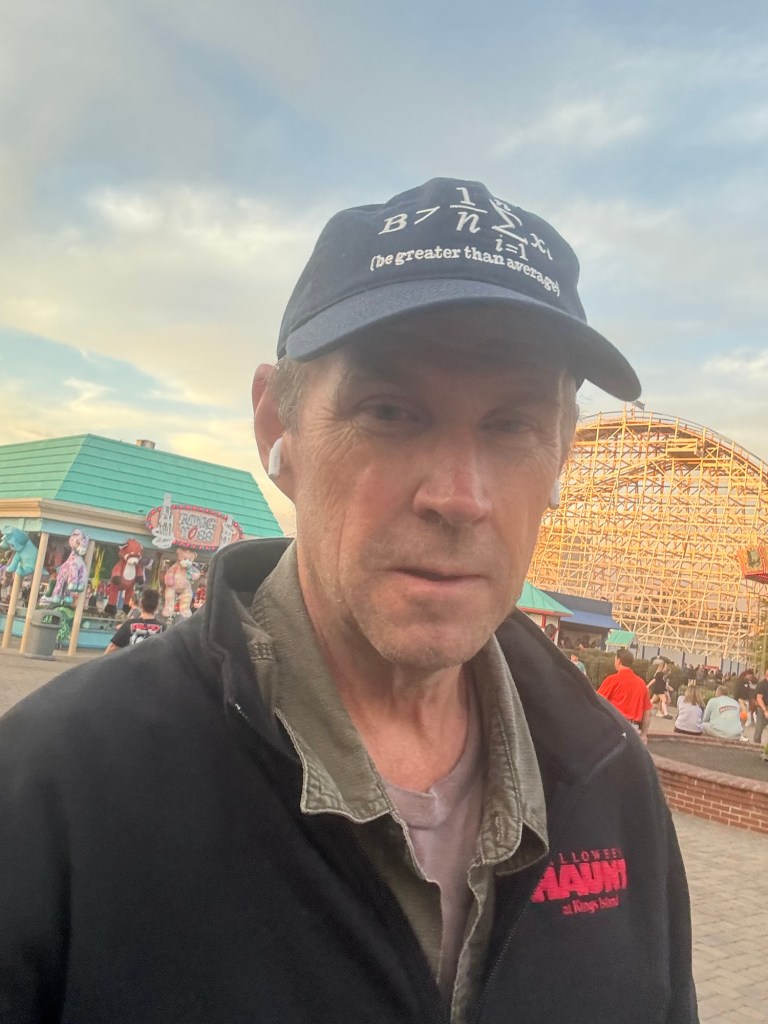
I have done the job. I am doing the job now as chief operations officer. The idea that C-level executives are interchangeable is a communist belief that has been imported into corporate culture. It treats skill as a commodity that can be swapped out once the “right” process or the “right” board politics are in place. It is wrong. A very small number of people understand how to create the conditions under which large amounts of value actually appear. Most people do not. When boards act out of jealousy or assume the next person will do just as well, they destroy the conditions the leader built. Musk was correct to call the Nvidia decision unwise for shareholders.
The Communist Assumption That Leaders Are Interchangeable
This is not new. It shows up every time a high-value person is removed because someone on the board or in the ranks resents that they cannot do the same work. Steve Jobs was pushed out of the company he helped build. His replacements could not match the results. He was brought back. John Lasseter at Pixar faced similar internal politics—the results after his removal did not match the earlier trajectory. Justin Roiland, co-creator of Rick and Morty, was removed after serious allegations; the show continued, but the specific creative force he brought was gone. James Gunn was removed from major projects over past statements and later moved elsewhere; the audience response to the replacements has not equaled the earlier work. Kathleen Kennedy at Lucasfilm oversaw a period that included major box-office returns on the sequel trilogy yet also produced deep fan alienation, a flop in Solo, and a long list of stalled projects. She has now stepped down.² The pattern is consistent: the people who resent the leader’s skill treat the skill itself as the problem and assume anyone else can produce the same output. They cannot.
I produced hundreds of millions of dollars in value that literally no one else in those organizations could have produced. Some of the people around me responded not with gratitude. It was the quiet insistence that anyone could have done it, that the conditions themselves created the results, and that I was therefore replaceable. That is the same belief Musk identified when he defended Huang. It is the belief that leadership is a job description rather than a rare capacity to set direction, hold supplier relationships, keep teams working at 3 a.m., and turn a vision into measurable results.
The Picture After the Seventeen-Hour Day
I decided to prove the point instead of arguing with it every day. I took myself from the top of the structure to the absolute bottom of the barrel. The photograph I have been showing was taken after a seventeen-hour workday at Kings Island under deliberately difficult conditions. The sun was going down. I still had hours left. I look ragged and exhausted. There is anger in the face. The anger is not at the work. The anger is that I had to go to the bottom to demonstrate what should have been obvious: unique people create the conditions. The conditions do not create the people.
When that picture was taken, I was already building the next positive outcome from material others had treated as unworkable. I am still doing it. The low position rises because the person who knows how to create value is present. The high position falls when that person is removed, and the remaining people assume the system will keep producing the same results. It will not. I have watched it happen. The rivals who whisper that anyone can do the work are usually too lazy to attempt the actual work. They fade. Watching that happen is one of the few reliable sources of satisfaction in these situations.
Why Musk’s Point on Teams and Value Holds
Musk described what actually works at SpaceX: people who will come in at three in the morning because the next ship needs to fly, and a leader who sleeps on the floor with them when necessary. Huang did the equivalent for Nvidia—decades of personal relationships with critical suppliers in Taiwan and elsewhere, technical depth you can’t hire off the street, and loyalty that kept talent in place. Those are not interchangeable attributes. Boards that treat them as interchangeable are applying a political theory to an economic reality. The theory says people are equal in capacity. Reality says a small number of people create a disproportionate share of the value, and the rest of the organization rises or falls with them.
I don’t open the door to distractions that pull people away from the work. Honeypots and personal vulnerabilities exist. Smart people stay out of them. The larger problem is the cultural reflex that treats removing a high-value person as a moral victory rather than a destruction of capacity. That reflex is now common across entertainment, technology, and ordinary manufacturing. It produces the same outcome every time: the organization that had the leader declines relative to what it would have done, and the people who forced the change discover they cannot replicate the results.
The proof is straightforward. Take the person who creates the value and place them in the worst available conditions. The conditions improve. Take the same person out of the high-value position and leave the conditions in place. The conditions deteriorate. I have run the experiment on myself. Musk stated the same principle when he said removing Huang was like removing Michael Jordan from a winning team. Both statements are correct. A culture that refuses to accept them will keep destroying value and then act surprised when the results follow.
Footnotes
1. Elon Musk, comments at the New York Times DealBook Summit, November 18, 2026. Musk stated that ousting Jensen Huang was comparable to “kicking Michael Jordan off your team” on a winning streak and that “there’s no one that can really replace Jensen.” Huang had resigned after disclosures of personal conduct issues; Nvidia’s board accepted the resignation and stated it does not intend to reinstate him. See contemporaneous reporting from CNBC, TechCrunch, and Reuters.
2. Justin Roiland was removed from Rick and Morty by Adult Swim in January 2023 following domestic-violence charges (later dismissed) and additional allegations of misconduct. Kathleen Kennedy stepped down as president of Lucasfilm in January 2026 after a tenure that included multi-billion-dollar box-office returns on the sequel trilogy alongside significant fan backlash, the commercial failure of Solo, and numerous stalled projects. Steve Jobs left Apple in 1985 and returned in 1997. John Lasseter left Pixar/Disney in 2018 amid harassment allegations. These cases illustrate a recurring pattern: removing high-value creators and then struggling to replicate their results.
Bibliography for Further Reading
• Elon Musk remarks, New York Times DealBook Summit, November 18, 2026 (CNBC, TechCrunch, Reuters coverage).
• Nvidia board statements and earnings call, mid-November 2026 (Reuters, AP).
• Coverage of Justin Roiland’s departure from Rick and Morty (NBC News, Hollywood Reporter, 2023).
• Kathleen Kennedy’s exit from Lucasfilm (AP, Forbes, The Wrap, January 2026).
• Standard accounts of Steve Jobs’s 1985 ouster and 1997 return.
• Accounts of John Lasseter’s 2018 departure from Pixar/Disney.
• Rich Hoffman, The Gunfighter’s Guide to Business (for the practical application of leadership that creates conditions rather than waiting for them).
Rich Hoffman
More about me
Click Here to Protect Yourself with Second Call Defense https://www.secondcalldefense.org/?affiliate=20707
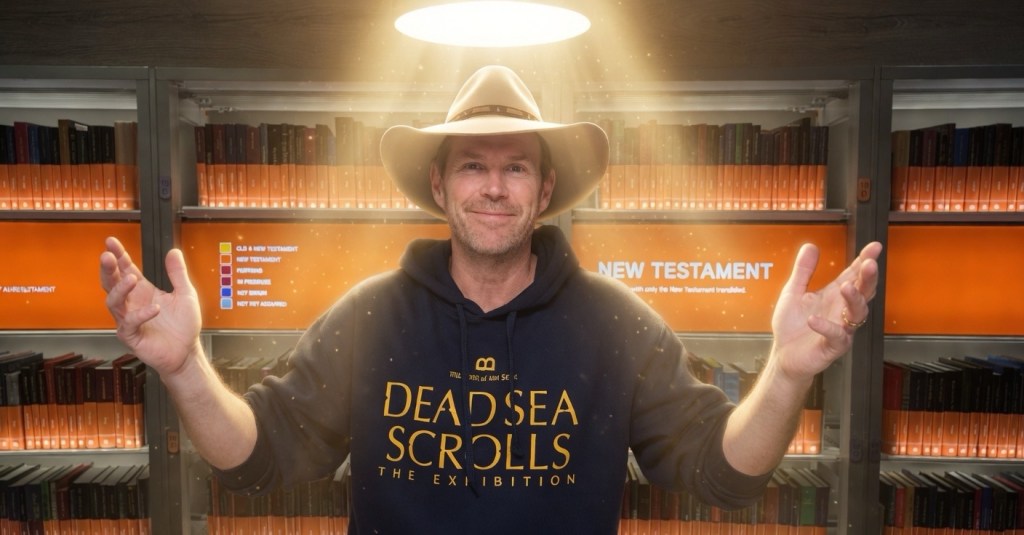
About the Author: Rich Hoffman
Rich Hoffman is an author, political consultant, and strategic advisor based in Cincinnati, Ohio, and the creator of The Politics of Heaven—a unique framework that connects biblical theology, ancient history, and modern power structures to explain how moral alignment and spiritual forces shape global events. Blending real-world political experience with deep research into archaeology, UFO phenomena, and suppressed historical narratives, Hoffman offers compelling commentary on topics ranging from ancient civilizations and the Dead Sea Scrolls to modern populist movements, paranormal continuity, and leadership strategy in chaotic environments. As the author of The Gunfighter’s Guide to Business and the forthcoming Politics of Heaven, he brings a grounded yet provocative voice to media discussions, supported by firsthand experiences and a cross-disciplinary approach that bridges science, history, and theology. For interviews, speaking engagements, or expert analysis, visit richhoffmanbooks.com or contact directly by email at rhoffman@richhoffmanbooks.com. If you’ve seen the movie, Disclosure Day and want to talk about it and the implications of Presidnet Trump’s UAP disclosures, let me know and we can bring some color to your coverage. https://richhoffmanbooks.com/media-inquiries-broadcast-topics-and-contact-info/?frame-nonce=ad51e7ecba I do have a firsthand UFO encounter to discuss.

