Jake Paul’s recent fight with Anthony Joshua is the perfect illustration of what happens when spectacle replaces substance. Paul, a YouTube celebrity with millions of followers, stepped into the ring against a world-class heavyweight—a man with Olympic gold and years of professional dominance. The pre-fight theatrics were designed to sell the drama, but anyone who understood boxing knew the outcome was inevitable. Paul fought briefly, suffered a broken jaw in two places, and left the arena humiliated in front of tens of millions of viewers. Yet, for him, the payday—reportedly $92 million—made the beating worthwhile. It was never about winning; it was about monetizing attention, even at the cost of personal dignity.
In many ways, that’s exactly what Nick Fuentes is doing with his attacks on Vivek Ramaswamy and, by extension, the MAGA movement. Vivek is the Trump-endorsed candidate for Ohio governor, a heavyweight in political terms, and Nick is trying to build his brand by picking a fight he cannot win. The goal isn’t policy or principle—it’s clicks, donations, and notoriety. Like Paul, Fuentes is willing to take a beating if it means short-term gains. But compromising integrity for a few bucks is a dangerous trade. Real influence comes from credibility, not shock-jock theatrics, and when the dust settles, Vivek will be fine. Nick, on the other hand, risks being remembered as the guy who sold his future for a viral moment.
Before we get lost in the weeds on Nick and the “war” he’s trying to gin up against Vivek Ramaswamy in Ohio, the first thing to understand is that this is a publicity grab, a brand‑building exercise in the attention economy dressed up as a crusade. Tucker Carlson’s long sit‑down with Nick dropped late October 2025 and lit up the right for weeks—not because Nick said anything new, but because platforming him without hard pushback sparked a visible fracture among conservatives: Shapiro condemned the interview as “normalizing” a Hitler apologist, Heritage’s president defended Tucker as a free‑speech stand, and even Senate Republicans openly rebuked the tone and content. That intra‑movement rift is real, it’s documented, and it tells you what lane Nick is driving in: controversy converts to cash. 12345
When Nick went on Piers Morgan Uncensored in December 2025, he doubled down—“Hitler was very f***ing cool,” he said, shrugging off historical atrocity with aesthetic fanboy talk about uniforms and parades. That wasn’t clipped speculation; it aired, it was challenged in real time, and it produced the predictable outrage cycle. He also conceded “at least six million” Jews were killed, but framed Holocaust memory as a mechanism to browbeat white Christians—a rhetorical move that’s been part of his pattern: push past decency, trivialize mass murder, court the shock. The point isn’t whether he “means” it; the point is that publicly saying it pays in a donor‑driven creator market. 678
And sure, people will ask how a 27‑ or 28‑year‑old ends up with this microphone. There’s a timeline: Unite the Right 2017, Groyper wars harassing mainstream conservative events in 2019, deplatforming cycles from YouTube for hate speech, and then re‑ascendance on platforms willing to host him; he even turned up at Mar‑a‑Lago in November 2022 when Ye (Kanye) brought him to dinner with Trump—a fiasco the former president later said he didn’t foresee. That dinner is a hinge in the public memory; it proved how oxygen flows to extremism when spectacle meets lax vetting. 910111213
Now, does Nick hurt Vivek in Ohio? No—he helps him by contrast. Ohio 2026 is shaping up as Ramaswamy vs. Acton, and the fundamentals are what they are: Vivek’s cash advantage, statewide endorsements, and consolidated GOP backing set the terrain; Acton’s own story is COVID‑era and compassion‑branded, but even Gov. DeWine has publicly said those shutdown decisions were his, not hers—undercutting the “Lockdown Lady” moniker his party uses. Because, DeWine is really a Democrat, and Amy was his girl. On balance, the race is competitive in public polling but leans Republican in a red‑trending Ohio; when the smoke clears, voters will choose jobs, affordability, and competence over influencer theatrics. That’s why a shock‑jock swipe from Nick won’t move the needle—it hardens a tiny niche while most Ohioans tune out the performative nihilism. 141516171819
And here’s the part nobody wants to say out loud: this is a business model. The pundit economy rewards dopamine spikes—outrage, taboo, transgression—because creator monetization has shifted from legacy ad rails to direct fan funding. Platforms like Rumble now integrate Bitcoin tipping (with Tether) so audiences can spray micro‑payments across controversial content in seconds. You don’t need brand safety; you need attention. That’s why “Hitler is cool” becomes an economic lever: it draws fire, it drives views, it pulls in tips from an aggrieved subculture that feels ignored by institutions. In this incentive structure, “being unhinged” is not a bug; it’s a feature. 202122
So, the math here is straightforward. Nick’s short‑term revenue maximizes by attacking Trump‑aligned figures like Vivek; it creates a pseudo‑rebellion narrative (“I speak the truths your gatekeepers won’t”), harvests donations, and inflates his standing with under‑30 males who see no path in a culture saturated with porn, atomized dating markets, and collapsing family formation—all frustrations he riffs on. But that same strategy destroys long‑term trust and any real governing coalition. Tucker’s interview gave Nick oxygen; Shapiro’s response—and the broader backlash—marked the boundary lines of mainstream conservatism. Vivek will do well to stay above it, keep on policy‑first, and connect with Ohio’s economy and families, and let the theatrics burn themselves out. That contrast, in the end, will decide everything. 3235
I’ll add one more note because I’ve lived this choice set: taking money and chasing the algorithm means someone else owns your argument. Independent voices who refuse the pay‑to‑play goose—whether that’s bot‑inflated follower counts or crypto tip farms—give up the easy ego pop in exchange for credibility with serious people who need facts, not theatrics. In Ohio, facts look like campaign filings, union endorsements crossing over, county‑by‑county organizing, and policy planks about taxes, education, and industry. That’s where Vivek is playing. That’s where this race will be decided. 1516
While Vivek Ramaswamy will be fine in Ohio—his strategy is solid, his Trump endorsement is strong—he could easily swat away Nick Fuentes by pointing to the Jake Paul fight as a metaphor. Picking a fight with a heavyweight when you’re clearly outmatched is reckless, and Nick’s attempt to derail Vivek’s campaign is no different. It’s a stunt, not a strategy, and it will fail.
But here’s the deeper truth Nick is tapping into: the rise of a disenfranchised generation. Under‑30 men are angry, disconnected, and increasingly unwilling to pursue marriage or family because they see the culture as broken—porn saturation, hookup norms, and progressive narratives have eroded trust. Nick speaks to that frustration, and that’s why his voice resonates even when his tactics are self‑destructive. This is the future of media and politics: decentralized, unfiltered, and without institutional guardrails. Legacy platforms can’t contain it, and the genie isn’t going back in the bottle. Even when Vivek wins and MAGA thrives for now, the next wave will be shaped by these angry young men who feel robbed of a normal life—and commentators like Nick will only grow louder in that vacuum.
—
Footnotes
1. Tucker Carlson’s interview with Nick Fuentes published Oct. 27, 2025; episode listings and YouTube analytics confirm timing and reach. 12
2. Coverage of the interview’s fallout and intra‑GOP rift (Heritage defense; Shapiro’s critique; Senate Republicans’ reactions). 345
3. Piers Morgan interview (Dec. 8–9, 2025) where Fuentes said “Hitler was very f***ing cool”; additional reportage on his Holocaust remarks. 687
4. Fuentes background and extremism timeline: Unite the Right, Groyper wars, deplatforming, ideological positions. 9
5. Mar‑a‑Lago dinner (Nov. 22–25, 2022) with Ye and Fuentes; Trump’s later statements on not recognizing Fuentes. 10111213
8. Shapiro’s extended takedown of Tucker/Fuentes; the boundary between mainstream conservatism and the groyper fringe. 235
—
Selected Bibliography
• Tucker Carlson x Nick Fuentes: “Tucker Carlson Interviews Nick Fuentes” (Podchaser listing, Oct. 27, 2025); “Tucker Carlson Interviews Nick Fuentes” (YouTube). 12
• Intra‑movement rift: USA TODAY analysis of interview fallout; POLITICO on Shapiro’s critique and Heritage backlash; Fox News coverage of the AmericaFest sparring. 345
• Piers Morgan interview: The Independent, Jewish Telegraphic Agency, and The Forward reports on Fuentes’ Hitler comments and Holocaust remarks (Dec. 2025). 687
• Mar‑a‑Lago dinner (2022): USA TODAY, NBC News, ABC News, POLITICO accounts and Trump’s statement. 10111213
• Ohio 2026: Cleveland Scene and Columbus Underground on fundraising and endorsements; Acton campaign site; NBC4 on DeWine’s COVID responsibility remarks; Ohio Capital Journal profile. 1415241718
• Creator monetization: Cointelegraph and industry reports on Rumble’s Bitcoin tipping rollout and Tether partnership. 20
You want the switch flipped in the storage locker, the last light turned off, and the chain of events made to click—clean, audible—like a bolt sliding home. So here’s the Brown shooter case, the way I see it, the way the case sounds when you’ve done the hard part and need the paperwork to catch up to the conclusion, but it never does, because that’s the nature of conspiracy. So, let’s start at Brown University, finals week, Barus & Holley—the engineering building, a first-floor classroom, kids huddled into a study session—and an assailant who walked in with a 9mm and fired around forty rounds, killing two, wounding nine, and triggering a search that ran across states and ended in a New Hampshire storage unit with a body, two pistols, body armor, phones, and the kinds of IDs and thumb drives that investigators comb for motives that never quite appear. The suspect: Claudio Manuel Neves Valente, 48, Portuguese national, former Brown physics grad student circa 2000–2001, withdrew by 2003, last known address in Miami. Claimed alone; matched by ATF/FBI ballistics; found dead by a self-inflicted gunshot wound; autopsy timed his death likely two days before discovery. The police narrative is linear, methodical, and, to their credit, supported: surveillance, a rental car, a license plate reader, a tip originating on Reddit from “John,” a mysterious witness who cracked the case open, tracing a grey Nissan with Florida tags to an Alamo rental, anchoring the suspect’s name to paperwork and video frames—then running the string to Salem, New Hampshire, where the locker doors were breached and the search ended. 12345
“Okay,” you say, “but MIT? How does Brookline link into Providence?” That’s where it gets tight: Professor Nuno F.G. Loureiro, 47, was shot in his home two days after Brown. Federal prosecutors say the suspect previously attended the same Portuguese university as Loureiro; classmates recall the suspect as brilliant but volatile. The U.S. attorney connected the rental car movements from Boston to Providence and back, and later to New Hampshire. ATF and FBI say two 9mm pistols recovered with the body correlate—one to Brown, one to Loureiro. Rapid DNA preliminarily matched the suspect to Brown-scene evidence. Motive? Unclear. But the official chain is stitched: a single offender acting alone, two crimes linked by ballistics, travel records, and surveillance timelines. 67358
I’ve seen neat narratives before—too neat, there are a lot of problems with this case. Homeless tip, locker, suicide, no interview, gun matches, case closed. We’ve been here many times before. San Bernardino had the ‘terrorism-or-not’ dance before the bureau put a label on it.” In 2015, the FBI designated San Bernardino as a terrorism homegrown violent extremist, self-radicalized. It took days; the public memory often compresses the sequence. But the record shows Comey’s official framing and the FBI’s documentation of the radicalization indicators, alongside caution that the attackers weren’t part of a larger network. That’s all in the transcripts and the DOJ-COPS incident review that dissected command and communications. I’ve covered this case extensively over the years, and the FBI clearly contaminated the crime scene with the media to shake the case into an easy conclusion where they controlled the narrative. 91011 This kind of behavior would later be revealed in Comey’s handling of the incoming presidency of Trump.
I’ve been around rooms where hit men get green lights and walk out with tacit immunity. I know the feeling of a case that’s been pre-sorted. I hear ‘MKUltra’ in the pattern of this Brown University shooting. Operation CHAOS ran domestically even when the charter said otherwise. Drugs. Leverage. Control. Charlie Manson—how do we not see it?” And this is where disciplined skepticism meets documented history. MKUltra happened. It was clandestine, unethical. Gottlieb ran it; LSD and other substances were tested on unwitting subjects; much of the paper trail was destroyed. That’s not “theory”—it’s recorded, investigated, and widely sourced. Operation CHAOS existed: inter-agency projects surveilling domestic movements amid Cold War paranoia, overlapping with the FBI’s COINTELPRO. Those programs are in official histories and journalism. Where the debate sharpens is the degree to which MKUltra or CHAOS tangibly shaped specific criminal acts or assassinations, and whether Manson was an instrument rather than merely a manipulative sociopath who exploited a drug-saturated counterculture. Tom O’Neill’s book CHAOS pushes hard on those linkages; Errol Morris’s 2025 Netflix doc explores O’Neill’s material while stating on camera he isn’t entirely convinced. Reason’s review captures that tension: dogged reporting, provocative connections, and a frank admission about what’s not proven. People Magazine and The Standard recapitulate the operation’s history and O’Neill’s framing. Wikipedia’s CHAOS entry, while tertiary, anchors dates and publication context. All of that gives you a scaffold: MKUltra and CHAOS are real; the “Manson-as-mind-control asset” remains a hypothesis with intriguing circumstantial roads and contested conclusions. 1213141516
Intelligence programs did pursue capabilities that, left ungoverned, warp into precisely the abuses I’m describing. In 2025, Brown/MIT investigators found no writings, no cohort, no direct ideological manifesto—no Islamist tie, despite early rumor fog. The autopsy nails suicide—the ballistics match. The timeline is complete with the standard drudgework—video canvases, LPR hits, rental contracts, financial traces, and an eyewitness who chased the suspect on foot and recorded enough detail to triangulate the car. If there’s an invisible hand, it left no fingerprints in the evidence boxes presented to the press, which is why controlling the narrative is so important in these cases, and is at the heart of the conspiracy, and the cover-up. These are authority figures who have lost the trust of the public because of their vast past incompetence. 123
Like the Brown killings and the Manson case, the Charlie Kirk hit has the smell of trained escalation. The record on Kirk is, tragically, public and detailed: shot on Sept. 10, 2025, at Utah Valley University, an outdoor event, a single lethal shot, a search, a strong consensus describing the act as a political assassination, with subsequent reporting documenting the suspect’s surrender and charges. Across mainstream outlets—PBS/AP live updates, USA TODAY analysis on rising political violence, ABC News coverage of the search, Fox’s timeline, and even Britannica’s digest—the event is treated as targeted political violence. No credible outlet has publicly substantiated an MKUltra-style control narrative here; the official storyline is a sniper attack amid a documented rise in politically motivated threats and violence across the spectrum. The timeline of the killer in that case, engineered radicalization through online interactions, the Furry culture, and likely drug use among the peers produced evidence of orchestrated programming that we’ll never learn about, because the same investigators who set up the scenario are the same ones doing the investigation. As long as they can put a logical ribbon on the story, the details will be lost to the whims of chaos. The present, verifiable truth is that assassinations “work” in the brutal arithmetic of power vacuums and coalition fragmentation; Matt Walsh’s comments on that point echo a centuries-old grim reality: kill one leader and you often create chaos rather than a million martyrs. 1718192021
We have a long history of the intelligence state learning to steer populations. Drugs are the lever; compromise is the clamp. Here, the record is mixed but consequential. MKUltra’s intent included behavior control. The technique set—psychoactive dosing, sensory manipulation, psychological breaking—was documented, condemned, and dismantled in public view. Operation CHAOS and COINTELPRO surveilled and infiltrated domestic groups. It’s fair—and historically supportable—to argue that those programs sought influence over mass behavior. It’s also fair to say that the cultural legacy—mistrust, prosecutorial skepticism, and persistent fear of engineered radicalization—survived well beyond the programs’ official end dates. O’Neill’s book treats Manson as a possible node in a larger pattern; Morris’s film examines but does not authenticate every link. That is the present epistemic posture. 1213
Now, let’s stitch the Brown/MIT narrative into cohesive, investigative, clean of rumor, clearly flagged as such, and consider the story under the lens of history. Start with the site: Barus & Holley, Providence, Dec. 13, 2025, 4:05 p.m. Shelter-in-place; grainy surveillance; early misidentifications; a person detained and later released Sunday; FBI announces a $50,000 reward Monday; a public map showing movements near campus; a “John” in the footage that police seek to identify. By Thursday, a breakthrough: a Reddit post about a grey Nissan with Florida plates, believed to be rented; “John” identifies himself; police find the rental company, pull the contract, and get the suspect’s name, plus video stills matching the clothing worn by the shooter. Then the license-plate readers point to the vehicle’s path; the car is seen intermittently around Brown from Dec. 1–12; the suspect travels, swaps plates to an unregistered Maine tag, and heads north; FBI SWAT executes warrants and finds the suspect dead in Salem, NH, at 9 p.m. Two firearms. A satchel. Body armor. Phones. Thumb drives. The autopsy on Friday calls suicide; estimates death occurred Dec. 16. ATF/FBI match the guns—one to Brown, one to Loureiro—and report preliminary rapid DNA linking the suspect to Brown-scene evidence. Press conferences at Providence and Boston lock the conclusion: one offender, two related crimes. No manifesto. No accomplices. Motive unknown. 122234235 The main question that arises, who is John from Reddit?
And now we had a mass shooter and an immigrant program intersecting at the podium, enough meat to wave away critics of the case with a shiny new toy. Within twenty-four hours, Homeland Security announces a pause on DV lottery-linked green card cases, the State Department pauses diversity visas, and the political layer lights up—evidence that the suspect entered on DV1 in 2017. Policy, blame, deterrence—the usual sequence. This is how a hidden hand remains so in these cases, how public bandwidth is used to conceal the real story; it is proof of the political reflex to attach immigration architecture to tragedies involving foreign nationals. That reflex is its own story. 724
The Brown/MIT case can be laid out in verifiable terms that contradict early social media claims about Islamist motives or campus cover-ups, because the ballistics and autopsy are hard facts, and the investigative timeline is coherently documented across outlets, conveniently, both guns were at the scene, set out nicely to remove all doubt. But we have a historical record: MKUltra’s existence, Operation CHAOS’s framework, COINTELPRO’s domestic operations, and the known ways agencies pursued behavioral leverage via drugs, surveillance, infiltration, and disinformation. From there, we can and should argue that modern patterns still exhibit the signatures of chaos management: misinformation storms, rapid political pivots, and neat closures that evade deep motive accounting.
Charlie Kirk’s assassination is a wound in the nation’s nervous system added to an already long list; the Brown/MIT chain is a wound in a university community; San Bernardino was a wound that aged into a permanent scar on policy and practice. In every case, the first narratives are unstable, and the final narratives may be incomplete. Reading back through O’Neill and Morris, through FBI releases and DOJ reviews, through PBS/AP live logs and USA TODAY retrospectives, you can say: America’s institutions have proven they can both investigate well and fail spectacularly; the intelligence state can both protect and overreach; and the line between manipulation and enforcement remains the most dangerous seam in our civic fabric. Drugs, kompromat, pressure—those are tools. The question is who wields them now and to what documented effect. And the crimes of concealment are in erasing the evidence before anybody can uncover it, such as witness statements indicating that the shooter yelled an Islamic reference during the killings, which turned out in the end to be reported, “he barked like a dog.”
What makes the Brown University case so unsettling isn’t just the violence—it’s the speed and neatness of the official narrative. A suspect identified, a body found, a motive declared “unknown,” and the story sealed before the public could even process the contradictions. If you’ve studied the history of covert influence—from MKUltra’s mind-control experiments to Operation CHAOS and COINTELPRO—you know these patterns aren’t new. They rely on complexity that exceeds the average person’s ability to digest, then offer a simplified explanation that satisfies curiosity without exposing the machinery behind it. That’s how power protects itself: by controlling not just events, but the interpretation of those events.
The lesson is bigger than one crime. When institutions learn they can steer perception, they will—whether through media framing, selective disclosure, or outright fabrication. Oversight exists for a reason, because unchecked authority becomes a self-perpetuating system of manipulation. Today, those same psychological levers pioneered in the Cold War are embedded everywhere: politics, advertising, entertainment, and yes, intelligence operations. The Brown case is a reminder that truth often hides behind the curtain of “closure,” and unless we demand transparency, the cycle will continue—quietly shaping the world while most of us accept the story we’re given.
—
Supplemental Notes & Footnotes (by topic)
Brown University shooting & MIT professor killing (Dec. 2025):
• Suspect identified as Claudio Manuel Neves Valente, 48; former Brown physics grad student; found dead by suicide in a Salem, NH storage unit; linked to both crimes via ballistics/DNA; motive unknown. 135
• Investigative breakthrough came via eyewitness “John” and a Reddit post about a grey Nissan with Florida plates; rental contract and surveillance confirmed ID; Flock Safety LPRs helped track the vehicle. 27
• Evidence recovered from storage unit: two 9mm pistols, ammo, body armor, multiple phones, thumb drives, IDs; FBI analyzing for motive. 4
• Autopsy: self-inflicted gunshot; estimated date of death Dec. 16; body found Dec. 18. 23
• Policy reaction: DHS and the State Department pause DV lottery-related processes after confirmation that a suspect entered via DV1 in 2017. 247
San Bernardino (Dec. 2015) for historical comparison:
• FBI officially designated the attack an act of terrorism, citing indications of radicalization and attempted destruction of digital evidence; emphasized no larger directed network. 910
• MKUltra: CIA mind-control experiments (1950s–’60s), led by Sidney Gottlieb; documented use of LSD and other methods; evidence partly destroyed; later investigations and bans. 12
• Operation CHAOS: CIA domestic surveillance/infiltration of antiwar/counterculture movements; referenced in O’Neill’s CHAOS. 14
• Tom O’Neill’s book CHAOS (2019) argues alternative linkages among Manson, MKUltra, and intelligence programs; Errol Morris’s 2025 Netflix documentary explores, but with measured skepticism. 13
• Pop and press summaries of MKUltra’s history and claimed Manson connections provide accessible context but are not dispositive proof. 1516
Charlie Kirk assassination (Sept. 10, 2025):
• Live updates and mainstream reporting document the assassination, search, suspect surrender/charges, and political reverberations; no verified evidence of MKUltra-style programming made public. 171819
• Commentary on the political impact and the grim efficacy of assassinations in creating leadership vacuums. 21
—
Bibliography & Further Reading
Primary/current-event reporting (Brown/MIT 2025)
• Boston Globe/Boston.com live coverage: “Man suspected of Brown University shooting, MIT professor slaying found dead in N.H. storage facility” (Dec. 18–19, 2025). 1
• ABC News: “What investigators know about suspected Brown, MIT shooter and hero tipster” (Dec. 19–20, 2025). 2
• USA TODAY: “What we know after authorities find Brown shooting suspect dead” (Dec. 19, 2025). 3
• NBC News live blogs (Dec. 19, 2025): suspect found dead; ballistics/DNA updates. 65
• CBS News live updates: motive sought; DV program pause. 7
The truth about affordability, because that’s the tired drumbeat the Left will pound all the way into 2026: “prices are high, blame the billionaire.” It’s the same old class-war script—paint the rich guy as out of touch, pretend the pain at the pump and the grocery store fell from the sky, and hope voters forget who built the scaffolding for that pain. The truth is, affordability has roots—deep, structural roots—in policy choices that take years to unwind. Unwinding is slow; rebuilding competitive markets is slower; letting innovation breathe is slower still. But it happens. And when it happens—especially around energy and health care—you feel it first in the path of prices, then in the path of opportunity. That’s the meat and potatoes of the issue that everyone needs to understand as we go forward.
Starting with health care because it’s so grotesquely obvious—the Democrats’ favorite talking point and, paradoxically, their favorite controlled market. What the public senses as “expensive care” is really an industry whose cost structure is defended by regulation, protected monopolies, and financial engineering that prioritizes jobs and margin over cures. Just look at the macro: national health expenditures reached roughly $4.9 trillion in 2023—17.6% of GDP—and blew past $5 trillion in 2024, with CMS projecting the health share of the economy could hit 20.3% by 2033. That’s not me speculating; it’s the official actuaries. They estimate spending growth of 8.2% in 2024 and 7.1% in 2025—outpacing GDP—driven by rising utilization and coverage levels. 1234 You don’t need a PhD in economics to hear what that says: health care, as currently constituted, is set on an upward cost glide path that eats the economy.
Dig beneath the top line, and you find what patients feel: hospitals posted double-digit spending growth in 2023; physician services accelerated; prescription drugs jumped more than 11% in 2023 alone. 1 These are not isolated blips—they’re part of a financing machine that has learned to monetize chronic decline. It’s the difference between maintaining weakness for revenue and making patients truly well, which would shrink the revenue base. That philosophical choice drives both policy and practice.
Layer in the private‑equity wave. In health care, PE ownership has expanded rapidly across hospitals, specialty practices, nursing homes, and ancillaries. Systematic reviews in BMJ and updates from Wharton’s HMPI synthesize dozens of empirical studies and repeatedly find what clinicians and patients suspect: PE ownership is most consistently associated with higher costs to patients or payers and mixed-to-harmful impacts on quality. Staffing skews downward, administrative pressure increases, and the exit horizon is 3–7 years, with debt piled onto the acquired entity. 56 Even JAMA’s coverage of the evidence lands in the same place: higher costs, quality concerns. 7 Now, to be fair, not every PE hospital outcome is catastrophic; a late‑2025 research brief found no excess closures and cost-cutting concentrated in admin rather than core medicine, though patient satisfaction dipped. 8 But the through‑line is unmistakable: financialization has bridged into care delivery, and the pass-through is inflationary for payers and patients. When you lace debt service, management fees, and rapid roll-up incentives on top of already rising unit costs, affordability dies by a thousand cuts.
And we haven’t even touched the bigger affordability architecture—consolidation and financialization across supply chains. Ten years ago, lean shops squeezed costs by owning their processes and competing in open markets. Today, in many sectors—manufacturing, food processing, distribution—the playbook is add-on acquisitions, platform roll-ups, and fee-driven intermediaries. Private equity has poured roughly $262 billion into U.S. manufacturing firms since 2020, explicitly to consolidate and “unlock value at speed,” while debt financing has been layered into an already fragile logistics environment. 910 The National Economic Council’s 2021–2024 Quadrennial Supply Chain Review lays it out in sober terms: critical chains—from energy components to pharmaceuticals and agri‑food—were brittle, policy‑distorted, and subject to non-market practices that amplified shocks. 11
Why should voters care about that alphabet soup of capital and supply chain policy? Because the price on your shelf has a genealogy. COVID made that visible; economists at Brookings argue that the inflation shock was largely supply-driven, with long lags as delivery times normalized and margins reset—proving that what breaks upstream ripples downstream for years. 12 The Richmond Fed estimates that about half of a disruption’s total effect comes from amplification through the supply network; shocks abroad propagate into U.S. GDP and inflation, and re-shoring, redundancy, and inventory carry real cost. 13 Translation: if you replace diversified mom‑and‑pop networks with concentrated platforms, then hit those platforms with a once-in-a-century shock and policy friction, you get sticker shock that doesn’t vanish overnight.
Then there are the minimum wage mandates, which I warned about a decade ago when Democrats pushed for them and which, mainly, got what they wanted during Covid—the bottom-up piece of the affordability puzzle. The Left sells them as “free money,” then acts surprised when menus and price tags jump. The CPI tells a straightforward story: food away from home rose 3.6% in 2024, outpacing grocery inflation, and industry groups show menu prices still rising into late 2025. 1415 CNBC put a fine point on limited-service meals: almost 28% price growth from 2019 to 2023—well above the overall CPI—driven in part by labor cost increases that chains passed on to customers, especially in high-mandate states. 16 The academic literature fills in the mechanism. Recent meta-analysis estimates a 0.03–0.11 price elasticity to minimum wage changes—meaning a 10% hike produces roughly 0.3–1.1% price increases, bigger in labor-intensive sectors like restaurants. 17 NBER and Upjohn surveys show mixed employment effects but clear evidence of slower job growth and hours adjustments over time, with price pass-through in narrow industries. 1819 And when wage floors leap in gig delivery, the “unintended consequences” are no longer theoretical; a 2025 NBER working paper tracking Seattle’s 2024 ordinance found base pay doubled per task, but tips and order volume fell, netting out the gains for most active drivers within a month while delivery costs popped and idle time rose. 20 All that flows straight into the affordability experience at the counter. If your value meal used to be $5 and now feels like $10, it’s not imaginary—the chain is absorbing higher mandated labor costs, higher input volatility, and a consolidated middleman layer that taxes every step. The macro data confirm the sting: food prices rose 2.5% overall in 2024, but restaurant inflation was higher, and eggs, beef, and insurance were outliers. 14
The other pillar in the affordability conversation is energy—because it feeds trucks, ships, harvesters, ovens, and heat. Here’s some good news: U.S. oil production set records through 2024 and 2025, with the EIA projecting record crude and gas output in 2025, and AAA reports December 2025 gasoline averages around $2.89 nationally—the cheapest December since 2020. That’s not partisan; that’s a supply reality. 212223 The EIA’s Short‑Term Energy Outlook expects Brent to settle near $55/bbl through 2026 as inventories rise, while dry gas production continues climbing. 24 In plain English: drilling and efficiency gains—especially in the Permian—have kept domestic supply high and prices stable, muting one of the biggest drivers of household pain. 25 So when we say a pro‑production posture affects affordability, this is the line we draw: more barrels and cubic feet, fewer spikes at the pump, cheaper freight, easier input cost for food and goods.
Affordability isn’t “high versus low prices in a vacuum.” It’s the architecture of how costs stack up: energy feeds logistics; logistics feed input prices; input prices feed menus and store shelves; health care premiums drain the checking account regardless. If your cost stack is built on regulated scarcity, consolidated intermediaries, debt‑service layers, and mandated wage floors, you’ve engineered inflation. If you reverse the stack—by increasing supply (energy), rebuilding distributed ownership (manufacturing and ag), and unleashing cures (health)—you engineer disinflation. And yes, it has a lag because capital redeployments and networks re-route over quarters, not weeks.
Now, about health care’s future—the part that sounds disruptive because it is. The frontier is not the following billing code; it’s gene editing, cellular regeneration, and targeted micro‑devices that fix the plumbing without cracking open the chest. CRISPR-based therapies have already crossed the FDA threshold for specific indications, signaling that programmable biology isn’t science fiction anymore, though current price points are eye-watering and regulatory guardrails are tight. 26 Stem cell advances proceed unevenly under FDA frameworks, but the pipeline is real, and the durability of regenerative approaches changes the calculus on chronic disease costs. 27 As for “nanobots in arteries,” let’s be scientifically precise: at present, that’s experimental vision—nanotechnology for targeted delivery and plaque management is under research, but widespread, approved deployment in the U.S. is still a few years away, as in 2030. The trajectory, however, is toward minimally invasive, programmable interventions that obviate today’s expensive, labor-intensive procedures. If you strip the hype and ask, “What happens to costs if cures replace maintenance?” the answer is radical deflation in medical services that today require giant physical plants, armies of staff, and recurring billing. The only things stopping acceleration are policy acceptance and risk-tolerant frameworks that protect patients while allowing innovation to scale.
That leads to the tricky question: do we design a system that keeps people sick slowly—so the machine gets paid—or do we create a system that heals fast, and then reallocates labor to growth sectors like space, advanced manufacturing, and AI-enabled industrials? We can’t flip that switch in two months. If you liberated regenerative and gene therapies tomorrow without adjusting reimbursement and licensure, you’d displace millions of jobs and crash legacy revenue streams. But over a decade, with clear lanes for innovation and targeted transition support, you can migrate human capital to sectors that compound prosperity—what I call the “space economy” and adjacent fields—so people live longer, healthier lives and earn across extended productive spans. Morgan Stanley and others project trillion-dollar trajectories in space-enabled services, manufacturing, and communications; the point isn’t the exact number, it’s the labor shift: from managing decline to building frontiers. 28
Affordability also lives in the home. Property taxes are the most visible local lever, and they’ve been creeping up. ATTOM’s national analysis finds the average single-family property tax bill rose about 5–6% in 2024 to roughly $4,300, while effective rates ticked slightly down as home values rebounded. The press summary in early 2025 pegged average bills around $4,172 and highlighted regional variance, with Northeast/Midwest rates higher. Different methodologies, same lived experience: homeowners feel the pinch. 2930 AAA talks about gas as one side of the ledger; property taxes are the other, especially in school-heavy budgets. The Lincoln Institute’s state-by-state comparison shows effective rates are a function of reliance on property tax, home values, and spending levels, with Detroit at the high end and Honolulu at the low end for homestead effective rates. Assessment limits can shift burdens onto new buyers—a silent affordability killer. 31 Economists even argue that higher property taxes can—counterintuitively—reduce entry prices and reallocate homeownership toward younger families by capitalizing the tax burden into lower upfront costs, though that shifts pain onto older and low-income owners. 32 My point isn’t that one tax tweak fixes affordability; it’s that you can’t jack up wages, ignore supply, and raise local levies without squeezing families from three directions. If wages must rise for entry-level dignity, then energy, health, and taxes must fall—or the squeeze is intolerable. That’s arithmetic.
Ask yourself: who broke the affordability architecture? Food-at-home inflation cooled in 2024—USDA pegs it at around 1.2%—because some inputs normalized after supply shocks, yet restaurants remained pricier because labor and overhead didn’t normalize. Eggs spiked again on disease resurgence; beef rose on low cattle inventories. 33 Meanwhile, gasoline trended down year‑over‑year into late 2025; the national average sat below $3 by December. 2223 None of that aligns with the “blame the billionaire” slogan. It aligns with policy levers: energy supply, wage mandates, consolidation rules, and the health care financing model.
So when critics sneer, “What does a billionaire know about affordability?” the answer is: affordability isn’t about your bank account, it’s about whether you understand the machine. In 2017-2019, we saw what pro-production energy, plus regulatory breathing room, can do—pump prices stabilized, and freight costs fell. In 2024‑2026, EIA projections show strong domestic output and soft global prices—potential tailwinds if you don’t throttle drilling or overregulate pipelines. 2124 In the next three to five years, health innovation could begin to bend the cost curve—but only if you let it. And over the same window, you can chip away at consolidation by encouraging distributed ownership, limiting fee extraction, and restoring competitive procurement in sectors like aerospace and ag.
Agriculture is instructive. USDA reports 1.89 million farms in 2023—down slightly—with land in farms also down and acreage concentrating in high‑sales classes. In 2023, farms with $500,000+ in sales operated roughly half of all farmland—a consolidation pattern built over decades. 34 ERS’s historical work shows crop acreage shifting persistently toward larger operations; livestock consolidation has been episodic but dramatic in some lines. 3536 Production expenditures climbed to about $482 billion in 2023, with feed, labor, and services dominating the cost share. 37 That’s not a mom-and-pop landscape; it’s an industrial farm economy whose cost base moves with energy, labor, and finance. If you push mandates and taxes up while tolerating monopolized inputs, you get $6 milk and $10 burgers.
Affordability doesn’t fix itself in a quarter. It takes enthusiasm and patience—years, not months. In a MAGA-style agenda, you’d do three things at once: push energy to keep gasoline, diesel, and electricity stable; open lanes for regenerative medicine and gene therapy with reimbursement and safety frameworks that accelerate cures; and de-financialize chokepoints in supply chains by favoring private ownership, competition, and transparency over fee-stacked intermediaries. The lag effect is real. CMS projects health’s share of GDP rising, not falling, through 2033 under current assumptions; turning that curve requires more than rhetoric. 38 But you can feel affordability improve in the interim if energy and freight stay tame and food inflation stays cooled—as the 2024 numbers did. 1433
The choice at the center of health care affordability, because it’s moral as much as economic: do we maintain people’s weaknesses to preserve a sprawling, union-protected, fee-protected medical services empire, or do we make them strong again—knowing we must redeploy those workers into frontier industries? If you want the second outcome, embrace innovation and plan the transition. The space economy, industrials, AI-enabled maintenance, precision manufacturing—those aren’t sci-fi; they’re labor sinks ready to absorb talent. 28 You don’t solve affordability by berating billionaires; you solve it by designing an economy that doesn’t require families to hemorrhage cash for energy, food, and maintenance of decline.
Today’s gas is under $3 in many regions. 22 Food-at-home inflation cooled to near 1%. 33 Health spending is still climbing because we feed the maintenance machine. 1 Minimum wage hikes push menus higher, especially in limited‑service. 1617 Consolidation and financialization tax every step of the supply chain. 1110 Property taxes squeeze homeowners even as effective rates wobble with valuation cycles. 29 If you want affordability, you have to unwind the stack that made it scarce—and that takes leadership, authentic leadership that is very hard to get and takes a lot of guts to utilize.
—
Footnotes
1. National health expenditures and projections: CMS NHE Fact Sheet and analyses indicate $4.9T in 2023 (17.6% GDP); projected 8.2% spending growth in 2024 and continued gains through 2033 to ~20.3% of GDP. 123
10. Seattle gig delivery minimum wage outcomes (2024–2025): NBER working paper coverage. 20
11. Energy production and prices: EIA STEO (Dec 2025), projections of record crude/gas; AAA national average ~$2.89 in Dec 2025; EIA weekly regional gasoline data. 24212223
12. U.S. oil production highs in 2025 (EIA/Reuters round-ups). 25
13. CRISPR therapy approvals and trajectory: FDA‑tracked approvals in 2023–2024; cost and regulation context. 26
14. Stem cell therapy/regulatory status: overviews and policy context. 27
15. Space economy outlooks and manufacturing metrics: NIST manufacturing report (2024) for macro context; industry projections. 28
16. Property tax trends: ATTOM 2024 analysis; Mortgage Professional America summary (2025); Lincoln Institute 50-state comparison; Minneapolis Fed analysis on property taxes and home prices. 29303132
17. Agriculture consolidation and expenditure trends: USDA NASS Farms and Land in Farms (2023); ERS “Three Decades of Consolidation”; AEI policy slides; NASS production expenditures (2023). 34353637
18. Food‑at‑home inflation easing in 2024; category specifics and 2025 outlook: USDA ERS Charts of Note. 33
(I wrote this before Trump signed that stupid pot executive order. I won’t write any more support for Trump, or speak favourably of him in any more videos. This article is still true, and is the case with Ohio in general. People can do what they want. For me, this is where I step off the Trump train. It was fun while it lasted. He said people from my side didn’t call him to warn him away from making that really dumb decision. Well, I warned him, and he did it anyway. So I’ve cooled off a lot on Trump and don’t feel like defending him any longer, as it’s a waste of my time. With that said, the facts of this article still hold. The Democrats are offering worse people, with even dumber ideas about pot and civilization in general. So the facts are the facts. But because of Trump’s all talk and no action on the essential things, and his alignment with pot, I am done with his administration. I took down all my Trump signs and got rid of all my Trump collectibles. I didn’t throw them away; I put them away and out of sight. They are part of history. But I am no longer as proud of Trump as I have been for 10 years. Needless to say, between him and the Democrats, Ohio will still pick him.)
Ohio didn’t suddenly sour on Trump because one online poll said so, and the breathless headlines that tried to turn a three-month, opt-in web survey into a pronouncement on the Buckeye State’s political soul tell you more about the media’s incentives than about voters. The story making the rounds came from Morning Consult’s December state-level approval tracker, which rolled up interviews from September through November and reported Ohio at 49% disapprove, 48% approve, 2% don’t know—net −1, same as Iowa. That is the entire basis for the “Ohio flips negative” narrative. It’s wafer-thin, within the plausible margin for any nonprobability sample, and it relies on online panel responses that are later weighted to look representative. If you know how Ohio votes, and who actually shows up on Election Day, the “flip” reads like a media convenience, not a signal. 12
Start with what the poll is, not what people pretend it is. Morning Consult’s state approval series is an online, quota‑- and sample-tracking program; they interview registered voters every day via a network of web panels, then weight those respondents to government benchmarks and past vote, and publish a three-month rolling average for each state. They’re transparent about it: a July 2025 methodology primer spells out the quota sampling, ranking, and the +/-1 to +/-6 point state-level margins, depending on population. In other words, these are not random samples drawn from a known frame of all Ohio voters; they are scaled, modeled estimates built from opt-in online interviews, aggregated across a quarter. That matters when the “movement” being hyped is a one-point net change. 34
If you want to understand why these numbers gyrate month to month, look at how they’re constructed. Nonprobability online panels can be excellent for speed and topic tracking; they also introduce two significant vulnerabilities in politics: coverage and self-selection. Every serious polling standards body has wrestled with this. AAPOR’s task force reports—one classic from 2013 and another extensive update in 2022—explain that opt-in online samples don’t give you known selection probabilities for respondents, so you rely on weighting and modeling to back into representativeness. That’s defensible for many uses, but it’s also where nonresponse and selection biases can sneak in, mainly when partisan participation differs across modes. The reports also catalog quality metrics to diagnose panel drift and response attentiveness; the punchline is that online panels can be made useful, but you must keep their inferential limits in mind. None of that supports turning a −1 net in a rolling average into “Ohio abandons Trump.” 56
It’s not just theory. The lived reality in Ohio has been three straight presidential cycles of double-digit rightward lean relative to the country and consistent Trump wins. In 2024, Trump carried Ohio by about eleven points—roughly 55% to 44%—adding more raw votes than he had in 2020, even as total turnout dipped slightly. That outcome reinforced the long glide from swing‑state status to reliable red terrain, with the GOP broadening margins across most counties. Anyone living here saw the on-the-ground coalition: working-age voters in exurbs and small industrial towns whose politics are shaped by affordability, energy, and cultural stability—not by who answers online surveys on their phone during lunch. That’s the fundamental disconnect between online approval tracking and honest Ohio elections. 789
Media framed the December tracker as a “flip” because it fits a larger storyline about Trump underwater in swing states and a blue wave threat in 2026, but step back and you see the core fact the headlines buried: even Morning Consult’s own map shows Trump net‑positive in 22 states, with Ohio and Iowa moving to net −1 inside an error band. When your method can swing a couple of points on panel composition changes or weighting updates, you don’t declare reversals—you caution readers. The Cincinnati Enquirer piece, which repeats the 49/48/2 figures, at least notes that margins vary by state and are derived from a three-month roll-up; it still presented the “flip” as a dramatic change without grappling with how fragile a one-point net is on an online panel. That’s precisely how suppression narratives work: take noisy readings, build a doom arc, hope the mood sticks. 110
Iowa and Ohio were singled out, but notice how the same tracker had Florida at 50/46 approval for Trump—net positive—and Pennsylvania at 47 approve/50 disapprove—basically what you would expect from a purple state. If you are trying to tell the story of collapsing support in former GOP strongholds, Florida’s numbers don’t help that narrative, so they get footnoted, while the two net −1 states get the spotlight. That’s selection by headline, not by method. And again, we’re talking about slim differences inside modeled margins: it’s a map designed for trend reading, not knife-edge pronouncements. 11
Now, to the core critique: online panels systematically underrepresent the kind of “silent majority” MAGA voters most common in Ohio. You can hear it in any shop floor breakroom: people who work fifty or sixty hours a week aren’t clicking survey invites, and they’re not keen on sharing opinions with strangers for points or coupons. AAPOR’s work on nonprobability sampling and online panels acknowledges the coverage problem and the dependence on weighting to correct for it. Pollsters like YouGov defend their panels as high‑quality with strong fraud detection and advanced weighting; they also admit that recruitment tilts toward the more digitally connected. Even when you calibrate to census and voter file benchmarks, you’re still correcting a nonrandom, volunteer sample. When the political signal you’re measuring is heavily driven by turnout and preference intensity among people who aren’t panel joiners, you can miss a lot of real-world support until ballots are counted. 12136
There’s also the “shy” question. In 2016 and 2020, analysts argued about social desirability creating a hidden Trump vote. The academic record is mixed: a Yale list experiment found no evidence that Trump support was under-reported; FiveThirtyEight suggested shy voters weren’t the main driver of error. On the other hand, the USC Dornsife team showed systematic differences across modes, with self-administered polls showing higher Trump support than live interviewer surveys, consistent with a discomfort effect. The newest work on social pressure finds cross-pressured partisans on both sides, with the aggregate bias likely dampened. Put all that together, and I’d call the shy effect situational, not universal—more relevant where stigma is high, less relevant in places where Trump is a social norm. In Ohio, especially outside a handful of urban neighborhoods, there’s not much stigma in saying you’re for Trump. The bigger bias here is availability: who answers at all—online, by phone, or at the door. 14151617
When the media reach for “approval” to make a case about electoral strength, they also conflate two different animals. Approval is a temperature check about job performance; elections are about choice under constraints—issues, opponents, down-ballot dynamics, mobilization, and rules. Look at Emerson’s December 2025 Ohio survey: it used mixed mode (cellphone text/IVR plus an online panel), and found Trump approval 46/48 among Ohio voters—again a slight net negative—, but in the same poll, Democrats gained some ground in governor and Senate horse races as women consolidated for Amy Acton while men stayed with Vivek Ramaswamy. That’s not a collapse; it’s issue sorting. It tells you that campaign narratives and mobilization matter more than a two-point swing in approval. And even Emerson’s series acknowledged that, since August, Trump’s approval fell by three points while disapproval rose by six—but the economy remained the top issue (44%), immigration (8%), and education (7%)—a profile that has historically favored Republicans in Ohio. 1819
There’s an additional wrinkle: turnout validation. When researchers link surveys to voter files, they consistently find that self-reported voting overstates actual turnout, and that this bias is disproportionately among the more educated and politically attentive—precisely the groups who are more likely to complete online polls. Harvard’s Kosuke Imai and UNC’s Ted Enamorado showed that once you validate against the voter file, inflated turnout claims drop, and the sample’s voting behavior looks more like the real electorate. If your online panel tilts toward habitual survey‑takers who also overreport civic activity, no amount of ranking thoroughly fixes the difference between “people who like to answer surveys” and “people who actually vote.” This is one reason approval and intention measures in opt-in panels can underperform in high‑salience elections—turnout composition swamps neat demographic weights. 2021
So what can you actually learn from the Ohio “flip” month? Two things: first, the national mood in late fall 2025 went sour around affordability and government dysfunction; national aggregates showed Trump underwater at the end of the shutdown, with Gallup at 36% approve, NBC/YouGov, and Quinnipiac similarly negative. That atmospheric dip can tint state panels—even red ones—for a few weeks. Second, you should watch trajectories across methods, not a single three-month roll-up. Emerson’s Ohio series put Trump’s approval in the mid-40s; Morning Consult’s national tracker had him in the mid-40s, too; RealClear’s compilation showed a spread across outlets from the high 30s to the mid-40s. All consistent with a choppy environment, not with Ohio turning blue. 2223
The media hook—“Ohio flips negative”—also ignores a simple, durable counter‑fact: elections here continue to break for Republicans, even when national approval wobbles. The 2024 map showed GOP dominance across nearly all counties, and state certification confirmed that Trump netted more votes than his 2020 Ohio total despite slightly lower turnout. That doesn’t happen in a state “flipping away”; it occurs in a state consolidating. 89
Let’s talk method faults more directly, because that’s the part that actually teaches you something worthwhile. Nonprobability online polling faces four recurring problems in U.S. electoral work:
First, coverage error. Not all likely voters are reachable or inclined to join web panels. Internet access is high, but panel participation has its own skews: time availability, digital comfort, and willingness to trade opinions for incentives. AAPOR’s reports and YouGov’s own methodology notes acknowledge this and lean on active sampling and propensity scoring to compensate. In practice, compensation helps; it does not erase differences in contactability. The working-age, shift-based voters who anchor Ohio’s GOP strength are precisely under-covered by panel culture. 125
Second, selection and nonresponse. Even if you invite a demographically balanced slice of your panel, the people who respond to political surveys at a given moment are not random. During periods of partisan enthusiasm, one side may “show up” more in surveys; during periods of disgust or cynicism, response rates fall unevenly. AAPOR’s 2022 task force walks through how response quality metrics can improve detection, but it doesn’t change the fact that in high‑polarization cycles, panel response is a mood-weighted sample. When affordability becomes the top issue—as it did in late 2025—people irritated with politics may be less inclined to answer; that alone can shift approval by 2 points without any underlying change in vote intent. 6
Third, mode effects. In political polling, live‑caller phone, IVR, text‑to‑web, and online panel surveys can produce different distributions, especially on sensitive questions. USC’s 2016 work showed online self-administered surveys yielded higher Trump support than interviewer-administered phone polls, consistent with social comfort patterns. In Ohio, where “Trump talk” is everyday in many communities, the mode effect probably flattens, but nationally, when media storms frame a narrative of controversy, online samples can absorb more activism from the left—people who like surveys and like being heard. That can tilt a short‑window tracker. 16
Fourth, translating approval to a vote. Approval is not a ballot. Ohio voters have repeatedly separated “job rating” judgments from vote choice, prioritizing affordability, energy prices, border policy, and cultural guardrails. Emerson’s December Ohio poll confirmed the issue stack: economy at 44%, then “threats to democracy” at 13%, healthcare at 11%, housing at 9%, immigration at 8%. That landscape, coupled with historic vote margins, suggests Republicans will remain favored unless they become complacent. A one-point net approval drift in a web panel doesn’t rewrite that reality. 18
Now, some readers will push back with other online trackers. Civiqs, for instance, had Ohio at 51% disapprove/44% approve of Trump in early December after the shutdown, and local coverage highlighted the dip among younger voters and college-educated respondents. That’s a data point; it shows how shifts in subgroup composition can affect approval. But even that report noted the split by age—50+ approve, 18–49 disapprove—and the gender gap. Translate that to turnout and geographic distribution—older voters vote more, and Ohio’s GOP strength is outside the big metros—and the electoral consequences look less dire than the topline suggests. 22
If you want Ohio-specific reassurance that the fundamentals haven’t changed, look at actual 2024 results and how they mapped across counties: red strength intensified almost everywhere; Democrats tightened only in a few suburban counties like Union, Clermont, and Delaware. The new coalition here is anchored in places the media rarely visits, and it shows up when it matters—not in online panels, but on paper ballots. That’s the silent majority phenomenon people talk about—not “shy,” just disinterested in surveys. 24
Two practical lessons for reading polls as we head into 2026:
First, weigh the method, not the headline. An online three-month tracker is useful for trend sense; don’t treat a one-point net as a regime change. Check whether other modes—mixed IVR/text, live‑caller statewide polls—show the same movement. In December, Emerson’s mixed-mode Ohio survey clocked Trump at 46/48 approval, consistent with Morning Consult’s national mid-40s; RealClear’s national batteries ranged from 39–46 approve, depending on the house effects. That triangulation tells you the mood was softer, not collapsing. 1823
Second, remember the reality of turnout and election timing. Polls measure talking; elections measure doing. Pew’s “validated voter” work makes this plain: the people who say they vote are not always the ones who do, and compositional differences matter more in midterms. The Ohio electorate that shows up in 2026 will look more like 2024 Ohio voters than like a national online panel. That means more weight on the working class and the 50+ cohort, less on the disengaged younger respondents who fill out online surveys between classes. 25
Gas will be under $2 going into the next election cycle. What matters politically: perceived affordability. Voters judge by weekly spend—fuel, utilities, groceries—and by whether they feel their community is stabilizing or fraying. Trump’s rallies have leaned hard into affordability and border policy precisely because those resonate in Ohio. Even the USA Today roundups that touted the “flip” acknowledged that Florida remains net‑positive on Trump and that national averages ticked up slightly after the November low. If energy stays cheaper and wages steady, approval will follow—but more importantly, votes will hold. 11
Is the left trying to plant suppression narratives through poll headlines? Of course, that’s politics. The tactic is as old as Gallup: shape mood, depress the other side’s excitement, declare inevitability. The antidote is local reality: county maps, early vote patterns, precinct work, and actual field operations. Ohio Republicans have a structural advantage here; if they keep “same‑day, paper, ID” as a rallying cry and focus on precinct captains instead of Twitter fights, they’ll out-organize online sentiment. The 2024 map already proved the coalition is resilient. 8
For readers who want receipts—the footnotes that help you judge the robustness—here’s a compact reference set you can use whenever the following “flip” headline drops:
• Morning Consult’s tracker and its state-level methodology primer, detailing the three-month roll-up and weighting to CPS benchmarks. 23
• The Cincinnati Enquirer and USA Today write-ups that summarized the December update (the 49/48/2 Ohio figure and the context of 22 net‑positive states) are useful to see how reporters framed the same dataset. 111
• Emerson College Polling’s December 2025 Ohio survey, showing mixed‑mode data for gubernatorial and Senate matchups and Trump approval at 46/48 with issue salience led by the economy. Local TV and NBC4 coverage of that same poll adds clarity on sample size (n≈850, MOE ±3.3). 1819
• Civiqs-based local coverage indicating a post-shutdown approval dip (Ohio 51 disapprove / 44 approve), with subgroup splits by age and education—worth reading but always weighed against turnout patterns. 22
• The election result confirmations: NBC News Ohio 2024 live results (55–44), county breakdowns from NBC4, and certification notes from Cleveland.com on turnout and vote totals. These ground everything. 789
• AAPOR’s nonprobability sampling reports (2013; updated task force on online panels and data quality metrics in 2022/2023). These are the “how the sausage is made” documents for opt-in online surveys. 5626
• Mode‑effect and shy‑vote literature: Yale’s list experiment (no shy effect), FiveThirtyEight’s skeptical analysis, USC’s 2016 mode comparison, and recent work on social pressure showing cross-pressured partisans on both sides. Use these to push back when someone waves “shy voters” as either a cure-all or a fantasy. 14151617
• Turnout validation studies: linking surveys to voter files to debias self-reported voting, which underscores why online samples overrepresent habitual survey‑takers. 20
If you collect those sources, you’ll see how flimsy the “Ohio flips negative on Trump” headline is in methodological terms. It’s a cautious tracker’s small net move during a rough national month, not a realignment. And even inside the tracker’s own series, Florida and other GOP states remained net‑positive, with the number of above-water states still exceeding similar points in Trump’s first term. The narrative breaks under its own weight. 11
What should Ohio Republicans do with this? Treat it as a lesson in media jujitsu. When a web panel drifts two points, smile and keep organizing. Push precinct-level turnout plans, show up in the workplaces and churches where surveys don’t go, and keep beating the drum on affordability with receipts: local gas averages, utility bills, grocery basket comparisons over six months. You don’t need a poll to tell you what the checkout line tells you. And if you want a poll, prefer mixed‑mode, registration-based samples connected to the voter file (SSRS’s Voter Poll methods statement is a good model). Those designs reduce the self-selection bias of pure opt-in panels and tend to track the actual electorate more accurately. 27
Ohio didn’t flip. It yawned while national pundits tried to turn a rounding error into prophecy. The people who will decide 2026 are not filling out online “approval” pulse checks; they’re making shifts, fixing machines, and then voting. And when you look past the headlines to the county maps and the validation studies and the complex math of turnout, the story is the same one you’ve seen for three cycles: Ohio is MAGA country, not a trending blue lab experiment. Polls will keep trying to tell a different story because it sells. But the ballots—paper, same day, with ID—are what count. Those who have told the truth about Ohio for years now will continue to do so. 7 Ohio won’t turn away from Trump in exchange for the kind of people who buy lottery tickets and fill out online polls.
—
Sources for further reading (a handy set to clip under the essay body for footnoted context):
• Morning Consult state tracker and methodology: “Tracking Trump” and “Methodology Primer—State‑Level Tracking (July 2025).” 23
• Local coverage of the December Ohio/Iowa net‑one reading: Cincinnati Enquirer; USA Today overview. 111
• Emerson College Polling—Ohio (Dec. 6–8, 2025) plus NBC4/WLWT write-ups. 181928
Trump did what he should not have done, and I can no longer support him the way I have for ten years. It’s time for me to move on to other things and people. To put it mildly, we’re talking about a Tree of Knowledge of Eternal Life issue, where pot is the snake in the garden, trying to push humanity to eat from the Tree of Knowledge of Good and Evil. God puts all these trees in the garden, but wants human beings to make free choices about what is best. And this is one of those kinds of issues. Can a plant be evil? Sure, it can; the snakes of the world will, of course, say no.
Donald Trump’s decision to reclassify marijuana from Schedule I to Schedule III is, in my view, a catastrophic mistake. It’s not just a technical change—it’s an open door for the cannabis lobby and progressive forces that have been pushing for mass legalization under the guise of “medical necessity.” This move mirrors the same vulnerability Trump showed during COVID: trusting white-coat experts who present themselves as saviors while advancing agendas that weaken society.
Cannabis is not harmless. It’s a gateway drug, a cognitive depressant, and a cultural detriment. Studies link marijuana use to lower IQ, impaired memory, psychosis, and increased risk of schizophrenia. Emergency room visits and traffic fatalities spike in states after legalization. THC potency has skyrocketed, amplifying addiction and mental health crises. These aren’t fringe claims—they’re documented realities.
The argument that marijuana is needed for pain relief is a false choice. We should be solving cancer and chronic pain at the root, not normalizing an intoxicant tied to decades of social decay and, yes, deeper occult influences that seek to compromise human clarity and autonomy. Legalization advocates have always framed this as compassion, but the real goal is control: a dulled, compliant population.
Trump thinks this is an 85% approval issue. He sees polls, not principles. But leadership isn’t about chasing popularity—it’s about protecting civilization from corrosive forces. On this issue, he failed. For me, it’s a deal-killer. I’ve supported Trump for a decade, but endorsing marijuana—even under the medical banner—is embracing evil. Ohio’s recent rollback of legalization shows the right path: resist the progressive push, restore sanity. Donald Trump’s decision to reclassify marijuana isn’t just bad policy—it’s political deceit. He waited until the Christmas season to slide this under the door, the same way Obama did with Obamacare, hoping conservatives would be distracted. He announced it right after addressing the nation and during the release of the Epstein findings, burying the story behind bigger headlines. That’s not leadership; that’s manipulation.
Why? To appease his new left-leaning allies—the Kennedy health crowd and cannabis advocates who’ve been pushing this agenda for decades. Trump gave them a bone, thinking it would broaden his coalition. But in doing so, he embraced a cultural Trojan horse. And the enemies of our nation are hidden inside, clapping because they see in Trump a sucker they easily manipulated and turned into their weapon of doom.
This isn’t about being rigid; it’s about survival. Drugs erode minds, and compromised minds are easy to control. Trump got played, and America will pay the price if we don’t fight back. What follows may be heavy on the legal terminology and statistics. But the evidence is quite extensive, and for those who need further proof, well beyond just opinion, well, here it is:
On December 18, 2025, President Donald J. Trump signed an executive order directing federal agencies to expedite the rescheduling of marijuana from Schedule I to Schedule III under the Controlled Substances Act (CSA), the most consequential U.S. cannabis policy shift in over half a century (White House Fact Sheet, 2025; POLITICO, 2025). The action accelerates a process begun after the Department of Health and Human Services (HHS) recommended Schedule III in August 2023 and the Drug Enforcement Administration (DEA) issued a Notice of Proposed Rulemaking in May 2024 (CRS, 2023; DEA, 2024). While rescheduling may ease research constraints and alter tax treatment, it does not legalize recreational use nor eliminate associated public-health risks (POLITICO, 2025; All About Lawyer, 2025). But it is an open door to the pot advocates which is trying to ignore the evidence on neurocognitive outcomes, addiction epidemiology, psychosis risk, pediatric exposures and emergency presentations, and traffic safety to assess ethical and policy implications—using Ohio’s late-2025 legislative retrenchment as a case example (Ohio Capital Journal, 2025; Cincinnati Enquirer/USA Today, 2025).
President Trump’s order directs the Attorney General to complete rescheduling to Schedule III, aligning with HHS’s 2023 scientific review that recognized currently accepted medical uses for marijuana (White House Fact Sheet, 2025; CRS, 2023). Media and legal analyses concur that the order expedites but does not itself finalize DEA rulemaking—and thus does not legalize adult-use marijuana at the federal level (POLITICO, 2025; All About Lawyer, 2025). The DEA’s 2024 proposed rule explicitly states that even if marijuana moves to Schedule III, manufacture, distribution, and possession remain subject to applicable controls, and FDA drug-approval requirements still apply (DEA, 2024). At the same time, the executive order frames rescheduling as a research- and access-facilitating initiative (White House Fact Sheet, 2025). Which I propose is a declining state of any nation, once that path is opened to public acceptance.
2.1 Longitudinal Evidence of Cognitive Decline, the Dunedin cohort (n≈1,037) provides prospective evidence: persistent cannabis use beginning in adolescence was associated with an average drop of ~8 IQ points between ages 13 and 38, with broad impairments in memory and executive functions; reductions were not fully reversed by cessation (Meier et al., 2012; Nature News, 2012).
2.2 Methodological Challenges and Confounding, critics argue that socioeconomic and familial confounders may explain part or all of the observed IQ decline, warning against strong causal claims from observational data (Rogeberg, 2012).
2.3 Consensus Reviews. Authoritative reviews conclude that regular adolescent use is associated with deficits in learning, attention, and memory, with stronger evidence for harms among youths (Volkow et al., 2014 NEJM).
Cannabis can lead to clinically significant use disorders. Classic estimates report ~9% dependence among experimenters, rising to ~17% for adolescent initiators and 25–50% for daily users (Volkow et al., 2014). JAMA Psychiatry analyses found that past-year marijuana use doubled from 4.1% (2001–2002) to 9.5% (2012–2013), and nearly 3 in 10 users met criteria for a marijuana use disorder; overall past-year cannabis use disorder prevalence reached ~2.8% of U.S. adults (Hasin et al., 2015; Columbia Mailman School release, 2015). Prospective U.S. data link baseline cannabis use to elevated odds of subsequent alcohol, cannabis, other drug use disorders, and nicotine dependence, even when adjusting for extensive confounders (Blanco et al., 2016).
Case-control and multicenter studies associate daily use—especially of high-potency cannabis—with substantially higher odds of first-episode psychosis (adjusted OR ≈3.2 for daily use; ≈4.8 for daily high-potency), and estimate population-attributable fractions up to ~30% in London and ~50% in Amsterdam under high-potency exposure scenarios (Di Forti et al., 2019; King’s College London, 2019). Danish nationwide registry analyses (n>7 million) report that the fraction of schizophrenia cases attributable to cannabis use disorder rose from ~2% (mid-1990s) to ~6–8% since 2010; among young males, PARF estimates reach ~15% by 2021 (Hjorthøj et al., 2021; Hjorthøj et al., 2023). Critiques caution that genetic and environmental confounding may inflate causal interpretations; however, registry time-trend analyses and sensitivity checks strengthen the case that rising potency and heavy use contribute materially (Gillespie et al., 2019; ESPE Yearbook summary, 2022).
Following legalization in Colorado, pediatric poison-center calls and hospital visits for marijuana exposures increased, with edibles frequently implicated; rates roughly doubled in hospital data and quintupled in poison-center reports from 2009 to 2015 (Wang et al., 2016 JAMA Pediatrics; ScienceDaily, 2016). Subsequent analyses through 2017 confirmed continued increases despite packaging reforms (Clinical Pediatrics, 2019). Recent U.S. pediatric hospital-system data (2016–2023) show sharp rises in adolescent cannabinoid hyperemesis syndrome (CHS) emergency-department encounters, with higher rates in recreational-legal states, though increases occur in both legal and non-legal settings (Toce et al., 2025).
Meta-analyses indicate that acute cannabis use is associated with increased motor-vehicle crash risk—approximately 1.2–1.9 times higher odds overall, with stronger associations in fatal collisions and case-control designs; combined alcohol and THC further magnifies risk (Asbridge et al., 2012 BMJ; Rogeberg & Elvik, 2016 Addiction). Updated reviews summarize impairments in reaction time, attention, and lane keeping, and recommend conservative post-use waiting windows (≈6–8 hours inhaled; ≈8–12 hours oral) (Cannabis Evidence, 2025).
In December 2025, Ohio enacted SB 56, banning most intoxicating hemp outside licensed dispensaries, vetoing THC beverages, lowering THC caps, criminalizing possession of products purchased in other states, and tightening public-use rules—changes framed as child-safety and regulatory harmonization (Ohio Capital Journal, 2025; Cincinnati Enquirer/USA Today, 2025). Reporting notes that the law rolls back portions of the voter-approved 2023 statute (Issue 2) and may trigger legal and political challenges (WLWT, 2025; NORML, 2025). Ohio’s trajectory exemplifies how states recalibrate post-legalization to address pediatric exposures, product potency, interstate transport, and community norms (Statehouse News Bureau, 2025; APA Ohio summary of Issue 2, 2023).
Respect for autonomy is constrained by predictable harms to minors, vulnerable populations, and public safety. The empirical record—rising adolescent CHS encounters, increased unintentional pediatric ingestions, measurable crash-risk elevations, and signals linking heavy/high-potency use to psychosis—supports precautionary regulation even as research into therapeutic cannabinoids proceeds (Toce et al., 2025; Wang et al., 2016; Asbridge et al., 2012; Di Forti et al., 2019).
• Age-targeted prevention and potency controls: Restrict high-potency products for adolescents and young adults; fund longitudinal potency-exposure surveillance (Di Forti et al., 2019; Hjorthøj et al., 2023).
• Packaging, retail, and home-storage safeguards: Enforce child-resistant, opaque packaging; limit candy-like edibles; and conduct statewide campaigns on home storage (Wang et al., 2016; Clinical Pediatrics, 2019).
• Clinical readiness for CHS and psychosis: Resource EDs with CHS protocols; ensure early detection and treatment pathways for cannabis-associated psychosis, especially for young males (Toce et al., 2025; Hjorthøj et al., 2023).
• Impaired-driving enforcement and guidance: Invest in drug-recognition training, public messaging on waiting windows post-use, and integrated alcohol-THC deterrence strategies (Asbridge et al., 2012; Rogeberg & Elvik, 2016).
• Research integrity post-rescheduling: Use Schedule III easing to fund randomized trials and mechanistic studies; maintain transparency about limitations of observational data (White House Fact Sheet, 2025; CRS, 2023).
Rescheduling marijuana to Schedule III is a structural change that may boost research and alter industry economics—but epidemiologic signals argue for a prudential approach prioritizing youth protection, potency regulation, impaired-driving prevention, and clinical readiness for CHS and psychosis. The Ohio experience demonstrates that, after initial liberalization, states often recalibrate to safeguard public health. Policymakers should balance putative benefits against quantifiable risks, keeping protection of the vulnerable at the center of cannabis governance (Ohio Capital Journal, 2025).
The data piles on: youth brain changes from cannabis are lasting, altering connectivity in executive networks and reducing hippocampal volume.[11] Gateway effects, though debated, show associations where cannabis precedes harder drugs in sequences, with some studies finding fivefold increases in likelihood.[12] Societal costs mount—emergency visits for hyperemesis and psychoses rise, impaired driving fatalities involving THC climb post-legalization, and cognitive deficits compound into lifelong disadvantages. So, in many ways, marijuana is a gateway drug, in whatever form it’s presented, to a declining civilization, and a condition of individual integrity. The medical profession should be ending cancer, not yielding to it with pain relief. The goal should be to correct sickness, not bend the knee to pain and suffering. We should be eating from the Tree of Eternal Life. Trump got bit by the snake of deception here, and for me, it’s the off-ramp to continued support. I’ve stood by Trump on everything for over ten years, and more. But now, it’s time for all that to come to an end, over this issue. Because for me, there is no compromise with evil. Under any form that it presents itself. And marijuana under any form that its presented is evil. There are no blurred lines of consideration. Trump got suckered by the same kind of people in the medical profession who suckered him on Covid. And that isn’t forgivable.
Appendix: Cannabis Impact Metrics (Selected)
Metric
Finding
Population/Study
Key Citation
IQ decline (adolescent-onset, persistent)
~8 points from 13 to 38; broad deficits
Dunedin cohort (n≈1,037)
Meier et al., 2012; Nature News, 2012
Cannabis use disorder prevalence
≈2.8% past-year adults; ~30% of users with CUD
NESARC 2012–2013; national surveys
Hasin et al., 2015; Volkow et al., 2014
Psychosis risk (daily, high-potency)
Adj. OR ≈4.8; PAF up to 30–50% in some cities
EU-GEI multicenter case-control
Di Forti et al., 2019
Schizophrenia PARF (young males)
~15% in 2021; rising since 1990s
Denmark registry >7M
Hjorthøj et al., 2023; 2021
Pediatric exposures (Colorado)
Hospital rate ~2×; RPC calls ~5× increase
Colorado 2009–2015
Wang et al., 2016; ScienceDaily, 2016
Adolescent CHS ED encounters
Rates rose sharply 2016–2023
PHIS database, adolescents
Toce et al., 2025
Driving crash risk (acute use)
OR ≈1.2–1.9; higher with alcohol co-use
Meta-analyses 1982–2015
Asbridge et al., 2012; Rogeberg & Elvik, 2016
References
Asbridge, M., et al. (2012). Acute cannabis consumption and motor vehicle collision risk: systematic review and meta-analysis. BMJ, 344:e536. https://doi.org/10.1136/bmj.e536
Blanco, C., Hasin, D. S., Wall, M. M., et al. (2016). Cannabis Use and Risk of Psychiatric Disorders: Prospective Evidence. JAMA Psychiatry, 73(4), 388–395. https://doi.org/10.1001/jamapsychiatry.2015.3229
Di Forti, M., et al. (2019). Contribution of cannabis use to variation in psychotic disorder incidence across Europe. The Lancet Psychiatry, 6(5), 427–436. https://doi.org/10.1016/S2215-0366(19)30048-3
Meier, M. H., et al. (2012). Persistent cannabis users show neuropsychological decline from childhood to midlife. PNAS, 109(40), E2657–E2664. https://doi.org/10.1073/pnas.1206820109
Rogeberg, O. (2012). Correlations between cannabis use and IQ change in the Dunedin cohort are consistent with confounding. PNAS, 109(40), E2657–E2664. https://doi.org/10.1073/pnas.1215678110
Rogeberg, O., & Elvik, R. (2016). The effects of cannabis intoxication on motor vehicle collision revisited. Addiction, 111(8), 1348–1359. https://doi.org/10.1111/add.13347
Wang, G. S., Roosevelt, G., & Heard, K. (2016). Unintentional pediatric exposures to marijuana in Colorado, 2009–2015. JAMA Pediatrics, 170(9):e160971. https://doi.org/10.1001/jamapediatrics.2016.0971
Clinical Pediatrics (2019). The Continued Impact of Marijuana Legalization on Unintentional Pediatric Exposures in Colorado. https://doi.org/10.1177/0009922818805206
It is truly encouraging to witness President Donald Trump returning to the campaign trail with renewed vigor, particularly as he emphasizes the critical issue of affordability for everyday Americans. His recent appearance in Pennsylvania, a key battleground state, marked a strong start to what promises to be an aggressive push leading into the 2026 midterms. In that rally on December 9, 2025, at the Mount Airy Casino Resort in Mount Pocono, Trump delivered a message centered on economic relief, highlighting how his policies are already beginning to address the lingering burdens placed on families by years of misguided governance. While he critiqued the notion of an “affordability crisis” as overstated by opponents, he underscored tangible progress, such as falling gas prices and efforts to deregulate burdensome rules that drive up costs for essentials like appliances and vehicles. This approach resonates deeply because it acknowledges the real struggles Americans face while pointing to proactive solutions.
Timing could not have been more poignant, coming just days before the Federal Reserve’s decision on December 10, 2025, under Chairman Jerome Powell, to cut interest rates by another 25 basis points, bringing the benchmark range to 3.50%-3.75%. This modest reduction, the third in a series that year, was met with division within the Fed, reflecting broader uncertainties in the economy. Trump has rightly pointed out that such moves, while welcome, come far too late for many households battered by prolonged high borrowing costs. The damage inflicted by inflationary policies during the Biden administration, compounded by the Fed’s earlier hesitance, has created a deep hole from which recovery will demand time and deliberate action. Mortgages, car loans, and credit card debt remain elevated for millions, eroding purchasing power even as some indicators improve. It will take sustained effort to restore true economic confidence, and piecemeal rate adjustments alone cannot undo the entrenched effects overnight. [1]
The root causes trace back further, to policies initiated under the Obama era and radically amplified under Biden. From expansive spending programs that fueled demand without matching supply increases, to regulatory overreach that stifled energy production and manufacturing, these approaches disrupted the robust growth trajectory established during Trump’s first term from 2017 to 2020. In those years, deregulation, tax reforms, and pro-energy policies drove unemployment to historic lows, wage growth for middle- and lower-income workers, and a manufacturing renaissance. Many initiatives launched then—such as opportunity zones and criminal justice reform—laid foundations for broader prosperity. Yet, the abrupt shift under Biden reversed much of that momentum, prioritizing ideologically driven agendas over practical economics. The result was supply chain vulnerabilities exposed by the pandemic, energy dependence that empowered adversaries, and inflation that peaked at levels not seen in decades. [2]
Even now, in late 2025, the lingering shadows of those policies manifest in persistent affordability challenges. Groceries, housing, and energy costs remain elevated compared to pre-2021 levels, squeezing family budgets despite cooling inflation rates. Americans are understandably impatient; they want relief in their pockets today, not promises deferred. Trump’s return to the trail signals a commitment to accelerating that relief through bold measures, including tariff strategies designed to protect domestic industries and encourage reshoring of jobs.
Tariffs, often misunderstood, are a vital tool in this equation. Ongoing disputes and legal challenges surrounding their implementation highlight the complexities, but they also underscore their potential to rebuild American leverage in global trade. By addressing unfair practices from trading partners, tariffs aim to level the playing field, fostering investment here at home and ultimately contributing to lower long-term costs through stronger domestic production. Uncertainties remain as courts review certain authorities, but the principle stands: protecting American workers and consumers requires resolve against imbalances that have eroded manufacturing bases for decades. [3][4]
This context sets the stage for the 2026 midterms, where Republicans must demonstrate aggression and unity to retain control of Congress and advance an agenda of renewal. Keeping the House majority is paramount, given its narrow margins and the historical tendency for the president’s party to face headwinds in off-year elections. With key races across battlegrounds, the party needs to articulate a clear vision: continuing deregulation, securing borders to curb illicit flows impacting communities, and prioritizing policies that put money back in citizens’ pockets. [5]
On a personal note, as someone who has long engaged in sharing insights through daily blog postings and videos, I have observed how information dissemination plays a pivotal role in shaping outcomes. Over time, my content has evolved to reach a targeted audience—movers and shakers at various levels of society, particularly those in influential positions across industries and politics. These individuals are the ones driving change, seeking substantive arguments to deploy in boardrooms, legislatures, and conversations that matter. My aim has never been to cater to the broadest crowd but to equip those in power with ammunition: well-reasoned points, backed by facts, that can influence decisions.
This requires independence. I deliberately steer clear of entanglements in fields dominated by self-serving structures, such as much of the legal profession. Having navigated legal battles in recent years, I have grown profoundly disenchanted with a system that often prioritizes complexity and billing over justice and efficiency. Lawyers, with rare exceptions, overcharge for routine tasks, perpetuating a judicial framework so convoluted that ordinary citizens cannot navigate it without “experts.” This setup discourages principled individuals from entering politics, as many politicians emerge from law backgrounds laden with legalistic mindsets ill-suited to real-world problem-solving. Conservatives in these roles may hold decent values, but their training often hampers innovative thinking. By remaining outside such ecosystems, I can offer objective, unfiltered opinions that resonate precisely because they cut through the noise.
People cling to these perspectives because they are articulated coherently, stringing ideas into comprehensive narratives. In a landscape flooded with superficial commentary, originality stands out. High-level attorneys and political consultants, constrained by their professions’ lack of creativity, frequently seek external inspiration. My role is to provide that—freely, without the exorbitant fees that characterize traditional consulting. Charging thousands per hour for insights that should be shared as civic contribution strikes me as exploitative. True proficiency yields abundance without needing to monetize every interaction; giving information away elevates society as a whole. [7]
Recently, I have adapted my blog postings to enhance their utility. Where once I offered straightforward opinions for consumption and action, I now incorporate detailed footnotes, akin to academic sourcing. This shift allows readers to delve deeper, verifying claims and building upon them. On affordability, for instance, statistics abound—housing starts, wage growth relative to inflation, energy independence metrics—that bolster arguments when properly cited. Influential readers can then integrate these into strategies, legislation, or campaigns with confidence.
This adaptation aligns with technological evolution, particularly the rise of AI tools that scan vast information streams. In an era where traditional reading habits wane and content is often consumed via audio or summaries, making material AI-friendly accelerates its impact. Footnotes provide structured entry points for algorithms to extract supplemental data, enabling users to rapidly develop informed positions on legislation, legal analyses, or political tactics.
Looking ahead to 2026, these efforts support broader goals: retaining Republican control of the House, electing strong candidates like Vivek Ramaswamy to the Ohio governorship—where recent polls show a tight race against Democrat Amy Acton, with affordability central to both platforms—and ensuring Trump’s agenda succeeds. Ohio exemplifies states where principled leadership can address major challenges, from economic revitalization to public health and education reforms. Nationwide, down-ballot races will determine whether progress continues or stalls. [8]
Trump’s unique strength lies in his ability to distill complex issues into messages that captivate mass audiences at rallies. His communication style energizes supporters and clarifies stakes in ways few can match. Yet, sustained success demands more: pervasive, enduring content that outlasts news cycles. By enhancing accessibility—opinions paired with verifiable sources—individuals can adapt ideas, add personal spins, and act swiftly. [6]
Information access is half the battle. Equipping decision-makers with tools to research further empowers them to craft platforms efficiently. My high-volume output risks fading in daily overload, but strategic adjustments ensure longevity. As AI perpetuates and amplifies quality content, it becomes an ally in disseminating strategies.
Ultimately, my contribution is clarifying paths to tactical victories. Trump rallies inspire and mobilize, but translating enthusiasm into electoral wins requires groundwork: candidate recruitment, message refinement, voter turnout. In this exciting juncture, with 2026 poised for Republican gains and extensions to 2028, collective roles interlock. Providing clear, actionable insights helps successors pick up the baton—new governors, senators, representatives—and run effectively.
We stand at a pivotal moment. Economic direction is shifting rightward, but vigilance is essential. Sharing substantiated views, subscribing to aligned channels, and engaging actively can make tomorrow better. The business of renewal thrives on informed participation; and lasting prosperity.
References:
[1] Associated Press, NBC News coverage of Trump rally in Pennsylvania, December 9, 2025.
[2] Federal Reserve Board, FOMC Statement, December 10, 2025; CNBC report on rate cut.
[3] Bureau of Labor Statistics, Real Earnings Report, September 2025.
[4] Harvard Joint Center for Housing Studies, State of the Nation’s Housing 2025.
[5] Congressional Research Service, Report R48549 on tariff actions and trade policy.
[6] The Hill and Ohio Capital Journal coverage of Ohio governor race polling, late 2025.
[7] Thomson Reuters, State of the US Legal Market 2025; JDJournal billing rate analysis.
[8] McKinsey Global Survey on AI Adoption, 2025; Ahrefs State of AI in Content Marketing report.
There’s a difference between people who hold a line because it feels righteous and those who keep asking questions because they know reality changes with every new fact. Reporters live—or should live—on that second path. The more evidence you collect, the more you grow, and growth tends to look messy from the outside. Tucker Carlson’s evolution has had plenty of critics, but what deserves attention is the basic craft: go to the places other media avoid, ask the blunt questions, publish the exchange, and let the audience judge. His recent interview in Doha with Qatar’s prime minister, Sheikh Mohammed bin Abdulrahman Al Thani, landed exactly in that territory: controversial, necessary, and clarifying—especially if your goal is to understand how diplomacy actually works in the Middle East, where U.S. forces rely on Al Udeid Air Base and where back‑channels with difficult actors are the price of getting hostages out and guns silenced, even temporarily.[^1][^2]
If you’re serious about peace, you talk. You talk to adversaries, to intermediaries, to people whose ideology makes your skin crawl, because the alternative is to guess their motives and fire at shadows. Qatar sits at the nexus of two realities that make Americans uncomfortable: it’s a major non‑NATO ally hosting the largest U.S. base in the region, and it has, for years, served as a conduit to Hamas and other hard actors—often at Washington’s request.[^3][^4] That dual role draws fire. Critics say, with reason, that Doha has tolerated extremist financiers and given political oxygen to movements we reject.[^5][^6] Defenders point out that Doha’s mediation has repeatedly produced outcomes Washington needed—hostage exchanges, ceasefire windows, and channels to groups we won’t meet directly.[^7][^8] Both can be true at once; the practical question is whether engagement through Qatar, under U.S. conditions, yields more stability than posturing in its absence.
Carlson’s Doha exchange turned the subtext into text. He put the prime minister on the hook: why host Hamas, and what money goes where? Al Thani’s answer was pointed—that Hamas’s presence in Doha began as a U.S. and Israeli‑approved channel, with transfers to civilians in Gaza coordinated transparently.[^9][^10] Believe that fully or not, the claim is now on record. As viewers, we got posture, context, and accountability: a mediator stating publicly the rationale and process. From there the discussion veered to an even sharper controversy—reports of Israeli operations striking in Doha during mediation, and the unusual moment when President Trump pushed Prime Minister Netanyahu to issue a formal apology to Qatar for violating a mediator’s “safe space.”[^11][^12] That detail matters, because it shows business‑style leadership doing something Washington rarely does: pressing a close ally to respect a process that serves U.S. interests, not just alliance optics. If you want ceasefires and hostages home, you protect your channels, even when doing so costs political points with familiar audiences.
Now, you don’t have to be a “fan” of Carlson to see the utility of the interview. The point is the reporting: ask hard questions, surface contradictions, let the audience trace the through‑line to policy. Media that refuses to platform controversial interlocutors substitutes judgment for evidence; the audience gets a filtered picture that flatters ideology. The record—on readiness at Al Udeid, on the scale of Qatari lobbying in Washington, on LNG leverage and sovereign wealth—demands more than slogans.[^13][^14][^15] Qatar isn’t a sidebar; it’s a strategic keystone in the current security architecture. U.S. operations across the region depend on basing and overflight, and since 2003 Qatar has pumped billions into infrastructure that CENTCOM, AFCENT, and Special Operations rely on every day.[^3][^16] When the U.S. chooses to engage through Doha to reach groups like Hamas or Taliban political offices, it’s choosing the least bad path to outcomes other channels can’t deliver. That’s not romance; it’s logistics.
Enter Ted Cruz. His criticism of Carlson for interviewing Doha’s head of government—and later jabbing at Carlson’s announcement that he would buy property in Qatar—reads as a continuation of a summer feud that began with Cruz’s hawkish case for regime change in Iran and ran aground on basic facts.[^17][^18][^19] In the viral exchange, Carlson pressed Cruz for the population size and ethnic composition of the country he was urging the U.S. to help topple. Cruz couldn’t answer, then pivoted to accusation. The clip went everywhere because it reduced a complex policy argument to one essential question: if you want to kill a government, do you know the country you’re about to break?[^20][^21] It wasn’t a debating trick; it was a reporter asking for the minimal knowledge that makes an intervention policy serious. The broader MAGA family split between business‑first pragmatists and maximalist hawks was already visible; this spat simply made the line brighter. Months later in Doha, Cruz lashed publicly, accusing Carlson of shilling for a “terror state” and posting taunts that did more to inflame than to persuade.[^22][^23][^24] The problem with this style of critique isn’t passion; it’s shallow framing. If Carlson’s interview put facts on the table about mediation, basing, and aid, then the appropriate counter is data: track transfers, cite Treasury designations, show where Doha violates commitments, and argue for remedies that preserve U.S. interests while constraining Qatar’s worst habits.
So let’s put those numbers down. Economically, Qatar is small in headcount and huge in energy. It has the world’s third‑largest proven gas reserves, sits among the top LNG exporters, and is moving through a multi‑year North Field expansion intended to nearly double LNG capacity by 2030.[^25][^26] Marketed natural gas output held steady at ~170 bcm in 2024, with domestic consumption around 42 bcm.[^27] Hydrocarbon revenues fell with global prices from 2022 to 2023, but hydrocarbons still accounted for a dominant share of government income.[^26] Real GDP growth hovered near 2% in 2024 by IMF estimates, with non‑hydrocarbon sectors advancing under the Third National Development Strategy (NDS‑3) and Vision 2030.[^28][^29] The sovereign wealth footprint—Qatar Investment Authority—sits in the hundreds of billions and projects soft‑power reach through high‑profile stakes and global partnerships.[^29] The upshot is leverage: Doha can fund influence, absorb reputational bruises, and keep playing mediator because LNG cash cushions the risk.
Security ties with the United States are institutional, not episodic. The State Department fact sheets lay it out: access, basing, and overflight privileges facilitate operations against al‑Qa’ida affiliates and ISIS; Al Udeid hosts forward headquarters for multiple U.S. commands; and Foreign Military Sales with Qatar exceed $26 billion, including F‑15QA fighters and advanced air defense.[^3] The Trump White House readouts in 2017 and 2018 acknowledged the need to resolve the GCC rift while recognizing Qatar’s counterterrorism MOU progress; they also leaned into trade, investment, and defense procurement as stabilizers in the relationship.[^30][^31][^32] In 2025, Trump’s visit to Al Udeid produced headlines about Qatari investment in the base and defense purchases—exactly the business‑style diplomacy that critics deride and practitioners call reality.[^33] Even during acute tensions, like Iran’s missile attack on Al Udeid in June 2025 following U.S. strikes in Iran, Doha maintained posture as a U.S. ally condemning the attack and signaling response rights.[^34] That’s not a trivial point; basing partnerships show their character under fire.
On the other side of the ledger, accusations of terror financing and extremist hospitality have shadowed Doha for years. Treasury officials, analysts, and NGOs have documented permissive environments for designated financiers, support for Islamist movements, and Doha’s long encouragement of Hamas’s political bureau.[^5][^6][^35] Critics in Israel and the U.S. point to the billions in transfers to Gaza since 2018 and argue that aid inevitably strengthens Hamas’s governance.[^36][^37] Qatar’s counter is always two‑part: (1) mediation requires contact, and (2) funds for civilians were coordinated and monitored, with Israel’s participation.[^10][^36] Washington’s posture has waxed and waned. In late 2024, amid stalemates in hostage talks, reports surfaced that the U.S. asked Doha to expel Hamas’s political leadership and that Qatar temporarily suspended mediation out of frustration with both sides.[^38][^39][^40] Yet by January 2025, Doha helped broker a new ceasefire and hostage exchange with U.S. and Egyptian negotiators, underscoring the bipartisan reality: when talks matter, you want the mediator who knows the rooms and the personalities.[^41][^42] You can hate that arrangement and still need it.
This is where business leadership in public office makes a difference. A dealmaker’s instinct is to preserve optionality and keep lines open long enough to test whether interests can align. It looks ambiguous because it is. Trump’s approach to Qatar—leaning into investment, leveraging basing ties, and pushing allies privately to respect mediation—fits that mold.[^30][^33][^12] Purists will say ambiguity equals moral compromise. Practitioners will say ambiguity equals leverage. In the Middle East, leverage is often the only bridge between bad choices and less‑bad outcomes. You can meet Kim Jong Un, Xi Jinping, Vladimir Putin, or Sheikh Mohammed Al Thani without endorsing their systems; you do it because future decisions are better when today’s signals are clearer. And yes, sometimes you compliment the counterpart in public to keep a channel from collapsing while your team demands changes behind the door. That isn’t lying; it’s sequencing.
Critics like Ted Cruz would cast this as disingenuous—insisting that any public warmth is complicity with terror sponsors. But that framing misses the mechanics of influence. You don’t get ceasefires by humiliating mediators; you get them by constraining their worst incentives and rewarding their best. If Qatar wants legitimacy in Washington—as the Quincy Institute tallied, Doha spent nearly $250 million on registered lobbying and PR since 2016 to cultivate precisely that—it will pay reputational costs for any backsliding on financing or hospitality for extremists.[^15] The same pressure campaign that plastered Times Square with anti‑Qatar billboards in 2024 can push Congress toward tighter conditions on aid monitoring and final‑mile disbursement in Gaza.[^41] But the hard question for hawks is: when Doha is out, who replaces them? Egypt will mediate; so will other Gulf states in narrower rooms. None has Qatar’s combination of access, money, and U.S. basing ties. Kicking Doha out satisfies anger but reduces your toolset.
In the Carlson–Cruz feud, the impulse to turn a complex policy dispute into a loyalty test shortchanges the audience. Carlson’s insistence on basic knowledge before regime‑change rhetoric isn’t anti‑hawk; it’s anti‑reckless. Cruz’s insistence that engagement equals endorsement ignores decades of U.S. practice using adversarial channels for adversarial needs. Consider Qatar’s role with the Taliban: Washington leveraged Doha for talks that led to prisoner exchanges and the exit framework from Afghanistan.[^60][^56] Consider hostage mediation in Russia or the Middle East: Doha helped facilitate discussions for detainees like Evan Gershkovich and served as a neutral space in otherwise impossible dialogues.[^1][^8] These aren’t fairy tales; they’re messy, partial wins, and they depend on TVs and microphones bringing the people in charge into public view. That’s what interviews like Carlson’s accomplish when they’re done right. He asked, the PM answered, and viewers can now calibrate their own assessment with specific claims to confirm or reject.
The economic overlay matters too. A state as energy‑rich as Qatar will always try to convert LNG revenue into geopolitical insulation. The IMF and EIA numbers make clear that hydrocarbon cash dominates fiscal capacity even as NDS‑3 pushes diversification.[^28][^26][^23] That has two effects. First, Doha can bankroll long mediations and PR campaigns without bleeding out; second, Western capitals keep incentives to tolerate the mediator they dislike because they want supply security and logistics continuity. If you want Europe warm in winter and U.S. aircraft running in theater, you do not casually sever the relationship with the Gulf’s gas giant. The grown‑up move is to bind Doha to verifiable conditions—Treasury enforcement, intelligence coordination, and staged monitoring of any humanitarian flows—while protecting Al Udeid as a strategic asset. Business practice calls this creating a “win set”: align enough interests that cooperation beats non‑cooperation for all critical actors.
Which brings us back to interviewing controversial leaders. The point is not to canonize the interviewer; it’s to normalize the discipline. Serious journalism is adversarial but curious. You ask the uncomfortable question about hosting Hamas. You press the claim about transfers. You challenge the narrative on strikes and apologies. Then you publish—and the audience gets data points to test. Telling reporters they can’t sit down with a prime minister because online factions see treachery in the flight itinerary is a recipe for self‑inflicted ignorance. If free speech means anything, it means we hear answers from the source and decide. That’s healthier than relying on curated outrage.
None of this excuses Qatar’s poorest choices. Treasury, intelligence, and independent watchdogs should keep the heat on permissive financing networks and hospitality for designated actors.[^5][^6][^16] Congress should scrutinize any extravagant “gifts” to U.S. administrations—the 747‑8 controversy raised legitimate espionage concerns that deserve rigorous technical vetting, not partisan shrugs.[^43][^44] And U.S. policymakers should keep footing Qatar’s mediation inside clear boundaries: verifiable aid channels, explicit non‑funding of militant reconstruction, and sunset clauses on offices for organizations that reject compromise.[^1][^10][^41] But we also keep talking. Because talking—especially via mediators we can pressure—beats bombing channels into rubble and then wondering why prisoners don’t come home.
In the movement space, there’s a temptation to equate criticism of allies with betrayal. That assumption wrecks coalitions. If Trump does something worthy of critique, critique it. If a reporter catches a senator flat‑footed on basic facts, don’t convert hurt pride into a campaign against engagement. Carlson’s Iran exchange exposed a habit among some hawks of treating intervention as a posture rather than a plan. Plans begin with numbers—population, composition, economic throughput—and follow with a theory of change. That’s not softness; it’s competence. When a prime minister in Doha says the quiet part out loud—about who asked for Hamas’s office and how transfers were overseen—the competent response is to document, verify, and adjust policy steps accordingly. It is not to shoot the messenger for doing a job.
The Middle East will not reward purity tests. It rewards leverage and consistency. Qatar fits awkwardly in that frame: ally to the U.S., conduit to groups we oppose, and energy engine with a long bank account. You can push Doha toward better behavior, and you should. But you should also use interviews—especially tense ones—to educate a public hungry for unfiltered answers. Carlson is not a savior figure, and he would probably laugh at the suggestion. He’s a reporter who, in this case, asked the right questions in the right room. If ten years from now you want a record that shows how we got hostages back and froze fires long enough to move aid trucks, you’ll need the transcript.
In business, the rule is simple: find one thing you can build on, even when you dislike nine others. That’s how families stay intact; it’s how companies close deals; and it’s how countries avoid wars they can’t win. The Doha interview, and the larger debate over Qatar’s role, is exactly that kind of test. We should be sophisticated enough to take it.
—
Footnotes / Sources
[^1]: U.S. Department of State, U.S. Security Cooperation With Qatar (Jan. 20, 2025), detailing Al Udeid basing, U.S. command presence, and defense cooperation.
[^6]: Wikipedia summary with citations, “Qatar and state-sponsored terrorism,” noting Treasury concerns (David S. Cohen, 2014) and legislative changes.
[^9]: RealClearPolitics video brief and transcript excerpts: Qatari PM to Carlson—Hamas in Doha “at the request of the U.S.”; transfers coordinated with Israel (Dec. 7, 2025).
[^22]: Mediaite (Dec. 5, 2025) and Algemeiner (Dec. 8, 2025) on Cruz’s #QatarFirst jab and later explicit taunts after Carlson’s property announcement.
Ohio did not wander into marijuana legalization by accident. In November 2023, “Issue 2” passed as an initiated statute—not a constitutional amendment—garnering 57.19% of the vote and creating the Division of Cannabis Control, adult-use possession limits (2.5 oz. plant material, 15 g extract), home grow allowances (six plants per adult, twelve per household), and a 10% excise tax earmarked for funds including a Cannabis Social Equity and Jobs Fund and a Host Community Fund. From the moment ballots were tallied, the legislature retained authority to revise the statute, and it has now exercised that prerogative with SB 56, sending a decisive message: legalization was not a blank check to normalize intoxication in public and erode the standards on which a productive society depends. 123
SB 56 is not a symbolic gesture; it is a comprehensive rewrite that merges adult-use regulation into the existing medical marijuana framework (Chapter 3796), tightens public-use rules, criminalizes possession of cannabis sourced outside Ohio’s regulated market, caps THC potency, limits dispensary proliferation, and corrals intoxicating hemp products into licensed dispensaries or off the shelves entirely. The bill passed the Senate 22–7 and was transmitted to Governor DeWine in December 2025; sponsors include Senators Stephen Huffman, Andrew Brenner, Jerry Cirino, Bill Reineke, Michele Reynolds, and Tim Schaffer, among others. The enrolled text enumerates dozens of amendments to the Revised Code covering cannabis, hemp, licensing, taxation, traffic safety, and criminal penalties. 456
Public consumption is the fulcrum of SB 56’s philosophy: it prohibits knowingly consuming adult-use marijuana in public places—including edibles—elevating violations to a minor misdemeanor (generally up to $150), and clarifies that smoking, combustion, and vaping are off-limits in public and in vehicles for drivers and passengers. That is a vital boundary: a society can tolerate private vice better than it can accept public intoxication that normalizes impaired judgment and degrades civic spaces. Analysts noted that Issue 2 had permitted public consumption of non-smoked products; SB 56 explicitly revokes that opening and reasserts a standard. 78
Sourcing rules are equally consequential. Under SB 56, possession protections attach only to marijuana purchased from Ohio-licensed dispensaries or grown in compliance with Ohio’s home-grow rules. Possessing a product purchased legally in another state—say, Michigan—no longer enjoys adult-use protections in Ohio. The Legislature’s own analyses and practitioner summaries are blunt on this point: legal possession is tied to lawful Ohio sourcing, not out-of-state retail receipts. This is common-sense regulation in a federal patchwork where testing standards, labeling, and product integrity vary by jurisdiction. 910
Potency caps are another pillar. Today’s commercial cannabis bears little resemblance to 1970s “Woodstock weed.” Federal monitoring data show average THC in seized plant material rising from ~4% in 1995 to >16% by 2022; retail flower routinely pushes 20–30%, while concentrates are engineered at 70–95% THC. SB 56 draws lines: ~35% THC cap on flower and ~70% on concentrates, aligning the marketplace with public-health prudence and signaling that ultra-potent products are not compatible with a sober, functional workforce. This is not arbitrary—higher potency correlates with more acute impairment, increased risk of cannabis hyperemesis syndrome (CHS), withdrawal, and psychotic episodes. 111213
Dispensary caps matter for the look and feel of communities. SB 56 limits adult-use dispensaries statewide (reports cite caps at 350–400 in different iterations, with the final bill limiting to 400). Flooding corridors with neon signs and head-shop aesthetics telegraphs decline, not aspiration. The cap restrains density, reduces nuisance clustering, and protects municipalities from becoming consumption districts. Policymakers publicly framed the cap as an adjustment to voter-passed legalization that preserves the “crux” of adult use while curbing externalities. 1415
Transportation and packaging rules also tighten: open cannabis and paraphernalia must be stowed in the trunk (or behind the last upright seat if no trunk), and possession outside original packaging can trigger enforcement. These seem technical, but the intent is clear—deter casual, on-the-go use and preserve bright lines for officers in the field. 8
Intoxicating hemp (delta-8/10/THC acetate and high-THC “hemp” beverages) receives a hard reset. SB 56 bans intoxicating hemp products outside licensed dispensaries, grants a narrow, time-limited window for low-dose THC beverages (5 mg per container) until Dec 31, 2026, and pushes packaging out of child-friendly aesthetics. This harmonizes state law with emerging federal changes and halts a “gas station gummy” explosion that bypassed age gates and QA testing. Lawmakers and industry representatives alike described the hemp section as necessary for consumer safety and marketplace integrity; opponents raised small-business concerns, but the General Assembly prioritized public protection. 1617
The bill’s fiscal architecture retains the 10% excise tax and unlocks host community funds—direct dollars to municipalities that shoulder the on-the-ground realities of cannabis retail. SB 56 includes expungement pathways for certain prior possession offenses while rolling back the social utilization program established under Issue 2. Supporters argue this trades a politicized social apparatus for cleaner, safety-first regulation and targeted community benefit. 18
All of that is the rule of law. But the “why” goes deeper: intoxication is not neutral. It carries measurable costs.
Start with prevalence. Cannabis is the most commonly used federally illegal drug; 52.5 million Americans (~19%) used it at least once in 2021. Approximately three in ten users meet criteria for cannabis use disorder (CUD), with a higher risk for those who begin before age 18. Daily/near-daily use now rivals daily alcohol consumption in some surveys. This is not a minor recreational drift; it’s a mass market of chronic intoxication. 19
Potency trends mean today’s “average” intoxication dose is not the 5–10 mg oral or 5–10% smoked THC of older research literature; it’s 20–30% flower and 70–95% concentrates, pushing psychomotor, memory, and attention deficits well past prior baselines. Population and lab evidence consistently show dose-dependent impairment in reaction time, lane-keeping, divided attention, and executive function—core components of safe driving and productive labor. 1319
On the road, self-reported DUI of marijuana is measurable and persistent: ~4.5–6% of drivers admit to driving within an hour of use in national surveys; in a multi-center trauma study, 25% of seriously injured drivers tested positive for marijuana. While alcohol remains the leading impairment factor, drug-positive drivers have risen, and the presence of marijuana among fatally injured drivers doubled between 2007 and 2016. There is no widely accepted per se THC limit because blood levels correlate poorly with impairment, but the behavioral risk is not ambiguous. SB 56’s clamp on public use and in-vehicle consumption is the right lever where measurement is messy, but impairment signaling is clear. 202122
Emergency departments are seeing the other end of high-potency normalization. National surveillance shows cannabis-involved ED visits among youth spiking during and after the pandemic, including significant increases among children ≤10 from accidental ingestion and notable rises among females aged 11–14. Colorado’s specific monitoring regime documents ED and hospitalization trends linked to cannabis exposures, CHS, and psychiatric presentations. As states liberalize, youth exposure follows unless countermeasures are enforced: packaging, storage, and public norms. SB 56’s bans on child-attractive packaging, public edibles, and retail placement of intoxicating hemp are a direct intervention at those weak points. 232425
Brain health is not guesswork. A 2025 scoping review across 99 neuroimaging studies found the majority reported differences in brain structure, function, or metabolites among adolescent/young adult cannabis users versus controls; reviews consistently find attention, executive function, memory, and learning deficits associated with regular use. Longitudinal twin analyses point toward causal harm to academic functioning and young-adult socioeconomic outcomes—lower GPA, motivation, increased school discipline—distinct from shared familial risk factors. Potency, age of onset, and cumulative exposure matter; that is precisely why potency caps and public-use boundaries are rational guardrails rather than moral panic. 262728
Economic realities cut both ways. Pro-legalization advocates tout tax revenue and jobs, and those dollars are real: Colorado has collected more than $3.05 billion in marijuana tax and fee revenue since 2014, including $255 million in 2024 and $179.9 million (Jan–Sep) in 2025. But revenue is a gross measure—what matters is net social cost. When Colorado Christian University’s Centennial Institute attempted to price health, school dropout, and other impacts, they found a preliminary, conservative ratio: for every $1 in tax revenue, Coloradans spent approximately $4.50 to mitigate harms. Methodological debates will continue, but policymakers cannot responsibly ignore negative externalities. SB 56’s design—public-use bans, potency caps, density limits, sourcing rules—targets precisely the drivers of those costs. 2930 What good is $3 billion in additional revenue if you destroy $10 billion in economic potential of total GDP.
And the “pot economy” promises more than it can deliver. Industry estimates highlight billions in national tax revenues and hundreds of thousands of jobs, but such macro glosses often obscure local burdens—ER throughput, traffic-safety enforcement, youth prevention budgets, and neighborhood effects from retail clustering. Even legalization-friendly policy briefs acknowledge that implementation costs, regulatory overhead, and the persistence of illicit markets can erode gains, and that poorly calibrated taxes or potency rules can backfire. Ohio’s SB 56 approach is to build a tighter, safer market—fewer stores, lower potency ceilings, stricter sourcing, and more disciplined packaging and advertising—so the external costs don’t swamp the fiscal benefits. 3132
Critics charge that SB 56 ignores “the will of the voters,” but initiated statutes in Ohio are subject to legislative revision. Voters did not approve open public intoxication or hand the state an obligation to subsidize the cannabis industry’s highest-THC, highest-margin product tiers. They voted for adult possession and regulated commerce—SB 56 preserves those cores while curbing the excesses that degrade civic life. Legislative leaders defended the bill as consumer protection (child-targeted packaging bans, edibles in public, hemp beverage guardrails) and marketplace integrity (out-of-state possession tied to testing discrepancies); opposition voices warned of litigation and industry disruption. That debate is part of the process. Pot legalization was slid under the door with a lot of out of state money to erode the nature of Ohio as a state to a more progressive standard, so the friction is needed to push back against that incursion. But when the balance tips toward normalizing public intoxication and tolerating ultra-potent products, the state is obligated to correct course. 416
For employers, SB 56 clarifies what serious shop floors already practice: the right to enforce drug-free workplace policies remains intact. In aerospace, defense, machining, healthcare, and logistics—domains where reaction time, precision, and judgment are non-negotiable—cannabis normalization is a direct threat to throughput, safety, and customer trust. Adult-use legality does not equate to on-the-job allowance, and Ohio’s framework preserves the employer’s authority to set standards aligned with mission-critical quality. 33
Even details like “gifting” are tightened with purpose: transfer only on private residential/agricultural property, no remuneration, and daily caps. That cuts a channel commonly abused to skirt retail regulations and undermines quasi-gray-market distribution that spills into public parks and shared spaces. Likewise, the trunk rule for transport is procedural clarity—so routine stops don’t devolve into ambiguous encounters where either drivers or officers must guess at compliance. 9
Some will ask, does limiting dispensaries or capping THC “really” reduce harm? Look at youth ED signals and impaired driving self-report trends: the more visible and available the intoxicant, the more normalized the behavior. Boundary-setting creates friction in the pipeline—fewer points of easy purchase, fewer high-potency products attracting heavy users, fewer cues that “everyone is doing it.” In public-health terms, these are environmental interventions; in cultural terms, they are standards. 2321
Others will argue that hemp beverages at 5 mg THC per container are tame. But the lesson from senior ED spikes and accidental pediatric ingestions is simple: edible formats carry unique dosing and delayed-onset risks. Allowing a narrow, time-bound exception while the federal position stabilizes, and then revisiting guardrails, is conservative governance—limit exposure now, collect data, and calibrate later if warranted. 1116
Ohio’s reform also removes the “social equity program” infrastructure set up by Issue 2 and instead routes dollars to host communities. There are competing visions here. One approach tries to engineer market participation by demographic; another funds the municipalities dealing with traffic, policing, and neighborhood quality-of-life issues. SB 56 chooses the latter—arguably the more immediate public good. 18
It bears repeating: the brain is the target of cannabis. THC acts on CB1 receptors, modulating memory and executive function. Adolescents and young adults—still wiring frontal networks—are the danger zone. Longitudinal and neuroimaging research consistently finds functional and structural differences in regular users (hippocampus, prefrontal cortex, memory circuits), and twin studies find cannabis linked to lower educational attainment and income even when shared genetic/environmental factors are controlled. Potency caps and public-use restrictions are therefore not “morality laws”; they are harm-minimization laws rooted in neurobiology and cohort data. 272628
Finally, consider culture. The productive society you champion—builders, operators, craftspeople, engineers, nurses, pilots—depends on attentional control, planning horizons, and the capacity to endure discomfort without reaching for chemical shortcuts. Normalizing intoxication erodes those virtues. A legal framework that tolerates adult possession in private but bars public consumption, curbs ultra-potent products, regulates paraphernalia, and limits store density aligns with the cultural imperative to keep minds turned on. SB 56 does that. It is a rollback not of liberty, but of license—the difference between ordered freedom and entropy.
FOOTNOTES
1. Ohio Issue 2 (2023) passed with 57.19% approval, legalizing adult possession (2.5 oz plant, 15 g extract), home grow (six plants per adult, 12 per household), and establishing a Division of Cannabis Control with a 10% excise tax and designated funds. As an initiated statute, it is subject to legislative revision. 1343
2. SB 56 merges adult-use into Ohio’s medical framework (Chapter 3796), criminalizes out-of-state sourced marijuana possession, bans public consumption, including edibles, sets trunk/packaging transport rules, caps THC potency (~35% flower, ~70% concentrates), and limits dispensaries to 400. Sponsors include Sens. Stephen Huffman, Andrew Brenner, Jerry Cirino, Bill Reineke, Michele Reynolds, and Tim Schaffer. Passed Senate 22–7; sent to the Governor in December 2025, they did a very good job. 654
3. Analysts highlighted that Issue 2 had allowed public consumption of non-smoked products; SB 56 revokes that. Minor misdemeanor penalties (up to $150) attach to public consumption and specific in-vehicle uses. 7
4. Practitioner guidance explains SB 56’s sourcing rule: only Ohio-dispensary purchases or compliant home-grown marijuana enjoy adult-use possession protections; out-of-state purchases do not. 9
5. THC potency rose from ~4% (1995) to >16% (2022) in seized plant material; concentrates frequently exceed 70–90%. High potency is associated with increased risk of CHS, withdrawal, and psychosis. 121113
6. SB 56’s dispensary cap (400) and density controls were publicly discussed throughout 2025; summer committee pauses, and final passage reflect negotiations and adjustments. 1415
7. Intoxicating hemp restrictions: ban outside licensed dispensaries, authorize 5 mg THC beverages only through 12/31/2026, align with federal changes, and deter child-targeted packaging. 16
8. National cannabis use: 52.5 million users in 2021; ~30% of users meet CUD criteria; higher risk when initiation occurs before age 18; cannabis affects brain systems for memory, attention, decision-making, coordination, emotion, and reaction time. 19
9. DUI data: ~4.5–6% of drivers self-report driving within an hour of cannabis use; 25% of seriously injured drivers in a trauma study tested positive for marijuana; drug-positive drivers increased over time; marijuana presence among fatally injured drivers doubled from 2007 to 2016. 202122
10. Youth ED visits surged for cannabis-involved presentations during 2020–2022, with significant increases among children ≤10 from accidental ingestion and notable rises among females 11–14; Colorado’s monitoring infrastructure documents related ED/hospital trends and exposures. 232425
11. Neurocognition: scoping and review literature find differences in adolescent/young-adult cannabis users’ brain structure and function; consistent impairments in attention, executive function, memory, and learning; longitudinal twin studies tie adolescent cannabis use to lower GPA, motivation, and worse socioeconomic outcomes in young adulthood, beyond familial confounds. 262728
12. Colorado revenues vs costs: $3.05 billion in marijuana tax/fee revenue since 2014; preliminary cost estimates suggest ~$4.50 in social costs per $1 revenue (healthcare, dropouts, etc.). Policymakers must weigh net impacts. 2930
13. Employer rights: SB 56 clarifies that employers may maintain drug-free workplace policies; adult-use legality does not confer workplace protection. 33
14. “Gifting,” transport, and packaging rules: transfer only on private residential/agricultural property, no remuneration, daily caps; trunk storage required; possession outside original packaging restricted—measures that reduce gray-market vectors and public consumption cues. 98
Ohio has chosen a line: adult-use possession remains, but public intoxication does not; commerce continues, but ultra-potent products do not set the norm; retail exists, but it does not swamp neighborhoods. That is the beginning of a cultural course correction—a reassertion that citizenship is a sober vocation, not an endless search for chemical ease. SB 56 puts Ohio back on the side of human agency, disciplined minds, and the dignity of productive work. Further, there is nothing good about a state, country, or society that consumes intoxicants at any level. Especially marijuana. Only people who want to destroy our world want pot legalized in any way, and to turn the human race into a mass of fools, easy to conquer. Good on the Ohio Senate, and the legislative process for taking this very important step that the entire nation should be following.
The December 2025 arrest of a Christ Hospital scheduler in Cincinnati, following a filmed confrontation by the citizen group Predator Poachers, has become a focal case for debating how modern communities should respond to the immense scale and evolving dynamics of child sexual exploitation online and offline. In the incident, local coverage documented that a 31‑year‑old employee, Benjamin Naylor, was charged with three counts of pandering sexually oriented material involving a minor and one count of illegal use of a minor in a nudity‑oriented performance after police intervened following a videotaped encounter outside a hospital facility; the hospital confirmed immediate termination and cooperation with law enforcement. 1 In companion reporting, Predator Poachers’ founder, Alex Rosen, described how his team tracked online activity, confronted Naylor at the workplace, elicited admissions on camera, and then contacted police; local court documents referenced the regional electronics investigations unit, underscoring the role of formal multi‑agency coordination once a citizen tip triggers official action. 23
The case illustrates the messy frontier where citizen “predator‑hunting” content intersects professional criminal investigations. On the one hand, watchdog groups can function as high‑visibility tip generators, producing leads that law enforcement may otherwise not receive as quickly; on the other hand, police departments have repeatedly warned that unsanctioned stings can create safety risks, contaminate evidentiary chains, and imperil prosecutions. This tension was evident in the 2025 Branson, Missouri episode, where Rosen himself was arrested during a restaurant confrontation and later received probation for a disturbance; police emphasized the primacy of trained investigators, lawful procedures, and prosecutable evidence, even while acknowledging that some private groups are dedicated to protecting victims. 45 There is nothing less safe than in letting predators get away with the crimes even if the professionals paid to do the job can’t get to the cases in time to save kids. If not for people like Rosen, how many kids would have been saved because he and his organization do the work that the professionals don’t have time for? The Cincinnati arrest thus points to a practical equilibrium: citizen content may catalyze attention and yield tips, but sustainable enforcement rests on institutional capacity, formal task forces, and prosecutorial standards that will withstand judicial scrutiny. 3 And that may not be the desired outcome, because based on my own grand jury experience on these matters, we don’t have time to wait for professional institutions to expand their capacity to the enormity of the problem. We need more Rosens in the world, for sure.
To understand the enforcement backbone, it helps to map the architecture that operates primarily out of public view. The Internet Crimes Against Children (ICAC) Task Force Program—funded and coordinated by the Office of Juvenile Justice and Delinquency Prevention—supports 61 task forces and more than 5,000 federal, state, local, and Tribal agencies nationwide. In fiscal year 2024 alone, ICAC task forces helped conduct approximately 203,467 investigations, led to more than 12,600 arrests, and trained roughly 46,000 criminal justice professionals. 6 These numbers, staggering as they are, capture the organizational scale needed to process the torrent of digital evidence and to convert leads into lawful warrants, forensic examinations, and prosecutable cases. They also suggest why any model that relies only on citizen stings, rather than specialized units, will be outmatched by the complexity of technology‑facilitated offending.
Parallel infrastructure operates on the reporting side. The National Center for Missing & Exploited Children’s (NCMEC) CyberTipline received 20.5 million reports in 2024—adjusted to about 29.2 million distinct incident submissions once bundled events were de‑duplicated—and these figures remain deeply concerning given recent statutory expansions of mandatory reporting to cover online enticement and child sex trafficking. 7 Such volume escalations reflect how offenders adapt to encrypted platforms, decentralized networks, and rapidly advancing generative tools; they are precisely the kind of workload for which systematized triage, investigative handoffs, and specialized forensics are essential. Enforcement outputs, such as the Department of Justice’s Operation Restore Justice—an FBI‑led nationwide crackdown conducted over five days in May 2025 that resulted in 205 arrests and 115 rescues—show what concentrated, interagency campaigns can achieve when intelligence, victim services, and prosecutorial resources are aligned. 89
Sentencing data illuminate the gravity of production‑ and distribution‑related offenses and the judicial response. According to the U.S. Sentencing Commission’s FY 2024 Quick Facts, sexual‑abuse offenses have increased by 62.5% since FY 2020, with an average sentence of 221 months; production of child pornography cases averaged 273 months, and those involving mandatory minimum penalties averaged 305 months of imprisonment. 10 Beyond the raw years, these figures communicate policy priorities: that federal courts treat the creation and dissemination of child sexual abuse material (CSAM) as among the most severe crimes short of direct contact offenses. The scale, technology, and interstate elements common to such cases make them well-suited to federal prosecution, reinforcing why lasting outcomes depend on the rigor of official investigative processes rather than the drama of public confrontations. But the problem remains: there are not enough jails to hold all these offenders, and their cost to society is enormous, given the prison terms provided. And we aren’t coming close to catching them all, not by a long shot. There aren’t enough law enforcement officers available to perform the task to match the enormity of the problem.
Still, enforcement statistics do not occur in a vacuum. The geography of victimization and offending has long been associated with socioeconomic conditions, a link that modern data reiterate and refine. Bureau of Justice Statistics analysis of the National Crime Victimization Survey (2008–2012) shows that individuals in poor households experienced more than double the rate of nonfatal violent victimization compared to those in high‑income households; firearm‑involved violence was also higher among the poor. 11 A foundational meta‑analysis by Hsieh and Pugh pooled 34 aggregate studies and found that 97% of the zero‑order correlations between violent crime and either poverty or income conditions were positive, with homicide and assault more closely associated than rape or robbery. At the same time, the precise effect sizes vary by covariates, the overall pattern confirms the persistence of the relationship. 12 Complementing that, Pratt and Cullen’s macro‑level meta‑analysis concluded that indicators of concentrated disadvantage (poverty, family disruption, heterogeneity) are among the strongest and most stable predictors of area‑level crime. At the same time, get‑tough variables have comparatively weak and inconsistent effects once structural conditions are considered. 13
The time‑series evidence adds nuance. A review of 17 studies by Rufrancos and colleagues indicates that property crime tends to increase with rising income variation, and specific violent crimes such as homicide and robbery display sensitivity to social standards over time; aggregated violent‑crime measures show inconsistencies likely driven by reporting differences, but the signal remains strongest for offense types with clearer opportunity structures. 14 Policy‑oriented synthesis by Brookings similarly argues that public safety and economic opportunity are intertwined across urban, suburban, and rural America, recommending investment in youth, family supports, and neighborhood revitalization alongside law enforcement. 15 Critics have cautioned against deterministic readings of poverty‑crime relationships by pointing to heterogeneity across demographic groups and cultures, yet the caution itself supports a more granular philosophy: crime does not rise because a single variable shifts but because a constellation of social and situational conditions permits opportunities and reduces guardianship. 16
Situational criminology offers a complementary lens. Routine Activity Theory (RAT), first articulated by Cohen and Felson, proposes that crime occurs when three elements converge in time and space: a motivated offender, a suitable target, and the absence of capable guardianship. In their seminal 1979 analysis, the authors linked postwar social change to increased dispersion of daily activities away from the home, thereby increasing opportunities (targets) while reducing guardianship, even as many socioeconomic indicators improved—a sociological paradox. 17 Contemporary crime‑science research emphasizes spatio‑temporal rhythms—hours of day, seasons, school days versus non‑school days—as crucial dimensions for understanding and preventing offenses, urging analysts to disaggregate crime by time and place to identify high‑risk windows where motivated offenders and unguarded targets are most likely to coincide. 18 Recent empirical work indicates that unstructured spare time, particularly out of home, is a robust predictor of adolescent offending—often rivaling or exceeding traditional predictors—while structured activities and effective place‑management reduce opportunities. 1920 I would add that substantial income paired with too much leisure time is a significant contributor to the problem and is why we find so many sexual perversion cases common among high-income earners with shorter worker hours per week.
Against this secular framework, many communities also appeal to moral, religious, and cultural narratives to motivate vigilance and civic responsibility. The biblical tradition contains several motifs relevant to civic idleness and social decay without resorting to graphic description. Ezekiel’s diagnosis of Sodom faults the city for pride, excess of food, and prosperous ease, coupled with neglect of the poor—an image of complacent affluence that tracks closely with modern concerns about idle time, conspicuous consumption, and weakened neighborly care. 23 The wisdom literature warns of the slow ruin that flows from idleness: Proverbs exhorts the sluggard to observe the ant who prepares in season, while Ecclesiastes observes that negligence leads to a sagging roof and leaking house; in the New Testament, Paul admonishes early Christian communities not to enable chronic idleness, insisting that others should not subsidize those unwilling to work. 242526
Situating the Cincinnati case within this dual framework—professional enforcement and civic guardianship—points toward practical synthesis. First, jurisdictions should continue strengthening the official channels for reporting and triage, including the CyberTipline and ICAC Task Forces, since the sheer torrent of suspected exploitation demands coordinated investigative capacity and rigorous evidentiary standards. 67 The episodic spectacle of citizen stings may momentarily galvanize public outrage, but without chain‑of‑custody integrity, digital forensics, and lawful interviews, outcomes may falter in court; even advocates of citizen engagement concede that lawful interviews and case construction are non‑negotiable. 4 Second, prosecutors and judges should continue deploying sentence lengths proportionate to the harm involved in production and distribution, endorsing the pattern seen in federal data as a deterrent and as an expression of seriousness aligned with victim rights. 10 Third, city governments and school systems can translate situational theory into design and schedule: expand structured evening and weekend programming for adolescents, target guardianship to high‑risk time blocks, and apply place‑management strategies to venues where exposure and anonymity co‑exist. 18 Fourth, civic leaders should recognize the empirical linkage between disadvantage and victimization without succumbing to fatalism or simplistic causation; invest in youth, family supports, and neighborhood revitalization as partners to enforcement, since both reduced opportunity and strengthened social ties weaken the conditions that exploitation preys upon. 1513
None of this precludes a role for citizen vigilance, but that role must be channeled wisely. The Cincinnati episode demonstrates how citizen video can surface a lead and prompt police response; yet it equally explains why the decisive act—the arrest, charges, and eventual adjudication—belongs to sworn officers and courts. 13 As police advisories note, confrontations can escalate unpredictably, bystanders may be endangered, and suspects may be alerted prematurely; even when the target is arrested, procedural missteps can weaken a case. 4 A safer ethic encourages watchers to collect publicly accessible information, preserve it carefully, and deliver it to authorities, then allow specialized units to conduct interviews, obtain warrants, and secure devices for forensic examination. Such collaboration honors both the community’s desire to protect children and the criminal justice system’s duty to prosecute with integrity. But even with those legal statements to consider in prosecutions of cases, there is nothing more dangerous than inaction.
The broader crime environment provides context for urgency and hope. Multi‑city analyses indicate violent crime declined across many U.S. cities through mid‑2025, with homicides down about 17% compared to the first half of 2024 in the Council on Criminal Justice sample, and key property offenses also falling; trends are not uniform, and some places remain above 2019 baselines, but the direction suggests that sustained policing and community strategies can move the needle. 2122 The implication for exploitation cases is twofold: first, neither victory nor defeat is foregone, and second, the most effective strategies weave together many threads—rapid interagency action, prevention programs, civic vigilance, and economic opportunity. 15
If one reads Ezekiel’s admonition against prosperous ease alongside Routine Activity Theory’s emphasis on guardianship, a striking consonance emerges. The ancient critique is not a rejection of prosperity or leisure per se, but of complacency that neglects the vulnerable and allows the roof to sag. 2325 The modern theory similarly warns that unstructured spare time and poorly managed spaces constitute opportunity structures that invite harm. 1719 In concrete terms, this means that while we rightly prioritize arresting and sentencing those who produce, trade, or consume CSAM, we also need to rebuild the social and temporal architecture of guardianship: parents, mentors, teachers, coaches, community workers, and place‑managers who ensure that the hours and places where children move are watched, equipped, and purpose‑filled. The Cincinnati case, unsettling as it is, can therefore be read as a summons to strengthen both the formal machinery of justice and the informal networks of neighborly care.
Turning citizen outrage into lasting protection requires reframing the debate. The drama of a cell‑phone confrontation is not the whole of justice, just the start; the hard work of forensic analysis, interagency coordination, and courtroom proof is. 8 The moral energy that motivates citizens is not wasted; it is most helpful when directed through lawful channels that enable the ICAC network and prosecutors to do what they are designed to do at scale. 6 The correlations between disadvantage and victimization are not destiny; they are instructions to policymakers to counteract concentrated risk through economic opportunity and structured guardianship, especially at specific times and places where routine activities and reduced supervision coincide. 1318 And the theological warnings against idleness are not antiquated; they are invitations to cultivate diligence, hospitality, and care for people experiencing poverty, which, in civic practice, look like programming, mentorship, and watchfulness over those who are most exposed. 2426 The lessons reach beyond one hospital’s perimeter and one city’s court docket. They teach that when a community aligns citizen vigilance with professionalized enforcement, when it pairs strategy against opportunity structures with investment in families and neighborhoods, and when it roots its energy in a moral vision that rejects complacency, exploitation becomes harder to commit and easier to prosecute. The path forward is not glamorous, but it is clear: keep the tips flowing to the CyberTipline and local task forces; sustain interagency actions like Operation Restore Justice; maintain sentencing severity for production and distribution; expand structured leisure and guardianship; and attend to the economic and cultural conditions that alter daily routines. Socialism makes more poor people for instance. Capitalism builds more wealth, which gives society as a whole more upward mobility and expectations of good conduct. 78101915 If Cincinnati’s unsettling episode is to yield anything more than outrage, it should be this disciplined integration—one that honors both the call to protect children and the rule of law that ultimately secures them. But ultimately, if it hadn’t been for the Predator Poachers extra work, this child predator case in Cincinnati would have gone unpunished. 13
From a position of principled dissent, one must assert: it is both appropriate and necessary for President Trump to rescind the executive orders and other instruments signed by President Biden via autopen. This move is not a partisan slight against Biden himself—instead, it’s a justified protest against the institutional apparatus that hijacked executive authority during his presidency.
Trump’s decision signals a break with what has become a “fourth branch” of government. Bureaucrats, intelligence officials, and political operatives effectively commandeered presidential power behind the scenes, wearing its cloak while burying proper accountability. If MAGA goes silent—if it ceases to challenge the corruptive center of institutionalism—that deviation will be permanent. The people’s voice, once quieted by the elite through procedural manipulation, seldom returns.
Rooted in ancient traditions, the MAGA movement echoes the Teacher of Righteousness dissenters described in the Damascus Document of the Dead Sea Scrolls: insurgents who arise whenever authority no longer serves its constituents but rather entangles them in webs of venality. These protestations are not aberrations; they are hardwired into human nature and political life. Revolts are rhetoric, yes—but when discourse fails, and trust is broken, they become relentless, even righteous rebellion.
This moment is not historically unique. We are neither living through an aberration nor an anomaly—we are participating in a time-tested cycle of institutional decay and public backlash. Unless actively disrupted, this cycle does not correct itself. It requires decisive, uncompromising change.
Consider the COVID-19 pandemic. Beginning in 2020, it became a vehicle for global actors to consolidate control—governmental, financial, technological—and push bio-political frameworks that were as deadly as they were deceptive. Millions perished under directives engineered from the top. Those who operate these levers today are leveraging their power to set conditions for continued control—some of which may require enduring Trump another three years, or at least until 2028.
Biden did not genuinely win control—an elaborate maneuver of autopen, election doubt, and pandemic-induced panic that carried over into his administration. This isn’t about policy disagreement; it’s about the subversion of election integrity and democratic process. The Republican moderates—the power brokers in both parties—are complicit. They reap the financial rewards of insider governance even as they masquerade as safeguards of free enterprise.
The result is a system in which corporate power is maintained not by competitive markets but by governmental decree. Industry giants lobby, they legislate, and they leverage regulated advantage into an immovable monopoly. This is neither capitalism nor democracy—it is centralized privilege.
Trump was placed in office to correct this—not because of policy disagreements but due to the growing realization that the system had mutated into an oligarchy, one that served the same servile beneficiaries from Washington to Wall Street.
But removing Trump in the middle of the purging process transformed what should have been a transitional restoration into something dangerously uncertain. The institutionalists within government, sensing their loss, have regrouped. Joe Biden is not a break in continuity—he is an extension of their covert agenda.
Consider Biden’s record: 162 executive orders in four years—an aggressive use of unilateral powers and far above average relative to modern presidents12. Nearly 41% were revoked by Trump within days of resuming office. These orders spanned everything from invoking the Defense Production Act on electric vehicles and biotech34 to mandating federal minimum wage increases4, forcing climate policies4, and rerouting federal dollars into union apprenticeship programs34.
The extraordinary scale and scope of these unilateral actions—used to circumvent Congressional approval—highlight why the MAGA movement fears complacency above all else.
The autopen controversy, then, wasn’t accidental. Biden’s use of an autopen—a device that mechanically reproduces signatures—became the focal point of MAGA’s alarm. Trump asserts that some 92% of Biden’s signed actions were processed via autopen and are thus inherently invalid 56. Among those, suggestions range from presidential orders to pardons, including those granted to Fauci, General Milley, and members of the January 6 committee 78. Critics argued that such coverage without the President’s direct signature was illegitimate—even perjurious.
Legal experts, however, dismissed this view. A 2005 Department of Justice memo confirmed that autopen signatures are legally valid when authorized910. Courts have noted that presidential pardons need not be in writing at all. Scholars point out that once issued, pardons are inviolable and immune from revocation by successor administrations.
Yet that technical legality missed the moral point. MAGA supporters argue that legality without legitimacy is insufficient. Just because the bureaucratic mechanism parses it as valid doesn’t mean it bears democratic authority. The autopen represented the final straw—evidence that control had left the people’s hands and entered automated dominance.
And Trump understood that scenery. So he initiated investigations, revoked dozens of orders, and canceled more—drastically—by first-day cutbacks, then March 2025 revocations, then this sweeping de-autopenization3414.
With every revocation, MAGA restored control to the people. But letting institutional leverage settle in would have been worse. Trump resisted governing by consensus because consensus had betrayed the people. These were not minor adjustments—this was a reset intended to reassert popular mandate over administrative stealth.
But MAGA supporters rationalize: corruption must be uprooted in bulk. If parts of the system are irredeemably corrupt, small-scale reform isn’t enough. Action requires either unyielding disruption, not temporary band-aids.
Looking ahead, that disruption must be institutionalized. It cannot rely on Trump alone. Political seats must be won—governorships, Congress, school boards, city halls—to institutionalize disruption.
Look at the midterms and below: they are won not by playing nice, but by embodying the fight. MAGA must not compromise away the only movements capable of checking deep corruption at its root.
Yes, Trump governed as though working within the system would tame it. But the system used that effort to reassure itself. Civil servants nodded in his face, only to conspire behind his back.
We saw the phenomenon in COVID policies, ending that contradictory presidency. Those pushing pandemic mandates operated beyond democratic oversight—unelected experts, bureaucratic rule. It took an insurgent presidency to expose the duplicity.
Now, Trump fights back by reclaiming the instruments of executive power—by drawing lines in the sand, and by vociferously naming those who conspired in executive hollowing.
If he retreats now—if MAGA shrinks in the face of institutional backlash—the effort is for naught. As Jesus said: A house divided cannot stand.
But if MAGA rallies—if cities and states choose representatives willing to enact true reform—then Trump’s disruption becomes permanent. That means a crackdown on conspirators, a legal reckoning for the autopen cabal, and an end to post-hoc presidential puppeting by hidden staffs.
Statistically, the number of executive orders matters. Biden averaged ~40 EO’s per year1718—a pace far above average, and far above what would be sustainable if the presidency were not treated as a governing elite office. Removing the excessive orders flipped control from institutions back to voters.
Yet the statistics also warn that Biden’s focus on memoranda, including national security memoranda—a bladeshot form of autocratic bypass—became a hallmark of invisible governance. Often, a memo could usurp statutory authority or declare an emergency under concealment.
This leads to election security.
After 2020, mistrust was deep. Pew reported that only 58% of Trump voters trusted that the outcome would be clear after counting, and 92% believed the result should be known within days19. Meanwhile, nine out of ten voters overall prioritize preventing illegal voting. That’s trust based on process, not rhetoric.
But trust evaporates when systems are vulnerable. Since 2020, 92% of local election officials reported enhanced security measures in 2021. That heightened security owes to both increased systemic threats and widespread mistrust.
MAGA’s claim: if the institutions are deploying executive power without transparency—or are altering election governance through memo rather than law—they steal not merely ballots, but trust, legitimacy, and authority. Trump’s aggressive stance on revocation isn’t mere revenge. It’s a necessary action to preserve our republic.
For that to endure, strong, secure elections are the baseline—not tokenism. If elections are hacked or adjudicated behind closed doors, the outcome is irrelevant. No amount of EO revocation matters if the mechanism behind the vote remains under covert control.
If Trump secures seat wins in the next elections—not because of compromise but through campaign-first messaging—then the movement becomes structural, not merely rhetorical.
We fought for Trump for this structural change. We didn’t give him a mandate to play nice. We gave him a mandate to fight.
So—Go hard. Rescind, revoke, prosecute. Take out the institutional rot with precision. Shut down the cabals. If you’re going to mess with systems, do it permanently. Don’t hesitate. Strike fast.
It is time to institutionalize MAGA, not depersonalize it. If regulations housed the poison, uproot them entirely. If rival offices conspired, expose them and break them. If colluding agencies diverted funds, revoke and defund them. If secretive pardons sheltered corruption, expose them to the sunlight and eliminate their immunity.
And then, pivot—once the rot is removed—to reconstruction: a government that serves the people with genuine transparency, limited-term appointments, reformed election security, and executive power that is retrievable, contestable, and transparent.
It’s not enough to protest with words. Words are hollow if the power is in the hands of the few. Remove the instruments of unilateral control, and stand them up anew in the hands of governors, legislators, and citizens.
Let Trump’s actions serve not as a cult, but as a crucible: to temper institutions to service, not mastery.
The autopen exposes the lie. Insurgency confronts the machine. If MAGA falters, they reassert it. If MAGA stands firm, the movement morphs into stewardship.
Now is the choice—not tomorrow.
Footnotes
1. U.S. Department of Justice, Memorandum Opinion for the Counsel to the President: Use of Autopen to Sign Enrolled Bills, July 7, 2005.
2. Congressional Research Service, “Presidential Pardons: Legal Authority and Limitations,” CRS Report RL31340, updated 2023.
3. Federal Register, “Executive Orders by President Joseph R. Biden,” 2021–2024.
4. Pew Research Center, “Public Confidence in Election Integrity,” October 2020.
5. National Association of Secretaries of State, “Election Security Measures Post-2020,” Annual Report, 2023.
6. White House Archives, “Executive Orders Revoked by President Trump,” March 2025.
7. Brennan Center for Justice, “The Autopen Controversy and Presidential Authority,” Policy Brief, 2024.
8. U.S. Government Accountability Office, “Insider Trading Risks in Federal Governance,” GAO-22-104, 2022.
9. Centers for Disease Control and Prevention, “COVID-19 Mortality Data,” 2020–2022.
10. Congressional Budget Office, “Economic Impact of COVID-19 Policies,” 2021.
11. Department of Homeland Security, “Cybersecurity and Election Infrastructure,” 2023.
—
Bibliography
• Brennan Center for Justice. The Autopen Controversy and Presidential Authority. Policy Brief, 2024.
• Congressional Research Service. Presidential Pardons: Legal Authority and Limitations. CRS Report RL31340, updated 2023.
• Federal Register. “Executive Orders by President Joseph R. Biden.” 2021–2024.
• Pew Research Center. “Public Confidence in Election Integrity.” October 2020.
• U.S. Department of Justice. Memorandum Opinion for the Counsel to the President: Use of Autopen to Sign Enrolled Bills. July 7, 2005.
• U.S. Government Accountability Office. Insider Trading Risks in Federal Governance. GAO-22-104, 2022.
• White House Archives. “Executive Orders Revoked by President Trump.” March 2025.
• Centers for Disease Control and Prevention. “COVID-19 Mortality Data.” 2020–2022.
• Congressional Budget Office. Economic Impact of COVID-19 Policies. 2021.
• Department of Homeland Security. Cybersecurity and Election Infrastructure. 2023.


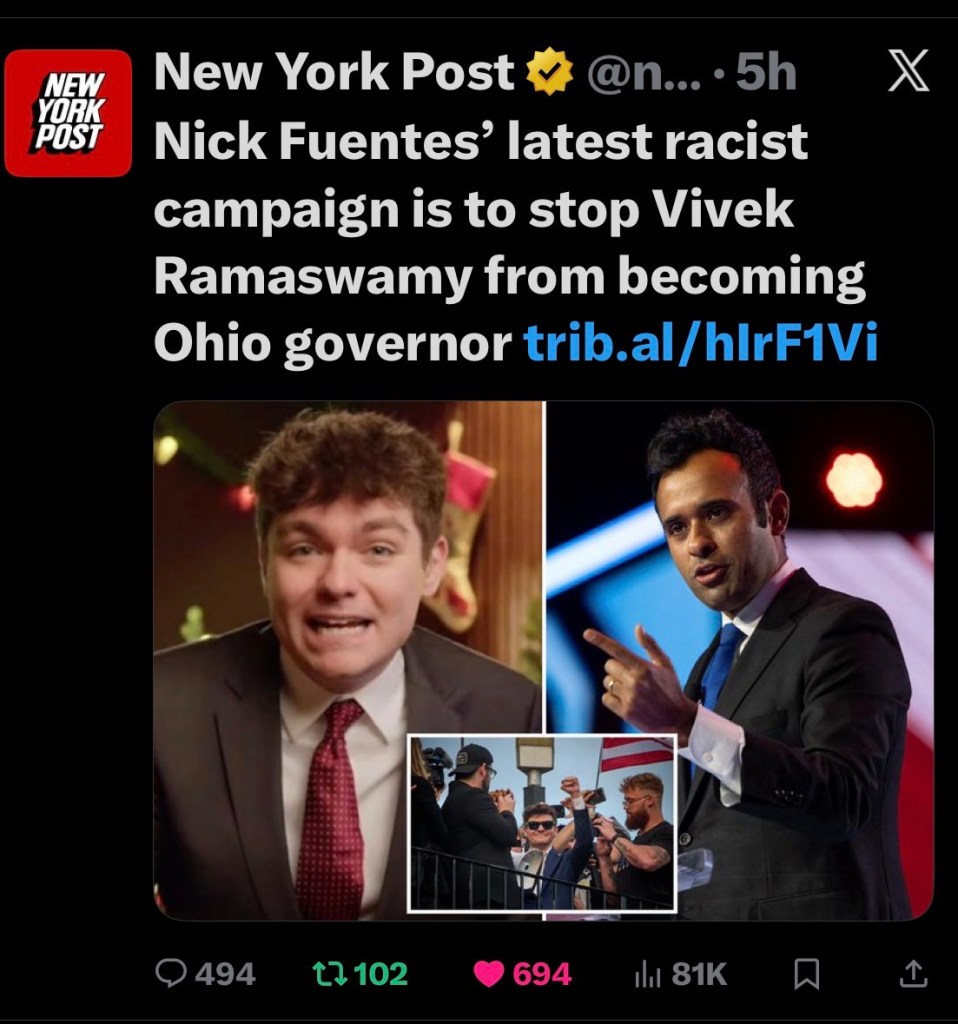
 The Overmanwarrior