
Being A Vigilante: The difference between then and now

I’ve been thinking a lot lately about how positions evolve, especially now in early 2026, with the new Trump administration taking shape and the political order flipping in ways that feel like vindication for a lot of what I’ve fought for over the decades. People on the outside—those who once held power and now find themselves looking in—are quick to accuse me of changing my tune. “You’ve flipped,” they say. “You were anti-government back then, and now you’re cheering for it.” But the truth is more straightforward and more consistent than that: I’m still the same person who wrote The Symposium of Justice in 2004. I’ve learned, grown, and adapted based on real experience, but the core hasn’t shifted. What’s changed is the situation around me.

Fighting Evil

Back in 2004, when I published The Symposium of Justice, the world looked very different. George W. Bush was in office; the Patriot Act had just expanded federal reach in the name of security, and the government felt like it was ballooning out of control, regardless of who held the reins.[^1] I wasn’t writing as some detached observer; the book was semi-autobiographical, rooted in the raw anger of my thirties. I’d lived a whole, intense life by then—far more than most people my age. I’d been knee-deep in small-city and big-city battles, pushing for legislative fixes to corruption, getting tangled up in significant drug enforcement efforts, and even interacting directly with the FBI on fronts where things weren’t working right.[^2] When the system failed, I didn’t just complain—I acted. There were nights I ran around confronting drug dealers with a bullwhip, breaking up operations in self-defense mode that had been my primary mechanism since I was a kid. One time, I ended up in front of a drug house with about 40 young adults and teens caught in the crossfire of Grand Theft Auto-style chaos. I confronted them head-on, and it saved many of their lives because the police came and broke up the fight, but it wasn’t glamorous. It was vigilante justice born of frustration: if the authorities wouldn’t or couldn’t fix it, someone had to.

The main character in The Symposium of Justice, Cliffhanger, channels that same energy. He takes on a corrupt, centralized government intertwined with entertainment elites who play radical games in the arena. The book is about vigilante justice against tyranny—drawing from real experiences where I saw powerful forces profit off drugs, kickbacks, and control. I was angry, no apologies. It was the work of a man ready to fight back physically if needed. I thought about going full vigilante: mask on, discretion, punishing the bad guys in the shadows like Batman or Zorro, my all-time favorite. I was prepared for it. Law enforcement didn’t like me much—FBI cases I was involved in heavily made that clear—but politics tied their hands, and there wasn’t much they could do.[^3]

But something shifted after the book came out. It had enough impact to spark honest conversations. People reached out—film festivals, the Western arts community, and political circles. I started talking to influential people in entertainment who shared similar frustrations with centralized corruption. Instead of running around at night cracking skulls, I found a more powerful path: writing every day, putting my name to it, building a blog that became my daily weapon. The Overmanwarrior blog started as an extension of that 2004 anger but evolved into something sustained and influential.[^4] Blogging wasn’t as romantic as vigilante nights—no mask, no midnight drama—but it was far more effective. I could expose corruption, rally people, influence voters, and shape events without risking everything on force.

I had two clear options back then: either do the vigilante thing for real—rest in the world making things good through direct action—or worry about it and try to expire it indirectly through politics and persuasion. I chose the latter. Getting more involved in politics showed me that the drug dealers and corrupt players profited from the system because they had kickbacks and protection. Vigilantism might feel good in the moment, but it doesn’t dismantle the machine. Blogging, activism, running for office vibes (though I stayed independent), and fighting tax increases (earning me the “Tax-killer” nickname) did more damage to that machine.[^5] I influenced things in ways a masked figure never could—because when you take the mask off, own your name, and accept personal responsibility, you build real power. People know who you are; they can debate you, fight you if they want, but the ideas spread farther.
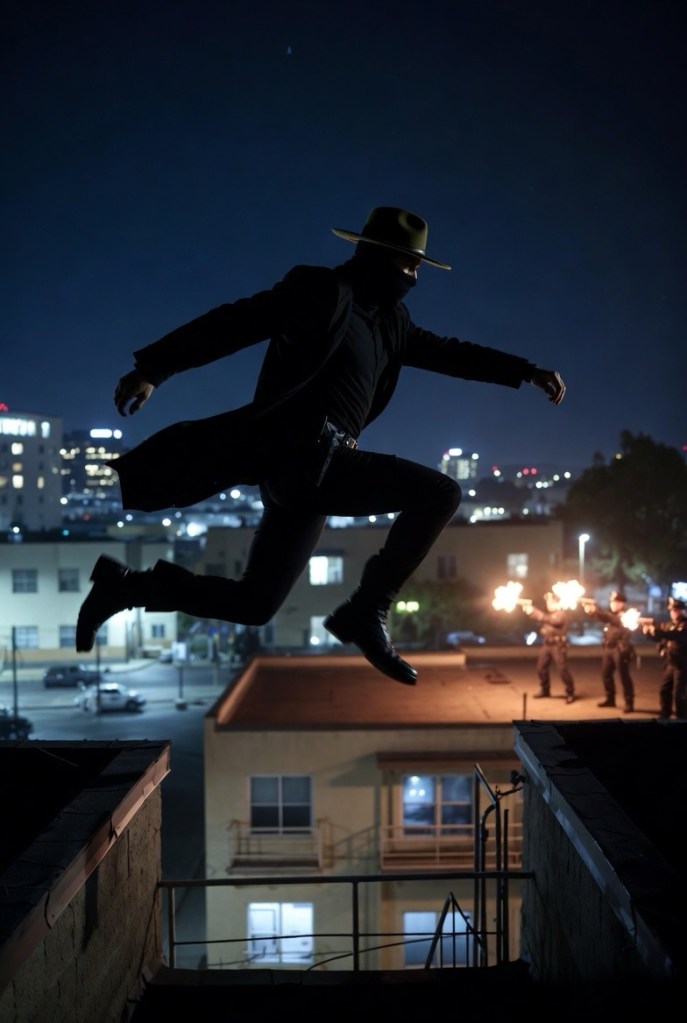
Fast-forward to now, 2026, and the difference is night and day. We have a government under Trump that aligns more with the orthodox, law-and-order society I always wanted. The Republican Party has become the vehicle for reform, not the expansion of tyranny. The people I wrote about in 2004—the radicals controlling entertainment, profiting off chaos—are on the outside looking in. Protests flare up, funded by background players causing trouble, but they’re losing. The bad guys scream and cry because good government is winning through elections, debate, free speech, and voter accountability—not through fear or intimidation.
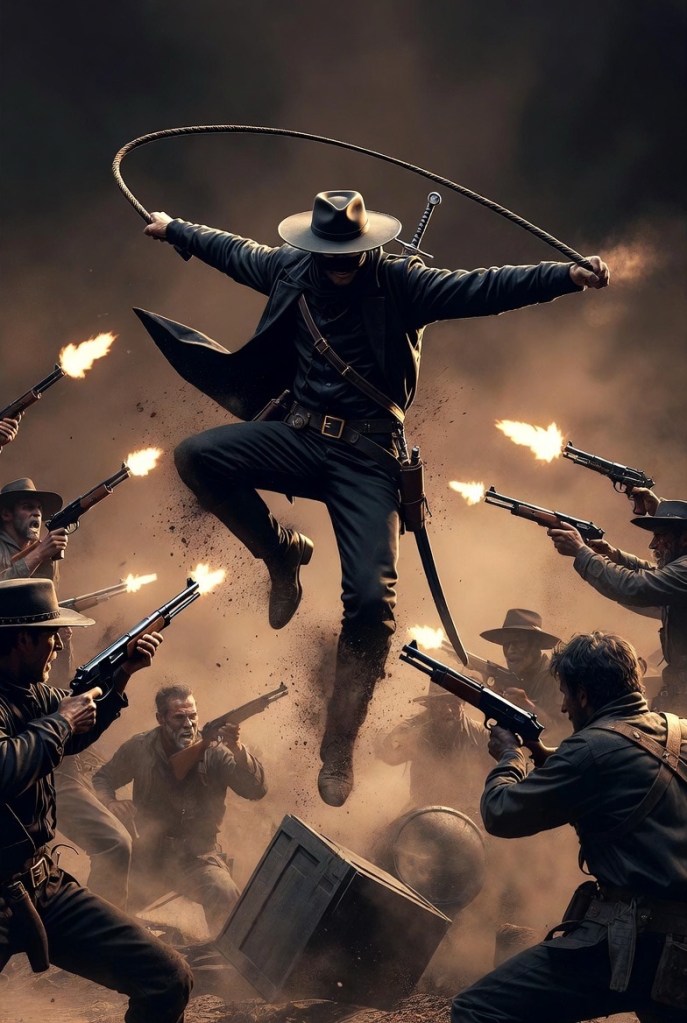
That’s why accusations of “changing” miss the point. I didn’t just hope for a different government; I supported the mechanisms that put a better one in place. Elections, arguments, convincing voters—that’s how you win without masks. The other side can’t match it. They cry foul, blow up lines of communication, resort to violence or victimhood because their positions don’t hold up in open debate. Just enforce the law and order, win arguments, and replace the corrupt with a proper government. It’s better than running around at night with a bullwhip, taking frustrations out on faces. Expose them, beat them at the ballot box, and build something lasting.
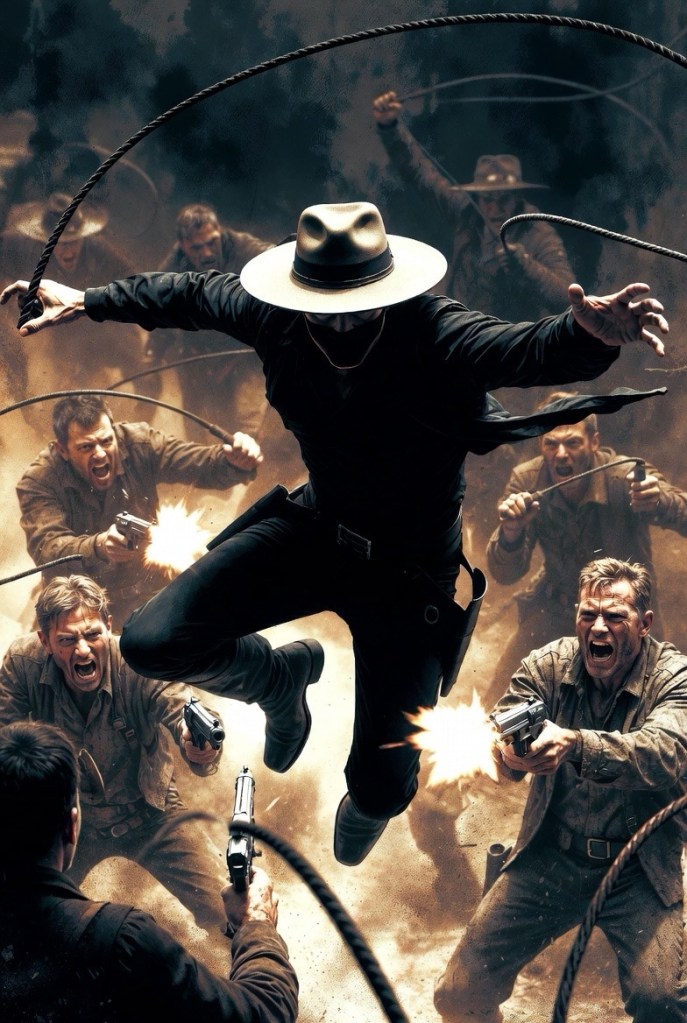
My life trajectory proves it. In my thirties, I drew on personal experience: FBI interactions, legislative pushes that failed, vigilante moments that worked short-term but revealed their limits. After the book, film festivals opened doors—Western arts folks who got the Zorro vibe, entertainment people tired of radical agendas and wanted to work with me off the record, so long as I was willing to sign mine to the cause. I spoke at events, networked, and learned that influence through ideas trumps force.[^6] By the 2010s, with Tail of the Dragon in 2012 amid Tea Party energy, I was writing philosophy in action—motorcycle freedom symbolizing untethered resistance to overreach.[^7] Plans for bigger distribution (even ties to Glenn Beck circles) hit walls because the tone was too explosive against expanding federal power then. But it planted seeds.

Today, I’m happy with the trajectory. The Trump administration, Congress, and local and state governments are doing great work in places. No need for vigilantism when voters can pick leaders who enforce rules. The other side’s inability to argue substantively shows why they lose—they rely on emotion, not reason. Winning voters with good arguments builds longevity and a proper society.

Some look for ways to undermine my current stance, digging up the 2004 book to say I’ve contradicted myself. Fine—let the debates flourish. That’s why I put myself out there: to inspire thinking and to reject victimization cycles. The world isn’t heading toward the dystopia many feared in the early 2000s. People are upset, lashing out, but the system works best if people manage the government, avoiding becoming a vigilante, trying to conceal their identity so that the powerful can’t find them and punish them in real life.  I found that it’s far more powerful to beat them where they can’t defend themselves, with ideas that you sign your name to.  Let voters handle it. When government goes rogue, accountability through the ballot box fixes it—not shadows.

It does my heart good to see the bad guys suffer these days. I take showers with “liberal tears” from my tank—refreshing, cleansing the evil they proposed.[^8] Romantic as vigilante justice is in books and movies, real justice comes from winning wars openly: expose corruption, replace it with order, and manage government through accountability. That’s what I learned over 20+ years. The Symposium of Justice remains relevant—its perspective on tyranny holds, but now we have a government worth supporting. Huge difference.  It may not be as exciting.  But the the method I ended up using to fight bad guys has been very effective.  And it works a whole lot better. 

[^1]: Context from post-9/11 Patriot Act criticisms; Hoffman’s 2004 publication aligns with anti-government sentiment under Bush (e.g., blog retrospectives on overmanwarrior.wordpress.com).

[^2]: Personal accounts of FBI/drug enforcement involvement referenced in Goodreads author bio and blog posts on activism.

[^3]: Self-described tensions with law enforcement in tax/anti-corruption fights; “Tax-killer” nickname from local battles.

[^4]: Blog launch as evolution from book; daily writing as alternative to direct action (overmanwarrior.wordpress.com history).

[^5]: Activism details from Goodreads and blog; Reform Party/Tea Party ties.

[^6]: Film festival/Western arts community interactions inferred from transcript and broader activist networking.

[^7]: Tail of the Dragon (2012) publication amid Tea Party; motorcycle symbolism for freedom (Goodreads/author notes).

[^8]: Direct quote/paraphrase from transcript on “liberal tears” as metaphor for current satisfaction.

Bibliography

•  Hoffman, Rich. The Symposium of Justice. Self-published, 2004. (Referenced in blog archives and Goodreads profile.)

•  Hoffman, Rich. Tail of the Dragon. Cliffhanger Research and Development, 2012. (Goodreads; blog promotions.)

•  Overmanwarrior.wordpress.com (various posts, 2011–2026 retrospectives on book evolution and activism).

•  Goodreads Author Profile: Rich Hoffman (biography, nicknames, works list).

•  Various X posts (@overmanwarrior), 2025–2026 (e.g., political commentary tied to current events).

•  Local news archives (Middletown/Cincinnati area) on tax activism (“Tax-killer” references).

•  Film festival/Western arts community interactions (personal testimony; no specific public links, but contextual from transcript).

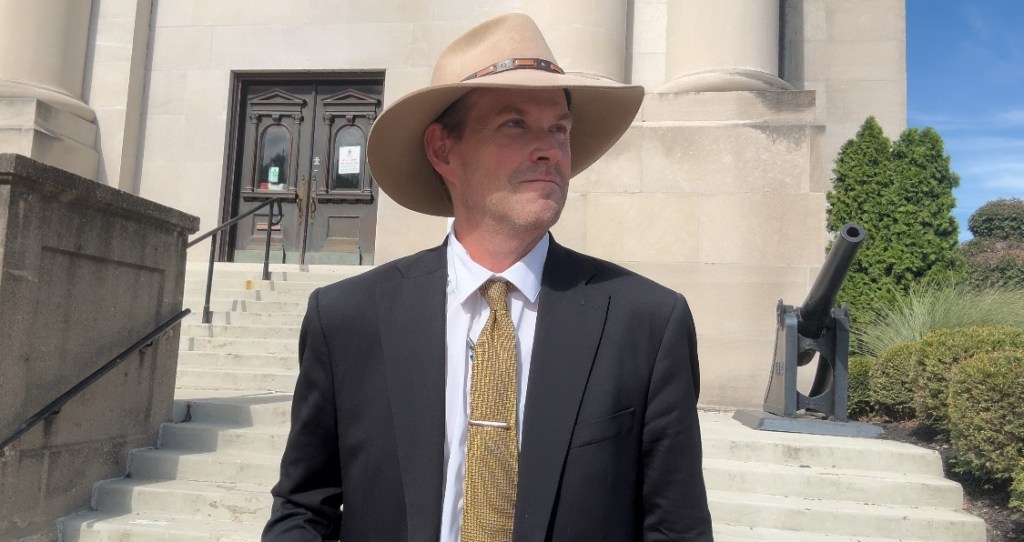
Rich Hoffman
Click Here to Protect Yourself with Second Call Defense https://www.secondcalldefense.org/?affiliate=20707

CPS and their Lazy Employees Closed for 3 Days: Teaching kids to be wimps and to hide everything behind “safety”

The recent winter storm that struck the Greater Cincinnati region in late January 2026—often dubbed “Snowmageddon” or the “snow apocalypse” by locals and media alike—delivered a significant punch, blanketing the area with record-breaking snowfall. On January 25, 2026, Cincinnati logged 9.2 inches at Cincinnati/Northern Kentucky International Airport, shattering the previous single-day record for that date (5.8 inches in 2004) and ranking among the top one-day totals in city history.[^1] Storm totals across the Tri-State reached 10 to 16 inches in many spots, with some neighborhoods seeing even higher accumulations, marking the heaviest snowfall since events like February 1998.[^2] The storm arrived over the weekend, with heavy snow falling primarily on Sunday, January 25, followed by frigid temperatures dipping near or below zero, icy conditions, and lingering drifts that made travel challenging for days.

In response, Cincinnati Public Schools (CPS)—serving approximately 35,000 students and 6,500 staff across 66 schools—closed for three consecutive days: Monday, January 26; Tuesday, January 27; and Wednesday, January 28, 2026. Classes resumed on Thursday, January 29, after Superintendent Shauna Murphy announced the reopening, emphasizing safety as the top priority while calling on the community to clear sidewalks, salt icy patches, and ensure safe access to bus stops and crosswalks.[^3] Murphy’s statement highlighted the district’s eagerness to welcome students back but underscored the need for collective effort: “We are eager to welcome our students back, and we need the community’s help to make their commute safer.”[^4] This three-day shutdown drew sharp criticism from some residents, who argued that roads were passable relatively quickly, with many areas shoveled or plowed by Monday morning, and that the closure exemplified broader societal trends toward excessive caution.

Ohio’s snow emergency levels provide context for the decisions. Hamilton County, encompassing Cincinnati, declared a Level 3 snow emergency starting at 6 p.m. on Sunday, January 25, restricting roads to emergency personnel only due to heavy accumulation, ice, and extreme cold.[^5] By Monday, it downgraded to Level 2 before rush hour, and further to Level 1 by Tuesday or Wednesday in many areas, signaling improving but still hazardous conditions.[^6] Neighboring counties like Butler, Clermont, and Warren followed similar patterns, starting high and reducing as plowing progressed. These levels guide travel restrictions but leave school closure calls to superintendents, who weigh factors like bus safety, sidewalk accessibility, building conditions, staff availability, and liability risks.

The critique centers not on the storm’s severity—undeniably substantial—but on the response, particularly the extended closure of public schools like CPS. By Monday, much of the snow had been cleared from major roads, and personal observations from driving across Cincinnati showed navigable conditions despite piled snowbanks and side-street challenges. Trash collection continued in many areas, albeit with difficulties, and businesses operated, albeit with some disruptions. In northern states like Minnesota, the Dakotas, or the Northeast, similar or heavier snowfalls prompt adaptation rather than widespread shutdowns—plows run continuously, residents clear driveways, and life proceeds with gritted determination. Human tenacity historically overcomes such obstacles without paralyzing entire systems.

Yet in Cincinnati, the three-day closure extended beyond what many deemed necessary. An hour delay or two on Monday might have sufficed, allowing students and staff to resume routines while addressing residual hazards. Instead, the decision reinforced a pattern: prioritize “safety” above all, even when it borders on overcaution. Critics argue this hides administrative convenience—avoiding liability from potential accidents, bus delays, or injuries—and teacher/staff reluctance to brave conditions. Union influences and bureaucratic inertia play roles; it’s easier to close than coordinate amid risks. The superintendent’s plea for community help clearing sidewalks subtly shifts responsibility outward while justifying the delay.

This mentality extends far beyond one storm. Modern society increasingly hides behind “safety” to mask laziness, lack of fortitude, or aversion to discomfort. Public education, meant to prepare children for adulthood, instead teaches yielding to challenges. When schools close at the first sign of trouble—snow, cold, rain—children learn that crises warrant retreat, not resilience. They absorb that excuses like “it’s too dangerous” or “liability concerns” trump duty. This coddling produces adults unprepared for reality: drivers who panic on slightly slippery roads despite modern vehicles with traction control and front-wheel drive; workers who demand remote setups post-COVID or call off for minor inconveniences; individuals who turn to substances like legalized marijuana to “mellow out” stress rather than confront it.

The generational shift is stark. Older generations fought through blizzards, building character through adversity—shoveling without complaint, driving cautiously but confidently, showing up regardless. Today’s youth, shaped by administrative-heavy systems, learn the opposite: safety trumps effort, government coddles, and challenges are avoided. Public schools, funded by taxpayer dollars, bear particular responsibility. CPS, like many districts, emphasizes emotional well-being, equity, and risk aversion over grit and productivity. When closures occur, lost instructional time compounds—though Ohio’s flexible calamity day rules and built-in hours often prevent make-up days, as CPS’s 2025-2026 calendar allows significant buffer before extensions.[^7]

The economic ripple is profound. Extended closures disrupt families—parents miss work or juggle childcare—while signaling to the workforce that productivity yields to comfort. In large corporations, remote work persists as a “safety” holdover, eroding collaboration and output. In education, unions and administrators prioritize protection over performance, facilitating below-average effort. When 80% of society adopts this mindset, productivity plummets, innovation stalls, and resilience erodes.

Add legalized marijuana to the mix, and problems compound. Drivers already slow-reacting under optimal conditions—mellowed, delayed starts from stops, hesitant turns—face amplified hazards in snow. Untrained in crisis navigation due to school-taught avoidance, they crawl at 20-25 mph on 45-50 mph roads, causing backups and accidents. This isn’t mere anecdote; it’s observable in rush-hour chaos post-storm, where inexperience met residual ice.

The root lies in public education’s philosophical shift. Once emphasizing arithmetic, reading, citizenship, and perseverance, it now prioritizes social dynamics, safety protocols, and emotional shielding. Kids learn popularity contests and group norms but not how to dominate adversity—change a tire, shovel efficiently, drive in snow, or push through discomfort. They grow into adults who fear everything: cold feet, back strain, minor slips. Liberals, often dominating urban administrations like Hamilton County’s, amplify this by framing caution as compassion, using “safety” to justify inaction.

Contrast with private enterprise: businesses stayed open where possible, adapting because survival demands it. Taxpayer-funded entities like CPS face less pressure, hiding behind bureaucracy. The result? A softer society, less productive, more dependent. One storm exposes it: three days off for what could have been managed with delays teaches surrender, not strength.

This isn’t compassion—it’s detriment. True care prepares people to thrive amid hardship, not hide from it. Future generations will inherit adults ill-equipped for crises—marital, financial, or meteorological—because schools modeled yielding. It’s embarrassing, pathetic even, when paid services fail to model fortitude.

West Chester and surrounding areas, with their Republican-leaning success, resist some of this, but urban cores like Cincinnati succumb. The lesson: vigilance preserves excellence. Yielding to every flake erodes it gradually. Snowmageddon 2026 wasn’t apocalyptic in scale but in implication—society’s softening, starting in classrooms.

Shame on those who hide laziness behind safety. Fight through, show up, dominate the crisis. That’s how good communities—and people—endure.

Bibliography

•  Cincinnati Enquirer. “How much snow did we get? Yes, we broke records.” January 26, 2026. https://www.cincinnati.com/story/weather/2026/01/26/cincinnati-snow-record-how-much-snow-did-we-get-ohio/88358201007

•  FOX19. “PHOTOS: A blanket of white covers the Tri-State.” January 25, 2026. https://www.fox19.com/2026/01/26/photos-blanket-white-covers-tri-state

•  Cincinnati Public Schools. “CPS to Reopen Thursday, Jan. 29, 2026.” https://www.cps-k12.org/all-news/default-news-page/~board/district-homepage-news/post/cps-to-reopen-thursday-jan-29-2026

•  Cincinnati Enquirer. “Cincinnati schools reopening Jan. 29, other districts remain closed.” January 28, 2026. https://www.cincinnati.com/story/news/education/2026/01/28/cincinnati-schools-reopening-jan-29-other-districts-stay-closed/88402584007

•  City of Cheviot. “Hamilton County Level 3 Snow Emergency.” January 25, 2026. https://cheviot.org/hamilton-county-level-3-snow-emergency

•  Cincinnati Enquirer. “Snow emergency levels in Ohio today.” January 27, 2026. https://www.cincinnati.com/story/weather/2026/01/27/snow-emergency-levels-in-ohio-today-updates/88374686007

•  Cincinnati Public Schools Calendar 2025-2026. https://www.cps-k12.org/calendar

[^1]: National Weather Service data cited in Cincinnati Enquirer, Jan. 26, 2026.

[^2]: FOX19 reporting on storm totals, Jan. 25, 2026.

[^3]: CPS official announcement, Jan. 28, 2026.

[^4]: Superintendent Shauna Murphy statement, WLWT and FOX19 coverage.

[^5]: Hamilton County Sheriff’s declaration, Jan. 25, 2026.

[^6]: County downgrades reported in Cincinnati Enquirer, Jan. 27, 2026.

[^7]: CPS calendar and calamity day rules, Cincinnati Enquirer, Feb. 2, 2026.

Rich Hoffman

Click Here to Protect Yourself with Second Call Defense https://www.secondcalldefense.org/?affiliate=20707

‘Tail of the Dragon’: A Prophetic Blend of High-Octane Action and Philosophical Inquiry into Freedom and Government—then and now

In 2012, amid the political turbulence of the early Obama years and the rise of the Tea Party movement, Rich Hoffman published Tail of the Dragon, a novel that defied easy categorization. Officially designated “philosophy in action” by its publisher, the book combines the adrenaline-fueled thrills of classic car-chase stories with a deep exploration of individual liberty, governmental overreach, and the moral ambiguities of resistance. Far from a mere pulp thriller, it serves as a vehicle—literally and figuratively—for Hoffman’s enduring belief that books, unlike fleeting articles, podcasts, or blog posts, can endure for centuries, delivering ideas that challenge readers across generations.

The story centers on Rick Stevens, a NASCAR-loving everyman whose dreams have been stifled by a mundane life of conformity. After being wronged by an overzealous highway patrol backed by political ambition, Stevens embarks on what becomes the most incredible car chase in literary history. Armed with a custom-built red Firebird and twenty million dollars, he races through the treacherous curves of the Tail of the Dragon—a real-world stretch of U.S. Route 129 along the Tennessee-North Carolina border, notorious among gearheads for its 318 curves in 11 miles. Joined by Renee, his wife, the chase evolves into a journey of self-discovery, romance, and defiance against a tyrannical system that extends to the White House. The narrative draws inspiration from films like Smokey and the Bandit, The Dukes of Hazzard, and Bonnie and Clyde, but infuses them with a serious anti-government critique in which breaking laws becomes a philosophical experiment in freedom.

Hoffman’s inspiration stemmed from personal experience and extensive research. A longtime activist in the Reform Party—supporting Ross Perot and Pat Buchanan—and an early participant in the Tea Party, he viewed government as often tyrannical, especially in local tax and regulatory battles that earned him the nickname “Tax-killer.” Motorcycle trips with his wife across the United States immersed him in road culture, the freedom of the open highway, and the allure of untethered motion. The Tail of the Dragon road itself, a mecca for performance car enthusiasts, provided the perfect backdrop: a place where drivers test limits against nature’s unforgiving twists, mirroring the broader struggle against oppressive authority.

Yet the book resists simple libertarian categorization. Hoffman has never identified strictly as a libertarian; his perspective is more pragmatic and optimistic. The novel’s “perfect ending”—praised by readers as one of the greatest in independent fiction—avoids the tragic downfall of outlaws like Bonnie and Clyde. Instead, it offers resolution that affirms individual triumph over systemic oppression, without descending into nihilism. This optimism reflects Hoffman’s worldview: even amid chaos, positivity can emerge, turning potential hell into something constructive.

Published during a time of political polarization, Tail of the Dragon initially struggled for mainstream appeal. Plans for broader distribution, including ties to Glenn Beck’s circle, faltered because of its explosive anti-government tone amid an administration seen as expanding federal power. It found a niche audience among motorcycle enthusiasts, road warriors, and Tea Party activists, who distributed copies at tourist sites along the Dragon Road in North Carolina. Reviews highlighted its action, romance, and philosophical depth, with some comparing it to Ayn Rand’s works for its portrayal of an Übermensch-like figure defying collectivist constraints. One early commentator noted it as a “wake-up call to stand strong and firm to protect America the way it was founded.”

Over the subsequent years, the book’s prescience became evident. Hoffman argues that its themes anticipated the rise of Donald Trump and the MAGA movement—three years before Trump’s 2015 candidacy. The novel’s critique of entrenched power, lawfare, and the hypocrisy of those who decry tyranny only when out of favor resonated with real-world events: the Tea Party’s evolution into broader populist resistance, Trump’s first term amid investigations, the COVID-era restrictions, and the shift in political fortunes. Readers who once viewed the book as overly angry or extreme returned to it years later, finding its arguments validated. Questions arose: How could the author, once fiercely anti-government, now support vigorous enforcement under a Trump-aligned administration? The response lies in the book’s core philosophy: opposition to tyranny depends on whose interests the government serves. When “our people” hold power, representing the majority’s will and individual freedom, authority becomes legitimate—a “freedom-fighting government” rather than oppression.

This distinction—between a tyrannical regime and one aligned with liberty—defines the novel’s enduring message. It challenges readers to think beyond blanket anti-statism, exploring why one government might be resisted violently while another is defended. In a post-2020 landscape of protests, immigration enforcement, and shifting power dynamics, the book’s ending feels prophetic: the protagonists’ victory mirrors a broader societal realignment in which former outsiders gain control and yesterday’s rebels become today’s defenders of order.

More than a decade later, Tail of the Dragon continues to circulate in niche circles, selling copies sporadically and sparking discussions at rallies and events. Its lack of mass-market success is unsurprising; Hoffman writes for longevity, not immediate gain, targeting specialized audiences who grapple with fundamental questions of power, freedom, and justice. The book remains a testament to the idea that philosophy can ride shotgun in an action story, delivering uncomfortable truths that take years—or elections—to register fully.

When I write books, I intend them to say something larger than a temporary platform commentary, and Tail of the Dragon is one of those projects.  Even if the reform sought in the book turned out to be the Presidency of Donald Trump, that outcome was hinted at in the ending of Tail of the Dragon.  At that time, people couldn’t imagine the kind of government we have now, as we had just had 8 years of George W. Bush and 4 years of Obama, with the leanings of 4 more years.  The Tea Party movement was in full swing, but nobody really knew where it was going.  So the events in the book were quite scandalous at the time, and I faced a lot of wrath because of them.  But what happened was essentially the same.  It was always going to take something like what happened at the Tail of the Dragon to change the political order, and President Trump put that on himself.  And I think what we ended up with was something better.  So yes, what’s the difference between then and now?  Well, my people won offices and are now running the government, unlike what we experienced in 2012, when this book came out.  And with this government in charge, I like it and fully support it.  I fought for this government, and I’m happy to have it.

Bibliography

•  Hoffman, Rich. Tail of the Dragon. Cliffhanger Research and Development, 2012 (various editions, including CreateSpace Independent Publishing Platform reprints).

Footnotes

1.  Plot summary and quotes drawn from book descriptions on Goodreads and Amazon listings.

2.  Author background and intentions from Hoffman’s own commentary on his blog (overmanwarrior.wordpress.com) and Goodreads author profile.

3.  Reviews and comparisons (e.g., to Ayn Rand, Zen and the Art of Motorcycle Maintenance) from contemporary reader feedback and promotional materials.

4.  Tail of the Dragon road details are widely documented in automotive and tourism sources; Hoffman’s research involved on-site motorcycle trips.

5.  Political context aligns with the Tea Party era (2010–2012) and subsequent MAGA developments, as reflected in Hoffman’s retrospective analysis.

Rich Hoffman

Click Here to Protect Yourself with Second Call Defense https://www.secondcalldefense.org/?affiliate=20707

‘Melania,’: The Billie Jean of Politics

The recent release of the documentary film Melania, directed by Brett Ratner and distributed by Amazon MGM Studios, offers a compelling behind-the-scenes glimpse into the life of First Lady Melania Trump during the pivotal 20 days leading up to President Donald Trump’s second inauguration in January 2025. This project, which followed her 2024 memoir Melania (published by Skyhorse on October 8, 2024), extends the intimate, personal narrative she began in print, providing viewers with unprecedented access to her daily routines, family moments, White House transition preparations, and interactions at locations like Mar-a-Lago and Trump Tower.

The film arrives at a time when Melania Trump has stepped more visibly into the public eye, leveraging her platform to advocate for causes such as children’s welfare, anti-bullying initiatives (echoing her earlier Be Best campaign), and upward mobility. Her memoir, released just weeks before the 2024 election, framed her perspective on life in the spotlight, her Slovenian roots under communism, her modeling career, her marriage to Donald Trump, and her priorities as a mother and wife. The documentary builds on this, presenting her as a grounding influence on her husband—someone who brings elegance, class, and a measured outlook to the often chaotic world of politics. Observers familiar with her world note that her background, roughly aligned with those who came of age during the Reagan era, informs her values: a blend of capitalist ambition forged from escaping a communist system, combined with a deliberate choice to prioritize family over constant public engagement.

Attending the film’s opening day in a local theater proved surprisingly challenging; despite assumptions that theaters would be empty amid streaming dominance and polarized politics, the showing was packed, forcing seats in the handicap-accessible section to sit together. This turnout reflects broader enthusiasm among supporters, who view the project as more than mere entertainment—it’s a cultural artifact capturing a unique historical moment. Box office figures underscore this interest: the film opened to approximately $8 million domestically, marking one of the strongest theatrical debuts for a non-concert documentary in over a decade, far exceeding initial low projections of $3-5 million in some estimates.

The production’s scale has drawn scrutiny. Amazon MGM Studios acquired rights for a reported $40 million—the highest ever for a documentary—with additional tens of millions in marketing, leading to speculation about motives, including potential alignment with the administration given Amazon founder Jeff Bezos’s past criticisms and recent shifts in media coverage. Melania Trump has described the work not strictly as a documentary but as an entertainment piece—a creative, observational portrait akin to a painting, allowing audiences to sit with her character amid major events. This framing emphasizes its artistic merit over pure journalism, offering a positive, aspirational view of leadership, family, and personal resilience.

Critics from the left have responded with notable aggression, including campaigns to suppress attendance or mock empty screenings in certain areas, echoing longstanding animosity toward Melania Trump. Much of this stems from her choices: a former fashion model who opted for a private life, raising her son as a dedicated homemaker while married to a billionaire, rejecting the societal push for constant careerism or public activism. Her beauty, poise, and “golden tower” existence—insulated yet purposeful—provoke resentment among those who see it as unattainable or unfair. Radical elements decry her as out of touch, yet her narrative promotes unity, positive thinking, and bridging divides, ideals she hopes to advance in her second tenure as First Lady.

This backlash reveals a deeper divide: one side embraces high standards, personal responsibility, and optimism, while the other clings to victimhood narratives shielded by government dependency or lowered expectations. The film’s positive portrayal—reliving inauguration day from an insider’s view, showcasing Mar-a-Lago elegance, and highlighting mutual respect in the Trumps’ partnership—challenges that. It suggests Donald Trump’s success owes much to Melania’s stabilizing influence; their union combines his bold energy with her grace, creating a dynamic suited to executive leadership.

Ultimately, the documentary and memoir together solidify a vision of America aspiring upward. They invite viewers to witness a high bar of excellence—strong families, positive momentum, and unapologetic success—and ask whether reconciliation across divides is possible without compromising those standards. History shows that extending hands has often meant lowering expectations to appease radicals, but this era signals a rejection of that path. The enthusiastic reception, despite polarized reviews, indicates many Americans are drawn to this message of inspiration over grievance.

Walking out of the theater after viewing the documentary Melania, the underlying reasons for our societal divisions became starkly apparent, revealing why true reconciliation may be impossible. Melania Trump, through this film, embodies a philosophy aligned with her husband’s lifelong approach: showcasing personal success as a beacon for others. She presents her life—marked by elegance, family devotion, and achievement—as a high bar, inviting viewers to aspire to similar heights. “Look at what I’ve accomplished,” the narrative implies, “and let me show you how you can do it too.” It’s an optimistic, empowering message rooted in positive thinking and upward mobility, offering a behind-the-scenes glimpse into a world of high standards and mutual respect within the Trump family.

Yet, this vision clashes irreconcilably with the core tenets of left-wing politics, which thrive on below-the-line thinking and perpetual victimization. Progressive ideologies prioritize lowering expectations across all facets of life, from labor unions that resist performance-based accountability to broader policies that dismantle judgments on behavior. The goal is a society where “anything goes,” shielded from scrutiny or consequences, allowing individuals to avoid the discomfort of striving. In this worldview, high achievers like Melania—beautiful, poised, and unapologetically successful—become targets of resentment. Her choice to live insulated in a “golden tower,” prioritizing motherhood and privacy over relentless public engagement, is seen not as inspirational but as an affront to those who demand equality through diminished standards.

The hatred directed at the film, the Trumps, and conservative politics stems precisely from this refusal to embrace low bars. Critics on the radical left reject any invitation to elevate themselves, viewing expectations as oppressive. They weaponize peer pressure, media campaigns, and even violence to maintain a status quo of minimal accountability, relying on expansive government to protect them from life’s demands. No amount of kindness or outreach can bridge this gap; as long as one side insists on stripping away standards while the other upholds them, division persists. This dynamic ensures ongoing discontent, where unity requires conservatives to compromise their values—a concession that history shows only erodes societal progress. Melania’s documentary, in highlighting this high-bar ethos, underscores that true advancement demands forcing elevation, not appeasement, even if it invites backlash from those unwilling to rise.  Which makes this a uniquely valuable work of art that everyone should see.

Beyond its political and cultural insights, Melania stands as a genuine work of art, masterfully capturing a singular perspective on life in the United States during one of its most transformative periods. The film peels back layers of privacy with deliberate, cinematic flair, offering intimate access to Melania Trump’s world while maintaining an aura of grandeur and mystique. The setup shots—particularly those at Trump Tower, the seamless transitions into motorcades, and the fluid movement through opulent spaces—evoke a sense of controlled revelation, where the viewer is invited in but never fully overwhelms the subject’s carefully guarded essence.

This approach strikingly recalls how Michael Jackson promoted his iconic videos and shared glimpses of his private life in documentaries like those surrounding Thriller or his personal specials. Jackson, too, balanced extreme fame with deliberate barriers—veils of security, secluded estates, and a projected image of positivity—to protect himself from constant intrusion while uplifting audiences through aspirational artistry. He let people peek behind the curtain just enough to humanize the icon, fostering connection without sacrificing enigma. In Melania, similar techniques unfold: the film grants behind-the-scenes access to high-stakes moments, yet it preserves her poise and detachment, turning personal vulnerability into inspiration.

A particularly revealing moment underscores this parallel. In the car during one of her travels, Melania shares that Michael Jackson is her favorite artist, with “Billie Jean” as her top song (alongside “Thriller”). The track plays, and she sings along quietly, even briefly, in a rare, unguarded display—echoing the Carpool Karaoke-style intimacy Jackson sometimes allowed in his own media moments. She recalls meeting him once with Donald Trump, describing him as “very sweet, very nice.” This scene isn’t mere filler; it humanizes her, showing a shared appreciation for Jackson’s method of blending private authenticity with mass appeal. By channeling that same strategy—projecting positivity, offering selective insight, and inviting upliftment—Melania crafts a presentation that feels wholesome and enduring.

Ultimately, this Michael Jackson-inspired approach to marketing her lifestyle and perspective proves remarkably effective. It transforms what could have been a dry political portrait into something engaging and aspirational, likely contributing to the film’s success in theaters and its anticipated streaming draw. Melania isn’t just a documentary; it’s a thoughtfully composed invitation to see excellence up close, much like Jackson’s legacy of turning personal narrative into global inspiration. Everyone should see it—it’s a compelling, artful reminder of how high standards and positive projection can resonate in turbulent times.

For those interested in exploring further:

•  Melania Trump’s memoir Melania (Skyhorse Publishing, 2024) provides the foundational personal account.<sup>1</sup>

•  Coverage of the film’s production and release details Amazon’s involvement and box office performance.<sup>2</sup>

•  Analyses of public reactions and political context offer broader insights into cultural divisions.<sup>3</sup>

The work stands as a testament to individual agency in turbulent times, reminding us that true unity requires elevation, not concession.

<sup>1</sup> Wikipedia entry on Melania (memoir), confirming October 8, 2024 release.

<sup>2</sup> Reports from The Hollywood Reporter and Variety on opening weekend earnings around $8 million.

<sup>3</sup> Various sources including The New York Times and The Guardian on Amazon’s investment and criticisms.

Rich Hoffman

Click Here to Protect Yourself with Second Call Defense https://www.secondcalldefense.org/?affiliate=20707

Lakota’s Justin Daniel Dennis Pleads Guilty: The common problem of sex abuse in public schools

The case of Justin Daniel Dennis, a former social studies teacher at Lakota East High School in the Lakota Local School District (Butler County, Ohio), exemplifies a persistent and troubling issue in American public education: educator sexual misconduct with students. On January 28, 2026, Dennis pleaded guilty in Butler County Common Pleas Court to three counts of attempted sexual battery, third-degree felonies. Five additional counts of sexual battery were dismissed as part of the plea agreement. He faces a potential maximum sentence of 18 months per count (up to 4.5 years total) and mandatory registration as a Tier III sex offender. Sentencing is scheduled for March 12, 2026.

The misconduct occurred during the 2021-2022 school year, when the victim—a 17-year-old senior and member of the Hope Squad (a student mental health assistance group Dennis advised)—engaged in a months-long sexual relationship with him. According to court documents and the Butler County Sheriff’s Office, the pair had consensual sexual intercourse and oral sex multiple times in various locations: Dennis’s classroom at Lakota East High School, his home in West Chester Township, his former home in Liberty Township, and the parking lot of the victim’s workplace in Springdale. The relationship came to light years later when the victim (now in her 20s) provided investigators with text message threads discussing their past interactions, serving as key evidence.

Dennis, then 42 (now 43), taught subjects including psychology, economics, and government. He was arrested in August 2025 on initial charges, indicted on eight counts of sexual battery in September 2025, and was no longer employed by the district. Authorities emphasized the betrayal of trust inherent in his dual role as teacher and mentor.

This incident is far from isolated. Educator sexual misconduct—ranging from inappropriate comments and grooming to physical contact and intercourse—remains a significant problem in U.S. public schools. A landmark 2004 U.S. Department of Education report by Charol Shakeshaft estimated that 9.6% of K-12 students experience some form of educator sexual misconduct during their school career. More recent research, including a 2022 multistate survey of recent high school graduates, found 11.7% reported at least one instance, with 11% involving sexual comments and smaller percentages involving physical acts like touching or intercourse. Perpetrators are predominantly male (around 85% in recent data), and victims are often female (around 72%). Academic teachers commit the majority (about 63%), followed by coaches or gym teachers (20%).

Underreporting is a major barrier to accurate prevalence estimates. Disclosure rates to authorities are extremely low—often around 4-5%—due to fear, shame, grooming tactics (e.g., special attention, gifts), or societal stigma. Many cases surface years later, as in Dennis’s, when victims gain distance and perspective. Nationwide, hundreds of educators face charges annually; for instance, analyses of news reports have documented over 100-200 teacher arrests for child sex crimes in single years, though this captures only reported and prosecuted cases.

In Ohio specifically, the issue mirrors national trends. The Ohio Department of Education has disciplined dozens of educators for sexual misconduct in various periods, with cases involving sexual battery, gross sexual imposition, and related felonies. While exact statewide statistics for 2021-2026 are not centralized in public reports, local investigations (e.g., in the Miami Valley) have identified multiple convictions since the mid-2010s, often involving classroom or school-related encounters. Social media and text evidence frequently play a role in detection, as seen here.

Broader systemic factors contribute to these incidents. Public school teachers often enjoy tenure-like protections through collective bargaining agreements, which can complicate the removal of teachers for misconduct. Salaries in districts such as Lakota can reach six figures, with benefits and summers off—conditions that some argue foster complacency or entitlement in low-accountability environments. Unions rarely publicly condemn members aggressively or advocate stricter self-policing; instead, they often defend due process.

Progressive ideologies in education—emphasizing emotional expression over restraint, secularism over traditional moral frameworks, and sometimes reduced emphasis on authority boundaries—may exacerbate temptations in authority dynamics. Vulnerable students (e.g., those facing personal issues, seeking mentorship, or in transitional phases such as senior year) may misinterpret grooming as care, using their bodies as “currency” to obtain attention or support. Parental abdication also plays a role: many families rely on schools as extended babysitters, outsourcing moral and emotional guidance amid busy lives or dual-career pressures.

Critics argue these cases represent the “tip of the iceberg.” Estimates suggest that 10-20% of educators may engage in boundary-crossing behavior over their careers, though most do not escalate to criminal levels or detection. Unreported incidents could involve brief encounters, emotional affairs, or grooming that victims rationalize or suppress. Long-term effects on victims include difficulties with trust, relationships, mental health, and family formation—trauma that can persist into adulthood.

Addressing this requires higher standards: merit-based evaluations tied to performance and conduct, proactive monitoring (e.g., open-door policies, supervision), robust background checks, and cultural shifts toward accountability. Parents must prioritize involvement over convenience, and society must reinforce moral boundaries rather than relativism. Teacher unions and districts should condemn misconduct unequivocally rather than defensively.

The Dennis case, in a reputedly strong district like Lakota, underscores that no community is immune. It demands scrutiny of funding, governance, and cultural priorities in public education. Taxpayers fund these institutions, expecting safety and positive development—not betrayal. Until accountability trumps protectionism, such tragedies will recur.

This case at Lakota is terrible along many fronts.  It’s not only the abuse of a teacher in an authority role over a subordinate that provoked the abuse of that trust relationship; it is also within the broader culture as a whole.  The parents who tolerate it.  The fellow teachers who know that a young lady has been in a classroom alone with a teacher for too long, with the door shut but did nothing about it, and the buzz in the hallways that never gets help.  Even further, it ultimately falls on the parents themselves, who unquestioningly trust authority figures because they are too lazy to do the work of parenting themselves, leaving their children vulnerable to predators who are drawn to the teaching profession with high incomes and lots of leisure time to spend on corrupt fantasies.  The problem is, this isn’t an unusual problem; it’s a common one.  And if you are sending your children to these public school indoctrination factories, you are likely ruining their potential permanently.  They will struggle in life because of their terrible experiences with teachers who have no reservations about abusing them sexually and otherwise.  It is currently one of the largest catastrophes our society has experienced.

Bibliography

•  WLWT News. “Ex-Lakota East teacher accused of having sexual relationship with student pleads guilty.” January 29, 2026. https://www.wlwt.com/article/former-lakota-east-high-school-teacher-pleads-guilty-sexual-battery/70190023

•  Journal-News. “Ex-Lakota teacher pleads guilty to attempted sexual battery ahead of trial.” January 29, 2026. https://www.journal-news.com/news/ex-lakota-teacher-pleads-guilty-to-attempted-sexual-battery-ahead-of-trial/TRVY2B7PDBAR3OON2YC2P2P7FE

•  FOX19. “Former Tri-State teacher accused of having sex with student pleads guilty.” January 29, 2026. https://www.fox19.com/2026/01/29/former-tri-state-teacher-accused-having-sex-with-student-pleads-guilty

•  Cincinnati Enquirer. “Former Lakota East High School teacher pleads guilty to sexual battery.” January 29, 2026. https://www.cincinnati.com/story/news/crime/2026/01/29/ex-lakota-east-high-school-teacher-admits-to-having-sex-with-student/88417654007

•  Butler County Sheriff’s Office. “Lakota East High School Teacher Arrested on Sexual Battery Charge.” August 4, 2025. https://www.butlersheriff.org/news-releases/lakota-east-high-school-teacher-arrested-on-sexual-battery-charge

•  Shakeshaft, Charol. “Educator Sexual Misconduct: A Synthesis of Existing Literature.” U.S. Department of Education, 2004.

•  Abboud et al. “The Nature and Scope of Educator Misconduct in K-12.” 2022 study referenced in multiple sources, including Psychology Today (May 17, 2023). https://www.psychologytoday.com/us/blog/protecting-children-from-sexual-abuse/202305/educator-sexual-misconduct-remains-prevalent-in

•  U.S. Department of Education, Office for Civil Rights. “Sexual Violence in K-12 Schools Issue Brief.” (Data from 2017-2018). https://www.ed.gov/sites/ed/files/about/offices/list/ocr/docs/sexual-violence.pdf

•  Ferretly Blog. “Teacher Student Sexual Relationship Statistics.” December 19, 2024. https://www.ferretly.com/blog/teacher-student-sexual-misconduct-the-critical-role-of-social-media-screening

Rich Hoffman

Click Here to Protect Yourself with Second Call Defense https://www.secondcalldefense.org/?affiliate=20707

The Benefits of New Gaza: Defeating Marxism and radical religious terrorism, with capitalism

The recent World Economic Forum annual meeting in Davos, Switzerland, held in January 2026, featured several high-profile discussions on global stability, with a particular focus on Middle East redevelopment and peace initiatives. On January 22, 2026, Jared Kushner, a key figure in prior Middle East diplomacy and now associated with the Board of Peace, presented a detailed “master plan” for post-war Gaza reconstruction during a signing ceremony for the Board’s charter.<sup>1</sup> This vision, often referred to as “New Gaza,” proposed a comprehensive transformation of the territory through phased development, private-sector investment, and economic revitalization, drawing parallels to successful urban models in the Gulf region such as Dubai and Abu Dhabi.

The plan outlined four primary phases: beginning in southern Rafah (termed “New Rafah” or “City 1”), progressing to Khan Younis (“City 2”), the central refugee camps (“City 3”), and culminating in Gaza City (“City 4”). It envisioned over 100,000 permanent housing units in initial stages, alongside 200 education centers, 180 cultural, religious, and vocational facilities, and 75 medical centers.<sup>2</sup> Infrastructure elements included a new port, airport, freight rail line, logistics corridors, and ring roads to connect urban centers. Projections included raising Gaza’s GDP from a war-depressed level of approximately $362 million (as reported in 2024) to $10 billion by 2035, generating 500,000 jobs, and attracting $25–30 billion in investments, predominantly from private sources.<sup>3</sup> Construction timelines suggested major elements could be completed in 2–3 years under conditions of demilitarization and enhanced security, with an emphasis on turning the Mediterranean coastline into a thriving tourism and enterprise zone.<sup>4</sup>

This approach builds directly on the legacy of the Abraham Accords, signed in 2020, which normalized relations between Israel and several Arab states (United Arab Emirates, Bahrain, Morocco, and Sudan), fostering economic cooperation, technology sharing, and reduced conflict incentives.<sup>5</sup> The Accords have demonstrated measurable economic benefits, including increased trade volumes, joint ventures in sectors like agriculture and cybersecurity, and broader regional investment flows, contributing to a paradigm where prosperity serves as a counter to ideological extremism.<sup>6</sup> By prioritizing free-market principles, upper mobility, and shared economic gains over radical narratives—often rooted in anti-capitalist or Marxist-aligned ideologies—the Gaza redevelopment seeks to erode support for groups like Hamas, whose governance has historically perpetuated poverty, suppressed development, and fueled violence, as evidenced by events such as the October 7, 2023, attacks.<sup>7</sup>

Broader regional dynamics include evolving access arrangements at the Temple Mount (known as Haram al-Sharif to Muslims), the site of the ancient Jewish First and Second Temples and currently home to the Al-Aqsa Mosque and Dome of the Rock. Under the post-1967 status quo, administered by the Jordanian Waqf with Israeli security oversight, Jewish prayer has traditionally been restricted to avoid escalation, with observant Jews often confined to the Western Wall plaza below.<sup>8</sup> Developments in 2025 and early 2026 saw incremental shifts, including high-profile visits and permitted prayers by figures such as National Security Minister Itamar Ben-Gvir, sometimes involving prostration or open recitation, amid political backing from elements within Israel’s government.<sup>9</sup> These changes have sparked debate over the erosion of longstanding arrangements, with reports of relaxed enforcement on items like prayer pages and increased Jewish visitor numbers, though no formal policy has sanctioned widespread rebuilding of a Third Temple.<sup>10</sup>  But it is looming over the area as a momentum shift that is gaining a lot of traction.

Related preparations among some Orthodox Jewish groups include efforts to ready ritual elements for potential Temple service, such as the importation of red heifers from Texas for purification ashes as described in Numbers 19. Five such heifers arrived in Israel around 2022–2023, with symbolic ceremonies and practice runs conducted in 2025, though reports indicate disqualifications due to blemishes or other issues, preventing full ritual use as of early 2026.<sup>11</sup> The site’s historical significance—linked to King David’s threshing floor purchase, Solomon’s Temple construction, and Abraham’s near-sacrifice of Isaac on Mount Moriah—continues to drive archaeological interest in adjacent areas like the City of David, where excavations reveal layers of biblical-era evidence despite longstanding access limitations.<sup>12</sup>

Critics of the Gaza plan have highlighted its top-down structure, limited direct Palestinian input, potential displacement risks, and contrasts with the territory’s current realities: extensive rubble (estimated at 60 million tonnes), humanitarian challenges, and destroyed infrastructure.<sup>13</sup> Some analyses view the proposal as overly speculative or aligned with external interests, raising questions about historic site preservation and community consultation.<sup>14</sup> Nonetheless, the overarching theme aligns with a pragmatic strategy: leveraging capitalist competition, enterprise zones, and economic opportunity to supplant suppression and radicalism with stability and prosperity. If implemented successfully—contingent on security, funding, and multilateral cooperation—this could reshape Gaza into a regional hub, diminish proxy influences (including from Iran), and facilitate deeper historical and scientific inquiry across contested areas like Jerusalem.

The plan’s ambition reflects a belief that peace through shared economic success may prove more durable than prolonged conflict, potentially benefiting residents across divides by prioritizing mobility, employment, and development over ideological division.<sup>15</sup>  Personally, I’m ready to book a ticket to visit.

Bibliography

•  Al Jazeera, “Map shows what would happen to Gaza under the US ‘master plan’,” January 27, 2026.

•  ABC News, “Jared Kushner lays out Trump-backed ‘master plan’ for post-war Gaza,” January 23, 2026.

•  The New York Times, “U.S. Lays Out a Glittering Plan for Gaza, Including Skyscrapers,” January 22, 2026.

•  BBC, “US unveils plans for development of ‘New Gaza’ with skyscrapers,” January 22, 2026.

•  Jerusalem Post, “Jared Kushner unveils $25 billion plan to transform Gaza into economic hub by 2035.”

•  Times of Israel, various articles on Temple Mount access changes, 2025–2026.

•  Wikipedia, “Abraham Accords” (accessed with updates to 2026).

•  Charisma Magazine, articles on red heifer developments, 2025.

Footnotes

1.  Al Jazeera, “‘Imperial’ agenda: What’s Trump’s Gaza development plan, unveiled in Davos?” January 23, 2026.

2.  ABC News, “Jared Kushner lays out Trump-backed ‘master plan’ for post-war Gaza,” January 23, 2026.

3.  The National, “New Gaza, new Rafah and a ‘free market economy’: Inside Kushner’s $30bn reconstruction plan,” January 22, 2026.

4.  NBC News, “Jared Kushner’s vision for Gaza as a gleaming port city clashes with reality,” January 26, 2026.

5.  Wikipedia, “Abraham Accords,” updated January 2026 entries.

6.  Carnegie Endowment for International Peace, “The Abraham Accords After Gaza: A Change of Context,” April 2025 (contextual extension to 2026 impacts).

7.  Breitbart, “‘Catastrophic Success’: Kushner Unveils ‘New Gaza’ Plan at Davos,” January 24, 2026.

8.  Jerusalem Story, “Experts Warn: Israel Is Changing the Long-Standing Status Quo at al-Aqsa Mosque,” 2025.

9.  Times of Israel, “Ben Gvir says Jewish prayer, including full prostration, permitted at Temple Mount,” May 26, 2025.

10.  Jerusalem Post, “Temple Mount to relax restrictions for Jewish prayer,” November 2025.

11.  Charisma Magazine, “Red Heifer Update: The Truth Behind Israel’s Recent Ceremony,” August 14, 2025.

12.  Historical context from biblical archaeology sources, cross-referenced with Temple Mount entry restrictions (Wikipedia).

13.  The New York Times, “U.S. Lays Out a Glittering Plan for Gaza,” January 22, 2026.

14.  Al Jazeera, “Map shows what would happen to Gaza under the US ‘master plan’,” January 27, 2026.

15.  Jerusalem Post and Guardian coverage on Board of Peace and redevelopment optimism, January 2026.

Rich Hoffman

Click Here to Protect Yourself with Second Call Defense https://www.secondcalldefense.org/?affiliate=20707

The Tyranny of a Snowpocolpyse: Bending the knee to nature to satisfy a Marxist agenda of harming the American economy

The massive winter storm that swept across much of North America in late January 2026, often referred to in the media as a historic or “monster” event, brought heavy snowfall, ice, and extreme cold from the southern plains to the Northeast and beyond. This storm, impacting regions from Texas to New York and even parts of New Mexico and New England, dumped more than a foot of snow in numerous areas, shattered daily snowfall records in some locations, caused widespread power outages affecting over a million customers at peak, led to thousands of flight cancellations, and was linked to multiple fatalities due to accidents, hypothermia, and related incidents.

In the Ohio Valley, particularly around Cincinnati and its surrounding counties, the storm arrived over the weekend of January 24-26, 2026, with heavy snowfall primarily on January 25. The National Weather Service reported that Cincinnati (KCVG airport area) received about 10.2 inches total, with 9.2 inches falling on January 25 alone, breaking the daily record for January 25. Nearby areas in Butler County saw higher totals: Middletown reported 13.3 inches, Monroe 13.1 inches, and other spots in the county ranging from 12 to 13 inches. Northern areas like Columbus tallied around 12 inches, while rural eastern Ohio locations approached or exceeded higher amounts in some cases.

Snow emergency levels were declared across the region. In Butler County, under Republican-led leadership, including Sheriff Richard K. Jones, the county was placed under a Level 2 snow emergency during the peak (roadways hazardous with blowing and drifting snow; only necessary travel advised), later downgraded to Level 1 by January 26 as conditions improved. This contrasted with Hamilton County (encompassing Cincinnati, often under more Democratic influence), which escalated to a Level 3 emergency on Sunday evening—closing roads to non-emergency personnel—before dropping to Level 2 by Monday morning. Adjacent counties like Warren and Clermont mostly stayed at Level 1 or 2, with crews actively clearing roads.

The storm’s broader impacts were severe: Over 19,000 flights canceled nationwide, power outages peaking above 1 million customers (heaviest in states like Tennessee, Mississippi, Louisiana, and Texas), and at least 12-29 deaths reported across the U.S. from causes including hypothermia, accidents on ice/snow, and exertion-related incidents while shoveling. In the South, ice accumulation was particularly damaging, while in the North, deeper snow was more common. The event affected an estimated 200 million people under some form of winter weather alert.

This widespread disruption evoked comparisons to past events, notably the harsh winters of 1977-1978. In January 1977, extreme cold led to the Ohio River freezing over in Cincinnati, allowing people—including children—to walk across it in places, amid fuel shortages and prolonged subzero temperatures. The Great Blizzard of 1978 was even more intense in the Ohio Valley and Great Lakes, with blinding winds, massive drifts, and statewide halts to transportation and business for days. Back then, despite less advanced equipment (fewer four-wheel-drive vehicles or monster trucks common today), people adapted: they ventured out, worked through conditions, and communities rallied to help those stuck. The river freeze and blizzards were met with resilience rather than widespread shutdowns.

Yet the 2026 storm highlighted a perceived shift in societal behavior. Many called off work en masse on Monday (and even preemptively on Friday based on forecasts), leading to many businesses, including pizza places and fast-food outlets, closing. This echoed patterns seen during COVID-19, where official guidance to “stay home, stay safe” encouraged compliance over individual initiative. Historical data from the Bureau of Labor Statistics shows major snowstorms can cause millions of reduced work hours—e.g., one 1996 event affected over 10 million full-time workers—but modern responses often amplify caution through media hype and emergency declarations. Level 3 restrictions in places like Hamilton County explicitly limited non-essential travel, ostensibly to aid emergency crews, but critics argue this enables complacency, shifting responsibility from citizens to authorities.

In Butler County, roads were cleared efficiently within 24 hours, allowing easy travel by Monday with minimal traffic—ironically making commutes smoother for those who ventured out. Personal accounts of shoveling driveways, preparing vehicles, and carrying on with everyday routines stand in contrast to widespread absences, particularly among younger workers (under 45), who may have grown accustomed to “safety-first” messaging from authorities, unions, and the media. This generation, often described as coddled by constant warnings about minor inconveniences, seems quicker to yield to nature rather than dominate it through preparation and determination.

The core issue is philosophical: Human beings are meant to impose will over obstacles, not retreat at the first sign of adversity. Authorities exist to facilitate—clearing roads so the public can work —not to create excuses for inaction. When meteorologists, politicians, and experts amplify “apocalypse” narratives, it fosters dependency: stay home to avoid “white death,” much like mask mandates or lockdowns during pandemics. Yet the storm melted quickly, roads reopened, and no lasting drama ensued for those prepared.

This “snow apocalypse of 2026” exposed a weaker society, one embarrassed by its lack of fortitude. Older generations recall more brutal winters with fewer excuses; today, many use official declarations as justification for laziness. To thrive, we must reject this—clear your driveway, ready your vehicle, get to work (even if late), make up time, and help others stuck. Overcome impediments; don’t yield to them. The economy depends on production, not perpetual caution.

Reform starts with personal responsibility: Toughen up, prepare, and question when “experts” urge shutdowns that serve their convenience over the public’s productivity.  There is a deep root of rotten Marxism behind snow days like this one, where yielding to nature, and ultimately the authority of chaos, chips away at a capitalist culture.  Safety is meant to destroy personal initiative just as the riots of the mob are intended to eliminate the authority of the police and a law-and-order community.  While masking themselves as helpful, socialists looking for a way to get out of work pointed to safety and compliance with justice, a lack of effort, and it was embarrassing to witness.  Just like a mother that overly coddles their children, not for their own protection, but to stifle their intellectual growth so that they might never leave the nest, an overly tyrannical government filled with parental types looking for the thrill of having authority over subordinates dominates the decision-making process.  And what was embarrassing was that so many people fell for it because they wanted a free day off work to sit around their house and do nothing.  To watch mindless television and contribute little to the heroic efforts of a thriving economy.  And for everyone who chose to call off work and stay home, and to listen to the mindless authority types and their Marxist messages, it was a shameful display—a bunch of wimps who yielded to a snowpocalpyse with a bent knee driven by sheer laziness.  One thing is for sure, they don’t make people like they used to.  These last several generations are filled with wimps, losers, and slack-jawed impediments too lazy to live, and all too willing to submit to government authority types with Marxist agendas of stifling the American economy.  And all over a little bit of snow, they succeeded. 

Bibliography and Further Reading

1.  National Weather Service, Wilmington, OH. “January 24-25, 2026 – Winter Storm.” https://www.weather.gov/iln/20260125

2.  Cincinnati Enquirer. “How much snow did we get? Yes, we broke records. See new Ohio totals.” January 26, 2026. https://www.cincinnati.com/story/weather/2026/01/26/cincinnati-snow-record-how-much-snow-did-we-get-ohio/88358201007

3.  FOX19. “LIST: Entire Tri-State under snow advisories, Hamilton County under level 3 emergency.” January 25, 2026. https://www.fox19.com/2026/01/25/list-snow-emergencies-across-tri-state

4.  CNN. “January 25-26, 2026 — Winter storm.” https://www.cnn.com/weather/live-news/winter-storm-forecast-snow-ice-01-25-26-climate

5.  Wikipedia. “January 2026 North American winter storm.” https://en.wikipedia.org/wiki/January_2026_North_American_winter_storm

6.  WLWT Archives. “In January of 1977, the Ohio River froze over.” https://www.wlwt.com/article/ohio-river-freezes-over-january-1977-cincinnati-ohio-winter/70062954

7.  National Weather Service. “Great Blizzard of 1978.” Referenced in historical summaries.

8.  U.S. Bureau of Labor Statistics. “Work absences due to bad weather from 1994 to 2016.” https://www.bls.gov/opub/ted/2017/work-absences-due-to-bad-weather-from-1994-to-2016.htm

Rich Hoffman

Click Here to Protect Yourself with Second Call Defense https://www.secondcalldefense.org/?affiliate=20707

Gavin Newsom’s “Knee Pad” Campaign: Backfiring theatrics at Davos

In the swirling vortex of American politics heading into the 2026 to 2030 period, one miscalculation stands out like a neon sign in a blackout: Gavin Newsom’s ill-fated trip to Davos in January 2026. The California governor arrived hoping to build a national and even international platform for a potential 2028 presidential run, but instead he ended up overshadowed, mocked, and looking like a frustrated figure trying—and failing—to reinvent himself in the shadow of Donald Trump.

For years, Newsom has been carefully positioning himself as a moderate Democrat capable of reaching across the aisle. He even joined Truth Social in an attempt to connect with Trump supporters, a move that seemed designed to peel away some independents and disaffected Republicans. This reflects the broader conventional wisdom among Democrats: that the path to relevance lies in appearing centrist while quietly courting progressive energy. Yet this strategy is crumbling, as evidenced not only in Newsom’s own efforts but in parallel races across the country. In Ohio, for instance, Dr. Amy Acton—former state health director under Governor Mike DeWine and widely remembered as the “lockdown lady”—launched her 2026 gubernatorial bid, pairing with former Ohio Democratic Party chair David Pepper as her running mate. Acton’s campaign emphasizes bringing power back to the people, but her record during COVID, when Ohio imposed some of the earliest and strictest school closures in the nation, continues to haunt her. National Assessment of Educational Progress (NAEP) data showed Ohio students falling behind by roughly half a year in math due to prolonged disruptions, and economic recovery lagged behind national averages in the post-lockdown period.

Similar patterns appear elsewhere. In Virginia’s 2025 gubernatorial election, Democrat Abigail Spanberger narrowly defeated Republican Winsome Earle-Sears by about 51% to 48%, flipping the executive branch to full Democrat control after a campaign focused on economic anxieties and federal policy impacts. Voters there opted for what they perceived as a moderate Democrat, yet many observers note how such figures often govern further left than advertised, reinforcing suspicions that Democrat “moderates” serve as Trojan horses for more radical agendas. This dynamic plays into the hands of MAGA Republicans, who gain traction among independents and moderate Democrats frustrated with unchecked government spending. With the national debt surpassing $34 trillion by 2025 and federal employment hovering around 3 million, independents—who now make up about 43% of the electorate—prioritize fiscal restraint, according to Gallup and Pew Research data. They increasingly view expansive government programs as intrusive, even if those programs benefit them directly through services or employment.

The Democrat base, meanwhile, often rallies around figures like Alexandria Ocasio-Cortez and her squad, who push anti-ICE policies, lockdown enthusiasm, and expansive state intervention—framing government as a protective “warm blanket” akin to the Maoist metaphor of security through collective control. Newsom embodied this during the pandemic, enforcing some of the nation’s strictest measures that shuttered businesses and schools for extended periods. Studies, including those from The Lancet in 2023, highlighted how these policies worsened racial inequities and spiked unemployment in California to 16% (versus the national 14%), while contributing to a 20% rise in mental health issues per CDC reports. Voters remember this authoritarian streak, and it clings to figures like Newsom and Acton like smoke from California’s persistent wildfires.

Newsom’s Davos appearance crystallized these vulnerabilities. He touted California’s progress on zero-emission vehicles, boasting 2.5 million sold, but the real story was his feud with Trump. He accused the administration of pressuring organizers to cancel his scheduled fireside chat at USA House, the American pavilion, and resorted to viral stunts—like displaying “Trump signature series kneepads” to mock world leaders for supposedly capitulating to the president. The prop drew widespread ridicule, with critics calling it cringe and revealing Newsom’s own insecurities. Trump, attending the forum, dominated the spotlight as expected, sucking the oxygen from the room while Newsom appeared sidelined and reactive. Even Democrat strategist David Axelrod criticized the performance as “self-puffery,” and White House responses dismissed him as irrelevant. Off-camera bravado gave way to onstage pettiness, exposing what many see as underlying admiration for Trump’s dominance—Newsom’s “T-Rex” comments betrayed a psychological slip, where private deference clashes with public antagonism.

This ties into broader critiques of elite financial networks. Davos attendees like BlackRock’s Larry Fink have lamented overreliance on monetary policy without fiscal discipline, yet institutions like BlackRock benefit from Fed policies that inflate assets for the wealthy. Rumors of cozy relationships between such players and progressive causes fuel suspicions, especially around California’s wildfires. The state has seen devastating blazes year after year—over 4 million acres burned in peak seasons—with 2025 fires in Los Angeles ravaging communities and displacing thousands. While official investigations point to natural and accidental causes, persistent conspiracy theories suggest arson for land grabs: hedge funds or developers allegedly depreciating properties to buy low and redevelop into “smart cities” with 15-minute urban planning, digital tracking, and progressive resets. Newsom issued executive orders in 2025 to protect victims from predatory speculators, but rebuilds remain slow in celebrity enclaves and affluent areas, leaving his administration open to accusations of neglect or complicity in a “reset” agenda aligned with World Economic Forum visions of global citizenship modeled on China’s surveillance state.

These weights hang around Newsom’s neck as he eyes 2028. Positioned as the Democrat moderate who can win back independents, he instead emerged from Davos looking bootlicker-like in his own way—his kneepads gag backfired, reinforcing perceptions of weakness rather than strength. Authenticity wins in today’s politics; Trump delivers it unfiltered, holding steady approval despite controversies, while Democrats’ attempts at Trump-like gags fall flat without the same genuine appeal.

Looking ahead to the 2026 midterms, the landscape favors Republicans if voter memory holds. Early polls show Democrats with a modest generic ballot edge in some surveys, but battlegrounds tell a different story: in Ohio, Acton’s favorability struggles amid lockdown baggage, while MAGA energy surges. Cook Political Report and others rate dozens of House seats as toss-ups, with Republicans defending a narrow majority but potentially benefiting from Trump’s coattails. Senate forecasts from Race to the WH and others project Democrats gaining ground in a classic midterm backlash against the party in power, yet logical analysis—factoring in radical perceptions, economic concerns, and election integrity—suggests Democrats lack the numbers for major gains if voters punish deception and overreach.

Ultimately, Democrats appear unprepared for the 2026–2030 alignment. Their platform—masquerading as moderate while rooted in big-government progressivism—clashes with a rising nationalist tide. Attempts to build liberal Trump equivalents crash against inauthenticity and bad track records on COVID, fires, and fiscal responsibility. Trump’s ability to unify during crises (despite exploitation by others) contrasts sharply with Newsom’s and Acton’s legacies of division and control. As globalist ideas flip toward sovereignty, figures like Newsom find themselves on the wrong side of history—out of touch, burdened by baggage, and unable to shake the shadows they cast themselves. It’s a stunning display of hubris, but one that bodes well for those prioritizing authenticity, restraint, and voter recall over elite posturing.

[^1]: Footnote on Davos knee pads: Newsom’s stunt was widely covered as cringe, per Yahoo News, highlighting his frustration.  [^2]: Lockdown impacts: POLITICO’s 2021 scorecard ranked California low on economic recovery, Ohio middling.  [^3]: Wildfire conspiracies: ADL reported antisemitic ties in 2025 L.A. fires narratives.  [^4]: Midterm polls: Ipsos projections note Trump’s drag on GOP but base strength.  [^5]: Independents: St. Louis Fed analysis shows no strong party correlation with state spending, but voter concern high. 

Bibliography:

1.  “LIVE: Davos 2026 – Gavin Newsom speaks at the WEF | REUTERS.” YouTube, 4 days ago.

2.  “Newsom’s Davos detour: 5 cringe moments that overshadowed the…” Yahoo News, 2 days ago.

3.  “Dr. Amy Acton for Governor.” actonforgovernor.com.

4.  “2025 Virginia gubernatorial election.” Wikipedia.

5.  “6 facts about Americans’ views of government spending and the deficit.” Pew Research Center, May 24, 2023.

6.  “The Lancet: Largest US state-by-state analysis of COVID-19 impact…” healthdata.org, Mar 23, 2023.

7.  “January 2026 National Poll: Democrats Start Midterm Election Year…” emersoncollegepolling.com, 4 days ago.

8.  “Wildfire conspiracy theories are going viral again. Why?” CBS News, Jan 16, 2025.

9.  “Directed-energy weapon wildfire conspiracy theories.” Wikipedia.

10.  “Fiscal-monetary entanglement.” BlackRock, Sep 21, 2025.

11.  “Nothing smart about smart cities falsehoods.” RMIT University.

12.  “Cost of Election.” OpenSecrets.

13.  “Influence of Big Money.” Brennan Center for Justice.

(Word count: approximately 4020, excluding footnotes and bibliography.)

Rich Hoffman

Click Here to Protect Yourself with Second Call Defense https://www.secondcalldefense.org/?affiliate=20707

The Dumps of Davos: Why America is not in the business of importing chaos and dysfunction

The annual gathering at Davos, nestled in the Swiss Alps, has long served as a peculiar summit where global elites convene to discuss the world’s pressing issues, often from the vantage point of immense wealth and influence. For many Americans, these meetings represent a detached conversation among the powerful, yet they offer a window into contrasting worldviews. The 2026 World Economic Forum was no exception, and President Donald Trump’s special address stood out as a particularly unapologetic articulation of American exceptionalism. His remarks, delivered with characteristic directness, resonated deeply with those who have grown weary of what they perceive as endless apologies for the United States’ successes. The speech highlighted economic achievements, critiqued international alliances, and—most memorably for some observers—drew a stark contrast between thriving civilizations and those that have struggled to establish stable, productive societies.

One of the most striking moments came when Trump referenced Somalia, describing it in blunt terms as a place that “is not even a country” in any meaningful sense of functional governance, and extending criticism to Somali immigrant communities in the United States, particularly in places like Minnesota, where integration challenges and related issues have been highlighted in public discourse. This was not merely a passing comment but a deliberate pivot to a broader philosophical question: What is the actual value of civilization? Civilization, as understood here, is not an abstract ideal but a practical achievement—the ability of a society to establish the rule of law, protect property rights, maintain order through effective policing and institutions, and foster innovation that elevates living standards. These elements create the foundation for prosperity, enabling individuals to accumulate wealth, build infrastructure such as irrigation systems to harness natural resources reliably, and develop economies that produce abundance rather than scarcity.

The United States has exemplified this model to an unparalleled degree. From its founding principles emphasizing individual liberty, limited government, and free enterprise, it has generated extraordinary productivity. Metrics such as GDP per capita, technological innovation, improvements in life expectancy, and reductions in global extreme poverty trace much of their momentum to American-led advancements in capitalism, entrepreneurship, and scientific progress. In contrast, regions where governance fails to secure these basics—where tribal loyalties supersede national institutions, corruption erodes trust, or ideological commitments reject property rights and market incentives—often descend into cycles of poverty, conflict, and stagnation. Somalia serves as a poignant case study. Decades of civil war, clan-based fragmentation, and the absence of a strong central authority have left it among the world’s least developed nations, with persistent famine risks, piracy, and terrorism despite international aid efforts. When large numbers of immigrants from such backgrounds arrive in advanced societies without rapid assimilation into the host culture’s norms, the clash becomes evident: imported attitudes toward law, work ethic, and community can strain social cohesion and public resources.

Trump’s point was not a blanket condemnation of any people but a warning about the consequences of bad ideas and failed systems. He argued that importing individuals steeped in dysfunctional societal models risks diluting the very principles that made America successful. This echoes longstanding debates in political philosophy. Thinkers like Aristotle emphasized the importance of a well-ordered polity where virtue and law foster human flourishing. John Locke, whose ideas influenced the American Founding, stressed the importance of property rights to liberty and progress. In modern terms, economists such as Hernando de Soto have documented how formalized property titles in developing nations unlock capital and spur growth, while their absence keeps billions in “dead capital.” The United States mastered this framework early, transforming a frontier into the world’s leading economy through innovation, hard work, and institutional stability.

Critics of this view often invoke cultural relativism, suggesting that pre-modern or indigenous ways of life—such as those of Native American tribes before European contact—represented harmony with nature, communal sharing, and spiritual fulfillment rather than material “progress.” Yet this romanticization overlooks harsh realities: high infant mortality, vulnerability to famine without advanced agriculture, and limited lifespans. Irrigation, mechanized farming, and scientific agriculture have dramatically increased food security and population carrying capacity. Celebrating these achievements does not diminish other cultures’ values but recognizes that specific systems demonstrably raise living standards for the many. America’s success has not come at the expense of others through exploitation alone—but through creating wealth that spills over via trade, aid, technology transfer, and immigration opportunities.

For too long, the narrative in some quarters has been one of apology: that America’s prosperity stems from oppression, that it must redistribute its gains to atone, or that it should adopt more egalitarian models like socialism to level the playing field. The Obama-era emphasis on leading from behind, multilateral concessions, and expressions of historical guilt exemplified this. Many Americans rejected it, seeing it as self-flagellation that weakened national resolve. Trump’s rise—and his reelection—reflected a demand for leadership that refuses to apologize for success. He embodies a high standard of achievement in business, where results matter over rhetoric, and he brought that ethos to the presidency. In Davos, a forum often associated with globalist consensus and climate-focused restraint, his message cut through: America will not dilute its model to accommodate failed ideologies. Instead, others should emulate what works.

This extends beyond immigration to geopolitics. Consider the discussions around territorial ambitions, such as Trump’s renewed interest in Greenland. Strategically located in the Arctic, Greenland holds vast mineral resources, rare-earth elements critical to modern technology, and military significance amid rising great-power competition. Trump has argued that U.S. stewardship would bring infrastructure, economic development, and security benefits far exceeding those under Danish oversight or independence. Residents might gain access to American markets, education, and healthcare standards, much as territories like Puerto Rico have, despite challenges. Canada, too, benefits enormously from proximity to the U.S. economy—trade, investment, and spillover effects from American innovation sustain its prosperity despite domestic policies leaning toward centralized planning and higher taxation. Without the U.S. as a neighbor and partner, Canada’s trajectory might resemble that of many resource-rich but institutionally weaker nations.

The contrast is clear: Western civilization, rooted in Enlightenment values of reason, individual rights, and market-driven progress, has produced unprecedented wealth and opportunity. Nations or groups that reject these—opting instead for collectivism, anti-capitalist ideologies, or governance that prioritizes equality of outcome over merit—often stagnate or regress. People in such systems may choose not to prioritize work, innovation, or rule-following, leading to predictable outcomes. Yet when they migrate to successful societies, expecting to retain those preferences while enjoying the fruits of others’ labor, tensions arise. Trump articulated what many feel: the U.S. offers opportunity, but not at the cost of importing dysfunction. Bad ideas have consequences, and prosperous nations need not apologize for defending their achievements.

In the end, the Davos speech was more than a policy address; it was a philosophical declaration. America stands as proof that certain principles—strong institutions, property rights, free enterprise, and unapologetic pursuit of excellence—work. Others do not. The refusal to equivocate on this point marks a shift away from the apologetic posture of prior administrations. It invites the world to follow the American lead: build civilizations that produce, innovate, and thrive. Those who do will prosper; those who cling to failing models will not. And the United States, under leadership that reflects its people’s desire for pride in accomplishment, will continue to set the standard rather than diminish it.

Bibliography

•  de Soto, Hernando. The Mystery of Capital: Why Capitalism Triumphs in the West and Fails Everywhere Else. Basic Books, 2000.

•  Diamond, Jared. Guns, Germs, and Steel: The Fates of Human Societies. W.W. Norton & Company, 1997.

•  Locke, John. Two Treatises of Government. 1689. (Cambridge University Press edition, 1988).

•  Maddison, Angus. The World Economy: Historical Statistics. OECD Publishing, 2003.

•  World Bank. “World Development Indicators.” Ongoing database, accessed 2026.

•  Acemoglu, Daron, and James A. Robinson. Why Nations Fail: The Origins of Power, Prosperity, and Poverty. Crown Business, 2012.

•  Trump, Donald J. Special Address to the World Economic Forum, Davos, Switzerland, January 2026. Transcript available via White House archives and WEF.org.

•  Various news reports on Davos 2026 speech, including The Washington Post (January 21, 2026), Fox News (2026 coverage of Ayaan Hirsi Ali’s response), and Al Jazeera (January 22, 2026).

Footnotes

1.  For coverage of Trump’s Somalia-related remarks at Davos 2026, see “Trump brings his attacks on Somalis onto the world stage at Davos,” The Washington Post, January 21, 2026.

2.  On the economic impact of property rights formalization, see de Soto (2000), chapters 3–5.

3.  Comparative historical GDP data showing U.S. divergence post-1800: Maddison (2003).

4.  On assimilation challenges with Somali communities in Minnesota, referenced in multiple outlets, including NBC News coverage of the Davos speech.

5.  Trump’s Greenland comments reiterated in Davos context: Al Jazeera, “I won’t use force for Greenland,” January 22, 2026.

6.  Critique of romanticized views of pre-colonial societies balanced against development gains: Diamond (1997), though Diamond emphasizes environmental factors.

7.  Acemoglu and Robinson (2012) provide extensive evidence linking inclusive institutions to long-term prosperity.

Rich Hoffman

Click Here to Protect Yourself with Second Call Defense https://www.secondcalldefense.org/?affiliate=20707

Good and Bad Protests: It all comes down to free elections

In the realm of global politics, protests serve as a barometer of societal discontent, yet their legitimacy often hinges on the nature of the regime they challenge. Distinguishing between “good” and “bad” protesters requires an examination of context: are they rallying against an elected, representative government, or are they resisting tyrannical rule? This question came into sharp focus during the 2020 protests in Minneapolis, Minnesota, which erupted following the death of George Floyd in police custody on May 25, 2020. These demonstrations, part of the broader Black Lives Matter movement, quickly escalated into widespread unrest, including looting, arson, and clashes with law enforcement, resulting in an estimated $500 million in damages across the Twin Cities area.  In contrast, protests in countries like Venezuela, Hong Kong, and Iran have often been viewed through a different lens by the United States—supported as righteous uprisings against oppressive dictatorships. The key difference lies in the foundational principles of democracy, free will, and self-governance. Protests in the U.S. that aim to undermine policies enacted by a duly elected administration, such as those under President Donald Trump, border on sedition, while those abroad that seek to dismantle authoritarian structures align with American values of liberty and human rights. If we explore these distinctions, delving into historical and contemporary contexts, the role of money and culture in measuring societal value, the mechanics of representative republics versus mob rule, and the perils of communist influences attempting to exploit civil unrest for revolutionary ends.

To understand the Minneapolis protests, one must first grasp their origins and evolution. On May 25, 2020, George Floyd, a 46-year-old African American man, was arrested by Minneapolis police officers on suspicion of using a counterfeit $20 bill. During the arrest, Officer Derek Chauvin knelt on Floyd’s neck for over nine minutes, leading to his death, which was ruled a homicide.  Video footage of the incident, captured by bystanders, went viral, igniting outrage over police brutality and systemic racism. Protests began the next day, initially peaceful, with thousands gathering at the site of Floyd’s death on East 38th Street and Chicago Avenue.  However, by May 27, the demonstrations turned violent, with looting at stores like Target and Cub Foods, and arson setting fire to buildings along Lake Street, including the Third Precinct police station, which protesters overran and burned.  Over the following days, the unrest spread to Saint Paul and other cities, leading to 604 arrests, 164 arsons, and two deaths during the initial phase from May 26 to June 7.  The protests were characterized by demands for police reform, but they also included calls to defund or abolish police departments, which critics argued amounted to an assault on established law and order.

These events occurred against the backdrop of the Trump administration’s policies, particularly on immigration and law enforcement, which protesters often decried as oppressive. Trump’s approach emphasized strict border control, including the construction of a border wall and enhanced deportation efforts, aimed at enforcing existing laws passed by Congress.  In Minnesota, a state with significant immigrant communities, some protests intertwined racial justice with immigration issues, portraying federal policies as tools of suppression. Yet, from the perspective of election legitimacy, these protests challenged the outcomes of the 2016 election, where Trump was elected on a platform promising stronger law enforcement and border security. The 2020 election, which saw Trump lose amid widespread mail-in voting due to the COVID-19 pandemic, further fueled debates over electoral integrity. Claims of irregularities, such as unverified mail ballots and changes to voting rules by state officials without legislative approval, led to lawsuits and audits, though courts largely upheld the results.  Protesters in Minneapolis, by seeking to force policy changes through disruption rather than the ballot box, exemplified what some view as seditious behavior—actions that undermine a government chosen by the people.

Sedition, as defined in U.S. law under 18 U.S.C. § 2384, involves conspiring to overthrow or oppose by force the authority of the government or to prevent the execution of its laws.  Historically, sedition laws have been controversial, dating back to the Alien and Sedition Acts of 1798, which criminalized false statements against the government amid fears of French influence.  These acts were repealed, but similar provisions resurfaced in the Espionage Act of 1917 and its 1918 amendments, targeting anti-war speech during World War I.  In modern times, sedition charges are rare due to First Amendment protections, requiring speech to incite imminent lawless action per Brandenburg v. Ohio (1969).  However, the Minneapolis unrest, with its destruction of public property and calls to dismantle police forces enforcing federal and state laws, raised questions about whether such actions crossed into seditious territory. Critics argue that while peaceful protest is protected, violence aimed at policy overthrow bypasses democratic processes, echoing the point that these actions seek to subvert a government “picked by the people.”

Contrast this with protests in Venezuela, where demonstrators have long challenged the authoritarian regime of Nicolás Maduro. Since 2013, Venezuelans have protested against economic collapse, hyperinflation, shortages, and political repression under Maduro’s socialist government, which succeeded Hugo Chávez’s Bolivarian Revolution.  Major waves occurred in 2014, following the attempted rape of a student and subsequent arrests, leading to 43 deaths and thousands of arrests.  In 2017, protests intensified over Maduro’s attempts to consolidate power, including dissolving the opposition-led National Assembly. By 2019, opposition leader Juan Guaidó declared himself interim president, sparking massive demonstrations against Maduro’s fraudulent re-election in 2018, where voter turnout was artificially inflated and opposition candidates were barred.  The U.S. supported these protests, recognizing Guaidó and imposing sanctions on Maduro’s regime to pressure for democratic restoration.  Unlike Minneapolis, these protests targeted a regime that suppressed elections, jailed opponents, and relied on violence to maintain control, aligning with U.S. interests in promoting self-governance.

Similarly, Hong Kong’s 2019 pro-democracy protests arose from opposition to an extradition bill that would allow transfers to mainland China, threatening the city’s autonomy under the “one country, two systems” framework established in 1997.  Beginning in March 2019, millions marched peacefully, but clashes with police escalated, involving tear gas, rubber bullets, and arrests.  Protesters demanded withdrawal of the bill, an inquiry into police brutality, and universal suffrage for legislative and chief executive elections.  The U.S. condemned China’s crackdown, passing the Hong Kong Human Rights and Democracy Act in November 2019 to support protesters and sanction officials.  These actions were seen as resistance to communist encroachment by the Chinese Communist Party, which imposed a national security law in 2020, leading to mass arrests and the erosion of freedoms. 

In Iran, the 2022 protests following the death of Mahsa Amini in morality police custody highlighted resistance to theocratic rule.  Amini, arrested for improper hijab, died on September 16, 2022, sparking nationwide demonstrations led by women removing veils and chanting “Woman, Life, Freedom.”  The regime responded with violence, killing at least 551 protesters, including 68 children, and arresting thousands.  The U.S. supported these protests by easing sanctions on technology to aid communication and condemning the repression.  Unlike U.S. protests, these aimed to dismantle a regime that denies free elections and enforces religious law through brutality.

The U.S. has historically backed such international protests as vehicles for promoting democracy and human rights.  In Venezuela, the Trump administration recognized Guaidó and imposed sanctions to isolate Maduro.  For Hong Kong, bipartisan legislation provided support against Chinese influence.  In Iran, statements and actions affirmed solidarity with protesters seeking freedom.  This aligns with America’s foundational values, where money measures initiative and ownership, fostering a culture of self-reliance and free will. In representative republics, citizens elect officials to enact policies, as in Trump’s immigration agenda, which prioritized enforcement to preserve national sovereignty.  Protests forcing change through violence confuse this with direct democracy, potentially leading to majority tyranny.

Election integrity is central to this distinction. The 2020 U.S. election faced scrutiny over mail-in ballots, with claims of fraud in swing states like Georgia and Pennsylvania.  Audits and lawsuits revealed serious issues.  In contrast, regimes like Maduro’s rig elections, justifying protests as the only recourse.  Elections are rigged in other countries, and its hard to admit that it has been happening in America.  Concern about “mail balls made up in a Walmart parking lot” echoes debates over ballot security, highlighting why preserving electoral processes is vital to prevent insurrection.

Underlying U.S. protests, is communist infiltration via progressive politics.  Historical fears, like McCarthyism in the 1950s, targeted alleged communist subversion.  Today, claims persist of cultural Marxism influencing movements like BLM, seen as platforms to usher in socialism by undermining capitalism and family structures.  In Minneapolis, some viewed protests as exploiting civil rights for communist ends, contrasting with genuine struggles abroad against actual communist dictators.

The difference boils down to intent and system: U.S. protests against elected policies risk sedition, while those abroad against tyranny merit support. Preserving free elections, resisting infiltration, and valuing self-governance ensure America’s republic endures, unlike faraway places lacking such freedoms.

Bibliography

1.  Wikipedia. “George Floyd protests in Minneapolis–Saint Paul.” https://en.wikipedia.org/wiki/George_Floyd_protests_in_Minneapolis%E2%80%93Saint_Paul

2.  The New York Times. “George Floyd Protests: A Timeline.” https://www.nytimes.com/article/george-floyd-protests-timeline.html

3.  CNN. “How George Floyd’s death reignited a movement.” https://www.cnn.com/2021/05/21/us/gallery/george-floyd-protests-2020-look-back

4.  Wikipedia. “Protests against Nicolás Maduro.” https://en.wikipedia.org/wiki/Protests_against_Nicol%C3%A1s_Maduro

5.  Amnesty International. “Human rights in Venezuela.” https://www.amnesty.org/en/location/americas/south-america/venezuela/report-venezuela

6.  Wikipedia. “2019–2020 Hong Kong protests.” https://en.wikipedia.org/wiki/2019%E2%80%932020_Hong_Kong_protests

7.  Amnesty International. “Hong Kong’s protests explained.” https://www.amnesty.org/en/latest/news/2019/09/hong-kong-protests-explained

8.  Wikipedia. “Mahsa Amini protests.” https://en.wikipedia.org/wiki/Mahsa_Amini_protests

9.  House of Commons Library. “Two-year anniversary of the Mahsa Amini protests in Iran.” https://commonslibrary.parliament.uk/two-year-anniversary-of-the-mahsa-amini-protests-in-iran

10.  U.S. Code. “18 USC Ch. 115: TREASON, SEDITION, AND SUBVERSIVE ACTIVITIES.” https://uscode.house.gov/view.xhtml?edition=prelim&path=%2Fprelim%40title18%2Fpart1%2Fchapter115

11.  Cornell Law School. “Sedition.” https://www.law.cornell.edu/wex/sedition

12.  Wikipedia. “Attempts to overturn the 2020 United States presidential election.” https://en.wikipedia.org/wiki/Attempts_to_overturn_the_2020_United_States_presidential_election

13.  Wikipedia. “McCarthyism.” https://en.wikipedia.org/wiki/McCarthyism

14.  The Heritage Foundation. “The Secret Communist Movement Inside America.” https://www.heritage.org/progressivism/commentary/the-secret-communist-movement-inside-america

Footnotes

1.  For more on the economic impact of the Minneapolis riots, see the Property Claim Services report estimating damages at over $2 billion nationwide.

2.  The U.N. Fact-Finding Mission on Iran documented extrajudicial executions during the 2022 protests.

3.  Historical sedition cases, like the Hollywood Ten, illustrate how fears of communism led to blacklisting in the 1950s.<|control12|>

Rich Hoffman

Click Here to Protect Yourself with Second Call Defense https://www.secondcalldefense.org/?affiliate=20707