The Superintendent of Tomorrow

Bill Cunningham had on a superintendent from Clermont Northeastern that has been very successful at saving his district money by thinking “outside the box.” Listen to that interview here.

Here is a link to the district website: http://www.cneschools.org/

What’s interesting about that interview is the superintendent is actively pursuing innovative cost savings as opposed to the approach at Lakota where they spent over $50,000 just searching for a new superintendent to replace the retiring Mike Taylor. The Lakota method is the “old” way, where inflated costs are built into every step of the process, and the footprints most always lead to organized labor.

The superintendent of tomorrow will find ways to save money at every turn, including the elimination of such extraordinary candidate searches as Lakota participated in. The School Board elected to spend $40,000 looking for a treasurer, and $50,000 looking for a superintendent that they haven’t yet hired.

The superintendent of tomorrow will not be bullied by union leaders as what happened at Lakota on the last Thursday of October 2008 where the teacher’s union of 1,200 members threatened to walk out on all 18,000 students they profess to think so much of. What was the primary issue in that proposed strike? Pay!

The superintendent of tomorrow wouldn’t have paid into the union system for 25 years or more and then take a passive position at the negotiating table as what happened when both sides, the LEA and the Lakota officials sat down after school that memorable Wednesday just before Halloween and finally hammered out an agreement at 12:30 AM Thursday morning, the day the LEA was ready to walk off the job.

I know quite a few teachers around the country. Specifically, in Oldham County, KY, which is one of Kentucky’s most exclusive communities, there is a teacher with a master’s degree in science that teaches geology, and his rate of pay is just shy of 50K. Doc Thompson a few weeks ago had on another teacher that was from Atlanta that was making wages in the mid-40’s, and I thought he had some valid arguments.

At Lakota, the LEA has been successful at convincing the School Board and the Superintendent that teachers should be paid on average over 62K per year, which is what they are currently being paid at Lakota. In fact, Mike Taylor is quoted saying, “I don’t think teachers are paid enough.” Such superintendents have recklessly encouraged the extraordinary wage rates that are occurring at Lakota.

And the economic disaster that is being described which is hitting Lakota is caused by these same wages that are too high if it is considered that state money is not a factor and that the communities must fund the budget on their own. The superintendent of tomorrow will help keep wage cost in line to protect the communities they serve and still maintain great teachers for a good price.

The superintendent of tomorrow will reflect the community, and will build an administration that does the same, and not be lap dogs for powerful unions, that takes the union dues collected from each teacher and applies those funds to progressive political candidates that only exacerbate the situation further at the state level. When it’s said that our tax money stays local, it does not. Those union dues work in a way to support democratic and progressive candidates, and are only a cleaver way invented by organized labor to prop up the candidates they support. The money originally comes from the local tax payer that just wants to have the community schools teach their children.

When we find this superintendent of tomorrow, we can begin to solve some of the problems of today, but not until then.

Now for those of you that want more information check out this press release from from the Buckeye Institute. I’m not the only one saying this stuff. Feel free to check the link at the end of the press release.   Oh, and you YesLakota people, I’m for education too.  Keep it under our 160 million dollar budget and we’ll all get along.  But don’t ask the community to pay for your poor business understanding.  Go ahead, check the link below. 

Buckeye Institute News Alert
Where Transparency Is More Than A Slogan And Ideas Really Do Matter

PRESS RELEASE January 18, 2010

Contact: Matt Mayer,

2010 K-12 Teacher Salary and Estimated Pension Data added to Searchable Database along with Search Counter

COLUMBUS – The Buckeye Institute for Public Policy Solutions today released on its website the 2010 K-12 salary and estimated pension data for all Ohio public school teachers. Unlike the data collected for previous years, the 2010 data includes salary and pension information for many superintendents, principals, and other administrative staff members. The pension data includes each teacher’s salary based on a 2,080-hour year (40 hour work-week, 52 week year) so users can properly evaluate teacher pay, as most teachers are contractually limited to working 1,350 hours per year.

In 2010, approximately 1,800 school employees earned over $100,000 per year. Due to increasing staffing costs, Ohio’s 613 public school districts are expected to face a $7.6 billion funding deficit by 2015, with personnel expenses consuming 96 percent of tax revenues.

In the last election, citizens used the Teacher Salary Database to hold their school districts accountable for spending choices, citing that average teacher salaries had grown at rates that, in many cases, far outpaced inflation.

In addition to the new data, the website now contains a search counter which records the number of searches performed in the eight database tools (State Salary, Federal Salary, Higher Ed Salary, Teacher Salary, Local Salary, School Data, County Data, and State Lobbyists). Since the website’s launch on April 30, 2010, visitors from 473 Ohio cities, the 49 other states, and 119 foreign countries have spent over 20,000 hours conducting almost 1.5 million data searches.

Buckeye Institute President Matt A. Mayer stated: “With so many school districts under financial duress, it is now even more important than ever that taxpayers know how school districts are spending their money. Instead of cutting staff positions, sports, bussing, and other programs, most school districts could balance their budgets without raising taxes through cutting staff compensation packages by a small percentage.”

The Teacher Salary data tool is available at www.buckeyeinstitute.org.

Rich Hoffman
http://twitter.com/#!/overmanwarrior
www.overmanwarrior.com

The Lakota Busing Cuts: Going Forward in Reverse

Seeing miles and miles of backed up traffic the morning that Lakota’s busing cuts were implemented was like watching a world of sanity coming undone and going backwards into a time of primeval foolishness. Scott Sloan and Tracy Jones capture the lunacy wonderfully.

It was the day after the dreaded “B Day” busing cuts at Lakota when I discussed the aftermath on The Big One with Doc Thompson.

So what’s the next step? Without question, the school system is poised to put another levy issue on the ballot targeting the roughly 10% that are anti-tax but only moderately. Those people will have to decide if they will be steadfast, or buckle under the pressure extorted by the busing cut strategy, because it’s all about converting a few percentage points in voter turnout, into a “yes” vote.

Oh, and click here to get a taste of what Doc was talking about regarding college education.

Rich Hoffman
http://twitter.com/#!/overmanwarrior
www.overmanwarrior.com

China and the Cincinnati Bengals: Being tough, winning and losing.

When you talk to just about anybody about sports they are quick to declare what their favorite team should do in order to win. “Get rid of T.O. He costs too much and is a pain in the ass!” Or, “get rid of Chad, he runs his mouth too much, he’s too expensive and they can’t even win with him.” I am refereeing to a couple of players for the Cincinnati Bengals, and I hear comments to that effect all the time.

But speak to those same people about how to deal with Social Security, or Education, or any number of social programs, and people clam up and refuse to commit an opinion. I suppose that’s because the game under which politics is played is just too complicated for many of them, or they are taking something out of the systems in question, and lack the courage to assert an opinion.

And that’s the beauty of sports. Sports allow people to become arm-chair coaches because they don’t have anything invested in the team other than committing to an occasional game or a sport jersey. So they can be objective as to the possible problems with the team they’re watching.

People like Doc Thompson, and myself, can be objective about social issues, because we aren’t expecting government to do anything for us. I wrote off Social Security a long time ago, along with all the other entitlements that are floating around out there. So I particularly enjoyed Doc’s show on January 18, 2011 where he laid it on the line as to what the real problems are. Listen to that here.

Hey, he’s not exaggerating. The issue truly is whether or not the United States will stay on top of the heap in world affairs. We won’t do it complaining about silly issues as to whether or not Native American bones are returned to their graves, or whether or not the entire Constitution can be read because of our internal guilt over slavery. The rest of the world is not hindered by that type of restrictive guilt, and we have to compete with them economically.

My team, the Tampa Bay Buccaneers are not in the playoffs, but I am proud of how they played over the 2010 season. I watched how management approached the off-season last year and I believe they are on the march to winning ways going forward. But the team in my home town, the Cincinnati Bengals continue to be a bad team no matter how much money they spend.

Now you can go to any sports bar in America and even a drunken fool could tell you why the Bengals can’t win. And the same holds true for our county. Everybody knows how to fix the problems. But we won’t win if we don’t toughen up. It’s that simple.

What Doc talks about in that clip is a perfectly articulated synopsis of our counties problem. It sounds easy to hear him say it, but he has the luxury of seeing things clearly, because he doesn’t want anything from government. People like Thompson rely on themselves first to do most things, so the problems are easy to see.

So America, you better get tough quick. Because being tough is how you win.

Rich Hoffman
http://twitter.com/#!/overmanwarrior
www.overmanwarrior.com

The Taxpayers Deserve Better: Evil Prevails When Good People Do Nothing

It was a busy weekend and there was a lot of mud getting slung on the eve of the busing cuts. Once the owner of the Starkerz Bar and Grill, discussed in the audio clip from the Darryl Parks show on January 17, 2011, stated that she was willing to provide a statement that she’d stand behind, I felt comfortable to tell the story.

Even so, telling that story made me sick, because the whole event seems so petty. I don’t like being in the middle of that kind of thing, “mudslinging” but I am often reminded of how the Pro Side came after me when David Little was hired to attempt to smear my name with obvious attempts at slander. For instance, in that now famous six paragraph letter, there were 4 complete lies about me proclaimed in the body of the letter, along with several statements not even closely rooted to the truth, but designed to anger the people reading the letter.

I confronted Little about what he wrote, and he lied to me again, telling me that he hadn’t sent that letter to anyone. What he didn’t know was that I was tipped off by more than one person in the press, and Little confirmed my suspicions when he assumed the leak was WLW, which it wasn’t.

But that’s the game these people chose to play and every time I see them perpetuating the games progress, it reminds me of why these out-of-control budgets need to be brought into a realistic expectation.

Darryl mentioned that I did the Lakota Levy all by myself. It feels that way some of the time, but that’s not the case. There are lots of good people behind me. Most of them wanted to think about something else after the election, and to enjoy the holidays. The outrage over the bar and grill story brought many people’s minds back into the subject lately because that story is a very personal issue with many involved and is so openly wrong.

I’ve stayed with this topic all this time because the education system needs to be fixed, and the people getting in the way are bullies. They may wear perfume and dress nice. They may have a smile on their faces when they do the bullying, but the behavior I keep seeing has no other name.

And tax payers deserve better. And they are going to have it…………………………………….

So those of you that are up to no good, and want to play these games, remember, there will be leaks. And when I get them, I’ll post them. I won’t do it until someone is willing to stand behind the statements. There has to be proof. But I will hold those accountable that wish to bully others into turning a blind eye to the disingenuous behavior exhibited toward our community tax payers.

Rich Hoffman
http://twitter.com/#!/overmanwarrior
www.overmanwarrior.com

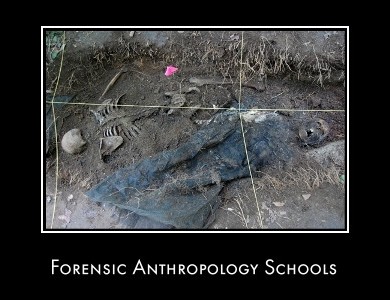
Forensic Anthropology Jobs Needed: Another Government Debacle

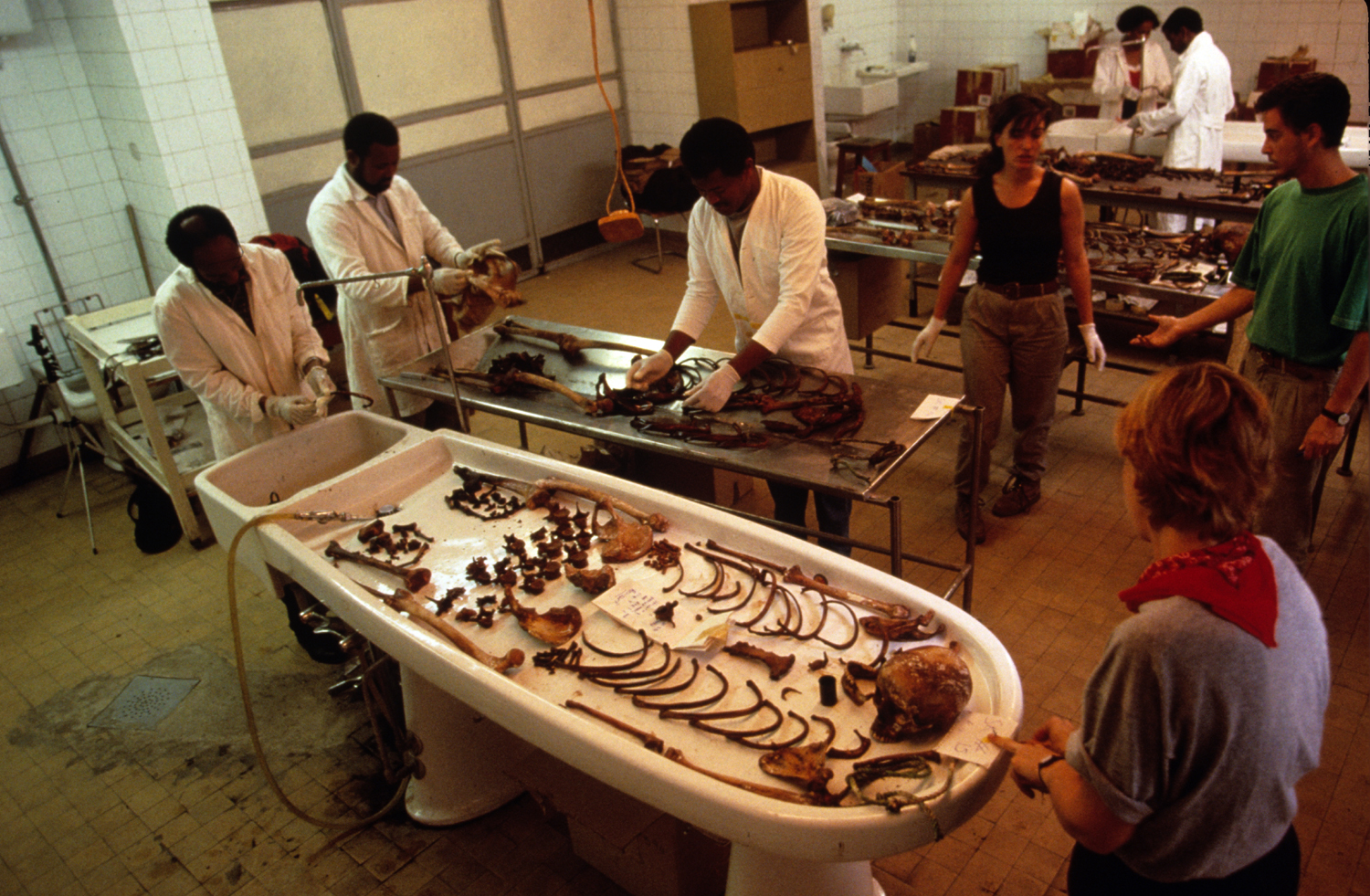
My wife and I had dinner with an instructor for Forensic Anthropology on Saturday and I learned how there is a shortage of Forensic Anthropologists. That little fact surprised me. “How can that be? Where do you find Forensic Anthropology employment? Who’s paying for them?” It was an honest question.
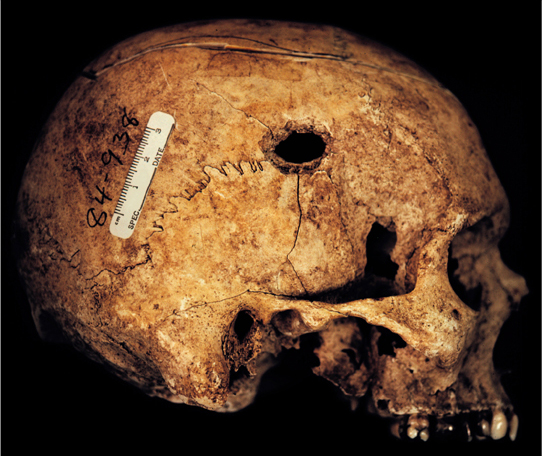
I received an honest answer. “The shortage is due to museums and other research facilities that are trying to comply with the “Native American Graves Protection and Repatriation Act”

“The what?” I asked. “What the hell is that?”

He proceeded to educate me which is most accurately described in this definition from Wikipedia.
________________________________________________________________________________________________________
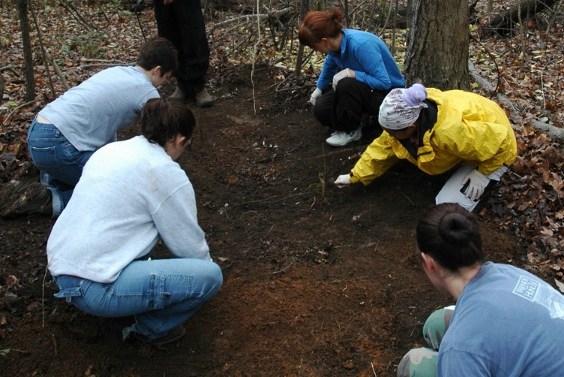
The Native American Graves Protection and Repatriation Act (NAGPRA), Pub.L. 101-601, 104 Stat. 3048, is a United States federal law passed on 16 November 1990 requiring federal agencies and institutions that receive federal funding[1] to return Native American cultural items and human remains to their respective peoples. Cultural items include funerary objects, sacred objects, and objects of cultural patrimony. In addition, it authorizes a program of federal grants to assist in the repatriation process. It is now the strongest federal legislation pertaining to aboriginal remains and artifacts.
_________________________________________________________________________________________________________
“Are you kidding me?” I asked. “What bunch of idiots passed that law? That has to cost a fortune.”

My dinner guest was agreeing with me, but being a man of science, he is eternally sympathetic to funding needs. Then I remembered when he and I had watched John Dunbar’s epic journey into the land of the Sioux Nation together around that time, then it came back to me. The film Dances with Wolves by Kevin Costner came out on November 21st of 1990. And the NAGPRA was passed just days before the release of the film.

The Heard Museum Report had been debated for three years starting in 1987 and had been passed by the 101st Congress as advanced copies of Dances With Wolves was circulating around Washington, after all Costner has just had a wild success with Field of Dreams. So there was a lot of buzz around the new movie about Native Americans. So with the usual sentimentality that engulfs the puffy coffee enriched minds of bureaucracy, they passed the NAGPRA without thinking much about the cost to science, or the tax payer.

“That is one of the dumbest ideas I’ve ever heard in the history of bad ideas,” I stated in clichéd fashion, knowing it was a cliché when I said it.

My dinner guest proceeded to educate me on various cases and pointed me in the direction of an article by Jan Bernstein:
________________________________________________________________________________________________________

NAGPRA – Future Applicability Rule
Article written for SPNHC by Jan Bernstein
Does the institution that you work for have Native American cultural items under its control or in its possession and does it also receive Federal funds? If so, more than likely you already know that your institution is a “museum” and therefore is legally required to comply with 25 U.S.C. 3001, which is more commonly known as the Native American Graves Protection and Repatriation Act or NAGPRA. But what you might not know is that there are new NAGPRA compliance rules for what is known in the Act as Future Applicability.

These rules apply to the following situations: 1) The museum or Federal agency acquires a new collection item or finds a previously unreported item that may be covered by the Act (covered items are Native American human remains, funerary objects, sacred objects, and objects of cultural patrimony; 2) A previously unrecognized Indian group is recognized by the Federal government as an Indian tribe. 3) An institution in possession or control of an item or items that may be covered by the Act receives Federal funds for the first time; and 4) The museum or Federal agency revises a decision previously published in the Federal Register.

The Native American Graves Protection and Repatriation Act (NAGPRA) was signed into law on November 16, 1990, but it wasn’t until March 21, 2007 that the final rule for §10.13 Future Applicability of NAGPRA was promulgated. It was published in Federal Register Volume 72, Number 54 and it applies to existing and newly acquired museum collections. Those are Sections Five, Six, and Seven of the Act. It does not apply to inadvertent discoveries or planned excavations which are addressed in Section Three of the Act.

The Future Applicability rules became effective on April 20, 2007. And on that date it established statutory deadlines for completion of NAGPRA Section Five Human Remains Inventories/Notices of Inventory Completion and NAGPRA Section Six Summaries (unassociated funerary objects, sacred objects, and objects of cultural patrimony). For you organization, the first deadline may be October 20, 2007. The rule set a six months deadline to produce and distribute a NAGPRA Section Six Summary for a new holding or a previously unreported holding newly located that may be unassociated funerary objects, sacred objects, or objects of cultural patrimony. October 20, 2007 is the deadline for the Summary distribution if the new holding was acquired or found prior to April 20, 2007. Your organization has two years from the promulgation date or acquisition/discovery date to prepare a NAGPRA Section Five Human Remains Inventory/Notice of Inventory Completion in consultation with affiliated Indian tribes or Native Hawaiian organizations. If the new holding was acquired or located prior to April 20, 2007, you have until April 20, 2009 to do culturally affiliation consultation and distribute a NAGPRA Section Five Human Remains Inventory and publish a Notice of Inventory Completion in the Federal Register.

A newly Federally recognized Indian tribe has standing under NAGPRA and museums and Federal agencies covered by the Act are required by the Future Applicability Rule to send Section Six Summaries to these Tribes within six month of recognition. Federal Agencies and museums are also required within two years of recognition to prepare in consultation with culturally affiliated Indian tribes NAGPRA Section Five Inventories/Notices of Inventory Completion.

Maybe your organization didn’t receive any Federal funds between November 16, 1990 when the law passed and November 16, 1995 when the last deadline occurred. But since that time it began to receive such funds. Those funds may be flowing directly to your organization or to your parent organization. For example, maybe you are working for private college anthropology or art department and another department at the college started to accept Federal contracts or grants after 11/16/1995. Those funds have redefined your department as a museum covered by NAGPRA. If this is the case, your organization is required to comply with NAGPRA. If you find your organization is in this situation, you must within three years from the time the Federal funds were received or from the effective date of the Rule (4/10/07), whichever is later provide a Section Six Summary to Indian tribes or Native Hawaiian organizations that are most likely to be culturally affiliated. Within Five years of the date of receipt of Federal funds, or within five years of the effective date of this Rule, whichever is later, you must prepare, in consultation with affiliated Indian tribes or Native Hawaiian organizations, a Section Five Human Remains Inventory/Notice of Inventory Completion.

If your organization previously published a Notice of Inventory Completion, but the information has since substantively changed, the Future Applicability Rule requires a Notice of Inventory Completion Correction be published in the Federal Register. A substantive change is a change in the culturally affiliated Indian tribes or a change in the minimum number of individuals count. The National NAGPRA Program will assist you with this process.

What does this mean for those of you who represent a Federally Recognized Indian tribe? Well, I hope you will see some new Summaries hitting your desk as well as an increase in the number of requests to consult in preparation of new human remains Inventories.
The rules can be found on the National NAGPRA Program’s web site. I wish you all great success in your NAGPRA compliance efforts.
________________________________________________________________________________________________________
“How can an anthropologist or archeologist be expected to return the remains of Indian Tribes when much of the tribal movements aren’t even understood by anybody yet? There are still completely mysterious cultures that no science organization understands regarding Native Americans.” I was thinking of Cahokia outside of St. Louis, and several of the mound builders in the Ohio Valley. The Shawnee had in fact migrated from Florida before settling in Ohio. Few tribes could be traced back for thousands of years.

The instructor laughed. “That’s part of the problem. There are a lot of finds and burial relics that predate 1492, so it is nearly impossible to return cultural items to specific tribes.”

I was getting angry. “What about the ancestors of Anglo Saxons that were fleeing tyrants of Europe to settle the frontier that were cannibalized in giant kettles and eaten like soup, entire families were slain for no reason what-so-ever.”

“That’s not politically correct,” he laughed at me.

“That’s politics, which is the same as what comes out of an elephants ass.”

“Well,” he said, “its business. Laws like that put people to work and make people feel like they’re doing something important.”

He mentioned Bernstein and Associates, who I looked up and read their literature.
_____________________________________________________________________________________________________
Bernstein & Associates, LLC
We work with Indian tribes, museums, universities, and governmental agencies on Native American Graves Protection and Repatriation Act (NAGPRA) compliance projects.

Services we provide to our clients

NAGPRA Grant Writing
We write successful Consultation/Documentation and Repatriation grant proposals.
Our clients have received over $1,000,000 (one million dollars) in
NAGPRA Consultation/Documentation and Repatriation Grant grant awards.
Annually since 1999, we have written at least one NAGPRA Consultation/Documentation grant for clients and every year we’ve had a grant funded.

Jan Bernstein teaches a two-day NAGPRA Grant Writing Seminar for the National Preservation Institute.

NAGPRA Consultation Support
There is a tremendous amount of work that goes into NAGPRA consultation planning, implementation, documentation, and follow-up. Official tribal representatives frequently praise our culturally sensitive, insightful, respectful approach to consultation. Bernstein & Associates helps Indian tribes, museums, and federal agencies with all phases to whatever degree suits your needs:
• Meeting planning
• Consultation preparation including document research and assembly
• Consultation documentation
• Consultation follow-up

Since 1990, we have organized and facilitated several hundred individual and group consultations with tribes that have traditional territory in all regions of the country including Alaska and Hawaii.

Repatriation, Physical Transfer, and Reburial
We have worked with tribal leaders, official tribal NAGPRA representatives, and traditional religious leaders in the Southwest, Plains, Great Basin, and Southeastern US as well as Peru (non-NAGPRA) to facilitate the repatriation and reburial of nearly 1000 individuals and hundreds of cultural items. Bernstein & Associates is available to:
• Write repatriation grant proposals for up to $15,000 to defray the costs associated with reburial
• Provide assistance in writing valid repatriation requests and repatriation claims
• Write draft notices of intent to repatriate
• Facilitate the development and implementation of reburial plans and agreements

NAGPRA Summary and Human Remains Inventory Preparation
Because of the long-standing, positive working relationships that we have built with the tribes throughout the U.S since the mid 1980s, we are extremely successful in aiding clients in the preparation of culturally sensitive NAGPRA Summaries and Inventories. Every client utilizes our services in a slightly different way. Some of the many services we provided to clients are:
. Assess collections to determine which tribes should receive summaries and invitations to consult on cultural affiliation for development of Inventories
– Write letters to tribes using our tribal contact database, which is constantly updated with current contact information for tribal leaders and NAGPRA reps, as well as consultation style preferences
– Initiate Summary consultation after initial correspondence
– Facilitate NAGPRA consultation conferences

Strategic Planning

We help clients assess what needs to be done to comply with NAGPRA, how long it will take, and develop a chronology. We then break it down into manageable projects that could be funded by grants for museum clients. We provide clients with a written plan that can be used to track progress.

____________________________________________________________
“So it’s all about getting federal grants,” I asked.

He smiled and sipped his wine. “It’s always about money, and that’s why there’s a need for Forensic Anthropologists.”
Then our conversation over the rest of the wine migrated to the Kennewick Man, which I found a nice back story below.
__________________________________________
Source World of Forensic Science
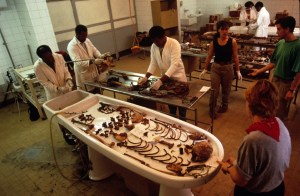
The remains of an ancient human found along a river in Kennewick, Washington, in 1996 set off a heated debate about the ownership and future of the skeleton. Scientists argued that the skeleton, dubbed Kennewick Man, could provide new information about human migration in North America, while Native Americans claimed him as an ancestor and wanted to bury him according to their rites. Forensic anthropological findings and cultural evidence were presented in court procedures over the course of nine years while the fate of the Kennewick Man was debated.

The story of Kennewick Man began in July 1996, when two college students watching hydroplane races found a human skeleton along the Columbia River. The young men turned the remains over to local police, who realized that they were probably very old. The bones were then given to forensic anthropologist James Chatters for evaluation. Chatters reconstructed the skeleton, which was 80–90% complete. He determined that it was from a man who was probably five feet nine or 10 inches and about 40–50 years old when he died. He showed little evidence of arthritis, indicating that he wasn’t used to carrying heavy weights and that he might have been a wandering hunter. Dental examinations showed that the skull contained 30 of the 32 teeth and that they were in good shape, indicating that he probably had a diet that included lots of soft foods like meat. He was taller and thinner than most ancient Native Americans and the back of his skull was not flattened from a cradleboard as is commonly observed in skeletons of ancient Native Americans. In addition, the man had a stone spear point lodged in his pelvis and there was evidence of severe trauma to his rib cage that probably limited the use of his arm. Using computerized tomography (CT), Chatters determined that the spear point was serrated and leaf-shaped and typical of the types of spears used between 8500–4500 years ago. He hypothesized that the skeleton was either from a European pioneer who had been attacked by native people using stone-age weapons or from an ancient human. Chatters sent pieces of the bones to a laboratory for carbon dating, which determined that the age of the skeleton was between 9,200–9,400 years old, making the skeleton one of the oldest, and most complete, ever found in North America.
Once the age of the skeleton was determined, several groups came forward, vying for control of the remains. A group of five Native American tribes in the region, the Umatilla, the Yakama, the Nez Perce, the Wanapum, and the Colville, wanted to accord the remains the same rites given to any Native American, namely a speedy burial. They cited the legal authority of the Native American Graves and Repatriation Act (NAGRA), which requires the return of American Indian remains to tribes. As news of the unique find spread throughout the scientific community, a coalition of eight anthropologists and archaeologists petitioned for their right to study the ancient remains prior to burial. The scientists believed that study of the Kennewick Man could reveal important information about early human migrations into North America. The Native American group believed that any manipulation of the remains would show enormous disrespect to the dead and vehemently opposed scientific investigation of the skeleton, which they called the Ancient One. Because some of the features of the Kennewick Man, such as his height and the shape of his skull, indicated that he might not be of Native American ancestry but rather of European descent, a group of people representing the ancient Norse religion called Asatru also petitioned the court for the right to the remains.

The ensuing legal battle raged for more than nine years. One of the key questions of debate in the courts concerned whether or not the skeleton was subject to NAGRA. NAGRA requires that all Native American remains be returned to the tribe for burial, however it was unclear if the Kennewick man was of Native American ancestry. Eventually the court ruled that some scientific study was required in order to establish the origin of the skeleton and between 1998 and 2000, the Department of the Interior coordinated these studies. A 1999 physical examination of the bones established that the Kennewick Man shared most physical characteristics with people from Southern Asia. In April 2000, samples of bone from the Kennewick Man’s skeleton were removed and sent to two different laboratories for DNA testing. Because of the age of the bones, it was impossible to extract sufficient DNA for analysis and the results of the study were inconclusive. After a series of appeals by all sides, in February 2004, a U.S. Federal judge ruled that it was impossible to prove that the Kennewick Man’s ancestry was culturally affiliated to any of the Native American tribes in the region and gave scientists the right to go forward with their investigation. In 2005, plans were outlined for study three-phase study involving as many as 23 different scientists.

The dinner was over and it was time to go home. The impact of this NAGPRA has seriously hampered science by bringing politics into the whole business and allowed ourselves to be hampered by sensitivity. America had allowed our guilt over pushing the Native American’s westward to cripple us the same way we currently do over slavery, neither of which we can do anything about now. All we can do is learn from those experiences, which is what science is all about.

Instead of learning and expanding our worldly knowledge, we’re wasting time appeasing political factions, getting grants so we can move some bones around the country and argue over bones that pre-date our known understanding of history, which is shallow at best.

But that is the nature of politics. It’s equivalent to living life in a straight jacket. All I can do is shake my head at the invention of yet another useless government created position, a Forensic Anthropologist that spends less time digging and understanding the past, and more time filling out papers to qualify for federal grants.

Rich Hoffman
http://twitter.com/#!/overmanwarrior
www.overmanwarrior.com

Facebook to PeopleString: The Next Step is Right in Front of You.

I’ve been doing a lot of thinking about innovation and the “next” generation of things. It was in Hollywood that I first learned about Facebook, which to this day refuse to participate in. When Facebook came out all the rage was Myspace so the evolution of these “social networking” sites was well under way.

My feeling about Facebook is mixed. I personally don’t like how open it is, and I don’t like how it knows and remembers so much about you. It is too good at connecting people, and to me is creepy. I read a book years ago by Jim Mars called Rule By Secrecy, which seemed like extreme fiction at the time, but since that book’s publication only a decade or so ago, much has changed. Governments don’t have to do a lot of “big brother” surveillance of its citizenship, because people are posting their every movement now on Facebook, GPS units and cell phones anyway.

That aside, “social network” sites are good at what they do, and obviously human beings desire such easy interaction. That leads to the obvious question, what’s the next generation of social networking?

When I first heard about Facebook, only a handful of actors were participating, to help launch it and get other people to want to use it. Myspace was still way out in front, and Facebook was not a reasonable challenge………yet.
Now Myspace is old news, and Facebook is all the rage. All that happened in about a 5 year span. You have to move fast in this new “computer economy.”

My son-in-law is actually riding one of the waves of what may become the “next step” in that computer economy. When he first told me about it I was skeptical. But I’ve watched it develop over the last 9 months and I’ve seen him get some fairly decent returns on his entrepreneurial investment. So I have some inside info on what I think is the next step. It’s at least a bridge to the next step, and is worth looking at. It’s called PeopleString. So I’ll let him explain it, because he’s the expert.
This is how to get set up.

This guy isn’t my son-in-law, but he does a nice job of explaining some of the features.


So far, there are a lot of these types of videos emerging, and this is reminding me of how Facebook felt when it was first introduced. So if you’re looking for something new and fresh that can connect to all your current stuff, you might want to look into it.

http://www.thenewsocialportal.com/

No catch, there’s a chance to make a little money with their ponzi setup to get the word out, but the real value is in the convenience. The web is definitely headed in the direction PeopleString is exploring. So you might as well get on the train while it’s in the station.

Check out my son-in-law’s Youtube site dedicated to PeopleString for more info.
http://www.youtube.com/afewcentsaday

Rich Hoffman
http://twitter.com/#!/overmanwarrior
www.overmanwarrior.com

Things Will Never Be the Same! Educate Ohio is Uniting the State

I’ve been working with a group of reform minded people all over Ohio. In fact there are a number of these types of movements going on, while sadly, the school systems are playing the same old game. Here is an article from Larry Budd, writer for the Dayton Daily News.

To give a bit of background, Kelly is a board member for Springboro whom I’ve had some great discussions with, and Paul Lambert has been instrumental at getting things started with some fantastic facts and figures. He resides and does most of his business in Columbus and is a great resource. You can see some of Paul’s work here:

http://savethehilliardschools.blogspot.com/

Paul and Kelly are a lot more patient than I am regarding politics, and are great people to be at the front of this effort. 

School-levy foes back to work on new state group

Educate Ohio would be an alternative to the Ohio School Boards Association.

By Lawrence Budd, Staff Writer Updated 2:04 AM Friday, January 14, 2011

CLEARCREEK TWP., Warren County — Selected board members from school districts in six Ohio counties will huddle Saturday in Warren County to continue the creation of Educate Ohio, a new organization designed in part to make up for perceived shortcomings of the Ohio School Boards Association.

“There are board members that aren’t necessarily following the teachings of OSBA,” said Springboro board member Kelly Kohls. “It’s probably a presentation of the other side of issues. We need someone presenting the taxpayer points of view.”
OSBA executive director Rick Lewis said his group — governed by board members supported by all but three of Ohio’s 719 school districts, including Springboro — communicates information and curriculum used to educate school board members across the country.

“We’re very responsive to changing our priorities,” he said. “Sometimes there’s just different perspectives on how to get there.”

Kohls said her group would provide the public different perspectives on budgeting, tax levies and negotiating contracts with teachers’ unions.

The state teachers’ union, the Ohio Education Association, questioned whether the public would turn to Educate Ohio for information.

“The media and the public tend to turn to state educational organizations that represent hundreds of thousands of education personnel. They have a proven track record of working with education policy,” said spokeswoman Michele Prater.
Educate Ohio also would help other grass-roots statewide organizations, such as Educate Springboro, Educate Hilliard and Educate Worthington, which opposed recent levies in those districts.

The group was conceived in Hilliard by school board member and blogger Paul Lambert.
“We’re not trying to build some statewide political force. We really want to help the folks in the local communities,” he said.
Lambert purchased the educateohio.com web address, as well as web addresses for community-based offshoots in Hilliard and Worthington, two Columbus suburbs. He provided the address used by Educate Springboro, a community group that formed a political action committee to oppose a November property tax levy that would have generated new operating money for the district.

While a founder of Educate Ohio, Kohls has emphasized she is not a member of Educate Springboro.
“You have to kind of remove yourself from any political-action group,” said Don Miller, incoming president of the Springboro board. “It’s kind of our job to look at it from a big-picture perspective.”

Current, former or aspiring board members from Marysville to Versailles and Kettering to Springboro are planning to attend the 2 p.m. meeting at the Clearcreek Twp. Government Center. Yet Miller said, “I had no idea” about the meeting in his district.

It is the group’s second meeting following one in December at the Golden Lamb Inn in Lebanon. In addition to current, former or aspiring board members from Springboro, Hilliard, Marysville and Grove City districts, the meeting is expected to attract people such as Rich Hoffman of nolakota.com, which opposed a recent levy for Lakota Local Schools in Butler County.
Hoffman suggested public education reform hinges on decisions by Gov. John Kasich and progress in settling debates over equity in school funding that go back decades.

Herb Ernst, a former Oakwood board member affiliated with Citizens Advocating Responsible Government, a PAC that questioned school spending in Kettering, said his local group is considering adopting the name, Educate Kettering.
While hesitating to yet call himself an Educate Ohio member, Ernst said he planned to attend Saturday’s meeting.
“I think there’s going to be growing interest,” Ernst said.

Rich Hoffman
http://twitter.com/#!/overmanwarrior
www.overmanwarrior.com
The Disease of Regulation: The Scam of Legalized Extortion

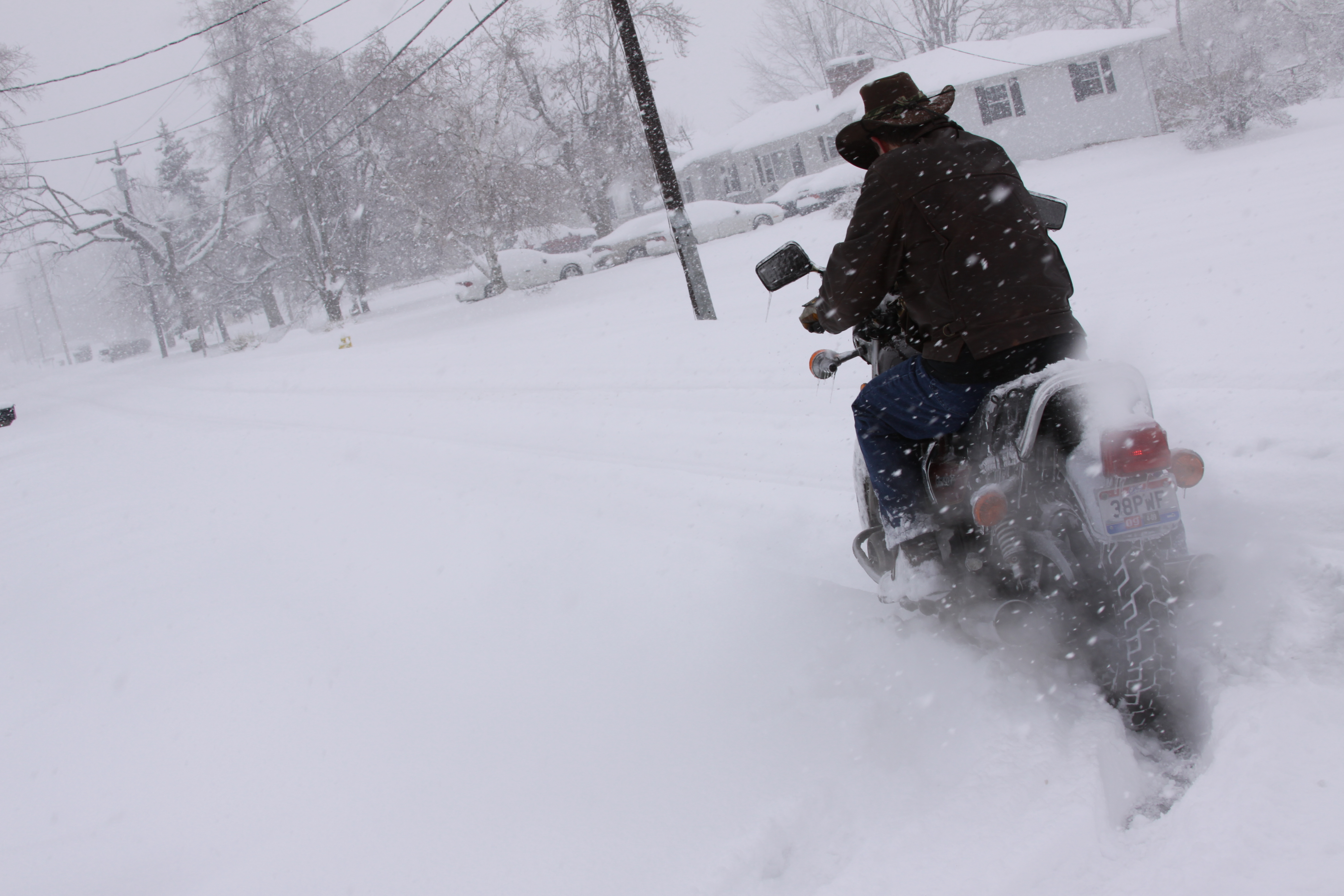
People ask me all the time why I ride a motorcycle in the snow and extreme cold.  When you have to spend the day within our court system, as I have this week, several things become extremely obvious, if you consider the situation with logic, regulations created from law makers are born and breed to employee people.  And when you realize how foolish that is, such trips in the snow help me see the truth of things. 

A court-house is filled with security, court clerks, bailiffs, administrators, judges, police officers and many other support personnel. The hallways around the court rooms fill with eager faces at exactly 8:30 to 9:00 pm waiting for their cases to be called. Attorneys walk purposefully with arms filled with documents, because this is their battlefield and are comfortable in the environment.

If one is punished with a case that extends for the entire day, or for multiple days, the pattern emerges. By 1 or 2 PM the busy court-house diminishes in its busyness and the hallways clear after tears are shed from some of the occupants, and congratulations occur on the other. These are palaces of high emotion and loaded with drama.

As I weighed out much of what was happening around me, including the case I was involved with, I had to measure how much of it had any true social merit. The answer was very little.

The system works like this, regulations are created by a law-maker someplace either locally, at the state, or the federal government, and the citizen out there in the world either knowingly or un-knowingly breaks those regulations. If someone chooses to hold the citizen accountable for breaking the regulation they can proceed to court. This can be instigated by a private citizen, or an officer of the law.

Lawyers try the cases in a courtroom and the wins and losses of these cases establish case-law, which forms the ebb and flow of the legal system.

The entire system is built to employee all parties that play supporting roles in that process. It could be argued that without that system many people would suffer injustice. But much of what I observed, including the case I was on, involved people seeking to abuse the system to work the case-law into their advantage in some way, and if some of those regulations were not in place, there wouldn’t be near so many cases on the court dockets, and a lot of the people who filled the parking garage in the morning wouldn’t need to be there.

You can see this first hand at your local court on virtually any day through the week. You can see it also in your state house for whatever state you live in. And of course you can see it in Washington to great effect. Much of what you see as far as employees rushing around like ants at an ant farm is unnecessary.

Therefore the goal of all this regulation is not to make a safer, more just society. It is to create jobs and a reason for people to show up to work.

That might seem preposterous, especially if you are one of the people who are in the process of regulation creation, or enforcement.

At the conclusion of many of these cases, the plaintiff attorneys and defense attorneys, locked in immortal combat shook hands at the end and wished each other well. The whole thing had the appeal of a game of football. While all these opposing forces are together, the clients walk behind their counsel like dogs on a leash. Nobody speaks to each other as invisible walls restrict it. Eyes do not meet between defense and plaintiffs. But attorneys treat the whole thing like a game, because it is.

Regulation costs us economically, and if the economy were allowed to expand on its own accord, jobs would be created as a natural by-product. But the kind of jobs that are created through regulation are the kind of desirable, well-paying jobs that exist between 9 to 5, which is how many want it. And the act of manipulating the nature of economics corrupts and restricts it in unnecessary ways.


Human nature will of course take advantage of the regulations because it allows the power behind the enforcement to make people stronger than they individually would be otherwise. A single, selfish, human being can take on an entire corporation with a simple accusation that should shoulder the burden of proof. But the defendant will have to hire counsel to defend themselves which can cost an extraordinary amount of money to prove their innocence, because the regulations are so incredibly great, that individual citizens and companies can handle their own legal affairs, because of the complexity. And as we’ve discussed here on this site, complexity means money. Whenever something is too complicated for an individual to do the work themselves, it is built to be that way so people can’t understand the foolishness behind the complexity. Because the intent behind the complexity is to support government oriented jobs that exist from 9 to 5. It’s that simple. 

Riding a motorcycle in the snow is something that this regulation society of ours doesn’t do.  And that’s why I do it every day.  Because spending days on end in court can turn you into something you don’t want to become.   

Rich Hoffman
http://twitter.com/#!/overmanwarrior
www.overmanwarrior.com
Edward Bernayes and the Evolution of Cass Sunstein: Manipulating the Human Race!

Glenn Beck did a wonderful job of covering Edward Bernayes on his program, and I thought it was worth gathering some of the videos that are collected about Bernayes. There are many who believe that the world around them has always been just as we see it. But when you understand the art of shaping the human mind, you learn that people like Edward, have inflicted more evil on mankind than guns ever could.

There is a lot of video here. More information than most care to absorb. But if you take the time to watch all these video, you can benefit from the education they offer and begin the process of understanding how it relates to you.

Enjoy!


So who’s the new Bernayes? Meet Cass Sunstein.


Rich Hoffman
http://twitter.com/#!/overmanwarrior
www.overmanwarrior.com