
Once You Win, Now What: Learning to deal with the pressure of being on top

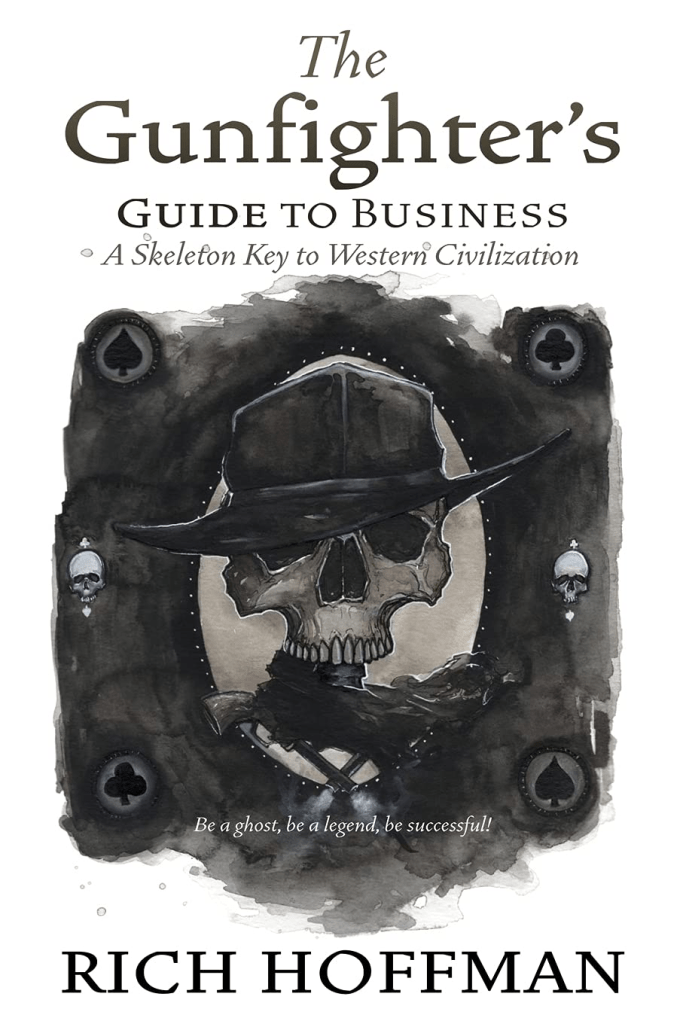
So, now that we’ve won some crucial elections, and Trump is going to be back in office and will make it a priority for America to win again, what happens now?  Winning is tricky, not just in winning once or twice here and there but in having a winning attitude every day, no matter what is happening in your life.  And to answer another question I get asked all the time, why do I participate in so many competitive events throughout the year, especially in shooting sports?  What’s the point?  Well, to have this conversation, actually, and this is a point I make abundantly in my Gunfighter’s Guide to Business, winning is very difficult because once you win a time or two, you end up on everyone’s target list for personal destruction.  The social ostracization begins with the masses who don’t win very much and it can get pretty tough.  So I compete a lot, not for the fun of it but for the practice of staying sharp in maintaining a winning way of thinking, which then cascades into other parts of my life.  But for many, winning is easy.  As an outsider, you put all your efforts into something.  You win, then become the king of the hill.  Then what do you do? You now have people looking at you as the one to topple.  A lot of people suffer greatly when they win in politics because once the shoe is on the other foot, and your competitive enemy now looks at you with the obsession of beating you, you might likely find yourself spending most of your time looking over your shoulder instead of maintaining a winning attitude which caused you to win in the first place. 

Since I compete a lot, I get to see the ugly side of people working hard to win at anything, from bowling to golf.  A win over peers makes life a little bit better and makes all the mundane things we do in a day just a little sweeter when we win.  Humans are competitive people, which works best in capitalism when people compete for market share.  But I can tell you, especially in shooting sports, that some people you compete against get pretty crazy when they think obsessively about beating you once you establish yourself as the one to beat, and if they can’t beat you, they get pretty mad.  Learning to deal with that pressure is a large part of the battle because everyone can win a time or two just by random luck.  But how do people manage the expectations of being a winner?  That can be a bone-crushing, soul-draining endeavor.  Maintaining a winning attitude once you become the king of the hill that everyone wants to knock off takes a lot of work and personal motivation.  It would be easy for me just to put trophies on the wall and say, I won a lot and was pretty good.  But continuing to grind through more and more wins isn’t for me about winning; it’s about dealing with all the people who want to knock me off and dealing with that pressure.  Even if it’s a little thing.  The competition from people who always want to beat you sharpens you up for life’s real battles.  If the pressure under leisure bothers you, then real stuff, where it counts, can destroy you.

I was at Top Golf recently with many people, and you wouldn’t believe how competitive everyone was in getting the best score.  I don’t golf much, but I was doing very well.  And there were people there who golf all the time.  It’s the primary recreational activity they do in life, and they were losing and were mad about it.  My strategy to compensate for my lack of finesse with the various wedges was to use the driver to hit the ball as hard as possible toward the 300 point holes in the back of the course.  And most of them were going in.  And it was driving my competitors crazy.  I often have the same reaction in a fast draw.  I have a very fast draw where I shoot right out of the holster at my hip.  And it’s hard for people who have been shooting for a long time to deal with that because the core skill is going a little slower to go fast, which is the opposite of driving a golf ball by relying on hitting it hard every time.  Typically, people who win a lot find something they can excel at, and they leverage that against variability and emotion for consistency of performance.  And they usually end up winning more than average against other people.  That was certainly the case with several political campaigns.  One of the reasons Trump has been so dominant in politics is because he learned to win in life, so defending his king of the hill perspective was nearly impossible for losers who wanted to use mass collectivism to hide their incompetency, such as was the entire campaign of Kamala Harris.  Once she showed herself as a loser who didn’t know how to win anything, she was easy to beat, even with the media trying to cheerlead her on.  Democrats weren’t prepared for an honest election where they had to win.  They had built their entire political platform on cheating and couldn’t handle the pressure down the stretch, no matter how much money they spent, just like the guy who buys all the fancy golf clubs competing against a person who handles the pressure of winning better.  Money can’t solve the problem. 

A lot of people in life can’t handle the pressure of being a winner.  So all they ever really achieve is the rock-chucking part of wearing down an opponent.  Whoever is the king of the hill at that time makes themselves an easy target for all the rock chuckers.  Someone recently told me, “Do you know how much people hate you?”  It was as if it was my social obligation to be liked and to lose to make them feel better about themselves.  Because they were too lazy to become winners, they resorted to the classic peer pressure application of saying, “You should let me win if you want to be my friend.”  Well, why would anybody want to be friends with a loser?  What’s the fun in that?  I like seeing people working hard to beat me at things because it improves them.  I think, especially in a capitalist culture, that people are forced to make themselves better by making me a target for their perfection.  And if they sneak away a win here and there, I am usually happy for them.  I have a lot of trophies, so I like to see other people enjoy victory, especially if the competition makes everyone better.  That’s the name of the game.  But once you are a winner, you must expect everyone to come after you.  And that will undoubtedly be the case with these political wins.  Don’t be happy to put the trophy on the wall and rest on your laurels.  Once you win, you must continue to win and strive at it with every breath in your body, every day.  And by making winning a daily practice, you will find that it helps you in everything you do.  And that the world around you will benefit from the competition. 

Rich Hoffman

Click Here to Protect Yourself with Second Call Defense https://www.secondcalldefense.org/?affiliate=20707
The Ring of King Solomon: Asmodeos and the keys to a demonic past

This is a bit of a footnote on some projects I have going, which involve King Solomon, his ring of power and the influence of jinn and kami in various world cultures.  King Solomon’s Ring is a fabled object of immense power and wisdom that has captivated the human imagination for thousands of years. Many legends and stories have been passed down about its incredible abilities, but its true existence remains a mystery. Nonetheless, the tale of King Solomon’s Ring continues to inspire and intrigue people even to this day.

According to the ancient stories, King Solomon was given the ring by an angel, and it became a symbol of his great power and wealth. The ring was said to have the power to control demons and spirits and to grant its wearer immense knowledge and wisdom. It was also believed to have the power to heal the sick and to protect its wearer from harm.

Despite the many legends that surround King Solomon’s Ring, its true existence remains a mystery. Some scholars believe that the ring was a metaphor for the wisdom and power that King Solomon possessed, while others believe that it was a real object that has been lost to the ages.

One thing is certain, however – the story of King Solomon’s Ring has had a profound impact on human culture and history. It has inspired countless works of art, literature, and music, and it has been the subject of intense study and speculation by scholars and historians for centuries.

In the end, the true nature of King Solomon’s Ring may never be known. But its legacy lives on, inspiring us to seek out wisdom and knowledge, and reminding us of the power of legend and myth to capture the human imagination.

King Solomon’s Temple is one of the most iconic and enduring structures in human history. Built in ancient times by King Solomon himself, it is a testament to the great wealth and power of the Israelite kingdom. But who exactly built this magnificent temple? Many historians and scholars have debated this question for centuries, and the answer remains elusive to this day.

Some believe that King Solomon himself oversaw the construction of the temple, using his immense wealth and resources to bring his vision to life. Others argue that he employed skilled artisans and craftsmen from across the kingdom to complete the work, drawing on their expertise and experience to create something truly remarkable.

Still, others suggest that King Solomon may have enlisted the help of supernatural forces to build the temple, calling upon angels or other divine beings to assist him in the construction process. While this theory may seem far-fetched, it is not entirely without merit, given the many stories and legends that have been passed down throughout history about King Solomon’s incredible powers and abilities.

Regardless of who built the temple, there is no denying its remarkable beauty and grandeur. From its soaring columns and intricate carvings to its shimmering gold and precious stone decorations, the temple is a testament to the skill and artistry of its creators. Even today, thousands of years after its construction, the temple remains a symbol of the Israelite kingdom’s power and influence, and a reminder of the incredible achievements that can be accomplished by those who dare to dream big and work hard to make their dreams a reality.

In conclusion, the question of who built King Solomon’s Temple remains a mystery to this day. While there are many theories and legends surrounding its construction, the truth may never be known for certain. Nonetheless, the temple remains a remarkable achievement of human ingenuity and creativity,

Hiram Abiff is a prominent figure in the world of Masonic symbolism and ritual. He is a central character in the legend of the building of King Solomon’s Temple, which is a foundational story in Masonic lore. According to legend, Hiram Abiff was the chief architect and master craftsman of the Temple, and his death at the hands of three jealous apprentices is a tragic and important event in Masonic history.

The legend of Hiram Abiff is a complex and multi-layered story that has been interpreted and re-interpreted by Masonic scholars and practitioners for centuries. At its core, however, the story is a morality tale about the importance of truth, fidelity, and honor in the Masonic brotherhood.

According to the legend, Hiram Abiff was a skilled craftsman who was entrusted with the task of building King Solomon’s Temple. He was known for his uncompromising commitment to excellence and his unwavering dedication to the craft of building. However, his great skill and success also made him a target of envy and jealousy among some of his fellow craftsmen.

Three of Hiram Abiff’s apprentices, known as the “ruffians,” conspired to steal the secrets of his craft by force. They demanded that Hiram reveal the “Master Mason’s Word,” which was believed to be a powerful and sacred secret that only the most skilled and worthy Masons knew. Hiram refused to divulge the secret, even under threat of death.

The ruffians then attacked Hiram, first striking him with a mallet and then stabbing him with a chisel. Hiram died, but not before uttering a powerful and cryptic message that has become central to Masonic symbolism: “Ma-ha-bone.”

The death of Hiram Abiff is a tragic event in Masonic history, but it is also a powerful symbol of the importance of fidelity and honor in the Masonic brotherhood. Hiram’s refusal to reveal the Master Mason’s Word, even under threat of death, is seen as a powerful example of the importance of keeping one’s commitments and upholding one’s obligations in the face of adversity.

Today, Hiram Abiff remains a powerful symbol in the world of Masonic symbolism and ritual. His story is told and retold in Masonic lodges around the world, and his death is commemorated in elaborate ceremonies that are meant to inspire and instruct Masonic initiates.

In conclusion, Hiram Abiff is a central character in the legend of the building of King Solomon’s Temple, and his tragic death at the hands of three jealous apprentices is a powerful symbol of the importance of fidelity and honor in the Masonic brotherhood. His story continues to inspire and instruct Masonic practitioners around the world, and his legacy remains an important part of Masonic lore and tradition. and a testament to the enduring legacy of King Solomon and the Israelite kingdom.

Asmodeus is a fascinating figure in the world of biblical lore. According to the legends, Asmodeus was a powerful demon who helped King Solomon build his temple. But who was Asmodeus, and what drove him to assist the king in such a monumental task?

To answer these questions, we must first delve into the origins of Asmodeus. According to the Book of Tobit, Asmodeus was originally an angel who fell from grace and became a demon. He was said to be one of the seven princes of hell, ruling over the sin of lust. He was also known as the “destroyer,” due to his penchant for causing chaos and destruction.

Despite his demonic nature, Asmodeus was said to have a fascination with humans. He was known to possess humans and engage in sexual acts with them, often resulting in the birth of monstrous offspring. This behavior earned him a reputation as a powerful and dangerous demon, one who was feared by many.

So why would Asmodeus help Solomon build his temple? Some believe that Asmodeus was motivated by a desire to gain access to the holy site. Others speculate that he was seeking redemption for his sins and saw assisting the king as a way to achieve it.

Regardless of his motivations, it is clear that Asmodeus played a critical role in the construction of the temple. According to the legends, he used his powers to help Solomon locate and mine the precious stones and metals needed for the temple’s construction. He also provided Solomon with the knowledge and expertise needed to design and build the temple’s intricate architecture.

But Asmodeus’s assistance came at a cost. In exchange for his help, Solomon was said to have given Asmodeus the power to tempt and corrupt humans. This power allowed Asmodeus to continue his wicked ways, and he became even more feared and reviled by those who knew of his involvement in the temple’s construction.

Despite the controversy surrounding Asmodeus’s role in the construction of the temple, there is no denying that his contributions were critical to its success. Without his help, Solomon may never have been able to complete the project, and the temple may never have become the revered holy site that it is today.

In conclusion, Asmodeus is a complex and fascinating figure in biblical lore. His role in the construction of Solomon’s temple has been the subject of much debate and speculation, but there is no denying that his contributions were critical to its success. While his demonic nature may be troubling to some, it is clear that Asmodeus played a critical role in the history of the Jewish faith.

Rich Hoffman

The Great Carl Rullmann and Melania Trump’s Wondrous Christmas Trees: Stumps of life that give meaning to existence

As I was admiring the magnificent Christmas decorations at the White House by the gifted fashion eye of Melania Trump I received the notification from his widow that one of my long-time friend and readers Carl Rullmann had died on Monday November 20th. She went on to say that even in his final days when he could no longer read himself, she would read my articles to him. She elaborated that Carl looked forward to everything I had to say about everything which was a nice way to put it. Because I do literally write about everything, and often deeply, which is my inclination. I first met Carl over eight years ago when I was at a meeting and he rushed over to tell me how much he enjoyed my segments on 700 WLW radio and we have been friends ever since. He often would send me private emails wanting to talk more explicitly about things I had written that he took issue with, as a deeply religious man. I enjoyed the banter and understood what role some of that interaction played in his life as he suffered through several illnesses over the last couple of years culminating in his event on the 20th. I felt sorry for his wife Rita immediately as it had to have taken a lot of personal courage for her to contact me in the way she did just seven days after. But I view death differently than most people and I found the beauty of Carl’s life to be a similar reflection as what Melania Trump was doing at the White House, and instead of feeling sorrow for a lost friend, I found joy.

This year was the first my wife and I bought a real tree for Christmas. You have to understand, my wife and I are people who keep our emotions close in check all the time and we have enjoyed over the decades the knowledge that after New Year’s celebrations are complete and we head into those cold January days with nothing much to look forward to until spring arrives, that our Christmas tree would go into a box in our basement to be resurrected the next year. She came from a wealthy family and that’s how they did things, mainly for the convenience of it. So when we were married way back in 1988 we did much the same thing, getting artificial trees that were easy to put up and take down without a lot of emotional pomp and circumstance. What I didn’t know, that really didn’t emerge until our children were fully grown and we started having lots of grandchildren to deal with, was that deep down inside she always wanted to have a live tree for Christmas.

I grew up with a live tree, each year my family had bought one going through the ritual of picking one out and then putting it up. The whole experience climaxed on Christmas Day when the whole mythology came alive to a nice end. It was always sad to take the tree down, but always extraordinarily exciting to put them up. I never remember a Christmas from my childhood that wasn’t an exciting period of my life—and the live Christmas tree was always the centerpiece. It always seemed odd to me that after Christmas my dad would take the tree out to our burn pile and we’d burn it sometime around late January and February. I’d look at it dormant on its side out in the cold covered in snow with the branches all brown and dry and wonder if it was the same magnificent thing that had been in our living room bringing so much joy.

My wife and I mutually didn’t want the emotional roller coaster of a live tree during our marriage. It gave us counsel to know that the centerpiece of our Holiday joy was always in our basement—yet the experience never seemed quite authentic. So it was much to my surprise when we were out shopping for early Christmas items when she declared, “let’s get a live tree this year.” Well, it didn’t take much for me to agree to it. We are after all empty nesters. Our kids come over for Christmas and it’s always nice, but they have their own lives these days and we are often only in it when they can find the time and will to get together. Our Christmas mornings now are very lonely and for us that is devastating, because we both always loved to have children in the house to bring mornings like Christmas to life in such grand ways. Now there are grandchildren, but we get about a half hour and it’s nowhere near the same. So buying a live tree for Christmas with all the emotion that can be involved for that Holiday I thought was a bold move for her.

I’ve watched the various presidents over the years in how they decorated the White House for Christmas because it says a lot about who they are. Back with the Clintons in the 90s there were utterances that they hung condoms on their Christmas tree because as progressives, they were actively pushing politically to replace Christianity as a guiding light for the masses. The Bush White House was more traditional and a welcome sign after the debacle that was the Clintons but that particular White House was too careful and sensitive to the progressive movement seeking to accommodate them more than traditionalists like me would have liked. Then there was the Happy Holidays of the Obama era—which was not as anti-Christian as the Clintons, but certainly wasn’t what we would call “traditional” in America. They sort of went through the motions and everyone could tell. But it wasn’t until Melania was able to design the decorating in the White House that we could see for the first time how magnificent the Executive Branch could be in leading the charge to restore Christmas to its proper place in American culture. Melania’s use of live trees and lighting was simply phenomenal, and it actually made me proud that my wife and I had decided to do a live tree this year as our personal tree has had the same kind of effect on our personal household. Because it was my wife’s first live tree she has put a lot of extra love in it knowing that the life of the tree deserved the extra attention. As she put it the whole reason the tree was raised and cut down was to serve this one purpose for just one little month of our lifetimes. Melania on the grand scale did much the same and the combined result to me was spectacular and filled me with pride and patriotism.

Of course it will be sad to take down our tree this year. And it will be sad to take down all the great trees in the White House. But the joy they provide for that very short time I think is a proper metaphor for all our lives. We are talking about the four seasons of course, Winter, Spring, Summer and Fall, or conception, birth, life and death metaphorically for us all. These Christmas trees represent life in the dead of winter when life ends and renews on the first day of the New Year. It’s a lifecycle and during Christmas in addition to celebrating the birth of Jesus Christ, we have constructed our holidays to serve a more appropriate and modern-day relevancy to our own existence, and Christmas trees are at the center of that mythology. They are a symbol and celebration of life in the time of death—winter. And in the case of my friend Carl Rullmann who lived a great life and was eager to learn something new right up until the end, he like our Christmas trees are wonderful to look at and appreciate. For the radiance of life that flowed through them does end and the body of the lifeform does diminish and fall away. In the case of Christmas trees we toss them out after the Holiday season for disposal, just like the dead of our human species. But it’s the celebration of their life in the times of Christmas all lit up and displayed with honor that is the point of living. Carl was one of those people and during life his lights and ornaments representing his experiences will carry on in our memories. Yes the body does die but all our lives are better because of our experiences with each other. And that is what I will always think of for now on when I see a live Christmas tree. They are beautiful things!

Safe travels Carl Rullmann on the next adventures of existence. Because like the Christmas trees we are all cut off at the stem and drinking water out of a little pot that keeps us alive just long enough. It is when we transcend that limit and drink from the waters of eternal life that our real adventure begins. And that is a beautiful thing as wall, in many ways more beautiful than life itself.

Rich Hoffman

Sign up for Second Call Defense here:  http://www.secondcalldefense.org/?affiliate=20707  Use my name to get added benefits.