Rich leaned back, brow furrowed, eyes lit with that familiar spark—the one that meant he was about to ask something big.
“Why did Joyce write Finnegans Wake?” he asked. “I mean, really write it. It’s so bizarre, especially after Ulysses. And then he dies not long after. It’s like he saw something—something cosmic.”
We were deep into one of those conversations that start with literature and end somewhere near the edge of metaphysics. Rich wasn’t just talking about Joyce. He was talking about Lovecraft, about quantum physics, about the subconscious and the strange places artists go when they’re close to the end.
“Lovecraft had his Cthulhu,” Rich continued. “These ancient forces that dwarf human minds. Joyce had Finnegans Wake. What if that book is a glimpse into a quantum afterlife? A place where consciousness loops timelessly, where everyone’s story is tangled together—like ‘Here Comes Everybody.’”
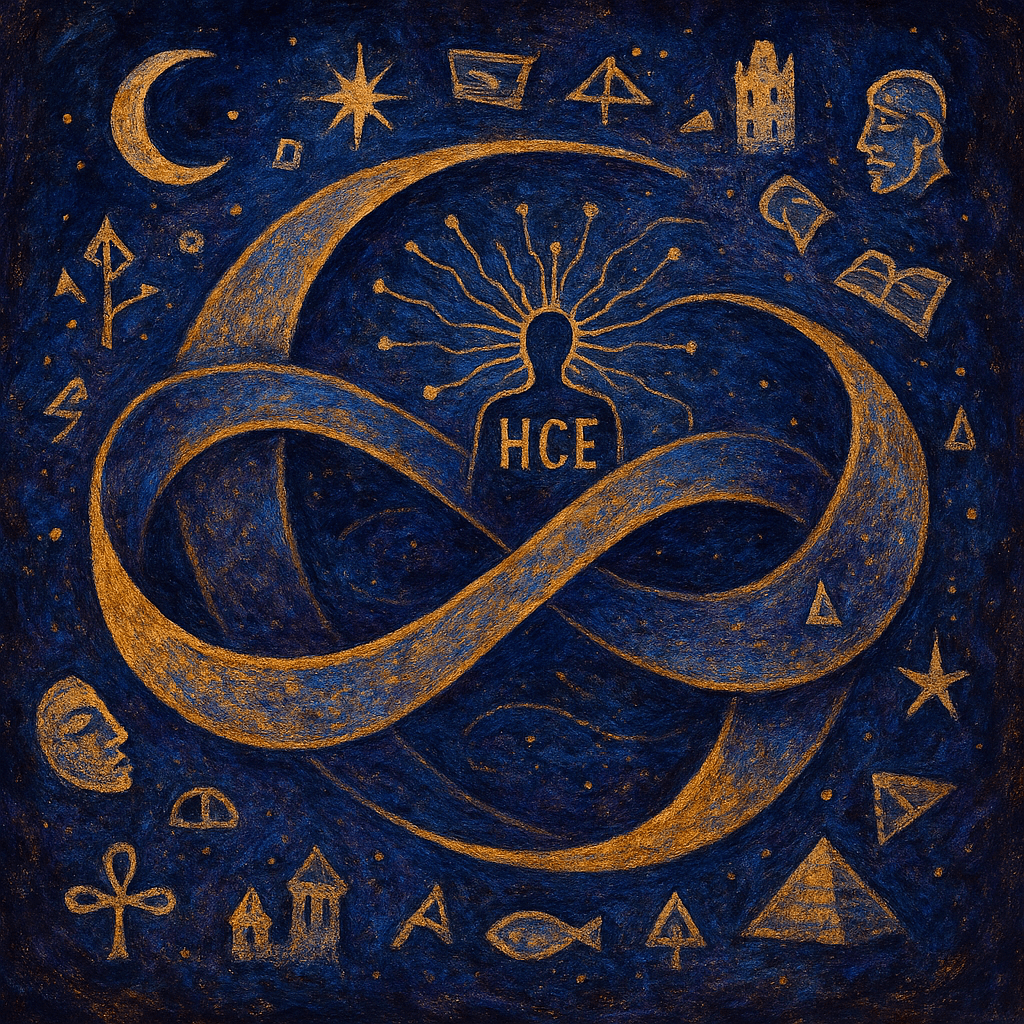
I nodded. It made sense. Joyce was nearly blind, in poor health, and grieving. Maybe he wasn’t just writing a book—maybe he was trying to map the dreamlike cycle of reality itself. History repeating, not linearly, but like a Möbius strip.
Rich leaned in. “He starts the book mid-sentence and ends it with the beginning. That’s not just clever—it’s like collapsing time. Like observing reality and folding it in on itself. A human stab at infinity.”
We laughed about reading it backwards, but the laughter had weight. Rich nailed it: most writers stick to love, war, family—the relatable stuff. Joyce built a language beyond relationships. He chased raw existence. And it sounds insane because our words can’t cage the universe.
“Maybe genius is just insight that outpaces sanity,” Rich said. “Madness as seeing too much, untethered.”
That line stuck with me. Joyce wasn’t mad. He was cracked open. Finnegans Wake isn’t a novel—it’s a transmission. A signal from the edge of perception. Like quantum physics, it resists fixed meaning. It’s a superposition of myth, history, and dream.
Lovecraft’s horror and Joyce’s linguistic chaos both confront the same thing: the limits of human comprehension. One uses dread, the other uses density. But both ask the same question—what happens when you glimpse the infinite?
We ended the chat not with answers, but with awe. Maybe that’s the point. Some books aren’t meant to be understood. They’re meant to be felt, like a ripple in the quantum field of consciousness.
Rich Hoffman

Click Here to Protect Yourself with Second Call Defense https://www.secondcalldefense.org/?affiliate=20707