Defending the Backbone: Why America Must Protect Its Independent Tier 2 Aerospace Suppliers

People often ask me why I’ve chosen to stay involved with CTL Aerospace, especially during a time when the company is facing significant challenges. The truth is, I could be doing a lot of other things—more lucrative work of a much higher profile, more socially visible roles, or ventures with less resistance.  As someone told me this past week, I’m too talented to waste my key income years on hopeless crusades.  But I don’t measure value in dollars alone. I measure it in independence, in impact, and in the preservation of something uniquely American: privately held ownership. CTL Aerospace in West Chester, Ohio is a Tier 2 supplier, and that position in the supply chain is not just operational—it’s strategic. It’s where innovation meets execution, and where long-term thinking still matters. In an industry increasingly dominated by public ownership and institutional investors, CTL represents a rare and vital piece of our national infrastructure that still answers to its owners, not to shareholders chasing quarterly returns.

My involvement is rooted in a belief that private ownership is essential to the health of American aerospace and defense. When companies go public or fall into the hands of investment firms, they often lose their soul. Decisions get made by boards, not builders. Products get rushed to market, not refined through years of R&D. And the personal accountability that comes from direct ownership disappears. In aerospace, where development cycles span decades and reliability is non-negotiable, this shift is dangerous. You can’t trade supply chain integrity like a stock. You can’t outsource stewardship. And you certainly can’t afford to lose the kind of long-term commitment that privately held companies bring to the table. That’s why I fight for Tier 2 suppliers—because it’s where the real work happens, and where the future of American capability is quietly being decided.

This isn’t just about CTL. It’s about a broader economic trend that’s squeezing out private owners across industries—from aerospace to agriculture. Just like family farms are taxed out of existence and sold off to developers, small and mid-sized manufacturers are being pressured to sell to conglomerates and investment firms. The result is a loss of continuity, a dilution of expertise, and a breakdown in the relationships that make supply chains resilient. When you call a privately owned company, you talk to someone who knows your name, your order, and your expectations. When you call a publicly traded one, you get an intern while the investors are off playing golf. That erosion of personal investment is a catastrophe for our market economy. So when people ask me why I associate myself with CTL Aerospace, I tell them it’s because this fight—this defense of Tier 2 suppliers—is one of the most important stories in America today. It’s about protecting the kind of ownership that built this country, and ensuring it still has a place in the industries that will define our future.

In the shadows of America’s aerospace resurgence lies a quiet but critical battle—one that could determine the future of our industrial independence, national security, and economic resilience. At the heart of this fight are the Tier 2 suppliers: the specialized, often family-owned or privately held companies that manufacture the complex, high-precision components essential to modern flight. These firms are now under siege—not by foreign competitors, but by a coordinated squeeze from financial institutions and private equity firms seeking to consolidate, control, and commoditize a sector that was never meant to be run like a hedge fund.

The Strategic Role of Tier 2s

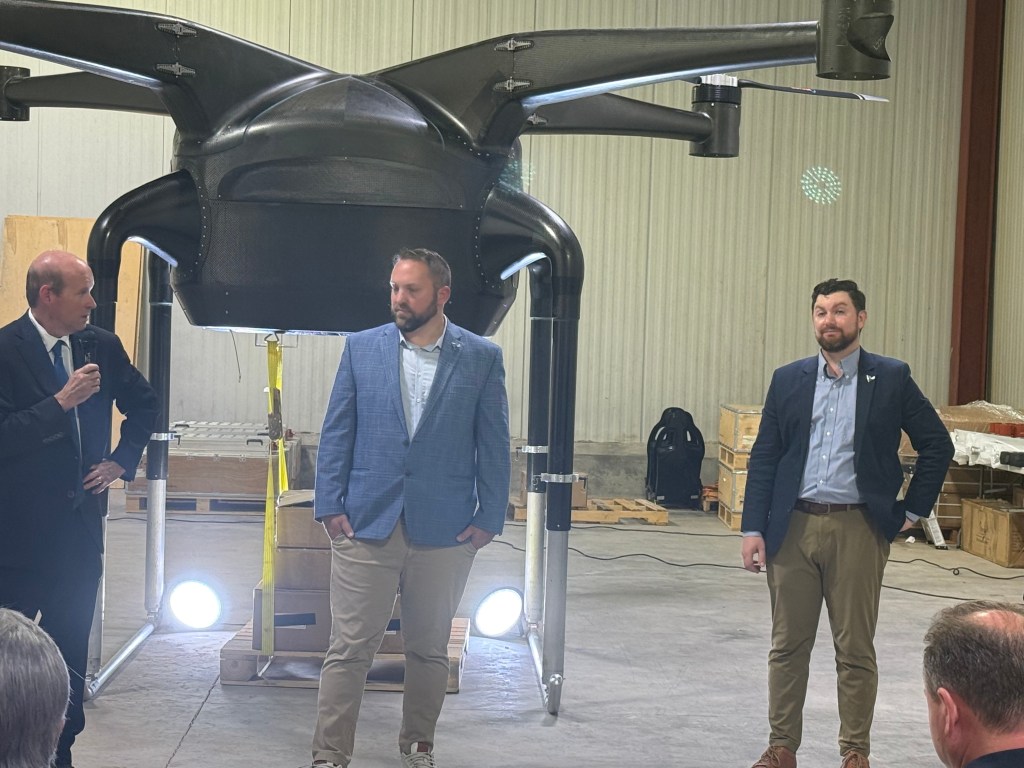
Tier 2 suppliers like CTL Aerospace in West Chester, Ohio are the connective tissue of the aerospace supply chain. They produce composite nacelles, thrust reversers, engine components, and structural assemblies that Tier 1s and OEMs depend on to meet FAA certification standards and delivery schedules. These are not interchangeable parts. They require decades of engineering expertise, proprietary tooling, and a workforce trained in the art of precision manufacturing.

With the FAA mandating lighter, more fuel-efficient aircraft, the demand for advanced composites has surged. Programs like the GE9X and LEAP engines require vast quantities of carbon fiber sandwich structures—components that only a handful of Tier 2s can produce at scale. Yet, despite their strategic importance, these firms are vanishing.

A Shrinking Ecosystem

According to Deloitte and other industry outlooks, independent Tier 2 suppliers now make up less than 15–20% of the mid-tier aerospace pool—a dramatic decline from a decade ago. The rest have been acquired, merged, or shuttered under pressure from banks and consolidators. The pandemic accelerated this trend, exposing the fragility of just-in-time supply chains and the vulnerability of undercapitalized firms.

Private equity firms like Arcline, AE Industrial, and others—have seized on this moment. M&A activity in aerospace surged from $218 billion in 2024 to projections of $382 billion by 2030, with a disproportionate focus on Tier 2s. Their strategy is clear: acquire specialized suppliers, vertically integrate them into larger portfolios, and feed the Boeing and Airbus backlog without the regulatory headaches of organic growth.

The Financial Squeeze Play

The playbook is ruthless but effective. Financial institutions—Wells Fargo among them—tighten liquidity through covenant manipulation, triggering technical defaults or cash flow crises. This artificially depresses the company’s market value, making it ripe for acquisition. Once the target is weakened, PE firms swoop in with lowball offers, often backed by the very banks that created the distress.

Why This Matters to America

This is not just a business story. It’s a national security issue. The United States cannot afford to lose its independent manufacturing base—not when global tensions are rising, supply chains are under strain, and aerospace remains one of our last great industrial strongholds.

If Tier 2s are absorbed into opaque financial structures, we lose visibility, agility, and control. We risk turning our aerospace sector into a brittle, over-leveraged system where decisions are made in boardrooms, not shop floors. The ability to respond to military needs, commercial surges, or technological shifts will be compromised.

A Path Forward: Defense Through Independence

The solution is not to resist change, but to reassert control. Independent Tier 2s must:

  • Form strategic alliances with OEMs or Tier 1s that respect their autonomy.
  • Pursue minority investments from family offices, aerospace-focused VCs, or patriotic capital sources that don’t demand board control.
  • Implement governance defenses like staggered boards or poison pills to deter hostile takeovers.
  • Audit and challenge predatory lending practices, potentially invoking antitrust or shareholder protections.

The Optimistic Case

Despite the pressure, there is reason for hope. The scarcity of capable Tier 2s makes them more valuable than ever. OEMs are desperate for reliable partners who can scale without compromising quality. Investors are beginning to recognize that long-term value lies not in flipping assets, but in building enduring capabilities.

If we can hold the line—if we can resist the short-termism of Wall Street and the opportunism of consolidation—we can emerge stronger. We can preserve the independence, innovation, and integrity that made American aerospace the envy of the world.

A Call to Action

To policymakers, regulators, and industry leaders: this is your moment. Protect the Tier 2s. Investigate the lending practices that are hollowing out our industrial base. Support capital structures that reward stewardship, not speculation.

To investors: look beyond the spreadsheet. Understand the strategic value of independence in a world where resilience is the new ROI.

To our peers in the industry: stand together. Share intelligence, form coalitions, and defend the middle tier. The future of aerospace depends on it.

Rich Hoffman

Click Here to Protect Yourself with Second Call Defense https://www.secondcalldefense.org/?affiliate=20707

I Endorse Michael Ryan for Butler County Commissioner: A wonderful future if only we have the courage to embrace it

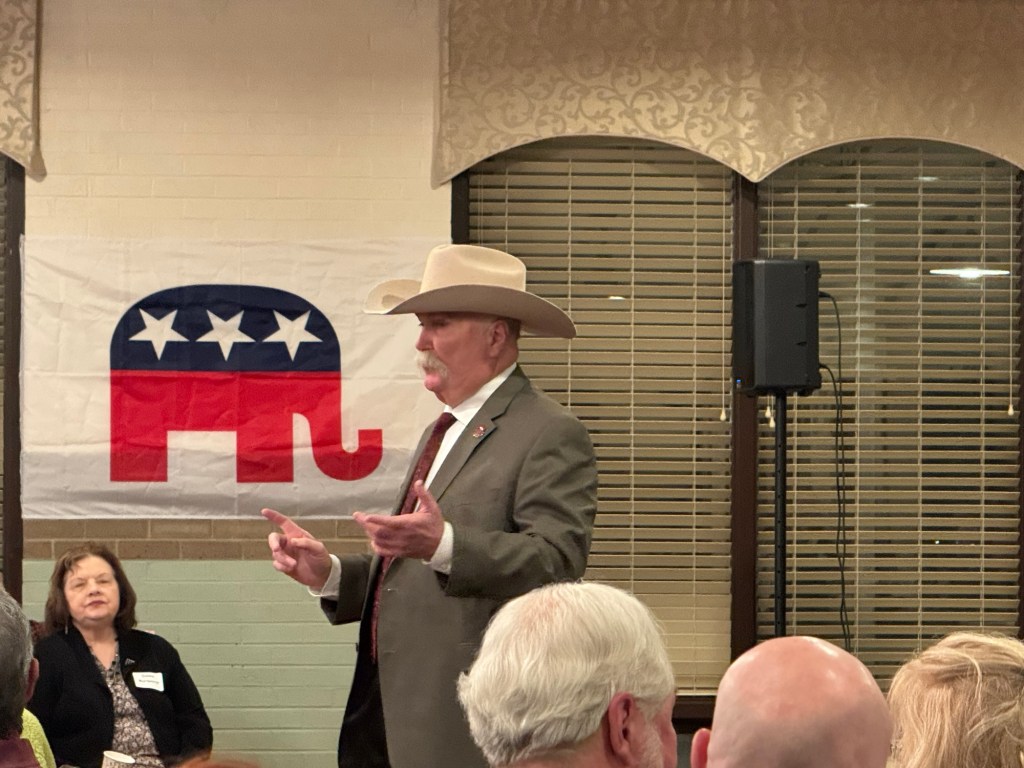
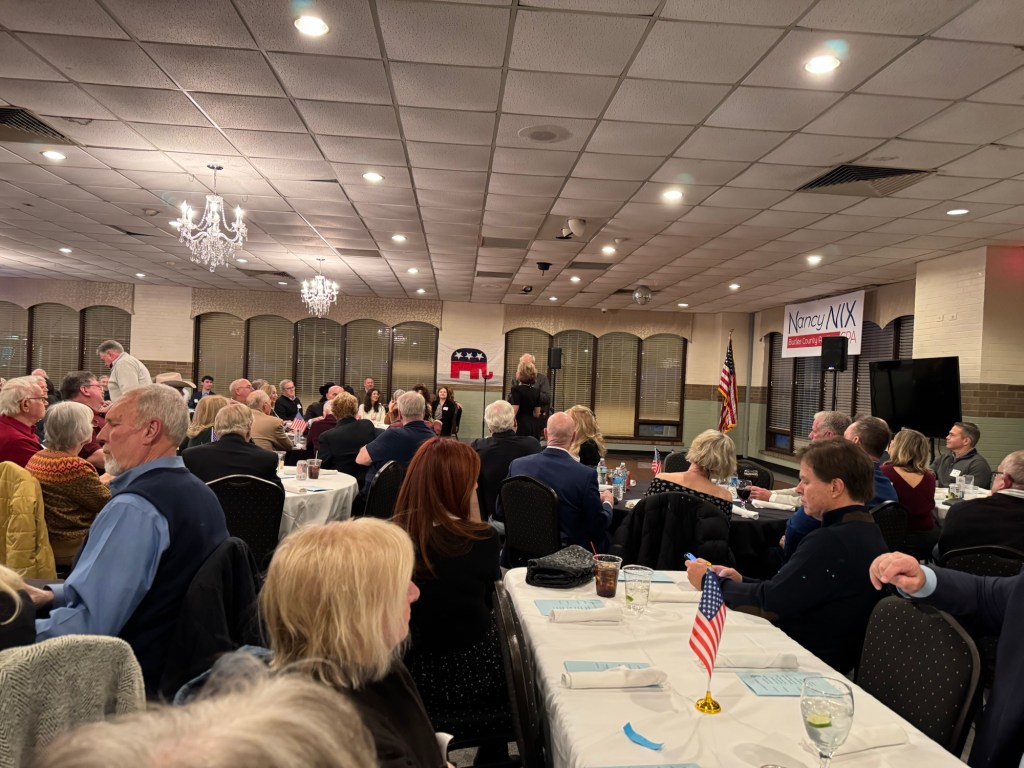
I thought it was going to be a secret for a while, but it was announced at the Nancy Nix fundraiser on February 21st, 2025, that Michael Ryan, the Hamilton City Council member and Vice Mayor, was planning to run for one of the commissioner openings that were coming up in November of 2026.  I have felt for a long time that if only T.C. Rogers, one of the current commissioners in Butler County, had another friendly vote, lots of good things could happen for a community that has over 400,000 people and has the potential for some of the best economic output anywhere in the United States, or even the world for that matter.  If another commissioner could help with the critical free market philosophy, lots of upward mobility for a lot of people would be created.  Upon hearing this news, I first thought that Michael would be a perfect replacement for the current commissioner, Cindy Carpenter.  I haven’t been a fan of hers since she started, but her career path fell off the road last year when she was caught campaigning for a Democrat in Middletown, Ohio.   There is a lot of talk about Cindy winning eight straight elections even though she has a lot of detractors in the Republican Party.  I would argue that the reason she holds up so well to Democrat challengers is because she is essentially a Democrat who puts an “R” next to her name to win elections in a very conservative county.  I think this campaigning in Middletown for Democrats thing will hurt her now in ways she’s not used to, so I think she’s very vulnerable.   We’re in a new day of politics, and putting up with these RINOs has been something that Central Committees have not been willing to do, especially when they have an opportunity to get a MAGA type of officeholder.  And that is precisely what Michael V. Ryan is.

My wife has been very busy with family business lately.  To run a family well takes a massive commitment sometimes, and my wife is the kind of person who will drop everything at the drop of a hat to help my two daughters with life as it’s happening.  This leaves me going to some of these vital community functions by myself a lot.  And at Nancy’s fundraiser, I talked too much to too many people to find a seat in the vast crowd.  Nancy Nix always does a great job with these events, which are always well-attended.  On this particular evening, it was being held at the Elks Club in Liberty Township, which is a favorite venue of mine.  It holds a lot of people, and she always brings in big-time comedy acts to entertain people during a nice dinner provided by the Spinning Fork restaurant that facilitates the club.  The comedians were Jeff Jena, Dave Dugan, and Lou Santini, so they were not second-rate acts, so seating had some priority.  If my wife had been with me, we would have found a seat and held it near people we usually associate with.  But Jeff Jena was acting as the master of ceremonies, and he was getting impatient. People were still talking as it was time to serve dinner and start the show.  So I needed to stop shindigging and get to a seat.  I had been talking to Michael Ryan about several county and city topics, and he saw my dilemma and said that I could sit with him and his wife, along with others from city councils in not just Hamilton but also nearby Middletown. 

Michael and I have had a lot of discussions over the years about the potential of Butler County, and as a younger guy, he has reminded me of a lot of up-and-coming political people who are formulating the MAGA movement that is emerging behind Trump’s leadership in the Executive Branch, which includes J.D. Vance, Vivek Ramaswamy, and Bernie Moreno.  These are different kinds of brilliant people who could be successful in any field they want to be in.  However, a personality type is emerging that is quite noticeable, and Michael Ryan, who I call “young” at 41 years old, has a lot of good stuff to give.  Once I heard that he was planning to run for that Butler County Commissioner seat that Cindy Carpenter occupied, I got excited and decided to get behind his campaign and help however I could.  As he and I were talking about his upcoming campaign, shortly after Nancy Nix gave him a full endorsement in front of the crowd that caused a little controversy, in a good way, he kept reminding me of a different version of Vivek Ramaswamy. I met Vivek years ago through Nancy Nix and a few other places at VIP events, such as a time with Mike Pompeo and again as he prepared to announce his race for Governor of Ohio.  Leading up to Nancy’s fundraiser, I was coordinating that big announcement with Vivek at CTL Aerospace, and I noted how different this new generation of politicians was as opposed to the past before Trump changed politics forever.  Michael Ryan fits this new, young, ambitious type of politician who runs toward capitalism, not away from it as Cindy Carpenter has all these years. 

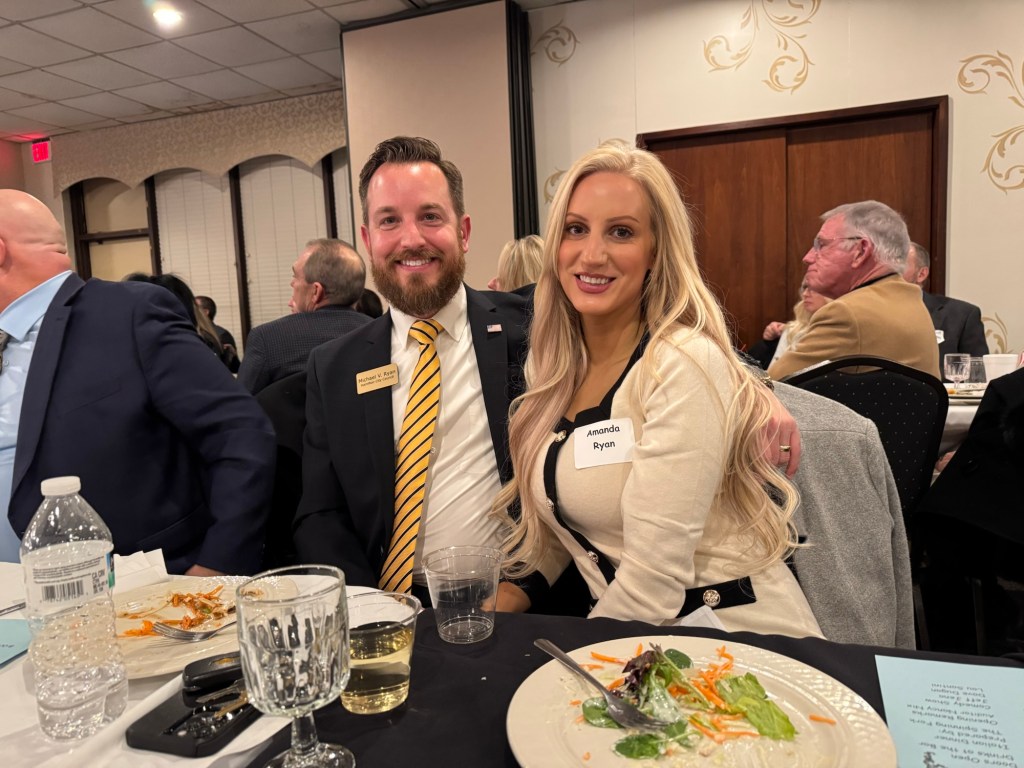
So I appreciated Michael and his very nice wife Amanda letting me share in their date night as a third wheel.  We talked about many incredible opportunities for Butler County if only someone like him could fill that critical seat.  We spent a lot of time discussing the vertical taxi market, which I have been talking about with everyone with a mind to listen.  A lot of people haven’t yet put all the dots together, but Joby Aviation is right up the road of the aviation corridor of I-75 that Vivek Ramaswamy is planning to talk a lot about as his run for governor, and they are building eVTOL aircraft that are ready to go right now.  I told everyone months ago how it was going to go down. They are only waiting for regulation approval and can start shipping these air taxi vehicles worldwide.  China and Abu Dhabi are the first to market as they have much fewer regulatory environments to slow them down.  However, under the Trump administration, I’m just saying that those barriers to the United States will be removed.  And someone like Michael Ryan is just the kind of person with the vision to put their arms around it and bring top tech innovation to Butler County as a leader of this emerging new technology.  He understands the value of that kind of innovation, but that’s not the only reason I like Michael.  He’s just a good person who wants to do good things, and I enjoyed spending time with him and his wife, along with the table of fellow council members and community managers.  Michael and Amanda are the kind of people you want to see providing leadership and opportunity to people hungry for it, and Butler County is a prime place to have the most vibrant economy in a state that is going to be Trump’s example of turning a rust belt into a tech giant.  From my experience with the Vivek Ramaswamy campaign for governor, I know his plans for the state.  And to cascade off that, Butler County can be the leader of the state to have the best opportunities that many people can’t yet possibly imagine.  And with a commissioner like Michael Ryan, even the wildest dreams of the most optimistic people can’t even be imagined because such greatness has never yet been seen among the human race. But that opportunity is coming at us very soon, with Vivek Ramaswamy as Ohio Governor and Michael Ryan as Butler County Commissioner. 

Oh, and regarding Joby Aviation and why Abu Dhabi is the current leader in the eVTOL market. Joby’s S4 aircraft, which hauls a pilot and four passengers at 200 mph with a 100-mile range, could slash the two-hour car slog from Abu Dhabi to Dubai to a breezy 30 minutes—no emissions, and much less noise than a chopper. They’re tying this into Abu Dhabi’s Smart and Autonomous Vehicles Industry (SAVI) cluster, a big local initiative to lead in next-gen transport. Joby’s already got exclusive rights to operate in Dubai starting as early as 2025, and this Abu Dhabi move opens the door for zippy inter-emirate trips. They’ve been showing off the aircraft at events like DRIFTx in Yas Marina, flexing their tech to seal the deal.  This is not science fiction.  The only thing stopping us in the United States is having the kind of politicians who can take away the barriers to market saturation currently held up to the speed of slow government left to us by Joe Biden and Obama’s years of bureaucratic infrastructure. The eVTOL is the future of transportation, much more important than building any new highway or railroad.  And Butler County, Ohio can lead America if only it has the right politicians who can make it happen.  The money and investment are just waiting for the pin-headed politicians like Cindy Carpenter to get out of the way.

Rich Hoffman

Click Here to Protect Yourself with Second Call Defense https://www.secondcalldefense.org/?affiliate=20707

The Greatest Thing To Happen in the World: SpaceX and their successful Flight 4

Unfortunately, this is not an article about how great SpaceX is and how what they did with Starship Fight Four was one of the most significant events ever to take place within the context of the human race.  Yes, it was remarkable that within a few months of the previous flight, where the engineering feats were magnificently complicated, the company managed to figure out well the re-entry burn of the largest artificial object to ever fly through the air, out into space, and return as a reusable vehicle.  Starship 4 pulled off a reusable Super Heavy rocket that landed back at Earth after delivering its payload of a Starship spacecraft to sub-orbital trajectory.  It returned to Earth and hovered above the sea as if it were going to do a soft landing and could have easily been captured by the chopsticks at Starbase.  SpaceX would have been successful if that’s all it accomplished.  They essentially proved that the Super Heavy rocket could be as reliable and reusable as the Falcon rockets that are carrying most of the world’s payload to space these days.  And that by itself was astonishing.  But continuing on its journey to the Indian Ocean was the Starship that maintained stable flight throughout its mission trajectory, and it did a re-entry that was very punishing, where a fin melted away due to the incredible heat from the process.  But the Starship showed that it would be just as tough and resilient as was hoped, and it performed a fully functional landing, even damaged by sky diving back to earth and flipping vertically to hover above the ocean before then spinning back to its belly for a soft landing in the sea. Indeed, remarkable engineering and technical innovation were on full display, and they were a fantastic feat for the entire human race.  SpaceX had validated its hope in making Starship a reliable bus that could bring humanity into space in genuinely magnificent ways over the coming years. 

But there is more lurking behind the surface of this incredible display of ingenuity.  SpaceX pulled itself above typical manufacturing standards in dramatic ways that shocked the world very quietly.  And since I can afford to say it because many people can’t, I’ll address the elephant in the room.  SpaceX, an American company, is the only company in the world that could have done what was done by Starship 4.  No other country, not China, not Russia, not any country in Europe, South America, not even Japan, could have done what SpaceX had done with building and solving all the rates of resolutions that were required to pull off a successful Starship 4 launch.  All the other countries would have micromanaged any aerospace company out of existence long before any successful launch occurred, leaving what happened in Boca Chica, Texas, a unique feat specific to our times and tied to the efforts of Elon Musk.  No group of intelligent people working with government anywhere in the world under any other conditions could have done what SpaceX had done because only in America are freedoms provided so that risk-takers can take such plunges and dare to do the impossible.  If NASA, which I like a lot, had tried to build a Starship, it would have taken them, under government pacing of work, five years to make another Starship after the failures of Flight 3 in March.  I happened to be in Japan watching that launch with friends, and it was clear then that not even Japan could have pulled off what SpaceX was doing.  They may have been smart enough to do it.  But they weren’t free enough to enable their risk-takers to unleash so much power of the human intellect. 

And that is what we are fighting for, that kind of freedom in America that is clearly under siege by global communists who want desperately to subdue America into a worldwide citizen movement that is just as crappy as every other place on earth.  Notice that Elon Musk did not start SpaceX in South Africa, where he is from.  He didn’t build it in China, where he partnered to get electric car batteries for the Tesla Company.  The truth is that America is worth fighting for because it takes the elements of American freedom to produce companies that can do what SpaceX has proven it can do.  And it’s a trend emerging in manufacturing to the terror of many globalists who have planned an entirely different kind of world.  The manufacturing trends of the future are not in the massive bureaucracies of an administrative state, where pinheads and keyboard pushers sit in cubicles or work from home between COVID tests and World Health Organization mandates for social distancing.  Where corporate boards would buy up every last privately held company only to transfer the ownership to money managers like BlackRock to flow through human resource departments mundane work requirements created by a communist Department of Labor that has no idea or respect for how work is done in the world, they only care to build and sustain an administrative state of small-minded do-nothings who measure work with false assumptions and ridiculously inefficient utterances of processes that feed communism into every corner of every community on planet Earth.  Only stubborn companies that visionary risk-takers, like SpaceX, still lead have a shot of doing anything.  And due to their success, many companies are rethinking the whole globalism mess.

We must solve this problem now, so I expect it to be contentious.  The success of Starship 4 was such big news that it should have been on every channel, talked about on every radio station, and flashed in every newspaper’s headlines.  But what we saw was barely mentioned by a jealous world watching its vast attempts at globalism and a global citizen movement vanish like mist on a hot day in the desert.  SpaceX was proving that the administrative state built into just about everything money touched was wrong.  And the world was turning away from the communist plans that were so maliciously planned for all of us by people not qualified even to buy toothpaste.  When the Starship landed successfully in the Indian Ocean, more than humanity becoming a spacefaring society occurred.  The way we measure work in our human cultures changed forever.  There are pockets of companies that still operate in such a fashion where the risk-takers are aligned with the smart people who sit down and solve problems under impossible circumstances out of the necessity for adventure and innovation.  But there aren’t many.  And SpaceX is undoubtedly one of them.  With this great success, more companies will do much the same, turning away from globalist administrative state approaches to work and more fully embracing the rag-tag American innovation approach of risk-taking and tenacity that has made America the most dominant economic engine in the world and now space.  It was more than just a technical feat to get such a monster into space and back again.  It was an escape velocity from the real treacheries that hold back humanity, the human tendency to follow tyrants to their deaths and limit themselves to sustain a polite society from subservient redundancy.  It is on the shores of aviation and aerospace in general where advantage and excitement meet economic opportunity for a time to come that the human race has only dreamed about.  Yet it is right before our faces to reach out and touch for the first time. 

Rich Hoffman

Click Here to Protect Yourself with Second Call Defense https://www.secondcalldefense.org/?affiliate=20707