The Real Evil in the World

When the United States of America is called racist, unfair, evil, and other poor diatribes of foolishness, the audacity of such statements defies logic. I accept the reason for the nonsense, even if the popular current wishes to go down that swift stream full of undertows that dump out into a massive whirlpool of doom.

To let you know what I’m thinking, there is a massive river coming from Niagara Falls that runs down some swift rapids for several miles before making a sharp right turn toward Lake Ontario. Anyone that has seen that whirlpool would not want to swim in it. The current is so swift, that anything in it is sure to sink.

That’s where our country is right now, stuck in that current. And the other countries, those grand members of the United Nations, our so called friends, have pushed America off the cliff in hopes that we’ll sink. They fantasize that life without the United States in the world will allow them to prosper and have a chance at being the best for once.

What the world doesn’t appreciate is the United States protects it from bullies, which will always exist no matter what form of government the world chooses. Those bullies call us names from their home countries, and in many cases they call it names from within. It’s all part of the process of pushing America into the swift water hoping we’ll drown.
Then you see how the rest of the world functions, and reality comes into sharp focus.

I saw this woman from the Sudan being publicly punished, and the petty criticisms of the United States seem ridiculous.

American society is not perfect, but it is far superior to anything that has ever been attempted on the face of planet earth, and I am tired of the criticism and self-doubt leveled at American society. The United States is the greatest light of hope the world has.

The below pictures are other terrible instances of violence against women committed by the beliefs of “other” countries, outside of American influence.

And I won’t put the really bad ones up here. If you want to see much, much worse click here:
SEE WHAT THE FACE OF PURE EVIL CAN DO
.

When you hear people say the United States isn’t a “fair” place, consider the motive of the accusation. For while we are busy being touchy, feely, sensitive creatures just trying to keep our heads about the swift water, the bullies are doing the real violence to poor innocent victims that need the valiant strength of the United States of America.

It’s time to sink or swim, and the world needs us to survive.

Rich Hoffman
http://twitter.com/#!/overmanwarrior
www.overmanwarrior.com

When School House Rock, Rocked! A Time Capsule into the Past

If you want to see just how far the Progressive Movement has penetrated our culture all you have to do is look at School House Rock, from the 1970’s.

When I was a kid, I watched Saturday morning cartoons religiously; Hong Kong Phooey, Captain Caveman, and Land of the Lost were among my favorites.

Back then, sometime around 1974 to 1980 it was almost a guaranteed expectation that one of the below School House Rock video’s would air during commercial breaks.


These were useful and entertaining and helped a growing generation to understand their role in the country they lived in. You won’t find these types of cartoons produced today however. Instead, you get the Tides Foundation’s Story of Stuff, which is now shown in schools with public tax dollars supporting the progressive agenda.

When modern day educators and parents that are using public education as a convenient day care facility, or a chance for their child to get a scholarship using sports supplied by the school as a platform to exhibit their skills to colleges in hopes of getting a scholarship which will save that family some costs of higher education, keep in mind that this mind-set is only one generation old. School House Rock is a time capsule into a period before the effects of Progressivism had gained a firm footing in our country. The signs were emerging, but in our arrogance, we did not pay attention.

But now we’re awake.

It only takes a generation to destroy everything. It can take decades to rebuild.

Do you’re friends and neighbors a favor, send this to them so they can become aware of how quick and radically things changed in just one generation.

Rich Hoffman

http://twitter.com/#!/overmanwarrior
www.overmanwarrior.com

Waltz of the Emo’s

Why call it a waltz, those patrons in our society that use emotion to justify the use of public money for their private needs? Because when the hard facts are put on the table, the emo’s dance around the issues, call names and attempt to side step the primary issues.

There was a wonderful disagreement on the Big One between Doc Thompson and Paul Daugherty of the Cincinnati Enquire over public education dollars being spent on special needs children.

Listen here:

This initial argument reminded me so closely to the disagreements taking place in virtually every school system across Ohio. For me, in the Lakota district when I put myself in the line of fire against the recent proposed school levy, it was stunning how similar the reaction people had towards me. The impulsive reaction of the otherwise cerebral Paul Daugherty and his literal intellectual attack on Doc Thompson, stating, “you could not write my article,” and “do you want to be quiet while I educate you or not,” speaks of the mentality behind such statements. 

Doc Thompson is understandably ruffling the feathers of established thinking and that is a very good and healthy thing. His position on this particular issue is one of questioning the validity of the costs in public education that are proving unsustainable. The comments Doc is making are the first honest examination of an avalanche which is about to fall upon us in programs created by government in recent history, that were well-intentioned, and are now accepted by the population in general, such as Paul Daugherty, and believe are “rights.”

When Paul attacked Doc, the motive was clearly one of intimidation, which is a normal strategy from parents that have become dependent on the services schools have been offering. Special needs children certainly bring about that reaction, but so do the children that want to participate in sports, or band. The standard defense reaction from people wanting those services from public money is to attack anyone that even brings up the question. In this case Paul came on the air, basically told Doc he was “wrong,” and that Doc lacked the intellect to write a column for the Enquire and that he needed to be educated. The unspoken desire is to impress upon Doc that if he speaks about something that is sensitive then maybe he’ll shut up next time and not ask the question.

I went through the same process during the Lakota Levy. “You couldn’t teach a class of students.” “If you have all the answers, why don’t you run for the school board,” were just a few of the comments. Anyone close to the story will note that during the Lakota Campaign, angry parents and teachers actually threatened WLW with very similar inflammatory comments because I had went on the air and revealed the real budget buster, that the wages of the top 30% exceeded 65K a year, and that was the reason the district didn’t have proper funding.

In 1990 a well-intentioned Congress passed the ADA act which is described below.
The Americans with Disabilities Act of 1990[1][2] (ADA) is a law that was enacted by the U.S. Congress in 1990. It was signed into law on July 26, 1990, by President George H. W. Bush, and later amended with changes effective January 1, 2009.[3]

 
The ADA is a wide-ranging civil rights law that prohibits, under certain circumstances, discrimination based on disability. It affords similar protections against discrimination to Americans with disabilities as the Civil Rights Act of 1964,[4] which made discrimination based on race, religion, sex, national origin, and other characteristics illegal. Disability is defined by the ADA as “a physical or mental impairment that substantially limits a major life activity.”

Quote by George Bush, “I know there may have been concerns that the ADA may be too vague or too costly, or may lead endlessly to litigation. But I want to reassure you right now that my administration and the United States Congress have carefully crafted this Act. We’ve all been determined to ensure that it gives flexibility, particularly in terms of the timetable of implementation; and we’ve been committed to containing the costs that may be incurred…. Let the shameful wall of exclusion finally come tumbling down.”

People now have forgotten what life was like before the ADA was enacted. And because it’s such an emotional issue, taken individually, the feel good stories are used to sell it. But now in hindsight, can we not say that the ADA has had a devastating effect on our expanding economy. Our competing nations don’t regulate themselves in such a way. People also assume that the Department of Education has always been in place, when in reality it’s only been implemented since 1979. Has the Department of Education made our students more successful? Or has the Department of Education only increased the cost of education? Is legislation like the ADA the government’s solution to fairness, if the cost is at the expense of our nation? And in sports, how did we arrive at a place where sports are considered an entitlement? Should public schools offer sports so children can have a crack at a scholarship? Is that the requirement of public education, so resident parents have the opportunity to have their children pursue a scholarship to higher education? Or preparing a child for college with electives offered by the district, is it the public’s responsibility to help a child accomplish their college goals once they’ve graduated? Who benefits, the community, or the parents of the community that save the extra education costs because pubic education assisted the cost of post-graduate prep? These are the emotional issues that instigate the type of character assassinations that are eerily similar to the exchange between Doc Thompson and Paul Daugherty.

Traditionally, it was churches, friends and family that cared for members of society that couldn’t care for themselves. When government injected itself into the situation, they have created a culture of entitlement, which we can not afford, and now the remnants of good intentions are crippling the very foundations that our society is built upon.

The only way to understand those foundations is to strip away all the things built upon it, and re-examine the condition. Again, I’d have to point out in the case of special needs issues; the total cost is but a fraction of staff wages that are excessively high across the entire school system payrolls. In Cincinnati the average per family income is $58,000 per home. At Lakota, it’s $62,000 per teacher. That is the bulk of cost, and no union member has yet to step forward and suggest restructuring their contracts. Instead, for weeks the Cincinnati Public School system negotiated with their teachers union over the cost of health care. So dealing with wages is a long way off. And the reason nobody asks the hard questions are because of what Doc went through on WLW on December 9, 2010 when a fellow member of the media took him to task on the air in an attempt to silence him.

And that is a waltz few sane individuals want to dance to. But let’s all be thankful that Doc can dance with the best of them.

Rich Hoffman
http://twitter.com/#!/overmanwarrior
www.NoLakotaLevy.com

The Nature of Government

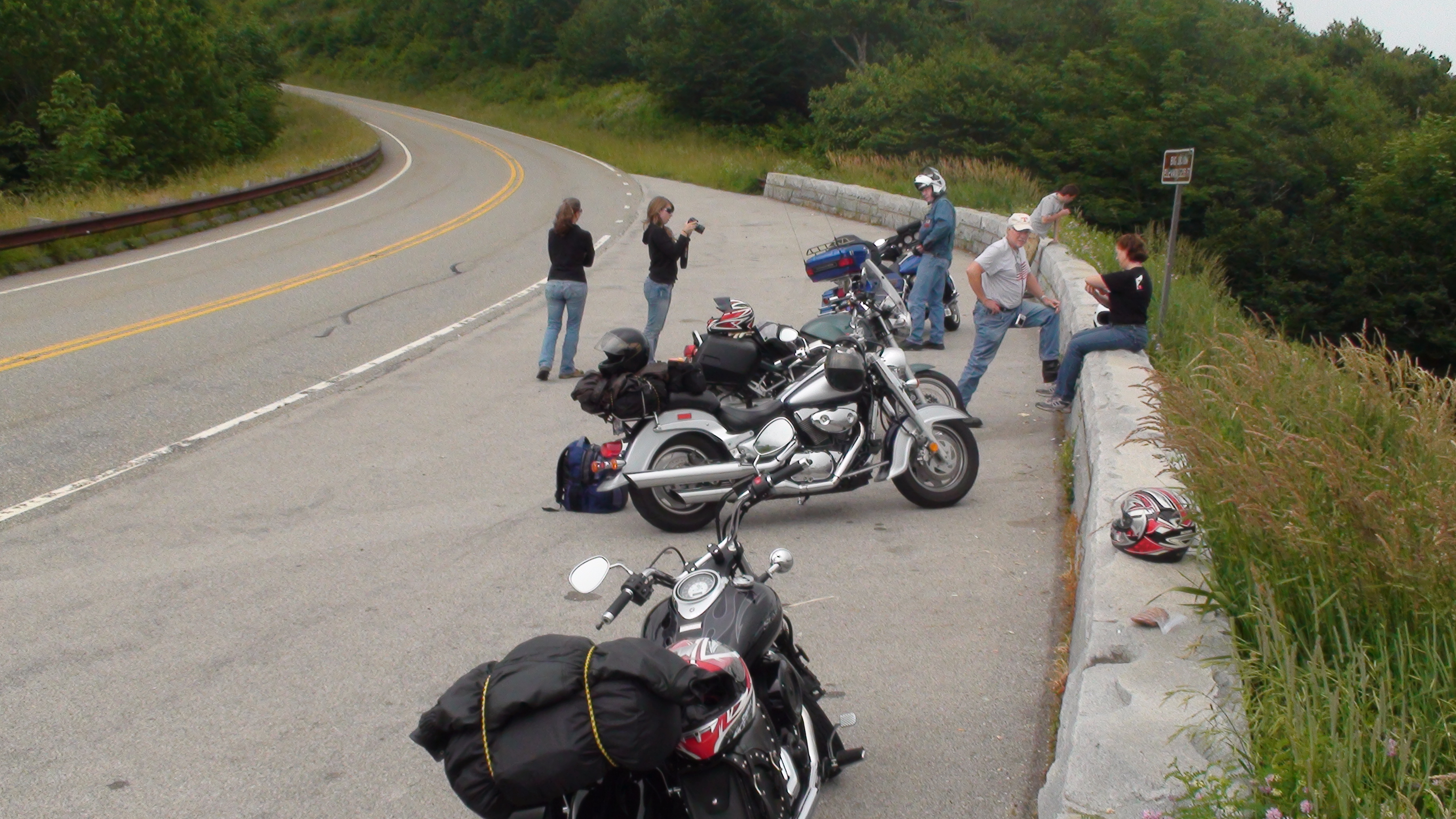
On the morning of December 8, 2010, I went to work as I normally do, only the temperature was hovering just above 10 degrees with a wind chill shaping up to a goose egg. I was riding my motorcycle, as I do all year, rain, snow or tornados, and the explanation for our governmental troubles came to me in the beauty of simplicity.

Many people wonder why I do things like riding motorcycles in sub-zero temperatures, and the explanation I could give them isn’t something they typically would understand from their perspective. I do it for what comes to my mind in the pain and endurance of the exercise. Often, being in such a predicament, which takes a person out of their comfort zones, will clarify thoughts. Since I do a lot of thinking, there are a lot of thoughts to clarify, so driving to work in extremely cold temperatures helps.

On this particular morning, I looked at the cars around me. At a stop light the woman next to me had her heat turned all the way up and she had on a hood, windows rolled up firmly. She looked at me like I was nuts. At the next light was a man in a pick-up truck. He looked like a man that fancy’s himself as a rough and tumble individual, had mud flaps with the silhouette of naked women on them. He refused to make eye contact. I could see his hair blowing in the warmth of his cockpit from the turned up heat, again windows rolled up tight.

I thought this morning of all the books I had read about Native American culture, of Tecumseh, Blue Jacket, the great Shawnee nation, the Five Nations of the Iroquois. I thought of Chief Pontiac of the Ottawa’s eating the heart of his enemies like they were just apples, many times while the victims were still alive. I thought of Chief Seattle and his great speech. And as I thought of those men, and the nature they revered, I thought of President Obama and his famous speech to the Fort Hood victims, “I want to put a shout out to the Native American’s,” or something to that ridiculous effect. It was another car that pulled up next to me at yet another light, with the exhaust from his vehicle dancing around his car and whipping around me in the swirling frozen wind. This guy was a typical suburbanite, well-shaven, clean cut, and looking straight ahead at the road ahead. Again, he didn’t make eye contact, and he reminded me of Obama, just going through the motions of living keeping his eyes on the road ahead, but not willing to look at things to the side of him that didn’t fit his learned behavior. For all I know the guy could live in my neighborhood.

On the rest of my journey to work, I thought of the train trolley down in Cincinnati, Strickland’s letter to Kasich on the high speed rail deal, Obama agreeing to the Bush Tax cuts, I thought of the TSA situation, and I thought about the Lakota Levy that is sure to come again, especially once the unions discover that they will not be able to maintain the level of income they’ve negotiated for themselves when Governor Kasich cuts education even more to get Ohio back on a balanced budget track.

Who is to say that riding a motorcycle in the extreme cold is wrong? Only in relation to the rest of orthodox society is it looked down on. To me, it makes perfect sense. It clears my head, like I discussed, and it saves a ton of fuel. With fuel climbing up over $3 bucks a gallon, I don’t want to pay more for fuel, so I’ll buy less. I have a perfectly nice car in the driveway, but I don’t like to use it for all the reasons described.

Big government types have associated themselves with the green initiative to save the planet from human impact. These are the same individuals that roll their windows up tight to protect their skin from the cold weather. They are not what in my opinion an environmentalist is.

Nature is not a fragile organism. Nature lives in the extreme cold, and the excessive heat and it sends hurricanes to destroy entire cities that humans build for themselves. Yet if you consider what the modern progressive minded person asserts with their big government ideas, you would at first think these people have mankind’s best interest at the front of their minds. But when you look at their actions from the perspective of a motorcycle in the brutal cold of a sunless morning, you see how infantile these people are.

Which is more beautiful, the nature that can be seen from the Appalachian Trail atop Mount LeConte or the nature in someone’s back year where all the bushes and trees are trimmed nicely, and the grass is cut, and every rock placed in the yard was put there by the owner of the property.

The degree to which human beings attempt to alter nature is called government. If you look to the forest, where mankind has not put their feet, nature thrives. Trees grow, animals eat each other, and water flows in the path of least resistance. Trees in the forest compete for light, the smaller ones get pushed aside by the bigger ones, and survival of the fittest is the general rule. In the forest, the will to survive is so great that a tree will sink roots into rock in order to get what it needs. The nature of human beings is not different from the organism of a tree.

In the back yard garden, trees are pruned and sculpted to fit the contours of homes, or other trees. Plants are mulched to assist them to grow, and shrubbery is trimmed and controlled. The grass is cut to a desired level, and in some cases watered to ensure its survival.

Our government is simply a garden of which we all have different ideas of where the plants should go, or what flowers we need to plant and where. But the understanding of it all is that it is purely cosmetic. All the rules of mankind are simply made up in the minds of the human being. In the global neighborhood, what is happening in America, is pruning, where the branches are being cut away so that the other trees in the neighborhood can grow, because the big tree of America sucks up all the water, at least according to these green thumbed gardeners called politicians.

The fertilizer and various chemicals we use on our lawns are simply equitable to the stimulus money government has issued to grow the economy.

From the cold morning of December 8, 2010 it became excessively clear to me that the same people tucked away in their warm cars are the same people that buy flowers for their gardens in the spring, and cut their grass on Saturday afternoons in the heat of a summer day. And they’ll plant a tree in this location or that location hoping that one day the tree will provide some shade. And these people take this same mentality to their business, whether they directly work for government, or if they simply vote in the grand idea of a republic, and the politicians they elect do all those things and more to their lawns. And they believe with all their hearts and souls that the work they’re doing is important, and that they must trim trees, and cut grass or use fertilizer in order to make our world grow.

What they fail to understand is that nature doesn’t need human assistance at all. We are simply guests that have arrived like a pimple on the face of geologic time. Our duration on the plant will come and go without the earth hardly noticing. Global warming and every related issue are only musings from human beings that have an unhealthy belief of their universal importance.

For all the gardens those humans build for themselves will be wiped away in time by the true brutality of nature and its selection of what is beautiful or not, what lives what dies, and what is strong and what is weak.

It never made sense to me why so many atheists and others without some sort of faith to ground their terrestrial selves seemed prone to migrate to the conservation movement so embraced by the left, and why so many young people seem attracted to those mentalities. It’s because their undeveloped minds have not yet worked out their place in the universe. This is why so many senior citizens tend to vote conservative, while the young tend to vote liberal. The young still cleave to the ego based notion that they are all there is. The old know better and have learned after a lifetime of living. This is the difference. The silly, small minded politicians think they can actually improve nature with their juvenile influence. But all they really end up doing in the scheme of things is move some rocks around and plant some trees, most of which are quickly uprooted as soon as a major storm comes.

All the policies of mankind fall under this description. So is this a proclamation of anarchy? No. When I go to the forest, I walk the trail, which is not natural, but created by man. I build a fire with the wood that falls from the trees. And I leave the campsite looking the same as it did before I arrived. If I build a home with what the forest provides, I do it understanding that within 100,000 years everything I create will return to nature including every item a human ever created.

Notions like Social Security, Wiki Leaks, Communism, teacher contracts, health care, all laws, all government and every roadway built will be swallowed by nature in a relatively short time geologically speaking.

If the human race wanted to truly survive, it would copy nature. Not try to corrupt nature with their undeveloped ego desire to build a better garden. America was modeled after nature, as envisioned by John Locke in the late 1600’s. But during the growth of government periods, particularly in the 20th century, America has become a land of gardeners instead of the natural element.

Our society needs to ask how much we want to spend in taxes to supply a garden that is purely cosmetic to begin with. Because that’s all any of it is. It’s just gardening by gardeners that have the audacity to believe they can do it better than nature.

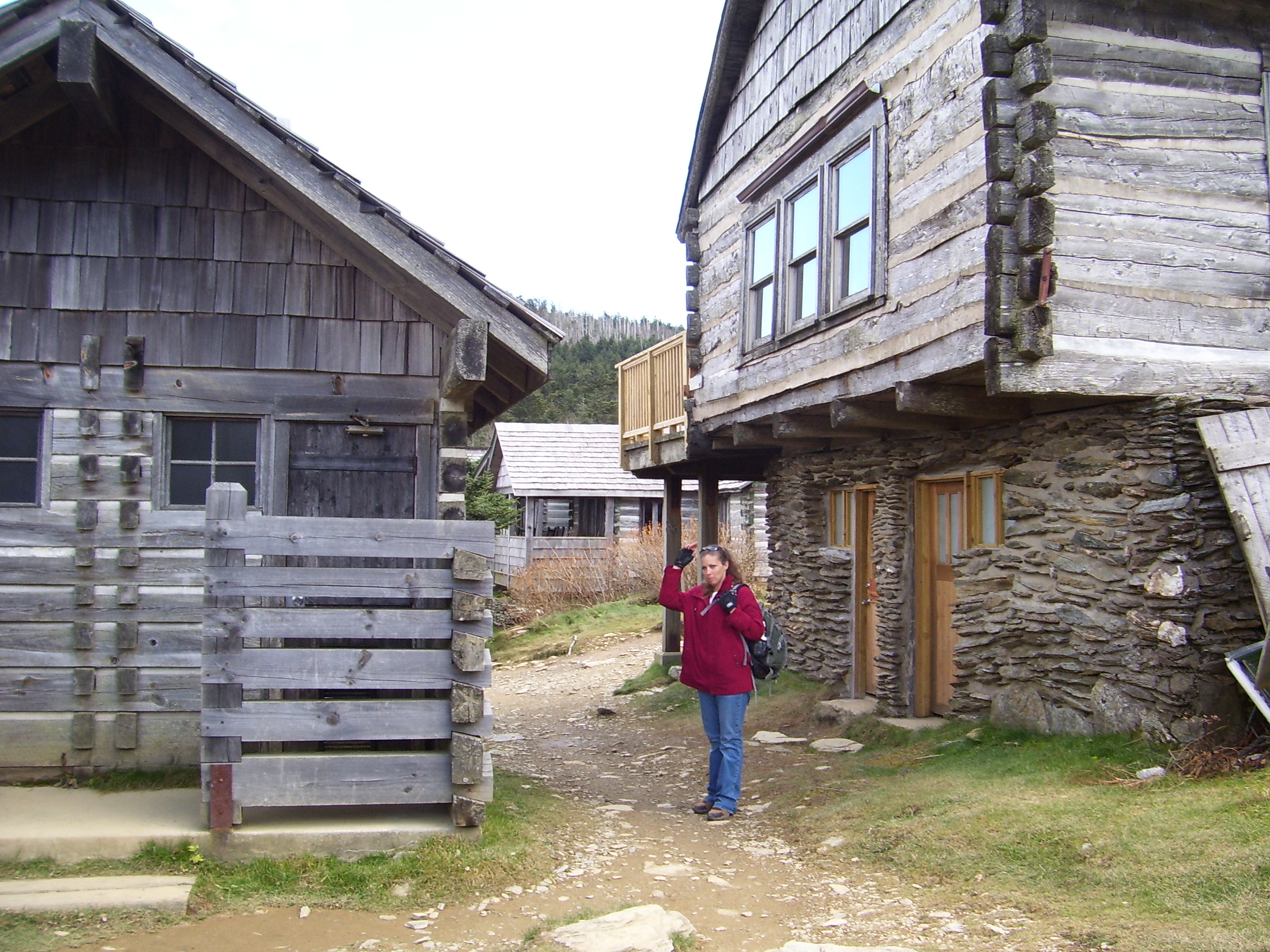
I ran into a community once that reflected some of what I’m talking about. It was a little neighborhood on top of Mt LeConte that serves tourists wishing to climb that mountain. I’ve been to Gatlinburg and Pigeon Forge many times and Mt LeConte is the big mountain approximately 10 miles from downtown Gatlinburg which looms over the town. It is the highest peak visible from Pigeon Forge and is an unmistakable monster of a mountain. From the ground you’d never know that speckled across the top is a community of cabins, with some residents that work up there, and guests renting cabins to stay for the night. There’s a mess hall and a couple of rest rooms to facilitate everyone’s needs.

From the top of the mountain, in that little village, all the great monuments of Pigeon Forge are almost completely invisible. The community resides over 6000 feet which doesn’t sound like much compared to mountains in the west, or in the Himalayas but the top of Mt LeConte has its own weather patterns. Its peaks are often submerged in a cloud layer and take the full brunt of weather patterns migrating across Tennessee and Kentucky from the west. But at such a height all the monuments of tourism are just little specs. Nothing looks too complicated from that vantage point.

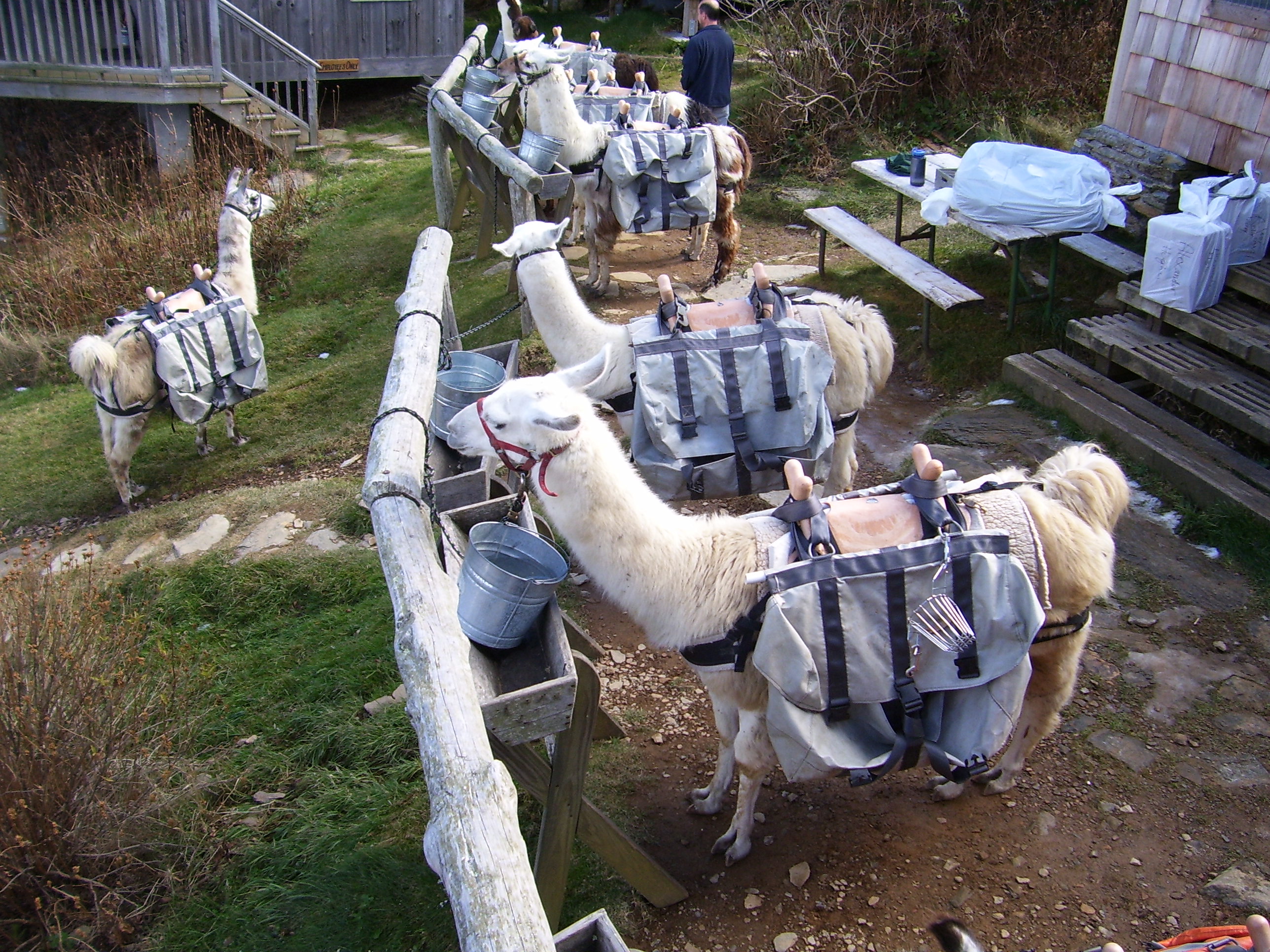
From atop that mountain, the world makes sense. The people you meet up there say hello and are generally happy to see you. What everyone shares that arrive at the distant land is they had to work hard to get there. There’s only three ways that will get you to the top. You have to walk and climb, you can take a llama, or you can be dropped off with a helicopter, which brings supplies to the top of the mountain. It’s as primitive, yet as civilized of a place as anywhere I’ve ever been. On that mountain perspective is easy, just like in the harsh cold on a motorcycle in mid December. That rugged paradise is virtually a stones throw from downtown Gatlinburg with all the tourist spots, yet the two worlds are diametrically opposed.

That’s when it is easy to see the only difference between the two is the inventions of man, which are transitory at best. In Gatlinburg you run into thousands of people and say hello to nobody. On top of the mountain you say hello to everyone because everyone respects each other because everyone worked hard to get there.

Nature requires one thing and that’s respect. Respect for yourself. Respect for the power of nature. And respect that each moment could be your last.

In the politics of mankind, their laws mean nothing because politicians cannot create respect. And no amount of tax money or social program will give someone respect for anything. They can make a garden look nice, but nobody truly respects the garden because it’s contrived and manipulated by the gardener, and artificially watered and fertilized.

Nature is the only true gardener.

Rich Hoffman

http://twitter.com/#!/overmanwarrior

www.overmanwarrior.com

The Standoff!

I’m going to try something different.  I spend a lot of time thinking about abstract concepts, and piecing together things that don’t always easily appear to connect.  I can give a lot of evidence as to why it’s important to think outside the box, and I can even help some that are close to being able to think that way, cross over that invisible line and begin practicing it.  


But for the general person busy with their lives, that need information quickly, and in a form they understand, fiction is the best way to lay out an argument.  As an artist, the best way for a writer to convey an argument is with a work of fiction so that the concept can be held up to reality and measured.  The following short piece is from a work connected to my Symposium of Justice novel. And I will begin letting out small bits of that work to support some of the concepts discussed at this site.  


So enjoy this small work titled The Standoff, and think of it in an abstract before trying to apply any meaning.

Fletcher appraised the massive influx of the troops as they surrounded the parameter of his property.  He noted that they stayed off about 100 yards.  They were going to try and take him by force as opposed to an air strike.  That was the best option for him, although it wouldn’t have mattered either way.  The result would be the same. 

He knew they’d try to gas him out, and if that didn’t work they’d shell his home.  He could see the mortar placements set up at the appropriate range.  He could also see the snipers stationed strategically in the distance.  Many of them were well over 100 yards, and he thought he could see most of them.  He suspected that there were others hidden on the rooftops, and in trees that eluded him, but that wasn’t important.  Knowing the details of their where-a-bouts where not important to his strategy, in fact, that was their intent, to overwhelm him.  He would do fine as long as he didn’t allow himself to get lost in the details. 

He had heard that the devil was in the details by more than one person in his life.  But the devil seeks to corrupt the mind with those same details by pulling the mind into his domain where he can corrupt and inflict doubt.  Very few human beings in their entire lifetimes found a way to master the art of details. 

Misty walked up next to him and gently placed her hand on his shoulder.  “There’s too many this time.”

“This is no different than before.”  Fletcher was aware that he sounded harsh, but he was mentally prepared for war.  “Whether it’s ten or ten thousand, their failure is in their trust that numbers will be to their advantage.”

“What will you do?”

“I want you to take the kids and go to the grocery.”

“The grocery?”

“Yes, don’t react to this as if anything is any different from any other day.  You take the kids and go to the store.  Bring back some food for later.  That will keep you safe and off my mind.”

“They’ll never let us leave.”

“Yes they will, they can’t afford to have women and children slaughtered in this media event they are holding.  They’ll be glad to see you go.  They have not formally charged you with any crimes and you can move about unimpeded.  To restrain you now will only irritate me further and they won’t risk that.  They seek a peaceful end before the day is out.  That is why they’ve already lost.  Because I seek war, and blood and I will spill it at their expense.”

“But what will you do?”

“I will lure them away from the castle.  They think I built it to hold off an onslaught.  Their strategy is to get me to emerge from it by lack of choice.  I will do so quickly at the beginning of the fight.  I will go into their lines where their mortars, snipers and heavy weapons will destroy their own people.  I will not stay here on ground they dictate.”

“Can you get out there that fast?  That will be a lot of ground to cover.  They’ll have lots of open chances to take a shot at you.”  Misty was not a military woman, but in her marriage to Finnegan she had learned his ways.  She had seen enough to make the kinds of observations that would make a general proud.  She had seen Fletcher do amazing things and was accustom to his late night workouts.  She knew his mind believed he could manipulate physical law with sheer confidence, and had seen it work on much smaller numbers.  He had survived incredibly the standoff at the river last year at Ben Carter’s residence against a small attachment of elite troops and the police force of Fort Seven Mile.  That day Fletcher had returned to her covered in scratches and holes penetrated his clothing where bullets had narrowly missed him hundreds of times.  She had called him lucky where he refuted her with similar characters in history.  George Washington had dodged similar odds when he acted heroically at Fort Duquesne having his body riddled with bullet holes that had never found their mark.  Stonewall Jackson had showed the same kind of valor needed in the battle of Bull Run to defy all odds.  And General Patton also survived numerous brushes with death, and Fletcher often cited how both Jackson and Patton had suffered silly accidents that either caused amputations, or were paralyzed prior to their deaths.  It was a fascinating fact that some of the great minds of military like Patton believed that he was directly reincarnated from Hannibal. 

Fletcher believed that in the heat of battle great men rose to great achievement because their minds were focused on the task and their beliefs manipulated all the events on the battlefield.   Where some would believe that some sort of force such as karma was responsible for balancing out the lives of these same men be subjecting them to freakish accidents, Fletcher believed those men despised times of peace so intensely that their strong minds actually attracted the negative events that sealed their fates. 

It was not unusual for him to stay up late into the night reading volumes of books and would tell her of his night time adventures when she awoke for breakfast.  Alexander the Great, Frederick Nietzche, Socrates, Galileo, and many others found illness, and social castration part of their later lives leaving only history to vindicate their work into a respectable status.  Nietzche was a favorite of Fletcher and she was shocked to learn that copies of the fourth installment of Thus Spoke Zarathustra, arguably Fletcher’s favorite book, only saw a printing of 40 initial copies. 

Fletchers other favorite book was The Book of Five Rings by the undefeated samurai Miyamoto Musashi and she knew that Fletcher’s standoff here was modeled from his study of that book.  It was Musashi that had been independent of any social clans in Japan, and offered himself as a samurai for hire.  That left him a target to every political entity and forced him to survive many battles where he was severely outnumbered. 

Fletcher had already achieved much of what Musashi had.  His standoff at the river should have been enough.  There would be stories told for years about his exploits and if he were not considered an outlaw, society would make him the hero of the nation.  Quietly, the political powers that made up “The System,” had shown an interest in making peace with Fletcher.  Once his identity was revealed, and it was known that he had wealth, they sent representatives to make peace, but Fletcher could not be bought.  He sent them away with the same audacity that he had these last two visitors. 

Was it madness that looked out across the yard and showed no fear at 5000 troops with the taste of blood in their throats for his death?  She wasn’t sure.  What she did know was that if she stopped him he would be perpetually unhappy.  Even though social duty may dictate that she talk her husband out of this, he would never-the-less be arrested and thrown in jail for many years at this point so there really wasn’t any turning back.  After all, nobody in history had survived a standoff of this magnitude.  Nobody but Buddha had ever done such a thing. 

Fletcher Finnegan did not attribute himself with the Buddha, but there wasn’t any other image that came to her mind as she studied her husband gazing calmly out the window.  Mara, the evil one had tried to prevent the enlightenment of the Buddha with temptations, one of the most dramatic of which was a massive army that promised the Buddha annihilation if he did not remove himself from his immovable spot.  She was never completely clear why Mara called off his army and left the Buddha to his enlightenment.  She could see for herself that Fletcher’s calm resistance to this army would not bring peace.  He would have to go and fight and all logic would guarantee his destruction. 

At any other time in history, if this would have been Christ, he would have been captured uneventfully and killed brutally.  In fact, in all of history she couldn’t think of any time that surrender was not considered the noblest thing to do, and that didn’t make any sense to her.  Even with the world seemingly at her doorstep wanting to kill her husband and destroy everything that was her family, she couldn’t think of another time where another human being would be poised to make such a stand.       

It is said that Mara, the evil one, tried to prevent this great occurrence.  He first tried to frighten Siddhartha with storms and armies of demons.  Siddhartha remained completely calm.  Then he sent his three beautiful daughters to tempt him, again to no avail.  Finally, he tried to ensnare Siddhartha in his own ego by appealing to his pride.  That, too, failed.  Siddhartha, having conquered all temptations, touched the ground with one hand and asked the earth to be his witness.

“I will give them nothing to shoot at.”  Fletcher was aware of her thoughts, but did not remove his war readiness.  He knew she understood.  “You have to understand, they want only for this event to be over.  The shooters out there rely on the next man to take the shot, and nobody is solely responsible, which is why they will fail.  They have spent their time from arrival to now with fat thoughts like their leader.  They trust that mass alone will do the job even though they have been instructed by their superiors to take this situation with utmost seriousness.  The men behind those guns will be looking for where they think I’ll be.  At the distance they are placed they will be severely restricted in movement.  To get a clear shot at me, they will need me to be as still and predictable as possible.”

She looked at what he looked at, and noticed that most of the infantry was in the front.  “Are you going to use the tunnel?”

“When we built the place, I suspected something like this would happen eventually.  It comes out right in the middle of their mass.  It will take away their guns and put them at close range for hand to hand combat.  Many will seek to back away from the fight when it starts but will trample their own in an attempt to make their guns useful.  I will use their confusion as my troops.”

“But you said they would probably resort to the B2 bomber.”

“They may try that, and if that’s the case, you and the kids need to be far away from here, at least forty miles.”  He turned to her.  “Do you understand?” 

“And this town will be annihilated.  All the work you’ve done to bring justice to this community would be for nothing.  Thousands of people will be killed, and for what?  If you surrender you could save them all.”  She said that knowing what his reaction would be, but she felt she needed to say something. 

“Save them in what way?  They are all on strings they can’t see, living lives that aren’t their own.  It is not me that brings death to them.”

“But your actions brought them.”

“The responsibility to annihilate this community with nuclear destruction will be up to executives.  We’ll see what happens.”

“If you last that long.”

Fletcher doesn’t offer a response.  Her point is clear and he isn’t in a position to make promises.  Fate is much of what you make of it, and he was making his moment by moment.  He was in uncharted water here. 

“There is no way to camouflage any of this but as an act of terrorism.  You will be labeled an enemy of the United States.”

“You know I love this country.  Most of its history was formed on war, and this is no different.  You know that.”

Misty paused a long time.  Troop movements had settled down and everyone was in place.  “I know you do.”

“Only in the context of history will anyone understand.  Long after the dead from today are buried and their relatives evaporate into earth.  When the sensibilities of orthodox behavior align society into rational thought, much more will be understood.”

Rich Hoffman

http://twitter.com/#!/overmanwarrior

www.overmanwarrior.com

Michelle Obama’s abuse of the American Taxpayer

In America, we do not have royalty. We do not want royalty, and we do not want to pay for royalty. What you are about to read will disgust you. Below are the costs that the American Taxpayer must contribute just to Michelle Obama, whom I would proclaim shouldn’t be paid any of the below costs. Not a single dollar. First is the cost of her direct staff and their positions. Second is the cost of her trip to Spain followed by the sum. It should be of note that she is the first to have a staff this large. These costs are completely foolish expenditures.

First Lady Michelle Obama’s Servant List and Pay Scale
The First Lady Requires More Than Twenty Attendants (That’s 22
Attendants to be exact)

1. $172,200 – Sher, Susan (Chief Of Staff)

2. $140,000 – Frye, Jocelyn C. (Deputy Assistant to the President and
Director of Policy And Projects For The First Lady)

3. $113,000 – Rogers, Desiree G. (Special Assistant to the President
and White House Social Secretary)

4. $102,000 – Johnston, Camille Y. (Special Assistant to the President
and Director of Communications for the First Lady)

5. $100,000 – Winter, Melissa E. (Special Assistant to the President
and Deputy Chief Of Staff to the First Lady)

6. $90,000 – Medina , David S. (Deputy Chief Of Staff to the First
Lady)

7. $84,000 – Lelyveld, Catherine M. (Director and Press Secretary to
the First Lady)

8. $75,000 – Starkey, Frances M. (Director of Scheduling and Advance
for the First Lady)

9. $70,000 – Sanders, Trooper (Deputy Director of Policy and Projects
for the First Lady)

10. $65,000 – Burnough, Erinn J. (Deputy Director and Deputy Social
Secretary)

11. $64,000 – Reinstein, Joseph B. (Deputy Director and Deputy Social
Secretary)

12. $62,000 – Goodman, Jennifer R. (Deputy Director of Scheduling and
Events Coordinator For The First Lady)

13. $60,000 – Fitts, Alan O. (Deputy Director of Advance and Trip
Director for the First Lady)

14. $57,500 – Lewis, Dana M. (Special Assistant and Personal Aide to
the First Lady)

15. $52,500 – Mustaphi, Semonti M. (Associate Director and Deputy Press
Secretary to The First Lady)

16. $50,000 – Jarvis, Kristen E. (Special=2 0Assistant for Scheduling
and Traveling Aide to The First Lady)

17. $45,000 – Lechtenberg, Tyler A. (Associate Director of
Correspondence For The First Lady)

18. $43,000 – Tubman, Samantha (Deputy Associate Director, Social
Office)

19. $40,000 – Boswell, Joseph J. (Executive Assistant to the Chief Of
Staff to the First Lady)

20. $36,000 – Armbruster, Sally M. (Staff Assistant to the Social
Secretary)

21. $35,000 – Bookey, Natalie (Staff Assistant)

22. $35,000 – Jackson, Deilia A. (Deputy Associate Director of

Correspondence for the First Lady)

The total cost is $1,591,200.00 per year just for the First Lady.

There has NEVER been anyone in the White House at any time who has
created such an army of staffers whose sole duties are the facilitation
of the First Lady’s social life. One wonders why she needs so much
help, at taxpayer expense, when even Hillary only had three; Jackie
Kennedy one; Laura Bush one; and prior to Mamie Eisenhower, social help
came from the President’s own pocket.

Note: This does not include makeup artist Ingrid Grimes-Miles, 49, and
“First Hairstylist” Johnny Wright, 31, both of whom traveled aboard Air
Force One to Europe .

Now let’s look at her August trip to Spain.

Air Force 2 Round trip $180,000.00
Air Force 2 on the ground for 5 days $250,000.00
Hotel and Meals
$300,000.00
Per diem $75,000.00
Limo cars $70,000.00
Overtime pay $150,000.00


Total $1,025,000.00

Total cost spent just on first lady on these two issues $2,616,200.00

This is a person that doesn’t understand that she’s a public servant. I would argue that all First Lady’s should not exceed what their family budget allows. None of the above is necessary for the nations business and should have been paid by the Obama family. 

Not the tax payer. 

Rich Hoffman

http://twitter.com/#!/overmanwarrior

www.overmanwarrior.com

Individuality and Thinking Outside the Box.

I never planned to become so involved in education policies. By contrast, the things I’m interested in are so far away from structured education that they might as well be from another planet.

Fortunately, I understand why I feel this way. And I’ve covered it elsewhere in my other bodies of work. Google (institutional failure Rich Hoffman) and you’ll find much of what I have said about the dismal failure of thinking from within the conventions of a box.

My endeavors against the school levies are not an anti-education position for me. I’m not looking to destroy the schools, or to single handedly defeat communism, as some have said. But where my personal work and the work of standing up against the deceit of school systems looking to wrestle property tax money from residents in order to feed an institutional monster intersects with my personal interests and that is why I am involved. That is where the cowboy hats, and bullwhips come into the picture, because for me, those are symbols of individually and freedom. I think I’ll let Nicholas Cage explain it best for me. The following clip is from Wild at Heart, one of David Lynches greatest.

Individuality is what I’d consider to be the paramount trait of the human condition. Through individuality everything can be fixed. If everyone cared for themselves, there wouldn’t be a need for large institutions.

Progressives look at government as a job creation measure that assists the masses. I view the progressive kind of help to damage the individual gumption of mankind. And much of that progressive teaching is going directly to our youth through the school system. And that is where the schools cross over and interfere with my interests as an artist.

In my art, the promotion of bullwhips, cowboy hats, firearms, motorcycles, etc are all rooted in individuality, which I see being the elements lost in our American culture, and the key to the preservation of society. It is a long standing American tradition of one person making a difference. When a majority of Americans believe such things, they will therefore vote and participate in the republic. Films used to display such individuality, are embraced over a long span of time. Progressive themed films come and go and people quickly forget them. But films rooted in American tradition and individuality have staying power. In the following clip, Clint Eastwood takes over an entire town and punishes it for its corruption in the film High Plains Drifter.

Another American idea of one person taking on several others when grossly outnumbered, Clint Eastwood, Fistful of Dollars.

Star Wars was essentially a western set in space. One of the most popular characters in the entire Star Wars saga by most every survey was Han Solo. Another was Boba Fett, and Fett only has a couple of lines in the entire six film series. What both characters have in common are that they are both faithfully individualistic characters. This provides some insight into what the psychology of mankind if analyzed without filters will chose. In a classic scene from 1977, Han Solo kills a bounty hunter in a cantina. Notice Han shoots first and in cold blood. Solo is a survivor. He has a bounty hunter there to kill him, so why not shoot first.

However, later, and under pressure from his progressive friends, Lucas changed this scene 1997 to where the bounty hunter shot first, which turned out to be a joke among Star Wars fans that felt betrayed by the edit.

Here is one of the most humorous satires on the subject.

What this tells me is that people see through the thin vale of progressive thought. Movie goers do not like “team” players. Look at the James Bond franchise. In the modern era, Bond has been watered down as they have tried to make him more “human.”

But the James Bond that I grew up with was a survivor that always had a smart answer and enough wit to escape any situation.

Bond single handedly takes on some of the world’s most dangerous villains. He doesn’t work well with others and frequently thumbs his nose at his superiors. That is the key to Bond’s success.

Yet, in socialism, it is desired to remove such individualist traits. Here is the reality of socialism expressed well in the film Brazil.

Here is another scene from Brazil of an individual getting revenge on a symbol of the STATE.

In fact, Brazil should be seen by everyone. What are you waiting for? Go rent it now!

The fact is movies are boring when they involve flat characters that don’t have individual attributes that are defined and charismatic. The only way socialist principled films work is when shown in a negative light.

This clip from THX-1138, another GREAT FILM!

Here is a great speech by Jeff Bridges playing the wonderfully individualist Preston Tucker.

The point of all this is that collectivism does not work. It never has, and never will. And telling society to get into a box that it doesn’t want is wrong.

In my own work, I’ve dedicated my life to living, thinking, and teaching people to live outside the box. So I am not a fan of funding an education system that is teaching people to live inside a box. I’m fine with teaching reading, writing, arithmetic, college prep, and basic social skills. But the sex education, the counseling, the physical education crosses the lines, because all those types of social concerns have been reduced to a level of collectivism that paves the way to a much less individualistic society.

I already felt that public education leaned in a direction that went too far in that direction. But I put up with it because my community desires the services, so I go along with it for their sake. But, I see many, many aspects that are wrong with public education because the emphasis is not being applied to individualism. Only in sports does our society embrace individual traits fully, and that is a failure in social value.

I have spent a lot of my time figuring out what those values are, and have committed my life to preserving individualism. And I was doing this well before the Lakota Levy ever came to be.

Being involved in a political issue, I will tend to have a different approach because personally, I despise politics. The films I have displayed here provide some insight into my belief structure. The people I look up to are not the types that do what they’re told without question. I have no desire to become a politician, a board member, a congressman, even a governor or president. None of those jobs would be enjoyable for me.

As a concerned citizen, I’m fine to call things as I see them. But being a lover of individualism, I don’t require the approval of anyone else to act. I don’t need the approval of another to approve of my attire. And I don’t require any approval to weigh my comments in the context of history.

I am happy to share that lack of burden with others in order to free them of such shackles, because the answers are outside of the box. Not in it. But you have to enjoy the freedom of living shackle free.

So it is not of any offense to groups like unions, and political organizations that are wishing to maintain the status quo. I don’t pass judgment on your collective actions until you ask me for money, because at that point, you are involving me in your action. At that time, action on my part must be taken to eliminate the grip of your collectivism on my life style.

So criticize and belittle from your perspective the images of the traditional cowboy. But as evidence to what the true nature of mankind enjoys from the psychology of the darkened theater, I know that my position is supported by the infrastructure of individualism embraced by the masses from the vote of the movie ticket and film history.

The concepts taught by modern progressives are simply flimsy musings of sociological theory. And as for the direction of a one world identity, I would direct the world to the cowboy, not Al Gore or any like him.

And that is the platform I stand on. And that is my commitment for every endeavor I become a part of. There isn’t any class that can teach you to defend a position held within the institutional box-like thinking. The only kind of thinking I truly value is from outside the box.

Rich Hoffman

http://twitter.com/#!/overmanwarrior

www.overmanwarrior.com

Lakota Finance Truth Regarding Busing

Lakota made a decent decision in re-thinking its plans to cut busing. Unfortunately, they are still making cuts in busing when in all reality, that is the last thing in the world that they should be cutting.

The new proposal will allow students in kindergarten through sixth grade living 1 to 2 miles from their school will be able to keep their busing for the rest of the year.

This is an obvious attempt to buy some time and to look as though the school system is working with the community.

There is some very grim news looming on the horizon for public schools all over Ohio. It looks as though Governor Kasich will cut the budget to education 15 to 20 percent. That means there won’t be any quick fixes at the state level to fix the funding problem. I am hopeful that the funding structure can be fixed during the Kasich administration, but the first priority for him is to cut the budget deficit in Ohio that is over 8 billion dollars.

That means that schools trying to maintain the status quo of what they are accustomed to in funding levels, will try to put more levy proposals on the ballots this upcoming spring to avoid the pain. What they should do is deal with the real numbers they’ll be dealing with when Kasich also cuts many of the state mandates that will save millions to districts, because that is the plan as I understand it, and will change the amount of money school districts need.

When you have to deal with budget cuts, and we’re not asking Lakota to cut their budget, We’re asking them to put a cap on the budget and live within it, is that substantial cuts have to be made.

I’m going to attempt to answer some mail here that I don’t have time to address individually.

• There will be changes on the school board when we have another election. There are a lot of people that want to run. However, and I know school board members that currently sit on boards all over Ohio that tell me how the Levy University works up in Columbus, and how they are singled out if they don’t follow the union line. So it will take more than just one school board member to affect change. Changes to the board will require changes in culture, and that’s the phase that the Lakota School System is in.

• Busing is one of the items taught at Levy University in Columbus to extort money from the community. Kevin Bright, superintendent of Mason has taught the class, so there is a local connection. He is the superintendent at Mason that currently makes more than any state governor in the United States.

• To the union reps and teacher, yes the community does expect the same education results to our children even with reductions in money. Education is not a sports team. We can vote for sports teams and other entertainment with the purchase of a ticket. We can only vote for wage levels in school systems and school board members with a vote. Lakota has said no twice. We currently pay approximately $11 dollars per 1000 in property taxes to support our schools and we’re telling you to live within that amount. If you can’t, quit and we’ll hire people who can do it.

• Schools are not alone in the budget crises situation. We have problems in Cincinnati ranging from the stadium deficits to the request in Butler County to having an income tax. All across the state and the nation government entities are trying to sustain the level of income they’ve manipulated for themselves at public expense. They did this while we were all sleeping and busy with other issues. But now we’re out of money. We’re individually taxed too much, so we have to pay attention now and start saying no, so that service levels can be paid a wage that is more manageable. But we still expect the police to show up. We still expect the teachers to teach. We still expect government to do its business. But we do not want to pay excessively for those services. Again, if you don’t want to do the job, we’ll find someone else to do it for a wage we’re willing to pay. End of story.

2011 will be a tough year. But if we pay attention to the basic issues, we’ll get through it together. Teacher’s unions will have to make compromises or get out of the way. That’s all there is to it. You won’t be allowed to extort our communities at the expense of our children.

I know Kasich is going to have a tough time when he gets to office, so I have joined his Captains for Kasich program. And I invite you to join me there, because we will need a considerable defense for the aggression that the teacher unions will put forth once it becomes obvious that the education culture will have to change in order for education to survive and continue to educate our youth properly. The unions will fight the change every step.


You can contact me for Captains for Kasich at:
http://captainsforkasich.com/an/profile?contactId=98ccd083-9ace-454e-95b4-9e24698c7282

I also started a Twitter account because so many people asked me to.  Join me to receive direct updates.

http://twitter.com/#!/overmanwarrior

Rich Hoffman

http://twitter.com/#!/overmanwarrior

www.NoLakotaLevy.com

Institutional Failure and the Healing Power of Key West

What follows is a history of institutionalism in the United States and its impact on the minds of the American people. It is long, so be ready to take your time. But if you stick with it, you might find it very rewarding.

So enjoy.

What do Walt Disney, John D. Rockefeller, Bill Gates, Henry Ford, Richard Branson, and Rachel Ray all have in common; none of those people have a college degree. It has always confounded me as to why and how the myth that an institution can give someone the needed components to be successful became such a universally accepted concept.

There is a lot of history on the subject of the progressive movement and its evolution from 1880 to the modern era, so there is no need to lay it all out in this work. The research is there for anyone that wants it. The important thing is to ask, why do some of the most powerful and successful people in the world push formal schooling aside. After all, if parents really wanted their kids to have a good life, why would they steer them in that direction spending tens of thousands of dollars on education per year when some of the most successful people in our history have either not gone to formal schooling, or had to drop out because the institution got in the way of their personal gumption.

The answer is remarkably foolish and I’m going to spell it out here. First we’ll deal with what the problem with college education is, then we’ll deal with the impact it has had on society.

College, and most of our education in general from grade school and up, is just forms of analytic thinking. This thinking is extremely useful for finding out where you’ve been, and it can tell you where you’re going if you can find a way to incorporate it with creative thinking, I’ll explain that in a minute. The successful people mentioned, and many others, realize that while the world outside the class room is going by, the college professors are insisting to freeze time while their class is being conducted to study processes.

In management, I have watched hundreds of college educated, well intentioned souls wrestle with a complicated problem for days, or weeks, only to have someone who works on the floor solve the problem in a matter of hours, which of course is quite insulting to the person with a degree. They are supposed to be smarter, and better equipped to deal with problems. After all, that’s what society told them would happen if they pursued a degree.

What they ended up with was a job, and a decent paying job relatively speaking. Enough money to make a decent living, buy a decent home, drive a decent car, and take a decent vacation. But deep inside most everyone is some silly little form of rot that knows they sold themselves short. They wonder how such uneducated specimens as the laborer could know how to reason anything out or have any ideas of value.

The best example I’ve ever heard of why the process of higher education, which is the parent to analytic thinking, comes from Zen and The Art of Motorcycle Maintenance by Robert Pirsig. In that fine book, Pirsig paints a picture of this analytic process by referencing a train moving down a long track. The track represents the quality of whatever you’re dealing with, whether it is business, or your personal life. At the front of the train is a locomotive of course, and behind it are box cars of cargo. Within each box car is the history of whatever is behind pulled by the train, he calls this Classic Knowledge. In business, it’s the sales records, inventory variances, staffing requirements, engineering development, etc. In your personal life; it’s much the same, mortgage values, asset management, and livelihood issues. Pirsig made the designation that at the front of the train is a thing called Romantic Knowledge. This is important because on the train tracks of life, seldom does the track just run infinitely off into the horizon, but rather there are many decisions that must be made along the way. And someone has to be at the front of the train to see those changes coming and make the decision to take a different course when those situations present themselves. Romantic Knowledge is what we see and how it relates to the track of life we’re on. The Classic approach is to analyze where the train is and where it’s been to figure out where to go. But in life, the train is always in motion so by strictly using the classic approach, the decisions are often not made in time.

I’ll take this explanation one step further. In my experience, people who swear by the classic approach are often the ones less certain of their course of action, because after all, they did not earn their knowledge, but gained it by assessing data collected. So they tend to rule from the back of the train, in the caboose. I know not many trains have a caboose anymore, but I like cabooses, so I’m going to use it here. Most of the meetings I’ve ever been in, at all levels take place in the caboose.

Why, because life is always a game of hot potato, and nobody wants to be holding the potato when the music stops. We all remember that game from grade school, right. You get the point. And the same holds true from even company presidents, and owners, accountants, engineers, sales people, everyone from the top down. It works this way in business and politics. Those people in the back of the train, drinking tea in luxury in the caboose, with their finger to the wind studying the contents of the train, but at the first sign of trouble, they can jump off the back, or perhaps even detach themselves from rest of the train by pulling the release lever if it is discovered that the train is headed over a cliff.

Meanwhile, at the front of the train is the romantic knowledge person, who is at the complete other end of the train. Those are the people that are most invested and the workhorses that drive the company because if they go over a cliff, they’ll be the first ones to fall. You’ll also find your visionary types up there, at the front with all the workhorses, scanning the countryside for pending trouble. They leave the analytic work to those in the back of the train to deal with the necessary hum drum of business compliance and government regulation, but to them, the real work is at the front.

It takes guts to be at the front of the train. You are essentially on a branch all by yourself, because the structure of every company is of course behind you, but they will abandon you at the first sign of trouble. And the romantic knows this, but stays in that position regardless.

Without realizing why I was doing a lot of things in my life, I ran across Pirsig’s book because it was noticed by many that since I ride motorcycles in the harsh cold of winter, and it is well known that I do many long distance trips by motorcycle, and that I was a different kind of thinker, that I would like the book. It had been out for many years after all. There were two things that came at me in discussions regarding my love of motorcycles. That I should watch the TV series by Ewan McGregor and Charlie Borman called Long Way Round, where they rode a motorcycle all the way around the world, and this book by Pirsig, Zen and the Art of Motorcycle Maintenance.

Knowing both items were about long distance motorcycle riding, I wanted to complete a trip to Key West that had been on my mind for a while, so I put them off until I had done that. My decision to make my big trip to Key West came at a time when the company I had been working for had an annual inventory, and was the best time for me to get away for a weeklong trip. And since I had been working in aerospace, there are typically a lot of details that must get covered in an inventory, where just a few weeks prior, we had our annual NADCAP audit, which really slows things down. So a vacation to Key West with my wife on the back of a 1500 cc Suzuki Boulevard was just the right experience.

In sharp contrast to my daily life of rigid rules and very tight production deadlines, life on Duval Street was the polar opposite. Reputedly loose, and known for its gay population, I found it easy to not notice too much of that. Instead, I found the lack of politics on that small island ideal for total relaxation. It was to me the way humans if left to their own devices would create everything, for good and bad. On that island, there wasn’t much discussion of social hierarchy. There wasn’t much desire for status. The goal seemed to be to watch the sunset at Mallory Square, buy drinks from a street vendor, and possibly get naked on the roof top bar of Adam and Eve.

That type of thing is a bit too calm for me, but it did give me insight into the truth of the human condition because as I looked around, I saw a lot of professionals that were there for similar reasons. I’m not a big fan of intoxication, and many of the visitors I saw were, what they shared with me on that visit was a desire to travel to the end of the earth and just get away from the mainland, but still be under the umbrella of the United States, which is a great thing. More on that later.

Anyway, what that has to do with Pirsig, and this whole idea of institutionalism is that I made a point to read that book after my trip there, and was happy to find I had similar thoughts as he did when he made a motorcycle trip with his son across the northern part of the country going from Minnesota to California. I was worried that if I had read the book before I made a big trip of my own, that my own thoughts might have been corrupted somewhat instead of enhanced by a shared experience.

Long trips like that on a motorcycle have a way of putting you in touch with things, and your observations are much keener, because they have to be. There is not protection from the elements. There are no air bags in case of a crash. It’s you, and the road a few inches below your feet rolling by at 70 mph. Rocks, bugs, rain, the rays of the sun, can have devastating effects to your body, and after traveling over 1500 miles one way to get to such a place as Key West on a motorcycle, you find yourself driving down Duval street with your wife in a bathing suit pressed to your back and knowing you traveled a road till it just dropped off into the ocean. And you feel the relief of social convention drop away with each island you travel through down US 1. And when you come to the sign that says “welcome to paradise,” you get the feeling you’ve arrived truly at one of the world’s great places.

For me, and apparently for thousands of others that go to Key West for fishing, snorkeling, or just to visit the drinking establishments on Duval Street, the island is devoid of institutions as much as is possible in organized society. And that is what makes it a paradise.

And it takes stepping away from something sometimes before you can clearly see it, and I had been on a 20 year crusade against institutions without really knowing why, just that I was at the front of the train in every position I had ever held, but I had no explanation as to why some things that came easy for me, were so confusing to others, especially those that insist that analytic data is the only data worth looking at.
I had been to college myself three different times. The first time was right after high school, I did the typical enroll in classes because society says that the best way to get a decent job. I took night classes in economics while I worked full time during the day. But, the professors to me seemed out of touch, and my conclusion was that they taught because they couldn’t practice it in reality. And I really couldn’t see how those classes were going to equate to a good job. I was working at a metal stamping plant at the time, and I identified with the people on the floor more than the people in the front office. On the floor was where the battles were taking place. Out on the shop floor was where people got injured, lost fingers and sometimes worse. The front office was a place I saw little value being done, and the people went home safely every night. That life seemed boring, so why would I want a job up there? So I could make an extra $20,000 a year as a white collar worker?

My wife and I had one car at the time, so I rode a bicycle 8 miles each way to work so she could have the car during the day. And it was a mild excuse for me to bring some adventure to each day with my exposure to the elements. The rides to work by bicycle, and the danger of life on the shop floor was more appealing to me than what the college promised, so I quite after the first year. The late nights staying up and boring classes just didn’t hold much appeal.

I returned to classes a few years later when management at that same company suggested I had the kind of leadership ability they were looking for, and I’d need school to advance. I signed up for the classes, waiting in the lines at the enrolment office at the University of Cincinnati’s Raymond Walters College, and went to the first day of classes. College level English, business math, economics, that kind of stuff. I could not see how this was going to help me, or my family, so after one night, I quit again.

The third time was after several jobs. I had felt the sting of being a floor worker and holding token leadership positions, and having contracts cancelled and job reductions result. I bounced around from several different companies always finding myself in a position of a leader, by default, but not really having job security. I had a couple of kids, and since my wife and I agreed to have her stay home to be available at all times to raise our children, I worked several odd jobs to make supplement income. Some of those odd jobs included grill cooks at McDonalds, and Wendy’s, I did various sales work, I did janitorial work, and I worked as a tree trimmer.

The tree trimming was dangerous work and I liked it most of the time. But it was hard to work all day at a normal punch the time clock type job and have the gumption to climb a tree at the end of the day and remove it piece by piece hanging from a rope. So I lobbied to switch to third shift at my machine rebuilding job at Cincinnati Milacron, which was a pretty good job at the time, and went back to school full time during the day so I could go for a white collar position either at Milacron, or someplace else.

In a couple of weeks of classes, I couldn’t help but see the blank looks on all the students, many were my age, some were coming back to school to get a better job, some were just kids out of high school, doing the college thing because they wanted a good job. But the overall atmosphere was one of decay, and stagnation. The professors had not changed, and why should I expect them to. And I had not changed in the direction needed to complete school. I still had too many questions for the authority in charge, and they could not give me the answers I needed.

Only books could do that, and I read extensively over the years. One powerful quote that came to me from some of Joseph Campbell’s works was that often the reason many stories involve a hero having to leave society in order to find a way to save it is because society is the one in trouble, so they are not equipped to give the hero what he needs. So the answers are often outside the establishment.
So I quite school for the third and last time. And I looked outside society to find answers to some of the problems within it. And that led to many adventures that we will discuss as the chapters progress. But for now, Key West, outside of society in a way, Pirsig’s thoughts on romantic knowledge, which certainly defines my approach and my own long motorcycle trips.

I have had great success in management positions over the years. It has been a routine for me to take over positions from other managers and quickly fix the problems they had been having. What I never did do was look at the fish bones and other charts from the previous managers. I created my own fresh perspective. This of course is not what’s taught. Teamwork and collaboration are the cornerstones of modern business, so says Bill Smith of Motorola and pioneer of its Six Sigma applications in 1986. He died of a heart attack in 1993 at work but not before seeing Motorola receive the Malcolm Baldrige National Quality Award. GE and Honeywell were two of the first to jump on the Six Sigma bandwagon and used it as a way to find savings they should have always seen, but for the fact that they are huge companies that had huge waste, undetected while they strolled the golf courses of America. Nothing against Mr. Smith, hindsight is 20/20, and he was only trying to get his bosses to listen to reason from pioneers such as Genichi Taguchi who helped Japan reclaim itself after World War II. As it’s turned out though, like many things, good intentions pave the way to hell. Of the 58 large companies that took Six Sigma as a method 91% have trailed the S&P 500 since making that decision. The invisible villain to Six Sigma is it stifles creativity, and ingenuity, and prohibits growth. It saves money by cutting logical waste, but puts everyone in the back of the train leaving nobody up front to make decisions. That is why it is an unmitigated failure to American society.

As you read this, look around at your peers in business and politics. Look at the course of life they are on, and see if they aren’t in for a similar fate as Bill Smith. Organizations such as Six Sigma have gone to great strides, unintentionally, to bring about our lack of competitive advantage currently. And they have worked their way into every aspect of society.

And colleges, like all institutions, have swelled in this later half century because they offer the same thing large companies like GE have bought in to with Six Sigma; a savings of money, and ease of effort, to maximize some proportional return on the investment. But what ends up happening, is a loss of future development while you may show slight profit on paper.

That’s why the answers were always along the road less traveled. While I was on my motorcycle trip in Key West I had to look around at the people packed into Sloppy Joes to listen to a half decent band play while drinking profusely. And I had for them a new understanding to explain their behavior. Escape.

Escape from the world and all its childish institutions. For me, it was a long standing answer to the question I had, why is drinking so prominent in our culture. Adults from 1947 to current that routinely drink alcohol hovers around 64%, and my question has always been why? What makes anyone want to consume a beverage that dehydrates your body, and can make you feel terrible the next day? It is a learned behavior and natural byproduct of going against our natures where we all feel is progressing along without our help or input. So the alcohol provides some needed numbness barrier against that sense of impending doom. And this is a steady and predictable reaction to the slow, eroding conditions institutions place upon our society. College age kids are learning this wherever they are going to school. Every campus has this culture as a natural counter to the mundane diatribe of the college professors.

And for working adults that have to either put up with some company line where the heads of companies force a Six Sigma program on their company whether it’s at the front office level, or the manufacturing floor, it impacts everyone within the organization. For every dollar gained from saved waste, there is always the loss of potential income gained through ingenuity. And everyone at some level feels it, even if they can’t articulate it. And those leaders in those companies typically are at the back of the train looking at powerful companies like GE and they see the report that GE saved 12 billion over a 5 year period and added 1 dollar to their market share, and they allow that information to steer their decision to commit to a program that basically goes against American ingenuity, which is something we have as Americans innate, because we all grew up in a free society. So powerless to stop the avalanche, we turn to the drink, or turn to religion, and many times both.

Six Sigma is not an American idea. It is a concept started in Japan, that Mr. Smith put some new names to, and added a few processes to in order to make a claim to invention. And I’m picking on Six Sigma because it is one of many institutions that are in place in modern business that is prohibitive to what America is naturally good at. And it’s so popular now, that it has name recognition even if the company you do work for isn’t using it.

I’ve personally had to sit through hours of classes in my positions studying this concept and feeling sorry for the instructors, and the owners of the companies I’ve worked for because they are just like fish that bit the hook of a fisherman, with a line in the water. In this case, the Japanese, have a book, actually a couple of books, one is called The Art of War, and the other is The Book of Five Rings which explains in great detail what they are doing to us, and both books will be talked about in further chapters. But in post World War II, we had just bombed their small island with nuclear bombs after a very bitter conflict, and we thought they were just going to go away and be our friends? No, they gave us Six Sigma, a slow poison of which they have immunity to.

The reason they are immune to the effects is because they are not like us. We’re all people with two arms, two legs, a head, hands and feet, and I certainly don’t mean they are inferior, or superior, only how they think is different than us. They are very good at group organizing and incorporating the analytic process. They will work around the clock and not ask for much in return. They live in much smaller living space than the average American, and will often stay with their parents even after they marry. They in many ways understand us more than we understand ourselves. And they knew they could out manufacture us, and what they’ve done as an international business strategy, was to get the world to follow them.

But we can’t be like them without fundamentally changing ourselves and they know that. And to properly do their Six Sigma program, you have to think like a person from the East.

Americans do not like to work together though. We’ll go to the grocery and pass two feet from someone, and not make eye contact with another person. We are one of the few places on earth where we grew up in space, and we like our elbow room. We do not feel compelled to acknowledge another person even if they bump into us. And while the world, that has been jealous of the space we have, points its finger and tells us we are wrong, and we should change, it is probably time that we put some sort of definition on what an American is.

An American isn’t a white homosapien, a Native American, an African-American, a Hispanic American, and Asian American or any of those titles. We are a people that love space, liberties around the clock, and we are a very individualistic group. And we’ve wasted a tremendous amount of time being defensive about that from Europe, and Asia where individualism is not near as important to them because it has not been an option in thousands of years of social development. And it’s time we focus on what we are good at and stop trying to copy everyone else. If you want evidence of this, look at the football played by the rest of the world, and look at the football we play. Our football is a uniquely American idea, and most of the star players are not decedents from Europe. But the concept is all American. The other things to study are who made the last blockbuster film from Tokyo, or Paris? How about London? They all make films, but the films produced are often reflective, by default, of the cultures that produce them. You want to know about a culture, study their art. And studying American art is easy, go to your local video store. Our films are the envy of the world because American culture has so much to say, because we actually think and naturally question authority.

So let’s get back to a guy like Walt Disney, who never went to college. He dropped out of high school at age 16 even, and never came close to entering college. Books by themselves could and have been written about Disney. But the short of it is this, who has been able to replace Disney as a media empire? What foreign company has come close to equally Walt Disney? Don’t you think they would if they could? George Lucas is the closest that comes to my mind, and he uses Disney’s model. And before you say Disney as a company has made more money since the theme parks opened in the 70’s than it did while he was alive, it was that they stayed true to his vision and did not stray. So they’ve kept the quality of his work intact.
After Walt Disney died, the animation division faltered and was not resurrected until the 90’s with when Jeffery Katzenberg took over the animation division. Most of Disney’s modern era animation films, which they are known for, came while Katzenberg was at Disney. Once he and Michael Eisner had a power struggle where Eisner failed to promote Katzenberg to president of the company, Eisner left to found DreamWorks with Steven Spielberg. And before you say that Pixar, a Disney company that still makes great animated films, which was started by George Lucas and bought by Disney, they didn’t develop that on their own.

However, not since Jeffery Katzenberg left Disney’s animation division has Disney been able to recapture the magic, and they are still waiting for that special guy to come and help them make great animated musicals again. The reasons I bring all this up is because consider the power the Disney Corporation has. Consider the reach they have. Think of all the top students at all the universities all across the country that wish to work for Disney. And they have vast resources to develop with, yet why is it so difficult to put out a film like The Little Mermaid again? Because people like Katzenberg, Walt Disney, George Lucas, and those types of people, cannot be duplicated in an institution. No matter how hard they try, no class anywhere can create people who produce at that high level.

If the intention were to teach students to be thinkers at a high level, it would be a different story, and one that I could see would be something of value. But the intention is only to produce some mediocre specimen in a social context. None of my experience at college or even grade school has shown me there is any quest in the student body to find the exceptional among us, except in sports.

There’s nothing wrong if you did go out and pursued a degree, and spent a great deal of money on it. But the degree will not make you the next Walt Disney or Henry Ford, just so long as everyone understands that.

While it’s true that things were different back in the early days of the industrial revolution, and very few people pursued a formal education then, the same rules apply in the modern era. Bill Gates dropped out of Harvard. He did find some friends there that helped him work out his thoughts, but what at Harvard was some professor going to do for someone as forward thinking as Gates? He set up a deal with Micro Instrumentation and Telemetry Systems(MITS), after reading a popular science article and told them he and his friends had been working on a BASIC interpreter for the platform. In truth, they had not, but they figured it out in time for a meeting with the MITS president a few weeks later. One thing led to another and pretty soon Gates and Paul Allen started Microsoft within a few months.

Steven Spielberg snuck onto the lot of Universal Studios and set up an office and pretended to be important and just sort of hung around as an unpaid intern. He applied three times to USC’s School of Theater but was turned down because of his C average. So he enrolled at California State University at Longbeach. But it was his sneaking onto the lot of Universal that got his career moving. 35 years later, Spielberg did get a degree at USC; I suppose to prove a point, that after he made some of the most successful movies of all time.

What colleges have done is firmly imbed themselves into politics. It is now an expected part of our culture. Parents begin saving for their children’s college before their kids even enter kindergarten. And it is an unfashionable taboo to question the institutional process even though much of the liberal oriented political viewpoints are imposed by professors upon the students at universities. Not necessarily a harmful thing directly, but does become a force to contend with at election time when millions of college age students go to vote. The institution then becomes a political weapon.

No matter what you’re political persuasion is, having an entire age group think in one political manner does not accurately reflect the values of the society at large. As it currently is, higher education is a powerful mechanism for the DNC, and for that type of vote buying power, they should be paying us for the influence they have over our kids. Not us paying them.

Not all students buy into the liberal positions of colleges, and of course not all professors are liberal hippies. But overwhelmingly, the young people between 18 and 22 are likely to believe in gun control, social reforms, and minority rights, as important voting issues in an election. And that makes the institution not just something that will get them a professional position at some company.

Woodrow Wilson went from being president of Princeton University, to governor of New Jersey, then soon after, President of the United States. He is responsible for the League of Nations which paved the way for the United Nations. And while he worked with England and France to divide up the post World War 1 Europe through the Treaty of Versailles. During this wonderful divide, the Middle East was created which led to most of the current troubles in the region today. Iraq was formed due to the Treaty. Germany was forced to pay the reparations of the war completely, which bankrupted them and gave Hitler a platform to rise, and a young Vietnamese bus boy at the Ritz in Paris called Ho Chi Minh begged for a chance to plead for Vietnam’s independence to Wilson, who was ignored because Vietnam was not near the issues of Europe. At that time, Ho Chi Minh was a nationalist, and a fan of the American Revolution. He wanted the same for his county, but when the League of Nations wouldn’t listen he turned to the communists in the Soviet Union which eventually led to the Vietnam War, more on that later. So with all the great intentions Wilson had in forming a massive League of Nations, that stood on the high ground of morality and international good will, he really screwed up. In historical context ninety years isn’t very long, but it exceeds our short memories as Americans. It is difficult to look that far back and see how decisions made then impact now. But they sure did. The Treaty of Versailles caused World War II, The Vietnam War, and the Gulf War, both of them. And that is the model of the current United Nations. With all the current activity going on at the old Palace of Nations in Geneva we can only guess at the many plots boiling there that will impact us twenty, thirty years down the road. But that’s just me talking from the front of the train. All you in the back enjoy the ride.
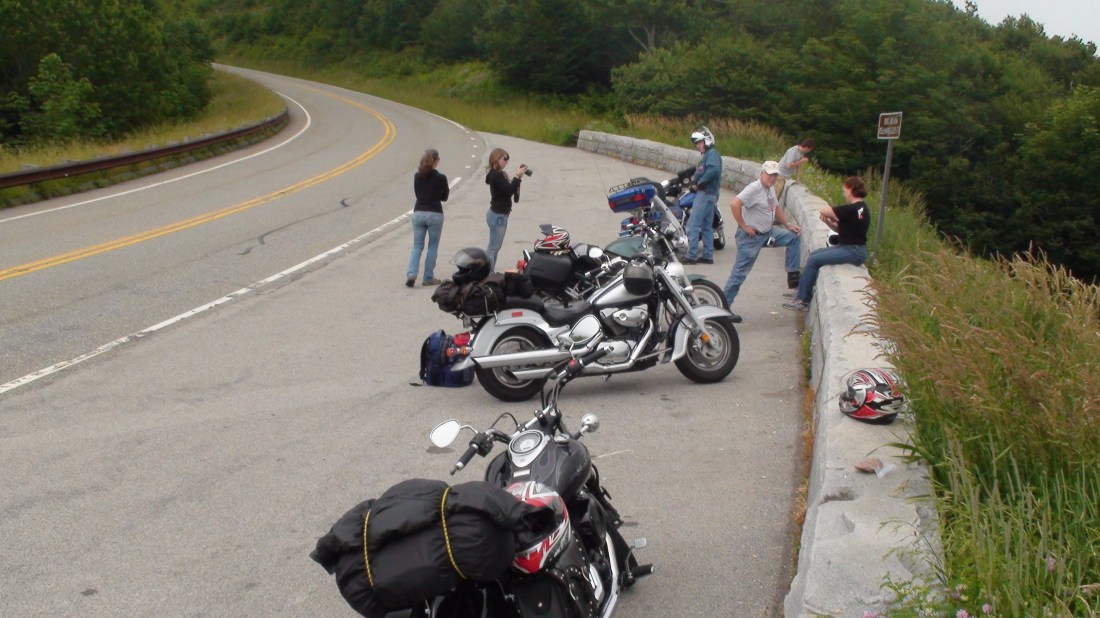
Wilson is a hero to the progressive movement, and the modern democrats as well as colleges across the country because he was in essence an intellectual, like them, so he is widely followed. But looking at the Treaty of Versailles, even though the intentions were good, turned out to be absolutely devastating to the American way of life.
Institutions whether you’re talking about a typical college, or something like Six Sigma are not American ideas. They are foreign ideas, and should be available under the umbrella of freedom. But of the founding fathers, which Jefferson graduated from the college of William and Mary, Madison from Princeton, and Adams from Harvard, George Washington did not go to any college, and he was the first president, and that says a lot about our character. It wasn’t just the bravery he exhibited, but there was a sense of logic to whatever Washington did. But he wasn’t the only found father that did not attend college. Ben Franklin was never schooled beyond age 10. Come to think of it, Abraham Lincoln never attended a university. He passed the bar exam by reading books on his own, sometimes walking over 12 miles to borrow a book as a kid.
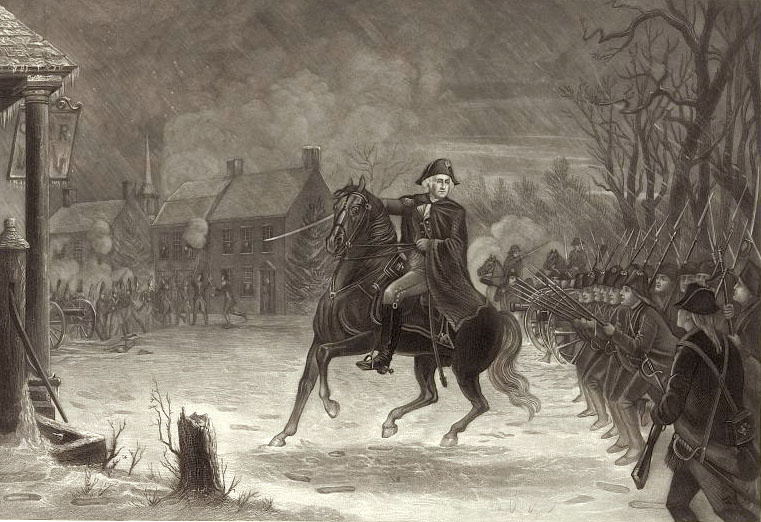
Here’s the bottom line. Using a European model for colleges, and an Asian model for programs like Six Sigma, institutions have within a 200 year span of time, and most rapidly since the industrial revolution, taken over much of what we do and how we do it in America. And it has been a slow poison that has robbed us of our vigor. In our freedom from the shackles the rest of the world has been burdened with whether it is feudal families of Asia, or kingdoms of Europe, we developed truly original ideas that has greatly improved the livelihood of most of earth. And we have been raised with massive corn fields, and farms, and shopping malls, and free press for all of our adult lives. But to us all, the institutions feel wrong, and we know it on an innate level, but feel powerless to question the process because we all need jobs to fuel our personal economies. So when our business leaders, lazily copy off each other, because that’s human nature, and listen without thought to Jack Welch spew on about Six Sigma and how much money they saved, a careful investigator would ask, Jack, why did you need the Japanese to tell you how to create a product with little waste and deliver it on time to a customer? What he really meant to say, but couldn’t is that GE is a huge union company and he needed some program like Six Sigma that is too complicated for union stewards to understand, to sell the idea of actually applying common sense to everyday business practices. But what he did, like the blundering escapade of the Treaty of Versailles is creating more institutional limits to the American Imagination, good intentions gone badly.

So powerless to take in the whole picture, we watch our football games and drink our beer. We talk about going out at night and getting hammered and root for the players on a football field where the rules are simple. Get a first down, score a touchdown.

And that is the real cost of this institutionalized society we’re currently in. At a personal level, we feel it, but in most cases we’re willing to trade a decent wage for some loss of personal input. But on a national level, we’re allowing influences from the outside to define our national identity. When the reality is that no place else in the world has the ingenuity that has come from the United States been shown, why would we be so willing to listen to inferior strategies?

Being a great leader, manager, politician, or even an artist requires vision, and that is something institutions cannot give you. They can help you set goals, and figure out how to get the analytic data. But they cannot give you the vision to see what is coming. Only those that are willing, and bold enough to put themselves out on the cutting edge, and not hide in the safety of the masses, will have the ability to make their vision a reality.

Rich Hoffman

http://twitter.com/#!/overmanwarrior

www.overmanwarrior.com

Ross Perot Then, Now and Forever

The talk going on today with people like Glenn Beck and others are not new. I remember being in Dallas, Texas the day before the election in 1992. Ross Perot’s oldest daughter and her husband gave me a neck tie that I wish I still had while in the parking lot of the Perot Headquarters. I thought then Ross Perot was doing some good work, and I did everything I could to help him back then. I’m not new to all this small government stuff.

For the fun of it, I decided to go back and dig through some of his old videos. In hind sight, how right he was. People should have listened.


And he is still at it. Too bad most people want to take the blue pill.

Rich Hoffman

http://twitter.com/#!/overmanwarrior
www.overmanwarrior.com