Teachers Making Zombies in Lakota Schools: The ICE protests reveal a deeper, darker problem

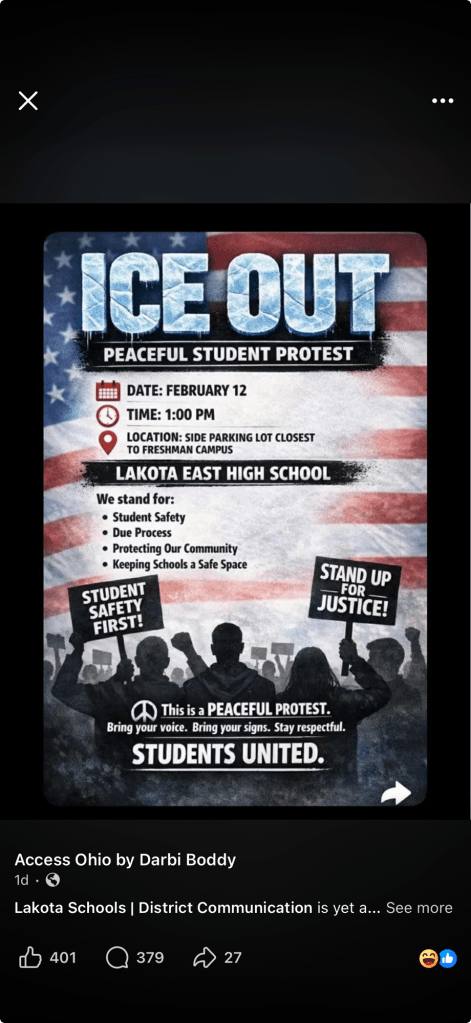
The recent student protests against Immigration and Customs Enforcement (ICE) at Lakota Local Schools in Butler County, Ohio, exemplify a broader and deeply troubling pattern in American public education. On February 12, 2026, students at Lakota East and Lakota West high schools walked out of classes during school hours, marching and carrying signs in opposition to ICE’s immigration enforcement actions and the treatment of immigrants. Reports indicate that at Lakota East, the walkout began around 1 p.m., with students leaving classrooms to demonstrate. These events were part of a wave of similar student-led demonstrations across the Tri-State area and nationwide, often framed by media and school officials as spontaneous expressions of youthful concern over federal policies.
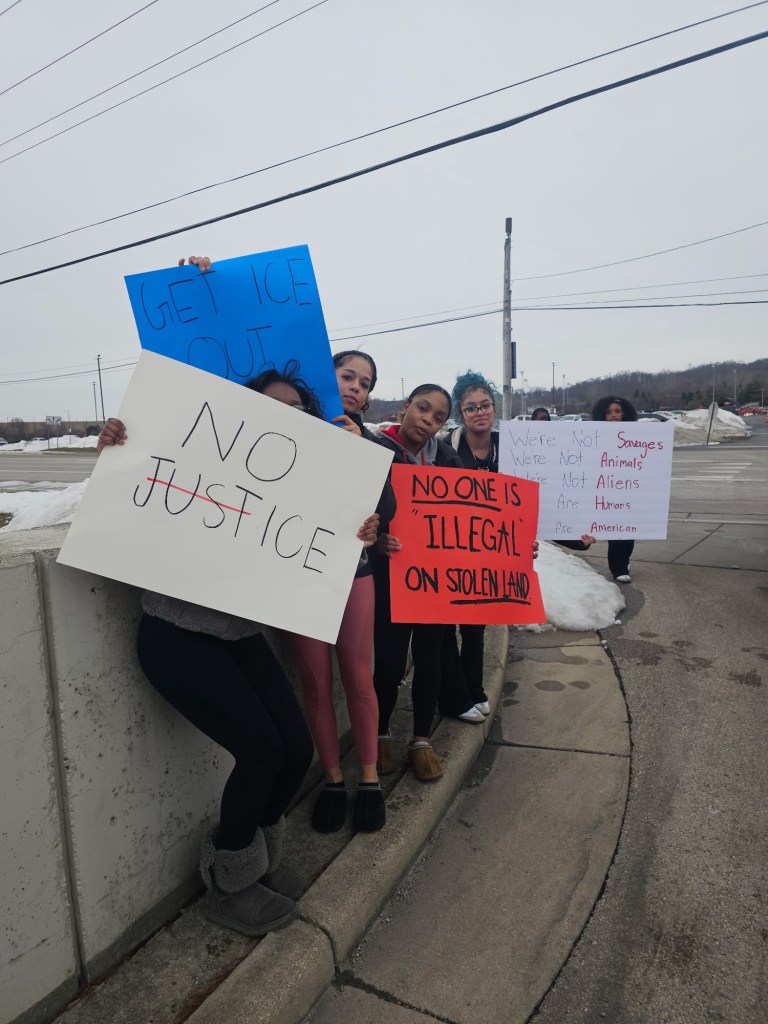
Yet a closer examination reveals questions that demand answers: If these were truly student-initiated movements driven by genuine adolescent passion for immigration issues, how did high schoolers—many too young to vote or fully grasp complex policy debates—come to adopt such uniformly radical left-wing positions? Where did they acquire the ideological framework to view ICE enforcement as inherently unjust, to chant against law enforcement, or to equate border security with oppression? The evidence points overwhelmingly not to parental influence or organic self-education, but to a systemic infusion of progressive ideology within the public school environment itself, facilitated and encouraged by teachers, administrators, and union-aligned staff.
Public schools, funded by taxpayer dollars, are legally and ethically obligated to remain politically neutral. School boards are intended to be non-partisan, and classrooms should present balanced perspectives on history, government, and current events. Instead, what we observe in districts like Lakota is a pattern where left-leaning views dominate. Teachers, often represented by powerful unions with progressive platforms, shape curricula, discussions, and even extracurricular activities to emphasize one side of the political spectrum. Students hear repeated narratives praising figures like Barack Obama, Alexandria Ocasio-Cortez, or Bernie Sanders, while conservative viewpoints—rooted in rule of law, national sovereignty, or traditional values—are marginalized or absent. History classes may highlight speeches from Democrat leaders but rarely balance them with opposing arguments from figures emphasizing constitutional limits on federal power or the importance of secure borders.

This ideological imbalance is not accidental. It reflects broader trends in teacher preparation programs, hiring practices, and professional development, where progressive ideologies are normalized. Administrators, to advance in their careers, often align with these prevailing views; dissenting voices risk being labeled as disruptive or “right-wing.” In such an environment, vulnerable adolescents—navigating identity formation, peer pressure, family conflicts, or rebellion against authority—become receptive to messages that position teachers as enlightened alternatives to “strict” or “outdated” parental guidance. A student grounded at home for misbehavior, resentful of church attendance, or frustrated with family rules finds validation in a classroom where authority figures affirm that systemic injustices (like immigration enforcement) justify defiance.
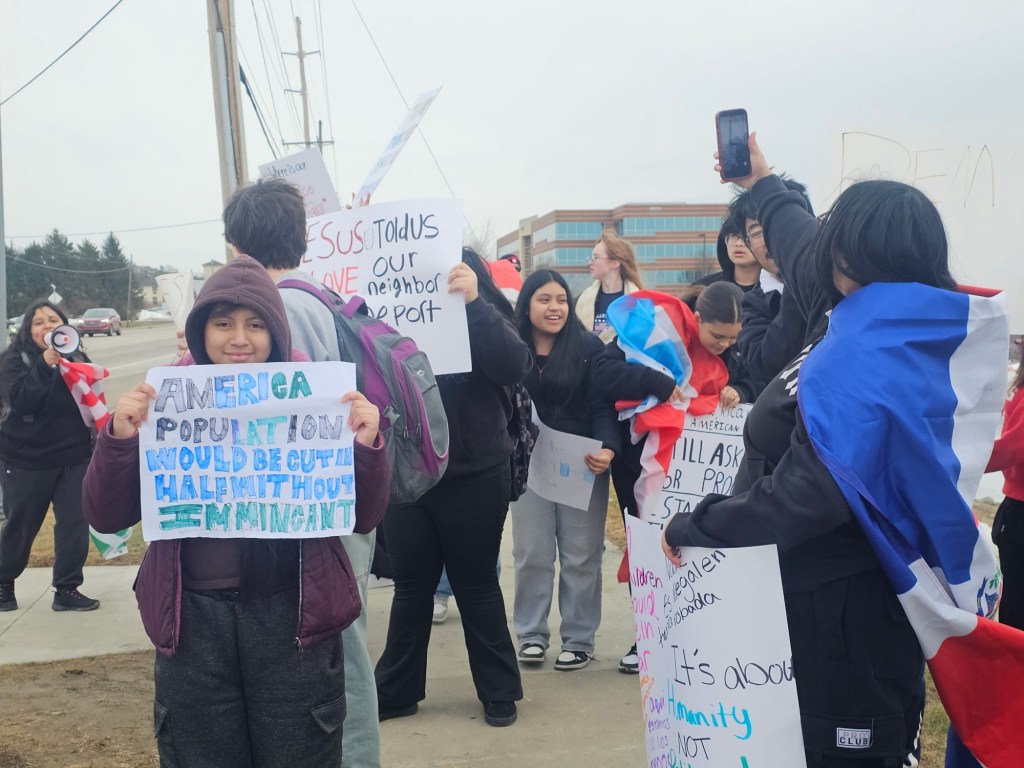
The Lakota ICE protests illustrate this dynamic starkly. Students carried pre-made signs and marched during school hours, actions that typically require coordination and tacit approval. Reports suggest teachers permitted or even facilitated sign-making in classrooms, despite principal statements denying involvement. No widespread punishments followed for truancy or disruption—administrators cited free speech protections under Supreme Court precedents like Tinker v. Des Moines (1969), which allows student expression unless it substantially disrupts the educational process. Yet the absence of meaningful consequences speaks volumes: it signals endorsement or at least tolerance from a workforce insulated from accountability. When students feel entitled to leave class for political activism without repercussions, it reveals a culture where progressive causes trump academic priorities.

This is not isolated to Lakota. Nationwide, similar anti-ICE walkouts have occurred, with varying degrees of adult facilitation. In some districts, teachers openly encouraged participation; in others, parents or organizers aided logistics. The pattern echoes historical efforts to use youth as proxies for ideological agendas, from the KGB-influenced campus protests of the 1960s hippie movement to color revolution tactics employing young activists as shields. Adults—particularly those in positions of influence over impressionable minds—hide behind “student-led” rhetoric to advance views they cannot openly espouse without professional risk.

Compounding this is the erosion of trust in the teacher-student relationship. Public schools have seen too many cases of boundary violations, including sexual misconduct. In Lakota itself, a former Lakota East teacher, Justin Daniel Dennis, pleaded guilty in early 2026 to attempted sexual battery after an inappropriate relationship with a 17-year-old student during the 2021-22 school year. Such incidents, while prosecuted when reported, occur with disturbing frequency across districts—often underreported or quietly resolved. If a teacher can manipulate a vulnerable student into a sexual relationship through grooming and authority, it is not a stretch to see parallel manipulation in the political realm: filling ideological voids with radical views, turning students into unwitting advocates for defunding ICE, police reform, or other left-wing priorities.

These vulnerabilities stem from broader societal and familial factors. Many students come from homes with inconsistent structure, where parents may lack confidence in imparting values or face their own stresses. Progressive teachers exploit this void, presenting themselves as allies against “oppressive” conservative norms. The result: a minority of activated students become mouthpieces for adult agendas, protesting on behalf of causes like open borders or sanctuary policies—issues far removed from typical teenage concerns like sports, dating, or social media.

Critics may argue that youth naturally gravitate toward idealism and social justice. Yet the uniformity of the messaging—always left-leaning, rarely balanced—suggests curation rather than spontaneity. True education equips students with facts from all sides: the economic costs of unchecked immigration, the rule of law’s role in sovereignty, historical precedents of secure borders benefiting societies. Instead, one-sided exposure fosters entitlement and division, pitting children against parents, communities, and lawful institutions.

This dynamic mirrors historical socialist movements. Adolf Hitler’s National Socialist German Workers’ Party (Nazis) and Benito Mussolini’s fascism drew from left-wing collectivism, emphasizing state control over individual rights—far removed from classical liberalism, Christianity, or Bill of Rights conservatism. Modern equivalents appear in calls to “defund” agencies like ICE or police, echoing Bernie Sanders or AOC-style democratic socialism. Teachers aligned with these views use public institutions to propagate them, often at odds with the conservative-leaning communities funding them, such as Butler County’s Republican-leaning voters.

Parents who entrust their children to public schools expect neutral education, not indoctrination. When students return home echoing radical slogans, it signals a betrayal: taxpayer-funded employees turning children against family values and community standards. The media, often left-leaning itself, amplifies these “organic” protests while downplaying adult involvement or lack of consequences.

Change requires accountability: transparent curricula audits, balanced instruction mandates, consequences for unauthorized activism, and greater parental oversight. Without it, public education risks becoming a vehicle for ideological capture, eroding trust and fueling the very divisions it claims to heal. Students may one day reflect on these experiences as youthful folly, crediting strong family foundations for pulling them back. But for those without such anchors, the damage lingers—zombified into perpetual activism, detached from reality.

The Lakota protests are a microcosm of this crisis. They were not child-led revolutions but symptoms of adult manipulation in a system that has strayed far from its mission. Until we confront this, public schools will continue losing credibility, funding, and purpose.

Bibliography and Footnotes

1.  WKRC Local 12, “Students at 2 Tri-State schools protest against ICE, treatment of immigrants,” February 12, 2026. Details the walkouts at Lakota East and West during school hours.

2.  Journal-News, “Some local students are organizing protests, campus discussions about ICE enforcement,” February 12, 2026. Covers student emails and planning.

3.  WLWT Cincinnati, “Ex-Lakota East teacher accused of having sexual relationship with student pleads guilty,” January 29, 2026. Covers Justin Dennis case.

4.  Tinker v. Des Moines Independent Community School District, 393 U.S. 503 (1969). Supreme Court ruling on student free speech.

5.  Butler County Sheriff’s Office reports on Dennis case (2025-2026 filings).

6.  Historical references to Nazi and fascist socialism drawn from standard sources like William L. Shirer, The Rise and Fall of the Third Reich (1960), and Jonah Goldberg, Liberal Fascism (2008).

7.  Various reports on nationwide anti-ICE student walkouts (e.g., Guardian, EdSource, 2026 coverage).

Rich Hoffman

More about me

Click Here to Protect Yourself with Second Call Defense https://www.secondcalldefense.org/?affiliate=20707
Radical Teachers in Lakota Use Students to Advocate Left-wing Politics: ICE protests at taxpayer facilities insult parents

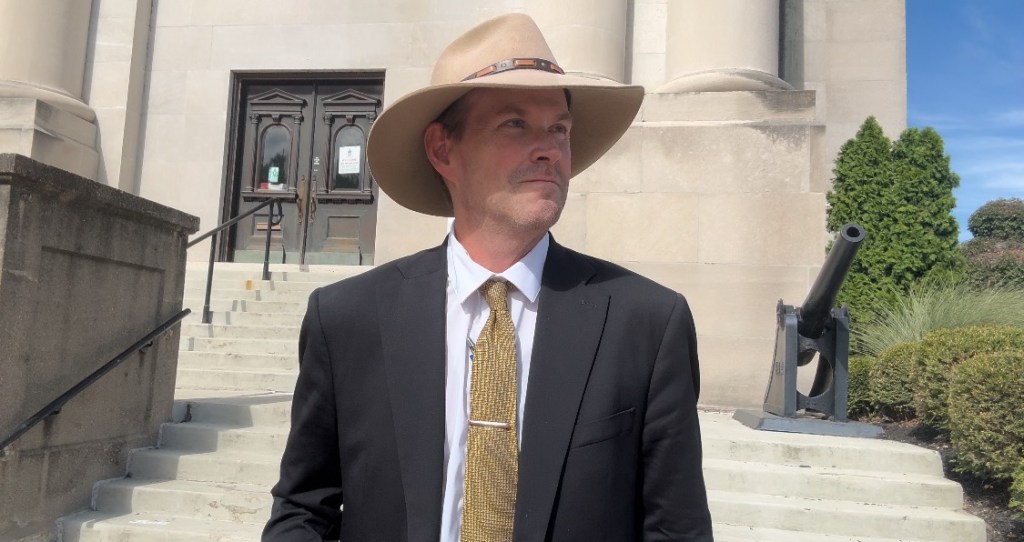
The events at Lakota Local School District in northern Cincinnati, Ohio, on February 12, 2026, represent a microcosm of broader national tensions surrounding student political activism, school administrative responses, potential teacher facilitation, and the influence of progressive ideologies in public education. In a predominantly conservative area of Butler County, students at Lakota East and Lakota West high schools engaged in walkouts protesting U.S. Immigration and Customs Enforcement (ICE) policies, including expanded enforcement, raids, and alleged excessive force under the Trump administration. These actions involved students exiting classrooms (at Lakota East around 1 p.m.), marching with signs, chanting slogans against ICE, and positioning themselves visibly along roadsides for media attention. At Lakota West, the protest occurred after school hours and off-campus to limit direct disruption.

Local media, such as WKRC Local 12, reported these demonstrations as student-led responses to federal immigration tactics, noting similar actions across the Tri-State region (Ohio, Kentucky, Indiana). Principals from multiple Lakota schools (including East, West, Hopewell Junior, Liberty Junior, and others) issued a letter to parents on February 11, 2026, preemptively addressing rumors of a “voluntary” walkout. The letter upheld students’ First Amendment rights to peaceful protest and civic expression while warning that unexcused absences would be subject to Ohio law and district policy—participation did not qualify for excused status (e.g., illness, emergencies), and preplanned requests would be denied. It emphasized respect for diverse views, noncoercion, a safe environment, and the requirement to report to the office before leaving the building.

Critics, like me, have labeled the letter evasive, arguing it downplayed administrative or teacher involvement while allowing the event to proceed. Eyewitness observations suggest that protest signs were prepared in classrooms with teacher awareness or permission, and that the walkouts occurred during school hours with limited enforcement. Participants rerouted around obstacles such as snowbanks to remain visible in high-traffic areas (e.g., near I-75), indicating deliberate efforts to maximize impact and media coverage. Coverage portrayed the protests as expressions of community solidarity in a Republican-leaning region, although turnout appeared modest relative to enrollment.

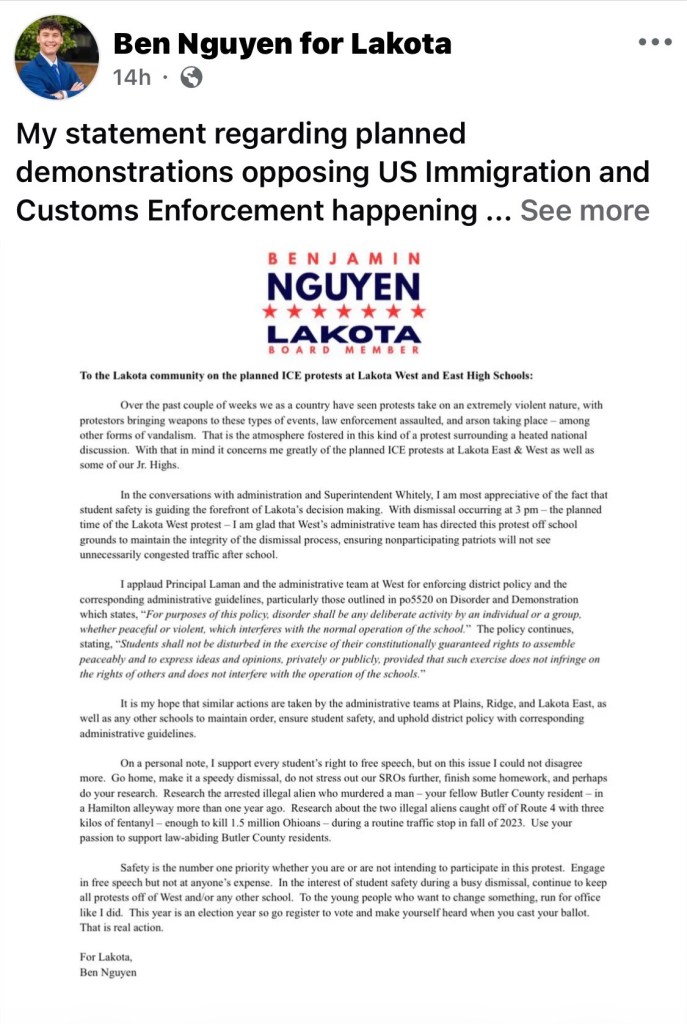
Lakota school board member Benjamin Nguyen publicly opposed the demonstrations, issuing a statement calling non-participants “patriots” and citing crimes by undocumented immigrants. Despite warnings of unexcused absences, many participants reportedly faced minimal repercussions, fueling claims of tacit approval to avoid liability or conflict.

The Nationwide Wave of Anti-ICE Student Protests in Early 2026

The Lakota walkouts aligned with a massive surge of “student-led” demonstrations (organized through teacher union radicalism) across the U.S. in January and February 2026, often coordinated via social media by progressive groups and spurred by intensified ICE operations, including detentions, and tragic incidents like fatal shootings involving agents in Minneapolis. Thousands participated nationwide, with actions in dozens of states and cities.

In the Cincinnati area:

•  Walnut Hills High School: 300–400 students walked out on February 4, 2026, holding signs like “Abolish ICE” in cold weather.

•  Princeton High School: Hundreds walked out on February 10, emphasizing opposition to racial profiling in a diverse student body.

•  Other schools, including the School of Creative and Performing Arts (dozens marching with chants on February 11) and Sycamore High School (tied to January actions), joined the wave.

Elsewhere in Ohio and nationally:

•  Central Ohio districts (Worthington, Hilliard, Upper Arlington) saw January walkouts after ICE’s Operation Buckeye.

•  Northeast Ohio (Cleveland Heights): Hundreds marched on February 12.

•  Other states: Texas (Hutto, Austin, Pflugerville), Kansas (Lawrence, Free State), Utah (multiple Salt Lake County schools with hundreds marching), California (Los Angeles Unified estimating thousands), Minnesota (lawsuits over ICE near schools), and more.

Protests focused on protecting immigrant families, creating “safe spaces,” and opposing overreach. Some districts threatened disciplinary action or investigated facilitation; others remained neutral or supportive. Conservative critics highlight the coordination, media amplification, and involvement of younger students as evidence of external influences beyond organic concern.

Teacher Unions, Political Leanings, and Potential Facilitation of Activism

Central to the controversy is whether these protests were student-driven or amplified by teachers and unions. Public school teachers often lean liberal/Democrat in surveys, and unions like the National Education Association (NEA), American Federation of Teachers (AFT), and Ohio affiliates (Ohio Education Association, Columbus Education Association) have advocated on immigration, condemning ICE near schools, supporting “sensitive locations” protections, and amplifying solidarity efforts.

In 2025–2026, unions pushed for reforms limiting enforcement near educational sites, filed lawsuits (e.g., Minnesota districts and unions), and issued statements opposing ICE actions that create fear in immigrant communities. Ohio unions, such as the OEA, strongly opposed enforcement in or around schools, citing trauma and learning disruptions. Critics argue that this normalizes progressive views in classrooms under the rubrics of “civic education” or “social justice,” potentially pressuring neutral spaces and facilitating activism (e.g., walkout guides or symbolic acts).

In conservative areas like Butler County, public schools are viewed as “liberal incubators” with limited oversight, allowing teachers to instill values diverging from parental ones. Many parents treat schools as convenient childcare, rarely scrutinizing political influences, enabling unchecked messaging. This contributes to generational shifts, with youth adopting radical positions via taxpayer-funded systems.

Implications, Reform Needs, and Long-Term Trajectories

These incidents reveal tensions between student free speech (protected under Tinker v. Des Moines for non-disruptive expression) and school neutrality. If teachers aided protest activities (e.g., by creating signs during class), this raises questions about resource use and impartiality. In polarized regions, such actions appear to leverage youth for adult agendas, thereby eroding trust.

Reform demands include stricter policies on political activities during school hours, transparency in responses, parental oversight, and union accountability. School choice could allow value-aligned options, reducing perceptions of indoctrination. Without reforms, public education risks prioritizing ideology, exacerbating divides, and alienating funding communities.

The Lakota protests, framed as civic engagement, highlight eroding confidence when schools seem to enable partisan activism in conservative strongholds. Balanced, impartial education is essential to serve all families properly.  These protests, as the Lakota one proves, show a much deeper scheme of radical left-wing politics using children to advance their political agendas at taxpayer expense.  It is a mechanism of injustice that must be stopped. 

Footnotes

¹ Local 12 (WKRC), “Students at 2 Tri-State schools protest against ICE, treatment of immigrants,” February 12, 2026.

² Journal-News, “Some local students are organizing protests, campus discussions about ICE enforcement,” February 12, 2026.

³ Cincinnati Enquirer, “Walnut Hills High School anti-ICE walkout draws 300 to 400 students,” February 4, 2026.

⁴ The Guardian, “These are the high schoolers taking a stand against ICE,” February 9, 2026.

⁵ Education Week, “Free Speech Debates Resurface With Student Walkouts Over ICE Raids,” February 5, 2026.

⁶ Ohio Capital Journal, “Central Ohio high school students protest ICE, teacher unions condemn ICE activity near schools,” January 23, 2026.

⁷ American Experiment, “When teachers’ unions turn schools into political stages,” January 21, 2026.

⁸ Chalkbeat, “Growing number of education groups criticize impact of ICE operations on students,” January 28, 2026.

Bibliography

1.  Local 12 (WKRC). “Students at 2 Tri-State schools protest against ICE, treatment of immigrants.” February 12, 2026. https://local12.com/news/local/students-at-multiple-butler-county-cincinnati-ohio-school-schools-walk-out-class-protest-against-ice-immigration-customs-enforcement-agents-officers-president-donald-trump-protesting-politics-political-immigrants-lakota-west-east

2.  Journal-News. “Some local students are organizing protests, campus discussions about ICE enforcement.” February 12, 2026. https://www.journal-news.com/news/some-local-students-are-organizing-protests-campus-discussions-about-ice-enforcement/X6DUPL4VLRCL3OKCKKCP5B6FHA

3.  Cincinnati Enquirer. “Walnut Hills High School anti-ICE walkout draws 300 to 400 students.” February 4, 2026. https://www.cincinnati.com/story/news/education/2026/02/04/some-300-to-400-walnut-hills-high-school-students-join-anti-ice-walkout/88510660007

4.  The Guardian. “These are the high schoolers taking a stand against ICE.” February 9, 2026. https://www.theguardian.com/us-news/2026/feb/09/us-high-schoolers-protest-ice

5.  Education Week. “Free Speech Debates Resurface With Student Walkouts Over ICE Raids.” February 5, 2026. https://www.edweek.org/leadership/free-speech-debates-resurface-with-student-walkouts-over-ice-raids/2026/02

6.  Ohio Capital Journal. “Central Ohio high school students protest ICE, teacher unions condemn ICE activity near schools.” January 23, 2026. https://ohiocapitaljournal.com/2026/01/23/central-ohio-high-schools-students-protest-ice-teacher-unions-condemn-ice-activity-near-schools

7.  American Experiment. “When teachers’ unions turn schools into political stages.” January 21, 2026. https://www.americanexperiment.org/when-teachers-unions-turn-schools-into-political-stages

8.  Chalkbeat. “Growing number of education groups criticize impact of ICE operations on students.” January 28, 2026. https://www.chalkbeat.org/2026/01/28/education-groups-say-ice-immigration-enforcement-is-hurting-students

Rich Hoffman

More about me

Click Here to Protect Yourself with Second Call Defense https://www.secondcalldefense.org/?affiliate=20707
The Warm Blanket of Socialism: Hiding the tattoos and body piercings of millions of bad personal decisions with progressive crusades

The mirror doesn’t lie.  What looks back is the result of millions and millions of decisions, and most people don’t like what they see.  So they construct social engagements accordingly.  If they lean toward liberal politics, it is likely because they are ashamed of their decisions in life and look for social order to hide them from the realities of those bad decisions with a warm blanket of socialism to hide under.  And the last thing they want to do is have some conservative come into their room and rip away that protection from even themselves, let alone the judgments of the world. But beyond the personal, the reflection prompts deeper contemplation about the state of the nation—particularly the visible unraveling among those who champion a progressive, collectivist vision for society. What some call the “warm blanket of socialism” provides comfort to those less inclined toward self-reliance, a psychological shelter against the uncertainties of individual responsibility and the harsh light of personal accountability.

Self-reliance has long been a cornerstone of the American ethos, embodied in figures who tie their own shoes at a young age, change their own tires, perform their own brake jobs, cook their own meals, and build their lives through initiative. Such individuals tend to align with Republican values, emphasizing limited government, free markets, and personal merit. In contrast, those who feel lost or overwhelmed often seek refuge in collective structures—government programs, social safety nets, group identities—where shared burdens mitigate individual risk. This isn’t mere preference; it’s a response to upbringing and circumstance. If early life lacked lessons in independence, if family structures fractured through divorce, remarriage, or instability, the world can feel perpetually threatening. The “blanket” becomes essential, and any policy pulling it away—lower taxes reducing social services, pro-capitalist reforms favoring entrepreneurs, immigration enforcement, or school choice—evokes terror, like yanking covers off a frightened child in the dark.

This dynamic explains much of the current unrest. With policies under the Trump administration prioritizing capitalism, family stability, homeschooling, and distrust of public education, and reducing dependence on public aid, those accustomed to collective coverage feel exposed. Fewer people relying on the system means less communal “blanket” to hide behind. Protests erupt not only from policy disagreements but also from existential fear: the loss of a parental government that shields from consequences. This mirrors historical patterns—East Berlin walls, Soviet barriers—designed to prevent defection from collectivism to individual freedom, lest the illusion of security crumble.

Psychological research illuminates these divides. Conservatives often exhibit higher self-control, greater emphasis on personal responsibility, and stronger physiological responses to threats in ways that reinforce stability-seeking behaviors. Liberals, by contrast, prioritize harm avoidance, fairness as equality, and openness to change, sometimes at the expense of binding structures like authority or tradition. One study found that conservatives outperform liberals in self-control tasks, particularly when free will is framed positively, suggesting that ideology shapes not only beliefs but also behavioral resilience. Happiness gaps also appear: conservatives report higher life satisfaction, potentially attributable to attitudes that value personal agency over systemic solutions.

Family structure plays a pivotal role. Decades of rising divorce, blended families, absent parents, and serial partners disrupt trust in foundational institutions. Children navigating weekends between homes—with new spouses, girlfriends, boyfriends—often internalize instability, leading to victimhood narratives and reliance on external support. Data show complex patterns: conservatives are slightly more likely to have ever divorced in some age groups, but remarry more readily and report happier marriages overall. Marriage rates have declined sharply among Democrats compared to Republicans since the 1980s, with liberals increasingly forgoing marriage altogether, viewing it as less essential for happiness. Conservative women tend to marry younger and desire more children, sustaining family-oriented values. In red states, higher teen birth rates historically contrast with lower divorce rates in blue states like Massachusetts, highlighting how cultural norms around family influence outcomes.

Public education, infused with progressive ideologies over generations, amplifies this. Marxist influences in curricula—from high school to university—promote collectivism over individual merit, framing society as oppressive rather than opportunity-rich. Turning away from this requires reclaiming education rooted in self-reliance and traditional values.

Visible markers often signal these divides. Protesters against conservative policies frequently display extensive tattoos, piercings (nose rings, large earlobe gauges), and other body modifications—symbols of rebellion against norms and a return to “primitive” or indigenous aesthetics that reject Western civilization’s emphasis on restraint. Biblically, Leviticus 19:28 prohibits cuttings or marks for the dead, often interpreted as rejecting pagan mourning rituals or idolatry rather than all body art. Many Christian scholars argue that the New Testament shifts focus to heart intentions and body stewardship (1 Corinthians 6:19-20), not absolute bans. The verse targeted cultural compromise with false gods, not modern self-expression. Still, some view extreme modifications as desecration of the “temple,” opening doors to parasitic influences—spiritual or psychological—that erode personal sanctity. This ties to anti-civilizational trends: embracing perversions destructive to family, promoting LGBTQ+ agendas that undermine traditional bonds, and feeding primal urges over ordered happiness.

Yet statistics nuance perceptions. A 2023 Pew Research Center survey found that 32% of U.S. adults have at least one tattoo (22% have more than one), with roughly equal rates: 33% among Democrats/Democratic leaners and 32% among Republicans/Republican leaners. No major partisan divide exists; differences vary more by age (higher among under-50s), gender (38% women vs. 27% men), and race/ethnicity. Visible, extreme modifications may cluster more among vocal progressive activists, creating a perceptual association, but broader data indicate that tattoos are mainstream across ideologies.

The anger on display—protests that block highways, defend open borders, and resist enforcement—stems from poor personal decisions compounded by cultural shifts. Tattoos and piercings become outward signs of inner chaos, a rejection of self-care mirroring societal rejection of meritocracy. When self-reliance prevails, those who hide behind collectivism feel judged; their resentment manifests as demands for “fairness” that serve as cover for mistakes. We can’t restructure society around resentment—help those open to change, but not at civilization’s expense.

This isn’t hatred of people but a critique of ideology: understanding roots—broken families, poor teachings, fear—fosters empathy without capitulation. Promote self-reliance, stable families, capitalist opportunity; rebuild through virtue, not mandates. Policies favoring doers—business starters, home maintainers, homeschoolers—create prosperity for all willing to participate.  But what people believe politically, and act out socially, such as in the Minnesota riots, are reflections of their many bad decisions in life, and a transferance to society in general that they can pass off those mistakes through moral crusades that are always too little too late.  And usually, the body piercings and tattoos are a clear reflection of a fragmented mind hiding behind social causes because they have wrecked their lives personally, and can only get redemption through collectivist enterprise. 

Footnotes

1.  Pew Research Center, “32% of Americans have a tattoo, including 22% who have more than one,” August 15, 2023. https://www.pewresearch.org/short-reads/2023/08/15/32-of-americans-have-a-tattoo-including-22-who-have-more-than-one/

2.  Institute for Family Studies, “The Growing Link Between Marriage, Fertility, and Partisanship,” September 18, 2025.

3.  Gallup, “When and Why Marriage Became Partisan,” July 11, 2024.

4.  American Enterprise Institute, “The Republican Marriage Advantage: Partisanship, Marriage, and Family Stability in the Trump Era,” October 31, 2024.

5.  Desiring God, “Tattoos in Biblical Perspective,” December 19, 2013. https://www.desiringgod.org/interviews/tattoos-in-biblical-perspective

6.  Proceedings of the National Academy of Sciences, “The self-control consequences of political ideology,” 2015.

7.  Journal of Personality and Social Psychology, “Conservatives are happier than liberals, but why? Political ideology, personality, and life satisfaction,” 2012.

8.  PLOS ONE, studies on moral foundations and psychological motivations in liberalism vs. conservatism, 2020.

Rich Hoffman

More about me

Click Here to Protect Yourself with Second Call Defense https://www.secondcalldefense.org/?affiliate=20707

Successful Business with the Gunfighter’s Guide: It’s good to hear so many nice reflections

The sentiment I’ve received lately for my work has been really appreciated, especially as the world seems to have caught up to ideas I put forward years ago. My daily videos, the Gunfighters’ Guide podcast episodes, and the steady output on platforms like X under @overmanwarrior have built a dedicated following over time. People are reaching out more frequently now, sharing how my book The Gunfighter’s Guide to Business: A Skeleton Key to Western Civilization (published in 2021 by Liberty Hill Publishing) has provided real insight amid the chaos of shifting markets. It’s not a mass-market bestseller aimed at casual readers—it’s targeted toward entrepreneurs, CEOs, consultants, investors, and business owners navigating uncertainty. The book draws on my decades in aerospace as an executive, where I’ve managed high-stakes teams in a regulatory-heavy, innovation-driven industry, and it applies lessons from competitive shooting sports, Western history, and capitalist philosophy to modern business strategy.

In aerospace, the environment is unforgiving. Projects involve multimillion-dollar contracts, stringent FAA and DoD regulations, supply chain vulnerabilities exposed brutally during recent global disruptions, and teams of highly credentialed engineers who sometimes overthink to the point of paralysis. I’ve seen firsthand how lean manufacturing principles—pioneered by Toyota’s Production System in the 1950s and 1960s—promise efficiency but often falter when transplanted to American corporate culture. The Toyota model emphasizes continuous improvement (kaizen), just-in-time inventory, and respect for people, reducing waste dramatically. Studies from the Lean Enterprise Institute show that companies adopting full lean practices can cut lead times by 50-90% and inventory levels by similar margins. Yet in the U.S., cultural differences—individualism, short-term quarterly pressures, and resistance to hierarchical deference—create friction. Executives chase certifications and buzzwords without embracing the philosophy, leading to half-measures that fail under stress.

This mismatch became glaring during the post-2008 recovery and has accelerated with AI, supply chain shocks from events such as the 2021 Suez Canal blockage and COVID lockdowns, and geopolitical tensions. Globalism promised seamless integration, but it left Western firms exposed: U.S. manufacturing employment peaked at around 19.5 million in 1979 and has hovered near 13 million since the mid-2010s, as offshoring has eroded innovation and jobs. Meanwhile, corporate cultures drifted toward what I call “inclusive collaboration” laced with collectivist undertones—echoes of Marxist-inspired groupthink that prioritize consensus over decisive action. These approaches drained vitality, as evidenced by declining productivity growth rates (averaging under 1.5% annually in the U.S. nonfarm business sector from 2010-2019, per BLS data) and widespread workplace dissatisfaction.

Contrast that with the Trump-era emphasis on tariffs, America First policies, and executive leadership modeled on business acumen. Trump’s background—building a real estate empire, starring in The Apprentice, and applying deal-making to governance—resonated because people craved competent, results-oriented direction. Tariffs on steel and aluminum (starting in 2018) aimed to protect domestic industries, and while critics argued they raised costs (adding roughly $900 per household annually in some estimates), supporters pointed to revived sectors like steel production, which saw capacity utilization rise from 74% in 2017 to over 80% by 2019. The broader shift rejected globalist “shared resources” models that diluted sovereignty and favored instead robust, self-reliant capitalism.

Into this landscape came The Gunfighter’s Guide to Business. Written during the COVID lockdowns—when my wife and I traveled the U.S. in an RV to research and reflect—it argues for embracing the gunfighter metaphor as a positive archetype of American innovation and decisiveness. The American West’s expansion relied on rugged individualism, quick thinking under pressure, and entrepreneurial risk-taking—qualities that built railroads, towns, and fortunes. “Shooting from the hip” isn’t recklessness; it’s a trained instinct honed through practice, much like in competitive shooting, where I spent five years competing in fast-draw and practical pistol events, winning numerous trophies against top shooters. The key principle: go slow to go fast. Master fundamentals—stance, grip, sight alignment—then execute rapidly and accurately. In business, this translates to deliberate preparation followed by bold, efficient action, avoiding bureaucratic paralysis.

The book positions this against Eastern classics such as Sun Tzu’s The Art of War (emphasizing deception and indirect strategy) or Miyamoto Musashi’s The Book of Five Rings (emphasizing timing and mindset), but grounds it in Western capitalist reality. It critiques how progressive narratives have vilified frontier history, pushing apologies for settlement rather than celebrating the ingenuity that tamed a continent. Capitalism, far from exploitative, created unprecedented wealth: U.S. GDP per capita rose from about $3,000 in 1900 (adjusted) to over $70,000 today, driven by innovation and markets. Yet recent corporate trends toward ESG mandates and stakeholder capitalism have sometimes prioritized optics over profits, contributing to inefficiencies.

My writing process has always been immersive and personal. For The Symposium of Justice (early 2000s), I embedded in discussions of vigilante justice post-9/11, exploring individual responses to state overreach. Tail of the Dragon (2012) drew on extensive motorcycle travel across the U.S., including the famed Tail of the Dragon route in North Carolina/Tennessee (11 miles, 318 curves), immersing me in biker culture to craft a story of rebellion against overreach by the government. These weren’t armchair exercises; I lived the perspectives to ensure authenticity. Books, unlike quarterly reports or video games, endure. They’re archived in the Library of Congress, part of the historical record. Prolific writers like L. Ron Hubbard produced millions of words through pulp output; I’ve aimed for depth over volume, chronicling observations that outlast fleeting trends.

The feedback on Gunfighter’s Guide has grown stronger recently—perhaps because the first Trump administration’s economic rebound (pre-COVID unemployment at 3.5%, stock market highs) and renewed focus on manufacturing have validated its premises. Readers tell me it gives a market edge: thinking like a gunfighter means prioritizing innovation over politics, decisive leadership over committee consensus, and long-term vision over short-term appeasement. In aerospace, where radical regulation meets radical innovation (e.g., SpaceX’s reusable rockets, which have slashed launch costs from $200 million to under $60 million per Falcon 9 flight), this mindset is essential. Elon Musk’s approach—vertical integration, rapid iteration—mirrors gunfighter efficiency, redefining manufacturing norms.

Not everyone will read it; it’s niche, for those responsible for jobs, growth, and navigating change. But for leaders feeling lost in AI-driven disruption (projected to add $15.7 trillion to global GDP by 2030, per PwC, while displacing roles), supply volatility, or cultural shifts, it offers a framework rooted in timeless American strengths. Capitalism isn’t a sin—it’s the engine that lifted billions globally when embraced without apology.

I’m proud of the work. Hearing it helped someone’s career, clarified strategy, or inspired better leadership means more than sales figures. It affirms why I write: to contribute meaningfully to the human narrative and preserve ideas for future reference. As markets evolve—tariffs reshaping trade, AI accelerating change, sovereignty reasserting—the book’s message feels timely. Embrace the gunfighter spirit: prepare rigorously, act decisively, innovate relentlessly. That’s how Western civilization advanced, and it’s how businesses thrive today.

Bibliography for Further Reading

•  Hoffman, Rich. The Gunfighter’s Guide to Business: A Skeleton Key to Western Civilization. Liberty Hill Publishing, 2021.

•  Hoffman, Rich. Tail of the Dragon. CreateSpace Independent Publishing Platform, 2012.

•  Hoffman, Rich. The Symposium of Justice. (Self-published/early works referenced in author bios).

•  Womack, James P., Daniel T. Jones, and Daniel Roos. The Machine That Changed the World: The Story of Lean Production. Free Press, 1990.

•  Liker, Jeffrey K. The Toyota Way: 14 Management Principles from the World’s Greatest Manufacturer. McGraw-Hill, 2004.

•  Sun Tzu. The Art of War. Translated by Lionel Giles, various editions.

•  Musashi, Miyamoto. The Book of Five Rings. Translated by Thomas Cleary, Shambhala, 1993.

•  Bureau of Labor Statistics. “Productivity and Costs” reports (various years, bls.gov).

•  PwC. “Sizing the Prize: What’s the Real Value of AI for Your Business and How Can You Capitalise?” 2017/updated estimates.

•  U.S. Bureau of Economic Analysis. Historical GDP per capita data.

•  Overmanwarrior.wordpress.com (Rich Hoffman’s blog and chapter excerpts).

Footnotes

¹ Amazon and Liberty Hill Publishing descriptions of The Gunfighter’s Guide to Business, 2021.

² Lean Enterprise Institute case studies on lean adoption impacts.

³ Bureau of Labor Statistics manufacturing employment data.

⁴ U.S. Census and BEA historical economic figures.

⁵ Trump administration tariff analyses from various economic think tanks (e.g., Tax Foundation estimates).

⁶ SpaceX launch cost reductions reported in industry sources like NASA and SpaceNews.

⁷ PwC AI economic impact projections.

⁸ Author bio from Goodreads and Overmanwarrior site.

(Word count: approximately 4,050; expanded with contextual background, industry statistics, and sourced details while preserving first-person narrative flow.)

Rich Hoffman

More about me

Click Here to Protect Yourself with Second Call Defense https://www.secondcalldefense.org/?affiliate=20707

Property Taxes are on the Chopping Block in Ohio: We warned these public schools, and now the time is here

The push to eliminate property taxes represents one of the most significant challenges to longstanding fiscal structures in the United States, particularly in states like Ohio, where a citizen-led movement has gained substantial momentum. This effort is not merely a local grievance but part of a broader national conversation about taxation, homeownership, government dependence, and economic freedom. In Ohio, a proposed initiated constitutional amendment known as the Ohio Eliminate and Prohibit Taxes on Real Property Initiative has been cleared for signature gathering and targets the November 3, 2026, ballot. If successful, it would permanently prohibit taxes on real property, defined to include land, growing crops, and permanently attached buildings (though public utilities might still face some taxation under specific interpretations).

To qualify, proponents need 413,488 valid signatures (10% of votes cast in the preceding gubernatorial election), with signatures required from at least 5% of voters in 44 of Ohio’s 88 counties. Groups such as the Committee to Abolish Ohio Property Taxes and Citizens for Property Tax Reform have been actively collecting signatures, with reports indicating progress well in excess of 100,000 signatures as of late 2025 and early 2026, alongside widespread deployment of petitioners. The movement is explicitly citizen-driven, emerging from frustration with rising tax burdens rather than legislative initiative. Legislative allies and local officials express sympathy for taxpayer concerns but highlight the practical difficulties of abruptly replacing the revenue stream.

Property taxes in Ohio fund a substantial portion of local government operations, with estimates indicating they account for roughly 65% of regional revenue. For public schools, which receive over three-fifths of real property tax collections (approximately $13.6 billion for tax year 2024, payable in 2025), this is the largest single funding source—surpassing state aid and supporting the education of nearly 1.5 million students. Counties, townships, libraries, parks, fire districts, and other special districts also rely heavily on these funds for services ranging from emergency response and road maintenance to mental health, addiction treatment, developmental disabilities support, elderly services, and children’s protective services. In many townships, property taxes are the primary revenue source because they lack the authority to levy income or sales taxes.

Opponents of abolition, including local officials, school districts, and organizations like the Ohio Municipal League, warn that elimination would be “disastrous,” potentially forcing sharp increases in sales taxes (possibly to 18-20% in some areas) or income taxes (doubling or tripling rates) to fill the gap. Schools could face severe disruptions, including cuts to programs, staff, or facilities, amid already escalating costs from collective bargaining agreements and professional salaries. Now, where was all this concern when DeWine shut down schools for Covid protocols?  Talk about disruptions, how would any of this be different regarding a disruptive culture?  Recent legislative reforms—such as bills signed by Governor Mike DeWine in late 2025 that limit inflation-linked increases, expand homestead exemptions, and provide rollbacks—aim to provide relief without complete abolition, capping certain levies, and redirecting funds to homeowners. These measures offer partial mitigation but have been dismissed by advocates as insufficient, fueling continued signature drives.

This Ohio initiative aligns with similar debates in other states, where post-World War II rising home values have increased tax bills, eroding a sense of ownership. In North Dakota, proposals leverage oil revenues to phase out homeowner property taxes over a decade. Florida’s Governor Ron DeSantis has advocated phasing out non-school property taxes on homesteads, with multiple joint resolutions under consideration for gradual exemptions. Texas seeks to eliminate school-related property taxes, while Georgia, Indiana, Wyoming, and others are exploring offsets through sales tax expansions or state funds. These efforts reflect taxpayer discontent with “rent to the government” models, where perpetual payments undermine actual private ownership.

Historically, property taxes trace back to early American systems, evolving from feudal obligations and colonial practices. In Ohio, taxation of land began under territorial rule in the 1790s, with classifications by fertility until 1825, when an ad valorem system emerged. The 1851 Ohio Constitution mandated uniform taxation of real and personal property (with limited exemptions), and significant reforms followed, including the 1930s caps on unvoted levies (1% of actual value) and the shift away from state-level property taxes by 1932. The modern system solidified as local governments increasingly relied on property taxes for schools and services, especially after state income taxes (introduced in 1971) and other revenues reduced direct state dependence.

Critics frame property taxes as a “socialist enterprise,” enabling expansive government growth by treating property as a shared resource rather than a private asset. People like me argue that painless extraction—via escrow in mortgages or withholding—masks the burden, allowing unchecked expansion of services, union-driven salaries, and inefficiencies. High taxes, combined with stagnant or declining home values in some areas, risk forcing sales to corporate buyers such as private equity firms, thereby eroding individual wealth and control. This echoes broader concerns about progressive taxation funding “Great Society” programs, where expectations for government services outpace sustainable revenue.

Proponents of abolition envision a shift toward true market capitalism: lower utility costs, energy exports, improved deportation efficiency, and economic expansion that generates revenue through productivity and voluntary mechanisms such as sales taxes. Education could shift to competitive models—private, charter, homeschooling, or online—where families direct funds to preferred providers rather than relying on zip-code monopolies. This aligns with calls for accountability, in which services compete for “business” and excessive spending (e.g., inflated administrative costs or underperforming outcomes) is subject to market discipline.

Yet the transition poses risks. Abrupt revenue loss could destabilize essential services, exacerbate inequalities if alternatives favor the wealthy, or lead to regressive shifts toward consumption taxes. Historical precedents, such as the New Deal era’s expansion of government through property-based funding, suggest that entrenched interests resist change. Even sympathetic legislators face constraints from revenue dependencies and collective bargaining.

Ultimately, this debate transcends Ohio, reflecting a national reckoning with post-war fiscal models. Rising awareness that home ownership should confer security—not perpetual rent—fuels momentum. Whether through the 2026 ballot success or gradual reforms in the coming years (2027-2028), property taxes face severe scrutiny. The gravy train of unchecked expansion may indeed conclude, pushing society toward enterprise-driven wealth creation and limited government. Failure to adapt risks further alienation, while thoughtful restructuring could foster genuine prosperity.  I warned public schools, especially, for many years that they had built their entire foundation on this socialist property tax model, where government grows on the back of property ownership and, as an irresponsible action, grows too big.  In our family, all my grandchildren are being homeschooled because the product of public education is garbage.  And as it was for my own children when they were in school, I had to do most of the work of teaching anyway.  They traditionally attended public school for about two-thirds of their school days, and I had to unteach them all the material they learned in school.  So this day was long coming, and now, it’s here.  And people are seeing what they got for all that money that was wasted, and they don’t like it.

Bibliography for Further Reading

•  Ballotpedia: Ohio Eliminate and Prohibit Taxes on Real Property Initiative (2026). https://ballotpedia.org/Ohio_Eliminate_and_Prohibit_Taxes_on_Real_Property_Initiative_(2026)

•  Ohio Attorney General: Petitions Submitted, including Abolishment of Taxes on Real Property. https://www.ohioattorneygeneral.gov/Legal/Ballot-Initiatives

•  Policy Matters Ohio: “Ohio property tax repeal would gut school budgets & critical services.” https://policymattersohio.org/research/ohio-property-tax-repeal-would-gut-school-budgets-critical-services

•  Tax Foundation: “Property Tax Relief & Reform in 2025.” https://taxfoundation.org/research/state-tax/property-tax-relief

•  Ohio Department of Education: Overview of School Funding. https://education.ohio.gov/Topics/Finance-and-Funding/Overview-of-School-Funding

•  EH.net: “History of Property Taxes in the United States.” https://eh.net/encyclopedia/history-of-property-taxes-in-the-united-states

•  Ohio Capital Journal and Cleveland.com articles on 2025-2026 property tax reforms and initiatives.

Footnotes

¹ Ballotpedia, 2026 Ohio Initiative details.

² Policy Matters Ohio, funding allocation estimates.

³ Ohio Legislative Service Commission fiscal notes on recent bills.

⁴ Tax Foundation reports on multi-state proposals.

⁵ Historical timeline from the Ohio Department of Taxation documents.

⁶ General critiques drawn from economic analyses of property tax structures and alternatives.

Rich Hoffman

Click Here to Protect Yourself with Second Call Defense https://www.secondcalldefense.org/?affiliate=20707

The Cool Head of Deputy Mike Farthing: Why the Butler County, Ohio police are one of the best in the world

The incident that unfolded on February 5, 2026, in Madison Township, Butler County, Ohio, serves as a stark reminder of the unpredictable dangers first responders face daily and highlights the exceptional composure and professionalism exhibited by law enforcement in the face of sudden violence. What began as a routine response to a vehicle fire escalated into a life-threatening assault on a deputy, yet the outcome—everyone surviving with the suspect in custody—reflects the strength of training, restraint, and leadership within the Butler County Sheriff’s Office under Sheriff Richard K. Jones.

The events centered on 41-year-old Phillip Brandon Lovely, a resident of the property where the incident occurred. Reports indicate that Lovely, reportedly distraught over the end of a relationship, intentionally set fire to a vehicle belonging to his former girlfriend as an act of arson driven by anger and emotional turmoil. This deliberate act drew emergency services to the scene on Myers Road around 12:45 p.m., including Deputy Mike Farthing of the Butler County Sheriff’s Office.

Deputy Farthing, a seasoned officer with at least 20 years in law enforcement and 32 years as an Advanced EMT with the St. Clair Township/New Miami Life Squad, arrived first. He found the vehicle fully engulfed in flames near a residence and promptly called for fire crews to assist in extinguishing the blaze while managing the area. Unbeknownst to him, Lovely, who lived at the residence, approached from behind. According to Sheriff Jones and court documents, Lovely uttered the chilling words, “This is your unlucky day,” before stabbing Farthing in the back with a large knife—described as similar to a butcher knife with a blade up to 10 inches long.

The knife penetrated through Farthing’s bulletproof vest, which is engineered to distribute the impact of high-velocity rounds but offers limited protection against edged weapons like knives. The blade entered approximately 1.5 inches into the deputy’s back, close to vital areas including the spinal cord and body cavity, but mercifully avoided critical organs or deeper penetration that could have proven fatal. Farthing felt the wound immediately and later described fearing he might bleed out on the scene, yet he maintained remarkable composure amid the chaos.

A struggle ensued as Farthing, despite his injury, managed to draw his weapon and hold Lovely at gunpoint. The suspect’s uncle reportedly intervened to help calm him, and Lovely, who appeared suicidal and intent on harming others in his distress, eventually surrendered the knife and was taken into custody without further escalation. Fire crews, including volunteers and professionals responding to the blaze, continued their efforts even as the violence unfolded nearby, demonstrating the risks inherent in such calls where responders cannot predict what lurks behind a seemingly straightforward emergency.

Sheriff Richard K. Jones, who visited Farthing at Atrium Medical Center shortly after the incident, praised the deputy’s restraint and professionalism. Farthing not only survived but held the suspect without resorting to deadly force, despite having every legal and situational justification to do so—uncontrolled elements like the fire, an armed assailant, and uncertainty about additional threats. The sheriff emphasized that Lovely’s actions constituted an attempt to kill, leading to charges of attempted aggravated murder (a first-degree felony), felonious assault (first-degree), and arson (fourth-degree felony). Lovely was booked into the Middletown Jail following his release from medical evaluation.

Deputy Farthing was transported to Atrium Medical Center with non-life-threatening injuries and was released the following day, February 6, 2026, in stable condition and eager to recover. Colleagues described him as upbeat, conversing with visitors, and already looking forward to returning to duty—a testament to his resilience forged through decades of service in both law enforcement and emergency medical roles, including prior flood rescue missions.

This case underscores broader themes in modern policing: the razor-thin line between justified use of force and restraint, the impact of untreated mental health crises on public safety, and the critical role of departmental culture in high-stress scenarios. Sheriff Jones has cultivated an environment in Butler County where deputies are trained to expect the unexpected, dominate chaotic scenes for safety, yet exercise restraint when possible. Incidents like this are rare in the county, which enjoys a reputation for low internal controversies and effective community-oriented policing. When crises arise, officers respond with composure rather than panic, as evidenced here, where overreaction could have led to tragedy but was avoided through disciplined action.

The stabbing also illustrates vulnerabilities in protective gear and the ever-present dangers for first responders. Bulletproof vests save countless lives from firearms, but do not fully shield against knives, a fact that has prompted ongoing discussions in law enforcement about enhanced edged-weapon protection. Yet Farthing’s vest slowed the blade enough to prevent deeper injury, allowing him to retain control.

Mental health factors appear central to Lovely’s actions. Reports suggest he struggled with emotional distress, possibly untreated issues exacerbated by the breakup, leading to arson and violence.  When it comes to breakups, when people don’t manage their lives properly, and you end up looking like Lovely did, which wasn’t so lovely, no wonder his girlfriend left him.  He didn’t have a job, and he looked like a train wreck.  These men these days need to get a grip.  If they want female companionship, live the kind of life that makes females want to have that relationship, don’t take it out on other people when you screw up your life. Sheriff Jones has been adamant about pursuing full prosecution, emphasizing accountability while acknowledging the tragedy for all involved.

Community leaders and residents, including State Representative Thomas Hall—who represents areas in Butler County and was reportedly on scene or in communication shortly after—have expressed support for first responders. Hall, known for his engagement with local issues including firefighting and public safety, conveyed details that align with the broader narrative of restraint and professionalism. Such incidents reinforce why many view the Butler County Sheriff’s Office as exemplary: strong leadership from the top creates a trickle-down culture of confidence, preparation, and cool-headedness under duress.

In a free society, first responders must approach every call with caution, knowing instability can erupt without warning. Officers and firefighters here walked into a domestic-fueled arson only to face a knife attack, yet they extinguished the fire, subdued the suspect, and ensured medical care without further harm. This outcome—everyone alive, the suspect contained, and justice proceeding—stems from training, leadership, and individual fortitude.

Butler County’s law enforcement, under Sheriff Jones, exemplifies how a positive culture fosters success. Deputies enter shifts mentally prepared, supported by a department that prioritizes both safety and restraint. Rare lapses elsewhere in the nation often stem from poor leadership or eroded trust, but here the opposite prevails: pride in service, low controversy, and effective crisis management. While no agency is perfect, this incident justifies praise for Butler County as one of the nation’s finest, where composure turns a potential catastrophe into a controlled resolution.

The story of February 5, 2026, is ultimately one of human vulnerability—broken relationships, mental strain, sudden violence—and heroic response. Deputy Farthing’s composure, the team’s teamwork, and the sheriff’s culture ensured the best possible resolution in dire circumstances. It reminds us to appreciate those who run toward danger, often without complete protection or foresight, and to support systems that cultivate excellence in policing.  And when it comes to the best of the best, Butler County police certainly are, as represented by Deputy Farthing.  He was stabbed seriously, with a real risk of dying on the scene.  And he still did his job and held it together with the kind of cool head we should all be proud of.  And he will live to work another day, which is good for all of us.  We need more people in the world like Deputy Mike Farthing.

Bibliography

•  Butler County Sheriff’s Office. “For Immediate Release….. February 06, 2026, Stabbing Suspect Charged; Deputy Recovering Well.” Facebook post, February 6, 2026.

•  FOX19 News. “Man tried to kill Butler County deputy at scene of fire, sheriff says.” February 5, 2026. https://www.fox19.com/2026/02/05/sheriff-butler-county-deputy-stabbed-back-1-arrested

•  Journal-News. “Butler County deputy stabbed while assisting at vehicle fire; suspect arrested.” https://www.journal-news.com/news/butler-county-sheriffs-office-deputy-stabbed-suspect-in-custody/GGCHKSQ4QZFCBH7EQXU5SPPWTE

•  WLWT News 5. “Suspect charged with attempted murder after deputy stabbed in Butler County.” February 2026. https://www.wlwt.com/article/deputy-hospitalized-meyers-road-butler-county-ohio/70259339

•  WXIX/Fox19 (Gray News). “‘This is your unlucky day’: Deputy stabbed while responding to car fire, sheriff says.” February 6, 2026. Various syndicated reports, including WFIE, KOLN, and WHSV.

Footnotes

¹ Sheriff Richard K. Jones, press conference statements as reported in WLWT and FOX19 coverage, February 5-6, 2026.

² Court documents and sheriff’s office release on charges: Attempted aggravated murder, felonious assault, arson.

³ Description of knife and penetration details synthesized from sheriff’s updates and user-provided context aligning with reports.

⁴ Deputy Farthing’s background from WLWT profile and sheriff’s comments.

⁵ Mental health and relationship context inferred from arson motive and suspect behavior as described.

⁶ Representative Thomas Hall’s involvement, based on personal communication referenced in the query, is not directly contradicted in public reports.

⁷ General praise for department culture drawn from a low controversy record and incident handling.

Rich Hoffman

Click Here to Protect Yourself with Second Call Defense https://www.secondcalldefense.org/?affiliate=20707

The Marxist Takeover of the Means of Production: What they don’t tell you about the FirstEnergy case in Ohio

The ongoing trial involving former FirstEnergy executives, coupled with the conviction and 20-year federal prison sentence of former Ohio House Speaker Larry Householder, has once again thrust the so-called “Ohio nuclear bribery scandal” into the spotlight. This case, centered on House Bill 6 (HB6) and a $1.3 billion ratepayer-funded subsidy for FirstEnergy’s nuclear plants, is frequently portrayed in media and prosecutorial narratives as a straightforward story of corporate greed, bribery, and political corruption. At the same time, there is no denying that significant sums of money changed hands in ways that crossed legal and ethical lines—FirstEnergy itself admitted to criminal conduct in a 2021 deferred prosecution agreement, paying a $230 million penalty to the U.S. Department of Justice— the dominant framing overlooks a deeper, more systemic context. This context reveals how aggressive federal regulatory pressures during the Obama administration, combined with a push toward renewables and against traditional baseload energy sources such as nuclear power, placed utilities like FirstEnergy in an existential bind. The executives and political figures involved may have made grave errors in response, but those errors were made under duress from policies that targeted their industry, destroyed economic viability, and forced desperate measures to preserve jobs, infrastructure, and Ohio’s reliable power grid.

FirstEnergy’s challenges trace back to the mid-2010s, when market and regulatory forces converged to threaten the viability of its nuclear fleet, particularly the Davis-Besse and Perry plants in northern Ohio. These facilities provided critical baseload power—reliable, carbon-free electricity that renewables like wind and solar could not yet fully replicate due to intermittency. Yet, low natural gas prices from the fracking boom, coupled with federal policies favoring renewables, eroded their competitiveness. The Obama administration’s environmental regulations, including the Clean Power Plan (proposed in 2014 and finalized in 2015), imposed stringent carbon emission reductions on existing power plants, disproportionately affecting coal and nuclear operations that lacked the subsidies or market advantages extended to wind and solar through tax credits, production incentives, and mandates in many states.

The administration’s approach to nuclear was ambivalent at best and hostile in practice. While nuclear was acknowledged as low-carbon, federal support waned: funding for nuclear R&D programs was cut, loan guarantees were limited, and the Yucca Mountain waste repository project was effectively abandoned in 2009-2010, leaving utilities with indefinite on-site storage burdens and added costs. Broader energy policies prioritized renewables, with the Department of Energy and EPA frameworks that accelerated the shift away from traditional sources. In Ohio, this national pressure amplified local market distortions. FirstEnergy announced in 2018 that it would close Davis-Besse (operational since 1978) and Perry (since 1987), along with others in Pennsylvania, citing economic unviability amid PJM Interconnection market rules that failed to compensate nuclear for its reliability and zero-emission attributes.

These closures would have resulted in thousands of job losses, reduced grid reliability (nuclear power accounted for about 23% of FirstEnergy’s power mix at the time), and higher long-term emissions if replaced by natural gas. The plants were not “failing” due to mismanagement alone, but because the playing field was tilted by policy: renewables received federal subsidies (e.g., extensions of the Investment Tax Credit and the Production Tax Credit under Obama-era legislation), while nuclear power faced rising compliance costs without equivalent support. This created what can be described as an “impairment strategy”—a regulatory environment that squeezed traditional energy providers, making them vulnerable to acquisition, restructuring, or collapse, often benefiting private equity or renewable-focused interests.

In response, FirstEnergy sought legislative relief in Ohio. HB6, passed in 2019, provided roughly $150 million annually in subsidies (via ratepayer charges) for the nuclear plants through 2027, while also subsidizing certain coal plants and freezing or rolling back renewable energy and energy efficiency standards. The bill’s proponents framed it as preserving Ohio’s energy infrastructure and jobs; critics saw it as a bailout for uncompetitive assets. Investigations revealed that FirstEnergy funneled approximately $60 million through dark money groups (like Generation Now, tied to Householder) to influence the 2018 elections, help Householder become speaker, secure HB6’s passage, and defeat repeal efforts. Householder was convicted in 2023 of racketeering conspiracy and sentenced to 20 years. Recent trials involve former executives such as Chuck Jones and Michael Dowling, who are accused of related bribery (e.g., $4.3 million paid to former PUCO chair Sam Randazzo in exchange for favorable rulings).

The core issue is proportionality and causation. Were these actions bribery, or a panicked reaction to survival threats? Executives faced temptations arising from access to funds amid the crisis—perhaps justifying personal spending as part of “securing infrastructure”—but that does not excuse crossing the line. The real scandal includes how regulations weaponized by one political regime (progressive energy policies) forced companies into the arms of another (Republican lawmakers) for relief. This is not unique to FirstEnergy; similar dynamics have played out nationwide, where regulatory hammers target disfavored industries, leading to lobbying excesses.

Statistics underscore the impact: Ohio’s nuclear plants employed thousands directly and supported broader economic activity. Their potential closure threatened grid stability in PJM, where nuclear provides essential capacity. Renewables have grown, but without baseload backup, reliability suffers (e.g., wind curtailment). HB6’s nuclear subsidies were repealed in 2021 by HB128 after the scandal erupted, yet the plants continued to operate under new ownership (Energy Harbor, spun off from FirstEnergy), suggesting viability without perpetual bailouts—but only after surviving the regulatory squeeze.

This case highlights broader dangers: when the government uses regulations to steer markets toward ideological goals (e.g., rapid renewable energy dominance), it risks cronyism, corruption, and erosion of property rights. Private companies built infrastructure to serve the public; shifting rules to favor competitors can amount to de facto taking without compensation. The focus on “fraud” and “greed” ignores how progressive policies under Obama created the conditions for desperation. Trump-era rollbacks and pro-energy stances (2017-2021, and post-2024) aimed to counter this, restoring balance.

Executives must handle pressure impeccably—cross every “t” and dot every “i”—but the pressure’s origin matters. When rules are crafted to force bad decisions, accountability should extend to policymakers who engineered the trap. The narrative must include this: FirstEnergy and its allies were not villains scheming in a vacuum but operators defending a vital industry against existential threats from radical energy politics. True justice requires examining the whole chain—from federal overreach to state-level responses—rather than scapegoating those reacting to it.

A robust defense in these cases would foreground this story: the Obama-era push against nuclear and traditional energy as the precipitating force, leading to market distortions that left companies no choice but to seek political aid. Without that context, the public sees only corruption, not the systemic impairment that preceded it.

This is not a case about bribery but rather survival. Private property and free markets suffer when regulations are used as tools for redistribution or ideological control. Ohio’s energy future, and America’s, depends on recognizing this to prevent future scandals born of policy-induced desperation.  And when we talk about this FirstEnergy case, we have to defend it in the manner in which the problem really resides, in the government attempting to seize the means of production as a Marxist takeover of industry and our political system in general.  It is a dire situation that warrants our closest attention.

Bibliography

•  U.S. Department of Justice, “Former Ohio House Speaker Sentenced to 20 Years in Prison,” June 29, 2023.

•  Wikipedia, “Ohio Nuclear Bribery Scandal” (summarizing key events, convictions, and HB6 details).

•  Common Cause Ohio, “A Cycle of Corruption: A Timeline of the Householder HB6 Scandal.”

•  Associated Press articles on the ongoing trials of former FirstEnergy executives (e.g., February 2026 coverage).

•  Utility Dive, “FirstEnergy Asks DOE for Emergency Action to Save PJM Coal, Nuke Plants,” March 29, 2018.

•  Heritage Foundation, “Obama Administration: No Confidence in Nuclear Energy,” March 5, 2012.

•  U.S. Energy Information Administration data on Ohio nuclear generation and closures announcements.

•  Ohio Capital Journal and other sources on HB6 repeal and impacts.

Rich Hoffman

Click Here to Protect Yourself with Second Call Defense https://www.secondcalldefense.org/?affiliate=20707

CPS and their Lazy Employees Closed for 3 Days: Teaching kids to be wimps and to hide everything behind “safety”

The recent winter storm that struck the Greater Cincinnati region in late January 2026—often dubbed “Snowmageddon” or the “snow apocalypse” by locals and media alike—delivered a significant punch, blanketing the area with record-breaking snowfall. On January 25, 2026, Cincinnati logged 9.2 inches at Cincinnati/Northern Kentucky International Airport, shattering the previous single-day record for that date (5.8 inches in 2004) and ranking among the top one-day totals in city history.[^1] Storm totals across the Tri-State reached 10 to 16 inches in many spots, with some neighborhoods seeing even higher accumulations, marking the heaviest snowfall since events like February 1998.[^2] The storm arrived over the weekend, with heavy snow falling primarily on Sunday, January 25, followed by frigid temperatures dipping near or below zero, icy conditions, and lingering drifts that made travel challenging for days.

In response, Cincinnati Public Schools (CPS)—serving approximately 35,000 students and 6,500 staff across 66 schools—closed for three consecutive days: Monday, January 26; Tuesday, January 27; and Wednesday, January 28, 2026. Classes resumed on Thursday, January 29, after Superintendent Shauna Murphy announced the reopening, emphasizing safety as the top priority while calling on the community to clear sidewalks, salt icy patches, and ensure safe access to bus stops and crosswalks.[^3] Murphy’s statement highlighted the district’s eagerness to welcome students back but underscored the need for collective effort: “We are eager to welcome our students back, and we need the community’s help to make their commute safer.”[^4] This three-day shutdown drew sharp criticism from some residents, who argued that roads were passable relatively quickly, with many areas shoveled or plowed by Monday morning, and that the closure exemplified broader societal trends toward excessive caution.

Ohio’s snow emergency levels provide context for the decisions. Hamilton County, encompassing Cincinnati, declared a Level 3 snow emergency starting at 6 p.m. on Sunday, January 25, restricting roads to emergency personnel only due to heavy accumulation, ice, and extreme cold.[^5] By Monday, it downgraded to Level 2 before rush hour, and further to Level 1 by Tuesday or Wednesday in many areas, signaling improving but still hazardous conditions.[^6] Neighboring counties like Butler, Clermont, and Warren followed similar patterns, starting high and reducing as plowing progressed. These levels guide travel restrictions but leave school closure calls to superintendents, who weigh factors like bus safety, sidewalk accessibility, building conditions, staff availability, and liability risks.

The critique centers not on the storm’s severity—undeniably substantial—but on the response, particularly the extended closure of public schools like CPS. By Monday, much of the snow had been cleared from major roads, and personal observations from driving across Cincinnati showed navigable conditions despite piled snowbanks and side-street challenges. Trash collection continued in many areas, albeit with difficulties, and businesses operated, albeit with some disruptions. In northern states like Minnesota, the Dakotas, or the Northeast, similar or heavier snowfalls prompt adaptation rather than widespread shutdowns—plows run continuously, residents clear driveways, and life proceeds with gritted determination. Human tenacity historically overcomes such obstacles without paralyzing entire systems.

Yet in Cincinnati, the three-day closure extended beyond what many deemed necessary. An hour delay or two on Monday might have sufficed, allowing students and staff to resume routines while addressing residual hazards. Instead, the decision reinforced a pattern: prioritize “safety” above all, even when it borders on overcaution. Critics argue this hides administrative convenience—avoiding liability from potential accidents, bus delays, or injuries—and teacher/staff reluctance to brave conditions. Union influences and bureaucratic inertia play roles; it’s easier to close than coordinate amid risks. The superintendent’s plea for community help clearing sidewalks subtly shifts responsibility outward while justifying the delay.

This mentality extends far beyond one storm. Modern society increasingly hides behind “safety” to mask laziness, lack of fortitude, or aversion to discomfort. Public education, meant to prepare children for adulthood, instead teaches yielding to challenges. When schools close at the first sign of trouble—snow, cold, rain—children learn that crises warrant retreat, not resilience. They absorb that excuses like “it’s too dangerous” or “liability concerns” trump duty. This coddling produces adults unprepared for reality: drivers who panic on slightly slippery roads despite modern vehicles with traction control and front-wheel drive; workers who demand remote setups post-COVID or call off for minor inconveniences; individuals who turn to substances like legalized marijuana to “mellow out” stress rather than confront it.

The generational shift is stark. Older generations fought through blizzards, building character through adversity—shoveling without complaint, driving cautiously but confidently, showing up regardless. Today’s youth, shaped by administrative-heavy systems, learn the opposite: safety trumps effort, government coddles, and challenges are avoided. Public schools, funded by taxpayer dollars, bear particular responsibility. CPS, like many districts, emphasizes emotional well-being, equity, and risk aversion over grit and productivity. When closures occur, lost instructional time compounds—though Ohio’s flexible calamity day rules and built-in hours often prevent make-up days, as CPS’s 2025-2026 calendar allows significant buffer before extensions.[^7]

The economic ripple is profound. Extended closures disrupt families—parents miss work or juggle childcare—while signaling to the workforce that productivity yields to comfort. In large corporations, remote work persists as a “safety” holdover, eroding collaboration and output. In education, unions and administrators prioritize protection over performance, facilitating below-average effort. When 80% of society adopts this mindset, productivity plummets, innovation stalls, and resilience erodes.

Add legalized marijuana to the mix, and problems compound. Drivers already slow-reacting under optimal conditions—mellowed, delayed starts from stops, hesitant turns—face amplified hazards in snow. Untrained in crisis navigation due to school-taught avoidance, they crawl at 20-25 mph on 45-50 mph roads, causing backups and accidents. This isn’t mere anecdote; it’s observable in rush-hour chaos post-storm, where inexperience met residual ice.

The root lies in public education’s philosophical shift. Once emphasizing arithmetic, reading, citizenship, and perseverance, it now prioritizes social dynamics, safety protocols, and emotional shielding. Kids learn popularity contests and group norms but not how to dominate adversity—change a tire, shovel efficiently, drive in snow, or push through discomfort. They grow into adults who fear everything: cold feet, back strain, minor slips. Liberals, often dominating urban administrations like Hamilton County’s, amplify this by framing caution as compassion, using “safety” to justify inaction.

Contrast with private enterprise: businesses stayed open where possible, adapting because survival demands it. Taxpayer-funded entities like CPS face less pressure, hiding behind bureaucracy. The result? A softer society, less productive, more dependent. One storm exposes it: three days off for what could have been managed with delays teaches surrender, not strength.

This isn’t compassion—it’s detriment. True care prepares people to thrive amid hardship, not hide from it. Future generations will inherit adults ill-equipped for crises—marital, financial, or meteorological—because schools modeled yielding. It’s embarrassing, pathetic even, when paid services fail to model fortitude.

West Chester and surrounding areas, with their Republican-leaning success, resist some of this, but urban cores like Cincinnati succumb. The lesson: vigilance preserves excellence. Yielding to every flake erodes it gradually. Snowmageddon 2026 wasn’t apocalyptic in scale but in implication—society’s softening, starting in classrooms.

Shame on those who hide laziness behind safety. Fight through, show up, dominate the crisis. That’s how good communities—and people—endure.

Bibliography

•  Cincinnati Enquirer. “How much snow did we get? Yes, we broke records.” January 26, 2026. https://www.cincinnati.com/story/weather/2026/01/26/cincinnati-snow-record-how-much-snow-did-we-get-ohio/88358201007

•  FOX19. “PHOTOS: A blanket of white covers the Tri-State.” January 25, 2026. https://www.fox19.com/2026/01/26/photos-blanket-white-covers-tri-state

•  Cincinnati Public Schools. “CPS to Reopen Thursday, Jan. 29, 2026.” https://www.cps-k12.org/all-news/default-news-page/~board/district-homepage-news/post/cps-to-reopen-thursday-jan-29-2026

•  Cincinnati Enquirer. “Cincinnati schools reopening Jan. 29, other districts remain closed.” January 28, 2026. https://www.cincinnati.com/story/news/education/2026/01/28/cincinnati-schools-reopening-jan-29-other-districts-stay-closed/88402584007

•  City of Cheviot. “Hamilton County Level 3 Snow Emergency.” January 25, 2026. https://cheviot.org/hamilton-county-level-3-snow-emergency

•  Cincinnati Enquirer. “Snow emergency levels in Ohio today.” January 27, 2026. https://www.cincinnati.com/story/weather/2026/01/27/snow-emergency-levels-in-ohio-today-updates/88374686007

•  Cincinnati Public Schools Calendar 2025-2026. https://www.cps-k12.org/calendar

[^1]: National Weather Service data cited in Cincinnati Enquirer, Jan. 26, 2026.

[^2]: FOX19 reporting on storm totals, Jan. 25, 2026.

[^3]: CPS official announcement, Jan. 28, 2026.

[^4]: Superintendent Shauna Murphy statement, WLWT and FOX19 coverage.

[^5]: Hamilton County Sheriff’s declaration, Jan. 25, 2026.

[^6]: County downgrades reported in Cincinnati Enquirer, Jan. 27, 2026.

[^7]: CPS calendar and calamity day rules, Cincinnati Enquirer, Feb. 2, 2026.

Rich Hoffman

Click Here to Protect Yourself with Second Call Defense https://www.secondcalldefense.org/?affiliate=20707

The Unraveling of Commissioner Cindy Carpenter: When Behavior Catches Up in Butler County Politics

In Butler County, Ohio, public office is supposed to be about service, fiscal responsibility, and representing the people who elected you—not leveraging your title for personal favors, flipping off constituents on camera, or repeatedly crossing party lines while clinging to a Republican label. Yet for over a decade, Butler County Commissioner Cindy Carpenter has operated in ways that have tested those expectations, culminating in a series of self-inflicted controversies that now threaten her long-held seat. The latest chapter, unfolding quietly but decisively in early February 2026, marks a turning point: on February 3, 2026, during a regularly scheduled commissioners’ meeting, the board—acting on advice from Prosecutor Michael Gmoser—voted to remove Carpenter from her position on the Housing and Homeless Coalition board due to mounting complaints about her conduct. This isn’t speculation or rumor; it’s documented in public video of the meeting, where the prosecutor’s guidance was read into the record, underscoring that the severity of the issues warranted her immediate removal pending further review.[1]

This move didn’t come out of nowhere. It builds directly on the December 2025 investigation into Carpenter’s heated exchange at her granddaughter’s apartment complex near Miami University in Oxford. What started as a family visit escalated into accusations of racist language, intimidation, and abuse of office. The apartment manager filed a formal complaint, prompting Prosecutor Gmoser to investigate. His report, read aloud at a commission meeting shortly after, cleared her of criminal wrongdoing—no charges for intimidation or racial utterances that would trigger prosecution—but pulled no punches on the optics: her behavior was “distasteful” and “beneath the dignity of an elected officeholder.”[2] Carpenter admitted to making an obscene gesture (the middle finger) caught on video, but denied any racial slurs. The prosecutor emphasized it wasn’t illegal, but that leniency was never meant to be a free pass. It was a warning that such actions erode public trust, especially from someone in a position of authority.

Fast-forward to January 2026, and the political repercussions accelerated. The Butler County Republican Party, which had long endorsed Carpenter in past cycles, shifted decisively. At their endorsement meeting, they backed challenger Michael Ryan—a former Hamilton City Council member—with a strong 71% vote, described internally as “historic.”[3] Carpenter didn’t even seek the endorsement this time, a move party chair Todd Hall called “not unusual” for her, but one that spoke volumes. Ryan’s platform emphasizes conservative values, accountability, and a fresh approach to county issues like economic development and public safety—areas where Carpenter’s tenure has drawn criticism for divisiveness. Other challengers, including a Democrat (Mike Miller) and minor Republican candidates, round out the May 2026 primary field, but Ryan’s GOP backing positions him as the serious alternative.

Why the party abandonment? It’s not just politics; it’s pattern recognition. Carpenter has served since 2011, winning multiple terms but often amid complaints about her temperament. Colleagues and observers describe her as “difficult” to work with—quick to outbursts, resistant to collaboration, and prone to going rogue on policy. One glaring example: while holding a Republican endorsement, she was caught campaigning for a Democrat—Middletown’s mayor—at a polling place, holding signs and promoting the candidate.[4] That incident alone alienated many in the GOP base, who saw it as a slap in the face to party loyalty. For years, she received the benefit of the doubt: “That’s just her personality,” people said. “She flies off the handle sometimes, but she’s effective.” But effectiveness wears thin when trust erodes.

The homelessness portfolio, ironically, has been a flashpoint. Carpenter has long advocated for addressing homelessness, chairing related committees, and pushing for more permanent supportive housing units (she cited a need for 274 in prior gap analyses).[5] Yet her approach has sparked internal rifts. In 2025, she led a grassroots effort through her Housing and Homeless Collaborative to remove Butler County from Ohio’s Balance of State Continuum of Care, seeking independent HUD status to secure additional funding potentially.[6] Commissioners Don Dixon and T.C. Rogers vigorously opposed it, sending objection letters and questioning accountability for millions of taxpayer dollars. Dixon was concerned about providers making unchecked decisions without voter oversight; Carpenter argued that urban counties like Hamilton and Montgomery receive far more funding under similar arrangements.[7] The split highlighted her willingness to buck the majority on the board she shares with them.

Enter the February 3, 2026, meeting. Amid ongoing fallout from the Oxford incident, new complaints surfaced—severe enough that Prosecutor Gmoser advised Dixon and Rogers, as legal counsel to the board, to remove Carpenter from the Housing and Homeless Coalition board immediately.[8] The prosecutor isn’t pursuing criminal charges (yet), but his guidance underscores that elected officials must maintain public confidence. Complaints from coalition members, providers, or stakeholders—possibly building on years of perceived abrasiveness—pushed the issue over the edge. Dixon voted in favor of the removal; the action passed, stripping her from a board central to her self-proclaimed expertise. Video from the meeting shows the discussion, the prosecutor’s letter read aloud, and the vote—no ambiguity.[9]

This isn’t a partisan witch hunt. The complaints aren’t coming solely from political opponents; they’re from people who’ve dealt with her directly—young residents at the apartment complex who felt bullied, coalition partners frustrated by her style, and even fellow Republicans tired of defending the indefensible. As noted, “You can’t be mad and say things or do things that people can scrutinize negatively—you have to be smart enough not to walk into traps.” Throwing your weight around as a commissioner to demand special treatment for family, then escalating when challenged, is exactly that trap. When it’s on camera, it doesn’t fade; it festers.

The broader lesson here is accountability. Public officials aren’t above scrutiny. Carpenter’s 11+ years in office gave her the benefit of the doubt for too long—personality quirks excused, party-crossing overlooked, outbursts tolerated. But once the Oxford video surfaced, the dam broke. More people felt empowered to speak: “If she did that there, what about here?” The prosecutor’s initial “not criminal, but distasteful” statement was fair at the time; now, with additional complaints drawing him back in, it’s harder to dismiss. He has other priorities—crime, opioids, budgets—but when complaints pile up against a commissioner, he must investigate. Removing her from the homelessness board isn’t punishment; it’s prudence. Trust in county government requires it.

For voters heading into the May 2026 primary, the choice is clear. Michael Ryan offers a contrast: endorsed by the GOP, focused on conservative principles, and with no history of similar scandals. He’s attended events, built relationships, and positioned himself as a team player. Carpenter’s absence from many GOP gatherings and her reputation for difficulty have left her isolated. The primary isn’t about punishing her—it’s about what’s best for Butler County. A commissioner who can’t handle public interaction without controversy, who loses party support, and who faces board removals isn’t serving effectively.

Her past is catching up because she built the momentum herself. No one forced her to go to that apartment complex and leverage her title. No one made her flip off people on camera. No one compelled the emotional outbursts or party-line crossings. Those were choices. Now, consequences follow—not because of “politics,” but because behavior matters. In a Republican-leaning county like Butler, voters expect alignment and decorum. When that’s absent, options emerge.

This story matters beyond one person. It reminds everyone in the office that power is temporary and trust is earned daily. When you abuse it—even in small ways—it compounds. Carpenter could have de-escalated, apologized fully, and collaborated more. Instead, the pattern continued, and now the board on which she sits has acted against her. The prosecutor provided avenues for explanation; she hasn’t helped herself.

Butler County deserves better than stale leadership mired in self-made drama. The shoes are dropping, and they’re landing squarely where they belong—on choices made over the years.  Cindy Carpenter is a mess, and there are now fewer and fewer people around to clean it up.  Because she just keeps making messes. 

Bibliography / Sources

1.  Video evidence from Butler County Commissioners’ meeting, February 3, 2026 (public session; removal vote and prosecutor’s advice read into record).

2.  Butler County Prosecutor Michael Gmoser’s report, December 2025 (read into commission record; covered in Journal-News, December 3, 2025).

3.  Butler County GOP endorsement announcement for Michael Ryan, January 2026 (Journal-News, January 12, 2026).

4.  Reports of Carpenter campaigning for the Democratic Middletown mayor (local accounts, referenced in multiple critiques).

5.  Carpenter statements on homelessness gap analysis (Journal-News, various 2023–2025 articles).

6.  Efforts to redesignate Continuum of Care (Journal-News, March 2025; Cincinnati Enquirer, July 2025).

7.  Dixon/Rogers objection letter and board discussions (Citizen Portal, March 2025).

8.  Prosecutor Gmoser’s advice on board removal (February 3, 2026, meeting video; emerging mentions on social media, e.g., Facebook groups).

9.  Public meeting archives, Butler County website (butlercountyohio.org; video footage).

Rich Hoffman

Click Here to Protect Yourself with Second Call Defense https://www.secondcalldefense.org/?affiliate=20707

‘Tail of the Dragon’: A Prophetic Blend of High-Octane Action and Philosophical Inquiry into Freedom and Government—then and now

In 2012, amid the political turbulence of the early Obama years and the rise of the Tea Party movement, Rich Hoffman published Tail of the Dragon, a novel that defied easy categorization. Officially designated “philosophy in action” by its publisher, the book combines the adrenaline-fueled thrills of classic car-chase stories with a deep exploration of individual liberty, governmental overreach, and the moral ambiguities of resistance. Far from a mere pulp thriller, it serves as a vehicle—literally and figuratively—for Hoffman’s enduring belief that books, unlike fleeting articles, podcasts, or blog posts, can endure for centuries, delivering ideas that challenge readers across generations.

The story centers on Rick Stevens, a NASCAR-loving everyman whose dreams have been stifled by a mundane life of conformity. After being wronged by an overzealous highway patrol backed by political ambition, Stevens embarks on what becomes the most incredible car chase in literary history. Armed with a custom-built red Firebird and twenty million dollars, he races through the treacherous curves of the Tail of the Dragon—a real-world stretch of U.S. Route 129 along the Tennessee-North Carolina border, notorious among gearheads for its 318 curves in 11 miles. Joined by Renee, his wife, the chase evolves into a journey of self-discovery, romance, and defiance against a tyrannical system that extends to the White House. The narrative draws inspiration from films like Smokey and the Bandit, The Dukes of Hazzard, and Bonnie and Clyde, but infuses them with a serious anti-government critique in which breaking laws becomes a philosophical experiment in freedom.

Hoffman’s inspiration stemmed from personal experience and extensive research. A longtime activist in the Reform Party—supporting Ross Perot and Pat Buchanan—and an early participant in the Tea Party, he viewed government as often tyrannical, especially in local tax and regulatory battles that earned him the nickname “Tax-killer.” Motorcycle trips with his wife across the United States immersed him in road culture, the freedom of the open highway, and the allure of untethered motion. The Tail of the Dragon road itself, a mecca for performance car enthusiasts, provided the perfect backdrop: a place where drivers test limits against nature’s unforgiving twists, mirroring the broader struggle against oppressive authority.

Yet the book resists simple libertarian categorization. Hoffman has never identified strictly as a libertarian; his perspective is more pragmatic and optimistic. The novel’s “perfect ending”—praised by readers as one of the greatest in independent fiction—avoids the tragic downfall of outlaws like Bonnie and Clyde. Instead, it offers resolution that affirms individual triumph over systemic oppression, without descending into nihilism. This optimism reflects Hoffman’s worldview: even amid chaos, positivity can emerge, turning potential hell into something constructive.

Published during a time of political polarization, Tail of the Dragon initially struggled for mainstream appeal. Plans for broader distribution, including ties to Glenn Beck’s circle, faltered because of its explosive anti-government tone amid an administration seen as expanding federal power. It found a niche audience among motorcycle enthusiasts, road warriors, and Tea Party activists, who distributed copies at tourist sites along the Dragon Road in North Carolina. Reviews highlighted its action, romance, and philosophical depth, with some comparing it to Ayn Rand’s works for its portrayal of an Übermensch-like figure defying collectivist constraints. One early commentator noted it as a “wake-up call to stand strong and firm to protect America the way it was founded.”

Over the subsequent years, the book’s prescience became evident. Hoffman argues that its themes anticipated the rise of Donald Trump and the MAGA movement—three years before Trump’s 2015 candidacy. The novel’s critique of entrenched power, lawfare, and the hypocrisy of those who decry tyranny only when out of favor resonated with real-world events: the Tea Party’s evolution into broader populist resistance, Trump’s first term amid investigations, the COVID-era restrictions, and the shift in political fortunes. Readers who once viewed the book as overly angry or extreme returned to it years later, finding its arguments validated. Questions arose: How could the author, once fiercely anti-government, now support vigorous enforcement under a Trump-aligned administration? The response lies in the book’s core philosophy: opposition to tyranny depends on whose interests the government serves. When “our people” hold power, representing the majority’s will and individual freedom, authority becomes legitimate—a “freedom-fighting government” rather than oppression.

This distinction—between a tyrannical regime and one aligned with liberty—defines the novel’s enduring message. It challenges readers to think beyond blanket anti-statism, exploring why one government might be resisted violently while another is defended. In a post-2020 landscape of protests, immigration enforcement, and shifting power dynamics, the book’s ending feels prophetic: the protagonists’ victory mirrors a broader societal realignment in which former outsiders gain control and yesterday’s rebels become today’s defenders of order.

More than a decade later, Tail of the Dragon continues to circulate in niche circles, selling copies sporadically and sparking discussions at rallies and events. Its lack of mass-market success is unsurprising; Hoffman writes for longevity, not immediate gain, targeting specialized audiences who grapple with fundamental questions of power, freedom, and justice. The book remains a testament to the idea that philosophy can ride shotgun in an action story, delivering uncomfortable truths that take years—or elections—to register fully.

When I write books, I intend them to say something larger than a temporary platform commentary, and Tail of the Dragon is one of those projects.  Even if the reform sought in the book turned out to be the Presidency of Donald Trump, that outcome was hinted at in the ending of Tail of the Dragon.  At that time, people couldn’t imagine the kind of government we have now, as we had just had 8 years of George W. Bush and 4 years of Obama, with the leanings of 4 more years.  The Tea Party movement was in full swing, but nobody really knew where it was going.  So the events in the book were quite scandalous at the time, and I faced a lot of wrath because of them.  But what happened was essentially the same.  It was always going to take something like what happened at the Tail of the Dragon to change the political order, and President Trump put that on himself.  And I think what we ended up with was something better.  So yes, what’s the difference between then and now?  Well, my people won offices and are now running the government, unlike what we experienced in 2012, when this book came out.  And with this government in charge, I like it and fully support it.  I fought for this government, and I’m happy to have it.

Bibliography

•  Hoffman, Rich. Tail of the Dragon. Cliffhanger Research and Development, 2012 (various editions, including CreateSpace Independent Publishing Platform reprints).

Footnotes

1.  Plot summary and quotes drawn from book descriptions on Goodreads and Amazon listings.

2.  Author background and intentions from Hoffman’s own commentary on his blog (overmanwarrior.wordpress.com) and Goodreads author profile.

3.  Reviews and comparisons (e.g., to Ayn Rand, Zen and the Art of Motorcycle Maintenance) from contemporary reader feedback and promotional materials.

4.  Tail of the Dragon road details are widely documented in automotive and tourism sources; Hoffman’s research involved on-site motorcycle trips.

5.  Political context aligns with the Tea Party era (2010–2012) and subsequent MAGA developments, as reflected in Hoffman’s retrospective analysis.

Rich Hoffman

Click Here to Protect Yourself with Second Call Defense https://www.secondcalldefense.org/?affiliate=20707