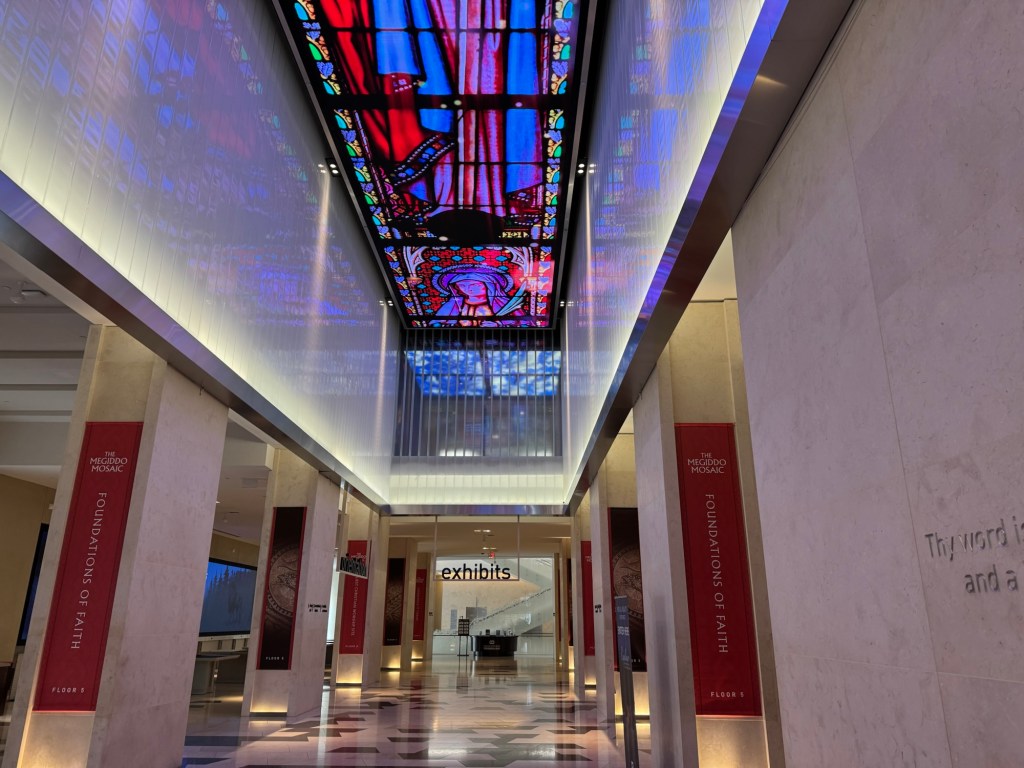
The Woke Museums of Washington D.C.: Why the Museum of the Bible is different

I’m sure I will visit the new museum that just opened in Cairo, Egypt, which cost over a spectacular $ 1 billion.  I love museums and have been to several around the world.  They are to me like books that tell a story about a significant moment in history, and there are always interesting things to consider in the context of a museum that assembles information to put forth a point of view.  I’m sure the new one in Egypt will be fantastic.  However, in that context, the Museum Center in Cincinnati, I think, is great as well, and it’s a place I like to visit frequently for many of the same reasons.  However, for me personally, the Museum of the Bible is a very special place in Washington, D.C., and one of my favorite destinations.  There are many great museums in Washington, D.C., including the Smithsonian and the National Geographic Museum, both of which are located there.  So when President Trump called out the various woke museums like the Smithsonian as targeted to change their ways as part of his reform of Washington D.C. culture, what is he talking about?  And I would point to the Museum of the Bible as the answer, as it was created by very passionate people, such as the ownership of Hobby Lobby and many others, who put forth a lot of effort to make the place really something special.  But why was it so much better than the other area museums for which Washington, D.C. is known?  Well, it all comes down to wokeness and how modern political spins on information provided tend to water down the experience for everyone.  And people don’t like it.  However, the Museum of the Bible is remarkably free of any woke influences, and this is noticeable upon entering and leaving, a place that has truly captured the spirit of what a museum should be and the impact a good one can have on visitors. 
The Museum of the Bible is just a few blocks away from Capitol Hill and the Mall, home to many well-known museums.  But on the way to it, when walking through the parking garage just to the west of the main entrance, a woman of color was in the elevator with my wife and me, and she noticed a particular glow of enthusiasm from us, and she asked about it.  “You guys are going to the Museum of the Bible,” she asked, smiling.  “Well, yes, we are as a matter of fact,” I said.  “How did you know?”  She was smiling, but she was a rough-looking, large woman with neck tattoos who looked like she had been living in an urban jungle for quite some time.  However, she said that the Museum of the Bible was her favorite place and that she was happy for us to experience it.  Now this wasn’t just a bunch of people happy about a museum dedicated to a religious experience.  The Museum of the Bible is dedicated to the most significant literary achievement ever produced on earth.  But it’s the way it’s presented that carries the most significance toward lasting appeal and makes it more than just another museum for most people.  I was very impressed with it.  It wasn’t trying to convince me of anything, as most museums saturated with wokeness do.  It was just proud of what it was, and it offered to let people share in that pride without pretension.  It enables you to enjoy it for all its glory without further explanation. 

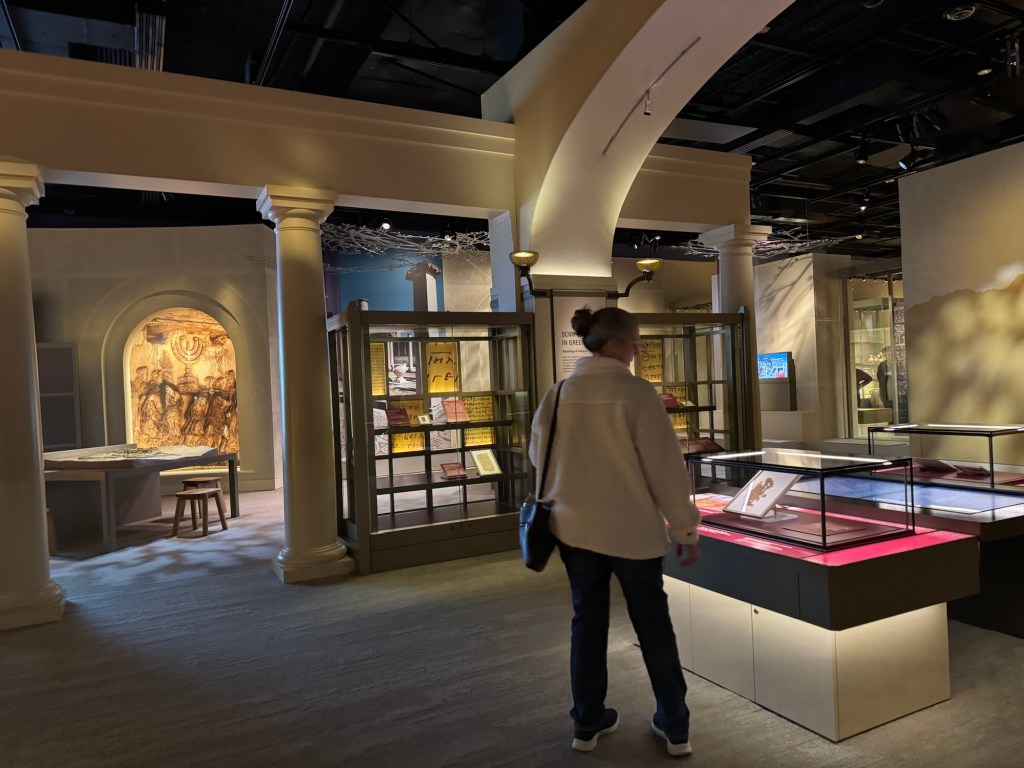
And that’s what makes The Museum of the Bible special: it lacks woke references.  It wasn’t about being close to God or unashamed of biblical references that the outside world might attempt to impose on free minds.  It was authentic and put together with a genuine love of the subject, and was just a bit more than the usual museum because of it.  The displays are good, but more than that, the architecture, down to the kind of paint used, was very well put together.  The people working there came across as genuinely loving the place; they weren’t just workers fulfilling mandates for a paycheck.  I also noticed that the museum in the basement of the Capitol Building had just been reopened, and it was really good, which surprised me coming out of a recent Biden administration where wokeness was a big issue.  It was a nice museum, and my wife and I spent a lot of time there watching votes from the House on the big screens in real time.  It was put together well by people obviously passionate about the subject matter.  So the common theme here is not religious, but passion.  And once propaganda of a modern political nature is infused into the subject, people have a natural revulsion to it.  That is one of the significant criticisms of the Smithsonian and National Geographic, which have been trying to present a Charles Darwin view of science, despite evidence pointing to many other contributing factors.  It’s the authenticity of the presentation that elevates sentiment to a higher status.  And woke presentations that are filled with modern political propaganda are something that people naturally reject.  Evidence is what museums put forth.  However, interpreting that evidence in a way that advances a political narrative, if the public is not naturally inclined to agree, is a sure way to push people away, which is what has recently happened to Cracker Barrel and many other trusted commercial endeavors that have tried to embrace woke trends.  The public naturally rejects them.

The Smithsonian and National Geographic are both dedicated to science, which I love to see.  But they are terribly woke and progressive.  And the Smithsonian has been accused of censoring evidence, such as the massive amount of evidence that giant skeletons in the mounds of North America indicate a society that predates what many call Native Americans.  The real native Americans go back much further than the Indians of modern politics, and people can smell a phony that the Smithsonian is trying to steer evidence toward a political sentiment, and that is the case that America was built on stolen land from indigenous people.  And rather than let the evidence tell the story for itself, the museum tells you a fake story, and you are supposed to accept it.  And museums that push civil rights issues from a Democrat perspective, when it was Democrats who were slave owners and it was Republicans who stopped slavery, come across as phony because the material presented attempts to glaze over the facts that are culturally well known.  And that is why woke doesn’t work and why Trump is pushing woke behavior away from everything he can, especially woke museums like the Smithsonian.  America has a rich history, and museums should tell the story without the desire to steer the public in a direction that validates certain political views.  If there were giants on Earth in the form of very tall people, predating what we call “Indians,” then let’s discuss that and examine the evidence.  However, suppose we propose something that contradicts logic. In that case, the public will be uncomfortable and even resistant to enjoying it, which is the problem with ‘woke’ everywhere it is presented, in music, movies, restaurants, and even museums.  Wokeness as a propaganda tool was never going to work, and when we see things like The Museum of the Bible, which is wonderfully woke-free, we reward them with our time and attention.

Rich Hoffman

Click Here to Protect Yourself with Second Call Defense https://www.secondcalldefense.org/?affiliate=20707
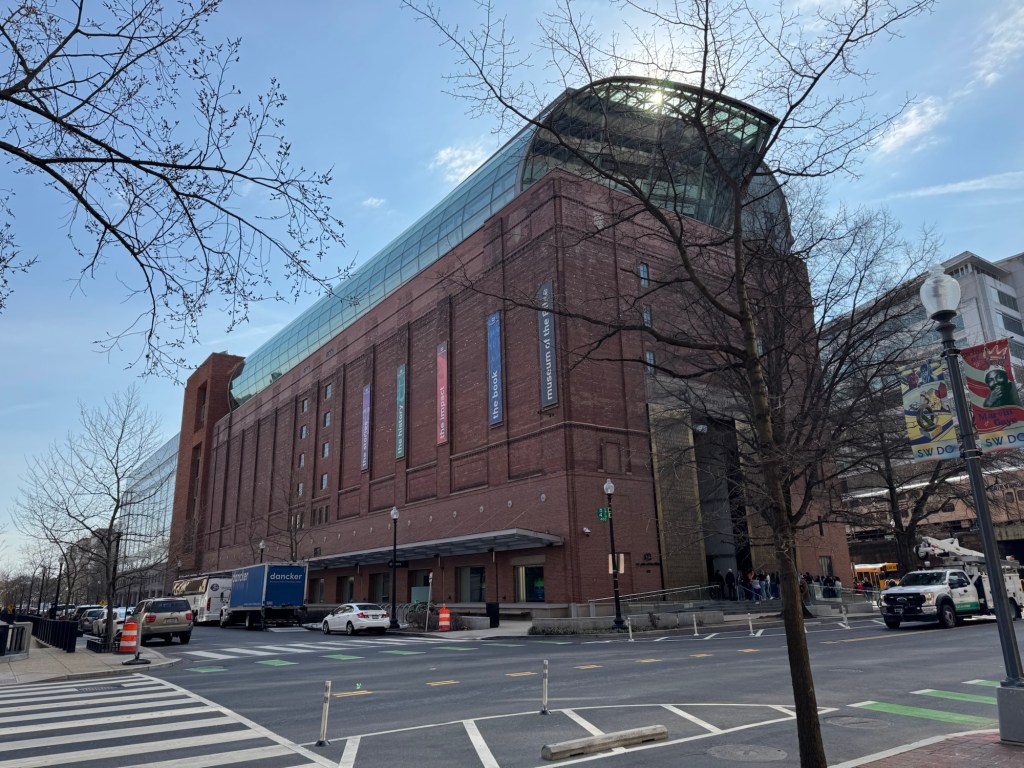
Why the Museum of the Bible: To understand good government you have to understand what “good” is

Why the Museum of the Bible?  Well, that’s a long story, but as I always say about good government, whether managing a family, a business, a community, or a country, you have to understand what good is.  And there has been no more extraordinary human achievement than the Bible emerging out of Western Civilization to define goodness as it applies to mass society and personal integrity.  I’ve read all the significant works of the world’s religions and studied them in some detail, and I am pretty confident in saying that the Bible and its history have achieved more along the lines of defining good government than any other work to emerge from human culture.  So, once Trump was elected back to office, my wife and I wanted to return to Washington, D.C., and give it another chance with fresh, knowledgeable eyes.  I have never been a no-government guy or an anarchist in any way.  I would say that I have always loved government.  But what I didn’t like were the people who were drawn to it.  And years ago, during the Clinton years, I took my family to a literary conference at the Smithsonian, where I was a big part of their presentation, and the trip was a disaster.  Everywhere we went, there was some horrendous evil that ruined the trip for my wife and kids.  So any interactions I have had with Washington, D.C. over the years had to be without her because she refused to give it a chance after the city let her down so badly in the past, which was unfortunate for me. After all, once I saw the Museum of the Bible open in 2017, during Trump’s first term, I really wanted to go and check it out.  But I did not have a cooperative spouse willing to go and see it. 

But once Trump won in 2024, before his speech was done acknowledging his election victory late on election night, my wife turned to me and said that we should celebrate by going back to Washington D.C.  That’s all I needed to hear, so I started planning and we decided to go once the weather broke in early March of 2025, so we could walk around in comfort.  Since that first Washington trip, we have been to some of the world’s biggest cities and seen plenty of evil in all of them.  But what hit home regarding Washington, D.C. was that it was our city and our government, and we couldn’t stand to see how corrupt it all was.  So it was a lot more personal; other cities were other people’s places.  But with Trump back in office, a key constitutional element had been fulfilled: we did have a Republic that could correct evil by merit of votes, and the system could work and did.  Looking at the city itself from a long perspective, we see that it had the mechanisms to do everything it was designed to do, and we had survived a significant challenge never yet achieved within the human race.  And that deserved a celebration.  So for me, that means something that involves lots of books and time to read about topics many people find boring.  But I get very excited about it, which is the foundation of all law and order.  Specifically, one of the Bible’s main themes is how government should be set up. In the Book of Judges, the Israelites were supposed to have self-government, but the judges kept letting everyone down, leaving the people to cry out for a king.  So God eventually gave them one, and they let everyone down too.  And God became so angry with them that he allowed their destruction by their enemies.  A lot like what had occurred in the American city of Washington D.C. 

The Founding Fathers, especially Washington himself, Ben Franklin, Thomas Jefferson, James Madison, a whole host of characters were trying to create in America a restoration of the Book of Judges, in my view based on the reportings of their voluminous studies, which I think is a very noble effort and one that does take many thousands of years to figure it out.  I felt that the election of Trump during this second term was the first real opportunity for that lofty idea to take hold.  And I think the Green family had a sense of this early in the last decade as Trump was still doing The Apprentice television show and thinking about running for President when they were looking for a place to put their idea for a museum dedicated to the Bible.  The place for it to be would be Washington D.C. along with all the other fantastic museums they have there.  But this one would be the most important because the Bible is the foundation of all Western civilization and the pursuit of good government.  The Bible is the foundation of all law and order, starting with the Ten Commandments.  Such a concept has been successful, and Washington, D.C. was the direct result of that long-established pursuit.  So, if you are thinking about such things, which I do very frequently, when there is a Museum of the Bible, I must see it.  So, upon our visit to America’s capital city, we made the Museum of the Bible our first stop for a long week, and we ended up spending two days there because there was so much to see.

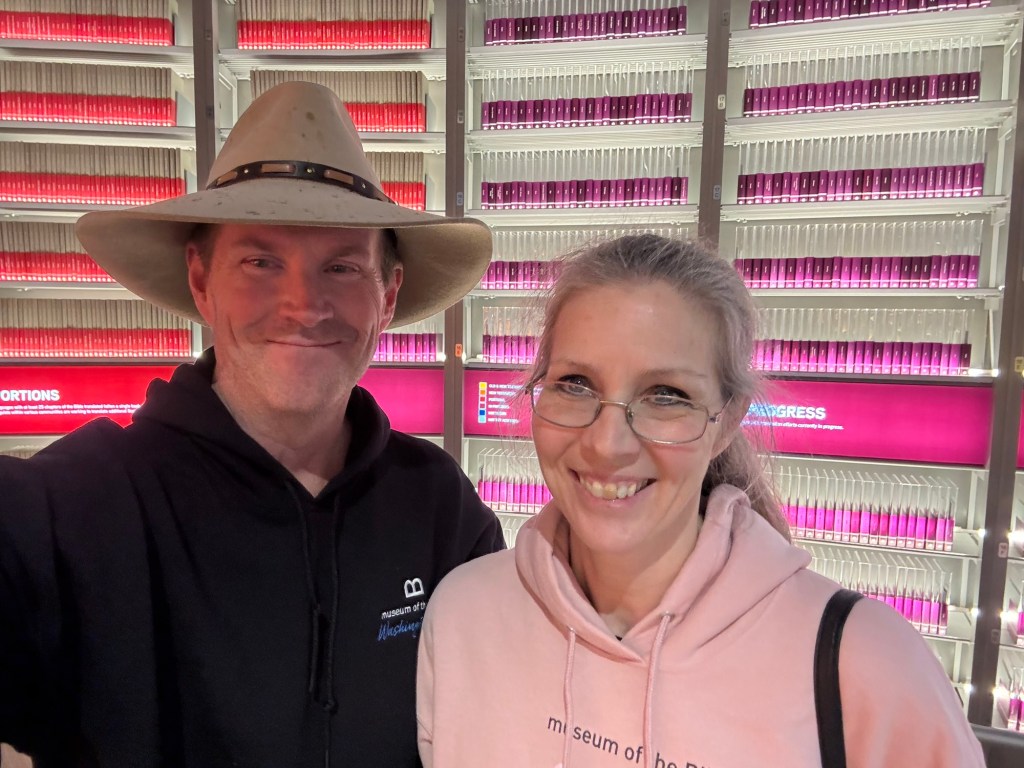
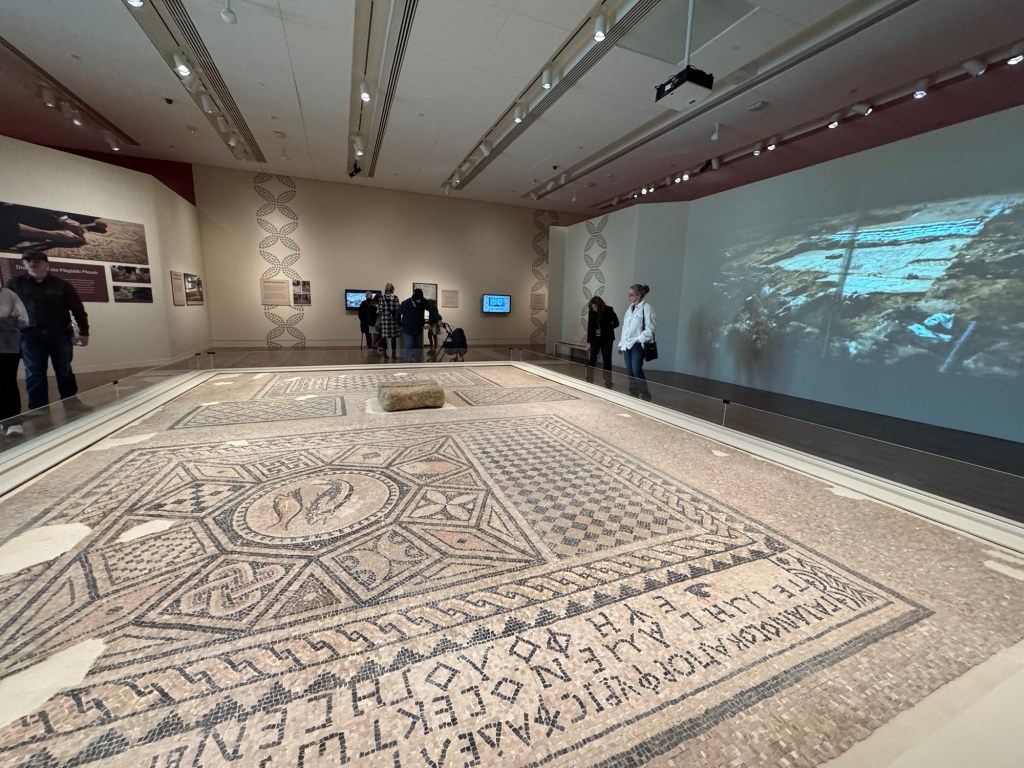
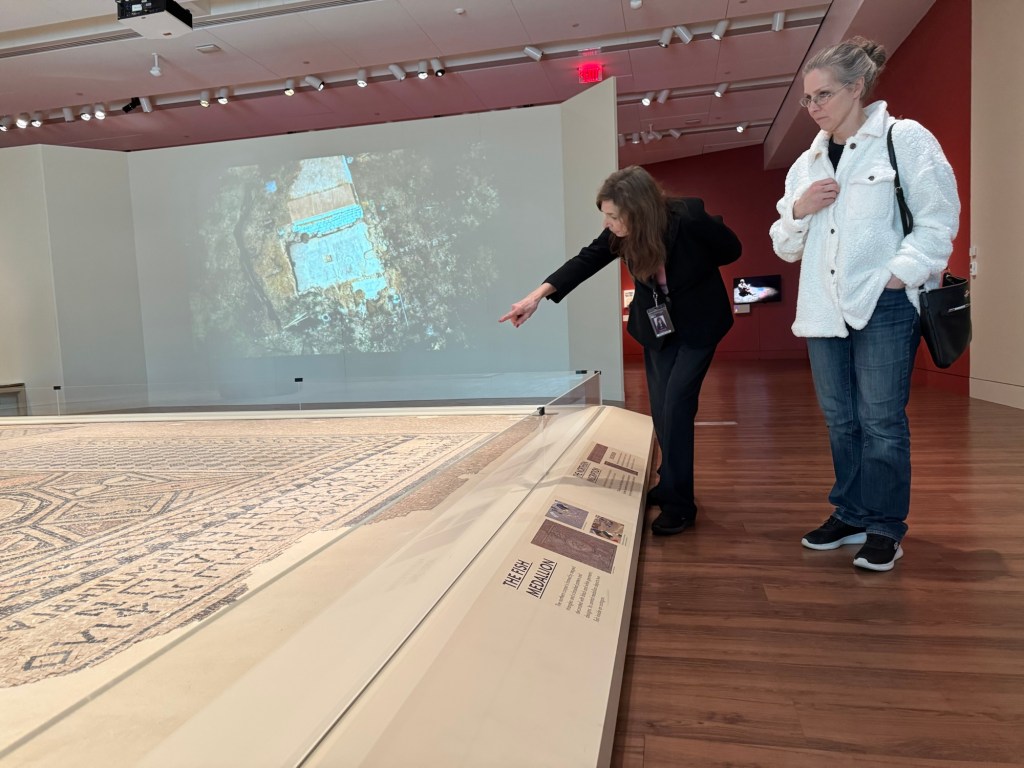
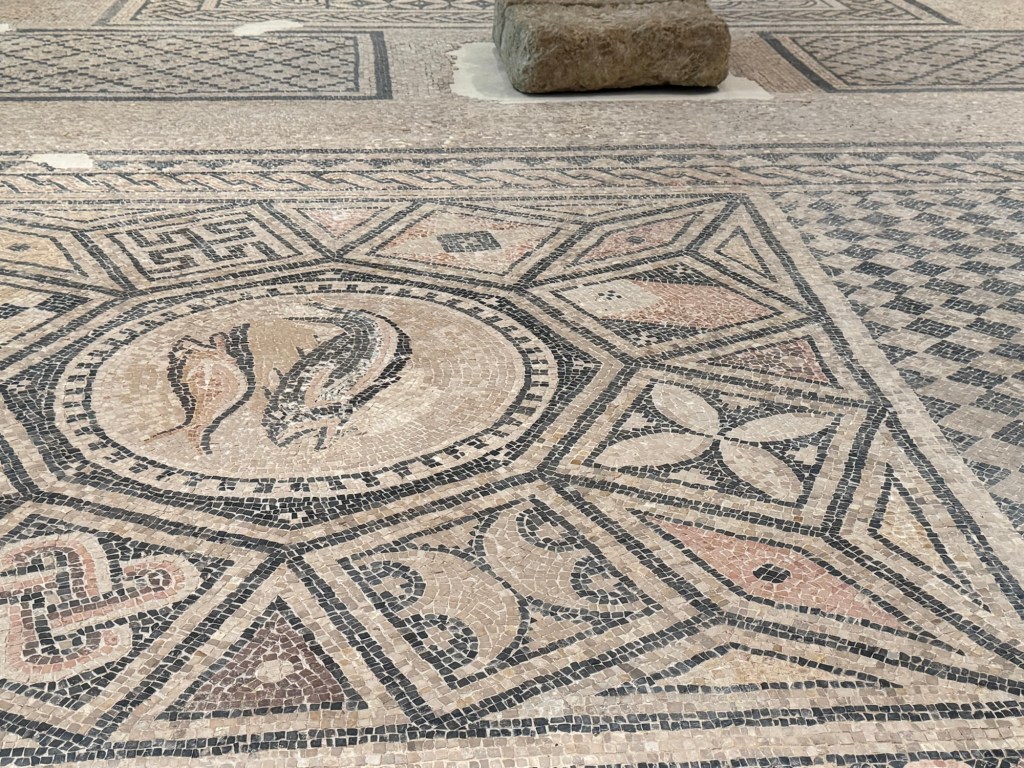
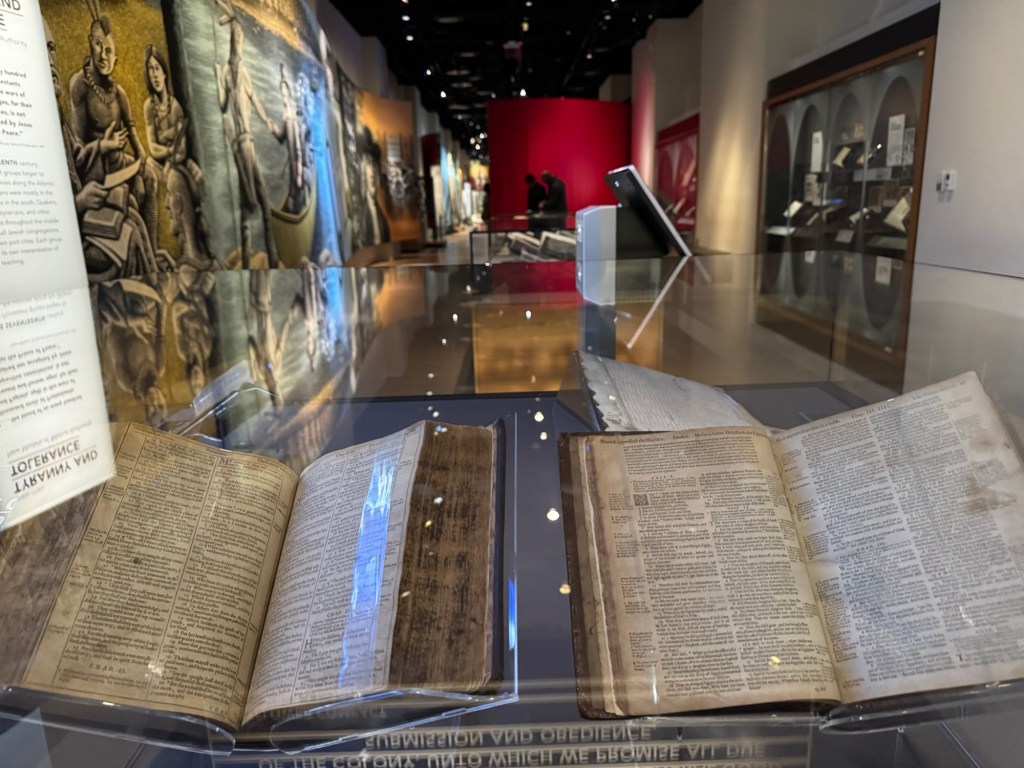
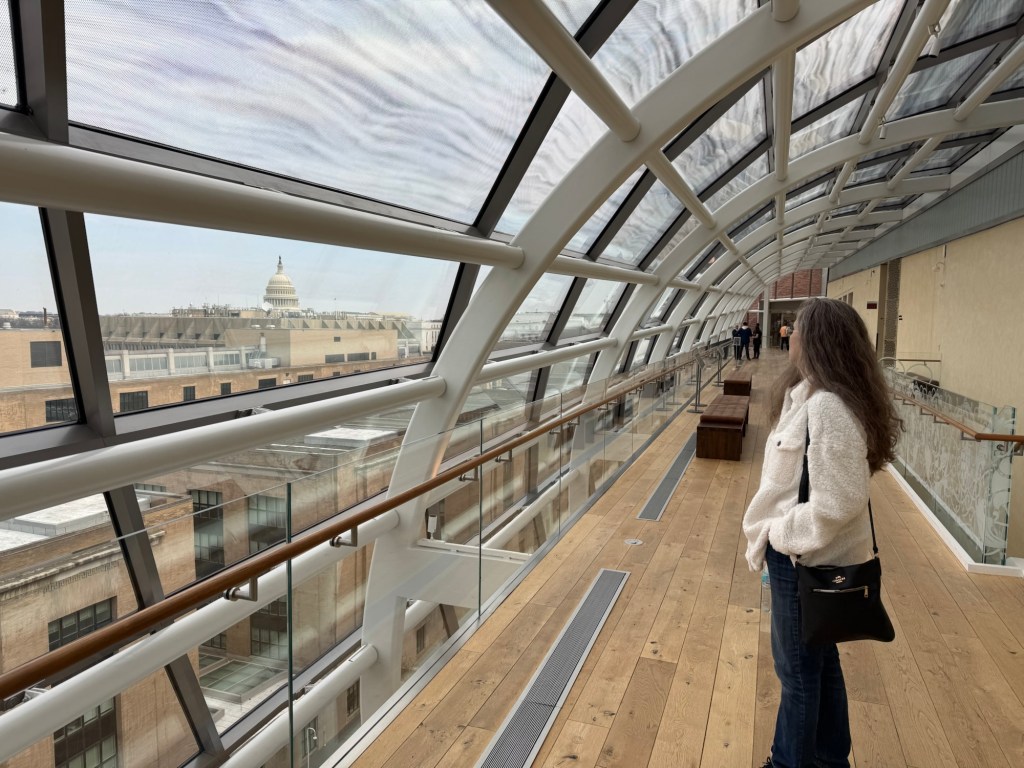
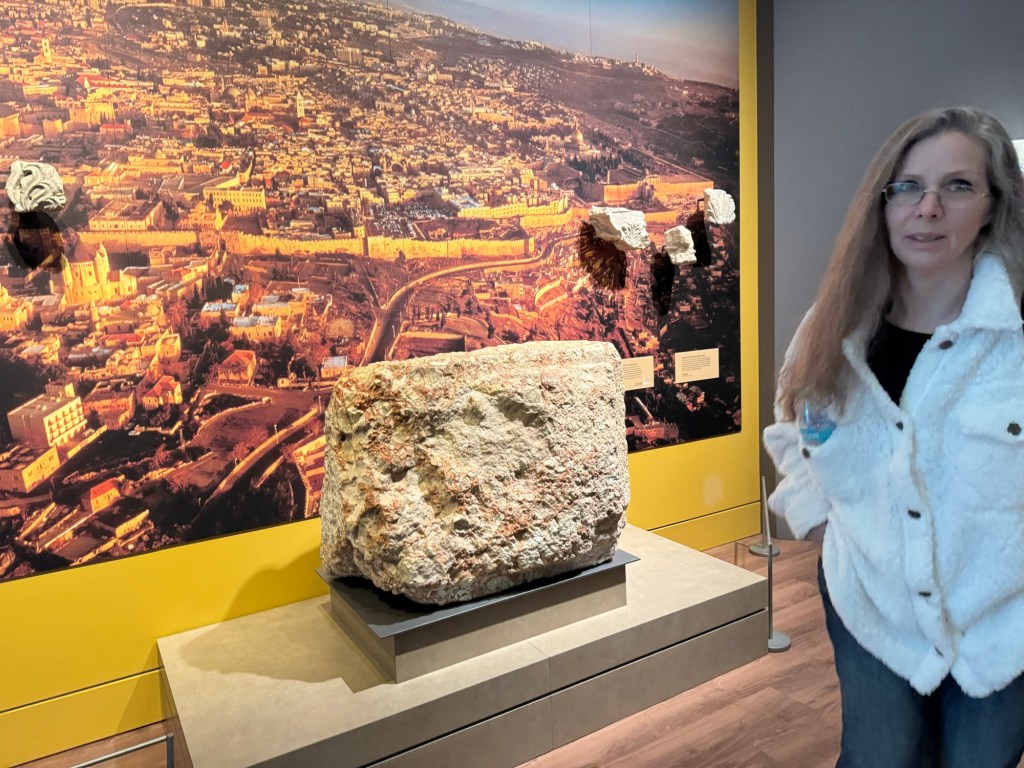
I’ve been to many museums, including some of the best in the world, such as the British Museum and the Louvre in Paris, and I consider the Museum of the Bible to be among the best there is.  It’s right around the corner from the Capitol building itself and was exceptionally well done.  The whole place was put together with much love and passion for the topic.  It was very scholarly and was the perfect way to start a trip to Washington D.C. because once you understand what our government is supposed to be doing, you can’t avoid the Bible in that discussion.  So, a museum dedicated to the history and value of the Bible in human culture is the first criterion for understanding the need for good government at any level.  I could write an entire book about the value of the Museum of the Bible, but to sum things up as concisely as possible, I knew it was a special place when I entered a traveling exhibit they had called the Mosaic of Megiddo which came straight from Israel and was a large floor found in an early Roman building acknowledging Christ as a god around 200 A.D, over 100 years before Constantine made Christianity the official religion of the Roman Empire.  To see something like that outside of Israel and so significant only established how vital the Museum of the Bible was in the scheme of things.  As I always say, my favorite thing in the world are my Biblical Archaeology Review magazines I have read since I was a little kid.  And going to the Museum of the Bible was like stepping into that quarterly magazine and living in that world three dimensionally.  It is an incredible place, and I don’t think it will be the last time I go there.  My wife and I are members and must find more reasons to return.  It is a fantastic place worth multiple visits, and a lot of time spent there each time.  It is undoubtedly one of the world’s best and most significant museums on a topic that is the foundation of all good government, and because of that, it is infinitely important to the human race. 

Rich Hoffman

Click Here to Protect Yourself with Second Call Defense https://www.secondcalldefense.org/?affiliate=20707