The Guts to be BOLD: The Option of School Choice

It was bitter cold as I gazed across the windswept snowy tundra of several suburban Mason yards to the towering mass of the Big One’s radio tower looming in the distance. The evening sun preparing to drop over the horizon at only 5 pm lit the tower in a majestic way. It made me wonder if Doc Thompson of 700 WLW would actually show up at the School Choice event culminating School Choice Week at the Liberty Bible Academy. He said he would, and announced the event over the station’s 50,000 watts, so my hopes were high.

“Is this a religious event?” My wife asked me as we stepped up to knock on the door to Jennifer Miller’s house. Jennifer is a former Mason School Board member and firebrand for School Choice. She was hosting a dinner for the “key” people in Southern Ohio behind education reform and she wanted me to personally meet Jeff Reed, who was the featured speaker at the event that started at 7 pm.

“Why, because it’s being held at a bible academy?” I knew what she was thinking. “No. But people firm in religion tend to be support choices in education, so that’s probably why the academy is donating the space for the event. “

Our conversation didn’t have time to advance as the small frame of Jennifer greeted us with an open door. Jennifer is a “small” woman, but she had a reputation for being very “LOUD” when she set her mind to a fight.

She led my wife and me to the dinner table and a reunion with Sharon Poe and her husband. Sharon led the anti-Mason Levy effort and worked closely with me while I did the same for Lakota. Sandra Tugrul was putting bread from the lasagna dinner on her husband Yil’s plate as she enthusiastically said hello to me. Sandy is a former Board of Education member for Lakota and is very active in education reform. She along with Jennifer had realized long ago that the system was irreparably broken, and School Choice was the best option on the horizon. The two of them were the architects of tonight’s event. As Jennifer took a seat placing a bowl of salad in the center of the table, Vicky Roarke, a former teacher helped her out from her seat at the head of the table.

My wife, Wendy sat down next to Doug, Jennifer’s husband, a man we had come to know already and I sat down directly across from Jeff Reed who was speaking so rapidly that he held the same piece of lasagna on his fork for exactly 7 minutes. “Good to meet you, I’ve heard a lot,” he said taking my hand. “Glad to see so many people around here taking an active position on this. It’s a great program. Jeb Bush has made great strides in Florida…….the teachers union tried everything they could to defeat him…..Indiana is moving in this direction…..and Ohio is further along than you might think……….” He went on like that until we reminded him to eat his food. His passion was evident!

“How many states are doing this,” I asked. I first heard about School Choice from Jennifer only a few months back as I was looking for options. My role in defeating the Lakota Levy with the NoLakotaLevy Group was noted, but I felt responsible to offer a solution to the district instead of just saying “No” to school levies.

Jeff gobbled up a few more bites of his food then said, “I’m glad you asked that! So far, Arizona, District of Columbia, Florida, Georgia, Illinois, Indiana, Iowa, Louisiana, Maine, Minnesota, Ohio, Oklahoma, Pennsylvania, Rhode Island, Utah, Vermont, and Wisconsin. Now they’re not what our goal is which 100% eligibility for every student in those states. Right now for instance, Ohio only has 3% eligibility, but it’s a start.”

My wife and I looked surprised at each other, and then I said to Jeff, “I’m surprised that I haven’t heard of this before.”

Jeff was still a young man with a well-groomed beard not yet 40, and fit looking. He smiled knowingly. “You probably wouldn’t. People are still attached to brick and mortar schools. And teachers unions have spent a lot of money to paint school vouchers in a bad way. For them, it’s protective business. School Choice brings competition to education, and that is something they don’t want.”

From that moment I liked Jeff Reed, he was speaking my language.

But Jeff wasn’t done. “Albert Shanker, who founded the teachers union, said it best regarding the union philosophy regarding education, ‘when school children start paying union dues, that’s when I’ll start representing the interests of schoolchildren.’ That is the behavior that we are all dealing with, and why they hate school vouchers.”

Jeff was reflecting an opinion that I had formulated during the Lakota Levy campaign which is modern education is basically being run like a flashy casino in Vegas. When you go to Vegas, or any casino for that matter, they use flashy lights, alcohol, sexy imagery, and exotic buffets to draw human beings like insects to a trap. The goal of the casino is to get you to spend money so the house makes money. They’re not in the business of giving away money, even though they sell their service that way. Brick and mortar schools use sports, local patriotism, luxurious accommodations, and convenience of transportation to get local residents “addicted” to their services. I’ve met many people who display addictive behavior toward alcohol, and gambling, and the look of a parent that has built their professional lives around their children’s schedule at school, and the promise of sports scholarships as a kind of “jackpot” is the same basic human frailty.

“So is School Choice just another name for school vouchers?” my wife asked.

Jeff took a few more bites and wanted to answer, but Jennifer did it for him. “No, not at all, school choice can be that of course, but the money comes from the state and goes directly to the parent for homeschooling, which has grown from 15,000 students in 1970 to over 1.5 million now, the money can go to virtual schools of online schooling, it can go to charter schools, or it can go to your public school. The key is that if the parent has options, it will force all schools to do like all businesses do and that’s be competitive, and that will bring responsibility to what education costs.”

Then Sandy chimed in, “and that’s how we can break up these monopolies that the unions have over public education. It’s just not fair to the students, and it’s really not fair to the parents to have to endure the outrageous costs of maintaining these monopolies.”

Sharon had been pretty quiet listening attentively, “the cost in Mason per pupil is now almost $10,000. And most of the cost of that is tied up in salaries and that’s what’s driving up the cost and forcing these levies.“

“Because they have monopoly statues that is protected by government.” I added.

Jeff finished chewing quickly so he could answer me, “exactly, do you know that schools in New Jersey are spending over $15,000 per student! And they aren’t getting any better results with those students than schools in say, Alabama, or Mississippi which are among the lowest per pupil.”

Sandy looked passionate, “That’s why Chris Christie is fighting the unions there so aggressively. I can say from experience that the unions put their own interests first and that’s what is driving up these school budgets so aggressively.”

Up till this point Vicky, the former teacher, at the head of the table had been quiet. “Back when I was a teacher, when a levy was passed, we saw money. That was the talk in the teacher’s lounge and that was our primary worry, it was about the pay day.”

I looked at her, “how did you end up with this group?”

She looked back at me with sincerity. “I want to help make it right.”

Jeff was all smiles, “may I say that I LOVE THIS GROUP. Man, I wish everyone had this much enthusiasm.”

I looked at my wife, then at Sharon, Jennifer, Sandy, then at Jeff. “We’re very serious about this. Something is going to be done and that seed is planted here in Southern Ohio. We’re here to fight and move forward.“

The conversation went on for another hour going into more detail over those same topics, much of it revealed in Jeff’s speech at the Academy which you can see below.

As 7 pm approached we left Jennifer’s house and headed over to the Liberty Bible Academy where Sharon, Vicky and Jennifer had to get everything set up. I had to find a good spot to set up the camera, whether or not to use a tripod, and figure out how to get good sound to my camera. I elected not to use a tripod because the room filled quickly with over 60 people and I wanted the freedom to move the camera around for different angles. This gave me some rough video moments, but the effort was worth it in the end.

At just before 7 pm I met Doc Thompson out in the lobby. I was glad to see him, a guy of his reputation and talent could have done half a million things on a cold Thursday night on the last of January. I recognized his tall, lanky form instantly and grabbed his hand to shake it.

“Hey, good to see you. “

“Is this the place? I just had dinner at Bravo’s right over there recently,” Doc’s voice boomed. His voice was magnificent, belonging on the radio which is theater of the mind.

“Yes, you’re at the right place. This is Sharon who was on with you yesterday, and this little woman here is Jennifer who was on with you on Monday, the day you had on Kyle Olson of School Choice.”

Doc took their hands and was genuinely happy to meet them. He stood what looked like well over 6’,3” and towered over Jennifer. After his greeting he returned to me. “So, is this it in here,” looking into the crowded room behind us.

“Yeah, I think we’re about to get started.”

“Yeah, yeah, OK.” His long legs took him to the front where Jeff Reed sat, who had been on his show the day before as well. Doc took Jeff’s hand and shook it sincerely. I noticed shaking hands and looking people in the eye was important to Doc, which is an admirable trait. He took a seat in the front so he could be engaged with the speakers. I found I respected Doc even more than I had before. He had just completed a 12 hour day working between 700 WLW in Cincinnati, and WRVA in Richmond Virginia. And here he was as promised looking at education options like the rest of us. He was far more than just another “radio shock jock.” He cared about the issues he covered on the radio.

People fluttered in and took their seats as Jeff took the podium and gave his speech.

Pete Beck was the next speaker. Pete was mayor of Mason from 2007 to 2009 where he became a member of the Ohio House representing the 67th house district of Warren County. Pete before that was a member of Mason City Council from 1995 to 2007.

Contact Pete here:
http://www.house.state.oh.us/index.php?option=com_displaymembers&task=detail&district=67

The next speaker was Bill Coley, whom I know because he represents me in Butler County. Bill did a good thing under the Strickland Administration. He managed to put Ohio on the doorstep to “true innovation” with digital technological learning. Under his plan, School Choice would be the ideal option to capitalize on the Ohio Revised Code that he’s already established, which is signed into law. In addition to being a Representative for the house 55th District he is an inaugural member with Governor Jeb Bush of the Digital Learning Council.

Here is the website Bill referred to.
http://www.oln.org/
Contact Bill here:
http://www.house.state.oh.us/index.php?option=com_displaymembers&task=detail&district=55

After the speakers there was a passionate Q & A session that went on for a couple of hours. The part that dealt with the Little Miami District I made into a section of its own, because the discussion was so constructive. But I put a good portion of that Q & A session here.

In this clip, Bill Coley is addressing State Senator Cates of District 4 who was in the back of the room sitting with my wife.

At the end, we all shook hands and went home. The event had the feeling of the “start” of something much larger. Doc spoke to Coley about putting him on his Richmond Radio show because this was the first Doc had heard about a digital learning bill that actually passed a state house anywhere and had a governor’s signature on it!

What I learned was this, that the money that the state would typically give the school district would go to the parent of the child instead, which sounds like a good idea. As far as who collects the property tax and where it goes is still something that will have to be debated in the state house. As discussed, the current method of collecting property tax was found unconstitutional. Currently the state of Ohio is spending about $4,100 on 13,000 students for a voucher program over 273 different schools. The program started in 2005 and began operation in 2006 and has increased steadily since then. That gives an idea how new the program is. The School Choice program would work much the same way. An amount of money determined by the state would go to the parent and depending on what school the parent wanted their child to go to, they’d cover the rest on their own. Either the parent would not pay the addition property tax and could afford to cover the difference in cost, or the property tax money would go into a savings account similar to the Flex accounts available in the insurance industry.

The reason School Choice as an option is important is the trend is for the cost of educating students in Ohio is hovering around $9,000 per student, communities all across the state must find a way to get those costs down, and only competition can do that.

About 6 months ago when my daughter went to the studio of WLW with me to photograph the experience for promotional reasons we had a long talk while driving there. She doesn’t live with me any longer, but we’ve always been really close, and father, daughter talks are hard to come by without spouses and other people always around. “Quality time” is something that is rare when kids grow up and move away. So we made my trip to The Big One studio a fun, father daughter day, which is why staring at that tower on the way to Jennifer’s house held so much reverence for me.

“Dad, don’t take this wrong,” as we pulled into the parking garage at The Death Star, where all the Clear Channel Stations are located. Scott Sloan was promoting my visit as we hit the garage and my daughter thought I was getting in over my head a bit. “You’re kind of a fist fight in the parking lot kind of guy. Why are you suddenly interested in school reform? I mean, you wear a cowboy hat, and you hate politics.”

I parked the car and we sat there a moment in silence. “Because it’s the right thing to do. I see that these unions are controlling the school districts and it’s bankrupting the community. I’ve worked around unions all my life. I’ve seen them destroy companies, and people making their minds lazy because through collective bargaining people forget how to fight for anything, even knowledge. I see kids your age looking blank and passionless, and I see senior citizens scared that property tax increases will push them out of their homes since they’re on a fixed income. I see parents addicted to the services schools provide with glee, that behaving like education is a right that must be provided to them, because their “drug pushers” have convinced them they’re entitled to a type of collectivism more at home in communist theory than in the guts of what America was built on, and it’s time to fight the drug pushers.”

My daughter made a face. “You’re not going to say that on the air are you, sounds a bit extreme?”

“No, I’ll calm down before I say anything stupid, but between you and me, the kind of extortion these people are doing is worse than what the mob bosses in Las Vegas have been guilty of doing. These people use the children of our community to gain for themselves a level of selfishness that is evil, because they’d be willing to hurt countless families to secure their own livelihoods. And it has to stop somewhere. So we’re going up to the Scott Sloan show and we’re going to tell 500,000 people what the real problem is. And we’ll let the people figure out for themselves what to do. I’m only going to make them aware of what’s really behind the curtain.

And that’s what we did, and that fight is just getting started.

Back when I was in school, there weren’t any alternatives, because technology was evolving. But the guy that made Star Wars was using a lot of the money he made off those films to change the way kids learn much to my admiration.

A lot of people don’t know it, but George Lucas has been out in front of this whole issue for over twenty years. He founded a company called Lucas Learning which would be an ideal program for Bill Coley’s new legislation in Ohio.

Check out the website here http://www.lucaslearning.com/

Lucas has always been committed to helping improve education. Education was his primary reason for producing the very good Young Indiana Jones Chronicles, which used a very popular character to teach his viewers a bit about history at the turn of the century.

George Lucas has done great things with his success and I learned to dare to think “outside” the education box by watching his work at Lucas Learning, and seeing the experiments he embarked on in popular forms of entertainment. I consider that Young Indy series to be a “pinnacle work.” Lucas’s method worked for me, and I used it on my own kids, and like I said, they spent their senior year’s touring Europe. If you want to do something great with your kids watch those films on DVD. They were released on DVD a few years ago and come with hundreds of hours of documentaries that were purchased by the History Channel. The work was for education to be taught in a fun way. The TV show was created as the computer industry was coming to its own, so it represents Lucas’s attempt to trying something different with the way kids learn.

But now that the computer is here to stay, education under the research started at places like Lucas Learning can greatly enhance our children’s lives. George is now involved in a company called Edutopia. Check it out:



When I finished my spot on WLW that day, my daughter and I went to the Kenwood Mall and had a Smoothie, just the two of us. She told me she was proud that I restrained my anger. She knew what I was talking about when I spoke about the thug mentality of teachers unions. She had spent thousands and thousands of hours watching movies that I showed her and her sister over the years, The Young Indiana Jones Chronicles being most prominent and memorable among them. My wife and I had homeschooled our kids for a bit, and both kids finished their high school years online. So as a family we have experience in this issue and know what works and what doesn’t. My kids watched me and decided to push themselves into a lifelong education, not just a goal based education to secure employment.

Throwing money at public education just to meet the status quo isn’t the right thing to do. It doesn’t have any merit to me if a school has an “excellent” rating or not. Because the rating system comes from the same people that push the confusing and expensive legislation which are incentivized to support the whole current system that is producing mediocre results. If that’s what society wants, that’s fine with me. But I’m not going to endorse spending over $10,000 per kid to have it.

If mediocre results are what everyone wants, then I want a 50% reduction in cost.

Or we can embrace a program like School Choice to use competition to change the system not only for ourselves, but for the betterment of our children. If you still want your kids to go to Lakota, Mason, Little Miami, or wherever, that’s fine. But if those schools don’t give you good customer service, you could leave. And the threat of that will keep their costs in line.

It’s up to you. I have let you into my little circle of friends here, and introduced you to good people that have been working on education reform for decades. All you have to do is support their work and let them know you want options.

Let your state representatives know you want changes and will have their back if they extend themselves to the teeth of teachers unions and other lobbyist that will attempt to make life difficult for them. Let them know that you’re there for them with an email, or a letter. But before you do any of that have the courage in yourself to be “BOLD.”

Victory goes to those “Bold” enough to demand action. And our kids deserve to have “bold” members of the communities they are growing up in to give them better than a mediocre existence.

Rich Hoffman
http://twitter.com/#!/overmanwarrior
www.overmanwarrior.com
Progressive Politics 100 Years Later: Report Card gets and “F” “Epic Fail”

I’ve been doing a lot of reading about the start of “progressivism” as it emerged in the early 1900’s. I was shocked to learn that the first “socialist” congressman was elected during the election of 1910, that gives you an idea of the kinds of discussions that were taking place during that time. I can understand to some point the hunger to bust up the monopolies that business had over the working population. I admire Teddy Roosevelt for sticking up to the court decision by Simeon E. Baldwin for the ruling of Hoxie v. the New Haven Railroad of 1909 which denied liberty of labor compensation for the loss of a leg of an employee in a collision of two trains. Such stories ushered on its back progressive ideas that sought to regulate “big business” abuse.

Now, after 100 years of asking questions, we know what went wrong, and why it went wrong, and the experiments of “fairness” have caused trouble on the radical opposite end of the political spectrum. And that trouble has literally bankrupted our nation.

Listen to Doc Thompson discuss the State of the Union the way President Obama should have done during his State of the Union Address on Tuesday January 25th, 2011.

Obama should not have said that the state of our nation was “good.” While I understand not wanting to scare people, saying such things is like a football coach telling his team at half time, when his team is down three touchdowns, “hey, you guys are playing good. Keep it up.” What the coach should say if he’s a good coach is, “hey, you guys are down three touchdowns. You still have a chance. Toughen up and win this game!” No, instead the President said America is strong, because he doesn’t want to admit to anybody that changes are coming.

But who can blame him. All politicians at all levels are doing the same kind of put-off game. They behave like children that didn’t study for a big test, and hope by some miracle even up to the moment they have to take the test that somehow they will just wing through it. City council members fail to level with the people on a regular basis. School Boards do the same leaning to preserve the structure of education monopolies instead of looking out for the residents of their communities, like they’re supposed to. Everywhere virtually everyone in elected positions is weak to make the announcements that need to be stated to the voters. Why, because the money is good. The benefits are too good, and the wrong kinds of people are attractive to public service. And the situation was exacerbated with “progressive” thought at the turn of the century over a hundred years ago. Politicians get into public service because of what they will get out of it, not out of a feeling of service. I’ve met a few politicians here and there that are the exception, but mostly the rule of corruption applies to the minds of the elected representative because the quality of their minds is weak to start with. The strong minds make their livings in the private sector. The weak seek the public.

How screwed up is it? Listen to this radio bit about the Death Tax. Here Doc has on an expert about the Death Tax as it applies to Ohio, but the examples could be applied nation wide.

We have a lot of problems dear reader. A lot! But they can all be solved as long as you are willing to do for yourself, and keep the government out of your life. They can help with the big issues, but the reason for the Constitution was to keep government at bay. The central argument in 1787 was between the Federalists and the Anti-Federalists and that argument created the Constitution that we have today, and it is the most unique document of its kind the world has ever seen. We should cherish it, because it worked! History proves it!

The hinge-pin of American society is self-reliance however, and people like Teddy Roosevelt knew that. The Progressive Party wasn’t supposed to become the monstrosity of naïveté that it currently is. It was supposed to free people to live good lives. But weak, power-hungry politicians quickly distorted the policies to create jobs for themselves by expanding government to an extraordinary size that it was never intended to become. And now government is collapsing on itself.

America will survive because the people that made up the country are still out there. But the government in the size it is now will not. It would be advisable that everyone unhook themselves from as many Federal shackles they can handle, and to do it rapidly. It will be less painful now than later when you won’t have a choice.

I spent a year reading the Federalist Papers, the Anti-Federalist Papers, and the work of John Locke. It was not easy, because it can be a dull read, and is sometimes repetitive. The volume of that work however is deeply innovative and provable, and far more philosophical and intellectually sound than anything produced in any nation in the history of the world. And if you want to see this nation succeed in the future, America will stick with the blueprint that works. The other social experiments that have been attempted need to stop, now.

Rich Hoffman
http://twitter.com/#!/overmanwarrior
www.overmanwarrior.com
Fly A SkyCar Today: The Future of Transportation

So how does America become a primary manufacturer again, where we are exporting something the rest of the world wants, instead of being a primary importer? It seems like a daunting task, after all, we’ve lost the car market to the East, the computer age was born here, but now is developing in the East, and we are no longer pushing the space race in America. In order to recapture the technological lead on the world stage, America would have to invent something dramatically, and radically new, that every person on the face of the planet would want.

Let me introduce the M400 Skycar. It’s a personal Skycar with a top speed of 350 MPH and has a range of 750 miles and a flight ceiling of 30,000 feet. It is the future. Now, there are a lot of videos here. This is one of the rare times that I’ll say the videos are more important than the text I provide. So take your time and watch the videos, all of them. And pass this link on to a friend so the word can get out. I believe this is extremely important to the United States in 2011 and on.

I’ve followed the work of Paul Moller for most of my life and am a tremendous fan of his. So much so, that I dedicated a large part of my book The Symposium of Justice to the M400 Skycar in hopes that the military would see the potential for applications, and get the ball rolling.

Paul Moller is the equivalent to the modern-day Henry Ford, or Bill Gates. His idea could be just as explosive if only politics would embrace the concept and accept that highways, manufacturing unions, and current aerospace manufacturers and their government contracts, are becoming obsolete. Can you imagine the changes that would have to take place in the airline industry? Can you imagine the airline industry lobby against the Skycar concept? Do you think GE would want this technology to emerge unless they had their feet already in the game, which they don’t? If the TSA employees join a union, can you imagine the protests trying to protect their jobs that would be leaving as people gained the independence of personal transport and wouldn’t need TSA Security any longer; all the vehicles would be controlled by GPS Systems? Nobody would be running into buildings with these things because they’d just be riding around like a passenger while computers do all the flying. Of the large aerospace companies, only Boeing has entertained the construction of Skycars so far, so the protective interests are actively in place.

I gave a Powerpoint, to John Boehner so he could possibly do something to help with the lobbyist politics that exist on K-Street and other places so the M400 Skycar could enter the marketplace. I also sent the same Powerpoint to the current President and to the head of General Motors, giving them the idea to “re-invent” themselves. They of course are committed to building electric cars, which will soon be irrelevant.

Does it work? Yes! Now that these tests are completed and on the record, even if Moller never gets this M400 into production, the steps have been taken, and a vertical takeoff personal vehicle will emerge for personal use. The sky is the future because it costs less to maintain and eliminates costly infrastructure need. There will always be need for highways for shipping reasons, but personal transportation of 50 miles or more needs to go to the air. That might seem like science fiction, but it’s currently science fact. All that fact needs is for public consciousness to catch up and accept the technology, and that will happen when people understand how they’ll benefit.

Here is the testing of stability in flight, hovering controls. Pretty important so the vehicle can land in a parking lot with reliability. This is one of the most difficult technical feats the vehicle had to overcome, and it has been successful.

So who is Paul Moller? Meet him here. He has testified before congress on this issue and has worked with NASA. This entire infrastructure is in place now. All it will take to bring it to a reality is for you to demand it. Paul will explain the whole concept, just listen, and enjoy.


I personally can’t wait to have one. For my life style, it will be perfect. I could be in New York within a morning, take care of my business, and be back that night for dinner without any difficulty. Same for Atlanta, Chicago and Washington D.C. since all those cities are within 500 miles from Cincinnati. In other places around the country, the trip from LA to Las Vegas would be minutes, and from San Fran to LA under an hour with most of the flight time being accent and descent. New Yorker’s could be out of the city and up into Connecticut, Vermont and Massachusetts within an hour. No traffic because the GPS system would stack all the destinations at different elevations. Weather conditions would be the only variable, but conditions would be favorable over 95% of the time. Only heavy wind and thunderstorms would prevent flight.

Image the trip from London to Paris, which currently takes a few hours by their high-speed rail system that goes under the English Channel from the time you buy your ticket, get on the train, and arrive at your destination. You could literally travel from the British Museum of Natural History and arrive at The Louver Museum in well under an hour including getting into the Skycar and exiting.

However, there is a lot of resistance to the Skycar out there, particularly from the existing infrastructure, and politics and I have a sincere concern that Paul Moller’s dream may be all too reminiscent of one of my personal hero’s, Preston Tucker. If you don’t know the story, Tucker was a GREAT car builder and was WAY ahead of his time. His car was so ahead of its time that the Big Three put pressure on the government to prosecute Tucker though Senator Ferguson, who was taking lobby money from the Big Three, before he could launch his car to the public. Listen to this clip from the film Tucker: A Man and His Dream as delivered by Jeff Bridges.


This is one of my favorite films. If you haven’t seen it you are missing a classic from Executive Producer George Lucas and Director Francis Ford Coppela.

I don’t want to see Paul Moller become a Preston Tucker. I see dramatic parallels between the two men. I think Moller is a lot more level-headed, and more classical engineering minded where Tucker was a salesman first and an engineer second, Moller has the great ability to stay out of trouble.

Eventually, the Big Three automakers would adapt to the innovations that Tucker introduced in 1948, by the 1970’s. If we were a smart society, we’d learn from history and listen to Paul Moller now, and not shove him into the corner to protect the status quo, and put off technology we need today. Because we may lose it to the East, or to a costly two or three decades only to have it emerge in the distant future anyway. It’s really up to the United States.

Tucker died shortly after his trial, which he was of course innocent, but the experience cost him market delivery of his vastly superior automobile. The Big Three grudgingly adopted many of Tucker’s features but not for another 20 years. The Big Three didn’t want to absorb the cost of competition, so they put him out of business. And that is the problem that Paul Moller will have to overcome. It’s not the technical obstacles that are the problem. It’s the political ones that hold back our country. Here is Tucker’s story.


You can have the world you want if you have the courage to put horse-sense ahead of politics. If that happens, then you could have a Skycar to drive and fly within a decade. You may have a job in the Skycar emerging field in the same time frame, and the United States could return to the world stage as a primary manufacturer of something the rest of the world wants, while China and Japan continue to make cars, which will decline in importance, and become a secondary market item similar in usefulness to a motorcycle or bicycle, and certainly high-speed rail which is next to useless compared to Skycar technology.

But I suspect that history will repeat itself and Paul Moller will go the way of Tucker obscurity, and our great nation the United States will too drift into the cloudy recesses of a foggy morning in history, which once lifted everyone, will wonder if the fog had ever been at all.

It’s up to you.

Rich Hoffman
http://twitter.com/#!/overmanwarrior
www.overmanwarrior.com

Think Big! Think Star Wars!

I’ve said more than once, that Star Wars is an excellent study in political science, and is much more sophisticated than just a simple childhood entertainment.

I am extremely pleased to learn that my nephew, who is 6, just received his first toy Millennium Falcon for Christmas.
It’s great for young people, but it’s good for adults too. When you have an imagination without limits, there are few playgrounds for the mind than what you can find in Star Wars. As far as my personal thoughts and philosophy, the clip of Mace Windu below, reflects most accurately my essential foundations.

The politics in Star Wars is sophisticated and worth watching just for the interesting problems that are addressed. But the combat is always entertaining and visually pleasing to look at.
Here is a scene from one of my favorite Star Wars games. This is EPIC!


This TV show is keeping Star Wars alive for a whole new generation. GREAT STUFF!

A lot of people are asking me to run for office. Others are asking me to join their company to help them get their finances in line. But to be honest, I am thinking of retiring when this game comes out. My wife and I are planning to play this together for thousands and thousands of hours!

Star Wars is a great escape when you need it. But its themes are more valuable than just escape, and to me, this scene is the greatest scene of any movie in the history of film.

While it may seem like a lot of information to follow, the topics I have covered on this site, it really is only complicated in relation to other adults that have allowed their minds to be clouded with routine, golf games, shopping and other unnecessary burdens. Star Wars is something my entire family enjoys together, and places our minds on subjects much larger than the silly grip of power that a local trustee or city council member pursues. And because I value the fictional world of Star Wars more than the communist musings of the modern world looking for just an “average” existence that ends in some eventless death, it is easy to see the error many of these small minded politicians pursue. I would rather spend a minute with a deep seated Star Wars nerd than a whole afternoon with a powerful politician, if that tells you anything. Because the Star Wars nerd is spending their time thinking big, where the politician is on the silly little aspects of human achievement that a developing species, in their infantile beginnings, is limited to.

Rich Hoffman
http://twitter.com/#!/overmanwarrior

www.overmanwarrior.com

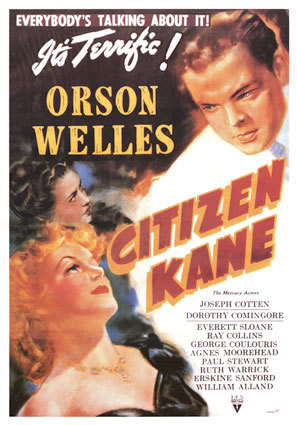
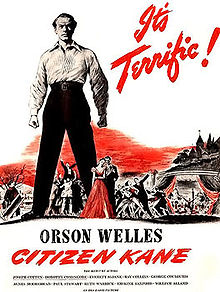
Citizen Kane…….A Lesson for the Future of our Children

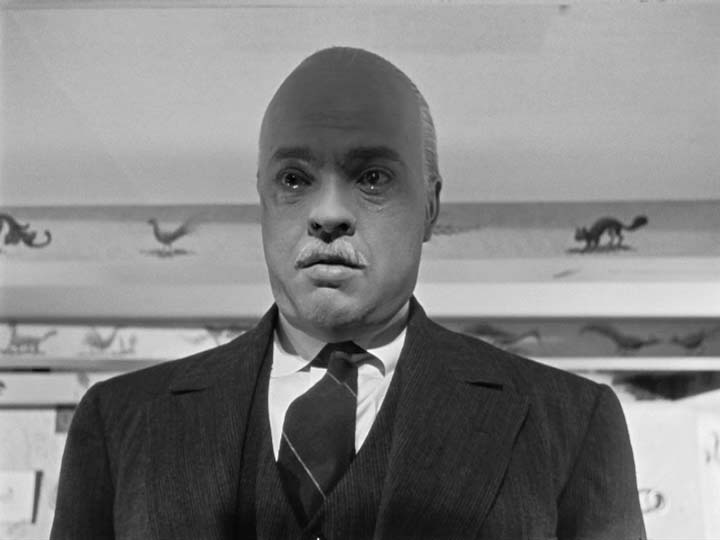
There are few films that are as good as Citizen Kane. Orson Wells produced, wrote, directed and starred in that wonderful masterpiece of cinema glory.

I recently watched the film again on a snowy December day. I had always loved the film, so it was refreshing to see it again after a decade or so since my last viewing. Wells did something special in Citizen Kane released in 1941, he managed to attack a concept that many Americans spend their entire lives pursuing, and that is wealth, and demonstrate that no matter how much wealth a person acquires, it will not buy them love, or any real power.

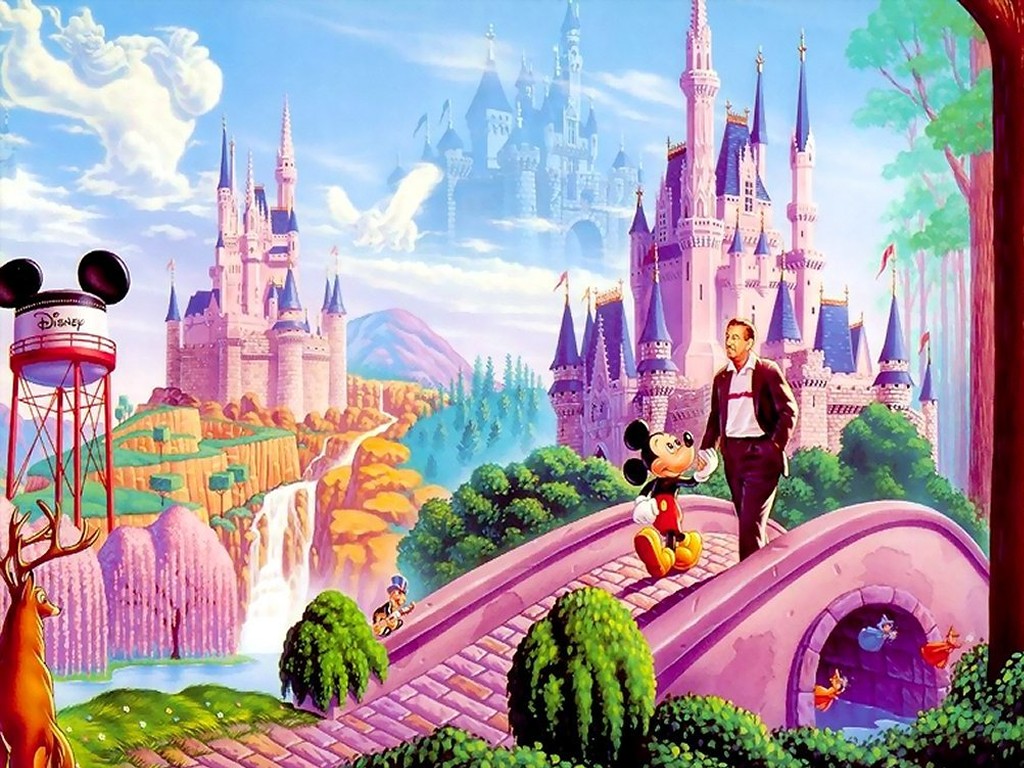
With the snow falling outside my window, and watching Kane die an old man in his giant mansion built in Florida called Xanadu, which looks to me to be an early vision for what Walt Disney would create 30 years later as the Magic Kingdom, I couldn’t help but feel sorry for Kane all over again.

Kane had amassed a tremendous amount of wealth by his 25th birthday from money he received in trust from his legal guardian who raised him after his mother and father essentially sold Kane away for money to a very wealthy businessman. Kane as a five-year old standing in the snow with his favorite snow sled was betrayed by his father, who apparently abused him, his mother, who wanted to protect him from his father, sent Kane to be raised by a self-centered power monger only concerned with profit.

Kane boldly slapped away all his wealth once free of his legal guardian and only wanted to run a newspaper so he could use the paper to fight corruption. Kane was a valiant figure of morality and virtue.

Over time Kane lost his way in the pursuit of love. He loved two women he managed to push away because deep inside, Kane himself had felt rejected and therefore didn’t truly love himself, and thus, could not offer any real love to the women in his life. This pretty much ruined Kane, because over time, he realized he was powerless to truly obtain the things he needed in life because he couldn’t love.

In the end, on his last breath he states simply, “ROSEBUD.”


Rosebud was the sled he had when his mother sold him away, and was his last true recollection of a chance for a real home with a family that loved him, which he’d spend the rest of his life trying to recapture.

What I suppose struck me about this film is the truth of it. Wells hits the nail on the head, and time has proven it. Many critics will argue to this day that Citizen Kane is the greatest motion picture ever made. So there is certainly some resonance to the story, something deep and primal that we can all relate with. Writers are only as good as their experience, and Wells was unique in the way that Disney, Lucas, and Spielberg have been. But not many others in spite of all the study of Citizen Kane in film classes across the country. I think Scorsese came close in the film The Aviator about Howard Hughes, but even the great Scorsese falls short of the surface simplicity, but underlying complexity of Wells. Filmmakers today are just too scatterbrained to make good films. They have elements of good films, but often fall terribly short of the intended result. MTV has changed all the rules, and these days nobody really knows what they are. Quentin Tarantino is the new bench mark for film makers because in Pulp Fiction he demonstrated the ability to tell a story out of order much like Citizen Kane was filmed, and this fed into the short attention spans of the modern MTV audience, conditioned to quick cuts, and non-liner story telling.

This led me to consider our current society. How many Citizen Kane’s are we producing as a society? Because back in 1941, Kane’s story was considered tragic, coming from a broken family like he was. Today it’s common place. Forget about the money. Many of the kids today won’t have a chance to even have Kane’s wealth to stumble through life with. Most of them will be so entrenched with student loans and other forms of debt that they’ll have all the problems of children missing essential guidance from their parents, compounded with excessive money trouble. No one will convince me that parents, who drop their kids off at a day care facility in the morning and pick them up in the afternoon, and barely speak to their kids once everyone gets home, are doing their jobs as parents. The damage to the children is extensive. Everyone just accepts these practices now, but they are really only a few decades old, where both parents are out of the house and kids are being raised primarily by institutions. Once kids get to grade school it’s basically the same routine. Parents are expecting teachers to do the job of parenting, which of course is not possible. Teachers try, but it’s not the same. Kids end up raising themselves for the most part, and now that online gaming, Facebook and Texting make instant communication possible; the parent is a much less significant role in the lives of their children.

I wondered on this snowy December Saturday what the world will be like when all these kids from today grow up and realize they don’t have everything they need from their parents, because in many cases their parents are on their second or third marriages and lived train wrecks of lives that no child would want to emulate.

I imagine the resentment will be epic.
If you’ve never seen Citizen Kane, you should watch it. It’s very insightful.

Rich Hoffman
http://twitter.com/#!/overmanwarrior
www.overmanwarrior.com
Individuality and Thinking Outside the Box.

I never planned to become so involved in education policies. By contrast, the things I’m interested in are so far away from structured education that they might as well be from another planet.

Fortunately, I understand why I feel this way. And I’ve covered it elsewhere in my other bodies of work. Google (institutional failure Rich Hoffman) and you’ll find much of what I have said about the dismal failure of thinking from within the conventions of a box.

My endeavors against the school levies are not an anti-education position for me. I’m not looking to destroy the schools, or to single handedly defeat communism, as some have said. But where my personal work and the work of standing up against the deceit of school systems looking to wrestle property tax money from residents in order to feed an institutional monster intersects with my personal interests and that is why I am involved. That is where the cowboy hats, and bullwhips come into the picture, because for me, those are symbols of individually and freedom. I think I’ll let Nicholas Cage explain it best for me. The following clip is from Wild at Heart, one of David Lynches greatest.

Individuality is what I’d consider to be the paramount trait of the human condition. Through individuality everything can be fixed. If everyone cared for themselves, there wouldn’t be a need for large institutions.

Progressives look at government as a job creation measure that assists the masses. I view the progressive kind of help to damage the individual gumption of mankind. And much of that progressive teaching is going directly to our youth through the school system. And that is where the schools cross over and interfere with my interests as an artist.

In my art, the promotion of bullwhips, cowboy hats, firearms, motorcycles, etc are all rooted in individuality, which I see being the elements lost in our American culture, and the key to the preservation of society. It is a long standing American tradition of one person making a difference. When a majority of Americans believe such things, they will therefore vote and participate in the republic. Films used to display such individuality, are embraced over a long span of time. Progressive themed films come and go and people quickly forget them. But films rooted in American tradition and individuality have staying power. In the following clip, Clint Eastwood takes over an entire town and punishes it for its corruption in the film High Plains Drifter.

Another American idea of one person taking on several others when grossly outnumbered, Clint Eastwood, Fistful of Dollars.

Star Wars was essentially a western set in space. One of the most popular characters in the entire Star Wars saga by most every survey was Han Solo. Another was Boba Fett, and Fett only has a couple of lines in the entire six film series. What both characters have in common are that they are both faithfully individualistic characters. This provides some insight into what the psychology of mankind if analyzed without filters will chose. In a classic scene from 1977, Han Solo kills a bounty hunter in a cantina. Notice Han shoots first and in cold blood. Solo is a survivor. He has a bounty hunter there to kill him, so why not shoot first.

However, later, and under pressure from his progressive friends, Lucas changed this scene 1997 to where the bounty hunter shot first, which turned out to be a joke among Star Wars fans that felt betrayed by the edit.

Here is one of the most humorous satires on the subject.

What this tells me is that people see through the thin vale of progressive thought. Movie goers do not like “team” players. Look at the James Bond franchise. In the modern era, Bond has been watered down as they have tried to make him more “human.”

But the James Bond that I grew up with was a survivor that always had a smart answer and enough wit to escape any situation.

Bond single handedly takes on some of the world’s most dangerous villains. He doesn’t work well with others and frequently thumbs his nose at his superiors. That is the key to Bond’s success.

Yet, in socialism, it is desired to remove such individualist traits. Here is the reality of socialism expressed well in the film Brazil.

Here is another scene from Brazil of an individual getting revenge on a symbol of the STATE.

In fact, Brazil should be seen by everyone. What are you waiting for? Go rent it now!

The fact is movies are boring when they involve flat characters that don’t have individual attributes that are defined and charismatic. The only way socialist principled films work is when shown in a negative light.

This clip from THX-1138, another GREAT FILM!

Here is a great speech by Jeff Bridges playing the wonderfully individualist Preston Tucker.

The point of all this is that collectivism does not work. It never has, and never will. And telling society to get into a box that it doesn’t want is wrong.

In my own work, I’ve dedicated my life to living, thinking, and teaching people to live outside the box. So I am not a fan of funding an education system that is teaching people to live inside a box. I’m fine with teaching reading, writing, arithmetic, college prep, and basic social skills. But the sex education, the counseling, the physical education crosses the lines, because all those types of social concerns have been reduced to a level of collectivism that paves the way to a much less individualistic society.

I already felt that public education leaned in a direction that went too far in that direction. But I put up with it because my community desires the services, so I go along with it for their sake. But, I see many, many aspects that are wrong with public education because the emphasis is not being applied to individualism. Only in sports does our society embrace individual traits fully, and that is a failure in social value.

I have spent a lot of my time figuring out what those values are, and have committed my life to preserving individualism. And I was doing this well before the Lakota Levy ever came to be.

Being involved in a political issue, I will tend to have a different approach because personally, I despise politics. The films I have displayed here provide some insight into my belief structure. The people I look up to are not the types that do what they’re told without question. I have no desire to become a politician, a board member, a congressman, even a governor or president. None of those jobs would be enjoyable for me.

As a concerned citizen, I’m fine to call things as I see them. But being a lover of individualism, I don’t require the approval of anyone else to act. I don’t need the approval of another to approve of my attire. And I don’t require any approval to weigh my comments in the context of history.

I am happy to share that lack of burden with others in order to free them of such shackles, because the answers are outside of the box. Not in it. But you have to enjoy the freedom of living shackle free.

So it is not of any offense to groups like unions, and political organizations that are wishing to maintain the status quo. I don’t pass judgment on your collective actions until you ask me for money, because at that point, you are involving me in your action. At that time, action on my part must be taken to eliminate the grip of your collectivism on my life style.

So criticize and belittle from your perspective the images of the traditional cowboy. But as evidence to what the true nature of mankind enjoys from the psychology of the darkened theater, I know that my position is supported by the infrastructure of individualism embraced by the masses from the vote of the movie ticket and film history.

The concepts taught by modern progressives are simply flimsy musings of sociological theory. And as for the direction of a one world identity, I would direct the world to the cowboy, not Al Gore or any like him.

And that is the platform I stand on. And that is my commitment for every endeavor I become a part of. There isn’t any class that can teach you to defend a position held within the institutional box-like thinking. The only kind of thinking I truly value is from outside the box.

Rich Hoffman

http://twitter.com/#!/overmanwarrior

www.overmanwarrior.com

Institutional Failure and the Healing Power of Key West

What follows is a history of institutionalism in the United States and its impact on the minds of the American people. It is long, so be ready to take your time. But if you stick with it, you might find it very rewarding.

So enjoy.

What do Walt Disney, John D. Rockefeller, Bill Gates, Henry Ford, Richard Branson, and Rachel Ray all have in common; none of those people have a college degree. It has always confounded me as to why and how the myth that an institution can give someone the needed components to be successful became such a universally accepted concept.

There is a lot of history on the subject of the progressive movement and its evolution from 1880 to the modern era, so there is no need to lay it all out in this work. The research is there for anyone that wants it. The important thing is to ask, why do some of the most powerful and successful people in the world push formal schooling aside. After all, if parents really wanted their kids to have a good life, why would they steer them in that direction spending tens of thousands of dollars on education per year when some of the most successful people in our history have either not gone to formal schooling, or had to drop out because the institution got in the way of their personal gumption.

The answer is remarkably foolish and I’m going to spell it out here. First we’ll deal with what the problem with college education is, then we’ll deal with the impact it has had on society.

College, and most of our education in general from grade school and up, is just forms of analytic thinking. This thinking is extremely useful for finding out where you’ve been, and it can tell you where you’re going if you can find a way to incorporate it with creative thinking, I’ll explain that in a minute. The successful people mentioned, and many others, realize that while the world outside the class room is going by, the college professors are insisting to freeze time while their class is being conducted to study processes.

In management, I have watched hundreds of college educated, well intentioned souls wrestle with a complicated problem for days, or weeks, only to have someone who works on the floor solve the problem in a matter of hours, which of course is quite insulting to the person with a degree. They are supposed to be smarter, and better equipped to deal with problems. After all, that’s what society told them would happen if they pursued a degree.

What they ended up with was a job, and a decent paying job relatively speaking. Enough money to make a decent living, buy a decent home, drive a decent car, and take a decent vacation. But deep inside most everyone is some silly little form of rot that knows they sold themselves short. They wonder how such uneducated specimens as the laborer could know how to reason anything out or have any ideas of value.

The best example I’ve ever heard of why the process of higher education, which is the parent to analytic thinking, comes from Zen and The Art of Motorcycle Maintenance by Robert Pirsig. In that fine book, Pirsig paints a picture of this analytic process by referencing a train moving down a long track. The track represents the quality of whatever you’re dealing with, whether it is business, or your personal life. At the front of the train is a locomotive of course, and behind it are box cars of cargo. Within each box car is the history of whatever is behind pulled by the train, he calls this Classic Knowledge. In business, it’s the sales records, inventory variances, staffing requirements, engineering development, etc. In your personal life; it’s much the same, mortgage values, asset management, and livelihood issues. Pirsig made the designation that at the front of the train is a thing called Romantic Knowledge. This is important because on the train tracks of life, seldom does the track just run infinitely off into the horizon, but rather there are many decisions that must be made along the way. And someone has to be at the front of the train to see those changes coming and make the decision to take a different course when those situations present themselves. Romantic Knowledge is what we see and how it relates to the track of life we’re on. The Classic approach is to analyze where the train is and where it’s been to figure out where to go. But in life, the train is always in motion so by strictly using the classic approach, the decisions are often not made in time.

I’ll take this explanation one step further. In my experience, people who swear by the classic approach are often the ones less certain of their course of action, because after all, they did not earn their knowledge, but gained it by assessing data collected. So they tend to rule from the back of the train, in the caboose. I know not many trains have a caboose anymore, but I like cabooses, so I’m going to use it here. Most of the meetings I’ve ever been in, at all levels take place in the caboose.

Why, because life is always a game of hot potato, and nobody wants to be holding the potato when the music stops. We all remember that game from grade school, right. You get the point. And the same holds true from even company presidents, and owners, accountants, engineers, sales people, everyone from the top down. It works this way in business and politics. Those people in the back of the train, drinking tea in luxury in the caboose, with their finger to the wind studying the contents of the train, but at the first sign of trouble, they can jump off the back, or perhaps even detach themselves from rest of the train by pulling the release lever if it is discovered that the train is headed over a cliff.

Meanwhile, at the front of the train is the romantic knowledge person, who is at the complete other end of the train. Those are the people that are most invested and the workhorses that drive the company because if they go over a cliff, they’ll be the first ones to fall. You’ll also find your visionary types up there, at the front with all the workhorses, scanning the countryside for pending trouble. They leave the analytic work to those in the back of the train to deal with the necessary hum drum of business compliance and government regulation, but to them, the real work is at the front.

It takes guts to be at the front of the train. You are essentially on a branch all by yourself, because the structure of every company is of course behind you, but they will abandon you at the first sign of trouble. And the romantic knows this, but stays in that position regardless.

Without realizing why I was doing a lot of things in my life, I ran across Pirsig’s book because it was noticed by many that since I ride motorcycles in the harsh cold of winter, and it is well known that I do many long distance trips by motorcycle, and that I was a different kind of thinker, that I would like the book. It had been out for many years after all. There were two things that came at me in discussions regarding my love of motorcycles. That I should watch the TV series by Ewan McGregor and Charlie Borman called Long Way Round, where they rode a motorcycle all the way around the world, and this book by Pirsig, Zen and the Art of Motorcycle Maintenance.

Knowing both items were about long distance motorcycle riding, I wanted to complete a trip to Key West that had been on my mind for a while, so I put them off until I had done that. My decision to make my big trip to Key West came at a time when the company I had been working for had an annual inventory, and was the best time for me to get away for a weeklong trip. And since I had been working in aerospace, there are typically a lot of details that must get covered in an inventory, where just a few weeks prior, we had our annual NADCAP audit, which really slows things down. So a vacation to Key West with my wife on the back of a 1500 cc Suzuki Boulevard was just the right experience.

In sharp contrast to my daily life of rigid rules and very tight production deadlines, life on Duval Street was the polar opposite. Reputedly loose, and known for its gay population, I found it easy to not notice too much of that. Instead, I found the lack of politics on that small island ideal for total relaxation. It was to me the way humans if left to their own devices would create everything, for good and bad. On that island, there wasn’t much discussion of social hierarchy. There wasn’t much desire for status. The goal seemed to be to watch the sunset at Mallory Square, buy drinks from a street vendor, and possibly get naked on the roof top bar of Adam and Eve.

That type of thing is a bit too calm for me, but it did give me insight into the truth of the human condition because as I looked around, I saw a lot of professionals that were there for similar reasons. I’m not a big fan of intoxication, and many of the visitors I saw were, what they shared with me on that visit was a desire to travel to the end of the earth and just get away from the mainland, but still be under the umbrella of the United States, which is a great thing. More on that later.

Anyway, what that has to do with Pirsig, and this whole idea of institutionalism is that I made a point to read that book after my trip there, and was happy to find I had similar thoughts as he did when he made a motorcycle trip with his son across the northern part of the country going from Minnesota to California. I was worried that if I had read the book before I made a big trip of my own, that my own thoughts might have been corrupted somewhat instead of enhanced by a shared experience.

Long trips like that on a motorcycle have a way of putting you in touch with things, and your observations are much keener, because they have to be. There is not protection from the elements. There are no air bags in case of a crash. It’s you, and the road a few inches below your feet rolling by at 70 mph. Rocks, bugs, rain, the rays of the sun, can have devastating effects to your body, and after traveling over 1500 miles one way to get to such a place as Key West on a motorcycle, you find yourself driving down Duval street with your wife in a bathing suit pressed to your back and knowing you traveled a road till it just dropped off into the ocean. And you feel the relief of social convention drop away with each island you travel through down US 1. And when you come to the sign that says “welcome to paradise,” you get the feeling you’ve arrived truly at one of the world’s great places.

For me, and apparently for thousands of others that go to Key West for fishing, snorkeling, or just to visit the drinking establishments on Duval Street, the island is devoid of institutions as much as is possible in organized society. And that is what makes it a paradise.

And it takes stepping away from something sometimes before you can clearly see it, and I had been on a 20 year crusade against institutions without really knowing why, just that I was at the front of the train in every position I had ever held, but I had no explanation as to why some things that came easy for me, were so confusing to others, especially those that insist that analytic data is the only data worth looking at.
I had been to college myself three different times. The first time was right after high school, I did the typical enroll in classes because society says that the best way to get a decent job. I took night classes in economics while I worked full time during the day. But, the professors to me seemed out of touch, and my conclusion was that they taught because they couldn’t practice it in reality. And I really couldn’t see how those classes were going to equate to a good job. I was working at a metal stamping plant at the time, and I identified with the people on the floor more than the people in the front office. On the floor was where the battles were taking place. Out on the shop floor was where people got injured, lost fingers and sometimes worse. The front office was a place I saw little value being done, and the people went home safely every night. That life seemed boring, so why would I want a job up there? So I could make an extra $20,000 a year as a white collar worker?

My wife and I had one car at the time, so I rode a bicycle 8 miles each way to work so she could have the car during the day. And it was a mild excuse for me to bring some adventure to each day with my exposure to the elements. The rides to work by bicycle, and the danger of life on the shop floor was more appealing to me than what the college promised, so I quite after the first year. The late nights staying up and boring classes just didn’t hold much appeal.

I returned to classes a few years later when management at that same company suggested I had the kind of leadership ability they were looking for, and I’d need school to advance. I signed up for the classes, waiting in the lines at the enrolment office at the University of Cincinnati’s Raymond Walters College, and went to the first day of classes. College level English, business math, economics, that kind of stuff. I could not see how this was going to help me, or my family, so after one night, I quit again.
The third time was after several jobs. I had felt the sting of being a floor worker and holding token leadership positions, and having contracts cancelled and job reductions result. I bounced around from several different companies always finding myself in a position of a leader, by default, but not really having job security. I had a couple of kids, and since my wife and I agreed to have her stay home to be available at all times to raise our children, I worked several odd jobs to make supplement income. Some of those odd jobs included grill cooks at McDonalds, and Wendy’s, I did various sales work, I did janitorial work, and I worked as a tree trimmer.

The tree trimming was dangerous work and I liked it most of the time. But it was hard to work all day at a normal punch the time clock type job and have the gumption to climb a tree at the end of the day and remove it piece by piece hanging from a rope. So I lobbied to switch to third shift at my machine rebuilding job at Cincinnati Milacron, which was a pretty good job at the time, and went back to school full time during the day so I could go for a white collar position either at Milacron, or someplace else.
In a couple of weeks of classes, I couldn’t help but see the blank looks on all the students, many were my age, some were coming back to school to get a better job, some were just kids out of high school, doing the college thing because they wanted a good job. But the overall atmosphere was one of decay, and stagnation. The professors had not changed, and why should I expect them to. And I had not changed in the direction needed to complete school. I still had too many questions for the authority in charge, and they could not give me the answers I needed.

Only books could do that, and I read extensively over the years. One powerful quote that came to me from some of Joseph Campbell’s works was that often the reason many stories involve a hero having to leave society in order to find a way to save it is because society is the one in trouble, so they are not equipped to give the hero what he needs. So the answers are often outside the establishment.
So I quite school for the third and last time. And I looked outside society to find answers to some of the problems within it. And that led to many adventures that we will discuss as the chapters progress. But for now, Key West, outside of society in a way, Pirsig’s thoughts on romantic knowledge, which certainly defines my approach and my own long motorcycle trips.

I have had great success in management positions over the years. It has been a routine for me to take over positions from other managers and quickly fix the problems they had been having. What I never did do was look at the fish bones and other charts from the previous managers. I created my own fresh perspective. This of course is not what’s taught. Teamwork and collaboration are the cornerstones of modern business, so says Bill Smith of Motorola and pioneer of its Six Sigma applications in 1986. He died of a heart attack in 1993 at work but not before seeing Motorola receive the Malcolm Baldrige National Quality Award. GE and Honeywell were two of the first to jump on the Six Sigma bandwagon and used it as a way to find savings they should have always seen, but for the fact that they are huge companies that had huge waste, undetected while they strolled the golf courses of America. Nothing against Mr. Smith, hindsight is 20/20, and he was only trying to get his bosses to listen to reason from pioneers such as Genichi Taguchi who helped Japan reclaim itself after World War II. As it’s turned out though, like many things, good intentions pave the way to hell. Of the 58 large companies that took Six Sigma as a method 91% have trailed the S&P 500 since making that decision. The invisible villain to Six Sigma is it stifles creativity, and ingenuity, and prohibits growth. It saves money by cutting logical waste, but puts everyone in the back of the train leaving nobody up front to make decisions. That is why it is an unmitigated failure to American society.

As you read this, look around at your peers in business and politics. Look at the course of life they are on, and see if they aren’t in for a similar fate as Bill Smith. Organizations such as Six Sigma have gone to great strides, unintentionally, to bring about our lack of competitive advantage currently. And they have worked their way into every aspect of society.

And colleges, like all institutions, have swelled in this later half century because they offer the same thing large companies like GE have bought in to with Six Sigma; a savings of money, and ease of effort, to maximize some proportional return on the investment. But what ends up happening, is a loss of future development while you may show slight profit on paper.

That’s why the answers were always along the road less traveled. While I was on my motorcycle trip in Key West I had to look around at the people packed into Sloppy Joes to listen to a half decent band play while drinking profusely. And I had for them a new understanding to explain their behavior. Escape.

Escape from the world and all its childish institutions. For me, it was a long standing answer to the question I had, why is drinking so prominent in our culture. Adults from 1947 to current that routinely drink alcohol hovers around 64%, and my question has always been why? What makes anyone want to consume a beverage that dehydrates your body, and can make you feel terrible the next day? It is a learned behavior and natural byproduct of going against our natures where we all feel is progressing along without our help or input. So the alcohol provides some needed numbness barrier against that sense of impending doom. And this is a steady and predictable reaction to the slow, eroding conditions institutions place upon our society. College age kids are learning this wherever they are going to school. Every campus has this culture as a natural counter to the mundane diatribe of the college professors.

And for working adults that have to either put up with some company line where the heads of companies force a Six Sigma program on their company whether it’s at the front office level, or the manufacturing floor, it impacts everyone within the organization. For every dollar gained from saved waste, there is always the loss of potential income gained through ingenuity. And everyone at some level feels it, even if they can’t articulate it. And those leaders in those companies typically are at the back of the train looking at powerful companies like GE and they see the report that GE saved 12 billion over a 5 year period and added 1 dollar to their market share, and they allow that information to steer their decision to commit to a program that basically goes against American ingenuity, which is something we have as Americans innate, because we all grew up in a free society. So powerless to stop the avalanche, we turn to the drink, or turn to religion, and many times both.

Six Sigma is not an American idea. It is a concept started in Japan, that Mr. Smith put some new names to, and added a few processes to in order to make a claim to invention. And I’m picking on Six Sigma because it is one of many institutions that are in place in modern business that is prohibitive to what America is naturally good at. And it’s so popular now, that it has name recognition even if the company you do work for isn’t using it.

I’ve personally had to sit through hours of classes in my positions studying this concept and feeling sorry for the instructors, and the owners of the companies I’ve worked for because they are just like fish that bit the hook of a fisherman, with a line in the water. In this case, the Japanese, have a book, actually a couple of books, one is called The Art of War, and the other is The Book of Five Rings which explains in great detail what they are doing to us, and both books will be talked about in further chapters. But in post World War II, we had just bombed their small island with nuclear bombs after a very bitter conflict, and we thought they were just going to go away and be our friends? No, they gave us Six Sigma, a slow poison of which they have immunity to.

The reason they are immune to the effects is because they are not like us. We’re all people with two arms, two legs, a head, hands and feet, and I certainly don’t mean they are inferior, or superior, only how they think is different than us. They are very good at group organizing and incorporating the analytic process. They will work around the clock and not ask for much in return. They live in much smaller living space than the average American, and will often stay with their parents even after they marry. They in many ways understand us more than we understand ourselves. And they knew they could out manufacture us, and what they’ve done as an international business strategy, was to get the world to follow them.

But we can’t be like them without fundamentally changing ourselves and they know that. And to properly do their Six Sigma program, you have to think like a person from the East.

Americans do not like to work together though. We’ll go to the grocery and pass two feet from someone, and not make eye contact with another person. We are one of the few places on earth where we grew up in space, and we like our elbow room. We do not feel compelled to acknowledge another person even if they bump into us. And while the world, that has been jealous of the space we have, points its finger and tells us we are wrong, and we should change, it is probably time that we put some sort of definition on what an American is.

An American isn’t a white homosapien, a Native American, an African-American, a Hispanic American, and Asian American or any of those titles. We are a people that love space, liberties around the clock, and we are a very individualistic group. And we’ve wasted a tremendous amount of time being defensive about that from Europe, and Asia where individualism is not near as important to them because it has not been an option in thousands of years of social development. And it’s time we focus on what we are good at and stop trying to copy everyone else. If you want evidence of this, look at the football played by the rest of the world, and look at the football we play. Our football is a uniquely American idea, and most of the star players are not decedents from Europe. But the concept is all American. The other things to study are who made the last blockbuster film from Tokyo, or Paris? How about London? They all make films, but the films produced are often reflective, by default, of the cultures that produce them. You want to know about a culture, study their art. And studying American art is easy, go to your local video store. Our films are the envy of the world because American culture has so much to say, because we actually think and naturally question authority.

So let’s get back to a guy like Walt Disney, who never went to college. He dropped out of high school at age 16 even, and never came close to entering college. Books by themselves could and have been written about Disney. But the short of it is this, who has been able to replace Disney as a media empire? What foreign company has come close to equally Walt Disney? Don’t you think they would if they could? George Lucas is the closest that comes to my mind, and he uses Disney’s model. And before you say Disney as a company has made more money since the theme parks opened in the 70’s than it did while he was alive, it was that they stayed true to his vision and did not stray. So they’ve kept the quality of his work intact.

After Walt Disney died, the animation division faltered and was not resurrected until the 90’s with when Jeffery Katzenberg took over the animation division. Most of Disney’s modern era animation films, which they are known for, came while Katzenberg was at Disney. Once he and Michael Eisner had a power struggle where Eisner failed to promote Katzenberg to president of the company, Eisner left to found DreamWorks with Steven Spielberg. And before you say that Pixar, a Disney company that still makes great animated films, which was started by George Lucas and bought by Disney, they didn’t develop that on their own.

However, not since Jeffery Katzenberg left Disney’s animation division has Disney been able to recapture the magic, and they are still waiting for that special guy to come and help them make great animated musicals again. The reasons I bring all this up is because consider the power the Disney Corporation has. Consider the reach they have. Think of all the top students at all the universities all across the country that wish to work for Disney. And they have vast resources to develop with, yet why is it so difficult to put out a film like The Little Mermaid again? Because people like Katzenberg, Walt Disney, George Lucas, and those types of people, cannot be duplicated in an institution. No matter how hard they try, no class anywhere can create people who produce at that high level.

If the intention were to teach students to be thinkers at a high level, it would be a different story, and one that I could see would be something of value. But the intention is only to produce some mediocre specimen in a social context. None of my experience at college or even grade school has shown me there is any quest in the student body to find the exceptional among us, except in sports.

There’s nothing wrong if you did go out and pursued a degree, and spent a great deal of money on it. But the degree will not make you the next Walt Disney or Henry Ford, just so long as everyone understands that.

While it’s true that things were different back in the early days of the industrial revolution, and very few people pursued a formal education then, the same rules apply in the modern era. Bill Gates dropped out of Harvard. He did find some friends there that helped him work out his thoughts, but what at Harvard was some professor going to do for someone as forward thinking as Gates? He set up a deal with Micro Instrumentation and Telemetry Systems(MITS), after reading a popular science article and told them he and his friends had been working on a BASIC interpreter for the platform. In truth, they had not, but they figured it out in time for a meeting with the MITS president a few weeks later. One thing led to another and pretty soon Gates and Paul Allen started Microsoft within a few months.

Steven Spielberg snuck onto the lot of Universal Studios and set up an office and pretended to be important and just sort of hung around as an unpaid intern. He applied three times to USC’s School of Theater but was turned down because of his C average. So he enrolled at California State University at Longbeach. But it was his sneaking onto the lot of Universal that got his career moving. 35 years later, Spielberg did get a degree at USC; I suppose to prove a point, that after he made some of the most successful movies of all time.

What colleges have done is firmly imbed themselves into politics. It is now an expected part of our culture. Parents begin saving for their children’s college before their kids even enter kindergarten. And it is an unfashionable taboo to question the institutional process even though much of the liberal oriented political viewpoints are imposed by professors upon the students at universities. Not necessarily a harmful thing directly, but does become a force to contend with at election time when millions of college age students go to vote. The institution then becomes a political weapon.

No matter what you’re political persuasion is, having an entire age group think in one political manner does not accurately reflect the values of the society at large. As it currently is, higher education is a powerful mechanism for the DNC, and for that type of vote buying power, they should be paying us for the influence they have over our kids. Not us paying them.

Not all students buy into the liberal positions of colleges, and of course not all professors are liberal hippies. But overwhelmingly, the young people between 18 and 22 are likely to believe in gun control, social reforms, and minority rights, as important voting issues in an election. And that makes the institution not just something that will get them a professional position at some company.

Woodrow Wilson went from being president of Princeton University, to governor of New Jersey, then soon after, President of the United States. He is responsible for the League of Nations which paved the way for the United Nations. And while he worked with England and France to divide up the post World War 1 Europe through the Treaty of Versailles. During this wonderful divide, the Middle East was created which led to most of the current troubles in the region today. Iraq was formed due to the Treaty. Germany was forced to pay the reparations of the war completely, which bankrupted them and gave Hitler a platform to rise, and a young Vietnamese bus boy at the Ritz in Paris called Ho Chi Minh begged for a chance to plead for Vietnam’s independence to Wilson, who was ignored because Vietnam was not near the issues of Europe. At that time, Ho Chi Minh was a nationalist, and a fan of the American Revolution. He wanted the same for his county, but when the League of Nations wouldn’t listen he turned to the communists in the Soviet Union which eventually led to the Vietnam War, more on that later. So with all the great intentions Wilson had in forming a massive League of Nations, that stood on the high ground of morality and international good will, he really screwed up. In historical context ninety years isn’t very long, but it exceeds our short memories as Americans. It is difficult to look that far back and see how decisions made then impact now. But they sure did. The Treaty of Versailles caused World War II, The Vietnam War, and the Gulf War, both of them. And that is the model of the current United Nations. With all the current activity going on at the old Palace of Nations in Geneva we can only guess at the many plots boiling there that will impact us twenty, thirty years down the road. But that’s just me talking from the front of the train. All you in the back enjoy the ride.

Wilson is a hero to the progressive movement, and the modern democrats as well as colleges across the country because he was in essence an intellectual, like them, so he is widely followed. But looking at the Treaty of Versailles, even though the intentions were good, turned out to be absolutely devastating to the American way of life.
Institutions whether you’re talking about a typical college, or something like Six Sigma are not American ideas. They are foreign ideas, and should be available under the umbrella of freedom. But of the founding fathers, which Jefferson graduated from the college of William and Mary, Madison from Princeton, and Adams from Harvard, George Washington did not go to any college, and he was the first president, and that says a lot about our character. It wasn’t just the bravery he exhibited, but there was a sense of logic to whatever Washington did. But he wasn’t the only found father that did not attend college. Ben Franklin was never schooled beyond age 10. Come to think of it, Abraham Lincoln never attended a university. He passed the bar exam by reading books on his own, sometimes walking over 12 miles to borrow a book as a kid.
Here’s the bottom line. Using a European model for colleges, and an Asian model for programs like Six Sigma, institutions have within a 200 year span of time, and most rapidly since the industrial revolution, taken over much of what we do and how we do it in America. And it has been a slow poison that has robbed us of our vigor. In our freedom from the shackles the rest of the world has been burdened with whether it is feudal families of Asia, or kingdoms of Europe, we developed truly original ideas that has greatly improved the livelihood of most of earth. And we have been raised with massive corn fields, and farms, and shopping malls, and free press for all of our adult lives. But to us all, the institutions feel wrong, and we know it on an innate level, but feel powerless to question the process because we all need jobs to fuel our personal economies. So when our business leaders, lazily copy off each other, because that’s human nature, and listen without thought to Jack Welch spew on about Six Sigma and how much money they saved, a careful investigator would ask, Jack, why did you need the Japanese to tell you how to create a product with little waste and deliver it on time to a customer? What he really meant to say, but couldn’t is that GE is a huge union company and he needed some program like Six Sigma that is too complicated for union stewards to understand, to sell the idea of actually applying common sense to everyday business practices. But what he did, like the blundering escapade of the Treaty of Versailles is creating more institutional limits to the American Imagination, good intentions gone badly.

So powerless to take in the whole picture, we watch our football games and drink our beer. We talk about going out at night and getting hammered and root for the players on a football field where the rules are simple. Get a first down, score a touchdown.
And that is the real cost of this institutionalized society we’re currently in. At a personal level, we feel it, but in most cases we’re willing to trade a decent wage for some loss of personal input. But on a national level, we’re allowing influences from the outside to define our national identity. When the reality is that no place else in the world has the ingenuity that has come from the United States been shown, why would we be so willing to listen to inferior strategies?

Being a great leader, manager, politician, or even an artist requires vision, and that is something institutions cannot give you. They can help you set goals, and figure out how to get the analytic data. But they cannot give you the vision to see what is coming. Only those that are willing, and bold enough to put themselves out on the cutting edge, and not hide in the safety of the masses, will have the ability to make their vision a reality.

Rich Hoffman

http://twitter.com/#!/overmanwarrior

www.overmanwarrior.com
Star Wars and Political Science

Star Wars and Political Science

I have to report something that many, many people will find excessively disturbing. Now, in the context of what I’m about to say, keep in mind that I am well read, and have studied history about as extensively as a non-professional can without becoming professional.

Of my favorite books that I’ve read is the wonderful series by Joseph Campbell, The Masks of God four book series. I’m a tremendous fan of Friedrich Nietzsche, particularly Thus Spoke Zarathustra. I just completed A Patriots History of the United States. I love the book the Mothman Prophecies by John Keel, and all his further reporting of the strange and unusual. And I have read many of the popular modern news anchor books, such as Glenn Beck, Bill O’Rielly, and many of the others. I particularly enjoyed Arianna Huffington’s Pigs at the Trough. The point of this qualifying statement is that my reading range is varied and not party influenced. And it is extensive enough to make proclamations.

And the proclamation that I’m going to make is that the work in Star Wars, not just the films, but the books, is some of the best work of political science done in the history of mankind. And I say that as I pour over The Federalist Papers, and The Anti-Federalist Papers, and The Second Treatise of Government by John Locke 1667. In the Star Wars books, starting with the New Jedi Order series which started in 1999 and went on for 19 books, all the way up through Fate of the Jedi, the content while typically Star Wars is quite deep and universal in their exploration of political and human deficiencies.

How popular is it? Look at this tribute to John Williams, whom I think is the greatest musician there ever was, not just because he did the music for Star Wars, but most of the memorable, and inspirational music ever created. He will surpass Beethoven, Mozart and all others in the context of history.

Anyone not familiar with Star Wars, or who haven’t taken the time to work through the story line, let me bring you up to speed. The Jedi Knights are protectors of the Republic Government throughout a galaxy. The Jedi became complacent by their unchecked power. So a Sith Lord, an opposite of a Jedi in political motives, infiltrated the government, manipulated his way to become Emperor, and ruled the galaxy with an iron fist. The Emperor works with the Force, an unseen god-like presence that embodies all matter, much the way Jedi do, but otherwise is very similar to the motivations of Adolf Hitler, Joseph Stalin, or Alexander the Great in real historical concept. The Jedi are all but destroyed and are forced into hiding.

To give you an idea how popular Star Wars still is, here is Harrison Ford at the 30th Anniversary of The Empire Strikes Back. (THE 30TH ANNIVERSERY! Most people don’t know who the president was 30 years ago, but they still know Star Wars)

Eventually the Jedi led by Luke Skywalker overtake the Emperor. They replace the government with the New Republic, and the problems commence. What kind of government do they replace the Emperor with, as many power hungry factions emerge to fill the power void, and what role do the Jedi play in that government? For the next 30 to 40 years the Jedi watch many governments rise and fall, while they try to build their role of protector of the galaxy back to a respectable position, all the while fighting political squabbles, the re-emergence of the Sith, the Jedi’s own insecurities in becoming too power hungry themselves, and the role of spiritualism in the whole enterprise.

This video from the Celebration V in Orlando Florida, August 2010.

The ongoing struggle of the Jedi v. government, and the Jedi v. Sith, and the Jedi v. self is a marvelous and highly sophisticated exploration of political science done against a science fiction back drop. It is because Star Wars is more than just pure entertainment, but at a deep subconscious level, food for the mind, that it has become such a memorable story that is so endured by the public to this day.

More from Celebration V.

And here is a word of warning to the entire political structure as it now exists. The world has moved to a place you cannot follow. With Star Wars, many similar science fiction stories have emerged. And now with the emergences of on-line gaming, whether it be Halo, or Gears of War, Modern Warfare, or Madden Football through Xbox, or Play Station or more advanced games like World of War Craft, and Star Wars on the PC game front, the youth, and in many cases the middle agers playing them, are starting to see through the smoke screens employed by politics for all of human history. Such tactics have worked in the past, and up to the last thirty years, were very effective. Even though the last 15 years seem to have made tremendous gains turning the republic of the United States into a socialist country with a European blueprint, this is an illusion. It’s the tail behind the head of the snake. The head is already moving in a different direction.

Here’s George Lucas talking about the Smithsonian exhibit in Washington D.C.

Sure, many will look at current personalities like Glenn Beck and call him seditious. But they are only looking at the symptom. Glenn Beck has emerged to fill a market need. He is not the market itself but has only emerged to supply to that market, and that is where many of the fools that cast blame in his direction go wrong. Beck is a product of the same generation I am, and we grew up asking questions, and all one has to do is read history to see that fiction has its roots in reality.

George Lucas on the Clone Wars, animated TV series on Cartoon Network.

And Star Wars has done much to ask the questions that a technological society like the one we currently have, needed to ask. And those questions are much bigger than Fannie and Freddy, or the government take-over of GM. They are bigger than government bail-outs, and Union deals with government officials.
One of the most sophisticated video games I’ve ever played in my life was the first Knights of the Old Republic. It is a Star Wars game, but I’d just as soon call it a training game for becoming a Jedi Knight. In that game you do everything from fighting Sith and other criminals that seek to harm the innocent, to helping solve crimes in complicated scenarios that most lawyers would find difficult. The goal of the Jedi is to see beyond the obvious, to the truth, and to fight for that truth. Because many criminal elements have hidden their crimes behind legitimacy, such as how our current government works. And that has worked for a long time, but it is changing as people think about the concepts discussed in Star Wars and other popular fiction.

Even though the game is several years old now, it still looks exciting.

Call them nerds, those people that sit and play games and read comic books and ramble on about The Force. Make fun of them because they don’t know much about sports and don’t play golf. But the world is changing. And politicians don’t understand it. They think the same old tricks will work, so they ignore and ridicule what they don’t understand.

Here is a big Star Wars Fan. Give him credit. At least he knows what makes him happy.

But even 50 years ago, there wasn’t anything like Star Wars out there for the public to digest. There was Plato’s Republic. There was Shakespeare. There was Tom Sawyer, Huck Finn, there was Uncle Tom’s Cabin, all books that helped shape political policy even to this day. But Star Wars puts out a significant book at least twice a year for a couple of decades now, and each book goes deeper and deeper down the rabbit hole of personal relationships and spirituality, against the conflict and impulse of politics. And that is a new element to the tapestry of human history, one that will have a significant impact on the future of our race.

I’m proud of my wife for reading over 57 Star Wars books. But this guy is doing a pretty good job.

Anyone that says entertainment can’t also be meaningful is not paying attention. Below is the preview of The Force Unleashed, another Star Wars game that I will be playing.

So while I explore my own ideas in the overmanwarrior concept, the work in Star Wars is where everything starts. And it is one of the most important stories that have ever been told. And the Star Wars stories are more important than anything the current president has to say, or the speaker of the house, or anyone that currently thinks they are the authority to the human race.

Rich Hoffman

www.overmwarrior.com

What is an Overmanwarrior and the Train Metaphor?

Sometimes, when a question is asked, the answer can involve many complicated interconnected themes. Such an answer may involve digging deep. So here it goes:

The term overmanwarrior has certainly created interest of many who hear it? The overman is a concept used in my novel, The Symposium of Justice, where a young woman describes her admiration for a freedom fighter roaming the streets at night in her neighborhood. Being a fan of Friedrich Nietzsche, she learned about the concept of an overman in school by that philosopher which best described her feelings for the controversial vigilante doing the work of a warrior fighting for justice when all others have seemed to have fallen to corruption.

A warrior does not always constitute a person that takes up arms against another human being. Some wars don’t even involve weapons or direct conflict. They are wars of ideas, and such a war is where America currently finds itself. There are hundreds of groups dedicated to the purpose of advancing or repealing current government positions. But, groups are never the answer, because groups are always subject to corruption.

The initial problem with human culture is that although at a core somewhere deep in our unconsciousness, we crave independence; our conscious behavior is still very group oriented. The reason for this is that it is safe, and all humans that breath air, and have a heart beat considers safety as a dominate thought, so self preservation is at the front of everyone’s minds.

The below graph is an example from Zen and the Art of Motorcycle Maintenance a very fine book by Robert M. Pirsig of quality, of what makes a quality person or great leader. What is featured below is a diagram of a train traveling down a train track. The track, ahead of the train branches off in many directions. And the decisions for turning the train down one of those tracks is at the front.

Click to view:
Quality display

Now the train itself represents the organization. And the leaders of that train you would think would be at the front of the train. But most of the time, what happens, is that the leadership is at the back, because in the back, it is safe. In the back, if the train crashes, the people at the front of the train are the first to feel it. The one’s in the back can jump off to save themselves, if need be. Also, if it is discovered that the train is on the wrong track, the ones in the back can cast blame on the direction chosen.

What any employee realizes, unless you are fortunate enough to work for a company where the leadership is at the front of the train, is that unless you join the leadership at the back of the train, you are vulnerable. In short, we all know people who do this. We call them ass-kissers.

Organizations that I would most attribute to having leaders that spend their time at the front of their institutional train are Microsoft, when Bill Gates was heading the company. George Lucas and all his satellite companies like Industrial Light and Magic, THX, and Lucasfilm. Richard Branson and his many companies, but those are leaders that are very short in supply.

To illustrate the point here, let’s use Star Wars as an example, one of my favorite films, and sources of literary entertainment. That is one of the most popular films in history, and the original trilogy of films is over thirty years old, and is still beloved by fans.

Now consider, that film making institutions have had thirty years to produce similar film makers as George Lucas and Steven Spielberg. Yet they have been unsuccessful to do it. Film Schools have had thousands upon thousands of hungry enrolments, yet there is nobody, and I mean nobody capable to produce at the level of George Lucas. And when I say that I’m talking not just about making a great movie, many critics would say that Star Wars is not a good movie. What I’m talking about in a good movie is a film that is recognizable to most anyone in the world, and characters that have become part of the human fabric and is almost as recognizable as the members of most people’s family.

Walt Disney was a high school drop out. Lucas was a man that had his life change after a near fatal car crash, and Spielberg snuck onto the Universal Studios lot and pretended to be important until he talked his way into a position. What all those men have in common is they didn’t follow the rules, and stayed close to the front of their individual trains so they could quickly direct themselves.

Oh, you were about to mention Jim Cameron, director of blockbusters like Avatar, Terminator, and Titanic. He was a truck driver for a while, until he became possessed with the hunger to make movies. And he has a long history of pushing rules to their absolute limits. He certainly doesn’t play it safe.

Now I use film makers as an example because I know quite a bit about the industry and it’s always been interesting to me, of how a film will dismantle their teams at the end of production, and re-assemble at the start of a new. It’s a perpetual state of starting a new company with each film, which presents a whole sector of problems of their own. But the point is, no institution under countless millions of collective hours of study, have been able to duplicate the success of the men mentioned above. Not even with any of the great technological leaps. It still requires a great leader with vision way out ahead of everyone else to bring a film like Star Wars to being.

There is a reason some individuals are so good that all others around them fail in comparison, and often fail miserably. And Pirsig’s chart about quality is the place to start in defining what it is.

This is why schools fail, because schools teach institutionalism. In schools, there are dominate factions of groups that emerge, and they often collect in the back of the train where it’s socially safe. And anyone that dares to head to the front of the train, are ridiculed to no end. Because there is a fear among those in the back of the train that the individuals at the front might appear more important, because innately, it is understood that it is very possible that such a thing may occur. So peer pressure forces the leaders to the back of the train. Only the boldest of the bold stay in the front of the train, and can withstand the ridicule coming from the back by the masses of their peers.

I have sat across the table from mayors, state representatives both state and federal, powerful industry tycoons, party bosses, actors, stunt men, pro athletes, company heads, powerful drug cartel leaders, and in some cases worse and more powerful criminal elements, and in all those circumstances I have never met a man, or woman that I was so in awe over that I would cast celebrity worship in their direction which they fully expect. I have enjoyed the company of some of those people, but I’ve never considered them superior in any way to my thoughts, or strategies, and this is a recipe for disaster, because in deep investigation to the motives of individuals and their quests for power, are deep seated needs for honor given by title.

Titles are a very old, European idea, where they somehow elevate a man or woman to a position of respect. I have seen people that have clawed their way into positions of power, who get so lost in this infantile idea, that they can see nothing in front of their faces. The title they’ve acquired they fully expect to deem them respect because they worked hard to obtain it.

But, it’s in the value system of titles that many fail to understand the merit of the United States Constitution. In that brief moment where the truly brave, and truly intelligent gathered together in a small group of colonies in the late 1700’s, far from political influence, they rejected that structure because of the corrupt nature of man, mankind having a tendency to be corrupt, because of their love of titles.

On more than one occasion I have seen these men in high places reward those around them for displaying tendencies of weakness. When men show weakness, they show that they are willing to get in line for the fight for peeking order mentality. They will bide their time till they get to head a company, or a be a powerful politician. So weakness is encouraged in their subordinates.

More importantly, such weak personalities love to sit in the back of the train together where they can huddle against the exit door. The focus of their energy is in preparing to cast blame instead of solving problems. That’s why they sit so close to the exit, at the back of the train.

The bold ones, the ones at the front of the train will always be responsible for success, because it is their hands that guide the train down the correct track. But if they choose unwisely, they are the first to be blamed for taking the whole train down the wrong track.

Now the leaders in the back of the train call out commands, on which track to take. But because they are in the back, by the time the information gets to the front, the front of the train has already passed the point on the track where they could change course. This is not an accident. This is by design, because the leaders in the back are only concerned about the appearance of control. They don’t actually want to be in control. They would rather claim later that they assigned the people at the front to steer the train successfully. And if the people at the front steer onto the wrong track, then the leaders can claim that the visionaries did not follow their directions. It’s the old blame game, and it is the heart of everything that is wrong with the world.

Communism won’t save society because it requires leaders who will gather at the back of the train. Democracy certainly won’t, because the votes take place in the back of the train. Religion won’t work because it’s focus is on the next life, and not the one in front of us, a republic won’t unless there are strong individuals behind it willing to meet in the front of the train. No system of government will ever save society. People have to save themselves at the individual level, and if everyone does this, then society will reap the benefits and become saved.

I was raised a Christian, and learned very young that Jesus Christ was killed because he stirred up trouble at the Temple. What he was teaching was something the organized religions and local governors couldn’t control, and Jesus was a threat to that order. Now I don’t say that to mess up anybodies religious ideas. The motives of why Jesus sacrificed himself can still be debated and embraced. But at the heart of the social problem with the crucifixion of Jesus, he was a threat to political and religious power, and he had to go in order to maintain that order.

Another great revelation for me came after reading the book Forbidden Archeology The Hidden History of the Human Race. In that great book, years of undocumented archeology was reported stacked up in museums and universities because the research done at those universities were published in text books as facts, and would make that information obsolete with the new information. This is not a book of conspiracy, just a catalog of undocumented finds, undocumented because orthodox science does not understand how to document the finds. In this way, science becomes equal to religion and politics, where they hold to ideologies for the sole purpose of maintaining some level of control.

For instance, a university that does work on evolution and publishes those findings may advertise themselves as a leader in the field of science, and use that information to recruit new students. But if information comes out that makes the previous information obsolete, then that information would be dangerous to the university recruiting efforts.

So the university is less concerned about pushing the boundaries of understanding, then it is in growth as an institution, because the leaders are in the back of their train. There are of course parts of the university, scientist, teachers, etc, that are boldly in the front of the train, and the university loves to take credit for those personalities. But they will distance themselves quickly if something goes wrong, because the over-all goal is to maintain power.

I could literally go on and on for hundreds of thousands of pages with such examples. But the bottom line is that the very nature of quests for power prohibits making correct decisions in a timely manner, and all institutions are prone to fail because they are built by the architecture of psychological deficiencies.

So back to the overmanwarrior idea, an overman is a person wishing to creatively, and intellectually move beyond the planes of reality accepted by the current masses. They crave to, metaphorically speaking, be at the front of the train. And given the nature of power, it takes a special person to function without a desire for power. And it takes a warrior of sorts to combat those that will attack any threat to that power base. As shown, it takes a special type of person to be outstanding which should go without saying. But nobody will ever become outstanding, standing with the cowards in the back of the metaphorical train.

So an overmanwarrior is standing against the peer pressure of group institutionalism to uncover the truth of our past, and the fate of our future, while making firm decisions in the present. And they can do this because they are beyond the infintile yearning for power and control of others, because they are masters of themselves.

Rich Hoffman

www.overmanwarrior.com