I’m Han Solo—at least that’s what the new Star Wars personality test told me when I took it. A friend of mine told me that The Blaze did a story on a new Star Wars personality test by www.Zimbio.com which was actually more sophisticated than I thought it would be. The questions are involved and pretty good about bringing to the surface the raw nature of a person’s personality as related to the Star Wars film series. For instance, while taking the test I thought I’d come out as Obi-Wan Kenobi—whom I personally admire for his love of wisdom and the philosophic chess matches he tends to play on a galactic scale. But Han Solo has always been my favorite character and that trait emerged during the test even though I was consciously aware of avoiding it. So it was a pretty neat test. At the end of The Blaze article linked below it was revealed that most of the staff at The Blaze including Glenn Beck, Doc Thompson and Skip LeCombe had taken the test and were enthusiastic about their results which they promised to cover on air. I thought this remarkable because it provides insight to all that I have been saying lately about the cultural impact of Star Wars and the future of our society. There are few things which can unite minds quicker than Star Wars does in discussions with other people and it’s not just nerds anymore—but mainstream acceptance. NFL football used to be that topic item breaker that anybody could discuss with any other person in business or other affairs, but quickly Star Wars is overtaking it. It’s hard to find someone who doesn’t know about Star Wars who is under 55 years old and doesn’t have an opinion about the film series.
I took the test while on the road at my sister-in-law’s house with many family members present so we all took the test and had a good time with the results. I was surprised how many of them came back as Yoda, and the young men who took it mostly came back as Boba Fett—which was remarkably accurate. There were no Darth Vader’s in our group which says a lot about the quality of our family. That much didn’t surprise me—but the number of Yodas did—my wife included. It could not be ignored how many of our family members instantly understood what the test was and the intent which reflected the response of The Blaze staff. Star Wars is something that touches just about everyone as good memories of their childhoods flood back to them upon the mention of Han Solo, Luke Skywalker or Princess Leia.
I remember what it was like to be a kid in the late 70s and early 80s. Star Wars was everywhere—it was on the radio, it was at the stores, it was on television, it was in comics, magazines—it defined popular culture from about 1977 to 1985 when it began to subside just a bit. Even popular films like Back to the Future and ET the Extra Terrestrial made frequent Star Wars references—so it was a huge part of that 8 year period and anybody who was a child during that period knows what I’m talking about. That doesn’t mean that everyone was an open Star Wars fan. Many of the kids in my school made fun of kids who openly loved Star Wars—kids like me who had Star Wars notebooks, wore Star Wars t-shirts, and drew pictures on my homework papers of Star Wars space ships. I didn’t care what other kids said, once I got past the 7th grade, I was never picked on for Star Wars again because I had so many fights at school that kids stopped trying. The more they made fun of me the more I rubbed it in their face. I had a Star Wars shirt for every day of the week—my favorite was a Han Solo shirt that I never got tired of wearing. I wore it so much that it fell apart. I developed a rivalry with another kid in Junior High school at Lakota who was a Star Trek fan and hated Star Wars. We actually had fist fights over Star Wars and which movie was better. It got so bad that I shoved the kid right into the principles office as he was trying to escape me after I was waiting outside his bus in the morning to catch him with a confrontation before class started. He had previously declared during lunch period that Captain Kirk would beat Han Solo any day of the week—so I was going to teach him otherwise. I’d give him some real life Han Solo through me—and as he was running away from he thought he’d get safety inside the principles office—which he didn’t. I took the fight straight there shocking all the other kids in the hallway and the adults alike when I grabbed hold of the Star Trek lover by the back of his shirt and threw him right into the front door with the principle and secretary standing right there. Nobody had been so audacious before—and nobody knew what to make of it. Nobody understood that I loved Han Solo that much because the character represented everything I wanted to become when I grew up—and calling him names was the same as calling me names—and I wasn’t going to stand for it.
My brother and I had so many Star Wars figures that we set up our basement with elaborate hand-made models featuring Star Wars toys. Every Christmas and birthday was an opportunity to increase our holdings for these gigantic Star Wars set-ups. On Friday and Saturday nights our friends would come over and we’d build new Star Wars buildings and ships late into the night staying up until 3 and 4 AM in a world of our own making inspired by Star Wars. My parents couldn’t afford to give me a Millennium Falcon like many of my friends had, so I built my own out of a cardboard box. That creation was destroyed during my late teens—and I never got over it. During the Christmas of 1995 my wife finally bought me a Millennium Falcon when Kenner re-released the old toys with minor updates in anticipation of the Special Editions to the films which occurred in 1997. The world we created in that basement had so much reverence for me that I wanted to do little else but create my own world in the context of that one. We had entire areas around our set-ups in the basement sectioned off with black felt to simulate the darkness of space and on the ceiling was white felt to simulate clouds. We had our own power supply, there were floating asteroids, and epic worlds re-created to model scale. It was the happiest place for me on earth.
I was never shy about my admissions. Star Wars represented limitless possibilities and an escape from oppression and Han Solo was the kind of guy who was full of confidence and a never say die attitude. He was the model of a man who I would grow up and become. Many other kids one-on-one loved my enthusiasm, but would never admit it in the light of day. But privately most of them felt as strongly as I did, they just didn’t show it publicly. I carried this love into my adulthood and it never really subsided. With my children I raised them on Star Wars, and now with the Disney acquisition of Star Wars, my grand children will benefit—and with everything I just described, the cultural impact under Disney’s guidance will far eclipse my experience. There will be more toys, more clothing, more music, video games, posters, magazine articles-virtually everything in our society will be touched by Star Wars and a whole new generation will find solace within the story lines. Unlike me—who had good parents who really cared and behaved in a traditional sense–kids today have broken families, step parents and lack structure as a result of progressive social engineering policies. The strongest thing to a real family a lot of modern kids will have is the characters of Star Wars—which as sad as that may sound—is absolutely true.
The character of Han Solo was never intended to be a hero in the way he turned out. Fans of the films were supposed to yearn for Luke Skywalker, not Han Solo, but I could never relate to Luke’s naïveté. I wanted to grow up and become the space pirate Solo who is more like a character out of Ayn Rand’s Atlas Shrugged than any other creation ever put on-screen. A lot of people thought this was destructive, but it has made me into an interesting adult—one who thought I’d be more like Obi-Wan Kenobi than Han Solo as more mature years are now upon me. But upon seeing the test results I was actually relieved to see that many of my core values are still intact after all these years and I can honestly say that I’ve lived my own Han Solo type of life and behaved in a very similar way when pressed. The difference between being a young person and an old person is the experience. People are drawn to certain types of things based on their core personality—something this Star Wars test is attempting to uncover. When I was a kid I hoped that when faced with perilous situations that I would behave with the same valor and skill that Han Solo did in Star Wars. Now as an adult, I no longer have any doubt. With a string of car chases, crashes, narrow escapes, and perilous follies of virtually every type now behind me, I can rest easily now knowing I measure up to the highest hopes I had as a child.
It is for that reason that this Star Wars test is flooding office buildings and places of business with a fury. Most of the adult population had similar hopes for themselves, and they want to know how they measure up after all these years. Now with some of the social stigma of fandom removed, people want to know how far they have fallen from their childhood dreams. For me—not far at all. I would have considered Obi-Wan Kenobi to be a concession—an honorable one—but a concession. Han Solo, out of all the characters in Star Wars was my target, and now as a grown man who has grandchildren of his own—I have hit the bull’s-eye, and for that I am very, very proud. Setting those high standards actually made me a better grown-up than Han Solo—considerably. But under pressure—and when it really counts—it is good to know I’m still more like Han Solo than Obi-Wan Kenobi.
And I was there……………….Han shot first!
Take the Star Wars Test for yourself and see who you are most like. CLICK THE LINK BELOW.
At Mos Eisley Radio these guys not only talk news concerning the most recent Star Wars Game X-Wing Miniatures, which I am crazy about, but a lot more. Have a listen to them for in-depth looks at classes, guilds, lore, and everything else fans care about in the galaxy far, far away. But related to this article, they go into great detail about the strength of ships and strategy of the game for those who are prompted to get more involved by the conclusion of this article. Have a listen while reading the below text!
Recently while on vacation in Florida my nephews along with my kids, my wife and I played a very cool Dungeons and Dragons type of role-playing game called Heroscape over pizza from the best place in Central Florida till the late hours of night with the condo door open to the ocean outside. We had turned our large dinning room table into a war zone and found ourselves intensely engaged in mortal combat with dragons and warriors. Like the referred to pirate game, I enjoy those types of games that allow you to play with several live players around a dinner table. It is a great way to bond with other family members and actually speak to each other, while exercising the brain. I find those types of games to be stimulating in a similar way to reading a novel, or playing a great video game. The difference is that you have to work with other people in a way that is only possible with this type of strategic gaming. For many years these role-playing strategy games have increased in popularity from a sub-culture of Dungeon and Dragon players, to what is now considered mainstream geekdom at major conventions all over the country. The transition came officially from the popular game, Magic the Gathering. The gaming industry in that market has never been the same, which is wonderful for the human race. A short history of this type of gaming can be seen at the link below.
However, for me, I always loved that Pirate game from Wiz Kids the best of any that I have played in the last twenty years. My entire family was deeply into it and our playing time together represent some of the most fun we’ve had together, which is quite a statement. So I have missed it as Wiz Kids stopped making the game in the format we enjoyed, and time and distance has moved us away from the contents. However, I recently received news from Lucasfilm about their latest version of a Star Wars Role Playing game by Fantasy Flight Games which I thought at first would be gimmicky, but upon investigation quickly found that it was a quite in-depth game that actually combined the type of game play that I enjoyed so much in Pirates, the Constructible Strategy game by Wiz Kids and the Heroscape. The new game is called Star Wars: X-Wing Miniatures Game.
Star Wars: X-Wing Miniatures Game is a tactical ship-to-ship combat game in which players take control of powerful Rebel X-wings and nimble Imperial TIE fighters, facing them against each other in fast-paced space combat. Featuring stunningly detailed and painted miniatures, the X-Wing Miniatures Game recreates exciting Star Wars space combat throughout its several included scenarios.
Whatever the chosen vessel, the rules of X-Wing facilitate fast and visceral gameplay that puts you in the middle of Star Wars fiercest firefights. Each ship type has its own unique piloting dial, which is used to secretly select a speed and maneuver each turn. After planning maneuvers, each ship’s dial is revealed and executed (starting with the lowest skilled pilot). So whether you rush headlong toward your enemy showering his forward deflectors in laser fire, or dance away from him as you attempt to acquire a targeting lock, you’ll be in total control throughout all the tense dogfighting action.
Star Wars: X-Wing features (three) unique missions and each has its own set of victory conditions and special rules; with such a broad selection of missions, only clever and versatile pilots employing a range of tactics will emerge victorious. What’s more, no mission will ever play the same way twice, thanks to a range of customization options, varied maneuvers, and possible combat outcomes. Damage, for example, is determined through dice and applied in the form of a shuffled Damage Deck. For some hits your fighter sustains, you’ll draw a card that assigns a special handicap. Was your targeting computer damaged, affecting your ability to acquire a lock on the enemy? Perhaps an ill-timed weapon malfunction will limit your offensive capabilities. Or worse yet, your pilot could be injured, compromising his ability to focus on the life-and-death struggle in which he is engaged…
The Star Wars: X-Wing starter set includes everything you need to begin your battles, such as scenarios, cards, and fully assembled and painted ships. What’s more, Star Wars: X-Wing’s quick-to-learn ruleset establishes the foundation for a system that can be expanded with your favorite ships and characters from the Star Wars universe.
The hook for me was when I saw the game’s version of The Millennium Falcon which is for me one of my favorite fictional symbols in film history of rebellion. CLICK HERE FOR MORE. I remember vividly when I toured the Smithsonian Museum in Washington D.C. to see the actual model of the Falcon in a traveling display that was set up there. I traveled to Washington that weekend just to see the Falcon. I spent nearly two hours looking at it, photographing it and memorizing every pipe, dent, and burn mark on a ship I had watched so many times in the feature films. It was for me one of the most beautiful things I have ever seen in my life. When I saw the level of detail that Fantasy Flight Games had poured into the Millennium Falcon game piece for the X-Wing Miniatures role-playing game it called to my mind memory of that original model in sheer detail and I instantly fell in love. I immediately bought a starter set of the X-Wing game and launched my family onto a new generation of game play that is sure to engulf for many years. In the game players can fly the legendary Millennium Falcon into fast-paced battles for the fate of the galaxy! The Millennium Falcon™ Expansion Pack for the X-Wing™ Miniatures Game allows players to blast through hyperspace with Han, Chewie, Lando, and more. The Millennium Falcon comes with four pilot cards, thirteen upgrades, and all requisite tokens. New rules expand the X-Wing galaxy to include large ships and modifications. With its pilots, upgrades, and lovingly detailed miniature, the Millennium Falcon Expansion Pack is a beautiful addition to the X-Wing game! It may be the coolest thing I have seen in years regarding this kind of thing. It is a marvel to look at and unbelievable to have as a game play option. I consider it stunning.
If the Millennium Falcon didn’t close the deal for me on the new X-Wing game the promise of the next ship did. It doesn’t come out until the end of August, but when it does, I will buy it immediately. It is the HWK-290 designed by Corellian Engineering Corporation to resemble a bird in flight, the “hawk” series excels in its role as a personal transport. The HWK-290 Expansion Pack comes with one detailed miniature at 1/270 scale, a maneuver dial, all necessary tokens, six upgrades, and four pilots, including the renowned Kyle Katarn. Each HWK-290 provides a wide range of support options for your squad and can be outfitted with both a turret weapon and crew member. The reason this ship is significant for me is because it was the featured spacecraft of the main character in the video game Dark Forces.It never appeared in a Star Wars film, but was the home craft of the video game character Kyle Katarn, who would later become a Jedi Master in the novels years later. One of the very first video games that my oldest daughter ever played was Dark Forces. It was a first person shooter that came out in 1995. My daughter was only 6 years old at the time and helped me play it by pressing the space bar on the key board when I told her to which caused my character to jump. She was too young for the complex shooting and strategy it took to win the game, but she knew how to hit the space bar when I told her to and it was that game that launched her into a lifelong love of video games. She and I will always share that unique father/daughter experience, and I will always think of her when I think of the HWK-290. I was dazzled to learn that Fantasy Flight Games was actually inserting that ship into the game mythology before other types of ships, which let me know that the game designers were very serious about expanding the Star Wars experience of role-playing gaming in a format that hasn’t seen such a level of attention since our beloved Pirate Constructible Strategy Game.
Now that I’m going to be playing, it won’t take long before other members of my family will also and soon we will be ordering LaRosas pizza late at night and lining up 2-liters of Coke along our kitchen counter playing Star Wars: X-Wing Miniatures Game well into the night. It doesn’t matter that everyone playing will be well over 20 years old and in my case their 40s. I still get a thrill about purchasing new strategic game pieces that can be used under battlefield conditions that have infinite possibilities. I do not feel this kind of passion for other types of games. The reason is that the role-playing games allow for complete independent freedom of strategy, unlike board games where the path is set and random chance puts players often into a position to win the game. With games like X-Wing Miniatures all the conditions of battle are set and designed by the player, and that is why I love these experiences so intensely. For me the game is only part of the fun. I enjoy often reading the stats of the cards and infinitely considering various strategies before hand. The game only proves a theory good or bad.
I have played these games with people who are really good. They are very quick with their mind and spend a lot more time playing the games than I ever will. It is fun to watch these kinds of players at tournaments and conventions. I will never put the kind of time into these games that they do, but I admire their efforts. Too many adults in our modern age believe falsely that games are for kids and that such things should be put away as adulthood consumes our lives. Games are not for kids, they are for minds. Games like the Star Wars: X-Wing Miniatures Game feeds the mind with more than entertainment, it provides mental exercises that are invaluable to real life. I can’t say how many times I have been locked in epic political struggles and other situations where I resorted on the practices used in these strategy games to apply some skill I tried and won with in theory, against real opponents in real scenarios.
So as I sometimes take breaks from the rebellions of the real world to embark on these flights of fantasy, even in my leisure, strategy is an important part of my life. It is far safer to make errors in judgment among friends and family over pizza and Coca Coke than when it really counts in real life.
And with that said, I am ecstatic to see this new Star Wars: X-Wing Miniatures Game available at what might only be termed, an essentially important period in my life. The timing couldn’t have been more perfect and I am so glad that the good people at Lucasfilm put the short playing clip of the example with Wil Wheaten and Seth Green up so I could see the Millennium Falcon playing piece for the first time and become enticed enough to investigate further. That investigation will yield tremendous benefits that can only be found when adults play the games of young people and further develop their minds against the antagonists who have lost such abilities to their own detriment. Sometimes being good at strategy isn’t about being better at the game itself, but is due to working against un-armed opponents. Those who don’t play these kinds of games find their minds unable to think strategically enough to compete when it really matters, and every time a new game like Star Wars: X-Wing Miniatures Game comes out, I am deeply thankful for the opportunity to feed my mind with the contents that have benefits which extend beyond convention. When a vacation is needed, it’s not just the body that needs rest, the mind does also. But the mind enjoys stimulation, not stagnation, and often a game like this can provide the crucial ingredient that the mind seeks with abundance in all the best scenarios.
To get the gist of what I’m talking about read this review from Boardgamegeek.com. It reveals why this game is so much better than most other games, and why it will become one of the most enduring games of its type in this generation.
Harrowing dogfights, family drama, shootouts, a tender moment, amazing monsters, humor.
There’s a tempo to Star Wars. We all remember Luke screaming NOOOOOOO at Vader. For different reasons, we remember Anakin turned Vader screaming NOOOOOO. But we also remember Leia offering a little cracker to an ewok. We remember first seeing Darth Maul’s double lightsaber. And we remember Han saying “I know.”
It is NOT all pew-pew-pew. It is NOT all Vrusssshhhhhhhzwwwmzwwwmmm. It’s a cycle of teasing action and drama.
Even though the X-Wing Minis game plays out some incredible dogfight sequences, the play of the game is NOT a straight forward flow.
I’ve got dozens of rounds under my belt now, and I’ve been wanting to write a review, and it finally came to me what it is that makes this game such rip roaring fun.
It’s not the astoundingly detailed minis. And anyone complaining about scale needs to take a close look at the movies, where the scale of the ships to each other changes from shot to shot due to the compositing techniques used at the time.
The minis are awesome. I’m somewhat surprised that different ships use different plastics, but I understand why. That denser stuff used on the X-Wing would collapse a Falcon into itself.
The prepaint jobs are incredible. The cards gorgeous, the components just off the scale. Even with the bit more they must pay in royalties to Uncle George, the massive appeal of this game allows them to make a ton of copies and the price, while at first glance seems daunting, isn’t a lot for what you get.
What makes the game work is the pendulum swing. The rhythm.
First, the setup. The agonizing squad building. Is it worth 2 points to raise this pilot’s skill, not knowing what the enemy force contains? It could easily be two points that have ZERO effect on the game. Terribly tough gambles. Now that wave 2 is out and you could just as easily face a hulking mothership like a decked out Slave I or a swarm of the world’s most annoying TIE fighters, you really have to prepare for a wide contingency of opponents.
This setup is tense. You want flexible. But strong. Synergistic support between squad members, but not so much that the loss of a key ship means defeat. And you ALWAYS want about 3 more points for that perfect build. No matter how many points you choose to fight, you will kill for another 3.
So it’s got that whole squad building aspect down great. Especially now that there’s a ton of options. Who knows what your opponent will bring?
But the flow of a turn is brilliant.
Everybody chooses their maneuvers. No downtime. But here in the game is where you are playing cat and mouse. Maybe psychologically toying with the opponent, making them think your plan is A when it is actually B.
Hidden agendas and secret moves. That’s the next game that plays out after the squad building math.
Then the wonderful move system. Everyone slowly reveals their moves, in what might be the games most questioned rule. The lowest skilled dudes go first, and eventually the better skilled dudes, which mean they have a fairly good chance of accidentally hitting and losing their action, where the lower skill guy might pull it off.
But it works in the long run, because it keeps higher skills in tailing positions.
Bit in this phase of the game, again, very, very little downtime, as the nefarious plans and maneuvers are revealed.
Squeals of glee and grunts of horror abound as unexpected collisions happen and skillful turns are executed.
But then comes the start of your devastating on the spot decision making. While plotting your squadrons moves, you had an overall plan. Now, each ship must choose it’s precious action.
Evade? How many guys might end up firing on you? Target? Are you clear to get the shot this or next turn? Focus – the all purpose “Egads, I need help” token. Or maybe that barrel roll or super freakin cool new Boost – move a bit maybe out of a firing arc or -surprise – snap someone into your arc. Maybe you execute some trick of your specific pilot.
Here is where you are tempering your odds. Things that will alter the upcoming luck sequence. carefully guiding the gods of luck to your favor.
The tokens build up on the board as actions get selected. At first, this is a pile of confusing cardboard. In a few games, the counters become invisible, simply reminding you of who plans what.
Whew. So, strategic planning in the squad build, then the secrecy of move plotting, then the agonizing action choices. What more does this game need?
Raw luck.
Bring out the dice. Or the iPad app, if you prefer.
Its Star WARS and the dice bring on the war. Now MORE decisions that hurt. Do I spend my focus token to get that extra damage possibly in, or hold on to it to help me avoid possible damage? What if I hold it and no one fires? What a waste… Two hits coming in… Do I evade? Or hold on to the evade since a crit might come next?
Hopefully, you’ve pile bonus upon bonus on your fighters. Distance, skill, weapon, focus… Or maybe all you’ve got is a shot in the dark.
Fire away.
Even defenders are active, choosing focus and evade moments.
Again, very little downtime. Lots of whining and cheering. Little downtime.
Start the cycle again. Hidden choices, movement reveals and actions, combat.
I think THIS is why X-Wing is such a stunningly successful design. It bobs and weaves each turn. No phase is long enough to overstay its welcome. And you must juggle and balance each phase to support the others.
An excellently designed system that overcomes any of it’s perceived problems due to the overall strength of play.
Many kids these days have no idea that the character of Woody from the popular Toy Story films was directly inspired by The Lone Ranger television show that was so extremely popular immediately after World War II. The last time the Lone Ranger made any kind of legitimate appearance in either television or motion pictures it was in the 1981 film The Legend of the Lone Ranger which had mild success, but involved the tragic injury of Terry Leonard, the famous stuntman from Raiders of the Lost Ark. In the 1981 film, a stagecoach accident ran over both of Terry’s legs which tarnished the film a bit to even my young eyes. The scene made it into the movie, but was difficult to accept as I always related more with the stuntmen in films than I ever did the actual actors. There was a time in my life where I wanted to be a stuntman more than anything else, but that idea subsided a bit after several violent car crashes, encounters with actual villains who shot real bullets, and a few years of marriage. But deep in my heart is the love of the Lone Ranger and his code of moral conduct that helped shape America’s identity with his classic white hat, black mask, and silver bullets.
My primary exposure to the Lone Ranger came from Saturday morning serials. For me it was always a toss-up between the Lone Ranger, and Zorro who I loved more. One of those classic Republic serials can be seen throughout this article. I’m sharing it in the same way that I shared the Republic serial, Zorro’s Fighting Legion. These types of programs made a point to teach children and adults values they could both share. This is why I am so eager to see the new Lone Ranger film by the Disney Company.
The Lone Ranger is a fictional character: a masked ex-Texas Ranger who, with his Indian companion Tonto, fights injustice in the American Old West. The character has become an enduring icon of American culture.[7]
He first appeared in 1933 in a radio show conceived either by WXYZ radio station owner George W. Trendle[3][4][5] or by Fran Striker,[8] the show’s writer.[9][10] It has been suggested that Bass Reeves, a legendary Federal peace officer in the Indian Territory (1875 – 1907) was the inspiration for this character.[11][12] The show proved to be a hit, and spawned a series of books (largely written by Striker), an equally popular television show that ran from 1949 to 1957, and comic books and movies. The title character was played on radio by George Seaton, Earle Graser, and most memorably Brace Beemer.[8] To television viewers, Clayton Moore was the Lone Ranger. Tonto was played by, among others, John Todd, Roland Parker, and in the television series, Jay Silverheels.
Departing on his white stallion, Silver, the Lone Ranger would shout, “Hi-Ho, Silver! Away!” As they galloped off, someone would ask, “Who was that masked man, anyway?” Tonto usually referred to the Lone Ranger as “Ke-mo sah-bee“, meaning “trusty scout” or “trusted friend.”[13] These catchphrases, his trademark silver bullets, and the theme music from the William Tell overture have become tropes of popular culture.
In every incarnation of the character to date, the Lone Ranger conducts himself by a strict moral code put in place by Striker at the inception of the character. Actors Clayton Moore[6] and Jay Silverheels[citation needed] both took their positions as role models to children very seriously and tried their best to live by this creed. It reads as follows:
I believe…
That to have a friend, a man must be one.
That all men are created equal and that everyone has within himself the power to make this a better world.
That God put the firewood there, but that every man must gather and light it himself.
In being prepared physically, mentally, and morally to fight when necessary for that which is right.
That a man should make the most of what equipment he has.
That ‘this government of the people, by the people, and for the people’ shall live always.
That all things change but truth, and that truth alone, lives on forever.
The most updated version of The Lone Ranger comes out on July 3rd, and I can’t think of a better film to see which celebrates the 4th of July. The Lone Ranger is a special kind of film and I sincerely hope that Jerry Bruckheimer is able to do for the American western what he did for swashbuckling pirate films. If he does, then western values have a real chance at re-emerging in American culture.
It is about time that children learn clean speaking cowboys are not just playthings in a toy box like Woody was in Toy Story. The Lone Ranger is the original Woody, and I relish that the film is coming out around such a patriotic holiday, because the Lone Ranger is a uniquely American creation for a uniquely American audience that is being exported to every corner of the world by one of the largest and most successful companies in the world. It should go without saying that I will be seeing it at the earliest possible screening.
Now, one of the most heavily searched items on my site here at Overmanwarrior’s Wisdom for the last three months has been the question, “Is the William Tell Overture in the new Lone Ranger.” Well, for the answer, you can hear it from Han’s Zimmer himself.
Don Steinberg from The Wall Street Journal — Ok, so over to “The Lone Ranger.” And speaking of theme music: there’s probably never been any audible version of the Lone Ranger that didn’t use the William Tell Overture. Do you nod to that?
Hans Zimmer response – I was listening to a Billy Connolly quote, and he said the definition of an intellectual is if you can listen to the William tell Overture and not think of the Lone Ranger. Ok, we didn’t go the intellectual journey. We fully embraced the William Tell. Needless to say, we couldn’t leave well enough alone, so it has a little tweak. Actually it’s tweaked quite bit. I don’t know how long the Overture is — it depends on how fast you play it — but that Lone Ranger bit is two minutes long, at the most. And, as I found out, Mr. Rossini felt that was all he had to say. So there are some expansion opportunities. Plus, needless to say, they don’t hire me just to orchestrate Rossini. They want a bit of my dirty fingerprints all over it.
Many industry professionals have cautioned me that due to my Tea Party like beliefs, I will have limited opportunities to work in film, either in front of the camera as a whip consultant, as I have done a time or two, or behind the camera as a writer. My specific attitude toward collective oriented labor unions is the nail in the coffin as today’s Hollywood for the most part has become an arm of the federal government, and the policies of statism advocated there. But there are rare exceptions, and of late Warner Brothers with Legendary Pictures have produced fantastic films like Man of Steel and Dark Knight Rises, while Disney Studios is putting out pictures like Iron Man, the Avengers and now the upcoming The Lone Ranger. It is the Lone Ranger that has me extremely excited because that character as I have mentioned before goes deep into my past. I love the old versions of the Lone Ranger, the old Saturday morning serials that were recaptured by George Lucas when he made Star Wars and Indiana Jones. I love the old serials so much that I have seen many of them, even though they are way before my time. While they lack the polish and sophistication of modern films, they are filled with heart and soul. Many of the film techniques used today in all the popular blockbusters were developed during the period of the popular Republic serials. And of those serials there was none I love more than the 1939 series called Zorro’s Fighting Legion.
For readers of my novel The Symposium of Justice, I pay tribute to that 12 chapter serial in three different ways. The first is that the character conflict of Fletcher Finnegan is much like the fight that Don Diego had with Don Del Oro in Zorro’s Fighting Legion. I even went to the trouble of naming the antics of my protagonist in the novel Cliffhanger’s Fighting Legion. The third is that the restaurant that Fletcher Finnegan worked at as a grill cook so that he could learn the movements of the towns politics behind the scenes was named Republics, after of course the company that produced Zorro’s Fighting Legion. It was Zorro’s Fighting Legion that inspired me to take up the bullwhip to the extent that I have, and make it part of my life, almost as important to me as an arm or a leg on my body. There is a lot of whip work in Zorro’s Fighting Legion and I wanted to learn every single trick, which I did. I came to learn about Zorro’s Fighting Legion because I learned at age 12 while watching a documentary about the making of Raiders of the Lost Ark that the great stunt performed by Terry Lenard during the famous “Desert Chase” scene was first done by the great stuntman Yakima Canutt who I feel virtually built Hollywood on his back. Without the great work of stuntmen like Yakima Canutt and Republic Pictures there would never have been a modern-day Star Wars, an Indiana Jones, or even movie versions of Man of Steel, Iron Man, or Dark Knight Rises.
Hollywood was not always liberal. Communism slowly seeped into the Hollywood movie machines in the late 1930s during The Red Decade, but studios resisted. Hollywood Black Friday is the name given, in the history of organized labor in the United States, to October 5, 1945. On that date, a six-month strike by the set decorators represented by the Conference of Studio Unions (CSU) boiled over into a bloody riot at the gates of Warner Brothers‘ studios in Burbank, California. The strikes helped the passage of the Taft-Hartley Act in 1947 and led to the eventual break up of the CSU and reorganization of the then rival International Alliance of Theatrical Stage Employees (IATSE) leadership. The Conference of Studio Unions was, at the time, an International union belonging to the United Brotherhood of Carpenters and Joiners and represented the Carpenters, Painters, Cartoonists and several other crafts working for the Studios in Hollywood.
Seventy-seven set decorators broke away from IATSE to form the Society of Motion Picture Interior Decorators (SMPID) and negotiated an independent contract with the producers in 1937. The SMPID joined the CSU in 1943 and the CSU represented the SMPID in their contract negotiations. After the producers stalled the negotiations for nine months, IATSE questioned CSU jurisdiction over the Set Decorators which led to a further five-month delay as the CSU and IATSE fought over jurisdiction. When the Producers refused to acknowledge an independent arbitrator appointed by the War Labor Board‘s assessment that the CSU had jurisdiction over the Set Decorators in February 1945, it set the stage for the strike
By October, money and patience were running low as some 300 strikers gathered at Warner Brothers’ main gate on October 5, 1945. Temperatures were abnormally warm for the already hot LA autumn. When non-strikers attempted to report for work at 6:00 in the morning, the barricades went up and tensions flared. As replacement workers attempted to drive through the crowd, their cars were stopped and overturned. Hollywood would never again be the same as a gradual erosion of value began to leave Hollywood projects as the labor unions were backed by communist sympathizers with eyes favoring the Soviet Union during the Cold War.
Reinforcements arrived on both sides as the picket increased to some 1,000 people and Glendale and Los Angeles Police came to aid the Burbank Police and Warner Security attempting to maintain the peace. When more replacement workers attempted to break through to the gate, a general melee ensued as strikers mobbed them and strikebreakers responded by attacking the strikers with chains, hammers, pipes, tear gas, and night sticks. Warner security rained more tear gas down from the roofs of the buildings adjoining the entrance. Warner firefighters sprayed the strikers with fire hoses. By the end of the day, some 300 police and deputy sheriffs had been called to the scene and over 40 injuries were reported.
The picketers returned the following Monday with an injunction barring the police from interfering with the strike while Warner retaliated with its own injunction limiting the number of pickets at the gate. Although the violence would continue through the week, national exposure forced the parties back to the bargaining table and resulted in an end to the strike one month later but the CSU victory was a Pyrrhic one, where contentions over wording dictated by an AFL arbitration team would lead to further questioning as to CSU and IATSE jurisdiction on the set.
Zorro’s Fighting Legion was created during this turbulent period but was still free of unionized influence. That makes it much more special to me for the sheer fact that the foundations of American story telling were built upon these Republic serials. It was film projects like this one that helped slow the erosion of communism in America with the western that so proudly articulated American values of justice, and Zorro’s Fighting Legion is certainly that type of film collection. I see the Republic serials as Hollywood’s response to the growing tension forming ahead of the Cold War between the communism of the Soviet Union and the capitalism of America. The struggle of this philosophical debate is all over the story of Zorro’s Fighting Legion, and has resonated with me for decades. One of the greatest days in my life was when the emergence of DVD technology allowed me to purchase the entire series to own for myself to watch over and over again, which has only been possible in recent years. But even better than that, Zorro’s Fighting Legion is now available on YouTube, so to share this unique treasure with my readers here, and to share my vision of what Hollywood is all about in celebration of the upcoming Lone Ranger by Disney, please do enjoy all twelve episodes shown below. They are kind of slow and boring compared to today’s entertainment, but try to watch them the way I do, for their purity of purpose, simplicity in design, and sheer bold stunt work by the great Yakima Canutt. Mixed through the rest of the article between the episodes is information that is needed to compliment the films.
————–
Zorro’s Fighting Legion is a 1939 Republic Picturesfilm serial consisting of twelve chapters. It features Reed Hadley as Zorro. The plot revolves around his alter-ego Don Diego’s fight against the evil Don Del Oro.
A trademark of this serial is the sudden demise of at least one native informant in each episode. The direction was identical for each informant’s death, creating a source of unintentional humor: each informant, upon uttering the phrase, “Don Del Oro is…”, is shot by a golden arrow and dies before being able to name the villain’s alter ego. The serial is also unusual in featuring a real historical personage, Mexican President Benito Juárez, as a minor character.
The mysterious Don Del Oro (“Lord of Gold”), an idol of the Yaqui Indians, has emerged and attacks the gold trade of the Republic of Mexico, planning to take over the land and become Emperor. A man named Francisco is put in charge of a fighting legion to combat the Yaqui tribe and protect the gold, but he is attacked by men working for Don Del Oro. Zorro comes to his rescue, but it is too late for him. Francisco’s partner recognizes Zorro as the hidalgo Don Diego Vega. Francisco asks Diego, as Zorro, to take over the fighting legion and defeat Don Del Oro.
Republic Pictures was an American independent film production-distribution corporation with studio facilities, operating from 1935 through 1959, and was best known for specializing in westerns, movie serials and B films emphasizing mystery and action.
Born Enos Edward Canutt in the Snake River Hills, near Colfax, Washington; he was one of five children of John Lemuel Canutt, a rancher, and Nettie Ellen Stevens. He grew up in eastern Washington on a ranch near Penawawa Creek, founded by his grandfather and operated by his father, who also served a term in the state legislature. His formal education was limited to elementary school in Green Lake, Washington, then a suburb of Seattle. He gained the education for his life’s work on the family ranch, where he learned to hunt, trap, shoot, and ride.[1]
———————————
He broke a wild bronco when 11. As a 6-foot-tall (1.8 m) sixteen-year-old he started bronc riding at the Whitman County Fair in Colfax in 1912 and at 17 he won the title of World’s Best Bronco Buster. Canutt started rodeo riding professionally and gained a reputation as a bronc rider, bulldogger and all-around cowboy. It was at the 1914 Pendleton Round-Up, Pendleton, Oregon he got his nickname “Yakima” when a newspaper caption misidentified him.[2] “Yakima Canutt may be the most famous person NOT from Yakima, Washington” says Elizabeth Gibson, author of Yakima, Washington.[3] Winning second place at the 1915 Pendleton Round-Up brought attention from show promoters, who invited him to compete around the country.[2]
“I started in major rodeos in 1914, and went through to 1923. There was quite a crop of us traveling together, and we would have special railroad cars and cars for the horses. We’d play anywhere from three, six, eight ten-day shows. Bronc riding and bulldogging were my specialties, but I did some roping,” said Canutt.[4]
During the 1916 season, he became interested in divorcee Kitty Wilks, who had won the Lady’s Bronc-Riding Championship a couple of times. They married on July 20, 1917 while at a show in Kalispell, Montana; he was 21 and she 23. The couple divorced about 1922.[2] While bulldogging in Idaho, Canutt’s mouth and upper lip were torn by a bull’s horn; but after stitches, Canutt returned to the competition. It wasn’t until a year later that a plastic surgeon could correct the injury.[2]
———————————
World’s champion
Canutt won his first world championship at the Olympics of the West in 1917 and won more championships in the next few years. In between rodeos he broke horses for the French government in World War I.[5] In 1918, he went to Spokane to enlist in the Navy and was stationed in Bremerton. In the fall he was given a 30-day furlough to defend his rodeo title. Having enlisted for the war, he was discharged in spring 1919. At the 1919 Calgary Stampede he competed in the bucking event and met Pete Knight.[2]
He traveled to Los Angeles for a rodeo, and decided to winter in Hollywood, where he met screen personalities.[4] It was here that Tom Mix, who had also started in rodeos, invited him to be in two of his pictures.[2] Mix added to his flashy wardrobe by borrowing two of Canutt’s two-tone shirts and having his tailor make 40 copies.[4] Canutt got his first taste of stunting with a fight scene on a serial called Lightning Bryce [6]; he didn’t stay, and left Hollywood to play the 1920 rodeo circuit.
The Fort Worth rodeo was nicknamed “Yak’s show” after he won the saddle-bronc competition three years in 1921, 1922 and 1923. He had won the saddle-bronc competition in Pendleton in 1917, 1919, and 1923 and came second in 1915, and 1929. Canutt won the steer bulldogging in 1920, and 1921 and won the All-Around Police Gazette belt in 1917, 1919, 1920 and 1923.[2] While in Hollywood in 1923 for an awards ceremony, he was offered eight western action pictures for producer Ben Wilson at Burwillow Studios; the first was to be Riding Mad.
————————————-
Actor
Canutt had been perfecting tricks such as the Crupper Mount, a leap-frog over the horse’s rump into the saddle. Douglas Fairbanks used some in his film The Gaucho. Fairbanks and Canutt became friends and competed regularly at Fairbanks’ gym. Canutt took small parts in pictures of others to get experience.[2] It was in Branded a Bandit (1924) that his nose was broken in a 12-foot fall from a cliff. The picture was delayed several weeks, and when it resumed Canutt’s close shots were from the side. A plastic surgeon reset the nose, which healed, inspiring Canutt to remark that he thought it looked better.[2]
————————————-
Stuntman
When his contract with Wilson expired in 1927, Canutt was making appearances at rodeos across the country. By 1928 the talkies were coming out and though he had been in 48 silent pictures, Canutt knew his career was in trouble.[5] His voice had been damaged from flu in the Navy. He started taking on bit parts and stunts, and realized more could be done with action in pictures.[2]
In 1930 between pictures and rodeoing, Canutt met Minnie Audrea Yeager Rice at a party at her parents’ home. She was 12 years his junior. They kept company during the next year while he picked up work on the serials for Mascot Pictures Corporation. They married on November 12, 1931.[2]
When rodeo riders invaded Hollywood, they brought a battery of rodeo techniques that Canutt would expand and improve, including horse falls and wagon wrecks, along with the harnesses and cable rigs to make the stunts foolproof and safe.[4] Among the new safety devices was the ‘L’ stirrup, which allowed a man to fall off a horse without getting hung in the stirrup. Canutt also developed cabling and equipment to cause spectacular wagon crashes, while releasing the team, all on the same spot every time.[4] Safety methods such as these saved film-makers time and money and prevented accidents and injury to performers. One of Yakima’s inventions was the ‘Running W’ stunt, bringing down a horse at the gallop by attaching a wire, anchored to the ground, to its fetlocks and launching the rider forwards spectacularly. This either killed the horse, or rendered it badly shaken and unusable for the rest of the day.[4] The ‘Running W’ is now banned and has been replaced with the falling-horse technique. It is believed that the last time it was used was on the 1983 Iraqi film al-Mas’ Ala Al-Kubra when the British actor and friend of Yak Marc Sinden and stuntman Ken Buckle (who had been trained by Yak) performed the stunt three times during a cavalry charge sequence.[7][8]
—————————————-
It was while working on Mascot serials that Canutt practiced and perfected his most famous stunts, including the drop from a stagecoach that he would employ in John Ford‘s 1939Stagecoach. He first did it in Riders of the Dawn in 1937 while doubling for Jack Randall.[2] In his 1981 film Raiders of the Lost Ark, Steven Speilberg paid homage to Canutt, recreating the stunt when a stuntman, Terry Leonard, (doubling for Harrison Ford) ‘dropped’ from the front of a German Army transport truck, was dragged underneath (along a prepared trench) and then climbed up the back and round to the front again.[9]
John Wayne
While at Mascot, Canutt met John Wayne while doubling for him in a motorcycle stunt for The Shadow of the Eagle in 1932. Wayne admired Canutt’s agility and fearlessness, and Canutt respected Wayne’s willingness to learn and attempt his own stunts.[10] Canutt taught Wayne how to fall off a horse.[11]
“The two worked together to create a technique that made on-screen fight scenes more realistic. Wayne and Canutt found if they stood at a certain angle in front of the camera, they could throw a punch at an actor’s face and make it look as if actual contact had been made.”[10]
Canutt and Wayne pioneered stunt and screen fighting techniques still in use. Much of Wayne’s on-screen persona was from Canutt. The characterizations associated with Wayne – the drawling, hesitant speech and the hip-rolling walk – were pure Canutt.[12] Said Wayne, “I spent weeks studying the way Yakima Canutt walked and talked. He was a real cowhand.”[13]
————————————–
In 1932, Canutt’s first son Edward Clay was born and nicknamed ‘Tap’, short for Tapadero, a Spanish word for a stirrup covering. It was in 1932 that Canutt broke his shoulder in four places while trying to transfer from horse to wagon team.[2] Though work was scarce, he got by combining stunting and rodeo work.
In 1934, Herbert J. Yates of Consolidated Film Industries combined Monogram, Mascot, Liberty, Majestic, Chesterfield, and Invincible Pictures to form Republic Pictures, and Canutt became Republic’s top stuntman. He handled all the action on many pictures, including Gene Autry films; and several series and serials, such as The Lone Ranger andZorro. For Zorro Rides Again, Canutt did almost all the scenes in which Zorro wore a mask, and he was on the screen as much as the star John Carroll.[14] When the action was indicated in a Republic script, it said “see Yakima Canutt for action sequences.”[4]
“There will probably never be another stuntman who can compare to Yakima Canutt. He had been a world champion cowboy several times and where horses were concerned he could do it all. He invented all the gadgets that made stunt work easier. One of his clever devices was a step that attached to the saddle so that he had leverage to transfer to another moving object, like a wagon or a train. Another was the “shotgun,” a spring-loaded device used to separate the tongue of a running wagon from the horses, thus cutting the horses loose. It also included a shock cord attached to the wagon bed, which caused wheels to cramp and turn the wagon over on the precise spot that was most advantageous for the camera.”[15]
In the 1936 film San Francisco Canutt replaced Clark Gable in a scene in which a wall was to fall on the star. Canutt said: “We had a heavy table situated so that I could dive under it at the last moment. Just as the wall started down, a girl in the scene became hysterical and panicked. I grabbed her, leaped for the table, but didn’t quite make it.” The girl was unhurt but he broke six ribs.[5]
———————————————
Ramrod
Canutt tried to get into directing; he was growing older and knew his stunting days were numbered. Harry Joe, Canutt’s second son, was born in January 1937. Joe and Tap would become important stuntmen, working with their father.
In 1938, Republic Pictures started expanding into bigger pictures and budgets. Canutt’s mentor and action director for the 1925 Ben-Hur, Breezy Eason was hired as second unit director, and Canutt to coordinate and ramrod the stunts. For Canutt this meant hiring stuntmen and doing some stunts himself, but laying out the action for the director and writing additional stunts.[4]
“In the five years between 1925 and 1930, fifty-five people were killed making movies, and more than ten thousand injured. By the late 1930s, the maverick stuntman willing to do anything for a buck was disappearing. Now under scrutiny, experienced stunt men began to separate themselves from amateurs by building special equipment, rehearsing stunts, and developing new techniques.” – fromFalling: How Our Greatest Fear Became Our Greatest Thrill by Garrett Soden.[16]
—————————————-
John Ford hired Canutt on John Wayne‘s recommendation for Stagecoach, where Canutt supervised the river-crossing scene as well as the Indian chase scene, did the stagecoach drop, and doubled for Wayne in the coach stunts. For safety during the stagecoach drop stunt, Canutt devised modified yokes and tongues, to give extra handholds and extra room between the teams.[4] Ford told him that whenever Ford made an action picture and Canutt wasn’t working elsewhere, he was on Ford’s payroll.[2] Also in 1939, Canutt doubled Clark Gable in the burning of Atlanta in Gone With the Wind; he also appeared as a renegade accosting Scarlett O’Hara (Vivien Leigh) as she crosses a bridge in a carriage driving through a shantytown.
———————————–
Second Unit Director
In 1940, Canutt sustained serious internal injuries when a horse fell on him while doubling for Clark Gable in Boom Town (1940). Though in discomfort for months after an operation to repair his bifurcated intestines, he continued to work.[2] Republic’s Sol Siegel offered him the chance to direct the action sequences of Dark Command, starring Wayne and directed by Raoul Walsh. On Dark Command, Canutt fashioned an elaborate cable system to yank back the plummeting coach before it fell on the stuntman and horses; he also created a breakaway harness from which they were released before hitting the water.[17]
It was in 1943 while doing a low-budget Roy Rogers called Idaho that Canutt broke both his legs at the ankles in a fall off a wagon.[2] He recovered to write the stunts and supervise the action for another Wayne film In Old Oklahoma. In the next decade Canutt became one of the best second unit and action directors. MGM brought Canutt to England in 1952 to direct the action and jousting sequences in Ivanhoe with Robert Taylor. This would set a precedent by filming action abroad instead of on the studio lot, and Canutt introduced many British stuntmen to Hollywood-style stunt training.[2]Ivanhoe was followed by Knights of the Round Table, again with director Richard Thorpe and starring Robert Taylor. Canutt was again brought in for lavish action scenes in King Richard and the Crusaders.[18]
Canutt directed the close-action scenes for Stanley Kubrick‘s Spartacus, spending five days directing retakes that included the slave army rolling its flaming logs into the Romans, and other fight scenes featuring Kirk Douglas, Tony Curtis and John Ireland.[19]
—————————————
Ben Hur
For Ben-Hur, Canutt staged the chariot race with nine teams of four horses. He trained Charlton Heston, (Judah Ben-Hur) and Stephen Boyd, (Messala) to do their own charioteering. He and his crew spent five months on the race sequence.[20] In contrast to the 1925 film, not one horse was hurt, and no humans were seriously injured; though Joe Canutt, while doubling for Charlton Heston, did cut his chin because he did not follow his father’s advice to hook himself to the chariot when Judah Ben-Hur’s chariot bounced over the wreck of another chariot.[21]
Anthony Mann specifically requested Canutt for Second Unit for his 1961 El Cid, where Canutt directed sons Joe and Tap doubling forCharlton Heston and Christopher Rhodes in a stunning tournament joust. “Canutt was surely the most active stager of tournaments since the Middle Ages” – from Swordsmen of the Screen.[18] He was determined to make the combat scenes in El Cid the best that had ever been filmed.[21] Mann again requested him for 1964’s The Fall of the Roman Empire. Over the next ten years, Canutt would continue to work, bringing his talents to Cat Ballou, Khartoum, Where Eagles Dare and 1970’s A Man Called Horse.
For his contribution to the motion picture industry, Yakima Canutt has a star on the Hollywood Walk of Fame at 1500 Vine Street. In 1967, he was given an Honorary Academy Award for achievements as a stunt man and for developing safety devices to protect stunt men everywhere. He was inducted into the National Cowboy & Western Heritage Museum (Hall of Fame).
1985 – Yakima appeared as himself in “Yak’s Best Ride” directed by John Crawford. Produced by Clyde Lucas and Ed Penny
Now you might understand why dear reader that I feel the way I do. The kind of Hollywood, and adversely the kind of America I want is the one that made movies like Zorro’s Fighting Legion which were populated by men like Yakima Canutt. My admiration for George Lucas is that he kept this type of America alive for the world by paying direct tribute to the old Republic serials, particularly Zorro’s Fighting Legion with his creation of Indiana Jones. Like Republic Studios, George Lucas’ Lucasfilm made movies with the same level of independence which fashioned the Republic serials to be so important in American storytelling.Raiders of the Lost Ark, not to take anything away from the visionary story of placing a globetrotting archeologist in a high adventure setting which has advanced science in so many wonderful ways, borrowed heavily from the old Republic serials and because it did, made me aware of their existence across time and space. And now you too dear reader have seen one, the best one in my opinion. One of the big fears that many current day Star Wars fans has is that Disney will ruin the Saturday morning serial feel to the films that mean more to people than even modern religions can duplicate. The reason is that the stories have values that are not provided in modern society, and movie fans are hungry for films with value. But Disney, even though it is a large company has not forgotten where it came from. It knows what Uncle Walt told them from beyond the grave and Star Wars is in good hands. The evidence is in The Lone Ranger which Disney is producing to re-invent the western the way they re-invented the pirate stories. But it cannot be forgotten that what came first, was the great Republic serials like Zorro’s Fighting Legion where truth, justice, and the American way were plot points of value not avoided by a growing consensus toward world-wide communist domination.
The Don Del Oro of our time is all those statist lovers who would destroy all who attempt to stand for goodness. They reside among us in reality with masks hiding their true intentions from behind the desks of union leadership, political office, even movie studio heads. But not everyone is playing by the rules, and like Don Diego from Zorro’s Fighting Legion there are film producers like George Lucas who kept the old serials alive for a new generation, and Jerry Bruckheimer who is making the modern version of The Lone Ranger possible. But more importantly, it is the work of men like Yakima Canutt, and Terry Lenard who gave wings to the ideas of freedom, which motion pictures have traditionally stood for, and still do in isolated cases like Disney’s The Lone Ranger, and Warner Brother’s Man of Steel.
It is worth taking a day or two to watch all these clips. So make up some snacks in the kitchen and take some time to enjoy the foundations of American film and the heroic ideals that accompany them.
Joseph Strain supplied 3 whips for the 2013 production of The Lone Ranger, one black 10 foot, one black 12 foot and one brandy 12 foot.
The whip pictured below is the black 10 foot prototype. The whips were all made from kangaroo, had 10 inch handles, were a finely cut 12 plait with 2 plaited kangaroo bellies. The 32″ falls were alum tanned burgundy latigo and the poppers were black nylon. The whips also had a narrower 4 plait wrist loop measuring 7 inches long.
For a limited time, you can order one of these whips exactly as made for the movie by Joseph Strain. Production will take from 4 to 6 weeks from the time of order.
If you love the Lone Ranger, this is a must have item. You can order one at the link below!
Ahead of Disney’s new Lone Ranger film they are running a promotion for all fighters for justice to receive an advance screening of their new film prior to its July 3rd release. Given the kind of readers who frequent Overmanwarrior’s Wisdom, there are more than a few such people in Southern Ohio who deserve a ticket.
Nominate a local hero or agency who rides for Justice in your community to receive the Lone Ranger Ride for Justice Award and an advance screening of Disney’s The Lone Ranger. Post your nominations to @LoneRanger on Twitter with the #LRRideforJustice and your city of residence, to honor your local heroes.
Every year I look forward to the Star Wars weekends at Disney’s Hollywood Studios. It is one of the wonderful opportunities for philosophy, fantasy, ingenuity and the best aspects of human nature to converge at a palace of capitalism and celebrate the existence of one of the greatest stories of all time. I love the energy, optimism, and opportunity that Star Wars offers individuals and families everywhere. Many die-hard Star Wars fans converge every year in the middle of May to attend the fabulous Star WarsWeekend events. For those who cannot attend, I offer these clips from the spectacle taken during the opening day ceremonies on Friday, May 17, 2013.
Sit back, grab a snack and enjoy the fun and pleasure of entertainment shown in the videos below!
Barack Obama waited until September 5th before acknowledging publicly the film 2016: Obama’s America, which is a documentary that proves Obama’s mother was a communist advocate, that his child hood mentors including his grand parents were strong communist advocates, and that Obama has an anti-imperial view of America that explains his bizarre pursuit of world-wide collective salvation. Obama waited to address the negative portrayal of his life even though much of it appears to be true. He hoped that if he ignored the film, that it would just go away. The trouble is, 2016: Obama’s America is making money—a lot of money, and it’s not going away, so Obama lashed out at the film on his campaign website. CLICK HERE TO SEE WHAT HE SAID.Obama learned to practice the progressive tendency toward evasion, which was given to his sensibilities from the philosopher Immanuel Kant, who picked pieces of the philosopher Plato and their belief in faith to explain the unexplainable. It was Kant who made so fashionable the liberal tendency to believe in things that cannot be reasoned through in reality. This also leads to the tendency to ignore the facts of reality when the mind has produced other images within its imagination.
Progressives like Obama have an idealized view of the world and think of themselves as heroes for the weak, and conquerors of the oppressors. They have in their minds a version of reality that does not exist in the real world. So when a documentary producer makes a film like 2016: Obama’s America the gross reality of what Obama really is, and what he is truly doing to the world is frightening, and beyond the measure of reality to such feeble minds as progressives tend to be. So their reaction is to ignore the material and hope that if they don’t pay attention to it, or see it with their minds, then reality will reflect their act of not acknowledging it.
The progressive belief that they could wish upon a star or pray to some deity for the demise of a political opponent is in the pretentious belief that they are the center of the universe. This is why such fools belief in global warming, race reparations, and other self-centered microcosmic ideologies built upon the static intellectualism of their limited consciousness. Their adult minds are not much more advanced than the typical 15-year-old, so they fail to grasp many of life’s greater truths in much the fashion that a new-born baby can’t recite the alphabet. They have not yet learned to do such, yet they believe they know everything because through the practice of evasion they ignore the evidence contrary to their world-view.
Obama used evasion to protect his own mind from the reality of the film 2016: Obama’s America. He believes deep down inside like most progressives do, that if they don’t publically recognize the movie, then the movie does not exist. This accounts for many of the media tendency witnessed where things that happen during the Obama administration are ignored, but if the same thing happened during the Bush administration it would have been covered to much greater effect. A great example of this is the oil spill in the Gulf of Mexico that was one of the greatest environmental disasters in human history. But the media, because they tend to be progressive and practice evasion did not want to see such a thing happen under a president who represented to them a period at the end of the Civil Rights sentence. It’s not that they all conspired to lean left for a political outcome, but they do practice as much of the political left does evasion, which causes them to ignore facts that don’t fit their version of reality.
As another example on the low-end of political theater, is any public school filled with government employees. These are progressive organizations and are virtually all the same. So for this example I will use the well documented Lakota Schools that has so well be chronicled at this site. As I write this Karen Mantia the superintendent who has been hired by the school board to come into Lakota to pass a school levy is attempting to hire public relations personal who can alter the reality of the facts I’ve presented as to why the school as a $200 million plus operation per year should be able to balance their budget given their declining enrollment without trouble. The things I have said do not fit the progressive approach to public education so Mantia and those under her have chosen to ignore the facts and instead believe that they can go around me and convert the minds of the district into their version of reality.
They even went to elaborate measures to separate me from what they perceived the tax increase resistance group No Lakota Levy was. Karen Mantia believes that if she meets with members of the “business” community and gets their support, that she can divide and conquer the resistance to her tax increase and flourish as a result. She is practicing evasion of reality, just like Barack Obama. She is ignoring the reason for the budget crunch, the impact that the greedy labor unions have imposed on a good school district supported by good residents. She is practicing this evasion because her chosen reality has made her wealthy, much more so than she could have achieved on her own. She believes because of this wealth, and because she holds a doctorate that she is on the same level of intellect as the members of the business community, and can play such games with full knowledge of the chess board. But due to her evasion from reality, she is only looking at her pieces, and she does not see the checkmate coming at her because she has chosen to not see it, much to her own demise. Her belief is that her doctorate has real world value which it doesn’t. She fails to understand that I can organize a hundred new No Lakota Levy groups since it was me at the center of the resistance. Talking to other people doesn’t stop resistance. It’s like trying to put out a fire in your house while staying in a vacation hotel. In this case evasion prevents her from recognizing the static reality threatening her static intellectualism so she hopes by ignoring the facts she can have success. That’s why her budget us a mess.
Much of the evasion that Obama is guilty of nationally and Karen Mantia is guilty of locally is that they both believe they can spend money to hide reality. For America this has led to a 16 trillion-dollar deficit. For Lakota it has led to spending the enormous sum of $160,000 on public relations to help cover up the realities of public education. The only hope that these political progressives have in maintaining their version of reality is to convince others to turn off their minds and participate in evasion.
It is evasion and the tendency of it that creates so much harm and misery. If a grizzly bear is about to attack a hiker in the deep woods, the threat cannot be ignored but the progressive minded will try. They will also be eaten. Just closing ones eyes will not make the bear or the threat go away. And the bear has no use of money, so throwing money at the bear or other bears will not change reality. Evasion is expensive and every politician who practices such a thing should be removed from any position of responsibility immediately. They are harmful to themselves, and others in ways that are detrimental to all of civilization.
Rich Hoffman
If you like my work at this site then check out my new book Tail of the Dragon along with quotes, interviews, reviews, and ways to find one at:
The letter I submitted this past week came back at me and the reporters tried to explain my figure of $160,000 spent on “Community Conversations” was wrong and that if I wanted to revise my statement I could try again in the future. Further, they let me know that the real number for how much Lakota is spending on their “Community Conversations” program was only $40,000, which is true if one only looks at that small piece of the pie. But I explained to them that I considered all the money spent on public relations to be direct factors into how much the school district was willing to spend on passing another levy, and that number was $160,000 as outlined by their own article on the matter seen at the below link.
I told them that if they didn’t want to publish my letter that I’d find another way. From my view point, my letter will be seen by more people if I publish it here on Overmanwarrior’s Wisdom than in The Pulse Journal, but I wanted to give the paper the opportunity to show that they were not lap dogs for the Lakota School System. But their response showed that they are clearly in line with the public relations strategy that the school has formulated for the 2012 school year, which is to clean up their image, and lay the foundations for a levy increase when the LEA contract expires in 2014. By then, they hope that the public has forgotten all this levy failure mess, and they can begin to inject more money into their unmanaged budget with tax increases and smiling faces convincing everyone that it’s “all for the children.”
To get an idea of the kind of lap dog reporting I’m referring to, that hiring public relations specialists will purchase, have a look at the latest Michael Clark article from The Cincinnati Enquirer as seen below. This is what I wanted to give The Pulse Journal the opportunity to dispute, but they obviously showed their leanings, which is perfectly fair. But they cannot wonder why people will seek out other sources to get their news, if the newspapers simply become purchased advocates for the union controlled education system.
My article as I wrote it appears below. I had originally thought the real public relations number was between $165K to $167K but I was willing to concede to the $160K number reported by The Pulse Journal. However, the spirit of the letter was to convey the disrespect the district was showing by refusing to listen to the vote of the tax payers in the previous three levy attempts. The district was instructed in face to face conversations how to manage their finances, which is reflected in the letter below and they have ignored those instructions. Instead, they have elected to purchase advocats for higher taxes to build consensus among just enough voters to turn the numbers in their favor on the next levy attempt which they plan before the 2014 LEA contract is up. As Karen Mantia said, Lakota does not have a levy on the ballot this year, but it soon will, which make no mistake about it, the “Community Conversations” is directly attempting to ease community tensions enough to pass a future levy. That is why my letter below is worded the way that it is:
I find it arrogant that Karen Mantia from Lakota made mentioned she was seeking hosts for the “community conversations” program that Lakota is spending $160,000 tax payer dollars on in order to find out what the community wants. After three failed levies I would have thought they would have figured everything out by now. So let me reiterate what Lakota should have already been doing all along, but need to implement before the LEA contract is up in 2014, where the union employees will expect a restoration of their pay increases, wrecking the budget and dictating another levy attempt.
Lakota is expected to provide an excellent school system that is one of the best in Ohio. Lakota is expected also to lessen its tax footprint on the community for which it resides. Lakota is expected to acknowledge that it has declining enrollment and should have no problem balancing its budget now that fewer students are attending school in a community with fewer households in the district with children in them. Lakota is expected to force its employees to take a 5% pay reduction before it ever considers another levy. Tax increases impact businesses at a much higher rate than the residents will have to pay. And Lakota is expected to push its high dollar employees off the payroll in exchange for younger, cheaper employees to keep its budget under control.
Very easy—and Lakota could have saved $160,000 to learn it. All they had to do was read this paper.
Rich Hoffman
Currently in Chicago the teachers are on strike turning down a 16% increase in wages. They are demanding a 30% raise and are presently marching around the streets of Chicago leaving the children high and dry, proving that the unions do not give a damn about any children. In 2008 Lakota had their union threaten a strike which forced the school board to cave under the pressure and give all the teachers a pay increase, which caused a budget deficit forcing Lakota to attempt to pass three school levies to balance their budget. People like me, fought those tax increases because we don’t like what the union did, and I refuse to give them more of my money for their despicable acts against my community. My argument from day one was not against the Lakota School Board or even the administrators, it was with the unions that control public education and I decided a few years ago that I would not support them any longer. I will not support a system that feeds them even indirectly, and I want their hooks out of my community. My anger comes when the school superintendent and school board members apologize for their lack of management by siding with the unions because they fear the kind of strikes that Chicago is currently going through, and Lakota went through just four years ago more than they do the voters.
When I organized a tax resistance against Lakota’s levy attempt I did it as a citizen strike against the union demands. A “NO” vote is the only voice a tax payer has, and it is the job of the school management to listen. At Lakota when they decided to hire public relations personnel to attack the NO voters, which is what they are doing, they are telling people like me that they fear the teachers union more than they fear my ability to organize against their school levy, and that is an insult.
When after three votes to decline tax increase proposals, the school district elected to spend $160,000 to attack the position of the NO vote, that action is a declaration of support in favor of the Lakota teacher’s union, which is the cause of all the financial trouble. If the school spent $160,000 of tax payer money trying to undo the position of the teacher’s union I would consider the money well spent, but instead they are attacking those who are refusing to pay additional taxes to support a greedy labor union.
In essence, a NO vote isn’t any different than what the teachers union in Chicago is doing when they failed to report to work, or Lakota attempted the same in protest over their pay and insurance contributions, only the NO voters have a right, and obligation to say NO. The unions do not have a right to the money they are asking for and if they refuse to work due to a strike, then the job of management in the school system in question has an obligation to find employees who will do the work, because the tax payers paid for that work, and not for public employees to march around in the street holding signs and demanding infinite amounts of money. When a voter casts a NO vote, they are also on strike against the unions themselves, and for that the newspapers, the television stations and the schools owe those people the same respect they give to the pro union supporters, and if they don’t, they are guilty of supporting one side, and not the other.
That’s when the crime of using tax payer money, like what Lakota did, and The Pulse Journal debated with me over in my Letter to the Editor to attempt to erode away the NO vote, (THE TAXPAYERS STRIKE) becomes a serious matter. All supporters who pick the side of the union have declared that they respect the taxpayers who voted NO less than they do the teachers union who will threaten a strike on a whim to get what they want whenever they want it. And that is a mistake.
Without the taxpayer, there is no union. Without the taxpayer, there is no school. Without the taxpayer, there are no people to read the newspapers, or watch the news. Without the taxpayer there is nothing. It would be thought that there would be more respect given to the tax payer by all the parties above, but they don’t because in history the unions are far more radical and nasty to deal with, where the tax payer has been peaceful and shown themselves to be willing to be shoved around and bullied.
Gery loves my first book and has always been one of its greatest supporters. He showed me how he was prominently displaying The Symposium of Justice on his online bookstore which can be seen at the link below, and we reminisced about the many adventures we had over the years because of that novel.
Gery’s wife is a tremendous reader, and the last two times I’ve seen her, she had her face planted in her trusty Kindle. I told her that I didn’t understand why the Kindle was so popular and she showed me how she could download a lot of books into it and read them on the run. She absolutely loves it. She also mentioned to me that she noticed I never advertised The Symposium of Justice in its Kindle version, and I realized that mostly the reason was that I haven’t accepted the technology. I am still very much in love with traditional books that I can hold in my hands and smell. These download versions are such a new concept that I just can’t accept them the way others have.
The Symposium of Justice is a favorite book among those who have read it, particularly those in our little whip community. The character of Fletcher Finnegan/Cliffhanger is an interesting twist to the traditional Zorro/Batman type of character. As written, Fletcher Finnegan is a combination of Howard Roark from Ayn Rand’s The Fountainhead and Zorro. He’s very complex, athletically perfect, and has a tremendous intellect. He is by all definitions a perfect man. He is the type of hero that everyone wants to be, and he lives his life without any fear. The plot tension comes not from his weaknesses but in his interaction with a society that strives to beat him into submission any way possible and the reader’s desire to see how he can survive such a social gauntlet.
My characters are all like this, because to be honest, that’s the only type of character I think is worthy to write about. In my recent Tail of the Dragon Rick Stevens has been found to be of the same caliber of strong, fearless quality as Finnegan. Although I did go out of my way to put Rick Stevens in situations that would show him to be more “human” than Fletcher Finnegan was in The Symposium of Justice, because of the incredible blowback I received from the progressive literary community, which at that time was not so well-defined. Reviewers back when I released that book didn’t know what to think about such a strong character, because socially we have become so used to whiny, snot-nosed, beta men. Nobody but children openly like and admire such strong characters as Fletcher Finnegan. However, the problem is that The Symposium of Justice is a very “adult” book so kids weren’t the ones buying it, it was adults.
Slowly, over time, people have started to show their love of Fletcher Finnegan. Maybe it has something to do with the re-emergence of Ayn Rand’s strong characters from The Fountainhead and Atlas Shrugged that is contributing to it. Or maybe the Obama Presidency has left a yearning for such characters that wasn’t there in the years immediately following the 9/11 tragedy which placed The United States on the defensive and trillions of dollars of over-reactionary, panic driven debt. Or maybe it’s because people have been reading my blog and are hungry for the kind of characters who live the lives I paint in the millions of words I’ve posted hoping to share my thoughts about how the world should be, and not willing to yield to in our current social state. It’s probably a little of all those elements that is giving The Symposium of Justice new life for a new generation of readers.
There is a scene that occurs in The Symposium of Justice that is so contrary to a typical action story that many who read it the first time through didn’t know what to think. The scene occurs in the chapter titled ‘Salad Bar Goddess’ where a hit man named R.L. Justice tracks Fletcher Finnegan and his family down to kill in front of a crowded restaurant in the town of Fort Seven Mile. The hit man, a traditional tough guy from the south side of Chicago, and feared as most sinister in his profession realizes that upon seeing Fletcher’s wife Misty, the town’s popular city council woman, Justice realized that he was sent to kill the perfect man, because nobody but a perfect man could have a woman as beautiful both physically and spiritually as Misty Finnegan. Once Justice figures out who Finnegan is, he makes eye contact and for the first time in his life sees a man looking back who has not one ounce of fear in him. Justice realizes that even if he could kill Fletcher Finnegan, that to do so would be a crime against humanity and suddenly Justice realizes that he is nothing but an assassin for a corrupt system that seems to only exist to stamp out people like Fletcher Finnegan. It is a life changing moment for R.L. Justice to meet Fletcher Finnegan. No words are spoken between the two men, but the communication that flows between the individual lives of the two radically different men completely alters the direction of the professional hit man. Realizing that his life has been a terrible waste, and that he is simply a puppet to his puppet masters, R.L. Justice decides to do one good thing in his life after that pivotal meeting. He leaves the restaurant, and gallantly throws himself out onto a highway in front of an oncoming truck, and kills himself instantly. That’s the kind of novel that The Symposium of Justice is.
My wife loves the character of Cliffhanger/Fletcher Finnegan. She thinks that young people should have such a positive character in their lives. Finnegan is everything I always wished Zorro to be, but lacked. Finnegan doesn’t bother to pretend to be foppish as Don Diego did in the Zorro stories. Finnegan knows that people don’t know about his vigilante antics as the masked Cliffhanger because society wishes not to acknowledge him socially. They refuse to see what is right in front of them, so there is no need to hide. It is that revelation which confronts the old, seasoned hit man R.L. Justice who considered himself an expert at dissecting human beings in order to identify his targets, and even he did not see who Fletcher Finnegan was, until it was too late. So obviously, I have thought about a sequel to The Symposium of Justice and have been anxious to begin it. My wife has been pushing me for years, and it was one of the first things Gery always mentions to me in our meetings over a long period of time.
So I am going to take the advice of Gery’s wife and embrace this whole Kindle thing. The least I can do in these tight economic times is let people know that they can get a Kindle version of The Symposium of Justice. It costs only $7.99 at Amazon.com and can be downloaded today. So while you’re out there reading my new book Tail of the Dragon, feel free to download The Symposium of Justice and enjoy the obscure exploits of Fletcher Finnegan as he fights the Dark Knights of Order. It’s a contemporary tale with an unusually strong central character that is my idea of what every human being should strive to become. It’s a fan favorite of all my whip friends who love that Fletcher’s weapon of choice is a bullwhip, but it’s not his physical prowess that defeats his enemies—it’s his mind. A man who can do both is the most lethal weapon imaginable, and a society of such men and women are what I as an author strive to see.
Click the picture to enter the world of Fletcher Finnegan without further hesitation. Even though I’ve explained one of my favorite scenes, it is not the only twist and turn in that first writing endeavor that I professionally completed. It is only the beginning of a deep and intricate story that goes to places only literature can imagine.



 I find those types of games to be stimulating in a similar way to reading a novel, or playing a great video game. The difference is that you have to work with other people in a way that is only possible with this type of strategic gaming. For many years these role-playing strategy games have increased in popularity from a sub-culture of Dungeon and Dragon players, to what is now considered mainstream geekdom at major conventions all over the country. The transition came officially from the popular game, Magic the Gathering. The gaming industry in that market has never been the same, which is wonderful for the human race. A short history of this type of gaming can be seen at the link below.
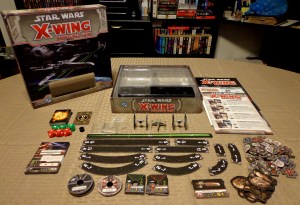 For some hits your fighter sustains, you’ll draw a card that assigns a special handicap. Was your targeting computer damaged, affecting your ability to acquire a lock on the enemy? Perhaps an ill-timed weapon malfunction will limit your offensive capabilities. Or worse yet, your pilot could be injured, compromising his ability to focus on the life-and-death struggle in which he is engaged…
 It never appeared in a Star Wars film, but was the home craft of the video game character Kyle Katarn, who would later become a Jedi Master in the novels years later. One of the very first video games that my oldest daughter ever played was Dark Forces. It was a first person shooter that came out in 1995. My daughter was only 6 years old at the time and helped me play it by pressing the space bar on the key board when I told her to which caused my character to jump. She was too young for the complex shooting and strategy it took to win the game, but she knew how to hit the space bar when I told her to and it was that game that launched her into a lifelong love of video games. She and I will always share that unique father/daughter experience, and I will always think of her when I think of the HWK-290. I was dazzled to learn that Fantasy Flight Games was actually inserting that ship into the game mythology before other types of ships, which let me know that the game designers were very serious about expanding the Star Wars experience of role-playing gaming in a format that hasn’t seen such a level of attention since our beloved Pirate Constructible Strategy Game.

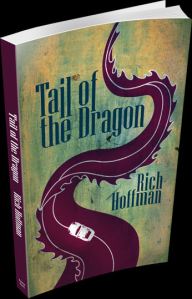
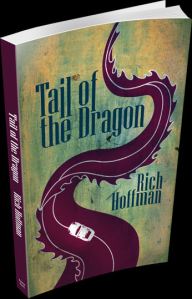
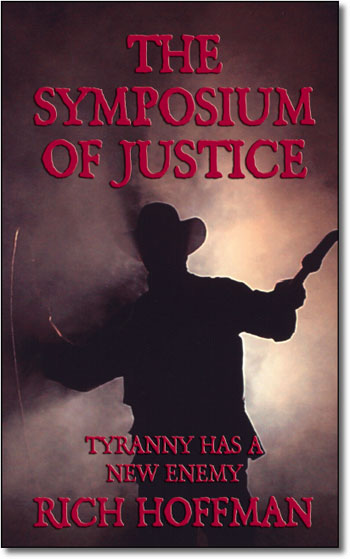
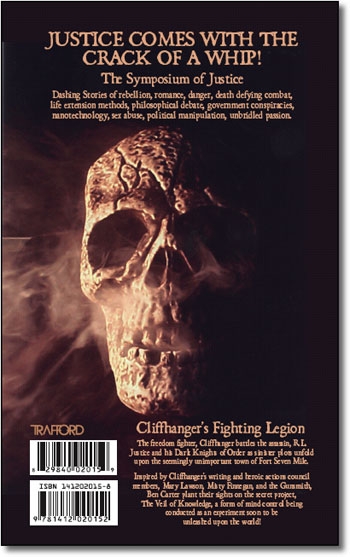
 The Overmanwarrior