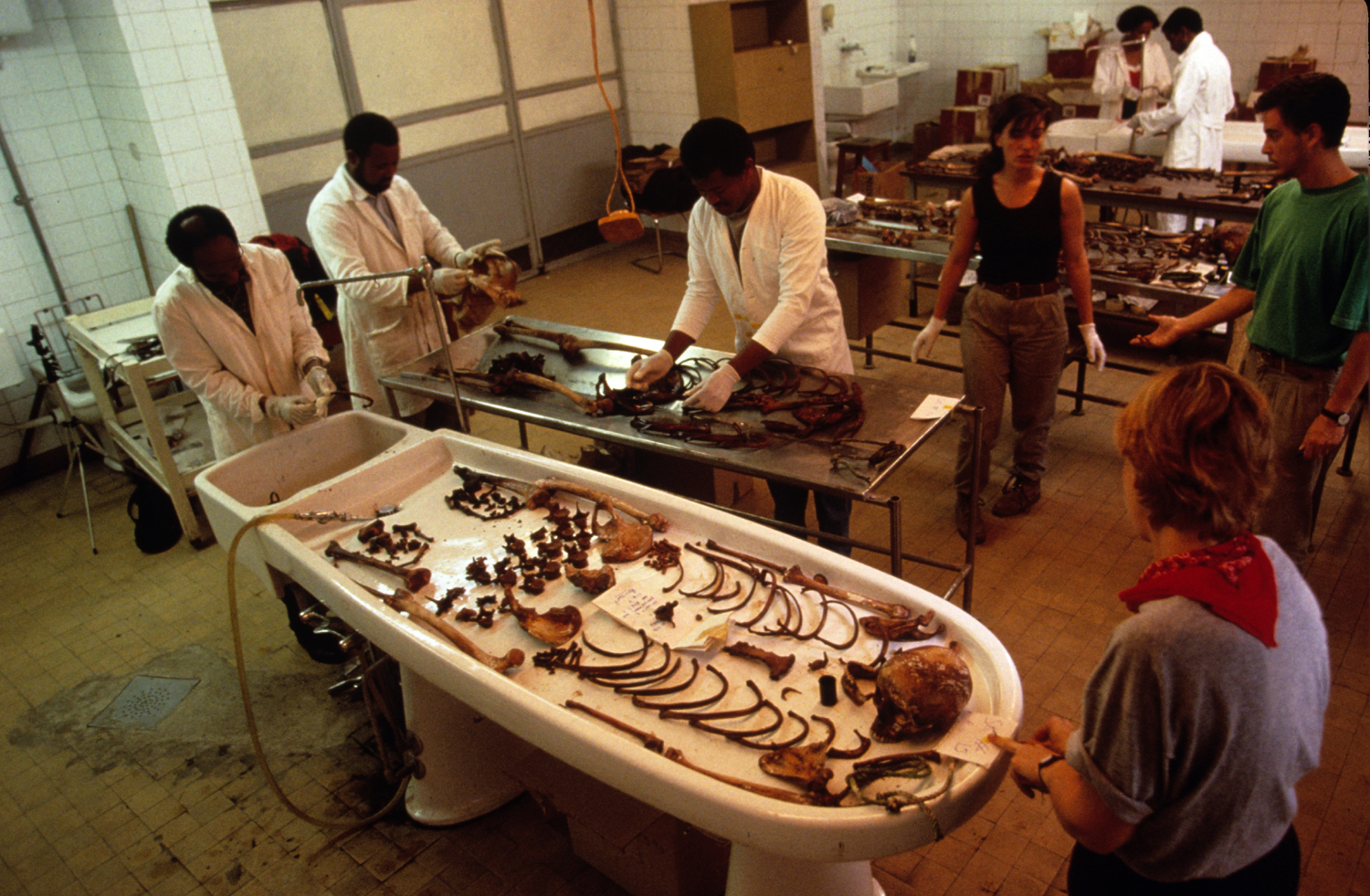
Generation Y and the Bland Superbowl: Why Kids are so weak, blame the babyboomers

Watching the Superbowl “event” on Sunday February 6, 2011 everything from the Star Spangled Banner to the Half-Time Show convinced me that finally the detrimental effects of the Baby Boom Generation had finally shown its dismal failure in Generation Y.

Listen to this simple-minded Generation Y Guy analyzing Glenn Beck  discussing the Superbowl.

The Superbowl is a wonderful reflection of American society, from the commercials, the nature of the competition, the glitz and glitter, and the hunger for entertainment. For years, especially since the Janet Jackson publicity stunt, the NFL has played it safe with older acts during the halftime show that were at least mature enough to keep their cloths on.

This Superbowl though had a peculiar blandness to it that was unique to 2011. This is the year we are collectively facing the massive bankruptcies that are challenging virtually every program created by government in this last century. This is also the first year that I have almost no interest in the films being nominated at the Academy Awards.

There is something cheap in films these days, much like everything else. It probably has something to do with the emergence of Netflix and the downfall of Blockbuster. The emergence of cheap, big screen televisions, and the film distributors and production houses banking on 3D to keep people wanting to go to the theater, and not waiting for the film to show up on their Xbox where all they have to do is push a button and the film arrives.

The music industry too is in the same boat, because of IPods and downloadable music, investment in music is on the decline. Where are the Michael Jackson’s or the Elvis’s today? The Black Eyed Peas earned my respect with the fantastic live performance on Saturday Night Live when they played Hey Mama. So I had high expectations that their half time show would be great. But what came out was four used up people who looked tired, as if the entire music industry was hanging its hat on them while they experiment with other revenue sources and commitment behind artists.

If you look at American Culture we are bankrupt in almost every facet you can think of. Our cars are behind. Our manufacturing is behind. Our aviation is behind. Our culture is behind, and preoccupied with a one world utopia, which Americans don’t want. (hint, hint entertainment industry. That’s why you’re revenues are down) Our financial institutions are stressed to the max, and our entitlements that we’ve built through politics are out of money. Things are so bad, that even American Football is on hold till a contentious labor dispute is settled, which I don’t think will happen in time to save the season. I think the owners will turn away from a season because it will hurt the players worse, and owners need to get their upfront money invested in players fixed. And they also have to listen to market demand which wants a longer season and they’ll find a way to provide that.

So who’s to blame?

Doc Thompson is asking the same questions and he discusses that here. His theory is that it all falls on the Baby Boomers.

He’s right.

I’ve never been happy with the Baby Boomers. Even when I was a kid I thought they were off. It never made sense to me why they seemed to count their lives in a declining value from the age of 30 on. They craved to always be 16 to 18 years old and built their whole collective psychology around that yearning. I’ve also despised that. Even when I was young, the people I most identified with were senior citizens, because they knew how to live and didn’t expect life to be comfortable.

When I came to work today it was hovering around zero degrees with a wind chill down around -10. There was much astonishment from other drivers who watched me drive my 1500 CC motorcycle down the frozen asphalt well before the sun came up. Most of those people were baby boomers and members of Generation X who were around my current age. I will have to admit that I have pity on almost all of those people, because they view aging as a regressing process. Many of the people of my generation and the baby boomers strive for their lives at the end of high school and start of college. Those are the best days of their lives.

I see my own life as improving each year. When I was younger I dreamed of being the age I’m at right now with the physical presence to do anything I want, and the wisdom to match it. Part of the reason I walk several miles a day, ride motorcycles in the cold and work with bullwhips and medicine balls like toys while my mind contemplates thousands of topics simultaneously, is because I love living life. Avoiding pain is avoiding life. I wouldn’t trade anything in the world to even go backwards one year. I enjoy every birthday as an opportunity to become even better than the last year. That’s why I name this site the way I do, because I’m always leaning forward to learn and be better. Complacency and failure are simply not options.

But complacency is the fad of the modern age and it started with those lazy, baby boomers. And they started the trend we see now, where a whole generation of young people are lost and clueless. You can see it in young people everywhere you look. They are overly commercialized and have lost the ability to think critically. They are a lost generation, and it’s really not their fault. It’s the fault of Generation X that didn’t solve the problems of the Baby Boomers and all the issues Doc Thompson brought up in his discussion above.

That’s why the Superbowl seemed flat to me, less spectacular than in years past, and somehow distracted and aloof. It was the first time I visibly noticed that the social problems we’ve all been holding back and pushing under the rug, started to show even above all the festivities of an American Ritual.

And this is how it’s supposed to sound! Don’t make a joke of it next year just to play to the younger crowd. They don’t know the difference. But some of us do.

Rich Hoffman
http://twitter.com/#!/overmanwarrior
www.overmanwarrior.com

The Future of Medicine: The Art of Regenerative Tissue Repair

I’d much rather cover positive topics than negative ones. My anger at many of the rants that can be found here has a common source. A student from Mason that is enchanted with Stacy Schuler, the teacher that was arrested for having sex with five students from her school, told me that she was sure that if she analyzed me the way I do other people, that there were sure to be Freudian slips reveled in my behavior too.

Well, she’s right. There is a pattern to my so-called rants. I have an extreme anger at institutions that stand in the way of exciting new scientific developments. So I tend to lash out at politicians, union leaders, corrupt employees that favor job security over innovation and universities that cling to their past discoveries and subvert new discoveries that are controversial. I even set my sights on religion that holds back civilization with a desire to control the masses like sheep of which they offer themselves as a shepherd. In general, I support religious activity because it gives people something to hold themselves together, and the fear of god will keep them from committing wasteful sins such as over indulging in sex, substance abuse, and being vengeful toward their neighbors. But I often get frustrated when religion stands in front of science, because science offers constant new information that requires frequent adoption adding to religious ideology. To become fixated on events that happened 2000 or 4000 years ago holds people back, because there are miracles happening right now in front of our faces, but people don’t have a spiritual mechanism that allows them to see it. And that can be a real crisis.

When the congress of 2010 marched Health Care Reform down our throats in March of that year without even reading the bill, and voted on it strictly on ideology started by philosophies begun in the 1960’s and even earlier while communism from the Soviet Union was making a push to replace capitalism. Those congressmen didn’t care if Health Care was in violation of the United States Constitution because their plan is to change the law with Supreme Court Case Law. They also didn’t care that Health Care, as we’ve been doing it is going out of style.

Health Care of tomorrow won’t be controlled by pharmaceutical companies like it is now, the days where our elderly will take drugs and have costly operations with artificial body parts as replacements will be a thing of the past within the next decade. People won’t take drugs to extend their lives and regulate their bodies as they age and stop performing normal function. Science is literally on the cusp of regenerating parts of the body with its own cells, and that is the future of medicine.

Doc Thompson had on a doctor promoting a new show being exhibited on Nat Geo 10pm on February 7, 2011. After its initial run, the program will run again and probably be on YouTube, so make certain to look for it. It’s about the science of regenerative tissue. But for now you can listen to that doctor talking to Doc.

By the time Health Care becomes a staple of normality in our society like Social Security and Medicare is now, assuming that it stands up to a Supreme Court Ruling, which I don’t think it will, this new science will be mature enough for average people to participate in. And I can tell you right now that all those companies that are looking to the Health Care Industry to make money will oppose regenerative tissue technology. I will also say that religions will violently oppose it, because suddenly the whole idea of life expectation will change. If people can continue to heal all through their lives and build their own regenerative tissue from their own cells DNA, then people will live a LOT longer, and that will force religion to catch up and adapt, which they will be reluctant to do.

That’s why the Health Care Bill is a foolish, pointless piece of legislation. It needs to be repealed and politicians need to start looking to these emerging sciences to solve the problems we have with Social Security, and Medicare. With regenerative science, the cost of keeping people alive will dramatically decrease, and people who have built their lives in the health care field will have to find other things to do for careers. We are on the cusp of true technical marvels that will change the ideology of the human race. And we need to embrace those changes boldly, and not cling to the status quo.

So that young lady is right. My purpose here is to let people know where I see the walls that are holding back that changing ideology. I do rant about the walls I see. And my overall Freudian logic behind those rants is to do my part to break down those walls so we can all enjoy the benefits of mankind’s science without becoming lost as godless heathens. It’s important to recognize what we’ve done right as humans, and what we’ve done wrong, and to boldly go to the next step, because we are standing at the foot of those steps. All it takes now is to have the courage to walk up them.

Rich Hoffman
http://twitter.com/#!/overmanwarrior
www.overmanwarrior.com

Mason School District Gives Community the “Finger”

The Mason School Board in a meeting on Tuesday, January 25, 2011 more or less gave the people of Mason the finger; (figuratively speaking of course) The people of Mason were told that because they didn’t pass a levy in November that painful cuts were headed their way. Basically, they’re going to “extend” the busing routes, along with some “pay to play” initiatives that are designed to cut nearly $6 million out of their budget.

What they didn’t do was what Lakota has done, and that is see what the actual budget requirements are going to be once Governor Kasich eliminates many of the unfunded mandates he’s promised to cut, to give districts the chance to take their fates in their own control. That information comes out in March. What Mason did was decided to point their finger at the community and play the extortion game.

The following clip is from the day after, and on the eve of Jeff Reeds visit to promote School Choice, ironically in Mason on Thursday. Jeff and Sharon Poe, the woman behind defeating the levy in Mason went on the Big One with Doc Thompson to cover the various issues percolating in the shadows of the Big One’s radio transmitter.

Everywhere that monopolies exist, extortion of the consumer of the products monopolies produce can take place. If you’ll remember, the Federal Government during the Clinton Administration went after Microsoft, to bust up the market monopoly Microsoft had over other companies. And at the turn of the last century, Teddy Roosevelt, the Progressive Hero, went after the Railroads. But where are the demands from these same progressives to go after the monopolies of “public education?”

That’s what it is. Mason has no right to play the guilt game with the citizens of its district. However, Kevin Bright is one of the highest paid superintendents for a reason. He’s has been one of the instructors of Levy University, taught at the annual OSBA event in November of each year at Columbus. So he’s the master of getting levies passed, so in his district, they are “choosing to play the game.”

And the game is a thuggish exchange of protecting the top paid administrators and teachers at the sacrifice of the teachers and personnel of lower stature, and the goal is to secure their wages and pensions so as to maintain their monopoly on education far into the future, to protect the livelihoods they’ve manipulated for themselves.

I had a teacher send me an email, “you’re not going to stop until we’re all making minimum wage are you? We’d all have to take a 30% cut to meet the budget at Lakota.”

All I can do is shrug my shoulders to that comment. Nobody said anything about teachers making minimum wage, but a 30% cut to meet the budget is something I suggested almost 6 months ago. If Lakota, Mason, and the rest of the districts that are in trouble, which is everyone, had taken such a step, they would have taken the steps to make themselves competitive for the future. A teacher that makes a $105,000 and takes a reduction of 30% would pay that teacher $73,500, which if they have tenure, and a master’s degree, is much more in line with a proper salary. Does anyone believe that making $73,500 a year with great benefits, summers off, and every federal holiday through the school year is asking teachers to work for minimum wage? On the other hand, I would argue that new teachers should be paid in line with what they are currently making. It’s the top end that is wrecking these school budgets, not the new teachers that are only making $35 to $45K per year.

Yet there is only silence to that obvious problem, and all districts are willing to deal with is the extreme low hanging fruit. And they do that because they are effective monopolies that feel empowered to punish its consumers because they lack competition. A district like Mason knows that parents are forced to use their product, and because of the property taxes residence are forced to pay, are literally pushed into accepting realities that would otherwise be completely deplorable.

In the end it’s more about ego and PR relations than doing what’s right for the community. What would happen if the man who teaches Levy University in Columbus couldn’t even get a levy passed in his own district? What message would that send to the surrounding districts?

Find out soon? The power is in the voters hands.

Rich Hoffman
http://twitter.com/#!/overmanwarrior
www.overmanwarrior.com

Forensic Anthropology Jobs Needed: Another Government Debacle

My wife and I had dinner with an instructor for Forensic Anthropology on Saturday and I learned how there is a shortage of Forensic Anthropologists. That little fact surprised me. “How can that be? Where do you find Forensic Anthropology employment? Who’s paying for them?” It was an honest question.
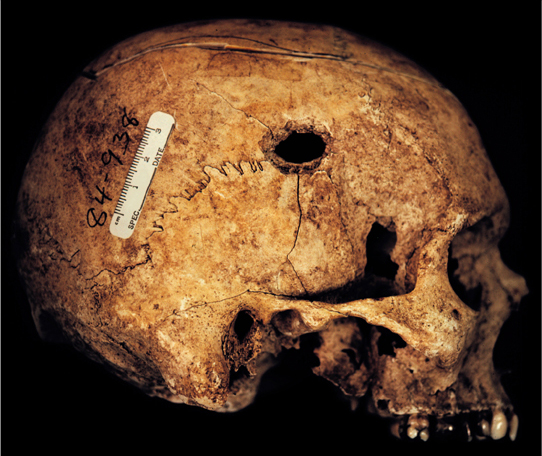
I received an honest answer. “The shortage is due to museums and other research facilities that are trying to comply with the “Native American Graves Protection and Repatriation Act”

“The what?” I asked. “What the hell is that?”

He proceeded to educate me which is most accurately described in this definition from Wikipedia.
________________________________________________________________________________________________________
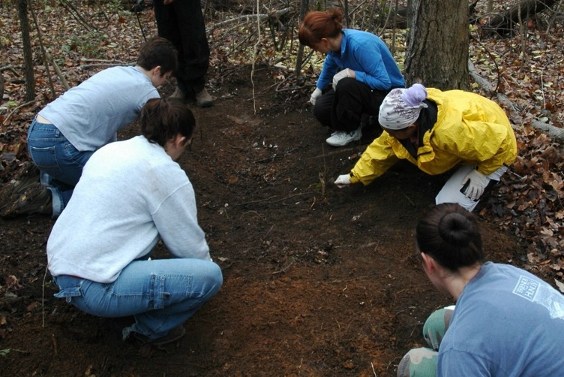
The Native American Graves Protection and Repatriation Act (NAGPRA), Pub.L. 101-601, 104 Stat. 3048, is a United States federal law passed on 16 November 1990 requiring federal agencies and institutions that receive federal funding[1] to return Native American cultural items and human remains to their respective peoples. Cultural items include funerary objects, sacred objects, and objects of cultural patrimony. In addition, it authorizes a program of federal grants to assist in the repatriation process. It is now the strongest federal legislation pertaining to aboriginal remains and artifacts.
_________________________________________________________________________________________________________
“Are you kidding me?” I asked. “What bunch of idiots passed that law? That has to cost a fortune.”

My dinner guest was agreeing with me, but being a man of science, he is eternally sympathetic to funding needs. Then I remembered when he and I had watched John Dunbar’s epic journey into the land of the Sioux Nation together around that time, then it came back to me. The film Dances with Wolves by Kevin Costner came out on November 21st of 1990. And the NAGPRA was passed just days before the release of the film.

The Heard Museum Report had been debated for three years starting in 1987 and had been passed by the 101st Congress as advanced copies of Dances With Wolves was circulating around Washington, after all Costner has just had a wild success with Field of Dreams. So there was a lot of buzz around the new movie about Native Americans. So with the usual sentimentality that engulfs the puffy coffee enriched minds of bureaucracy, they passed the NAGPRA without thinking much about the cost to science, or the tax payer.

“That is one of the dumbest ideas I’ve ever heard in the history of bad ideas,” I stated in clichéd fashion, knowing it was a cliché when I said it.

My dinner guest proceeded to educate me on various cases and pointed me in the direction of an article by Jan Bernstein:
________________________________________________________________________________________________________

NAGPRA – Future Applicability Rule
Article written for SPNHC by Jan Bernstein
Does the institution that you work for have Native American cultural items under its control or in its possession and does it also receive Federal funds? If so, more than likely you already know that your institution is a “museum” and therefore is legally required to comply with 25 U.S.C. 3001, which is more commonly known as the Native American Graves Protection and Repatriation Act or NAGPRA. But what you might not know is that there are new NAGPRA compliance rules for what is known in the Act as Future Applicability.

These rules apply to the following situations: 1) The museum or Federal agency acquires a new collection item or finds a previously unreported item that may be covered by the Act (covered items are Native American human remains, funerary objects, sacred objects, and objects of cultural patrimony; 2) A previously unrecognized Indian group is recognized by the Federal government as an Indian tribe. 3) An institution in possession or control of an item or items that may be covered by the Act receives Federal funds for the first time; and 4) The museum or Federal agency revises a decision previously published in the Federal Register.

The Native American Graves Protection and Repatriation Act (NAGPRA) was signed into law on November 16, 1990, but it wasn’t until March 21, 2007 that the final rule for §10.13 Future Applicability of NAGPRA was promulgated. It was published in Federal Register Volume 72, Number 54 and it applies to existing and newly acquired museum collections. Those are Sections Five, Six, and Seven of the Act. It does not apply to inadvertent discoveries or planned excavations which are addressed in Section Three of the Act.

The Future Applicability rules became effective on April 20, 2007. And on that date it established statutory deadlines for completion of NAGPRA Section Five Human Remains Inventories/Notices of Inventory Completion and NAGPRA Section Six Summaries (unassociated funerary objects, sacred objects, and objects of cultural patrimony). For you organization, the first deadline may be October 20, 2007. The rule set a six months deadline to produce and distribute a NAGPRA Section Six Summary for a new holding or a previously unreported holding newly located that may be unassociated funerary objects, sacred objects, or objects of cultural patrimony. October 20, 2007 is the deadline for the Summary distribution if the new holding was acquired or found prior to April 20, 2007. Your organization has two years from the promulgation date or acquisition/discovery date to prepare a NAGPRA Section Five Human Remains Inventory/Notice of Inventory Completion in consultation with affiliated Indian tribes or Native Hawaiian organizations. If the new holding was acquired or located prior to April 20, 2007, you have until April 20, 2009 to do culturally affiliation consultation and distribute a NAGPRA Section Five Human Remains Inventory and publish a Notice of Inventory Completion in the Federal Register.

A newly Federally recognized Indian tribe has standing under NAGPRA and museums and Federal agencies covered by the Act are required by the Future Applicability Rule to send Section Six Summaries to these Tribes within six month of recognition. Federal Agencies and museums are also required within two years of recognition to prepare in consultation with culturally affiliated Indian tribes NAGPRA Section Five Inventories/Notices of Inventory Completion.

Maybe your organization didn’t receive any Federal funds between November 16, 1990 when the law passed and November 16, 1995 when the last deadline occurred. But since that time it began to receive such funds. Those funds may be flowing directly to your organization or to your parent organization. For example, maybe you are working for private college anthropology or art department and another department at the college started to accept Federal contracts or grants after 11/16/1995. Those funds have redefined your department as a museum covered by NAGPRA. If this is the case, your organization is required to comply with NAGPRA. If you find your organization is in this situation, you must within three years from the time the Federal funds were received or from the effective date of the Rule (4/10/07), whichever is later provide a Section Six Summary to Indian tribes or Native Hawaiian organizations that are most likely to be culturally affiliated. Within Five years of the date of receipt of Federal funds, or within five years of the effective date of this Rule, whichever is later, you must prepare, in consultation with affiliated Indian tribes or Native Hawaiian organizations, a Section Five Human Remains Inventory/Notice of Inventory Completion.

If your organization previously published a Notice of Inventory Completion, but the information has since substantively changed, the Future Applicability Rule requires a Notice of Inventory Completion Correction be published in the Federal Register. A substantive change is a change in the culturally affiliated Indian tribes or a change in the minimum number of individuals count. The National NAGPRA Program will assist you with this process.

What does this mean for those of you who represent a Federally Recognized Indian tribe? Well, I hope you will see some new Summaries hitting your desk as well as an increase in the number of requests to consult in preparation of new human remains Inventories.
The rules can be found on the National NAGPRA Program’s web site. I wish you all great success in your NAGPRA compliance efforts.
________________________________________________________________________________________________________
“How can an anthropologist or archeologist be expected to return the remains of Indian Tribes when much of the tribal movements aren’t even understood by anybody yet? There are still completely mysterious cultures that no science organization understands regarding Native Americans.” I was thinking of Cahokia outside of St. Louis, and several of the mound builders in the Ohio Valley. The Shawnee had in fact migrated from Florida before settling in Ohio. Few tribes could be traced back for thousands of years.

The instructor laughed. “That’s part of the problem. There are a lot of finds and burial relics that predate 1492, so it is nearly impossible to return cultural items to specific tribes.”

I was getting angry. “What about the ancestors of Anglo Saxons that were fleeing tyrants of Europe to settle the frontier that were cannibalized in giant kettles and eaten like soup, entire families were slain for no reason what-so-ever.”

“That’s not politically correct,” he laughed at me.

“That’s politics, which is the same as what comes out of an elephants ass.”

“Well,” he said, “its business. Laws like that put people to work and make people feel like they’re doing something important.”

He mentioned Bernstein and Associates, who I looked up and read their literature.
_____________________________________________________________________________________________________
Bernstein & Associates, LLC
We work with Indian tribes, museums, universities, and governmental agencies on Native American Graves Protection and Repatriation Act (NAGPRA) compliance projects.

Services we provide to our clients

NAGPRA Grant Writing
We write successful Consultation/Documentation and Repatriation grant proposals.
Our clients have received over $1,000,000 (one million dollars) in
NAGPRA Consultation/Documentation and Repatriation Grant grant awards.
Annually since 1999, we have written at least one NAGPRA Consultation/Documentation grant for clients and every year we’ve had a grant funded.

Jan Bernstein teaches a two-day NAGPRA Grant Writing Seminar for the National Preservation Institute.

NAGPRA Consultation Support
There is a tremendous amount of work that goes into NAGPRA consultation planning, implementation, documentation, and follow-up. Official tribal representatives frequently praise our culturally sensitive, insightful, respectful approach to consultation. Bernstein & Associates helps Indian tribes, museums, and federal agencies with all phases to whatever degree suits your needs:
• Meeting planning
• Consultation preparation including document research and assembly
• Consultation documentation
• Consultation follow-up

Since 1990, we have organized and facilitated several hundred individual and group consultations with tribes that have traditional territory in all regions of the country including Alaska and Hawaii.

Repatriation, Physical Transfer, and Reburial
We have worked with tribal leaders, official tribal NAGPRA representatives, and traditional religious leaders in the Southwest, Plains, Great Basin, and Southeastern US as well as Peru (non-NAGPRA) to facilitate the repatriation and reburial of nearly 1000 individuals and hundreds of cultural items. Bernstein & Associates is available to:
• Write repatriation grant proposals for up to $15,000 to defray the costs associated with reburial
• Provide assistance in writing valid repatriation requests and repatriation claims
• Write draft notices of intent to repatriate
• Facilitate the development and implementation of reburial plans and agreements

NAGPRA Summary and Human Remains Inventory Preparation
Because of the long-standing, positive working relationships that we have built with the tribes throughout the U.S since the mid 1980s, we are extremely successful in aiding clients in the preparation of culturally sensitive NAGPRA Summaries and Inventories. Every client utilizes our services in a slightly different way. Some of the many services we provided to clients are:
. Assess collections to determine which tribes should receive summaries and invitations to consult on cultural affiliation for development of Inventories
– Write letters to tribes using our tribal contact database, which is constantly updated with current contact information for tribal leaders and NAGPRA reps, as well as consultation style preferences
– Initiate Summary consultation after initial correspondence
– Facilitate NAGPRA consultation conferences

Strategic Planning

We help clients assess what needs to be done to comply with NAGPRA, how long it will take, and develop a chronology. We then break it down into manageable projects that could be funded by grants for museum clients. We provide clients with a written plan that can be used to track progress.

____________________________________________________________
“So it’s all about getting federal grants,” I asked.

He smiled and sipped his wine. “It’s always about money, and that’s why there’s a need for Forensic Anthropologists.”
Then our conversation over the rest of the wine migrated to the Kennewick Man, which I found a nice back story below.
__________________________________________
Source World of Forensic Science
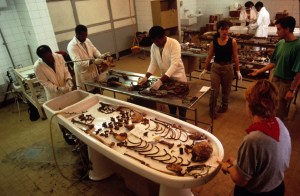
The remains of an ancient human found along a river in Kennewick, Washington, in 1996 set off a heated debate about the ownership and future of the skeleton. Scientists argued that the skeleton, dubbed Kennewick Man, could provide new information about human migration in North America, while Native Americans claimed him as an ancestor and wanted to bury him according to their rites. Forensic anthropological findings and cultural evidence were presented in court procedures over the course of nine years while the fate of the Kennewick Man was debated.

The story of Kennewick Man began in July 1996, when two college students watching hydroplane races found a human skeleton along the Columbia River. The young men turned the remains over to local police, who realized that they were probably very old. The bones were then given to forensic anthropologist James Chatters for evaluation. Chatters reconstructed the skeleton, which was 80–90% complete. He determined that it was from a man who was probably five feet nine or 10 inches and about 40–50 years old when he died. He showed little evidence of arthritis, indicating that he wasn’t used to carrying heavy weights and that he might have been a wandering hunter. Dental examinations showed that the skull contained 30 of the 32 teeth and that they were in good shape, indicating that he probably had a diet that included lots of soft foods like meat. He was taller and thinner than most ancient Native Americans and the back of his skull was not flattened from a cradleboard as is commonly observed in skeletons of ancient Native Americans. In addition, the man had a stone spear point lodged in his pelvis and there was evidence of severe trauma to his rib cage that probably limited the use of his arm. Using computerized tomography (CT), Chatters determined that the spear point was serrated and leaf-shaped and typical of the types of spears used between 8500–4500 years ago. He hypothesized that the skeleton was either from a European pioneer who had been attacked by native people using stone-age weapons or from an ancient human. Chatters sent pieces of the bones to a laboratory for carbon dating, which determined that the age of the skeleton was between 9,200–9,400 years old, making the skeleton one of the oldest, and most complete, ever found in North America.
Once the age of the skeleton was determined, several groups came forward, vying for control of the remains. A group of five Native American tribes in the region, the Umatilla, the Yakama, the Nez Perce, the Wanapum, and the Colville, wanted to accord the remains the same rites given to any Native American, namely a speedy burial. They cited the legal authority of the Native American Graves and Repatriation Act (NAGRA), which requires the return of American Indian remains to tribes. As news of the unique find spread throughout the scientific community, a coalition of eight anthropologists and archaeologists petitioned for their right to study the ancient remains prior to burial. The scientists believed that study of the Kennewick Man could reveal important information about early human migrations into North America. The Native American group believed that any manipulation of the remains would show enormous disrespect to the dead and vehemently opposed scientific investigation of the skeleton, which they called the Ancient One. Because some of the features of the Kennewick Man, such as his height and the shape of his skull, indicated that he might not be of Native American ancestry but rather of European descent, a group of people representing the ancient Norse religion called Asatru also petitioned the court for the right to the remains.

The ensuing legal battle raged for more than nine years. One of the key questions of debate in the courts concerned whether or not the skeleton was subject to NAGRA. NAGRA requires that all Native American remains be returned to the tribe for burial, however it was unclear if the Kennewick man was of Native American ancestry. Eventually the court ruled that some scientific study was required in order to establish the origin of the skeleton and between 1998 and 2000, the Department of the Interior coordinated these studies. A 1999 physical examination of the bones established that the Kennewick Man shared most physical characteristics with people from Southern Asia. In April 2000, samples of bone from the Kennewick Man’s skeleton were removed and sent to two different laboratories for DNA testing. Because of the age of the bones, it was impossible to extract sufficient DNA for analysis and the results of the study were inconclusive. After a series of appeals by all sides, in February 2004, a U.S. Federal judge ruled that it was impossible to prove that the Kennewick Man’s ancestry was culturally affiliated to any of the Native American tribes in the region and gave scientists the right to go forward with their investigation. In 2005, plans were outlined for study three-phase study involving as many as 23 different scientists.

The dinner was over and it was time to go home. The impact of this NAGPRA has seriously hampered science by bringing politics into the whole business and allowed ourselves to be hampered by sensitivity. America had allowed our guilt over pushing the Native American’s westward to cripple us the same way we currently do over slavery, neither of which we can do anything about now. All we can do is learn from those experiences, which is what science is all about.

Instead of learning and expanding our worldly knowledge, we’re wasting time appeasing political factions, getting grants so we can move some bones around the country and argue over bones that pre-date our known understanding of history, which is shallow at best.

But that is the nature of politics. It’s equivalent to living life in a straight jacket. All I can do is shake my head at the invention of yet another useless government created position, a Forensic Anthropologist that spends less time digging and understanding the past, and more time filling out papers to qualify for federal grants.

Rich Hoffman
http://twitter.com/#!/overmanwarrior
www.overmanwarrior.com

Giants in Ohio: The Hidden History of the Human Race!

WHY DO SOME CRITICS DISLIKE ‘DARK KNIGHT RISES?’  CLICK HERE TO FIND OUT WHY.

I found a unique treasure at the 2009 Mothman Festival at Point Pleasant in, West Virginia while on a trip with my wife. It’s a map of paranormal activity in the State of Ohio called Hidden Ohio. It features Ancient American sites, haunted locations, sacred geography, scenic byways, strange creatures, unexplained mysteries, and unique sites.

It was on this map that I noticed two sites where giant human beings were discovered. One location was just outside of Cleveland, and the other was just south of Cincinnati. The below picture I don’t believe is real, but it gives you an idea. I am currently looking for the private citizens that have these discovered bones. In both cases the bones of the giant humans were 8 to 10 feet tall. Prior to seeing those excavation sites on that map, I had never heard of giant humans in an actual historical sense.

Below is a history of the giant bones discovered in North America. Some of the bones are without question stuck in drawers at museums. But most are in the hands of private collectors. I would love to see them for myself.

Historical North American Giants

1792 New York, Buffalo: Turner’s History of the Holland Purchase reports that 7 and 8 foot skeletons were found at an earthen fort in Orleans county with broad flat topped skulls.

1800 Ohio, Conneaut: Among the normal size skeletons found in the remains of mounds were found gigantic bones. Some of the skulls and jaws were large enough to fit over the head and face of a normal man

1821 Tennessee, White County: An ancient fortification contained skeletons of gigantic stature averaging at least 7 feet in length.

1825 Ohio Valley: David Cusick, a Tuscorora by birth, wrote that among the legends of the ancient people of the stock, there was a powerful tribe called Ronnongwetowanca. They were giants, and had a “considerable habitation.” When the Great Spirit made the people, some of them became giants. After a time, and having endured the outrages of these giants, it is said that the people banded together, and through the final force of about 800 warriors, successfully annihilated the abhorrent Ronnongwetowanca. After that, it was said that there were no giants anywhere. This was supposed to have happened around 2,500 winters before Columbus discovered America, around 1000 BC.

1829 Ohio, Chesterville: In digging away a mound where a hotel was to be built, a large human skeleton was found, but no measurements were made. It is related that the jawbone was found to fit easily over that of a citizen of the village. The local physicians examined the cranium and found it proportionately large, with more teeth than the white race of today. The skeleton was taken to Mansfield, and has been lost sight of entirely.

1833 California, Lompock Rancho: Soldiers digging at Giant Lompock Rancho, California, discovered a male skeleton 12 feet tall. Carved shells, stone axes, and other artifacts surrounded the skeleton. The skeleton had double rows of upper and lower teeth. Unfortunately, this body was secretly buried when local Indians became upset about the remains.

1835 Illinois, Lake County: In the numerous mounds in the county, skeletons ranging between 7 and 8 feet are discovered.

1845 Virginia: A human jaw bone of great size was uncovered in a burial mound on which the teeth stood transversely in the jawbone.

1849 New York: From “Illustrations of the Ancient Monuments of Western New York” comes the report that an elliptical mound above near the Conewango Valley held eight big skeletons. A thigh bone was found to be 28” long. Exquisite stone points, enamelwork, and jewelry were found. Also discovered in the area were a number of other large skeletons one almost 9 feet in height.

1850 New York: From the History of Allegany County in 1879 a report that very large human bones were uncovered during excavation for the railroad

1851 New York: A skull rib bone, and shinbone were found that indicated the height to be over 8 feet tall.

1856 West Virginia, Wheeling: A human skeleton was discovered by labourers while ploughing a vineyard measuring almost 11 feet tall.

1858 Ohio, Vermillion Township: Skeletons of a race of beings much larger than the local inhabitants were discovered.

1870 Ohio: In Brush Creek Township a large mound contained skeltal remains of several humans up to nine feet tall. A large stone tablet with unknown insriptions similiar to Greek writing was also found.

1872 Ohio, Seneca Township: When the “Bates” mound was opened the remains of three skeletons, whose size would indicate they measured in life, at least, eight feet in height, were found. A remarkable feature of these remains was they had double teeth in front as well as in back of mouth and in both upper and lower jaws.

1873 Ohio, Seville: An Ohio Bicentennial Commission historical marker serves as a reminder that the Giants of Seville, Captain Martin Van Buren Bates and his wife, Anna Swan Bates, lived in the village of Seville in Medina County. Anna stood 7 feet 11 1/2 inches tall and weighed 413 pounds. Martin was 7 feet 9 inches tall and weighed 480 pounds.

1873 Washington DC: “The objects here collected which have not been given, or acquired by exchange, have been purchased for the use of the museum by order of the surgeon-general… There is a skeleton of a giant, who, in life, measured seven feet, prepared by Auzoux and mounted by Blanchêne’s method, which, if I may use that term, is really a beauty. It is as white and clean as new fallen snow, and the brass joints and screws which keep it together are bright, and of the latest style and finish.” From the article “The Army Medical Museum in Washington” by Louis Bagger, Appletons’ Journal: A Magazine Of General LiteratureVolume 9, Issue 206

1875 West Virginia, Rivesville: Workmen constructing a bridge near the mouth of Paw Paw Creek uncovered three giant skeletons with strands of reddish hair clinging to the skulls. The skeletons had supported people approximately 8 feet tall.

1876 Wisconsin: Mounds were excavated containing a giant skull and vertebrae.

1877 Missouri, Kansas City: A giant skull was unearthed when mounds wore opened and giant man tracks belonging to humans 25 to 30 feet tall were discovered.

1877 Nevada, Eureka: Prospectors found a human leg bone and kneecap sticking out of solid rock. Doctors examined the remains and determined they were from a human being, and one that stood over 12 feet tall. The rock in which the bones were found was dated geologically to the Jurassic Period, over 185 million years old.

1878 Ohio, Ashtabula County: While excavating the ground for graves, bones were exhumed, which seemed to have belonged to a race of giants. A skull and jaw were found, which were of such size that the skull would fit easily over a large man’s head like a loose fitting helmet, even with the jaw in place. The number of these graves has been estimated to be between two and three thousand.

1879 Indiana, Brewersville: A skeleton almost ten feet tall was excavated from a mound.

1880 Ohio, Zanesville: A skeleton was reported to have been of enormous dimensions found in a clay coffin, with a sandstone slab containing hieroglyphics.

1880 Minnesota, Clearwater: Several giant skeletons were found with double rows of teeth.

1881 Ohio, Medina County: A jawbone of great size belonging to a human being was discovered, which contained eight jaw-teeth in each side, of enormous size; and the teeth stood transversely in the jawbone. It would pass over any man’s face with entire ease.

Why don’t we learn about this in school? That’s another story that I’ve covered elsewhere.

_________________________________________________

This is what people are saying about my new book–Tail of the Dragon

“Just finished the book and am sweating profusely. Wow, what a ride !!!  Fasten your seat belts for one of the most thrilling rides ever in print.“

While you wait for Tail of the Dragon, read my first book at Barnes and Nobel.com as they are now offering The Symposium of Justice at a discount which is the current lowest price available.

Rich Hoffman
https://overmanwarrior.wordpress.com/2010/12/04/ten-rules-to-live-by/
http://twitter.com/#!/overmanwarrior
www.overmanwarrior.com