

I’ve been getting a flood of emails lately that reveal something deeper than policy disagreements. A year into President Trump’s term, with real wins stacking up, some voices in and around the Republican Party are still finding ways to peel away, to justify holding back or even undermining success. Thomas Massie and Marjorie Taylor Greene have made headlines with talk of rebellion, redefining MAGA, pushing back against the party’s direction, and even floating ideas to reshape or even overthrow elements of it. I read these things and listen to the arguments, and my take is more psychological than purely political: some people are genuinely afraid of success. They sabotage it when it arrives. It’s a real phenomenon I’ve seen in life, in business, and now in politics.
You see it with lottery winners who blow through millions and end up broke. You see it with people who stay in debt, terrified of paying off the mortgage or buying a car outright because the stability scares them—they prefer the familiar depletion. There’s a subset of the Republican Party that seems wired the same way. They had the losing habit for so long that winning feels unnatural, even threatening. So they manufacture reasons to complain, to fracture, to hold onto the comfort of opposition. And one of the biggest excuses I see surfacing in these emails and public statements is Israel. “You’re an Israel lover,” they say. “Part of the military-industrial complex. Sellout.” As if supporting the Jewish state and its right to exist automatically disqualifies you from America First principles.
I love Israel. I say that plainly because I do. I’m obsessed with the contents of the Dead Sea Scrolls, those ancient manuscripts discovered in the caves near Qumran that have done so much to validate biblical texts. I love the figure of the Teacher of Righteousness described in them. I love the way those scrolls illuminate concepts of justice, righteousness, and resistance to corruption in the Second Temple period. For anyone wanting the scholarly background, the prevailing view among many experts is that the scrolls were likely produced by the Essenes, a Jewish sect that withdrew from mainstream society in protest against what they saw as corruption in the Temple priesthood.
The Essenes emerged during the turbulent Second Temple era, roughly the second century BCE onward, as one of several distinct Jewish groups navigating Hellenistic influence, Roman power, and internal religious strife. The major sects included the Pharisees, Sadducees, and Essenes. The Sadducees were largely aristocratic, tied to the Temple rituals and priestly elite, and often more willing to accommodate external powers. They emphasized the written Torah (primarily the first five books of Moses) and rejected ideas such as the resurrection and extensive oral traditions. The Pharisees, by contrast, had broader popular support, developed the Oral Law alongside the written Torah, believed in the resurrection and angels, and focused on practical piety and interpretation applicable to daily life. They are often seen as spiritual forebears of later rabbinic Judaism.
The Essenes stood apart, disgusted by the worldliness and compromises they perceived in Jerusalem. They formed ascetic, communal settlements—most famously at Qumran on the shores of the Dead Sea—devoted to strict purity, study, and preparation for what they believed was an impending divine intervention. They followed a different calendar, emphasized communal property, ritual baths, and a highly disciplined life. Many scholars link them directly to the production and hiding of the Dead Sea Scrolls.
Central to their story is the Teacher of Righteousness, a mysterious yet pivotal leader raised by God, according to texts such as the Damascus Document, to guide the community “in the way of His heart” after a period of groping in the wilderness. He was likely a Zadokite priest, part of the legitimate high priestly line, who clashed with the “Wicked Priest”—often interpreted as a corrupt Temple figure during the Hasmonean period, perhaps around the second century BCE. The Teacher interpreted the prophets, revealed hidden mysteries, and called for true righteousness in opposition to a compromised establishment. The scrolls portray him as persecuted yet authoritative, with the community seeing itself as the faithful remnant preserving pure worship amid apostasy.
This wasn’t some abstract theological debate. It was a rebellion against corruption in the name of righteousness. The Teacher of Righteousness and his followers challenged the Temple authorities who had strayed. There’s resonance here with John the Baptist and Jesus—figures who operated outside the official power structures, calling people to repentance, critiquing hypocrisy, and pointing toward a renewed covenant. Some scholars have even explored possible connections or parallels between Essene thought and early Christianity, though Jesus and John were independent voices who resonated with similar themes of justice and reform.
The Pharisees, in the Gospel accounts, often clashed with Jesus over matters of tradition, Sabbath observance, and authority. They plotted against him alongside other factions, fearing loss of influence. The kings of Israel—David, Solomon, and others—had failed magnificently over generations, mixing greatness with moral collapse, idolatry, and injustice. The experiment of ancient Israel under the Jewish faith offers profound lessons for every culture: the tension between covenant fidelity and human frailty, the danger of institutional corruption, and the recurring need for righteous reformers.
Supporting Israel today doesn’t mean endorsing every policy or every corrupt element within any community—Jewish or otherwise. It means recognizing the shared history, the biblical roots, the strategic reality in a dangerous region, and the value of a democratic ally that, despite flaws, stands as a bulwark against worse alternatives. The Jewish people have a layered story: chosen for a purpose, yet repeatedly falling short, producing prophets and reformers who called them back. The Essenes, the Teacher of Righteousness, the early Christian movement emerging from that soil—all reflect a pattern of internal critique and pursuit of higher righteousness.
When people today weaponize criticism of Israel as a blanket attack, I see echoes of older poisons. Adolf Hitler, in prison, absorbed ideas from The Protocols of the Elders of Zion, a fabricated antisemitic text circulated by anonymous authors to stoke conspiracy theories about Jewish global control. It influenced Nazi ideology profoundly, even though it was exposed as a forgery. Hitler treated it as revealing supposed “inner truths” about Jewish machinations. In modern times, figures like Nick Fuentes or even some late-arriving voices without deep grounding in Christian theology—people who achieved sudden success in their 50s, with money, platforms, and crowds hanging on their words—sometimes torpedo their own trajectories with similar rhetoric. Tucker Carlson has faced accusations in this vein. Success brings ego, visibility, and temptation to chase edgier applause or differentiate through controversy. Fear of fully embracing victory leads to self-sabotage.
I’ve paid an extraordinary cost for my positions—millions of dollars in opportunity, professional friction, the kind of price that comes from refusing to bend to prevailing narratives in business, politics, and culture. I’ve fought corruption my whole life, from local Ohio issues to national ones. I was in the Reform Party before the Tea Party, and now MAGA, because I can’t abide the rot in establishments—whether Pharisee-like insiders clinging to power or RINO Republicans protecting their perks. If the Essenes were around today, I’d probably feel at home with their disciplined stand against compromise. That’s why I’m a MAGA Republican: it’s a rebellion for righteousness, for imposing order on chaos, for winning without apology.
My wife and I have been married 38 years. You don’t sustain that by lying to each other about the hard truths. Honesty in partnership, in teams, in politics—it builds something real.
I’m shopping my new book, The Politics of Heaven, out there to agents and readers who might not share every viewpoint. That’s how you build coalitions—you don’t just preach to the choir. You engage, you offer an entry point, you show how ancient spiritual warfare, giants, demons, divine rebellion, and population agendas connect to today’s fights. Writing it required talking to people with different lenses, inviting them into a biblical treasure hunt through history. That’s the work of conversion, of moving votes and minds toward truth, sovereignty, and America First without the self-sabotage.
The Teacher of Righteousness fought the Wicked Priest not because Yahweh’s covenant was flawed, but because its stewards had corrupted it. Jesus and John the Baptist challenged the religious and political orders of their day for the same reason—to restore righteousness, end corrupt sacrifices, and reorient toward a genuine relationship with the divine. Christianity developed a moral framework based on conduct, not just ethnic or institutional identity. The Jewish sects of the era—Pharisees as the popular teachers and interpreters, Sadducees as the Temple elite, Essenes as the separatist purists—provide a rich context for understanding these dynamics. They weren’t monolithic. They debated, split, and influenced the trajectory that led to the preservation of scripture and the birth of movements that reshaped the world.
Studying the Dead Sea Scrolls aggressively reveals how these texts validate biblical history, illuminate the pursuit of justice, and warn against complacency. The scrolls weren’t just historical artifacts; they were a library of resistance, eschatological hope, and communal discipline preserved in the desert while empires rose and fell. Contemplating the Teacher of Righteousness—his insights into the prophets, his call to the faithful remnant—feels profoundly relevant. Societies thrive when they confront internal wickedness and pursue righteousness. They fail when fear of success or an addiction to complaint wins out.
Massie and Greene’s talk of redefining the party, overthrowing elements, or breaking away echoes historical patterns of factionalism. It’s happened before in movements that tasted power. But true MAGA, to me, is about winning and securing the wins—securing borders, economy, culture, alliances that make sense. Not perpetual opposition for its own sake. The emails I get reveal that fear: the discomfort with victory, the need to find a scapegoat like Israel to justify pulling back.
I’ve walked through local politics in Butler County, Ohio; grand jury service; aerospace executive challenges; cultural critiques from the 1970s-80s music shifts to today’s spiritual attacks on family. The pattern is consistent: forces that hate success, that prefer managed decline or chaos. My philosophy—Overman warrior, with the whip as a symbol of discipline and precision—rejects that. Impose will on circumstances. Build teams. Fight smart. Stay married, stay honest, stay armed if needed, stay rooted in biblical truth.
The Politics of Heaven dives deeper into these conspiracies of heaven, the giants, the rebellions, the lessons for our time. I share the manuscript with serious readers because ideas this big require conversation across lines. Not everyone agrees at first. That’s the point. You convert by engaging, not isolating.
People afraid of success will always find reasons—Israel, foreign policy, personality clashes—to torpedo momentum. But history, archaeology, and faith show another way. The Essenes preserved light in darkness. Reformers like the Teacher called out corruption. Jesus built on that foundation toward redemption. We can learn those lessons without hating the people or the land that birthed them. Support Israel as an ally and an idea while demanding righteousness everywhere, including our own house.
That’s my stance. It’s cost me, but it’s worth it. Success isn’t scary—it’s the goal. Winning isn’t the end of the fight; it’s the beginning of stewardship. The Republican Party, MAGA especially, should embrace that instead of f1earing it. The scrolls and the scriptures validate the path of righteousness over endless grievance. Let’s choose victory.
Footnotes
1. On recent political commentary regarding Massie and Greene, see various news reports from 2025-2026.
2. For lottery winners and self-sabotage psychology, common observations in behavioral economics.
3. Dead Sea Scrolls discovery and significance: Biblical Archaeology Review archives and standard introductions.
4. Essenes and Qumran: Josephus, Jewish War 2.119-166; scholarly consensus in Vermes and others.
5. Teacher of Righteousness and Wicked Priest: Damascus Document (CD), Habakkuk Pesher (1QpHab); see Wikipedia summary and Rowley.
6. Jewish sects overview: Josephus, Antiquities and Jewish War.
7. Protocols of the Elders of Zion: Exposed forgery; see USHMM and Wikipedia.
8. Additional parallels and Second Temple context drawn from standard histories.
Bibliography
• Biblical Archaeology Review (various issues, especially on Dead Sea Scrolls).
• Flavius Josephus. The Jewish War and Jewish Antiquities.
• García Martínez, Florentino. The Dead Sea Scrolls Translated.
• Vermes, Geza. The Complete Dead Sea Scrolls in English.
• The Protocols of the Elders of Zion (as a documented forgery; primary analyses in Segel, Levy, etc.).
• Schiffman, Lawrence H. Works on Qumran and Second Temple Judaism.
• Eisenman, Robert (various theories on Teacher of Righteousness).
Rich Hoffman
More about me
Click Here to Protect Yourself with Second Call Defense https://www.secondcalldefense.org/?affiliate=20707
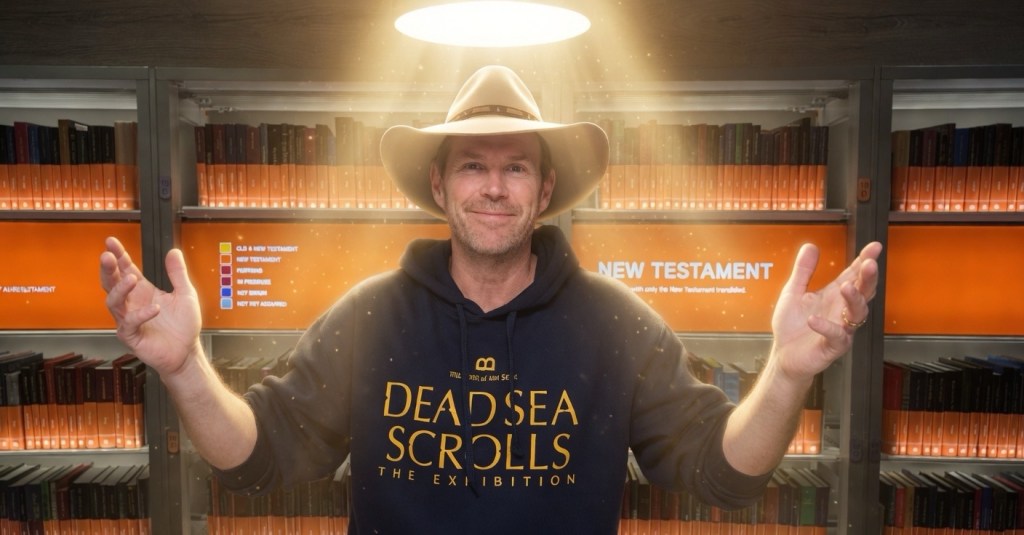
About the Author: Rich Hoffman
Rich Hoffman is an aerospace executive, political strategist, systems thinker, and independent researcher of ancient history, the paranormal, and the Dead Sea Scrolls tradition. His life in high‑stakes manufacturing, high‑level politics, and cross‑functional crisis management gives him a field‑tested understanding of power — both human and unseen.
He has advised candidates, executives, and public leaders, while conducting deep, hands‑on exploration of archaeological and supernatural hotspots across the world.
Hoffman writes with the credibility of a problem-solver, the curiosity of an archaeologist, and the courage of a frontline witness who has gone to very scary places and reported what lurked there. Hoffman has authored books including The Symposium of Justice, The Gunfighter’s Guide to Business, and Tail of the Dragon, often exploring themes of freedom, individual will, and societal structures through a lens influenced by philosophy (e.g., Nietzschean overman concepts) and current events

