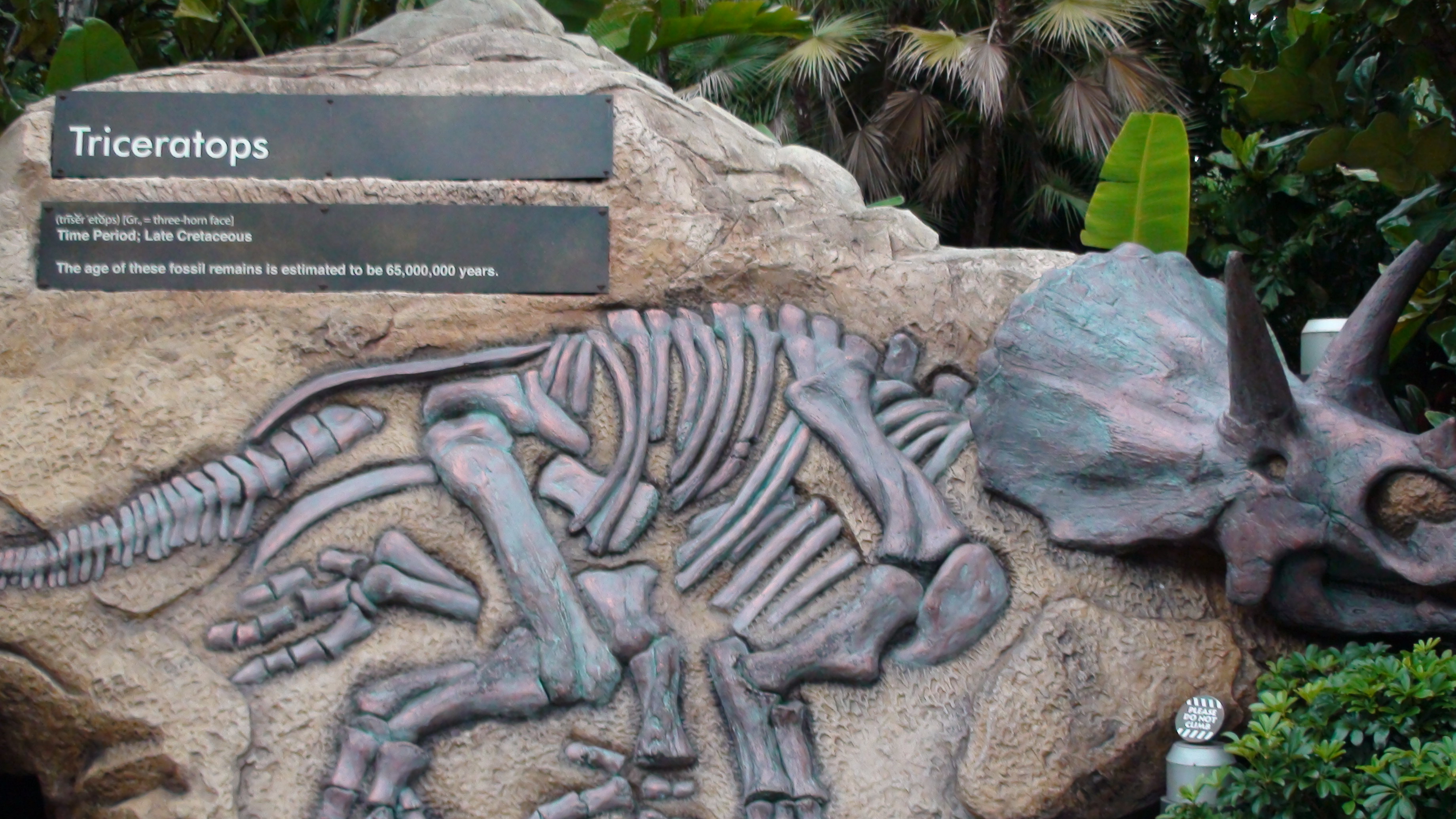
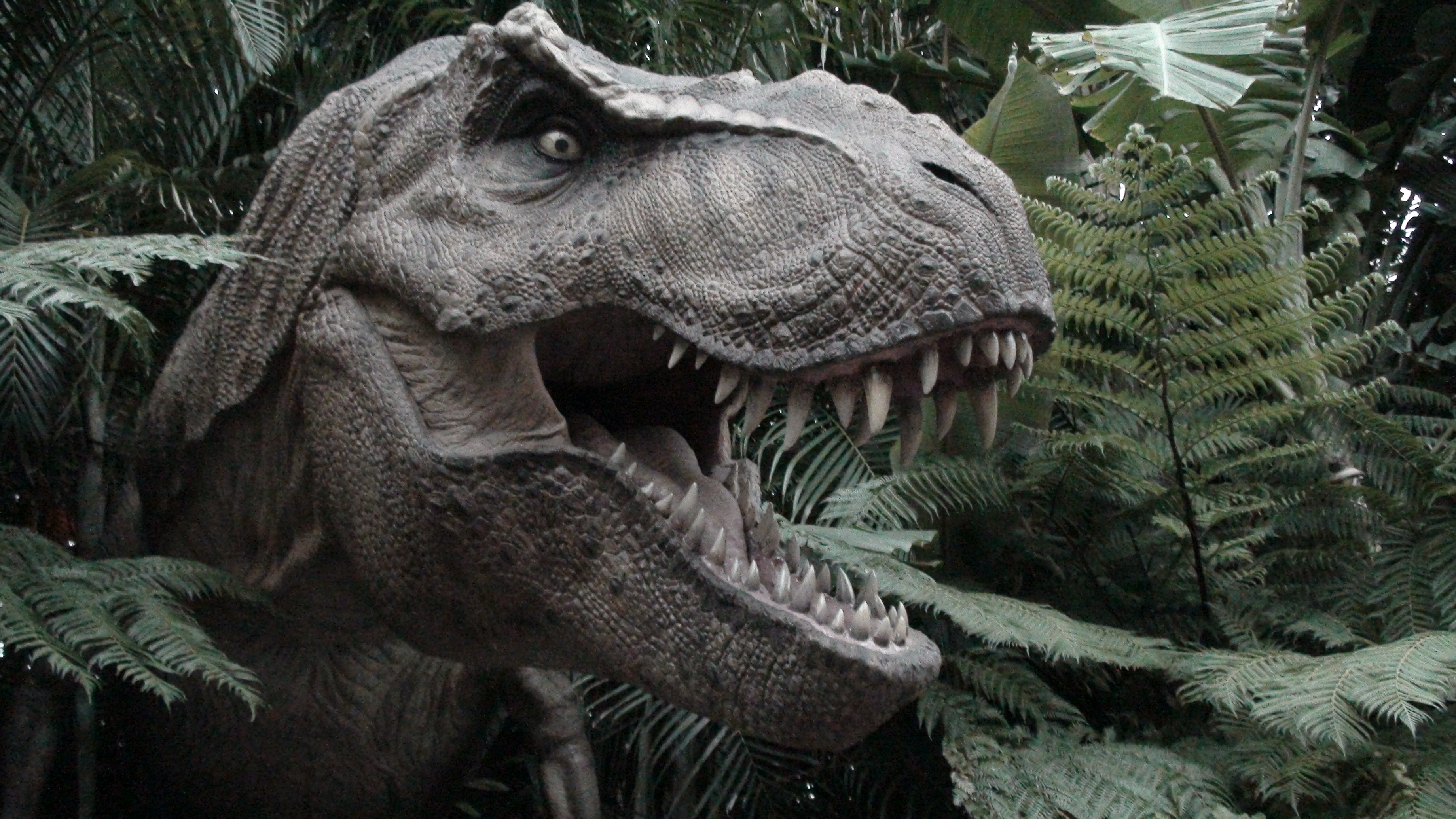
The Wonderful Dinosaur Store on the Space Coast: What good economies produce

The Dinosaur Store in Cocoa Beach, Florida, stands as a remarkable testament to personal passion, entrepreneurial spirit, and the enduring human fascination with the ancient world. Nestled at 250 West Cocoa Beach Causeway, just a short distance—literally a football’s throw—from the iconic Ron Jon Surf Shop, this family-run establishment has evolved from a modest fossil and mineral shop into one of the Space Coast’s most captivating attractions. For decades, it has drawn families, tourists, and enthusiasts alike, blending commerce with education in a way that feels refreshingly authentic in an era often dominated by corporate chains.

The story begins in November 1996, when the store first opened its doors as a small retail space focused on fossils, minerals, geodes, and related curiosities. Founded by Steve and Donna Cayer, it capitalized on a surge of interest in prehistoric life sparked by cultural phenomena like the 1993 blockbuster Jurassic Park. Visitors flocking to Cocoa Beach for sun, surf, and the nearby Ron Jon Surf Shop—a massive complex synonymous with Florida beach culture—would often wander over to pick up unique souvenirs: polished ammonites, shark teeth, or perhaps a necklace strung with genuine dinosaur bone fragments. The location was ideal, perched in a high-traffic tourist corridor along State Road 520, where beachgoers and space enthusiasts from nearby Cape Canaveral mingled.

What set the Dinosaur Store apart from typical souvenir shops was its authenticity. The family didn’t merely resell imported trinkets; they traveled extensively during the off-season, when summer crowds thinned and families headed to Disney World or other attractions. Steve and Donna ventured to fossil-rich sites across the globe, including the badlands of Montana, where heavy rains routinely erode sedimentary rock and expose new specimens. They collected ethically, often from permitted digs, and brought back high-quality pieces: Spinosaurus teeth, Allosaurus claws, brachiopods, and meteorites. These items formed the backbone of their inventory, supplemented by jewelry crafted from dinosaur fossils—pendants, earrings, and rings that turned ancient remnants into wearable history. Customers could purchase a Spinosaurus tooth or a slice of petrified wood table, items that carried a tangible connection to deep time.

Over the years, the store thrived. The post-Jurassic Park boom turned it into a lucrative family business, profitable enough to support not just daily operations but ambitious dreams. Rather than resting on success—perhaps buying a condo, a boat, or indulging in lavish vacations—the Cayers channeled their earnings into something far more enduring. They acquired property and constructed a multi-story building dedicated to their passions. What began as a single-floor operation in a strip mall setting expanded into a three-story edifice, transforming the ground level into a sprawling gift shop and adventure zone while reserving the upper floors for something extraordinary: the Museum of Dinosaurs and Ancient Cultures.

The museum opened to the public in April 2017 (on Earth Day) after roughly eight years of planning and development, following the store and Adventure Zone’s launch on the first floor in March 2009. It occupies approximately 20,000 to 26,000 square feet across the second and third floors (sources vary slightly on exact footage, but the scale is immense for a private venture). It operates as a nonprofit entity, with proceeds supporting preservation, education, and ongoing exhibits. Entry requires a ticket purchased downstairs (around $16 for adults, with discounts and combo options including the Adventure Zone downstairs), and last admissions are timed to ensure a full experience before closing.

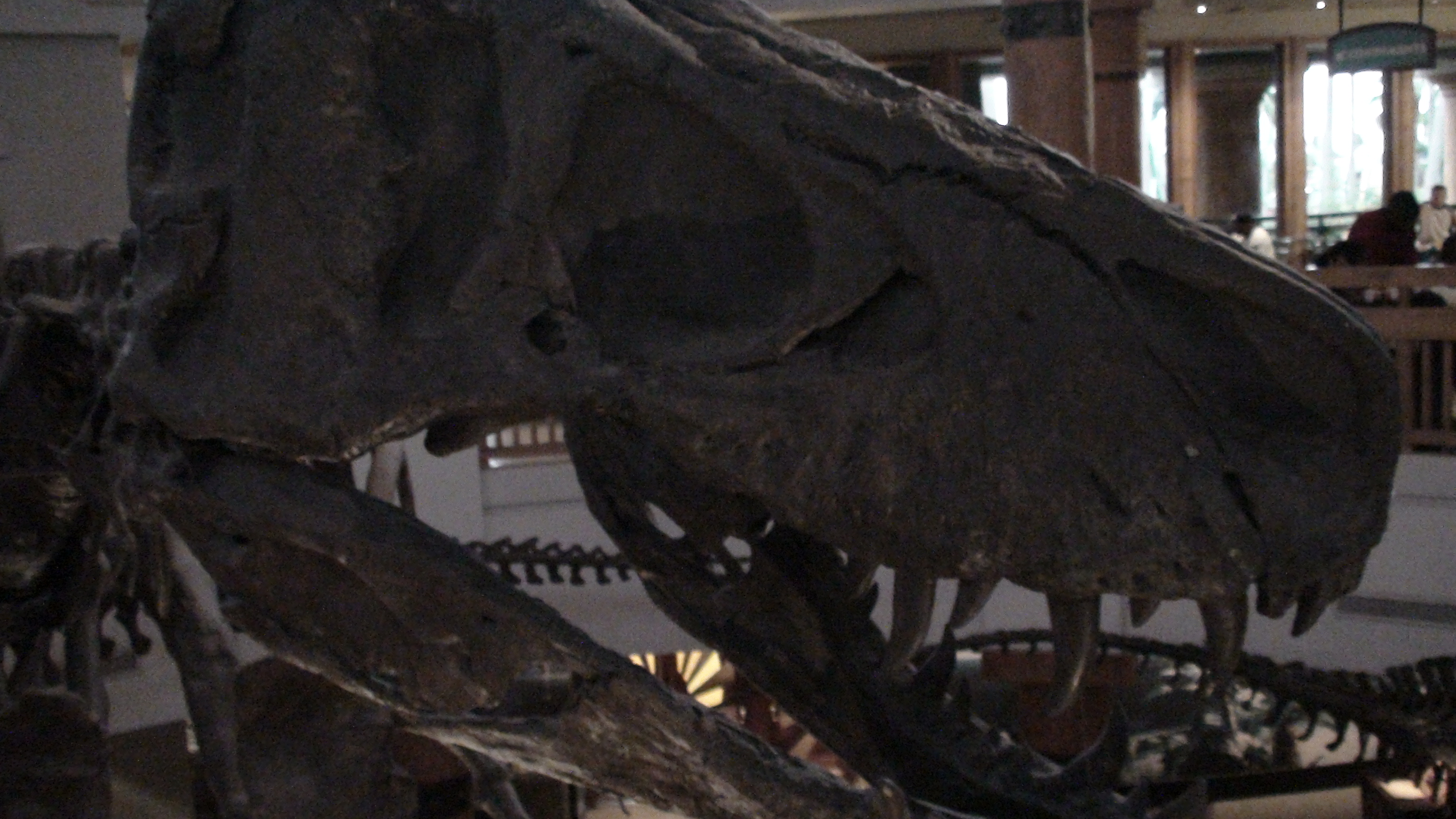
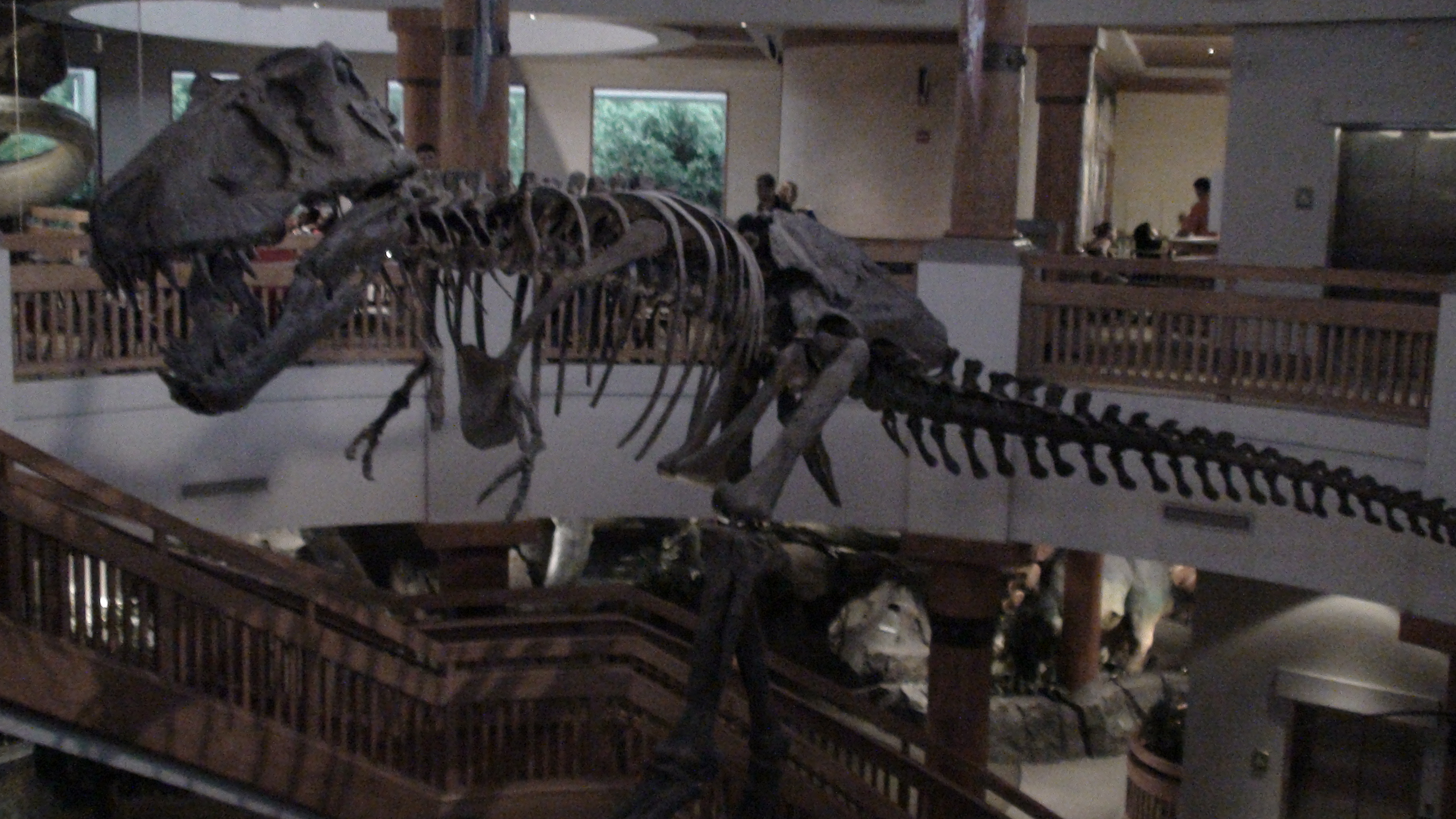
The museum’s design is ingeniously immersive. Upon taking the elevator up, visitors enter a vast, open space where the second floor soars to the ceiling, allowing for life-sized dinosaur skeletons and models that dominate the view. A standout is the 46-foot Giganotosaurus skeleton, one of the largest theropod displays in a private setting. Floor-to-ceiling mounts include roaring recreations, fleshed-out models, and over 60 dinosaur skeletons alongside more than 80 taxidermy specimens spanning 200 million years of natural history. The layout encourages looking upward, with necks and heads stretching toward the rafters, creating a sense of awe akin to standing beneath towering Jurassic giants. Authentic fossils abound—real bones, claws, and teeth sourced from the family’s expeditions—blended seamlessly with high-quality replicas for educational impact. Additional features include a Mineral Cave with ultraviolet-reactive crystals and a Dawn of Man section with paleolithic tools and hominid skull casts.

The third floor adds a mezzanine-like platform that zigzags through the space, offering elevated views of the dinosaur exhibits below while transitioning into human history. Here, the focus shifts to ancient cultures, bridging paleontology with anthropology and archaeology. Dedicated galleries showcase regions worldwide: ancient Egypt features a detailed replication of King Tutankhamun’s tomb, complete with replicas of artifacts and mummified animals; China includes a diorama of Terracotta Army soldiers; Mesoamerica highlights Aztec and Mayan elements, such as Chichen Itza-inspired structures; and additional sections cover tribal Africa and New Guinea. Authentic artifacts—pottery, tools, jewelry—sit alongside taxidermy from relevant regions, creating a narrative that connects prehistoric life to the rise of human civilizations. The exhibits emphasize how cultures emerged over millennia, often in relation to the natural world preserved in the fossil record.

This integration is what makes the museum unique. While major institutions like the Field Museum in Chicago, the Smithsonian, or the British Museum boast world-class collections, they are often vast, bureaucratic, and spread across enormous campuses. The Dinosaur Store’s museum achieves comparable quality on a more intimate, privately funded scale. It feels personal—born from passion rather than institutional mandate. The Cayers’ love for digging, collecting, and sharing shines through: they didn’t stop at selling fossils; they built a bridge between dinosaurs and the ancient peoples who might have encountered similar wonders in myth or reality. In doing so, they’ve created a place where visitors can ponder the history of life on Earth—from extinct megafauna to the ingenuity of pyramid-builders and terra-cotta warriors.

For many families, including my own, the Dinosaur Store has been a recurring touchstone. Over the years, trips to the Space Coast—often tied to Kennedy Space Center visits or beach days—included obligatory stops here. My daughter once bought me a Spinosaurus tooth as a gift, a small but meaningful token that still sits on my shelf, evoking memories of laughter, wonder, and the simple joy of discovery. We’d browse the shop, admire the geodes and meteorites, then head out with a new trinket: a dinosaur bone necklace or a polished fossil slab. Those visits built family traditions, turning a roadside attraction into something heartfelt.

A decade passed without a return—life shifted to other pursuits, including following developments in the space program during periods of stagnation. But with renewed activity under recent administrations, the pull of the Space Coast returned in 2026. Stepping back into the store felt like greeting old friends. The family behind the counter remembered familiar faces, sharing stories of their travels and the museum’s growth. Ascending to the upper floors revealed the jaw-dropping evolution: the towering skeletons, the meticulous cultural dioramas, the seamless flow between prehistory and antiquity. It surpassed expectations—better than many celebrated exhibits elsewhere, achieved through private ambition and capitalist ingenuity.

This success story underscores a broader point about passion in free economies. In places like the Space Coast, with its vibrant tourism, surf culture, and proximity to high-tech endeavors, individuals can turn hobbies into legacies. The Cayers could have cashed out comfortably, but they invested in education and wonder. Their museum doesn’t just display bones and artifacts; it invites reflection on deep time, cultural continuity, and humanity’s place in the cosmos. In a world where many pursuits prioritize profit alone, here is a rare example of going above and beyond—creating something magnificent not for acclaim, but because the topic demands it. The project reportedly cost around $3.7 million to develop, with an estimated $3 million in artifacts at opening, underscoring the scale of their commitment.

If you find yourself near Disney, the beaches, or Cape Canaveral, make the detour. Park (free, conveniently located), grab a Ron Jon T-shirt if you like, then step into the Dinosaur Store. Browse the ground-floor treasures—perhaps snag a Spinosaurus tooth or a fossil necklace—then head upstairs. The museum awaits: a private passion project that rivals global institutions in ambition and execution. You’ll leave with a renewed appreciation for the ancient past, the power of dedication, and the simple thrill of discovery.

For those eager to explore further, the official website offers details on hours, tickets, and exhibits. Reviews on platforms like TripAdvisor and Google (consistently 4.4+ stars from thousands) echo the sentiment: it’s a hidden gem worth the trip. Academic resources on paleontology provide deeper context on fossils, while studies on ancient cultures offer complementary reading. The museum itself serves as an accessible gateway, proving that wonder can thrive in unexpected places when fueled by genuine enthusiasm.

Footnotes

¹ The Museum of Dinosaurs and Ancient Cultures opened in April 2017.¹

² The museum spans 20,000–26,000 square feet, with variations in reported size across sources.²

³ Development took approximately eight years, following the first-floor openings in 2009.³

⁴ Estimated cost of $3.7 million, with $3 million in artifacts at opening.⁴

⁵ Founders Steve and Donna Cayer.⁵

⁶ Giganotosaurus skeleton measures 46 feet.⁶

⁷ Over 60 dinosaur skeletons and 80+ taxidermy specimens.⁷

⁸ Nonprofit status supports preservation and education.⁸

⁹ Google rating of 4.4 stars from over 2,300 reviews.⁹

Bibliography

•  The Dinosaur Store. “Home.” Accessed March 2026. https://dinosaurstore.com/.

•  The Dinosaur Store. “Museum of Dinosaurs & Ancient Cultures.” Accessed March 2026. https://dinosaurstore.com/museum.

•  The Dinosaur Store. “About Us.” Accessed March 2026. https://dinosaurstore.com/about-us.

•  Wikipedia. “Museum of Dinosaurs and Ancient Cultures.” Accessed March 2026. https://en.wikipedia.org/wiki/Museum_of_Dinosaurs_and_Ancient_Cultures.

•  TripAdvisor. “The Dinosaur Store (2026).” Accessed March 2026. https://www.tripadvisor.com/Attraction_Review-g34145-d2285722-Reviews-The_Dinosaur_Store-Cocoa_Beach_Brevard_County_Florida.html.

•  Visit Space Coast. “Museum of Dinosaurs & Ancient Cultures.” Accessed March 2026. https://www.visitspacecoast.com/profile/cocoa-beach/things-to-do/museum-of-dinosaurs-ancient-cultures.

•  Florida Today. “This Cocoa Beach spot pays tribute to dinosaurs, ancient cultures.” October 9, 2025. https://www.floridatoday.com/story/news/hidden-gems/2025/10/09/beachside-brevard-building-houses-massive-ancient-cultures-dino-exhibit/86170682007.

•  USA Today. “Museum of Dinosaurs and Ancient Cultures opening in Cocoa Beach.” April 20, 2017. (Referenced in Wikipedia citation).

Rich Hoffman

More about me

Click Here to Protect Yourself with Second Call Defense https://www.secondcalldefense.org/?affiliate=20707
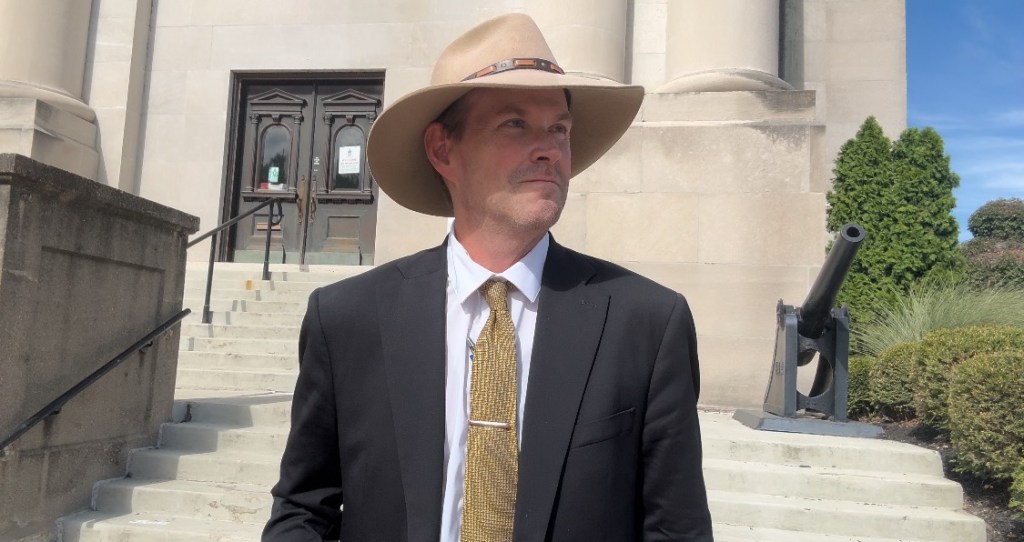
The Ark Encounter: A real life Jurassic Park with a noble goal of saving its guests from eternal damnation

IMG_4753After visiting many Buddhist shrines in Japan and having direct contact with their national culture it has been very obvious that the United States has been deeply damaged by the loss of Christianity as the primary, unifying religion.  In Japan they have at least a basic understanding of culture as a nation which unifies them toward basic tasks successfully.  So I have watched what Ken Ham has been doing down in Kentucky for quite some time with a hopeful eye.  I’m not a “young earth” believer but as any reader here knows I love functional mythologies and think that often there are great truths in the stories of culture that point to important needs all human beings have—so a functional mythology is essential to human existence.  By allowing Christianity to be pushed from our culture as a solidifying force, it has harmed the United States politically, economically—but most of all spiritually.  So When Ken Ham and his organization opened the Ark Experience a year ago as of this writing I was very intrigued.  I have been meaning to go but have been very busy with travels around the world—particularly a visit to the Canterbury Cathedral and Stonehenge that were high on my priority list.  However, a day shy of its one year anniversary my wife and I took a midweek Thursday afternoon trip to see the recreation of Noah’s Ark in the Kentucky hillsides and were quite astonished by what we found there relative to our travels.

My primary objective in going was to compare the size of the Ark to the Zheng He treasure ships of 1401 AD which were just a bit smaller than the massive 510 foot long, 51’ high Noah’s Ark recreation at Williamstown, Kentucky—one of those previously lonely exists on I-75 about halfway between Lexington and Cincinnati.  After all, a ship that big would clearly show how ancient cultures traveled the world well before Christopher Columbus so I was able to visit the Ark Experience with a clear understanding that much of our sciences are still in their infancy and are not correct about traditional historic formulations.   People have been building ships the size of Noah’s Ark for many years.

One of the reasons that the Christopher Columbus and Mayflower voyages were so miserable was that the ships were just so small.  Water was hard to come by and living quarters were cramped.  Zheng he was able to grow food on the decks of his massive fleet back in 1421 as he was circumnavigating the globe showing off the wealth of the Ming Dynasty to the world.  But even better was the access to all the fresh water that the big ships captured from rain at sea. The large decks could sustain a massive crew for quite a long time allowing travelers to navigate long voyages for a sustained period of time without hardship—and that was the key to ancient travel around the world much earlier than European historians wanted to admit.   So Ken Ham’s Ark and the details of how it worked was something I was interested in seeing.

What I discovered was that The Ark Encounter was essentially the emergence of a real life Jurassic Park which was all I could think of while visiting—only the theme was not resurrecting long dead dinosaurs—which ironically are part of the Ark Experience—but it was in resurrecting the Christian evangelicals into a theme park of their own by dusting off the 2000 year old religion into a modern functional mythology.  It was an ambitious enterprise to say the least.  After just returning from Stonehenge the way that Ken Ham had the whole park set up reminded me of how the English Heritage have set up that classic site to tourists.  All have taken a page out of the Disney playbook at the Magic Kingdom in that you can’t get to their attractions on foot; you have to be transported there to separate you from the outside world.  In the case of the Ark Experience tour busses take you from the parking lot to the Ark itself over a mile long road that carries you to the destination.   After buying our $40 dollar tickets and noticing that the parking lot was filled at just 10 AM in the morning with cars from every single state east of the Mississippi River—and many cars from well west, it was obvious that something very special was going on.  The way that you got onto the buses and arrived at Noah’s Ark reminded me of the way John Hammond took visitors to his fictional Jurassic Park in the now famous book and movie.

In doing a little research for The Ark Encounter it was obvious to me that Ken Ham was very much like a John Hammond type of person.  I always liked the Jurassic Park movies but I was always impressed with John Hammond’s character in the novel—which was given great respect in the first Jurassic Park movie with the charismatic Richard Attenborough.  It takes a lot to start a theme park in the middle of nowhere—especially when the cost of entry is so high.   At least the fictional John Hammond character of Jurassic Park had dinosaurs to lure in visitors. What the real life Ken Ham has done was significantly harder—he endeavored to create a $100 million dollar evangelical amusement park about essentially recruiting people back to Christ.  Using the Ark as a metaphor to tell the story of God’s first attempt to save mankind from sin by picking the favored Noah to be all that saves life on planet earth from the punishment of mankind’s wicked ways—the third floor inside the Ark delivers the essential message—that Christ is the second ark and all you have to do to ride it is accept Jesus Christ as your savior and all is good in the world.  It was nothing short of optimistic but as I watched the presentation which was very carefully planned to overcome whatever modern opposition a visitor might have had from the outside world it was easy to like what Ken Ham was doing.

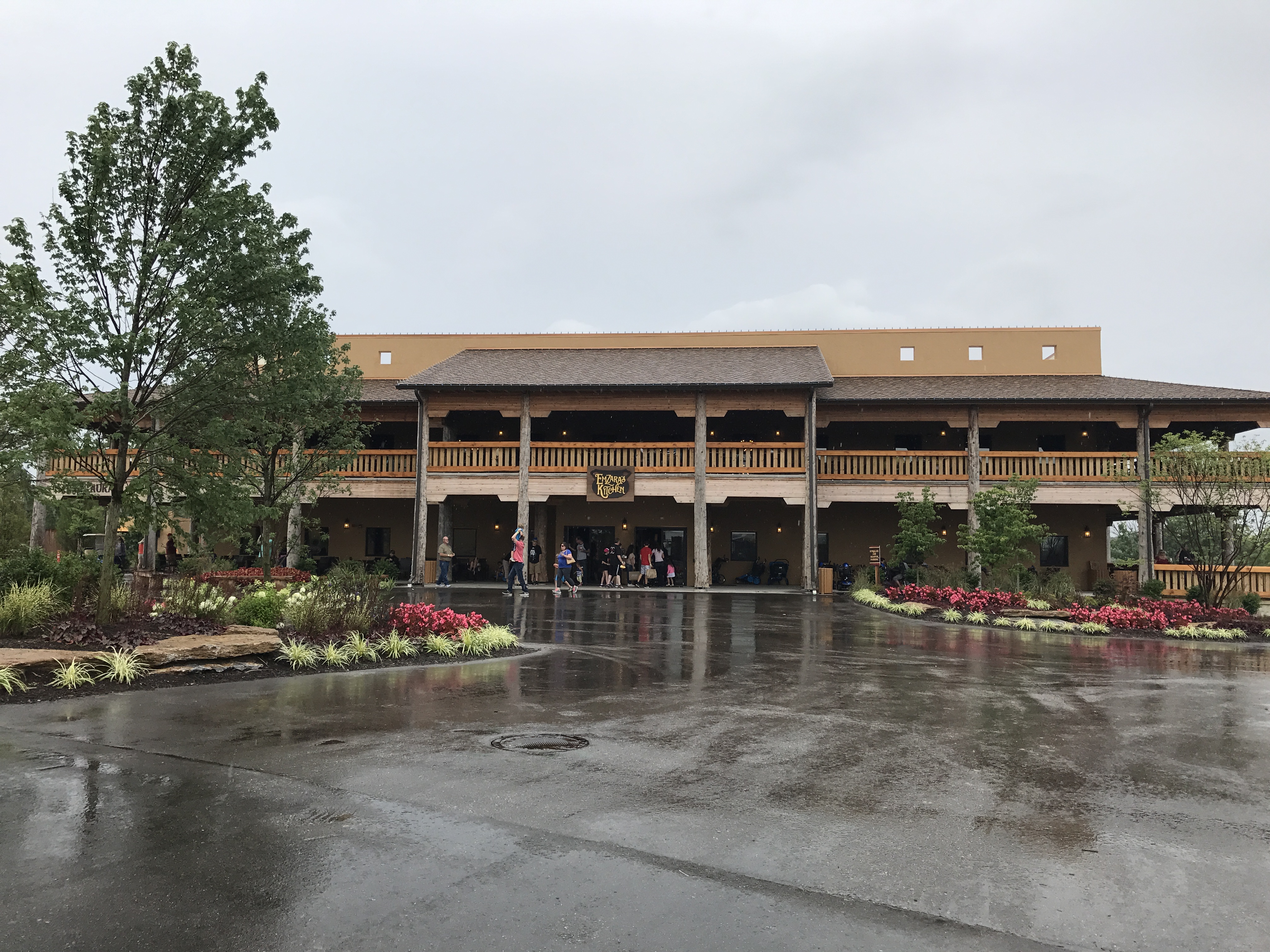
Like Jurassic Park the Ark Encounter isn’t quite finished–but they had what counts—the massive Ark which is the largest wooden structure on earth currently.  It is worth the price of admission just to see it.  Built by Amish craftsman to the kind of perfection they are known for, it became obvious quickly that the entire site serves to inspire people toward Christianity with overwhelming optimism.   The park itself had construction going on everywhere and was led by a charismatic president of the operation who narrated the arrival with the kind of fanfare only seen previously in fiction.  By only hiring people of the faith, there are no gay people or sour employees who were covered in body piercings and experimenting with atheism to muddy the experience, the whole place had a workforce much like Chick-fil-A where they wanted to be there and enjoyed the visit by the guests.   They currently have open the Ark—which by itself is worth the money, but they also have a nice little zoo and a few gift shops.  There is a zipline experience to help bring a little adventure to the park with obvious big ideas blooming later as the park matures.  But I think where the Ark Experience really shined was at their very nice restaurant called Emzara’s.IMG_4790

The gift shop was very impressive at the back of the Ark.  In it was a lot of material designed to be keepsakes, but I thought the best of it was of course the book selections.  There is a lot of reading material to delve into.  I don’t think it’s important at a place like the Ark Encounter for everything to be factual—after all, I’ve been to the actual Jurassic Park at Universal Studios and nothing they had there was real—but people suspended belief long enough to enjoy a functional mythology designed to get visitors to at least ask the “what if” questions.  At the Ark Encounter there is an obvious message of evangelical scholarship that is going on.  Nobody is force feeding anything but the opportunities are obvious and they most bloom from that short walk from the back of the Ark into the wonderfully spacious Emzara’s restaurant.

That place had a buffet style offering with abundant food to satisfy the sensibilities of southern expectations in America—and it’s big—designed to handle thousands of customers comfortably.  The building is two stories and also offers outside seating very spaciously provided.   That’s where my wife and I ate, away from the noise downstairs where things were a bit quieter on the second story.  It was up there where I saw several young people with open laptops off in the corner reading and doing Christian based research with their peers.  It was like church only at an amusement park with all the optimism that comes from such a place.  That’s where it was most obvious the brilliance of Ken Ham’s work there.   He has essentially created a Biblical refuge from the outside world where scholarship can be explored in the context of real scale to open up the thought process toward evangelical thinking.

Obviously, and it’s already happening, Ken Ham plans to make that 1-75 exit 154 an evangelical dedicated enterprise where the persecuted can gather to recharge together in the masses and return to the world to spread the word of God.  What he has created from nothing reminded me a lot of the early days of Disney World in Orlando.  It doesn’t take much imagination to see where things are going—rapidly.  The place is built to handle crowds and as I said, we were there on a Thursday afternoon just an hour after the place opened and the parking lot was full.  People were coming from more than 1000 miles in some cases to visit and I didn’t see a single beat up car in the parking lot.  The kind of people I saw visiting were good, hard-working people who were personally successful enough to have new cars to drive and families with two to four children who attend church regularly.  They were not the dregs of society let me put it that way–and they were willing to drive out of their way and spend a lot of money to see a life-sized Ark, shop at the abundant gift shop and eat at Emzara’s.  There is no pretense that you have to agree with Ken Ham’s “young earth” theories.  If viewed as a functioning mythology, there are a lot worse things for people to be thinking about.  But at least at the Ark Experience good people have been given an opportunity to spend some time around other good people with a soft sale of immortal enlightenment and let me tell you something folks—that’s a very powerful thing in our young American culture.  The Ark Experience is worth the trip, the money, and the hope it has for the soul of mankind and its “think big” massage is timely, and potent.  I predict big things happening in Williamstown, Kentucky over the next decade—and beyond.  And maybe, just maybe—we’ll find that America can find its national identity and return to a foundation rooted in Biblical scholarship which unifies our nation productively, and spiritually for the better.

Rich Hoffman

Sign up for Second Call Defense here:  http://www.secondcalldefense.org/?affiliate=20707  Use my name to get added benefits.
cropped-img_0202.jpg

The Wonderful Capitalism of ‘Jurassic World’: Ahhhh, just let it just wash over you………..

I’ve covered a bit about what makes Jurassic World such a good movie.  If you read my article yesterday, CLICK TO REVIEW, you already know I love museums and that the Discovery Center at Universal’s Islands of Adventure is one of my favorite places on earth—because it’s a dinosaur museum.  I love the Field Museum in Chicago, I love the Smithsonian, I love the Indianapolis Natural History Museum—I love the exploratory nature of them—so obviously within the context of an amusement park where a fantasy level museum is the feature—it beholds my interest. I’ve instilled this love in my kids who are now grown up and consider among their greatest achievements trips to the British Museum in London—separately.   They both made trips there and out of all the things they could have done in London as young twenty something’s, they went to the British Museum and spent a lot of time. We all went to see Jurassic World and loved the movie for all the obvious reasons.  But I loved it for more than even those.  I loved it for its open embrace of capitalism—an unfettered love of corporate sponsorship merged with scientific debate, philosophic proposals, and contemporary quandaries.  To get a sense of what I’m talking about have a look at the video below featuring Frank Marshall who is one of the producers of the film.  It was good to see some major Hollywood heavyweights embracing fully the commercial aspects of their movie and then shipping that enthusiasm around the world in the form of a story.  Then read the story at the following link of a guy who watched Jurassic World and immediately left to purchase a new Mercedes putting himself 90K in the hole with money he obviously didn’t have because his mom still pays for his phone bill.  When you combine science and capitalism into a motion picture, you get blistering success—and I hope sincerely that Hollywood learns something by studying Jurassic World.

http://www.funnyordie.com/articles/3c4832008f/i-bought-a-mercedes-benz-after-watching-jurassic-world-and-i-regret-it?_cc=S_d___&_ccid=gwiv0v.nqwoc3


imageJurassic World is partly great because it’s like that feeling you get when you arrive at Downtown Disney, or Universal’s City Walk for the first time and are bombarded by all the innovations of capitalism attached directly to human mythologies.  Jurassic World obviously understands that phenomena and embraces it fully—which was a common practice in the 1980s, but has been pushed underground to a large degree by progressive filmmakers who want to pretend they dislike money to appeal to their base, while needing a lot of money to make and release their motion pictures to the world.  Jurassic World doesn’t even pretend not to like it—it embraces capitalism fully with overflowing pride, and that is probably what I like most about it.  Even the billionaire in the film was a good human being, and interesting guy who even though he had all the money in the world was still teaching himself to fly a helicopter for personal growth.

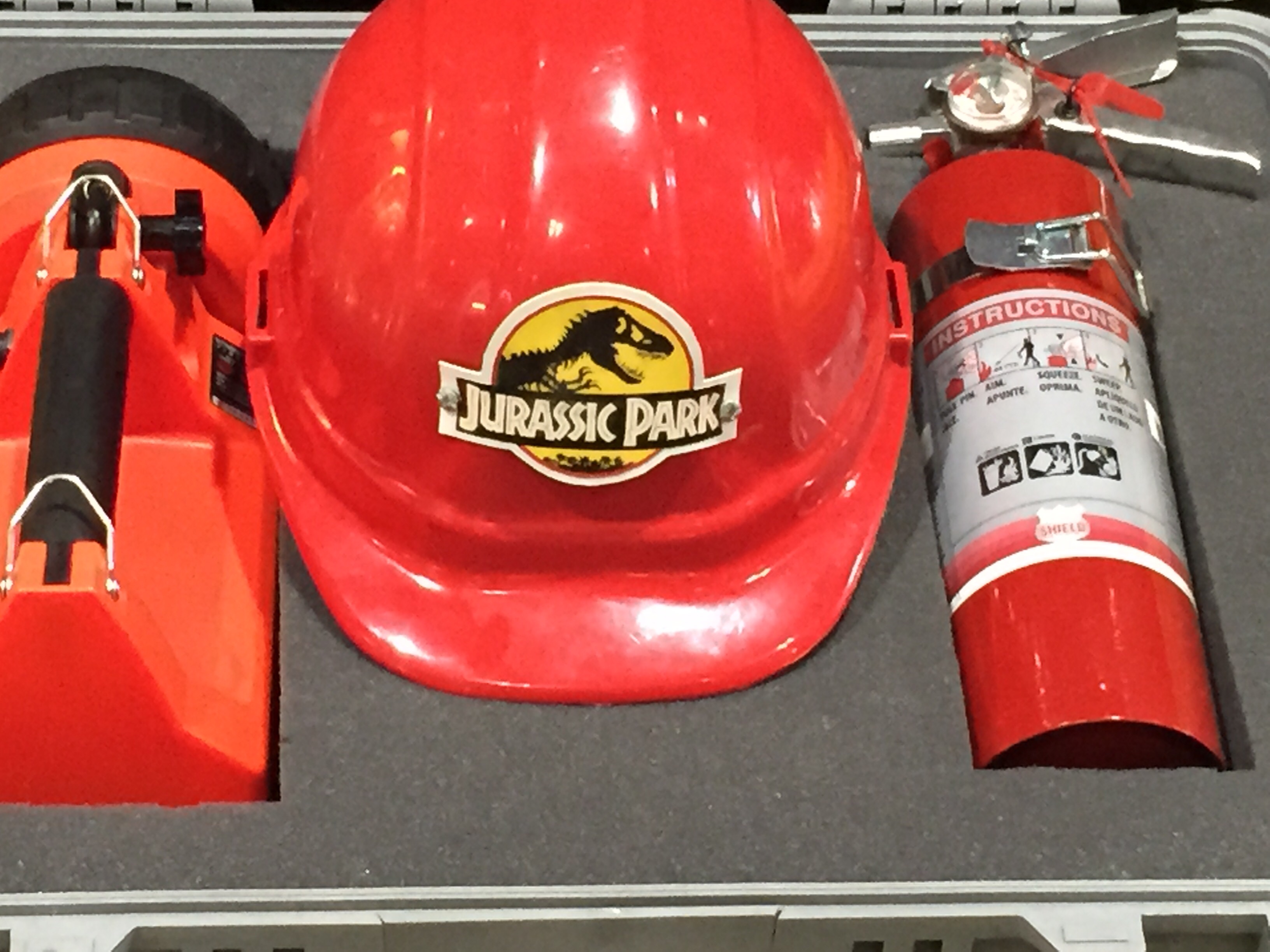
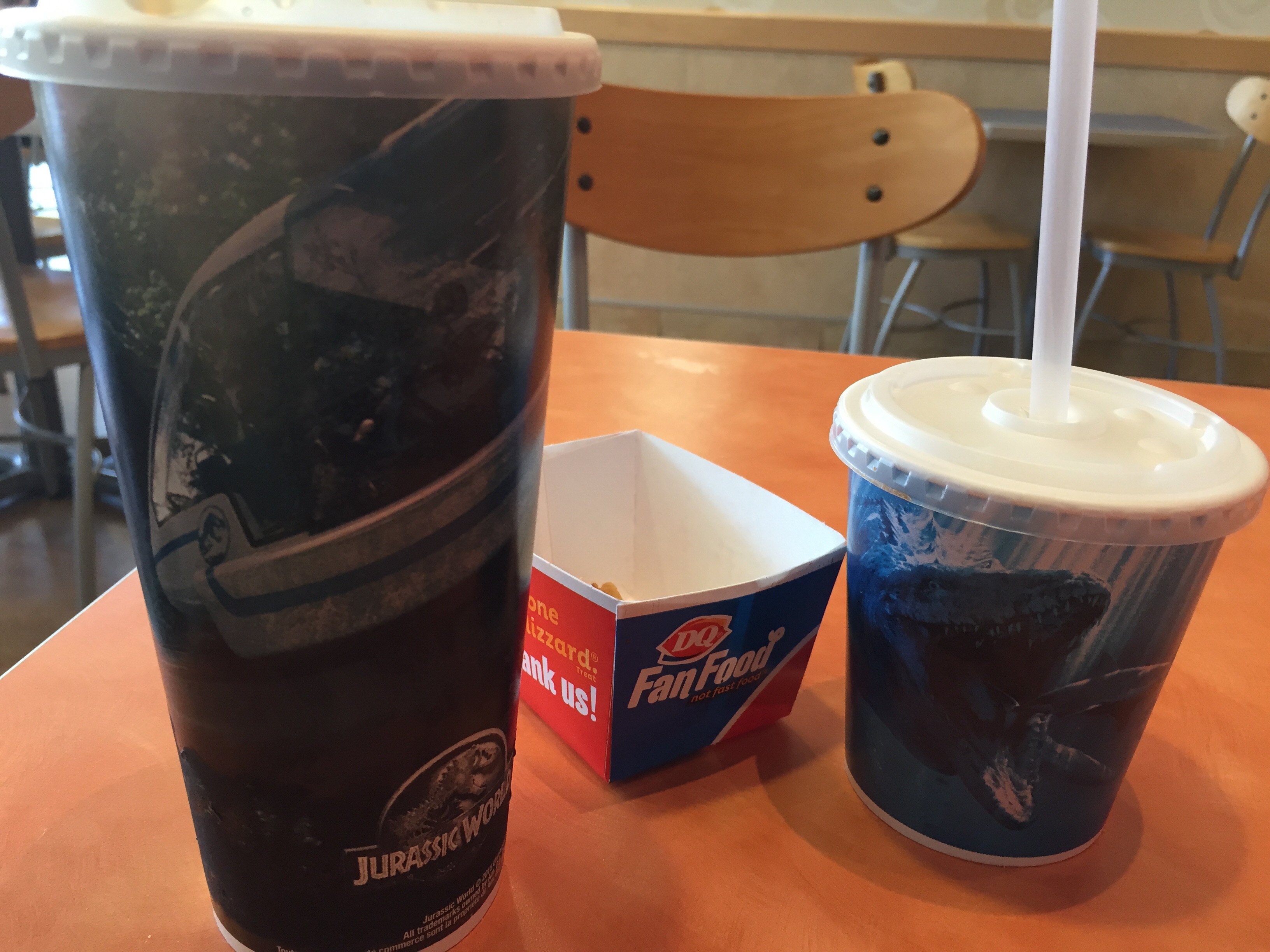
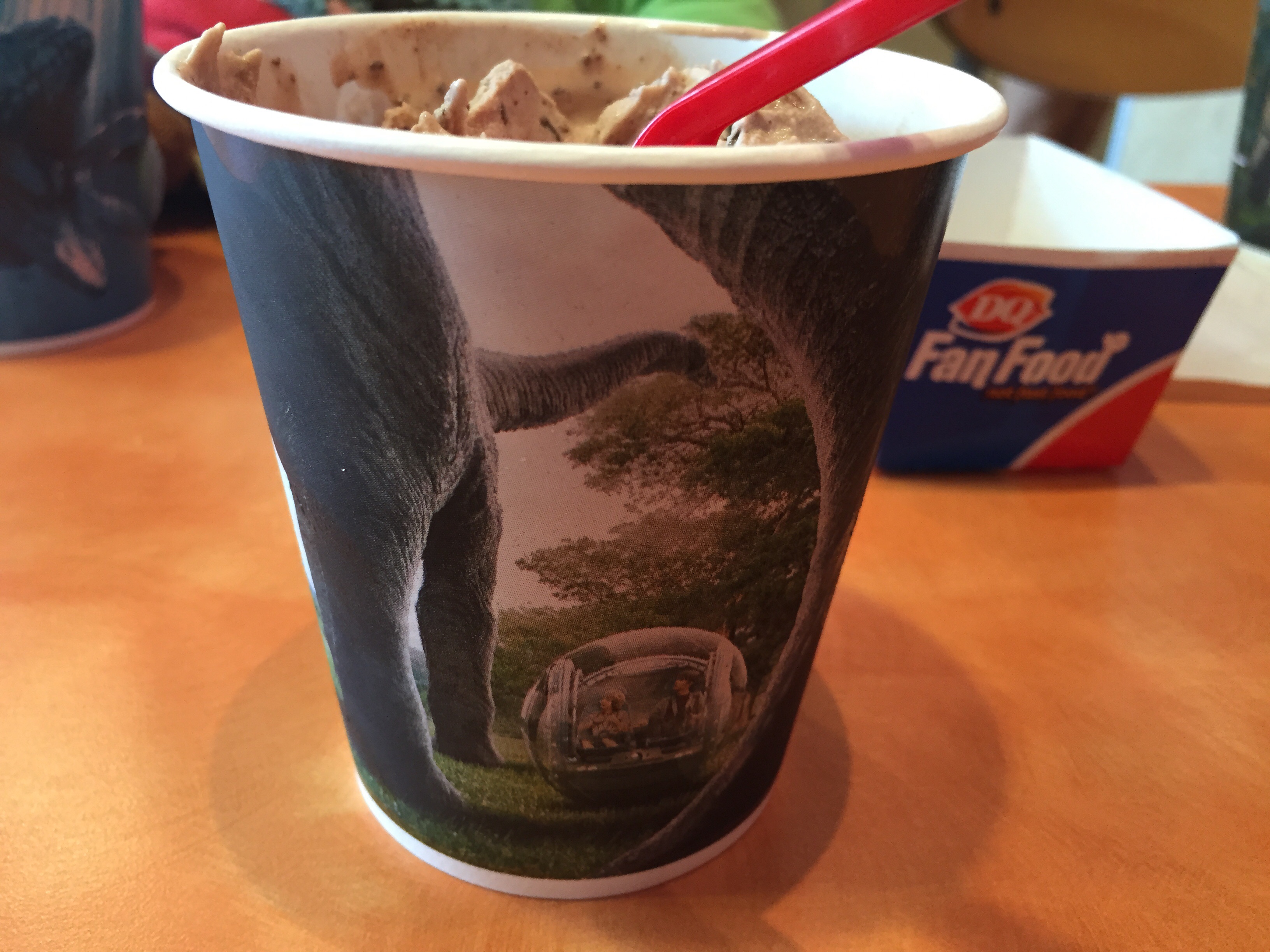
imageSome of the most obvious product placements were of course Coke, Starbucks, Brookstone and Oakley sunglasses, Hilton, Samsung, Verizon Wireless, Jimmy buffet’s Margaretville—among many others.  There is quite a long list.  After the movie my family even went to Dairy Queen where they had a really cool promotion going on with their Jurassic World Blizzard.  It was simply marvelous.  We had spent the day at an amusement park after recently seeing the movie and dined at Dairy Queen exclusively because of its tie-in to the film, and had a really great experience, which is shown in some of the pictures displayed here.  Also shown there is a completely fictional promo video for a new Hilton at the Isla Nubar Resort.  Obviously Isla Nubar is a complete fantasy.  There is no island like that off the Pacific side of Costa Rica.  But the movie did a wonderful job of building a fictional reality to serve as a backstop for all this product placement.  The main area of Jurassic World from the view of the Hilton Hotel reminded me a lot of Cancun complete with all the capitalist investment you can find there in a tropical paradise.  I find myself wanting to visit this specific Hilton and can’t help but hope that Universal Studios in Florida will build all these places for real so I can visit.  I think they’d be crazy not to at this point.  After the Fourth of July weekend of 2015, Jurassic World will be third on the all time money-making list behind Avatar and Titanic—and the film doesn’t open in Japan for another month.  If Hilton actually builds that hotel, I will be the very first person to stay in their T-Rex room. You can bet on that!

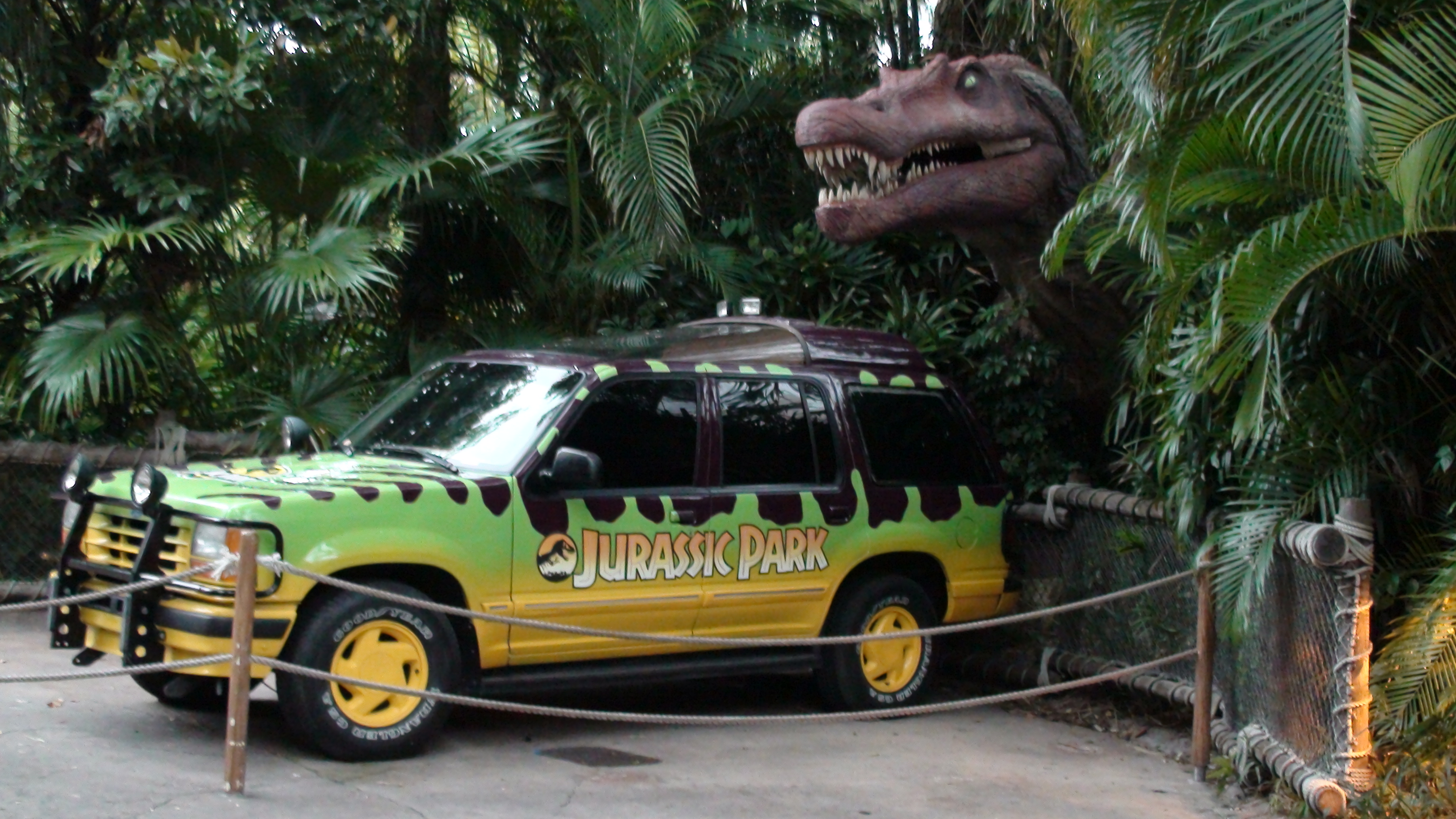
imageWhile at the Newport Aquarium again shortly after seeing the movie we strolled into the AMC theaters for a bite to eat and guess what we saw there?  A Jurassic Park Jeep from the original film, also shown in the accompanying pictures.  It brought no small measure of pleasure to me to see it there.  I had only ever saw one within the actual theme park at Universal Studios and at the AMC Theater at Newport on the Levee was one in really good condition.  It was further evidence to me that behind the veil of cynicism that often resides behind virtually every news story is hope that is unleashed behind Jurassic Park and this most recent Jurassic World movie.  I wasn’t the only person excited about the franchise and the products produced by it.  Many others shared that love with me which crosses all political and demographic barriers reaching directly to the heart of a deep human hope for such things to be made into reality.  These movies are not just about dinosaurs, they embody the hope that we find in every museum, or hope to find when we step in for the first time.

imageWhen I stand in the lobby of the Cincinnati Museum Center I love the marriage of science and capitalism.  Just two days of this writing I gladly spent $22 for a couple hamburgers and fries knowing that I was supporting the museum in small little ways with the overpriced lunch.  The food was actually good, but still overpriced, and that’s OK.  Museums need dollars to operate and bring all the great aspects of science to the forefront of thought.  Without money, there is no science—and there would be nothing I’d like to see more than education institutions accepting that their ticket to further funding for projects of interest is through capitalism, not socialism.  There are far more opportunities for environmental research through a company like Exxon as opposed to the socialist resistance of Green Peace.  Sea World is to my mind the closest thing to an actual Jurassic World that there currently is, and people should go and support those wonderful parks.  There was a lot in Jurassic World that reminded me specifically of Sea World.  One of my best memories as a kid was in visiting the Sea World in Aurora, Ohio when there was one located there way back in the 80s, then the one in San Diego.  The money generated through Sea World does more for conservation than a whole city block of protestors in San Francisco.  Science is a forward thinking process whereas just shutting down all capitalist endeavors in hopes of preserving nature goes against the very nature of being a human being.  There is no better format for exploring these issues than the Jurassic Park movies—and Jurassic World embraces better than all the previous three put together the joys of capitalism as it propels science forward with hope, and wonder sprinkled with dire warnings of greed and excess.  It’s not capitalism that kills everyone in Jurassic World, its deception and greed not by the billionaire, but by his employees who scheme behind his back for desires known only to them.  It is within that concept that we see a truth that we recognize as a true paradox in a time where we will have to make similar decisions about our own lives very soon.

imageJurassic World is not just a movie—it is the philosophy of our time, it is Plato’s Republic on a modern stage presenting questions to a hungry movie going public.  But more than just that the movie is a celebration of capitalism and an argument in favor of it as the best option to propel mankind into the future.  I love Dave and Buster’s so much so that we spent my 47 birthday this year at the one near my home.  I love the bright lights, the wonderful food and the imagination of all the interesting games on display there.  I love to play those games, eat that wonderful food while watching 14 different sports events on the multitude of televisions exhibited virtually everywhere you look.  And guess what, there was a Dave and Buster’s in Jurassic World, and I really want to visit it.  It’s time to start embracing our capitalism within our art so that we can have an honest conversation about what we want as human beings.  People have voted with their movie tickets in favor of Jurassic World. It’s time now that the science communities stop pandering to government stiffs for grants and start befriending capitalism to fund their further endeavors.  That is the future of science and the lesson of Jurassic World.  Progressive reviewers and news reporters may cringe at all the product placement within Jurassic World but in so doing they ignore what is truly at the heart of all human beings.  Steven Spielberg has understood that heart for many years, and nobody reaches it better than he does when he wishes.  But its time that others follow the lessons learned from Jurassic World and stop fighting against capitalism when it is the lifeblood of true progress.  Jurassic World is about the hope that progress can bring.  It captures all the reasons we like attending amusement parks and museums—it’s not just for the knowledge of history—but in the potential of making it.

Now, who wants to join me in bringing a T-Rex Café to West Chester Ohio?  You’ve seen the movie, you have seen the popularity.  West Chester has over 100,000 affluent people living within a ten-mile radius and in the middle of all that is some of the best entertainment options outside of a city like New York and Chicago. Those affluent people have lots of kids and grand kids. And it needs a T-Rex Café.  It would make a fortune!  CLICK HERE FOR A REVIEW.

Rich Hoffman

 CLIFFHANGER RESEARCH & DEVELOPMENT

Listen to The Blaze Radio Network by CLICKING HERE.

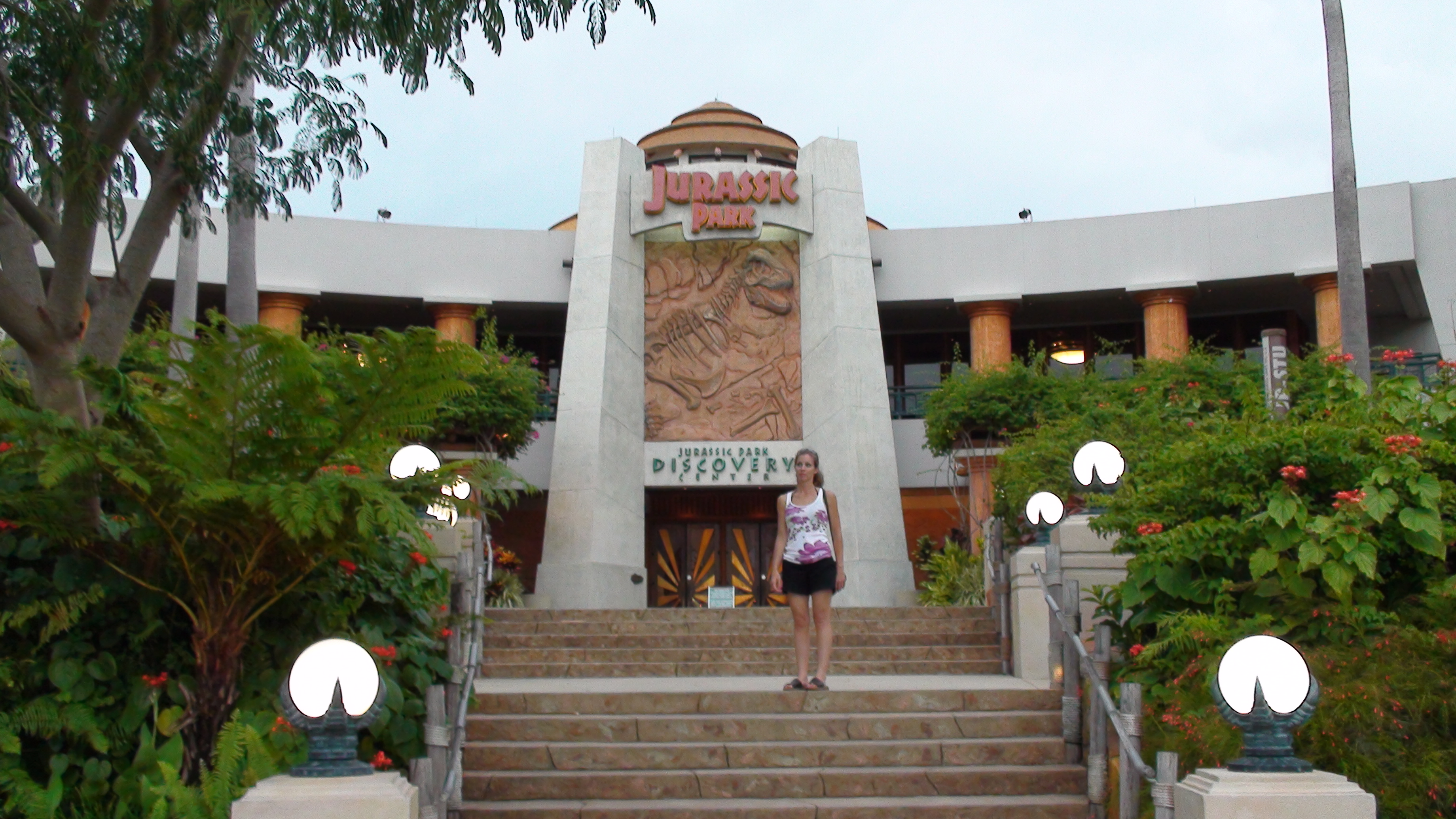
The Real Jurassic Park Discovery Center: Universal Studios, bring on the Samsung Innovation Center

80% of my articles are about something negative and overcoming that negativity with critical thinking and assessment. It is always my hope that somebody will listen and improve a situation after my diagnosis. Most of the time that diagnosis is ignored leaving me to shake my head at how stupid people are for not listening—but I get over it and return to the task at hand in figuring out how to solve problems and live productively at life. The remaining 20% of my articles are usually about something I am passionate about—which is actually quite a lot. I feel a lot of very raw—boyish enthusiasm for a great many things. I have an extremely busy life as a result and a lot of people to maintain within it. But I am exactly the kind of man who I always wanted to grow up to be as a kid—which is essentially just a developed version of myself from 7 to 10 years old. That said I am oozing with enthusiasm over the new Jurassic World movie from Universal Studios because it shares with me a similar approach at living—a little terror, optimism, adventure, technical proficiency, and a lot of warning as our human species moves into the needed direction of playing in God’s laboratory.

I saw Jurassic World twice over the weekend within twenty-four hours of each other, and I could go see it another nine times back to back without getting tired of it. It’s my kind of movie to say the least. I literally finished my radio show on Saturday with the Clarkcast in Ann Arbor, Michigan and headed back to the theater to see Jurassic World yet again. It is one of the most satisfying movie experiences that I’ve had going back to The Dark Night Rises a few years ago. It is simply a marriage between filmmaking and science brought together in an orgy of delightful possibility. I couldn’t help but think of the real world Jurassic Park Discovery Center in Orlando, Florida while watching Jurassic World and thinking about how great it will be when Universal Studios builds an updated version of the Samsung Temple of Science from the latest film.DSC01151

I love amusement parks which often make up those 20% articles here at Overmanwarrior’s Wisdom. The king to me is the Epcot Center within the Disney World complex. It is by far the best theme park in the world in my opinion. But that’s not to say that the rest are bad, just that Epcot does for me what I think Disney always envisioned. It’s loaded with science and culture and it changes with the times so it’s always relevant. It’s quite an astonishing place. But, I love the Universal Parks nearly equally but for different reasons. The only knock on them from my perspective is that they are a little too hip for me—too contemporary. But within the Universal Park, Islands of Adventure they have an entire section dedicated to Jurassic Park which is to me like the Holy of Holies within King Soloman’s temple in Jerusalem as far as science. When people ask me what it would take to get me to support school levies and public schools I say to them—make all of them like the Discovery Center at Jurassic Park within the Island’s of Adventure theme park, and I would be the biggest education guy in the world. But because they fall dreadfully short, they deserve to have the wrath of critical opinion cast at them for being too lazy to pluck off the vine of knowledge the low hanging fruit that is there for us all—only we refuse to do so. And that is what the Discovery Center at Jurassic Park is all about.DSC01158

The pictures shown here are from a trip my wife and I took to it together not that long ago. We had a three-day pass to the two parks and spent nearly a day just at the Discovery Center out of all the attractions. It was an amazing building and I found myself writing several novels in my head just while sitting on the lakeside entrance staring at the Marvel Universe across the waterway from the Discovery Center contemplating many things all at the same time. It was a profoundly relaxing experience to my excessively active mind. I can only describe it as heaven on earth for a person with the kind of mind that I have. My wife was just as enthused which is why we have been married for so long together. We ate at the Discovery Center, participated in every exhibit that we could, spent a lot of time looking through everything in their gift shop, and just looking at the decorations. It is an amazing place and I just love it.DSC01165

I get a similar kind of joy out of the Dinosaur Alive exhibit at my hometown park of Kings Island operated by Cedar Fair Amusements. I love going to Gatlinburg and Pigeon Forge, Tennessee because of all the miniature golf courses featuring dinosaurs and monsters of all types. But I love that Island’s of Adventure Discovery Center most of all. So I couldn’t help but contemplate that with Universal Studios taking in $200 million domestically, nearly a half a billion globally just in one weekend with Jurassic World, that they might finally expand their Islands of Adventure park to include the Temple of Science complete with holographic projections just like in the movie. The technology is there now for that kind of thing and is quite possible. I want to take my grandchildren there! It may even be worth the investment to do what they have done with Harry Potter and make two worlds connected by a monorail of some kind, something that goes from the old Jurassic Park area to an actual recreation of the Jurassic World main street shown in the movie. I really want to physically go to that place shown in the movie and spend hours upon hours in the Samsung Innovation Center located in the temple at the end of main street.DSC01155

People often ask me how I juggle so many different things at the same time, which shocks me a little bit, because we all do it as kids. But when we grow up we just stop playing with life and lose that ability—at least most people do. I never did. I have so many hobbies it would take me fourteen lifetimes to get everything I want out of all of them. But places like the Jurassic Park area of Universal’s Islands of Adventure help a lot, because they are playful places full of wonder and discovery. A young lady once who grew up with a bad social outlook yet was quite attractive said to me that she wasn’t going to ever see that stupid Jurassic Park movie with all those stupid dinosaurs running around. She thought when she said it that I would play along and feed off her pessimism; because she was used to men treating her like that. They’d say anything to get her cloths off—even if it meant ridiculing Jurassic Park as a work of art. My response to her was that I never spoke to her again—which shocked her. That was well over twenty years ago and she has bumped into me around town here and there. She became exactly what I thought she would, a used up mess who has lost her attractiveness and is now a lonely bitter person and it all started with her refusal to enjoy something playful and fun when she was younger. Little things lead to big things—believe me. The same holds true to what you allow into your brain.DSC01166

Dinosaurs are part of our prehistoric past. They lived a long time on earth and died rather suddenly. We should study them to figure out what we might do differently. And it is there that the gates of science open into the world of philosophy which is my favorite place to be. And to most adequately utilize those gates, I find places like the Discovery Center in Orlando, Florida to be one of my favorite places—anywhere—outside of the Epcot Center of course. Now with the success of a new Jurassic Park movie, it is my sincere hope that Universal will build for me a recreation of their Samsung Innovation Center. Because I want to visit it badly! Such places make living life such a delightful experience. And I hope that they will use the power of capitalism to share that joy with the world on a much more epic scale than a darkened theater!

Rich Hoffman

 CLIFFHANGER RESEARCH & DEVELOPMENT

Listen to The Blaze Radio Network by CLICKING HERE.

Jack Horner’s Science: The future being born from Jurassic World

The best things that come out of the Jurassic Park movies are the lasting impact their theoretical sciences impart into the future. When the first one came out in 1993 it changed the way zoos and theme parks operated. There is a little bit of Jurassic Park in just about every amusement park to this day. A quick trip to the Cincinnati Zoo will show even more evidence. The films and science that come from them are a nearly perfect marriage of imagination and reality. So it is quite exciting to see another film emerging called Jurassic World. Each time there is a new Jurassic Park film, of which Jurassic World will be the fourth, the outside world suddenly becomes interested in the very important work that the paleontologist Jack Horner is conducting that will change the future of the sciences in unimaginable ways very soon.

Not being able to complete the foreign language courses and therefore not obtaining his bachelor’s degree the budding scientist fought through great opposition to discover incredible dinosaur fossils and flesh out new theories as to their origins. It was Jack Horner who pushed the science community out of the box from thinking that dinosaurs spawned reptiles. The emerging answers was that dinosaurs are the parent DNA of birds which attracted Michael Crichton to write his novel, Jurassic Park by incorporating the new theory into a compelling story which brought to life dinosaurs through DNA resurrection into a modern theme park for children to enjoy. Steven Spielberg then made a film from Crichton’s book and history was made. The world learned about DNA and how it could be used to bring back creatures from the past—but ultimately cure humans in the present. Jurassic Park had a positive effect on the emerging science in a very positive fashion. Because of his voluminous work within paleontology Horner was awarded an Honorary Doctorate of Science in 1986 by the University of Montana where he works to this day in Bozeman.

In his 2009 book How to Build a Dinosaur: Extinction Doesn’t Have to Be Forever Horner unveiled his latest theory about genetically nudging the DNA of a chicken through reverse engineering into a dinosaur. It was a concept that he came up with during the filming of the first Jurassic Park movie over two decades ago—and now science has caught up to his vision. It won’t be but a few short years before Horner finds a way to pull off the attempt. He is now funded by people like George Lucas, so he doesn’t have to dig for dinosaurs and money at the same time—which is the largest impediment to science. Because of that Horner’s operation in Bozeman is one of the hottest spots in science and is revolutionizing the world with ambition and options.

Once mankind can build a dinosaur obviously there will be implications to the human race. Everything that we are, and our fates are locked in our DNA sequencing. Once we learn to work with that DNA like we would put a car in the shop for a proper diagnosis of something amiss, humans could be fixed at the genetic level to cure whatever issue we wish. Once Jack Horner builds his dinosaur and future entrepreneurs build actual Jurassic Parks the impact on humans will be much more significant. A new era will give us many options that we hadn’t considered and a whole host of new philosophies and intellectual options will be presented to us. That is the impact of a new Jurassic Park film. Without one, Jack Horner would be just another obscure eccentric digging in the badlands of the northern United States scorned by the scientific community and their accolades.

Even though it is old and dated now, one of the best parts of any amusement park I have been to is the Jurassic Park portion of Universal’s Islands of Adventure. It is there that reality meets fiction and I was able to actually walk through the closest replication of the fictional Jurassic Park on earth. For me personally, who has loved dinosaurs since I was a very little kid the discovery center at the real Jurassic Park was like entering the gates of heaven. I raised my children on the Jurassic Park movies, and on the music of John Williams, so there was something very special about the place to me. The movies and subsequent theme park attractions have all the optimism of early adventure films like the Jules Verne inspired Journey to the Top of the World, and Around the World in 80 Days—but then has the action and horror of something like Jaws. Then mixed in with all of that is quite large does of Indiana Jones—the nothing is impossible human spirit that Dr. Grant came to symbolize in two of the three Jurassic Park movies. These elements have been combined no place else and are central to the optimistic essence of the upcoming Jurassic World.

Once Jurassic World hits theater screens, museums all across the country will open up exhibits trying to recapture the movie experience and millions upon millions of children will learn something important as a result. Book sales of Jack Horner’s material will skyrocket and adults will learn much about what’s coming in science. These are things that are available every day, but are typically ignored until something like Jurassic World puts the focus on those options.   I’m looking forward to seeing the new movie just because of the conceptual design of actually implementing the original thoughts of the John Hammond character who was an unabashed capitalist that made everything possible. The Jurassic Park movies are extremely interesting in how they rock back and forth between capitalism and conservationism. Without the money and financing nobody would have anything—but left unchecked and disrespected, things spiral out of control quickly. So there is a core to the films that philosophically is at the heart of just about everything facing our world today economically and politically.

The premise of Jurassic World is fantastic and is what is facing real amusement parks like Disney’s Animal Kingdom and Sea World—how do you balance out a nice respect for science while still driving up park numbers to the levels it takes to make them financially profitable?   It costs a lot of money to care for large animals and once people get used to seeing them, interest curves off—even when it comes to genetically recreated dinosaurs. So because they can, scientists play a bit of Frankenstein with the DNA of dinosaurs to make a new creature—which is something that we are all facing in the very near future. If we can remake a dinosaur like Jack Horner plans to, why can’t we then make what we want in any form that we want it? Then, why can’t we apply the same to our own bodies as well. If we want to be 6’ 6” basketball players we could make ourselves into one. We could also build the perfect Victoria Secret models. Or we could turn off old age in our own bodies and live for several thousand years instead of just a measly 100. But to do that what happens to our religions and philosophy of sacrifice when so much is being built that is not dependent on invisible gods from realms unseen? Those are the themes that Jurassic World explores but against a canvas of optimism and wonder. It is an extremely unusual enterprise for a film that is about more than just thrills.

At the heart of Jurassic World is Jack Horner. Without him, there wouldn’t be a movie or the books that were the source material. The science of Jack Horner is changing the world from Bozeman, Montana and shaking the foundations of the establishment. The profits from Jurassic World will directly help Jack Horner build his real life dinosaur and that is the best aspect of the new movie. The hard questions about the morality of such a task are dealt with in the films, and then in reality they will be formed into new options that just weren’t there before. Or maybe they were. Perhaps this is how Noah lived so long and in the times before the Deluge giants ruled the world and genetics were manipulated in such a way to give people extremely long lives. Perhaps we are truly resurrecting a past that was imposed on us long ago that we are just now rediscovering? We will find out and leading the way is Jack Horner.

Rich Hoffman

 CLIFFHANGER RESEARCH & DEVELOPMENT

Listen to The Blaze Radio Network by CLICKING HERE.