I was just a bit stunned by the wonderful music I heard while watching the latest Mad Max film. You can see a bit of why in the video clip below dedicated to the composer Junkie XL—who used to be a DJ in a previous life. The music to me sounded remarkably like Hans Zimmer’s score on Man of Steel. So I wondered if Zimmer knew that Junkie used some of his Man of Steel music in Fury Road. After a quick check I discovered that the two composers have studios next to each other in Santa Monica and that they have become close friends. So that explained why the music was so jaw dropping phenomenal. The use of drums in Man of Steel for me was a major milestone in soundtrack design and I have been looking forward to other scores utilizing the same creative use. Fury Road was that next film and the music is so heart pounding excellent that the moment the movie was over, my wife and I went on an incredible journey to find the soundtrack.
On May 15th I had long-planned to take the afternoon off my normal obligations and see Mad Max with my wife. When we were dating I showed her all the Mad Max films along with Dirty Harry so we could see if we’d like each other enough to continue our relationship. She of course loved them, so we got married. For me, if a woman didn’t understand Mad Max and Dirty Harry, she wouldn’t be capable of sharing a life with me, so liking those films was a deal breaker. For me it’s almost a religious experience to see a Mad Max film, so I blocked off the afternoon to see the move. Before the film I was able to have lunch with my wife, one of my daughters and my grandson. It put me in an exceptionally good mood for actually seeing the movie. I knew I would like the film—I wasn’t sure how much—but it was overall leading up to the movie a very positive, long-planned experience.
After the movie my wife and I looked at each other knowing we had just watched a masterpiece for the first time and professed our love for the film until the last credit cleared the screen. READ MY REVIEW BY CLICKING HERE. But that soundtrack for Junkie XL was stuck in my head and I wanted the music. I didn’t want to wait to receive it from Amazon.com. I wanted it in the car for my ride home. So we went on a journey all over Cincinnati to find it. We checked Barnes and Nobel on Fields Ertle Road first—they didn’t have it. Then we went to Target and Best Buy in that same area. They didn’t have it. We then hit the highway and headed to the Streets of West Chester to the Barnes and Nobel there. They surprisingly didn’t have it either. I was really getting frustrated. So we were about to give up and go home. But not wanting to surrender we hit one last spot, the Best Buy at Bridgewater Falls.
I love the Best Buy at that location because it’s full of new technology all the time. It’s a big store relative to some of the others and always has a nice ambiance to it. I’ve bought a lot of computer equipment, video games and appliances there, so I generally love my visits to the Best Buy at Bridgewater Falls. After some frantic looking I found two copies of Fury Road stuck behind soundtracks to Pitch Perfect 2—and I beheld them as if they were treasures from the Sierra Madre. We bought one of them and headed to our car where we spent the next hour listening to the music from our sound system. It was a brilliant score well worth the purchase. I didn’t stop the music over the whole duration of the following weekend.
The key to the success of the music is the inventiveness of the ambition behind the score that obviously is inspired by Hans Zimmer. But Junkie XL brought a kind of rock and roll ambition to it that is strangely evocative of the dystopian world of George Miller. Unlike the old Blade Runner soundtrack which is a favorite of mine, Fury Road is full of hope and energy. I found it strangely compelling which is something I didn’t expect.
It didn’t take much time for me to get the soundtrack on my iPod where I proceeded to listen to it on a loop for several days. By the time I wrote this little piece on it, I have heard it upwards of 25 complete times and I like it more each time I hear it. It is another wonderful and often unappreciated journey into musical mayhem by some of the most creative people in the movie business. I have included some videos on this article about Hans Zimmer and Junkie XL to provide some context as to why I love soundtracks so much—often more than the movies themselves. As I’ve said before there isn’t one work of music on my iPod out of 8 gigs of storage ability that is not a soundtrack to some movie. I love mythology, movies are modern mythology, and the music of movies is what holds those stories together. Without a good soundtrack, a movie isn’t much. But with a good soundtrack, a movie can tell its story on a scale that lasts. For me one of those benchmarks was the Man of Steel soundtrack. So it came to me as a surprise to learn that Hans Zimmer and his friend Junkie XL were working on the soundtrack to Dawn of Justice together, with Junkie handling the Batman tracks while Zimmer works the Superman needs. Now that I’ve heard Junkie XL named more formally Tom Holkenborg, create such a masterpiece with Fury Road I am eagerly looking forward to the next Superman film by Zach Snyder.
Music is one of those things that stays with you long after the lights come up in a darkened theater. If the story was a good one, the music of the movie can go with you anywhere you wish by the soundtrack of the film. After Fury Road I couldn’t wait to keep my mind in that mythology because there were thoughts there that were pertinent to my observations—and the music helped usher those thoughts along. So the journey was hard-fought and worth the effort, because the work that Junkie XL brought forth is indicative of a treasure that will continue giving for many years. And for me, that means many more Friday afternoons with my wife and the treasures of cinema that come from blocked off mythology given to minds that love the stories they tell on the backs of really good music.
I had an epiphany that my wife and I were stepping off a Virgin Galactic vessel into the first hotel of their design floating above the earth with the horizon spinning outside of a massive lobby window. It is Virgin’s first hotel in space established as a resort location rivaling the Atlantis vacation destination in the Bahamas complete with an indoor water park covered with large glass windows looking out into the vastness of space. The lobby was lush and expensive with exotic restaurants all offering outrageously epic views out every window. The moon is always full and casts a constant—haunting shadow through every object and mixed with the brilliant light shining off the earth is a bluish hue that has never been replicated by any light on the home planet. It’s our 50th wedding anniversary and we have a $5000 bottle of wine to mark the year of this writing to celebrate our first week-long vacation in space. We have worked hard and deserve to pamper ourselves with a very expensive outing that will mark many years of persistence. In the lobby is playing the old soundtrack to the classic 2014 movie Interstellar, which has by then become the standard of music referencing space. It was that award-winning Christopher Nolan movie that changed it all and set the tone for the second world-wide space race causing Hilton, Marriott and Virgin Galactic to build the first space stations catering to tourism. Virgin was the first to achieve it.
The majestic views out of the multiple windows demand the music of Interstellar because nothing else would be sufficient. The hotel operators just play constantly the old Hans Zimmer soundtrack to help alleviate the shock of being grounded so firmly to the floor as the view outside swirls around like a marry-go-round. It takes some getting used to for some people; some actually throw up with the disorienting effect of the earth’s horizon spinning around so rhythmically. There are trash cans stationed along the pathway toward the check-in counter large enough for visitors to dump their stomachs in the most graceful way possible. A cleaning crew quickly removes the contents so not to alter the smell of space—that rusty metal odor mixed with the fragrance of lobby vegetation that is intended carefully to greet guests as they step off the shuttle from their journey below.
We walk to the counter as track 7 on that enchanting soundtrack plays with organs chiming to the tempo of a clock’s second hand—the earth still swirling, the light from the moon and sun moving around the room casting shadows in all directions hauntingly. Bright overhead lights on the ceiling between more large windows cast stabilizing light so that the lobby looks to be the only stable element of a universe in chaos outside—which adds to the otherworldly sensation of a species raised on a planet where the sun rises and falls every 12 hours and the horizon is always fixed. Here, the sun is always out, the moon is always full, and the horizon never stills—it spins perpetually so to provide an earth like gravity for the visitors—some who are already in their swimming suits and heading for the massive domed Water Park behind the check-in counter.
My wife and I aren’t sick; the music brings our minds to ease with a familiarity that we know well. We have listened to that soundtrack every week for the last 25 years and know its notes by heart. Before checking in we just listen to it while we sit in one of the lobby seats and watch the Virgin Galactic shuttle pull away from the docking station and head back to earth with its navigational thrusters silently pushing it back into a declination orbit to Spaceport America—our home launch point. In another three hours that same ship will be back with more visitors and within 30 minutes another ship will arrive from Spaceport America and fifteen minutes after that, one from Space Port Japan, then one from Spaceport Europe. Because Virgin Galactic has brought the Internet to Africa—they now have one of the fastest growing economies in the world. Soon they will have their own spaceport in right in the middle of the Congo.
My wife and I head to our rooms and prepare for dinner. We spend five solid hours drinking our expensive bottle of wine sitting on our hotel bed watching the world turn—literally. And we cherish that this event has finally been made possible after many years of dreaming. The whole time we listen to our well-played soundtrack for the several hundred thousandth time—Interstellar, as we have always loved it and likely always will.
That soundtrack actually only came out a few days ago, on November 17, 2014, so my son-in-law rushed to Barnes and Nobel to get it for he and my daughter the moment it was unloaded from the delivery truck. They spent their evening listening to it while eating Chinese food from their favorite restaurant—and they gave me a copy. They have already seen the movie twice and are looking for ways to see it many more times. In what’s being touted as a first-of-its-kind promotion, Paramount and AMC Theatres are offering movie patrons in North America the chance to see Christopher Nolan‘s Interstellar as many times as they want, for one price.
As with any deal, there are rules. Those who want to participate must be members of the AMC Stubs program, which has an annual fee of $12.
The unlimited tickets will be available for sale to AMC Stubs members at 330 AMC theater across the country, including AMC Imax locations. The price will range from $19.99 to $34.99, depending upon the location (currently, the average cost of a movie ticket price in the U.S. is $8.08.
Interstellar requires for most people many viewings just to understand everything that is happening. Many critics of the film on their first viewings were used to a more conventional film experience and didn’t know what to make of some of the sound issues. As I said in my review—I think I was the first and only one to date to point it out—the sound in Interstellar was entirely on purpose. Christopher Nolan wanted there to be times where the events overwhelmed the sound made by the actors—because in real life—that happens often.
“I’ve always loved films that approach sound in an impressionistic way and that is an unusual approach for a mainstream blockbuster, but I feel it’s the right approach for this experiential film,” Christopher Nolan said, speaking for the first time in detail about the use of sound in his new film.
It is because of this approach to sound that the Interstellar soundtrack was so exceptionally good—and is why it will become the inspiration for all that I described above. When my kids gave me the first copy of the soundtrack and I played it for much of the day on Tuesday and Wednesday listening to it many, many times—it was easy to conclude that it was a masterpiece. I remember the music being great during the movie, but listening to it by itself, it was simply phenomenal as it steps up and well beyond anything that’s ever been attempted. The closest that I can think of is Philip Glass—but the Hans Zimmer approach comes with a much bolder, and narrative link to the future by drawing so historically on the past.
Blasting through the track on the soundtrack titled “S.T.A.Y” all that I began this writing above occurred with the epiphany. Many of the world’s problems seemed so miniscule and the minds that made them that way even less relevant. I could literally reach out and touch that future space station/hotel as if I were there, as if I could smell it, taste it and walk across its vast floors with Richard Branson still alive and standing in the corner welcoming his guests with long flowing locks still beyond his shoulders with a smile from ear to ear.
At dinner in my epiphany there was a guest who played in the center of a vast dinning hall with a clear picture of the moon out the distant window—again spinning around with rhythmic precision upon a large glass piano lit from beneath with blue lights that made it look like it was made out of ice. That guest was an elderly Hans Zimmer playing the Interstellar soundtrack live with a deeply personal concert, graced too with a smile from ear to ear knowing that it was his soundtrack that helped build this palace of achievement in defiance of the earthly stupidity which attempted to shackle man’s ankles to earth forever. His music helped free those shackles to usher in this entirely new age of dreamers, fortune hunters and lovers of science and possibility. It was and would be the best dinner of our lives. Happy 50th Anniversary to us—and it was.
To get an idea of what the screenwriter was thinking during the development process of Interstellar—before diving too deeply into the contents of the story—read what he said to /Film.com which is a kind of industry insider blog site. Jonathan Nolan spoke openly about his motivations while writing Interstellar. He has brought his writing talents to the Dark Knight series which I have praised heavily because of the content and angle he chooses to provide in those films. In Interstellar his motivations were clear, persuasive, and as bold as anything that has ever been done before in a movie.
/Film question: So that was always the pitch that like it was set in the future where resources are, were our future’s looking bleak?
Nolan: Absolutely. I mean, look the reality is we stopped going to space because we’re too fucking wrapped up in whatever narcissistic bullshit, you know, as a sort of a collective. I mean, look, there’s an awful lot of things that still need to be fixed here on Earth, right? You know, problems that never seem to go away. Poverty, disease and a lot of stuff that we turned our attention to that is a good thing. We’re also just kind of sucked in the bullshit. I was talking downstairs, I grew up in Apollo space travel, we were promised jetpacks and fucking teleportation and instead we got fucking Facebook and Instagram. That’s a bummer.
But we don’t think of it in those terms. We think of ourselves as being the most magnificent, amazing universe ever and if we wanna go back to the Moon, sure, we could. It’s like no, those guys are all dead or retired. We’re not going back to the Moon. And if we wanted to, we’d have to spend billions of dollars and it would take years and years and years. We’re just done. We’re not doing that. We’re out of that business. And so people don’t think in those terms. We had to set the movie in the future in which that was abundantly clear.
Readers of this site will instantly recognize the angle Jonathan Nolan took in setting up the movie Interstellar. At the start he challenges the notion of public education when the government schools are caught lying to students about the Apollo missions—stating that they were only intended as propaganda against Russia. Public education in Interstellar is on Common Core overload as test assessments determine what kind of careers students can pursue as adults in the collective society.
Meanwhile, innovation is down, people are barely able to make food for themselves as a blight fungus similar to the current Ug99 strains that are currently moving across Africa into the Middle East-specifically target wheat and okra. Because the developed world has micromanaged the world’s resources—specifically the minds of their youth—there isn’t anybody anywhere who can stop the fungus as it thrusts the world into hunger slowly killing earth.
It was amazing how many reviewers on their first viewing of the film missed so many of the most important messages—many confused the fungus in the film to environmental recklessness supporting their global warming conspiracies when it is exactly that kind of stupidity which has lunched the world into regression. Interstellar is such an amazing film that people wanted to come away with something they liked in it, even if the premise of the film attacks many of the core beliefs that most of our current civilization holds. So there is some revisionist memory going on in almost every review I read. But it’s not fair to Interstellar because as a movie it is going to places that nobody ever has attempted before. It tackles 5th dimensional space; inter galactic travel, the nature of love, the transitory aspects of time, the foundations of religion, the deep human yearning for adventure, the magnificence of invention and the corrupt nature of politics most epically displayed in forcing NASA underground because public support could not fathom spending money on spaceships when the world needed food. The movie even tackles the premise and existence of poltergeists. There are so many big ideas harnessed in the movie that it really belongs in its own category. It seeks openly to advance the human mind—which is certainly no small feat and it succeeds on every level.
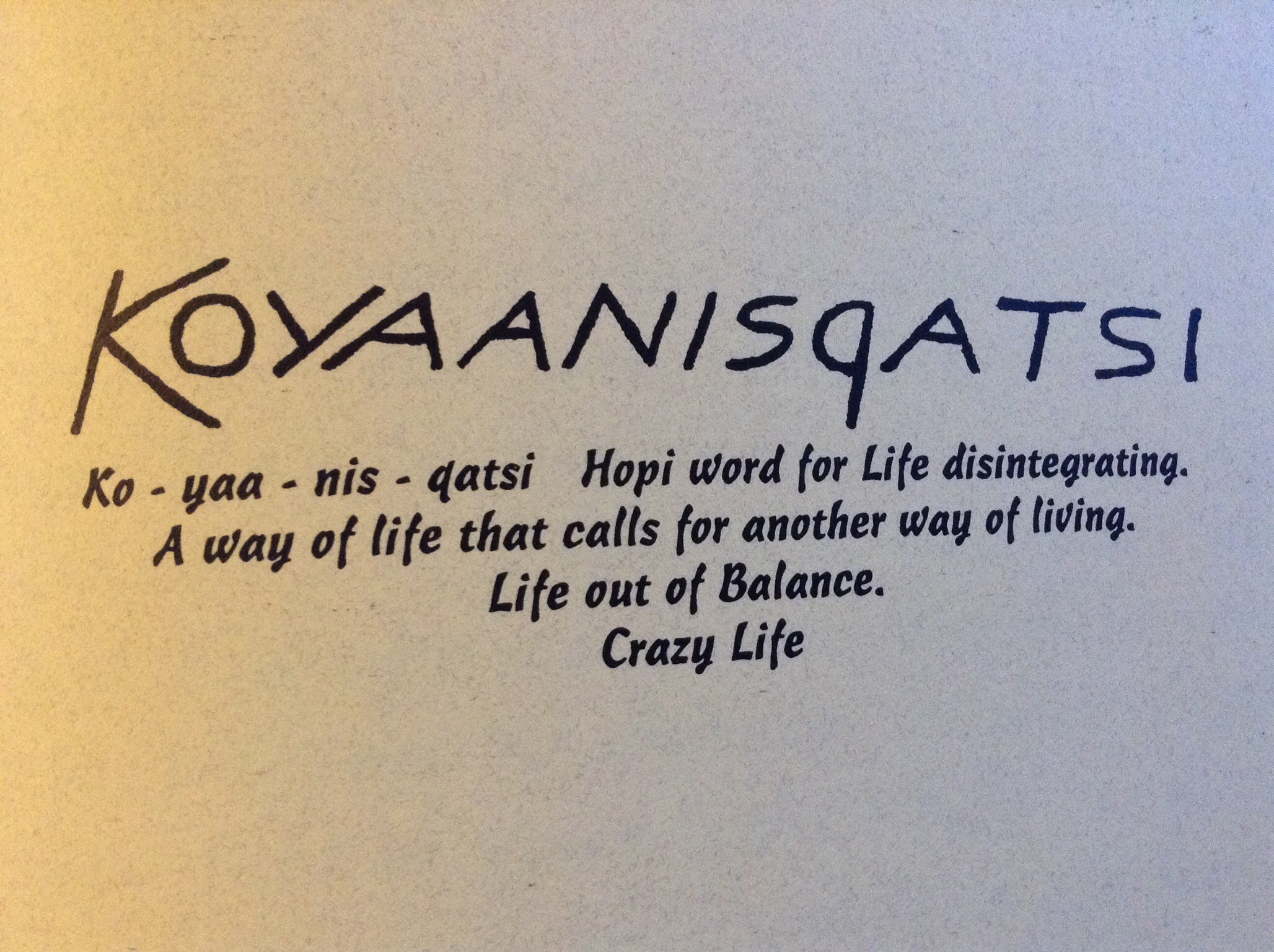
The best parts of the movie were the space sequences which reminded me so much of 2001: A Space Odyssey filmed in complete silence—just as they would have been. The catastrophes in space were just mind bogglingly beautiful. As I have also reported at this site I am a tremendous Koyaanisqatsi fan—even to the extent that I designed a line of t-shirts years ago as a tribute to the 1983 experimental film. But the problem with it was that it pointed to progress as a vile and evil thing ultimately and concluded with a rocket exploding on its way to space falling back to earth in complete silence to the score of a magnificent work by Philip Glass. Well—there was a lot of Koyaanisqatsi in this movie and the music by Hans Zimmer without being disrespectful to Philip Glass tackles the original Koyaanisqatsi score with a new level of boldness. The pipe organs from Hans Zimmer’s soundtrack gave narration to the silence of space in such a grand fashion that it will become the new standard for all filmmakers over the next century. If The Wizard of Oz brought color to film, Interstellar has brought music to space—and that is not an insult to the contributions of John Williams to Star Wars—but Interstellar is in a new category of its own that will become the new standard—it is that good. The flight sequences were so wonderfully done—they were like a concert set in space to silently floating images struggling to break the boundaries of not just earth—but previous human limitation. There were times when the thrusters to the ships kicked on and the music literally was blowing me into the back of the seat—it was jaw-dropping incredible.
I think most people seeing Interstellar will like something from it—but the movie was intended to be enjoyed by smart people—or at a minimum, those who strive to be. It is a thinker’s movie to say the least and deliberately reaches out into the audience to declare, “We feel your pain.” It is literally bigger than anything on earth, there is no mountain too tall, no ocean so great—by the time Interstellar is watched once, everything on earth seems small and silly—including the civilization we have so far built. This is easily the grandest production of ideas ever gathered for the silver screen and even challenges some of the greatest literary work put to print. Interstellar is a magnificent masterpiece assembled to please the mind—to see life beyond death, and to touch the true face of God.
When the main character Cooper finds himself in the fifth dimension it’s not aliens, or a “they” out there in space trying to help the silly ants of humanity with carefully placed worm holes next to Saturn or the rapture inside a singularity—it is us who have mastered multi-dimensional travel, who have left the door open to our former incantations so to achieve the task in a linier time—to tell the story of humanity as a struggling race beating an invisible clock against stupidity only to weave the universe into a canvas of our own creation. It is the mind of man who spills over outside of their bodies into the infinite and become the utterances of immortality. What is most unusual of all within Interstellar was the carefully constructed request from Christopher Nolan to Hans Zimmer to create music which would live up to such a lofty intention—and uniquely, the legendary composer did it in a fashion that is literally blowing minds too restricted to behold all the images with the must see movie not just of this year, decade, or era—but in the history of film both past and future. Interstellar is out of this world in every category that counts—especially in the swagger category of bolding going to places only contemplated by physics equations and warped imaginations. Now such places are available to anybody who can pay the price of a movie ticket and desire to peak beyond the shroud of impossibility manifested into the bold reality of a destiny that is there within reach, now.
Interstellar is simply a new standard of excellence and will be copied hundreds of different ways from now on. History has just been made with this masterpiece of modern cinema—it is everything that many films have tried to be. The difference is that Interstellar pulled it off.
Many kids these days have no idea that the character of Woody from the popular Toy Story films was directly inspired by The Lone Ranger television show that was so extremely popular immediately after World War II. The last time the Lone Ranger made any kind of legitimate appearance in either television or motion pictures it was in the 1981 film The Legend of the Lone Ranger which had mild success, but involved the tragic injury of Terry Leonard, the famous stuntman from Raiders of the Lost Ark. In the 1981 film, a stagecoach accident ran over both of Terry’s legs which tarnished the film a bit to even my young eyes. The scene made it into the movie, but was difficult to accept as I always related more with the stuntmen in films than I ever did the actual actors. There was a time in my life where I wanted to be a stuntman more than anything else, but that idea subsided a bit after several violent car crashes, encounters with actual villains who shot real bullets, and a few years of marriage. But deep in my heart is the love of the Lone Ranger and his code of moral conduct that helped shape America’s identity with his classic white hat, black mask, and silver bullets.
My primary exposure to the Lone Ranger came from Saturday morning serials. For me it was always a toss-up between the Lone Ranger, and Zorro who I loved more. One of those classic Republic serials can be seen throughout this article. I’m sharing it in the same way that I shared the Republic serial, Zorro’s Fighting Legion. These types of programs made a point to teach children and adults values they could both share. This is why I am so eager to see the new Lone Ranger film by the Disney Company.
The Lone Ranger is a fictional character: a masked ex-Texas Ranger who, with his Indian companion Tonto, fights injustice in the American Old West. The character has become an enduring icon of American culture.[7]
He first appeared in 1933 in a radio show conceived either by WXYZ radio station owner George W. Trendle[3][4][5] or by Fran Striker,[8] the show’s writer.[9][10] It has been suggested that Bass Reeves, a legendary Federal peace officer in the Indian Territory (1875 – 1907) was the inspiration for this character.[11][12] The show proved to be a hit, and spawned a series of books (largely written by Striker), an equally popular television show that ran from 1949 to 1957, and comic books and movies. The title character was played on radio by George Seaton, Earle Graser, and most memorably Brace Beemer.[8] To television viewers, Clayton Moore was the Lone Ranger. Tonto was played by, among others, John Todd, Roland Parker, and in the television series, Jay Silverheels.
Departing on his white stallion, Silver, the Lone Ranger would shout, “Hi-Ho, Silver! Away!” As they galloped off, someone would ask, “Who was that masked man, anyway?” Tonto usually referred to the Lone Ranger as “Ke-mo sah-bee“, meaning “trusty scout” or “trusted friend.”[13] These catchphrases, his trademark silver bullets, and the theme music from the William Tell overture have become tropes of popular culture.
In every incarnation of the character to date, the Lone Ranger conducts himself by a strict moral code put in place by Striker at the inception of the character. Actors Clayton Moore[6] and Jay Silverheels[citation needed] both took their positions as role models to children very seriously and tried their best to live by this creed. It reads as follows:
I believe…
That to have a friend, a man must be one.
That all men are created equal and that everyone has within himself the power to make this a better world.
That God put the firewood there, but that every man must gather and light it himself.
In being prepared physically, mentally, and morally to fight when necessary for that which is right.
That a man should make the most of what equipment he has.
That ‘this government of the people, by the people, and for the people’ shall live always.
That all things change but truth, and that truth alone, lives on forever.
The most updated version of The Lone Ranger comes out on July 3rd, and I can’t think of a better film to see which celebrates the 4th of July. The Lone Ranger is a special kind of film and I sincerely hope that Jerry Bruckheimer is able to do for the American western what he did for swashbuckling pirate films. If he does, then western values have a real chance at re-emerging in American culture.
It is about time that children learn clean speaking cowboys are not just playthings in a toy box like Woody was in Toy Story. The Lone Ranger is the original Woody, and I relish that the film is coming out around such a patriotic holiday, because the Lone Ranger is a uniquely American creation for a uniquely American audience that is being exported to every corner of the world by one of the largest and most successful companies in the world. It should go without saying that I will be seeing it at the earliest possible screening.
Now, one of the most heavily searched items on my site here at Overmanwarrior’s Wisdom for the last three months has been the question, “Is the William Tell Overture in the new Lone Ranger.” Well, for the answer, you can hear it from Han’s Zimmer himself.
Don Steinberg from The Wall Street Journal — Ok, so over to “The Lone Ranger.” And speaking of theme music: there’s probably never been any audible version of the Lone Ranger that didn’t use the William Tell Overture. Do you nod to that?
Hans Zimmer response – I was listening to a Billy Connolly quote, and he said the definition of an intellectual is if you can listen to the William tell Overture and not think of the Lone Ranger. Ok, we didn’t go the intellectual journey. We fully embraced the William Tell. Needless to say, we couldn’t leave well enough alone, so it has a little tweak. Actually it’s tweaked quite bit. I don’t know how long the Overture is — it depends on how fast you play it — but that Lone Ranger bit is two minutes long, at the most. And, as I found out, Mr. Rossini felt that was all he had to say. So there are some expansion opportunities. Plus, needless to say, they don’t hire me just to orchestrate Rossini. They want a bit of my dirty fingerprints all over it.
To fit the Man of Steel soundtrack which is two disks of music on my iPod I had to take off the last of my favorite lyrical music like the work by Muse and a few classic rock songs. My iPod is an 8 gig type which is plenty for me, but it is currently 99% full and consists entirely of movie soundtracks—everything ranging from The Sound of Music, to Dark Knight Rises. I seldom listen to pop music because they are often songs about small ideas, boy meets girl, boy loses girl, girl wants a new boy—that kind of garbage that is just tripe. In my music I want to feel from it that I can conceptualize the largest ideas and still have room to spare. For me, it takes symphony orchestra music, and more specifically movie soundtracks. With those qualifiers, the new Man of Steel soundtrack done in a deluxe DTS format is the best of the best. For soundtrack lovers, it is simply the best of its kind to date. It is so good that surprisingly, the soundtrack was sold out all over the city of Cincinnati which I didn’t expect. Only two stores had a copy of Man of Steel, one was the Barnes and Noble at the Streets of West Chester, and the Barnes and Noble in Kenwood. The one in West Chester was a copy that was pre-ordered, and was on hold till the claimant stopped by to pick it up.
This sent my son-in-law on quite an adventure to locate the soundtrack so that he and my daughter could give it to me on Father’s Day. On Saturday June 15th just a few hours after we had seen the movie the night before he stopped by the West Chester location to see if the clerk would cut loose of the one copy they had. Because a sufficient amount of time had transpired the clerk allowed my son-in-law to buy the reserved copy, which then allowed him to give it to me the next day prior to our Father’s Day festivities.
The soundtrack itself has a cover made of metal, which surprised me as the cost of production would have been much higher. Also, the soundtrack contained two disks, one of the actual music used in the film, and another that is experimental music created by Hans Zimmer while he worked out the themes of the film’s characters. It was this second one that had some of the most unusual music I have heard in years. But the more I dug into the soundtrack to the film I noticed there was quite a bit more to it than just musical compositions designed to help tell a story. There was an extra “umpf” to this collection of music that was difficult to put my finger on.
I spent all of Father’s Day listening to the two hours of music when I could, over and over again, and still there was a nagging concept that I couldn’t quite articulate. The music by German born Hans Zimmer created for a movie that had a global market in mind, had written a score that seemed extremely patriotic to American ideas. Zimmer for the track had brought together twelve of the best drummers in the world, names like Shelia E., Junkie XL, Josh Freeze, and many others who worked with a full symphonic orchestra on a score that hit a wide range of themes and emotional arcs. Musically, it is simply fantastic. But there was more to it than just goodness……
As I read through the book that came as an insert in the two CD case, I found a quote by Peter Asher who co-produced the soundtrack with Hans Zimmer. He stated in writing:
For this Superman, Man of Steel, Hans has managed to create a supremely American score. Perhaps we Europeans fall in love with “Truth, Justice, and the American Way” with all the extra enthusiasm of a long-distance romance – maybe with a higher level of commitment than those born into the relationship. While avoiding the specific and lubricious emotionality of rock and roll on the one hand and the corn fields of Aaron Copland on the other, this is the score for an America both modern and timeless, both realistic and optimistic. An ideal and a reality. And for a Superman we can greet as a true hero and in whom we can believe with all our hearts.
I have been collecting movie soundtracks my entire life. I have read the insert to every single one of those soundtracks and I can’t think of a single time that a producer like Peter Asher ever admitted to “loving” America and taking pains to articulate that love through music. The closest to an honest admission to such Americana that I can remember was the score to Far and Away by John Williams. But even that was very subdued by him for obvious political reasons. John Williams was very careful not to show Hollywood any overtly patriotic reverence to America in that movie about the American frontier from the perspective of Irish Americans settling the vast expanses of the Wild West. Williams like all creative people and members of intelligentsia know that to declare patriotism to America is to turn away from the progressive “cause” which has taken over Hollywood, politics, and even American business. So they are careful to keep their opinions neutral and let their art speak where their mouths would otherwise be chastised.
So it is quite extraordinary that Hans Zimmer and the team that put together the soundtrack to Man of Steel have openly declared their love of America, and that Zimmer put together a score that professes a love for everything that is built around the American idea—which is epitomized by Superman. The current trend as I’ve spoken about before, in film is to turn away from socialism and progressive causes. The art produced by Americans are beginning to reflect a shift in values that is first seen in entertainment, which will be followed by the culture at large. I have been thinking such a thing for a long time. The work of Glenn Beck, Doc Thompson, and even Judge Napolitano has opened a dialogue in American entertainment that has not been present since the decline of the western in film. I have listened intently to the music of Hans Zimmer for a long time, from the fantastic soundtrack of Gladiator to the Pirates of the Caribbean and have been convinced that Zimmer has a tremendous love of freedom which emerges from the notes he paints on a page for orchestras to bring to life. In the film Dark Knight Rises Hans Zimmer’s score was dark, brooding, but strangely patriotic. I’ve listened to it hundreds of times over the last year, and there is no mistaking it. But my suspicion has been confirmed with the Man of Steel soundtrack. The music is unquestionably patriotic, even holy, and it doesn’t apologize for it– not once. If the meaning of the music wasn’t clear enough then the words of Peter Asher spells it out.
I expect that an American Renaissance is well underway. With the scandals of the current day in full bloom, many cannot see this renaissance for what it truly is as the effects have not yet hit popular music, television shows, or even politics. But the music of Man of Steel makes clear that a new hope is on the horizon as creative geniuses like Hans Zimmer is honestly scoring music that is reshaping American culture from the jealous minds of the typical European and embracing the value which has long been ignored, and abused. I am deeply grateful that my son-in-law went to the extra trouble to find this fabulous soundtrack for me as a Father’s Day gift. It is one of the best works of music I have ever heard and will remain that way for many, many years. The musical geniuses of old like Bach, Mozart, and Beethoven had their day to export the values of Europe to the entire world through their classical music which held in it the values of Victorian society. The new geniuses of symphony, like John Williams and Hans Zimmer are American, and their mark has been made, and our world culture is shaping around it. To get a hint of what that world looks like and feels, just listen to the new soundtrack to Man of Steel, and the notes provided there by Hans Zimmer will give you a glimpse. That glimpse fills me with overwhelming hope that a day where justice and value will once again be prized components of a society that is not afraid of its own shadow. Remember where you read my words when ten years from now the evidence begins to emerge.
To understand the magnitude of the progressive left media influence and its hatred of goodness read this article for proof:
Superman: My father believed that if the world found who I really was, they would reject me. He was convinced that the world wasn’t ready. What do you think?
Jonathan Kent: You’re not just anyone. One day, you’re going to have to make a choice. You’ll have to decide what kind of man you want to grow up to be. Whoever that man is, good character or bad, he’s going to change the world.
Jor-El: What if a child dreamed of becoming something other than what society had intended? What if a child aspired to something greater?
Jor-El: You will give the people an ideal to strive towards. They will race behind you, they will stumble, they will fall. But in time, they will join you in the sun. In time you will help them accomplish wonders.
To understand what Superman means to me, let me take you dear reader back to the time when I met my wife 26 years ago who felt that her father was the only living embodiment to Superman on Earth. She quite literally felt this way about him as he had then and still does have a Clark Kent quality of gentile courtesy even as a very large and strong man. He could crush most people easily, yet he didn’t. He supported the world in a way that Ayn Rand’s character of Hank Rearden did—another man of steel as a business tycoon—quietly, tenaciously, yet graciously. That man, my wife’s father was involved in a very serious accident a few years ago at the age of 65 when he was riding his Vestpa home from the school where he taught geology and was hit by a car driven by a young girl texting on her phone. The crash broke his leg so badly that doctors threatened to cut it off. Being a man of science, he knew that there was a chance his body could repair the fractured bones if only the living tissue within his femur would take and bond again. Doctors were very doubtful. There really wasn’t enough stable bone to even place rods through, so the prognosis was not good at all. Months later he came to my house and my son-in-law and I tried to pep him up with a positive discussion so that his mood would influence his peptides and feed his cells into rebuilding the bone of the femur. At the time, it looked like the bone was dying, as doctors had predicted. Yet his mood was good. He arrived at my house and insisted on walking on the broken leg. He dressed in a very nice outfit complete with a fedora hat and suspenders which was typical for him. He seemed to have a handle on the situation even though amputation seemed inevitable.
Months later the bone began to heel, and it was obvious that his shattered leg would repair. He has recently just returned from a 10,000 mile trip all over the western United States with his spouse, my wife’s mother. He hiked the Rocky Mountains with his leg and countless other places as a 67-year-old man. He’s fine now and can walk without a cane when he wants to. Over the years even during the tragic deaths of loved ones, economic difficulties, social upheavals, and any tribulation known to man, he has always risen to face those problems time and time again. In fact, on the day of his mother’s burial recently, we spent some time in his basement movie theater watching movies and laughing as though nothing had happened in the outside world. His ability to carry trouble on his back so adequately–protecting the more sensitive females in the family boldly is why my wife has always thought of him as Superman. In fact, she is planning to take him to see this updated version for his birthday, which occurs around that time.
My wife let me know from date number one that she expected from me to be Superman too. She wanted nothing less. Now many people who knew me then thought that her expectations were outrageously high and terribly unrealistic. Superman Part II from 1980 was the very first film she and I watched together and I noticed her sincerity when it came to Superman. We were in Richmond Virginia the day that Christopher Reeve had an equestrian accident that left him paralyzed from the neck down. She openly wept because reality had come to her mind that Superman played by Christopher Reeve was fictional. It’s not that she didn’t know it already, but it was blatant that the idea of being greater than just a slop of human flesh was not obtainable in the world except in the fantasy of the mind. To her it was sad that such a strong man in Christopher Reeve was imprisoned to a wheel chair for the rest of his life, which was greatly shortened because of the accident. Reeve had put on a valiant “Superman” like fight, but in the end had lost. My wife never really got over it.
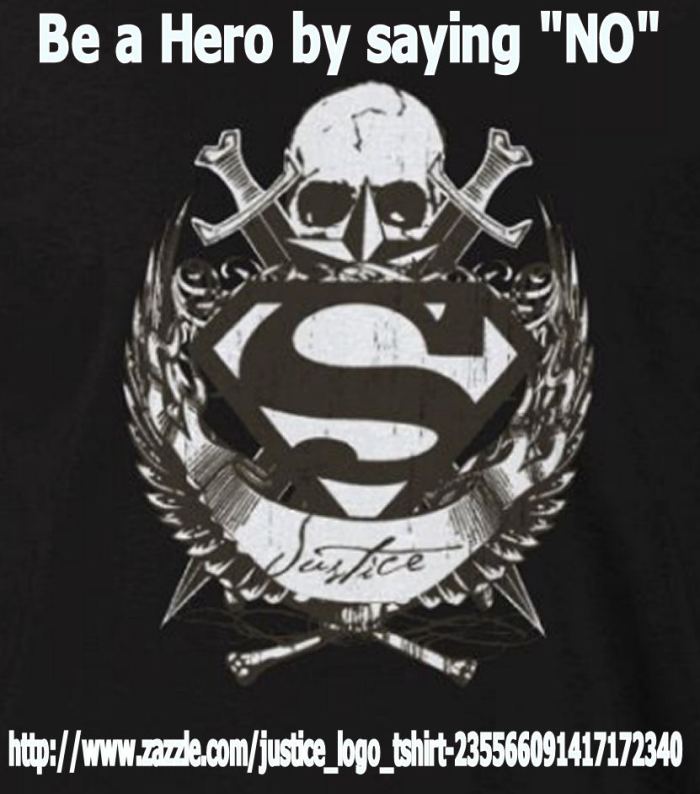
When my wife met me, I was very rough around the edges. Actually, I still am. I don’t like dinning customs, social manners that remind me of European Victorianism, and I’ve been so mad that as recently of two years ago I’ve put my head through doors splitting them in two to make my point. I used to hope that my wife would be impressed by those acts of strength, but she never was. Now I only do things like that when I need to make my point to someone attempting to impose themselves on me. What did impress her were the times I rode a bicycle for 12 miles a day round trip in 10 degree weather working two jobs so she could stay home with our growing children. Or when I worked 16 hour days 7 days a week to make ends meet, or when I took on a whole neighborhood of rowdy kids to bust up a marijuana ring endorsed by the police, or the night I caught a peeping tom outside our window trying to get a look at my changing wife—and many other incidents. Not all of them were so obvious and clear-cut, but in my mind I always held in my mind the famous “S” shape that is the second most recognizable symbol in the entire world behind only the Christian cross—and I pushed forward no matter how daunting the feat in front of me was. My wife’s insistence that only Superman would impress her put my mind into the mode that was required. As a result, I don’t belch or fart and I never let even lip saliva run down a glass I drink out of. The reason is that those things are reminders of the grotesque nature of the human body, the simple collectivism of cells running about trying to live one more day in slow decline toward death. The human body needs to be more than that, or at least aim higher. Because of my wife, I hold the door open for all ladies young and old, I walk on the street side of a sidewalk when I walk with her to protect her from dangers that might come from that direction, and I have learned that there is a lot of strength in kindness, which has preserved many walls, doors and windows over the last couple of years. Instead, I have focused that energy not in the misplaced reaction to ill will toward me and my family, but in the pro-active attack of threats—often before they have a chance to manifest.
In short, since I have met my wife, I have tried every day to get up in the morning and be Superman. I expect to be Superman. That doesn’t necessarily mean the physical manifestation, or the ability to fly. But what it does mean is the “IDEA” of superman, the yearning to be more than just an average man, a man of faults, of weakness, of scandalous character, of pathetic whimpering, a man less than super. There were times where I thought such expectations where unrealistic, and that I thought she was the out-of-her mind to expect such high quality from me. But the result is that I am now at an age where I can hear that classic John Williams score and understand it intellectually, not just perceptively. I now have stories worth telling, and they are much greater than they would have been if I had not pushed myself to be a Superman every day of my life.
Sure, there were times like in Superman II where I understand just wanting to be a normal guy, and surrender all the power of the cape to be “human.” But what is quickly learned, just like in that old film, is that without Superman, evil rules the Earth, and hiding in the mountains, or in the Fortress of Solitude with a loved one won’t stop evil from advancing. It advances when there are no Supermen to meet it. So the world needs Supermen. My wife without realizing it set a high standard for me. I struggled to meet it, and in the end, I feel I understand Superman extremely well. I strive every day of my life to be Superman and nothing less.
It is easy to see why my wife was so insistent on living up to the image of Superman now in hindsight. Having kids of my own, they have a father who is someone they can legitimately look up to. Like I always looked at my wife’s father as something to aspire to, I have now given a new generation something to emulate. My version of Superman may be more like Indiana Jones, dirty, gritty, with streaks of blood running down my arms and back routinely. I lack the cleanness of leaping buildings in a single bound and flying around the world to stop time itself, but the idea is what’s important. The yearning to be more than just a decaying human being that simply wants to fill their bellies with food and have sexual relations with the same intensity that one uses the restroom—and for the same reasons, is something to be overcome, not cherished.
Because of Superman, I have looked for real examples of such an idea, and this is how I found Thus Spoke Zarathustra and ultimately became such a fan of the Übermensch idea which means in German “OVERMAN.” This is why this site is named Overmanwarrior’s Wisdom as Overman means Superman.
It sounds as if Christopher Nolan and Zack Snyder made their version of Superman: Man of Steel understanding all of what I have said above. After Dark Knight Rises for Nolan, and 300 for Snyder, I am 100 % sure that these guys understand what Superman is. It is highly likely their own wives have a similar yearning from them to behold a Superman, after all, what woman in the world deep in their hearts doesn’t? It is up to such men to be Supermen for their women.
But more than anything, Superman is an American idea. Superman evolved from the German ubermensch of Nietzsche and was carved into a preserver of Truth, Justice and the “American” way through comics. I almost turned away from Superman not long ago when the comic took a dark turn toward statism and Superman declared his alliance to The United Nations, which is to take such an American icon and turn him into an advocate for socialism. This is a trend I trust Christopher Nolan will halt in this upcoming film.
The only thing I am worried about concerning Superman: Man of Steel is the music by Hans Zimmer. I am deeply in love with the John Williams score from 1978, and it will be difficult to accept anything less. It is not rare for me to put that soundtrack on in our family car and blare it loudly with the windows down. My kids know all too often that this is routine with me and comes with riding in the same car. They were raised on that type of music. But Zimmer is my second favorite music composer behind only Williams, and I have a sneaky feeling that the musical score may actually be spectacular on many intellectual levels. Another popular soundtrack that is played all the time in my car and on my iPod is the soundtrack to Gladiator, which Hans Zimmer wrote. So Superman is in good hands.
Superman is great not because of his strength, but because he stands as a symbol of what everyone should strive to become. Unlike Robin Hood who steals from the rich and gives to the poor, which is an entirely socialist scheme, Superman stands alone as a beacon to the world as something to be aspired to, something to attempt to become. Superman is what capitalism is to the world, an example of the best among all human beings and someone who drives all of society forward in an attempt to be better. This is how Superman became the embodiment of the “American way.” It is the same as to say Superman endorses capitalism and fights for the right of mankind to be free and not to struggle under the tyranny of scheming despots, like what Lex Luther always represented as the primary villain.
I feel a little sorry for my son-in-laws. My daughters do expect them to be Supermen, and it will be tough. They don’t expect those boys to be cut the way Henry Cavill is but they do expect the heart of the Superman character to be in their every day life. They do expect their personal Supermen to hold up the entire world and crush any threat to their freedom; they expect a man who would crawl into the depths of hell to rescue a loved one, or to fight an army of millions all alone. Is such a thing unrealistic……………of course…………….that is if the problem is viewed from the lens of being only human. But if the same problems are viewed the way of Superman, then no problem is too great, and not threat is too severe.
The “S” on the front of Superman’s shirt does not stand for “super” but for “hope.” This is why young women desire their men to be Supermen, and if they don’t they should. Young men need such targets to aspire to. They should not look up to weaklings, and belching comedians. They should look up to Superman and work every day to be super. In that fashion, the “S” represents the hope that all people have to be more than they were born into, to be more than any terrestrial goal could otherwise provide. Hope is what Superman represents, and I “HOPE” that Man of Steel is even a fraction of what I desire it to be. I am looking very forward to seeing that picture with my wife, because out of all the characters in film or literature there is not one that she admires more than Superman, and the idea of a man who is more than just average.
Today is the twenty-fifth anniversary of my wife and I. Traditionally, a man is supposed to give his wife some kind of silver after 25 years of marriage. But our life has not been conventional to say the least. So some silly silver trinket just won’t do. So what I give her instead is the gift of the Superman. I give her the literal meaning of the “S” and everything it has come to represent. It’s all she has ever wanted, and after 25 years of marriage she has the right to have it. Thus Spoke the Overman.
As we close out the year of 2012, some might ask what I am most hopeful for in 2013—what I most desire out of the upcoming year—world peace, the resurgence of the American economy, or even the announcement that humans will colonize the moon and begin a manufacturing industry there. No, what I want out of 2013 is far better than all those things, and as was just announced, it looks like I might get it. Hans Zimmer has just been announced as the musical composer for the new Lone Ranger film that is being done by the same people who did the Pirates of the Caribbean films, and I am ESTATIC about all these combinations coming together in this updated western.
I have loved The Lone Ranger my entire life. I used to watch re-runs of the old Republic serials on TV with my grandfather as far back as I can remember. In fact, my grandpa—the one who taught me how to use a bullwhip, shoot a gun, and avoid detection from the law as he was a former moonshine runner–used to play The Lone Ranger theme song on his banjo in the kitchen while my grandmother made friend chicken and chopped potatoes fried in pig fat. The Lone Ranger may have been my very first memory as a child of about one and a half years old. In fact from age 1 to about 5 years old my beliefs of what a man should be was summed up in three heroic characters, Zorro, Popeye the Sailor, and The Lone Ranger. To this very day all three of those characters resonate in my daily life more than any other influence and it was that Lone Ranger theme song played on a banjo by my grandfather that rings in my head almost every minute of every day—and I love it dearly.
The William Tell Overture will always be a treasured bit of music to me because my grandfather pounded it into my subconscious and I will always adore him for it. In the darkest days of my life when things sometimes seemed to be overwhelmingly evil that theme song to the classic Lone Ranger westerns bounced around in my mind to always show me the light. And yes, like the Lone Ranger sometimes the fight against evil means that good men do have to wear a mask, they do have to conceal their identity to hide their loved ones from the harm of their heroic crusades. However, these days, I prefer the methods of Popeye the Sailor. I no longer attempt to hide, I just eat spinach and proclaim, “I am what I am and that’s all that I am.” If you don’t like it, take a hike.
But the William Tell Overture playing while the Lone Ranger rode his trusted horse Silver to fight against the worst that resides in the hearts of mankind is a theme I have always trusted and I imagine that Hans Zimmer will pay tribute to it in some fashion—if not, he is perfectly capable of inventing something that is even better if that could possibly be imagined. I am quite a fan of Hans Zimmer, so much so that the CD player in our car has been playing the soundtrack to Pirates of the Caribbean and Dark Knight Rises for over a year now every time we get in to drive somewhere.
My new grandson is about three months old and I have been working with him teaching him the art of the bullwhip. He watches me intently but can’t yet grip the handle under his own control. He can only wiggle with enthusiasm at the intense sound it makes. I recognize that like my grandfather did for me, I will have to do the same kind of thing for my own grandson, and I will. The foundations are already set, and it pleases me greatly to think that good old Disney is reinventing The Lone Ranger just in time for my grandson to carry on a tradition that my own grandfather started with me. If I have it my way, he will be wearing a black mask, a white hat and riding around a white horse everywhere he goes within a couple short years. And he will be going with us to see The Lone Ranger even though he will only be 10 months old when it comes out over the summer. If anything, the little boy will at least register some of the images with the stirring Hans Zimmer score that is sure to be magnificent.
So 2013 will be good for me, you can bet on it. I remember like it was yesterday how my grandfather looked in a sweaty white t-shirt in an un-air-conditioned farm-house kitchen plucking away at his banjo the William Tell Overture as my grandmother slaved over a hot stove stirring fried potatoes as evaporated pig grease dripped from the vent hood. The desire to be more than just an average man, the desire to be a good guy fighting the destitute, the corrupt, the very epitome of evil was thrust into my mind with the banjo strings of my grandfather and those old Republic serials of the Lone Ranger and his trusted horse Silver.
I simply can’t wait to see Johnny Depp as Tonto in Monument Valley. The new Lone Ranger film by the makers of Pirates of the Caribbean and distributed by The Walt Disney Company has great promise to be the next great western in a tapestry of tradition that has been vanquished by a modern age more akin to the villains of the classic westerns, than the heroes who rode white horses and hid their identity behind a black mask. It’s a sad commentary that good men must wear a mask, as evil has far too much control, and it will remain so as long as villainy is promoted as merit. That is something the adults who raised me never stood for, and that tradition will be passed on to a new generation. Hans Zimmer’s new musical score will make my job thankfully easier when The Lone Ranger hits theaters this upcoming July 2013.



 Rich Hoffman