
I watched the Academy Awards for all of 10 minutes. When the first award went to Dallas Buyers Club for a supporting actor role in a film that featured HIV issues and a cross dresser, I turned it off and went back to my books. The Academy had snubbed the films I liked in 2013, particularly the Man of Steel and the Wolf of Wall Street, so I lost interest in less than a nanosecond once the progressive leanings of the Academy were on full display. The good girl actress Amy Adams took off her top for American Hustle, and received a nomination for it of course—and another slave film won best picture—of course. Progressive politics were on full display, so I didn’t waste my time.
The Wolf of Wall Street didn’t win any awards which was not so odd. The movie was laced with controversy because many critics felt the film highlighted the benefits of financial excess and was sending the wrong message to the public—and that bothered me. As it has being pointed out, and elaborated in many different ways, progressives are part of the original communist push. They simply disguised their dialogue when American resistance toward communism became known—so they repackaged the collectivism of communism behind the name progressivism. Any progressive working in Hollywood—which is most people, are advocating communism—essentially. They are part of a vast Communist Party USA strategy to undermine American lifestyles in support of communist expansion. Pulling Americans focus on Civil Rights issues—which are important—but not the only thing to be concerned about, communists can advance their strategy of collectivism without resistance. That is why films like Dallas Buyers Club won over films like the Wolf of Wall Street. One film advocated AIDS awareness and cross dressing, the other on the root of money and the validity of excess.
It is the goal of communists to destroy the American economy so that world-wide socialism of interdependent need can arise. So long as Americans are independently wealthy, the communist plot will not work—so they attack it at every turn with a mythology of “finite resources.” Yet in communist countries resources are finite because government controls every aspect of society from food production to the creation of art. In a communist country resources are only produced within the management capacity of the government bureaucracy. Yet in America money is “made.” It is a term that is specific to America and is the biggest opposition to communist expansion that is currently holding back the platform of progressivism from entering every home in America. Americans love-making money, and so long as that trend continues, communism will not advance far enough in American society to change the culture toward open socialism. So film critics trained by their universities in the ways of progressivism decry “excess” in American lifestyles as a bad thing.
Yet when one thinks about it, why does America have an excess of anything? It is because they have made more than they need—because under capitalism, independent people produce outside of the control of the government. This is how a country arrives at an excess, because market values drive the activity—not a government official who may or may not have the skill to know when, how, and why a sector of their society needs to produce something within an appropriate lead time. This is why Americans have excess while countries that support socialism and communism do not. This is the only reason. In America anybody can be a wealthy person if they are willing to do the work. In communist countries you have to be an insider to the party to receive wealth—and that is the main problem with progressivism.
In the Dallas Buyers Club the protagonists had to go to Mexico to find suitable medicine for their HIV sickness. The reason is that the FDA has restricted such development in America needlessly. The film focuses primarily on the unfairness of this problem and deals with the lifestyle choices of the main protagonists who just want to live free—which is how they got AIDS in the first place. Yet it is progressivism that has infected the FDA and caused the medicine to not be produced in The United States leaving the protagonists to get it in an unrestricted financial zone like Mexico. This plot gives support to George Soros Open Society programs, and I would not be surprised if some of his money did not find its way into the finance of the movie—because it is propaganda constructed exclusively to benefit progressive politics.
Yet if America openly removed such progressive, communist influence from its government there is no reason why medicine for HIV couldn’t be created along with stem cell research, and cures for cancer which currently exist—but have been fought by the FDA for many years. America has the ability to create excess in medicine, excess in health, excess in wealth, excess in goodness—excesses in virtually every category—but the restrictions are created by progressivism—with too much government control.
The Dallas Buyers Club does what Hollywood advocates all the time—it uses one argument to undermine another one which they created in the first place with their micro management government philosophy. Then they blame the excess of American Wall Street tycoons as the stars of Hollywood wear $10,000 dollar dresses down the red carpet and talk about their artistic endeavors in film to over a billion people when it is the excess of America which created the platform for their work in the first place. So it is very disenchanting to give a film like the Dallas Buyers Club, which had some nice points, awards over a film like the Wolf of Wall Street.
What progressives speak against is production then complain when there isn’t enough of something to go around—which is a factor seen in every socialist, and communist country. Resources are always limited because the people of those cultures have been trained to be unproductive. The excesses of America are a wonderful thing, because it means that America made more of what they needed, leaving more for others to enjoy. This ideal that wealth should be limited or shared with those who are not contributing to production is an absolutely stupid ideal. No wonder Karl Marx died in poverty. He was a God damn idiot—and the world willingly followed after his example to preposterously disastrous results. Is it any wonder that the world suffers from shortages of water, food, or clothing—or money in general? America is a culture that “makes money.” It is because of capitalism that it does this. It is because of socialism that the characters in Dallas Buyers Club had to go to Mexico to get drugs for their reckless sex practices. Because the drugs were regulated and managed by a society that uses government to manage things they are not qualified to have anything to do with. Because of the idiocy of the Hollywood industry in presenting this duality to billions of people who tuned in to watch the Academy Awards—I turned off the show and read a book, which was a much better and far more productive use of my time.
Rich Hoffman
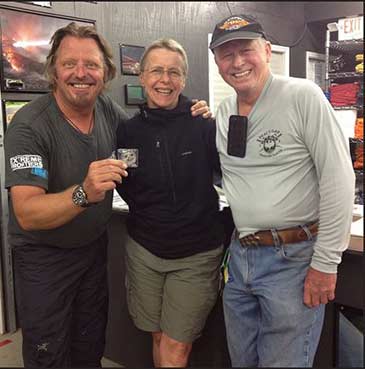 In a lot of ways Charley Boorman was the inspiration for my novel Tail of the Dragon. My son-in-law, Paul is from England and made me aware of Boorman’s infamous Long Way Round, and Long Way Down television series featuring mammoth motorcycle rides around the world and across Europe to the tip of South Africa with his acting friend Ewan McGregor. Recently my friend Ron Johnston ran into Charley as he came to the Tail of the Dragon to ride it at night in the rain.
 With all the lead up to the movie being so intense here at Overmanwarrior’s Wisdom my lack of a review for The Lone Ranger was simply due to the fact that I was on vacation with my family when the film was released and there wasn’t time to physically go see the movie. On two occasions while I was vacationing in Florida I intended to take my family to see The Lone Ranger, once at Downtown Disney, but had to withdrawal because the day was already overbooked, and then again at Merritt Square Mall which was down the road from our Atlantic Coast condo
 With The Lone Ranger I expected to see even after the extremely negative reviews, a movie from Disney that was just good ol’ fashion fun—I did not expect yet another film with very heavy opinions against the government position of collectivism over the traditional rugged individualism that built America from the start. Coming from the Disney Studios I expected a more disguised effort, especially with Johnny Depp staring as Tonto, and sharing a producing credit. But if the nation is divided equally down the middle with Tea Party type Americans on one side, and welfare collecting altruists on the other, Disney usually makes films that all types of people will enjoy. This is good for their box office numbers, but runs counter to the type of messages that Walt Disney himself believed who actually testified before a congressional committee against communism during the height of the McCarthy Hearings. But this Lone Ranger was made by Disney to show favor toward the former of those demographic groups and not the later.

 The Second Treatise of Government was one of the foundation books which people like Thomas Jefferson used to help shape the argument about the kind of country that America would be. Modern Americans who regularly attend Tea Party events know that John Locke is one of the philosophers who opened the door to the way of thinking that distinctly became freedom loving. To altruists, this is a major social danger as any message that exhibits freedom as one of the highest human endeavors also seeks to be free from social stupidity, the self-determined poor (lazy people), and the malcontents of civilization. Social progressives have desired for years to shape American thought into reflecting European sentiment of sacrifice, shared suffering, and a focus on the “greater good” while steering the educated masses away from a personal love of individual freedom.
 Opening the film with a direct node to John Locke was a bold declaration that I was surprised made it past the Disney executives screening the film. It’s possible that some of them did not know what the book meant to American foundation, but it is unlikely to have slipped by so many eyes without anybody knowing, especially Johnny Depp, who has been known to show up to film screenings showing his open support of Che Guevara. I thought the John Locke reference was quite extraordinary but the references did not end there so I know that it was not an accident.
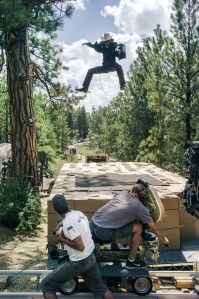
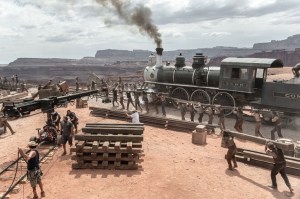
 It was an unapologetic western that might have been an early episode of the TV show Davy Crockett, only with Industrial Light and Magic doing some spectacular visual effects. The stunts were ambitious, and the scope of the project was mammoth. It was the largest scale western I think has ever been attempted. But The Lone Ranger himself does not drink, does not curse, does not use tobacco (he refused when offered), he does not want to kill people, and is a naively good guy from the beginning to the end of the film. The only character arch that John Reid embarked on evolving from the beginning to the end was in hardening up from a naive lawyer to a man who isn’t afraid to pull the trigger on a bad guy by the end of the film. Reid never had a moment of weakness in the film where he got drunk, caved into the seductions of a woman, or lost his moral compass. He was firmly focused on justice from the beginning of the film till the very end.
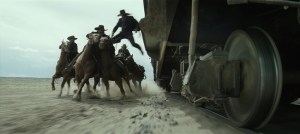


 It will be lucky to recover its $215 million dollar budget, which is unheard of for a western. Only a company like Disney could have made a film like this, which was risky, so it is unlikely that Armie Hammer will have the chance to reprise his Lone Ranger role in the way that Robert Downey Jr has for Iron Man, and make future films. The film by
 Everyone involved with The Lone Ranger is among the best in their fields of endeavor, and it is a shame that the magic will probably never be seen again, because the box office will prevent it. The Lone Ranger is one of those films that will percolate in America culture for a long time. It will not have a big pop at the box office, but will be watched and loved for many years in a quiet way as viewers find it wonderfully good, but unsure why they like it so much while critics and industry professionals declare that it is such a bad film. It is not the film that is bad for progressive types, but the message.
 Most people seeing The Lone Ranger cannot identify with the hero. But they will identify with the villain, and that tends to make people angry. Angry people do not throw down nearly a hundred dollars to see The Lone Ranger, which is what it cost me by the time we bought tickets and snacks, a rarity for us as a family. I spent extra money at the theater knowing that a majority of the movie goers were not spending money on The Lone Ranger, so we broke our rule and bought the overpriced popcorn and drinks anyway, to support the film, and theater showing it.

