

People have been asking me what I am doing. They have wondered about me. They have watched the episodes, read the blog, seen me in rooms around Butler County for years, and then I went quiet in the way a person goes quiet when they are changing the work under their feet and are not ready to turn it into content.
I am not looking for a safe job that pays well so I can run out the clock. I have had those offers. I appreciate them. I am affiliating myself with a team of very sharp engineers and builders at Volynt Aero, as a senior consultant, with a path toward the COO seat, and I am doing it because I am in a stage of life where I want to swing for the fences. Not out of desperation. Out of refusal. I have watched too many capable people spend their best remaining years hitting ground balls and calling it wisdom.[1][2]
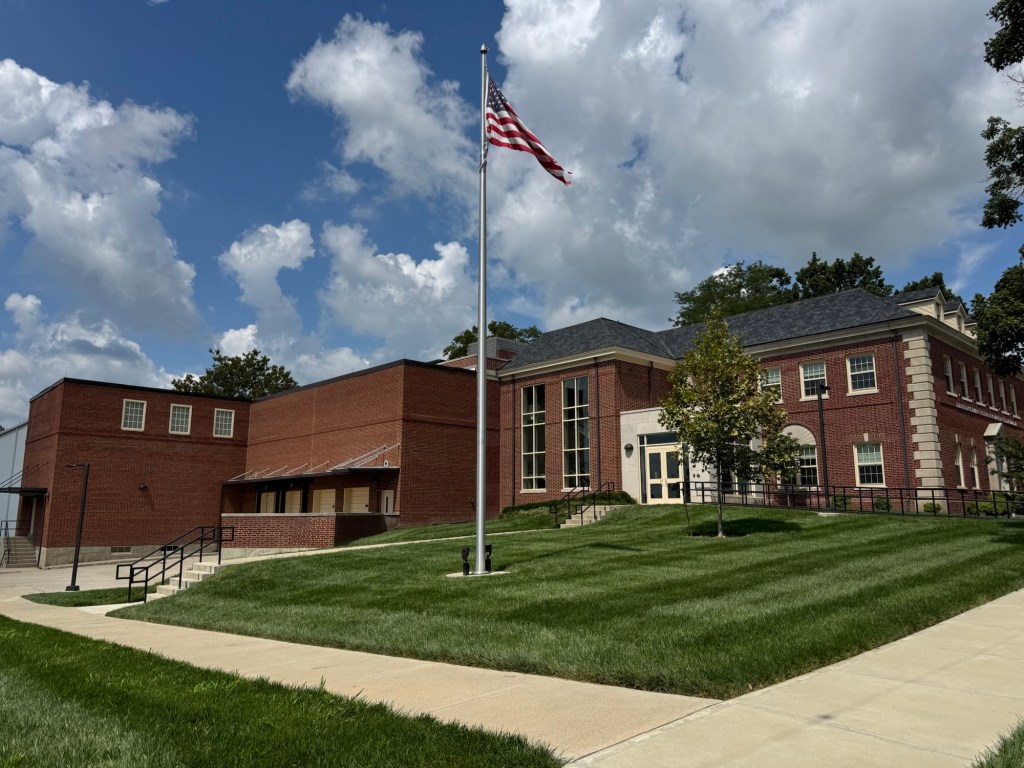
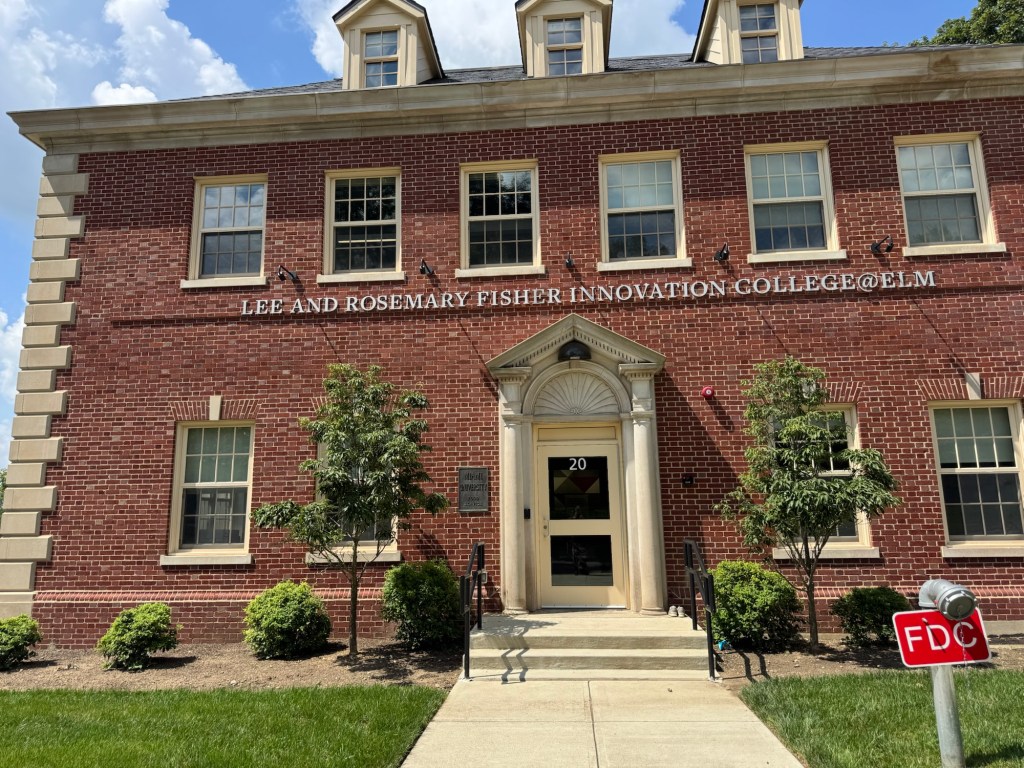
On Monday, September 21, 2026, at 7:00 p.m., at 20 South Elm Street, Oxford, Ohio 45056, inside Fisher Innovation College@Elm on Miami University’s campus, we are going to talk in public about economic vitality and what I believe is an enormous opportunity for Butler County. The event is free. Nobody is asking you to bring a checkbook. Just eat some snacks, shake hands, and hear the plan. I told my wife to go to Costco and get Doritos, punch, and whatever else makes a room feel welcoming instead of processed. That is the tone—serious work. Easy room. If you have wanted a reason to see me after a decade of reading or listening, that is the date. My schedule jumps around a lot, but I will be there for this.[3][4]
Oxford. The university town on the west side of the county. The building is the renovated old food-service and workforce site at 20 S. Elm Street — College@Elm — not a lecture hall buried in the academic core. Volynt Aero lists that building as its home. Miami’s Advanced Air Mobility Hub lives in that same incubator. The door you want is on Elm.[1][2][3][5]
I still dislike the word consultant, even though I now wear it, because I spent years chained to a success I had already built, and I felt embarrassed standing next to men who had already swung and connected. And why I would rather strike out in public, in Butler County, in the aerospace market I have been talking about for years, than spend the rest of my working life protecting ground that other people were already trying to steal.
I am a job-creator kind of person. I want to make jobs. I do not want to get a job someone else already made. That distinction sounds like a slogan until you have lived both sides of it. Most of the professional class measures adulthood by getting a job. Making jobs is how a county stays alive. I am happiest when I create work for other people—hundreds, or thousands. If I can help build something that employs a thousand people or more, that is the scoreboard I care about. Upper mobility. Payrolls that put gas in cars. Families that can stay in Butler County instead of exporting their kids to Texas, North Carolina, or the coasts and then coming home at Christmas to tell us how much better the schools are somewhere else.
I have done versions of this before. I have hired. I have built programs. I have kept a business alive longer than I wanted to because I brought people into it and felt responsible for the lives attached to those paychecks. That loyalty was not branding. It cost me years. It also taught me the thing the consultant class never learns: once you make something valuable, you become a target. Pirates do not always arrive with hooks and flags. Sometimes they arrive with decks, retainers, and a vocabulary about “professionalizing the operation.”
Go back to 2019. We had a Trump rally at a place where I had spent much of my life building a business. The owner was my friend. I stayed with that business a long time because of that friendship and because I didn’t want to deal with the woke corporatism that evolved from 2015 through 2020. Then COVID. Then the years after COVID, when the work stopped being about building and started being about keeping the lights on for people I had hired. I felt chained to their ability to put gas in the car. In a lot of ways I felt like I was lashed to a white whale. From the outside, that can look like success. The people who still had jobs were glad the jobs existed. I was glad they still had them. Inside, I was resentful — not of the people, of the process. I had created jobs, and then I became the janitor of those jobs while other people bought in, layered in, and tried to change what I didn’t want changed.[6]
It felt like trying to stay married to someone who wanted to cheat. Every time you turned around, they were climbing out a window toward some new lover with a fancier spreadsheet and phony EBITA numbers propped up by a shell game. I poured my heart into a company I didn’t fully control. Other people wanted to change it. I didn’t like the changes or the people who came with them. I still liked the people I had encouraged to become part of it. So I stayed. I defended. I hit ground balls to advance other people already safely on base. I kept the lights on.
Over the last couple of years, I went through multiple cycles of consulting firms imposed on me by, come what may, financial institutions who thought they knew best, after the best was already placed in their lap and worked out for them. Three waves. Then a fourth. I will say it the way I say it when I am not dressing it up for a chamber breakfast: a lot of them are dumb as rocks, and I do not mean to insult rocks. They are paid like industry professionals while the world under their feet has already changed. They exist to maintain ground already taken. They do not create the ground. They arrive after value exists and explain to the people who made the value how the value should now be managed. That is not a free market. That is a priesthood of fools.[7][8]
I worked at the same place for many years because of loyalty to the owner and because I wanted his family to benefit from what had been built. I still want that. Friendship does not expire because a corporate process gets stupid. But I also wanted an excuse to get away from a machine that had stopped being a build and had become a defense. The first opening that would let me play where I actually wanted to play showed up in these guys at Miami, in vertical takeoff, in the new space-adjacent aerospace market I have been putting episodes on for a long time. I have been interested in vertical aerospace for years. I wanted into that market for all kinds of reasons. Then my life opened a gap; I met them, I liked them, I wanted them to succeed, and they started introducing me to people. That was the intention. That is why I said yes.
They have introduced me as the coming COO. Right now I am a consultant. A senior consultant. I have a path toward the COO role at the scale they are trying to reach. I was apprehensive about the word. I have been stunned by how many places want me to consult for them. I had personal reservations about putting my name on that label. I still have them. I am also proud to be affiliated with this particular team. The title is not the prize. The prize is whether we can turn a sharp technical package into manufacturing, customers, and jobs.
Vivek Ramaswamy and J.D. Vance were at that 2019 rally I hosted. Warren Davidson has been in the orbit. I have had conversations with Bernie Moreno. I had a good talk with Jim Renacci after an event at Jags in West Chester. I have watched a lot of people I know leave the safe lane, take a real risk, and come back with independent wealth—enough to enter politics, or to refuse to be owned by it.[9][10]
Vivek was already on a steep wealth curve then. He wasn’t quite in the billionaire club the way magazines like to print it, but he was headed that way, and since then he’s been in that conversation and has taken the political path back toward Ohio’s governorship. Years later the call came through other people: he wanted to announce a governor’s race at my place, because the place still represented a free-enterprise culture that had not gone fully woke, and because we were doing things that did not look like everybody else. I said yes. I meant yes. I also felt a private embarrassment I should admit here, because if I do not admit it, the rest of this sounds like a victory lap instead of a confession.
When you stand next to people who built or sold large enterprises and then used that capital to change the map, and you are the guy still defending last decade’s success against the fourth wave of consultants, you feel the difference in your chest. They look at you the way a hitting coach looks at a veteran who will not let the bat get through the zone. You are at this stage of life. Why are you hitting ground balls? Why are you taking the walk? Why are you protecting a single when the bases are loaded? You are a guy who could drive the ball with runners on. Why are you trying to beat out a roller to short?
The honest answer, for a long time, was loyalty. Loyalty to the owner who was my friend. Loyalty to the people I hired. I do not apologize for that. I also will not pretend it was the same thing as ambition. Ambition would have left earlier. Loyalty stayed. Then loyalty, after enough waves of professional stupidity, became a kind of self-betrayal. I felt like I was underperforming in front of people I respected. I felt like I was wasting a bat. When Vivek talked about using the place because it still stood for the free-enterprise system, I felt a flicker of pride and a bigger flicker of “I should have more to put on the table than a good venue and a good story about the past.”
I watched them swing. Some of the balls went over the fence. The crowd enjoyed it. The players enjoyed it. Everybody enjoys seeing a ball leave the yard, including the man who hit it. I wanted that feeling again — not the celebrity, the creation. I want to make other people wealthy. I want payrolls large enough that a community can even start talking about abolishing property taxes without gutting the services people actually like. That is a standard, not a slogan. If you are not trying to create billions in new market value, I am not sure the conversation is worth the evening. A few hundred million in annual revenue is what the coastal startup press calls a win. I do not think that is a win. Ten billion in new market growth is the starting point for a conversation about success. To me, success looks like a hundred billion. That is how you change a county instead of decorating it.
I haven’t built a job base that employed a thousand people or more in over a decade. I have been trying to hang on to the success I had already built. That work has its honor. It also became boring to me, and boredom in an operator is a warning light. When the fourth wave of consultants arrived with different ideas about how we should do the thing I had already done, I was happy to leave and not look back. They did not like me. I did not like their ideas. I did not want to be part of another cycle of ground balls. I took the off-ramp. I would rather hit the reset button and start over with people who want to build than spend another year arguing with people who think a slide deck is an airplane. I’m sure I’ll write a book about all this once I get some distance from the immediacy of it all. It will make a very interesting business book. But first, such books are only valuable to people once you are looking back from a position of success; otherwise, it’s just another story about a down-and-out situation. Success has to be attached to the narrative.
That is how I landed at Volynt.
The building matters, and I am going to stay on the building for a minute because “Miami University” is a large map, and people get lost on large maps. College@Elm is Miami’s innovation and workforce hub at 20 S. Elm Street. It used to sit vacant. The university, the City of Oxford, alumni, the state capital budget, and JobsOhio money turned it into a technology, entrepreneurship, and light-manufacturing incubator — office, design and testing, startup space, a workforce resource function, and room for real production instead of just posters about production. Miami alumni Lee and Rosemary Fisher put their name on it. Randi Thomas and the ASPIRE shop treated it as a way to drag Oxford out of an eight-month student economy and toward a twelve-month one. That is the room.[3][4][11][12]
Volynt Aero’s address is that building. Suite language has appeared in their capability materials as 20 S. Elm St., Suite 117. Miami has also stood up an Advanced Air Mobility Hub in the same incubator, aimed at autonomous, hybrid-electric, and eVTOL aircraft, in collaboration with Butler County and Middletown Regional Airports, Cincinnati/Northern Kentucky International Airport, Butler Tech, and industry partners including Volynt.[1][2][5]
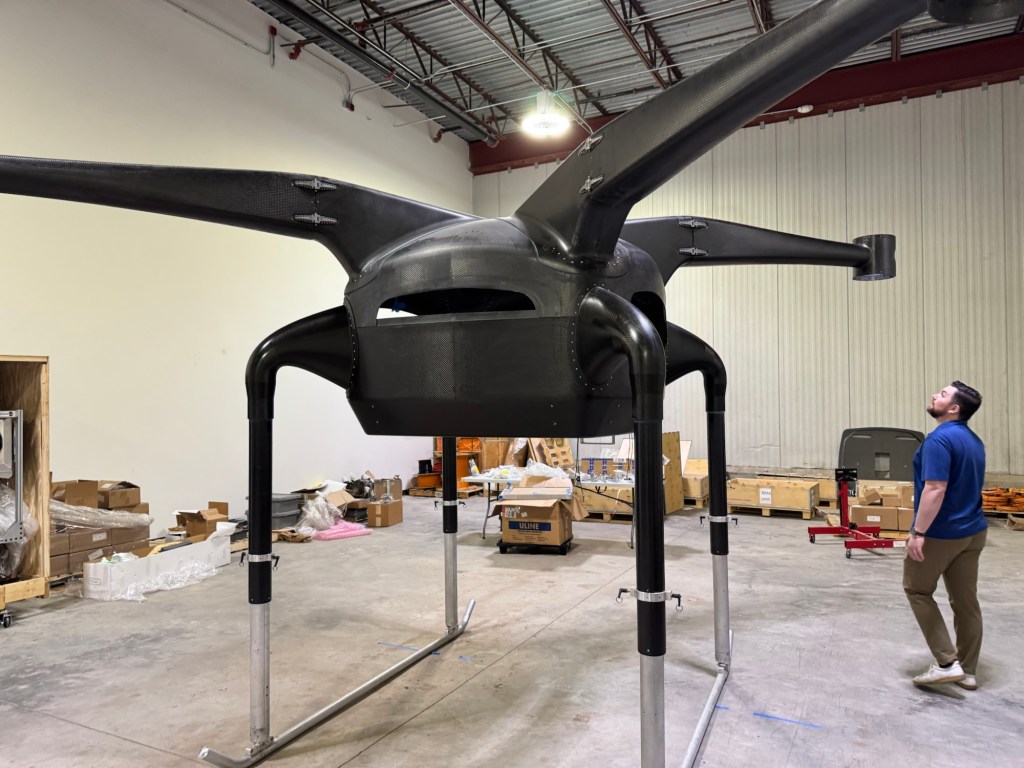
Volynt is not a passenger flying-taxi pitch dressed up for a TED talk. I need to say that because the popular press only knows one picture of this industry: a four-seat air taxi humming over a downtown skyline in a rendering that has never paid a supplier. The company is building large hybrid-electric uncrewed aircraft for cargo logistics, disaster response, contested logistics, mobile power generation, and forward communications—ugly work. Useful work. The work that can find a customer before the lifestyle brochure does. They call the aircraft line Vyper in their public materials. The founding team came out of UAS and eVTOL work dating to 2012, including AFWERX Agility Prime flight-test experience on a full-scale electric aircraft; University of Cincinnati aerospace engineering; Rose-Hulman and Illinois mechanical engineering; and FAA experimental airworthiness work. Together, they have forty-plus years of experience in electric vehicles, eVTOL, and manned and uncrewed aircraft. Jeffrey Bennett is the CEO. Justin Jantzen is the CTO. The rest of the technical bench is the kind of bench a county should want to keep.[2][5][13]
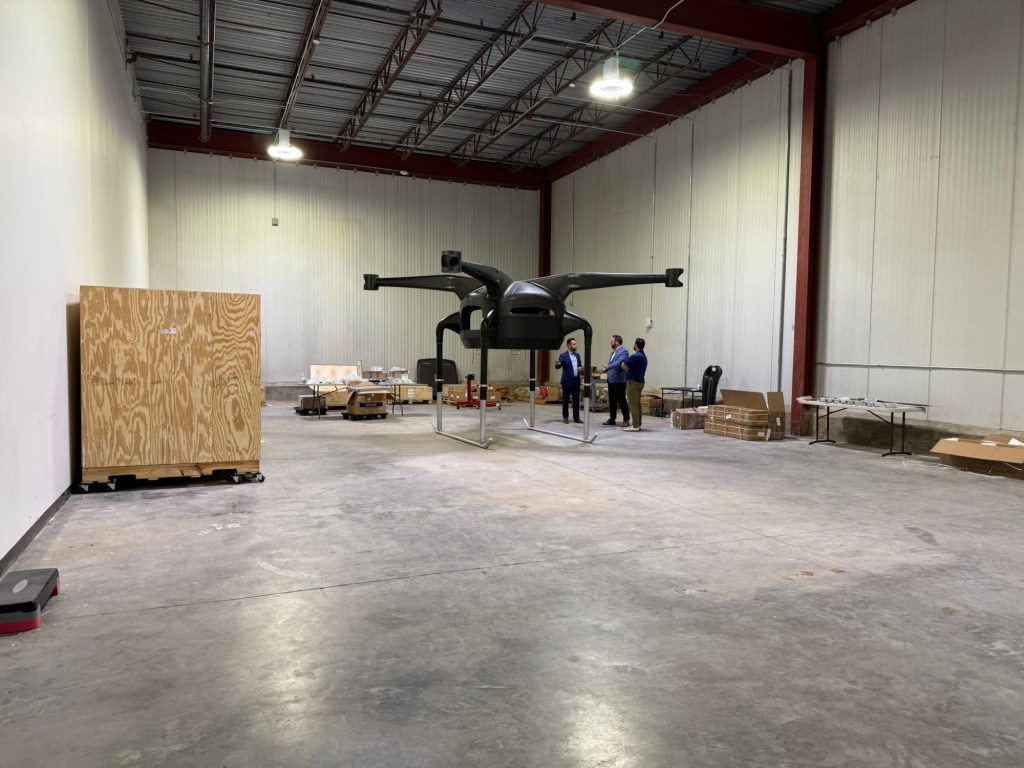
They have proposed a Hybrid Propulsion and Energy Lab — the HyPE Lab — at Miami University Airport in Oxford, a facility in the neighborhood of seven million dollars aimed at hybrid-electric, hydrogen fuel cell, and electric aviation development. They have already pulled Ohio Third Frontier / TVSF grant support in partnership with Miami and the Entrepreneurs’ Center. That is not a finished factory. That is a package with technology laid out, customer logic laid out, and a county sitting in the birthplace of powered flight, next to Wright-Patterson, next to a new Butler Tech aviation hangar beside Middletown Regional, next to Joby and BETA and Electra planting metal in the Miami Valley, in a state that has spent years trying to own advanced air mobility instead of applauding it from the stands.[14][15][16][17][18]
Ohio’s own AAM studies are not modest. DriveOhio and the NEXA work done for the state put the prize at roughly thirteen billion dollars in economic activity over twenty-five years, about fifteen thousand jobs, and about two and a half billion in tax revenue — if Ohio actually captures the market. Cargo, emergency services, and vehicle manufacturing are a large share of that stack. That is the lane Volynt is in. I do not treat a consultant forecast as destiny. I have spent too many years watching forecasts get used as incense. I treat the number as a fastball I can see. If the state leaves that stack on the table, California and Texas will take it and send us a newsletter about thought leadership.[19][20]
I want to give this some color, because “economic vitality” is a phrase chambers of commerce use until it means nothing.
Vitality is not a social-hour calendar. Vitality is surplus. It is when a county produces so much new value that young people do not have to leave, old industrial sites get reused, airports become more than weekend-pilot hobbies, and tax fights become less vicious because the base is growing faster than the government. I have spent a lot of my public life as the tax-killer in this county. I didn’t do that because I hate roads, sheriffs, and firehouses. I did it because a government that cannot stop growing will eat a private economy that has stopped growing. The only durable answer is not a clever levy. The durable answer is so much new payroll and new production that the argument changes temperature.
Butler County already has pieces of the machine. Miami’s Oxford campus and the regional campuses. Middletown’s steel and manufacturing memory, including the kind of heavy industry that still knows what a shift is. The I-75 corridor. Two relevant airports inside the conversation — Miami University Airport in Oxford and Middletown Regional — plus CVG as the big-hub partner on the AAM map. Butler Tech’s new aviation center, a roughly fifteen-million-dollar hangar and classroom pile next to the Middletown airport, with county, city, and JobsOhio money in it, training kids who can see an aerospace job without leaving home. And a university incubator on Elm Street, explicitly sold as a way to create year-round work in a town that used to hibernate when students left.[1][15][11]. And let’s not forget about the wonderful Butler County Regional, which has the prospect of enormous significance in a way that it has always been poised to bring forth.
Advanced air mobility is one of the few new industrial stacks that can still be built in the Midwest instead of being imported as a finished product from the coasts. Ohio has been recruiting it on purpose. Joby has been planting manufacturing near Dayton and talking about thousands of jobs and hundreds of aircraft a year if the production curve holds. Electra has committed a huge Ohio production bet out of an MIT classroom idea that turned into a short-takeoff hybrid aircraft and an $850 million manufacturing story in Springfield and Clark County, with job counts in the neighborhood of two thousand. BETA and the National Advanced Air Mobility Center of Excellence in Springfield are part of the same weather system. JobsOhio has treated AAM as a super-sector and has been walking that story all the way to Paris. Hartzell in Piqua certified an electric-aircraft propeller. The FAA’s eVTOL Integration Pilot Program is on the 2026 calendar. Ohio entered that fight with a multi-state medical-logistics proposal.[16][17][18][21]
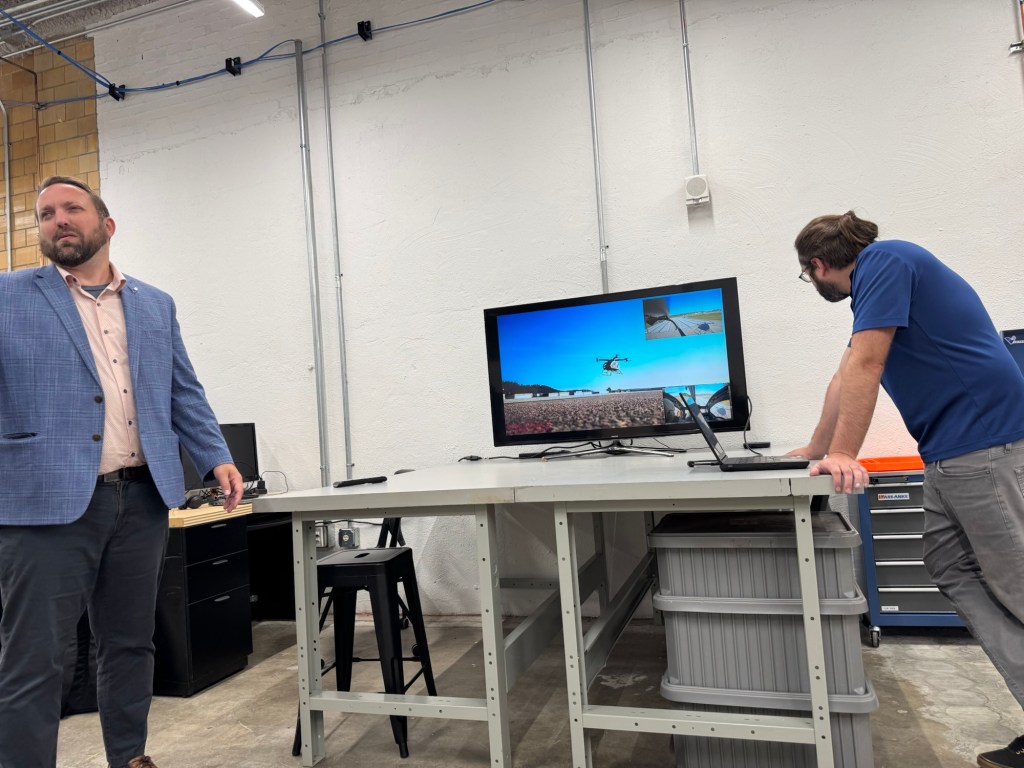
Most of the passenger eVTOL story is still a certification and capital-markets story. That is not an insult. It is a timeline. Certification is slow. Air-taxi unit economics are a sermon until the aircraft is legal, maintainable, and paid for by someone other than a vision fund. The cargo, disaster, defense-adjacent, and mobile-power story can move sooner because the customer is not waiting for a four-seat taxi to become socially fashionable. An uncrewed hybrid aircraft that can haul, generate, and communicate in ugly terrain is a product a government buyer and a logistics company can understand without a lifestyle brochure. That is why I like this package. It is closer to a truck than to a fashion object.
I have talked about the new space economy and vertical aerospace for years. All these things mentioned here are merging at a very unique time in Southern Ohio, and I’ve known it for a long time, and I had felt stuck, unable to participate because of my other commitments. I wanted into that market, not stuck to loyal obligations. Not as a fan. As an operator. I have walked the producer culture at SpaceX and looked at what happens when a company treats manufacturing as the product instead of treating the press release as the product. Reusability. Iteration. Catching the thing and flying it again. That is the version of aerospace I want in Ohio. I do not need Volynt to be SpaceX. I need Volynt to be as serious as SpaceX: close the gap between the drawing and the floor. California and Texas will take a lot of the gold rush. They should not take all of it. Ohio invented powered flight. It should not rent the sequel from the coasts and call the rental economic development.
There is a second vitality problem I will not dance around. A lot of American corporate culture imported a compliance religion that I believe tracks, in spirit if not in every memo, to the same managerial habits that made Wall Street comfortable with Communist China’s labor and governance model while lecturing American manufacturers about virtue. ESG-era asset managers scolded domestic firms and stayed hungry for China exposure. Larry Fink could write letters telling American CEOs that climate and stakeholders would reshape finance, and the same apparatus could treat Beijing as a growth market. That split personality cost real companies real billions in distracted leadership. It also trained a consultant class to speak fluent morality while missing the factory. I have watched it up close. I have watched financial institutions send in the next wave of advisors because they thought a firm that had not gone woke yet still had juice that could be squeezed if only the culture were more compliant. They do not like Elon Musk. They do not like being told the world will change through building instead of through postings. I have been a target of that instinct. I am done volunteering for it.[22][23][24]
I want to lead a very dramatic change that changes entire industry standards, around the world. I want to help build a company that makes money the old way: a customer pays for a machine that works. Easy money and financial engineering can look like vitality for a while. Then inflation shows up, and the community realizes the jobs were never as solid as the press release. I want the other kind. Output. Exports. Aircraft. Power systems. Maintenance hangars. Suppliers. Kids from Butler Tech and Miami who can stay home and get paid. I want so much money coming into this community that property taxes become a conversation you can have without destroying the services people like. That is where my mind is. Getting on base is not enough.
Swinging for the fences is a moral choice, not a motivational poster. Baseball metaphors get cheap. I am keeping this one because it is the cleanest picture of the decision.
Most people in operating roles at this stage of life take the safe route. Get on base. Take the walk. Protect the pension. Let someone else hit the homer. You have already done the hard thing once. Now you need to keep your place in the lineup. I understand that instinct. I rejected it.
Swinging for the fences can end in a strikeout. I know that. I am a realist in business. Success is not entirely up to me. Other people have to get on base. The pitcher has to leave a pitch you can actually hit. Certification, capital, customers, suppliers, and timing all have to arrive in something like the right order. I have said on the air that this is a poker game more than a guaranteed jackpot. The risk is real. I do not think the risk is stupid. They have a gap I think they can close. I know what I can do in an operating seat. That part is not in doubt in my mind. I have done versions of it many times. The barrier most early technical teams cannot cross is not the CAD model. It is the factory floor, the hiring machine, the customer close, and the culture that does not dissolve when the first institutional money arrives. In this case, I see all those coming together in very unique and profitable ways. It’s always about timing, and the timing for this is right now.
Even so, a strikeout while swinging for the fence feels more honest to me than a career of ground balls. I have wanted a window to build from the ground up again. I got one. Before the window closes, I want a grand slam for Butler County — or at least a swing that everybody in the stands can respect. Safety is not my default setting. Loyalty is. Those two traits fought each other for years. Loyalty won, until the fourth wave of consultants made it obvious that staying was no longer protecting the people I hired. It was protecting a process I did not believe in.
I enjoy risk. I enjoy my life most when there is real risk in it. People who have known me a long time know that. They also know I will hang onto a job base I created longer than a purely rational careerist would, because I do not like being the person who collected a check and left other people’s mortgages on the table. When the money showed up to go somewhere else, and I knew the new layer was going to take it in a direction I would not sign off on, I did not feel like I was letting anybody down by leaving. I felt like I was buying my freedom from a process that had already decided I was the problem.
I want to be a version, in Ohio, of what the serious aerospace builders are doing in Texas. I expect that of myself. I was embarrassed, in those conversations with people like Vivek Ramaswamy and Bernie Moreno who had already swung and connected in their own lives, because I could hear the unasked question from them: you love the free-enterprise system enough to host a speech, why aren’t you in the game at that scale? I hosted the speech. I meant it. I also needed a moment of my own — the kind where you roll the dice large enough that the win, if it comes, is visible from the rest of the world.
September 21 is not a fundraiser with a soft-ask after the punch. It is not the Rich Hoffman show. It is not a secret society. It is a public conversation about a plan for economic vitality in Butler County, hosted where the work is already living, on a Monday night, with the people doing the engineering in the room. If you come, you will not be listening to me invent a company out of a microphone. You will be listening to why I think this particular team, in this particular building, in this particular county, is a bat worth swinging.
Monday, September 21, 2026. Seven o’clock. Fisher Innovation College@Elm. 20 South Elm Street. Oxford, Ohio 45056. Free. Come as you are.
If the evening works, you will leave less interested in me and more interested in what a serious advanced-air-mobility build could do to the tax base, the talent pipeline, and the self-respect of a manufacturing region that has been told for twenty years that the future lives somewhere else. There is a lot of affiliation possible in this — Miami engineers, Butler Tech kids, airport boards, suppliers who already know composites and power electronics, people across Ohio who are tired of watching the next factory announcement land in another state. I want these guys among the names people mention when they talk about who actually built the upper-mobility market instead of posting about it on LinkedIn.
Let me stay in Butler County long enough that the vitality claim isn’t a vibe.
This county sits between Cincinnati and Dayton with a population now in the high 380,000s to about 400,000 depending on which vintage of the estimate you trust, employment in the neighborhood of 190,000 people, and a local GDP north of twenty billion dollars. Manufacturing is not the largest headcount sector—healthcare and retail usually win that race—but it is still the spine. County profile data puts manufacturing employment in the mid-teens of thousands, with hundreds of manufacturing establishments. That is the difference between a bedroom county and a producing county. Bedroom counties import paychecks and export children. Producing counties keep a reason to stay.[26][27]
I have lived in this county my whole adult life. I did not stay because it was fashionable. I stayed because this is the ground I know, and because I think a person who talks about job creation while quietly arranging his own exit to a coastal zip code is running a different play than the one they are selling. The future I want is not a TED talk in Austin about the Midwest. The future I want is a payroll in Oxford, Middletown, Hamilton, Trenton, West Chester, Fairfield, and the townships not named in the brochures.
Middletown still knows steel. Cleveland-Cliffs putting real capital into Middletown Works is the kind of story that should shame anyone who wrote this valley off as a twentieth-century museum. Hamilton is growing again, according to the latest Census slice of incorporated places. Oxford shrinks a little when the student count wobbles, which is exactly why College@Elm was sold as a twelve-month economy instead of an eight-month one. The I-75 corridor still moves freight. The airports are not theoretical. Miami University Airport is a tool if someone treats it as one. Middletown Regional now has a Butler Tech aviation hangar next door — roughly thirty thousand square feet and fifteen million dollars, with millions from the county commissioners, JobsOhio, and the city — so a kid can learn airframes and powerplants without buying a plane ticket to Dayton on the first day of class.[28][15][11]
That is the county I am talking about on the 21st. Not a fantasy county. This one.
I should talk about the industry itself, because vitality without an industry is just a mood.
The Wright brothers did not invent flight so Ohio could become a spectator. Huffman Prairie is a cow pasture with a better story than most nations ever get, and Wright-Patterson plus the Air Force Research Laboratory turned that story into a century of metal, propulsion, sensors, and people who know how to hold a tolerance. The National Advanced Air Mobility Center of Excellence in Springfield gave the new stack a hangar and a test culture. Ohio was early on beyond-visual-line-of-sight work. JobsOhio has been walking AAM around the world as a super-sector. That is nothing. It is also not finished. A super-sector that does not produce aircraft, batteries, blades, software, and trained hands in this state is just a brand.[16][21]
Joby is the loudest nearby proof. In 2023, the state stood at Hawthorn Hill and announced a Dayton-area manufacturing bet aimed at two thousand jobs, hundreds of millions in investment, and a long-run rate described as up to five hundred aircraft a year if the curve holds. By late 2025 they were making propeller blades in Dayton — thirty blades per aircraft across six rotors, with talk of fifteen thousand blades a year at scale. In January 2026 they bought a 700,000-square-foot building in the Vandalia / Dayton orbit to support a doubling of production toward four aircraft a month in 2027, while California still does final assembly in Marina. That is what a real company looks like when it stops rendering and starts buying floor. I do not work for Joby. I am not pretending Volynt is Joby. I am saying the weather system is here, and a county that refuses to fly in that weather is choosing to stay on the ground for sport, and just hitting ground balls when they should be home runs.[18][29][30]
Electra is the other loud proof. An MIT classroom argument about short takeoff versus pure eVTOL turned into a hybrid-aircraft story, then into an $850 million Ohio manufacturing commitment in Springfield and Clark County, with job figures in the neighborhood of two thousand. That architecture differs from Volynt’s unmanned hybrid cargo and power mission, and that is the point. A healthy industrial stack is not one company. It is a density of companies that can share suppliers, schools, airports, and a labor pool that already knows composites, wiring harnesses, thermal problems, and shift work.[17]
BETA, Wisk, Archer, and the rest of the passenger field will keep eating capital and calendar until the FAA is satisfied. That is their fight. Ohio’s eIPP proposal — medical cargo, multi-state coordination, existing infrastructure north of a billion dollars already in the AAM pipeline by the state’s telling — is an attempt to make the fight operational instead of ceremonial.[21]
Volynt’s lane is the one I keep coming back to because it does not need a downtown skyline to make sense. Contested logistics. Disaster. Mobile power. Forward comms. Cargo that does not care whether the landing zone has a concourse. Hybrid propulsion because batteries alone still lose arguments with range, weather, and payload. Unmanned because the scarce resource in a bad place is often the trained crew, not the box. If you have listened to me talk about cargo drones, battlefield and hurricane power, and the difference between a toy and a truck, this is that conversation with a company attached to it.[2][5][13]
I have been drawing and talking through those vehicles for a long time — American-flag and camouflage workhorses, five-hundred-pound-class cargo, relief power after a storm, the ugly missions that do not photograph like an air taxi over a football stadium. The point of affiliation is not that I became a CAD operator. The point is that I know what it looks like when a technical team has the machine but doesn’t yet have the operating company around it. That gap is where COOs either earn their keep or become another slide.
What do I think I bring? I am not going to write myself a brochure. I will say this. I have hired at scale. I have built programs. I have kept operations alive under pressure. I have sat through the consultant priesthood, and I know which parts of their language are anesthesia. I have a public voice in this county, which is either an asset or a liability depending on whether you want the work known. I want the work known. I want suppliers to walk in. I want kids from Butler Tech to see a ladder. I want Miami engineers to have a reason to stay on Elm Street after graduation instead of taking the first offer that spells California correctly. I want political people who talk about jobs to have to look at an actual floor instead of a resolution.
I also want to be honest about scale. Volynt is early. Public profiles put the firm in the small-headcount startup band, founded in 2024, grant-supported, incubator-housed, airport-lab proposed. That is not a criticism. That is the inning. I am walking in at the inning where the bat still matters.
People will ask why a person who distrusts consultants became one. I have answered it, and I will answer it again because the contradiction is the point. I distrust consultants as a class because the class profits from ambiguity and from other people’s sunk costs. I accepted this particular affiliation because the team asked me to help them become a company, not to help them become a presentation about a company. If that changes — if the work becomes another layer of process laid on top of people who actually know how to build aircraft — I will not stay for the fee. I have already lived that movie. I did not like the ending.
The same is true of the COO language. A COO at this stage is not a parking place for a résumé. A COO at this stage is the person who turns a technical core into hiring, suppliers, quality, customers, cash discipline, and a culture that can survive the first serious outside money. Most startups die in that translation. They have smart founders and a concept that connects, and they cannot get distance. I think I can get them distance. That is the only reason to say the letters out loud. A COO has to be top notch and able to build at scale to achieve the kind of revenue I think is meaningful, and you won’t get that by playing it safe and hitting ground balls.
I want to address a risk that the safe people often overlook. Risk isn’t the same as recklessness. Recklessness is swinging at everything. Risk is knowing the count, knowing the pitcher, and still letting the bat go because a walk will not change the game. I have been offered safe work that paid well. I know what that work is. It is a ground ball with a 401(k). It is a walk with better catering. It is other people’s home runs. I have lost years to loyalty, and I am not going to lose the next window to comfort. Comfort is how a producing region becomes a commenting region.
A cultural fight runs beneath the industrial one, and I am not going to pretend I do not see it. LinkedIn-era corporate America learned a language that came into American firms through compliance, banking, and the HR stack, and a lot of that language treats production as a moral problem to be managed instead of a good to be multiplied. I have called that language anti-American in the sense that it distrusts the producer and trusts the administrator. I have called out the China contradiction because it is the tell. If your virtue system cannot survive contact with the actual labor and governance model of the country that ate so much of our manufacturing, your virtue system is a costume. I don’t want a company that puts on the costume to raise a round. I want a company that makes a machine a customer will pay for, then makes another one faster.[22][23][24]
That is why I talk about SpaceX the way I do. Not because I think every Ohio startup is going to catch a booster. Because the method is the method: iterate in public, treat the factory as the product, refuse the cost-plus fog, and accept that some days the thing blows up and you learn. The consultant class hates that method because it makes their timelines look like prayer. I like that method because it is the only one that has recently changed what a country can do in the air.
I also like it because it creates the thing I actually want to be judged by. Jobs. Not jobs as a press-release noun. Jobs as a person who can buy a house in this county, raise children who do not have to apologize for staying, and look at a factory or a hangar and know the work is real. I have not had a run at a thousand-plus job base in more than ten years. That sentence bothers me. It should. A person who knows how to do a thing and spends a decade defending a smaller version of the thing is not being humble. They are being delayed.
Vertical aerospace does not sit in a vacuum. The same decade that made reusable orbital machines ordinary made a lot of people rich and made a lot of other people angry that wealth could still be created without a committee. I have said that a few hundred million in revenue is not the definition of a serious company in this era. I meant it. The markets being built around launch, satellite constellations, lunar logistics, point-to-point cargo, and now advanced air mobility are not cottage markets. They are the next industrial revolution, and they still have an American accent if we keep it. If we treat them as branding exercises for cities that want to look modern, the accent moves to Shenzhen, to a Gulf sovereign fund, or to whatever coastal firm learned to speak Ohio long enough to take the incentive and leave the toolpath somewhere else.
Vertical takeoff is the part of that revolution that touches a county like mine first. You do not need a Cape to build a hybrid cargo aircraft. You need engineers, a hangar, a certification strategy, suppliers, and a customer with a problem a road cannot solve. Disaster is that customer. Defense logistics is that customer. A hospital network that cannot wait for a truck in snow is that customer. A grid that dies in a hurricane is that customer. I have watched too many AAM conversations start at the air-taxi rendering and stay there until the money gets bored. Start at the ugly mission. The ugly mission pays. The pretty mission might pay later.
I kept doing episodes on this because it would have been easier to do another week of political weather. Politics matters. I am not walking away from it. But politics without production is commentary. I got tired of being excellent at commentary while the production problem in my own working life was a whale I was feeding. That is the private engine under this public announcement. I wanted my workdays to match the thing I have been telling this audience is coming.
I also wanted my community to have a shot at the kind of wealth that does not arrive as a transfer payment. Transfer wealth makes clients. Produced wealth makes citizens. I have watched federal money, state money, levy money, and foundation money wash through this region and leave behind a professional class that knows how to apply for the next wash. I am not against a smart grant. Volynt has used Ohio Third Frontier support and I am not going to pretend that seed capital is sinful. I am against a culture that thinks the grant is the business. The business is an aircraft that flies, a customer who pays, a shop that can build the next one, and a payroll that does not vanish when the appropriation cycle turns.
Consultants love the grant cycle. They measure it in the way they understand measurement: hours, decks, compliance language, a ribbon, a quote in the paper. Builders love the second aircraft. The second aircraft is the only metric that means the first one was not a stunt. If you come on the 21st and you only want to hear about the first rendering, you will be in the wrong room. I want to hear about the second, the tenth, and the factory that makes the tenth boring.
Boring is the compliment. SpaceX became important when landing a booster stopped being a miracle and started being a Tuesday. Joby becomes important in Ohio when a blade is just a blade and an airframe is just an airframe and the third shift is staffed. Volynt becomes important in Butler County when a hybrid unmanned cargo aircraft is a product you can point at, not a paragraph in an incubator newsletter. I am here for the Tuesday. I am willing to live through the miracles to get there. I am not willing to live through another decade of process about the miracles.
People who have known me since the car lots and the plants and the courtrooms and the long years in aerospace programs know I do not have a clean corporate story. I have a Western story. I worked young. I learned in rooms that did not care about my feelings. I wrote a book that used a gunfighter as the American stand-in for Sun Tzu and Musashi because I thought this civilization had forgotten that speed plus competence is a moral achievement, not a personality defect. That book was not a merch play. It was meant to give operators a language that did not come from a consultancy or from a monastery. If you read it and then watch me take a safe COO job at a firm that wants to be liked by the same class the book was written against, you should reject the book and I would never want you to do that.[7]
The loyalty years complicate the legend, and I am leaving the complication in. I could tell this as a clean break: woke capital arrived, I left, I found the future. That is too clean. I stayed because of a friend. I stayed because of people I hired. That is a virtue until it becomes a cage. The cage ended when the fourth wave made it obvious that the fight was no longer about the work. It was about who got to narrate the work. I do not give that away anymore.
If you are a young engineer at Miami and you are reading this, I want you in the room. If you are a trades kid at Butler Tech who can hold a torque spec, I want you in the room. If you are a supplier who already sells to the Dayton aerospace pile and you are curious whether Oxford is serious, I want you in the room. If you are a mover and shaker, a trustee, a mayor, or a staffer who only knows this industry from a JobsOhio slide, I want you in the room. If you are a person who has listened to me for ten years and thought I would never come back to a build, I want you in the room so you can see that I meant what I said when it really mattered most. Not when the game was on the line and we were hitting ground balls just to get and stay on base. But to hit home runs and to win the game in ways that nobody ever forgets.
So come to Elm Street.
If you are coming from Middletown or Liberty Township, you are driving west toward Oxford, not south toward Cincinnati and not north toward Dayton unless you like extra highway. You want 20 South Elm Street. You want the College@Elm building. You want 7:00 p.m. on Monday the 21st. Park like a person who has been to Oxford before, the building has its own parking lot— the streets are tight, the students exist, the building is the old food-service site that does not look like a cathedral and should not. Walk in. Eat a Dorito. Shake a hand. Listen to engineers. Listen to why I think this is the fence we need to knock the ball over with the bases loaded.
If you have known me for a long time and you have been waiting for a reason that was not another levy fight or another school-board night, this is a different reason. I still care about taxes, because a county that cannot grow its base will keep reaching into the same pockets. I still care about schools, because a talent pipeline that hates production will not staff a hangar. I still care about the sheriff’s side of a functioning county, because none of this works in a place that cannot keep law and order. But the 21st is not a political rally. It is an economic conversation with a company in the room.
I have said I want wealth large enough that property tax abolition becomes thinkable without wrecking services. People hear that as a joke or as a campaign line. Hear it as a measuring stick. If the new stack in Ohio is really thirteen billion over twenty-five years and fifteen thousand jobs, and if Butler County captures even a serious slice of the cargo, power, training, and supplier work, the tax argument in this county changes. If we capture nothing, we will keep fighting over the same pie and calling the fight civic engagement.[19][20]
I wrote The Gunfighter’s Guide to Business because I thought America needed its own book of strategy — not another imported mystic manual, and not another consultant workbook that teaches people how to manage decline politely. Shooting from the hip, in that book, is not sloppiness. It is mastery under time pressure. I have made a lot of people money before. I have given a lot of people jobs they could live on. I am proud of that. I want to do it again, bigger than I have had a chance to do it in more than a decade. That is why I am standing where I am standing. That is why I stopped protecting the whale. That is why I am swinging.
If the ball goes over the fence, Butler County should feel it in the payrolls. If it does not, at least nobody will be able to say I spent the late innings bunting.
Notes
[1] Miami University ASPIRE, “Advanced Air Mobility Hub,” The Miami Difference. Hub housed in Fisher Innovation College@Elm; collaborators include Butler County and Middletown Regional Airports, CVG, Butler Tech, and Volynt Aero. https://miamioh.edu/aspire/miami-difference/stories-2025/advanced-air-mobility-hub.html
[2] Volynt Aero LinkedIn company page: Oxford headquarters; hybrid unmanned eVTOL mission; 20 S. Elm St. address; Ohio TVSF / Third Frontier grant with Miami University. https://www.linkedin.com/company/volynt-aero
[3] Miami University, “Economic and Community Impact of College@Elm,” 20 S. Elm St., Oxford, OH 45056. https://miamioh.edu/college-at-elm/impact/
[4] Hailee Perry, “Miami starts process of renovating workforce development building,” Oxford Observer, September 10, 2021.
[5] Volynt Aero, Capability Statement (2024): cargo, mobile power, forward comms; AFWERX Agility Prime background; 20 S. Elm St. Suite 117. https://volynt.aero/uploads/VolyntAero_CapabilityStatement_2024.pdf
[6] Author’s firsthand account, Overman Warrior podcast and contemporaneous notes, 2019–2026.
[7] Rich Hoffman, The Gunfighter’s Guide to Business: A Skeleton Key to Western Civilization (Liberty Hill Publishing, 2021).
[8] Rich Hoffman, video commentary on consultants, pricing, and corporate process theater, including “Affordability and Pricing” (2025).
[9] C-SPAN, “Gubernatorial Candidate Vivek Ramaswamy (R-OH) Campaign in Middletown,” August 2026.
[10] Public biographies and campaign records of Vivek Ramaswamy, J.D. Vance, Warren Davidson, Bernie Moreno, and Jim Renacci, used only to locate the author’s personal encounters.
[11] “The new Fisher Innovation College@Elm center hopes to drive economic growth in the community,” The Miami Student, March 9, 2023.
[12] Miami University, “Miami, city of Oxford receive JobsOhio Vibrant Community Grant for visionary College@Elm project,” June 2021.
[13] Volynt Aero, company site and team page. https://volynt-aero-site.netlify.app/
[14] Lauren Steen, “Manufacturer proposes $7M aviation facility at Miami University Airport,” Cincinnati Business Courier / Local 12, January 6, 2025.
[15] Aidan Cornue, “Butler Tech Aviation Education Hangar opens to students,” Oxford Free Press, February 14, 2026.
[16] “The Birthplace of Flight Is Going Electric,” Midstory, March 2, 2026.
[17] MIT News, “A new kind of aircraft departs an MIT classroom and arrives at an Ohio factory,” August 25, 2026.
[18] CoStar / industry coverage of Joby’s Dayton-area manufacturing expansion and production targets.
[19] DriveOhio, “Advanced Air Mobility Economic Impact Study.” Roughly $13 billion in activity, 15,000 jobs, $2.5 billion in tax revenue over 25 years if Ohio captures the market. https://drive.ohio.gov/programs/advanced-aviation/advanced-air-mobility/advanced-air-mobility-economic-impact-study
[20] Michael J. Dyment and Chase Leeby, Advanced Air Mobility Business Case Assessment: State of Ohio, NEXA Capital Partners / NEXA Advisors.
[21] JobsOhio, Ohio eIPP / AAM coalition materials, including the January 28, 2026 GlobeNewswire release on Ohio’s FAA eVTOL Integration Pilot Program proposal.
[22] “BlackRock’s China Hypocrisy Highlights ESG’s Shortcomings,” National Review, February 3, 2022.
[23] “China Has One Powerful Friend Left in the U.S.: Wall Street,” The Wall Street Journal.
[24] “‘Woke’ Capitalists Sell Out U.S. to China Behind a Mask of Virtue,” RealClearPolitics, June 4, 2020.
[25] Rich Hoffman, author bio and Politics of Heaven project description, The Overmanwarrior / richhoffmanbooks.com.
[26] St. Louis Fed (FRED), Employed Persons in Butler County, OH, 2025 annual: 189,920.
[27] Butler County / BCFA community profile: population near 388,000–399,000; manufacturing employment in the mid-teens of thousands; GDP reported above $22 billion in profile materials.
[28] Journal-News, May 26, 2026, Census estimates on Hamilton and other Butler County cities.
[29] JobsOhio, “Joby Aviation Doubles Down on Ohio,” 2026, and DeWine / Husted 2023 Dayton manufacturing announcement: 2,000 jobs targeted, up to 500 aircraft per year at full ambition.
[30] Dayton Daily News, June 15, 2026, Joby Dayton blade work and Vandalia 700,000-square-foot assembly building.
Bibliography and Further Reading
Hoffman, Rich. The Gunfighter’s Guide to Business: A Skeleton Key to Western Civilization. Liberty Hill Publishing, 2021. Hoffman, Rich. Tail of the Dragon. CreateSpace, 2012. Hoffman, Rich. The Symposium of Justice. Hoffman, Rich. The Overmanwarrior (blog). https://overmanwarrior.wordpress.com/ Hoffman, Rich. https://richhoffmanbooks.com/ Volynt Aero. https://volynt.aero Volynt Aero. Capability Statement. 2024. Miami University ASPIRE. Advanced Air Mobility Hub. Miami University. Economic and Community Impact of College@Elm. DriveOhio. Advanced Air Mobility Economic Impact Study. Dyment, Michael J., and Leeby, Chase. Advanced Air Mobility Business Case Assessment: State of Ohio. JobsOhio eIPP and AAM super-sector materials, 2025–2026. Ohno, Taiichi. Toyota Production System. Productivity Press, 1988. Goldratt, Eliyahu M. The Goal. Womack, Jones, and Roos. The Machine That Changed the World. 1990. Christensen, Clayton M. The Innovator’s Dilemma. 1997. Grove, Andrew S. Only the Paranoid Survive. 1996. Drucker, Peter F. Innovation and Entrepreneurship. Ries, Eric. The Lean Startup. 2011. Fink, Larry. Annual letters to CEOs, BlackRock, 2018–2025. Ramaswamy, Vivek. Woke, Inc. 2021. Ramaswamy, Vivek. Nation of Victims. 2022. Vance, J.D. Hillbilly Elegy. 2016. Rand, Ayn. Atlas Shrugged. 1957. Rand, Ayn. The Fountainhead. 1943. NASA / Booz Allen Hamilton urban air mobility market studies. FAA eVTOL Integration Pilot Program (eIPP) announcements, 2026. AFWERX Agility Prime program overviews. Kahn, Roger. The Boys of Summer. 1972. Lewis, Michael. Moneyball. 2003. Nietzsche, Friedrich. Thus Spoke Zarathustra. Sun Tzu. The Art of War. Musashi, Miyamoto. The Book of Five Rings.
The Gunfighter’s Guide: – A skeleton key to Western Civilization (gunfighterguide.shop)
Rich Hoffman
More about me
Click Here to Protect Yourself with Second Call Defense https://www.secondcalldefense.org/?affiliate=20707
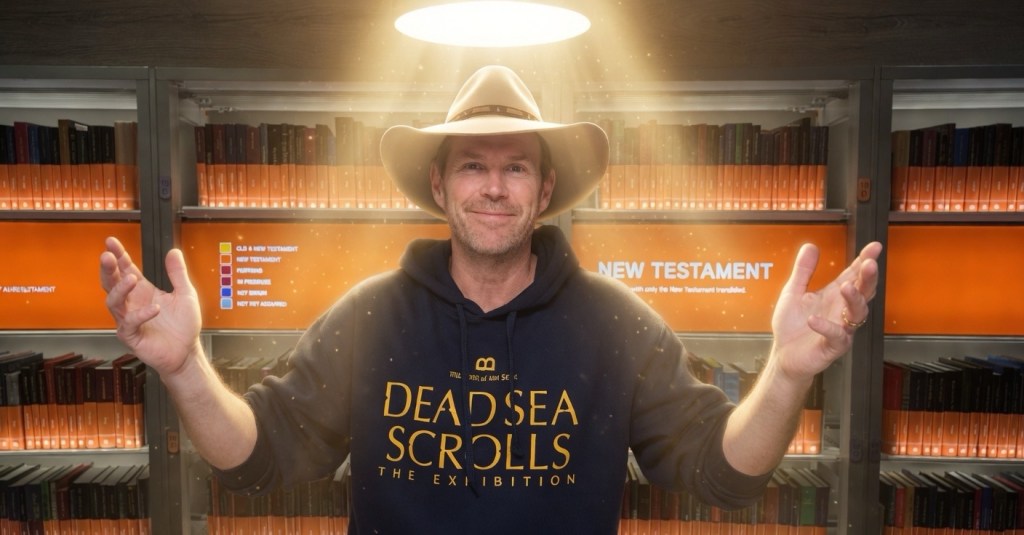
About the Author: Rich Hoffman
Rich Hoffman is an author, political consultant, and strategic advisor based in Cincinnati, Ohio, and the creator of The Politics of Heaven—a unique framework that connects biblical theology, ancient history, and modern power structures to explain how moral alignment and spiritual forces shape global events. Blending real-world political experience with deep research into archaeology, UFO phenomena, and suppressed historical narratives, Hoffman offers compelling commentary on topics ranging from ancient civilizations and the Dead Sea Scrolls to modern populist movements, paranormal continuity, and leadership strategy in chaotic environments. As the author of The Gunfighter’s Guide to Business and the forthcoming Politics of Heaven, he brings a grounded yet provocative voice to media discussions, supported by firsthand experiences and a cross-disciplinary approach that bridges science, history, and theology. For interviews, speaking engagements, or expert analysis, visit richhoffmanbooks.com or contact directly via phone at 513-307-5815 or email at rhoffman@richhoffmanbooks.com. If you’ve seen the movie, Disclosure Day and want to talk about it and the implications of Presidnet Trump’s UAP disclosures, let me know and we can bring some color to your coverage. https://richhoffmanbooks.com/media-inquiries-broadcast-topics-and-contact-info/?frame-nonce=ad51e7ecba I do have a firsthand UFO encounter to discuss.


