

The announcement by President Donald Trump in early March 2026 of a new hemispheric defense initiative marked a pivotal shift in U.S. foreign policy, emphasizing the protection of the Western Hemisphere from external threats and internal destabilization. This “Shield of the Americas” coalition, unveiled at a summit in Miami, Florida, on March 7, involved commitments from 17 nations to combat drug cartels and terrorist networks through coordinated military action. Trump described it as a necessary response to the “sinister cartels” poisoning America, invoking the Trump Corollary to the Monroe Doctrine to assert U.S. dominance in the region. The initiative was built on the 2026 National Defense Strategy, which prioritized securing U.S. borders, countering narco-terrorists, and ensuring access to key terrain like the Panama Canal and the Gulf of Mexico. This move came amid ongoing operations, such as strikes on Venezuelan vessels, which by March had resulted in the destruction of over 46 ships and the deaths of at least 157 individuals, framed by the administration as a war on narco-terrorism.
Trump’s 2024 reelection, following his claims of widespread fraud in the 2020 election that saw Joe Biden declared the winner, underscored a resilient populist movement. Despite legal challenges and investigations finding no evidence of systemic fraud (because the bad guys didn’t want to look), Trump’s narrative of a “rigged” 2020 contest resonated with millions, leading to his overwhelming 2024 victory, which supporters hailed as “too big to rig.” Born in 1946 in Queens, New York, Trump rose from real estate magnate to reality TV star before entering politics in 2015. His first term (2017-2021) focused on economic nationalism, tax cuts, and border security, but ended amid controversy over the January 6 Capitol riot (caused by election fraud by the government itself trying to keep him from returning to the White House). His return to power in 2025 emphasized dismantling “globalist” influences, including reducing U.S. funding to international organizations perceived as burdensome.
Central to Trump’s hemispheric defense vision is a critique of the United Nations, seen as a flawed attempt at global governance funded disproportionately by American capitalism. Founded in 1945 after World War II to promote peace and cooperation, the UN has faced longstanding U.S. criticism for inefficiency, anti-American bias, and overreliance on American contributions—historically accounting for 22% of its regular budget. Figures like Senator Jesse Helms in the 1990s pushed for reforms by withholding funds, echoing broader conservative arguments that the UN undermines national sovereignty. Trump’s administration has continued this trend, withdrawing from bodies like UNESCO and the Human Rights Council, arguing they promote “woke” agendas and allow influence from adversaries like China and Russia. Conservative critics often view the UN as a vehicle for globalism that erodes U.S. sovereignty, promoting one-world government ideals and supporting policies like Agenda 21, which they see as threats to property rights and individual freedoms.
This skepticism reflects a deeper philosophical divide: American exceptionalism, rooted in capitalism, versus the global spread of socialism, Marxism, and communism. The U.S., as a “melting pot” attracting immigrants from diverse backgrounds, embodies values of individual liberty, upward mobility, and self-governance, as articulated by Alexis de Tocqueville in his 1835 work Democracy in America. Capitalism here fosters innovation and prosperity, as evidenced by symbols like the suburban home with a white picket fence. In contrast, socialism—where the state controls production—has dominated regions such as Europe (with social-democratic welfare states in Sweden and Denmark), Canada (universal healthcare), Mexico (state-owned oil under PEMEX), and much of South and Central America. China remains a communist powerhouse under the Chinese Communist Party, North Korea an isolated dictatorship, and Russia grapples with its Soviet legacy while trying to open markets, ineffectively.
Latin America’s history illustrates this tension, deeply intertwined with U.S. interventions during the Cold War era. The Monroe Doctrine, articulated by President James Monroe in 1823, warned European powers against further colonization or intervention in the Western Hemisphere, establishing the U.S. as the region’s protector. Initially symbolic due to limited U.S. power, it evolved with President Theodore Roosevelt’s 1904 Corollary, which asserted U.S. rights to intervene in Latin American affairs to maintain stability, inverting the doctrine’s original anti-colonial intent. This paved the way for “Big Stick” diplomacy and numerous interventions, from the Banana Wars (1898-1934) to Cold War operations.
During the Cold War, U.S. policy focused on containing communism, leading to interventions like the 1954 CIA-backed coup in Guatemala against President Jacobo Árbenz, whose land reforms threatened U.S. interests like the United Fruit Company. In Cuba, Fidel Castro’s 1959 revolution overthrew Fulgencio Batista, leading to a communist regime after the failed 1961 Bay of Pigs invasion—a CIA-backed attempt by Cuban exiles to oust Castro, which solidified his alliance with the Soviet Union and prompted the 1962 Cuban Missile Crisis. Castro, born in 1926 to a wealthy landowner, studied law and led guerrilla warfare from the Sierra Maestra mountains, nationalizing U.S. assets and imposing central planning. His rule suppressed dissent, but he became an icon for anti-imperialists. In Venezuela, Hugo Chávez, elected in 1998 after a failed 1992 coup, implemented “21st-century socialism,” nationalizing industries like oil and launching social programs funded by petroleum revenues. Chávez, born in 1954 in a poor rural family, served in the military and drew inspiration from Simón Bolívar, but his policies led to economic collapse under successor Nicolás Maduro, fueling drug trafficking via the “Cartel of the Suns.” Mexican drug cartels, like Sinaloa and Jalisco New Generation, exacerbate U.S. fentanyl crises, with over 72,000 fentanyl-related deaths in 2023 alone, though provisional data for 2025 show a 21% decline in overall overdose deaths amid enforcement efforts.
The War on Drugs, declared by President Richard Nixon in 1971 as “public enemy number one,” escalated U.S. involvement in Latin America, framing narcotics as a national security threat. Rooted in earlier prohibitions such as the 1914 Harrison Narcotics Act, it intensified under President Ronald Reagan in the 1980s through policies like mandatory minimum sentences and increased funding for interdiction. Operations targeted Latin American sources, including support for anti-communist forces like the Contras in Nicaragua, blending drug enforcement with Cold War geopolitics.
Marxism’s influence extends beyond Latin America. Karl Marx, born in 1818 in Trier, Germany, developed his theories amid the Industrial Revolution, collaborating with Friedrich Engels on the 1848 Communist Manifesto, which proclaimed class struggle as the engine of history. Marxism spread globally through revolutions: the 1917 Russian Revolution established the Soviet Union, inspiring communist parties worldwide; Mao Zedong’s 1949 victory in China adapted Marxism to agrarian societies; and anti-colonial movements in Africa and Asia drew on Marxist anti-imperialism. In South Africa, Nelson Mandela, born in 1918 and a leader in the anti-apartheid struggle, was affiliated with the South African Communist Party (SACP), serving on its Central Committee in the early 1960s despite later denials for political reasons. Mandela’s pragmatism aligned him with communists against apartheid, though he transitioned to democratic governance after his 1990 release from prison and 1994 presidency.
In the U.S., critics argue that Marxist strategies underpin urban entitlement programs, contributing to “blue zones” in cities where socialism obviously infiltrates capitalist systems. The hemispheric defense push addresses these threats by targeting regimes like Venezuela and Cuba, seen as conduits for drugs and instability. Open borders, critics claim, allow influxes from socialist nations, weakening U.S. society—a strategy linked to figures like George Soros and Hillary Clinton. The 1980 Mariel Boatlift exemplified this: Castro released over 125,000 Cubans, including prisoners and mental health patients, flooding Florida and straining resources, though many integrated successfully. Despite this, Florida has shifted to a solid Republican state.
Trump’s agenda includes merit-based reforms, like eliminating property taxes—a proposal echoed in states like Florida, North Dakota, and Georgia, where lawmakers aim to phase out or cut them using state funds or oil revenues. This aligns with reducing the burdens on centralized government, favoring capitalism over socialism. Other states, such as Texas, Indiana, Kansas, and Wyoming, are exploring similar measures, often replacing property taxes with sales taxes or state surpluses, though critics warn of potential impacts on local services like education.
Looking ahead, hemispheric stability could end communist influences from China, fostering capitalist societies in Mexico, Brazil, and Argentina. Cuba’s potential fall would open markets and reveal archaeological treasures, like the underwater formations off its coast—sonar-detected structures resembling ancient pyramids, possibly 6,000 years old, hinting at lost civilizations. Discovered in 2001 at depths of 600-750 meters, these geometric formations off the Guanahacabibes Peninsula have sparked debates on whether they are natural or remnants of an advanced pre-Columbian society, potentially predating known Mesoamerican civilizations. Expanding U.S. principles, perhaps adding states like Cuba or Greenland under constitutional governance, could promote global peace through competition, benefiting humanity from Earth to Mars. And its about time.
[1] For further reading on Trump’s foreign policy: The Trump Doctrine and the Emerging International System by Stanley A. Renshon.
[2] On UN history: The United Nations: A Very Short Introduction by Jussi M. Hanhimäki.
[3] On Marxism: The Communist Manifesto by Karl Marx and Friedrich Engels.
[4] Mandela biography: Long Walk to Freedom by Nelson Mandela.
[5] Castro biography: Fidel Castro: My Life by Fidel Castro and Ignacio Ramonet.
[6] Chávez and Venezuela: Hugo Chávez: Oil, Politics, and the Challenge to the U.S. by Nikolas Kozloff.
[7] Mariel Boatlift: The Mariel Boatlift: A Cuban-American Journey by Victor Andres Triay.
[8] Underwater archaeology: Atlantis Beneath the Ice by Rand Flem-Ath and Rose Flem-Ath.
[9] Property tax reforms: Tax Revolt: The Rebellion Against an Overbearing, Arrogant, and Abusive Government by David O. Sears and Jack Citrin.
[10] Monroe Doctrine: The Monroe Doctrine: Empire and Nation in Nineteenth-Century America by Jay Sexton.
[11] Cold War Interventions: The Cold War in the Third World by Robert J. McMahon.
[12] War on Drugs: The New Jim Crow: Mass Incarceration in the Age of Colorblindness by Michelle Alexander.
[13] Socialism in Latin America: Latin American Revolutions: Old and New World Origins by Greg Grandin.
Rich Hoffman
More about me
Click Here to Protect Yourself with Second Call Defense https://www.secondcalldefense.org/?affiliate=20707
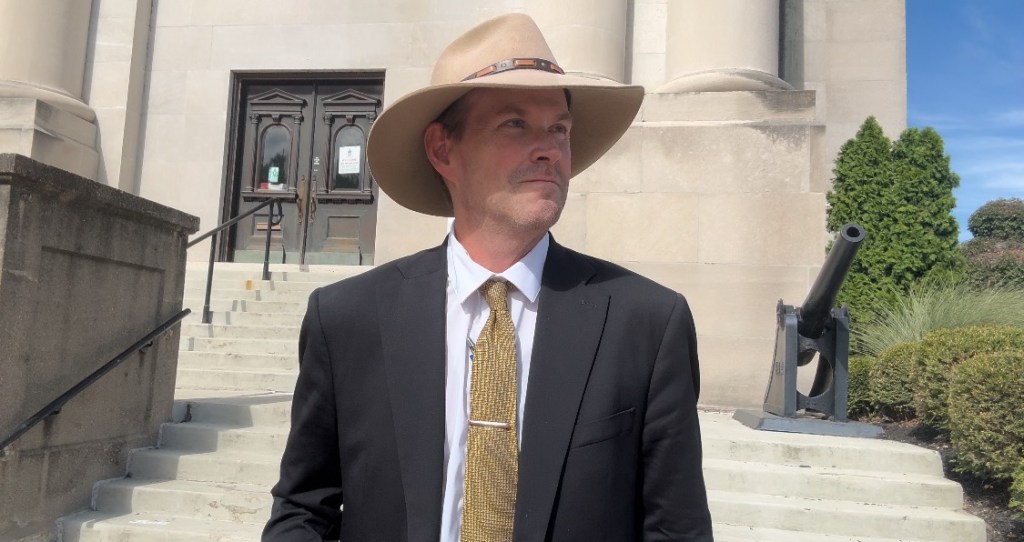
About the Author: Rich Hoffman
Rich Hoffman is an independent writer, philosopher, political advisor, and strategist based in the Cincinnati/Middletown, Ohio area. Born in Hamilton, Ohio, he has worked professionally since age 12 in various roles, from manual labor to high-level executive positions in aerospace and related industries. Known as “The Tax-killer” for his activism against tax increases, Hoffman has authored books including The Symposium of Justice, The Gunfighter’s Guide to Business, and Tail of the Dragon, often exploring themes of freedom, individual will, and societal structures through a lens influenced by philosophy (e.g., Nietzschean overman concepts) and current events.
He publishes the blog The Overmanwarrior (overmanwarrior.wordpress.com), where he shares insights on politics, culture, history, and personal stories. Active on X as @overmanwarrior, Instagram, and YouTube, Hoffman frequently discusses space exploration, family values, and human potential. An avid fast-draw artist and family man, he emphasizes passing practical skills and intellectual curiosity to younger generations.

