The information below comes directly from one of my friends who attends every school board meeting and is very much involved in trying to help the school system solve its problems without hurting parents and children. Just because I’m on the No Levy side, it is useful to still speak to people who are for the levy and neutral so I can understand the situation. Below are his notes starting with a letter to the School Board:
Joan & Lynda,
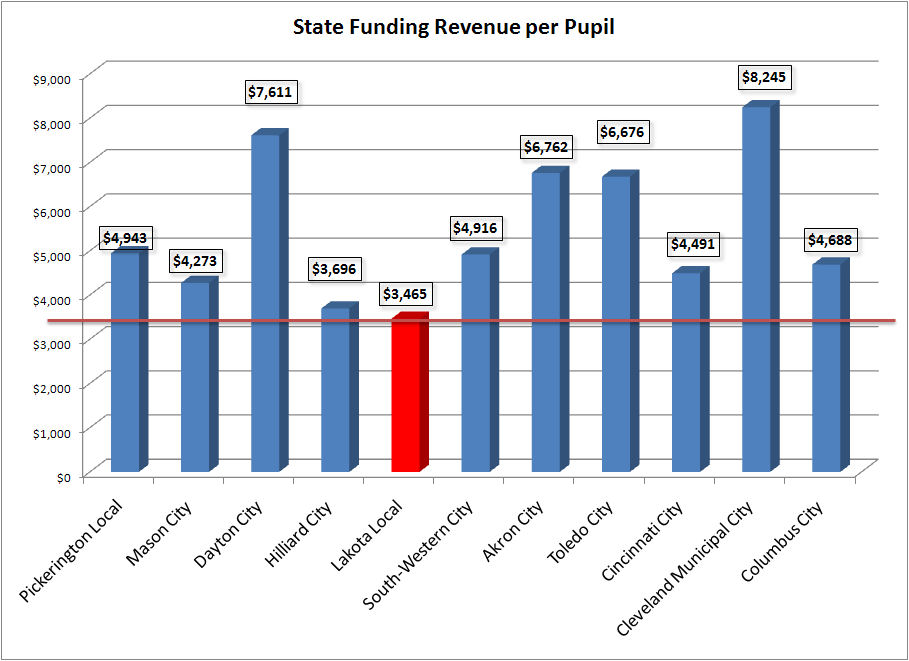
Attached you will find a spreadsheet I prepared. The first two worksheets show the May and September 2010 Lakota Five Year Plans. The third worksheet shows the numbers based on removing the $3M kindergarten costs and removing $3.83M associated with busing and the 15 elementary literary personnel from the $12.2M existing proposed cuts. The fourth worksheet is just a what-if scenario if the district went for a five-year emergency levy in 2011. Here is the 2010 plan.
I really think you have another year before you have to make both the busing and elementary teacher’s cuts. These two items really will have the biggest impact on the students and their parents. You are affecting half of the student population with busing and eliminating crucial early teaching that has a huge leverage impact on later years.
In my assumptions, I did not include any actions to reduce the growth in employee costs, although I feel this is another area that needs to be looked at seriously.
I think you have to take Senator Cates word that the Kasich administration will not force the kindergarten mandate.
Thanks for your consideration.
These documents do not mean we need a levy, but are in fact ways of playing out different financial options.
Lakota has a lot of options. But they elected to extort the public with cuts in busing and other programs and provide the public with information to insight anger and panic.
While we’re in a season of Thanksgiving, I give my thanks to Glenn Beck for holding strong in the face of all the opposition, and continuing to provide insight into the dark exploits of the very rich, very corrupt, and the many, many people that will sell their lives away for a good income, who make themselves willing pawns to people like George Soros. That’s not to take away from my own family or good fortune. But we all need a country to raise our families in, and I am thankful that Beck has put the issues threatening the country on the table for all to see, so we can take steps as Americans to do something about it.
Soros indirectly has had an influence on Hollywood, which Beck hasn’t spent much time covering. His money and those like him are heavily sought after to bankroll films. Anyone that knows the film industry a little knows that Robert Redford’s Sundance film festival is the premier film festival in the country and studios watch it closely for new talent. And, George Soros has contributed a lot of money to the Sundance Institute. Soros is financing the film Better This World which is about the left wing terrorists that plotted to kill republicans at the 2008 GOP convention. And with other money being either directly or indirectly funded to film projects it is no wonder why Hollywood has moved in a radically left political direction. And I personally blame people like Soros for why Hollywood no longer knows how to produce a good western, and why the symbols of American individualism, the cowboy, have been reduced in the minds of the public to drunken fools abusing Indians.
One of the best books I’ve ever read is The Frontiersman. This is something that every kid in grade school should have to read as part of their understanding of history. But, it doesn’t fit with the progressive platform, and is therefore not encouraged as reading material. Dances with Wolves, although a good movie is not a typical western, but does embrace the progressive platform. A book like The Frontiersman does not, so it is ignored by the media outlets, even though the book is a far superior novel, it will never be made into a film while progressives control the funding structure in Hollywood.
Soros recently donated 1 million dollars to Proposition 19 in California to legalize Marijuana use, and I found that absolutely appalling. Many of the talking points about being able to collect taxes off the legalized use, and cost savings of decriminalization were very similar to the campaign I was involved in with education reform in Ohio and that was terrible. So there is no question as to Soros motivations. Proposition 19 is another progressive platform icon, which thankfully failed.
So how do we combat people like Soros and his attempts to undermine American Culture? Well, you do it the way he’s done it, except you turn it back on them. Beck has done that to some extent. The money he has made off his books and various enterprises, he has spent on research into the kind of activity he’s been reporting. Money can flow in the other direction if people are willing to put their money where their mouth like Glenn Beck has done, and because of the urgency of the situation, I am too.
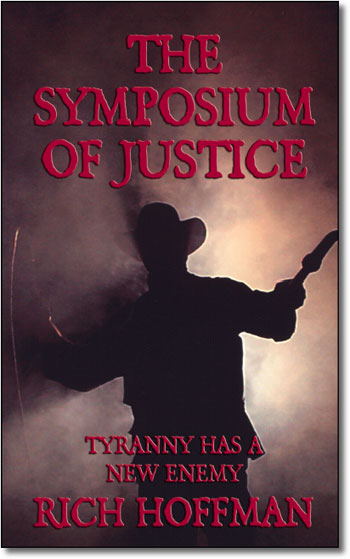
If you’re looking for a hot new gift for Christmas or someone’s birthday, or to read for yourself, the profit I receive will go to a good cause and I can promise you I will create explosive results.
As to Beck’s visit to Wilmington, I will be there for sure. It’s practically just down the road for me. I know Wilmington extremely well. I missed 8/28 due to a wedding. I won’t miss this one!
Lakota Cuts Busing: Announcement made at Monday’s School Board meeting.
Completely on queue and as predictable as tears at a funeral, the school board announced that it was going to cut busing to students grades 9 through 12 including private and parochial schools, and students kindergarten through eighth-grade who live within a two-mile driving distance. This will affect 9,100 students and will put a serious burden on parents all across the district.
Parents showed up at the board meeting and expressed their concerns about the safety of their children, but they might as well of saved their breath. The wheels were already in motion, because cutting busing is one of the OSBA’s methods of getting a levy passed.
Mike Taylor announced that “Transportation is something that we have offered beyond state requirements, and we can’t afford it any longer.”
The No Lakota Group demonstrated how Lakota could work within their budget without hurting parents. See that plan here.
Cutting busing will only save $800,000 for the duration of the school year of 2011, and 2.8 million next year. Lakota is spending over $31 million dollars on teachers and administrators making over $65K per year. Yet, instead of making reductions at the top of their pay scale, like most companies would, they resort to the relatively small amounts of money that will put the community at an inconvenience and actually put the children in danger.
So this isn’t a cut to save money. This is a cut purely based on politics and protecting the top wage earners. It is nothing more than that.
How does that make you feel as a resident? See the history of the last levy attempt and follow the pattern. Cutting busing is part of the politics of the next levy attempt. It’s all about money and greed. Nothing else, otherwise the union would come to the table and offer to help instead of putting children in danger and parents under duress.
For perspective, here is some real numbers by one of our No Lakota people. This has been sent to the school board, so they have this information.
What this shows is that the financial situation does not show a need to cut busing, and in fact does not require such drastic measures until next year.
I will post more on this to show what a poor decision this is.
On October 20th at the Miami University branch in the VOA Park of West Chester, Mike Taylor, superintendent of Lakota Schools along with several other representatives of tax initiatives for the November 2nd ballot made their case for why people should vote for their issue.
The Lakota Levy was defeated. However, because we know that Lakota will attempt to place the issue back on the ballot, I recorded the comments Taylor made and answered his comments with the No Lakota Levy response.
The questions asked came from a panel of journalist made up of Lindsey Hilty of the Pulse Journal, and Debbra Silberman of 9 News.
Notes from October 20, 2010 Meeting:
Opening comments: Mike Taylor stated that this levy is a lean request. Lakota has 9 years of excellence; they turn out great students, maintain 22 buildings and in order to avoid making harmful cuts the community needs to pass this levy which will generate 21 million per year. This levy approach is new for Lakota in that this is a 10 year operating levy. It is not forever but will have to be voted on to be renewed. 70% of the residents do not have children in the school system. 30% of the residents do have children in the school. And he added that the Lakota operates in a fiscal responsible manner.
There was a question about what the state standards are, and he reported they are reading, writing, and science, with a minimum of art, music, and physical education. Lakota goes beyond the state guidelines. If the levy fails, there will be a reduction in art, music, and physical education. There will also be an increase in class size and extra curricular activities.
Lakota could avoid its problems with a simple freeze of step increases. The average Lakota teacher salary is over $60,000 for working 184 days a year. They have 15 paid sick days, and are required to work 37 hours per week. They get a 14% contribution to their retirement plan and have a great medical plan. The average cost per hour worked by a teacher at Lakota is $47 per hour. The step increases will cost an additional $2.7 million each year which makes up a considerable part of their budget deficit projections.
2. Increase in spending outpaced inflation. Why didn’t the school system deal with that trend? Answer was that because of the lack of state funding, and the fact that they opened three new buildings, this caused the spending to escalate. He danced around the issue and did not directly answer.
Lakota has made 3 different five year financial forecasts in the last 11 months. The deficit projects started at over $28 million, and then were at $10 million, and most recently have been at $4.5 million, considerably less than the catastrophic amount originally announced. If the school system had taken measures back in 2005, 2006 and again when the teachers threatened to strike in 2008, they could have avoided the situation they are currently in and could save jobs instead of protecting the top wage earners.
3. During the summer of 2005 the district was aware of the flat funding coming from the state, why weren’t there measures to save money before now? Answer was that Lakota opened 3 new buildings, and in 2008 the district went into reduction mode. They added 400 new students in 2005 and 500 in 2006. Again, he did not directly answer the question. And he did not answer as to why it took 3 years to react.
There was a levy that took three times to pass in late 2005 and those funds started kicking in around 2006. It appears the school district got caught not addressing the issue because they had a renewed revenue stream.
4. There was a question as to why this levy was listed for 10 years when in fact the forecast shows that we’ll be out of money in 2014. Taylor says Lakota has a history of reduction and that they will basically figure it out. He didn’t know why such statements would be made. And at the end of 10 years, we can decide if we want to renew it.
The fact is, when the May levy failed; the school system just took off the second part of that attempt. They knew all along that with the $21 million per year generated with the school levy they’d be broke again in 2014. This due to the step increase formula that would push wages into the average of $65 to $70 K per year range.
5. Why can’t we have elimination of the step increases, because the savings could prevent the cuts to busing? Taylor blamed all of Ohio on the wage structure and collective bargaining. The union has worked with administration on two issues to help. 1st is the compensation structure. Second are the health care benefits. He also cited that the importance of teachers dictate that Lakota have the ability to purchase the best teachers. Then he blamed state law that dictates the funding system.
These are union talking points. Taylor was a member of the union for many years, and can’t turn his back on it now. Saying that the union is working with the administration is too little too late. With the wages in the range they are now, the revenue stream coming into Lakota cannot sustain the current contract, and nobody is suggesting a renegotiation. The union shows no inclination of giving up ground it made in the 2008 threatened strike.
6. Next question is that if the state takes over, do levies go away? His answer, is no. The state puts together plans to generate revenue, and can only generate funds with property tax.
The fact of the matter on this is that once the state steps in, and determines what the financial situation is, they can renegotiate the teacher’s contract or at least elements of it. It’s the only way to get out of that obligation that the poorly negotiated contract Lakota is bound to can be reversed.
7. Have administrators had raises? His answer was, no administrators have had a raise in 2 years. Also health care benefits have been cut.
When it was noticed that they spent themselves into a financial problem, the administrators did go on a pay freeze. But their current financial obligations are part of what I causing the trouble when many of those positions are over $70K per year. To balance their budget, they need to reduce their burden to the school system by at least 30%.
8. How does the move to a 6 period day save money? Cutting the extra period will cut 140 electives out of the day across the district and will result in a savings by shortening the day in this way.
The humorous issue here is that they are either stating that to provide a proper education we only need 6 periods, or that the teachers are going to get paid for a free hour per day because they won’t be working. How is this efficient? Completely irresponsible and short-sighted. This statement shows why Lakota is in trouble. They think a shorter day means less money. But they will still pay their entire staff, except for the position eliminated their full pay.
9. What effect does an excellent rating have on communities? Lakota has 9 years of excellence and distinction. 18,500 students get an individualized education. Lakota has award winning art programs, music and athletics. That’s why people move to Lakota. A struggling school system shows a struggling community.
Lakota is not a great school by happenstance. The children attending have parents that are involved in their lives, and that is a direct correlation to the quality of the student bodies. The school system is great because the community is great. Not the other way around. Making statements like the one Mike Taylor made is pretentious. Again, they are trying to sell their services to the community so of course they are going to attempt to inflate the value. But that has to be understood by the community. Teachers could come and go and the students would still succeed because the families sending their kids to school are involved. The value of a teacher is important. But does cost alone determine value? No. The teachers just in education for the money could leave for schools that are also drowning in the same type of wage structure. There are lots of teachers that would like to work at Lakota even if for less money, because the community is wonderful, the environment is successful, and the parents are easy to deal with. Lakota will continue to have those benefits to offer potential employees to the school system.
10. How do you arrive at the calculation of student to teacher ratio? How is it made? How is Lakota’s student teacher ratio in relation to the State needs? Answer was an obscure one; he said Lakota makes use of specialized teachers which helps reduce class sizes.
Class size is something to the teachers benefit. In colleges, many classes have more than 30 people per class, so as a college prep issue, larger class sizes will prepare students for education at the next level, which won’t be able to provide such specialized treatment.
11. Are the teachers being let go associated with electives? Enrollment trends dictated reductions so far. He did not answer part of the question related to the failure of the levy.
We know that the teachers being cut will not come out of the top wage earners. And if the classes offered are not essential to education needs, then levy or no levy, Lakota should cut the electives that are not necessary to keep costs down.
12. Where do people get the money to pay for the levy? He said that Lakota is caught in a perfect storm, with the state cap, and then reduced funding by 3% over the last 2 years. The state system is broken. Spending at Lakota is less per pupil. Strong schools can help make a strong community.
Without the levy they will not be able to increase their budget for the 2012 per the planned $13 million increase, and have to operate on the same dollars as in 2011. What they are going through is the same thing the community is going through.
Closing statement; fate of our community is at stake. State ratings are not what are important. The value to the community is Lakota can help each child no matter what their level. It will protect real estate values of the community. A struggling community is reflective of a struggling school system.
We voted for this levy in May, and in that election 65% voted it down. All the election ballots had not even been counted yet before the superintendent announced that the issue would be back on the ballot in November. Now the purpose of that election was not to have another election 6 months later, and to keep holding elections until it passes. That kind of behavior is disrespectful to the voters.
When you look at the numbers, at what they are spending their money on, you will find that they are spending just over 75% on wages and benefits. So they should have some control over their budget problems. They are working with a budget of $160,547,327.00 and that is more than generous. So when they say they are going to dismantle the school system, or that parents can’t expect the same kind of service from the school, they are being deceitful, which is a very serious situation, because they are making a decision to hurt the district.
As I was looking at why they are in so much trouble what becomes obvious is that they have over 434 teachers and administrators making over $65,000 per year, with quite a few making between $80,000 and $100,000.
Now, I’m all for people making a good wage. But when that money is funded off tax payer support, and it is obvious that the administration at Lakota did not behave responsibly when they negotiated contracts with the union in the past, because they have spent themselves into a corner, and now the budget is unsustainable. The wages they are making are at least 30% more than the private sector jobs of comparable positions of those in the community that are paying the taxes.
Employee wages and benefits
$120,758,911.00
Purchased services
$26,431,714.00
Supplies and Materials
$4,206,669.00
Capital Outlay
$3,394,834.00
Debt Service
$1,225,781.00
Transfers and Advances
$1,996,206.00
Other Uses
$2,533,212.00
When Lakota says that if they don’t get the money they will:
Cut an additional 103+ teachers and staff
Two thirds of the athletics budget including elimination of Jr. High athletics.
Eliminating additional academic programs and extracurricular programs.
Reducing bus service for High School students and those students within a two mile radius
Drastic cuts in gifted education and other student services.
What this says is that the administrators would rather dismantle the school district than attempt to re-negotiate with the union in order to bring wages into more sustainable amounts. With a quick calculation, if the Lakota school system took a 30% pay cut, they wouldn’t have to diminish anything. They could generate $27 million right away. That means someone like the superintendant who makes $147,505 and reduces it to $103,253, or a teacher that is making $78,426 and put them at $54,898. And everyone could keep their jobs; get paid fairly, and more importantly, the kids come out on top with full community support. But there isn’t any desire for something like that, and that tells you where their real thoughts are.
Lakota like many school systems over time have allowed the teaching profession to migrate into a wage rate comparable to doctors and lawyers. They justify this by citing that the cost of obtaining the education, for a master’s degree, or a doctorate is similar, so in turn they should be paid the same.
And that leaves us with the true tragedy of modern public education, where an institution that is generally trusted by the residents of a community, have lost their credibility. On the surface, people know there is waste. They see the new buildings, the see the elaborate sports facilities, and they shake their head. But come levy voting time, they tend to reluctantly vote in favor of them because they either have a child going to school or they know one that does. And because people stay very busy making livings for themselves, they want desperately to trust that the school system has the interest of the community as a first priority.
It doesn’t take much however to pull back the curtain and see what’s really going on. And anyone with just a bit of business sense can see the problem. Wages for teachers and administrators are just too high. In the state of Ohio, based on the website Indeed.com the average attorney makes $57,000, and a doctor, $73,000. A Plant Manager typically makes $72,000. The average for a teacher in the state of Ohio is $54,000. And the average for a teacher at Lakota is $59,000. There are currently 1,137 teachers working in Lakota, and based on a report from the Pulse Journal which came out in March 18th of 2010 in their Insight 2010 Edition, Lakota has 434 teachers that make over $65,000 per year.
Now when you look at the pie chart of their operating costs, and you see that easily over 75% of their cost of doing business is wrapped up in wages and benefits for the employees of the School, not to busing, not to construction, not to power supply and other usages, yet you hear that if the levy doesn’t pass, they are going to cut busing, they are going to force a pay to play policy in sports, and they are going to lay-off 130 plus teachers and administrators which will increase class sizes, it leaves you scratching your head. That is until you realize that they are attempting to scam you.
Those types of coercion are union strategies that have successfully hindered many sectors of our economy, and it is particularly ruthless to use children to manipulate parents. Yet the people involved will swear they are putting the children first. Yet when it comes time to pass a levy, they point to other districts that are equally in trouble and say they are operating at a savings, as Lakota proclaims. But they never deal with what causes the excessive costs. It’s the weight of their wages and benefits packages, exclusively. And rather than explore other options, they resort to the formula, the same formula being used at Little Miami, at Edgewood, or Mason, and that is to protect the top by sacrificing the bottom and put the parents between a rock and a hard place to secure funding.
Once you figure out that you’ve been lied to and manipulated, you tend to get angry about it. It’s one thing when it happens at the state level, which is far away from us. It’s another when it happens in the Federal government, where we look at it, talk about it, and shake our heads, but do little about it, because that situation is even further away. But when it’s a school system, an institution that you invested your hopes and dreams for your children into, it’s a bit harder to swallow. Yet it’s right in front of our face.
Government jobs on average pay 45% higher than private sector jobs, and this is why we all know that government is failing. Their costs do not reflect reality.
Lakota is trying to raise 21.75 million in this levy, and if they don’t get the money, they are threatening to completely dismantle the school system, with a massive layoff, losing our excellent rating, which will adversely destroy property values. All those threats are very serious, for a group of people making 45% more than the tax payers funding their activity, and that is a real problem, because they haven’t even looked at any other options.
The NoLevy group was talking in one of our meetings, and we approached the problem the same way we would in one of our businesses, and we came up with an option that I think is particularly attractive and that is that they take a universal pay cut of 30%. That would allow everyone to still keep their jobs, allow the school system to operate as it has. The only reason they wouldn’t do it is complete selfishness. If it was really about the kids, they would have done something like that already. A thirty percent cut in wages would simply put someone like Mike Taylor, who is the superintendent making $147,505 a year and bring him down to $103,253.50 per year. A wage many would love to have even with his responsibility level. A thirty percent reduction would put that teacher making $78,600 and lower them to only $55,020, hardly a measly amount of pay.
Now of course nobody at the top will talk about doing anything like this. So as far as the NoLakota people and the Pro Lakota people talking, there isn’t anything to discuss. We’ve seen all the charts and stats they’ve thrown up, and we know its all smoke screen to this more serious problem that nobody wants to deal with. So we’re going to deny them the funding and make them deal with it. If they want to earn over 100K a year, they will be working hard for it. And I’m sure Mike Taylor, who isn’t a bad guy by any means, I’m sure he’d look to Mason and say it’s not fair for me to reduce my wages because Kevin Bright over there is making $218,315 for being a superintendent. Well, Mason is in trouble too, for all the same reasons. Somebody needs to be the leader.
But there are options and they are certainly fair options. The people see through this. Some of the younger residents that have kids in the system don’t want to apply the same principles they may use in their jobs because it’s personally painful to them. Most young professionals rely on the school system to handle their children during the day, so they are willing to put up with some of the obvious waste. But during the last levy 65% voted against the levy, and of that 65% many are business leaders and mangers themselves, and senior citizens that have been around and seen a lot, and know they are being taken advantage of, and it makes them angry.
And Lakota did hold out the branch, and wanted to give a presentation to our group, because they were hoping to take the edge off this election early. The trouble with that is they did probably the worst thing they could have done before holding out that branch. In May when we voted for this the first time, we flat out rejected it. And on election night, Mike Taylor announced that the levy would be back on the ballot. What he really said was that he did not respect the opinion of the voters, and that for this next election, they would work harder, raise more money, print more signs, and get more kids to go home and strong arm their parents instead of doing the right thing, and bringing all the wages into a reasonable amount and being the first in the state of Ohio to do it, showing the expected leadership of such a powerful school system. That’s what the voters wanted after the last election. They ignored us and preceded on to put the levy on the ballot again, and again, and again, until people just give up and pass it, and their livelihoods can be secured in comfort for the foreseeable future.
So make no mistake. They are not putting the kids or the community first, only their own self interest.
From my own college experience, I understand clearly what the problem is. Education can only give you some of what you need. Most of the work of starting something from nothing can’t be taught, and if your goal is success, that inspiration has to come from someplace deep inside. Is there a teacher out there that can teach someone to be Richard Branson, George Lucas, or Bill Gates? If they could they would. But they can’t, in fact, a lot of the time, the teacher teaches because they aren’t good at actually doing things in the real world.
So that leaves me to question the validity of the entire institutional system. Now that the Lakota Levy is over, at least this time around, I think it’s time to bring to question what the value of education actually is.
The difficulty in determining the value of education is that so many have built secure incomes off education. What brought the whole issue to my mind was the book Forbidden Archeology which showed to what extremes universities suppressed scientific evidence discovered in the field of archeology and anthropology. The reason for the suppression was to protect their previous scientific finds and the legacy of those revelations, so new evidence was a threat to the security built on those reputations.
To keep it clear sports is the best explanation. Consider what the NFL would be like if great teams were always allowed to draft first in each years draft class. The NFL to keep things competitive and entertaining, created salary caps, so teams would have to make decisions on who they could keep on their teams, and who’d be let go. And they came up with the idea of letting teams with the worst record draft first in the following year’s draft. That way, new teams are always emerging as good teams and competition is always evolving. And we all benefit from the entertainment value.
But in education, we are still teaching kids the same way we did at the turn of the century, even though new methods and computer technology allow for other options. We still have schools shutting down in the summer even though that concept was started to let young men help their fathers on the family farms during harvest season. But, teachers unions have kept that going for the sake of benefits.
I would argue that a teacher standing in the front of a room and teaching as an authoritarian on the given subject is an archaic method long outdated. I would say that teaching children to stand in line at lunch, to stand in line when they walk down the hall to go to recess, to walk in line to go to an assembly, to stand in line for attendance in gym class, and so on and so on are psychologically bad for the development of young people. Because what it teaches them is to follow orders. In the education system we currently have, following orders is the emphasis, and I would argue that mentality is completely wrong for American society.
I can hear you groaning right now dear reader. I can hear your questions. But understand something in my explanation here, I am questioning the very foundation upon which everything is built, because to my eyes it is not perfect, and does not produce the type of individuals American society needs, so it is subject to ridicule. It is quite probable that you as the reader are a victim to a lifetime of acceptance to this established system, so to question it will be difficult for you. I understand.
But, for the sake of this article, forget everything you ever learned, and suspend your belief system and look with the eyes of a person new to the culture you exist in, and enjoy the revelations that befall you.
Consider for a moment how idiotic the hazing rituals of college are. The drinking games, the insults from your peers, the ridiculous dares that take place, the structure of those rituals are technically insane. But is it a mystery as to why those belonging to a fraternity have a network from which to launch their careers? Isn’t it strange the rituals of the bachelor party which seem to be important to many males, especially those belonging to fraternities where their “brotherhood” reflects a deep bond that exceeds or equals the bond with the wife to be. And to the sorority sisters the same mentality holds true. The night before their weddings is inundated with penis worship. The women, particularly sorority sisters gather and bond among rituals of drinking and male strippers. But why? What is to be accomplished in these ceremonies? If you are an employer, and are looking for a nice obedient employee that will know their place and not challenge the authority structure, a frat boy is an attractive option, because they know their place. And in the scope of these rituals as the participants emerge into marriage, the brothers and sisters have a shared secret that bonds them, and ensures the continuation of the bond in respect to the new marriage. Secrets create a bond.
With fraternities and sororities, which serve basically the same role as the military soldier that gets off the bus and is yelled at by a drill sergeant prior to getting their hair cut, which is the beginning of a mental transformation as an individual and into the collective identity of a soldier. And thus, are the two primary paths that young people take after high school. Now during high school and grade school there are many smaller rituals that occur. By the time a youngster is a senior in high school, they know their peer groups. They know where they fit into the social stratus, and this seems to be the number one goal of grade school. The athletes achieve the top social order. The other students that participate in the extracurricular activities to a lesser degree make up the next. Then you have the scholastically strong, and then you have all the rest to varying degrees down to the rejects that fall through the cracks for various reasons turning to drugs and alcohol earlier than the rest of the young people. The goal of all discussed in this paragraph is to allow the individual to find out where they fit into the peaking order of society.
Now be honest with yourself. What is the greatest concern you had in grade school, or college? How about now? When your neighbor buys a new grill, do you feel the urge to get a new one as well? Do you feel that the car you drive is a display to your neighbors, friends and family to the status of your placement in society? Or your house? Or the wife or husband that you’ve obtained for yourself? What are the true values that you hold dear?
If the values were healthy ones, and you were happy with yourself and your life, then you wouldn’t over-eat and carry around that huge stomach, or that giant caboose, or you wouldn’t be divorced, or on your second or third marriage. You wouldn’t be taking high blood pressure medicine, or taking drugs to deal with depression. If you were happy with your life you would never desire to become drunk, because such a state is an escape from yourself, if only for a short time.
My point is not to lecture you. But it is to point out that if the system worked, then people wouldn’t be broken all around us. It’s not necessarily their fault. They’ve been taught to be broken. They’ve been taught to be only a fraction of themselves. There is an old saying that it is “not good to be too good.” The reason why is that being good, being exceptional, are threats to the animalistic peaking order of our social structure.
I received over the Lakota Levy Campaign letter after letter from angry teachers and parents who want to overlook all the obvious problems of the current system in favor of keeping the system intact. They have completely bought into much of this nonsense, and the prospect that it is all meaningless is just simply too much for them to fathom. They come across sounding like children still developing their emotional states, but the danger is that they are actually parents themselves, passing on to children the same neurotic states they are currently professing.
And I’d be lying if I said I was surprised when the Lakota Levy failed, and there were tears from the people supporting the whole thing. They simply cannot see the phantoms that dictate the funding model. They cannot through their training see beyond the patriotism of their alter mater.
Do you know what alter mater means? It was used in ancient Rome as a title for various mother goddesses. In modern times, it is often a school, college, or university attended during one’s formative years. So throughout the lives of many, their alter mater will always be important to them, a ground for which to place their footing. However, it is tragic that such beliefs do not allow one to see the faults of the system of their upbringing. To see faults for such people is to literally see the faults of ones parents.
Now such a thing does happen when young people move into their teens. They cast off the garb of their parents and move into some of the various paths of institutionalism. Many schools are literally many people’s second mother experience.
I once watched football players reciting the Ohio State song during the conclusion of a football game. And the crowd in the stands was noticeably emotional, so the whole experience was a ceremonial one. The collectivism displayed to me was very disconcerting. To the participants, it was comforting, like a mother’s hug. To me, it was a disgusting display of childlike behavior from what should be grown adults.
So what many of these blind patriots clinging to their alter mater share is that they cannot see what cancers inhabit these mothers, because they are unable to digest the criticism toward a loved one.
What permeates these institutions is a level of socialist thought designed to undermine American society. Such thoughts are foreign to these lovers of their second mothers because to their frail minds, war is always fought with guns and in far away lands. But some wars do not involved physical domination. And they don’t involve guns. But they are psychological warfare initiated during the Cold War to dismantle American society. And it is so subtle that even the people within the system can not see it, because they are too close to see.
And this is the problem with education as an occupation. Through collective bargaining, socialist have dominated organized unions and they have made it very lucrative through their use of Saul Alinskey to drive wages up to levels that caused people not to question their methods, because the money they offer brings a level of comfort to the participants of the union. But what is really happening is that in exchange for that income, teachers and administrators are willing to sacrifice their personal freedoms in exchange for that secure middle class income. And that is the strategy of socialists, is to bring down the top level achievers to create a collective middle class. And they have established themselves in our education systems.
I read a book called the Frontiersman several years ago by the great author Alan Eckart and I was shocked that the first time I ran into that material I was as a grown man, because honestly I should have been given that book when I studied Ohio History in the fourth grade. The book may be a bit too hard of a read for a fourth grader, but it certainly should have been recommended reading by 8th grade. The book chronicles the life of Simon Kenton and his battles with the Indian leaders such as Tecumseh and Blue Jacket. It features Daniel Boone, George Washington, and many other characters critical to life on the frontier in 1750 on. It is action packed and shows Indians eating settlers. It has graphic battles and shows the treachery capable between the French and the English. It is a marvelous book.
But in school, I was taught that Indians were Native Americans with an emphasis on the encroachment of the white man upon Native American land. I was taught that slavery was all important instead of one part of the history of the United States. I was taught the merits of feminism. The merits of tolerance, and on and on along those lines. It was dreadfully boring. In fact I remember asking my eight grade English teacher why we had to read Romeo and Juliet, and Hamlet. I asked the same question to my ninth grade teacher, where we read the same material again. It wasn’t till I was in my thirties that I read for the first time Titus Andronicus. And I asked, “Why did I not read this in the eighth grade!” I would have read all of Shakespeare by the conclusion of my eighth grade year for fun if I had known that Titus was such a great play! But I had to discover that on my own, away from schools unfortunately.
On of the times I went to college, on the first day of school in my philosophy class the professor instructed us that we would begin a study of Tao Te Ching, a book I had read on my own over a weekend a couple of years earlier. I took three classes and realized I was wasting my time. I already had developed leadership skills at the time that companies would be willing to hire me for. I thought a degree would help me in some way, but I found that to not be the case once I had started working and developed a network to work within, because companies always need leadership. But what did I need out of a college that spent three weeks studying a book that the students should read over the weekend? I saw the same blank looks on my class mates in college that I saw in high school; the “I have to be here” look “so I can get a certification,” so I can get a good job. I decided in that philosophy class that the instructor was just going through the motions. He was just studying what had come, and he had no ambition to produce something for the future. He was just collecting a paycheck, like the rest of the professors. It looked like a big scam to me, all three times that I went, I always came back to the same conclusion.
I also have recollections of a high school party that I once went to where I sat in the living room of a nice Lakota home where the parents were out of town, and the kid that lived their had a party where most of the senior and junior class showed up. MTV was a rather new thing back then, and was on in the living room and a bunch of kids were watching a video of Pink Floyd’s The Wall playing. Most of the room was smoking pot and drinking voracious amounts of alcohol. I sat stunned even then at the herd like mentality of the kids. I did not participate in their drunken splendor or the mind numbing drugs. I was happy to talk to a girl that wanted some male company, but that’s all I wanted from such events. The social aspect of those events meant nothing.
I saw the same kind of mentality from the college kids at Miami University where I went to see a girl I knew at the time there. She was in a massive sorority party that took up an entire apartment complex. Every room I’d go in had kids smoking pot. Some of the rooms were the size of a large closet and might have 20 to 50 people packed into them all passing around a joint. The girl I went to see had given oral sex to at least two guys that I knew of that night. One of the guys was engaged to be married to a girl that was in the other room with a room full of guys passed completely out and had lost every bit of her cloths. Nobody cared. I see these type of events glorified in films like Hangover, which I thought was funny, but if you think about it, we’ve all come to accept the term, “What happens in Vegas, stays in Vegas.” We don’t bat an eye at such despicable behavior. Rather, it is common now. We send our daughters to school, and pay small fortunes to do so. And we watch secretly those same girls our daughter’s age stripping off their tops and going topless in spring break activity which we endorse with our barbaric lust. And we tell our sons to take all the women they can while they still can, before they reduce themselves to the marriage to one woman for the rest of their lives.
I went to such events completely sober and watched with distance. Later that same night the friends I went to the party with, who were drunk got into a fight with the football team for the university. It was comical and easy to win a fight against a mob of drunken fools. But my friends ended up in jail while I had the presence of mind to leave the scene while police cleaned up the bodies like they were shoveling snow. The university covered for the football players, who actually started the fight. My friends were released once they sobered up. While that was going on, I sat in a Wendy’s by myself and watched late into the early morning the foolish college kids, many of which were older than me at the time, living a life style of complete recklessness, and I sat there reading my book, Yeager, which was about the life of Chuck Yeager, a person I greatly admire.
I could literally tell you thousands of such stories, because for a time in my late teens and into my early twenties, when the world told me to be one way, and that I had to travel down this college path, or that military path, I rejected both. I wanted absolutely nothing to do with either system. Actually, I became something of an outlaw in the eyes of society, until I meant my wife just before one of the worst car wrecks I had ever been in, the second car crash that had taken place at over 100 mph in a year. Neither time was I the driver. At that time I married her, and retired to a life of reading, which I have done ever since. And I have found that college was breeding sheep. I craved to live the life of a lion. You have to decide in life whether you’re going to be the hammer or the nail. The education system like any good factory is producing millions and millions of nails. But only the hand crafted craftsman is making hammers. And my becoming a hammer was forged with much pain, but it has been a journey well worth taking.
So my opinions come from a source of personal observation where I looked at the facts, and asked the question as to where this was going. And I rejected it in favor of my own education. And I will say that at the time, Chuck Yeager had more to do with that than anyone.
Yeager had shot down more enemies in a single day than anyone else in the European theater during World War II in his Mustang and he wasn’t a college trained pilot. He had raw instinct that always gave him an edge over everyone else. I shared with Chuck lightning reflexes that I used when driving and racing cars illegally, and a raw nerve that helped me in many circumstances. Yeager had those traits and that is why he developed into a world class test pilot for the Air Force. He developed a great relationship with engineers who lacked Chuck’s natural ingenuity. And it was because Chuck was a rare breed of man even for that time that allowed him to break the sound barrier in the X-1 over the civilian pilot Slick Goodlin who demanded $150,000 to fly the X-1. Chuck did it because he just wanted to do it. So he was in it for the right reasons.
I can relate.
Such images had a powerful impact on me that I carried all my life. I am proud to report that I have always taken that stance even when the temptation of powerful politics and business influence dangled the carrot in front of my face. I decided that I’d rather be my own man; self made that no alter mater could take credit for. And if society didn’t like it, to hell with them! At the end of my life, I’d have a clean soul and I’d be proud of it.
Of course taking such a stance will get you into a lot of trouble, and it has. One notable time that involved a labor union that I was actually in, yet I refused to pay dues to them, didn’t like the idea that I was asked to work the weekend at a company I worked for, because union rules said the foreman should have asked the employees with more seniority first, caused a massive stink, which caused four of the shop stewards to corner me in the bathroom for a fight. I had a reputation of fighting one on one, so they decided that four of them might intimidate me. It didn’t.
We agreed to meet after work so none of us would get fired. I went to the agreed upon vacant lot to meet these guys for a fight. And guess what, they didn’t show up. I was there by myself watching these tough union stewards driving up and down the road revving up their engines trying to intimidate me like some silly animal making noise to frighten their pry. Only they didn’t know what to do when I wasn’t frightened by their actions.
It is clear to me where civilization fails, and when good people trade away their freedoms for a bit of security, something dies in them. And you can see it on their faces. Their skin is dying prematurely. Their health is usually bad, or is going bad. They usually can’t endure much by way of stress. In men, they suffer from erectile dysfunction, in women a lack of desire for the act. And all this starts with the values we give to ourselves through our education system which clearly extends beyond reading, writing and arithmetic.
So when those carcasses of living flesh proclaim to me that I cannot teach a class-room, or that I did not get a college degree, or that I did not follow down a path that they understand, and therefore cannot understand their situation, they are like children asking me to explain something that they do not have the life experience yet to understand, because they have not yet lived life. And in many cases, that includes those that are ready to retire from a life they consider hard work, and they are ready to collect that pension they worked hard to preserve. I can not explain to them the sound of the wind, or the heat of the sun, when they have lived their whole lives confined to the controlled circumstances of academia, and the powers that perpetuate political influence from that platform.
To say that in this day an age education is a must for success and that no longer can people do as Chuck Yeager did, because these days you must have college. Those are only the rules of established society, and companies that continue to advocate such beliefs will continue to find that the employees they take out of the education system are watered down products not quite up to the tasks they are looking for. The exceptional find such restraints too confining and the best of the best reject it all together willing to suffer the lack of security for the clear vision being free of obligation to alter maters provides.
I would dare say that the success of Glenn Beck is a modern example of just such a philosophy. He stays ahead of the curve and is clear in his outlooks because he does not have the burden of being educated not to see. How many people have come along like Walt Disney, a guy with only a high school education, much like Glenn Beck? Steven Spielberg also didn’t have a college education when he was doing his best stuff. And now that he’s bought in to some of the progressive philosophies, his ability to wield the magic of the past is gone. It’s gone from him as a filmmaker.
So what conclusion can we make? Are the most successful among us freaks of nature, beyond the scope of normal mankind? Is it impossible to think that the kid living next door to you may not be the next Walt Disney? I would say that our education system as it currently is dotted with a socialist mentality from grade one to the doctorate in college, is teaching us not to reach for the stars, and to settle for the muddy middle where a strong middle class promises a life of few lows in life, but also few highs either. And a rather eventless story at the end of one’s personal book only to be lost in the annuals of time, where much bolder and action packed stories will reside in the memory of the human race.
And do not think that the conventional path taken is the path of purity, and do not subject those that reject your choice with additional taxes. I respect your decision to live a life as described in this article. But don’t ask me to fund such a despicable existence.
It’s hardly a victory to have defeated the Lakota School Levy. It’s more like surviving a round of chemotherapy.
Lakota is drowning in the weight of its collective bargaining agreement from the OEA, and the policies started by these large PAC organizations across the county is putting the United States in this position.
Lakota spent more than $20,000 on this campaign, and they gained approximately 10% of the vote to the just over $7000 that we spent. I am very disappointed that it ended up so close, because that will be an indication to the school system to bring it to the tax payers again. You can see that the strategy is to gradually wear out the voters till they say yes. I suppose that’s not too bad considering all the avenues Lakota has to get their message out.
It is hardly an occasion to celebrate, when you find out that you get to keep the tax money you started the day with at the end of the day. Yet, because the advocates of such a tax that we had to endure with this Lakota Tax Levy overspent their budget, then hid the crime behind our children, it is a great relief to see that voters saw through the smoke to the true facts and stood their ground in the face of the unpopular position of standing against a school levy.
Those of us on the No Lakota Levy Campaign have already been hard at work on the next Lakota Levy attempt for weeks now, and we are ready for action when the school board makes the announcement that will inevitably come. The school districts next move will be to cut valued services to the community, such as busing, so to twist the arm of the tax payers that voted with their hearts in this election, and force them to vote with their wallet in the next attempt. And it is my position that such a strategy, in the face of this second attempt is a travesty to the trust of the residents in the Lakota School District.
It would be hoped that the teachers union would volunteer on their own, to come to the table and meet with the school board, and work diligently with them to reduce the costs to Lakota so not to force layoffs, and the other cuts, but as we’ve stated, this levy was about money, and they will now embark on a strategy against those of us that denied the funds they requested.
This issue is far from over.
The real trouble starts with their teacher’s contract. Hear the high points of the contract here.
And now we must prepare more than ever for the onslaught of organized labor that will use it’s tactics against the Lakota School System and our kids.
So get ready everyone for another fight, and this one will be much more brutal than the previous one was.
Representative Bill Coleytook out a half page ad in the Pulse Journal during the October 28th, 2010 edition to proclaim that looking to Ohio for tax increases to fund education is not the solution to the funding problems at Lakota, and public education in general.
I personally like Bill. But I don’t think he understands what I and others with similar concerns are talking about regarding the statements that funding is the responsibility of the state under constitutional mandate. And his comment that the state is financially broke, and has no money to give to education exacerbates the situation further.
I, like many others, sent money to the state. If the State of Ohio spent that money on the wrong things, then education wasn’t very high on the priority list.
And the money they did use for education, they spent on districts not friendly to republicans. The way the funds were allocated show an attempt at bloc voting, using our tax dollars to buy democratic votes.
Why is that important? After all, education should be politically neutral. Well it’s not.
Bill Coley stated in his tremendous ad that he did not want to surrender decisions for Lakota School to outsiders. Yet, it is the teachers lobby that creates the unfunded mandates that come back to all districts. And it is the teachers union that takes the money they collect from members, and spends money on democratic candidates. That is a bit of a problem.
The purpose of this No Levy campaign is not to raise taxes to pay for education. It’s not to have state control. But it is to get the costs of education under control, and to get Ohio to properly fund school districts the way the constitution of Ohio dictates.
Notes: From the State Supreme Court case of March 24, 1997.
Section 2, Article VI of the Ohio Constitution requires the state to provide and fund a system of public education and includes an explicit directive to the General Assembly:
“The general assembly shall make such provisions, by taxation, or otherwise, as, with the income arising from the school trust fund, will secure a thorough and efficient system of common schools throughout the State.”
“We recognize that disparities between school districts will always exist. By our decision today, we are not stating that a new financing system must provide equal educational opportunities for all. In a Utopian society, this lofty goal would be realized. We, however appreciate the limitations imposed upon us. Nor do we advocate a “Robin Hood” approach to school financing reform. We are not suggesting that funds be diverted from wealthy districts and given to the less fortunate. There is not a “leveling down” component in our decision today.
Our state Constitution makes the state responsible for educating our youth. Thus, the state should not shirk its obligation by espousing clichés about “local control.”
The Supreme Court specifically addressed the Robin Hood scenario, and that is exactly what has been happening. And it is obvious that Mr. Coley and many others have aligned themselves with the many, many factions that have their hands in our collective cookie jars. And they want to encourage us all to just stay asleep while they continue to misappropriate our state taxes. And I will say that I expect those state taxes to decrease, not to increase while still funding education.
The strategy used by Mr. Coley and several others intent on maintaining the status quo in government reminds me of a film I love called “Dreams” directed by the great Japanese director Akira Kurosawa.
In this scene, four mountain climbers are exhausted from climbing a mountain, and they have lost their camp. (hint, in my mind the taxpayers are represented by the mountain climbers just trying to find their way home) I would encourage you to take the time to watch these three clips. Because I think it is a metaphor that directly applies to our national crises. Because we are lost in a snow storm, and people like Bill Coley are just wanting to lay down and die.
Here the leader is the only one standing. And he sees someone coming. But who is it? Only the strongest leader can see it. But his fellow climbers have given up the fight. And eventually, the leader is ready to give up too. The being that comes to him tells him that the snow is warm, and the ice is hot. She sings a sweet melody to him to usher him to sleep. And he slowly gives way to the being, until near the end of this clip where he begins to regain his will to fight.
Thats right, the being was a demon trying to steal away their souls with a sense of hopelessness. (In this example, the teachers unions are the metaphorical demon) And once the leader fights back enough, the demon’s true identity is revealed and it flies off in anger.
And the climbers find that their camp was always just right there.
If we’re going to fix all our trouble, we have to get rid of the soothsayers that are trying to usher us away to sleep.
And Mr. Coley, based on your comment in the Pulse, you are one of the climbers that have given up.
What I found out was shocking. Lakota had managed to produce through fundraising over $51,000, and as of Oct 21st, they had $31,000 to use on campaigning.
I can say that on the No Levy Levy campaign side of things we are still under $10,000. We’ve had to work really hard to get our message out and we’ve done a great job with only a fraction of the money spent. But that’s a story for another day.
Here is how the Pro Lakota Levy finance report sheet looks:
Available income for campaign as of Oct 21st $31,401.18
I was of course curious who the largest contributors were. There were a lot of private citizens. I haven’t yet had a chance to see how many of the private contributors are actually teachers at Lakota, and how many are parents behind the Pro Levy movement. But what surprised me was how many organizations directly attached to the school system there are, and how much money they contributed. The teachers union, The Lakota Education Association contributed $2,398 which isn’t surprising. But it must be remembered that the teachers union gets all its money from the tax payer, if indirectly from teacher contributions. It must be pointed out that the money indirectly is coming back against the very same tax payers. What did surprise me was the unified front from organizations of the various PTSO’s, PTO’s, and PTA’s that gave money. Have a look.
Largest contributors
Turner Construction $ 5,000.00 Lakota Education Association $ 2,000.00 Lakota Education Association $ 398.00 Petermann $ 2,500.00 Lakota East Athletic Boosters Club $ 1,000.00 Frost Brown Todd LLC $ 500.00 Lakota East Football Camp $ 150.00 Union Elementary PTSO $ 250.00 Lakota West High School PTSO $ 250.00 Shawnee Early Childhood Center PTA $ 250.00 Liberty Junior PTSO $ 825.00 Lakota East PTSO $ 250.00 Vangorden Elementary PTA $ 500.00 Information Design, Inc $ 100.00 Liberty Early Childhood School PTA $ 250.00 Freedom Parent Council $ 400.00 Lakota West Upbeat Club $ 500.00 Phelan Insurance Agency, Inc $ 250.00 Woodlan Elementary PTA $ 250.00 Hopewell Junior PTSO $ 250.00 Lakota Ridge PTO $ 200.00 Lakota Performing Arts 08-07 $ 500.00 Lakota Performing Arts 08-07 $ 500.00 Independence Elementary PTA $ 250.00 Wyandot Elementary School PTO $ 250.00 Endeavor Elementary PTO $ 250.00 Cherokee Elementary PTA $ 250.00 Green Acres Landscaping and Nursery, Inc $ 100.00 Valley Janitor Supply Co. $ 300.00 Heritage Elementary PTA $ 250.00
Large contributors
Total $ 18,723.00
All the rest of the contributors $51,644.81
And this is what they spent the money on so far, a week before the election. Of note are 4000 signs from Patriot Signage at over $6000, over a $1000 for a Pro Levy call service, almost $6000 for mass mailing, and over $3000 on graphic design services. Those are the biggest parts of their campaign, not to mention the newspaper ads.
What have they spent their money on?
Westwood Virtual Associates Newsletter $ 200.00 Key Bank Imaged items with statement charge $ 3.50 Patriot Signage Yard signs $ 3,540.40 Bethart Printing Solutions Label $ 232.00 Westwood Virtual Associates Created Facebook tab $ 100.00 Liberty Township Charitable Fund Fall Festival Booth Contract $ 25.00 Cheryl Conway Nelson Sept. Constant Contact $ 50.00 Butler Mailing Services, Inc Saturation mail $ 5,972.05 One Call Now Levy Calls $ 1,060.30 Patriot Signage Yard signs $ 3,169.40 Donna Leslie Postage $ 220.00 Bethart Printing Solutions Label $ 347.74 Key Bank Imaged items with statement charge $ 3.50 Cox Publishing Pulse Journal Ad $ 868.50 Bethart Printing Solutions Labels $ 541.16 PrintManagement, LLC Levy Case Study, art design, and changes $ 3,138.02 Cheryl Conway Nelson Oct. Constant Contact $ 170.00 Kathy Cook Levy Supplies $ 100.00 Jamie Green Levy Supplies $ 479.90 Butler Mailing Services, Inc Saturation mail $ 70.37 Kelly Casper Levy Supplies $ 59.64
Total $20,351.48
Total from expense sheet $27,322.68
It’s good to see how the message gets delivered and how much everything costs. But what’s most important is to notice that the funds didn’t come from donations all over the community. It comes from people who stand to profit off the levy.
So keep that in mind.
The levy is big business, for construction, for printers, for unions, and for the school to keep everything status quo. If you want to know the truth, always follow the money.
Below is a list of some of the most successful people in human history that did not attend college. If you want to see a video on the collapse of college tuition rates and the devaluation of a college degree, click here to read that article and watch those videos:
The number one comment I have received from people during the No Levy Campaign for Lakota is that we must spend money on education because we want successful students to become successful adults. But how true is that statement and what is the true value of education if so many successful people achieved success without college?
I once sat with my wife for an entire afternoon in Hilton Head and listened to a kind little man tell me why it would be good for me to buy a time share condo in Hilton Head. When I told him no, he looked terribly sad, and told me how his kids were going to starve, and genuinely tried to make me feel terrible for him. Thankfully, I told him no even though I felt bad about it, and looking back, if I had bought the condo, I’d regret it now. Because then I’d be obligated to always return to the same vacation spot, or as they do now, one of the various spots in their network. I wouldn’t be free to go wherever I wanted year after year. And it would have been a terrible waste of money.
The below list is a composition of names that either did not attend college or dropped out. Some didn’t even get out of high school. It’s important to analyze what exactly we truly value in education, because if we are only interested in raw success, then our culture should follow in the path of the below individuals.
People like Harry Truman, Abe Lincoln, George Washington and
Thomas Edison are no-brainers. However, here’s a list of people who either never went to college or dropped-out of college, and went onto become famous and/or successful:
The Quick List: After this list is more detail description of each name and their personal situation. There are a lot of actors on this list, and the only reason I kept them on here, is that often they speak on behalf of political movements, and therefore, their background must be understood.
S. Daniel Abraham, billionaire founder of Slim-Fast. Ansel Adams, photographer. Dropped out of high school. Christina Aguilera, singer, songwriter. High school dropout. Hans Christian Andersen, short story author, fairy tales. John Jacob Astor, multimillionaire businessman. Carl Bernstein, Watergate reporter, Washington Post. Yogi Berra, baseball player, coach, and manager. Timonthy Blixseth, billionaire founder of Yellowstone Club. Daniel Boone, explorer, frontier leader. Ray Bradbury, science fiction author. Richard Branson, billionaire founder of Virgin Music. Sergey Brin, billionaire founder of Google. Edgar Bronfman Jr., billionaire heir to the Seagram liquor fortune. John Carmack, cofounder of Id Software. Andrew Carnegie, industrialist and philanthropist. Scott Carpenter, astronaut. John Chancellor, TV journalist and anchorman. Winston Churchill, British prime minister. Charles Culpeper, multimillionaire owner and CEO of Coca Cola. Michael Dell, founder of Dell Computers. Charles Dickens, bestselling novelist. Walt Disney — yes, THAT Walt Disney. George Eastman, multimillionaire inventor and founder of Kodak. Larry Ellison, billionaire co-founder of Oracle software company. Debbi Fields, founder of Mrs. Fields Cookies. Carly Fiorina, CEO, Hewlett-Packard. Bobby Fischer, chess master. Henry Ford, billionaire founder of Ford Motor Company. R. Buckminster Fuller, inventor of the geodesic dome. Bill Gates, billionaire co-founder of Microsoft. J. Paul Getty, billionaire oilman. Amadeo Peter Giannini, multimillionaire founder of Bank of America. Hyman Golden, multimillionaire cofounder of Snapple. Barry Goldwater, U.S. senator and presidential candidate. David Green, billionaire founder of Hobby Lobby. Joyce C. Hall, founder of Hallmark. Harold Hamm, billionaire oil wildcatter. William Randolph Hearst, newspaper publisher. Peter Jennings, news anchor. Steve Jobs, co-founder of Apple Computers and Pixar Animation. Dean Kamen, multimillionaire inventor of the Segway. Ray Kroc, multimillionaire founder of McDonald’s. Tommy Lasorda, baseball manager. Ralph Lauren, billionaire fashion designer, founder of Polo. Charles Lindbergh, aviator. Jack London, bestselling novelist. Luiz Inacio Lula da Silva, Brazilian president. Mary Lyon, founder of Mount Holyoke College (America’s first women’s college). John Mackey, founder of Whole Foods. Steve Madden, shoe designer. John Major, British prime minister. Herman Melville, novelist, Moby Dick. Karl Menninger, psychiatrist. Claude Monet, painter. Dustin Moskovitz, multi-millionaire co-founder of Facebook. Walter Nash, prime minister of New Zealand. David Neeleman, founder of JetBlue airlines. David Oreck, founder of The Oreck Corporation. George Orwell (aka Eric Blair), author of Animal Farm and 1984. Larry Page, billionaire founder of Google. James A. Pike, Episcopal bishop. Ron Popeil, multimillionaire founder of Ronco. Leandro Rizzuto, billionaire founder of Conair. John D. Rockefeller Sr., billionaire founder of Standard Oil. Karl Rove, presidential advisor. William Safire, columnist for the New York Times. Colonel Harlan Sanders, founder of Kentucky Fried Chicken (KFC). Vidal Sassoon, multimillionaire founder of Vidal Sassoon. Richard Schulze, billionaire founder of Best Buy. William Shakespeare, playwright, poet. John Simplot, billionaire potato king. Isaac Merrit Singer, sewing machine inventor. Walter L. Smith, president of Florida A&M University. Will Smith, Grammy-winning rapper, actor. Alfred Taubman, billionaire chairman of Sotheby. Jack Crawford Taylor, billionaire founder of Enterprise Rent-a-Car. Dave Thomas, billionaire founder of Wendy’s. Ted Turner, billionaire founder of CNN and TBS. Mark Twain (Samuel Langhorne Clemens). Cornelius Vanderbilt, railroad magnate. Theodore Waitt, billionaire founder of Gateway Computers. DeWitt Wallace, founder and publisher of Reader’s Digest. Ty Warner, billionaire developer of Beanie Babies. Sidney Weinberg, managing partner of Goldman Sachs. Steve Wozniak, billionaire co-founder of Apple. Wilbur Wright, inventor of the airplane. Mark Zuckerberg, founder of Facebook, billionaire.
The Long List:
S. Daniel Abraham, billionaire founder of Slim-Fast. Joined the Army at the age of 18 and fought in Europe during World War II. Did not attend college.
Roman Abramovich, richest man in Russia, billionaire. Dropped out of college. He studied at the Moscow State Auto Transport Institute before taking a leave of absence from academics to go into business. He later earned a correspondence degree from the Moscow State Law Academy
Abigail Adams, U.S. first lady. Home schooled.
Ansel Adams, photographer. Dropped out of high school.
Bryan Adams, singer, songwriter. High school dropout.
Calpernia Adams, showgirl, transsexual. Never attended college. As she noted, “My parents thought that college leads you away from God, so they hadn’t saved any money.”
Gautam Adani, commodities billionaire from India. Dropped out of college.
Sheldon Adelson, billionaire casino owner. Dropped out of City College of New York to become a court reporter. He made his first fortune doing trade shows.
Mortimer Adler, author, educator, editor. Left high school at the age of 15 to work. Later received his high school equivalency degree and attended Columbia University.
Ferran Adria, chef. Has been called the world’s greatest chef. Did not finish high school.
Miguel Adrover, fashion designer. High school dropout.
Ben Affleck, actor, screenwriter. Left the University of Vermont after one semester; then dropped out of Occidental College to pursue acting.
Andre Agassi, tennis player, winner of 8 Grand Slam titles. Quit school in the ninth grade and turned tennis pro at the age of 16. His father would drive the kids to school but, instead, actually took them to local tennis courts to practice.
Dianna Agron, actress. “I didn’t take the typical path and go to college after high school. Instead, I saved up money from teaching dance classes and moved to L.A.”
Christina Aguilera, singer, songwriter. High school dropout.
Danny Aiello, actor. Dropped out of high school at the age of 16 to join the army. Later received a high school equivalency degree.
Troy Aikman, Superbowl-winning football quarterback, TV sports commentator. In 2009, he finally graduated from UCLA, 20 years after leaving college to play in the National Football League. Aikman had promised his mother, when he left school just two courses shy of a degree, that he would return and finish. In 2009, at the age of 42, he finally fulfilled that commitment, earning A’s in his last two courses, thus earning a bachelor’s degree in sociology.
Malin Akerman, model, actress. Enrolled in York University (Toronto) but left after about a year to see what else was out there. She moved to Los Angeles to become an actress.
Dennis Albaugh, billionaire founder of pesticide company Albaugh Inc. Earned a 2-year agriculture business degree from Des Moines Community College. Did not continue on to a 4-year degree.
Edward Albee, playwright. Dropped out of Trinity College after three semesters.
Jack Albertson, Oscar-winning actor. High school dropout.
Paul Allen, billionaire co-founder of Microsoft, founder of Xiant software, owner of Seattle Seahawks and Portland Trailblazers. Dropped out of Washington State to start up Microsoft with Bill Gates.
Peter Allen, singer, songwriter, composer. High school dropout.
Rick Allen, rock star member of Def Leppard. High school dropout.
Woody Allen, screenwriter, actor, director, and producer. Was thrown out of New York University after one semester for poor grades. Also dropped out of City College of New York. As he admitted, “I was thrown out of college for cheating on the metaphysics final. I looked within the soul of the boy sitting next to me.”
Steven-Elliot Altman, author. Left school at the beginning of the 10th grade and ran away from home. Entered college at the age of 16 and earned a degree at 19.
Dhirubhai Ambani, billionaire Indian businessman. High school dropout.
Wally “Famous” Amos, multimillionaire cookie entrepreneur, author, talent agent. Dropped out of high school at the age of 17 to join the U.S. Air Force.
Hans Christian Andersen, short story author, fairy tales. Left home at the age of 14 to find work. Later attended Copenhagen Univesity.
Paul Thomas Anderson, director of such movies as “Boogie Nights” and “Magnolia.” He attended film school at New York University but quit after two days because one professor dissed “Terminator 2” and another gave him a C for a writing assignment.
Tom Anderson, co-founder of MySpace. A high school dropout.
Walter Anderson, publisher, editor. High school dropout who later earned an equivalency degree.
Mario Andretti, race-car driver, author. High school dropout who later earned an equivalency degree.
Anthony Andrews, actor. High school dropout.
Julie Andrews, Oscar-winning actress, singer, author. Dropped out of high school.
Jennifer Aniston, actress. Never attended college.
“Jennifer Aniston says getting a nose job was the best thing she ever did. But keep in mind, she didn’t go to college, her marriage failed, her mom hates her, and she was in that Kevin Costner movie.” — Danielle Fishel, The Dish
Christina Applegate, actress. High school dropout.
Edwin Apps, British artist. High school dropout.
Joan Armatrading, singer, songwriter. High school dropout.
Billie Joe Armstrong, front man for Green Day punk rock band. High school dropout. As he noted, “I finally realized that high school didn’t make any sense for me then. So I quit.”
Louis Armstrong, jazz musician, singer. Dropped out of high school.
Peter Arnell, advertising executive. Never attended college. Talked his way into the advertising business after graduating from high school.
Eddy Arnold, country music singer and member of the Country Music Hall of Fame. He was 11 when his father died, so he turned to singing at church picnics and other venues to support his family. By the age of 17, he was singing in nearby honky-tonks and made his first radio appearance. He debuted at the Grand Ole Opry in 1943. Between 1945 and 1983, 145 of his songs made the country charts, with 28 of them at #1. He sold more than 85 million records.
Cliff Arquette, aka Charlie Weaver. Comedian, entertainer. High school dropout.
Danni Ahse, multimillionaire businesswoman, adult entertainment website operator, model, producer, dancer. High school dropout who later earned an equivalency degree.
Brooke Astor, wealthy socialite, author, philanthropist. Dropped out of high school.
John Jacob Astor, multimillionaire businessman. America’s first multimillionaire. High school dropout.
Chet Atkins, country singer, author. High school dropout.
Jane Austen, novelist. She and her sister attended schools in Oxford, Southampton, and Reading until the age of 11. After that time, their father taught them at home. Did not attend college.
“Stone Cold” Steve Austin, wrestler, actor. Dropped out of the University of North Texas a few credits shy of a physical education degree.
Gene Autry, singing cowboy, actor, songwriter, producer, businessman, author, baseball team owner. High school dropout.
Richard Avedon, photographer. High school dropout.
Willy Aybar, baseball player. High school dropout.
Dan Aykroyd, actor, comedian. Dropped out of Carleton University in Ottawa, Canada.
Jimmy Santiago Baca, poet, activist, and filmmaker. At a young age, he ran away from the orphanage and lived on the streets, spending some time in juvenile detention centers. Before he was imprisoned for seven years for a narcotics conviction (a charge he’s denied), he was functionally illiterate. During his time in prison, he taught himself to read and write, eventually earning a GED. Baca has written ten books of poetry, a memoir, a book of essays, a book of short stories, a play, and a screenplay for the 1993 film Bound by Honor.
Kevin Bacon, actor, singer, songwriter. High school dropout.
Pearl Bailey, singer, actress. Dropped out of high school.
Josephine Baker, singer, actress, dancer. High school dropout.
Lucille Ball, actress, comedienne, producer. Co-founder of Desilu Studios. Late bought out her husband’s share to become the first woman to own and run a production studio. Dropped out of high school.
Steve Ballmer, billionaire chief of Microsoft. Graduated from college, but dropped out of the Stanford MBA program to join Microsoft.
Hubert Howe Bancroft, historian, bookseller. High school dropout.
Tyra Banks, supermodel, TV host, and TV producer. Applied to college and was accepted by many colleges but deferred college when she received an offer to be a model in Paris.
Brigitte Bardot, actress, model, author, animal rights activist. High school dropout.
Etta Moten Barnett, singer, actress. Dropped out of high school to get married, but six years later attended and graduated from the University of Kansas.
Ronald Baron, billionaire money manager, founder of Baron Capital. Dropped out of George Washington University law school to pursue a career on Wall Street.
Roseanne Barr, actress, comedienne, producer, director. High school dropout.
Fantasia Barrino, singer, actress, American Idol winner. Dropped out of high school.
Drew Barrymore, actress, producer, and director. High school dropout. Never attended college.
John Bartlett, author and publisher, Bartlett’s Familiar Quotations. Did not attend college, but ended up owning the University Bookstore at Harvard University.
Donald Barthelme, bestselling short story author, college professor, museum director, newspaper reporter. “After experimenting with college, journalism, and marriage in Houston, he got sick of the provinces and lit out for New York City at 31.” (Time magazine). Although he continued to take classes at the University of Houston after serving in the army, he never received a degree.
Bill Bartman, billionaire businessman, author. High school dropout.
Count Basie, bandleader, pianist. Dropped out of high school.
Shirley Bassey, singer, author. High school dropout.
Eike Batista, billionaire mining executive. Studied matallurgy at the University of Aachen, Germany. Dropped out of college. Now one of the top 10 richest men in the world.
Billy Beane, baseball player, general manager, and statistician. Turned down a scholarship to Stanford to play as a professional baseball player.
Warren Beatty, Oscar-winning director, actor, producer, and screenwriter. Dropped out of Northwestern University after his freshman year to attend Stella Adler’s Conservatory of Acting. Beatty is one of the few people ever to receive Oscar nominations in the Best Picture, Actor, Directing and Writing categories from a single film (he did it twice for Heaven Can Wait and Reds).
T. Bubba Bechtol, comedian and radio show host. Transferred to the University of Southern Mississippi his junior year but left soon thereafter. As he notes, “There was one course I was looking for that wasn’t in the curriculum catalog: How to Make Money. So I left.” Nonetheless, he was inducted into the Mississippi Gulf Coast Community College Hall of Fame in 2005.
Boris Becker, tennis player. Did not complete high school or attend college.
Kate Beckinsale, actress. Dropped out of Oxford University to pursue her acting career. Starred in Nothing But the Truth, Much Ado About Nothing, Snow Angels, Winged Creatures, Van Helsing, Whiteout, and the Underworld series.
Natasha Bedingfield, singer. Dropped out of college after her freshman year to pursue a music career. Her Unwritten album debuted at #1 in England.
Anne Beiler, multimillionaire co-founder of Auntie Anne’s Pretzels restaurants. High school dropout.
Art Bell, radio talk-show host, author. Dropped out of high school at the age of 17 to join the U.S. Air Force.
Jean-Paul Belmondo, actor. Did not do well in school. High school dropout.
André Benjamin, aka André 3000, rapper, singer, songwriter, actor, member of OutKast. Dropped out of high school but later earned a high school equivalency degree.
Jack Benny, actor, comedian, violinist. Dropped out of high school.
Robert Bergman, portrait photographer. Dropped out of the University of Minnesota.
Irving Berlin, Oscar-winning songwriter, composer. When his father died when he was 8 years old, he had to work to survive. Wrote such long-lasting hits as God Bless America, White Christmas, There’s No Business Like Show Business, etc.
Carl Bernstein, Watergate reporter, Washington Post. Never finished college. Started as a copy boy at the Washington Star at the age of 16.
Yogi Berra, baseball player, coach, and manager. Quit school in the eighth grade.
Claude Berri, Oscar-winning French director, actor, screenwriter, and producer. High school dropout.
Chuck Berry, rock singer. High school dropout, left in the 11th grade. Received high school equivalency degree at the age of 37. Attended cosmetology school for awhile when yournger.
Halle Berry, Oscar-winning actress. After high school, she moved to Chicago to pursue a career in modeling. Did not attend college.
Luc Besson, French director, screenwriter, and producer. Dropped out of high school. Never attended college.
Jessica Biel, actress. Did not graduate from college. In an interview in Glamour magazine, she said that leaving college was one the toughest choices she ever made: “I do still have a desire, a pang in my heart, when I think about it and the fact that I didn’t spend my four years with my friends.”
Joey Bishop, actor, comedian. Never finished high school.
William Bishop, actor. Enrolled at West Virginia University but got involved in summer theater and left college to tour with a Tobacco Road theater production. Later went to Hollywood and signed an MGM contract.
Robert Bisson, founder, EarthWater Global. Had about four years of college spread over seven universities, but he never earned an undergraduate degree.
Clint Black, Grammy-winning country singer, songwriter, record producer, actor. Dropped out of Stratford High School in Houston, Texas to play in his brother’s band.
Karen Black, actress, screenwriter, producer, singer, songwriter. Left high school to get married. Soon divorced and entered Northwestern University at the age of 16. Left college at 17 to pursue an acting career in New York City.
Norman Blake, guitarist, singer, and songwriter. Did not finish high school.
William Blake, poet, artist. Never attended school, educated at home by his mother.
Mary J. Blige, Grammy-winning singer, songwriter, record producer, actress. Dropped out of high school.
Timonthy Blixseth, billionaire founder of Yellowstone Club. Skipped college, failed as a professional songwriter. Made his first fortune as a timberland investor. At the age of 15, he bought 3 donkeys for $75 and resold them a week later as pack mules.
Orlando Bloom, actor, Left high school at the age of 16 to study acting. Later won a scholarship to the British American Dramatic Academy.
Humphrey Bogart, Oscar-winning actor. Dropped out of high school.
Peter Bogdanovich, director, screenwriter, actor, author. High school dropout. Began studying acting with Stella Adler when he was only 16.
Michael Bolton, Grammy-winning singer, songwriter. High school dropout.
William Bonney, aka Billy the Kid, aka Henry McCarty, outlaw legend. Orphaned as a teenager, he never finished high school.
Cher Bono, singer, Oscar-winning actress. Dropped out of high school.
Sonny Bono, singer, actor, songwriter, U.S. congressman. Dropped out of high school.
Daniel Boone, explorer, frontier leader. Home schooled.
Bjorn Borg, tennis player. Joined the professional tennis circuit when he was 14. Never finished high school or attended college.
Clara Bow, actress. Dropped out of college to become an actress.
David Bowie, singer, songwriter, actor, record producer. Sold 136 million records. May not have graduated from high school. Did not attend college.
Ray Bradbury, science fiction author. Never went to college. “I never went to college. I went to the library.”
Stan Brakhage, experimental filmmaker. Dropped out of Dartmouth College after a few months to make films.
Russell Brand, comedian and actor. After high school, he attended two drama schools in London but got kicked out of both of them.
Marlon Brando Jr., Oscar-winning actor. Expelled from Libertyville High School for riding his motorcycle through the school. Later attended Shattuck Military Academy but was also expelled from there. Was invited to come back, but he decided not to finish school.
Richard Branson, billionaire founder of Virgin Music, Virgin Atlantic Airways, and other Virgin enterprises, balloonist. Left high school when he was 16.
Ralph Braun, founder of BraunAbility, inventor of battery-powered scooters and wheelchair lifts. Attended college at Indiana State for a year, but dropped out.
Jacques Brel, Belgium singer, songwriter, actor, and director. Did not finish high school. Never attended college.
Sergey Brin, billionaire co-founder of Google. Dropped out of Stanford Ph.D. program in computer science to start Google in 1998 working out of a friend’s garage. He did earn a masters degree.
Christie Brinkley, aka Christie Lee Hudson, model, actress, political activist. After graduating from high school in Los Angeles, she moved to the Left Bank of Paris, France.
Joseph Brodsky, Nobel prize-winning Russian poet and essayist, Poet Laureate of the U.S. from 1991 to 1992. Left school at the age of 15 and tried to enter the School of Submariners, but was not accepted.
Edgar Bronfman Jr., billionaire heir to the Seagram liquor fortune. Skipped college to pursue a career as a songwriter and movie producer, but soon began running the Seagram corporation.
Charles Bronson, actor. He was 10 when his father died, and he went to work in the coal mines to help support the family.
Gary Brooker, singer, songwriter, founder of Procol Harum rock band. Did not finish high school.
Louise Brooks, actress, dancer, model, showgirl. Began dancing at the age of 16. Never finished high school.
Pierce Brosnan, actor. He left school in England at the age of 15 to draw and paint. He also did odd jobs like washing dishes, cleaning houses, and driving a cab. But, as he noted, “Once I found the world of theater, I was off to the races!”
Herbert Brown, Nobel Prize-winning chemist. Dropped out of high school to support his family. Later return to school and graduated from high school and college.
James Joseph Brown, mining engineer, husband of Unsinkable Molly Brown. Self-educated.
Margaret “Molly” Brown, socialite, philanthropist, social activist, survivor of the Titanic. High school dropout.
V. V. Brown, singer. After attending a top-line prep school, she left England at the age of 18 to got to Los Angeles to make an album. Later returned to England but never went to college.
Carla Bruni, folk singer, songwriter, model, and first lady of France. After graduating from high school, she went to Paris to study art and architecture, but left school at the age of 19 to pursue modeling.
Joy Bryant, model, singer, surfer, snowboarder. Dropped out of Yale University to become a Victoria’s Secret model and, later, the face of CoverGirl.
Peter Buffett, musician, author, son of Warren Buffett. Dropped out of Stanford University to make music. “When I turned 19, I received my inheritance. … My inheritance came to me around the time I was finally committing to the pursuit of a career in music. … I decided to leave Stanford and use my inheritance to buy the time it would take to figure out if I could make a go of it in music.”
Warren Buffett, billionaire chairman of Berkshire Hathaway. Dropped out of the University of Pennsylvania after two years. But later he did get his bachelor’s degree and MBA.
Gisele Caroline Bündchen, Brazilian multimillionaire supermodel. High school dropout. Left home at the age of 14 to begin her modeling career. Moved to New York City at the age of 16 to continue her career as a model. “Reading things is so important to me—things that can open up your mind. You need to feed your mind.”
Ronald Burkle, billionaire supermarket owner and investor, Yucaipa. Dropped out of California State Polytechnic University and returned home to work in a Stater Brothers grocery store. Had started early stocking shelves; joined union local as a box boy at age 13.
Abner Burnett, singer, guitarist. High school dropout who later earned an equivalency diploma.
George Burns, Oscar-winning actor, comedian. Elementary school dropout.
Pete Burns, singer, songwriter, member of Dead or Alive rock band, reality TV star. Elementary school dropout.
Ellen Burnstyn, Oscar-winning actress. Dropped out of high school.
Raymond Burr, actor. Dropped out of high school.
Terry Butters, singer, pianist. High school dropout.
Robert Byrd, U.S. senator. Graduated from high school but could not afford to attend college.
David Byrne, singer and songwriter, member of Talking Heads rock band. Dropped out of the Rhode Island School of Design after one year to form the Talking Heads. He also attend the Maryland Institute College of Art for one year only.
James Francis Byrnes, U.S. representative, U.S. senator, Supreme Court justice, U.S. secretary of state, South Carolina governor. At the age of 14, he left St. Patrick’s Catholic school to apprentice in a law office. Never attended college or law school.
James Cagney, actor, song-and-dance man. Worked from the age of 14 as an office boy, janitor, package wrapper, and finally vaudeville dancer.
Sam Cahnmy , Oscar-winning songwriter. Dropped out of high school.
Michael Caine, Oscar-winning actor. Dropped out of high school.
James Cameron, Oscar-winning director, producer, and screenwriter. Dropped out of California State University, Fullerton. Then took up street racing while working as a truck driver and a high school janitor, eventually getting a job building models for Roger Corman’s New World Pictures.
Ben Nighthorse Campbell, U.S. representative and senator. Dropped out of high school at the age of 17 to join the U.S. Air Force, where he earned his GED. Later attended and graduated from San Jose State College.
Glen Campbell, singer, songwriter, actor. Dropped out of high school.
Jack Cardiff, cinematographer. His formal education was spotty because his family moved every week or so. He started in the movie business as a gofer and later graduated to camera work.
George Carlin, comedian, author 4-time Grammy winner. Never finished high school. As he noted, “The fact that I didn’t finish school left me with a lifelong need to prove that I’m smart.” He also noted, “When you’re a dropout and the culture accepts you and begins to quote you and teach your stuff in class and textbooks, this is my honorary baccalaureate.”
Kitty Carlisle, actress, panelist on To Tell the Truth. “I went to boarding schools in Lausanne. And then I went to school in Neuilly. I stopped school when I was about 16. I went to Rome to come out. I never got any degrees or anything, but I am better educated than people who went to college.”
John Carmack, founder of Armadillo Aerospace, cofounder of Id Software (sold 10 million copies of Dome and Quake games). At the age of 14, he was sent to a juvenile home after breaking into a school to steal an Apple II computer. Quit college early to become a game programmer.
Andrew Carnegie, industrialist and philanthropist. Elementary school dropout. Started work at the age of 13 as a bobbin boy in a textile mill. One of the first mega-billionaires in the U.S.
Scott Carpenter, astronaut. He twice flunked out of the University of Colorado.
Jim Carrey, actor, comedian. Dropped out of high school.
Adam Carolla, comedian, radio/TV personality, podcast superstar. “He was a wrong-side-of-the-tracks North Hollywood high-school graduate who could barely read and who worked a series of menial jobs before breaking into radio and then TV” (Fast Company). Did not attend college.
Julia Carson, U.S. congress representative, did not graduate from college. She was the first woman and first African American to represent Indianapolis.
Amon G. Carter, multimillionaire oilman, civic promoter, newspaper publisher, Fort Worth Star-Telegram. Never finished eighth grade.
Maverick Carter, CEO of LRMR. Didn’t finish his sports management degree at Western Michigan University. Instead, he apprenticed for a year and a half under a basketball senior director.
Tom Carvel, inventor of the soft-serve ice cream machine, founder of Carvel ice cream stores. Did not attend college. Before he began selling ice cream, he was an auto mechanic, Dixieland band drummer, and test driver for Studebaker.
Pete Cashmore, founder of Mashable.com. Founded the blog website when he was 19. Retired from active blogging three years later.
John Catsimatidis, billionaire oilman and real estate magnate. Studied engineering at NYU but dropped out to help a friend save his family’s supermarket business. Owned 10 stores of his own by the age of 24 with $25 million per year in income. During college, he “did not study much. Would not tell my kids that.”
Bruce Catton, historian, editor of American Heritage, author. World War I interrupted his studies at Oberlin College. He tried twice after the war to finish college but kept getting pulled away by real jobs at a succession of newspapers.
John Chancellor, TV journalist and anchorman. Dropped out of high school.
Coco Chanel (Gabrielle Bonheur Chanel) fashion designer. Left the orphanage at the age of 18 to pursue a career as a cabaret singer.
Charles Chaplin, Oscar-winning actor, screenwriter, producer, director. Dropped out of elementary school.
Ray Charles, singer, pianist. Dropped out of high school.
Dov Charney, founder of American Apparel. Started the company when he was a high school senior. Never attended college.
Gurbaksh Chahal, multimillionaire founder of online ad networks Click Again and BlueLithium. Dropped out of school at the age of 16 to found Click Again.
Maurice Chevalier, Oscar-winning actor, singer. Dropped out of high school.
Chingy, aka Howard Bailey Jr., rapper. Began writing lyrics at the age of 9 and recording raps when he was 10. Never attended college.
Madonna Ciccone, singer, actress. Dropped out of the University of Michigan, where she was studying dance, to move to New York to pursue a singing career.
Grover Cleveland, U.S. president (22nd and 24th). Never attended college. Of the 43 people who served as president of the United States, 8 never went to college.
Lee Clow, global director of media arts, TBWA\Worldwide. A college dropout.
Winston Churchill, British prime minister, historian, artist. Rebellious by nature, he generally did poorly in school. Flunked sixth grade. After he left Harrow, he applied to the Royal Military Academy at Sandhurst, but it took him three times before he passed the entrance exam. He graduated 8th out of a class of 150 a year and a half later. He never attended college.
Joe Cirulli, founder of GHFC, a multimillion dollar fitness club company. After two years at Corning Community College, he decided to take a year off and travel around the country. Ended up following his girlfriend to Gainesville, Florida, where he started his live in health and fitness.
James H. Clark, billionaire founder of Silicon Graphics and co-founder of Netscape. Dropped out of high school at the age of 17 and entered the Navy. Later took night classes and attended the University of New Orleans, where he earned a Master’s degree in physics. He eventually earned a PhD in computer science from the University of Utah.
Kelly Clarkson, pop singer. Got several college music scholarships but passed on them to move to Los Angeles to pursue a singing career.
Grover Cleveland, U.S. president. Dropped out of school to help his family. Studied law while clerking at a law firm.
Eleanor Clift, reporter, Newsweek. No college degree. Went to night school for several years while working as a secretary.
Hank Cochran, country singer and songwriter. Worked in the oil fields of New Mexico while still a teenager. Then moved to California to sing before moving to Nashville and building a career as a songwriter of such hits as “I Fall to Pieces,” “Make the World Go Away,” and “She’s Got You.” Never graduated from high school.
Paulo Coelho, songwriter, bestselling novelist. Was institutionalized from age 17 to 20. He later enrolled in law school but dropped out after one year, became a hippie, traveled the world,and later worked as a songwriter before writing his first novel. His
novel The Alchemist has sold more than 60 million copies.
Bram Cohen, developer of BitTorrent. He left the State University of New York at Buffalo for one year and then left. As he noted, “Were I to have to redo high school, I would just drop out immediately.”
Taylor Cole, actress and model. Started modeling after graduating from high school.
Toni Collette, actress. Quit high school at the age of 16 to study musical theater at Australia’s National Institute for Dramatic Art, but then left school there after she got her first paying gigs.
Patrick Collison, software wizard. Dropped out of MIT during his freshman year to help two friends develop and eventually sell Auctomatic for millions of dollars.
Christopher Columbus, explorer, discover of America. Little formal education. Home schooled.
Christine Comaford-Lynch, founder of Artemis Ventures (venture capital firm) and Mighty Ventures. Dropped out of high school. Later also dropped out of the University of California at San Diego and UCLA. Dabbled as a model, trained as a geisha, spent years as a Buddhist monk, dated Bill Gates and Larry Ellison. She is the author of Rules of Renegades.
Sean John Combs, rapper, producer, fashion designer, entertainer, actor, and entrepreneur. Did not finish college. As he said in an interview in Time magazine, “I’m just not that type of person. As soon as I got out of the womb, I was ready to do this. Then there’s other times—I’m not really high-tech computer savvy, and there’s some things that I do have weaknesses with. I don’t know if school would have made that better for me. I’m cool the way I’ve turned out.”
Sean Connery, Oscar-winning actor. Dropped out of high school.
Harry Connick, Jr., Grammy-winning pianist, singer, actor. Has sold over 25 million albums. At the age of 18, he left New Orleans to move to New York City. Did study at Loyola University, Hunter College, and the Manhattan School of Music, but apparently did not graduate.
Kevin Connolly, actor. Skipped college, moved to Los Angeles to live with a bunch of unemployed actors, and finally had success as an actor in Entourage.
Lauren Conrad, reality show actress, bestselling novelist, fashion designer. Moved to Los Angeles fresh out of high school to pursue acting. Never attended college.
Jackie Coogan, actor. Flunked out of Santa Clara University and transferred to the University of Southern California, but never graduated.
Jack Kent Cooke, billionaire media mogul, owner of Washington Redskins football team. Dropped out of high school.
James Fenimore Cooper, novelist. Was kicked out of college for a prank.
Noel Coward, Oscar-winning actor, playwright, director, producer, composer. Dropped out of elementary school.
Simon Cowell, TV producer, music judge, American Idol, Britain’s Got Talent, and The X Factor. A member of Forbes 2008 Celebrity 100, he made $72 million in 2007. He dropped out of school at the age of 16.
James M. Cox, newspaper publisher, 3-term governor of Ohio, presidential nominee in 1920, founded Cox Enterprises. A high school dropout.
Gerard Craft, restaurateur. Dropped out of culinary school, saying “I never did well in the classroom—I got bored.” Then worked at a car wash and pool hall.
Cindy Crawford, actress, model, entrepreneur. Graduated high school as the valedictorian. Then studied chemical engineering at Northwestern University for half a year before dropping out to model.
Joan Crawford, Oscar-winning actress, dancer. Dropped out of high school.
Davy Crockett, frontiersman, U.S. congressman. Less than six months of formal education. Home schooled.
Tom Cruise, actor, producer. Never attended college.
Roy Cullen, oilman billionaire. Dropped out of fifth grade.
Robert Culp, actor. Bounced around 4 colleges before dropping out and moving to New York to study acting and pursue an acting career.
Charles Culpeper, multimillionaire owner and CEO of Coca Cola. Dropped out of high school
Claire Danes, actress. Left Yale after two years to return to acting, but did say that “College was just so essential for my sense of self and my development.”
Sharon Daniels, author, The World of Truth. “Eventually I came to conclude that I could not find real knowledge in academic life, only hierarchies of knowledge that led, ultimately, to more hierarchies, not to more knowledge. I began to see university learning as limited, human, and relative. What was seen as absolutely up-to-date did not consider the infinite and timeless.”
Fred N. Davis III, political advertising copywriter and director. Attended drama school in college but never graduated. Left school to take over his family’s PR business in Tulsa, Oklahoma.
Sammy Davis, Jr., singer, actor, comedian. Never finished high school.
Rosario Dawson, actress and political activist. Did not graduate from college, but she did take precalculus and calculus at the Cooper Union and a civil-engineering course at Columbia. She is a firm believer in the value of education.
Dorothy Day, journalist, socialist, political activist, pacifist, anarchist, suffragist. Co-founder of the Catholic Worker movement. Attended the University of Illinois at Urbana-Champaign on a scholarship, but dropped out after two years to move to New York City to become a social activist.
James Dean, actor. Attended Santa Monica College but transferred to UCLA where he dropped out during his sophomore year to pursue a career as an actor.
Jimmy Dean, singer, songwriter, actor, multimillionaire founder of Jimmy Dean Foods. Dropped out of high school to join the Merchant Marines at the age of 16. Later joined the Air Force at the age of 18.
Ellen DeGeneres, comedienne, actress, talk show host. Dropped out of the University of New Orleans. As he noted in an interview with Us Magazine, “I didn’t go to no college.”
John Paul DeJoria, billionaire co-founder of John Paul Mitchell Systems hair care products and founder of Patron Spirits tequilla. Joined the U.S. Navy right out of high school. After the Navy, he spent time doing many odd jobs, sometimes living out of a car, before finding an entry-level marketing job with Time magazine.
Michael Dell, founder of Dell Computers, billionaire, among top ten wealthiest Americans. Founded his company out of his college dorm room. Dropped out of the University of Texas to run the company.
Dom DeLuise, comedian, actor. Graduated from high school, but never attended college. Instead, he began acting at the Cleveland Play House.
Patrick Demarchelier, fashion photographer. His stepfather gave him a Kodak camera when he was 17. He started working at a photography store right away and never attended college.
Patrick Dempsey, actor, Dr. McDreamy, juggler, race car driver. Left Maine when he was 17 for a stage-acting career.
Robert De Niro, Oscar-winning actor, producer. Dropped out of high school.
Felix Dennis, multimillionaire magazine publisher, Maxim, Blender, and others. Left home before his sixteenth birthday and dropped out of art college.
The bottom line is that if I did it, you can do it. I got rich without the benefit of a college education or a penny of capital but making many errors along the way. I went from being a pauper, a hippie dropout on the dole, living in a crummy room without the proverbial pot to piss in, without even the money to pay the rent, without a clue as to what to do next… to being rich. — Felix Dennis, magazine publisher, How to Get Rich
Gerard Depardieu, actor. Dropped out of elementary school.
Richard Desmond, billionaire publisher. Dropped out of high school.
Richard DeVos, billionaire co-founder of Amway (now Alticor), owner of Orlando Magic basketball team. Served in the Army after high school. Founded Amway along with his best friend Jay Van Andel.
Maria Diaz, CEO and founder of Pursuit of Excellence. Dropped out of college as a recent widow to work three jobs and care for her son. Later worked for Jenny Craig. Then set up a coaching practice that led to founding Pursuit of Excellence.
Leonardo DiCaprio, actor. At the age of 14, he signed with an agent and began doing commercial work as well as acting. He complete high school with a tutor, but put off college. As he has noted, “Life is my college now.”
Charles Dickens, bestselling novelist. Elementary school dropout.
Bo Diddley (Ellas Otha Bates), rock & roll singer, songwriter, and guitarist. Never attended college.
Barry Diller, billionaire, Hollywood mogul, Internet maven, chairman of IAC/InterActive Corp (owner of Ask.com, Ticketmaster, CitySearch, Evite, LendingTree.com, etc.). The son of a wealthy real estate developer, he attended Beverly Hills High School but dropped out of UCLA to work in the mail room of William Morris.
Joe DiMaggio, baseball player, husband of Marilyn Monroe. High school dropout.
Walt Disney, producer, director, screenwriter, animator, developer of Disneyland. Winner of 26 Oscars and 7 Emmy awards. While attending McKinley High School, he also took night classes at the Chicago Art Institute. He dropped out of high school at the age of 16 to join the army. Rejected because he was under aged, he joined the Red Cross and was sent to war in Europe. Upon his return from war, he began his artistic career.
Snoop Dogg, rapper and actor. Never attended college. “A lot of people like to fool you and say that you’re not smart if you never went to college, but common sense rules over everything. That’s what I learned from selling crack.”
Thomas Dolby, musician, composer, music producer. Dropped out of high school.
Robert Downey, Jr., actor. Dropped out of Santa Monica High School during his sophomore year.
Betsy Drake, actress, novelist. Dropped out of high school to model and act. Much later in life, she enrolled at Harvard where she earned a master’s degree of education in psychology.
Francis Drake, British admiral and explorer. Home schooled.
Dominique Dunne, actress. Went to the University of Colorado to study acting, leaving after one year to pursue her career as an actress.
Eliza Dushku, actress. Moved from Boston to Los Angeles at the age of 17 to act.
Tom Dwan, millionaire online poker player. Dropped out of Boston University. He started with a $50 investment and built it into millions playing poker online.
Johnny Earle, founder of Johnny Cupcakes. Dropped out of music school to sell limited-edition T-shirts out of the trunk of his ’89 Camry.
Steve Earle, singer, songwriter, actor, playwright. At 16, he dropped out of college to become a songwriter.
George Eastman, multimillionaire inventor and founder of Kodak. High school dropout.
Clint Eastwood, Oscar-winning actor, director, and producer. Attended at least half a dozen schools and excelled at none of them. Enrolled at Los Angeles City College, but never graduated. Among other jobs, he bagged groceries, delivered papers, fought forest fires, and dug swimming pools. Also worked as a steelworker and logger.
Mark Ecko, founder urbanwear company Mark Ecko Enterprises. Left Rutgers University during his third year to start his company with his sister, Marci, who also left college to work on the business.
Thomas Edison, multimillionaire inventor of the phonograph, light bulb, and many other inventions. He quit formal schooling after his teacher called him addled. Was home-schooled by his mother.
Don Edwards, cowboy singer. Never finished high school.
Zac Efron, actor, singer. Has not attended college, but also has not ruled out more study.
William Eggleston, photographic artist. A major retrospective of his work opened in November, 2008, at the Whitney Museum of American Art. He attended Vanderbilt and the University of Mississippi without graduating. At Ole Miss, he did study painting which eventually led to his interest in artistic photography.
Duke Ellington, bandleader, composer. Dropped out of high school.
Larry Ellison, billionaire co-founder of Oracle software company. Dropped out of the University of Chicago and the University of Illinois.
Queen Elizabeth II, queen of England. Tutored at the palace. Did not attend school.
Philip Emeagwali, supercomputer scientist. High school dropout: left school in native Nigeria due to war but later earned an equivalency degree. Won a scholarship to Oregon College of Education but transferred after one year to Oregon State University.
Eminem, rapper. Has a limited formal education, but “by the time I was 18 I had probably read the dictionary front to back like 10 times.”
Israel Englander, billionaire hedge fund manager, Millennium Partners. Dropped out of NYU’s MBA program to work as a floor manager at the American Stock Exchange.
Tom Epperson, novelist and screenwriter. After taking some classes at Henderson State University in Arkansas, he dropped out and headed for New York City to become a novelist. Four years later, he headed to Los Angeles to write screenplays.
Shawn Fanning, developer of Napster. Dropped out of Northeastern University when 19 to move to Silicon Valley to further develop Napster.
William Faulkner, Nobel and Pulitzer prize-winning novelist. Dropped out of high school after his second year. Also later attended but dropped out of the University of Mississippi.
Perry Farrell (Peretz Bernstein), musician, Jane’s Addiction, Porno for Pyros, and Satellite Party. Also producer and founder of the Lollapalooza music tour. Never attended college.
Arash Ferdowsi, cofounder, DropBox.com. Dropped out of MIT to start up DropBox.com.
Craig Ferguson, late night talk show host. As he noted recently, “Economists are saying that a college degree may not be necessary to succeed in life. Look at me, I didn’t go to college and here I am. Seriously kids, go to college.”
Mel Ferrer, actor, director, producer, husband of Audrey Hepburn. Dropped out of Princeton to get into acting.
Sally Field, Oscar-winning and Emmy-winning actress. Never attended college.
Debbi Fields, founder of Mrs. Fields Cookies. Founded the company when she was a 21-year-old mother with no business experience. Did not graduate from college.
50 Cent, rapper. Did not attend college. As he noted, “If I had a choice, I would’ve been a college kid. I would’ve majored in business.”
Millard Fillmore, U.S. president. Six months of formal schooling. Studied law while a legal clerk for a judge and law firm. Of the 43 people who served as president of the United States, 8 never went to college.
David Filo, billionaire co-founder of Yahoo! Dropped out of Stanford University PhD program to create Yahoo!
Carly Fiorina, CEO, Hewlett-Packard. Disappointed her parents by dropping out of law school after one semester.
Bobby Fischer, Grandmaster chess player. A high school dropout.
Eddie Fisher, singer and actor. Never attended college. Began his singing career while still in high school.
Ella Fitzgerald, singer. Dropped out of high school.
F. Scott Fitzgerald, novelist. Dropped out of Princeton University.
Sean Flynn, actor, photojournalist. Son of Errol Flynn, Sean left Duke University after his freshman year to star in The Son of Captain Blood. He later became a famous photojournalist covering the Vietnam War where he apparently died (MIA and still unaccounted for).
Harrison Ford, actor. Dropped out of Ripon College. He worked as a carpenter for almost ten years before finding success as an actor in Star Wars and other movies.
Henry Ford, billionaire founder of Ford Motor Company. Received only a modest rural education. Left his home on the farm to work as an apprentice machinist in Detroit, Michigan. Later ran a sawmill and became a chief engineer for Edison Illuminating Company before starting the Ford Motor Company.
Henry Ford II, CEO, Ford Motor Company. Dropped out of Yale University.
George Foreman, heavyweight champion boxer, author, designer of the George Foreman Lean Mean Fat-Reducing Grilling Machine. Quit school in the ninth grade, but did get his GED. Never attended college.
Charles Forman, founder of iminlikewithyou social networking website. Left home when he was 18 to work in Korea and Japan as a programmer.
John Forsythe, actor. He won an athletic scholarship to the University of North Carolina but he left after three years to pursue a career in show business. He started out as an announcer for the Brooklyn Dodgers and then, noting that he liked to eat in the winter, left to pursue acting.
Sutton Foster, Tony award-winning actress, singer, and dancer. Attended Carnegie Mellon University for one year and then left to pursue a theatrical career full-time.
Andrew Fox, Internet entrepreneur, multi-millionaire. A high school dropout.
Megan Fox, actress. Tested out of high school via correspondence and moved to Los Angeles. Landed a role in a movie after only two months. Never attended college.
Michael J. Fox, actor. Dropped out of high school. Co-starred in a Canadian television series at the age of 15. Left Canada at the age of 18 to go to Hollywood to pursue an acting career.
Dick Francis, novelist, jockey. Never graduated from high school because his father, as noted by the London Times, felt “that a day’s hunting or show jumping was more valuable” than formal schooling.
Aretha Franklin, singer. Dropped out of high school.
Benjamin Franklin, inventor, scientist, inventor, diplomat, author, printer, publisher, politician, patriot, signer of the U.S. Declaration of Independence. Dropped out of Boston Latin. Home schooled with less than two years of formal education.
Joe Frazier, heavyweight boxing champion. Never finished high school. Left home at the age of 15 to go to New York City.
Markus Frind, software programmer, multimillionaire founder of Plenty of Fish dating website. Graduated from technical school with a two-year degree in computer programming. Did not attend any further higher education.
Robert Frost, poet. Dropped out of Dartmouth College.
R. Buckminster Fuller, inventor of the geodesic dome, visionary, philosopher, poet, architect, futurist. He never finished college, after being expelled from Harvard twice (one involving some chorus girls).
J. B. Fuqua, industrialist, philanthropist. Never attended college, but learned about business by checking out books from the Duke University library through the mail. Later donated $36 million to support a business school at Duke.
Clark Gable, Oscar-winning actor. High school dropout.
Lady Gaga, aka Stefani Joanne Angelina Germanotta, rock singer and songwriter. Dropped out of NYU to pursue her music career full time.
Melody Gardot, singer and songwriter. At the age of 19, while studying fashion at the Community College of Philadelphia, she was injured in a serious automobile accident that left her unable to continue college.
Brad Garrett, actor, comedian. Left UCLA after six weeks to do standup comedy.
Bill Gates, billionaire co-founder of Microsoft, one of the richest men in the world, philanthropist. Dropped out of Harvard after his second year. As he noted, “I realized the error of my ways and decided I could make do with a high school diploma.”
Richard Gere, Golden Globe-winning actor. Dropped out of the University of Massachusetts at Amherst after two years.
David Geffen, billionaire founder of Geffen Records and co-founder of DreamWorks. Dropped out of the University of Texas at Austin after his freshman year. Also flunked out of Brooklyn College. Admittedly, “I was a lousy student.” Started work by sorting mail at the William Morris Agency.
Alan Gerry, billionaire cable TV executive, philanthropist. Dropped out of high school during World War II to join the Marines. Trained as a TV repairman on the GI bill. Launched his cable business with $1,500 in 1956.
George Gershwin, songwriter, composer. High school dropout.
J. Paul Getty, billionaire oilman, once the richest man in the world. Failed to graduate from the University of Southern California, Berkley, or Oxford University.
Amadeo Peter Giannini, multimillionaire founder of Bank of America. High school dropout.
William Gibson, science fiction novelist, first to use the word cyberspace. Was orphaned at the age of 18. To avoid the draft and the war in Vietnam, he moved to Canada where he worked odd jobs. Years later he finally finished his first novel, Neuromancer. Never attended college.
Daniel Gilbert, psychology professor at Harvard University. Dropped out of high school but later earned an equivalency diploma.
Dizzy Gillespie, musician, songwriter. Dropped out of high school but later received an honorary diploma from the high school he attended.
Jackie Gleason, actor and comedian. With 36 cents in his pocket, he left home after his mom died while he was still in his teens. He soon moved beyond amateur night shows and began working as a professional. He never finish high school.
John Glenn, astronaut, U.S. senator. Did not finish at Muskingum College in Ohio. According to Wikipedia, “In April 1959, despite the fact that Glenn failed to earn the required college degree, he was assigned to the National Aeronautics and Space Administration (NASA) as one of the original group of Mercury astronauts.”
Whoopi Goldberg, Oscar-winning actress, comedienne, talk show host. Dropped out of high school after getting hooked on heroin. Got cleaned up at the age of 20. Worked as a bricklayer and trained as a beautician before hitting it big as a comedienne.
Hyman Golden, multimillionaire cofounder of Snapple. A high school dropout and one-time window washer.
Barry Goldwater, U.S. senator and presidential candidate. He dropped out of the University of Arizona after one year to take over the family department store.
Benny Goodman, clarinetist, bandleader. Dropped out of high school.
Bob Goodson, CEO, YouNoodle.com. Dropped out of Oxford University where he was studying for a master’s degree in medieval literature and philosophy.
Alex Gordon, professional baseball player. “What would I do if I weren’t a ballplayer? I would have finished college. I went to Nebraska, and I’m good with animals, so being a veterinarian would have been cool. I looked into it in college, but I was so busy with baseball that I didn’t have time for it.”
Lew Grade, producer. Dropped out of high school.
Steffi Graf, tennis star. Turned professional in her teens when she ran out of players good enough to challenge her. Never attended college.
Kelsey Grammar, actor. Attended Juilliard for two years but was kicked out for poor attendance. Went on to acting success in Cheers, Frasier, and Back to You television shows.
Cary Grant, Oscar-winning actor. High school dropout. Left home at the age of 16 to become an acrobat and later an actor.
W.T. Grant, multimillionaire founder of W.T. Grant department store chain. High school dropout.
Horace Greeley, newspaper editor and publisher, U.S. congressman, presidential candidate, co-founder of the Republican Party. Dropped out of high school.
David Green, billionaire founder of Hobby Lobby, religious philanthropist. Did not attend college. Started the Hobby Lobby chain with a $600 loan.
Mart Green, multimillionaire founder of Mardel retail stores, CEO of Bearing Fruit Communications (aka EthnoGraphic Media), CEO and executive producer for Every Tribe Entertainment, chairman of the board of Oral Roberts University. Dropped out of college after one year. Founded Mardel at the age of 19.
Philip Green, billionaire retail mogul, Topshop. Dropped out of high school to apprentice with a shoe importer.
Arlo Guthrie, singer and songwriter. Dropped out of Rocky Mountain College.
Gene Hackman, actor. Discharged after six years in the Marines, he entered college as a journalism major but after six months he dropped out for good. Since then he’s earned an Academy Award for best actor (The Conversation) and an Academy Award for best supporting actor (Unforgiven).
Aviv Hadar, CEO of Think Brilliant web-development studio and the tech brains behind SoulPanckage. Dropped out of college.
Thomas Haffa, billionaire German media mogul. Dropped out of high school.
Joyce C. Hall, founder of Hallmark. Started selling greeting cards at the age of 18 while living at a YMCA in Kansas City. Did not attend college.
Josh Halloway, actor. Did not attend college.
Dorothy Hamill, Olympic ice skater. Did not attend college.
Harold Hamm, billionaire oil wildcatter, Continental Resources, Hiland Holdings. Left home at the age of 17, finished school a year later. Became a gas jockey before becoming a wildcatter. Never attended college.
Armie Hammer, actor, born into wealth. Did not graduate from
college: “I tried college at UCLA. I gave it a fighting effort and I just couldn’t do it.”
Chelsea Handler, TV host, producer, comedienne, bestselling author. Moved to Los Angeles at the age of 19 to pursue a career as an actress.
Tom Hanks, Oscar-winning actor. Dropped out of CalState University after a few years to work as an intern at the Great Lakes Theater Festival.
William Hanna, cartoonist, Hanna-Barbera. He briefly attended college but dropped out at the beginning of the Great Depression.
Beck Hansen, singer, songwriter, multi-instrumentalist. Dropped out of high school to pursue his musical career.
Elizabeth Hardwick, literary critic and co-founder of The New York Review of Books. Graduated from the University of Kentucky but dropped out of a Columbia University doctoral program.
Martha Matilda Harper, business entrepreneur, founder of the Harper Hair Salons. At the age of seven, she was sent to work as a domestic servant. Worked as a servant for 22 years before saving enough money to start a hair salon. Never attended college.
Melissa Joan Hart, actress, singer, director, producer, candy store operator. Started acting at the age of 3. Appeared in hundreds of commercials before getting the job of acting in the Sabrina TV show. Attended New York University for two years but deferred further studies when she got the TV show.
Sheldon Harvey, Navajo artist, winner of the Best of Show at the 2008 Santa Fe Indian Market. Dropped out of high school to care for his wife and son. “When I dropped out of school, no one in my family thought it was the end of the world. My grandparents were from the old school, traditional people who didn’t think an education was necessary to make your way in the world.” He later convinced the people at Dine Community College to let him attend even though he had not graduated from high school. He took classes there but apparently did not graduate.
Anne Hathaway, actress, The Princess Diaries. Began acting professionally at the age of 16. Briefly attended Vassar and New York University, but has not graduated from either.
Leif Hauge, inventor. Never finished college.
Louise Hay, one of the bestselling authors in history and founder of Hay House. Of other famous women authors, Levine Breaking News has noted, “They did not change the spiritual landscape of America and several of its Western allies. They were not pregnant at 15 and they did not lack high-school diplomas.” Louise Hay did.
Amber Heard, actress. Quit a Catholic high school during her junior year to move to Hollywood to become an actress. She quickly landed a small role in Friday Night Lights.
William Randolph Hearst, newspaper publisher and movie producer, was thrown out of Harvard for poor grades (apparently due to heavy partying).
Richard Heckmann, billionaire investor, CEO of U.S. Filter, founder of Heckmann Corporation. Went to college in Hawaii but did not graduate. “I went to Vietnam in ’65 and was assigned to the 33rd Air Rescue Squadron. When I came back in ’66, I wasn’t in any mood to go back to school. I got a job selling insurance.” He later attended the Harvard Business School small-company management program.
Diane Hendricks, billionaire co-founder of ABC Supply, the largest supplier of roofing and siding materials to contractors. Never attended college.
Kenneth Hendricks, billionaire co-founder of ABC Supply, the largest supplier of roofing and siding materials to contractors. Dropped out of high school, never attended college, and eventually joined the family roofing company.
Kevin Hendricks, roofing store operator. Skipped college to go into the roofing business. His high school graduation present was $100, a nail bag, and a roofing hammer. Later, he turned a money-losing store into ABC Supply’s biggest profit center.
Jimi Hendrix, rock ‘n roll guitarist. A high school dropout.
Lance Henriksen, actor. He dropped out of the eighth grade and ran away from home. He barely learned to read. After a stint in the Navy, he did odd jobs such as picking fruit and shrimping. As he began acting, he taught himself to read.
Patrick Henry, Virginia governor, revolutionary patriot. Home schooled. Later studied on his own and became a lawyer.
John Henton, actor, comedian. Never finished at Ohio State University. “I never ended up going back to Ohio State. I just wanted to be a comedian, you know, and I was getting a good response.”
Tony Hillerman, mystery novelist. In 1943, he dropped out of college to enter the army. He later returned to college to get his degree and also earn a master’s degree.
Paris Hilton, model, realty show star, singer, professional celebrity, socialite, fashion designer. Expelled in her senior year from the Canterbury Boarding School for violating school rules. Later earned her GED. Never attended college.
Cheryl Hines, actress and director. Never attended college. Had a short stint in beauty school.
Stanley Ho, billionaire casino operator, King of Gambling. Dropped out of college.
Lillian Hochberg, founder of Lillian Vernon catalog. Did not attend college. Started the catalog out of her home.
Eric Hoffer, longshoreman, philosopher, and author. A self-educated philosopher, he was at various times a dishwasher, lumberjack, gold prospector, migrant farm worker, and longshoreman. He is author of The True Believer, Working and Thinking at the Waterfront, and Reflections on the Human Condition.
Dustin Hoffman, two-time Oscar-winning actor. Enrolled at Santa Monica College, caught the acting bug after taking an acting class for an easy grade, then left after a year to join the Pasadena Playhouse.
Ernest Holmes, founder of the Science of Mind churches and author of The Science of Mind, ended his formal schooling when he was fifteen.
Katie Holmes, actress. Her acceptance letter for Columbia University came a week after she did the pilot for the Dawson’s Creek TV show. She spent the next six years acting in the TV series. She now admits that going to college as a celebrity would be very difficult. “But,” she says, “Maybe I could hire a cute professor to home-school me.”
Odetta Holmes, the queen of American folk music, singer, songwriter, actress, and human rights activist. Studied music at night at the Los Angeles City College, but did not graduate.
Dennis Hopper, actor. Did not attend college, but did study acting at the Old Globe Theater in San Diego and the Actors’ Studio in New York City. When people asked him what school he went to, he would reply “Warner Bros.”
Vanessa Hudgens, actress and singer. Homeschooled during high school. Did not attend college. Homeschooling was great for her: “It was nice to stay away from all the drama. I’m not good with catty girls. I’m too laid-back.”
John Hughes, director, producer, and screenwriter. Dropped out of Arizona State University in his junior year.
D. L. Hughley, sales manager, actor, comedian. Never finished high school. He got his job as a sales manager by paying “a guy I knew at Cal State Long Beach $100 to tell personnel that I was just a few credits short of graduating from college.”
H. Wayne Huizenga, billionaire founder of WMX garbage company, builder of Blockbuster video chain, owner of Miami Dolphins. Skipped college to join the Army. Later dropped out of Calvin College after three semesters. Started business in 1962 with a used garbage truck.
Haroldson Lafayette Hunt, billionaire oilman. Only had a fifth grade education. Worked as a farmhand until he invested $50 in an Arkansas oil field.
John Huston, Oscar-winning director, actor. High school dropout.
Gary Hustwit, author and publisher, Incommunicado Press. Dropped out of San Diego State.
Lauren Hutton, first supermodel, actress. Attended Sophie Newcomb College in New Orleans while working at a bar. Met Steve McQueen and got into acting. Dropped out of college.
Don Imus, national radio host, bestselling book author. Dropped out of college after a week.
Julie Inouye, actress, singer, health care advocate. Dropped out of Chico State University after dancer Harold Lang told her that she should be in New York or Los Angeles (after he had heard her sing).
Burl Ives, Oscar-winning actor, folk music singer. Dropped out of Eastern Illinois State Teachers College (now Eastern Illinois University) during his junior year. As he was sitting in an English class listening to a lecture on Beowolf, he realized he was wasting his time and walked out of the class and out of college.
Andrew Jackson, U.S. president, general, attorney, judge, congressman. Orphaned at 14. Home schooled. By the age of 35 without formal education, he became a practicing attorney. Of the 43 people who served as president of the United States, 8 never went to college.
Reggie Jackson, baseball player. Attended Arizona State University for two years before he was drafted by the Kansas City Athletics.
Jane Jacobs, author, political activist, urban planner. After high school, she worked at a variety of office jobs and as a freelance writer. She studied for two years at Columbia University’s extension school, but did not graduate.
Micky Jagtiani, billionaire retailer, Landmark International. Flunked several exams and dropped out of accounting school in London. Started out cleaning hotel rooms and driving a taxi. Eventually started a retail business in the Middle East.
T. D. Jakes, pastor, bestselling novelist. Dropped out of high school.
Betty Mattas James, CEO, James Industry. Named the Slinky toy. Member of the Toy Industry Hall of Fame. She attended Pennsylvania State University but left when she married Richard James, who later invented the Slinky. More than 300 million Slinkies have been sold.
Josh James, multimillionaire co-founder of Omniture. Dropped out of Brigham Young University during his final semester to co-found MyComputer.com, which became Omniture.
Kevin James, aka Kevin George Knipfing, comedian and actor. Attended the State University of New York at Cortland but dropped out of college after his junior year (after taking a course in public speaking) to perform stand-up comedy.
Brandon Jennings, basketball player. He was the first high school player to skip collage and jump straight into pro basketball in Europe.
Peter Jennings, news anchor, ABC’s World News Tonight. Failed the 10th grade. Left high school at 16 to work as a bank teller. He later attributed his failure in high school to boredom and laziness.
Chris Jericho, aka Chris Irvine, WWE world champion wrestler, actor, author, radio and TV host, rock musician. Never attended college.
Steve Jobs, billionaire co-founder of Apple Computers and Pixar Animation; Disney’s largest shareholder. Dropped out of Reed College after six months and went to India before returning to Silicon Valley. As he said, “I had no idea what I wanted to do with my life and how college was going to help me figure it out.”
Billy Joel, singer and songwriter. A high school dropout.
John Johannesson, founder of Bauger Group fashion retailing group, finished Commercial College in Iceland (the equivalent of something between high school and junior college in the U.S.) and then launched a discount grocery with his father.
Andrew Johnson, U.S. president, vice-president. Never attended college. Of the 43 people who served as president of the United States, 8 never went to college.
Bruce Johnson, cosmetologist and owner of Avatar Salon & Wellness Spa. Dropped out of the University of Maryland 26 credits shy of an engineering degree to study cosmetology. “I wasn’t loving engineering. I was just doing it. … I don’t think I would have been as stimulated by a career in engineering. I wanted to be happy and successful,” he says. “You’re not supposed to leave college. It was a struggle. But my heart was in this.” Now his clients include Secretary of State Condoleezza Rice.
Kenny Johnson, founder of Dial-A-Waiter restaurant delivery service. Dropped out of Wichita State University.
Alan Jones, founder of Check Into Cash, former CEO of Credit Bureau Services. Dropped out of Tennessee State University to work at his father’s credit agency.
January Jones, model, actress. Left home three days after graduating from high school to go to New York to become a model. Later became an actress.
John Paul Jones, patriot, navy admiral. Home schooled. Went to sea early.
Henry J. Kaiser, multimillionaire founder of Kaiser Aluminum. High school dropout.
Rob Kalin, founder of Esty (a website that helps artisans sell handmade crafts and clothing). Flunked out of high school, briefly enrolled in an art school, and then faked an MIT student ID so he could take classes on the sly. His professors were so impressed that they helped him get into NYU where he learned out to build a website. Founded Esty with two classmates.
Jeffrey Kalmikoff, cofounder and chief creative officer of Treadless.com. Never graduated from college.
Dean Kamen, multimillionaire inventor of the Segway. Dropped out of Worcester Polytechnic Institute.
Ingvar Kamprad, billionaire founder of IKEA, one of the richest people in the world. A dyslexic, he never attended college. When he was 17, his father gave him a reward for succeeding in his studies. He used this money to establish what became IKEA. As a child, he peddled matches, Christmas decorations, fish, and other sundries via his bicycle.
Garson Kanin, screenwriter, playwright, novelist, memoirist, director. A high school dropout.
David Karp, founder of Tumblr. Dropped out of Bronx Science at the age of 15 to be homeschooled and work for his Davidville company. Did not attend college. At the age of 17, he moved to Japan and worked remotely for an American Internet company.
Alex Karras, football player, actor. Never graduated from college. As he pointed out, “I never graduated college, but I was only there for two terms – Truman’s and Eisenhower’s.”
Li Ka-Shing, billionaire, one of the wealthiest investors in Asia, plastics manufacturer, real estate investor. Had to leave school at the age of 15 to support his family after his father’s death.
Byron Katie, spiritual leader and author. Dropped out of the University of Northern Arizona before the end of freshman year to get married.
Ben Kaufman, 21-year-old serial entrepreneur, founder of Kluster (a virtual forum that allows consumers and businesses to collaborate on the design of products and services). Dropped out of college in his freshman year.
Michael Keaton (Michael John Douglas) actor. Dropped out of Kent State University after two years.
Toby Keith, country music singer. After high school, he joined his father to work in the oil fields. His biggest regret, though, is never having attended college.
Brad Kelley, billionaire landowner. Never attended college.
Kirk Kerkorian, billionaire investor and casino operator, owner of MGM movie studio, Mirage Resorts, and Mandalay Bay Resorts. An eighth-grade dropout who trained fighter pilots during World War II.
Alicia Keys, singer and songwriter. Graduated from New York’s Professional Performing Arts School at age 16. She enrolled at Columbia University but dropped out after a semester to sign with Columbia Records.
Jared Kim, founder of WeGame. Dropped out of the University of California at Berkeley halfway through the spring semester of his freshman year to devote himself full-time to starting the online gaming site WeGame.
B.B. King, blues musician, songwriter, and legend. Never finished high school. “I have two laptops. I didn’t finish high school, so one is my tutor: I buy software on things I don’t know. I write music with the other.” (People magazine)
Eartha Kitt, Emmy-winning actress, dancer, singer, author, and sex kitten. She dropped out of the High School of Performing Arts to take various odd jobs. Eventually landed a job with the Katherine Dunham dance troupe.
Heidi Klum, German supermodel, actress, fashion designer, television producer, and host of Project Runway and Germany’s Next Topmodel. One of Forbe’s 2008 Celebrity 100, she makes $14 million per year. Became a model immediately after graduating from high school.
Keira Knightley, actress. Did not attend college, but wishes she did.
Allan Kornblum, author, poet, and publisher, Coffee House Press. Dropped out of New York University
Bruce Kovner, billionaire hedge fund operator, founder of Caxton Associates, chairman of Julliard. Dropped out of a Ph.D. economics program at Harvard to drive a taxi in New York City.
Jan Kramer, ice skater, actress, country singer. “The day I graduated from high school, I left for New York City,” where she began acting in All My Children. Soon after, she left for Los Angeles to pursue her acting career, get parts on 90210, Entourage, and Friday Night Lights before getting a role on One Tree Hill.
Ray Kroc, multimillionaire founder of McDonald’s. High school dropout.
Chad Kroeger, frontman for Nickelback rock group. In a Playboy magazine interview, he noted that “I didn’t go to school. I mean, after the eighth or ninth grade, I don’t remember going to school five days out of the week, ever.” He was a few credits short of
graduating from high school when he left school and took to the road.
Stanley Kubrick, movie director and producer, screenwriter, photographer. His poor high school grades made it impossible to attend college. He did take some photography classes at CCNY but never graduated from any college.
Mila Kunis, actress. She briefly attended college, but had an epiphany: “I decided I wasn’t going to take [my career] seriously and make my job who I am. I just want to be happy with my life.”
Olga Kurylenko, model, actress, Bond girl. Began modeling at the age of 14 in Moscow, Russia. Soon moved to Paris, France for more modeling work. Then moved on into acting.
James Lafferty, actor. Has not yet attended college. But he did note in an interview that if he weren’t an actor, he’d “be a junior in college.”
Don LaFontaine, voice-over artist who narrated more than 350,000 commercials, thousands of TV promos, and more than 5,000 movie trailers. After graduating from high school and serving in the Army, he went into business as a voice-over artist. He never attended college.
Peter La Haye, Sr., inventor of plastic replacement lenses for cataract patients, owner of La Haye Laboratories and Neoptx. Dropped out of high school.
Frederick “Freddy” Laker, billionaire airline entrepreneur. Dropped out of high school.
Sharmen Lane, millionaire mortgage wholesaler, life coach, motivational speaker. A high-school dropout.
Cathy Lanier, Chief of Police of Washington, DC. A 14-year-old pregnant high school dropout.
Angela Lansbury, Tony and Golden Globe award-winning actress. She was contracted by MGM while still a teenager and nominated for an Academy Award for her first film, Gaslight, in 1944. Her Broadway stage work earned her four Tony Awards in sixteen years for Mame, Dear World, Gypsy, and Sweeney Todd. But she never won an Emmy for her work on the Murder, She Wrote television series. She also won six Golden Globes and was nominated for 18 Emmys and 3 Academy Awards. She never
attended college.
Ring Lardner, sportswriter and short story writer. Began his career as a teenager writing for the South Bend Tribune. He continued writing for many other newspapers, eventually landing a nationally syndicated column for the Chicago Tribune.
Albert Lasker, advertising pioneer, CEO of Lord & Thomas. After graduating from high school, he started at an advertising agency as an entry-level salesman.
Tommy Lasorda, baseball manager. Dropped out of high school.
Jillian Lauren, author. Quit New York University during her freshman year to become a party guest for a wealthy Singapore businessman. Went on to live in the harem of the prince of Brunei for a year-and-a-half. Wrote about her experiences.
Ralph Lauren, billionaire fashion designer, founder of Polo. Left the City College of New York business school (Baruch College) to design ties for Beau Brummel. Launched Polo later that same year.
Avril Lavigne, singer, songwriter, actress, fashion designer. Dropped out of high school.
Peter Lawford, actor. Never finished high school.
Mike Lazaridis, billionaire founder of Research in Motion. “Two months before I graduated from college, I answered a request for proposal from General Motors with a five-page pitch to develop a network computer control display system. They offered me a half-million dollar contract…. I went to the president of the university to get his permission to take a leave of absence. He tried to persuade me to finish out my year, but when I told him about the contract, he wished me the best of luck.” Since that time, he hasn’t had time to go back and finish.
David Lean, Oscar-winning director. Dropped out of high school.
Stan Lee, comics creator, Marvel Comics (Spiderman, The Hulk, X-Men, The Fantastic Four). Started working when he was still in high school. Never attended college.
Anna-Lou “Annie” Leibovitz, portrait photographer, cover photographer for Vanity Fair and Rolling Stone magazines. Attended the San Francisco Art Institute, but apparently did not graduate. As she has said, “I was very lucky, in working for these magazines, to learn by doing, but I always regretted not having a formal education. I had to teach myself.”
Tia Leoni, actress. Dropped out of Sarah Lawrence College as a 20-year-old to model and act.
James Leprino, billionaire, Leprino Foods. Joined family business at the age of 18. Turned business into the world’s largest mozzarella producer.
Doris Lessing, novelist. At the age of 14, she chose to end her formal schooling. She then worked as a nanny, telephone operator, office worker, stenographer, and journalist. Her first novel was published when she was 31. She won the Nobel Prize for Literature in 2007.
Jerry Lewis, comedian, actor, singer, humanitarian. High school dropout.
Joe Lewis, billionaire businessman. Dropped out of high school.
Juliette Lewis, actress, singer, musician. At the age of 14, she left her parents and went to live with actress Karen Black, a family friend. She then dropped out of high school.
Rush Limbaugh, multi-millionaire media mogul, the most popular radio talk show host ever. bestselling book author. Dropped out of college after being required to take ballroom dancing.
Abraham Lincoln, lawyer, U.S. president. Finished barely a year of formal schooling. He self-taught himself trigonometry (for his work as a surveyor) and read Blackstone on his own to become a lawyer. Of the 43 people who served as president of the United States, 8 never went to college.
Charles Lindbergh, aviator, first person to fly solo across the Atlantic Ocean. Quit the University of Wisconsin after two years to learn how to fly an airplane.
Carl Lindner, billionaire investor, founder of United Dairy Farmers. Dropped out of high school at the age of 14 to deliver milk for the family store during the Depression.
John Llewellyn, labor leader, president of the United Mine Workers. Dropped out of high school.
Hank Locklin, country singer. Never attended college.
Marcus Loew, multimillionaire founder of Loews movie theaters, co-founder of MGM movie studio. Dropped out of elementary school.
Lindsay Lohan, actress. Never finished high school.
Dan Lok, multi-millionaire business mentor, founder of Quick Turn Marketing. College dropout. His CreativitySucks website notes: A former college dropout, Dan Lok transformed himself from a grocery bagger in a local supermarket to a multi-millionaire. Dan came to North America with little knowledge of the English language and few contacts. Today, Dan is one of the most sought-after business mentors on the Web, as well as a best-selling author. His reputation includes his title as the World’s #1 Website Conversion Expert.
Jack London, bestselling novelist. Dropped out of high school to work. Later was admitted to the University of California but left after one semester.
Julie London, singer, actress. Dropped out of high school.
Sophia Loren, Oscar-winning actress, author, model. Dropped out of elementary school.
Joe Louis, boxer. Dropped out of high school.
Nat Love, member of the National Cowboys of Color Hall of Fame, known as Deadwood Dick, one of the first American cowboys to write his autobiography. Born into slavery. After being emancipated, he won a horse in a raffle and headed west to become a cowboy.
Luiz Inacio Lula da Silva, Brazilian president. With a fifth grade education only, he shined shoes on the streets of Sao Paulo as a kid but later became a steelworker union leader.
Barbara Lynch, chef, owner of a $10 million group of restaurants in Boston. Dropped out of high school to be a runner for local bookies. Later worked for celebrity chef Todd English. “I started my first business venture in high school, placing bets for some of my teachers with bookies in Southie…. I never did homework. I was failing everything. Senior year, they said I would have to go to summer school. There was no way I was doing that, so I dropped out.”
Mary Lyon, education pioneer, teacher, founder of Mount Holyoke College (America’s first women’s college). Dropped out of high school. Started teaching at the age of 17.
Andie MacDowell, Golden Globe-winning actress and model. Dropped out of Winthrop College during her sophomore year.
John Mackey, founder of Whole Foods and developer of Conscious Capitalism. Dropped out of the University of Texas six times. Never took a business course.
Harry Macklowe, billionaire real estate developer. Dropped out of college to become a real estate broker.
Steve Madden, shoe designer. Dropped out of college to sell shoes on Long Island.
Ivory Madison, comic book author and founder of the Red Room social network for authors. Dropped out of school at the age of 13. Eventually went to law school without finishing high school or attending college.
John Major, British prime minister. High school dropout.
Howie Mandel, comedian, game show host. Was expelled from Toronto’s Northview Heights secondary school for practical jokes gone too far. Finally got his GED in 2010.
Bruno Mars, singer, songwriter, music producer. After graduating from high school, he moved to Los Angeles and signed with Motown Records. He later wrote songs for other singers and release a bestselling record with Elektra.
Clancy Martin, ethics professor, novelist. Dropped out of high school, but later graduated from college. Dropped out of graduate school.
Dean Martin, singer, actor, comedian. Never finished high school.
Steve Martin, comedian, actor. Dropped out of Long Beach State College. He became disillusioned upon reading Wittgenstein’s view that “all philosophical problems can be reduced to problems of semantics.”
Manuel Marulanda, aka Pedro Antonio Marin, leader of the revolutionary Armed Forces of Colombia (FARC). The son of a peasant farmer, he had only a sixth-grade education.
Robert Maxwell, billionaire publisher. Dropped out of high school.
John Mayer, Grammy-winning singer and songwriter. Left the Berklee College of Music after two semesters to pursue a singing career in Atlanta, Georgia. “I’ve already won one of the biggest gambles of all time, which was to forgo an education so I could pursue a real all-or-none scenario.”
Martina McBride, country music singer. After high school, she traveled around Kansas playing and singing with various bands. Did not attend college.
Craig McCaw, billionaire founder of McCaw Cellular. Dropped out of college.
Billy Joe (Red) McCombs, billionaire founder of Clear Channel media empire, car dealerships, real estate investor. Dropped out of law school to sell cars in 1950. He owned his first automobile dealership by age 25.
Malachy McCourt, actor, author. Dropped out of school at the age of 13.
Gardner McKay, actor, novelist. Dropped out of Cornell University after two years.
Rod McKuen, poet, songwriter. Elementary school dropout.
Kenneth Wayne McLeod, Ponzi schemer. After graduating from high school, he went into the insurance business. Never attended college.
Leighton Meester, actress. Dropped out of high school after her junior year (but had enough credits to get her diploma). “I was very passionate about pursuing my acting career; as opposed to the daily routine of high school, which bored me to death. It was a chore – I wasn’t in any after-school clubs. The only thing I did after school was go to auditions.” (Seventeen magazine)
Hendrik Meijer, founder of Meijer grocery stores. Worked as a barber during the depression. Did not attend college.
Herman Melville, novelist, Moby Dick. High school dropout.
Karl Menninger, psychiatrist. Dropped out of Washburn College in Kansas after two years.
Daniel Merriweather, singer and songwriter. Dropped out of high school.
Jillian Michaels, fitness expert, reality TV star, book author. She dropped out of California State University at Northridge to be a bartender. When her boyfriend suggested she get a real job, she faked a college diploma to get a position at the ICM talent agency.
Liza Minnelli, Oscar-winning actress, singer. High school dropout.
Hellen Mirren, Oscar-winning actress. Left home at the age of 17 to go to London to become a professional actress. Did not attend college.
Robert Mitchum, actor. High school dropout.
Moby, author, rock star, tea-shop proprietor. Sold more than 15 million albums. A college dropout.
Claude Monet, painter. Elementary school dropout.
Arthur Ernest Morgan, flood control engineer, book author, college president, director of the Tennessee Valley Authority. Left high school after three years. Later attended the University of Colorado for six weeks.
Ed Morrisey, blogger at Captain’s Quarters and HotAir.com. “I never finished college. I attended three or four different colleges at different times for different reasons. I never did get a degree.”
Chris Morrison, co-founder of PLP Digital Systems (software company). Earns more than $500,000 per year. Dropped out of high school.
Matthew Morrison, actor and singer. Attended New York University for two years before landing a role in the Broadway production of Footloose.
Dustin Moskovitz, billionaire co-founder of Facebook social network. Dropped out of Harvard.
Kate Moss, multi-millionaire model. Attended a little bit of college, but never graduated.
Charles Munger, billionaire right-hand man to Warren Buffett in Berkshire Hathaway. Dropped out of the University of Michigan to join the Air Force as a meteorologist. Later got a law degree from Harvard.
David Murdock, billionaire investor, real estate tycoon, chairman of Dole Foods. Funding a $1.5 billion health research campus in North Carolina. Dropped out of high school. Drafted into the army in 1943.
Justin Murdock, investor, son of David. A college dropout and goth musician.
Ted Murphy, founder, Izea Entertainment, social media marketing company. Dropped out of Florida State University to start Think Creative ad agency.
Bill Murray, Golden Globe-winning actor, comedian. Dropped out of Regis University after being arrested for possession of marijuana.
George Naddaff, founder of Boston Chicken and UFood Grill. Never attended college. As he put it, “School and I did not work out. So at age 17 and a half, I joined the Army.” And, when he got out of the Army, his dad said if you’re not going to college, you get a job. He did. The next day.
Walter Nash, prime minister of New Zealand. Dropped out of high school.
Patricia Neal, actress. After two years as a drama major at Northwestern University, she dropped out and headed to New York City where she performed summer stock before becoming a Broadway star at the age of 20.
David Neeleman, founder of JetBlue airlines. Dropped out of the University of Utah after three years.
Jack Nelson, Pulitzer Prize winning journalist. Never attended college. After high school, he went to work for the Biloxi Daily Herald. Later he opened the Atlanta bureau of the Los Angeles Times and later became the Times bureau chief in Washington, D.C.
Richard John Neuhaus, theologian, Lutheran minister, Catholic priest, author, civil rights activist. He took pride in the fact that he never graduated from high school.
Donald Newhouse, billionaire publisher, Advanced Publications. Dropped out of Syracuse University.
Jim Newton, founder of TechShop (the nation’s first full-service gym for the tinkering crowd), science advisor for Discovery Channel’s MythBusters series. Dropped out of college.
Olivia Newton-John, singer, actress, author. Dropped out of high school.
Jake Nickell, cofounder and CEO of Treadless.com. Never graduated from college.
Florence Nightingale, nurse. No formal education. Home schooled.
Rosie O’Donnell, comedienne, talk show host. Dropped out of Dickinson College and Boston University.
George Alan O’Dowd, aka Boy George, singer, songwriter, fashion designer, photographer. High school dropout. Never attended college.
David Ogilvy, advertising copywriter and executive. Was thrown out of Oxford University at the age of 20 in 1931 during the Great Depression. Began working as a lowly cook in a hotel restaurant. Eventually became a world-class chef. Left that job to sell upmarket kitchen stoves, which led to a job in advertising.
Jacqueline Kennedy Onassis, U.S. first lady, book editor. Dropped out of Vassar before eventually graduating from George Washington University.
Yoko Ono, artist, singer. Dropped out of Sarah Lawrence College.
David Oreck, multimillionaire founder of The Oreck Corporation that builds those wonderful vacuum cleaners. When the U.S. entered World War II, he quit college to enlist in the Army Air Corps. After the war, college seemed to tame to him, so he started working as a salesman at a Manhattan appliance distributor. That job eventually led him to founding his own company.
Amancio Ortega, fashion retailer, Spain’s richest man, billionaire. Dropped out of high school.
George Orwell (aka Eric Blair), author of Animal Farm and 1984. Instead of attending university after graduating from Eton, he joined the Imperial Police and worked in Burma. When he returned, he worked in restaurant kitchens, slept in homeless shelters, and eventually documented the condition of miners. All the time, he was writing reviews, essays, novels, and a regular newspaper column. His Animal Farm has sold more than 10 million copies.
Joel Osteen, TV pastor and host of the most-watched inspirational TV show in the U.S. Dropped out of Oral Roberts University after one year to care for his mother (who was recovering from cancer). Has sold more than 4 million copies of Your Best Life Now.
Dan Panoz, founder of Panoz Auto Development car design firm. Dropped out of Embry-Riddle Aeronautical University and Gainesville College.
Larry Page, billionaire co-founder of Google. Dropped out of Stanford Ph.D. program in computer science to start Google in 1998 working out of a friend’s garage. He did earn a masters degree.
Sean Parker, billionaire co-creator of Napster, founding president of Facebook.com. He barely finished high school (he was not interested in school).
Rosa Parks, civil rights pioneer. Dropped out of high school.
Kevin Paul, founder of KPaul, an Inc. 500 company. Joined the army straight out of high school.
Harvey Pekar, comic book author. Dropped out of Case Western Reserve University. His reason? He quit “when the pressure of required math classes proved too much to bear.”
Nelson Peltz, billionaire leveraged buyout investor. Dropped out of Wharton Business School.
Robin Wright Penn, actress. Never attended college. She was already modeling in high school and had a steady acting job at the age of 19 in the soap opera Santa Barbara.
Pinetop Perkins, blues pianist. Left school after the third grade.
Andrew Perlman, co-founder of GreatPoint. Dropped out of Washington University to start an Internet communications company, Cignal Global Communications, when he was 19.
Katy Perry, singer. Left home at the age of 17 to make it on her own in Los Angeles. Did not attend college. Worked various crappy jobs and sank into debt until she signed a deal with Capitol Records and released her bestselling album, One of the Boys.
John Pestana, multimillionaire co-founder of Omniture. Dropped out of Brigham Young University during his final semester to co-found MyComputer.com, which became Omniture.
Phosphorescent, country singer. Left home at 18 to tour the Southwest. Lived out of his pickup for six months.
Mary Pickford, Oscar-winning actress, co-founder of United Artists. Six months of formal education. Home schooled.
James A. Pike, Episcopal bishop. Dropped out of the University of Santa Clara after his sophomore year.
Brad Pitt, actor, left the University of Missouri two credits short of graduating so he could begin his acting career in California.
Sidney Poitier, Oscar-winning actor. Only finished a few grades. Could only read at the fourth-grade level until a friend taught him how to read better when he was a struggling actor in New York City.
Sydney Pollack, movie director, producer, and actor. Skipped college and enrolled at the Neighborhood Playhouse, where he studied under drama coach Sanford Meisner.
Ron Popeil, multimillionaire founder of Ronco, inventor, infomercial pitchman, and producer. Dropped out of college. He did, though, receive the Ig Nobel Award for Consumer Engineering. Inventor of the Solid Flavor Injector, Mr. Microphone, Showtime Rotisserie, and more.
Dean Potter, climber and slack-liner. Enrolled at the University of New Hampshire and joined the rowing team, but quit soon thereafter. “I didn’t fit in,” he has said. “I wanted to destroy everybody on my team and establish my dominance, and that’s all I cared about.”
William J. Powell, developer and owner of the Clearview Golf Club, the first U.S. golf course designed, owned, and operated by an African American; also competed in the first U.S. interracial collegiate golf match. Left Wilberforce University early because he had an enlarged heart.
Seth Priebatsch, chief ninja of scvngr.com and founder of PostcardTech. Dropped out of Princeton University after one year.
Jeff Probst, host, Survivor TV show. Dropped out of college to pursue a career as a singer.
Bob Proctor, success speaker, bestselling author of You Were Born Rich, teacher of The Secret, and co-founder of Life Success Publishing. Went to high school for two months.
Wolfgang Puck, chef, owner of 16 restaurants and 80 express bistros. Quit school at the age of 14 and got a job as a cooking apprentice at a hotel. When he told his father, he said, “Well, you’re good for nothing. Cooking is for women.”
David Putnam, Oscar-winning producer. Dropped out of high school.
Dennis Quaid, actor. Dropped out of the University of Houston to pursue an acting career in Hollywood.
Ashley Qualls, founder of Whateverlife.com, left high school at the age of 15 to devote full time to her website business where she made more than a million dollars by the age of 17.
Anthony Quinn, Oscar-winning actor. Dropped out of high school.
Daniel Radcliffe, actor. On being asked if he planned to go to college, he replied, “No, I don’t. I am continuing my education. I have two weekly tutorials with a friend of mine.”
Stewart Rahr, billionaire founder of Kinray pharmacy distributor, philanthropist. Graduated from New York University but later dropped out of law school in 1975 to take over family pharmacy.
Lew Ranieri, financier, the father of mortgage-backed bonds. Dropped out of college.
James Arthur Ray, inspirational author and speaker. Dropped out of junior college to work as a telemarketer.
Rachael Ray, TV chef, cookbook author. Dropped out of Pace University after two years to work and save money.
Usher Raymond IV, quadruple platinum singer. He won the Star Search male teen vocalist competition when he was 18. He was signed to a music label immediately thereafter.
Keanu Reeves, actor. Dropped out of high school to pursue acting.
Kamilla Reid, book author. A high school dropout.
Silvestre Reyes, U.S. representative from Texas. Got a two-year degree from El Paso Community College.
Burt Reynolds, actor, number-one box-office attraction for five straight years (1978-82). Dropped out of Florida State University after football and automobile accident injuries ended his football career. Then took some classes at Palm Beach Junior College where an acting class where his teacher pushed Reynolds into acting.
Dane Reynolds, world class surfer, video documentarian. Dropped out of school at the age of 16 to surf, something he called “kind of a stupid decision.”
Trent Rezner, musician, Nine Inch Nails. Dropped out of Allegheny College after one year to pursue a career in music.
Charlie Rich, Grammy-winning country and blues singer and songwriter. Dropped out of the University of Arkansas to join the Air Force.
Marc Rich, billionaire commodities investor, built Philbro into the world’s largest commodities firm, founded Marc Rich & Co. Dropped out of NYU to take a job in the mail room of Philipp Brothers on Wall Street.
Leandro Rizzuto, billionaire founder of Conair. Dropped out of college to found Conair with a $100 investment and the invention of a hot-air hair roller invention.
Julia Roberts, actress. After high school, she headed to New York City where she pursued an acting career. Has never attended college.
Pernell Roberts, actor (Bonanza and Trapper John). Attended Georgia Tech and the University of Maryland, but at both schools, as he noted, “I distinguished myself by flunking out.”
Andrew Robl, millionaire online poker player. Started playing poker during high school but turned professional after the second semester of his freshman year at the University of Michigan.
Chris Rock, comedian, actor. Dropped out of high school.
John D. Rockefeller Sr., billionaire founder of Standard Oil, philanthropist. History’s first recorded billionaire. Dropped out of high school two months before graduation. Took some courses at a local business school.
Seth Rogan, actor, comedian, and screenwriter. Dropped out of high school.
Roy Rogers, aka Leonard Slye, singing cowboy, actor. Dropped out of high school. As he noted, I did pretty well “for a guy who never finished high school and used to yodel at square dances.”
Will Rogers, humorist, author, actor, entertainer. High school dropout.
Kjell Inge Rokke, billionaire Norwegian businessman. No secondary or college education. Started out as a fisherman at the age of 18.
Ray Romano, actor, Everybody Loves Raymond. Went to college for seven years but never graduated. “I would get my student loans, get money, register and never really go. It was a system I thought would somehow pan out.”
Rebecca Romijn, actress, model. Deferred her studies at the University of California at Santa Cruz to pursue a modeling career in Paris, France.
George Romney, automotive executive, Michigan governor, presidential candidate. Spent only a year at the University of Utah.
Theodore Roosevelt, U.S. president. Attended school only for a few months. Was tutored at home. Teddy eventually graduated from Harvard University but he did not complete his law degree at Columbia University.
Kevin Rose, founder of Digg.com, TechTV host. Dropped out of the University of Las Vegas during his sophomore year to code software. He wrote his first software program in the second grade and was building his own machines by the beginning of high school. He started Digg with $1,200 and launched the site out of his bedroom.
Alvin Roth, systems engineer, game theorist, book author. Dropped out of Van Buren High School (Queens, New York) during his junior year. His explanation: He was understimulated. Applied to college and graduated with an engineering degree from Columbia University and a doctorate in operations research from Stanford University.
Asher Roth, hip hop artist, I Love College hit song. Dropped out of West Chester University after being signed.
Karl Rove, presidential advisor. Left the University of Utah after two years to work for the college Republicans.
J.K. Rowling, bestselling novelist (Harry Potter series), first billionaire author. Never attended college.
Frederick Henry Royce, multimillionaire co-founder of Rolls-Royce, automotive designer. Elementary school dropout.
Michael Rubin, founder of Global Sports. Dropped out of Villanova University after six months. He admits, “If I had to do it over again, I would have gone to college. I missed out on that. The business responsibilities weighted hard on me in my late teens and early 20s.”
Phillip Ruffin, billionaire casino operator. Dropped out of Wichita State to flip burgers. With the money he saved, he invested in oil and real estate. Eventually got into casinos. The best day of his life? August 10, 2007. The day he put $1.24 billion into his checking account.
Rene Russo, model, actress. After a year at Burroughs High School in Burbank, California, she dropped out. At the age of 17, she took a job inspecting lenses in an eyeglass factory, but was soon discovered by a model agent.
Haim Saban, billionaire producer of Power Rangers TV show, owns stake in Univision and Paul Frank Industries. Never attended college.
William Safire, columnist for the New York Times. Dropped out of Syracuse University to take a job as a researcher for a column.
Edmond Safra, billionaire banker, philanthropist. High school dropout.
J.D. Salinger, novelist, Catcher in the Rye (with over 60 million copies sold so far). Briefly attended Ursinus College and New York University before publishing short stories in Collier’s and Esquire.
Carl Sandburg, poet, historian, Pulitzer Prize winner. Had little formal education but later attended Lombard College and graduated.
Colonel Harlan Sanders, multimillionaire founder of Kentucky Fried Chicken (KFC). Elementary school dropout but later earned a law degree via correspondence course.
Sankaralingam, social and political reformer, founder Land for Tiller’s Freedom. A member of the high caste in India, he quit college to join Gandhi’s movement for India’s freedom.
Jose Saramago, Nobel Prize-winning novelist. Graduated from trade
school and then studied literature mostly on his own.
David Sarnoff, radio and TV producer. High school dropout.
William Saroyan, Oscar-winning screenwriter, Pulitzer Prize-winning playwright. High school dropout.
Vidal Sassoon, multimillionaire founder of Vidal Sassoon hairstyling salons and hair-care products. High school dropout.
Al Schneider, founder of Schneider National freight company. Had an eighth-grade education.
Richard Schulze, billionaire founder of Best Buy. After high school, he sold electronics for his father’s distribution company and later opened a car-stereo shop. Did not attend college.
Ryan Seacrest, multimillionaire radio and TV host. He turned a high school internship at a local radio station into his own show. At 19, he dropped out of the University of Georgia and headed to Hollywood to build a career in radio and TV.
Seal, aka Seal Henry Olusugun Olumide Adeola Samuel, R&B singer and songwriter. He received a two-year associate’s degree in architecture. He struck out on his own at the age of 15.
Kesha Rose Sebert, singer and songwriter. Quit high school weeks before graduating and passed on a scholarship to Barnard College to go to Los Angeles to break into the music business.
Kyra Sedgwick, actress. Briefly attended Sarah Lawrence College and the University of Southern California before dropping out to act full time.
Tom Selleck, actor. Left USC three classes short of a degree to become a contract player for 20th Century Fox. “I started out at about $35 a week, so it was a pretty big risk to leave college to do that. But it’s like my dad always said: Risk is the price you pay for opportunity.”
Doug Selsam, inventor of The Sky Serpent wind generator and heavy metal guitarist. Attended the University of California at Irvine, but never graduated.
Drew Sementa, founder, Premier Payment Systems. Left the University of Central Florida after his junior year to join a dot-com.
William Shakespeare, playwright, poet. Only a few years of formal schooling.
Shakira, singer and songwriter who has sold more than 50 million albums. Attended a modeling school for awhile. Never attended college, but founded Pies Descalzos to provide educational opportunities to thousands of Colombia’s poorest children and Barefoot, a nonprofit organization to provide schooling opportunities for millions of children around the world.
Adam Shankman, dancer, choreographer, director, producer, reality show judge. Dropped out of Julliard to return to Los Angeles to pursue a choreography career.
George Bernard Shaw, playwright, author. High school dropout.
Martin Sheen (Ramon Gerard Estevez), actor. Never attended
college until he went for a few months in 2006.
J. Earl Shoaff, the Millionaire Maker, never graduated from high school.
Walter Shorenstein, billionaire real estate investor, Shorenstein Properties. Dropped out of the University of Pennsylvania. Began buying commercial property after serving in the military during World War II.
Harper Simon, musician son of singer/songwriter Paul Simon. Enrolled at the Berklee College of Music but quit before graduating.
Alan Sillitoe, novelist. He left school at the age of 14 to work in a bicycle plant.
Russell Simmons, multi-millionaire co-founder of Def Jam records, founder Russell Simmons Music Group, creator of Phat Farm and Baby Phat fashions, foounding partner of UniRush Financial Services, creator of Global Grind website, bestselling author, movie and TV producer. Left City College of New York to begin promoting local rap music acts (which he eventually signed to his music label) and producing records.
Maggy Simony, author of Traveler’s Reading Guide. Never attended college.
John Simplot, billionaire potato king. Dropped out of 8th grade and left home at the age of 14. He sorted potatoes and raised hogs before saving enough money to buy his first potato field. Became a millionaire by the age of 30.
Jessica Simpson, singer and actress. Left high school at the age of 16 to pursue a singing career. Later got her GED. Never attended college.
Isaac Merrit Singer, sewing machine inventor, multimillionaire founder of Singer Industries. Dropped out of elementary school.
Frank Sinatra, singer, Oscar-winning actor. Never finished high school.
Christian Slater, actor. Dropped out of high school and moved to Los Angeles to pursue a career in acting.
Alfred E. Smith, governor of New York and presidential candidate. Left school at the age of 14 to help his family after his father died. He would later joke that he received his FFM degree from the Fulton Fish Market in New York City.
Elinor Smith, aviatrix, the Flying Flapper. By the time she was 17, she was ferrying passengers on short hops from Roosevelt Field in Long Island. By 18, she had her own sight-seeing business. Never attended college.
O. Bruton Smith, billionaire. “I didn’t attend college, but still had a good time. I think I probably had more fun than any human deserves a right to have.”
Patti Smith, poet, visual artist, songwriter. Dropped out of teacher’s college to start life as an artist in New York City.
Walter L. Smith, president of Florida A&M University. Dropped out of high school but later earned an equivalency diploma at the age of 23.
Will Smith, Grammy-winning rapper, actor. Did not attend college. As the Fresh Prince, he and DJ Jazzy Jeff released their first album before he finished high school. They received the first Grammy for a hip-hop act. Due to the success of that first album, Smith decided to forgo college for show business.
Daniel Snyder, billionaire owner of Snyder Communications and Red Zone Capital, owner of the Washington Redskins. Dropped out of the University of Maryland.
Kevin Sorbo, actor, director, producer, and model. Left Moorhead State University early to pursue a career in acting.
James Spader, actor. Dropped out of high school. As he noted, “I left high school with the option of returning whenever I wanted. The high school was tremendously gracious in that way. They said, Any time you want to come back, we’ll welcome you. Maybe I should take them up on it. I’d probably make great use of it.”
Britney Spears, singer, actress, youngest woman to have five albums debut at #1 on the Billboard list. Dropped out of high school.
Jamie Lynn Spears, actress. Dropped out of high school.
Steven Spielberg, billionaire movie director and producer, co-founder of DreamWorks. Rejected by the best film schools, he enrolled in and then dropped out of Cal State Long Beach. Received a degree in 2002.
Rick Springfield, singer and actor. Never attended college.
Ringo Starr, drummer for the Beatles. He did not attend college.
Gwen Stefani, singer and songwriter, No Doubt. Struggled in school. Never attended college. “School was just really hard for me. I didn’t want to fail. I wanted to be smart! But I was really dreaming. … It makes me sad when I think about it. I still have nightmares about tests.”
Hiram Stevens, engineer, inventor. Dropped out of high school.
Kristen Stewart, actress. Dropped out of school in the seventh grade to study independently. “That was a necessity. When I would go away to work, my teachers would only give me a portion of my schoolwork, and I would come home and they’d fail me. I was very happy to leave.”
Patrick Stewart, actor, producer, director, writer. Dropped out of high school.
Ben Stiller, actor, director, and producer. Went to the UCLA film school for nine months and then headed for Broadway. As he noted, “I was the guy who dropped out and moved back in with his parents.”
Emma Stone, actress. At the age of 15, she gave her parents a PowerPoint presentation about ditching high school to pursue a career as an actress. Her mother accompanied her to Hollywood so she could become an actress.
Edward D. Stone, architect. Dropped out of the University of Arkansas.
Sharon Stone, Golden Globe-winning and Emmy-winning actress, producer, and model. Dropped out of Edinboro State University.
W. Clement Stone, multimillionaire insurance businessman, founder of Success magazine, and author of a number of books on positive mental attitudes. At the age of six, he sold newspapers on the south side of Chicago. By the age of 13, he owned his own newsstand. He continued to work odd jobs until his mother bought a small insurance agency, where he helped her by selling insurance. At the age of 21, with $100 in his pocket, he established the Combined Registry Company insurance business which he built into a multi-million dollar business. He dropped out of elementary school but later attended high school night courses and some college.
Hilary Swank, actress, swimmer, gymnast. Dropped out of South Pasadena High School to act professionally. When she was 15, she and her mother headed to Los Angeles with $75 in their pockets.
They lived out of their Oldsmobile Delta ’88 until she found work in TV.
Mark Sykes, art dealer, gambler, bookie, gentleman, and rogue. Attended Oxford University for 18 months (primarily running highly profitable card games); then dropped out to gamble professionally.
Jessica Szohr, actress. Has not yet attended college. “I moved from Wisconsin to L.A. when I was 18.” (CosmoGirl magazine)
R.F. “Rawley” Taplett, founder of R.F. Taplett Fruit & Cold Storage Company, multi-millionaire investor. Had only a high school diploma.
Channing Tatum, actor. Washed out of college in West Virginia at the age of 18. Became an actor after stints as a construction work, perfume spritzer, and model.
Alfred Taubman, billionaire chairman of Sotheby, real estate investor, mall operator. Dropped out of the University of Michigan. Made his first fortune investing in shopping malls.
Jack Crawford Taylor, billionaire founder of Enterprise Rent-a-Car. Dropped out of Washington University to serve as a fighter pilot in the Navy during World War II. Sold cars after the war before starting a car leasing company.
Zachary Taylor, U.S. president, general. Little formal schooling. Home schooled. Of the 43 people who served as president of the United States, 8 never went to college.
Timmy Teepell, chief of staff for Louisiana governor Bobby Jindal. A product of home schooling, he never attended college.
Kelly Thiebaud, model and actress. Her mother made her finish high school, but she never attended college. As she noted about
staying in high school, “At the time I hated it. There’s so much opportunity out there! But I’m thankful for it now, because the experience helped me stay grounded.”
Danny Thomas, actor, producer, humanitarian. Dropped out of high school.
Dave Thomas, billionaire founder of Wendy’s. As a youngster his family moved around a lot. While working as a busboy at the age of 15, he refused to move once again with the family. Instead, he dropped out of high school and went to work full time in a restaurant (moving in with the family that owned the restaurant).
Billy Bob Thornton, actor. After taking some classes at Henderson State University in Arkansas, he dropped out and headed for New York City to become a rock star. Four years later, he headed to Los Angeles to become an actor.
Kip Tindell, founder of the Container Store. Dropped out of the University of Texas. As he noted, “I crammed a four-year program into about eight years.”
Leo Tolstoy, count, novelist (War and Peace, Anna Karenina). Dropped out after three years at the university.
Marisa Tomei, Oscar-winning actress. Transferred from Boston University after one year to attend New York University, but dropped out within a year to continue her career as an actress.
Adam and Matthew Toren, founders of YoungEntrepreneur.com. As they noted on their website, Entrepreneurs at an early age, Matthew and I had already started six (toot toot) businesses by the time we graduated high school. We were both offered college scholarships, but turned them down – it was clear to us that college was not in our future. Within a week of graduating high school, we bought a bar/café/billiards location, which we overhauled, re-branded and turned into a hot spot; and on the 12-month we sold it for a great profit.
Nina Totenberg, radio show host. Dropped out of Boston University.
Doris Eaton Travis, a Ziegfield Follies girl, actress, singer. Started at the Follies the day she finished eighth grade. Earned her high school diploma at the age of 77. Finally graduated from college at the age of 88.
John Travolta, actor. His parents allowed him to drop out of Dwight Morrow High School in Englewood, New Jersey for one year to pursue a theatrical career. He never returned.
Derek Trucks, singer and musician. Attended high school on the road while playing for the Allman Brothers Band. Never attended college.
Harry Truman, U.S. president. Never went to college.
Isaac Tshuva, billionaire builder, industrialist, and hotelier. At the age of 12, he started working as a laborer to support his family while attending school at night. After three years in the army, he skipped college to begin working in construction.
Harriet Tubman, abolitionist, former slave, humanitarian, spy, nurse, suffragist. Did not attend college. A big promoter of education even though she was illiterate.
Frederick Tudor, the Ice King. Dropped out of school at the age of 13. After loafing for a few years, he retired to his family’s country estate to fish, farm, and hunt. Eventually, he began shipping ice from his Massachusetts pond to tropical countries for use in cooling drinks and making ice cream.
Ted Turner, billionaire founder of CNN and TBS, owner of Atlanta Braves, philanthropist, America’s largest land owner with 1.8 million acres. Was asked to leave Brown University during his fourth year. Got suspended twice, once for having a girl in his room and he doesn’t remember the second reason. “I’m down to a little more than a billion. You can get by on that if you really economize and don’t buy a lot of planes and yachts and stuff.”
Fred Tuttle, dairy farmer, actor. Dropped out of school in the 10th grade and spent most of his life as a farmer. Became a celebrity as a 77-year-old actor in the movie Man with a Plan.
Mark Twain (Samuel Langhorne Clemens), printer, riverboat pilot, prospector, newspaper reporter, humorist, bestselling novelist. Left school a year after his father’s death, never went beyond the fifth grade. Nonetheless, he still wrote the first great American novel, The Adventures of Huckleberry Finn.
Jamie Tworkowski, surfer and founder of To Write Love on Her Arms. College drop-out. Also dropped out of high school but eventually went back to finish. “It wasn’t my choice to walk away from school. I was hanging around with guys older than me, and I’d skip school to play with them. I kept missing more and more school, and I got busted for it finally. But I went back. I felt like I’d be a real stooge if I didn’t at least finish high school.”
Mike Tyson, heavyweight champion boxer; the first boxer to hold the WBA, WBC, and IBF heavyweight titles at the same time. Made his professional boxing debut at the age of 18. Never attended college.
Albert Ueltschi, billionaire founder of FlightSafety International pilot training schools. Dropped out of the University of Kentucky to follow his passion, flying planes. After flying for PanAm for ten years, he founded FlightSafety.
Donald Eugene Ulrich, aka Don Rich, country music guitarist and fiddler. Quit college to join The Buckaroos. The band had 19 #1 country hits during the 1960s.
Leon Uris, bestselling novelist. Dropped out of high school at the age of 17 to join the U.S. Marines.
Peter Ustinov, Oscar-winning actor. Dropped out of high school.
Jay Van Andel, billionaire co-founder of Amway (now Alticor). Served in the Army after high school. Founded Amway along with his best friend Richard DeVos.
Martin Van Buren, U.S. president. Little formal education. Began studying law at the age of 14 while apprenticing at a law firm. Of the 43 people who served as president of the United States, 8 never went to college.
Cornelius Vanderbilt, railroad magnate and one of the wealthiest Americans of the mid-1800s. Had little formal schooling. Was considered uncouth and illiterate until he became too rich to ignore.
Anton van Leeuwenhoek, microbiologist, microscope maker, discoverer of bacteria, blood cells, and sperm cells. Dropped out of high school.
Jesse “The Body” Ventura, wrestler, actor, Minnesota governor. Dropped out of North Hennepin Community College after one year.
Kat Von D, aka Katherine Von Drachenberg, reality TV star, tattoo artist, skateboard designer, developer of makeup line. Dropped out of school at the age of 14.
Frank Vos, advertising executive, Frank Vos Agency. Did not finish college. But, when he retired, he sold his company and got a B.A. and M.A. in American history from Columbia University.
Andy Wachowski, screenwriter, director, The Matrix. Dropped out of Emerson College.
Larry Wachowski, screenwriter, director, The Matrix. Dropped out of Bard College.
Donnie Wahlberg Jr., singer (New Kids on the Block), actor, music producer. Never attended college. Started his singing career at the age of 15.
Mark Wahlberg, rapper (as Marky Mark), model, actor, producer. Dropped out of school for good at the age of 16.
Theodore Waitt, billionaire founder of Gateway Computers. Dropped out of the University of Iowa one semester short of a degree to start Gateway with his older brother in 1985.
Alfred Russel Wallace, naturalist, co-discover of evolutionary theory. Left school at the age of 14 to go to work to support his family. Wallace was self-taught, via frequent visits to libraries and workingman’s institutes, while working as a land surveyor, a builder, and a school teacher.
DeWitt Wallace, founder and publisher of Reader’s Digest, philanthropist. Dropped out of Macalester College after one year. Dropped out of the University of California at Berkeley after the second year.
Y.C. Wang, billionaire founder of Formosa Plastics. Never attended high school.
Ty Warner, billionaire developer of Beanie Babies, hotel owner, real estate investor. Dropped out of college to go on the road selling plush toys.
K’naan Warsame, aka K’naan the Skinny, Somali refugee, rapper, and rock star. Dropped out of high school after the 10th grade. Was featured in a $300 million worldwide advertising campaign by Coca-Cola.
George Washington, U.S. president, general, plantation owner. Ended his education after a few years of elementary school. Of the 43 people who served as president of the United States, 8 never went to college.
Keith Waterhouse, journalist, comic novelist, Billy Liar. Was inspired to drop out of school and become a writer after reading Mark Twain and P.G. Wodehouse.
John Wayne, actor, attended the University of Southern California for two years on a football scholarship. He dropped out to work as a propman and stuntman for movie studios.
Lil Wayne (Dwayne Carter), rapper. Never attended college.
Michael Weatherly, actor, Dark Angel and NCIS. Dropped out of American University at the age of 21 to pursue acting full time.
Sidney Weinberg, managing partner of Goldman Sachs, aka Mr. Wall Street. Dropped out of the seventh grade in Brooklyn.
Jerry Weintraub, movie and music producer. Joined the Air Force instead of going to college. Later studied acting at Manhattan’s Neighborhood Playhouse.
H.G. Wells, science fiction author. Dropped out of high school to help support his family. Eventually completed high school and went on to college.
Kanye West, rapper. Had a hit album called The College Dropout.
Leslie Wexner, billionaire founder of Limited Brands. Dropped out of Ohio State law school. Started the Limited with a $5,000 loan from an aunt.
Dean White, billionaire hotelier and billboard magnate. Dropped out of the University of Nebraska to join the Merchant Marine Academy. Served during World War II. Then took over family business after the war and built it into a billboard and real estate empire.
Shawn White, multi-millionaire Olympic snowboarder and X-Games skateboarder. Did not attend college. Turned pro in skateboarding at the age of 16.
Walt Whitman, poet, self-publisher. Elementary school dropout.
Kristen Wiig, comedienne, actress. Took an acting class her freshman year at the University of Arizona, got the acting bug, dropped out after one year and headed to Los Angeles to make it as an actress.
Michelle Williams, actress. Was legally emancipated at the age of 15 from her family. Never went to college.
Bruce Willis, actor. Dropped out of the theater program of Montclair State University after his junior year. He asserts that a college diploma “is just a trophy. I have some bowling trophies I think would be worth about the same thing.”
Gretchen Wilson, country singer. Quit school after the eighth grade. Finally earned her GED equivalency degree in 2009. “I’ve wanted to go back and get my GED for years, ever since I quit school after the eighth grade. I had a troubled childhood and I just wanted to get out of the house and on with life as quickly as possible. And back then I thought it wasn’t important to have a high school diploma to chase my music dreams. But I always knew that finishing high school would make me feel a little more complete.” (Redbook magazine)
Kemmons Wilson, multimillionaire founder of Holiday Inns. Dropped out of high school.
Owen Wilson, actor, screenwriter. Dropped out of the University of Texas.
Woodrow Wilson, U.S. president, college president. Dropped out of Davidson College, but eventually graduated from Princeton University.
Anna Wintour, editor-in-chief, Vogue magazine. Did not attend college.
Reese Witherspoon, Oscar-winning actress and model. Starred in her first film at the age of 14. Enrolled in Stanford University but dropped out to pursue acting full time.
Tyrone Wood, director of Scream Gallery, son of Rolling Stone Ronnie Wood. Education: “The school of life.”
Tiger Woods, golfer. Turned pro at the age of 20 after attending Stanford University for a year or two.
Steve Wozniak, billionaire co-founder of Apple. Dropped out of
college.
Frank Lloyd Wright, architect, interior designer, leader of the Prairie School of architecture. Voted as the greatest American architect of all time by the American Institute of Architects. Attended a high school in Madison, Wisconsin, but apparently never graduated. He was admitted to the University of Wisconsin as a special student and took classes part-time for two semesters. He left school without getting a degree. He left to work at an architectural firm in Chicago, Illinois.
Orville Wright, inventor of the airplane. Dropped out of high school in his junior year to open a printing business.
Wilbur Wright, inventor of the airplane. Completed four years of high school but never received his diploma. Did not attend college.
Noah Wyle, actor. Never attended college. After private high school, he went straight to Hollywood to pursue a career as an actor.
Ed Wynn, comedian and actor. Left home at the age of 16 to join a theater company.
Jerry Yang, billionaire co-founder of Yahoo! Dropped out of Stanford University PhD program to create Yahoo!
Jay-Z (Shawn Carter), rapper, entrepreneur, owner of Rocawear clothing, co-owner of New Jersey Nets basketball team. Never attended college. “I’m a thinker. I figure things out. I don’t have a high level of education, but I’m practical–and I have great instincts.”
Babe Didrikson Zaharias, golfer, basketball player, Olympic track and field star. Did not attend college.
Frank Zappa, rock musician. Probably dropped out of college. As he noted in liner notes for his Freak Out album, “Drop out of school before your mind rots from our mediocre educational system.”
Catherine Zeta-Jones, actress. Dropped out of school at the age of 15 to join a touring production of The Pajama Game.
Emile Zola, French novelist. Failed his baccalaureate, which I believe is the French way of saying he did not graduate from college.
Mark Zuckerberg, billionaire founder of Facebook. Dropped out of Harvard to continue working on the social networking website he founded in his dorm room in 2004. Facebook has more than 300 million users.
___________________________________________________
So what are we teaching our students? Are there courses on how to become a billionaire, or an inventor? Are they teaching students in schools how to think out ahead of the curve? No. They are teaching people to work for billionaires, and inventors, and actors, and creative genius. How many Frank Lloyd Wrights have colleges produced in design courses? How many Steven Spielberg’s have film schools produced. How many colleges have film classes that study Stanley Kubrick, yet Kubrick never went to college.
I’ve been in the work place for a number of years, and I’ve worked with hundreds of kid’s right out of college that hadn’t even begun their education yet. In fact, many of them don’t yet possess the real life understanding that makes them efficient employees straight out of college. They have an understanding of the function of their profession, but not real life application. The worst are the “professional” students who come out of college with a master’s degree but very little actual work experience. What many of these people have in common is a genuine fear of the real world, and they crave the safety and controlled circumstances of academia. That’s my personal take, and source for my beliefs. I’m all for an education if people want to spend their money on it. But I don’t see the current education system creating the exceptional individuals every company wants to hire. The best explanation I’ve ever heard to explain the reason for this was in the book, Zen and the Art of Motorcycle Maintenance.
My personal education continues each day, and I would say that I am a lover of books and learning. But I also like to question. And with these facts, many questions must be asked, among which; how much are we willing to spend on education? What do we really want from it?
Throughout the No Lakota Levy campaign, it has shocked me how many people are willing to overlook obvious problems in favor of their own short term gain. I can only attribute this behavior to a perfectly normal, and sane individual seeking to get drunk, or “trashed” as they like to term it, for the short term gain of being free of regulation and responsibility along with the bliss of debauchery and ignoring the frequent urination and eventual hang-over that will inevitability ensue.
Has everyone forgotten this from 2008? I haven’t. Talk about a hang-over. This is why things cost so much.
Now that it’s on the table, teacher salaries make up that drunken metaphor. People that want to keep everything status quo are now willing to overlook the obvious overpayment to employees of the district in favor of the short term gain of keeping everything as it is. For these drunken drink seekers they are willing to ignore the obvious question, that if school districts are in financial trouble, and they proclaim that they do not have enough money, and then inquiring minds look at their expenditures and see that they are spending 75% to 85% of their expenditures on wages and benefits, they are unwilling to proclaim that the market economy cannot support the step increases and wage rate that the collective bargaining system has negotiated across the state. They are unwilling to look at how unions have created in Ohio legislation many of the back breaking policies that districts are facing now without money to apply. And they are unwilling to look at why it is a problem for public employees to be organized under a union.
Nothing in this video is conservative. All the players speaking are from the left. I think this video displays the beginning of the education problem.
The NEA contributes over $40 million dollars to democratic candidates. And recently a democratic strategist was hired to attempt to assassinate my character. Why wasn’t it a republican? Because the money that goes into education unfortunately finds its why into the politics of the Democratic Party. And I’m not a supporter of the Democratic Party. I can’t help it that they have attached themselves to our children. That’s why in my view, that separation needs to take place before we can have an intelligent conversation of how we can properly fund schools. But having organized unions collectively bargaining for any tax payer funded occupation is unethical, because there is no way the tax payer can get the best value from a government employee if wages cannot be driven down competitively. And again, when overwhelmingly, organized employees vote democratic, which means as long as public positions are unionized, a true balance within our republic can never be achieved. Such an arrangement is great if you sympathize with democratic platforms, but if you don’t, you are forced to fund democratic activity with your tax dollars, which is wrong and creates an unhealthy political climate.
Unfortunately this is a realistic portrayal. This lady is just saying what most everyone in public employment thinks.
I learned in the Pulse Journal’s October 21, 2010 edition that my views are considered by some to be of the more radical view.
Well……this is new to me. It leads me to wonder what views I had that were considered radical. I can see where people may have trouble with the things I proclaim because they are difficult to admit. But radical, why would they be proclaimed radical?
Maybe it was that I used bullwhips to demonstrate how governments can cut taxes. After all, using whips to make a point is different, so taken only by word it might sound that way if the person describing it presented it that way. After all, the traditional format would be for a person to present the information with a suit and tie and some charts. The trouble with that is I do present information in that format. And I’ve watched for years others present information in that format. And I’ve watched established politics routinely suppress the view points of statements made in a traditional format. So to get your story told in this political climate unfortunately, you have to find your unique voice, and use it.
The other thing that may indicate that I’m a radical, or as pointed out by the OEA, I am one of those vocal conservative voices that are in the minority. And that my statement that unions should not be funded in any way shape or form by tax payer funds is in some way radical.
Well, because the word radical has been used in my direction, and democratic strategists have been hired to defame my name, it is time to reveal that my use of the whip at the beginning of the No Levy Campaign was by design. The reason is that the traditional methods do not work any longer. So a new strategy is needed. So I used another talent that I have to help me communicate my point in a fashion that the opposition was not prepared for.
Why don’t traditional methods work any longer? Because, Saul Alinsky came along and created various methods of consensus building that have been used against the middle class to enact various goals under collective bargaining.
Saul Alinsky started in the 1950’s to help the poor communities to improve their situations, which in itself seems to be a noble goal. However, his tactics were used by universities in the late sixties to create a new level of radical behavior that was unleashed upon the United States like a cancerous disease called the hippie movement.
In 1971 Alinsky published Rules for Radicals a year before his death in 1972. It was in his work and reputation that unions began to adopt his methods for their collective bargaining. After all, Alinsky had the Illinois governor Adlai Stevenson’s admiration so he had enough credibility to be very well known by the 1950’s across the state. In Rules for Radicals he states, “Any revolutionary change must be preceded by a passive, affirmative, non-challenging attitude toward change among the mass of our people. They must feel so frustrated, so defeated, so lost, so futureless in the prevailing system that they are willing to let go of the past and change the future.”
Alinsky along with a couple of other guys started the Industrial Areas Foundation, in January of 1972 and began teaching members of the NEA UniServ personnel in Kentucky and then in February, Illinois’s UniServ personnel. And from there, the teaching has branched out.
Who are the radicals?
A technique that was developed is called The Delphi Technique. I’m not going to get into the details in this essay, but will leave it to say that it is a form of consensus building. Google it and be ready to read a lot. It is not a far stretch to say that The Delphi Technique has been used extensively by more and more unions for many years now to completely undermine the power bases of tradition, all in the spirit of noble quests such as women’s rights in the workplace, proper compensation, and work load concerns.
Various forms of The Delphi Technique are found in many different business strategies. I ran into it first while having to study Six Sigma for companies I’ve worked for. The Delphi Technique comes up as a way to build consensus among a large group, and then letting the group believe that they arrived at the conclusion on their own, when in fact the facilitators of the group had the outcome already decided prior to a meeting.
Keep in mind that the Department of Education did not exist prior to 1979. And Rules for Radicals was introduced in 1971. So many realities that we now consider normal had only come into being during the late 60’s and 70’s. Fast forward to the current time, is it any surprise that across the nation wages for members of unions, that have used these techniques have soared to tremendous levels. And in the case of the local issue I have been dealing with at Lakota, the level of wages is exclusively the reason for the current financial calamity the district is in.
The problem with the union model is that they have only most strongly survived in public sector jobs, which is why unions are pushing government to add more government expansion and thus union power. In the private sector, businesses that have tried to function with a union ideology have been crushed out of business. This is why unions tend to dislike capitalism. Capitalism favors the strong and successful, while the weak are left behind.
Saul Alinsky started his crusade to assist those poor that had been left behind by capitalism, so it is only natural that people educated by such methods, will sympathize with those left behind in the economics of capitalism.
Here is what Hollywood has bought in to. Let Alec Baldwin tell you about Saul Alinsky
But the world is changing, and not in the way the union and large government people would desire, in spite of their efforts. In schools, they proclaim that a community should value an education by paying a teacher top pay. But the world is requiring us to learn faster then traditional teaching. Rosetta Stone Software for instance is immensely effective as a computer based foreign language program, that traditional education would spend years instructing. Many electives, traditional mathematics, English, etc can now be learned with computer programs. It is not a surprise that more and more parents are choosing Home School as an option. Is it surprising that a home schooled student out performs their public school counterparts by 30% or more in all categories. What does that mean?
Of course the downside to home schooling is the social interaction that takes place. But what does that social interaction have to do with a teacher. When we talk about social interaction, we’re talking about the peer groups that form in school. Not the academics.
When people talk about the cost per pupil of teaching a student that cost is directly attached to the expenditures of a district, and as pointed out already, at least 75% of that is wages and benefits. So if a district or the state determines that they need to bring the cost per pupil down, so they can have a conversation on how to properly fund education at the state level, they can’t discuss it, because the funding system is kept in chaos by unions seeking first the goals of their collective bargaining intentions. It doesn’t matter if the results of their collective bargaining break the back of the tax payer. They don’t think that far, just like the party goers seeks to get drunk for the short term gains. And nobody wants to discuss if education needs a complete overhaul in general, because of the success of the home schooling sector of the population. Again, that conversation can’t begin because too many wish to just keep everything as they are now, because that’s the only way to maintain the system that can support the collective bargaining agreements gained through years of using Saul Alinsky’s techniques.
They call me radical, LOL
The bottom line is that we are on a technological frontier and the way we learn is changing, and is becoming more and more interactive. A traditional teacher standing in the front of a class is becoming more and more irrelevant. Such methods will always be needed for higher degrees and technical experience. But for the basics, much more efficient methods are available. And while all this is going on, we are paying educators top level pay which is causing trouble with school district budgets.
Last week I had more than a few people tell me that the only way to handle the education funding problem is with property taxes. This was a shocking statement to me. They professed to say that the state of Ohio has no money and that other programs are bankrupting the state. So education money is not even an option.
My response was simple, and was directed at a VIP who’s on the inside at the state level. “It’s not that the state does not have the money. Taxpayers sent money to the state, but you guys spent it on things, and the money did not find its way to education. You have a priority problem. Not a revenue problem. You have to sit down and figure out what revenue you have, and then figure out where your priorities are, just like any household. You guys did not spend money on education because you knew that the property tax system would allow you to spend money on other programs that in all reality are probably less important.” We don’t have enough money for Medicare. We don’t have enough money for Social Security, and we don’t have enough money for education. So how do you get more money for those things? You have to bring the costs down. What are the costs? And how can they be brought down?
It is the drunks that are calling me radical. They look at me with glazed over eyes and a mantra they have accepted through talking points given to them during the party. And since the hosts of the party have more value to the drunks enjoyment than what I’ve been saying, once drunk, they are left to only call me names because their logic is no longer with them.
But when the party is over, they’ll be the first to vomit and cry out for someone to help their headache. And when that happens, I won’t help them. It was their poor planning that led them to drink themselves silly, and dehydrate themselves to such an extent that their overall health in now in jeopardy. And the value of such a lesson learned is much more valuable than the relief they’d gain from my charity. And such a hang over is the result of this election. They cry out for more funding, or more to drink so the pain can go away. But I’m not giving them any. Because for the benefit of their own sustained health, they need to work through the head ache.


 Here is the 2010 plan.