Give the Vice President a Copy of ‘Birthright’: The best political move that the White House could make would be to talk about Aliens and their relationship to mankind

In the quiet rhythms of a life well-lived in Middletown, Ohio—where the Ohio River Valley whispers stories of ancient mounds and forgotten giants—few pursuits bring deeper satisfaction than the steady arrival of a new issue of Biblical Archaeology Review. For decades, since I was eleven or twelve years old, these pages have anchored a lifelong fascination with the tangible remnants of Scripture: pottery shards from Israelite settlements, inscriptions confirming kings mentioned in the books of Kings and Chronicles, and excavation reports that ground the biblical narrative in real soil and stone rather than abstract myth.  That same reverence for evidence extends naturally to the majestic ESV Archaeology Study Bible from Crossway, a volume packed with hundreds of full-color photographs, detailed maps, timelines, and notes contributed by field-trained archaeologists who have walked the very sites they describe. It doesn’t indulge in wild speculation; instead, it methodically illuminates how discoveries at places like Megiddo, Hazor, Lachish, or the City of David correspond directly to the texts we hold dear, reinforcing that the Bible is not some detached spiritual allegory but a record deeply interwoven with verifiable history, geography, and material culture.   

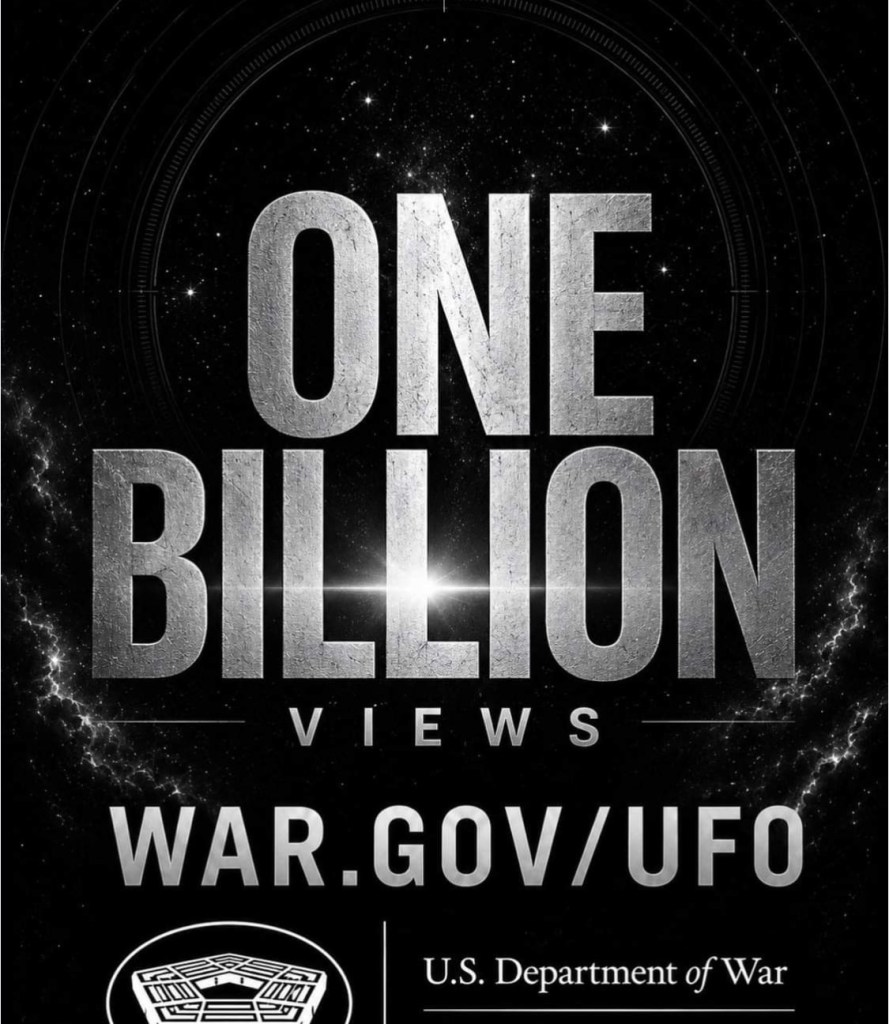
The more one engages with these resources, the deeper the layers become. Archaeology confirms the plausibility of biblical events and places, but it also leaves space for the “paranormal” or supernatural dimensions that the texts themselves never shy away from—encounters with spiritual forces, hybrid beings, and cosmic rebellions that shape human destiny across millennia. This interplay becomes especially urgent in 2026, as Vice President J.D. Vance has spoken openly about his long-standing obsession with UFO files and his firm conviction that what many call extraterrestrial visitors are not aliens from distant planets in the conventional science-fiction sense. In a recent interview with podcaster Benny Johnson, Vance stated plainly, “I don’t think they’re aliens. I think they’re demons anyway.” He frames the phenomena through a Christian worldview: there is real good and real evil operating in the unseen realm, and entities engaging in “weird things to people”—abductions, genetic interference, or deceptive encounters—align more readily with biblical descriptions of spiritual deception than with benevolent or neutral visitors from another star system. Vance, drawing on his background as a Marine, lawyer, author of Hillbilly Elegy, and now Vice President with access to the highest-level classifications, has vowed that the Trump administration will pursue the genuine disclosure of classified UFO-related materials. His goal appears practical as well as curious: get ahead of cultural shaping moments, such as a potential new Spielberg film that could frame the narrative in purely secular or optimistic “space brothers” terms, much as Close Encounters of the Third Kind did in the late 1970s when it profoundly influenced public perception and even inspired my own fourth-grade report on UFO sightings. His sincerity stands out, especially coming from someone rooted in Midwestern values, family commitments, and a desire to serve effectively without descending into fringe hysteria. Many everyday “normies”—folks who grill hot dogs on weekends, mow lawns on Saturdays, follow the Cincinnati Reds, and focus on practical concerns like gas prices and raising kids—are now paying attention because the topic has shifted from taboo conspiracy to something discussed at the highest levels of government.    

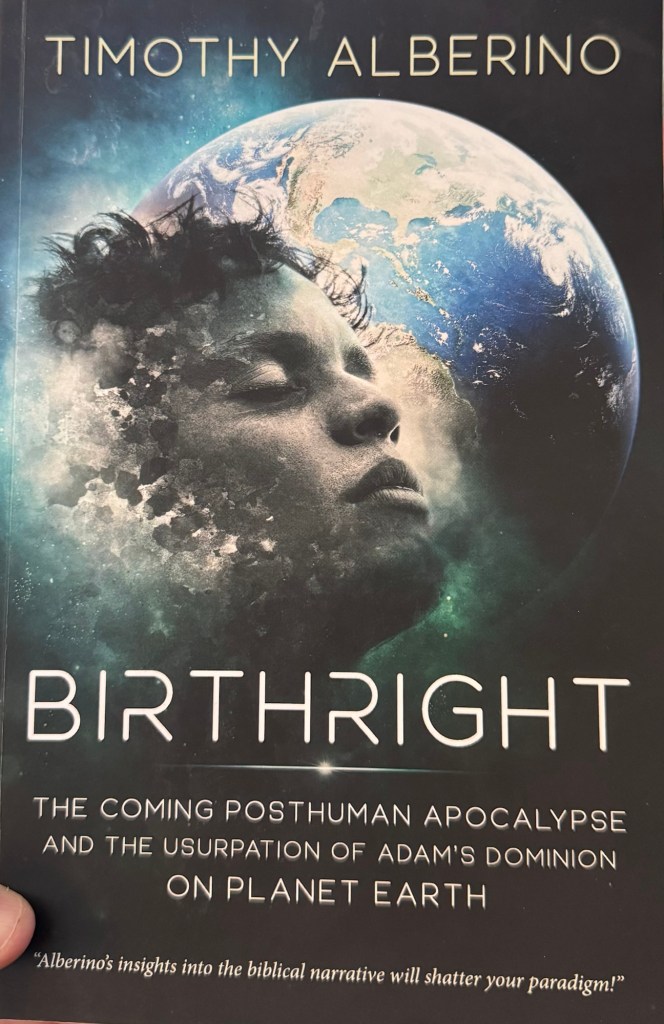
This broad-brush linkage of UFO phenomena to “demons” carries real merit as an initial guardrail. It rightly rejects naive materialism that assumes everything must fit within a purely physical, Darwinian cosmos devoid of spiritual agency. It echoes concerns raised by figures like Tucker Carlson in recent years and acknowledges that evil is not merely a human construct but involves intelligent opposition to God’s order. Yet it also risks painting with strokes that are too wide, potentially collapsing distinct layers of a complex cosmic conflict into a single undifferentiated category. This is precisely where Timothy Alberino’s 2020 book Birthright: The Coming Posthuman Apocalypse and the Usurpation of Adam’s Dominion on Planet Earth stands out as one of the most articulate, Scripture-rooted, and up-to-date bridges available. Alberino, an explorer, filmmaker, and researcher who brings an almost Indiana Jones spirit to biblical scholarship—traveling to remote sites, engaging ancient texts, and connecting dots across disciplines—does not dismiss the demonic dimension. Instead, he refines the categories with precision drawn from Genesis, the Book of Enoch, the Epistle of Jude, Revelation, and the broader ancient Near Eastern context, while integrating modern reports of abductions, hybridization programs, and transhumanist trends.   

Alberino constructs his framework around a pre-Adamic galactic rebellion led by Lucifer, personified as the dragon or morning star, who fell from his exalted position. This insurrection caused widespread devastation across the cosmos, leaving planets and realms in a state of tohu va-bohu—formless and void, as Genesis 1:2 poetically describes the initial condition of Earth before renewal. God then restores the terrestrial realm and appoints Adam as regent, granting humanity the irrevocable birthright of dominion: to rule as image-bearers, sons and daughters of the Most High, exercising authority over creation in partnership with Heaven. Humanity is positioned as the “younger sibling” in a universe already populated by an “elder race”—advanced non-human beings, primarily angelic orders, possessing greater perception, capabilities, and even technology-like means of traversal (what we might today interpret as aerospace phenomena). This elder race includes both loyal servants of God and those who joined the rebellion.  

The critical transgression comes with the Watchers, a group of fallen angels detailed in Genesis 6:1-4 and expanded dramatically in the Book of Enoch (particularly the Book of the Watchers, chapters 1–36). These beings descend to Earth, take human women as wives, and produce hybrid offspring known as the Nephilim—violent giants who fill the earth with bloodshed, corruption, and forbidden knowledge. The Watchers teach humanity sorcery, metallurgy, cosmetics, weapons-making, and other arts that accelerate moral decay and violence. The Flood serves as a divine reset, wiping out the corrupted order, yet the disembodied spirits of the slain Nephilim persist as restless, tormented entities. These become the “demons” or unclean spirits familiar from the New Testament—beings that seek embodiment, oppress, possess, haunt, and torment humanity, craving the physicality they lost when their giant bodies perished. This distinction is crucial and consistent in Alberino’s analysis: demons are specifically the bodiless spirits of the dead Nephilim giants, operating primarily in the invisible spiritual realm.  

In contrast, modern UFO or “alien” phenomena—encounters with Grays, reported abductions, cattle mutilations, hybridization programs, and craft exhibiting advanced propulsion—represent a different but related layer. Alberino argues these are physical, biological entities, not mere disembodied spirits. They may be engineered hybrids, surviving bloodlines from pre-Flood or post-Flood incursions, or tools deployed by the ongoing Luciferian agenda. These beings operate with tangible technology, agendas centered on genetic tampering, and a long-term strategy to push humanity toward transhumanism—the merging of biology with machines, AI, or artificial enhancements that promise god-like power but ultimately corrupt the image of God in man. This echoes the ancient corruption of the human seed but updates it for a technological age. Labeling everything “demons” with a broad brush misses the tangible, fleshly (or bio-engineered) component of the warfare. Both the demonic spirits and the physical alien entities oppose God’s created order and seek to usurp Adam’s birthright, but they function on different fronts: one through invisible oppression and possession, the other through visible incursions, deception, and ideological subversion. The endgame Alberino warns of is a posthuman apocalypse, where humanity trades its divine inheritance for counterfeit upgrades, paving the way for a counterfeit kingdom ruled by an adversary who may even present through advanced aerospace means.  

This nuanced model provides profound ballast for any impending disclosure. If government files reveal physical craft, recovered bodies, or documented interactions, a simplistic “all demons in disguise” approach could leave people spiritually and intellectually unprepared for the fuller biblical cosmology. Alberino’s work equips readers to see the phenomena as part of an ancient, multi-front war rather than random anomalies or friendly visitors. It rejects both materialist reductionism (everything is just advanced human tech or natural phenomena) and unanchored mysticism, always anchoring back to Christ as the ultimate restorer of dominion and the One who reclaims the birthright on behalf of redeemed humanity. Transhumanism, in this light, is not neutral progress but the latest glittering bait—much like Esau trading his birthright for stew—designed to produce a species no longer eligible for the redemption offered through the seed of the woman.

This framework harmonizes beautifully with the hard archaeological and historical evidence that publications like Biblical Archaeology Review and study Bibles like the ESV edition help contextualize, while extending courageously into territories mainstream academia often avoids. Consider the work of Fritz Zimmerman, whose exhaustive compilations—The Encyclopedia of Ancient Giants in North America and related volumes—draw from thousands of 19th- and early 20th-century newspaper accounts, county histories, and pioneer reports. Across the Ohio River Valley and beyond, stories abound of massive human skeletons unearthed during farming, railroad construction, or mound excavations: individuals seven to twelve feet tall, sometimes with double rows of teeth, elongated skulls, or other anomalous features. These finds cluster particularly in Adena and Hopewell cultures, with large conical mounds, geometric earthworks, and burial practices that suggest a distinct ruling or priestly class. Many accounts describe bones that crumbled to dust upon exposure to air, or specimens that mysteriously vanished after being sent to institutions like the Smithsonian. Zimmerman documents hundreds of such cases across dozens of states, with especially dense concentrations in Ohio, Indiana, Kentucky, and West Virginia. Native American oral traditions in the region often speak of an earlier race of giants—red-haired, bearded, or technologically advanced—who warred with incoming tribes or were eventually driven out. These accounts align strikingly with biblical and extra-biblical references to post-Flood Rephaim, Anakim, Emim, and other giant clans, including Og of Bashan (whose iron bed measured over thirteen feet) and the family of Goliath. The pattern of suppression or dismissal of these finds mirrors the historical handling of UFO reports: both challenge purely materialist or evolutionary paradigms that prefer gradual human development without anomalous interventions.   

Closer to home here in Ohio, the Great Serpent Mound in Adams County offers another compelling intersection of geology, archaeology, and potential sacred knowledge. The effigy mound itself—an undulating serpent nearly a quarter-mile long, with a coiled tail and open mouth appearing to swallow an egg-like oval—sits precisely on the rim of a confirmed cryptoexplosion or impact structure. Geological surveys confirm this as a complex impact crater roughly eight miles in diameter, formed by an asteroid or comet strike between approximately 252 and 330 million years ago (late Paleozoic era). Evidence includes shatter cones in the bedrock, planar deformation features in quartz grains (indicating extreme shock pressures), breccias, and a central uplift with intensely faulted and folded strata. The structure features a central dome, transition zone, and ring graben. Why would ancient builders—likely Adena or Fort Ancient peoples—choose this precise location for such a monumental earthwork, investing enormous labor to shape the serpent with astronomical precision? The head aligns with the summer solstice sunset, and the overall form may track lunar standstills or equinoxes. Placing a sacred effigy at the edge of a massive ancient scar suggests either extraordinary astronomical observation or guidance from intelligences attuned to celestial and terrestrial energies. Similar patterns appear globally at megalithic sites built on anomalous geological features, hinting at interactions with forces or entities beyond ordinary human capability in the eras traditionally assigned. Erosion over deep time has softened the crater’s expression, but the underlying anomaly remains, inviting questions about why certain “high places” or power centers were repeatedly chosen for temples, mounds, or alignments across cultures.    

Alberino’s analysis gains further depth when paired with the Book of Enoch, preserved among the Dead Sea Scrolls and now available in editions with scholarly commentary, including contributions associated with Alberino. This ancient text expands dramatically on the sparse account in Genesis 6, detailing the Watchers’ descent on Mount Hermon, their oath-bound pact, the birth and rampaging violence of the giants, and the forbidden teachings that corrupted pre-Flood civilization. Enoch, the seventh from Adam, is taken up without dying and receives heavenly visions, serving as a scribe and intermediary. The text describes the giants’ spirits, after their bodies are destroyed in the Flood judgment, becoming evil spirits that afflict humanity—precisely the origin story for demons that Alberino and others distinguish from the physical players in the ongoing conflict. The Dead Sea Scrolls’ validation of Enochic material alongside canonical books underscores that these ideas circulated widely in Second Temple Judaism and influenced early Christian thought, even if the book itself was not included in the final Protestant canon. Reading Enoch alongside Genesis, Jude (which quotes it), and 2 Peter provides a richer scaffolding for understanding why paranormal activity persists rather than vanishing after the Flood or the cross: it adapted, going underground behind the distractions of polite society, technology, entertainment, and daily survival. Sports scores, mortgages, careers, and weekend routines occupy mental space, leaving little room for reflection on deeper cosmic narratives—yet the ancient texts insist the battle continues. 

David Flynn’s provocative research in Temple at the Center of Time adds yet another layer, building on Sir Isaac Newton’s extensive (and often private) studies of biblical prophecy, chronology, and sacred measurements. Newton, far from a purely secular scientist, devoted significant energy to deciphering what he saw as a “prisca sapientia”—an ancient pure knowledge embedded in Scripture and architecture. Flynn maps distances and geometries from the Jerusalem Temple Mount using modern tools and finds uncanny correlations with pivotal historical dates, including links to 1948 and the rebirth of Israel. The Temple functions not merely as a religious site but as a prophetic and temporal landmark, with measurements potentially encoding timelines and geographic centers of divine activity. Alberino engages such synchronicities appreciatively but cautiously, always subordinating them to the clear Christocentric gospel: Jesus as the true Temple, the restorer of dominion, and the One who defeats the dragon decisively at the end. This approach avoids numerological excess while honoring the idea that sacred geography and time may reflect deeper divine order amid the chaos of rebellion.  

Broader explorations by researchers like Graham Hancock—focusing on lost advanced civilizations, potential Younger Dryas cataclysms, megalithic sophistication predating conventional timelines, and underwater ruins—find partial integration in Alberino’s biblical axis without abandoning scriptural authority. Pre-Flood or immediately post-Babel influences could reflect lingering effects of rebel factions or their human collaborators, manifesting as pockets of advanced knowledge, monumental construction, or anomalous technology that later cultures remembered as “golden ages” or Atlantean echoes. The Tower of Babel itself, recently re-examined in Biblical Archaeology Review for grammatical nuances suggesting the structure may have been portrayed as completed before divine intervention, represents another rebellion against God’s order: humanity unified in pride, seeking to “make a name” through monumental architecture (likely a ziggurat in the Mesopotamian context) rather than trusting divine provision and scattering as commanded. Archaeological parallels to Mesopotamian ziggurats abound, yet the biblical emphasis remains theological—confusion of languages as judgment on centralized defiance. Recent articles explore whether the tower narrative assumes completion, deepening interpretive questions about human hubris and divine sovereignty. Alberino would see such events as recurring motifs in the usurpation attempt: centralized power, forbidden tech or knowledge, and attempts to breach heavenly boundaries. 

In an era when political necessities may soon force greater openness on classified files—driven by leaks, public pressure, and the need to shape the narrative before Hollywood or adversarial powers do—Birthright offers essential intellectual and spiritual preparation. It reframes UFO discourse away from pure mysticism or sci-fi optimism into a coherent biblical war narrative: not random extraterrestrial tourists, but a multi-front assault on humanity’s God-given role as stewards and image-bearers. Demonic spirits (Nephilim ghosts) handle much of the invisible torment, possession, and oppression; physical or bio-engineered entities advance genetic subversion, ideological erosion (through atheism, Darwinian reductionism, or self-deification), and the transhumanist trajectory toward a posthuman counterfeit. The Antichrist figure, in some interpretations Alberino entertains, could even emerge with aerospace or technological grandeur rather than purely supernatural spectacle. Yet the ultimate message remains one of hope and redemption: the birthright, though contested and partially squandered through deception, was never permanently revoked. Christ, the last Adam, reclaims and restores it for all who trust in Him, culminating in the final battle at Armageddon and the renewal of creation where dominion is exercised rightly under the King of Kings.

For those of us in Ohio, with Patterson Air Force Base lore circulating for generations—stories of reverse-engineered craft, anomalous materials, or even giant remains studied quietly—these discussions feel less abstract. Regional Bigfoot sightings, mound complexes, and persistent UFO reports over the years seem to belong to the same interwoven story when viewed through a biblical lens: remnants or echoes of ancient incursions, spiritual oppressions, and ongoing attempts to challenge humanity’s assigned role. Friends and acquaintances in politics, like State Senator George Lang, have shared late-night conversations about ancient aliens, Easter Island’s buried bodies, or megalithic mysteries with me—moments that transcend partisan lines and touch the deeper adventure of discovery. Even mainstream figures are now engaging topics once confined to podcasts or fringe circles, precisely because evidence from multiple disciplines has accumulated: archaeological anomalies, textual survivals like Enoch, eyewitness consistency in abduction reports, and technological leaps that raise questions about origins and agendas.

Vance’s instinct to categorize the phenomena demonically serves as a healthy initial filter against overly optimistic or materialist interpretations. Alberino’s added nuance—distinguishing layers while maintaining a unified adversarial agenda—prepares believers, seekers, and even policymakers to engage disclosure without panic, deception, or loss of grounding. It encourages deeper engagement with Scripture, cross-referencing using archaeological tools like the ESV Study Bible, insights from the Dead Sea Scrolls, and an honest evaluation of extra-biblical texts. The answers, as so often happens, rarely reside comfortably within the institutional boxes built by academia, government, or the media; they reward those willing to follow the evidence across archaeology, ancient literature, contemporary reports, and cosmic theology. The birthright of dominion remains humanity’s divine inheritance—contested, yes, but ultimately secured through the finished work of Christ.

Those interested in building a firmer foundation would do well to read Birthright multiple times, allowing its dense interconnections to settle. Pair it with Zimmerman’s giant compilations for regional grounding, Flynn for sacred geography explorations (read critically), primary Enoch translations with commentary, ongoing issues of Biblical Archaeology Review for fresh site reports (including recent discussions on Babel’s grammar and implications), and the ESV Archaeology Study Bible for visual and contextual depth. The puzzle’s outer edges have long been visible; the middle is filling rapidly with every honest inquiry. When fuller disclosure arrives—whether driven by political timing, inevitable leaks, or cultural momentum—it will rattle many worldviews. A framework anchored in dominion, rebellion, fall, redemption, and ultimate victory equips us not merely to understand strange phenomena but to stand firm in our created purpose amid the storm.

The adventure has always lain just beyond the handrails of “normal” life. For those who dare step out—whether a vice-presidential advisor seeking context, an Ohio resident curious about local mounds and base rumors, or anyone sensing that polite society’s distractions have hidden deeper truths—the rewards include a clearer vision of who we are, why the conflict persists, and how the story ends with restoration rather than extinction or usurpation. In the end, remembering the birthright is not about fear of aliens or demons but about reclaiming our identity as image-bearers destined for glory in a renewed creation. The evidence, both ancient and emerging, continues to point in that direction for those with eyes to see and ears to hear. And for all those reasons, and more, we need to give Vice President Vance a copy of Timothy Alberino’s Birthright, for a context to the White House narrative of Alien Disclosure and the many new questions that will come with it.

Beyond the immediate policy landscape, the issue of disclosure presents a unique cultural and political inflection point. At a time when the public is saturated with economic anxiety—elevated energy prices, trade tensions, contentious Supreme Court cases, and ongoing losses and gridlock in both the House and Senate—voters are increasingly responsive to issues that offer transparency, curiosity, and a sense of shared truth. Gas prices may fluctuate and stabilize over time, but public trust, once eroded, is far more difficult to recover. Disclosure, approached carefully and credibly, speaks directly to that trust deficit.

Historically, disclosure efforts have generated intense public interest but have often failed to deliver substantive clarity. Episodes surrounding the Epstein records or the long-promised JFK disclosures fueled attention, speculation, and media buzz, yet ultimately left many Americans dissatisfied by incrementalism and ambiguity. A future disclosure moment does not necessarily have to follow that pattern. If handled with seriousness, institutional credibility, and clear communication, it could stand apart as a rare instance where public curiosity is met with meaningful acknowledgment rather than prolonged deferral.

Culturally, the subject of disclosure—whether related to unexplained phenomena, advanced technologies, or anomalous encounters—has increasingly found resonance among communities traditionally aligned with progressive or countercultural movements. This has allowed one side of the political spectrum to dominate the narrative space, framing disclosure as an expression of openness, curiosity, and empathy for everyday people who report unusual experiences. That cultural alignment is not inevitable, however. There exists an opportunity for broader engagement that avoids sensationalism while still acknowledging the legitimacy of public interest in these phenomena.

Public-facing engagement does not require endorsement of every claim or abandoning analytical rigor. Rather, it involves meeting voter curiosity with respect—recognizing that unexplained observations and regional folklore often function as entry points into deeper questions about science, government transparency, and institutional credibility. When approached thoughtfully, this engagement can humanize leadership, counter perceptions of detachment, and prevent disclosure-related narratives from being monopolized or caricatured.

From a broader political perspective, disclosure also represents a rare issue capable of temporarily transcending partisan exhaustion. In a midterm environment where voters are seeking tangible “wins” amid legislative stalemate, disclosure—if it produces real information and measurable transparency—could serve as a confidence-building event rather than a distraction. Done well, it has the potential to occupy the public narrative during periods when other contentious issues naturally cool, offering space for recalibration rather than escalation.

For these reasons, disclosure is not merely a speculative subject but a test of institutional seriousness. Its success depends less on timing theatrics and more on whether it delivers clarity, credibility, and follow-through. Managed responsibly, it could become one of the defining public conversations of the coming election cycle—one remembered not for hype, but for substance.

Footnotes

¹ Personal reflection on lifelong subscription to Biblical Archaeology Review since childhood, aligning with its role in correlating finds with biblical texts.

² Crossway, ESV Archaeology Study Bible (2017/2018), with over 2,000 study notes, 400+ photographs, maps, and contributions from field archaeologists.

³ J.D. Vance interview with Benny Johnson (March 2026), where he explicitly states UFOs/aliens are “demons” and expresses an obsession with disclosure files.

⁴ Timothy Alberino, Birthright: The Coming Posthuman Apocalypse and the Usurpation of Adam’s Dominion on Planet Earth (2020). Key arguments include the pre-Adamic rebellion, the birthright of dominion, the distinction between Nephilim demons and physical alien entities, and the transhumanist endgame.

⁵ Genesis 6:1-4; 1 Enoch (Book of the Watchers).

⁶ Jude 6; 1 Enoch 15:8-9 on spirits of giants as evil spirits.

⁷ Alberino interviews and debates (e.g., Nephilim Death Squad, Michael Knowles), clarifying aliens as physical tools vs. disembodied demons.

⁸ Fritz Zimmerman, The Encyclopedia of Ancient Giants in North America (2015), compiling 888+ giant accounts from newspapers and histories, with emphasis on the Ohio Valley.

⁹ Ohio Department of Natural Resources and geological studies on Serpent Mound Impact Structure (8-mile diameter, ~252-330 million years ago).

¹⁰ Archaeological descriptions of Serpent Mound alignments (summer solstice sunset at head).

¹¹ David Flynn, Temple at the Center of Time: Newton’s Bible Codex Finally Deciphered and the Year 2012 (2008).

¹² Alberino-associated editions/commentary on the Book of Enoch.

¹³ Personal and regional observations on Ohio sites, Patterson AFB lore, and mound/giant traditions.

¹⁴ Transhumanism discussions in Birthright as modern usurpation.

¹⁵ Dead Sea Scrolls confirming Enochic texts.

¹⁶ Recent Biblical Archaeology Review (Spring 2026) on Tower of Babel grammar possibly indicating completion.

Bibliography

•  Alberino, Timothy. Birthright: The Coming Posthuman Apocalypse and the Usurpation of Adam’s Dominion on Planet Earth. 2020.

•  Crossway. ESV Archaeology Study Bible. 2017/2018.

•  Flynn, David. Temple at the Center of Time: Newton’s Bible Codex Finally Deciphered and the Year 2012. 2008.

•  The Book of Enoch (1 Enoch), various editions including those with modern commentary.

•  Biblical Archaeology Review, ongoing issues, including Spring 2026 article on Tower of Babel by Richelle and Vanderhooft.

•  Zimmerman, Fritz. The Encyclopedia of Ancient Giants in North America. 2015.

•  Ohio Division of Geological Survey reports on Serpent Mound Impact Structure.

•  Genesis, Jude, Revelation (ESV or standard translations).

•  Vance, J.D. Interview comments reported in Fox News, The Hill, Newsweek (March 2026).

Rich Hoffman

More about me

Click Here to Protect Yourself with Second Call Defense https://www.secondcalldefense.org/?affiliate=20707
About the Author: Rich Hoffman

Rich Hoffman is an aerospace executive, political strategist, systems thinker, and independent researcher of ancient history, the paranormal, and the Dead Sea Scrolls tradition. His life in high‑stakes manufacturing, high‑level politics, and cross‑functional crisis management gives him a field‑tested understanding of power — both human and unseen.

He has advised candidates, executives, and public leaders, while conducting deep, hands‑on exploration of archaeological and supernatural hotspots across the world.

Hoffman writes with the credibility of a problem-solver, the curiosity of an archaeologist, and the courage of a frontline witness who has gone to very scary places and reported what lurked there. Hoffman has authored books including The Symposium of JusticeThe Gunfighter’s Guide to Business, and Tail of the Dragon, often exploring themes of freedom, individual will, and societal structures through a lens influenced by philosophy (e.g., Nietzschean overman concepts) and current events.

‘Disclosure Day’: Turning existential wonder into administrative leverage

What’s about to happen with Steven Spielberg’s Disclosure Day isn’t just another studio rollout with a cryptic Times Square billboard and a two-minute teaser—though we did get exactly that, complete with the line “All will be disclosed,” and a June 12, 2026 date tag splashed across NYC and LA ahead of Christmas week. It’s the once‑every‑generation moment when a master filmmaker steeped in UFO lore, biblical symbolism, and national mythology decides to shove the cultural conversation forward—and does it at a time when governments, newsrooms, and intelligence bureaucracies are finally admitting that “there is footage and records of objects in the skies that we don’t know exactly what they are.” 123

Spielberg’s teaser landed December 16, 2025: a brisk montage of unsettling phenomena, a TV meteorologist (Emily Blunt) breaking down on live air as her voice devolves into clicks, crop circles forming in real time, and a whistleblower (Josh O’Connor) promising “full disclosure… to the whole world… all at once.” Universal confirmed the title, Disclosure Day, along with the ensemble (Blunt, O’Connor, Colin Firth, Colman Domingo, Eve Hewson, Wyatt Russell) and the logline: “If you found out we weren’t alone… would that frighten you? This summer, the truth belongs to seven billion people.” David Koepp—Spielberg’s long-time screenwriter on Jurassic Park, The Lost World, War of the Worlds, and Kingdom of the Crystal Skull—returns to script from the director’s original story, with a release set for June 12, 2026. John Williams is scoring. A billboard campaign seeded curiosity days earlier, then the first trailer attached to Avatar: Fire and Ash screenings sealed the hype. 4567

The trailer’s grammar is familiar to anyone who’s lived inside Spielberg’s extraterrestrial trilogy—Close Encounters, E.T., and War of the Worlds—but this time the tone leans somber, even unnerving. You see none of the aliens; you feel their pressure on the edges of ordinary life. A nun stares at a mind-melding rig, animals behave strangely, and a murmuring chorus asks an ancient question: “Why would God make such a vast universe, yet save it only for us?” It is science‑fiction by way of catechism: mystery first, optics later. The teaser dropped in front of a public already primed by years of official disclosures and denials, a news cycle that swings between ODNI reports and Navy cockpit videos, and a new nomenclature (UAP) designed to strip away decades of “little green men” baggage. Spielberg, who has long said he doesn’t believe we’re alone, didn’t invent this moment; he’s channeling it. 68

The studio press materials are sparse by design, but they do confirm the core: a global reveal of proof, a media-driven human response, and a cast positioned at the edge where faith, science, and politics collide. People magazine’s write-up underscores that this is Spielberg’s first feature since The Fabelmans and his return to UFO storytelling; ABC’s GMA packaging shows Blunt possessed mid-broadcast; Deadline’s industry note pins the date and positions the film as the summer’s existential event. That triangulation—trade outlet confirmation, mainstream broadcast amplification, and fandom analysis threads—is not just PR; it’s an index of appetite. Audiences want a serious, sober take on disclosure that neither laughs it off nor turns it into a carnival. Spielberg’s reputation lets him ask the question without collapsing beneath it. 9105

If you care about the politics under the hood, the timing is obvious. Since late 2017, when The New York Times broke the Pentagon videos and the existence of AATIP, we’ve had the UAP Task Force (approved August 2020), the ODNI Preliminary Assessment (June 25, 2021), and Congress’s 2022 NDAA creating AARO—the All‑Domain Anomaly Resolution Office—to centralize reporting, analysis, and public transparency. AARO’s first historical volume landed in February 2024, mapping U.S. government involvement since 1945 from Project SIGN to BLUE BOOK to CIA panels, and its public posture has been to release as much raw evidence as possible without harming partner equities. That’s not Hollywood; that’s bureaucracy. But bureaucracy has set the table. A movie like Disclosure Day rides the wave of official acronyms that admit the problem, even as it insists that most cases fit prosaic profiles (balloons, drones, birds). The serious work of weeding out errors and hoaxes did not kill the subject; it made “we don’t know” socially respectable again. 11121314

The CIA files are another background hum. Far from confirming crash retrievals, the agency’s publicly accessible “UFOs: Fact or Fiction?” collection compiles cables, memos, and summary press clippings from the 1940s through the early 1990s—an archive of seriousness, not sensationalism. The Black Vault digitizations and Smithsonian coverage in 2021 made those documents easier to browse and fueled a sense that, while much is mundane, some fraction remains unexplained due to data gaps. Add the National Archives’ UAP Records Collection created in 2024 NDAA, and government-kept paper trails are no longer a subculture hobby; they are an official research topic. When a storyteller with Spielberg’s credibility references “disclosure,” he isn’t inventing a bureaucracy. He is meeting it. 151617

Then there’s the other engine of disclosure: the perennially curious political operative, John Podesta. From his 2011 foreword to Leslie Kean’s book to tweeting in 2015 that his biggest White House failure was not securing UFO disclosure, Podesta has been the Beltway’s most persistent, mainstream voice for transparency. The Wikileaks dump of his emails in 2016 crystallized that curiosity with exchanges involving Apollo 14 astronaut Edgar Mitchell (who referenced “nonviolent ETI from the contiguous universe,” however eccentric that reads) and Tom DeLonge’s outreach framing UAP as a national security priority; Mother Jones later documented how Podesta nudged campaign messaging toward tongue‑in‑cheek “the truth is out there” lines. The Obama Presidential Library has FOIA material showing internal attention to Podesta’s public remarks about UAPs. Whatever you think of the personalities and their metaphysics, it’s undeniable that “disclosure” stopped being fringe and stepped into official statements years ago. The Clintons flirted with promises; Democrats like Podesta kept the word alive; and the media stopped rolling its eyes. That’s the ecology in which a Spielberg film lands. 18192021

On television, Barack Obama’s May 2021 appearance with James Corden registered as a cultural permission slip: “There is footage and records… we don’t know exactly what they are,” he said, adding that we can’t explain their trajectories and that serious people are investigating. Again, no crash retrievals, no bodies; just dignified uncertainty framed as worth study. That single clip circulated across NBC, CNN, and the Independent with the same headline and sentence, making it resistant to partisan spin. It’s impossible to overstate how statements like this alter the audience for a film like Disclosure Day. You no longer need to sell the premise that a government might know things and might release them. You need to tell the human story of what it feels like when that knowledge crosses the threshold of proof. 32223

This is why I argued for months that the Disclosure Day campaign would not be merely cinematic. The teaser’s choices—biblical language, moral stakes, a chorus of “people have a right to know the truth… it belongs to seven billion people”—give you a tell. Spielberg is staging the post-disclosure psychology: trust breakdowns, religious reinterpretations, the questionable allure of a technocratic “we’ll manage it for you” state, and the tempting promise that a new cosmic threat will unify otherwise warring factions. That promise, by the way, is precisely the sort of political device elites would wield in a crisis: when ordinary collectivist appeals fail, fear works. The left in America—from John Podesta’s transparency drumbeat to West Coast cultural power—understands the unifying leverage of a “we are not alone” narrative. Positioning Democrats as the “party of disclosure,” through Hollywood’s megaphone, is as plausible as it is cynical, precisely because the public appetite for answers is now bipartisan. Skeptics and believers alike want competence. Whether Disclosure Day’s marketing was hatched over party cocktails is less important than the fact that the messaging aligns: all will be disclosed, the government has a role, and trust us—this time. 6

A Trump administration brings a different set of instincts to the table. He has publicly styled himself a UFO skeptic—“It’s never been my thing,” he told Joe Rogan in October 2024—but his Pentagon rode the arc of UAP openness: UAPTF, ODNI assessments, and the founding of AARO came out of a bipartisan legislative environment and continued under his second term’s defense establishment. ABC’s June 2025 segment with AARO’s director described hundreds of cases reviewed, most resolved, “several dozen” still anomalous, and an explicit effort to release more raw videos after automated redaction. You don’t need a sci-fi president for disclosure to advance; you need a bureaucracy with political air cover and a media willing to treat UAP like air safety and national security. That is present. If Trump wants to preempt a Hollywood-driven “party of disclosure” narrative, he can do it by ordering wider releases, allowing fuller congressional briefings, and framing disclosure as competence, not mysticism. The danger is letting the reveal be defined by fandom and fear; the opportunity is to take ownership as the administration that finished the job begun by ODNI and NDAA. 14

What happens after people realize what disclosure means? I’ve been writing The Politics of Heaven to answer that: to guide the post-disclosure world in a way that protects faith, families, and local governance while absorbing the shock of metaphysical and material claims. Whether you believe in ultra-terrestrials, interdimensional entities, or straightforward extraterrestrials, the questions that follow are the same: What is consciousness, and how does it persist beyond bodies? How do these intelligences intersect with biblical prohibitions, demonic lore, reincarnation motifs, and avatar theories? Who should arbitrate contracts—governments, churches, scientists, or communities? And when trust in institutions is already brittle, how do you stop a frightened public from begging Leviathan to manage their fear? That last question is the political acid test; you will see the left bid to occupy the role of compassionate intermediary. You will also see conservatives argue for decentralization and personal responsibility in the face of cosmic news. Neither side is ready for the metaphysical repositioning disclosure demands. A movie can start the dialogue; a book needs to map the terrain. 6

Some insist Spielberg’s film is simply entertainment, not a node in the broader campaign. I don’t buy that. The speed with which the project moved—kept under wraps, then billboards, then a title and trailer in mid-December, releasing the teaser in front of Cameron’s new Avatar—shows a marketing intelligence calibrated for maximum cultural reach. Hollywood trades (Deadline, Hollywood Reporter, IGN) treat the teaser as a significant event; mainstream outlets (USA Today, ABC, People) amplify with a civic tone rather than tabloid noise. Even the genre press (Polygon, Space.com, GoldDerby) notes the film’s “not like E.T.” mood. None of this is accidental. It sets June 12 as a summer opening thought experiment and primes your mind to connect the dots between the content and the headlines. 5642

Will Disclosure Day be statistically consequential? Not the film itself, obviously, but the ecosystem it feeds is full of numbers worth tracking. ODNI’s 2021 preliminary assessment summarized 144 incidents, with the majority lacking sufficient data—a sober reminder that proof is hard to obtain. AARO’s public briefings and annual reports count hundreds of new submissions, with most resolved. If, ahead of June 12, DOD authorizes another tranche of imagery with automated redactions, the viewership and downstream social metrics—shares, searches, FOIA requests—will spike. Smithsonian tracked thousands of downloads within 24 hours when the Black Vault made CIA UFO documents searchable; VICE documented how hard it was to make those files usable. “Disclosure” is not one event; it is a flow of documents, videos, and structured briefings that accumulate like sediment. Spielberg’s film is a catalytic object in that flow. 122416

Cynics will argue that Hollywood elites are exploiting grief and curiosity. The Rob Reiner tragedy—the director and his wife stabbed to death, their son arrested, with reports that they were headed to an engagement with Barack Obama the same night—has nothing to do with disclosure, yet it illustrates how quickly elite social circles blur into political networks and media narratives. When people claim “this plan was hatched at parties,” they’re not entirely wrong about cultural clustering; they’re bad to infer an omnipotent conspiracy behind every rollout. Information travels through overlapping circles, and films like Disclosure Day live in those circles. The politics is real; the paranoia needn’t be. 2526

If you’re looking for the “interdimensional hypothesis” within Spielberg’s cinematic tradition, Jacques Vallée’s work is the obvious touchstone: UFOs as manifestations at the seams of reality, trickster-like phenomena that feel spiritual as much as technological. Disclosure Day’s teaser seems to flirt with that—not by name, but by making the human body the first receiver. A weather forecast becomes glossolalia; a nun becomes an antenna. It doesn’t matter whether the story lands on ET or ultra‑T; what matters is that the film recognizes that the primary battlefield is consciousness, not hardware. In that sense, Spielberg’s new movie may be his boldest: less “spaceship lands” and more “the mind cracks.” 6

So how should a president handle disclosure in the shadow of Spielberg? Don’t surrender the frame. If it’s Trump, publish what AARO can safely release, demonstrate chain‑of‑custody, and invite independent scientific review, not just classified briefings. Anchor the message in air safety, national security, and scientific humility. Avoid promising a “blue wave of unity” around fear; call for calm competence. And for the rest of us—families, pastors, scientists, local officials—prepare the language for what faith traditions already admit: there are powers and principalities beyond our ken, and discernment is a discipline, not a tweet. The task is not to panic or to hand your agency to distant institutions; it is to keep your soul intact while you learn new facts about the cosmos. Spielberg’s teaser asks the right question: Would proof frighten you? It will. But fear need not decide your politics or your religion. The truth belongs to seven billion people because freedom inspires it. 5

What I expect next: more billboards, a second trailer around Easter, almost certainly tie-ins that echo Arrival’s semiotic puzzles and Signs’ domestic dread—though the production notes suggest Spielberg is avoiding clones of those films and choosing a wider, global lens. Expect chatter about whether Disclosure Day lives in the Close Encounters universe; Koepp refused to confirm or deny. Expect breathless “is this real disclosure?” threads online and new FOIA campaigns piggybacking on the film’s marketing. Expect claims that Democrats will harness the momentum for the 2026 midterms, and counterclaims from the right that they’re weaponizing wonder for votes. Most of all, expect the usual: elites overpromising unity while ordinary people look for ways to protect their families and livelihoods. In that sense, Disclosure Day is not just a movie; it is a rehearsal. 6

The day after the teaser, outlets like Polygon, Parade, Dexerto, and Cinemablend rolled out explainer pieces with production stills, cast bios, and historical callbacks to Spielberg’s UFO filmography. Yahoo’s Space vertical contextualized the director’s lifelong fascination with meteors and Firelight. GoldDerby and IndieWire talked up the billboards as a clever marketing stroke. IGN emphasized the theological line. The coverage reads like a consensus: Spielberg is back in the UFO seat, and this one is bigger and darker. It makes sense to be excited—and it makes even more sense to be prepared for what happens after the lights come up and the credits roll. The film will end; the conversation won’t. 72728298304

Because disclosure, whatever shape it takes, will force every institution to tell the truth about its own limits. Intelligence agencies will confess how much of the archive is press clippings and hearsay; AARO will say how many reports are balloons and birds. Churches will revisit glossolalia and demons with new humility. Universities will expand consciousness studies beyond an evolutionary footnote. And Hollywood—which conditioned us to believe in aliens—will confess that it cannot resolve what theologians and physicists must debate. If the truth belongs to seven billion people, then seven billion people must learn how to live with it. Spielberg can start the conversation; your community must finish it.  And here’s something to think about: there are 8.26 billion people in the world.  Why are they saying “seven”? Are there a billion of those life forms that are not actually human?  But are avatars from an interdimensional realm taking residence in a biological vehicle so that they can interact with the events of our time?  Likely, that’s the point of the trailer: to spawn that kind of massive discussion with ground-shattering implications.

And here’s the hard counsel nobody wants to give: do not let disclosure be your gateway drug to technocratic control. The instinct to panic and hand the reins to whoever promises a plan is the oldest political seduction in the book. The left will speak the language of compassion and unity; the right will talk about the language of sovereignty and order. Both will be tempted to use the unknown to centralize power. Resist the temptation. Disclose widely, validate rigorously, and keep authority as close to the citizen as possible. The truth is large enough to hold your fear without outsourcing your dignity. Spielberg’s teaser got one thing perfectly correct: the truth belongs to seven billion people. The question is whether seven billion people will remember that their consciousness has a power the universe wants, and that they control their own fate much more than they ever thought possible. 5

Executive Summary: The Politics of Heaven and the Post-Disclosure Era

Now, let’s talk about The Politics of Heaven and why now, and why I am putting so much into it.  The project was conceived before, and then written alongside, the production of Steven Spielberg’s Disclosure Day (teaser released December 16, 2025; U.S. theatrical set for June 12, 2026). It argues that (1) the public now lives in an environment of information abundance that is overturning religious, political, and scientific commonplaces; (2) a major cultural catalyst like Disclosure Day will force those assumptions into the open; and (3) the immediate need is a deep, rigorous, post‑disclosure framework—political, theological, and philosophical—beyond what a two‑hour film and follow‑on documentaries can provide. 12

The inflection point: information abundance and challenged assumptions.

Over the last decade, the combination of official UAP releases, FOIA archives, and mainstream acknowledgment has made “serious uncertainty” socially acceptable again. The CIA’s digitized UFO/UAP collections, the National Archives’ new UAP Records Collection (created by the 2024 NDAA), and ODNI/AARO reporting transformed curiosity into a public research agenda; that scaffolding existed before the Disclosure Day teaser, and it contextualizes it now. 34

• ODNI’s Preliminary Assessment (June 25, 2021) made pilot safety and national security the frame, not fringe;

• AARO (established by Congress in 2022) now issues historical reviews and annual updates that resolve most cases but leave several dozen anomalous, while investing in tools to release more raw evidence safely;

• Former President Barack Obama (May 18, 2021) explicitly affirmed that there is “footage and records of objects we don’t know exactly what they are.” 5678

From surface anthropology to deep comparative inquiry.

Classic comparative frameworks (e.g., James Frazer’s The Golden Bough and the early anthropology of religion) were built when information moved slowly, and travelers could “look at the surface and pick up artifacts.” A century of archaeology, psychology, and comparative religious study has since exposed layers those pioneers couldn’t observe, demanding more careful models of consciousness, symbol, and ritual. Today’s public can test those models instantly against real archives and sensor data; a global dialogue that once took lifetimes now unfolds in hours. 4

Consciousness, privacy, and the interdimensional debate.

The popularization of parallel‑worlds and entanglement-style ideas—sometimes via high-concept entertainment, sometimes via speculative science—has normalized conversations about nonlocal effects and mind–matter enigmas. Spielberg’s teaser leans into that terrain without naming it: the human body first, the revelation second. A possessed weather broadcast, mirrored actions, and religious imagery (“Why would He make such a vast universe…”) signal that the primary battlefield of disclosure is consciousness, not craft. That, in turn, reopens classical debates (angelic, demonic, ultra‑terrestrial) in a modern register. 92

Ideological frames that will compete to “own” disclosure.

• A left‑liberal/naturalist reading (which you argue Spielberg’s film may amplify) treats disclosure as an invitation to submit to nature’s deeper, animating order—often expressed in syncretic terms (Native cosmologies, Eastern metaphysics, ecological spirituality). The pitch: disclosure unifies, softens borders, and mandates communal management of anxiety. 2

• A conservative/sovereignty reading insists Genesis grants stewardship—“rule over nature” through ordered freedom—and worries that fear will be instrumentalized to expand central authority. The pitch: disclose widely, validate rigorously, do not trade agency for technocratic management.

• The state (irrespective of party) will tend to present itself as the trusted intermediary—a reflex strengthened by AARO’s mandate and ODNI’s safety language. The risk: turning existential wonder into administrative leverage. 56

Why The Politics of Heaven.

I started this book before Disclosure Day took shape because the collision I outline was inevitable: unprecedented access to information + mainstream validation + public mythologies = paradigm pressure. The book asks:

• What are the politics among non-human intelligences (altered terrestrials, angels/fallen angels, rebels against the Creator)?

• How do those politics interact with human sovereignty, law, worship, and culture?

• What happens when a society learns it is not alone, possibly not even alone in its locked bedrooms—and discovers that manipulation has been continuous across history?

• How do we protect families and faith while absorbing complex data about mind, matter, and presence?

The limits of cinema; the need for rigorous guidance.

A feature film can ignite the conversation; it cannot furnish the multi-level study (political theory, comparative religion, metaphysics, law, ethics, and security) that people will demand after the credits roll. Given the sudden spike in public legitimacy—from billboards announcing “All will be disclosed” to a trailer in front of Avatar—I anticipate a wave of documentaries and explainer shows. This book aims to be the serious handbook readers turn to when they realize the topic touches on Genesis and governance, not only on spectacle. 1011

Key Claims (with source pointers)

• Disclosure Day is confirmed as Spielberg’s UFO event film; title, cast, teaser, and June 12, 2026, release date are official. 12

• Mainstream outlets framed the teaser as a return to existential UFO themes, emphasizing the trailer’s religious, psychological, and global stakes. 1213

• Official U.S. channels (ODNI, AARO) shifted discourse by legitimizing UAPs as safety and security concerns; AARO continues a controlled transparency program. 56

• Archives (CIA FOIA; NARA’s UAP collection) broaden public access and keep post-disclosure inquiry tethered to documents, not rumor. 34

• Obama’s 2021 remarks normalized high-level acknowledgement: “footage and records” exist of objects whose behavior resists easy explanation. 8

What Readers Should Expect (and Why the Book Matters)

1. A surge of myth-making and fear-based politics.

Parties and media will compete to “frame” disclosure as either communal healing or controlled competence. Your guidance: disclose widely, decentralize interpretation, protect sovereignty. 5

2. Religious re‑reading under pressure.

Expect new homiletic and doctrinal work on angels/demons, possession, discernment, and cosmology. Provide guidance: restore biblical guardrails, engage comparative traditions seriously, and reject sentimental syncretism.

3. Law, security, and ethics.

Air safety, sensor policy, and data custodianship will dominate hearings; civil liberty questions (privacy, mind–machine interfaces, and conscience) will follow. Your guidance: keep civil protections strong, resist “emergency powers creep.”

4. Consciousness first, technology second.

The teaser’s grammar—and much of the historical record—suggest the human mind is the first theater. Your guidance: form communities of discernment, not fandoms of panic. 9

Footnotes & Selected Bibliography

Footnotes / Source list

1. “Disclosure Day trailer/title/release” — Deadline (Dec 16, 2025); Hollywood Reporter (Dec 16, 2025). 12

2. “Teaser themes, religious lines, cast highlights” — IGN (Dec 16, 2025); Polygon (Dec 16, 2025). 912

3. “Times Square billboards/placement” — GoldDerby (Dec 16, 2025); IndieWire/Yahoo (Dec 16, 2025). 1011

4. “ODNI Preliminary Assessment; UAPTF creation” — Wikipedia summary of ODNI report (citing ODNI, June 25, 2021); DoD release on UAPTF (Aug 14, 2020). 514

5. “AARO historical record & transparency posture” — AARO Historical Record Report Vol. 1 (Feb 2024); ABC News interview with AARO director (June 4, 2025). 67

6. “CIA FOIA ‘UFOs: Fact or Fiction?’; Black Vault / Smithsonian overview” — CIA Reading Room; Smithsonian (Jan 15, 2021). 153

7. “National Archives UAP Records Collection (RG 615)” — NARA topic page (Apr 24, 2025). 4

8. “Obama 2021 remarks on James Corden” — NBC News (May 18, 2021). 8

Selected bibliography (for your appendix)

• Office of the Director of National Intelligence. Preliminary Assessment: Unidentified Aerial Phenomena. June 25, 2021. 5

• Department of Defense (UAPTF Establishment). Release, Aug 14, 2020. 14

• All‑Domain Anomaly Resolution Office (AARO). Report on the Historical Record of U.S. Government Involvement with UAP, Vol. I. Feb 2024 (DOPSR‑cleared). 6

• CIA FOIA Reading Room. UFOs: Fact or Fiction? 1940s–1990s collection. 15

• National Archives. Records Related to UAPs (RG 615). 4

• Deadline; Hollywood Reporter; IGN; Polygon; GoldDerby; IndieWire/Yahoo—industry and mainstream coverage of Disclosure Day teaser and release. 129121011

Reference Notes & Sources

• Universal/industry coverage of Disclosure Day title, teaser, cast, and release (Dec. 16, 2025): People, ABC News / GMA, Deadline, Hollywood Reporter, IGN, USA Today, Polygon, Consequence, Dexerto, Cinemablend.

• Times Square billboards and teaser placement before Avatar: Fire and Ash: GoldDerby, Hollywood Reporter.

• Spielberg’s belief statements on extraterrestrial life/background features: Space.com / Yahoo syndication.

• U.S. UAPTF establishment, ODNI Preliminary Assessment (June 25, 2021), AARO creation and historical report (Feb. 2024), and AARO transparency posture: U.S. DoD release, Wikipedia summary of ODNI report, ABC News interview with AARO director, AARO Historical Record Vol. 1 PDF.

• CIA UFO archive and public access context: CIA FOIA Reading Room, Smithsonian overview, NARA UAP Records Collection page, VICE on Black Vault.

• John Podesta: Wikileaks searchable emails (UFO threads), Mother Jones feature on Podesta’s UFO advocacy, Obama Library FOIA finding aid, coverage of Edgar Mitchell and Tom DeLonge emails: Wikileaks search, Mother Jones, Obama Library FOIA 22‑18746‑F, Unknown Country summary, Wikipedia background on Podesta emails.

• Barack Obama public comments on UAPs (May 2021): NBC News, The Independent, CNN video.

• Rob Reiner case (December 2025): CBS News, ABC News, Los Angeles DA press release.

Rich Hoffman

Click Here to Protect Yourself with Second Call Defense https://www.secondcalldefense.org/?affiliate=20707