The Taxpayers Deserve Better: Evil Prevails When Good People Do Nothing

It was a busy weekend and there was a lot of mud getting slung on the eve of the busing cuts. Once the owner of the Starkerz Bar and Grill, discussed in the audio clip from the Darryl Parks show on January 17, 2011, stated that she was willing to provide a statement that she’d stand behind, I felt comfortable to tell the story.

Even so, telling that story made me sick, because the whole event seems so petty. I don’t like being in the middle of that kind of thing, “mudslinging” but I am often reminded of how the Pro Side came after me when David Little was hired to attempt to smear my name with obvious attempts at slander. For instance, in that now famous six paragraph letter, there were 4 complete lies about me proclaimed in the body of the letter, along with several statements not even closely rooted to the truth, but designed to anger the people reading the letter.

I confronted Little about what he wrote, and he lied to me again, telling me that he hadn’t sent that letter to anyone. What he didn’t know was that I was tipped off by more than one person in the press, and Little confirmed my suspicions when he assumed the leak was WLW, which it wasn’t.

But that’s the game these people chose to play and every time I see them perpetuating the games progress, it reminds me of why these out-of-control budgets need to be brought into a realistic expectation.

Darryl mentioned that I did the Lakota Levy all by myself. It feels that way some of the time, but that’s not the case. There are lots of good people behind me. Most of them wanted to think about something else after the election, and to enjoy the holidays. The outrage over the bar and grill story brought many people’s minds back into the subject lately because that story is a very personal issue with many involved and is so openly wrong.

I’ve stayed with this topic all this time because the education system needs to be fixed, and the people getting in the way are bullies. They may wear perfume and dress nice. They may have a smile on their faces when they do the bullying, but the behavior I keep seeing has no other name.

And tax payers deserve better. And they are going to have it…………………………………….

So those of you that are up to no good, and want to play these games, remember, there will be leaks. And when I get them, I’ll post them. I won’t do it until someone is willing to stand behind the statements. There has to be proof. But I will hold those accountable that wish to bully others into turning a blind eye to the disingenuous behavior exhibited toward our community tax payers.

Rich Hoffman
http://twitter.com/#!/overmanwarrior
www.overmanwarrior.com

Forensic Anthropology Jobs Needed: Another Government Debacle

My wife and I had dinner with an instructor for Forensic Anthropology on Saturday and I learned how there is a shortage of Forensic Anthropologists. That little fact surprised me. “How can that be? Where do you find Forensic Anthropology employment? Who’s paying for them?” It was an honest question.

I received an honest answer. “The shortage is due to museums and other research facilities that are trying to comply with the “Native American Graves Protection and Repatriation Act”

“The what?” I asked. “What the hell is that?”

He proceeded to educate me which is most accurately described in this definition from Wikipedia.
________________________________________________________________________________________________________
The Native American Graves Protection and Repatriation Act (NAGPRA), Pub.L. 101-601, 104 Stat. 3048, is a United States federal law passed on 16 November 1990 requiring federal agencies and institutions that receive federal funding[1] to return Native American cultural items and human remains to their respective peoples. Cultural items include funerary objects, sacred objects, and objects of cultural patrimony. In addition, it authorizes a program of federal grants to assist in the repatriation process. It is now the strongest federal legislation pertaining to aboriginal remains and artifacts.
_________________________________________________________________________________________________________
“Are you kidding me?” I asked. “What bunch of idiots passed that law? That has to cost a fortune.”

My dinner guest was agreeing with me, but being a man of science, he is eternally sympathetic to funding needs. Then I remembered when he and I had watched John Dunbar’s epic journey into the land of the Sioux Nation together around that time, then it came back to me. The film Dances with Wolves by Kevin Costner came out on November 21st of 1990. And the NAGPRA was passed just days before the release of the film.

The Heard Museum Report had been debated for three years starting in 1987 and had been passed by the 101st Congress as advanced copies of Dances With Wolves was circulating around Washington, after all Costner has just had a wild success with Field of Dreams. So there was a lot of buzz around the new movie about Native Americans. So with the usual sentimentality that engulfs the puffy coffee enriched minds of bureaucracy, they passed the NAGPRA without thinking much about the cost to science, or the tax payer.

“That is one of the dumbest ideas I’ve ever heard in the history of bad ideas,” I stated in clichéd fashion, knowing it was a cliché when I said it.

My dinner guest proceeded to educate me on various cases and pointed me in the direction of an article by Jan Bernstein:
________________________________________________________________________________________________________

NAGPRA – Future Applicability Rule
Article written for SPNHC by Jan Bernstein
Does the institution that you work for have Native American cultural items under its control or in its possession and does it also receive Federal funds? If so, more than likely you already know that your institution is a “museum” and therefore is legally required to comply with 25 U.S.C. 3001, which is more commonly known as the Native American Graves Protection and Repatriation Act or NAGPRA. But what you might not know is that there are new NAGPRA compliance rules for what is known in the Act as Future Applicability.

These rules apply to the following situations: 1) The museum or Federal agency acquires a new collection item or finds a previously unreported item that may be covered by the Act (covered items are Native American human remains, funerary objects, sacred objects, and objects of cultural patrimony; 2) A previously unrecognized Indian group is recognized by the Federal government as an Indian tribe. 3) An institution in possession or control of an item or items that may be covered by the Act receives Federal funds for the first time; and 4) The museum or Federal agency revises a decision previously published in the Federal Register.

The Native American Graves Protection and Repatriation Act (NAGPRA) was signed into law on November 16, 1990, but it wasn’t until March 21, 2007 that the final rule for §10.13 Future Applicability of NAGPRA was promulgated. It was published in Federal Register Volume 72, Number 54 and it applies to existing and newly acquired museum collections. Those are Sections Five, Six, and Seven of the Act. It does not apply to inadvertent discoveries or planned excavations which are addressed in Section Three of the Act.

The Future Applicability rules became effective on April 20, 2007. And on that date it established statutory deadlines for completion of NAGPRA Section Five Human Remains Inventories/Notices of Inventory Completion and NAGPRA Section Six Summaries (unassociated funerary objects, sacred objects, and objects of cultural patrimony). For you organization, the first deadline may be October 20, 2007. The rule set a six months deadline to produce and distribute a NAGPRA Section Six Summary for a new holding or a previously unreported holding newly located that may be unassociated funerary objects, sacred objects, or objects of cultural patrimony. October 20, 2007 is the deadline for the Summary distribution if the new holding was acquired or found prior to April 20, 2007. Your organization has two years from the promulgation date or acquisition/discovery date to prepare a NAGPRA Section Five Human Remains Inventory/Notice of Inventory Completion in consultation with affiliated Indian tribes or Native Hawaiian organizations. If the new holding was acquired or located prior to April 20, 2007, you have until April 20, 2009 to do culturally affiliation consultation and distribute a NAGPRA Section Five Human Remains Inventory and publish a Notice of Inventory Completion in the Federal Register.

A newly Federally recognized Indian tribe has standing under NAGPRA and museums and Federal agencies covered by the Act are required by the Future Applicability Rule to send Section Six Summaries to these Tribes within six month of recognition. Federal Agencies and museums are also required within two years of recognition to prepare in consultation with culturally affiliated Indian tribes NAGPRA Section Five Inventories/Notices of Inventory Completion.

Maybe your organization didn’t receive any Federal funds between November 16, 1990 when the law passed and November 16, 1995 when the last deadline occurred. But since that time it began to receive such funds. Those funds may be flowing directly to your organization or to your parent organization. For example, maybe you are working for private college anthropology or art department and another department at the college started to accept Federal contracts or grants after 11/16/1995. Those funds have redefined your department as a museum covered by NAGPRA. If this is the case, your organization is required to comply with NAGPRA. If you find your organization is in this situation, you must within three years from the time the Federal funds were received or from the effective date of the Rule (4/10/07), whichever is later provide a Section Six Summary to Indian tribes or Native Hawaiian organizations that are most likely to be culturally affiliated. Within Five years of the date of receipt of Federal funds, or within five years of the effective date of this Rule, whichever is later, you must prepare, in consultation with affiliated Indian tribes or Native Hawaiian organizations, a Section Five Human Remains Inventory/Notice of Inventory Completion.

If your organization previously published a Notice of Inventory Completion, but the information has since substantively changed, the Future Applicability Rule requires a Notice of Inventory Completion Correction be published in the Federal Register. A substantive change is a change in the culturally affiliated Indian tribes or a change in the minimum number of individuals count. The National NAGPRA Program will assist you with this process.

What does this mean for those of you who represent a Federally Recognized Indian tribe? Well, I hope you will see some new Summaries hitting your desk as well as an increase in the number of requests to consult in preparation of new human remains Inventories.
The rules can be found on the National NAGPRA Program’s web site. I wish you all great success in your NAGPRA compliance efforts.
________________________________________________________________________________________________________
“How can an anthropologist or archeologist be expected to return the remains of Indian Tribes when much of the tribal movements aren’t even understood by anybody yet? There are still completely mysterious cultures that no science organization understands regarding Native Americans.” I was thinking of Cahokia outside of St. Louis, and several of the mound builders in the Ohio Valley. The Shawnee had in fact migrated from Florida before settling in Ohio. Few tribes could be traced back for thousands of years.

The instructor laughed. “That’s part of the problem. There are a lot of finds and burial relics that predate 1492, so it is nearly impossible to return cultural items to specific tribes.”

I was getting angry. “What about the ancestors of Anglo Saxons that were fleeing tyrants of Europe to settle the frontier that were cannibalized in giant kettles and eaten like soup, entire families were slain for no reason what-so-ever.”

“That’s not politically correct,” he laughed at me.

“That’s politics, which is the same as what comes out of an elephants ass.”

“Well,” he said, “its business. Laws like that put people to work and make people feel like they’re doing something important.”

He mentioned Bernstein and Associates, who I looked up and read their literature.
_____________________________________________________________________________________________________
Bernstein & Associates, LLC
We work with Indian tribes, museums, universities, and governmental agencies on Native American Graves Protection and Repatriation Act (NAGPRA) compliance projects.

Services we provide to our clients

NAGPRA Grant Writing
We write successful Consultation/Documentation and Repatriation grant proposals.
Our clients have received over $1,000,000 (one million dollars) in
NAGPRA Consultation/Documentation and Repatriation Grant grant awards.
Annually since 1999, we have written at least one NAGPRA Consultation/Documentation grant for clients and every year we’ve had a grant funded.

Jan Bernstein teaches a two-day NAGPRA Grant Writing Seminar for the National Preservation Institute.

NAGPRA Consultation Support
There is a tremendous amount of work that goes into NAGPRA consultation planning, implementation, documentation, and follow-up. Official tribal representatives frequently praise our culturally sensitive, insightful, respectful approach to consultation. Bernstein & Associates helps Indian tribes, museums, and federal agencies with all phases to whatever degree suits your needs:
• Meeting planning
• Consultation preparation including document research and assembly
• Consultation documentation
• Consultation follow-up

Since 1990, we have organized and facilitated several hundred individual and group consultations with tribes that have traditional territory in all regions of the country including Alaska and Hawaii.

Repatriation, Physical Transfer, and Reburial
We have worked with tribal leaders, official tribal NAGPRA representatives, and traditional religious leaders in the Southwest, Plains, Great Basin, and Southeastern US as well as Peru (non-NAGPRA) to facilitate the repatriation and reburial of nearly 1000 individuals and hundreds of cultural items. Bernstein & Associates is available to:
• Write repatriation grant proposals for up to $15,000 to defray the costs associated with reburial
• Provide assistance in writing valid repatriation requests and repatriation claims
• Write draft notices of intent to repatriate
• Facilitate the development and implementation of reburial plans and agreements

NAGPRA Summary and Human Remains Inventory Preparation
Because of the long-standing, positive working relationships that we have built with the tribes throughout the U.S since the mid 1980s, we are extremely successful in aiding clients in the preparation of culturally sensitive NAGPRA Summaries and Inventories. Every client utilizes our services in a slightly different way. Some of the many services we provided to clients are:
. Assess collections to determine which tribes should receive summaries and invitations to consult on cultural affiliation for development of Inventories
– Write letters to tribes using our tribal contact database, which is constantly updated with current contact information for tribal leaders and NAGPRA reps, as well as consultation style preferences
– Initiate Summary consultation after initial correspondence
– Facilitate NAGPRA consultation conferences

Strategic Planning

We help clients assess what needs to be done to comply with NAGPRA, how long it will take, and develop a chronology. We then break it down into manageable projects that could be funded by grants for museum clients. We provide clients with a written plan that can be used to track progress.

____________________________________________________________
“So it’s all about getting federal grants,” I asked.

He smiled and sipped his wine. “It’s always about money, and that’s why there’s a need for Forensic Anthropologists.”
Then our conversation over the rest of the wine migrated to the Kennewick Man, which I found a nice back story below.
__________________________________________
Source World of Forensic Science
The remains of an ancient human found along a river in Kennewick, Washington, in 1996 set off a heated debate about the ownership and future of the skeleton. Scientists argued that the skeleton, dubbed Kennewick Man, could provide new information about human migration in North America, while Native Americans claimed him as an ancestor and wanted to bury him according to their rites. Forensic anthropological findings and cultural evidence were presented in court procedures over the course of nine years while the fate of the Kennewick Man was debated.

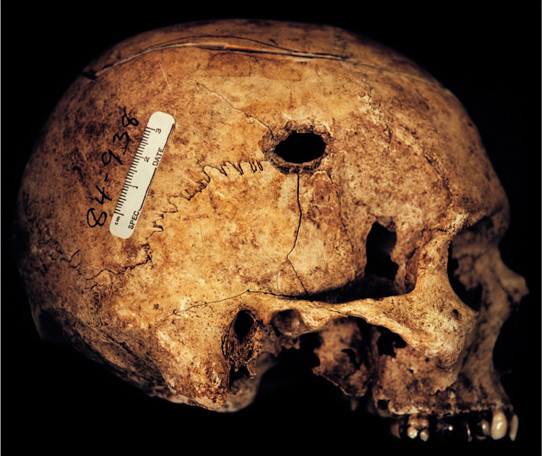
The story of Kennewick Man began in July 1996, when two college students watching hydroplane races found a human skeleton along the Columbia River. The young men turned the remains over to local police, who realized that they were probably very old. The bones were then given to forensic anthropologist James Chatters for evaluation. Chatters reconstructed the skeleton, which was 80–90% complete. He determined that it was from a man who was probably five feet nine or 10 inches and about 40–50 years old when he died. He showed little evidence of arthritis, indicating that he wasn’t used to carrying heavy weights and that he might have been a wandering hunter. Dental examinations showed that the skull contained 30 of the 32 teeth and that they were in good shape, indicating that he probably had a diet that included lots of soft foods like meat. He was taller and thinner than most ancient Native Americans and the back of his skull was not flattened from a cradleboard as is commonly observed in skeletons of ancient Native Americans. In addition, the man had a stone spear point lodged in his pelvis and there was evidence of severe trauma to his rib cage that probably limited the use of his arm. Using computerized tomography (CT), Chatters determined that the spear point was serrated and leaf-shaped and typical of the types of spears used between 8500–4500 years ago. He hypothesized that the skeleton was either from a European pioneer who had been attacked by native people using stone-age weapons or from an ancient human. Chatters sent pieces of the bones to a laboratory for carbon dating, which determined that the age of the skeleton was between 9,200–9,400 years old, making the skeleton one of the oldest, and most complete, ever found in North America.
Once the age of the skeleton was determined, several groups came forward, vying for control of the remains. A group of five Native American tribes in the region, the Umatilla, the Yakama, the Nez Perce, the Wanapum, and the Colville, wanted to accord the remains the same rites given to any Native American, namely a speedy burial. They cited the legal authority of the Native American Graves and Repatriation Act (NAGRA), which requires the return of American Indian remains to tribes. As news of the unique find spread throughout the scientific community, a coalition of eight anthropologists and archaeologists petitioned for their right to study the ancient remains prior to burial. The scientists believed that study of the Kennewick Man could reveal important information about early human migrations into North America. The Native American group believed that any manipulation of the remains would show enormous disrespect to the dead and vehemently opposed scientific investigation of the skeleton, which they called the Ancient One. Because some of the features of the Kennewick Man, such as his height and the shape of his skull, indicated that he might not be of Native American ancestry but rather of European descent, a group of people representing the ancient Norse religion called Asatru also petitioned the court for the right to the remains.

The ensuing legal battle raged for more than nine years. One of the key questions of debate in the courts concerned whether or not the skeleton was subject to NAGRA. NAGRA requires that all Native American remains be returned to the tribe for burial, however it was unclear if the Kennewick man was of Native American ancestry. Eventually the court ruled that some scientific study was required in order to establish the origin of the skeleton and between 1998 and 2000, the Department of the Interior coordinated these studies. A 1999 physical examination of the bones established that the Kennewick Man shared most physical characteristics with people from Southern Asia. In April 2000, samples of bone from the Kennewick Man’s skeleton were removed and sent to two different laboratories for DNA testing. Because of the age of the bones, it was impossible to extract sufficient DNA for analysis and the results of the study were inconclusive. After a series of appeals by all sides, in February 2004, a U.S. Federal judge ruled that it was impossible to prove that the Kennewick Man’s ancestry was culturally affiliated to any of the Native American tribes in the region and gave scientists the right to go forward with their investigation. In 2005, plans were outlined for study three-phase study involving as many as 23 different scientists.

The dinner was over and it was time to go home. The impact of this NAGPRA has seriously hampered science by bringing politics into the whole business and allowed ourselves to be hampered by sensitivity. America had allowed our guilt over pushing the Native American’s westward to cripple us the same way we currently do over slavery, neither of which we can do anything about now. All we can do is learn from those experiences, which is what science is all about.

Instead of learning and expanding our worldly knowledge, we’re wasting time appeasing political factions, getting grants so we can move some bones around the country and argue over bones that pre-date our known understanding of history, which is shallow at best.

But that is the nature of politics. It’s equivalent to living life in a straight jacket. All I can do is shake my head at the invention of yet another useless government created position, a Forensic Anthropologist that spends less time digging and understanding the past, and more time filling out papers to qualify for federal grants.

Rich Hoffman
http://twitter.com/#!/overmanwarrior
www.overmanwarrior.com

Things Will Never Be the Same! Educate Ohio is Uniting the State

I’ve been working with a group of reform minded people all over Ohio. In fact there are a number of these types of movements going on, while sadly, the school systems are playing the same old game. Here is an article from Larry Budd, writer for the Dayton Daily News.

To give a bit of background, Kelly is a board member for Springboro whom I’ve had some great discussions with, and Paul Lambert has been instrumental at getting things started with some fantastic facts and figures. He resides and does most of his business in Columbus and is a great resource. You can see some of Paul’s work here:

http://savethehilliardschools.blogspot.com/

Paul and Kelly are a lot more patient than I am regarding politics, and are great people to be at the front of this effort. 

School-levy foes back to work on new state group

Educate Ohio would be an alternative to the Ohio School Boards Association.

By Lawrence Budd, Staff Writer Updated 2:04 AM Friday, January 14, 2011

CLEARCREEK TWP., Warren County — Selected board members from school districts in six Ohio counties will huddle Saturday in Warren County to continue the creation of Educate Ohio, a new organization designed in part to make up for perceived shortcomings of the Ohio School Boards Association.

“There are board members that aren’t necessarily following the teachings of OSBA,” said Springboro board member Kelly Kohls. “It’s probably a presentation of the other side of issues. We need someone presenting the taxpayer points of view.”
OSBA executive director Rick Lewis said his group — governed by board members supported by all but three of Ohio’s 719 school districts, including Springboro — communicates information and curriculum used to educate school board members across the country.

“We’re very responsive to changing our priorities,” he said. “Sometimes there’s just different perspectives on how to get there.”

Kohls said her group would provide the public different perspectives on budgeting, tax levies and negotiating contracts with teachers’ unions.

The state teachers’ union, the Ohio Education Association, questioned whether the public would turn to Educate Ohio for information.

“The media and the public tend to turn to state educational organizations that represent hundreds of thousands of education personnel. They have a proven track record of working with education policy,” said spokeswoman Michele Prater.
Educate Ohio also would help other grass-roots statewide organizations, such as Educate Springboro, Educate Hilliard and Educate Worthington, which opposed recent levies in those districts.

The group was conceived in Hilliard by school board member and blogger Paul Lambert.
“We’re not trying to build some statewide political force. We really want to help the folks in the local communities,” he said.
Lambert purchased the educateohio.com web address, as well as web addresses for community-based offshoots in Hilliard and Worthington, two Columbus suburbs. He provided the address used by Educate Springboro, a community group that formed a political action committee to oppose a November property tax levy that would have generated new operating money for the district.

While a founder of Educate Ohio, Kohls has emphasized she is not a member of Educate Springboro.
“You have to kind of remove yourself from any political-action group,” said Don Miller, incoming president of the Springboro board. “It’s kind of our job to look at it from a big-picture perspective.”

Current, former or aspiring board members from Marysville to Versailles and Kettering to Springboro are planning to attend the 2 p.m. meeting at the Clearcreek Twp. Government Center. Yet Miller said, “I had no idea” about the meeting in his district.

It is the group’s second meeting following one in December at the Golden Lamb Inn in Lebanon. In addition to current, former or aspiring board members from Springboro, Hilliard, Marysville and Grove City districts, the meeting is expected to attract people such as Rich Hoffman of nolakota.com, which opposed a recent levy for Lakota Local Schools in Butler County.
Hoffman suggested public education reform hinges on decisions by Gov. John Kasich and progress in settling debates over equity in school funding that go back decades.

Herb Ernst, a former Oakwood board member affiliated with Citizens Advocating Responsible Government, a PAC that questioned school spending in Kettering, said his local group is considering adopting the name, Educate Kettering.
While hesitating to yet call himself an Educate Ohio member, Ernst said he planned to attend Saturday’s meeting.
“I think there’s going to be growing interest,” Ernst said.

Rich Hoffman
http://twitter.com/#!/overmanwarrior
www.overmanwarrior.com

The Disease of Regulation: The Scam of Legalized Extortion

People ask me all the time why I ride a motorcycle in the snow and extreme cold.  When you have to spend the day within our court system, as I have this week, several things become extremely obvious, if you consider the situation with logic, regulations created from law makers are born and breed to employee people.  And when you realize how foolish that is, such trips in the snow help me see the truth of things. 

A court-house is filled with security, court clerks, bailiffs, administrators, judges, police officers and many other support personnel. The hallways around the court rooms fill with eager faces at exactly 8:30 to 9:00 pm waiting for their cases to be called. Attorneys walk purposefully with arms filled with documents, because this is their battlefield and are comfortable in the environment.

If one is punished with a case that extends for the entire day, or for multiple days, the pattern emerges. By 1 or 2 PM the busy court-house diminishes in its busyness and the hallways clear after tears are shed from some of the occupants, and congratulations occur on the other. These are palaces of high emotion and loaded with drama.

As I weighed out much of what was happening around me, including the case I was involved with, I had to measure how much of it had any true social merit. The answer was very little.

The system works like this, regulations are created by a law-maker someplace either locally, at the state, or the federal government, and the citizen out there in the world either knowingly or un-knowingly breaks those regulations. If someone chooses to hold the citizen accountable for breaking the regulation they can proceed to court. This can be instigated by a private citizen, or an officer of the law.

Lawyers try the cases in a courtroom and the wins and losses of these cases establish case-law, which forms the ebb and flow of the legal system.

The entire system is built to employee all parties that play supporting roles in that process. It could be argued that without that system many people would suffer injustice. But much of what I observed, including the case I was on, involved people seeking to abuse the system to work the case-law into their advantage in some way, and if some of those regulations were not in place, there wouldn’t be near so many cases on the court dockets, and a lot of the people who filled the parking garage in the morning wouldn’t need to be there.

You can see this first hand at your local court on virtually any day through the week. You can see it also in your state house for whatever state you live in. And of course you can see it in Washington to great effect. Much of what you see as far as employees rushing around like ants at an ant farm is unnecessary.

Therefore the goal of all this regulation is not to make a safer, more just society. It is to create jobs and a reason for people to show up to work.

That might seem preposterous, especially if you are one of the people who are in the process of regulation creation, or enforcement.

At the conclusion of many of these cases, the plaintiff attorneys and defense attorneys, locked in immortal combat shook hands at the end and wished each other well. The whole thing had the appeal of a game of football. While all these opposing forces are together, the clients walk behind their counsel like dogs on a leash. Nobody speaks to each other as invisible walls restrict it. Eyes do not meet between defense and plaintiffs. But attorneys treat the whole thing like a game, because it is.

Regulation costs us economically, and if the economy were allowed to expand on its own accord, jobs would be created as a natural by-product. But the kind of jobs that are created through regulation are the kind of desirable, well-paying jobs that exist between 9 to 5, which is how many want it. And the act of manipulating the nature of economics corrupts and restricts it in unnecessary ways.


Human nature will of course take advantage of the regulations because it allows the power behind the enforcement to make people stronger than they individually would be otherwise. A single, selfish, human being can take on an entire corporation with a simple accusation that should shoulder the burden of proof. But the defendant will have to hire counsel to defend themselves which can cost an extraordinary amount of money to prove their innocence, because the regulations are so incredibly great, that individual citizens and companies can handle their own legal affairs, because of the complexity. And as we’ve discussed here on this site, complexity means money. Whenever something is too complicated for an individual to do the work themselves, it is built to be that way so people can’t understand the foolishness behind the complexity. Because the intent behind the complexity is to support government oriented jobs that exist from 9 to 5. It’s that simple. 

Riding a motorcycle in the snow is something that this regulation society of ours doesn’t do.  And that’s why I do it every day.  Because spending days on end in court can turn you into something you don’t want to become.   

Rich Hoffman
http://twitter.com/#!/overmanwarrior
www.overmanwarrior.com

Edward Bernayes and the Evolution of Cass Sunstein: Manipulating the Human Race!

Glenn Beck did a wonderful job of covering Edward Bernayes on his program, and I thought it was worth gathering some of the videos that are collected about Bernayes. There are many who believe that the world around them has always been just as we see it. But when you understand the art of shaping the human mind, you learn that people like Edward, have inflicted more evil on mankind than guns ever could.

There is a lot of video here. More information than most care to absorb. But if you take the time to watch all these video, you can benefit from the education they offer and begin the process of understanding how it relates to you.

Enjoy!


So who’s the new Bernayes? Meet Cass Sunstein.


Rich Hoffman
http://twitter.com/#!/overmanwarrior
www.overmanwarrior.com

A Gaze Back and Looking Forward: Education Funding is Changing Forever

The gravy days are over. The citizens are paying attention to many aspects of education that were never discussed, like teacher salaries being excessively high, and buildings with luxurious amenities. In a recent survey from Braun Research Inc. who conducted phone interviews with more than 3,400 Hoosier registered voters November 12-17, 2010, that firm’s president, Paul Braun, expressed confidence in the accuracy of the study’s results, due to “thorough briefings stressing objectivity, heavy monitoring, sample performance reviews, verifications and post-data-collection checks on each survey by interviewer and phone center.” Of the many conclusions of that survey Indiana voters lacked awareness and information about how much is spent in public schools. Nearly two out of three respondents (64 percent) underestimated per-student spending in the public schools.

As usual, Doc Thompson did some great work on this topic that he covered on the January 12, 2011 broadcast that is worth listening to. It is refreshing to have real discussions about these issues now. The gist of this discussion is that things are going to change, and change rapidly for public education funding.

But know the door has been opened. I know how difficult it was and I felt the wrath of attacks when I first started the enterprise of enlightening the public about education funding. The organized labor behind these tax levies attempted to apply The Delphi Technique on me, like they do everyone who speaks against wasteful spending, so I understand first-hand how the information has been kept quiet all over the nation for such a long time.

I countered that technique by using aspects of my personality that are entertainment oriented, something I’ve developed over the years performing in wild west shows and interviews for other projects, to throw a curve-ball at their strategy and start the ball rolling so others could hold the door open, and then others behind them could start pouring in to get control of the out-of-control spending that has been occurring in schools. It took that initial surprise from the organized unions by my approach to pry the door open. They really believed that by painting me as some hick cowboy running around with a whip that I would be made into something of a fool, which they counted on. What they didn’t know was that I have a business background, and I’m better at understanding difficult concepts than I am with the whip work. So because of their one-dimensional understanding of people, they were unprepared. And much to my surprise, people enjoyed the image I was projecting, of rugged individualism, and standing firm in overwhelming odds.

The truth of the matter was that it felt that way to me, like I was against the world. But I actually had hundreds of people behind me supporting the structure of everything, people who put up the money for the yard signs, people who went to all the meetings and took notes that they’d pass to me. People from inside the school system that was tipping us off to what was going on, and people who were going door to door to pass out literature. There were other people who worked the email campaign, and helped in so many other ways. But since I was the face of it, the wrath came at me, and I deflected it with the cowboy image while the business side worked with some very smart people to crunch numbers and get to the truth.

At the end of the day, that cowboy image says more about me than the business side. My children and grandchildren won’t discuss someday how good I was at working with numbers in a spreadsheet or negotiated a contentious point in a dispute. They’ll talk about the speed and accuracy competitions at cowboy events, and the many times I’ve shocked audiences with my fire whip displays, including professional stuntmen. So that image is far from just some conjured up image for marketing reasons. But it did help in this case, to overcome the opposition in a unique way.

What usually happens in management is that once you show people how to do something, they’ll then take that information and put their own spin on it. And that’s what’s happening by people who are far more passionate about education reform than I am. I have discovered now through correspondence from people who have been fighting this fight for many, many years, that all some of these people needed was a crack in the door. And they understand more about how the game is played than ever, now that we’ve started having really intelligent conversations on WLW.

Darryl Parks has been talking this talk much longer than I have, so it wasn’t difficult for him and me to feel some passion about the shake-down that occurs. But I think everyone was surprised when I went on WLW with our treasurer, Dan Varney and discussed the wage levels back in September, because that information was straight out of the newspaper. But the game that is played is that information is released in March, when the last things people are thinking about are schools or elections. Spring is on their minds, and coming out of a long winter. So most people would wad up the paper and toss it in the trash.

But my good buddy Graham George, who is a senior citizen, and is always organized kept that paper from March of 2010, and we went on the air at WLW and discussed it with Scott Sloan. The reaction from the public was so violent and sudden that I was surprised that nobody had done this kind of thing before.

Fortunately I had scheduled with the Cincinnati Enquire to have a backyard interview with me because of my YouTube video, A Whip Trick to Save America the very next day, and they wanted to do a feature about that and how it applied to my resistance to the school levy. So when that story came out, the gloves came off. The progressives all over the state that were listening to WLW decided to make me out to be some illiterate cowboy, which of course didn’t fit the facts I was able to put out on the radio broadcasts. People saw how the game was played and when I didn’t turn away and hide, but only increased my activity, it allowed people to see the structure of the game.

Now that the deed is done, the School Board is struggling to figure out what to do next. They are talking about solar panels, which is fine, but still doesn’t address the largest cost to the budget which is wages, and should be explored regardless of a budget crisis. The board is now fighting for the president position arguing over who should lead. Ray Murry is talking the right type of issues, discussing whether or not the district should have spent 90K on an employment search for a new treasure and superintendent. Those are nice discussions and I’m happy to hear the debate on both sides, but in reality, it’s just politics because the numbers are just peanuts compared to the elephant eating them.

However, the problems will only get tougher, so while the School Board is struggling with each other to figure out what the community wants, they would be very “wise” to accept the help of our local business leaders that have offered to assist.

I have placed the offer to the board and was told that “most business people would probably become frustrated by the restrictions.” That was a polite way to say that the situation is too complicated for most businessmen to deal with. Well, that complication has been made complicated for a reason, and it’s to prevent “outsiders” from being able to offer fixes. It’s all part of the organized labor strategy, and the community knows it.

And I can promise that the education of those types of methods will only increase as more and more people send me information hoping that I’ll articulate it on the radio or on this blog.

So it is advisable that the games stop now. Grab the hands that are offering to help and be ready to do things you’d consider unthinkable 6 months ago. If you do it now, you can save the district and yourselves, and many, many jobs. If you don’t we will go off a cliff as a district.

The next levy attempt will not be about Rich Hoffman the cowboy whip cracker. Too many people want to be involved and I will gladly accept their help. I have enough personality and success that I don’t need the attention. I’ll put myself out there if people don’t feel comfortable doing it themselves, but I don’t see that being a problem in 2011. Because I see a wave of volunteerism, and other people who can speak coming boldly forth to push that door open even wider. So the decision doesn’t just sit on the shoulders of Lakota, but every public school everywhere.

So stop the games. Embrace the public, because they are your employers anyway, and be ready to do what’s right. Things are at a point where many things can be fixed and nobody has to be contentious enemies. It’s just business, and there are people who can offer that assistance for free, and once it’s done, Lakota could serve as a bright light of hope for all others to follow. But it takes one school to courageously step forward and be the first to open the door. Everything else will take care of itself.

But cling to the way things have been done, and the world will soon swallow you up.  So make a decision…..quick!

Rich Hoffman
http://twitter.com/#!/overmanwarrior
www.overmanwarrior.com

School Choice is a New Choice: Education Funding for the Future

Doc Thompson had on Chad from School Choice Ohio on 700WLW. If you don’t know what School Choice is, listen to the conversation with Chad below. Not only do they talk about School Choice, but there is some great discussion of several incidents of gross waste from districts surrounding Cincinnati.

I’m a tremendous supporter of School Choice, because people are thinking and it is working where it’s being used. So why isn’t it being implemented? Well, organized labor is very much against it, because they have to maintain the current structure in order to support the collective bargaining agreements they’ve negotiated for themselves.

School Choice is being tossed around by a new group of several representatives from districts all over Ohio that have been meeting to implement educational changes, called Educate Ohio, which I’m a proud part of.

There are options out there. We don’t have to just do the same old thing time and time again, which are just to put funding issues on a ballot for a school levy against our property taxes.

I spoke recently on WLW about how both my kids took online classes during their senior years and finished their entire senior year before Christmas. Now my kids are smart kids. They had been on the honor roll a number of times all through their education and tested well above average on their SAT tests. They attended Mason for about half their youth, were home schooled by their mother for about a year, and then spent their high school years at Lakota. During their entire education lives they excelled. But once they got past their junior years, they wanted to move on, which they get from their father, not having the patience to just cruise through life held back by the shackles of people happy with a mundane existence. Both my children spent their remaining years of their senior years traveling Europe, camping at Stonehenge and exploring places like the British Museum, and I’m eternally proud of them, while the other kids their age were spending their Friday and Saturday nights drunk and puking at mindless parties and wasting away while they waited for college classes to start in the fall of the following year.

The system we’ve had in my opinion is broken. I’m happy to go along with things as long as all those mediocre enablers called school officials don’t ask for more money than we already pay in property tax.

But they are asking for more money, and asking for us to pay for their communist leaning tendencies, and yes, they do have a communist leaning. If you don’t know that, or can’t understand that, or don’t want to call it that, go do some reading, then get back to me. I’m not going to waste my time giving you an education that you should already have.

Meanwhile, it’s time to explore other options that bring out the best in our individuality, and we reject the collectivism that has emerged with the current, “expensive” system, because we can’t afford it, financially, or intellectually.

Check out the below article from Indiana.  This is the way things will be done in the future.  The sooner we get started, the better. 

New Poll: Indiana Voters Support Choice in Education, Substantially Underestimate Public Education Spending
INDIANAPOLIS, IN – Voters in Indiana decidedly favor school vouchers and charter schools, and desire a balanced variety of options when it comes to educating their children, according to a poll released today by the Indianapolis-based Foundation for Educational Choice.

The poll-“Indiana K-12 & School Choice Survey”-also reveals that Indiana voters are unaware of how much is spent in public schools; most respondents substantially underestimated per-student spending.

“Hoosiers see the tremendous value in giving families options,” said Robert Enlow, President and CEO of The Foundation for Educational Choice. “If a school voucher, charter school, private, or home school can give a child an effective, personalized education, that child has a right to receive it. This poll shows Indiana voters agree.”

Braun Research Inc. conducted phone interviews with more than 3,400 Hoosier registered voters November 12-17, 2010.That firm’s president, Paul Braun, expressed confidence in the accuracy of the study’s results, due to “thorough briefings stressing objectivity, heavy monitoring, sample performance reviews, verifications and post-data-collection checks on each survey by interviewer and phone center.”

The following are the poll’s key findings:

Indiana voters are unsatisfied with the current public education system. On average, registered voters in Indiana are more likely to think K-12 education is on the “wrong track” (51 percent) compared to the “right direction” (31 percent). Indiana voters describe the state’s public school system more often as “fair” or “poor” (55 percent) versus “good” or “excellent” (42 percent).

Indiana voters lack awareness and information about how much is spent in public schools. Nearly two out of three respondents (64 percent) underestimated per-student spending in the public schools.

Hoosiers support charter schools. Indiana voters are far more likely to favor charter schools (66 percent) than to oppose such schools (16 percent). Respondents who said they “strongly favor” charter schools outnumber those who say they “strongly oppose” by a four-to-one ratio.

Hoosiers support school vouchers. Indiana voters are far more likely to favor school vouchers (66 percent) than to oppose them (24 percent).

Indiana voters indicate they should have a variety of schooling options. If they had the option to select any type of school to obtain the best education for their child, 41 percent said they would choose a private school, 10 percent a charter school, and 7 percent a home school.

“This poll shows most Indiana voters do not realize how many of their tax dollars are being spent on an education system they do not even consider effective,” said Enlow. “Giving families the freedom to choose the education that’s best for their children would ensure funds were spent more effectively, and it would give every child access to the education they deserve.”

To see a summary of survey results, a series of PowerPoint slides highlighting key findings, and description of the methodology, visit http://www.EdChoice.org/IN-Survey.
Braun Research callers interviewed 1,017 registered voters in Indiana to produce an initial statewide sample. Braun Research then made additional phone calls to achieve at least 350 total completed interviews in each of eight counties. The margin of sampling error for the statewide survey is ±3.1 percentage points and approximately ± 5.4 percentage points for each of the eight countywide samples.

About The Foundation for Educational Choice

The Foundation for Educational Choice is a 501(c)(3) nonprofit and nonpartisan organization, solely dedicated to advancing Milton and Rose Friedman’s vision of school choice for all children. First established as the Milton and Rose D. Friedman Foundation in 1996, the Foundation continues to promote school choice as the most effective and equitable way to improve the quality of K-12 education in America. The Foundation is dedicated to research, education, and outreach on the vital issues and implications related to choice and competition in K-12 education.

Please visit our website to read the full study at http://www.EdChoice.org/IN-Survey.

Rich Hoffman
http://twitter.com/#!/overmanwarrior
www.overmanwarrior.com

Thanks For Reading: Over 10,000 Views in December!

Since I began this web log, a lot has changed. The intent was to provide some conservative views to combat the numerous liberal sites that are out there. One thing the left is good at is selling their position. Conservatives tend to trust the law and keep themselves out of some of the crazy rhetoric that one must engage in to combat the radicalism of the left’s strategy. Conservatives have great ideas, and often have history on their side. They just need to become better at selling it, and have lost over the last two decades terribly to the radical left at communicating ideas.

There have been great strides at the top-level of communication, to sell logic and traditional principles. Sean Hannity, Glenn Beck, Bill O’Reilly, Rush Limbaugh and many others have emerged to fill the market void that exists due to many Americans that lean-to the right. Only a small percentage lean left, yet it is the left, because they are more aggressive that is shaping the world in a way the majority of Americans don’t want. But those top names can’t due it on their own. The left has managed to be very successful at having their own big names at the top, people like Michael Moore, Sean Penn, George Clooney, Keith Obermann, and James Carvel do their work, but they also have active grass-roots to carry the baton MoveOn.org and the Huffington Post along with many, many others to lead an active online campaign that occurs daily and fills millions of email boxes with a leftist spin that partially inquiring minds have difficulty combating.

There is a radical left that has an agenda and wants to reshape the world. They showed themselves quickly when the terrible tragedy in Arizona took place. That is why I decided to take steps over the summer of 2010 to begin my own site that could grow over time and capture great radio, and commentary from the conservative side in an attempt to off-set the aggression of the radical left and the direction they want to take the country.

Radio like what Doc Thompson does locally on WLW is particularly powerful, and while those sounds broadcast over 50,000 watts to hundreds of thousands of ears, people often forget what they heard just a few hours later. It is my intent to capture some of those moments so people can return to them later and listen at their convenience. Stations like WLW makes it available for complete podcasts of these programs, but I seek to make it easier for people to filter out the important moments, so I am going to the trouble to provide some professional editorial help for the convenience of the curious listener. One such example is the below section of Doc’s show from January 10, 2011, the first time he was on the air after the Arizona Shooting.

There are other conservative blog sites out there. I particularly like American Thinker, and The Blaze.com. But, I have found that I have some abilities that are particularly beneficial to the blog medium, experience in video, editorial training, and the ability to write thousands of fresh words each day that is pertinent to current events and complimentary to the other work within the conservative movement. I also understand the value of entertainment, and live a colorful life that people find inspiring. It is a pleasure to share that with people to use in their own lives. In other words, not all conservatives are suit-and-tie men and work in the law profession. So I have a unique position to speak from and I’ve found that people enjoy it because it loosens up the seriousness of some of the topics.

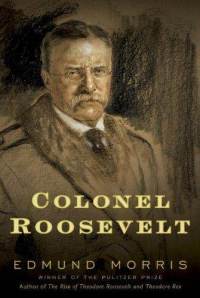
Currently I’m drooling over my copy of Colonel Roosevelt, the new book just released by Edmund Morris and given to me by my youngest daughter for Christmas. I had some things to finish up before being able to jump into that book. Roosevelt back then read a voracious amount, and I share with him a childlike curiosity for everything. I adored the previous two books on Roosevelt by Morris called The Rise of Theodore Roosevelt and Theodore Rex so I understand his ravenous appetite for fun and knowledge that only children seem able to combine. I have often wondered what a man like that would be like in today’s culture where a person can read on a digital pad, write on a keyboard as fast as his mind can produce the information, and be exposed to thousands of various media in television, radio, and the internet.

I can imagine because in my own life I often write while walking, read whenever I’m sitting, and if I get pinned down in my living room I watch two televisions at the same time while scanning the internet on a lap top, and playing Xbox. My wife has gotten used to my multimedia abilities even though she is accustomed to reading 12 to 16 hours per day in the same spot without any noise, which is how she prefers it. She often cringes when I come home and “power up” plugging myself into the world. She prefers to turn off the world so she can see it clearly. But as for personalities I can relate to, Roosevelt is one of them. He was a Republican. He was a lot more power-hungry than I am, but his adventurous nature and insatiable appetite for knowledge I share with him. I was very disappointed to hear Glenn Beck proclaim that Roosevelt was the creator of the Progressive Movement, which anyone who has read my stuff here knows I despise. But those events had not yet been explored in Theodore Rex, and would not be revealed until this Colonel Roosevelt volume. I am hungry to see how those events transpired.

Glenn Beck I think feels the same as me about Roosevelt, because Beck himself appears to be a similar personality, always plugged in and learning and doing it with a childlike curiosity. And he knows that the creation of the Progressive Party, which Roosevelt ran against the Republican Party, ushered in Woodrow Wilson.

I don’t personally know Beck. I’ve only been around him, so I can only make assessments about him based on the work he does, which is the volumes of books he reads, he is writing about three books a year, does three hours of radio, one hour of television and still values time with his family. Roosevelt did much the same, while President he wrote books, read many more, and still had time for all his interests. And I’ve been getting the same type of comments, “how do you have time to write all this.” And, “how do you scan all those videos, and listen to all that radio content, and read too. Is your wife lonely? What do you do for a living?”

All I can really say is that it has something to do with never really growing up. If more people took into their adulthood the energy of their childhoods, they’d find they can do a lot more with their lives. And they’d be less prone to chemical abuse such as smoking, over-eating, and drinking. An active mind is a happy mind, and that is what will be finding its way to this web log.

What makes me happy is sharing with people who things can be different. WordPress sent me the December numbers and seemed shocked that there were over 10,000 readers of my articles, which WordPress seemed to be very impressed with. And in just one business quarter I can see that many, many people want to help with the Lakota School Levy next time, which will make it a lot easier on me and the other people who worked hard on that campaign. Back in August you couldn’t find anyone wanting to even stick their name next to a controversial idea like saying no to the levy. And people are reading the stuff that is more libertarian and those articles are getting passed from email to email and is having an effect, even if it is only encouraging people to get involved in their local Tea Party, or the 9/12 Project and any of the movements emerging. It is a useful service to offer, which is to provide a place for people to meditate on some of these ideas at their leisure.

After putting topics on this web log, such as the pay rate of the teachers at Lakota, and the governor pay rates, and the amount of people that did not go to college, but are successful anyway, it has allowed people to openly question sacred cows that have simply been glazed over in the past, and I feel very privileged to have been able to provide that.

For the third No Lakota Campaign, there is now a line of people that want to be a part of the campaign. People heard me on the radio, and read what I wrote, and they saw that the levy failed, and now they are drooling to be a part of the next victory campaign, and not just at Lakota. There are districts all over Ohio that feel empowered to act. And that is much to my delight. A group called Educate Ohio is emerging from some of those curious minds, and that is something which brings me great delight.

I feel I can inspire more people to action the way I have been doing, which ultimately puts more troops on the battlefield. I avoid long drawn out meetings like the School Board Meetings at Lakota because they are very inefficient meetings. I tend to rely on “eyes and ears” for the important stuff. I attend when absolutely needed, which is something I’ve learned to do in management work. What’s coming is something that people who see clearly need to be free to articulate. So I will keep myself free of peril with tenacious equanimity. I welcome those who want to help and ad their names to the great fight to jump on board and help anyway possible. For it is the dream of all artists that their work inspires some didactic reaction to move beyond ones previous limits, and it gives me great pleasure to see that happening as a result of the work done at this site. Such a reaction is more important to me than money, fame, or any form of orthodox social acceptance. There is room for everyone that wants to cast an arrow on behalf of truth, justice, and the American Way!

So enjoy the ride! Much, much, much more to come.

Rich Hoffman
http://twitter.com/#!/overmanwarrior
www.overmanwarrior.com

Organized Labor and Why They Fail: My Personal Account

I received an interesting comment from a union supporter over the weekend, it said, “like your weekend. Thank a union.”

Obviously, this person is saying that the reason we have weekends, and 8 hour work days, and basic benefits, and all that kind of thing, it’s because of the union influence.

The sad thing about that argument is because unions stuck their noses into the matter, we can’t say how things might have evolved under the free market. Things may have actually been better as companies developed more and more incentives to attract quality employees.

My experience on both sides of the management argument is that if you are a good or a very good employee, it is not difficult to sit down in front of your employer and ask for a day off, or adjust your work hours, or get the compensation that you need. I’ve been down the whole gambit on the organized employee issue, and my opinions are rooted in experience.

When I was the tender age of 19 a union rep was trying to get into the manufacturing facility I worked for, and I was identified as a person that could articulate an argument. So many of my co-workers probed me to head up the union attempt.

I wasn’t sure I wanted to be a part of a union. My grandfather and several of my uncles were involved in the auto unions, I had listened to their stories over the years while growing up, and to be honest, I didn’t know if I wanted to grow up with their world outlook, so a union was something I was skeptical of. Never-the-less, I did take the challenge from my co-workers to approach the company president about bringing a union into our facility.

Basically, what happened was I arranged to have a meeting with the company president, and during the meeting I asked him squarely what his reaction would be if the employees brought a union into the shop. He smiled trying to cover a bit of panic, and replied, “We would shut down this facility.”

“Really,” I asked. “Just like that?”

“Yes” he said. “I couldn’t afford to operate under organized conditions.”

I stared him down and assessed whether or not he was lying to me, and I concluded that he wasn’t. The man wasn’t the brightest bulb in the box, but he had married into money and that was the basic path he had taken to become president of the company. He didn’t earn it by being the best executive. In fact, he often excelled at getting into trouble running around with other women, wrecking boats on the Ohio River, and all that kind of non-sense. That man was not motivated to keep the doors open to that manufacturing company because he really wasn’t interested in the challenge of management. He was only in the deal for a pay check and his father-in-law knew that. So I concluded that the fear in the man’s eyes was that he knew that about himself, that if he had to deal with a union, and shop stewards, and a lot more regulation and strikes, that the job would simply become too hard, and he’d be prone to just get drunk somewhere and collect his pay check in some other manner.

I told the employees all this after my meeting with the president, and they elected to not vote for the union.

Now, twenty years later, that company is one of the few companies around that is still in manufacturing and owned by the same people. Many of the guys that still work there and decided not to vote for a union that day are approaching retirement age and have made a decent living for a number of years because they still have a job. If they had voted, it’s highly likely that the company would have shut it’s doors and left taking those jobs with it, which is what happened to countless manufacturing jobs during the 80’s and 90’s.

To say over the years that I’ve worked in and around organized labor is an understatement. I decided long ago that if I needed representation, I’d do it on my own, so I never joined a union, even though I worked in shops that were a part of unions.

I was able to do that because all those shops had suffered difficult labor disputes that had weakened both sides. The union labor force had engaged in strikes that cost the companies a lot of money but they hurt themselves in the process. And the companies responded by hiring temps as part of a screening process. What these companies were really after was employees that were motivated, and not a part of the union. That’s where I came in.

Once I had my foot in the door, and could easily out-work my co-workers that were often “milking” the clock and holding back their production numbers, on purpose, I would become a management favorite, and this caused tension with the other employees.

So there would be fights in the parking lots, and in bathrooms, and on the shop floors. Not just once, or twice, but many, many times. What I didn’t tell many people was that I had a martial art background. I also rode my bicycle to work each day and have always been in fantastic shape. Many of those people that challenged me to fights smoked and within 15 seconds of a high adrenaline fight, were out of breath. So it really wasn’t difficult to prevail in these conflicts. Fights don’t occur in real life like they do in movies. Most people don’t get in too many fights, so their only experience is what they see on TV, and once they feel bones break in their faces, or in their hands when they punch incorrectly, and their lungs start burning for oxygen when the fight is just beginning they often panic when things don’t go their way within the opening seconds of a man to man conflict.

What I did that is probably different from other people is that I didn’t report these fights to upper management or try and get the perpetrators fired. I figured the embarrassment in front of their co-workers was enough, so I had the respect of many of my co-workers even though I wasn’t in the unions. This allowed us to co-exist to some extent. And what happened in every one of those companies, and I’m talking about at least three major companies in the area over the years, is the companies were sold to foreign investment. Because I wasn’t in the unions, members of management would speak to me, and would express their frustration at the inefficiencies of these companies, and ultimately all of them were sold to foreign companies, primarily in Europe. And the workers on the floor would stand around the coffee machine and complain to each other in a futile attempt to hold everything together. They’d complain to me as I rushed back to my job as soon as the break bell would ring and tell me how the company was “using me.”

Whatever, I was using the companies to make money for my family. Because the union people weren’t interested the productivity of the company, and believed that if they held back the production of these companies that the work would always be there. Instead, what often happened is once contracts went delinquent, other companies picked up the work because the people that bought from us weren’t going to hold up their operations because the supplier union labor couldn’t provide product on time. So our sales people lost as many contracts as they secured. And when they got the contracts I was always standing there with my hand up to work weekends and other overtime to make sure the company could deliver its customer requirements.

And the union guys would stand around the coffee machine and tell me, “Son, this company is using you. You just don’t see that.”

My common reaction is, “You aren’t my dad, but thanks, I’ll keep it in mind.”

I was happy with these labor arrangements, until the companies would ultimately sell off to the foreign buyers. That’s where I’d get into trouble, because under many union contracts, work reductions had to be done by seniority, and as a temp, or new guy on the totem poll, I was always at the bottom. And that was the first reaction of all the companies that were purchased, is they’d seek a work reduction to send a message, and get finances under control.

So I’d be out of a job while the union guys would still be standing around that coffee machine complaining. “We told you, son. They were just using you.”

I’d shake my head at how stupid they were, and how they failed to see how their actions had caused the sale of the companies to begin with, because of their lack of efficiency. In essence, the heads of these companies were reacting just like the president of the first company I mentioned. If things were too much of a pain in the ass, their reaction is to take the money and run. Secure a contract that is lucrative to investment, and get out while the getting is good. Move to Florida and play golf. Let the new buyers deal with the union.

At one of these last companies mentioned tensions had gotten really out of control, because it was well known that the company that was seeking to take over was very anti-union from England. They were hiring a head-hunter to come in and smash the union. So of course I was an instant favorite of the head-hunter. I could walk into his office the way I did with the President many years before and ask, “Are you going to have a lay-off. Everyone on the floor is tense and wants to know.”

“Young man,” he’d say to me, “If I have my way, you’ll be running this place. You are the hardest working son-of-a-bitch I’ve ever met, and I’ve met a lot. You routinely have an efficiency rating of 150% and that’s outstanding, but, your buddies out there that are operating at 50% efficiency and 60% are killing this company, and I’m going to weed them out.”

So I’d go back out on the floor and tell everyone what was going on. This made the shop stewards extremely angry, because I was affecting their power base. And they didn’t want their union members coming to me for information instead of using them.

Of course the head-hunter knew what he was doing. He was using me to break up the unity on the floor, because I had the guts to come directly to him and open dialogue, while the union chose to play silly games. This led to a stand-off between me and four of the shop stewards.

These were sappy guys who thought that because they were over 230 pounds that it somehow made them tough. Most of the weight was in their stomachs. One day while I was using the restroom, all four shop stewards came in and gathered around me while I was doing my business, and was in a vulnerable spot.

“Better shut your God damn mouth, son.”

I finished my business and once I had my zipper up and my vulnerably nicely tucked away, I could reply. “You ain’t my dad, punk.”

Shocked the four guys looked at each other, and then the 1st shift steward stepped in front of me. “You want your ass kicked! We’re sick of your Fu**ing act around here. We’re sick of you undermining us. We’re sick of you exceeding rate, even though we’ve told you to stop, and we’re sick of you’re god-damn-bicycle-riding-symphony-orchestra-listening ass!”

“Too bad, punk.” I never broke eye contact with any of them, and I made sure to meet each one during the exchange.

One of the third shift stewards, I have no idea why there were two because there were fewer people on third than any shift, chimed in, seeing that this conversation was going south fast, “if we fight in here we’ll all be fired.”

The man in front of me looked at me. “You’d like that wouldn’t you? That’s probably you’re plan…..to get us fired. You’ve planned this out with your buddy. We all get fired, and then he rehires you when he gets the union out of here.”

“You’re just trying to cover up the fact that you’re all a bunch of pussies.” I meant it when I said it. Such a conversation had never occurred with the Head-Hunter, but these guys knew I was ready to fight all four of them right there, and they were looking for a way out of the conflict and a way to explain their reluctance to fight me to the rest of the shop. And I wasn’t going to let them off the hook.

“You can’t call us that!”

“I just did……punks!”

“Fine, you want your ass kicked, let’s meet after work.”

“Ok,” I said, “Let’s meet at the vacant lot across from the apartments.” There was an empty lot near our facility that we all knew about.

The four of them started back slapping and getting themselves all psyched up for the fight that would occur after work.

The whole building knew this fight was going to go on between me, and those four guys. So at the end of first shift, everyone rushed over to watch. I was the first one there and stood in the center of the empty lot waiting for the fight to begin.

The four guys drove up and down the road leading to the lot revving up their engines and screeching their tires like some silly peacocks fluffing their feathers. But they never pulled into the lot. After about 15 minutes they drove off in frustration, and the whole company knew what had happened. They failed to meet the challenge.

The next day, and there-after, things got quiet. The union fell to disarray and nobody believed in those four guys any longer.

I ended up leaving that company on my own and went to work for a company that wasn’t run by an English parent company.

Now for a number of years I’ve been on the other end of things and have had to hire employees myself. The employees you hire are the sum of their previous experience. In some cases, the best employees are the ones that are fresh even if they don’t have physical experience, because they haven’t been corrupted by those meetings around the coffee machine yet.

I’ve hired many people that have worked for major unions, particularly from the steel industry, and all of them have had problems of some kind. They have skills that are desirable, but culturally, they have problems. They are the employees that cause the most trouble with other employees, and it appears they learned those tactics from the radicalized union behavior they experienced in their previous employment. Several of these employees have sat in front of me during reviews and demanded money comparable to what they made as union employees, and you have to be tactful how you explain to them that if they hadn’t made so much money in those positions, they would probably still be working there. These are the first employees to try and create legal trouble for you if you hire them and then find they are trouble, because they believe in the radical notion of it’s “us against them” “them” being management and ownership.

I have tried to help these types of employees under my leadership, and I have been burnt every way possible by them. My belief are that if you show them honesty, trust, empowerment, and those kinds of traits, they take it as a sign of weakness and seek to manipulate events behind your back.

I can only compare these former union employees to dogs that my wife and I have adopted from the pound. Now I am all for adopting pets, so don’t let my next comments discourage you from adopting an animal. Love can go a long way to helping those animals, and they need it. But, every dog I’ve ever risen that I got from a pound, which was an adult, I’ve had trouble with, because raising an animal from a puppy allows you to establish good patterns with the animal. Once they are adult dogs, those old habits are hard to break. Not impossible, but difficult.

My soft spots for abandoned animals sometimes moves over into people, and I have tried to help many lost people that have stumbled through life and had what seems like hard luck. But what you often find is just like those stray dogs, people are sometimes broken beyond repair, at least from a boss’s good intentions, and they will turn on you in a second no matter how kind you are to them.

Because at heart, they are broken, those union employees have been radicalized and truly believe that they are “owed” something and they seek to manipulate the world around them and will use your good will as empowerment to do mischief.

So in the future, I will be cautious of hiring union employees. I will if they are qualified, but I will look hard at their resumes and ask them extremely probing questions, because now I’ve seen union behavior at many levels, including how it works out in Hollywood, which is something outside my normal experience.

I did a thing for a friend of mine that involved fire whips, so they flew me out to work on a promo piece for some of the major studios to help develop a Real D 3D camera system. It was supposed to be an informal deal. During the shoot, I had a bit of an argument with the set “grip” because he insisted on handling my fire whip equipment, which was the fuel I used, the fire extinguishers and the whips themselves. Since there were only a handful of people in the country that handle fire whips, it was impossible for the guy to safely do anything with them, so I had to swat him back to the camera track and out of my way while I set up the shot, which he did an excessive amount of complaining to the director. But during that experience, I sat and listened to the make-up people complain just like the fabricators standing around the coffee machine, the camera people making tremendous demands on the producers, people complaining about the food that the catering truck brought, and actors complaining about having to share trailer time. After that experience, I can see clearly films that have been ruined because the people behind the films stayed to strict union rules. California’s labor unions have pushed films into other countries. I now understand why George Lucas makes his films in Australia, and England. He doesn’t want to deal with all that mess, and it shows in the films he’s made. You can actually tell if you know what you’re looking for.

Organized labor is a nice idea. But what ends up happening is that the worst in human nature is allowed to exist protected by the lack of competition. I can name numerous incidents where people like the Lakota Teacher that was busted for child pornography became corrupt because he doesn’t have to worry about his job and being terminated, and his income is secure so he didn’t have to worry about money, and the mind denigrates over time to the vices that exist in the backs of a broken mind. It works the other way too, I’ve known many, many born-again Christians that were former drug abusers or alcoholics that can use the extra time reading the bible and becoming clean. But most of the time, the security provided by organized labor breeds contempt and allows the employees minds to slide into a corrupt state of mischief. And for those of you who will say I’m not a psychologist and not qualified to make that statement, I’ll tell you this. I earned my opinions from the power of knowledge and observation, not some pin head without any life experience. And I’m a lot more qualified than most to cast an opinion because of my experience.

When the mind is void of competition, it rots. When a human being does not have to worry about losing a wife, he tends to abuse her either physically or mentally or both. When a person does not worry about losing their job, or competing to stay valuable, they become lazy. And when they don’t have to worry about where their money is coming from or the limits of not having enough, their minds have time to meditate on their vices.

Those are facts of life. My strategy has always been to show my employers how much money I can make them, then ask directly for the days off I need. So this is my answer to the question posed as to whether I like my weekends or not. I would have negotiated my own deal, so I do not have a union to thank for those things in my life. And I don’t see ANY value in organized labor based on my personal experience. They collectively bargain in mass and intimidation to hide their own laziness and have cost this country millions and millions of jobs and loss of GNP. They can’t argue directly. All they can do is make threats of violence or work stoppage, or vandalism. And that makes them thugs.

They can write me the nasty letters which I’ll laugh at, because I know the mind behind them is rotten. And I’ll keep those letters to prove my point at a future time when it will matter. (wink)

Rich Hoffman
http://twitter.com/#!/overmanwarrior
www.overmanwarrior.com