

I spent a few days thinking about this topic before addressing it, because it really does mark a turning point in this war. I first realized the scope of the war when I was pitching screenplays to Hollywood from 1995 until 2005. I learned a lot about the “business” over that ten-year period which of course carries directly over to the experiences Rush Limbaugh and Sean Hannity had on the Ted Kopple interview shown by a recent CBS Sunday show. I was obviously a conservative writer and I didn’t think it would matter that I didn’t think the way the people in the business thought. I thought they’d find my perspectives fresh and perhaps a throwback to the period where Hollywood had great success. But what I learned pretty much reflects the subtle pain that I heard in Rush’s voice all during Monday March 27, 2017. Sean Hannity too seemed wounded by the outright rejection of the great Ted Kopple. Of course, they played it down, but I could hear it in their voices, and I understood. Intellectually, they always knew they were different than Ted, but on a human level—they are peers and wanted to at least participate in the arena of debate even if the people on the other side were wackos. They honestly liked Ted and at some deep level, wanted his approval. Ted Kopple represented to them the media and as sick as we all know that media to be—they wanted to help it be better with debate. What Ted Kopple did was ignite one last bomb hoping to stop the loss that Democrats are experiencing. It was like an ugly divorce where a person you thought you loved at one point in your life yells at you—“I never enjoyed making love to you because you have bad breath.” That is essentially what Ted Kopple did to Sean Hannity and Rush Limbaugh on Sunday March 26th 2017 on his little morning show.
I call it a war because it was obvious to me that’s what it has been. “They” didn’t care what the casualties were—they certainly didn’t care about my wife and kids. Once I put myself out there in an artistic way, then took very strong positions against casual sex and drugs—representing the Midwest in California—they didn’t care who they destroyed in my life so long as I felt the pain of it. I have never seen so much hatred and vitriol as was expressed at me in such a passive aggressive manner than in those years mentions above. In essence I was told that I would never write a book, or a movie, or do anything in the media and that nobody would see or hear from me because they controlled all the avenues in the media and I would never get through. I never tried to force feed anything to them, I was just being my Midwestern Cincinnati self. I would remind them that Steven Spielberg and Tom Cruise came from Cincinnati for which they would say that “they” became one of us instead of expecting us to become them. Well, there was some truth to that—I did intend to change their point of view through creative debate which is how I thought things were supposed to be. Instead I learned that they weren’t open to those types of experiences. Instead, they were on a mission to convert all of us into bleeding heart liberals or else, and that was the focus of their agenda and the cause of this “war in America.”
It was a very disheartening thing to learn that Hollywood was not the place I grew up loving, or even the place that made all the great westerns I watched as a kid with my grandparents. It was a propaganda machine mostly that was hell-bent on liberal advocacy. It was even worse than Robert Altman’s The Player—it was even more corrosive than what was revealed in that very good movie about Hollywood life and how to make it there. The business wasn’t about producing the best script, or even being the best director—it was more about who you knew and what they could do for you—it was mass collectivism on overdrive and that wasn’t for me. Naturally I toyed around with self-producing but to do that you have to come up with a lot of money and its always very risky. I’m at a point where I will likely produce a film with a budget of 5 to 10 million range with an aim at Netflix now that more options for distribution are available with less union rules. But I decided way back in 2005 that I wasn’t going to play the conventional game and that I would go it alone in everything because technology and the market had caught up to the business in a way that decentralized it.
Ted Kopple specifically mentioned that in his piece on Rush Limbaugh citing the “fairness doctrine” from 1987. In his mind if only the “system” could have stayed in control his news on CBS would still be relevant and Donald Trump wouldn’t be president. But because of Sean Hannity, because of Rush Limbaugh and thousands of people like me who have taken advantage of deregulation of information—the old way of progressivism can’t compete and their world is coming to an end. As I was at a film festival in 2006 doing whip stunts for producers who might use those techniques in films, I was already thinking of how things had changed and the gate keepers were no longer needed. If you had talent and ambition, the technology was certainly there to step around the old guards—like Ted Kopple—and do your own thing. That is why the political left is praising Google and Facebook for censorship because they hope that they will become the new gatekeepers. But if either company commits too far into that realm, some other company will rise up to compete with them—that’s the beauty of this age of deregulation.
I was told no by those gatekeepers so many times that I relished this age where I can write all I want—novels, articles—films, anything I’d like to and I have a means of distribution that doesn’t involve anybody really. I can say honestly, I saw it coming a long time ago. It is much harder to get wealthy off the entertainment industry because with freedom comes abundance and these days so many people are involved that the costs have come down to the extent where the buckets of gold for a well written novel just aren’t there. But if you are a writer who wants to write such a thing for the benefit of doing it—you can. For a guy like me, there are literally millions of ways to make a million dollars. I don’t need to rely on one way to get there. I can afford to write millions of words on daily articles and publish books around the gatekeepers which does have an impact on culture in a positive way—and that is how I decided to do what I did. Sean Hannity in his way did the same thing as did Rush Limbaugh and many others. Some make a lot of money at it, some not so much—but they do it because they have passion for the subject and they no longer are regulated by a gatekeeper in doing it—and that’s what’s different. That’s what obviously frustrated Ted Kopple.
In many ways Donald Trump is like the rest of us—he felt he could do the job of president better so he put himself out there starting around 2010 to start that journey. He’s not doing the job to get rich, he’s doing it out of personal passion for the job because many people like myself, Rush Limbaugh and Sean Hannity have softened up the marketplace to consider new ideas that the old guard held down in the news rooms of Ted Kopple’s world, the movie producers in Hollywood, and the publishers in New York controlled largely by Publisher’s Weekly and The New York Times. They aren’t running the show anymore and haven’t been for a while. The big difference is that now in 2017 with Donald Trump in the White House, they can’t hide it anymore. Now mainstream people are seeing it for the first time and people like Ted Kopple—and virtually every Hollywood producer is angry about it—because all their efforts at keeping a lid on the competition of ideas has failed and their life long quest has proven irrelevant.
So yes, we’ve turned a corner. Even though the focus today is on Republicans botching the health care issue, the progressive left which has controlled everything for so long is losing more ground every day and their complete and utter destruction is imminent. We are only a few months into the Trump presidency and its obvious what’s happening. Open borders are closing, money is flowing again, the Keystone Pipeline is about to fill with oil, NASA is getting back to work and deregulation is the spirit of the White House daily. The Supreme Court is about to be satisfied and things are happening that Ted Kopple never imagined could—because he thought things were under control and the “system” was in charge. So he did his hit piece on Sean Hannity and Rush Limbaugh and blamed the “fairness doctrine” for why things went wrong. But the writing on the wall was there long ago and people like me started chipping away at the wall instead of conforming to it—and that is why today is so different from yesterday. And why tomorrow will be unrecognizable for them. And I love it!
Rich Hoffman
CLIFFHANGER RESEARCH & DEVELOPMENT
Sign up for Second Call Defense here: http://www.secondcalldefense.org/?affiliate=20707 Use my name to get added benefits.

 Before there was ever an Indiana Jones movie my teachers were telling me through those scholastic aptitude tests you take in elementary school that my three most likely occupations that I was most suited for were as an archaeologist, a test pilot, and a daredevil. Of course those last two they didn’t take very seriously, but the first came after watching me with the other kids at COSI in Columbus where I often went off by myself to study things that interested me and I asked questions from the workers that were unexpected. Over the years my wife talked me away from being a professional daredevil which has cheapened the cost of owning a car—so that’s a good thing. Being a test pilot required training in the military and that is way too conformist for me. On the skill side, it would be no problem, but on the taking orders side—forget it. And archaeology didn’t pay enough. I wanted a family and I like to spend time with them, so running all over the world getting dirty all the time for very little money wasn’t appealing as a career. But I do enjoy it as a hobby and have never really put it away. As a kid I grew up in Liberty Township and watched many neighborhoods develop over top of Indian burial mounds which didn’t bother me much because I like seeing new things come from the human race. But the land that I grew up on always seemed to me to be holding some key to civilization that needed to be unlocked, so when opportunities came for me to live in different places around the world like New Zealand, New York, Los Angeles and Florida came up—I passed because I honestly feel like I live in one of the best places in the world—and I’ve traveled plenty to know the difference.


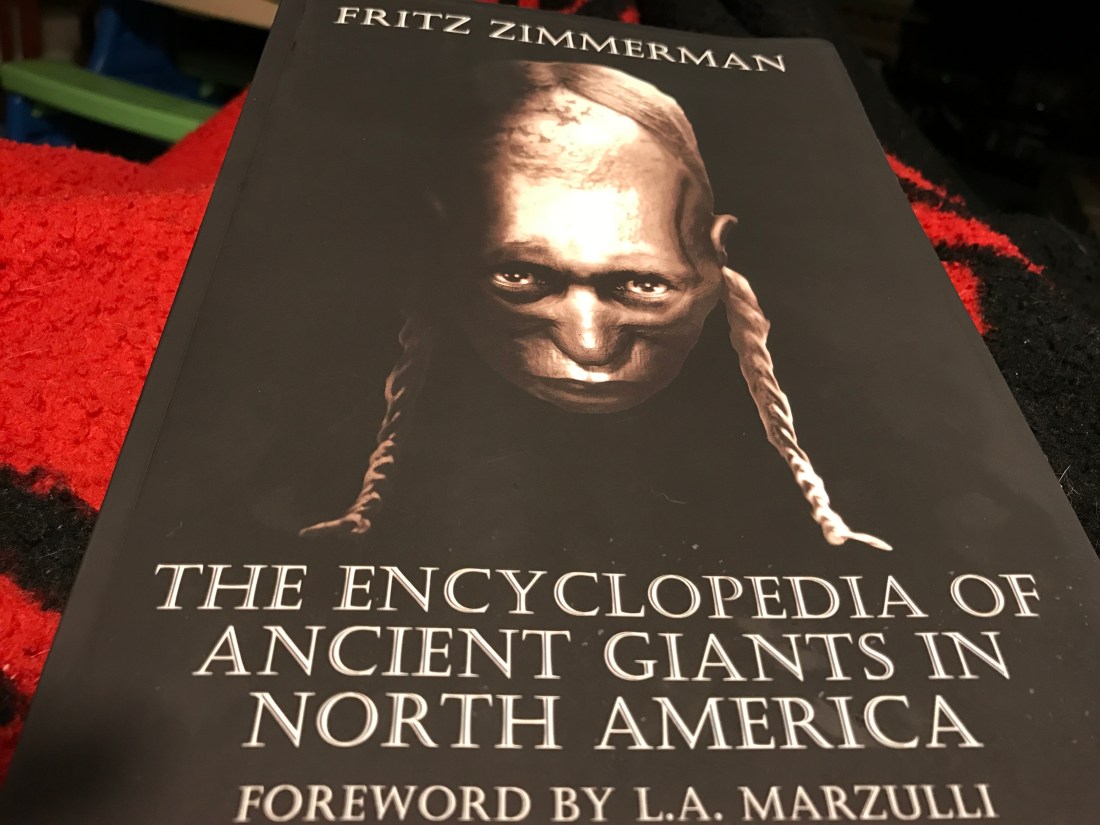 It was a rare treat to come home for the weekend on a Friday and to have a stack of really good books to read on a subject where I had a lot to learn. My oldest daughter and I had been talking about this problem recently while dining at a very nice restaurant in London—that books were getting harder to read for me as I get older because most of them seem so trite and unimaginative. I blame the publishing industry on that problem as they continue to put out the same contorted material to fit neatly into the turbulent social conditions of our day—instead of pushing against those limits to actually expand human culture. But I did manage to find some great books in the literary capital of the world which for me was like a drink of water after walking in the desert for three days. But the biggest jolt came while I was at the Stonehenge site off to the west of London. It wasn’t just the stone monuments that had my mind racing—it was the entire area and the way that the English Heritage group had built the new welcome center—which removed the tourists from Stonehenge and put them a mile away giving visitors an excellent overview of the entire countryside. And to me that countryside felt remarkably like my home in Ohio—so much so that as soon as I returned home I bought three books that I had been thinking about for quite a while—yet didn’t really have the time to give to them.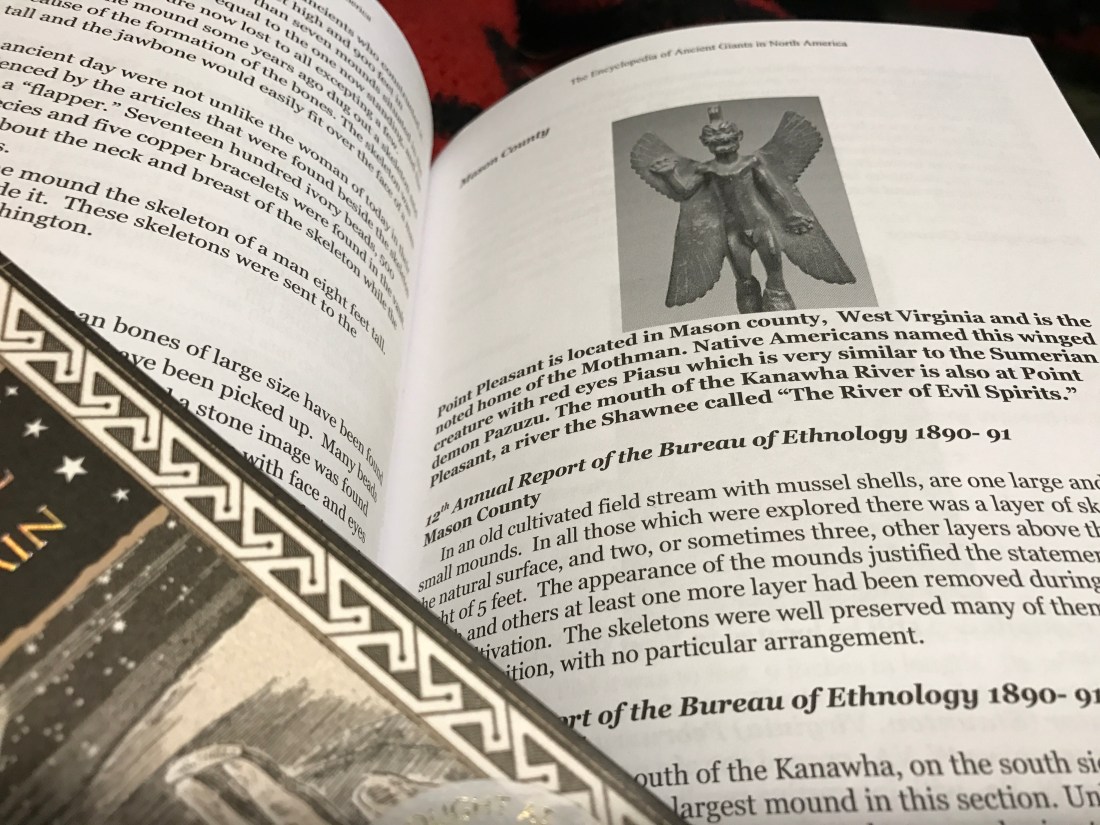
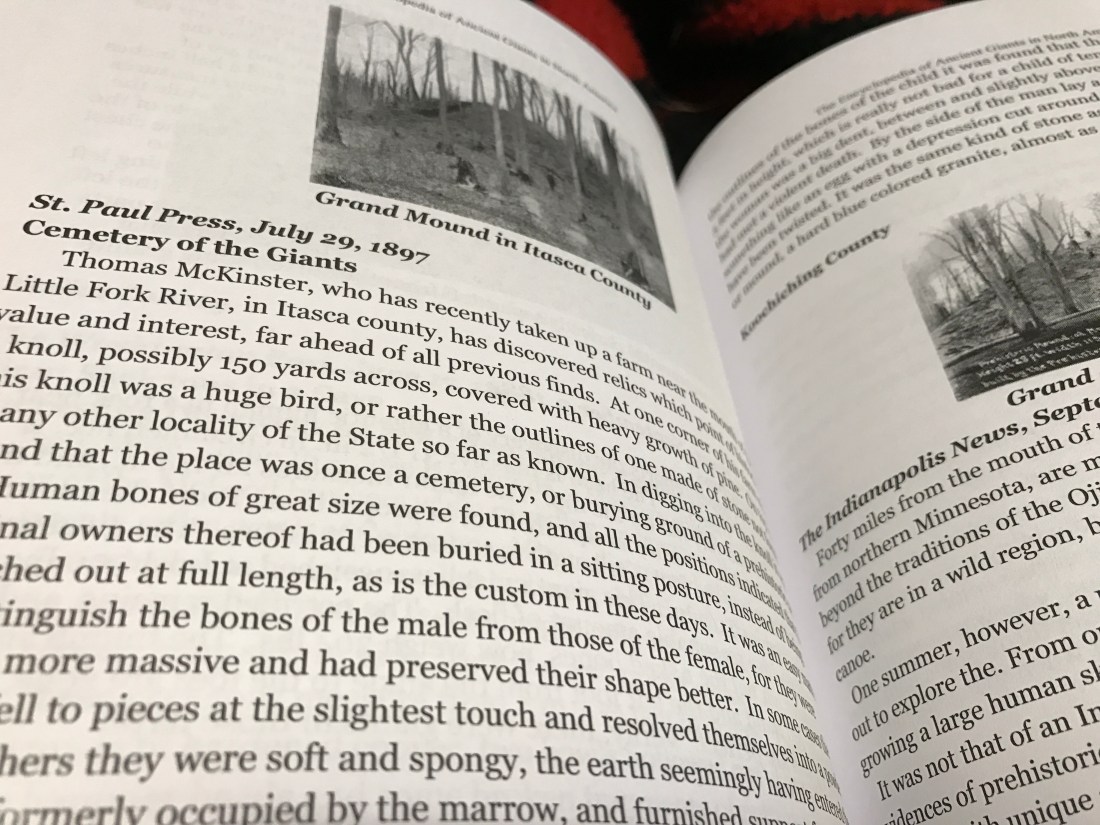 I think most stunning, and surprising for me was in seeing just how many mound sites with very precise earthworks existed, particularly in Portsmouth, Ohio, West Virginia and on up to Marietta. I’ve been to many of the sites, but seeing them all in the same book really puts a point on the issue and shows what a vast and complex culture we are dealing with here. That’s the reason I was so shocked at Stonehenge. I had wanted to go there for years but just didn’t have the time to get there. So when the opportunity arose, it was at the top of my list because it always felt like a key to something and the reports I read in my books as a youth were coming from very new assumptions. But I was clearly able to see that the culture at Stonehenge was precisely the same culture that had built Newark, Serpent Mound and the Miamisburg Mound. And on that note I was very shocked to learn that a mound the size of the Miamisburg Mound was literally right across the river from my house all covered up in trees near a road I’ve driven down likely a million times yet it’s always been hidden there in plain sight my entire life. It’s remarkable if it is placed into this larger story. By itself people just write it off as an old Indian relic, but taken as a portion of a very vast culture all over North America it begins to take on added significance.
