
Podcast Episode: No New Taxes Means No Relief: Lakota is at it again

Pip: The Overmanwarrior has a long memory and a short tolerance for school boards that treat a paid-off debt like a personal tragedy.

Mara: Rich Hoffman has one subject this episode: Lakota Local School District is back on the November ballot, and the case against it runs from enrollment projections to property-tax philosophy to who actually pays when apartments fill up.

Pip: Let’s start with the ballot itself and what the district is calling a non-increase.

No New Taxes, No Relief: Lakota Is Back on the Ballot

Mara: The core tension here is definitional — the district says this bond is not a tax increase, and the post argues that framing erases something real: the relief homeowners were about to receive.

Pip: The setup is precise. The Lakota Board voted on June 9, 2026, to place a bond before voters, and here is the sentence that does the most work: “You have been making a mortgage payment to the school district. The mortgage is almost paid off. Instead of celebrating the payoff, they want you to sign a new note for thirty-seven more years and call the signing a favor.”

Mara: The upshot is that a $223 million bond at 2.20 mills, timed to replace an expiring bond, keeps the bill identical — which means the cut you were owed never arrives. Collections begin in 2028, first due in 2029, right as the old debt dies.

Pip: And the $77-per-$100,000 headline is doing a lot of costume work. Liberty Township median sales run in the low-to-mid-500s. At $530,000, that’s roughly $408 a year — closer to a television than a rounding error, to borrow the post’s own framing.

Mara: The post also goes after the enrollment story the campaign depends on. District slides from September 2025 projected 19,074 students by 2033. But FutureThink, the consultants the district itself hired, delivered a March 2026 study showing 2025-26 enrollment at 16,913 and a ten-year path drifting toward the mid-sixteen thousands — not racing toward nineteen thousand.

Pip: So the spike that justifies a thirty-seven-year note may not be arriving on schedule.

Mara: There’s also the 2025 context. Last November’s package failed 60.81 percent to 39.19 percent — a $506.4 million bond plus a permanent-improvement levy. The post calls Phase One the same philosophy in a smaller first bite, and notes that Lakota’s general-fund operation already runs near $226 million annually for one suburban district.

Pip: The apartment argument ties it together: renters use the schools, one landlord sits on the tax duplicate, and the longtime homeowner gets the invoice. The post credits Liberty Township trustee Todd Minniear for understanding that math — his vote against adding apartments near Liberty Center is why Ford’s Garage exists instead of another stack of balconies.

Mara: The recommendation is direct: vote no on November 3. A failed bond means the old millage still expires, which is a tax cut in 2029. The post frames that outcome not as deprivation but as the reward the community already earned.

Pip: Which raises the question of what comes next — because the post is clear that a no vote is not the end of the conversation, just the beginning of a harder one about living inside $226 million.


Mara: The through-line is straightforward: a community that has been paying for decades is being asked to keep paying, and the argument for doing so depends on projections that the district’s own consultants don’t fully support.

Pip: November 3 is the answer, and then — if history holds — there will be another question in 2027. The ballot is apparently a perennial.

Rich Hoffman

More about me

Click Here to Protect Yourself with Second Call Defense https://www.secondcalldefense.org/?affiliate=20707

About the Author: Rich Hoffman

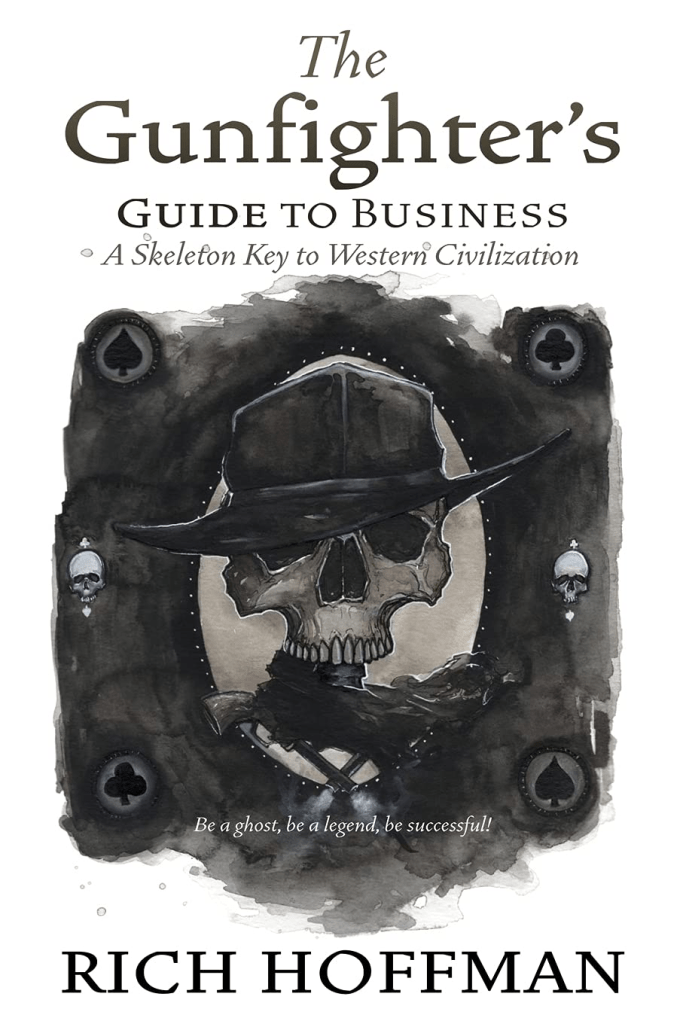
Rich Hoffman is an author, political consultant, and strategic advisor based in Cincinnati, Ohio, and the creator of The Politics of Heaven—a unique framework that connects biblical theology, ancient history, and modern power structures to explain how moral alignment and spiritual forces shape global events. Blending real-world political experience with deep research into archaeology, UFO phenomena, and suppressed historical narratives, Hoffman offers compelling commentary on topics ranging from ancient civilizations and the Dead Sea Scrolls to modern populist movements, paranormal continuity, and leadership strategy in chaotic environments. As the author of The Gunfighter’s Guide to Business and the forthcoming Politics of Heaven, he brings a grounded yet provocative voice to media discussions, supported by firsthand experiences and a cross-disciplinary approach that bridges science, history, and theology. For interviews, speaking engagements, or expert analysis, visit richhoffmanbooks.com or contact directly via phone at 513-307-5815 or email at rhoffman@richhoffmanbooks.com.  If you’ve seen the movie, Disclosure Day and want to talk about it and the implications of Presidnet Trump’s UAP disclosures, let me know and we can bring some color to your coverage. https://richhoffmanbooks.com/media-inquiries-broadcast-topics-and-contact-info/?frame-nonce=ad51e7ecba I do have a firsthand UFO encounter to discuss.
Why We Should Eat Unleavened Bread: Keeping corruption out of society starting with food

It’s a good practice to have some mechanism in religion to remind you of important things, and as ridiculous as many might think, that eating leavened bread as the Jewish people have rituals against, remember one crucial thing, the descendants of the Hebrew people, of the inherited land of Israel have been around longer as a group of people on planet earth than any other groups.  They have been beaten up, killed, and spread all over the planet in displacement, but as a people, from one specific region of the world, they have remained so longer than anybody else.  So, their rituals have worked for them in many healthy ways, even if eating or not eating puffy bread is directly attributed.  In general, having some basic rules to live by from whatever religion you might happen to be is a good practice.  Not for the direct mechanisms but in that they get your mind focused on the real important things.  As it is stated often in the Bible, in consideration of many Jewish holidays, leavened bread or unleavened bread is an important ritual to invoke in their society an essential distinction between a healthy and unhealthy society.  This is certainly the case with the Jewish people and the Christian people who emerged from the kind of thinking that was quite in rebellion at the time, against the tides of the world which are playing out dramatically on the world stage today.  To surrender to the forces of nature and appeal to the sensibilities of corrupt gods and demons who plague our subconscious.  Or to rebel against those forces with deliberate laws, such as the Ten Commandments, the presentation of sexual organs, such as circumcision, and eating food at certain times of the day or year. 

Over time, in many societies, leaven came to signify corruption.  So, the feasts of unleavened bread were designed to remind people in the covenant community that they were supposed to purge sin as they celebrated redemption.  By the first century AD, the Passover and Unleavened Bread feasts were celebrated simultaneously, and their sustainability has helped the Jewish people stay organized as a community around the globe.  The actual health benefits of eating bread that has a rising agent in it or not are less the point than the psychological benefit from maintaining personal conduct with such commitments, which are obvious anywhere in the world where they are practiced.  When people from any place follow firm rules of conduct, they tend to be a much healthier society.  The question is not essential about whether God cares if we eat leavened or unleavened bread as much as we care about how we conduct ourselves and why we do what we do.  Making a purposeful decision not to do something or whether to do something has a direct connection to our success or failure as a species.  And even down to the kind of bread we eat, the proof has been observed over time that these Jewish rituals and overall, Christian views of the world have worked well against the heathen behavior of the pagan sense of sacrifice that permeates cultures that rebel against such rules and practices.  That is why we see ritual bread in religion as a little wafer, flat, and featureless consumed instead of a puffy sampling of bread.  The rising agent is supposed to represent our sense of ego.  The way to avoid corruption is to avoid applying lifting agents to the food we consume and to remind ourselves to function without such cosmetic utterances. 

Of course, it didn’t work very well in removing corruption from Jewish society; there was mass corruption from their political leaders and people in general over their long history, just as in any organization.  But the rituals at least force them to think about such things as opposed to hedonistic societies that never explore the problems that come from corruption.  A healthy culture that at least recognizes the dangerous nature of crime tends to function better than a society that ignores it, which is the entire point of unleavened bread.  Suppose there are a few times a year when an organization thinks about whether or not corruption is acceptable. In that case, it tends to impact a portion of civilization that may not fall to such temptations, and they might avoid some act of corruption when it is needed most.  And good moral conduct might save the day when other societies have no such restrictions.  Over time, the survivability of the Jewish people, no matter what anybody might think about their concept of good or life in general, can be said to have a world outlook that contributes to a prosperous society.  It may not stop evil from raiding and seeking to destroy them.  But it might keep them from killing themselves by having a way to remind their culture not to behave by embracing corruption, a lofty sense of self that can only be filled by the appeasement of others, which ultimately takes control of personal management from themselves and places it toward group consensus.  Corruption starts by seeking rising agents into your ego, a compliment from one person, or a gift from another, something that might sway you from making the best decision without inflationary considerations to alter your judgment. 

Once you can say no to unleavened bread, you can also start saying no to those who might want to bribe you or whisper sweet nothings to you to pull you away from good judgment and into self-governing, which is the key to American civilization.  In order to have self-government a person has to be able to do so, without outside forces blowing temptations that might alter the course of the individual.  The practice of not eating certain foods at certain times to keep on the top of their minds the dangers of corruption in society, in general, is an important, empowering mechanism to resist the temptations of darkness and social collapse. A community without an excellent governing philosophy will not stay a society for long, and that is certainly the mode of attack that we see being applied to America presently from lots of outside forces who want to exploit temptation for the benefit of social destruction.  Many of our current politicians, from school boards to the presidents of countries would do well to eat unleavened bread on purpose to remind themselves of the practice of avoiding corruption in their lives.  Such a position starts even with the kind of food you eat.  Once you’ve consciously made such a decision, then it becomes easier to resist that bribe from a co-worker, a donor, or a member of the media that throws enticements toward their egos to inflate them toward corruption and the appeasement of such forces at the expense of morality.  If such things could be utilized for the productive health of society in general, then we could say that things are good and value is at the core of what we do, from eating to management.  When we make purity a priority, we tend to get much better results than when such things are not recognized.  In such a fashion, any society that goes to such an extent as to eat unleavened bread to remind themselves not to fall to corruption in their lives is serious about maintaining themselves well into the future, which is where most people hope to go, but because of their personal decisions, find they too often, can’t. 

Rich Hoffman