Rewriting the History Books: The giant prehistoric mound at Dover Castle

Some may think that I’m changing direction a bit too much for their liking as I move more away from the immediate topic of politics and local matters, and toward this global tapestry of a historical conspiracy as to the past and future of the human race—but fret not—there is a point to it all.  The written word is a very powerful thing, I’d argue more powerful than anything from a mind that can utilize it—because it has staying power—and I’ve had plenty of stay in cyberspace from the highest levels of our government to the media that covers it.  Currently, the machine of that power is set forth and doing what I want it to do so now for me it’s time to turn my attention to another issue I care quite a lot about, human migration patterns over time and to reshape the theories of diffusion that were molded under the umbrella of religions to gain a better understanding of where we’ve been so we can cast a good light on where we are really all going.

For years I have occasionally sprinkled in the occasional article about these matters, and even after nearly a decade of writing, they are the ones my readers come back to most.  And I am proud to have at least put some on the path to more discovery to hit the field and ask hard questions by showing for the first time something they didn’t know before—which is the main purpose for the voluminous writing that I do.  So with that in mind, this little article before you is kind of bench mark for me—a journey that started a long time ago and is now coming to a fine point—and it begins with a recent journey I had to Dover Castle in England.

I had always wanted to see the place which rests at the bottom of southeastern England looking across the choppy waters of the English Channel at France which was just over the horizon of the earth but close enough to feel.  Dover Castle is known militarily as the key to England and literally started its modern reign as a gate to that ancient land immediately after the Battle of Hastings by William the Conqueror in 1066 AD.  It was used in that capacity until 1958 and it served well the English people during World War II as a communications bunker hidden away under the vast castle complex.  It was a big place and it was built on a very tall mound which overlooked the Channel giving it excellent views across one of the narrowest points along the waterway between France and England.  But the Romans had already been there of course and that was my understanding before visiting—because they had an old lighthouse built there to show the way to their empire as they migrated north in and around 43 AD.  For people in the States all this history is all very old, but to my eyes, it’s all still recent history so I wasn’t that impressed other than to consider how much work those cultures had conducted to even build the place to begin with.   But as we parked the car and I started looking around things began to change for me starting with my introduction to the English Heritage people who saw my hat and my pockets filled with maps and notes and gave me a hard sale to join their group—which I did.  I didn’t know anything about them at the time but I quickly learned that these people were all over England and that they had done much for the field of archaeology over many years—and they had great literature to give out, and had published many really good books which were accelerating my discoveries in an organized fashion.  And that’s when the bomb hit me as I stood in line getting my membership pass to the English Heritage—which I now cherish—when I learned that the Romans had built their lighthouse on top of a massive earthwork which was reported to be Iron Age in its origins—which put it into the times well before Christ.  That meant that the mound we were standing on, that the Romans built upon and William the Conqueror had fortified—and Henry the II used as a political gateway to the rest of Europe before official visits to London by incoming royalty, had likely already been there for thousands of years prior by a long gone and mysterious people erased from history.  And that was the story I was most interested in.

Being at the site put everything in context for me—a lot can be accomplished by studying all the work that explorers and scientists embark on—and most of what I know comes from those kind of sources.  But I often need to physically stand someplace to get my bearings on what I read—once I do things open up for me rapidly and I can manage to sift through a lot of information quickly.  At Dover Castle I could physically see many of the layers of history all stacked on top of each other very neatly, from the early prehistoric people who likely were interacting with the builders of Stonehenge off to the west, to the Romans, Normans, and World War II periods.  People from an ancient period predating the Greeks had decided that this particular tactical spot was a good place for an early fort so the evidence that we were dealing with a prehistoric people with naval capability was quite obvious to me.

But the item of interest really was the need to build a castle there to begin with because the necessity hasn’t changed over the many years to the reasons we do things now—our political needs are built on the same essential philosophies as our English past gave us as a heritage—so the reasons Henry II used this castle are the same reasons we do things today—and that’s important to understand. Henry II was the same king who killed Thomas Beckett at the Canterbury Cathedral to the north.  He virtually had his French queen Eleanor imprisoned at Old Sarum to the west for over 16 years as he conducted business with foreign powers using the vast castle complex at Dover to impress upon visitors the power of England.  What was ironic to me was that the hill fort complex that had been there for several thousands of years before Norman occupation was nearly identical to Old Sarum.  The Normans recognized in their day the importance strategically of those old hillforts and they built their generation’s fortifications on them for obvious reasons.  But what was stunning was that some ancient people well before had identified those same necessities and had went to so much trouble to fortify themselves against invasion—which of course means that the ancient landscape was much more nibble around the world than we previously have given them credit for.  Nobody in their right mind goes to so much trouble to dig up so much earth with tools made of bones unless they had a good reason to do so and the amount of earth moved at Old Sarum and Dover Castle was extraordinary.

The castle itself was the obvious star of the show and it was well-preserved and interesting to look at.  For many that was the purpose of visiting Dover Castle.  The English Heritage people had done a fantastic job at the site making everything very user-friendly, there were nice restrooms—which was a luxury in England—plenty of gift shops and places to get food which is always important to tourist activities—which then help fund scientific research.  Again, I couldn’t help but think that we needed better organizations like the English Heritage in the States doing what they were doing in England.  I was very impressed with those guys and continue to be.  We have arguably better archaeological sites in the United States than they have in England, but they are not all protected for tourism and scientific discovery the way that the English Heritage people have done in England resulting in a lot of very valuable published information.  In the US we count on mavericks and other enthusiasts to do all the leg work, but it has put us dreadfully behind England in this regard. But I am happy that the English Heritage people are doing what they are, because obviously we have a culture on the English landscape that was clearly much more mature as a group of humans that was interacting with Europe, North America, and even the Middle East—perhaps even Asia at a time nobody thought possible.  In a lot of ways we’ll never know what’s under Dover Castle archaeologically because so much newer culture was built on top of it—and that is the same case at Old Sarum.  But the presence of all these mounds formed just like they are in my home state of Ohio told me everything I needed to know.

All this is important because in modern politics a lot is made about the “Native American” that is supposed to freeze us all in guilt for our westward expansion—and essentially the birth of the nation of America. We are supposed to believe that America was formed at the expense of the natives who lived in North America before Christopher Columbus arrived—and that now in 2017 we must pay retribution for those sins against those people halting our current economic development and turning America more toward European socialism as a penance.  That is the argument of the political left—the modern progressives.  And none of that is true.  The evidence is quite explosive.  Well before the tribes we ran into during the French and Indian Wars, the Revolution, then into westward expansion, there was an advanced group of people who predated the North American Indian who came from Europe and were active trading partners.  They had seafaring ability that nobody has considered possible until the crossing of the Atlantic by Columbus.  So we must look at the evidence and rethink all this because it has a bearing on our current politics to understand our real heritage and not some made up falsehood that was perpetuated to preserve the Christian heritage of the most modern travelers who wanted to make their mark and keep it that way for revisionists to utilize for their current objectives in the field of politics.  There is no such thing as a “Native American” unless you want to go back to the Neolithic people who were using advanced mathematics to plot out the positions of the sun and moon and were obviously part of a vast empire that extended from England, central Europe, the Mediterranean, to Central Mexico, South America and even Asia.  If we’re talking about “natives” we have to include them, but we currently don’t because it would force us to rewrite our history books—which they are open to in England at least.  But in America there is much more at stake.  An entire political movement has been built on the exploitation of Native American people and if they lose that security blanket of social leverage, they lose their entire political movement—which is why I have made this a priority for observation.  And under that definition dear reader my motivations might become a bit clearer and why I was so impressed to visit the site of Dover Castle and literally discover what resided beneath it.  What was there was far more impressive than the massive structure that stared out to the open English Channel.  And that is saying a lot.

Additionally, for those who run museums in America and consider ways of preserving our history best have a look at the website to Dover Castle by the English Heritage people and take some notes.  We should be doing things like this for Serpent Mound, Fort Ancient, Newark, Cahokia and many other places.  There is money to be made, and a whole lot of modern archaeological understanding waiting yet to be uncovered.  And a lot of history books that need to be completely rewritten.

http://www.english-heritage.org.uk/visit/places/dover-castle/

Rich Hoffman

 CLIFFHANGER RESEARCH & DEVELOPMENT

Sign up for Second Call Defense here:  http://www.secondcalldefense.org/?affiliate=20707  Use my name to get added benefits.

cropped-img_0202.jpg

‘The Crystal Skull of Canterbury’: A new project born from a lot of passion

I have a new book in development called The Crystal Skull of Canterbury and am looking for a good team for its publication.  One thing I have learned after doing this a few times before is that even the best written pieces of work need a good team to get it to readers.  This book is a little different for me, I came up with the idea during a recent visit to the locations featured in the novel—it’s more of a Bridges of Madison County story except more contemporary and featuring an English countryside because honestly they like to read in that country so why not set the story there—for the target demographic.  I’m a business guy, so I think in those types of terms as a first consideration.  This is just a starting point and the story is as follows:

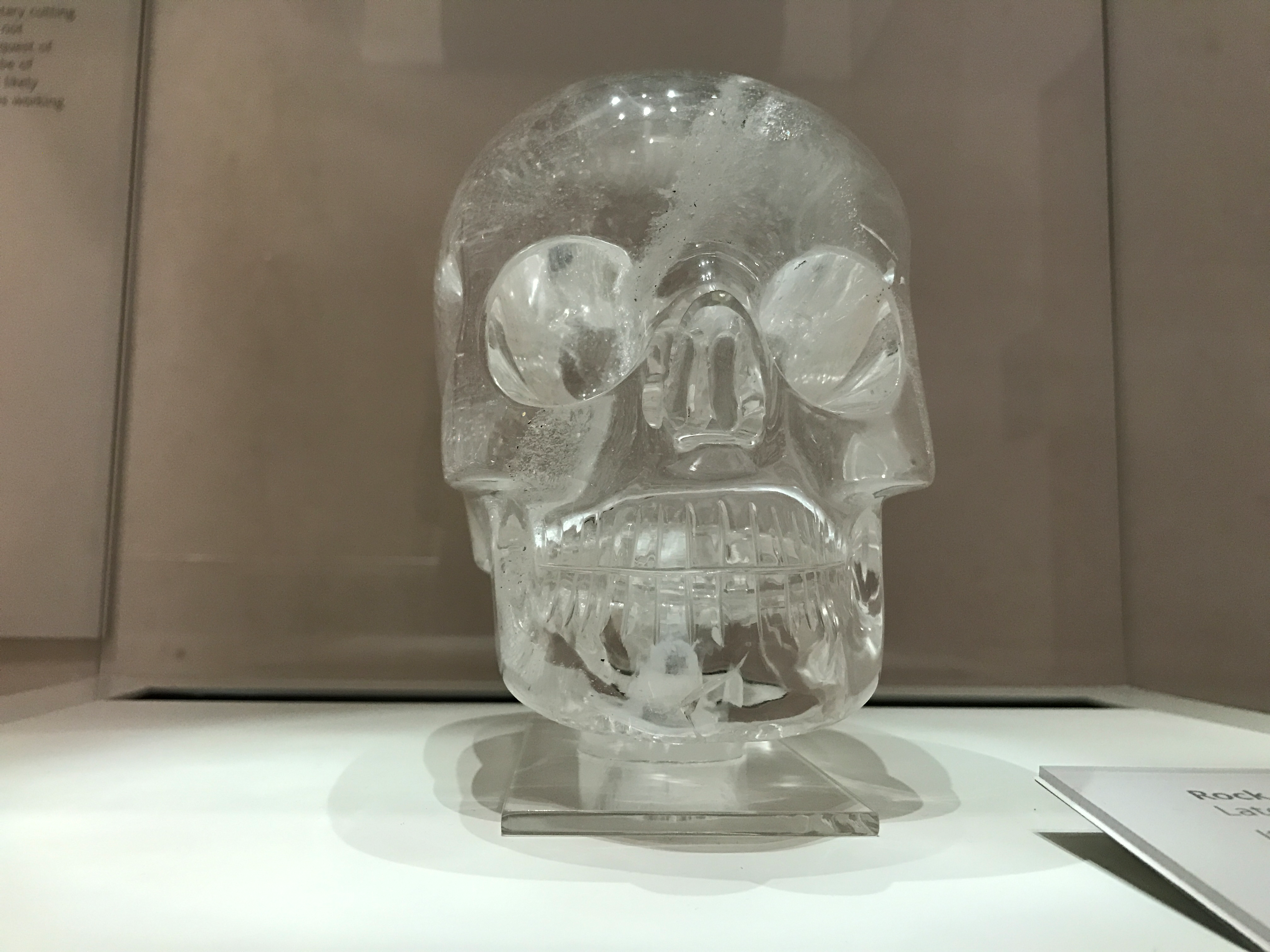
A NASA contractor whose specialty is in preparing mankind for the long-preserved evidence that will be discovered on Mars ahead of a 2030 mission that life much longer than earth’s existed on the Red Planet, is challenged by a former curator of the British Museum to defend claims made by the contractor regarding the authenticity of the popular Crystal Skull exhibit which attracts so many visitors each year. Dorrington Weingarten sees the opportunity as positive publicity for the museum in London, but on a deeper level resents NASA’s Ian Davenport’s theories on the origin of mankind and the revolutionary following that he has been brewing in the United States which stands in stark contrast to the scientific positions established by England’s heritage.

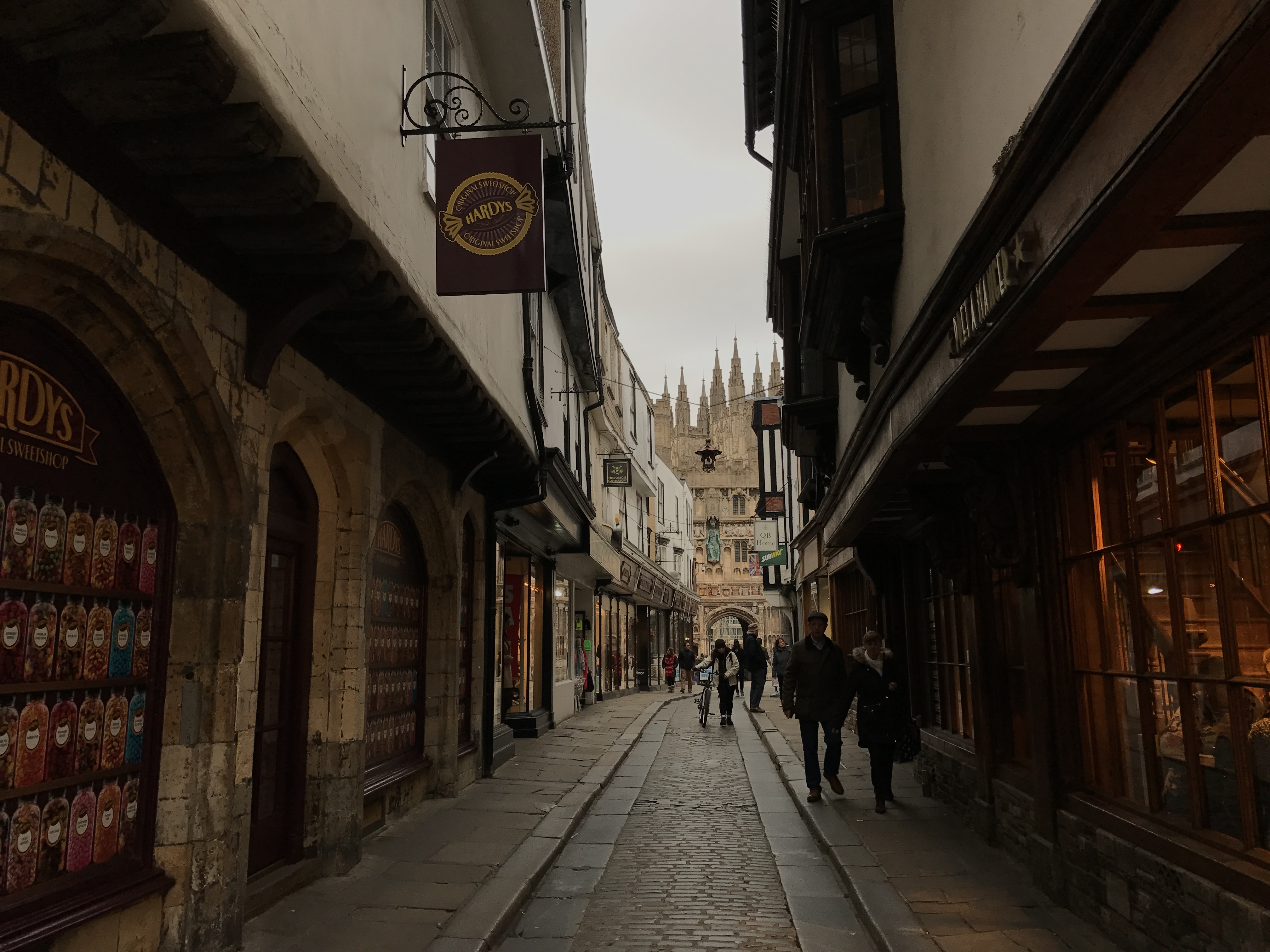
Ian accepts the challenge and during his travels to London and eventually into the ancient streets of Canterbury where a romance brews between he and the curator’s wife–he isn’t just an eccentrically brilliant scientist—he’s determined to crack old Dorrington for reasons that confound everyone whom he refers to as the Crystal Skull of Canterbury. He sees in Dorrington Weingarten the modern embodiment of the wounded Grail King from King Author’s legends and he has set in mind to solve a riddle that has nearly destroyed Dorrington’s wife now madly in love with Ian.  What results is a proposed answer to T.S. Eliot’s The Waste Land and Wofram Von Exchenbach’s Parzival contained within the elusive life of a man who did everything right his whole life—except for the things that really matter.  A man drowning by his own success, who had everything but lost it through the years without even knowing it.  But can he be saved, can the Crystal Skull of Canterbury be cracked?  It is a job that may be out of reach for the multitalented Ian Davenport who for the first time in his life may have found something he cannot do as an unconventional romance soon engulfs him as well with emotions new to him. For all his life Ian had avoided life in the Waste Land, but now a siren song beacons him from another man’s wife and the lure to surrender to it is strong—too strong. 

I’d like to keep the page count down although it’s a story with many twists and turns—and emotional complexity. I’m targeting women over 40 with this work first in England then in the United States.  It additionally attaches itself to the modern paradox of the many theories coming from the Ancient Aliens viewer base popularly shown on The History Channel and embraces new scientific concerns relevant to the next decade giving this story staying power as a mass market paperback.  The primary purpose for me was a promise I made to a nice old lady in Ashford, England who was kind enough to give me a very nice meal while my family was in route to Paris.  She asked me what I liked most about the English people, I told her it was that they still liked to read and bought lots of books.  I told her I planned to help show more Americans why they needed to become more literate.  She then pressed me on what I was planning to do specifically about it.  I thought for a moment because I assumed we were just making small talk, then I told her that I’d write a novel that was so good that people would want to read it, and bookstores would see an uptick in sales and therefore hopefully inspire others to do the same so that the industry as a whole could become stronger—in a business sense, and as a general philosophy.  She said OK, we sipped some tea, and  here I am doing it.  I always keep my promises.

Rich Hoffman

 CLIFFHANGER RESEARCH & DEVELOPMENT

Sign up for Second Call Defense here:  http://www.secondcalldefense.org/?affiliate=20707  Use my name to get added benefits.
cropped-img_0202.jpg

Robert Cushman in the Westgate Tower: Where America was born–and the reason for separation of church and state

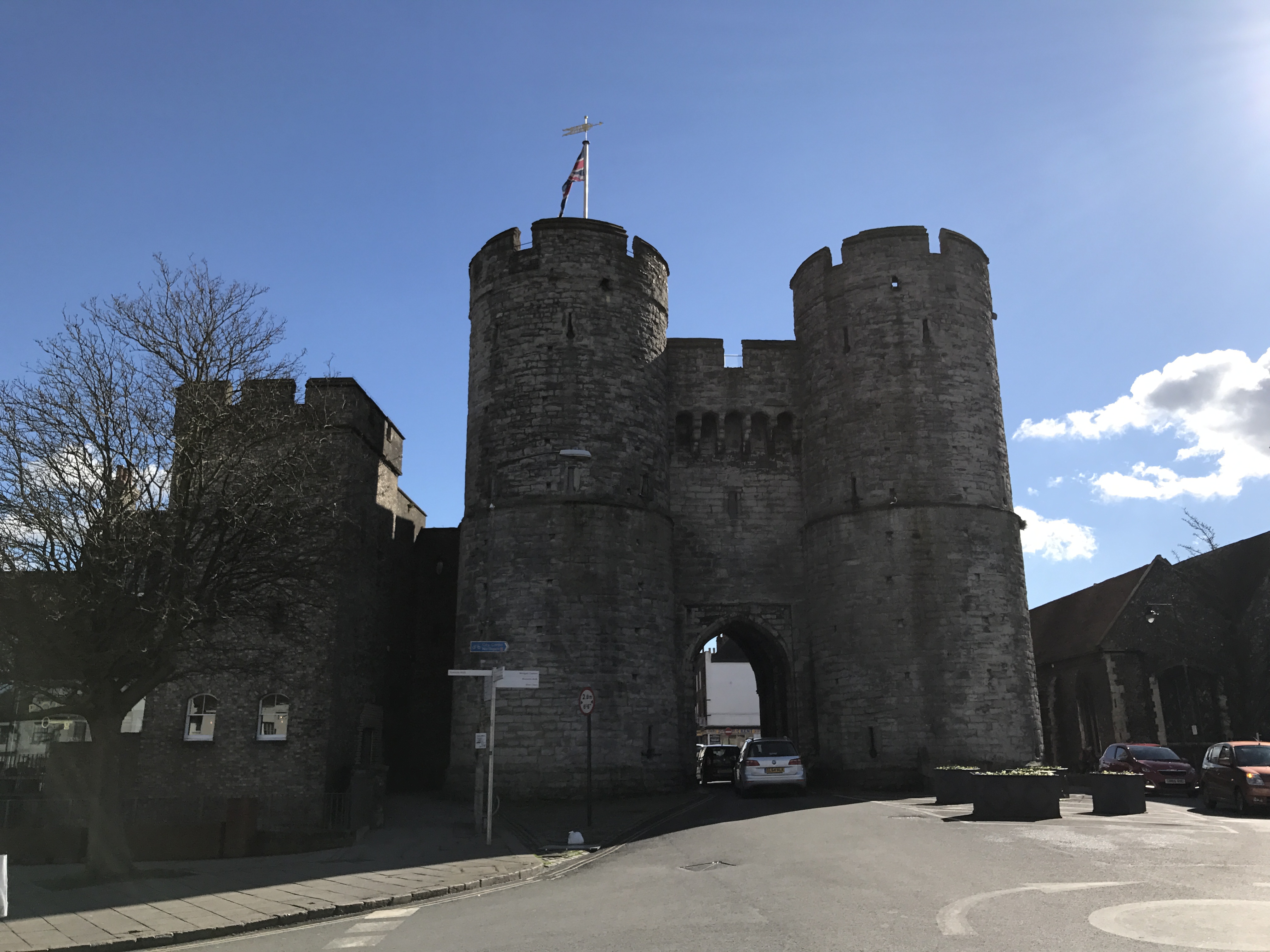
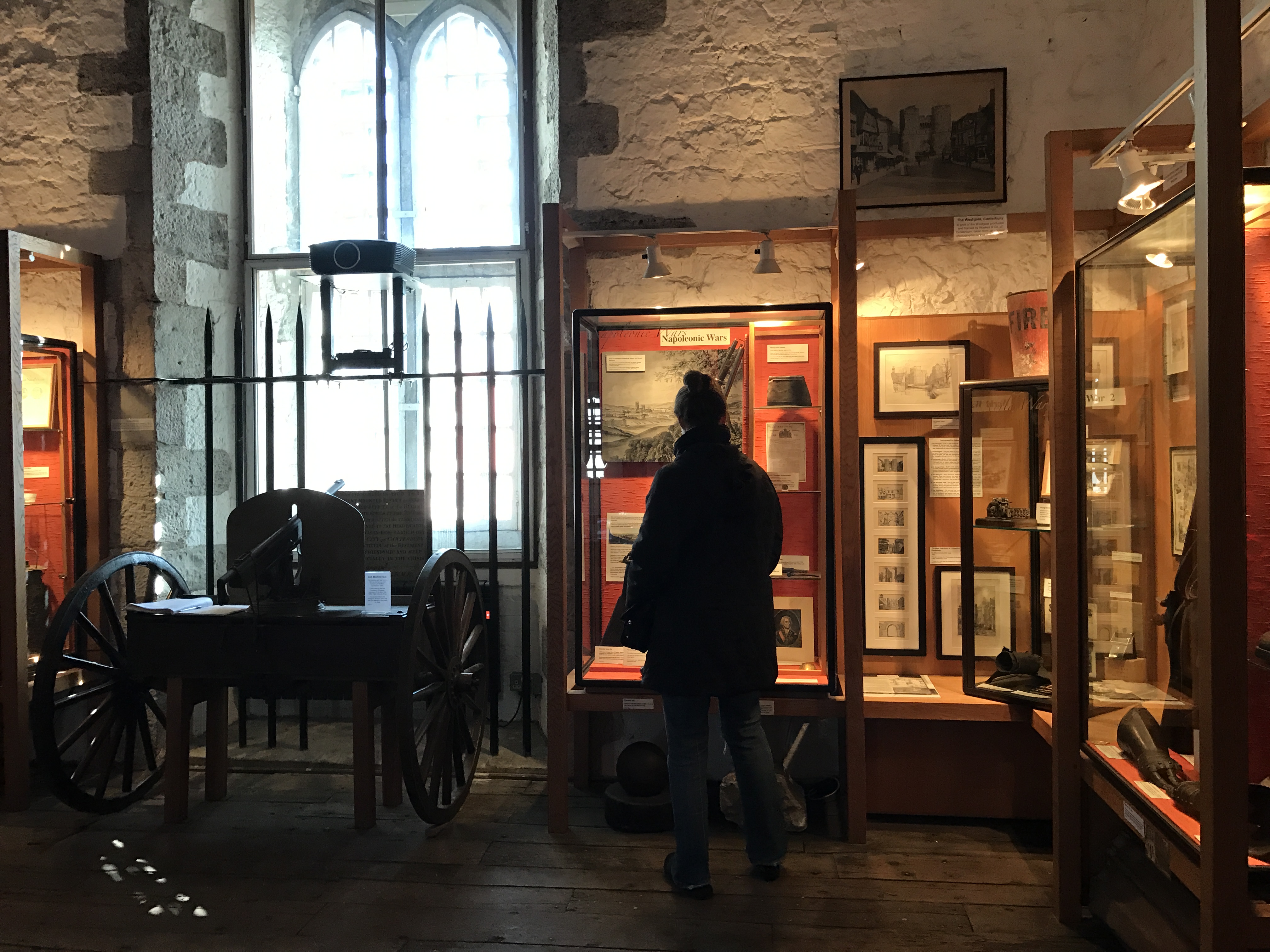
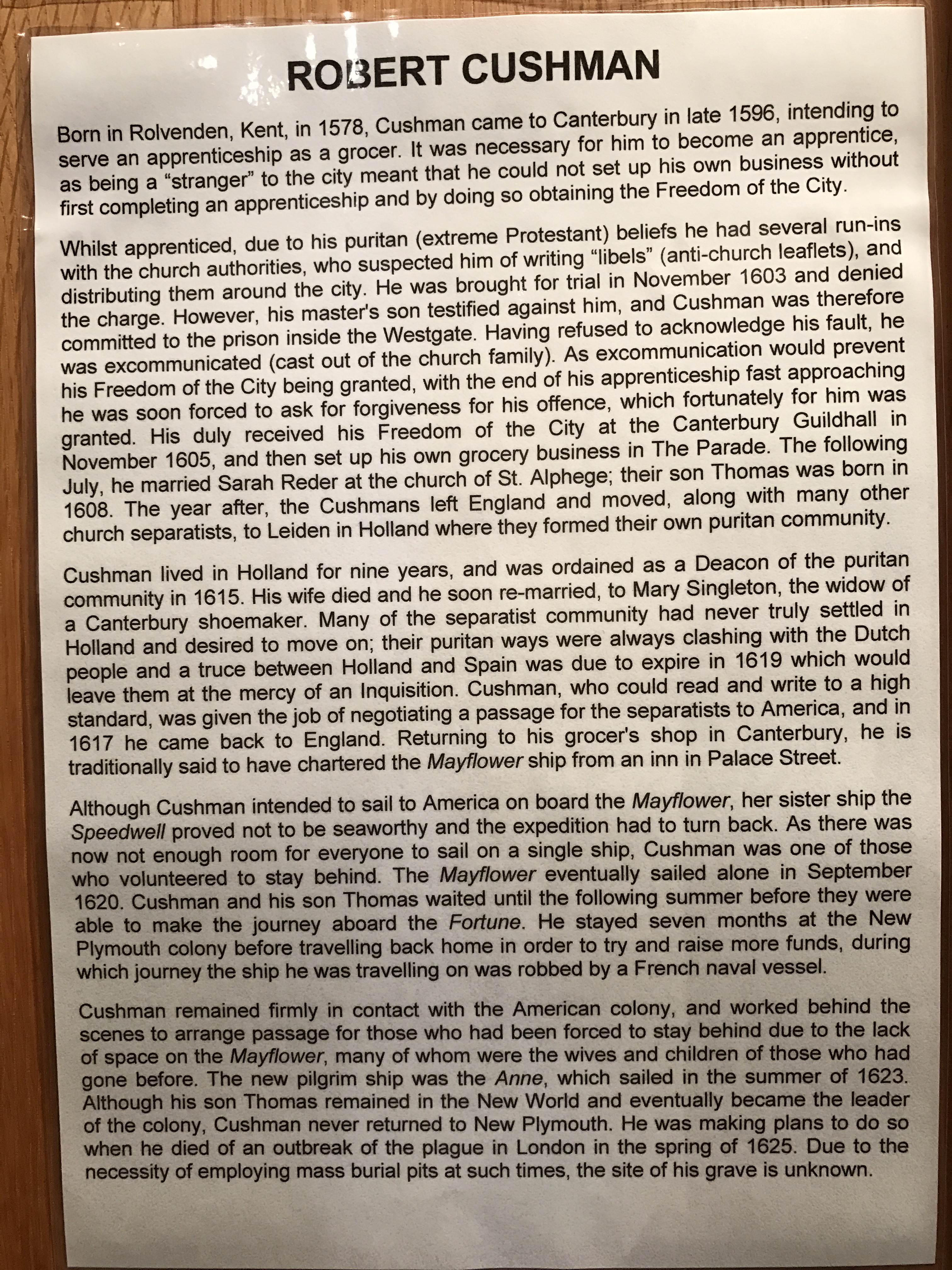
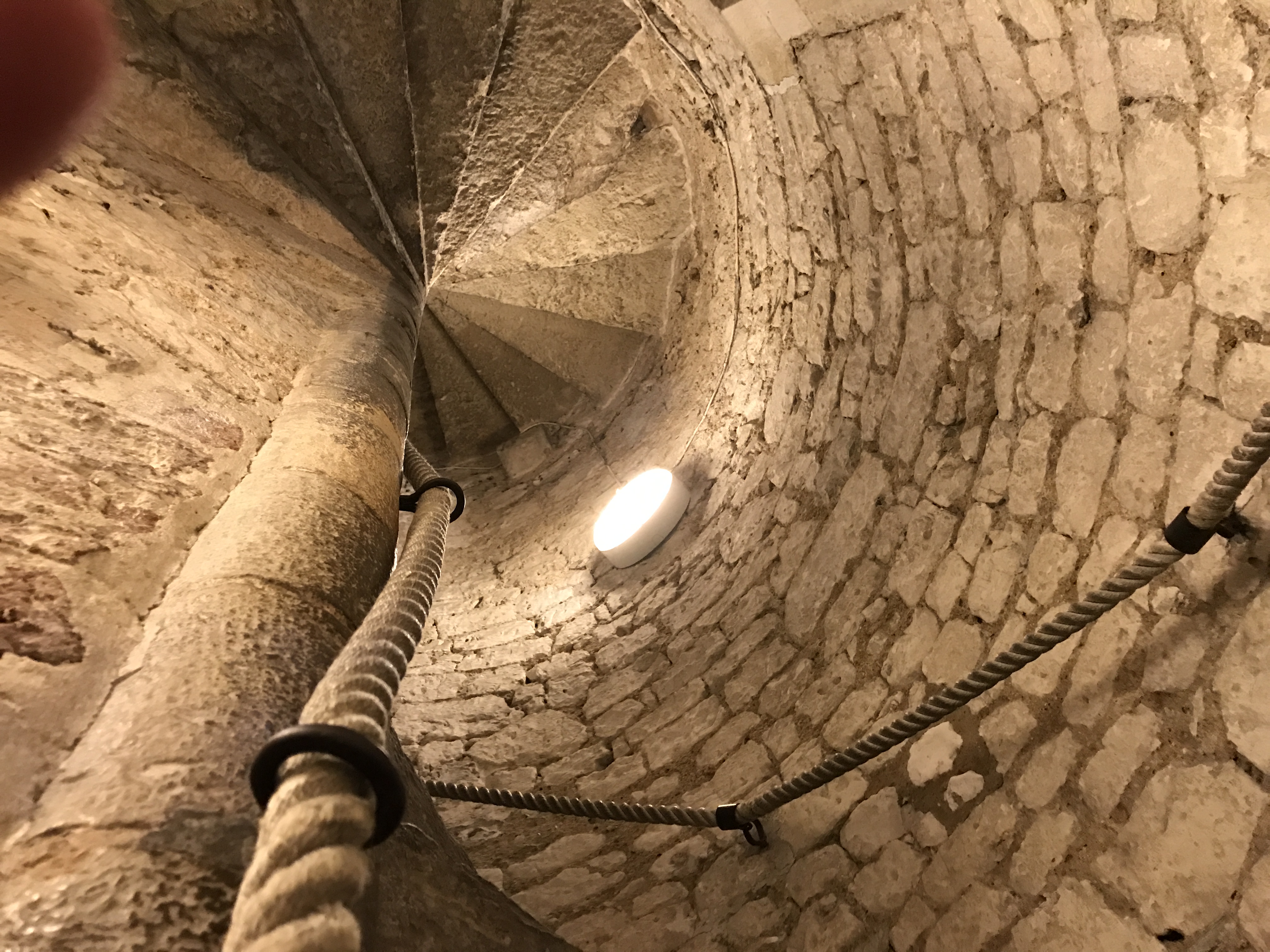
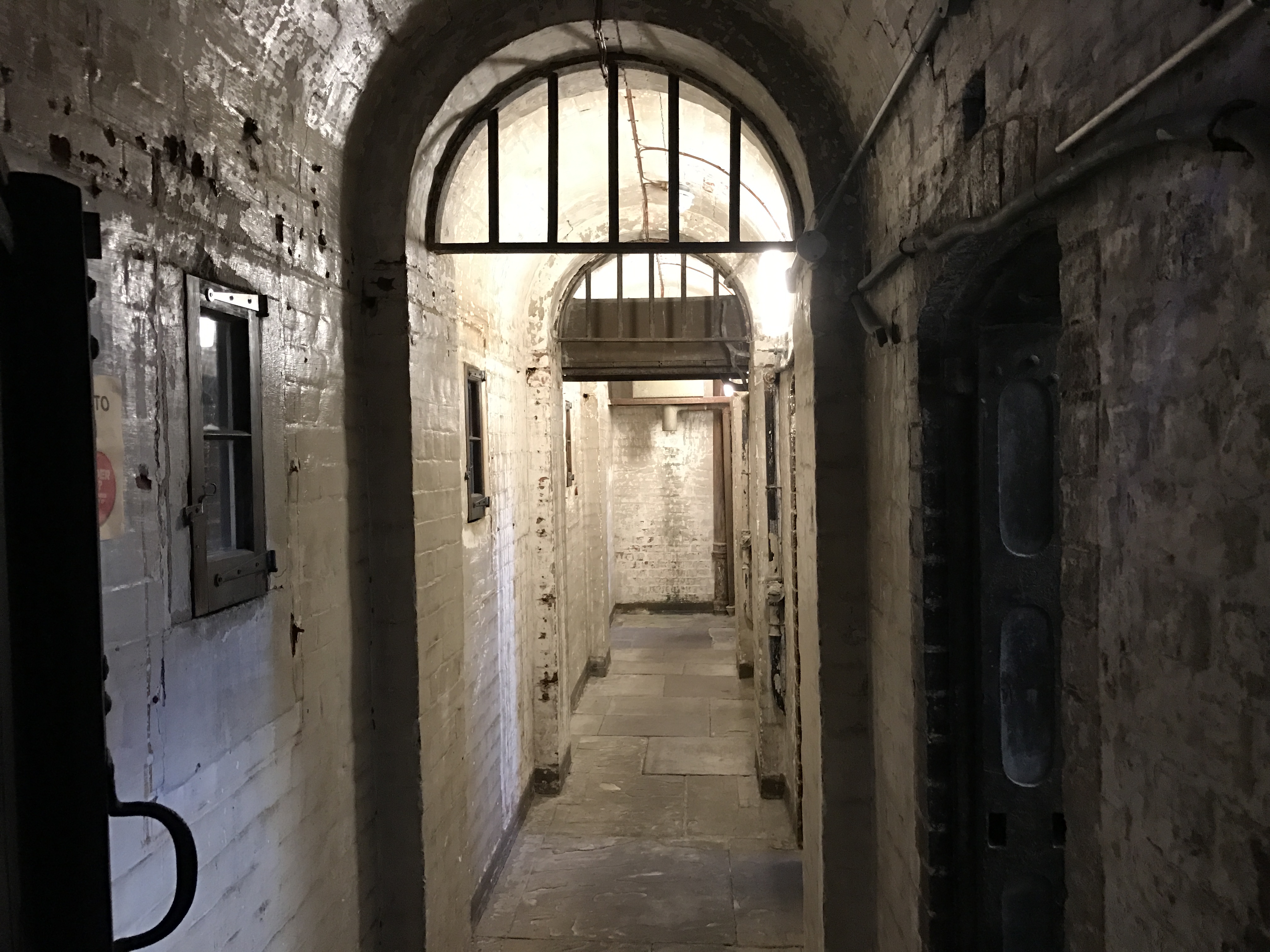
img_4159For my wife and I it was a bit of an overwhelming moment, only because we both love history and have a strong reverence for the Holiday of Thanksgiving in the United States. I had known that Robert Cushman who originally commissioned the Mayflower for the famous voyage to North America which of course unleashed the famous Thanksgiving Holiday that we celebrate each year unlocking the Christmas Season, but I didn’t think I’d ever get close to sitting in the cell where he was held imprisoned by the Church for spreading protestant pamphlets.  Yet, while touring the city streets of the ancient city of Canterbury, England at the Westgate Towers I found myself in a room exhibiting the shackles that were used for holding prisoners there and sure enough on the wall was the information talking about Cushman’s ordeal that led to the start of the Mayflower voyage in that very room.

img_4175A lot of people these days don’t really understand the necessity, and context of the argument between American separation of church and state because they have been free all their lives and have a shallow knowledge of history. But for Cushman who’s only ambition in life was to be a grocer on the streets of his childhood home in Kent he was a very passionate religious person who found himself in the crosshairs of the Church and their desire to be the primary vehicle through sacrament to Heaven.  Cushman naturally resented that control and wanted a more passionate relationship with God directly.  So the Church had him thrown in jail and as he sat in the cell at Westgate his young mind set him on a life course that would usher in the first pilgrims into the New World and start the concept of America.img_4161

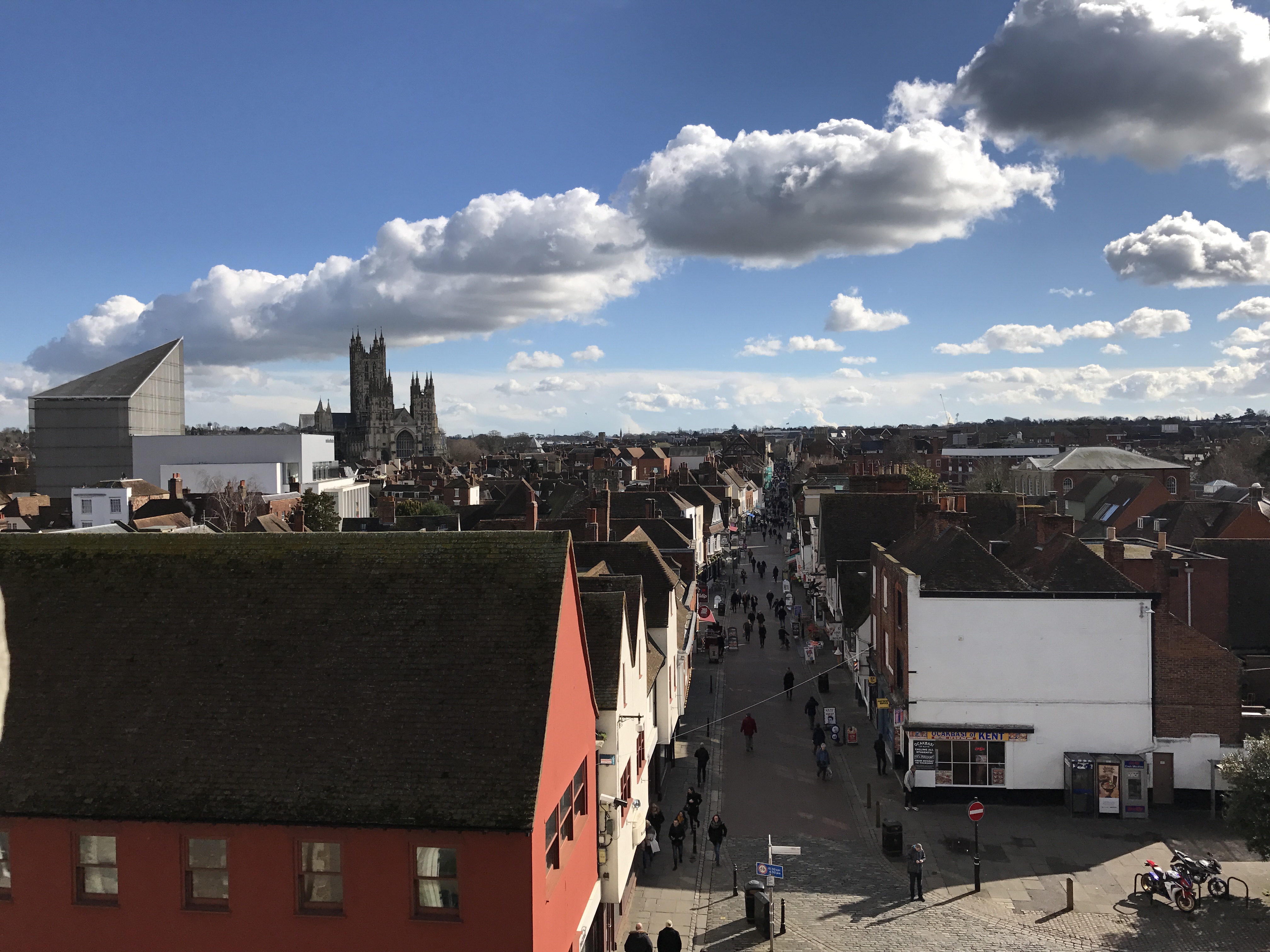
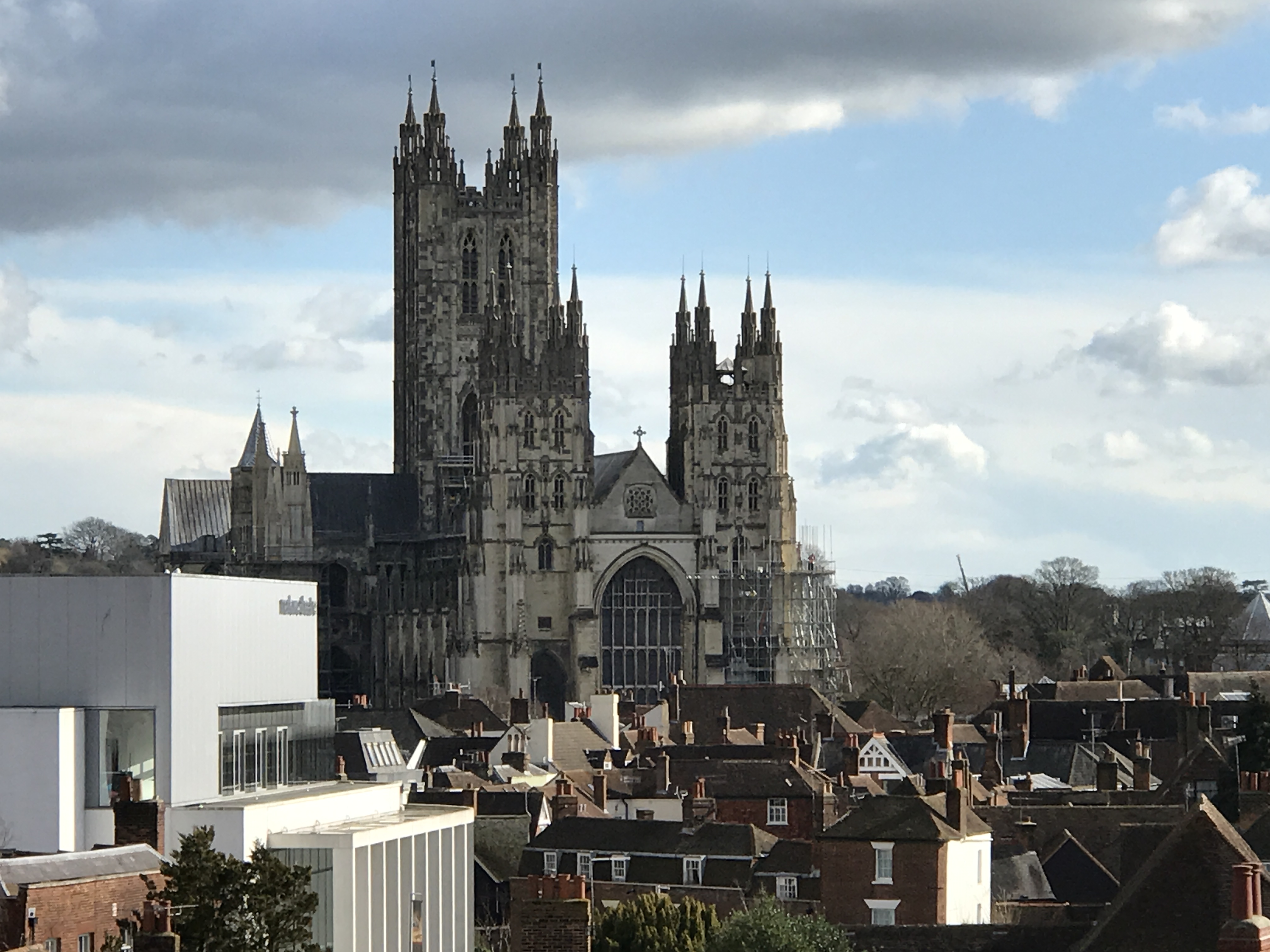
In a lot of ways, the birth of the United States happened right in that spot in Westgate so it was a little overwhelming. The role that Canterbury played was phenomenal—it was a town that featured at least two major earthwork mounds that are credited to the pre-Roman period, but I personally think are even thousands of years older—likely the same type of people who inhabited the Stonehenge area over 100 miles to the west.  Both St Augustine’s Abby and a gigantic mound the size of the Miamisburg Mound in Ohio sit among the ruins of the great Roman city that set Canterbury on its start.  But then the Romans pulled out a few 400 years later and in came the Anglo Saxons from Germany and elsewhere.  But William the Conqueror from the lineage of the Viking Rollo invaded from France and dominated the countryside. When he came to Canterbury the people surrendered without a fight and thus the great Cathedrals began, first at St Augustine’s Abby, then the great Canterbury Cathedral and the region quickly became known as the Church of all England.  Fast forward another 500 years or so and Robert Cushman was wanting to apprentice as a grocer but as a young passionate man critical of the Church’s role in the issuing of the sacrament found himself locked away in that old Roman tower.img_4169

As many historians understand, the Church of England was always in a perilous relationship with the kings of England and some, especially Henry II and Henry VIII had especially contentious relationships with the power the Church held and pushed up against it. This often put the people of England in the crosshairs of politics whether they wanted to be or not just by their association with needing religion in their lives.   The church and the state were always at war with each other leaving people like Martin Luther and eventually Robert Cushman to make extreme personal sacrifices to be free of the mess.  As he sat cold in the Westgate Tower Robert Cushman made a decision that if and when he was released that he’d escape to someplace friendlier to his religious views.  When he was released, he fled to Holland to live for 9 years but had to leave again because a treaty with Spain was due to expire in 1619 which meant the Spanish Inquisition would soon legislate that little country—so Cushman had to flee again back to his homeland to find some other means of escaping the tyranny of the church and its battles with the state.  So he commissioned the Mayflower in Canterbury to take his small group of protestant followers to a New World where they’d be free to follow their passions which took them to the famous Plymouth Rock in Massachusetts.img_4215

When Satanists and radical Islamic lunatics want to claim that separation of church and state allows them to do whatever they want to whomever they like—they have an inaccurate view of the context of the statement. The separation of church and state was to prevent the situation that Robert Cushman and his pilgrim followers experienced on the ancient streets of Canterbury, England—where they couldn’t be thrown in the Westgate Tower just for having a different view of how the sacraments should be administered to the public.  The Church in its insecure position with the kings of England felt that Rome should continue to stand at the gateway to Heaven, and not those heredity selected masses of human flesh called kings—and if they lost that authority for just a decade of their existence, then the kings would push against the church for power over the people—so the poor people of England were caught in that vice between the state and the church.  People in America didn’t want to find themselves in that situation and they certainly didn’t want to be thrown in jail for having a different belief, as Cushman was.img_4160

For my wife and I it’s one thing to know these stories, it was quite another to stand in those spots and walk down the same corridors as Cushman did and to see what he did under similar conditions. If I had been Cushman, I would have been beyond pissed off and I don’t blame him a bit for organizing his pilgrimage to America to escape such nonsense.  It’s also important for those of us in America to honor the spirit of that first journey.   In many ways, this is the big debate surrounding the immigration debate to this day.  Refugees around the world are fleeing broken regions for the hope that America can shield them with freedom of persecution and economic mobility.  However, there are some who flee to America to destroy it from within from that same jealous Europe and all the fallen empires of the past for that first sinful act of defiance which Cushman fled from to begin with.  They do so not with military might, but with that paradox of squeezing society between the church and the state once again—such as what the radical Islamic terrorists have been advocating in their terrorist’s attempts.  The imposing religious beliefs of these modern terrorists are just a modern version of the medieval inquisitions being imposed on the here and now.  Yet the argument between church and state is the same as it was in Cushman’s time, only now we’ve run out of places to run.  So now we have to stay and fight because America is the last place on earth that is free of that type of tyranny.  And that is why we really celebrate Thanksgiving, and why for my family, it’s a very special Holiday.img_4174

Rich Hoffman

 CLIFFHANGER RESEARCH & DEVELOPMENT

Sign up for Second Call Defense here:  http://www.secondcalldefense.org/?affiliate=20707  Use my name to get added benefits.
cropped-img_0202.jpg