

Pip: The Overmanwarrior is a show that refuses the easy road — no local gossip, no algorithm-friendly takes, just a man and a copper pit older than the pyramids’ reputation, asking whether the whole story of this continent needs to be rewritten.
Mara: Rich Hoffman’s recent work covers a lot of ground — Trump’s renaming of Lake Ontario, the deep prehistory of the Great Lakes, the Copper Scroll, and what the word “indigenous” is actually doing in a political argument. Let’s start with the lake, the copper, and why the naming fight is really about something much older.
Lake America and the Copper That Built the Ancient World
Pip: The segment opens with a provocation: Trump signed an executive order on August 27th renaming Lake Ontario as Lake America, and the argument here is that the outrage that followed is actually the point — that names are how institutions teach a public what to value and what to be ashamed of.
Mara: The post frames the whole project this way: “I am trying to encourage people to come down the rabbit hole and take whatever treasure they can carry back out.” That’s the method — not a seminar, not a grievance catalog, but a sustained question about what the naming fight is actually downstream of.
Pip: And what it’s downstream of, the argument goes, is an institutional habit of treating the founding of the United States as the continent’s original sin — where every pre-Columbian name becomes untouchable and every American assertion becomes an act of erasure.
Mara: Canada’s prime minister said the lake is called Ontario “today and forever.” New York’s governor said the state wouldn’t use the new name. The legal reality is narrow — Washington can rename what Washington prints, it cannot rename what Toronto says — but that gap is exactly why a name becomes a weapon.
Pip: The copper is where this gets genuinely interesting. The Old Copper Complex of the Upper Great Lakes — Isle Royale, the Keweenaw Peninsula — shows prehistoric pits worked by hunter-gatherers dating into the ninth millennium before the present. More than a thousand pits on Isle Royale alone. That is not a weekend hobby.
Mara: The post is careful here. Two things it calls firm: Archaic people of the Upper Great Lakes worked native copper very early, with some dates rivaling the oldest copper work in the Old World, and the metal is so pure it can be hammered without smelting. The leap — walking that copper across the Atlantic to Solomon’s Temple — is flagged as a leap that still needs isotope evidence.
Pip: Then there’s the Windover site in Florida — a pond cemetery near Titusville where a backhoe in 1982 pulled up human bone dating seven to eight thousand years before the present. Brain tissue. Woven fiber. A readable last meal. A civilization of burial custom standing on this peninsula while the Near East was still becoming Egypt.
Mara: The Moon-eyed people tradition rounds out the prehistory argument. Cherokee oral memory, as recorded by early settlers, described finding and displacing a pale, light-shy people already living in the southern Appalachians. The point isn’t to convict a ghost — it’s that if the Cherokee displaced someone, they were the latest people of that ridge, not the first.
Pip: Which is exactly the human story from the Levant to the Andes — and exactly what the political use of “indigenous” tries to freeze out of the frame. The Copper Scroll enters as a related question: not where did the Temple treasure go, but where did the metal economy that made such a list thinkable come from in the first place.
Mara: The post asks whether the ancient Near East’s enormous copper hunger has been fully inventoried. Timna and the Arabah are on the map; recent radiocarbon work has restored a tenth-century industrial peak there. Lake Superior is the name the textbooks treat as a category error. The argument is that asking the question is scholarship — treating the crossing as proven is not.
Pip: So “Lake America” is doing a lot of work for four syllables. It’s not cartography — it’s a forced discussion about whether the United States is allowed to name its own waters without first clearing the claim through a political story that starts in 1492 and ignores every copper pit that came before.
Mara: The post puts it plainly: the copper miners of Superior, the burial people of Windover, the builders on the dry bay floor — those are indigenous facts. The political slogan that uses “indigenous” to unmake the United States is, the argument goes, not a fact. It is a maneuver.
Pip: And if the question of who names a lake connects to who gets to name the country itself, then the next question is what other forces — beyond the political — might have an interest in keeping that shame in place.
Mara: The thread running through all of this is the same question applied at different scales — are we getting what we want from the story we’ve been handed, whether that story is about a lake, a copper pit, or a national identity?
Pip: Follow the copper. Follow the names. That’s the assignment — and something tells me the rabbit hole goes considerably deeper than the bottom of Lake Superior.
Rich Hoffman
More about me
Click Here to Protect Yourself with Second Call Defense https://www.secondcalldefense.org/?affiliate=20707
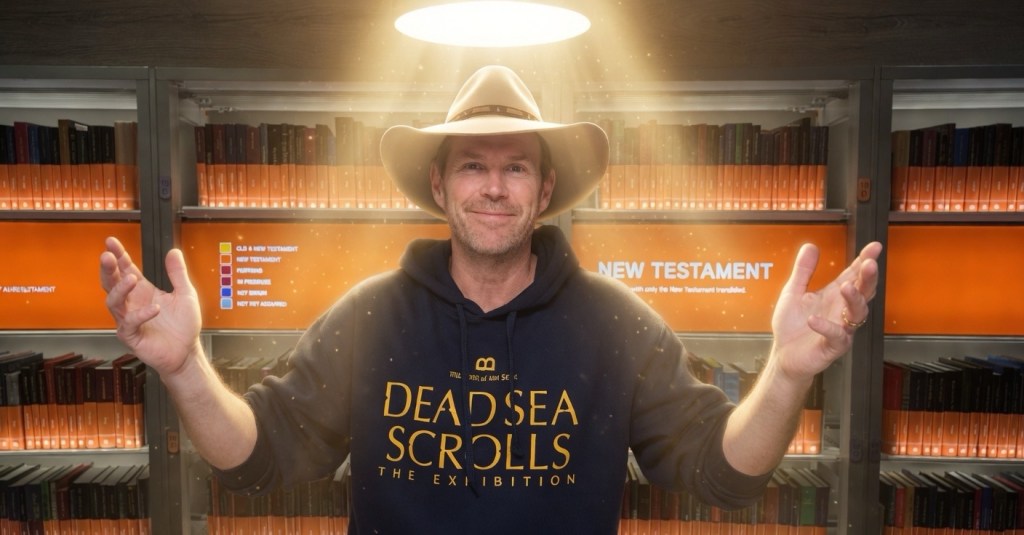
About the Author: Rich Hoffman
Rich Hoffman is an author, political consultant, and strategic advisor based in Cincinnati, Ohio, and the creator of The Politics of Heaven—a unique framework that connects biblical theology, ancient history, and modern power structures to explain how moral alignment and spiritual forces shape global events. Blending real-world political experience with deep research into archaeology, UFO phenomena, and suppressed historical narratives, Hoffman offers compelling commentary on topics ranging from ancient civilizations and the Dead Sea Scrolls to modern populist movements, paranormal continuity, and leadership strategy in chaotic environments. As the author of The Gunfighter’s Guide to Business and the forthcoming Politics of Heaven, he brings a grounded yet provocative voice to media discussions, supported by firsthand experiences and a cross-disciplinary approach that bridges science, history, and theology. For interviews, speaking engagements, or expert analysis, visit richhoffmanbooks.com or contact directly via phone at 513-307-5815 or email at rhoffman@richhoffmanbooks.com. If you’ve seen the movie, Disclosure Day and want to talk about it and the implications of Presidnet Trump’s UAP disclosures, let me know and we can bring some color to your coverage. https://richhoffmanbooks.com/media-inquiries-broadcast-topics-and-contact-info/?frame-nonce=ad51e7ecba I do have a firsthand UFO encounter to discuss.

