I enjoy fine dining and have rather high expectations in regard to food. In my home town of West Chester when I want a nice dining experience, my wife and I go to Jags. For power dinners it is the Montgomery Inn Boat House downtown along the river that most suits my taste. So with those qualifiers I must report that I had one of the finest dinners I can ever recall at the T-Rex Café in Orlando, Florida. This was unexpected as I thought the restaurant featuring animatronic dinosaurs that howl at you while eating would be just another gimmicky eatery that would fall short of anticipated hope. My family was with me at Downtown Disney recently so I had the opportunity to treat them to a nice dinner in a unique place, so we headed to the T-Rex Café which is only one of two in the entire country. The other establishment is located in Kansas City. As expected the interior of the restaurant was fabulous looking resembling more a dynamic museum than a place to eat. The hostess seated us in a corner table next to the fire pit cooking area directly underneath a pterodactyl dinosaur and flaming licks that emerged from a volcano. Our large booth was situated inside a geode that looked out into the dining room as a meteor shower flew by violently overhead. Across the room was the ice cave complete with fossils embedded in the walls. Everywhere around the large dining room which held over 600 people were spectacles of science and ancient biological history. But better than that, the food was as good as the environment. The appetizers were seasoned wonderfully, the service was top-notch, and the feature plates were excellently prepared, and delivered. For the climax of the dinner we had a Chocolate Extinction which was delivered as a flame spewing volcano that was absolutely fabulous.
As I ate my dinner and spoke with my family I had a persistent thought–the restaurant was just another miracle of capitalism. Only capitalism could produce such a place, and even though the cost of the meal was certainly on the high side, it was well worth the price as the environment cost an enormous sum to maintain daily. Only an economic system of capitalism could hope to produce the resources to make such a place possible. Yet in our current time, capitalism’s greatest predator is socialism, and the current incantation of political socialism is the “green movement” that attempts to take mankind back to the roots of earth worship and primitive rituals in an effort to preserve the world for eternity.
As I looked around the room at the T-Rex Café I thought of a conversation I had with one of my nephews the day before—a small argument that we had in a swimming pool over the merits of personal Thorium reactors for sustainable, cheap power at each home in the world. His position was one of concern for the radioactive waste generated by nuclear fission taught to him by the six digit debt he incurred in college that had steered his thinking. I tried to sympathize with his view-point as he spent a lot of money on his education and wanted to believe that the things he learned were valid. But in the scheme of things he was taught by left-leaning college professors the mystical trend of primitive sacrifice to the goddess Earth and were wrong. The entire environmental movement is built on mysticism and a primitive need to sacrifice to the gods that are now representative in New Age doctrine as a love for the great Goddess Earth. The mentality is the same as the Mayans sacrificing human beings to Kukulkan, or a bunch of Native Americans (displaced Chinese people) doing a rain dance to bring water to their crops. The idea of sacrifice to a deity is a primitive concept that is rooted in ignorance which is wonderfully portrayed in one of my favorite books, The Golden Bough by James Frazer. Human beings have evolved for the most part beyond that ridiculous mentality rooted in ignorance with the advances found in the philosophy of capitalism. The T-Rex Café was a direct product of capitalism and was a celebration of life forms on earth that had become extinct for natural reasons. Because of capitalism, children can share with their parents a celebration of a world long gone so that hopefully they can all learn something from the process while enjoying the roots of our own evolution.
Yet there are thousands of young people like my nephew who have been taught that preserving the earth is more important than the products of the human mind which is in essence a dedication to the primitive nature of human beings before the invention of capitalism. Those human beings who hate capitalism tend to support socialist tendencies either directly or indirectly and it is they who have perpetuated the myths about global warming, and the sacrifice of human advancement to the benefit of the earth—which is just ridiculous.
As I watched the meteor showers strike each other across the ceiling of the T-Rex Café restaurant I thought of the future of the earth as we know it now. Part of the ongoing supercontinent cycle, plate tectonics will probably result in a supercontinent in 250–350 million years. Some time in the next 1.5–4.5 billion years, the axial tilt of the Earth may begin to undergo chaotic variations, with changes in the axial tilt of up to 90°.
During the next four billion years, the luminosity of the Sun will steadily increase, resulting in a rise in the solar radiation reaching the Earth. This will cause a higher rate of weathering of silicate minerals, which will cause a decrease in the level of carbon dioxide in the atmosphere. In about 600 million years, the level of CO
2 will fall below the level needed to sustain C3 carbon fixation photosynthesis used by trees. Some plants use the C4 carbon fixation method, allowing them to persist at CO
2 concentrations as low as 10 parts per million. However, the long-term trend is for plant life to die off altogether. The die off of plants will be the demise of almost all animal life, since plants are the base of the food chain on Earth.
In about 1.1 billion years, the solar luminosity will be 10% higher than at present. This will cause the atmosphere to become a “moist greenhouse”, resulting in a runaway evaporation of the oceans. As a likely consequence, plate tectonics will come to an end.[11] Following this event, the planet’s magnetic dynamo may come to an end, causing the magnetosphere to decay and leading to an accelerated loss of volatiles from the outer atmosphere. Four billion years from now, the increase in the Earth’s surface temperature will cause a runaway greenhouse effect. By that point, most if not all the life on the surface will be extinct.[12][13] The most probable fate of the planet is absorption by the Sun in about 7.5 billion years, after the star has entered the red giant phase and expanded to cross the planet’s current orbit
To avoid extinction, human beings not only must develop an ability to move from one galaxy to another, but from one universe to another, because the universe is not exactly stable. Mankind through capitalism has the ability to solve these problems but the trend of the current environmentalist is a dedication to the failures of mankind’s past, the sacrifice of humans to the gods of speculation—to the mystic desire to shun personal responsibility for ones own life to a deity of convenience and hide their lack of courage behind group behavior.
The T-Rex Café is an excellent example of capitalism at its absolute best. The food is great, the environment, the service, the location was absolutely spectacular. But more importantly were the thoughts that the place was able to invoke in the imagination. Dining with my family at a big comfortable table with good food to ease the tensions of the day allowed for the possibility of thoughts that were stimulated by the dynamic environment. For me, the conversation I had with my nephew at the pool came rushing to my mind as the meteor shower overhead violently erupted. Everything on earth was created from violence and force. Every mountain is the result of earth’s crust violently being shoved upward. Every river is the result of massive rain fall. Every drop of ocean water is the result of crashed comets millions of years ago. The dinosaurs of which the T-Rex Café was dedicated to had lived and died over a much longer span of time than human beings have even been a thought on earth, and in all that time no dinosaur ever invented a way to draw energy from a Thorium reactor, yet the audaciousness of the modern-day environmentally conscious religious zealot is to assume that the earth will always stay just as it is now in the year 2013 and never become hotter or colder, or violently upset by a planetary collision of any kind. They assume that humans are equal in value to all other life forms on the planet, and that’s not true—only humans have developed complicated thoughts that enable them to leave earth, extend their own life spans, and create their own future. For the greenie weenie environmentalist the small mindedness of their short-life spans is unfathomably foolish and insecure. They hope to revert mankind back to a cave man building fires and barking at a bolt of lightning streaking across the sky as some mystery delivered from the gods, instead of understanding the science of static electricity and using that power to carry them off earth for good, to destinations not yet discovered.
A good meal not only fills the belly, but the mind, and I left the T-Rex Café full in both regards. It was worth the money of a 5 star restaurant because the combination of food and environment was so extremely magnificent. I won’t soon forget the place because long after the food was enjoyed the experience continued to give me fresh ideas that are invaluable to proper perspective. It was clearly one of my favorite dining experiences to date anywhere in the world, in part because of the restaurant itself, but mostly in the recreation of a time long-lost to history that was recreated as an honor, and a warning to mankind’s own doomed fate if it fails to embrace the proper philosophy of reaching for the stars instead of the jealous confines of mother earth and her selfish desire to doom all humans to the same fate she will surely suffer.
Sharon Poe is a tax fighter in the Mason City school district and a personal friend of mine who was on 700 WLW with Darryl Parks recently as they discussed the ridiculousness of the local school levies that are emerging for the November 2013 ballot. Darryl Parks and I used to have very similar views of public education and the stupidity of school levies as a way to fund learning for children. But that has changed over the years. My fight with Lakota has been intense at times and they asked me through members of No Lakota Levy for a cease-fire in the spring of 2012, which I gave them. The terms of the deal were that I wouldn’t continue to expose their inefficiencies on national radio stations and television, and they wouldn’t ask for a levy for 2 years. The deal was made two months after the famous “Latte Sipping Prostitute” comments that I made about the typical levy advocate at Lakota and I told Channel 19 the specifics of the deal when they interviewed me for the announcement of the levy truce from Lakota. CLICK HERE to review. During the broadcast on WLW Sharon told Darryl that Lakota was getting ready to put another levy attempt on the ballot because she knew what I had told her, about the 2 year deal with Lakota. Basically Lakota made a deal with their teachers union in 2011 to take a pay freeze and that deal expires in June of 2014, so they need money to pay their teachers long promised raises. But my argument all along is that the teachers and administration at an average pay of over $63K per year in wages were making too much money to begin with, and needed to slash their wages by at least 5% to properly balance their budget which has been ignored by the administration. Instead the school board chose to spend a lot of money rebuilding their public relations image and disregarded any attempt to reign in their extraordinary wages and hoped that the community would go back to sleep in time for them to pass another levy in 2013, ahead of the new teacher contract. Their actions were known all along, and Sharon warned over the 50,000 watt flame thrower of WLW that Darryl could expect to “Hear from Mr. Rich Hoffman” once Lakota made their announcement, which they now have. For me, this officially breaks the cease-fire, and now the campaign against their tax increase can begin. They won’t like the results.
Unlike Darryl Parks, where he supports public education because it is attached to property values, I have evolved into thinking that government should not be involved in education in any capacity. The more I learned about the kind of characters in public education, the more I am convinced that those types of people should not be teaching the next generation. My position has moved from one of pure logic centering on cost to one of philosophy. The game plan of public education is wrong, and I cannot support it knowing what I do after my experiences in dealing with Lakota administrators, then comparing those observations with districts all over Ohio. The failure of public schools repeats in virtually every district no matter what the wealth demographic, or population density. I see that competition needs to be introduced to the education process, and that property values need to be divorced from school districts if such values can ever be expected to stabilize over time. To continue to participate in the reactionary nature of school aged real estate catering is to destroy communities over the long haul, and Lakota is a prime example of how this process needs to implement such changes in public perception.
So I have no desire in any way to preserve the current education system. Nothing Lakota says is important as far as rationalizations for their monetary needs. I am not sympathetic to their issues. Lakota has become arrogant in their assumption that they are the center piece of a community, and they were only allowed to become such a thing because of the government monopoly of public education that is tied directly to property values. The arrangement is a government scam that ends up teaching children liberal oriented values using money from conservatives to pay for instruction they fundamentally don’t agree with. As a tax payer, I do not support Common Core education, I do not support Global Economies, and I do not support global warming greenie weenie philosophies which are so persistent in public education. I do not support an education system that teaches the earth is more important than a human being. I support an education system that teaches that the human being as a thinking, conscious creature has dominion over the earth and can use the tools of the planet, and rules of nature to fashion a better life for themselves. This is not the teaching of public education, and children should not be forced to learn such anti-concepts. Tax payers who do not agree with the voodoo ideology of the philosopher Kant, the economics of Keynes, or the fuzzy science of AL Gore should not be forced to pay for their own philosophic destruction in a social context. A couple of years ago when I called my political critics “prostitutes” I did so knowing that I was finished supporting public education as a legitimate social mechanism, because I was tired of supporting with my tax dollars people who were hostile to my outlook on life.
During the span of time that Lakota agreed to a ceasefire I decided that upon the next levy, I would do what I could to get more people involved in the levy fight. Prior to my experiences at Lakota the number one concern that anti levy advocates had was the constant social abuse they received from levy supporters who clearly use peer pressure to override logic during elections. My reasoning for calling the bullies of Lakota the names I did was to demonstrate to the many hundreds if not thousands of Lakota residents the limits of the pro levy supporters power, so that they could see for themselves that the bullies had no real weapon beyond name calling. In that way, upon the next levy attempt, more people than me could speak out against them without fear of boycotts, vandalism, or social castigation, which are all tactics of school levy supporters. Over the last two years, this has been the case. More people than ever are feeling comfortable speaking about their displeasure of school levies. More of them are willing to go on the record in the local newspapers, and speak on television, and that is the key to defeating a fourth attempt by Lakota.
I have argued every logical angle there is against the need for any levy, and Lakota doesn’t listen and has no desire to start. So further broadcasts of logic on the radio which are recorded for all time online, did not teach the Lakota administrators anything, so to continue to do the same kind of thing would be a waste of time. Instead, I promised that when Lakota did propose a new levy that I would have something special in store. I will leave the conventional arguments to others who can take the place of what I used to represent. My new position will be much different, but every bit as sensational. The intent won’t be this time to just examine the foolish nature of public education funding methods that are based idiotically on Keynesian economics, but on the utter debacle that the statist philosophy of learning under the United States Department of Education has created, and continues to ask for more money to perpetuate.
I welcome the help from other anti-tax resisters, yet recognize that new strategies must always be utilized if fresh ideas are to be injected into any given argument. For the Lakota Levy of 2013, it is time to take those fresh ideas to a new level which represents my true feelings of what the levy represents to the community, and to the poor minds of the children who are subjected to such progressive education that teaches chaos, irresponsibility, and perpetual government dependence from unionized public workers who disguise their greed and lust for power behind the innocence of children who have been abandoned by short-sighted parents, and exploited by statist public school administers to be delivered into adulthood as shells of their true potential all in the name of tax increases.
It’s time to turn things up a bit now that the truce has been called off by the Lakota school system. Sharon was correct when she told Darryl Parks that he’d be hearing from me. But to what degree has been a secret that I’ve kept close and thought hard about over the last two years. And its time to let that secret out of the bag…………………….
I don’t turn down media requests often, but I did the day I was visiting Hollywood Studios recently with my family. We had just parked for the day as swarms of people were migrating to the entrance when an interview request came over my cell phone. I told the producer that I was at Disney World and that I would not be giving any interviews for the entire day. Hollywood Studios for me was more than just a visit to an amusement park; it was a life centering expedition that was the climax of a vacation where I turned off everything for one week, including personal email correspondence. I had some difficult problems to work through and the best place to do it was at one of the most creative places on earth, Disney World, and more suitable to my personal tastes was Hollywood Studios. What sets Hollywood Studios apart from every other theme park in the world is that they go to the extraordinary trouble of having so many live performances as part of their attractions. Hollywood Studios has all the showmanship of a Vegas stage show, with the purity of imagination and family entertainment that is specific to Disney, and I relish those environments as a way to recharge my own creative impulses. So I spent the week leading up to our trip to Hollywood Studios reading books on the balcony of our Cape Canaveral condo, eating 24” pizzas, playing board games with family members till late in the night, playing miniature golf, visiting local tourist spots, throwing football on the beach, and preparing to see two of the greatest live stunt shows anywhere, the Indiana Jones Stunt Spectacular, and Lights, Motors, Action, Extreme Stunt Show. My footage from these events can be seen in the video below. Media interviews were forbidden as my thoughts were pretty far down my own personal rabbit hole.
The reason for my self-imposed media exile was that I was thinking of a controversial and complicated thought that I had been wrestling with for about 6 months, and I needed to confirm my suspicions by visiting a known refuge for dreamers, and social statists alike who all desire the same thing. At Disney World no matter what the political affiliation, no mater what the personal philosophy, no matter what the demographic background, every visitor at least wishes to touch the face of greatness for just a moment, and at Disney World this experience is very expensive. But the Disney Company uses the money they make to purchase paradise from the hands of tyranny which exists just out of reach from the Disney Properties in Central Florida. I have said that my favorite place on earth is the Epcot Center located on the property, but very close to it is my love of Hollywood Studios, which holds within it the magic of imagination in the purist form that came directly from the mind of Walt Disney. Located on the Hollywood Studios property is the regional airplane that Uncle Walt used to buy up the Central Florida property in small increments to create his Magic Kingdom. If Disney had not bought up all that “worthless” property and had the vision to build all the wonderful things that are currently at the Disney World Complex, the earth would be on a march back toward the primitive tribal tendencies of mankind’s origins. It was the work of one man who made Disney World such a great place with the solitary intention of giving all human beings in the world the hopes that can only be created with thoughts produced from the mind.
A few days prior my oldest daughter flew into Orlando prompting us to pick her up at the International Airport that was built because of Disney World. The airport has a gigantic hotel in the center of it and is a marvel of efficiency. It is one of the busiest airports in the world and has direct flights to it that are only rivaled by places like Hong Kong, London or Paris. People fly to Orlando for one primary reason, and that is to attend one of the many parks that are in Central Florida—all of which exist because of Walt Disney. As we waited for my daughter to come down the terminal merge, my wife and I notice how many foreign nationals were filling the unloading area. There were clearly people from Brazil, Argentina, China, France, and Russia waiting around us as they all had matching t-shirts indicating their origins so they wouldn’t become lost from one another in a strange country. I saw some of those same t-shirts just a few days later at Hollywood Studios. They had traveled from around the world to see some aspect of Disney World. But why…………………that was the source of my quagmire? It wasn’t enough for me to rationalize that Disney World was just a neat place. There was more to it than that, and I needed the answer to complete my nagging thoughts. This is why I had to visit Hollywood Studios with my family and visit some of the attractions that are very dear to my heart. In some ways visiting Hollywood Studios was like returning home for Christmas to me. The ideals represented at that particular park are part of my very soul.
One of the things that most impresses me at Hollywood Studios is their live shows, the amount of instances where an actor/actress actually handles the attractions. This is most notable at the Indiana Jones Stunt Spectacular and Lights, Motors, Action, Extreme Stunt Show which to me are worth the price of admission by themselves. The Indian Jones show is housed on a huge stage that takes up nearly a sixth of the entire park grounds and holds 2000 people in the stands. It is quite a production by itself. But over at Lights, Motors, Action, that show features a grandstand that puts to shame most seating platforms at any state fair in the country, it is so massive that it rivals some football stadiums, and was built just for the stunt show which only plays three times a day. Those stands hold 5000 viewers for each show, and are truly colossal when taken into perspective. Only at Disney World could stunt shows be given these kinds of financial resources, which is why those two features are so valuable to me. I had my grandson with me and even though he was only 9 months old, the pictures of his visit will mean a great deal to him later. Plus I have a very strong belief that worldly impressions are written into the brain of children from a very young age, so it is my task to make sure he gets these experiences, even if he doesn’t consciously remember them.
Hollywood Studios because of their other theme parks is able to dedicate their attention to these live performances, which would be devastatingly cost prohibitive if attempted on their own. I did rough calculations of the amount of employees that Hollywood Studios employed on the grounds and the results are unfathomable. Hollywood Studios does not skimp. Even on their Great Movie Ride, they have theatrical performances where actors/hosts, interact with animatronics to provide a truly epic performance where they didn’t have to. The Little Mermaid stage play featured many live puppeteers where most theme parks would have relied on mechanical props that would give repeatability time and time again. Hollywood Studios is not just dedicated to memorializing the movie business, it is dedicated to the unique human touch that live performances provide and the employees bring a lot of heart and soul to each performance.
When my wife and I dined at the Sci Fi Drive In restaurant, the employees were all happy to be working, and projected a feeling of competency. The same level of attention radiated to even the gift shop attendants. While my wife and I watched our grandson as my kids rode the Tower of Terror a rainstorm erupted and we sought shelter in a gift store where a nice woman with a heavy Kenyan accent showed us to a nice spot in the store where the air conditioner was running on overdrive so we could cool down the baby and get him out of the direct rain. She didn’t have to be nice in that situation, but she was. She was happy to be working there, and it showed. This was the usual experience, not at all the exception.
But the epic performance that easily could have been shown on Broadway in New York was the Fantasmic firework show that took place in an amphitheater setting behind the Tower of Terror ride. For over a half hour Hollywood Studios put on a firework show, a light show, a stage show, and a puppet show on a lake of fire with a giant fire-breathing dragon all rolled up into one performance. They had built another 5000 seat theater similar to the one at Lights, Motors, Action and it was filled with thousands of voices cheering on Mickey Mouse as he battled the dragon from Sleeping Beauty and Fantasia. A gentle roar emerged from the crowd that was as ambitious as a crowd at a football game. As I watched it looked like at least a 100 employees where working to make the Fantasmic show work in a section of the park that was only used for one show at the end of the day. The show itself was just another example of the audacity of Walt Disney World to build huge theaters only to be used once a day. Hollywood Studios seems to almost show off their vast employment ability by providing jobs that no other place of business could afford to make available.
No government on earth at any level of endeavor could create the kind of jobs that are created at Disney World. Hollywood Studios is able to provide large quantities of jobs to creative oriented people just because they are such a large organization that is so profitable they can provide jobs that require such incredibly large overhead. And that is why so many foreign visitors packed the Orlando airport and Hollywood Studios. There is only one country in the entire world and really only one individual from that country that could even envision a place like Disney World. As I studied the vast packs of people from other countries navigating the streets of Hollywood Studios with great enthusiasm the concept hit me like a ton of bricks. The countries where these visitors came from are completely unable to produce any version of Disney World on their own. The only way they could get close to such a place was to save enough money to fly to the United States and visit the place for themselves, a world created by Walt Disney with sheer imagination.
Most people come and go from Disney World without any inkling as to what they saw or why they liked what they saw. They only know as they travel back to their hotels and rest their tired bones in beds that are not their own, leaving them in debt from a vacation that cost between $2000 to $10,000 to do correctly, that they tried really hard to get their families to Disney World for some mysterious reason that dawned on them when they arrived at the front gates in the morning. At Hollywood Studios I took a mental survey all day long counting employees, both in front and behind the scenes, and the general philosophy of the entire place and I realized that the cost of the $90 admission ticket per person was paid for with just two of the major stunt shows, Indiana Jones and Lights, Motors, Action. The rest of the park was just value added, bonuses if visitors had the courage or wherewithal to understand what they were seeing and how important it was to see. Most people who I watched leave at the end of the day saw a lot, but remembered very little except what their cameras would reveal to them later as their minds were on information overload. For most visitors they left Disney World a couple grand poorer, and wondering if it was all worth it because they saw so much that they can’t remember anything. But I don’t have that handicap, and neither does my family. I was much honored to see that my kids enjoyed most at Hollywood Studios the exhibit dedicated to Walt Disney: One Man’s Dream and the Animation Art Gallery. Those two exhibits were hidden in the back of the park and were the least visited areas by far. My kids didn’t want to leave them as we spent nearly 1/5th of the entire day in that small section of the park as the key to all of Disney World was contained within the displays.
Disney World sells hope, dreams and the power of imagination to people who are short on supply. On the other end, Disney World supplies thousands upon thousands of good jobs to people who wouldn’t otherwise have them. There is more wealth in just Orlando because of Disney World than most of the counties that visited from across the world’s oceans, and all that activity was driven by one man who simply wanted to open up the minds of all people and plant dreams upon their thoughts hoping to make their life just a little bit better. Disney World is expensive, but they more than give back the value of their efforts if visitors can maintain the ability to absorb everything.
One of my son-in-laws is from England and under the simmering nighttime lights toward the close of the day; he proclaimed how grateful he was to be able to attend a Disney World park. He stated that like the many visitors I had seen that day from countries all over the world that he feared that he might never make it to such a place in his lifetime. Now he has been to the Epcot Center and Hollywood Studios and his imagination was on overdrive. It was for people like him that Disney dreamed a dream of creating Disney World. Disney offered the experience to everyone who could come up with the price of admission, but he knew that only a handful out of thousands would walk away at the end of each day aware of what Disney World was all about. It is a credit to the company of Disney that they have not forgotten who their founder was, and fight to this very day to keep his dream alive without pretentious input on the behalf of arrogant CEOs who wish to leave behind their own mark of greatness. For Disney it was never about being great—just being good.
When I arrived back to the condo that night sitting by the raging stormy waters of the Atlantic I read the reviews to the new Disney film, the Lone Ranger and saw that like Man of Steel, critics had panned the film a dud. The modern-day progressive critics can’t stand a clean hero who saves the day with a white hat and stallion which is what the Lone Ranger represents, and they are hoping desperately that the film falls on its face as a financial loss for Disney. Those same critics chastise the Disney Company for the high cost of their theme parks and their empire-like status over so many treasured stories, like Pixar films, Marvel Comics, Star Wars and of course the great classics. They despise the Disney Company because they are a successful organization that makes good things for people. Without Disney, much of the world would not currently know anything of goodness, because it is the foundations that were set by Walt Disney which carry on to this very day that are the only hope for large portions of the world to touch ideals that are bigger than their statist lifestyles could garner for them under any other circumstances.
I treasure our visit to Hollywood Studios for deeply personal reasons. I feel calibrated in ways that are better than what I’ve felt in over a decade. I felt as at home at the Indiana Jones Stunt Spectacular as I do in my own living room. I feel I know every person who worked that stage, and worked as stunt people even though I have not met any of them. They knew the same as I did about Hollywood Studios, and they understood how special the place was, and is to the minds of the world. There are lessons that should be taken from Disney World that government everywhere would do well to follow. I left the park that day feeling deeply sorry for the people who had to fly 10,000 to 20,000 miles to arrive at a park I only had to travel 1000 miles to attend. I wish that they lived in a culture that could produce a comparative experience, but they don’t. Only in America can such a place exist, and only America can produce people like Walt Disney without crushing them out of relevance with statist controls over their very minds.
When I turned down the media request that morning upon arriving at Hollywood Studios, now the answer to why is known—I consider the place to be sacred–that nothing of the outside world should penetrate under any circumstances, and I held to that oath. My daughters watched me hang up the phone to the producer who had called me, and understood without any words needing to be exchanged. In our family there is nothing more sacred than the thoughts that the mind produces, and there is no place on earth more dedicated to thought and imagination than Disney World. When we visit, the rest of the world goes on hold. When I visit such places I touch the most essential parts of my character, and find thoughts that my mind has been desperately trying to push out into the light of day. And for that even though Walt Disney has long since left the earth, he has handed to me a baton of understanding that his Disney World complex was designed to invoke. I know what to do with that baton, and understand the meaning behind the meanings. What is sometimes obvious to all, are simply the contorted images of fatigue that can be seen at the gates of Disney World at the end of the day. Most people see and hear the same things, but they are unable to absorb the information and understand the value. They only sense that something important happened and they immediately begin saving their money for the next visit. But the lesson of Disney World is not that it is to remain an empire in Central Florida, but that the ideas are intended to spread to the far corners of the world to take hold and improve the lives of everyone. The lessons of Disney World are not to copy the business plan of the Disney Company, but to spread the message that underlies everything that the company represents, the telling of stories that are important to the soul of all human beings and their need of mythology to communicate their hopes and dreams to others representing their innermost values. For me it is in the stunt shows at Hollywood Studios. At many levels, I feel an affinity for the danger, the glory, and the explosive hype of the stuntmen who must bring to reality the thoughts of a writer with their finger on the pulse of mythology and the yearnings of the human race fighting against all forms of statism. At Disney World the fight is in the imagination, but in the reality outside the property borders it is quite literal, and the great quest to attend the parks every year from visitors is to escape for just a few hours that horrific realization that no place but Disney World can provide such a safe haven for those with thoughts in their minds and the courage to use them.
The hypocrisy by police in regard to personal property defense is often astonishingly audacious. Such an example has been percolating in my mind for a few weeks now in regard to the Ontario, California man who shot a drunk intruder who broke into his home and threatened his son as they were sleeping. If the police had been involved in a similar incident the intruder would have been shot and killed with or without a gun. Just the mere threat of danger would allow a police officer to shoot and kill a suspect, and the police union would circle the wagons around the shooter to protect him from legal harm. But the property owner and father of a threatened son is being investigated for homicide by the police because the father can’t prove that he was afraid for his life with sufficient evidence. Here is the story as it appeared at The Blaze.
Police are investigating a potential homicide in Ontario, Calif., after a resident shot and killed a drunk intruder who broke into his apartment and attacked his sleeping son.
In California, citizens have a right to protect themselves and their families, however, there are stipulations in the state.
“The homeowner, the citizen, has to be able to articulate or apply the appropriate amount of force that was done against them,” Ontario Police Sgt. David McBride told NBC Los Angeles, later adding that Manzano was unarmed at the time of the shooting.
Thomas Gilbert Manzano, 24, forced his way into the California residence at around 3 a.m. on Monday, according to police. Manzano had been drinking alcohol for several hours with a friend when they decided to break into an apartment they thought was vacant. They had reportedly been squatting in one of the apartments but got confused as to its location.
Manzano was first turned away from the apartment, but he allegedly threatened the resident and forced his way into the home through a bedroom window and then went after the resident’s adult son. Police say the suspect threatened the son and a physical altercation ensued.
Responding to the commotion coming from his son’s room, the father retrieved his firearm and rushed to protect his son. He then shot several rounds at the suspect.
Manzano was transported to a local hospital with serious injuries. He was later pronounced dead.
The case is now being investigated as a homicide and the district attorney will determined whether the shooting was justified, according to officials.
The resident and his son were cooperating with police.
Manzano’s uncle, “Alfonso,” told NBC Los Angeles that the shooting was not justified.
“Just because you have a gun and its registered, doesn’t give you the right to kill somebody,” he said.
There are so many things wrong with that story, first the rights of the property owner are obviously not respected by law enforcement, as they see it as their job to do any and all killing that might need to be done. The decision for use of force is measured differently by them than a homeowner by society, which is wrong. Second, the rights of the intruder are superseding the rights of the sleeping son. This is a left over mentality from statist collectivism which believes that each according to their need is the pillar of modern society. If he drunk fool who broke into a home needed a place to rest his head for the night, then the property owner has an obligation to provide it, or to call the police and wait for 15 minutes while they arrive—superseding the authority of the father over his son, and over his property, surrendering protection to statist authorities. Then of course are the comments of the drunken victim’s uncle who declared that just because the homeowner had a gun, it doesn’t give him the right to use it.
On that last statement, where was the uncle in instructing his nephew that breaking into homes was not a good idea? What about harassing a homeowner while they sleep? What about living their life irresponsibly and imposing their mistakes on innocent people? I would argue that the responsibility for the drunken intruder’s behavior is partly the fault of the uncle, yet he purposely shifted the blame for the death on the homeowner who has been nothing but abused in this story, by the police, the drunken intruder, and now social progressive parasitic behavior patterns. There is no responsibility taken by any of the bad characters in this case, only on the homeowner. The unsaid mandate by the statist authorities is that homeownership is not of value, and that citizens surrender their rights to personal defense in light of the greater needs of drunks, punks, and scallywags.
We live in a society that does not put value judgments on those who perform bad behavior, only on those who attempt to do good. This is a direct result of a parasitic progressive philosophy that has been built upon the neurosis of Immanuel Kant’s 1781 Critique of Pure Reason – which is everything but reasonable. The thinking derived from the anti-concepts introduced by the philosopher Kant is what makes this ridiculous shooting in California such an appalling case.
The facts of American culture dictate that property ownership is the highest form of value in society. The home owning father has a right to protect that value from an intruder. The necessity to prove threat assessment is not the homeowner’s responsibility; it is on the drunken intruder. He made decisions to impair his thinking, to impose himself on home ownership, and threaten the son of the homeowner, which is another form of ownership, the relationship of a father and a son. If the son is killed, then the intruder takes everything the father worked for his entire life to put into the son – so the father has a right to protect that investment. In my mind, the son also has a right to defend himself with a firearm just for being awaken from a dream in his own bed. The dream is his. The bed is his. The confines of his room are his. He does not deserve, or need some idiot to stumble into his bedroom in the middle of the night yelling and screaming because the drunk wants a place to crash and work the alcohol out of his system.
Instead, using the philosophy of Kant’s brand of Transcendental Idealism that attempts to combine rationalism and empiricism in a nutty effort to merge the world of the seen and witnessed with the world of the unseen and inexperienced has created a society of law that seeks to punish value the only place that value exists, on the homeowner. The drunken thug has no value to be redeemed. The uncle has no value to be redeemed as he contributed to the behavior of his nephew. The sleeping son is still building value up in his life so that leaves only the father/homeowner who sought to protect his value to take value from in order to redeem the sins of all involved.
I recently spoke to our local sheriff and heard what he had to say when asked what one should do if a homeowner shot and killed a home intruder. His response angered me greatly. He replied that nobody should do that, and that there would be a lot of trouble if it happened. “But if it did, make sure to report that you feared for your life.” As he said these things I watched him walk around with a .38 snub nose packed in a holster on his hip, knowing he has the authority to shoot it. If he were to walk out in the parking lot and someone even made the shape of a gun and pointed it at him, he could gun that target down without any such trouble as the California homeowner experienced. He wouldn’t have to make any kind of passive cry for relief by declaring that he “feared for his life” like some trivial beta-man lobbying for same-sex marriage. He would simply be able to gun down the threat to his life and protect the value of it because he’s a police officer, and in a statist society, they have more value than a homeowner.
The California case of the home intruder being shot and killed by a property owner is one of the paramount issues of our time. It is in essence the battle between not just life and death, but ownership and value, against no value from collective resources. It comes down to a failed philosophical adoption that no lawyer in the country is equipped to handle. Because of that, the father is being needlessly prosecuted and ruthlessly drug through a court system that will cost him a personal fortune, when in fact he should have been able to shoot the threat, throw the body out on the front lawn and call the cops to pick up the body. Then after all the blood was cleaned up, and everyone settled down, the father could have taken his son to get an ice cream to repair the intrusion on his sleep and put the ordeal behind them within a couple of hours. That would be a philosophy of justice which is not present in this case, and has been eradicated in order to preserve the infantile statism which was born from Immanuel Kant.
Another one of my most treasured books is a little thing that has old yellow worn pages and a paper back cover that has been looked through so many times that the pages are constantly trying to fall out of their binding. It’s a little book my mother gave me during an intensely hot Liberty Township summer in 1981. Our home had no air conditioning and I had to sit in front of a fan to read the flapping pages in order to stay cool enough to comprehend the text. I have read the book dozens and dozens of times since 1981 but never more than that summer and its contents have stayed with me my entire life. The book is called The Making of Raiders of the Lost Ark by Derek Taylor and was written as a fly-on-the wall reporter from the set of the famous film, which George Lucas knew was going to make movie history. He knew then what millions all over world soon discover—that Raiders of the Lost Ark as a traditional throw-back to the kind of films that Hollywood used to make in the 1920s, through the 1950s was special so he allowed Derek Taylor to write a book about the making as they went along. As much as I loved the movie, which I saw 6 times in a two month period during that hot summer of 1981, I loved reading about how they made the film. And of all my reasons for loving the film, from the story, to the special effects which are still fantastic to this very day, to the acting, to the set design, to the incredibly good music, it was the stunts which most captured my imagination. More specifically, the stunt co-ordination by Glenn Randall, which had a very distinct look that all films since have been measured against. Randall was and is simply the very best in his field of occupation and his work never shined brighter than it did in Raiders where Steven Spielberg as the director and George Lucas as the executive producer knew enough about film to stay out of Glenn’s way and let him make movie magic with some of the best stunts that would ever be done on film.
This brings me to the present day where at Hollywood Studios in Florida they have a live stage show called The Indiana Jones Epic Stunt Spectacular which is personally directed by Glenn Randall, and has nearly the exact same feel as the stunts from the film performed live 5 times a day every day of the week, year after year since 1989. The stage show is impressive; the stunt gags are some of the absolute best there is of its kind, and it is the closest that one can get to the magnificent stunt co-ordination of Glenn Randall anywhere. His trademark style is all over the production and the show is for me a kind of recalibration to my senses. I absolutely adore it.
The show is getting old, even though it’s still wonderful, there is talk at Hollywood Studios that Disney is going to expand the park to include more Star Wars themed attractions with a $200 million dollar Star Wars land, which will be the largest expansion in the history of the Disney parks. Even though I cannot imagine Hollywood Studios without The Indiana Jones Epic Stunt Spectacular there is a danger that it might be cancelled to incorporate the new Star Wars expansion as the theater is currently right across from the Star Wars: Star Tours exhibit that is technically one of the coolest rides of its kind. The Star Wars expansion is being viewed by Disney as their version of what Universal Studios did with Harry Potter. It will be an all-encompassing experience that will be built in conjunction with the new films also produced by Disney, and will be the newest hot thing in Florida going into 2015 and 2016. So Hollywood Studios is going to be changing, which ignited in my mind a strong desire to take my family to Hollywood Studios to see The Indiana Jones Stunt Spectacular while it’s still there.
There is a raging debate about which movie themed park is better in Orlando, Universal Studios, Islands of Adventure, or Hollywood Studios, and for me, its Hollywood Studios. I can see where people, who are into the latest and greatest–the most hip, might be bored at Hollywood Studios, as that particular park focuses on the kind of Hollywood that George Lucas was trying to pay tribute to in his Raiders of the Lost Ark film. That Hollywood is the cinema experience of Walt Disney, Gary Cooper, John Wayne, and screen writers like Ayn Rand as the entire park is dedicated to that era. I love the Universal Studio parks immensely, but personally, nothing touches Hollywood Studios as they have went to the extra trouble of performing massive live stage plays like The Indiana Jones StuntSpectacular and Lights, Motors, Action! Extreme Stunt Show while providing the feel of strolling down the city streets that built Hollywood in the first place. It is that extra touch of detail that put Hollywood Studios over the top of places like Universal which says a lot, given how much I feel for those parks.
I was not disappointed. The Indiana Jones Stunt Show was spectacular, the fight at the flying wing was there, the temple scene from the beginning of Raiders was there, and the epic fight in the streets of Cairo were done to the live perfection of a dance number. It was wonderful to share in that experience with my family before things change dramatically at Hollywood Studios forever. I’m not against the Star Wars expansion by any means. Star Wars is my very close second favorite film series ever just a hair behind Raiders of the Lost Ark.
Movie stunts often get overlooked in movies, but in Raiders, it was impossible to ignore them. Glenn Randall and his friend Terry Leonard did some of their best work on that film, which is why I still love it more than any other movie done. Of course I enjoy the work of Harrison Ford and the direction of Steven Spielberg, but for me, it has always been about the stuntmen in Hollywood that I love so much about the type of films that are celebrated at Hollywood Studios in Florida.
Watching The Indiana Jones Stunt Spectacular for me is like going home to that old book my mother gave me as she wanted to encourage me to read how my favorite movie was made, hoping I would fall in love with reading. It worked as I have read thousands of books since. I have often thought of becoming a stunt man myself, including playing the character of Indiana Jones at Hollywood Studios when I almost moved there with my family in the early part of the 21st Century. I have a few friends in Hollywood who are stunt co-coordinators on current film and television projects and I have thought often of taking them up on their offer to work in pictures. I won’t name their names here as I am taboo among the entertainment labor unions for good reason – as I don’t support any collective endeavor like labor unions. To me, it is the labor unions that have put the clamps on the kind of Hollywood I love, the kind that Hollywood Studios in Florida celebrates — the kind of Hollywood that Raiders paid tribute to in 1981. But my brain power is needed elsewhere even though I love the feeling of an achy body that has bounced off the pavement a few times and leaped from high places into an airbag at the bottom. There are times when I think the best job in the world would be to live in a tent in Florida and report to work every day at Hollywood Studios to play out stunts as Indiana Jones. Watching the actor who currently plays Indiana Jones at The Stunt Spectacular may have the best job in the entire world in my opinion. I would be inclined to do such a job untill I was 60 or 70 years old and never tire of it.
But I have too many hobbies as it is, and of course my brain is involved in a complex web of activity that reaches into an all-encompassing strategy that is epic in its own modern-day scope. A lot of people count on me to do the things I do, and my adventures are over-the-top in ways that are a bit different from Indiana Jones, but perilous in less obvious ways. However, deep in my mind, I do think often of the stunt work by Glenn Randall as it was communicated to me in the great Derek Taylor book from years ago. In that way, I feel more attuned to the actors on the stage at the Indiana Jones StuntSpectacular than just about any other place I vacation anywhere in the world. There is a piece of my very soul that is on that stage and it is wonderful to visit during the scorching hot summers of Florida that remind me so vividly of reading The Making of Raiders of the Lost Ark by Derek Taylor as a little boy sitting in front of a fan at a home that did not have air conditioning in the blistering August month of 1981.
As of 9:45 on the evening of June 24th Lakota administrators had not called a vote for the most controversial issue of the meeting–whether or not they would attempt a tax increase on the fall ballot. When the last of the crowd had left for the evening in sheer boredom, only the school board members, Superintendent Mantia and a couple of levy addicts remained for the unanimous vote to consider a 5.5 mill levy. At that time of the night, Michael Clark of the Cincinnati Enquirer already had his article written, as it was due for the next day’s edition, so he had been given the details before the meeting by the administrators who deliberately held off the vote till the end of the night to avoid any controversy. The type of deception that took place at the school board meeting is just the tip of the iceberg in the district of Lakota, who like all public education institutions is top heavy with administration and well behind the times of how proper education should be conducted. In government schools the goal is to create government jobs and pay their employee salaries, not to care for children, and Lakota knowing that there would be push-back to their announcement, waited till everyone had left to make their grand proclamation, which was already printed up by the Cincinnati Enquirer before the meeting was half-way finished. That article read as follows:
The Lakota Board of Education voted unanimously Monday evening to place a combination operating levy and a permanent improvement tax on the Nov. 5 ballot.
Voters will decide on a 3.5-mill operating levy and a 2-mill permanent improvement levy combined into a single 5.5-mill school tax hike issue.
The board’s vote is the first of two required under Ohio law to place school tax issues on the ballot. Lakota officials have until Aug. 7 to file with ButlerCounty election officials for the Nov. 5 ballot.
If approved, the levy would cost an additional $168 annually in new school taxes on a $100,000 home.
Some of the 2-mill permanent improvement levy money would go to enhancing security at Lakota school buildings, including adding more cameras. Other funds would go to improving student technology.
The 3.5-mill operating levy would largely fund labor and other costs.
In a statement today, Lakota Superintendent Karen Mantia said approval of the combination levy would allow $6.3 million for upgraded security and $13.5 million for a multiyear technology upgrade program.
“Security has always been important,” Mantia said. “But unfortunately, with the world we live in now, we need to do even more.”
She added that the security spending would include tripling the number of police officers and sheriff’s deputies in Lakota schools, as well as physical changes to school buildings.
Lakota’s student and district network of technology needs updating, she said.
“We can use technology to be more effective and cost-efficient,” she said. “But we need the infrastructure in place to do that, and we’ve fallen far behind. It’s about building a network infrastructure that allows the district to use technology the way it should be used in a large organization.”
Read the rest of the article at the following link:
The article was just as deceitful as was the conditions from which the vote was conducted. Mantia stated that the levy a 2-mill permanent improvement levy would go to enhance security at Lakota school buildings, including adding more cameras. Other funds would go to improving student technology. The remaining 3.5 mill would go to fund the new teacher contract for the Lakota Education Association which expires in June of 2014. Attempting to capitalize on the recent fearful circumstances of school shootings, Mantia attempted to divert attention away from their horrendous management of school finances to declare that the new tax increase would make “children safer.” But Dan Varney, treasurer for NoLakota was quick to call out the ruse saying that “Lakota officials are “trying to exploit the Sandy Hook killings” by including a promise of spending more money on school security if the tax is approved.
“In December, a gunman killed 26 at the Sandy Hook Elementary in New Town, Conn. The shooting deaths of 20 children and six adult school staffers launched a nationwide examination of school security measures.
“That’s the security card they are playing and I’m sure that will be our position as the campaign moves forward,” said Varney.
As stated elsewhere, Lakota does not need more money. It has a consistent tax base that is already taxed too high. Yet Lakota’s employee demand is decreasing. Lakota needs to lay-off workers, not hire more, or even keep the ones they have. With the student enrollment decreasing every year for the next decade, Lakota schools will only need half their current school buildings before the close of the decade, primarily because the barrier to entry in the Lakota school district for families with school aged children is prohibitively high. Families with children won’t be buying used homes in Lakota, they will move into communities that have entry level starter homes. Increasingly the type of people who will live in the Lakota district are home owners without children in the district. And those people won’t be voting in favor of more taxes, especially for a school district that has no idea how to balance their budget.
Instead of playing things straight the Lakota administration attempted to use even more deceit to sneak the vote in favor of a new levy through once all the residents had gone home for the evening. The Enquirer had the article already written. All they had to do was wait for everyone to leave so there wouldn’t be any public record of any comments against them at the meeting. The attendance was light, as most of the residents at Lakota gave up a long time ago in believing that the school board has any control over the their finances, and the behavior of Lakota on June 24th, 2013 makes it clear why. The Lakota school board with their superintendent and other administrators cannot be trusted with little things, let alone, millions of dollars more just so they can avoid the hard decisions of laying-off their employees to match the declining student enrollment. And it is for that reason more than any other that the Lakota school system should be defunded to the maximum amount possible. Lakota as an organization is built on deceit, and are at best complicit of gross distortion of the facts in order to serve the whims of their teacher union and their employees who make a quarter million dollars a year for playing loose with the truth, and squeezing the community of its every last dime.
One of the greatest collapses that is headed for American culture is the education bubble, which I would argue burst a long time ago, but is just now being felt by the general population. Every time I hear the nonsensical statements by my home public school of Lakota demand more money for a teaching profession that is antiquated at best, to provide results for students in their future college endeavors, I think of how sadly blind they are to the conditions of our day. Colleges are too expensive; the professors charge too much money for teaching children left-leaning political views. The skills children learn in college are nearly worthless to producing a positive GDP in The United States and with a tuition growth of over 7% a year; the funding model has become impossibly too expensive as it has outpaced the general consumer index that rests just over 3%. For every parent who has spent their life savings on a child to go to college, they have wasted their money. They have been scammed by progressive thieves’ intent to reshape American culture from self-reliance, to one of dependency, and they have charged our society into debt to fund our own demise. An entire generation of children who believed the great college lie that has been advocated by public education institutions to justify their ever-increasing taxes on property values has sold America a car without an engine. It looked good on the outside, but will take nobody anywhere, except down a hill. College graduates in 2013 are leaving their schools with debt in the six figures and unable to find jobs that will help them pay back their massive debts. The problem is articulated well in the below video. Watch and take plenty of notes. This information is critical.
Not only are young college graduates from age thirty-five to twenty-five leaving college with six figure debt, they are discovering that they cannot make enough money to buy a home because they cannot find jobs that will pay them anywhere close to a value that would allow them to do both, pay their college loans, and pay for a mortgage. That means that financing a car is out of the question. It means that yearly vacations are not a possibility. It also means that getting married and having kids is the last thing on their mind, as their only means of survival is to hopefully live with their parents until some of their college debt is paid off. If those same young graduates have to spend $500 to $1000 a month on an apartment, then home buying will be out of the question for them, as they will never crawl out from under the massive pile of debt placed upon their heads by their parents who advocated the Great Society of Lyndon Johnston. That society turned out to be just another failed progressive experiment, and the debts are coming due on our current college aged graduates.
Recently the government school in my town, Lakota, announced that they were going to try for yet another tax increase even though they are experiencing declining enrollment. The number one reason that Lakota has for asking for more money is due to the new teachers’ union contract that is coming up in 2014. In the education field public schools all across America like Lakota are on an unsustainable path of finance. They have no idea how to pay for their extraordinary teacher wage rates of over $60K per year. They simply ask for more taxes every couple of years as collective bargaining laws prevent proper management of those rates of pay. Colleges have been doing the exact same thing, but instead of hitting the tax payers for more money with property levy increases, they have simply raised tuition rates each year by 7% or more. The cause of the increases is not new buildings, more text books, or better technology, but the impact of having too much staff that makes over six figures per year. Kind-hearted suburban parents have been conned into saving $50,000 to $100,000 over a 20-year period to basically flush it down the toilet on over-paid liberal teachers who attempt to teach everything those same parents spent a lifetime teaching their children. Those poor children who do not drop out of college as they quickly discover that higher education is not going to take them where they wanted to go, enter the job market unable to participate in adult society as they are so saddled with debt that the concept of having children, or grandchildren is simply out of the question. And those who do have children have absolutely no way to save money to pay for college for their grown children. There is no way they could do what their parents did and save money for twenty years to flush down the toilet on their own offspring once they’ve grown. These poor saps will still be paying their student loans which are sometimes bigger than their home mortgages.
If educators were so smart, then why can’t they see that the money they are consuming today will not be there tomorrow? After all, doesn’t it make logical sense? Well, again looking at the Lakota school system which has for years shown a distinct arrogance toward finance, as though their personal desires and wishes could overcome reality, currently they are asking for a tax increase of an additional $168 annually per $100,000 of home when their student enrollment has dropped 9% since 2010 and is projected to decline at the same rate for the next decade. That kind of math is why all public schools are failing, whether they are in Lebanon, Forest Hills, Fairfield, or any government school in the nation. They are all failing because they do not apply value to their employees treating them all with equal pay, which is not tied to results. This mentality has carried over to college professors who see themselves as more important than public education teachers, so their pay is noticeably higher. At Lakota the average teacher pay is over $63K per year which provides some perspective on why college tuition rates are so enormously high. The education bubble has expanded just as discussed in the video above, to the point where it has burst leaving everyone with a gooey slime behind to clean up.
There is no way to save the system at this point. Public education is just as complicit as the colleges in the matter of the mammoth scam performed against the tax paying public. Both are concoctions of large government sadism as it was devised by command of the Department of Education. They are the result of failed policies, failed philosophy, and failed politics. The money wasted on property taxes by the same tax payers who have saved up fortunes to send their children to college have been hit from two directions and there is no savings left for them to spend anywhere. When Medicaid and Social Security run out of money in 2026 and their children are filing massive bankruptcy for homes they can’t pay for because they can’t pay off their college debts, the parents won’t even be able to turn to their kids for help. Nobody will have any money…………that is except the teachers who have all retired at age 55 with the vast fortunes they’ve looted from the tax payers.
The bubble has already burst, and the system has already collapsed. The people who don’t yet want to admit it are the members of the teaching profession who are 5 to 10 years away from that glory day of retirement, and the absent-minded parents who want free education for their children because they either lack the self-esteem to teach their own kids, or the financial horsepower to send them to private schools that do a far better job than the government does. Everyone else is dealing with the tragic reality of such a terribly failed system that was concocted by such half-baked minds. For those poor debt-ridden college students who cannot find a job to pay for their educational studies in women’s peer groups, or green-house conductivity, the best jobs they could hope to enter are those that put food on the table for their grandparents, whom they most likely hardly ever met–the plumbers, the car manufacturers, the electricians, and the warehouse workers. The best thing a prospective worker could do is to work at something that actually has value, and produces something, instead of another worthless benchwarmer sitting in another cubical in a leased building that will rise and fall in business prospects within a 10 year time. A society cannot be successful in this fashion, and that is what colleges and public schools have been instructing our society and charging a fortune for the service which has collapsed on itself in our present time.
The cute picture of the little boy shown is of my grandson. That photo means more to me than just a sentimental moment of time captured by a gifted photographer at 9 months of age. Within that picture there were many contributors to the photograph, my daughter of course made the little boy with her husband, my wife made the white blanket by hand, and my other daughter took the picture in the back yard of the home that she owns with her husband. Virtually everyone in my immediate family played a part in that photograph. My imprint of course is that I put the gift of adventure in all those individuals, which is represented by the stack of books off to the side. That is what families are supposed to do and be for each other as the benefactors are little children like my grandson dressed in his little hat awaiting the tools of cognition to be put before his mind so that he too can live a life of adventure, discovering for himself all the potentialities that come from breathing air, and living life.
As another 4th of July came and went, I thought about my little grandson. When people wonder why I do some of the things I do, the first answer is because I want to. I enjoy fighting; debating, and philosophizing—pretty much in that order. But there is always a sub-plot in the back of my mind which drives me with purpose. When I was raising my children, it was fighting to make sure they tasted enough freedom and independent thought that they could grow up and live good lives. I have been successful in that. Now, it is the generation that comes after which I focus upon.
I have been an inspiration to many young people for many, many years. I still associate with many of those grown adults who looked as children toward someone to teach them how to be good people, how to face their fears, and live righteously. I have always offered myself in that role, even when I too was younger than they were. But there comes a benefit in living, surviving, and arriving at a time when not only you think you know more than everybody else, but you are sure of it. You know it because the reality around you has proven it time and time again. You don’t realize it because the intention is to be haughty, arrogant, or considered a God among men, but you just are because nobody else is trying.
Every child is born with the opportunity to become anything. Even children who are not genetically gifted or otherwise healthy have more potential in their minds than most living adults. For them their stories are not yet written and it makes me sad to see so many young children who don’t have adults to pour thoughts into their minds, to give them the ability to think on their own as young adults, and finally as grown adults. Most children the age of my grandson are doomed to a life of failure not because they lack any ability, but because they lack people in their lives that can help them develop into fully realized human beings.
My grandson will not have to worry about that. He has so many people in his life with very interesting traits of their own, that he has no choice but to pick up on those unique attributes while he forms his own character which is already evident. Looking at him it reminds me of what the 4th of July is all about. It’s why we fight to keep our country free so that little boys like my grandson can have the right to think and develop freely on their own, to bring their own unique gifts to the world. Someday, my grandson might decide that the bullwhip is not for him, but he will make that choice on his own, after he has had exposure to it and filled his mind with the value it brings to him through practice, and a bond with me, his grandmother, his aunt and uncle, and his mom and dad.
The fight for freedom is more than just a token message created by the Tea Party movement to hijack elected offices and become tomorrow’s tyrants through the desk of a bureaucrat. For me it is sincere, I believe in the things I say here with every cell in my body and beat of my heart. I believe in it for myself, and the joy it brings me in seeing the lights of freedom igniting in another human being, like the innocent eyes of my grandson, as it was captured so eloquently in the photograph my daughter took. I will teach his young mind in a way that was only available to my own daughters, but with the self-assuredness of having experience, to be a legend among mankind. When most people say they want their children and grandchildren to grow up to be lawyers, doctors, or God forbid—politicians, I frown at all those types of jobs. All of them are less than what I want for my grandson. I want for him to be a living legend, a character of such charisma, determination, and moral aptitude that there has never been another like him. Such a goal is a lofty one, but it’s what I will contribute to his mind with all our future time together. I can see the sparkle in his eye already, and soon, he will begin to take the form of a character unlike the world has ever seen.
And it will come from individuals like my daughter—his mother and her vast creativity, his aunt—my other daughter and her photographic genius and forward thinking vision, my two son-in-laws, one a former MMA fighter, the other a bullwhip champion in his own right, and my wife who reads hundreds of books a year, makes blankets for every member of our extended family, and is willing to spend countless hours on the floor playing with children. Then of course there are my contributions–in a few years I’ll have him jumping through walls of fire, cracking whips faster than lightning, crawling through caves that a snake couldn’t fit through and facing life with a fearlessness that every young man dreams of. Ladies and gentlemen viewing that picture—you are seeing a future legend that will know an unlimited life free of any shackles created by deficient human minds.
As I watched the fireworks on the 4th of July in 2013, that is what I thought of. And I will venture to make it so.
I love the 4th of July and frequent displays of patriotism that is displayed on America’s unique holiday celebrating freedom. But I am weary at the same time of such festivities because I know what’s coming. Ladies and gentlemen reading these words right now, the perils that faced the founders of America pale in comparison to the challenges of our current time. There is a reason that for the last 10 days or so I have provided many articles showing readers what America looked like before the implementation of The New Deal which was essentially socialism in its design long supported by progressives disguising their love of European communism, and the grand climax of The Great Society which became possible due to the 1964 election of the most liberal congress in American history with the exception of the one in 1938. Those elections were purchased from a gullible American public with deceit, and now the bills for those errors are coming due in our current time. America is about to hit a brick wall, and for anybody to survive, they need to understand that America was a great country before those terrible programs, and they need to understand that for America to survive for future 4th of July holidays the fight of our lives is currently before us. The video below sums up the problem in the simplest way possible.
At the end of May of 2013 the Social Security and Medicare Board of Trustees published a little known report that was generally ignored by the media, because in it was a very kind warning that by 2026, which is in essence only a decade away, those programs run out of money. They cannot be sustained without raising taxes and taxes cannot be raised without crippling the American way of life. We are at an impasse that cannot be avoided and there is no compromise with that fiscal cliff. It is a fact of reality that nobody wants to look at. Politicians are terrified of it, and the public does not wish to face the summary of their years of neglect in American politics where they paid attention to everything but one of the most important parts of their society—their government. So below is a portion of the report along with a link that will take you dear reader to the more specific information. I suggest you read this carefully and pass it along to a friend. It is important to understand the severity of the problem.
A SUMMARY OF THE 2013 ANNUAL REPORTS
Social Security and Medicare Boards of Trustees
Published 5/31/2013
A MESSAGE TO THE PUBLIC:
Each year the Trustees of the Social Security and Medicare trust funds report on the current and projected financial status of the two programs. This message summarizes the 2013 Annual Reports.
Neither Medicare nor Social Security can sustain projected long-run programs in full under currently scheduled financing, and legislative changes are necessary to avoid disruptive consequences for beneficiaries and taxpayers. If lawmakers take action sooner rather than later, more options and more time will be available to phase in changes so that the public has adequate time to prepare. Earlier action will also help elected officials minimize adverse impacts on vulnerable populations, including lower-income workers and people already dependent on program benefits.
Social Security and Medicare together accounted for 38 percent of federal expenditures in fiscal year 2012. Both programs will experience cost growth substantially in excess of GDP growth through the mid-2030s due to rapid population aging caused by the large baby-boom generation entering retirement and lower-birth-rate generations entering employment and, in the case of Medicare, to growth in expenditures per beneficiary exceeding growth in per capita GDP. In later years, projected costs expressed as a share of GDP trend up slowly for Medicare and are relatively flat for Social Security, reflecting very gradual population aging caused by increasing longevity and slower growth in per-beneficiary health care costs.
Social Security
Social Security’s Disability Insurance (DI) program satisfies neither the Trustees’ long-range test of close actuarial balance nor their short-range test of financial adequacy and faces the most immediate financing shortfall of any of the separate trust funds. DI Trust Fund reserves expressed as a percent of annual cost (the trust fund ratio) declined to 85 percent at the beginning of 2013, and the Trustees project trust fund depletion in 2016, the same year projected in the last Trustees Report. DI cost has exceeded non-interest income since 2005, and the trust fund ratio has declined since peaking in 2003. While legislation is needed to address all of Social Security’s financial imbalances, the need has become most urgent with respect to the program’s DI component. Lawmakers need to act soon to avoid reduced payments to DI beneficiaries three years from now.
Social Security’s total expenditures have exceeded non-interest income of its combined trust funds since 2010, and the Trustees estimate that Social Security cost will exceed non-interest income throughout the 75-year projection period. The deficit of non-interest income relative to cost was about $49 billion in 2010, $45 billion in 2011, and $55 billion in 2012. The Trustees project that this cash-flow deficit will average about $75 billion between 2013 and 2018 before rising steeply as income growth slows to the sustainable trend rate after the economic recovery is complete and the number of beneficiaries continues to grow at a substantially faster rate than the number of covered workers. Redemption of trust fund asset reserves by the General Fund of the Treasury will provide the resources needed to offset Social Security’s annual aggregate cash-flow deficits. Since the cash-flow deficit will be less than interest earnings through 2020, reserves of the combined trust funds measured in current dollars will continue to grow, but not by enough to prevent the ratio of reserves to one year’s projected cost (the combined trust fund ratio) from declining. (This ratio peaked in 2008, declined through 2012, and is expected to decline steadily in future years.) After 2020, Treasury will redeem trust fund asset reserves to the extent that program cost exceeds tax revenue and interest earnings until depletion of total trust fund reserves in 2033, the same year projected in last year’s Trustees Report. Thereafter, tax income would be sufficient to pay about three-quarters of scheduled benefits through 2087.
A temporary reduction in the Social Security payroll tax rate in 2011 and 2012 reduced payroll tax revenues by an estimated $222 billion in total. The legislation establishing the payroll tax reduction also provided for transfers from the General Fund to the trust funds in order to “replicate to the extent possible” payments that would have occurred if the payroll tax reduction had not been enacted. Those General Fund reimbursements amounted to about 15 percent of the program’s non-interest income in 2011 and 2012. The temporary payroll tax reduction expired at the end of 2012.
Under current projections, the annual cost of Social Security benefits expressed as a share of workers’ taxable earnings will grow rapidly from 11.3 percent in 2007, the last pre-recession year, to roughly 17.0 percent in 2037, and will then decline slightly before slowly increasing after 2050. Cost displays a slightly different pattern when expressed as a share of GDP. Program cost equaled 4.2 percent of GDP in 2007, the last pre-recession year, and the Trustees project that cost will increase to 6.2 percent of GDP for 2036, then decline to about 6.0 percent of GDP by 2050, and thereafter rise slowly reaching 6.2 percent by 2087.
The projected 75-year actuarial deficit for the combined Old-Age and Survivors Insurance and Disability Insurance (OASDI) Trust Funds is 2.72 percent of taxable payroll, up from 2.67 percent projected in last year’s report. This deficit amounts to 21 percent of program non-interest income or 17 percent of program cost. A 0.06 percentage point increase in the OASDI actuarial deficit would have been expected if nothing had changed other than the one-year extension of the valuation period to 2087. The effects of recently enacted legislation, updated demographic data, updated economic data and assumptions further worsened the actuarial deficit, but these effects were completely offset by the favorable effects of updated programmatic data and improved methodologies.
While the combined OASDI program fails the long-range test of close actuarial balance, it does satisfy the test for short-range (ten-year) financial adequacy. The Trustees project that the combined trust fund asset reserves at the beginning of each year will exceed that year’s projected cost through 2027.
Medicare
The Trustees project that the Medicare Hospital Insurance (HI) Trust Fund will be the next to face depletion after the DI Trust Fund. The projected date of HI Trust Fund depletion is 2026, two years later than projected in last year’s report, at which time dedicated revenues would be sufficient to pay 87 percent of HI cost. The Trustees project that the share of HI cost that can be financed with HI dedicated revenues will decline slowly to 71 percent in 2047, and then rise slowly until it reaches 73 percent in 2087. As it has since 2008, the HI Trust Fund will pay out more in hospital benefits and other expenditures than it receives in income in all years until reserve depletion.
The projected HI Trust Fund’s long-term actuarial imbalance is smaller than that of the combined Social Security trust funds under the assumptions employed in this report.
The estimated 75-year actuarial deficit in the HI Trust Fund is 1.11 percent of taxable payroll, down from 1.35 percent projected in last year’s report. The HI fund again fails the test of short-range financial adequacy, as its trust fund ratio is already below 100 percent and is expected to decline continuously until reserve depletion in 2026. The fund also continues to fail the long-range test of close actuarial balance. The HI 75-year actuarial imbalance amounts to 29 percent of tax receipts or 23 percent of program cost.
The modest improvement in the outlook for HI long-term finances is principally due to: (i) lower projected spending for most HI service categories especially for skilled nursing facilities to reflect lower-than-expected spending in 2012 and other recent data; (ii) lower projected Medicare Advantage program costs that reflect recent data suggesting that certain provisions of the Affordable Care Act will reduce growth in these costs by more than was previously projected; and (iii) a refinement in projection methods that reduces assumed per beneficiary cost growth during the transition period between the short-range projections and the long-range projections. Partially offsetting these favorable changes to the projections are somewhat lower projected levels of tax income that reflect lower-than-expected tax income in 2012.
The Trustees project that Part B of Supplementary Medical Insurance (SMI), which pays doctors’ bills and other outpatient expenses, and Part D of SMI, which provides access to prescription drug coverage, will remain adequately financed into the indefinite future because current law automatically provides financing each year to meet the next year’s expected costs. However, the aging population and rising health care costs cause SMI projected costs to grow steadily from 2.0 percent of GDP in 2012 to approximately 3.3 percent of GDP in 2035, and then more slowly to 4.0 percent of GDP by 2087. General revenues will finance roughly three-quarters of these costs, and premiums paid by beneficiaries almost all of the remaining quarter. SMI also receives a small amount of financing from special payments by States and from fees on manufacturers and importers of brand-name prescription drugs. Projected costs for Part B assume an almost 25-percent reduction in Medicare payment rates for physician services will be implemented in 2014 as required by current law, which is highly unlikely.
The Trustees project that total Medicare cost (including both HI and SMI expenditures) will grow from approximately 3.6 percent of GDP in 2012 to 5.6 percent of GDP by 2035, and will increase gradually thereafter to about 6.5 percent of GDP by 2087.
The drawdown of Social Security and HI Trust Fund reserves and the general revenue transfers into SMI will result in mounting pressure on the Federal budget. In fact, pressure is already evident. For the seventh consecutive year, the Social Security Act requires that the Trustees issue a “Medicare funding warning” because projected non-dedicated sources of revenues primarily general revenues are expected to continue to account for more than 45 percent of Medicare’s outlays in 2013, a threshold breached for the first time in fiscal year 2010.
Conclusion
Lawmakers should address the financial challenges facing Social Security and Medicare as soon as possible. Taking action sooner rather than later will leave more options and more time available to phase in changes so that the public has adequate time to prepare.
Read the rest complete with charts and diagrams at the following link:
To understand how we got into this mess it is also important to study The Great Society policies which culminated in the 1960s by Lyndon Johnson, and was the work of Democrats from the 1930s as a progressive platform rooted in global communism. Even though it is long, it is important to read. Some reading this have actually supported The Great Society and are currently avoiding dealing with the errors of their past by praying to some finance God that relief will magically appear. It will not. It is important to understand the problem, and then work to remove all these elements from our society so that we may save it. In previous documents I have shown how America used to be, and can be again. Those who support The Great Society look at such times as antiquated and a step backwards. In a way they are right, I do wish to step back in time—to a time before the socialist imposition of The New Deal, and The Great Society. I don’t want to pay for them. I don’t want to deal with people who are addicted to those government services, and I want to steer away from the collapse of those programs in 2026.
The Great Society was a set of domestic programs in the United States announced by President Lyndon B. Johnson at Ohio University and subsequently promoted by him and fellow Democrats in Congress in the 1960s. Two main goals of the Great Society social reforms were the elimination of poverty and racial injustice. New major spending programs that addressed education, medical care, urban problems, and transportation were launched during this period. The Great Society in scope and sweep resembled the New Deal domestic agenda of Franklin D. Roosevelt.
Some Great Society proposals were stalled initiatives from John F. Kennedy‘s New Frontier. Johnson’s success depended on his skills of persuasion, coupled with the Democraticlandslide in the 1964 election that brought in many new liberals to Congress, making the House of Representatives in 1965 the most liberal House since 1938.[1]
The Voting Rights Act of 1965 assured minority registration and voting. It suspended use of literacy or other voter-qualification tests that had sometimes served to keep African-Americans off voting lists and provided for federal court lawsuits to stop discriminatory poll taxes. It also reinforced the Civil Rights Act of 1964[10] by authorizing the appointment of federal voting examiners in areas that did not meet voter-participation requirements. The Immigration and Nationality Services Act of 1965 abolished the national-origin quotas in immigration law. The Civil Rights Act of 1968 banned housing discrimination and extended constitutional protections to Native Americans on reservations.
The most ambitious and controversial part of the Great Society was its initiative to end poverty. The Kennedy Administration had been contemplating a federal effort against poverty. Johnson, who, as a teacher had observed extreme poverty in Texas among Mexican-Americans, launched an “unconditional war on poverty” in the first months of his presidency with the goal of eliminating hunger and deprivation from American life. The centerpiece of the War on Poverty was the Economic Opportunity Act of 1964, which created an Office of Economic Opportunity (OEO) to oversee a variety of community-based antipoverty programs.
Federal funds were provided for special education schemes in slum areas, including help in paying for books and transport, while financial aid was also provided for slum clearances and rebuilding city areas. In addition, the Appalachian Regional Development Act of 1965 created jobs in one of the most impoverished regions of the country.[citation needed] The Economic Opportunity Act of 1964 provided various schemes in which young people from poor homes could receive job training and higher education.[15]
The OEO reflected a fragile consensus among policymakers that the best way to deal with poverty was not simply to raise the incomes of the poor but to help them better themselves through education, job training, and community development. Central to its mission was the idea of “community action“, the participation of the poor in framing and administering the programs designed to help them.
Programs
The War on Poverty began with a $1 billion appropriation in 1964 and spent another $2 billion in the following two years. It spawned dozens of programs, among them the Job Corps, whose purpose was to help disadvantaged youth develop marketable skills; the Neighborhood Youth Corps, established to give poor urban youths work experience and to encourage them to stay in school; Volunteers in Service to America (VISTA), a domestic version of the Peace Corps, which placed concerned citizens with community-based agencies to work towards empowerment of the poor; the Model Cities Program for urban redevelopment; Upward Bound, which assisted poor high school students entering college; legal services for the poor; and the Food Stamp Act of 1964 (which expanded the federal food stamp program).[16]
Programs included the Community Action Program, which initiated local Community Action Agencies charged with helping the poor become self-sufficient; and Project Head Start, which offered preschool education for poor children. In addition, funding was provided for the establishment of community health centers to expand access to health care,[17] while major amendments were made to Social Security in 1965 and 1967 which significantly increased benefits, expanded coverage, and established new programs to combat poverty and raise living standards.[18] In addition, average AFDC payments were 35% higher in 1968 than in 1960, but remained insufficient and uneven.[19]
Education
The most important educational component of the Great Society was the Elementary and Secondary Education Act of 1965, designed by Commissioner of Education Francis Keppel. It was signed into law on April 11, 1965, less than three months after it was introduced. It ended a long-standing political taboo by providing significant federal aid to public education, initially allotting more than $1 billion to help schools purchase materials and start special education programs to schools with a high concentration of low-income children. The Act established Head Start, which had originally been started by the Office of Economic Opportunity as an eight-week summer program, as a permanent program.
The Higher Education Facilities Act of 1963, which was signed into law by Johnson a month after becoming president,[20] authorized several times more college aid within a five-year period than had been appropriated under the Land Grant College in a century. It provided better college libraries, ten to twenty new graduate centers, several new technical institutes, classrooms for several hundred thousand students, and twenty-five to thirty new community colleges a year.[21]
This major piece of legislation was followed by the Higher Education Act of 1965, which increased federal money given to universities, created scholarships and low-interest loans for students, and established a national Teacher Corps to provide teachers to poverty-stricken areas of the United States. The Act also began a transition from federally funded institutional assistance to individual student aid.
The Bilingual Education Act of 1968 offered federal aid to local school districts in assisting them to address the needs of children with limited English-speaking ability until it expired in 2002.[22]
In 1966 welfare recipients of all ages received medical care through the Medicaid program. Medicaid was created on July 30, 1965 under Title XIX of the Social Security Act of 1965. Each state administers its own Medicaid program while the federal Centers for Medicare and Medicaid Services (CMS) monitors the state-run programs and establishes requirements for service delivery, quality, funding, and eligibility standards.
Arts and cultural institutions
National endowments for arts and humanities
In September 1965, Johnson signed the National Foundation on the Arts and Humanities Act into law, creating both the National Endowment for the Arts and National Endowment for the Humanities as separate, independent agencies. Lobbying for federally funded arts and humanities support began during the Kennedy Administration. In 1963 three scholarly and educational organizations—the American Council of Learned Societies (ACLS), the Council of Graduate Schools in America, and the United Chapters of Phi Beta Kappa—joined together to establish the National Commission on the Humanities. In June 1964, the commission released a report that suggested that the emphasis placed on science endangered the study of the humanities from elementary schools through postgraduate programs. In order to correct the balance, it recommended “the establishment by the President and the Congress of the United States of a National Humanities Foundation.”[24]
In August 1964, Congressman William S. Moorhead of Pennsylvania proposed legislation to implement the commission’s recommendations. Support from the White House followed in September, when Johnson lent his endorsement during a speech at Brown University. In March 1965, the White House proposed the establishment of a National Foundation on the Arts and Humanities and requested $20 million in start-up funds. The commission’s report had generated other proposals, but the White House’s approach eclipsed them. The administration’s plan, which called for the creation of two separate agencies each advised by a governing body, was the version approved by Congress. Richard Nixon dramatically expanded funding for NEH and NEA.[24]
Public broadcasting
After the First National Conference on Long-Range Financing of Educational Television Stations in December 1964 called for a study of the role of noncommercial education television in society, the Carnegie Corporation agreed to finance the work of a 15-member national commission. Its landmark report, Public Television: A Program for Action, published on January 26, 1967, popularized the phrase “public television” and assisted the legislative campaign for federal aid. The Public Broadcasting Act of 1967, enacted less than 10 months later, chartered the Corporation for Public Broadcasting as a private, non-profit corporation.
The law initiated federal aid through the CPB for the operation, as opposed to the funding of capital facilities, of public broadcasting. The CPB initially collaborated with the pre-existing National Educational Television system, but in 1969 decided to start the Public Broadcasting Service (PBS). A public radio study commissioned by the CPB and the Ford Foundation and conducted from 1968–1969 led to the establishment of National Public Radio, a public radio system under the terms of the amended Public Broadcasting Act.
Cultural centers
Two long-planned national cultural and arts facilities received federal funding that would allow for their completion through Great Society legislation. A National Cultural Center, suggested during the Franklin Roosevelt Administration and created by a bipartisan law signed by Dwight Eisenhower, was transformed into the John F. Kennedy Center for the Performing Arts, a living memorial to the assassinated president. Fundraising for the original cultural center had been poor prior to legislation creating the Kennedy Center, which passed two months after the president’s death and provided $23 million for construction. The Kennedy Center opened in 1971.[25]
In the late 1930s the United States Congress mandated a Smithsonian Institution art museum for the National Mall, and a design by Eliel Saarinen was unveiled in 1939, but plans were shelved during World War II. A 1966 act of Congress established the Hirshhorn Museum and Sculpture Garden as part of the Smithsonian Institution with a focus on modern art, in contrast to the existing National Art Gallery. The museum was primarily federally funded, although New York financier Joseph Hirshhorn later contributed $1 million toward building construction, which began in 1969. The Hirshhorn opened in 1974.[26]
In 1964, Johnson named Assistant Secretary of Labor Esther Peterson to be the first presidential assistant for consumer affairs.
The Cigarette Labeling and Advertising Act of 1965 required packages to carry warning labels. The Motor Vehicle Safety Act of 1966 set standards through creation of the National Highway Traffic Safety Administration. The Fair Packaging and Labeling Act requires products identify manufacturer, address, clearly mark quantity and servings. The statute also authorizes HEW and FTC to establish and define voluntary standard sizes. The original would have mandated uniform standards of size and weight for comparison shopping, but the final law only outlawed exaggerated size claims.
The Child Safety Act of 1966 prohibited any chemical so dangerous that no warning can make it safe. The Flammable Fabrics Act of 1967 set standards for children’s sleepwear, but not baby blankets.
The Wholesome Meat Act of 1967 required inspection of meat which must meet federal standards. The Truth-in-Lending Act of 1968 required lenders and credit providers to disclose the full cost of finance charges in both dollars and annual percentage rates, on installment loan and sales. The Wholesome Poultry Products Act of 1968 required inspection of poultry which must meet federal standards. The Land Sales Disclosure Act of 1968 provided safeguards against fraudulent practices in the sale of land. The Radiation Safety Act of 1968 provided standards and recalls for defective electronic products.
Environment
Joseph A. Califano, Jr. has suggested that Great Society’s main contribution to the environment was an extension of protections beyond those aimed at the conservation of untouched resources.[28] In a message he transmitted to Congress, President Johnson said:
The air we breathe, our water, our soil and wildlife, are being blighted by poisons and chemicals which are the by-products of technology and industry. The society that receives the rewards of technology, must, as a cooperating whole, take responsibility for [their] control. To deal with these new problems will require a new conservation. We must not only protect the countryside and save it from destruction, we must restore what has been destroyed and salvage the beauty and charm of our cities. Our conservation must be not just the classic conservation of protection [against] development, but a creative conservation of restoration and innovation.
— Special Message to the Congress on Conservation and Restoration of Natural Beauty; February 8, 1965[29]
At the behest of Secretary of the Interior Stewart Udall, the Great Society included several new environmental laws to protect air and water. Environmental legislation enacted included:
Clear Air, Water Quality and Clean Water Restoration Acts and Amendments
Amendments made to the 1931 Davis-Bacon Act in 1964 extended the prevailing wage provisions to cover fringe benefits,[30] while several increases were made to the federal minimum wage.[31] In addition, a comprehensive minimum rate hike was signed into law that extended the coverage of the Fair Labor Standards Act to about 9.1 million additional workers.[30]
For those who wish to save America, the government must be removed from public education, from medicine, from science, from labor relations, from retirement financing, and from environmental preservation. For that last many will say it is because of government that America has National Parks and a conservation movement at all. For them I point toward Disney World who took capitalism and converted an environmental marshland in the hot Central Florida region and made it a haven of environmental awareness producing money that was poured into science that no government on earth could duplicate. The Walt Disney property in Florida is better managed than any National Park, and serves the same purpose of preservation of valuable land. Similar examples could be provided to every topic mentioned above and more. But first Americans must dust off their tendency to self-reliance and embrace the past that built such characters and reject the past that paved the way to dependency, the policies of The Great Society.
It is good to enjoy fireworks on The Fourth of July and celebrate a time when America declared its independence. But America through trickery, deceit, and political barbarism is more dependent on foreign forces than ever and the strings to that dependency are in the programs of The New Deal and The Great Society. The fight before us will be much more vicious than in any other time in American history. It will be far from easy. That is why am turning my focus on a period of American history that had touches of true independence whether it was in the films of Douglas Fairbanks, or the various renditions of the Lone Ranger. For me those times are represented by the bullwhip and speak of an American attitude that is rooted in justice constantly pursuing freedom. CLICK HERE TO READ MORE. But it is time to take off the masks of convention, and politeness, or patient understanding then declare that the hands of time need to be reset in America to a time before the destructive programs that a vast majority of citizens in The United States have become accustom to. A failure to take off those masks of politeness will result in the end of American civilization as a fiscal powerhouse. It may continue on as Russia currently does, as an impoverished former superpower crushed by communist ideology, but it will not be the nation that we all know and love today. So the fight that is the responsibility of our times is before us, and simply igniting fireworks off on the 4th of July is not enough. An American revolution that has not yet been given a name is before us now, and will occur on all our watches who read this now. When history views us, they won’t celebrate our polite masks that are worn in society when oppressors wished to imprison us with more entitlement programs which only serve politicians in Washington and their ability to stay in office by selling votes through tax payer resources. It is time to dust off our American individuality and get mean and nasty to those who wish to put shackles about our necks with financial slavery. A failure to do so will actually bring more harm to others than it ever averts.
“The trend adds to the nervousness of Southwest Ohio school officials and school parents who await the state budget’s unveiling later this month. Smaller enrollment often means less school funding in Ohio’s biennium budgets. And fewer state dollars mean districts often ask voters to pay higher school taxes.”
You can read the rest of that hilarious article at the following link.
As Lakota continues to decline in enrollment, it may well be possible that Lakota could reduce its staff and administrators by up to 50% by the time 2020 arrives from what it is now. For the tax payers of the Lakota school district that is wonderful news. For business owners looking to invest in the community, that is wonderful news as well, as tax increases should not be needed. It’s also good news for the family of two who have lived in the Lakota district for twenty to thirty years and has been considering selling their home to avoid the property taxes by retiring to Florida. Now those empty-nesters can remain in their homes as the tax burden at Lakota should not increase.
Yet the administration at Lakota did not see this good news. Instead they somehow translated that information as meaning they would need a tax increase…………..and that is HILARIOUS! Do they believe that the same staff level will be maintained when the student population drops down to 11,000 students, or even 10,000? Are teachers going to be teaching in classrooms of only 5 to 10 kids? Is that what they think? Well, apparently………they do. Such a statement about tax increases when enrollment decreases just goes to prove how terribly out-of-touch those types of government employees are, and what little management actually goes into making business decisions in public schools.
The right thing to do at Lakota would be to have a reduction in force every year that there is student enrollment decreases and make sure that the most highly paid employees are either forced to leave, or reduced in force to dynamically supply the student needs. But public education is never interested in doing what’s right. After all, they are “progressive” organizations. They believe they exist to give away jobs like Santa Clause at Christmas time, and they actually entertain the idea that they might have to raise taxes to keep all their employees on staff. That is what was suggested in the Enquirer article, which is absolutely preposterous. Such thinking is the construct of idealism and has no basis in reality.
The decline in enrollment has nothing to do with the three defeated school levies which took place from 2010 to 2012. It may have in a small way prevented the very rare type of real estate purchaser who would be attracted to the Four Bridges type of housing developments, the affluent latte sippers who buy half million dollar homes then expect the community to give their children a free baby sitting service complete with an education. But what has been lost in real estate sales from those types has been gained in retained businesses that have not had to flee the community due to high taxes, and proved conducive to affluent home owners who enjoy living in a community where the children do not run the entire town. Rather the decline in enrollment is part of a natural process, and is the byproduct of a society that does not value the building of families but instead promotes the value of single status lifestyles which last well into young adults thirty something years. If every home in the Lakota district had a mom and a dad, (which most do) yet only produce 1.7 children per home, then the population not just of Lakota as a district will decline, but the nation as well.
Because the district of Lakota is considered affluent, and there are barriers to entry, not quite as excessive as there is in Indian Hill, but is moving in that direction, this means that fewer families can qualify to send their kids to the Lakota school system. Those that can have probably already raised their families and are looking for the kinds of social offerings that come with developments like Carriage Hill Homes, or the upcoming Liberty Center shopping complex. The face and nature of the community are changing, and that change does not center around the neurosis of a local school system, but on quality, and affluence by people who can see through the tantrums of Lakota schools and the bottomless pit of tax increases they wish to impose hiding their lack of management skills, and gross negligence of proper head-count maintenance.
It was funny while it lasted, not its just sad………………………………..

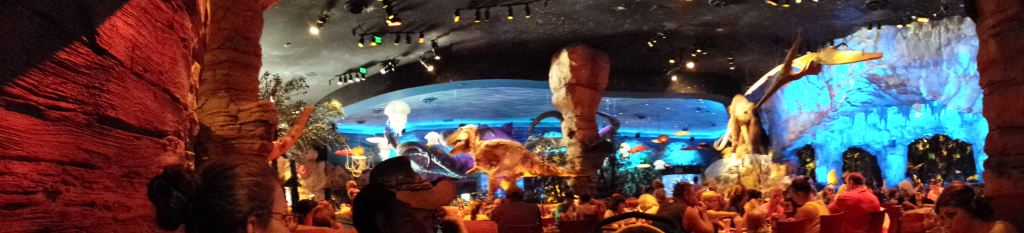 I enjoy fine dining and have rather high expectations in regard to food. In my home town of West Chester when I want a nice dining experience, my wife and I go to Jags. For power dinners it is the Montgomery Inn Boat House downtown along the river that most suits my taste. So with those qualifiers I must report that I had one of the finest dinners I can ever recall at the T-Rex Café in Orlando, Florida. This was unexpected as I thought the restaurant featuring animatronic dinosaurs that howl at you while eating would be just another gimmicky eatery that would fall short of anticipated hope. My family was with me at Downtown Disney recently so I had the opportunity to treat them to a nice dinner in a unique place, so we headed to the T-Rex Café which is only one of two in the entire country.
  The other establishment is located in Kansas City. As expected the interior of the restaurant was fabulous looking resembling more a dynamic museum than a place to eat. The hostess seated us in a corner table next to the fire pit cooking area directly underneath a pterodactyl dinosaur and flaming licks that emerged from a volcano. Our large booth was situated inside a geode that looked out into the dining room as a meteor shower flew by violently overhead. Across the room was the ice cave complete with fossils embedded in the walls. Everywhere around the large dining room which held over 600 people were spectacles of science and ancient biological history. But better than that, the food was as good as the environment. The appetizers were seasoned wonderfully, the service was top-notch, and the feature plates were excellently prepared, and delivered. For the climax of the dinner we had a Chocolate Extinction which was delivered as a flame spewing volcano that was absolutely fabulous.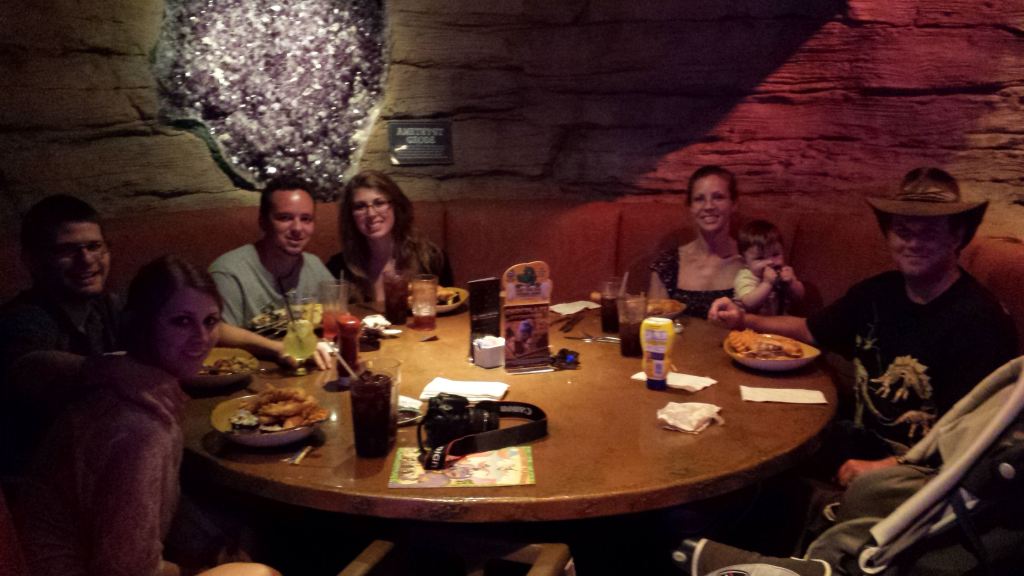






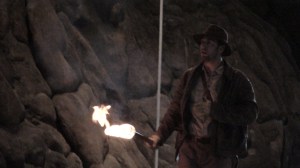
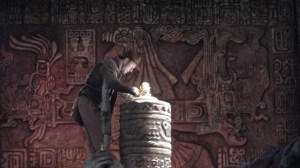
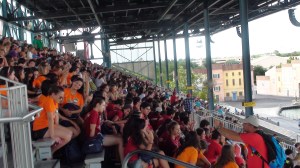


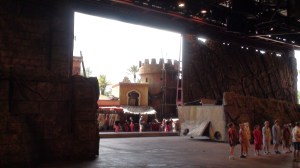


 What is sometimes obvious to all, are simply the contorted images of fatigue that can be seen at the gates of Disney World at the end of the day. Most people see and hear the same things, but they are unable to absorb the information and understand the value. They only sense that something important happened and they immediately begin saving their money for the next visit. But the lesson of Disney World is not that it is to remain an empire in Central Florida, but that the ideas are intended to spread to the far corners of the world to take hold and improve the lives of everyone. The lessons of Disney World are not to copy the business plan of the Disney Company, but to spread the message that underlies everything that the company represents, the telling of stories that are important to the soul of all human beings and their need of mythology to communicate their hopes and dreams to others representing their innermost values. For me it is in the stunt shows at Hollywood Studios. At many levels, I feel an affinity for the danger, the glory, and the explosive hype of the stuntmen who must bring to reality the thoughts of a writer with their finger on the pulse of mythology and the yearnings of the human race fighting against all forms of statism. At Disney World the fight is in the imagination, but in the reality outside the property borders it is quite literal, and the great quest to attend the parks every year from visitors is to escape for just a few hours that horrific realization that no place but Disney World can provide such a safe haven for those with thoughts in their minds and the courage to use them.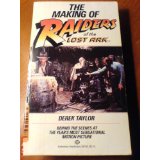

 The Overmanwarrior