

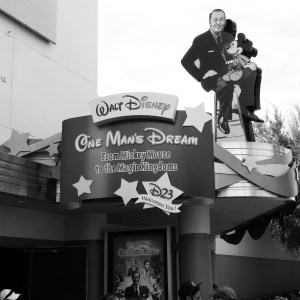
 When people ask what kind of America I want, and what am I fighting for, my conversation always comes back around to one person who delivered to me an ideal of America that I have always worked to achieve, Walt Disney. Disney is one of the characters in real life who did just as the heroes of Ayn Rand’s Atlas Shrugged novel did, he brought to humanity wonderful gifts that have lived on for nearly 50 years after his death, and he did not do it as a collective effort, he did it with his solely driven mind. Roy Disney, Walt’s older brother could not have done what Walt was able to do. Roy brought a stabilizing factor to Walt’s life financially, but the collaboration did not work the other way around.
  If not for the solitary, driven mind of Walt Disney, I am entirely convinced that an entire era of Americana would have been successfully destroyed by external American enemies who planted seeds of deception into our culture that were met by only a handful of creative minds who stood as pillars against moral collapse. The audacity to invoke into society the world over the unique human attribute of a personal dream was Walt Disney’s greatest weapon against tyranny, and most treasured gift to humankind. My friend Matt Clark on WAAM radio in Ann Arbor, Michigan feels the same way about Uncle Walt as I do, and we spent an hour of radio time on Matt’s show during July 21st, 2013 from 2 to 3 PM talking about the importance that Walt Disney has had in preserving American culture not only in his time but in the present, long after he departed from this world. The below conversation is unique, and Matt did a wonderful job of collecting video of the discussion complete with video examples. I would suggest that you gather up a snack dear reader and make time to watch and listen to these two broadcasts shown below—each representing a segment of radio time between the top and bottom of the hour. For old timers, it will be a walk down memory lane, and for the young, you will learn what all the fuss is about Disney as a company, and why they are so successful. Disney was not an accident, but a direct product of the kind of people only America can produce.
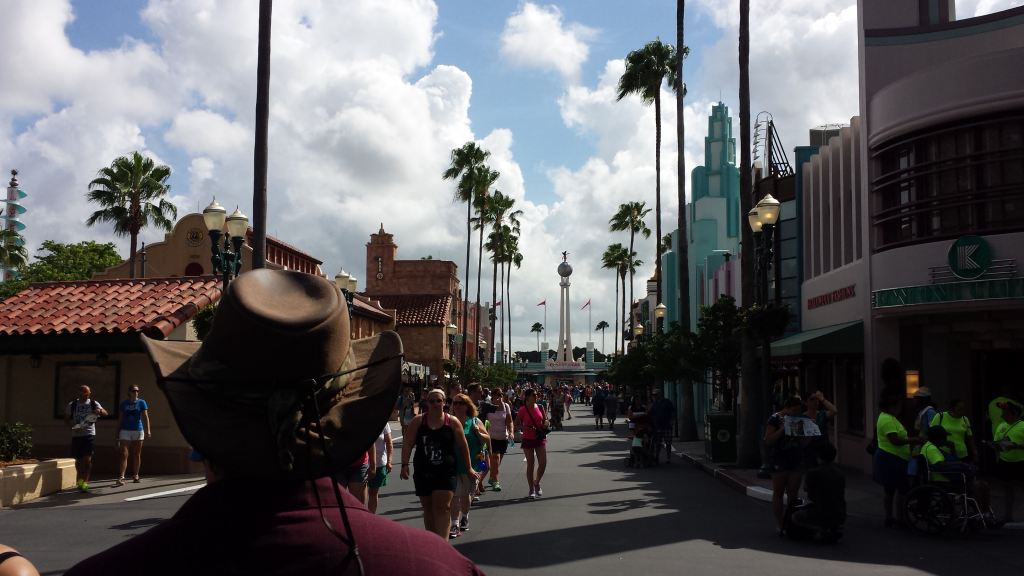
What prompted our discussion was a nagging revelation that I had recently while visiting Disney World, specifically Hollywood Studios during a busy Fourth of July holiday. Given my unique position where I write more than most people can even dream of, including professional writers, and my deep love of philosophy, along with unique real world experiences in politics and business many converging paths intersected at the same time to hit me with a number of intense revelations about the state of the world.  No other country on the face of planet earth, no education institution, no political system, no financial altruism, no welfare system, no friendship, no collaboration, no wish upon a star has produced another man like Walt Disney. Disney was the very unique type of person that shared in a fictional context Ayn Rand’s Atlas Shrugged characters. Rand’s fictional characters and Disney’s real life character were products of a time in America where they were born at the end of a laissez-faire capitalism period before communist ideas contaminated the next generation filling up the empty minds of youth with the type of progressive tripe that is so common today. Disney literally stood against a very tough world, through competitive studios who wanted to sink him for being too good, labor union disputes, communist infiltration, and many personal set-backs to build a company that is one of the most powerful in the entire world. If not for Disney, there would be no ESPN, no sustainable ABC television. And the film business may not have survived through the 1970s. Disney single-handedly carried America on his back, and still does to this very day. If not for Disney there would be no American Adventure at the Epcot Center, there would be no Hall of Presidents, there would be no real “Liberty Tree” and it is entirely likely that all references to the American Revolution might have been successfully erased from the minds of all after the effects of the Red Decade and the subsequent takeover of capitalist industry by the communist Trojan Horse—labor unions. CLICK TO LEARN MORE ABOUT THE LIBERTY TREE.
The enemies of Walt Disney to this very day are the progressive statist types who attempt to pick a few character flaws taken from Walt in hindsight—without the context of the times to mold the parameters of acceptability.  They assassinate his character while still trying to pander to modern Disney executives to fund their creative ideas. Secretly there is a lot of resentment in the entertainment industry even within the Disney Company about why Walt Disney’s beliefs are so closely adhered to, when there are so many college trained CEO’s who should be able to do a superior job of management in the modern landscape politically, and economically. The answer is of course that they can’t.
  Nobody can nowhere on earth, because what makes people like Walt Disney is laissez-faire capitalism and that doesn’t exist anywhere anymore. Laissez-faire capitalism allowed Walt to be everything he dreamed of, and allowed him to take tremendous risks and receive eventually, not until much later in his life, great rewards. It was only by the time the novel Atlas Shrugged was published in 1957 that Walt started to become personally wealthy from all his wonderful work—where he didn’t have to worry about going bankrupt. But Walt wasn’t happy to be just another rich man from his efforts; he wanted to build his ultimate dream—Disney World, which he never lived to see.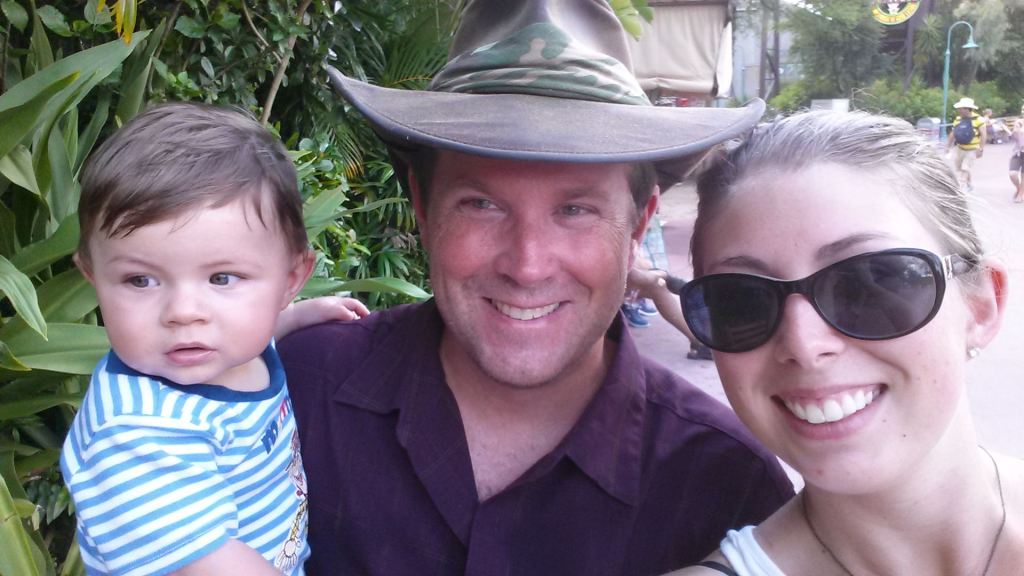
When I was in Hollywood Studios over the Fourth of July period previously mentioned, I thought about Walt Disney a lot that day. His view of America is what the Tea Party is trying to achieve, one that is morally righteous and inherently good. 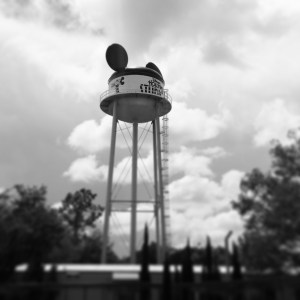 The Tea Party wants the kind of America talked about in the Davy Crockett television show, and on the famous Zorro series where crime and punishment were clear, and bad guys in politics did not win. Walt loved freedom which is most pronounced in his Pirates of the Caribbean exhibit where he understood that it was the pirates of that period which led the way to the American Revolution which Walt was very dedicated to preserving. He has an entire section of Disney World committed to preserving this memory that is more committed to America’s roots than the actual city of Boston which is extremely progressive. If not for Walt Disney, there would not be a Tea Party fighting for fiscal responsibility, limited government, or free markets—the kind of themes that were uncompromisingly explored on the old shows of Davey Crockett. Because of Disney, the world cannot forget what made America, and ultimately what made Disney– laissez-faire capitalism. Hollywood Studios is a shrine to laissez-faire capitalism, to the free flow of ideas before the labor unions infested the industry during World War II with a dirty bomb of the kind of ideals that were destroying the world—collectivism.
The enemies of America did not attack California with bombs and airplanes the way it was feared when the U.S. Government took over the Disney Studios during the war with a martial law like imposition. The real attack came with ideals of collectivism that were injected like a poison into American education institutions to slowly kill the ideal of self-rule, and the pursuit of liberty. I am convinced that if not for Disney, America would have died on the operating table long ago as the poison of collectivism destroyed our history and our hopes. Only one man attempted to counteract that poison with goodness from his own personal mind, and that was Walt Disney. He died staring up at the ceiling of his one last hope for the human race—his design for The Epcot Center pinned to the ceiling over his bed by his brother Roy. Walt died in 1966, but Roy made the rest of his dreams come true by carrying on the torch to a new generation who was as clueless as the rest of the world as to the philosophy of success that Walt Disney represented, but they were at least wise enough to not change the formula and follow the teachings of Uncle Walt Disney, the last of the laissez-faire capitalists and hope for the world.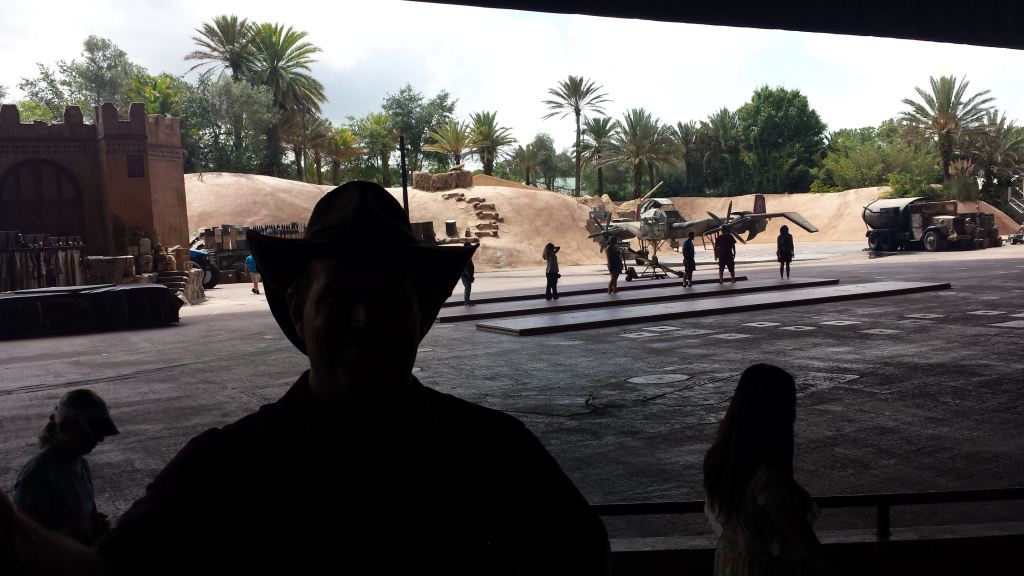
Now watch this documentary about Walt Disney for the whole story. The important thing to understand about laiseez-faire capitalism is that even with that economic philosophy; only a few out of millions of such minds produced can ever hope to be like Walt Disney. But the worth to all society from those very few is infinite.
Rich Hoffman
“Justice Comes with the Crack of a Whip!”
 With all the lead up to the movie being so intense here at Overmanwarrior’s Wisdom my lack of a review for The Lone Ranger was simply due to the fact that I was on vacation with my family when the film was released and there wasn’t time to physically go see the movie. On two occasions while I was vacationing in Florida I intended to take my family to see The Lone Ranger, once at Downtown Disney, but had to withdrawal because the day was already overbooked, and then again at Merritt Square Mall which was down the road from our Atlantic Coast condo
 With The Lone Ranger I expected to see even after the extremely negative reviews, a movie from Disney that was just good ol’ fashion fun—I did not expect yet another film with very heavy opinions against the government position of collectivism over the traditional rugged individualism that built America from the start. Coming from the Disney Studios I expected a more disguised effort, especially with Johnny Depp staring as Tonto, and sharing a producing credit. But if the nation is divided equally down the middle with Tea Party type Americans on one side, and welfare collecting altruists on the other, Disney usually makes films that all types of people will enjoy. This is good for their box office numbers, but runs counter to the type of messages that Walt Disney himself believed who actually testified before a congressional committee against communism during the height of the McCarthy Hearings. But this Lone Ranger was made by Disney to show favor toward the former of those demographic groups and not the later.
 The Second Treatise of Government was one of the foundation books which people like Thomas Jefferson used to help shape the argument about the kind of country that America would be. Modern Americans who regularly attend Tea Party events know that John Locke is one of the philosophers who opened the door to the way of thinking that distinctly became freedom loving. To altruists, this is a major social danger as any message that exhibits freedom as one of the highest human endeavors also seeks to be free from social stupidity, the self-determined poor (lazy people), and the malcontents of civilization. Social progressives have desired for years to shape American thought into reflecting European sentiment of sacrifice, shared suffering, and a focus on the “greater good” while steering the educated masses away from a personal love of individual freedom.
  Opening the film with a direct node to John Locke was a bold declaration that I was surprised made it past the Disney executives screening the film. It’s possible that some of them did not know what the book meant to American foundation, but it is unlikely to have slipped by so many eyes without anybody knowing, especially Johnny Depp, who has been known to show up to film screenings showing his open support of Che Guevara. I thought the John Locke reference was quite extraordinary but the references did not end there so I know that it was not an accident.
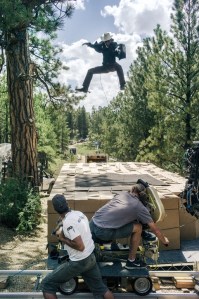
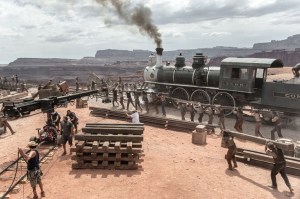
 It was an unapologetic western that might have been an early episode of the TV show Davy Crockett, only with Industrial Light and Magic doing some spectacular visual effects. The stunts were ambitious, and the scope of the project was mammoth. It was the largest scale western I think has ever been attempted. But The Lone Ranger himself does not drink, does not curse, does not use tobacco (he refused when offered), he does not want to kill people, and is a naively good guy from the beginning to the end of the film. The only character arch that John Reid embarked on evolving from the beginning to the end was in hardening up from a naive lawyer to a man who isn’t afraid to pull the trigger on a bad guy by the end of the film. Reid never had a moment of weakness in the film where he got drunk, caved into the seductions of a woman, or lost his moral compass. He was firmly focused on justice from the beginning of the film till the very end.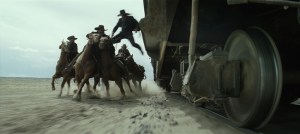


 It will be lucky to recover its $215 million dollar budget, which is unheard of for a western. Only a company like Disney could have made a film like this, which was risky, so it is unlikely that Armie Hammer will have the chance to reprise his Lone Ranger role in the way that Robert Downey Jr has for Iron Man, and make future films. The film by
  Everyone involved with The Lone Ranger is among the best in their fields of endeavor, and it is a shame that the magic will probably never be seen again, because the box office will prevent it. The Lone Ranger is one of those films that will percolate in America culture for a long time. It will not have a big pop at the box office, but will be watched and loved for many years in a quiet way as viewers find it wonderfully good, but unsure why they like it so much while critics and industry professionals declare that it is such a bad film. It is not the film that is bad for progressive types, but the message.
  Most people seeing The Lone Ranger cannot identify with the hero. But they will identify with the villain, and that tends to make people angry. Angry people do not throw down nearly a hundred dollars to see The Lone Ranger, which is what it cost me by the time we bought tickets and snacks, a rarity for us as a family. I spent extra money at the theater knowing that a majority of the movie goers were not spending money on The Lone Ranger, so we broke our rule and bought the overpriced popcorn and drinks anyway, to support the film, and theater showing it.
 The Overmanwarrior