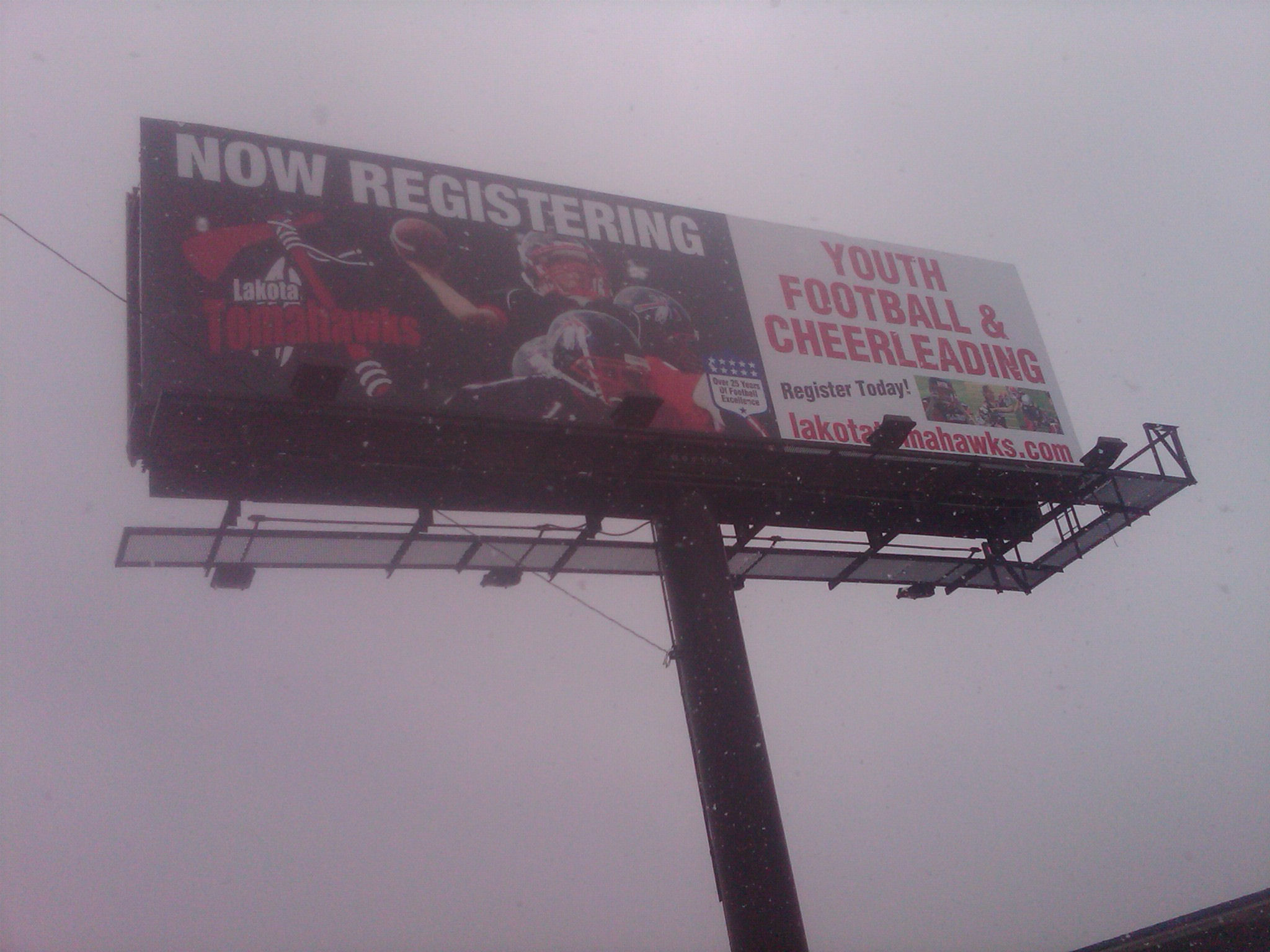
As the Lakota School System attempts to paint a picture of efficiency and community awareness by putting their troubled school board members into the back ground and promoting their former levy advocates to the forefront in a publicity campaign of competence, there is a sinister wave of reality that is sweeping the nation regarding the trouble with labor unions in education. Have a look at the latest attempt by the Lakota School System to advocate their need for another levy in 2012 by showing the public how hard they are working, as if such measures would earn them the trust of the Lakota residents.
Reading this Enquirer article about Julie Schafer brought my mind to a Marty Steer review of the new book called Special Interest: Teachers unions and America’s Public Schools that is worth mention. So I have included Marty’s review below in its entirety. The specifics of this review are that the union element is completely corrosive to the public school system, and this is detrimental to any discussion of school funding. This review by Marty validates much of what I have been saying about public sector unions, and I will go further than Marty does by stating that no further public funding increases should be provided to any government school until the unions are dismantled. Because only then can correct assessments of the true cost and value of public education be ascertained.
Lakota in their lack of admission to their labor union problems believe that highlighting the sacrifices of their new star, Julie Shafer exhibited in the Enquirer article will successfully hide all the negatives engaged by the Lakota Education Association in driving up the labor costs to unreasonable levels. The how, why, when and where of how this has occurred are shown wonderfully in this review by Marty Steer seen below. Enjoy!
SPECIAL INTEREST: TEACHERS UNIONS AND AMERICA’S PUBLIC SCHOOLS
Terry M. Moe
In January, 2010, Randi Weingarten, President of the American Federation of Teachers (AFT) gave a speech to the National Press Club that electrified proponents of school reform sending a surprising promise of hope. She called for sweeping changes in how school districts evaluate teachers, agreed to standardized tests, and favored a plan to get bad teachers out of the classroom. Even the New York Times headlined the breaking news, “Union Chief Seeks to Overhaul Teaching Evaluation Process.” Only problem: this doesn’t compute – especially given her staunch union track record. Today there’s pressure being put on unions that is threatening their survival, but they know how to play the game. Whitney Tilson, founding member of Teach for America, hit the nail on the head. “You know the saying. When you’re being run out of town, get out in front. Make it look like a parade.” (Pg. 269) And she did.
Special Interest: Teachers Unions and America’s Public Schools, was written by Terry M. Moe,StanfordUniversity professor and senior fellow at the Hoover Institute. His book is exquisitely researched and highly praised by formerNew York City and Washington D.C. Chancellors, Joel Klein and Michelle Rhee. He begins with a description ofNew York City’s “Rubber Room,” the place where incompetent teachers go to relax while they draw full-salary, full-benefits and time to plan their paid vacations. But he ends with a ray of hope that reform will come, but not immediately. Taking you inside the operation of the teachers’ union, Moe reveals the details of their agenda and the consequences of their power. If the general public knew the truth, they’d be outraged and just maybe next time we’d do a little better at the ballot box.
Before digging into Moe’s book, I’d suggest Googling “A Nation at Risk.” Since Moe refers to it often, it would help to be familiar with this 1983 report to the Dept. of Education that addressed the alarming decline of American education. 25 years later, it had not improved, nor has it since. For the first time in history, they concluded that students did not receive as good an education as their parents, and we are now into the second generation of further decline, soon to be the third. That also just happened to be the time when teacher unions were forcefully on the move.
History: In 1857, the National Teachers Association (NEA) organized as a professional association of educators. Their mission was to meet high standards, attract well-trained teachers that were paid a professional salary and protected by tenure. It was controlled by superintendants, principals and other administrators responsible for making the key decisions. They were also in the business of removing schools from the clutches of party machines and patronage. This worked well for the first 100 years. Throughout the 60s and 70s NEA made a nationwide presence. They didn’t formally declare themselves a union until 1969, but acted like them, as did their union competitor, AFT. By the 80s membership soared and unionization and collective bargaining had now become the norm. (Pg. 44-48)
The Union’s Job: According to unions, they’re only doing their job: represent the special interest of the teacher by negotiating higher salary and benefits, protect them from job loss, issue seniority which protects bad teachers, guarantee a single-pay policy which disregards teacher performance, oppose accountability and school choice. Since the unions now replaced principals, superintendants and administrators with union control, they effectively run the show through the tool of collective bargaining. What follows are some of these “bargained” rules: (pg.174-175)
- Teachers can make voluntary transfers to other schools based on seniority.
- Senior teachers can take junior teachers’ jobs requiring junior teachers to be laid off first.
- Principal is required to give advance notice to teachers before visiting their classroom to do an evaluation.
- Use of standardized student tests for evaluating teacher performance is prohibited.
- Unionspecifies rules for improvement, mentoring bad teachers, procedures to be followed in any effort to dismiss a teacher, and more.
- Unions determine the number of faculty meetings and their duration.
- They determine the number of parent conferences and other forums in which teachers meet with parents.
- They determine how many minutes teachers can be required to be on campus before and after school.
- They determine class size, number of courses, periods, or students a teacher must teach.
- They determine non-teaching duties that teachers can be asked to perform such as yard, hall or lunch duty.
- They allow teachers to take paid sabbaticals and give liberal options for personal leave days.
- They control decisions about school policy, assignments, transfers, and put non-instructional duties in the hands of committees on which teachers participate and may have a majority.
- Teachers are allowed to accumulate unused sick leave for years and to eventually convert it into cash windfalls.
- Unions control grievance procedures that teachers can invoke if they feel their rights have been violated.
- They give union official teachers time off to perform union duties (which requires school to hire a sub)
- And they have access to school mailboxes, bulletin boards, classrooms, etc. to use for its own purposes.
Though collective bargaining doesn’t apply to all teachers unions, it is an accurate example of rules taking place within our public schools. The question is, does any of this have to do with what’s good for the kids? Who benefits?
Power, Politics and Reform Unionism: Together the NEA and AFT have over 4 million dues-paying members and collective bargaining is still the norm. That’s not to mention forced unionism which helps getting the legislation they want. They do it through the politics of blocking. Unions overwhelmingly support Democrats only with campaign donations and give more than any other organization, including SEIU. Democrats, in turn, feel obliged to support them. So even if a Democrat candidate genuinely does want reform, they’re between a rock and a hard place. There are organized Democrats who genuinely want reform and engage in what is called “reform unionism.” They ask for account-ability, teacher evaluation, school choice, etc. but here’s the rub. The union agrees with all of the above as long as it’s THEY who set the rules! In other words, they’re forced to buy something that isn’t going to work anyway. Enough said.
Has anyone tried REAL Reform? Yes. Has it worked? No. Why?
- New Orleans: Quite successful but happened only as a result of tragedy: Hurricane Katrina. Because so many schools were destroyed, all the teachers were dismissed and the “local unions and its formidable power was essentially wiped out.” So free from the constraints of union power, guess what they built? Charter schools. Children in New Orleans now choose their school. 61% of them choose charter and most of their teachers are products of the revolutionary new real reform organization, Teach for America program. (pg. 215)
- New York: When you read about theNew York “Rubber Room” you’ll know why theNew York school district is in deep trouble. Mayor Giuliani tried using his mayoral influence to achieve serious reform in the 90s, but failed. Mayor Bloomberg also tried with a little more success. His Chancellor – Joel Klein was good but his success also came at the price of a “buy-in” that ultimately didn’t work. Albeit a genuine attempt, they also failed. (pg. 220)
- Washington D.C. D.C. has long been known as having one of the worst school districts in the country. It’s not from lack of money. In 2009, reported current-spending was $17, 542 per student. Including estimates on school construction, more like $28,000. Yet in terms of academic progress, they came in dead last. Parents were fleeing to charter schools. In 2007 newly elected Mayor Adrian Fenty, a serious reformer, gambled on hiring Michelle Rhee as Chancellor. (pg. 230-231) The unions didn’t know what they were up against. Rhee cleaned house. She even made the New York Times front cover pictured as a witch with a broomstick. Facing a union that had been weakened, she did more than anyone could imagine yet ultimately lost the battle when Fenty lost the 2007 Democratic primary to Vincent Gray. Moe writes” Rhee spent nearly three years bashing her head against a wall of union power, and for what? To bring about changes that are simply common sense and should never have been needed in the first place. They were needed because…the teachers unions have used their power to impose a labyrinth of onerous work rules that prevent the schools from being effectively organized.” (pg. 237)
Two Major Reform Projects
- No Child Left Behind (NCLB Act), signed into law in 2001. was set to improve performance while ensuring that no child would be trapped in a failing school. The idea was to increase accountability, allow school choice, and flexibility in the use of Federal funds in exchange for strong accountability for results. While well-intentioned, “some of the most critical flaws arose because their designs were influenced by the unions and their allies – who don’t want educators held accountable and were using their power to purposely create a kind of “accountability” that would be weak and ineffective,” said Moe. Through collective bargaining they succeeded in eliminating private school vouchers and used their powers to ensure that NCLB was almost devoid of serious consequences when districts and schools failed to do their jobs. To date NCLB has been relatively toothless. (pg. 323)
- Race to the Top was the work of Barack Obama and Arne Duncan, Obama’s appointment for the Dept. of Education. In a speech on education he reinforced his commitment to basic reformist ideas when he said “States and school districts need to take steps to move bad teachers out of the classroom…I reject a system that rewards failure and protects a person from consequence.” (pg. 359) Though his words were strong, action was weak and he, too, left with a “buy-in” option on the table which effectively stopped any real reform. The only good it did create was an explosion of reform activity that if kept alive can work to dismantle the power of these unions.
Other Significant Observations and Facts:
- Teacher Benefits: Average teacher salary most likely in the $60,000 range – in the $40,000s for newer teachers and can easily become six figure for administrators and more. Add to that an attractive guaranteed pension and health benefits which for many is free. Not bad for a nine month job with seven or less work hours per day.
- Union Strength: Massive membership, and politically massive money speaks.
- Undoing a union: Not likely because you can vote out a bad politician, but you can’t vote out the unions. Reality: Unions are here to stay.
- School boards generally stand in support of the unions. Critical to know candidates’ stand when you vote.
- Mayoral support in your community reaches more constituents than does the school board. Important to know.
- The Dance of the Lemons Description for bad teachers who are routinely given an unsatisfactory evaluation then passed around from school to school. (190) which of course is because they can’t be fired.
- Hillary Clinton Think she’s a better option? Better think again! AFT’s Pres. Weingarten supported Hillary Clinton over Barack Obama. (pg. 268) When it comes to education, Hillary’s worse. Hillary has been the union’s candidate right down the line. (pg. 369) Her record shows she opposes any and all attempts for school reform.
- Teach for America is a privately funded organization that recruits, trains and places thousands of college students to teach in the most disadvantaged public schools. Though TFA has proven to be a gold mine of talent for the schools, they are trashed by the unions and obviously pose a threat. (pg. 313)
My Own Observations
In 1983 “A Nation at Risk” concludes that students did not receive as good an education as their parents and we are now into the second generation of further decline, soon to be the third. In 1998 “A Nation Still at Risk” found that “American 12th graders scored near the bottom on the recent Third Int’l Math and Science Study. U.S. students placed 19 out of 21 developed nations in math and 16 out of 21 in science. Our advanced students did even worse, scoring dead last in physics. This evidence suggests that compared to the rest of the industrialized world, our students lag seriously in critical subjects vital to our future… if we continue to sustain this chasm between the educational haves and have-nots, our nation will face cultural, moral and civic peril…. We should be able to rely on our schools to fortify students with standards, judgment and character. Trashy American culture has spread worldwide; educational mediocrity has not. Other nations seem better equipped to resist the Hollywood invasion than is the land where Hollywood is located.” (A Nation Still at Risk by William J. Bennett…) http://www.hoover.org/publications/policy-review/article/6310
If we allow even one more generation of children to be subjected to the abysmal state of affairs in our public educational system, I think there’s no question we will lose this great country. Today we are at the crossroads in education. Based on growing realization by outraged parents, citizens and communities about the truth of the union agenda and reality of our academic failure, teachers unions have never before been as threatened as they are today. Moe feels confident that “we stand at a critical juncture today that can undermine the unions and put the system on a new and radically different path, and make reform a reality.” (pg. 345) He does see a light at the end of the tunnel, but we all need to own that knowledge and spread it. Now!
Marty Steer
Dec. 29, 2011
RecommendedReading:
“Special Interest: Teachers Unions and America’s Public Schools” by Terry M. Moe, followed by
“The Beekeeper: Michelle Rhee Takes on the Nation’s Worst School District” by Richard Whitmire.
Note: (If you haven’t already seen “Waiting for Superman” Michelle Rhee plays a role in that documentary and I believe the “union master” Randi Weingarten, makes a pitiful appearance as well.) This movie will rip your heart apart but needs to be seen.
To learn what a Overmanwarrior is CLICK HERE:
Rich Hoffman
https://overmanwarrior.wordpress.com/2010/12/04/ten-rules-to-live-by/
http://twitter.com/#!/overmanwarrior
www.overmanwarrior.com
Watch Rich Hoffman’s favorite T.V. show:
http://www.foxnews.com/freedomwatch/