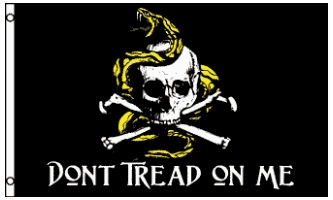
Who cares what Eric Holder said about the George Zimmerman acquittal or Florida’s “Stand Your Ground” law? Isn’t Holder a criminal? Isn’t he guilty of deaths from his own actions, and destruction of individual rights performed on a mass scale? If Holder were not the top cop of the United States Government wouldn’t he find himself in jail for the same types of crimes he accuses others of? Of course a criminal is going to wish that “Stand Your Ground” laws were obsolete, so that their crimes can be committed against others more easily. So his comments have no merit as he should be the one on trial, not George Zimmerman, who already had his day in court. But Holder’s foolish comments were not the most ridiculous comments that came forth in the wake of the Zimmerman murder trial in Sanford, Florida. The dumbest comments of all came from those crying for an end to racism in America upon the Zimmerman acquittal. Out of all the news outlets and commentators who make millions upon millions of dollars giving statements and providing opinions no one has delivered a way to rid America of racism when the accusations have been so extreme once Zimmerman was found not guilty. So I will provide the answer where others have failed.
The way to end racism is to stop using skin color as a weapon to advance collective causes and level the playing field for all individuals by allowing merit to determine all benefits in society. When any collective group demands “equality” they are asking for thuggish democracy to take away resources from someone and give to another so that all can have equal value. This allows people of low value to make themselves appear to have a higher value by lowering the value of others through legalized theft (income redistribution). People of low value may have such a status because they made bad decision in life—such as drinking too much, smoking marijuana so that they cannot hold good paying jobs that require drug tests, or having children where there is not a responsible male in a household to help provide family structure. People who do dumb things in their lives often seek the protection of social collectivism to hide their crimes and the only way vacant personalities can find value where they have squandered it away is to take it away from someone else.
Racism has given such collective groups the illusion of value. By seeking equality they really mean “wealth redistribution.” This is why such groups who advocate racial inequality always fail to identify the value of human beings as a criterion for equality. Rather the true meaning of equality is to allow all races, all sexes, all shapes, sizes, and backgrounds of all people to have equal access to success. Racial groups wish to stack the odds of success in their favor with democratic force through collectivism rather than individual merit. This is why racism advocates for more power and so-called “equality” do not support political candidates like Herman Cain, or Dr. Ben Carson. In the racism debate men who have achieved success based on individual merit no matter what their skin color are always overlooked, because the goal of the equal rights movement is not equal access to success, as men like Carson and Cain represent, but in the ability to level the economic playing field of society by cutting down the high spots and filling the low spots with displaced value.
To end racism tomorrow, all society would need to do would be to recognize the value of merit. Those who work to achieve good merit in their lives would all have equal access to value, while those who chose not to work in such a way would find themselves lacking. If the entire world functioned from a desire to be good ethically, morally, socially—good in every respect of the word, there would be no racism because there would be no advantage of one gang of thugs over another. No group would have dominance over any other, as they would all be irrelevant. After all, isn’t it the desire of the black groups to take power from the perceived, “white man” or the “white supremacists” to take power from the “one world order” or the women from the men, or the men from the women, or the children from their parents, or the public sector worker from the private—all the mentioned are aspects of society that are lacking individual merit and seek their value in the safety of collectivism. That is where the trouble begins and ends. The way to end racism is to judge others on individual merit, not by any group affiliation. When the incentive to gang rule is removed, the issue of racism will be put to rest.
In the wake of the Zimmerman verdict, gangs took to the streets at all political levels to exploit the tragic death for their own social positions, using democratic imposition to force rules on society that is ultimately designed to rob value from once social sector to provide another what it’s missing. The behavior is as stupid as a village of hunters and gathers fighting over the watering hole of an animal both are hunting, or a bunch of foolish Europeans fighting over one version of religion over another. Collective groups are the source of the trouble because they seek to hide individual merit behind their social blanket allowing poor behavior and decisions to be supplemented by the value of others in their group. In every case, such as the would-be criminal Eric Holder, or the members of the Black Panthers, or any of the radical demonstrators who took to the streets to vandalize property like a bunch of malcontents when Zimmerman was found not guilty—the demand is not for justice of a slain kid, the demand is for an improvement in social status without the work of actually earning it. Behind the actions of the hoards who are declaring “equality” are drug addicts, womanizers, jobless buffoons, welfare recipients, child molesters, victims of the molested, and a whole host of characters who are lacking personal value for one reason or the other and find it is much easier to steal value from others to fill themselves than actually doing the work of being good people of good merit. That is what racism is all about, and why it will never go away so long as groups of any kind are given sway over other groups in a perpetual battle for value that is unearned.
Sharon Poe is a tax fighter in the Mason City school district and a personal friend of mine who was on 700 WLW with Darryl Parks recently as they discussed the ridiculousness of the local school levies that are emerging for the November 2013 ballot. Darryl Parks and I used to have very similar views of public education and the stupidity of school levies as a way to fund learning for children. But that has changed over the years. My fight with Lakota has been intense at times and they asked me through members of No Lakota Levy for a cease-fire in the spring of 2012, which I gave them. The terms of the deal were that I wouldn’t continue to expose their inefficiencies on national radio stations and television, and they wouldn’t ask for a levy for 2 years. The deal was made two months after the famous “Latte Sipping Prostitute” comments that I made about the typical levy advocate at Lakota and I told Channel 19 the specifics of the deal when they interviewed me for the announcement of the levy truce from Lakota. CLICK HERE to review. During the broadcast on WLW Sharon told Darryl that Lakota was getting ready to put another levy attempt on the ballot because she knew what I had told her, about the 2 year deal with Lakota. Basically Lakota made a deal with their teachers union in 2011 to take a pay freeze and that deal expires in June of 2014, so they need money to pay their teachers long promised raises. But my argument all along is that the teachers and administration at an average pay of over $63K per year in wages were making too much money to begin with, and needed to slash their wages by at least 5% to properly balance their budget which has been ignored by the administration. Instead the school board chose to spend a lot of money rebuilding their public relations image and disregarded any attempt to reign in their extraordinary wages and hoped that the community would go back to sleep in time for them to pass another levy in 2013, ahead of the new teacher contract. Their actions were known all along, and Sharon warned over the 50,000 watt flame thrower of WLW that Darryl could expect to “Hear from Mr. Rich Hoffman” once Lakota made their announcement, which they now have. For me, this officially breaks the cease-fire, and now the campaign against their tax increase can begin. They won’t like the results.
Unlike Darryl Parks, where he supports public education because it is attached to property values, I have evolved into thinking that government should not be involved in education in any capacity. The more I learned about the kind of characters in public education, the more I am convinced that those types of people should not be teaching the next generation. My position has moved from one of pure logic centering on cost to one of philosophy. The game plan of public education is wrong, and I cannot support it knowing what I do after my experiences in dealing with Lakota administrators, then comparing those observations with districts all over Ohio. The failure of public schools repeats in virtually every district no matter what the wealth demographic, or population density. I see that competition needs to be introduced to the education process, and that property values need to be divorced from school districts if such values can ever be expected to stabilize over time. To continue to participate in the reactionary nature of school aged real estate catering is to destroy communities over the long haul, and Lakota is a prime example of how this process needs to implement such changes in public perception.
So I have no desire in any way to preserve the current education system. Nothing Lakota says is important as far as rationalizations for their monetary needs. I am not sympathetic to their issues. Lakota has become arrogant in their assumption that they are the center piece of a community, and they were only allowed to become such a thing because of the government monopoly of public education that is tied directly to property values. The arrangement is a government scam that ends up teaching children liberal oriented values using money from conservatives to pay for instruction they fundamentally don’t agree with. As a tax payer, I do not support Common Core education, I do not support Global Economies, and I do not support global warming greenie weenie philosophies which are so persistent in public education. I do not support an education system that teaches the earth is more important than a human being. I support an education system that teaches that the human being as a thinking, conscious creature has dominion over the earth and can use the tools of the planet, and rules of nature to fashion a better life for themselves. This is not the teaching of public education, and children should not be forced to learn such anti-concepts. Tax payers who do not agree with the voodoo ideology of the philosopher Kant, the economics of Keynes, or the fuzzy science of AL Gore should not be forced to pay for their own philosophic destruction in a social context. A couple of years ago when I called my political critics “prostitutes” I did so knowing that I was finished supporting public education as a legitimate social mechanism, because I was tired of supporting with my tax dollars people who were hostile to my outlook on life.
During the span of time that Lakota agreed to a ceasefire I decided that upon the next levy, I would do what I could to get more people involved in the levy fight. Prior to my experiences at Lakota the number one concern that anti levy advocates had was the constant social abuse they received from levy supporters who clearly use peer pressure to override logic during elections. My reasoning for calling the bullies of Lakota the names I did was to demonstrate to the many hundreds if not thousands of Lakota residents the limits of the pro levy supporters power, so that they could see for themselves that the bullies had no real weapon beyond name calling. In that way, upon the next levy attempt, more people than me could speak out against them without fear of boycotts, vandalism, or social castigation, which are all tactics of school levy supporters. Over the last two years, this has been the case. More people than ever are feeling comfortable speaking about their displeasure of school levies. More of them are willing to go on the record in the local newspapers, and speak on television, and that is the key to defeating a fourth attempt by Lakota.
I have argued every logical angle there is against the need for any levy, and Lakota doesn’t listen and has no desire to start. So further broadcasts of logic on the radio which are recorded for all time online, did not teach the Lakota administrators anything, so to continue to do the same kind of thing would be a waste of time. Instead, I promised that when Lakota did propose a new levy that I would have something special in store. I will leave the conventional arguments to others who can take the place of what I used to represent. My new position will be much different, but every bit as sensational. The intent won’t be this time to just examine the foolish nature of public education funding methods that are based idiotically on Keynesian economics, but on the utter debacle that the statist philosophy of learning under the United States Department of Education has created, and continues to ask for more money to perpetuate.
I welcome the help from other anti-tax resisters, yet recognize that new strategies must always be utilized if fresh ideas are to be injected into any given argument. For the Lakota Levy of 2013, it is time to take those fresh ideas to a new level which represents my true feelings of what the levy represents to the community, and to the poor minds of the children who are subjected to such progressive education that teaches chaos, irresponsibility, and perpetual government dependence from unionized public workers who disguise their greed and lust for power behind the innocence of children who have been abandoned by short-sighted parents, and exploited by statist public school administers to be delivered into adulthood as shells of their true potential all in the name of tax increases.
It’s time to turn things up a bit now that the truce has been called off by the Lakota school system. Sharon was correct when she told Darryl Parks that he’d be hearing from me. But to what degree has been a secret that I’ve kept close and thought hard about over the last two years. And its time to let that secret out of the bag…………………….
The hypocrisy by police in regard to personal property defense is often astonishingly audacious. Such an example has been percolating in my mind for a few weeks now in regard to the Ontario, California man who shot a drunk intruder who broke into his home and threatened his son as they were sleeping. If the police had been involved in a similar incident the intruder would have been shot and killed with or without a gun. Just the mere threat of danger would allow a police officer to shoot and kill a suspect, and the police union would circle the wagons around the shooter to protect him from legal harm. But the property owner and father of a threatened son is being investigated for homicide by the police because the father can’t prove that he was afraid for his life with sufficient evidence. Here is the story as it appeared at The Blaze.
Police are investigating a potential homicide in Ontario, Calif., after a resident shot and killed a drunk intruder who broke into his apartment and attacked his sleeping son.
In California, citizens have a right to protect themselves and their families, however, there are stipulations in the state.
“The homeowner, the citizen, has to be able to articulate or apply the appropriate amount of force that was done against them,” Ontario Police Sgt. David McBride told NBC Los Angeles, later adding that Manzano was unarmed at the time of the shooting.
Thomas Gilbert Manzano, 24, forced his way into the California residence at around 3 a.m. on Monday, according to police. Manzano had been drinking alcohol for several hours with a friend when they decided to break into an apartment they thought was vacant. They had reportedly been squatting in one of the apartments but got confused as to its location.
Manzano was first turned away from the apartment, but he allegedly threatened the resident and forced his way into the home through a bedroom window and then went after the resident’s adult son. Police say the suspect threatened the son and a physical altercation ensued.
Responding to the commotion coming from his son’s room, the father retrieved his firearm and rushed to protect his son. He then shot several rounds at the suspect.
Manzano was transported to a local hospital with serious injuries. He was later pronounced dead.
The case is now being investigated as a homicide and the district attorney will determined whether the shooting was justified, according to officials.
The resident and his son were cooperating with police.
Manzano’s uncle, “Alfonso,” told NBC Los Angeles that the shooting was not justified.
“Just because you have a gun and its registered, doesn’t give you the right to kill somebody,” he said.
There are so many things wrong with that story, first the rights of the property owner are obviously not respected by law enforcement, as they see it as their job to do any and all killing that might need to be done. The decision for use of force is measured differently by them than a homeowner by society, which is wrong. Second, the rights of the intruder are superseding the rights of the sleeping son. This is a left over mentality from statist collectivism which believes that each according to their need is the pillar of modern society. If he drunk fool who broke into a home needed a place to rest his head for the night, then the property owner has an obligation to provide it, or to call the police and wait for 15 minutes while they arrive—superseding the authority of the father over his son, and over his property, surrendering protection to statist authorities. Then of course are the comments of the drunken victim’s uncle who declared that just because the homeowner had a gun, it doesn’t give him the right to use it.
On that last statement, where was the uncle in instructing his nephew that breaking into homes was not a good idea? What about harassing a homeowner while they sleep? What about living their life irresponsibly and imposing their mistakes on innocent people? I would argue that the responsibility for the drunken intruder’s behavior is partly the fault of the uncle, yet he purposely shifted the blame for the death on the homeowner who has been nothing but abused in this story, by the police, the drunken intruder, and now social progressive parasitic behavior patterns. There is no responsibility taken by any of the bad characters in this case, only on the homeowner. The unsaid mandate by the statist authorities is that homeownership is not of value, and that citizens surrender their rights to personal defense in light of the greater needs of drunks, punks, and scallywags.
We live in a society that does not put value judgments on those who perform bad behavior, only on those who attempt to do good. This is a direct result of a parasitic progressive philosophy that has been built upon the neurosis of Immanuel Kant’s 1781 Critique of Pure Reason – which is everything but reasonable. The thinking derived from the anti-concepts introduced by the philosopher Kant is what makes this ridiculous shooting in California such an appalling case.
The facts of American culture dictate that property ownership is the highest form of value in society. The home owning father has a right to protect that value from an intruder. The necessity to prove threat assessment is not the homeowner’s responsibility; it is on the drunken intruder. He made decisions to impair his thinking, to impose himself on home ownership, and threaten the son of the homeowner, which is another form of ownership, the relationship of a father and a son. If the son is killed, then the intruder takes everything the father worked for his entire life to put into the son – so the father has a right to protect that investment. In my mind, the son also has a right to defend himself with a firearm just for being awaken from a dream in his own bed. The dream is his. The bed is his. The confines of his room are his. He does not deserve, or need some idiot to stumble into his bedroom in the middle of the night yelling and screaming because the drunk wants a place to crash and work the alcohol out of his system.
Instead, using the philosophy of Kant’s brand of Transcendental Idealism that attempts to combine rationalism and empiricism in a nutty effort to merge the world of the seen and witnessed with the world of the unseen and inexperienced has created a society of law that seeks to punish value the only place that value exists, on the homeowner. The drunken thug has no value to be redeemed. The uncle has no value to be redeemed as he contributed to the behavior of his nephew. The sleeping son is still building value up in his life so that leaves only the father/homeowner who sought to protect his value to take value from in order to redeem the sins of all involved.
I recently spoke to our local sheriff and heard what he had to say when asked what one should do if a homeowner shot and killed a home intruder. His response angered me greatly. He replied that nobody should do that, and that there would be a lot of trouble if it happened. “But if it did, make sure to report that you feared for your life.” As he said these things I watched him walk around with a .38 snub nose packed in a holster on his hip, knowing he has the authority to shoot it. If he were to walk out in the parking lot and someone even made the shape of a gun and pointed it at him, he could gun that target down without any such trouble as the California homeowner experienced. He wouldn’t have to make any kind of passive cry for relief by declaring that he “feared for his life” like some trivial beta-man lobbying for same-sex marriage. He would simply be able to gun down the threat to his life and protect the value of it because he’s a police officer, and in a statist society, they have more value than a homeowner.
The California case of the home intruder being shot and killed by a property owner is one of the paramount issues of our time. It is in essence the battle between not just life and death, but ownership and value, against no value from collective resources. It comes down to a failed philosophical adoption that no lawyer in the country is equipped to handle. Because of that, the father is being needlessly prosecuted and ruthlessly drug through a court system that will cost him a personal fortune, when in fact he should have been able to shoot the threat, throw the body out on the front lawn and call the cops to pick up the body. Then after all the blood was cleaned up, and everyone settled down, the father could have taken his son to get an ice cream to repair the intrusion on his sleep and put the ordeal behind them within a couple of hours. That would be a philosophy of justice which is not present in this case, and has been eradicated in order to preserve the infantile statism which was born from Immanuel Kant.
I love the 4th of July and frequent displays of patriotism that is displayed on America’s unique holiday celebrating freedom. But I am weary at the same time of such festivities because I know what’s coming. Ladies and gentlemen reading these words right now, the perils that faced the founders of America pale in comparison to the challenges of our current time. There is a reason that for the last 10 days or so I have provided many articles showing readers what America looked like before the implementation of The New Deal which was essentially socialism in its design long supported by progressives disguising their love of European communism, and the grand climax of The Great Society which became possible due to the 1964 election of the most liberal congress in American history with the exception of the one in 1938. Those elections were purchased from a gullible American public with deceit, and now the bills for those errors are coming due in our current time. America is about to hit a brick wall, and for anybody to survive, they need to understand that America was a great country before those terrible programs, and they need to understand that for America to survive for future 4th of July holidays the fight of our lives is currently before us. The video below sums up the problem in the simplest way possible.
At the end of May of 2013 the Social Security and Medicare Board of Trustees published a little known report that was generally ignored by the media, because in it was a very kind warning that by 2026, which is in essence only a decade away, those programs run out of money. They cannot be sustained without raising taxes and taxes cannot be raised without crippling the American way of life. We are at an impasse that cannot be avoided and there is no compromise with that fiscal cliff. It is a fact of reality that nobody wants to look at. Politicians are terrified of it, and the public does not wish to face the summary of their years of neglect in American politics where they paid attention to everything but one of the most important parts of their society—their government. So below is a portion of the report along with a link that will take you dear reader to the more specific information. I suggest you read this carefully and pass it along to a friend. It is important to understand the severity of the problem.
A SUMMARY OF THE 2013 ANNUAL REPORTS
Social Security and Medicare Boards of Trustees
Published 5/31/2013
A MESSAGE TO THE PUBLIC:
Each year the Trustees of the Social Security and Medicare trust funds report on the current and projected financial status of the two programs. This message summarizes the 2013 Annual Reports.
Neither Medicare nor Social Security can sustain projected long-run programs in full under currently scheduled financing, and legislative changes are necessary to avoid disruptive consequences for beneficiaries and taxpayers. If lawmakers take action sooner rather than later, more options and more time will be available to phase in changes so that the public has adequate time to prepare. Earlier action will also help elected officials minimize adverse impacts on vulnerable populations, including lower-income workers and people already dependent on program benefits.
Social Security and Medicare together accounted for 38 percent of federal expenditures in fiscal year 2012. Both programs will experience cost growth substantially in excess of GDP growth through the mid-2030s due to rapid population aging caused by the large baby-boom generation entering retirement and lower-birth-rate generations entering employment and, in the case of Medicare, to growth in expenditures per beneficiary exceeding growth in per capita GDP. In later years, projected costs expressed as a share of GDP trend up slowly for Medicare and are relatively flat for Social Security, reflecting very gradual population aging caused by increasing longevity and slower growth in per-beneficiary health care costs.
Social Security
Social Security’s Disability Insurance (DI) program satisfies neither the Trustees’ long-range test of close actuarial balance nor their short-range test of financial adequacy and faces the most immediate financing shortfall of any of the separate trust funds. DI Trust Fund reserves expressed as a percent of annual cost (the trust fund ratio) declined to 85 percent at the beginning of 2013, and the Trustees project trust fund depletion in 2016, the same year projected in the last Trustees Report. DI cost has exceeded non-interest income since 2005, and the trust fund ratio has declined since peaking in 2003. While legislation is needed to address all of Social Security’s financial imbalances, the need has become most urgent with respect to the program’s DI component. Lawmakers need to act soon to avoid reduced payments to DI beneficiaries three years from now.
Social Security’s total expenditures have exceeded non-interest income of its combined trust funds since 2010, and the Trustees estimate that Social Security cost will exceed non-interest income throughout the 75-year projection period. The deficit of non-interest income relative to cost was about $49 billion in 2010, $45 billion in 2011, and $55 billion in 2012. The Trustees project that this cash-flow deficit will average about $75 billion between 2013 and 2018 before rising steeply as income growth slows to the sustainable trend rate after the economic recovery is complete and the number of beneficiaries continues to grow at a substantially faster rate than the number of covered workers. Redemption of trust fund asset reserves by the General Fund of the Treasury will provide the resources needed to offset Social Security’s annual aggregate cash-flow deficits. Since the cash-flow deficit will be less than interest earnings through 2020, reserves of the combined trust funds measured in current dollars will continue to grow, but not by enough to prevent the ratio of reserves to one year’s projected cost (the combined trust fund ratio) from declining. (This ratio peaked in 2008, declined through 2012, and is expected to decline steadily in future years.) After 2020, Treasury will redeem trust fund asset reserves to the extent that program cost exceeds tax revenue and interest earnings until depletion of total trust fund reserves in 2033, the same year projected in last year’s Trustees Report. Thereafter, tax income would be sufficient to pay about three-quarters of scheduled benefits through 2087.
A temporary reduction in the Social Security payroll tax rate in 2011 and 2012 reduced payroll tax revenues by an estimated $222 billion in total. The legislation establishing the payroll tax reduction also provided for transfers from the General Fund to the trust funds in order to “replicate to the extent possible” payments that would have occurred if the payroll tax reduction had not been enacted. Those General Fund reimbursements amounted to about 15 percent of the program’s non-interest income in 2011 and 2012. The temporary payroll tax reduction expired at the end of 2012.
Under current projections, the annual cost of Social Security benefits expressed as a share of workers’ taxable earnings will grow rapidly from 11.3 percent in 2007, the last pre-recession year, to roughly 17.0 percent in 2037, and will then decline slightly before slowly increasing after 2050. Cost displays a slightly different pattern when expressed as a share of GDP. Program cost equaled 4.2 percent of GDP in 2007, the last pre-recession year, and the Trustees project that cost will increase to 6.2 percent of GDP for 2036, then decline to about 6.0 percent of GDP by 2050, and thereafter rise slowly reaching 6.2 percent by 2087.
The projected 75-year actuarial deficit for the combined Old-Age and Survivors Insurance and Disability Insurance (OASDI) Trust Funds is 2.72 percent of taxable payroll, up from 2.67 percent projected in last year’s report. This deficit amounts to 21 percent of program non-interest income or 17 percent of program cost. A 0.06 percentage point increase in the OASDI actuarial deficit would have been expected if nothing had changed other than the one-year extension of the valuation period to 2087. The effects of recently enacted legislation, updated demographic data, updated economic data and assumptions further worsened the actuarial deficit, but these effects were completely offset by the favorable effects of updated programmatic data and improved methodologies.
While the combined OASDI program fails the long-range test of close actuarial balance, it does satisfy the test for short-range (ten-year) financial adequacy. The Trustees project that the combined trust fund asset reserves at the beginning of each year will exceed that year’s projected cost through 2027.
Medicare
The Trustees project that the Medicare Hospital Insurance (HI) Trust Fund will be the next to face depletion after the DI Trust Fund. The projected date of HI Trust Fund depletion is 2026, two years later than projected in last year’s report, at which time dedicated revenues would be sufficient to pay 87 percent of HI cost. The Trustees project that the share of HI cost that can be financed with HI dedicated revenues will decline slowly to 71 percent in 2047, and then rise slowly until it reaches 73 percent in 2087. As it has since 2008, the HI Trust Fund will pay out more in hospital benefits and other expenditures than it receives in income in all years until reserve depletion.
The projected HI Trust Fund’s long-term actuarial imbalance is smaller than that of the combined Social Security trust funds under the assumptions employed in this report.
The estimated 75-year actuarial deficit in the HI Trust Fund is 1.11 percent of taxable payroll, down from 1.35 percent projected in last year’s report. The HI fund again fails the test of short-range financial adequacy, as its trust fund ratio is already below 100 percent and is expected to decline continuously until reserve depletion in 2026. The fund also continues to fail the long-range test of close actuarial balance. The HI 75-year actuarial imbalance amounts to 29 percent of tax receipts or 23 percent of program cost.
The modest improvement in the outlook for HI long-term finances is principally due to: (i) lower projected spending for most HI service categories especially for skilled nursing facilities to reflect lower-than-expected spending in 2012 and other recent data; (ii) lower projected Medicare Advantage program costs that reflect recent data suggesting that certain provisions of the Affordable Care Act will reduce growth in these costs by more than was previously projected; and (iii) a refinement in projection methods that reduces assumed per beneficiary cost growth during the transition period between the short-range projections and the long-range projections. Partially offsetting these favorable changes to the projections are somewhat lower projected levels of tax income that reflect lower-than-expected tax income in 2012.
The Trustees project that Part B of Supplementary Medical Insurance (SMI), which pays doctors’ bills and other outpatient expenses, and Part D of SMI, which provides access to prescription drug coverage, will remain adequately financed into the indefinite future because current law automatically provides financing each year to meet the next year’s expected costs. However, the aging population and rising health care costs cause SMI projected costs to grow steadily from 2.0 percent of GDP in 2012 to approximately 3.3 percent of GDP in 2035, and then more slowly to 4.0 percent of GDP by 2087. General revenues will finance roughly three-quarters of these costs, and premiums paid by beneficiaries almost all of the remaining quarter. SMI also receives a small amount of financing from special payments by States and from fees on manufacturers and importers of brand-name prescription drugs. Projected costs for Part B assume an almost 25-percent reduction in Medicare payment rates for physician services will be implemented in 2014 as required by current law, which is highly unlikely.
The Trustees project that total Medicare cost (including both HI and SMI expenditures) will grow from approximately 3.6 percent of GDP in 2012 to 5.6 percent of GDP by 2035, and will increase gradually thereafter to about 6.5 percent of GDP by 2087.
The drawdown of Social Security and HI Trust Fund reserves and the general revenue transfers into SMI will result in mounting pressure on the Federal budget. In fact, pressure is already evident. For the seventh consecutive year, the Social Security Act requires that the Trustees issue a “Medicare funding warning” because projected non-dedicated sources of revenues primarily general revenues are expected to continue to account for more than 45 percent of Medicare’s outlays in 2013, a threshold breached for the first time in fiscal year 2010.
Conclusion
Lawmakers should address the financial challenges facing Social Security and Medicare as soon as possible. Taking action sooner rather than later will leave more options and more time available to phase in changes so that the public has adequate time to prepare.
Read the rest complete with charts and diagrams at the following link:
To understand how we got into this mess it is also important to study The Great Society policies which culminated in the 1960s by Lyndon Johnson, and was the work of Democrats from the 1930s as a progressive platform rooted in global communism. Even though it is long, it is important to read. Some reading this have actually supported The Great Society and are currently avoiding dealing with the errors of their past by praying to some finance God that relief will magically appear. It will not. It is important to understand the problem, and then work to remove all these elements from our society so that we may save it. In previous documents I have shown how America used to be, and can be again. Those who support The Great Society look at such times as antiquated and a step backwards. In a way they are right, I do wish to step back in time—to a time before the socialist imposition of The New Deal, and The Great Society. I don’t want to pay for them. I don’t want to deal with people who are addicted to those government services, and I want to steer away from the collapse of those programs in 2026.
The Great Society was a set of domestic programs in the United States announced by President Lyndon B. Johnson at Ohio University and subsequently promoted by him and fellow Democrats in Congress in the 1960s. Two main goals of the Great Society social reforms were the elimination of poverty and racial injustice. New major spending programs that addressed education, medical care, urban problems, and transportation were launched during this period. The Great Society in scope and sweep resembled the New Deal domestic agenda of Franklin D. Roosevelt.
Some Great Society proposals were stalled initiatives from John F. Kennedy‘s New Frontier. Johnson’s success depended on his skills of persuasion, coupled with the Democraticlandslide in the 1964 election that brought in many new liberals to Congress, making the House of Representatives in 1965 the most liberal House since 1938.[1]
The Voting Rights Act of 1965 assured minority registration and voting. It suspended use of literacy or other voter-qualification tests that had sometimes served to keep African-Americans off voting lists and provided for federal court lawsuits to stop discriminatory poll taxes. It also reinforced the Civil Rights Act of 1964[10] by authorizing the appointment of federal voting examiners in areas that did not meet voter-participation requirements. The Immigration and Nationality Services Act of 1965 abolished the national-origin quotas in immigration law. The Civil Rights Act of 1968 banned housing discrimination and extended constitutional protections to Native Americans on reservations.
The most ambitious and controversial part of the Great Society was its initiative to end poverty. The Kennedy Administration had been contemplating a federal effort against poverty. Johnson, who, as a teacher had observed extreme poverty in Texas among Mexican-Americans, launched an “unconditional war on poverty” in the first months of his presidency with the goal of eliminating hunger and deprivation from American life. The centerpiece of the War on Poverty was the Economic Opportunity Act of 1964, which created an Office of Economic Opportunity (OEO) to oversee a variety of community-based antipoverty programs.
Federal funds were provided for special education schemes in slum areas, including help in paying for books and transport, while financial aid was also provided for slum clearances and rebuilding city areas. In addition, the Appalachian Regional Development Act of 1965 created jobs in one of the most impoverished regions of the country.[citation needed] The Economic Opportunity Act of 1964 provided various schemes in which young people from poor homes could receive job training and higher education.[15]
The OEO reflected a fragile consensus among policymakers that the best way to deal with poverty was not simply to raise the incomes of the poor but to help them better themselves through education, job training, and community development. Central to its mission was the idea of “community action“, the participation of the poor in framing and administering the programs designed to help them.
Programs
The War on Poverty began with a $1 billion appropriation in 1964 and spent another $2 billion in the following two years. It spawned dozens of programs, among them the Job Corps, whose purpose was to help disadvantaged youth develop marketable skills; the Neighborhood Youth Corps, established to give poor urban youths work experience and to encourage them to stay in school; Volunteers in Service to America (VISTA), a domestic version of the Peace Corps, which placed concerned citizens with community-based agencies to work towards empowerment of the poor; the Model Cities Program for urban redevelopment; Upward Bound, which assisted poor high school students entering college; legal services for the poor; and the Food Stamp Act of 1964 (which expanded the federal food stamp program).[16]
Programs included the Community Action Program, which initiated local Community Action Agencies charged with helping the poor become self-sufficient; and Project Head Start, which offered preschool education for poor children. In addition, funding was provided for the establishment of community health centers to expand access to health care,[17] while major amendments were made to Social Security in 1965 and 1967 which significantly increased benefits, expanded coverage, and established new programs to combat poverty and raise living standards.[18] In addition, average AFDC payments were 35% higher in 1968 than in 1960, but remained insufficient and uneven.[19]
Education
The most important educational component of the Great Society was the Elementary and Secondary Education Act of 1965, designed by Commissioner of Education Francis Keppel. It was signed into law on April 11, 1965, less than three months after it was introduced. It ended a long-standing political taboo by providing significant federal aid to public education, initially allotting more than $1 billion to help schools purchase materials and start special education programs to schools with a high concentration of low-income children. The Act established Head Start, which had originally been started by the Office of Economic Opportunity as an eight-week summer program, as a permanent program.
The Higher Education Facilities Act of 1963, which was signed into law by Johnson a month after becoming president,[20] authorized several times more college aid within a five-year period than had been appropriated under the Land Grant College in a century. It provided better college libraries, ten to twenty new graduate centers, several new technical institutes, classrooms for several hundred thousand students, and twenty-five to thirty new community colleges a year.[21]
This major piece of legislation was followed by the Higher Education Act of 1965, which increased federal money given to universities, created scholarships and low-interest loans for students, and established a national Teacher Corps to provide teachers to poverty-stricken areas of the United States. The Act also began a transition from federally funded institutional assistance to individual student aid.
The Bilingual Education Act of 1968 offered federal aid to local school districts in assisting them to address the needs of children with limited English-speaking ability until it expired in 2002.[22]
In 1966 welfare recipients of all ages received medical care through the Medicaid program. Medicaid was created on July 30, 1965 under Title XIX of the Social Security Act of 1965. Each state administers its own Medicaid program while the federal Centers for Medicare and Medicaid Services (CMS) monitors the state-run programs and establishes requirements for service delivery, quality, funding, and eligibility standards.
Arts and cultural institutions
National endowments for arts and humanities
In September 1965, Johnson signed the National Foundation on the Arts and Humanities Act into law, creating both the National Endowment for the Arts and National Endowment for the Humanities as separate, independent agencies. Lobbying for federally funded arts and humanities support began during the Kennedy Administration. In 1963 three scholarly and educational organizations—the American Council of Learned Societies (ACLS), the Council of Graduate Schools in America, and the United Chapters of Phi Beta Kappa—joined together to establish the National Commission on the Humanities. In June 1964, the commission released a report that suggested that the emphasis placed on science endangered the study of the humanities from elementary schools through postgraduate programs. In order to correct the balance, it recommended “the establishment by the President and the Congress of the United States of a National Humanities Foundation.”[24]
In August 1964, Congressman William S. Moorhead of Pennsylvania proposed legislation to implement the commission’s recommendations. Support from the White House followed in September, when Johnson lent his endorsement during a speech at Brown University. In March 1965, the White House proposed the establishment of a National Foundation on the Arts and Humanities and requested $20 million in start-up funds. The commission’s report had generated other proposals, but the White House’s approach eclipsed them. The administration’s plan, which called for the creation of two separate agencies each advised by a governing body, was the version approved by Congress. Richard Nixon dramatically expanded funding for NEH and NEA.[24]
Public broadcasting
After the First National Conference on Long-Range Financing of Educational Television Stations in December 1964 called for a study of the role of noncommercial education television in society, the Carnegie Corporation agreed to finance the work of a 15-member national commission. Its landmark report, Public Television: A Program for Action, published on January 26, 1967, popularized the phrase “public television” and assisted the legislative campaign for federal aid. The Public Broadcasting Act of 1967, enacted less than 10 months later, chartered the Corporation for Public Broadcasting as a private, non-profit corporation.
The law initiated federal aid through the CPB for the operation, as opposed to the funding of capital facilities, of public broadcasting. The CPB initially collaborated with the pre-existing National Educational Television system, but in 1969 decided to start the Public Broadcasting Service (PBS). A public radio study commissioned by the CPB and the Ford Foundation and conducted from 1968–1969 led to the establishment of National Public Radio, a public radio system under the terms of the amended Public Broadcasting Act.
Cultural centers
Two long-planned national cultural and arts facilities received federal funding that would allow for their completion through Great Society legislation. A National Cultural Center, suggested during the Franklin Roosevelt Administration and created by a bipartisan law signed by Dwight Eisenhower, was transformed into the John F. Kennedy Center for the Performing Arts, a living memorial to the assassinated president. Fundraising for the original cultural center had been poor prior to legislation creating the Kennedy Center, which passed two months after the president’s death and provided $23 million for construction. The Kennedy Center opened in 1971.[25]
In the late 1930s the United States Congress mandated a Smithsonian Institution art museum for the National Mall, and a design by Eliel Saarinen was unveiled in 1939, but plans were shelved during World War II. A 1966 act of Congress established the Hirshhorn Museum and Sculpture Garden as part of the Smithsonian Institution with a focus on modern art, in contrast to the existing National Art Gallery. The museum was primarily federally funded, although New York financier Joseph Hirshhorn later contributed $1 million toward building construction, which began in 1969. The Hirshhorn opened in 1974.[26]
In 1964, Johnson named Assistant Secretary of Labor Esther Peterson to be the first presidential assistant for consumer affairs.
The Cigarette Labeling and Advertising Act of 1965 required packages to carry warning labels. The Motor Vehicle Safety Act of 1966 set standards through creation of the National Highway Traffic Safety Administration. The Fair Packaging and Labeling Act requires products identify manufacturer, address, clearly mark quantity and servings. The statute also authorizes HEW and FTC to establish and define voluntary standard sizes. The original would have mandated uniform standards of size and weight for comparison shopping, but the final law only outlawed exaggerated size claims.
The Child Safety Act of 1966 prohibited any chemical so dangerous that no warning can make it safe. The Flammable Fabrics Act of 1967 set standards for children’s sleepwear, but not baby blankets.
The Wholesome Meat Act of 1967 required inspection of meat which must meet federal standards. The Truth-in-Lending Act of 1968 required lenders and credit providers to disclose the full cost of finance charges in both dollars and annual percentage rates, on installment loan and sales. The Wholesome Poultry Products Act of 1968 required inspection of poultry which must meet federal standards. The Land Sales Disclosure Act of 1968 provided safeguards against fraudulent practices in the sale of land. The Radiation Safety Act of 1968 provided standards and recalls for defective electronic products.
Environment
Joseph A. Califano, Jr. has suggested that Great Society’s main contribution to the environment was an extension of protections beyond those aimed at the conservation of untouched resources.[28] In a message he transmitted to Congress, President Johnson said:
The air we breathe, our water, our soil and wildlife, are being blighted by poisons and chemicals which are the by-products of technology and industry. The society that receives the rewards of technology, must, as a cooperating whole, take responsibility for [their] control. To deal with these new problems will require a new conservation. We must not only protect the countryside and save it from destruction, we must restore what has been destroyed and salvage the beauty and charm of our cities. Our conservation must be not just the classic conservation of protection [against] development, but a creative conservation of restoration and innovation.
— Special Message to the Congress on Conservation and Restoration of Natural Beauty; February 8, 1965[29]
At the behest of Secretary of the Interior Stewart Udall, the Great Society included several new environmental laws to protect air and water. Environmental legislation enacted included:
Clear Air, Water Quality and Clean Water Restoration Acts and Amendments
Amendments made to the 1931 Davis-Bacon Act in 1964 extended the prevailing wage provisions to cover fringe benefits,[30] while several increases were made to the federal minimum wage.[31] In addition, a comprehensive minimum rate hike was signed into law that extended the coverage of the Fair Labor Standards Act to about 9.1 million additional workers.[30]
For those who wish to save America, the government must be removed from public education, from medicine, from science, from labor relations, from retirement financing, and from environmental preservation. For that last many will say it is because of government that America has National Parks and a conservation movement at all. For them I point toward Disney World who took capitalism and converted an environmental marshland in the hot Central Florida region and made it a haven of environmental awareness producing money that was poured into science that no government on earth could duplicate. The Walt Disney property in Florida is better managed than any National Park, and serves the same purpose of preservation of valuable land. Similar examples could be provided to every topic mentioned above and more. But first Americans must dust off their tendency to self-reliance and embrace the past that built such characters and reject the past that paved the way to dependency, the policies of The Great Society.
It is good to enjoy fireworks on The Fourth of July and celebrate a time when America declared its independence. But America through trickery, deceit, and political barbarism is more dependent on foreign forces than ever and the strings to that dependency are in the programs of The New Deal and The Great Society. The fight before us will be much more vicious than in any other time in American history. It will be far from easy. That is why am turning my focus on a period of American history that had touches of true independence whether it was in the films of Douglas Fairbanks, or the various renditions of the Lone Ranger. For me those times are represented by the bullwhip and speak of an American attitude that is rooted in justice constantly pursuing freedom. CLICK HERE TO READ MORE. But it is time to take off the masks of convention, and politeness, or patient understanding then declare that the hands of time need to be reset in America to a time before the destructive programs that a vast majority of citizens in The United States have become accustom to. A failure to take off those masks of politeness will result in the end of American civilization as a fiscal powerhouse. It may continue on as Russia currently does, as an impoverished former superpower crushed by communist ideology, but it will not be the nation that we all know and love today. So the fight that is the responsibility of our times is before us, and simply igniting fireworks off on the 4th of July is not enough. An American revolution that has not yet been given a name is before us now, and will occur on all our watches who read this now. When history views us, they won’t celebrate our polite masks that are worn in society when oppressors wished to imprison us with more entitlement programs which only serve politicians in Washington and their ability to stay in office by selling votes through tax payer resources. It is time to dust off our American individuality and get mean and nasty to those who wish to put shackles about our necks with financial slavery. A failure to do so will actually bring more harm to others than it ever averts.
“The trend adds to the nervousness of Southwest Ohio school officials and school parents who await the state budget’s unveiling later this month. Smaller enrollment often means less school funding in Ohio’s biennium budgets. And fewer state dollars mean districts often ask voters to pay higher school taxes.”
You can read the rest of that hilarious article at the following link.
As Lakota continues to decline in enrollment, it may well be possible that Lakota could reduce its staff and administrators by up to 50% by the time 2020 arrives from what it is now. For the tax payers of the Lakota school district that is wonderful news. For business owners looking to invest in the community, that is wonderful news as well, as tax increases should not be needed. It’s also good news for the family of two who have lived in the Lakota district for twenty to thirty years and has been considering selling their home to avoid the property taxes by retiring to Florida. Now those empty-nesters can remain in their homes as the tax burden at Lakota should not increase.
Yet the administration at Lakota did not see this good news. Instead they somehow translated that information as meaning they would need a tax increase…………..and that is HILARIOUS! Do they believe that the same staff level will be maintained when the student population drops down to 11,000 students, or even 10,000? Are teachers going to be teaching in classrooms of only 5 to 10 kids? Is that what they think? Well, apparently………they do. Such a statement about tax increases when enrollment decreases just goes to prove how terribly out-of-touch those types of government employees are, and what little management actually goes into making business decisions in public schools.
The right thing to do at Lakota would be to have a reduction in force every year that there is student enrollment decreases and make sure that the most highly paid employees are either forced to leave, or reduced in force to dynamically supply the student needs. But public education is never interested in doing what’s right. After all, they are “progressive” organizations. They believe they exist to give away jobs like Santa Clause at Christmas time, and they actually entertain the idea that they might have to raise taxes to keep all their employees on staff. That is what was suggested in the Enquirer article, which is absolutely preposterous. Such thinking is the construct of idealism and has no basis in reality.
The decline in enrollment has nothing to do with the three defeated school levies which took place from 2010 to 2012. It may have in a small way prevented the very rare type of real estate purchaser who would be attracted to the Four Bridges type of housing developments, the affluent latte sippers who buy half million dollar homes then expect the community to give their children a free baby sitting service complete with an education. But what has been lost in real estate sales from those types has been gained in retained businesses that have not had to flee the community due to high taxes, and proved conducive to affluent home owners who enjoy living in a community where the children do not run the entire town. Rather the decline in enrollment is part of a natural process, and is the byproduct of a society that does not value the building of families but instead promotes the value of single status lifestyles which last well into young adults thirty something years. If every home in the Lakota district had a mom and a dad, (which most do) yet only produce 1.7 children per home, then the population not just of Lakota as a district will decline, but the nation as well.
Because the district of Lakota is considered affluent, and there are barriers to entry, not quite as excessive as there is in Indian Hill, but is moving in that direction, this means that fewer families can qualify to send their kids to the Lakota school system. Those that can have probably already raised their families and are looking for the kinds of social offerings that come with developments like Carriage Hill Homes, or the upcoming Liberty Center shopping complex. The face and nature of the community are changing, and that change does not center around the neurosis of a local school system, but on quality, and affluence by people who can see through the tantrums of Lakota schools and the bottomless pit of tax increases they wish to impose hiding their lack of management skills, and gross negligence of proper head-count maintenance.
It was funny while it lasted, not its just sad………………………………..
A couple of things occurred lately on the education front concerning my friend Kelly Kohls and the labor union interest centering on the contract being negotiated at Springboro schools. A labor supporter who writes me often passed along a letter he sent out to public education teachers encouraging them to work less, if districts are not going to pay wage increases. Not only did he name me in the letter but other education reformers in Southern Ohio as well who stand against tax increases.
I am very disappointed that Kelly is asking for a renewal levy. I would like to see her walking taxes backwards, not trying to maintain the current tax amount, which should be the goal of every governing body. I hope that voters will take this chance and vote down the renewal levy so that Kelly can then take that mandate from the community and further cut salaries in the Springboro schools system bringing down their per pupil costs.
As to the perception of value that the letter writer represents he forgets what I have told him privately many times, that I do not have a value for the teachers he’s advocating for. I would like to see competitive options to public education that would drive down the cost of education, and give families alternatives to left-leaning education practices. When labor unions declare that their teachers are the pillars of a community, the question that must be asked is for whose version of “community.” My version of community is far different from William Schmidt. He sees his treasured teachers as a value to children; I see them as parasites that rot the minds of creativity and puts chains upon their thoughts before they can hardly read a book. Test scores and social observation support my opinion. I would like to see public education dismantled and for parents to take responsibility for educating their own children with the saved money that roll-backs would provide them. If Kelly’s district of Springboro defeats their levy forcing the school board to make financial adjustments, the tax money saved by residents could be applied to a charter school that teaches something other than progressive education.
When Schmidt says below that nobody has come up with “creative” ways to fund education that is because the value of education is in question, not the dollars that should be found to pay for it. The type of education is the current problem. That must be solved before ways of funding it can be analyzed. In the most simplified form, teaching and the responsibility of education must shift back to the parents and away from government, particularly at the state and federal level. The collective summation of all a community’s children thrown into a big pot of stew while the parents run around doing whatever they feel like as community funded baby sitters take care of their offspring is not working. The parents get lazy because public teachers are raising their kids. Teachers get lazy at their jobs because there are no measurements of quality to keep their job. They get paid pretty much the same whether they are good or bad teachers because their collective bargaining agreement says so, an agreement that robs money from every home in a school district for a system that is a complete failure.
I’m including the letter Schmidt sent to me so that it can be seen how the other side thinks. I don’t think he’s a bad person, just as a lot of people on that side are not bad. But they believe that the wrong things are important. They hide their misconception about reality behind a shield of children. Regardless, I am disappointed that Kelly is putting a renewal levy on the ballot. That’s why she’s a school board member and I’m not. She still wants the system to work, and I don’t. I want it defunded, and re-invented with competition as the foundation. And that answers the second issue to Mr. Schmidt, it is not my job to find a way to raise the “community’s” kids, and pay for the labor of it with a government school. I support private tutors, and if people can’t afford that, then home school the children. Children are better off with a parent who has limited knowledge about the world, but a lot of love to give them than a teacher with a doctorate who makes too much money and is instructing children to vote for progressive causes ruining the mind of young people for the first 15 years of their life, till they wake up at age 35 and realize that all the leftist causes they believe in were the creations of their public schools. They spend the rest of their lives unlearning all the garbage they learned in K-12 education. It would save them a great deal of headache later to not learn those things at all and let a computer at home teach them the basics like math, English, science, then letting The History Channel teach them everything else. That would be much more effective than even the best public schools paid for with stolen property tax money.
Sent by William Schmidt:
During its meeting on June 19, the Springboro Community City Schools Board of Education (BOE) voted in favor of placing a $9.2 million renewal levy on the November ballot.
“We want to underscore that this is a renewal levy, and we are not asking for new money. As a result, taxes will not be raised for residents,” said Kelly Kohls, BOE President. “The renewal is necessary to continue to fund the academic programs that have helped our school district achieve an Excellent with Distinction rating. We are committed to operating the district within the budget that Springboro taxpayers have approved. With the renewal levy, the board believes the district will be sustainable until 2017.”
This renewal levy announcement comes while negotiations are in progress between the Springboro BOE and the Springboro Education Association (SEA), the union representing the teachers and support staff employees.
“The board and administration have worked diligently together to manage the budget,” Kohls added. “By applying fiscally prudent measures across the school district, we have been able to reinstate textbook purchasing, technology upgrades, bus replacements and facility improvements. We have also provided necessary intervention at the elementary grade level, as well as enhanced services for gifted children.”
What I find interesting is that somewhere in Springboro’s past, this money that is suggested to be renewed was new money. Originally, why didn’t Springboro live within their means and and sustain their Excellence with Distinction without this money? I can’t find out when this levy (now needing renewal) was passed. But since then it seems that Springboro has needed these funds.
Now, however, Springboro seems to not need any new money. The logic is lost to me. It seems that as long as the labor force is willing to accept pay freezes and no step increases and many other concessions, the district can sustain itself without asking for new money. Why didn’t it do that before passing the levy (now needing renewal) in the past? Why does it need this renewal to fund academic programs to remain excellent?
The real fact is there is an assumption that the labor force will sustain their current efforts of sacrifice and working extra hours in the face of pay freezes and dwindling benefits. I contend that this assumption is what is truly not sustainable.
Once again, I call on the teachers of Lakota and now Springboro to stop working outside of the borders of their contract. Work a normal day and then use time that used to be devoted to school outside a 40 hour work week and seek employment elsewhere with that time or devote it more to their own families. Once a plan is in place to sustain the extra efforts that teachers have provided in the past, then they can go back to a more professional approach. School budgets can always be sustained without new money and levy passage as long as the increased burden is placed on the labor force. North Coast, No Lakota Levy, Educate Springboro, Sharon Poe, Arnie Engel, Rich Hoffman, Kelly Kohls and other like-minded groups and individuals have never looked into the future and tried to solve the issues of school funding. They have only used ideas, void of creativity, to find ways not to raise taxes, regardless of the burden they place on the labor force. Will any of these groups or people ever suggest that new money for schools be needed?
The fact that Springboro needed a new money levy some years ago and needs it renewed now seems to suggest that The Springboro School Board policies are not forward thinking. They need to consider if their current dealings with the teaching staff are truly sustainable. I think not.
So what is it that the Tea Party wants in a president, or for that matter in a government? Do we want a royal prince to fly all about the world to kiss the rings of kings, queens and ass clowns? No. Do we want a political class of acadmianuts to dictate to us a morality derived one half from unproven faith, and one half scientific scholarships based on incomplete analysis from intelligentsia? No. Do we want a government with no concept of growth, who can do nothing but over consume until they are bed-ridden mounds of flesh that cannot even get up to walk? No. But when in history was there ever a president who did not exhibit these traits? The answer of course is Calvin Coolidge who took office as vice-president in 1920 and became president in 1923 when Warren Harding died. Coolidge is one of the few presidents who left office in 1929 with a government smaller than when he came in. His time in the White House was quit and relatively uneventful. However, his handling of the economy led to a surge in laissez-faire capitalism after the over-reaching years of the Woodrow Wilson regime took American into the roaring twenties. My good friend Matt Clark interviewed Amity Shlaes who wrote a wonderful biography on Calvin Coolidge simply titled Coolidge. Watch the video of that interview here to learn more.
John Calvin Coolidge, Jr. (July 4, 1872 – January 5, 1933) was the 30thPresident of the United States (1923–1929). A Republicanlawyer from Vermont, Coolidge worked his way up the ladder of Massachusetts state politics, eventually becoming governor of that state. His conduct during the Boston Police Strike of 1919 thrust him into the national spotlight and gave him a reputation as a man of decisive action. Elected in his own right in 1924, he gained a reputation as a small-government conservative, and also as a man who said very little.
Coolidge restored public confidence in the White House after the scandals of his predecessor’s administration, and left office with considerable popularity.[1] As a Coolidge biographer put it, “He embodied the spirit and hopes of the middle class, could interpret their longings and express their opinions. That he did represent the genius of the average is the most convincing proof of his strength.”[2] Some later criticized Coolidge as part of a general criticism of laissez-faire government.[3] His reputation underwent a renaissance during the Ronald Reagan Administration, but the ultimate assessment of his presidency is still divided between those who approve of his reduction of the size of government programs and those who believe the federal government should be more involved in regulating and controlling the economy.[4]
Critics of the way Coolidge shrunk the federal government of course were in love with the severe micromanaging of the government that was being displayed by Joseph Stalin in the Soviet Union. Coolidge would get the blame for The Great Depression which began in the United States in 1929 after Coolidge’s presidency ended. However, the cause of the depression was the global fascination with socialism, and hard-core communism which extended to every corner of the world prior to World War II. In the United States, the period after Coolidge’s White House term was called The Red Decade, because of the spread of communist ideas into mainstream thought.
The Red Decade was a term coined by journalist and historianEugene Lyons to describe a period in American history in the 1930s characterized by a widespread infatuation with communism in general and Stalinism in particular. Lyons believed this idolization of Joseph Stalin and exultation of Bolshevik achievements to have reached its high point in 1938, running deepest amongst liberals, intellectuals, and journalists and even some government and federal officials.
Lyons argues that American intellectuals gave the then-Stalinist Soviet Union (and by extension, Stalinism) a certain international goodwill and respectability that it did not deserve.
Much like the failure in modern America to identify the threat of radical Islamic government ambitions, the political left during the Coolidge years failed to identify the downside of communism which was not reported to the public in the newspapers they controlled, and radio broadcasts they voiced. Stalin represented the opposite form of government that Coolidge ran, which has delivered America to the doorstep of tyranny ever since the 1930s. Intellectuals training America’s youth in colleges all over the world had bought into the seduction of Joseph Stalin as they found Calvin Coolidge’s small-government ideas appalling to their statist desires.
Under Joseph Stalin’s rule, the concept of “socialism in one country” became a central tenet of Soviet society. He replaced the New Economic Policy introduced by Lenin in the early 1920s with a highly centralised command economy, launching a period of industrialization and collectivization that resulted in the rapid transformation of the USSR from an agrarian society into an industrial power.[2] However, the economic changes coincided with the imprisonment of millions of people in Soviet correctional labour camps[3] and the deportation of many others to remote areas.[3] The initial upheaval in agriculture disrupted food production and contributed to the catastrophic Soviet famine of 1932–1933, known as the Holodomor in Ukraine. Later, in a period that lasted from 1936–39, Stalin instituted a campaign against alleged enemies of his regime called the Great Purge, in which hundreds of thousands were executed. Major figures in the Communist Party, such as the old Bolsheviks, Leon Trotsky, and several Red Army leaders were killed after being convicted of plotting to overthrow the government and Stalin.[4]
In August 1939, Stalin entered into a non-aggression pact with Nazi Germany that divided their influence within Eastern Europe, but Germany later violated the agreement and launched a massive invasion of the Soviet Union in June 1941. Despite heavy human and territorial losses, Soviet forces managed to halt the Nazi incursion after the decisive battles of Moscow and Stalingrad. After defeating the Axis powers on the Eastern Front, the Red Army captured Berlin in May 1945, effectively ending the war in Europe for the Allies.[5][6] The Soviet Union subsequently emerged as one of two recognized world superpowers, the other being the United States.[7] The Yalta and Potsdam conferences established communist governments loyal to the Soviet Union in the Eastern Bloc countries as buffer states, which Stalin deemed necessary in case of another invasion. He also fostered close relations with Mao Zedong in China and Kim Il-sung in North Korea.
In the 1930s, Stalin apparently became increasingly worried about the growing popularity of the Leningrad party boss Sergei Kirov. At the 1934 Party Congress where the vote for the new Central Committee was held, Kirov received only three negative votes, the fewest of any candidate, while Stalin received at least over a hundred negative votes.[46][47] After the assassination of Kirov, which may have been orchestrated by Stalin, Stalin invented a detailed scheme to implicate opposition leaders in the murder, including Trotsky, Kamenev and Zinoviev.[48] The investigations and trials expanded.[49] Stalin passed a new law on “terrorist organizations and terrorist acts” that were to be investigated for no more than ten days, with no prosecution, defense attorneys or appeals, followed by a sentence to be executed “quickly.”[50]
Thereafter, several trials known as the Moscow Trials were held, but the procedures were replicated throughout the country. Article 58 of the legal code, which listed prohibited anti-Soviet activities as counterrevolutionary crime, was applied in the broadest manner.[51] The flimsiest pretexts were often enough to brand someone an “enemy of the people“, starting the cycle of public persecution and abuse, often proceeding to interrogation, torture and deportation, if not death. The Russian word troika gained a new meaning: a quick, simplified trial by a committee of three subordinated to NKVD –NKVD troika– with sentencing carried out within 24 hours.[50] Stalin’s hand-picked executioner, Vasili Blokhin, was entrusted with carrying out some of the high-profile executions in this period.[52]
Many military leaders were convicted of treason and a large-scale purge of Red Army officers followed.[54] The repression of so many formerly high-ranking revolutionaries and party members led Leon Trotsky to claim that a “river of blood” separated Stalin’s regime from that of Lenin.[55] In August 1940, Trotsky was assassinated in Mexico, where he had lived in exile since January 1937; this eliminated the last of Stalin’s opponents among the former Party leadership.[56]
With the exception of Vladimir Milyutin (who died in prison in 1937) and Joseph Stalin himself, all of the members of Lenin’s original cabinet who had not succumbed to death from natural causes before the purge were executed.
The Great Depression was caused by communism and the over-tampering of economies by left-leaning governments. Stalin was the exact opposite of Calvin Coolidge who presided over one of the best periods of economy the United States ever experienced even handcuffed with the Prohibition policies created during the Wilson Progressive Era. Stalin and his influence throughout the world articulated by seduced journalists created the Great Depression during the Red Decade in America as the statist architects of government wanted to carry America as far away from Calvin Coolidge as possible.
The political left and even many on the political right have found themselves shaped in 2013 intellectually, philosophically, morally, and even ideologically by the events mentioned above. America never recovered from this period of the The Red Decade, because immediately after was World War II, then a brief period of economic boom built off post war economics in the 1950s. Then the communists were back at it with more statist plans coming again through American colleges during the 1960s. The rest is history and indicate a very gradual slide toward complete statism exulted by Joseph Stalin who many intellectuals are glad to support the death, destruction and economic depressions so to witness the equality given to all by communism.
Calvin Coolidge was the shining example of what America could produce in a manager in the Executive Branch. He wasn’t a glory seeker, nor did he in any way desire to be viewed as a king. He simply wanted to work hard on behalf of the country and leave his office better than he found it—and smaller. If history tells any kind of coherent story it is that no matter how good a president is, or no matter how efficient the government, there will always be those threats to individual liberty who will gladly trade tyranny for some measure of security. There is safety in collectivism that is appealing to the weak heart and mind, and there will always be these types of people in a democracy who will vote for more statism through perpetually bigger government. And when things go wrong with their plans, even if they occur in an entirely different decade, they will blame somebody else. In our modern-day it is the incompetent manager in Barack Obama who still five years after taking office is blaming George W. Bush for his failing economy that is cause by his socialist tampering. And so too has history as it was written by liberals, college professors and social scum bags portrayed Joseph Stalin as a saint in spite of the millions of deaths caused by communism, and placed the blame of The Great Depression on the doorstep of Silent Cal, the American president who knew to stay as far away from government tampering as possible to give the economy a chance to grow, which it did.
It is important to know history, and those in the Tea Party are learning. It is for that reason that they find Calvin Coolidge so appealing, and the model for how government should be run going into the 21st Century. Without the methods of a future Calvin Coolidge type as President of the United States, all projected government activity in America is destined to bankrupt themselves because of their roots in socialism that began as far back as The Red Decade—a period of time created by the political left to answer the prosperity of Calvin Coolidge, one of the greatest presidents that America never knew about—which is how it’s supposed to be.
You can find Amity Shlaes book Coolidge at the following link:
The Looters of Lakota are at it again. They are planning to toss another tax increase on the fall ballot, as expected. Read the rest of the article from The Enquirer below.
LIBERTY TWP. — Voters in Greater Cincinnati’s second-largest school system will likely see a tax hike on the fall ballot.
The Lakota Board of Education voted unanimously Monday evening to place a combination operating levy and a permanent improvement tax on the Nov. 5 ballot.
Voters will decide on a 3.5-mill operating levy and a 2-mill permanent improvement levy combined into a single 5.5-mill school tax hike issue.
The board’s vote is the first of two required under Ohio law to place school tax issues on the ballot. Lakota officials have until Aug. 7 to file with Butler County election officials for the Nov. 5 ballot.
If approved, the levy would cost an additional $168 annually in new school taxes on a $100,000 home.
I didn’t know that Ben Swann had left Channel 19 officially until I emailed him the other day regarding some info on the IRS scandal in Cincinnati. The email had bounced back and I was reminded that Swann was now on the next stage of his journalistic adventure, an endeavor that he fully expects to change the world with. For those who do not yet know, Swan is starting his own investigative journalism endeavor that is quite ambitious, and incredibly bold. But who would expect less from the co-anchor of Fox News 19 in Cincinnati who became internationally famous with his Reality Check expositions which featured hard reporting of very controversial material. Swann is raising money for his new endeavor which looks to prove a nightmare for government statists all over the world and is something to get excited about. To date, Swann has raised $140,000 of his intended goal of $1,250,000. I would encourage you dear reader to contribute something if you have it to Swann’s endeavor. A preview of what he has in mind can be seen below. Under the flag of this pioneering effort, Ben Swann has an opportunity to bring much-needed offense to the liberty movement that will save a lot of money down the road for everyone, so the investment is well worth the cost. Have a look.
When I first started doing this Overmanwarrior’s Wisdom site, very few people were doing any looking into why statist policies were corroding virtually every aspect of our modern government. But just a few years later, there are several individuals and groups that have formed which are changing the way the news is reported, and giving people who have been forced to live behind the veil of foggy recollection, to expose what is hidden behind that fog. My friend Matt Clark comes to mind from Michigan, a young budding radio personality who I think will be the next Glenn Beck in a few years time. The Blaze has jumped on the scene under Glenn Beck where my friend Doc Thompson is now changing radio broadcasting forever with an all internet radio show that bypasses FCC regulation allowing the truth to be truly seen without government censorship applied through strong arming tactics and audits. And now Ben Swann has given up a career as a very good journalist and news anchor that would no doubt lead him to many millions of dollars as a television personality to start his own thing to be run his own way—no editor to mold his stories to FCC sensibilities, and no advertisers to boycott his entire station if he doesn’t play by collective rules of political behavior. Instead, Ben Swann has elected to pursue truth, justice, and the American way the way every American should, through private enterprise and personal initiative. Swan is going to be his own boss, and do things his way, and his way is the libertarianism of a new generation that is deeply inspired by former congressman and presidential candidate Ron Paul.
Ben Swann is not going for money, fame, or power; he is trying to fix the country with a sincerity that is unique, and deeply needed. I sincerely support, and hope that Ben Swann is successful with his enterprising endeavor. If he is, it would help bring about the kind of world that I am fighting for, one that centers on individual responsibility, focuses on freedom, runs a republic government through fiscal responsibility, and stays out of the individual lives of all Americans. His success is my success in that if he gains the ability to do what he wants to do with his Liberty is Rising Truth in Media Project, then the fight my readers here at Overmanwarrior’s Wisdom have been fighting for over three years gets a whole lot easier, and expands in ways that have not yet been possible.
Where Ben Swann has an advantage is that he has been a media insider who has not been corrupted, or compromised at a very youthful stage in his career. Many freedom fighters discover through trial and error that the poor methods of their past do not add up to a good future. When the moment of crises arrives, they repent, change their ways, and grab on to some political leader like Ron Paul and follow his message toward their personal salvation. Swann however never appears to have fallen from any kind of grace in his life, and instead has started with a position of strength that he never lost. This gives him a powerful advantage in the world of the media as an independent reporter who is functioning from the raw ambition of an unconquered spirit. With his Truth in Media endeavor, political movers and shakers won’t be able to call up his boss to complain that Swann’s hard-hitting reporting is upsetting the “applecart” or that his coverage of public school funding is “harming the children” meaning advertisers focusing their marketing to children on a given network cannot be manipulated into reeling in a journalist in pursuit of the truth. Swann will be free to hit hard in his reporting, and with his already successful background in journalism, will position himself to be a major force in revolutionizing the news industry.
In my ideal world, I would like to see all progressive news outlets fail under conservative competition and the Overton Window of American politics move to a new spot where the Alex Jones types on InfoWars represent the far-right in politics, Ben Swann represents the “middle” and Glen Beck represents the left. Everything to the left of Beck would not have a market in America because nobody would be paying any attention to them. Progressive news outlets would be forced to return to European politics where their diatribes originated from. Those progressive networks have only succeeded in the absence of competition in the same way that public education has only called themselves successful by holding a monopoly on the process. But it all starts with a dream, and then the dream must be followed with action. Thus far, Ben Swann has taken that action and he is well on his way to meeting his $1,250,000 target amount that will launch him into the journey that will bring the world a scenario close to the one I’ve outlined above. And that is a reality that is worth dreaming about.
If you’d like to help Ben Swann with his new endeavor, you can see more about it at the link below along with a demo show of his proposed Truth in Media enterprise.
As I was working in the garage trying to fix a broken pool pump, I was listening to some sports radio commentary. I have been listening to The Blaze Radio continuously of late, but decided to turn on the old AM radio to see what was going on in the world of local sports when I heard the commentator state about a former star player’s fall from grace that, “he thought he was bigger than the team.” Upon hearing this I tossed my wrench aside and turned up the radio and the commentator said it again, “the player fell from grace because he thought he was bigger than ‘the team.’” I turned off the radio and turned The Blaze back on as I heard the words of Buck Sexton come over the airwaves talking about things that actually matter.
One of the largest misunderstandings that modern society has is this ridiculous notion that a “team” is greater than any individual, and that individuals should “sacrifice” themselves for the good of it. This is the menace that is being taught by high school sports all across the county, and the belief is re-enforced by idiots, beer drinkers, and drunk scallywags everywhere who contemplate why some sports teams are better than others between belches and greasy chicken wings. Knowing a thing or two about the management of people, I can report that the best way to get a team to do what a couch or manager wishes to accomplish is to get a group of individuals to aim their focus in the direction the leader establishes. But to do this, a leader must not crush the individuality of the “team members.” The leader must know that the individual attributes are much more important to the “team” than the collective sacrifice of a player to a cause “bigger than themselves.” Such an idea of sacrifice is hogwash.
In sports, all individuals are bigger than the team concept, for if any individual fails, the team will be weaker. All individuals must do their jobs to their highest ability, and as independently from one another as possible. For a team to be good, it needs a group of strong individuals who all do their jobs uniquely well to succeed, and the self-assurance to understand that they are the best at what they do, and not worried about being replaced by another because they are so good at their job.
In the case of the radio commentator, the star player in question had become a show-boater and was eventually ejected out of professional sports. But he was not ejected for being a show-boater, but because it was realized too late, that he was playing above his actual skill level. The player used his show-boating ability to cover his incompetence, which was eventually exposed. The way this lack of skill went undetected is that the management of the “team” this player played for was unable to evaluate individual attributes as their focus was on “the team.” This show-boating player uplifted the entire team with his antics, which made the coaching staff believe falsely that their team was better than it really was, because they assimilated the value of the show-boating in the same way that the player used to hide his incompetency. This failure was the fault of the “team concept.”
When some idiot says that there is no “I” in team, they are speaking of their vast ignorance on the matter. When a radio commentator says foolishly that “no player is bigger than the team,” they are speaking with a mind that is greatly deficient. All players are more important than a “team.” A team is only great if the individuals on it are superior to other individual players. A team is just a collection of individual wills and nothing more. A leader’s job is to direct those wills toward a tactical goal they set without crushing the individualism of the participants.
The lazy leader attempts to crush the individual will of each player to consider the self-sacrifice of the collective unit. The fool will allow the personal identities of individuals to be destroyed through hazing rituals, and other group assimilation hoping that by putting the “team concept” above individual ego, that success will follow…………….but it never does. Many sports players when they give interviews repeat blindly the whole team first concept, but if they are great players, they have never accepted it. They have learned to simply utter the lie to the press so to create good public relations for their teams, but they know that it is the extra hours they practice beyond the “team practice,” the extra work they do as individuals to become better than their competition that makes the difference between success and failure.
Team sports are never about the “team” but the individuals who make up the team. The leader’s job on teams is to align individual behavior with the team needs, but never to crush individual contribution as a kind of sacrifice for the collective whole. Such an idea is completely foolish which is why it shocked me to hear a sports commentator speak such an idea so openly. A lot of people say such things mindlessly because they have been taught incorrectly to think in such ways, but they are wrong. And for a sports commentator who spends their entire life thinking about sports, it would be assumed that they’d understand such an elementary concept. But this particular commentator was quite serious when he stated the error of a star player believing that they were “greater than the team.” Individuals are ALWAYS greater than a team. ALWAYS!
As I heard the statement I thought of all the dads all across the country who were also in their garages working on something similar who heard the same thing I did and thought……….yeah………he’s right. They tell their kids who play for some high school sports team the same thing, and the coaches of those teams also utter the same nonsense—then they are all confused why their teams are always mediocre. It is because their philosophy on the matter is wrong. Their understanding of the values needed to be a winner is incorrect, and they are teaching the young student athlete to grow up not to be successful contributors to all the future teams they will play on from sports to business, but only mediocre sacrificial lambs ready to throw themselves upon whatever alter the foolish coach tells them to. That same student athlete will then grow up to be mediocre, to raise mediocre children, live a mediocre life with vacations that are mediocre at best. They’ll cheat on their spouses with mediocre replacements and have mediocre friendships that are as deep as a dry river bed in a scorching desert and they’ll wonder why they are failures at life. It will be because they allowed in their mind the ridiculous, preposterous, nonsensical notion that no individual is greater than the “team” when the truth of the matter is the exact opposite.