I was not surprised that Donald Trump won in New Hampshire. I’m happy to see that the polls were correct, and with that measure, Trump shouldn’t have any trouble in South Carolina or Nevada either. I have stated many times why I support Donald Trump for President, so I am glad that he is beginning to pull out ahead from the pack, and that the reality of that is beginning to set in. I know there are many of my liberty fighting friends who don’t understand why a guy like me would support Trump, but they will in time. Some were beginning to understand after Trump’s acceptance speech in New Hampshire, seen below. The world is beginning to see what a Trump White House would look like, and they are starting to see the big picture.
The first sign of this new era, which is great for those who truly love America, could be seen in the melt-down that the left-winged web sites spewed upon realizing how strongly Trump finished. I truly enjoyed the Huffington Post diatribes given how they behaved at the start of his campaign. It is for all the reasons that “they” hate Trump that I support him. He is a conqueror, and that’s what we need right now. We don’t need a Constitutional attorney or a sweet talker; we need a tough guy who can beat up on the insurgents. Trump is that kind of guy.
It seems many missed the story prior to the New Hampshire primary, that Trump had received a nomination for the Nobel Peace Prize:
Kristian Berg Harpviken, a Nobel watcher and head of the Peace Research Institute in Oslo, Norway, told Agence France-Presse that he received a copy of the nomination letter sent to the Norwegian Nobel Committee that selects the recipient.
According to the letter, the author of which was not disclosed, Trump deserves the prize for “his vigorous peace through strength ideology, used as a threat weapon of deterrence against radical Islam, ISIS, nuclear Iran and Communist China.”
This is just one example of how Trump is changing the very definition of things, and the longer he continues, the better things get for traditional America. With each state that he wins, the radical leftist utterances we’ve all had to endure for years swings back in the proper Constitutional direction. When people wonder if they can trust Trump or to know if he is a wolf in sheep’s clothing, just study his children and his personal wealth. You can tell a lot of things about a man by the type of lifestyle that he lives. Trump doesn’t drink, he doesn’t smoke, and he has never done drugs. He’s rich and beyond financial influence, he’s smart and leans more toward Rush Limbaugh and Alex Jones than Glenn Beck. And his kids are better than him in morals and ethics. He can outsmart the political left with a wit none of them embody and is the best man for the job of president at this particular point in history.
So it’s on to South Carolina. I am looking forward to watching him uncover more of America state by state. If he can redefine the trend of the Nobel Peace Prize, he can do just about anything—and for them, those who love the American flag; they have a lot to look forward to. To those who hate that flag, they hate Trump and everything that is coming.
If there was any doubt about what I said about Millennials, CLICK HERE TO REVIEW, Cam Newton after the Super Bowl confirmed it for all time. Watch his press conference below, the dynamic Superman character who sold himself all this years as an invincible indomitable spirit sat slouched and pitiful near tears and pouting about his embarrassing loss to the Denver Broncos. The kid learned a hard lesson at Super Bowl 50—something he should have learned by his parents many years earlier. But as a coddled Millennial, he used his natural ability, and his race to advance through the ranks of life and he arrived as the MVP at the Super Bowl haughty and having fun. He should have known that the Denver players would want to knock his head off, yet he thought he was going to cruise to a win. And instead of taking it like a man, stoically, he pouted like a child who had just been told by him mom that he couldn’t have candy at the grocery store check-out line.
I’ll admit that I was rooting for the Broncos to win, but to my family I had been talking Cam Newton up as one of the best players in the NFL. I watched many of the Carolina games this year and thought they were the best team in football. Honestly, I wanted to see Cam Newton do well in the Super Bowl. Really, Carolina hadn’t been tested much until they played in the Super Bowl and the Denver D decided to blitz the hell out of Newton to throw him off. That’s part of the game and the young Carolina quarterback clearly wasn’t prepared. He showed up at the game planning to dominate and cruise to a victory—because everyone seemed to be telling him that he was the greatest gift to mankind. And he obviously believed it. Cam didn’t account for the fact that everyone on the Denver defense wanted to personally mount the MVP’s head to their headboards. For Newton, it was easy for him to appear dominate when his team was winning, but he didn’t have the same swagger when they were losing and that’s the heart of the problem.
When he lost he didn’t stand up and take the licks. Everyone understands how hard it must be for him to lose such an important game, but what he did was reprehensible. Rather than take responsibility for the loss, like he should have—because he had lost the will to fight by the fourth quarter, he blamed others. That much was evident when he lost the last fumble of the game, when he didn’t dive into the pile to retrieve it. Newton had spent the entire season playing with the mind of every player that opposed him with audacity and magnificent aggression. But he couldn’t show the same confidence when it came to working from behind. The Denver Broncos noticed that and turned Cam’s tactics against him—thoroughly embarrassing the MVP of 2015.
If you are going to wear the Superman symbol, you better be super even in the worse possible circumstances, otherwise people who want to knock you off your pedestal will crush you at the first opportunity. I can sympathize with how Cam feels. I’ve felt that kind of disappointment for other things. On a different stage, but very similar circumstances—Donald Trump went though it over the results of the Iowa election. Even though many might say he acted poorly after that defeat, his first reaction was to be gracious and maintain a mountain of security. Supporters of such people want to see confidence in the people they admire. Cam didn’t give his supporters confidence that he’d be back and better than ever. He just pouted because things didn’t work out in his mind the way he wanted and somewhere in his past someone taught him that sobbing like a child wasn’t disgraceful—it was acceptable. He didn’t look like a 6’ 5” Superman; he looked like an eight year old child who had been told no by his mother. Granted, at only 26 years old, that wasn’t that long ago. In many ways, Cam Newton is still a child—he is compared to me. I remember being his age and having the screws of life turned down on me so hard that it was hard to lift my hand to put food in my mouth, the pressure was so great. I understand. But I never cried about it. I put on my inner Superman and took on the world, and eventually won time and time again.
Cam the Millennial should have known that what makes you a legend is not just winning. Payton Manning is a legend, and he has not always won. It’s about getting back on the horse and fighting harder, and harder, and harder until you wear out and dominate everyone against you. Honestly just sitting at home I was thinking like Wade Phillips. My thoughts were that if the Broncos could knock Cam on his ass that they’d gain leverage on the young kid and take him out of his game. The dabbing that Cam does after a touchdown has become the leading news story of the 2015 NFL year. Phillips obviously used that motivation to drive his players to a froth of aggression. Watching Phillips body language during the game it was obviously he said something. He confirmed it after the victory by saying to Newton on Twitter:
“A little too much Dab will undo you!” Phillips tweeted from his @sonofbum Twitter account before the Broncos headed to the airport in San Jose.
His defense was tired of the Panthers’ dancing antics and wanted to shut them down.
Broncos coach Gary Kubiak was asked about Phillips’ tweet during his Monday morning news conference. While a reporter read the text of the tweet aloud, linebacker Von Miller nearly fell off the chair he was sitting in just off the stage.
Kubiak said he had not seen Phillips’ tweet but acknowledged it was not out of character for Phillips.
“He gets carried away with that Twitter sometimes,” Kubiak said.
Cam built up that anger against him and when it mounted, he couldn’t deal with it. Instead of saying something bold, he simply retreated into a petulant child. It will be really difficult for Cam Newton to return to his former glory now that the scouting report is out on him. Hundreds of NFL players saw the same thing I did in the young man at his press conference. Cam surrendered his swagger, which is part of his game, and it will change him for the worst. I felt bad for the kid, but the blame falls on his parents. Cam Newton has obviously been a spoiled child given most everything in life because of his natural ability and skin color. Once he gets older and losses some of that natural ability he’ll have to rely on his mind, and that is obviously something the kid will struggle with. The wise old Wade Phillips exposed it. Next year, everyone else will too.
What is kind of scary is that a decade and a half ago, Payton Manning would have never done something so immature. He’s been disappointed and short with the press, but he never acted like Cam Newton. I can’t think of anybody who ever has pouted like that who was considered great. There are personalities who lose it, and get aggressive when they lose from the anger they feel, but they never just sit there and pout like a child. What we are seeing is a new breed of grown-up, a generation of Millennials who have been told all their lives they are great, and that they are the best—without ever really being tested, or working hard to become great. Life isn’t about dominating with physical attributes and dabbing to intimidate opponents who are not so gifted. It is about still being great even when you don’t feel like it. Because sometimes that’s the hardest thing to do, and the most important ingredient to greatness that there is. Cam Newton obviously doesn’t have it.
The Kardashev scale is a method of measuring a civilization‘s level of technological advancement, based on the amount of energy a civilization is able to utilize directed towards communication.[1] The scale has three designated categories called Type I, II, and III. A Type I civilization is able to utilize and store energy available from its neighboring star which reaches their planet, Type II is able to harness the energy of the entire star (the most popular hypothetic concept being the Dyson sphere—a device which would encompass the entire star and transfer its energy to the planet), and Type III civilization are in control of energy on the scale of their entire host galaxy.[2] The scale is hypothetical, and regards energy consumption on a cosmic scale. It was first proposed in 1964 by the SovietastronomerNikolai Kardashev. Various extensions of the scale have been proposed since, from a wider range of power levels (types 0, IV and V) to the use of metrics other than pure power.
In 1964, Kardashev defined three levels of civilizations, based on the order of magnitude of power available to them:
Type I
“Technological level close to the level presently attained on earth, with energy consumption at ≈4×10¹⁹erg/sec (4 × 10¹² watts).”[1] Guillermo A. Lemarchand stated this as “A level near contemporary terrestrial civilization with an energy capability equivalent to the solar insolation on Earth, between 1016 and 1017 watts.”[3]
Type II
“A civilization capable of harnessing the energy radiated by its own star”–for example, the stage of successful construction of a Dyson sphere–“with energy consumption at ≈4×1033 erg/sec.”[1] Lemarchand stated this as “A civilization capable of utilizing and channeling the entire radiation output of its star. The energy utilization would then be comparable to the luminosity of our Sun, about 4×1033 erg/sec (4×1026watts).”[3]
Type III
“A civilization in possession of energy on the scale of its own galaxy, with energy consumption at ≈4×1044 erg/sec.”[1] Lemarchand stated this as “A civilization with access to the power comparable to the luminosity of the entire Milky Way galaxy, about 4×1044 erg/sec (4×1037 watts).”[3]
Michio Kaku suggested that humans may attain Type I status in 100–200* years, Type II status in a few thousand years, and Type III status in 100,000 to a million years.[4]
Carl Sagan suggested defining intermediate values (not considered in Kardashev’s original scale) by interpolating and extrapolating the values given above for types I (1016 W), II (1026 W) and III (1036 W), which would produce the formulawhere value K is a civilization’s Kardashev rating and P is the power it uses, in watts. Using this extrapolation, a “Type 0” civilization, not defined by Kardashev, would control about 1 MW of power, and humanity’s civilization type as of 1973 was about 0.7 (apparently using 10 terawatt (TW) as the value for 1970s humanity).[5]
In 2012, total world energy consumption was 553 exajoules (7020553000000000000♠553×1018 J=153,611 TWh),[6] equivalent to an average power consumption of 17.54 TW (or 0.724 on Sagan’s Kardashev scale).
In 2015, a study of galactic mid-infrared emissions came to the conclusion that “Kardashev Type-III civilizations are either very rare or do not exist in the local Universe”.[7] On October 14, 2015, the realization of a strange pattern of light surrounding star KIC 8462852 has raised speculation that a Dyson Sphere (Type II civilization) may have been discovered.[8][9][10][11][12]
Type I civilization methods
Large-scale application of fusion power. According to mass-energy equivalence, Type I implies the conversion of about 2 kg of matter to energy per second. An equivalent energy release could theoretically be achieved by fusing approximately 280 kg of hydrogen into helium per second,[13] a rate roughly equivalent to 8.9×10⁹ kg/year. A cubic km of water contains about 1011 kg of hydrogen, and the Earth’s oceans contain about 1.3×10⁹ cubic km of water, meaning that humans on Earth could sustain this rate of consumption over geological time-scales, in terms of available hydrogen.
Antimatter in large quantities would have a mechanism to produce power on a scale several magnitudes above our current level of technology. In antimatter-matter collisions, the entire rest mass of the particles is converted to radiant energy. Their energy density (energy released per mass) is about four orders of magnitude greater than that from using nuclear fission, and about two orders of magnitude greater than the best possible yield from fusion.[14] The reaction of 1 kg of anti-matter with 1 kg of matter would produce 1.8×10¹⁷J (180 petajoules) of energy.[15] Although antimatter is sometimes proposed as a source of energy, this does not appear feasible. Artificially producing antimatter – according to current understanding of the laws of physics – involves first converting energy into mass, so no net gain results. Artificially created antimatter is only usable as a medium of energy storage, not as an energy source, unless future technological developments (contrary to the conservation of the baryon number, such as a CP violation in favour of antimatter) allow the conversion of ordinary matter into anti-matter. Theoretically, humans may in the future have the capability to cultivate and harvest a number of naturally occurring sources of antimatter.[16][17][18]
Renewable energy through converting sunlight into electricity — either by using solar cells and concentrating solar power or indirectly through wind and hydroelectric power. There is no known way for human civilization to use the equivalent of the Earth’s total absorbed solar energy without completely coating the surface with human-made structures, which is not feasible with current technology. However, if a civilization constructed very large space-based solar powersatellites, Type I power levels might become achievable–these could convert sunlight to microwave power and beam that to collectors on Earth.
Now, a lot of people don’t think currently in the proper way to comprehend a Type I civilization. They figure that they get 70 to 80 trips around the sun on planet earth, and then they die to reside in some heaven of their chosen religion. But that is a choice relative only to the experience of life on earth and the mythologies of our evolution. There is no rational reason as a human being to die or to be limited to the kinds of scientific limits we currently experience. If the miracles of capitalism were to be unleashed with people like Donald Trump who would not allow special interests and old national desires for ancient bloodlines to guide their decision-making, which is what is happening right now, our global society could move toward a Type I civilization as opposed to following the Vico cycle back toward a collective swarm of nomads running from anarchy.
We are truly on a unique precipice in history. A lot of what Sean Stone is talking about is potential that is available right now. The reason those things are not available to us are for the same reasons that established politicians are still reluctant to accept that Donald Trump or Ted Cruz are leading the Republican field for President of the United States—because the established order wants to keep things the way that they are now—which benefits them. Most of them are like Plato’s cave, also shown above and told by Alex Jones—they believe in certain things, whether it’s their version of an afterlife, or that some superior species of aliens runs the universe and that they must surrender to their whims, or perhaps they believe that their bloodline is their version of eternity and that the way to stay in power is to preserve the organized world around the same power structures that existed when their grandparents were kings. But in reality all those limits are stupid. They are archaic. I wrote about the Plato metaphor a long time before Alex Jones used that allegory described above—but that’s OK, people come to things in their own way. Most of our society has been trained to look at the shadows on the wall. They have no idea what’s really behind them, or even more so, what’s outside the cave.
Now here we are. What Sean Stone is saying is actually quite true regarding the restricted science and the reasons for it. Everywhere I look I see people ready to go back to what they know—back to the beginning of civilization because they don’t have the courage to step into a Type I. They are like alcoholics who cannot stay off the bottle or fat people who know they have to lose weight but cannot stop eating comfort food whenever they are sad about something. Mankind is addicted to the Vico cycle and that is exactly what socialists are advocating. The good Illuminati that Stone was referring to was a point in the history of the world where thinkers like Adam Smith, Thomas Jefferson and Ben Franklin questioned the reality of the day and tossed it out for the world to consider—which it has struggled with for a few hundred years. Now there are a few people, like Sean Stone, myself, and a few others who have seen what’s outside the cave and are holding flashlights for those staring at the shadows to turn their heads and follow the light out of the cave—so they can finally see reality. But that takes courage, and for most of them—that is too great of a task to master. Will it be a Type I society, or will it be the Vico cycle. Socialists have already picked anarchy and we all know what follows that.
I am not however. I am an eternal optimist that doesn’t believe in surrender or allowing the mind to become depressed—about anything. I typically carry everyone on my back toward a goal, and for many years I have been fine with that type of approach. The net result is that second-handers ride in my wake and I’m fine with that until they get the funny idea that they are equal to me, and then try to step out in front and take charge. That is where I have to draw the line. Largely, my support of Donald Trump is due to this trait, he like me is a bottomless pit of optimism, and I think it’s more important to have that type of character in the White House than any other aspect of an election. The world unfortunately is controlled by depressed characters—these second-handers, and it really does need to stop. They need to learn their place, and stay in the wake of their clear superiors. Second-handers are not equal to out-front personalities especially those with great optimism. Optimism is one of the greatest traits a nation, a company or a household can possess.
I recently traveled to and from Japan and many of my intellectual thoughts about optimism was confirmed. They have a national approach that very much embodies a can do optimism that is a direct off-shoot of their Shinto Buddhism as a religion. It shows up in their work, their businesses, and their entertainment— in every aspect of their culture. It is amazing how much the Japanese people do given so little resources on the island that they reside on. A lot of that comes from their remarkably positive attitudes. They are very productive and happy to be. They don’t throw away their elderly and most levels of their society have a playfulness about them that joyfully participates in the sorrows of the world—which is clearly a Buddhist attribute. I had read stacks of books on Japanese culture and by default over many years have adopted my own brand of Shinto Buddhism that does not export the responsibility to some third-party spirit residing outside of our four-dimensional space. There is a science to positive thinking that works so long as that is the objective, and that type of optimism is the missing ingredient that America needs most in a capitalist society.
Most people think I’m insane when I insist on certain strategies in business, but as many have witnessed who have hung around to gather up the results, I always know what I’m doing. People who have been second-handers to me long enough know that I always end up coming out on top, and that in my long history, failure has never taken root. That doesn’t mean I haven’t felt the tinge of detrimental failure. It has certainly knocked on my door many times, but I have never yielded to it in any fashion. I have always been able to find the silver lining and turn it to gold eventually—and that is largely due to my overwhelming approach to a positive attitude. Over time I have become used to having nobody around me share this trait, so I am accustomed to functioning completely alone without any input from others. For me personally, it was nice to deal with the Japanese people in general because when it comes to living an honorable existence with a positive flare, they get it. For instance, it was late at night in Kobe, Japan—actually, last week. I didn’t bring any tooth paste with me because honestly, I didn’t want any trouble with the TSA in America—because they are such a bunch of scardy cats about everything—typical unionized slobs who panic over every little raindrop. I was at my hotel and needed some toothpaste to brush my teeth with. So I ran down to Chinatown where nobody spoke much English to get some supplies. I found a little store open that late and I found some tooth paste even though I couldn’t read a word on the box as to what it was. I could decipher enough to figure out that it was toothpaste. Taking it to the counter there was just one other person in the entire store and it looked like he was a Chinese-Japanese guy in his middle sixties. All I was buying was that little tube of toothpaste. I intended to use the whole tube before traveling back to the United States, so it wasn’t much. The man was very pleasant and treated the purchase like it was a block of gold that I had placed on the countertop. When our transaction was completed he gave me a deep bow in thanks and we parted ways.
The cashier in that Chinatown store didn’t have to bow to me; there was nobody else around to judge his behavior. And he didn’t have to be so thankful of a small tube of toothpaste purchased at 11:30 PM on a weeknight when it looked like there wasn’t going to be much else sold to justify him being open that late. Yet he had a marvelous attitude because to him that toothpaste was equal to a bottle of liquor or a pack of meat sold for a celebration. When you live that way day in and day out for your entire life, you tend to outlast whatever troubles your mind, and a productive outcome can eventually be expected.
Donald Trump has that same type of optimism and I think America needs that a lot more than any other aspect of our society—especially after that trip to Japan. I would say that I think having a positive attitude is more important than legal technicalities, or any other learned behavior passed down from mentor to apprentice within the American framework. I value that positive attitude above all other traits. Too often America have limited themselves into reporting what they can’t do which I find disgusting. I want to hear what someone “can do.” I don’t want to hear come out of anybody’s mouth what they “cannot do” especially if they haven’t tried before reporting. Finding excuses not to do something is not appropriate in a free market capitalist society. The sky should be the limit.
I hope that in Trump’s wake America wakes up to its potential again. In my personal life, those who know me understand that excuses are not welcome. You either accomplish a task, or you keep trying until you do—there is no can’t. That is a word that I reject from the English dictionary—and I don’t use it. And let me just say this, our nation better get their minds wrapped around the concept of achievement once again. And for those who have been riding in my wake, you better get a grip. If you want to play ball, you better know what you are swinging at. When I’m in charge of things, there is only one way to swing that bat, and you better be aiming for the fences. Because failure is not an option—under any circumstances.
While I think Iowa blew it by not putting Donald Trump out in front during the recent caucus, the first of the primary season, the game is far from over. Cruz may be able to ride some momentum but in actuality he likely blew his wad. I don’t dislike Cruz. I think he would make a good president someday, but he does not have what it takes to run the dysfunctional Oval Office in 2016. Constitutional purists and other Glenn Beck conservatives are smoking crack if they think he does. A better framework of a more functional government is needed before Cruz could run the White House.
However, from the Cruz camp a lot of arrogance was exhibited after the senator came out on top of Trump in Iowa. Cruz had obviously spent a lot of time and resources in Iowa, and it paid off for him, but there are a lot of states left, and he’s a long way from first place in a lot of them. So arrogance is not the proper response—in fact it’s disingenuous. If not for Trump, Cruz would be nowhere. He would have been crushed by the very large foot of the GOP establishment right out of the gate. It is only because Cruz has been drafting in the wake of Trump that Cruz is now positioned to be a legitimate candidate. Don’t ever forget that Cruz fans. You should be licking the testicular fortitude of Donald Trump and thanking him for Cruz’s first victory in Iowa. While the GOP fought with Trump, Cruz ducked fire and lived long enough to have Trump destroy everyone else. Trump likes Cruz and purposely sissy slapped him up to this point. Consider Iowa a gift from Trump.
A failure to understand these kinds of things is the reason why Glenn Beck has stalled and Freedom Works in general has not been able to advance their position over the last five years. They did their jobs and have delivered Tea Party presidential candidates to the top three of the primary season, but really only Donald Trump is able to take the freedom movement to the next level. Trump is an Alex Jones conservative whereas Cruz is a Glenn Beck purist. One is better at combat, the other is better at crying. Cruz as president might be able to give nice speeches and appeal to America’s sentimental tradition, but he will be powerless to reform K-Street, and that’s where the real fight is. It’s nothing against Cruz, but he’s way too nice and ideological to advance that fight to a conclusion in favor of liberty.
I don’t think a lot of people really understand what is at stake and who the real enemy is. I think they are blinded by ideology and sentiment. The most important issue of this election season is the $19 trillion dollars in debt that literally just occurred as the Iowa caucus went to a vote. There are only two legitimate candidates based on the voting results, Donald Trump and Ted Cruz. Of those two only one is able to tackle the complicated and contentious issue of dialing back the national debt—Donald Trump. There is no other option. That issue is certainly outside of the Ted Cruz wheel house. If we were talking about issues of Constitutional law or Supreme Court nominees, Ted Cruz would be the guy. But the first priority is to organize our finances. Constitutional law will mean nothing if our economy collapses under the weight of overwhelming national debt. It’s very, very simple.
Trump would be wise to change-up his message and to focus on issues that Cruz cannot compete with, such as The Donald’s abilities with financing and international trade. In those areas Trump flourishes and no other candidate can compete. With a healthy lead in New Hampshire and South Carolina, Trump can only lose ground by getting angry at the media for not respecting his platform and his Iowa results. He comes out of Iowa with one less delegate—big deal. If he can maintain his lead after the next two primaries, it won’t even be a competition any longer. But Trump has to make sure his poll numbers translate into voters—and to do that, he needs to refine his message to the centerpiece of economic Armageddon, which is very real, the national debt.
But as for Cruz, the supporters of him should be bowing at the feet of Trump. If not for the New York billionaire, there would be no Cruz—and that includes Glenn Beck. How ungrateful have he and Stu been on their radio show on The Blaze—something that I once very much supported but can now no longer listen to. Trump paved the way for Cruz and delivered the Washington newcomer with a legitimate win in Iowa, and Beck should be grateful. When Cruz announced his presidency at Liberty University Beck was very happy, but the senator had no chance then of becoming a front-runner until Trump entered the race and forced people to look at Cruz as a “moderate,” it’s the overton window trick in the favor of Republicans for a change. Cruz supporters are simply people too chicken to vote for Trump. He is the soft version of a true outsider candidacy.
They try to hide their cowardly behavior by declaring that Trump is not a true conservative, or that he had the Clintons at his wedding. Heck, Glenn Beck worked at CNN, do people want to hold that against him in the same fashion? What they don’t tell you is that they are just too chicken to support Trump so they lean toward Cruz as an “outside” candidate that still feels to them like a traditional politician. Cruz is the safe second choice hiding in Trump’s wake as he mows down opposition toward the liberty movement. Like a NASCAR racer drafting behind a faster stronger car during a race, Cruz has hidden in the aerodynamics of the frontrunner, and now his supporters cheer as if he were always a champion. No, he was just hiding like a snake in the weeds waiting for opportunity rather than shaping it himself.
Ted Cruz is like light beer, and a lot of people like light beer. Trump though is the good stuff. The issue really comes down to what people want, but with $19 trillion in debt and rising quickly, there isn’t much time to play around. Ted Cruz just doesn’t cut it for the problems of our times. He might make people feel good, but he is a light weight. He could have never survived the primary process without Trump, but Trump could easily survive without Cruz. And that tells every voter everything they need to know.
Another aspect for president that nobody has really captured in the mainstream media is one that I am most concerned about—and that is addressing the deplorable American work ethic so prevalent today. So far only Donald Trump has really shown that he has some understanding of this trouble and has managed as a successful person to recruit hard-working people into his organizations that embrace his vision. In general across the nation, Americans have lost their drive to work and be productive—and this is one of the most epic crises that we have to face immediately. The next president will have to step beyond the boundaries of political correctness and address this very dire crisis quickly—before it’s too late, as if it weren’t already. Things weren’t always like this in the United States. But after years of public education failure and poorly managed governments encouraging weakness in American work forces, the effects are now quite dramatic. To see how much, just do a little bit of travel—particularly to an Asian country.
I was very concerned recently while landing in Tokyo that it would take forever to get through customs, get my bags and head to the next flight with only a few hours to spare. I was basing my experience on American work forces at airports. Up to that point the entire crew of the ANA Airlines had been top-notch. The stewardesses were attractive and attentive. After a 13 hour flight they were just as engaging as if it had just started. They were beautiful not so much in a sexual way, but in the way that a flower might catch your eye with a natural appeal that comes from unfiltered existence. Everything they did on the airplane was fast, efficient, and purposeful. I doubt any of them were over 30 and they looked in your eye when they spoke to you. The downside was that as an Asian culture, they were collectivists. Most of what they did was for the greater good of their country—so they lack the ability to really communicate on an individual level. But when it comes to focusing on a task that requires teamwork, they are the best.
Landing in Tokyo I was shocked to see that everything happened very quickly, as if the entire airport had rallied to the task of getting everyone to their next stop. Their security was extremely professional and did not want to hamper business in any way. Most of the people were attractive. Employees actually ran if they felt they needed to, to keep everything flowing. The result was that my security check and bag acquisition took all of about 45 minutes. 15 minutes after that I was at the next gate waiting for the next leg of the journey. Everyone and I mean everyone was very helpful and that attitude prevailed just about everywhere I went in the country—from restaurants to hotel staff.
Compare that to the United Airlines flight back. Most of the employees were over 40 and looked like beat up pickup trucks that had been hauling concrete for twenty years. Some of them were even guys. Let me be very politically incorrect because it’s necessary—and this is no fault of the employees of United Airlines—its just human tendency—I don’t want some dude handing me drinks or tending to me in and out of sleep during a long oversea flight. I want a female—and I think other females prefer it too most of the time. We want a maternal type not some dude covered in whiskers with hairy forearms reaching across our faces. Airplanes are tight and you really don’t want some guy’s junk touching your arm as they walk by you. A girl is fine of course, but a guy is not. The females on that United flight were however taking up way too much real-estate. They were overweight and old. For those flying into America from somewhere else, this was their first impression. Then you get to Chicago.
There the elements of progressivism were obvious—the standard unionized slugs of mixed ethnicity acting like you owed them for their lives standing around uselessly. Everything took too long and the shift of focus obviously moved to them as opposed to customer service. Security took nearly three times as long in Chicago as it did Tokyo. Tokyo is a larger city than Chicago so they are comparable examples. In Japan they don’t put up with a lot of crap from other countries. There is a reason we don’t hear about terrorist activity in Japan—that’s because they aren’t concerned with political correctness in that culture. They screen for trouble makers and they don’t allow for the disruption of productive enterprise in their society. In America, it was more important to hire minorities, handicapped people, and everyone’s grandmas to get them out of the kitchen making cookies and into the “workforce” so that they could be taxed on incomes that they probably didn’t need. They whole thing was a disaster to my eyes. It was embarrassing.
Some black guy who was obviously trying to look busy as a TSA agent singled out my bag for further evaluation wanting to look at some gifts I bought for my kids in Tokyo. I was very tort with him because I knew he was just wasting time. He wasn’t looking for anything. He just wanted to show that he had authority and could waste my time—it was strictly a power thing with the guy. Of course I wasn’t going to give him the satisfaction, so my answers were disrespectful and snooty on purpose. He was wasting my time so I was going to get my worth one way or another. But I shouldn’t have even had to deal with it. The problem is cultural with an emphasis on all the wrong things.
Needless to say, being back in America was wonderful. There is nothing like the good ol’ American flag to greet you after a long trip—that and the golden arches of McDonald’s. But the American work ethic as it is today just sucks. Our young people don’t want to work and our hiring practices encourage the worst and weakest instead of the best and most attractive. I’m not saying that we should have a “Hooters” airlines, but there needs to be a conscious effort to put our best people where they are the face of whatever organization they are employed by. We don’t need a bunch of union slugs holding up productive output and acting like you owe them something for their job. They need to recognize that productive output is the measure the world judges us all on, and you either have it or you don’t, and right now, the Asian countries are beating the crap out of America with sheer work ethic. Where are the good-looking American girls who want to fly around the world for free as an airline employee? Well, they don’t make it through the screening process because those companies are encouraged to hire minorities and senior citizens due to government activism toward progressive objectives.
Worst above all, American workers these days seem all too intent to tell you what “cannot be done.” If you ask them a question, they’ll find a million reasons to tell you why it cannot be accomplished. Rather than try, they just throw up their arms in surrender from the outset. They are too lazy to try. Because our government has made it too easy to get free money from the government too many people are just fat and lazy—they invest more time in watching stupid television shows as opposed to actually accomplishing something or earning money for themselves. The good-looking girls who should be working our airlines are thirty pounds overweight and covered in body piercings. They don’t know if they are lesbians, bi-sexuals, or if they want to have kids or even get married. So they eat, make their asses fat, and they rot away into uselessness. That fault isn’t necessarily their own, it comes from a poor national strategy of putting emphasis on all the wrong things.
A President Trump knows that people like gold sinks and supermodel receptionists. He knows that men like other men who are strong and bold. A President Trump knows that the way to win in the world is to work harder and do so more often than everyone else. It also starts by hiring the best people for the best positions. If a girl wants to be a stewardess to see the world during her twenties before she marries and is a knock-out to look at, she should get the job over the 50-year-old two-time grandma who is going back to work because she’s been made to feel socially that she’s useless at home baking cookies for her family. If some gay guy is competing for an airline job over a girl who belongs on the cover of a magazine, the girl should get the job because the customers on the airline will enjoy her company on a long flight a lot more than the uncomfortable presence of a person who might accost you during a nap. And as for TSA agents, the fast guy who sees everything but is still polite and focused on getting everyone to their next destination should get the job over some thug who was given the job by a government program to keep the fatherless bastard out of a gang on the streets of Chicago. The only way to solve these problems is to first acknowledge that they exist, then to have the fortitude to do something different with an eye toward productive output. And the first step on that path is to be politically incorrect and declare that a lot of the things we do now as a nation are just stupid—and embarrassing. We need a president who will put once again an emphasis on the most productive out-put possible for all the right reasons. Then not be afraid to tell it like it is—because somebody better fast, otherwise every other country on earth will beat us because they are not politically correct. You can’t compete with a culture if you intentionally hold your hands behind your backs with political correctness. That practice has to stop for all our good, and we need a president who understands how to communicate that through the power of the Oval Office.
Sometimes the details are not important. To ask why I was in Japan doing something extremely important for my part of it would be to miss the internal reason for traveling there. The mind has a way to unleash whatever it is that you most desire and it will manufacture the circumstances of your contemplation—so it is always good to mind your thoughts—even in the middle of the night in a far away land. The products of your thoughts will manifest into reality at some point in time. If you are skilled enough to keep your thoughts very good then eventually your mind will produce into reality whatever becomes the sum of your contemplations. So be careful what you think about.
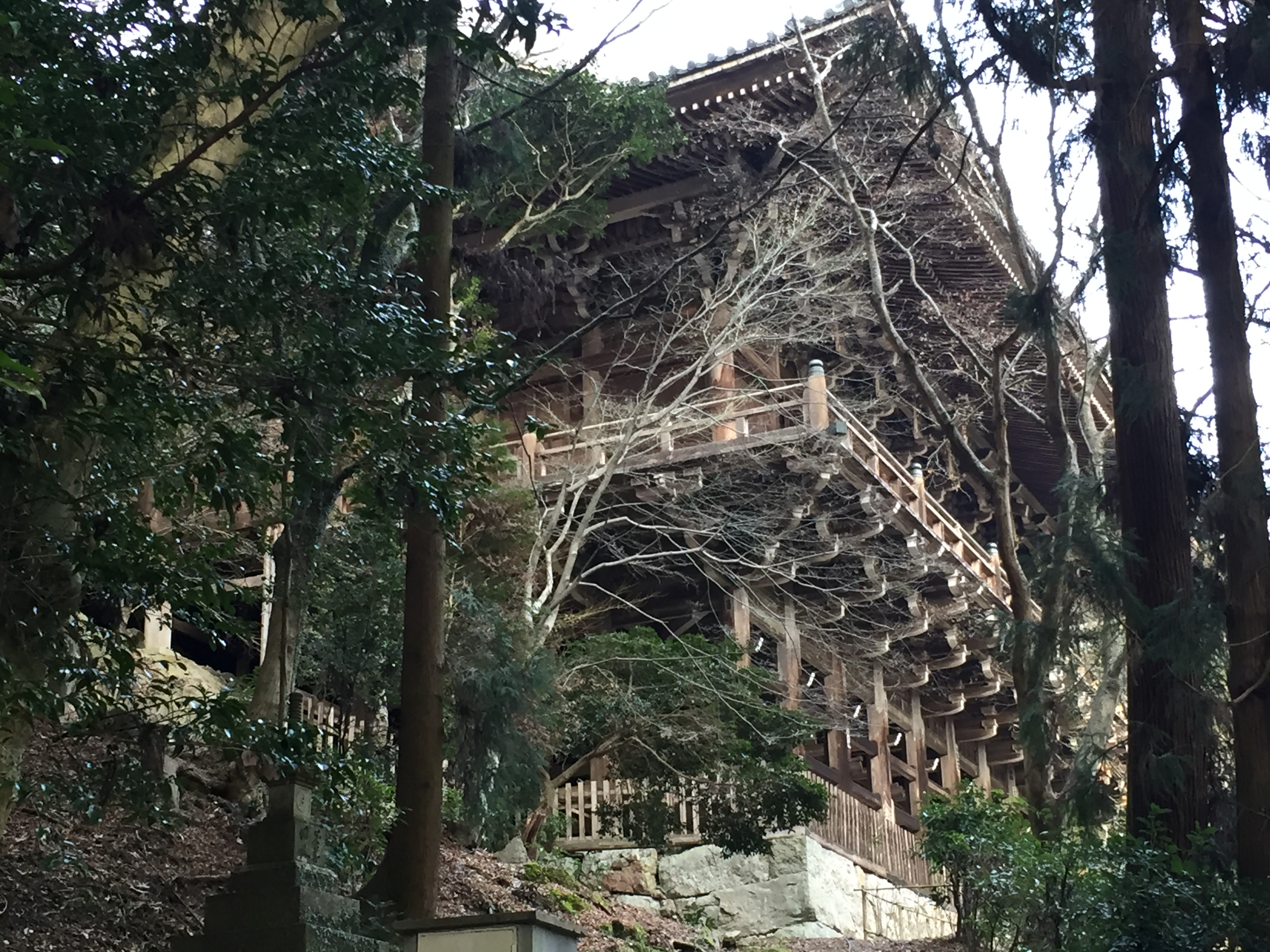
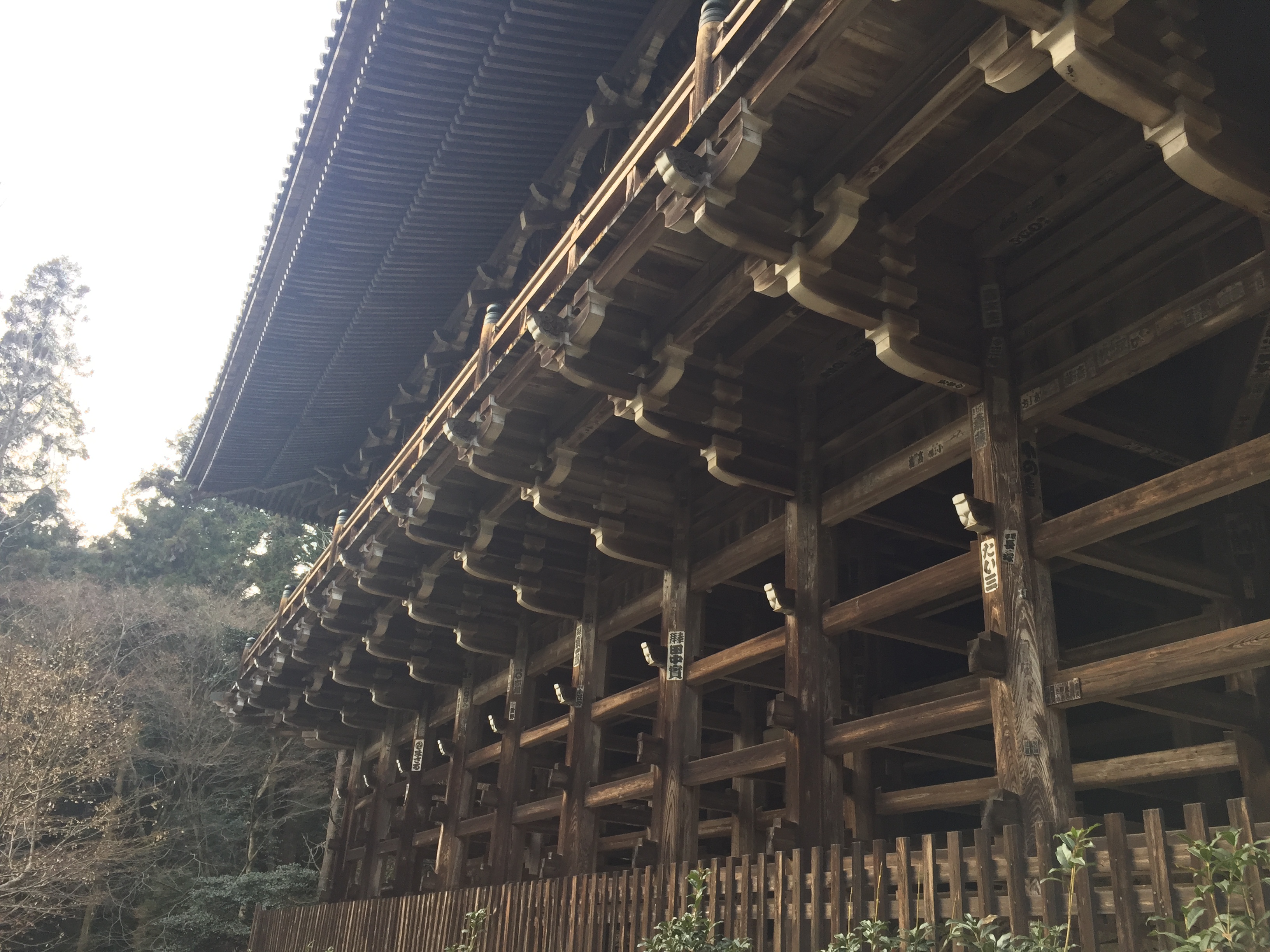
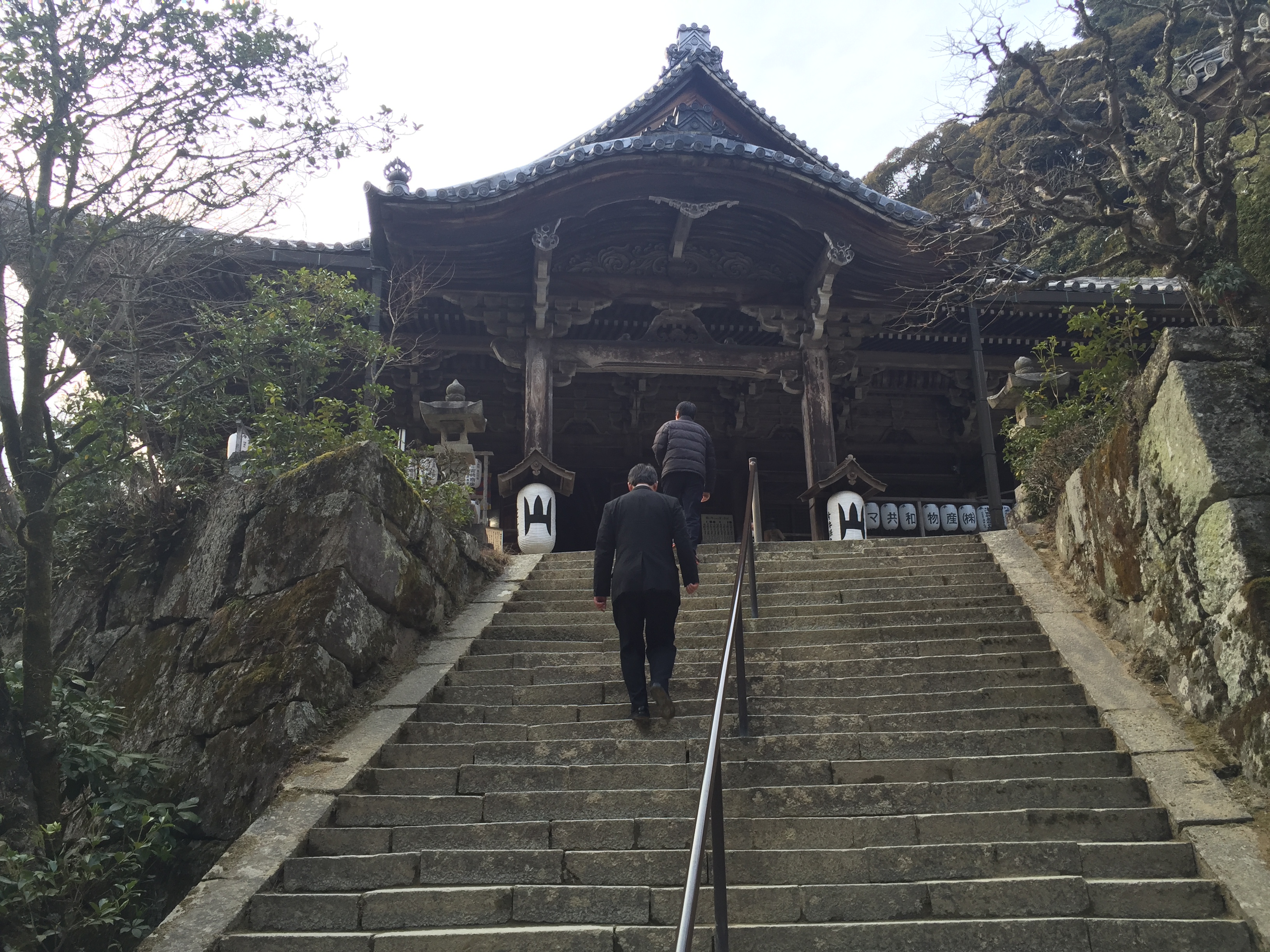
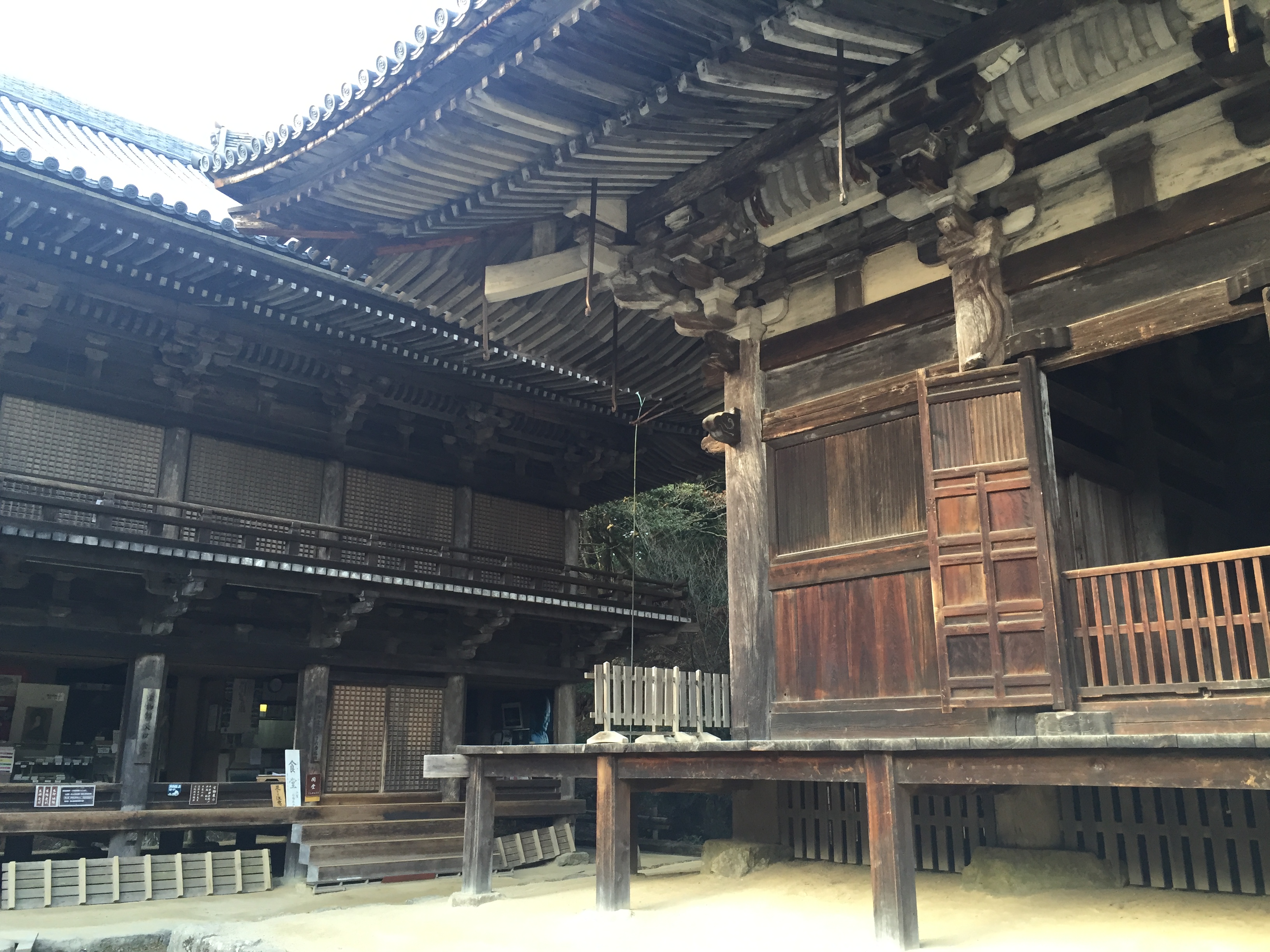
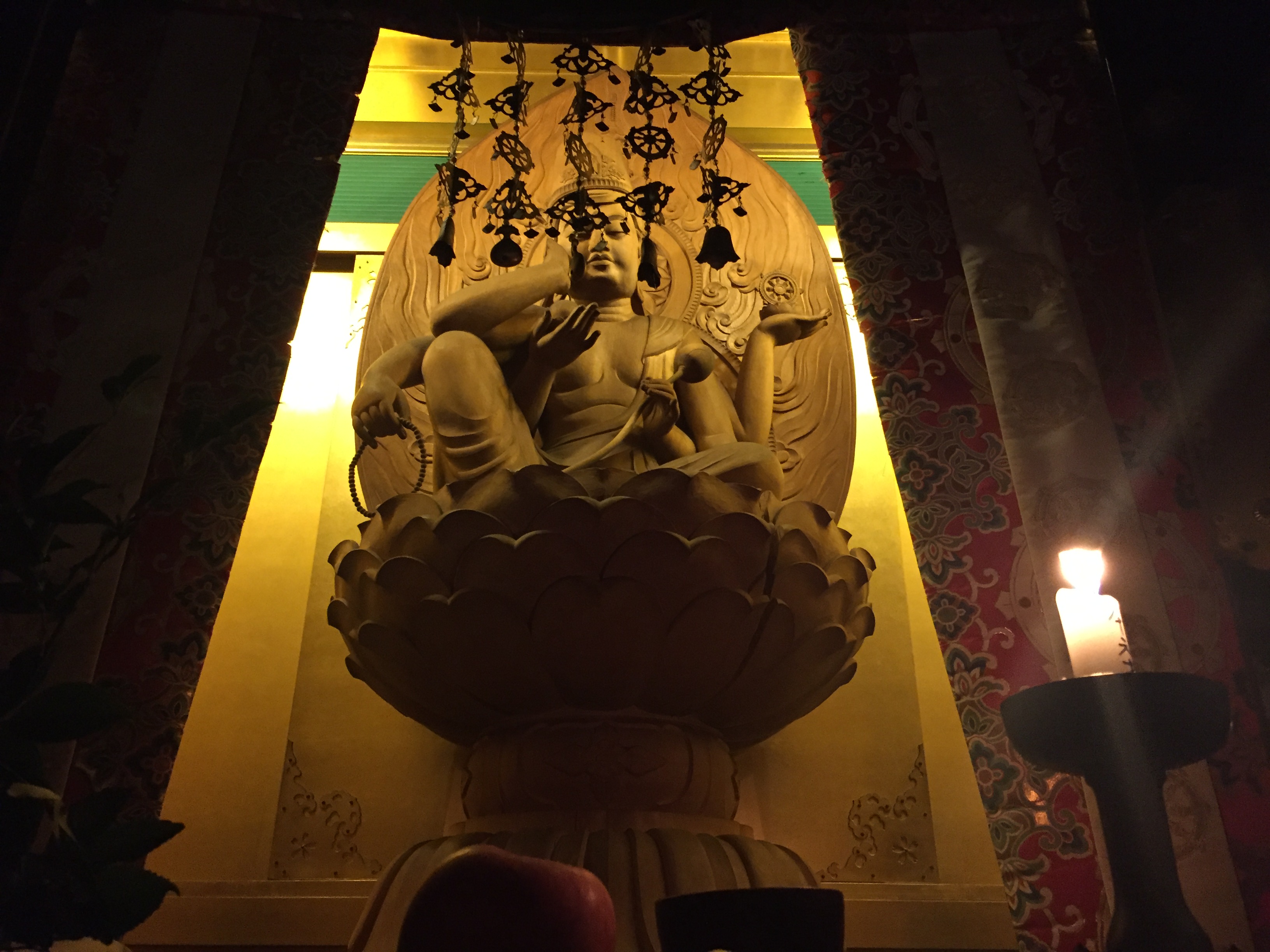
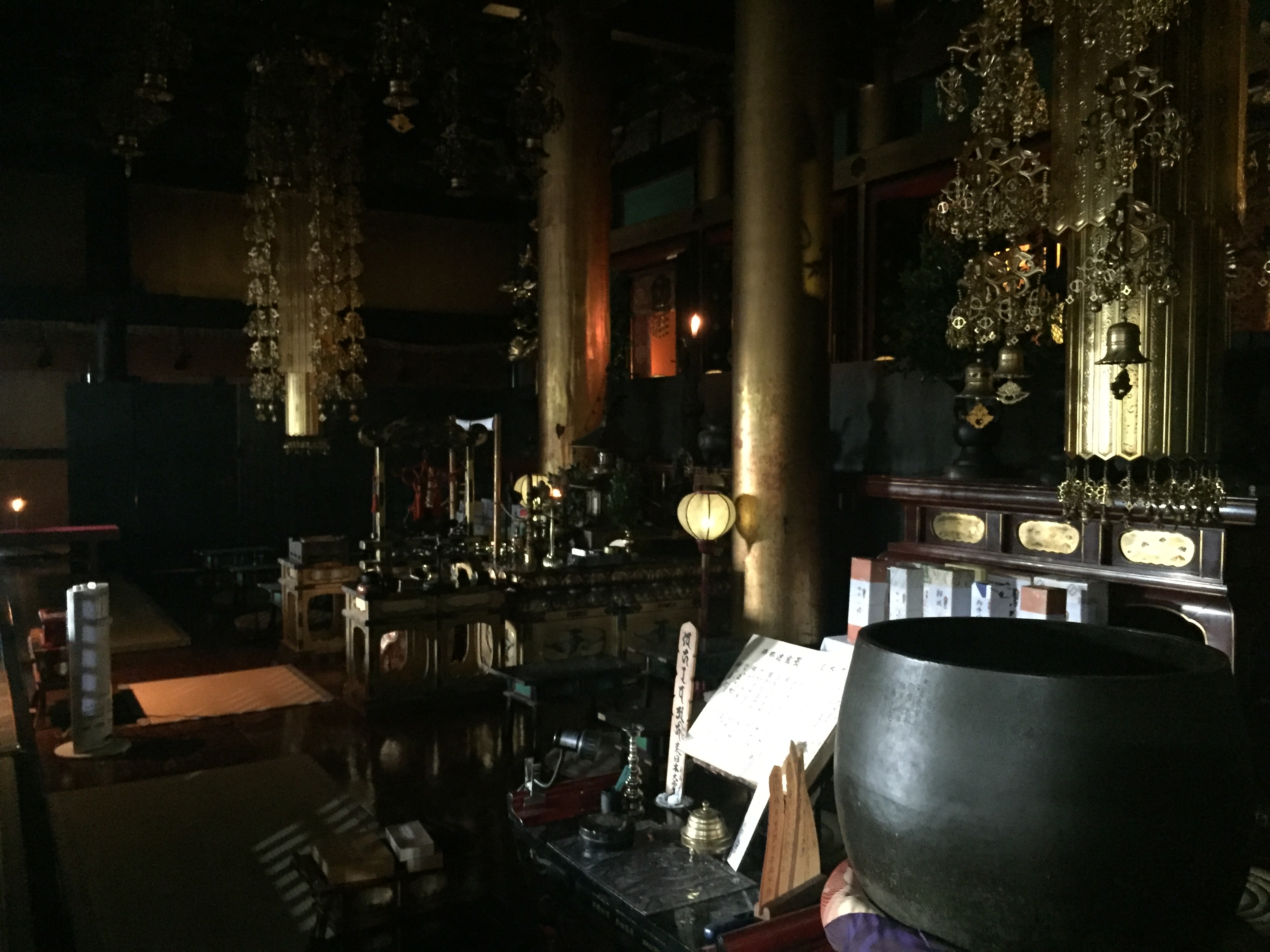
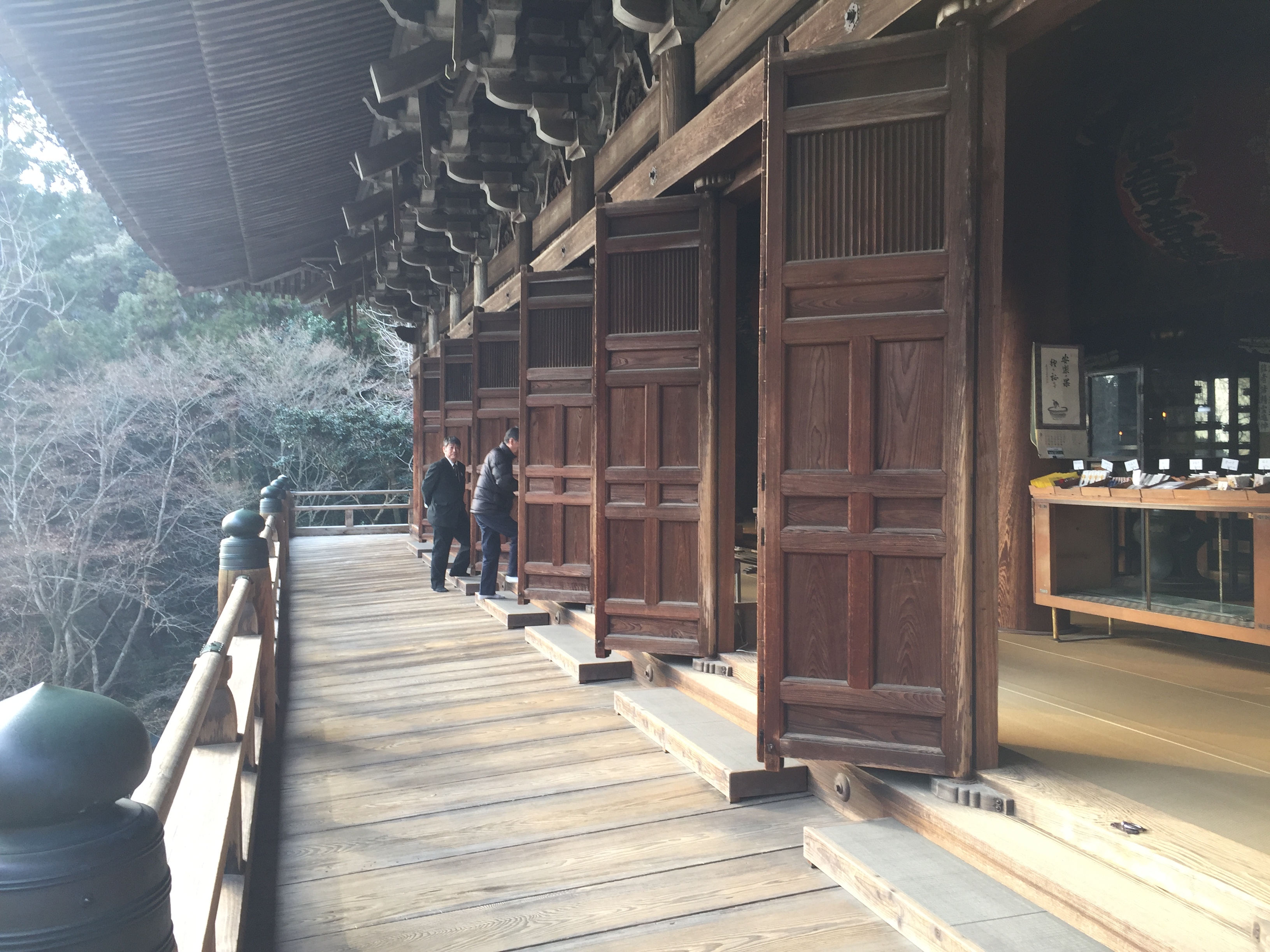
I have talked about it before, but I’ve spent well over two decades now studying a pretty small book written by Miyamoto Musashi called The Book of Five Rings. I can’t say that it’s my favorite book but I can say that I don’t think a single day has went by since I first read it that I don’t draw from it. So as fate would have necessitated I was in Japan doing Musashi types of things on a big scale, but that was not the intention of the trip for me. There were a cast of characters who had worked very hard together to bring me to a temple atop the mountain Shosha and specifically to the statues of the Shitennō protectors within the temple Maniden. I was doing the kind of things that were the products of my mind that were very specific to all my lifelong efforts so I was living in the moment. There was nothing for me to pray to standing atop that mountain temple isolated from the world that resided far below in Himeji City. I was very impressed with the Maniden structure, it was massive. I couldn’t help but think of the time when Musashi climbed a similar mountain to confront the Buddhists gods then came down spending the rest of his days as an undefeated samurai conqueror uniquely individually based.
The Maniden temple was dedicated to the national religion of Shinto Buddhism which was an inherited mythology from the long forgotten Indus Valley as far over to the east as India. The gods Shitennō are classic examples of Indus Valley mythology which I believe is a remnant of a long lost civilization predating all known history and religion. During his early travels I believe Jesus Christ ran into aspects of Buddhism and took it back to the shores of his birth with his own spin on Zoroastrianism. That religion would of course be Christianity which would become one of the world’s largest religions. But, it is a watered down version of what came before and there is nothing to say that Buddhism was the first thought of rationality concerning religion. It too just as Christianity experienced, is a hand-me-down religious philosophy. But in Japan Shinto Buddhism works and they revere their ancient heroes like Miyamoto Musashi without apology. After spending many years reading books about all these topics it was quite refreshing to see the spirit of Miyamoto Musashi in everyone I met in Japan—literally. From the airline stewardesses to the cooks of Kobe Beef in some of the highest end Steak Houses in the world, it was Miyamoto Musashi who used a foundation of Shinto Buddhism to become one of the greatest swordsman who ever lived and a mythological rock that all of Japan had been able to cling to empowering them to take a tiny island and make it one of the world’s most dominate economies.
So there I was in a remote Shinto temple atop a high mountain just as Musashi had visited well before me, and I had to realize that my thoughts were on my next generation. I was looking for something very unique to bring back to my grandchildren and within the temple as is rather common at such temples around the world, there were little souvenirs that were supposed to bring good luck to those fortunate enough to have them. The story goes that with such items that the god who protected the Buddha years ago would also protect those who made offerings within the temple. So in full ceremony and with the help of a professional guide who said a prayer to the Shitennō on my behalf through the smoke of incense, I brought off the mountain gifts for my grandchildren. For my two grandsons, I brought blessed arrows that will ward off and conquer Jyaki demons—whom I call ultraterrestrials. Different names, same embodiments of corrosive spirits. However for my granddaughter who at this time is still an infant not yet crawling I brought a specific ornament that she can hang in her bedroom for all years to come. The ritual is that you write a wish on the back of this ornament and present it to the Shitennō statues and they will carry out the request. So I wrote my wish on the back and my guide prayed to the Shitennō for me and even carried my items down off the mountain since he insisted that the gods would recognize me as a lord for having a servent to conduct this business between gods facilitating harmony and the fulfillment of objectives. So this is what I wrote.
To rule the earth with grace and persuasion making everything your feet touches an addition to your kingdom without bringing harm to a single person. Make it so Shitennō and bring justice to the world.
The Shitennō are Buddhist protectors of the four directions. They ward off evil, guard the nation, and protect the world from malicious spirits, hence the Japanese term Gose Shitennō 護世四天王, literally “four world-protecting deva kings.” Each represents a direction, season, color, virtue, and element (see below chart). They originated in India as deva generals protecting Lord Indra, but were later adopted into the Buddhist pantheon in China and Japan. Each dwells in and protects one of the four continents surrounding Mt. Shumisen 須弥山 (Skt. = Mt. Sumeru), the mythical home of the Historical Buddha and other Buddhist deities. In China and Japan, they are venerated as temple guardians and protectors of the nation. In China, statues of the four are often placed near temple entrances, but in Japan, effigies of the four are more commonly placed around the central deity on the main altar (the main dais is befittingly called the Shumidan 須弥壇). The four are commanded by Taishakuten (Skt. Indra), Lord of the Center. They are nearly always dressed in armor (yoroi 鎧), looking ferocious (funnusō 忿怒相), and carrying weapons or objects (jimotsu 持物) said to eliminate evil influences and suppress the enemies of Buddhism. They are also typically shown standing atop evil spirits (known as Jaki in Japan), symbolizing their power to repel and defeat evil. Sometimes they are depicted with a fiery halo behind them. Their attributes, however, are not rigidly prescribed and thus differ among Buddhist nations. Shitennō iconography is related to the Four Celestial Emblems (dragon, red bird, tiger, turtle) of China, who also guard the four cardinal directions. In Japanese statuary, the Shitennō are almost always portrayed in animated warrior poses rather than static postures of ease or meditation. Among the four, Tamonten (aka Bishamonten) is considered the most powerful, and over time, supplanted the other three in importance. Indeed, Bishamonten is the only member of the four worshipped independently in Japan, both as protector of Buddhist faith and as one of Japan’s Seven Lucky Gods — one who brings wealth and prosperity. Bishamonten also supplanted Taishakuten (Lord of the Center) as an object of worship, but Taishakuten never enjoyed great status in Japan.
Guardians of the Four Directions, Protectors of Buddhist Law, Protectors of Human Kind, Protectors of the Bosatsu and Nyorai. Most often found standing at the corners of alters. Ferocious looking, sometimes with fiery halo behind them, often stepping on demons called Jyaki. They protect the Buddhist realm for Taishakuten (Skt. Indra), serving as his generals to guard the territories inhabited by humans. Originally from Hindu mythology, and later incorporated into Buddhism. In the Lotus Sutra, they vow to protect those who believe in the Dharma (Buddhist teachings). In Japanese artwork, especially in the mandala form, the four typically appear in a set order, starting with Jikokuten (East), followed by Zōchōten (South), Kōmokuten (West), and Tamonten (North). All four are described in Sanskrit, Chinese and Japanese texts, but their attributes, colors, and names often vary.
Jaki is the name of the tiny creatures the four kings stand upon. Classified as members of the Yaksha in Japan; also referred to as the Amano Jyaku (Heaven Jyaku). In a tradition unique to Japan, the Jaki demons are sometimes represented by two creatures known as Tentōki (Tentoki) 天燈鬼 and Ryūtōki (Ryutoki) 龍燈鬼, which translate literally as Celestial-Lamp Demon and Dragon-Lamp Demon. Japanese legends say these two creatures were originally evil, but after getting trampled by the Shitennō, they repented, were saved, and now carry lanterns as offerings of light to the Buddha, or to light up the road in front of the Shaka Nyorai (Historical Buddha). The Jaki and Tentōki / Ryūtoki symbolize the power of the Shitennō to repel and defeat evil. Two wonderful sculptures of Tentōki and Ryutōki can be found at Kōfukuji Temple in Nara.
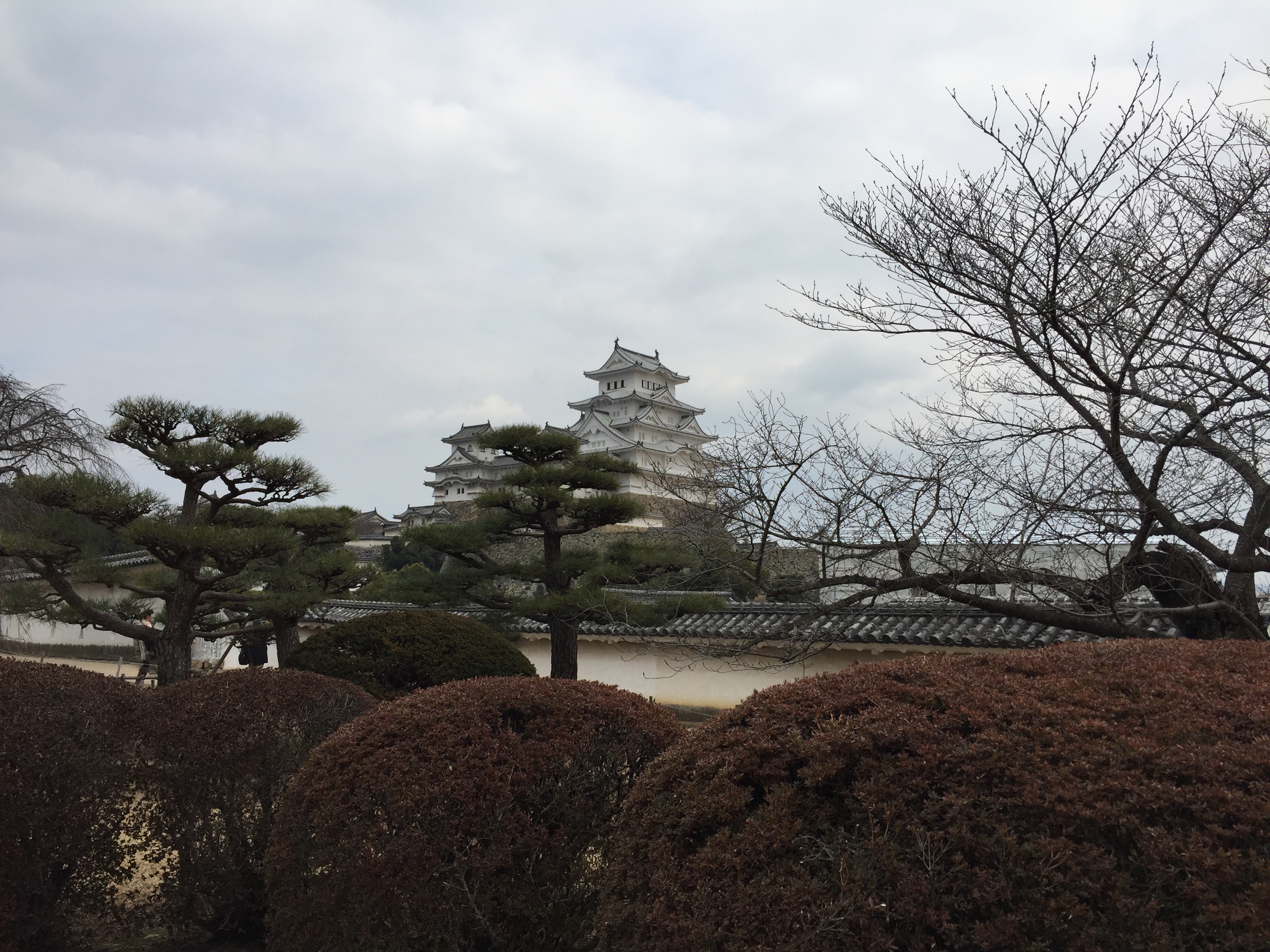
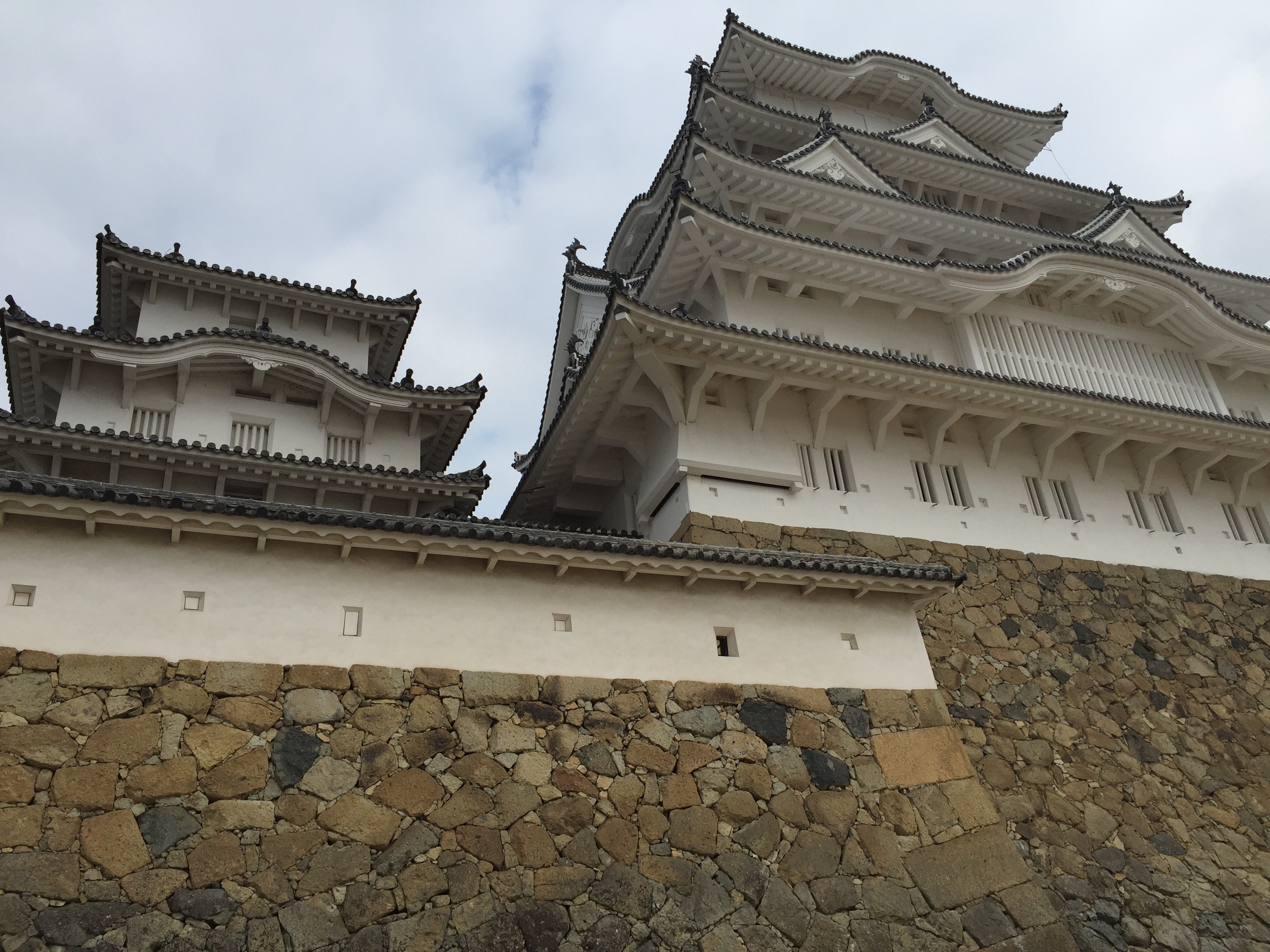
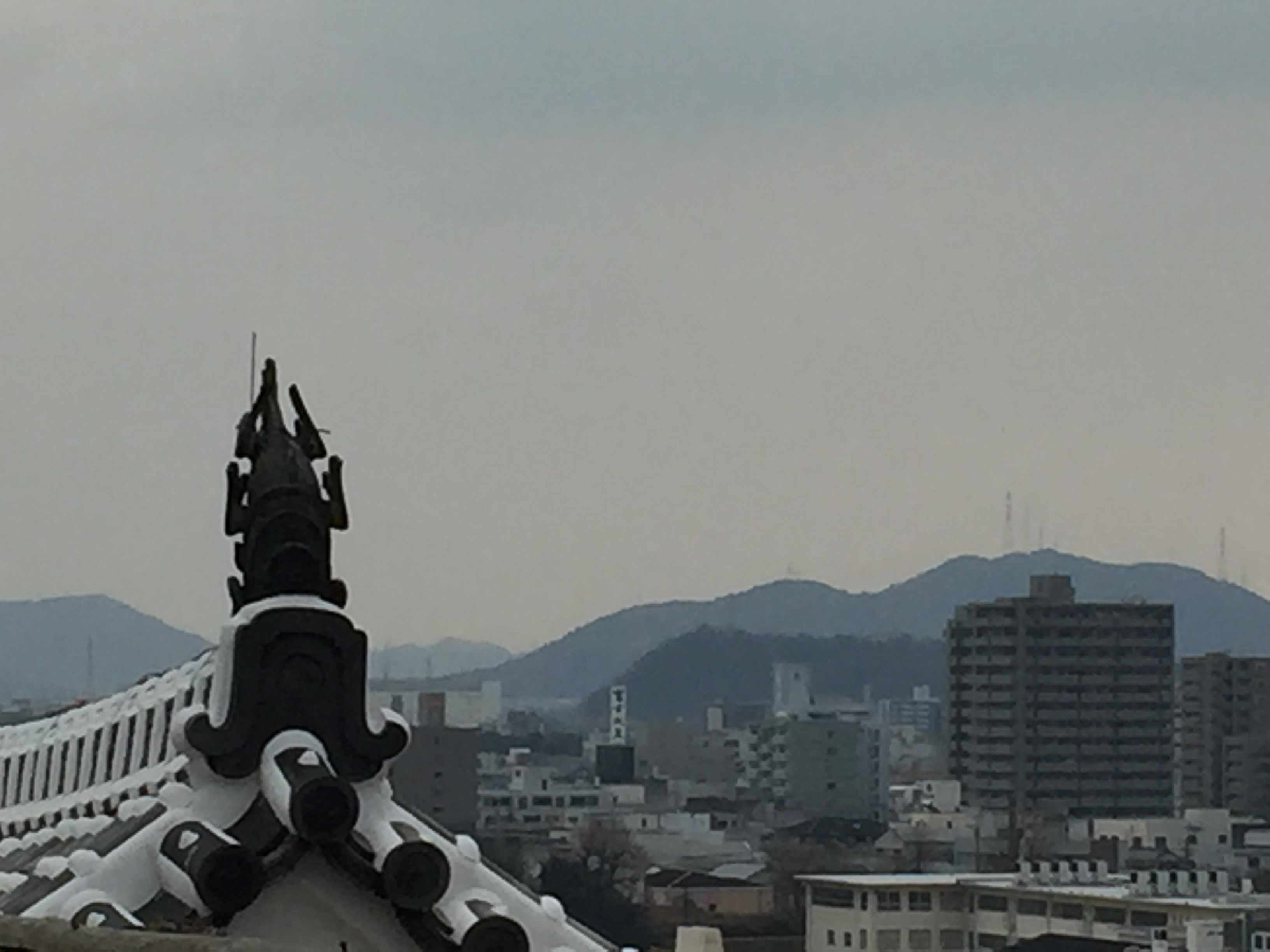
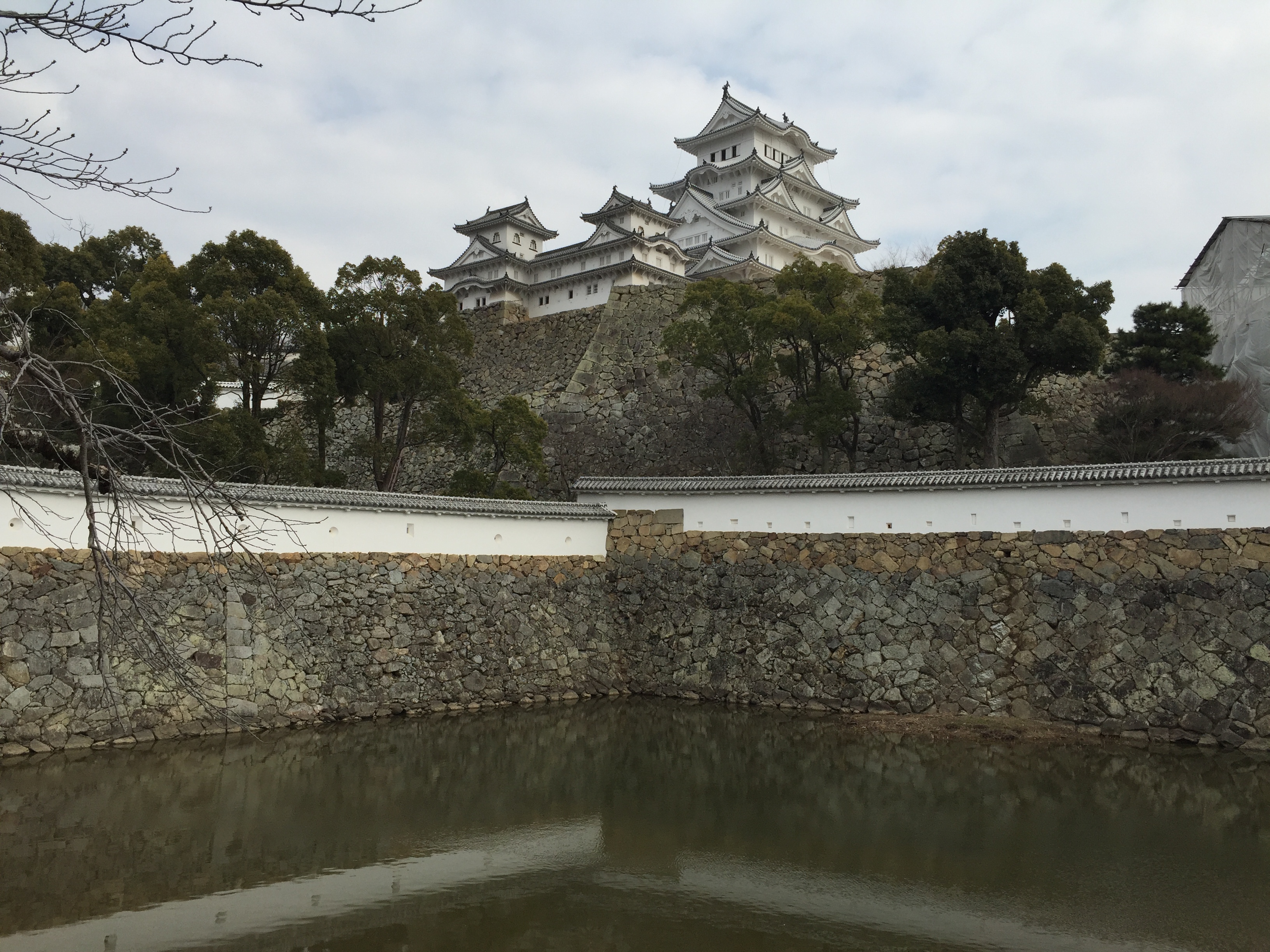
We carried out the rest of the trip visiting also the nearby Himeji Castle and eating on the grounds of a former Samurai camp. All this put my mind in the proper place to complete the objective of this particular visit. So I have to thank all the many people who made it possible. There were many kind people involved who took such an epic event and played a part in a stage play that had been written by my mind for many years manifesting now at a time in my life where intellect had become the author of reality. It was for these reasons that I think anyone visiting Japan should embark—because within those two monuments is the heart of a culture and the reasons for its massive global success. Unlike Miyamoto Musashi however, I differ in that I have a family that is getting larger by the moment, and I have expectations for them to do better than I have—and I have set the bar very high. But it’s good to have goals so that the mind knows how to formulate reality around the desires that are most embraced in daily thinking.
I don’t believe that the Shitennō will do as the prayer to them instructed. But what I do believe is that my granddaughter will read that wish for years to come and formulate her mind into a reality that will make it so. For that is the aspect of religion that never has quite found itself as a root of contemplation—too often the belief is that something has to give you something to make it happen. That luck and empowerment come from somewhere else and is given based on sacrifice. It’s not. It comes from the strength of thought and the manifestation of those contemplations into reality by the nature of human endeavor. As a very grown man who has read books about such things for years, I understand that the magic of the Shitennō doesn’t reside in heaven; it is within our own minds. So if I could give my grandchildren a way to think largely early enough to still make a difference, then perhaps their lives will reach those lofty peeks with sheer ambition. Sometimes a young, immature mind needs a feather as Dumbo did to convince him that he could fly. Humans need their religions and other emotional crutches to maneuver their thoughts to higher places. But eventually you come to realize what Miyamoto Musashi obviously realized later in life—that we are the authors of our own fate. The story that evolves comes from what we allow ourselves to think and how that manifests into reality. Given that knowledge, it is good to think big—as big as possible. And it is my hope that in the future, my granddaughter will read that wish from the mountain of Shosha and use it as a feather to realize that she can really fly—as far and often as she wishes—for as long as she cares to over the millennia.


 The Overmanwarrior