

I spoke about this a bit the other day, but now that the dust has settled more details are necessary in regard to the Detroit bankruptcy. Darryl Parks during his Saturday program on 700 WLW did a wonderful couple of segments about the Detroit situation which deserves to be highlighted, and can be heard below. Darryl as he usually does comes to these types of topics armed with many facts and in this case many I did not know about the Motor City. I have family who lived in Michigan and worked in the auto industries who were big union supporters. Every year my family visited them at least once, so I learned a lot about Michigan during these childhood adventures, especially during the 70s and 80s when I was growing up. I watched firsthand the decline that Darryl Parks articulated during his program. I watched Detroit go from the richest city in the United States in 1965 to currently the poorest. I knew that Detroit was at one time a source of entertainment as The Lone Ranger radio program was launched from Detroit and the city still owns the rights to the Howdy Doody puppet. Detroit at one point in its very recent history was a center for art, entertainment, and manufacturing—which drove the entire economy. But what destroyed Detroit is a reoccurring theme everywhere in modern America, the notion of collectivism framed within the labor union movement which is failing on a massive scale. Click Darryl’s broadcast below to begin to understand how many labor unions are listed as creditors in the Detroit bankruptcy and it will quickly become clear how destructive unions have been on the American economy, the role they’ve played in wage inflation, and the way they’ve prevented the proper management of Detroit’s resources.
When Michael Moore made his first big film Roger and Me, I enjoyed it as I shared with Moore a love of the Midwest. His film was about the decline of the auto industry in Flint, Michigan and the loss of entire neighborhoods becoming a gigantic ghost town. But Moore lost me all those years ago in 1989 when he assumed that General Motors CEO Roger Smith had a duty to the people of Flint to give back to the community his large wages so that fewer jobs would be lost. Moore’s position in the film was typical of most union households in Central and Lower Michigan from the 70’s to the 90’s that was raised on soft communism disguised as American patriotism. Moore’s beliefs were harder than socialism, and shy of Russian, or Chinese communism but were certainly anti-capitalism in their nature. Moore failed to understand that it was capitalism that brought jobs to his town of Flint which is just north of Detroit. It was communism that had infiltrated the labor unions and made Moore believe that Roger Smith owed Flint, Michigan anything.
The film launched Moore into the national spotlight as a left leaning media was hungry to team up with someone who could capture their instructed beliefs into a film format. But the parasitic nature of the type of contracts the unions negotiated for themselves continued. Jobs left the Detroit area for destinations that were not friendly to labor unions, like China, and Mexico, countries already utilizing a social philosophy of socialism and communism. I liked my family members, but found myself in contention with the adults who had cars in the driveway with bumper stickers stating, “Buy American” which was a typical union slogan at the time even though the Japanese were making better cars cheaper. Their assertion was the same as Michael Moore’s, and that was people had an obligation to buy an American car built with union labor because of some misguided patriotic duty. All those elements never added up to my mind, even at the ages of 8 through 15 when my years in Lower Michigan were most active. No matter how much the adults from that side of the family yelled their philosophy never made sense to me.
When I was 18 years old I worked in a metal stamping plant while I was majoring in economics in college. The economic professors didn’t seem to understand the real world of manufacturing the way I did because I worked in a real metal stamping plant known as the meat grinder at the time. I saw many very serious injuries and I learned quickly that the parts we made at this facility required salesmen to sell them to a distributer somewhere in the world and that purchasing had to find the metal coils somewhere so we’d have materials enough to manufacture the goods. I worked with some tough, rough neck people and fights on the shop floor were common. When I first started at this place a man older than me by about 10 years picked a fight in the break room. I launched a full can of Coke at his head and luckily missed his forehead by only a few inches. The can exploded against the wall and after the man saw how serious I was about winning the fight decided to befriend me, and we remained friends for all the years I worked there. There were many other fights that involved serious cuts, broken bones, knocked out teeth and eyeballs that were actually removed from their sockets. The foremen would look the other way, especially in my case because I without question out produced everyone in the building. My manufacturing rates were very high. I didn’t work so hard because of fear for my job, or to earn praise from the foremen, but because I enjoyed it. I liked working fast—I enjoyed pushing myself with sweat pouring off my body. The fights came from the workers who were trying to unionize this facility and wanted to bring me in line with everyone else.
The college professors had no advice for my young mind as they leaned toward labor’s position in the matter when I asked about it. Their arguments I know now were Keynesian in their nature and rooted in European socialism, but at the time, I assumed they knew what they were talking about. Because of the economic professor at the college I was attending I tried to understand the union mentality so I listened to the advocates instead of fighting them. This led them to ask me to present a list of union demands to the company president. Even though everyone in the company was much older than I was, they wanted an 18-year-old kid to approach management and negotiate on their behalf. So I did.
I sat across from the President and gave him the grievances from the workers but as I sat there I saw the man who ran the company with his hands that were too smooth from lack of work, a belly that was too fat from eating in too many nice restaurants and was having an affair with his secretary who was half his age. But I also saw a guy who was taking all the risks in the company. If sales were down, it was his fault. If supply could not be meant, it was his fault. If he didn’t grease enough wheels at OSHA politically, then it was his fault. In essence I felt the grievances from the workers were stupid, short-sighted and childish. At the end of the day the “workers” were able to go home and forget about the work they did while the president was always tuned in to what was happening, even when he was on the golf course—because he was the risk taker. For the employees to declare that their labor was worth the same as those who took the risks it was preposterous.
I gave the demands back to the union organizers and told them I would not represent them. They attempted to reorganize without my help and fell flat on their face. Whenever they tried to cut back on their labor hours to force reductions in manufacturing rates the foreman would give me extra overtime to cover their slack. When they tried to paint me as a “scab,” we went out in the parking lot and solved the problem, and a lot of people got hurt. But I never yielded my beliefs on the matter and everyone ended up shaking hands in the end, even over broken bones and busted lips. It was these types of people who made America a manufacturing powerhouse—but only as individuals. The collectivism of labor unions destroyed this trait, which makes America less competitive globally, which is why the labor movement was introduced to America by European insurgents wanting to level the playing field for all economically. And this is what happened in Detroit. The unions got what they wanted and nobody fought them on it. When the companies gave a little, the unions asked for more. The companies became frustrated and just packed up and voted with their feet and behind them all the competent workers left to follow the jobs and Detroit went from being the wealthiest city in America to the poorest in just a few decades of bad policy and bad social philosophy.
To this very day I despise labor unions because they fight against individual responsibility and merit. They are simply gangs of thugs who attempt to extort away from the companies they work for values they have not earned. Collective bargaining is the absolute dumbest idea in economic theory. All people are not of equal value, some workers are faster, stronger, smarter, more efficient, more technically savvy—and they are not all deserving of equal pay. To force companies or governments to pay wages on collective bargaining takes away the incentive of the very good to perform well, because slugs, malcontents, and the ungifted receive the same wages for doing much, much less. This is what killed manufacturing in Southern Michigan and more specifically destroyed Detroit.
The disease of economics that destroyed Detroit is the same idiocy that is at work in our public schools, the IRS scandal, and virtually every branch of government as it is only in the public sector that unions have managed to survive as they have embedded themselves on financial supply that cannot pack up and move out of the country to flee the parasites of economics. This put the burden on tax payers to cover the labor costs and in Detroit’s case, smart people moved leaving behind a city of dependents that did not pay taxes. In just the last five years Detroit went from having a balanced budget to being billions of dollars in the hole—because they do not have a tax base to support their unionized legacy costs. They ran tax payers out-of-town with tax rates that were too high and attempting to sell the concept with “shared sacrifice” which is to say, “wealth redistribution” stolen from the earned and given to the unearned.
Detroit is the first major city in modern America to see such an impact of their mismanagement, but many cities are short in toe. Michael Moore in his film Roger and Me stumbled around revealing his utterly failed philosophy about the way life works as his arguments are only based on observations and not the cause. Further, Matt Damon’s new film Elysium set in the year 2154, where the very wealthy live on a man-made space station while the rest of the population resides on a ruined earth, never really covers what ruined earth. Damon like Moore has been given the progressive task to communicate the union message to mainstream America which continually falls short on logical thinkers who know better. In Damon’s film he takes on a mission that could bring equality to the two polarized worlds. The nature of the story might as well be the same as Detroit versus the suburbs where smart people of value flee the type of people who make themselves social parasites and consume much more than they contribute productively. Progressives somehow think the math will just work out in the end, but it never does. Even as a child I saw what was happening to Detroit and I wanted no part of it in my life—and I have lived by those terms. But not everyone is as combative as I am on issues they believe in, and most will think what I do, but they will not fight. They will simply pack up and move to someplace else that offers less imposition on their lifestyles, which is the root cause for why Detroit has failed as a city. Detroit imposed themselves on the productive, forcing them out-of-town leaving behind only the destitute like Michael Moore to look about their neighborhoods and wonder what happened. The only word their failed philosophies have for the tragedy is “greed” but it is much more complicated than that. The real villain is “financial incentive” and in the case of Detroit, the lack thereof.
Rich Hoffman
“Justice Comes with the Crack of a Whip!”
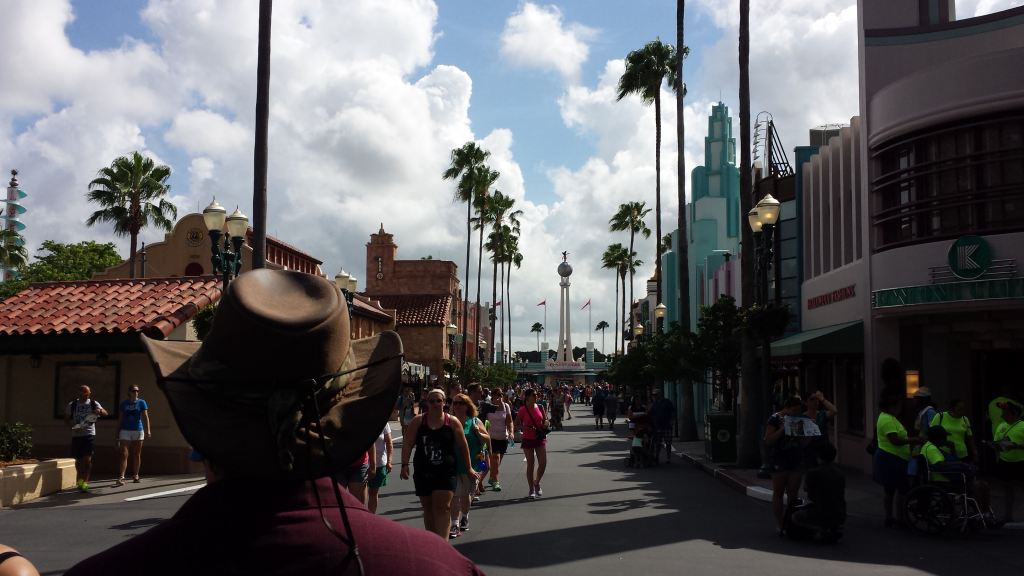 When people ask what kind of America I want, and what am I fighting for, my conversation always comes back around to one person who delivered to me an ideal of America that I have always worked to achieve, Walt Disney. Disney is one of the characters in real life who did just as the heroes of Ayn Rand’s Atlas Shrugged novel did, he brought to humanity wonderful gifts that have lived on for nearly 50 years after his death, and he did not do it as a collective effort, he did it with his solely driven mind. Roy Disney, Walt’s older brother could not have done what Walt was able to do. Roy brought a stabilizing factor to Walt’s life financially, but the collaboration did not work the other way around.
  If not for the solitary, driven mind of Walt Disney, I am entirely convinced that an entire era of Americana would have been successfully destroyed by external American enemies who planted seeds of deception into our culture that were met by only a handful of creative minds who stood as pillars against moral collapse. The audacity to invoke into society the world over the unique human attribute of a personal dream was Walt Disney’s greatest weapon against tyranny, and most treasured gift to humankind. My friend Matt Clark on WAAM radio in Ann Arbor, Michigan feels the same way about Uncle Walt as I do, and we spent an hour of radio time on Matt’s show during July 21st, 2013 from 2 to 3 PM talking about the importance that Walt Disney has had in preserving American culture not only in his time but in the present, long after he departed from this world. The below conversation is unique, and Matt did a wonderful job of collecting video of the discussion complete with video examples. I would suggest that you gather up a snack dear reader and make time to watch and listen to these two broadcasts shown below—each representing a segment of radio time between the top and bottom of the hour. For old timers, it will be a walk down memory lane, and for the young, you will learn what all the fuss is about Disney as a company, and why they are so successful. Disney was not an accident, but a direct product of the kind of people only America can produce.
 No other country on the face of planet earth, no education institution, no political system, no financial altruism, no welfare system, no friendship, no collaboration, no wish upon a star has produced another man like Walt Disney. Disney was the very unique type of person that shared in a fictional context Ayn Rand’s Atlas Shrugged characters. Rand’s fictional characters and Disney’s real life character were products of a time in America where they were born at the end of a laissez-faire capitalism period before communist ideas contaminated the next generation filling up the empty minds of youth with the type of progressive tripe that is so common today. Disney literally stood against a very tough world, through competitive studios who wanted to sink him for being too good, labor union disputes, communist infiltration, and many personal set-backs to build a company that is one of the most powerful in the entire world. If not for Disney, there would be no ESPN, no sustainable ABC television. And the film business may not have survived through the 1970s.
  They assassinate his character while still trying to pander to modern Disney executives to fund their creative ideas. Secretly there is a lot of resentment in the entertainment industry even within the Disney Company about why Walt Disney’s beliefs are so closely adhered to, when there are so many college trained CEO’s who should be able to do a superior job of management in the modern landscape politically, and economically. The answer is of course that they can’t.
  Nobody can nowhere on earth, because what makes people like Walt Disney is laissez-faire capitalism and that doesn’t exist anywhere anymore. Laissez-faire capitalism allowed Walt to be everything he dreamed of, and allowed him to take tremendous risks and receive eventually, not until much later in his life, great rewards. It was only by the time the novel Atlas Shrugged was published in 1957 that Walt started to become personally wealthy from all his wonderful work—where he didn’t have to worry about going bankrupt. But Walt wasn’t happy to be just another rich man from his efforts; he wanted to build his ultimate dream—Disney World, which he never lived to see.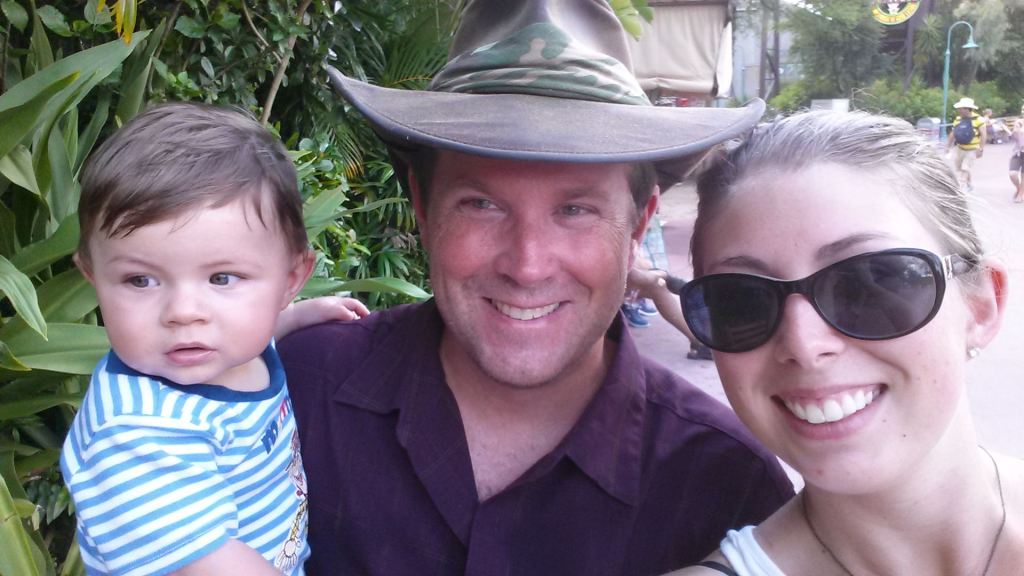
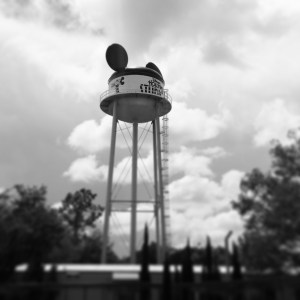 The Tea Party wants the kind of America talked about in the Davy Crockett television show, and on the famous Zorro series where crime and punishment were clear, and bad guys in politics did not win. Walt loved freedom which is most pronounced in his Pirates of the Caribbean exhibit where he understood that it was the pirates of that period which led the way to the American Revolution which Walt was very dedicated to preserving. He has an entire section of Disney World committed to preserving this memory that is more committed to America’s roots than the actual city of Boston which is extremely progressive. If not for Walt Disney, there would not be a Tea Party fighting for fiscal responsibility, limited government, or free markets—the kind of themes that were uncompromisingly explored on the old shows of Davey Crockett. Because of Disney, the world cannot forget what made America, and ultimately what made Disney– laissez-faire capitalism. Hollywood Studios is a shrine to laissez-faire capitalism, to the free flow of ideas before the labor unions infested the industry during World War II with a dirty bomb of the kind of ideals that were destroying the world—collectivism.

 With all the lead up to the movie being so intense here at Overmanwarrior’s Wisdom my lack of a review for The Lone Ranger was simply due to the fact that I was on vacation with my family when the film was released and there wasn’t time to physically go see the movie. On two occasions while I was vacationing in Florida I intended to take my family to see The Lone Ranger, once at Downtown Disney, but had to withdrawal because the day was already overbooked, and then again at Merritt Square Mall which was down the road from our Atlantic Coast condo
 With The Lone Ranger I expected to see even after the extremely negative reviews, a movie from Disney that was just good ol’ fashion fun—I did not expect yet another film with very heavy opinions against the government position of collectivism over the traditional rugged individualism that built America from the start. Coming from the Disney Studios I expected a more disguised effort, especially with Johnny Depp staring as Tonto, and sharing a producing credit. But if the nation is divided equally down the middle with Tea Party type Americans on one side, and welfare collecting altruists on the other, Disney usually makes films that all types of people will enjoy. This is good for their box office numbers, but runs counter to the type of messages that Walt Disney himself believed who actually testified before a congressional committee against communism during the height of the McCarthy Hearings. But this Lone Ranger was made by Disney to show favor toward the former of those demographic groups and not the later.
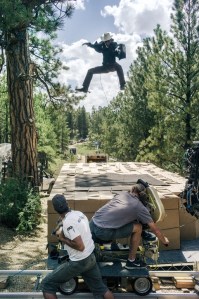 The Second Treatise of Government was one of the foundation books which people like Thomas Jefferson used to help shape the argument about the kind of country that America would be. Modern Americans who regularly attend Tea Party events know that John Locke is one of the philosophers who opened the door to the way of thinking that distinctly became freedom loving. To altruists, this is a major social danger as any message that exhibits freedom as one of the highest human endeavors also seeks to be free from social stupidity, the self-determined poor (lazy people), and the malcontents of civilization. Social progressives have desired for years to shape American thought into reflecting European sentiment of sacrifice, shared suffering, and a focus on the “greater good” while steering the educated masses away from a personal love of individual freedom.
 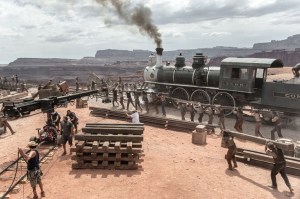 Opening the film with a direct node to John Locke was a bold declaration that I was surprised made it past the Disney executives screening the film. It’s possible that some of them did not know what the book meant to American foundation, but it is unlikely to have slipped by so many eyes without anybody knowing, especially Johnny Depp, who has been known to show up to film screenings showing his open support of Che Guevara. I thought the John Locke reference was quite extraordinary but the references did not end there so I know that it was not an accident.
 It was an unapologetic western that might have been an early episode of the TV show Davy Crockett, only with Industrial Light and Magic doing some spectacular visual effects. The stunts were ambitious, and the scope of the project was mammoth. It was the largest scale western I think has ever been attempted. But The Lone Ranger himself does not drink, does not curse, does not use tobacco (he refused when offered), he does not want to kill people, and is a naively good guy from the beginning to the end of the film. The only character arch that John Reid embarked on evolving from the beginning to the end was in hardening up from a naive lawyer to a man who isn’t afraid to pull the trigger on a bad guy by the end of the film. Reid never had a moment of weakness in the film where he got drunk, caved into the seductions of a woman, or lost his moral compass. He was firmly focused on justice from the beginning of the film till the very end.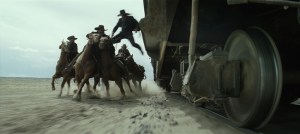


 It will be lucky to recover its $215 million dollar budget, which is unheard of for a western. Only a company like Disney could have made a film like this, which was risky, so it is unlikely that Armie Hammer will have the chance to reprise his Lone Ranger role in the way that Robert Downey Jr has for Iron Man, and make future films. The film by
  Everyone involved with The Lone Ranger is among the best in their fields of endeavor, and it is a shame that the magic will probably never be seen again, because the box office will prevent it. The Lone Ranger is one of those films that will percolate in America culture for a long time. It will not have a big pop at the box office, but will be watched and loved for many years in a quiet way as viewers find it wonderfully good, but unsure why they like it so much while critics and industry professionals declare that it is such a bad film. It is not the film that is bad for progressive types, but the message.
  Most people seeing The Lone Ranger cannot identify with the hero. But they will identify with the villain, and that tends to make people angry. Angry people do not throw down nearly a hundred dollars to see The Lone Ranger, which is what it cost me by the time we bought tickets and snacks, a rarity for us as a family. I spent extra money at the theater knowing that a majority of the movie goers were not spending money on The Lone Ranger, so we broke our rule and bought the overpriced popcorn and drinks anyway, to support the film, and theater showing it.
