Gas Over $3 Per Gallon is the Fault of Politics and Nothing Else

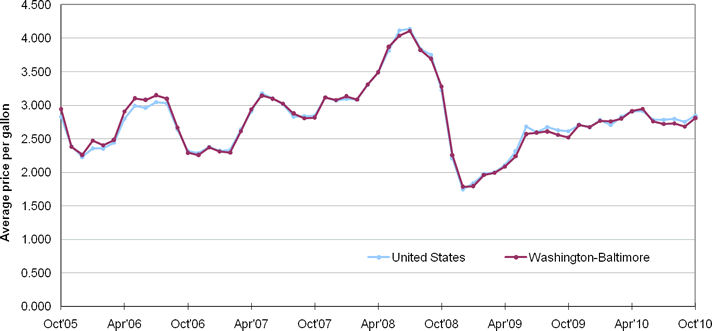
Many people forget that during the summer of 2008 fuel costs were up over $4 per gallon. What happened was all the money that Americans normally spent on McDonalds, Walmart, and other consumer outlets, suddenly went to the excessive fuel costs and a long way to creating the recession we are currently in. Americans were using their expendable income on fuel costs, not on other items in the economy.

And here we go again. Doc Thompson has on a guest that discusses this very issue.

It is unacceptable to have fuel costs higher than what they are now. If fuel costs go up, it is entirely due to the ineptness of our political structures. Americans should not be “nudged” into other forms of energy while our economic competitors fuel their economic engines with unregulated drilling. In America we have regulated ourselves into a poor strategic position.
It is not my fault that our politicians screwed up and stood with weak backs to environmentalists that are in actuality communists at heart and crave an end to American Imperialism by crushing their great independent “car culture.” I will not spend the extra money on fuel. Instead, I will spend less. I will ride my motorcycle when I’d normally take a car. I’ll ride a bicycle or even walk before I use my extra money on a tank of fuel.

America would be wise to only use the fuel it needs, and respond to these price increases by hurting the revenue of all the government hands that have their hands in the cookie jar that is fuel industry. If you want to punch back the government that screwed all this up to begin with, hurt the money they take in with each gallon of gas that you buy. Below is some information on how much we pay in taxes by state for each gallon of gas. 

State Gasoline Diesel Additional Sales Tax Comment
(¢/g) (¢/g) (%)
Alabama 18 19 4 The gasoline gasohol and diesel rates include a 2 cents per gallon inspection fee. Alabama-registered LPG vehicles pay an annual fee based on vehicle type in lieu of the volume tax.
Alaska 8 8 0  
Arizona 18 19 5 The fuel tax on diesel remains at 18 cents per gallon for light and exempt vehicles but is set at 27 cents per gallon if used to propel a truck with more than two axles or with a declared gross weight over 26 000 pounds.
Arkansas 21.5 22.5 4.5 The gasoline gasohol and diesel rates include 0.4 cents per gallon Environmental Assurance Fee. Applicants for LPG user permits must pay a fee in lieu of the volume tax.
California 18 18 6 LPG users may pay an annual fee in lieu of the volume tax.
Colorado 22 20.5 3 Owners of LPG vehicles registered in the State must pay an annual fee in lieu of the volume tax.
Connecticut 25 45.1 5 The tax is computed at 5% of the gross earnings from the first sale of a petroleum product in the State.
Delaware 23 22 0 The tax rate varies annually based on the average wholesale price of gasoline for the previous year.
Dist. of Columbia 23.5 20 5.8  
Florida 16 16 0 Tax rates are variable, adjusted annually. For gasoline and gasohol, in addition to the rates shown, there is a State-imposed State Comprehensive Enhanced Transportation System (SCETS) tax that varies by the county from 0-5.0 cents per gallon. All counties levy the SCETS tax on gasoline, but a few levy less than the maximum rate. LPG vehicles registered in the State pay an annual fee in lieu of the tax on alternative fuels and the SCETS tax.
Georgia 7.5 7.5 4  
Hawaii 17 17 4 Effective 01/01/02, alternative fuels pay an amount proportional to the diesel tax as follows: .29 for ethanol, .5 for bio-diesel, and .33 for LPG. An additional 1 cent is added to these amounts, and then rounded to the nearest 1 cent.
Idaho 25 25 5 LPG users may pay an annual fee based on vehicle weight in lieu of volume tax.
Illinois 19 21.5   Motor carriers pay an additional 6.3 cents per gallon on gasoline, 6.5 cents on diesel, and 5.9 cents on LPG.
Indiana 18 16 5 Motor carriers pay an additional 11 cents per gallon. LPG vehicles pay an annual fee.
Iowa 21 22.5 5 Effective 07/01/02, motor fuel tax rates will be adjusted annually based on the amounts of ethanol blended gasoline being sold and distributed annually.
Kansas 24 26 4.9 LPG users may pay an annual fee based on mileage and gross vehicle weight in lieu of the volume tax.
Kentucky 24.1 21.1 6 Tax rates are variable, adjusted quarterly. A 2 percent surtax is imposed on gasoline and 4.7 percent on special fuels for any vehicle with 3 or more axles. The gasoline, gasohol, and diesel rates include 1.4 cents per gallon Petroleum Environmental Assurance Fee.
Louisiana 20 20 0  
Maine 29.5 30.7 0 Rates are variable, adjusted every February based on past years Consumer Price Index. Rates are effective on the following July 1.
Maryland 23.5 24.25 5  
Massachusetts 21 21 5  
Michigan 19 15 6 For vehicles defined under the Motor Carrier Fuel Tax Act, diesel fuel is discounted 6 cents per gallon at the pump; and assessed a 12 cents per gallon surcharge on a quarterly return, with a provision for a 6 cent per gallon refund on fuel purchased in Michigan.
Minnesota 27.1 27.1 6 There is a credit to the wholesaler of 15 cents per gallon of alcohol used to make gasohol.
Mississippi 18.4 18.4   The gasoline, gasohol, and diesel rates include 0.4 cents per gallon dedicated to the Groundwater Protection Trust Fund.
Missouri 17 17 0 LPG vehicles 18,000 pounds or less gross vehicle weight registered in the State pay an annual fee in lieu of the volume tax.
Montana 27.75 27.75 0 LPG vehicles registed in the State pay an annual fee based on gross weight in lieu of the volume tax. Out-of-State vehicles purchase trip permits. There is an alcohol distiller credit of 30 cents per gallon of alcohol produced in the State with State agricultural products and used to make gasohol.
Nebraska 26.8 26.8 5 Rates are variable, adjusted quarterly. The gasoline and gasohol include 0.6 cents per gallon and diesel rate includes 0.2 cents per gallon Petroleum Release Remedial Action Fee. Effective 01/01/02, new Nebraska ethanol production facilities may receive an ethanol production credit equal to 18 cents per gallon of ethanol used to fuel motor vehicles.
Nevada 24 27 0  
New Hampshire 18 18 0 The gasoline, gasohol, and diesel rates include 1.5 cents per gallon Oil Discharge and Disposal Cleanup Fee. Alternative fuel vehicles pay twice the usual registration fee in lieu of the volume tax.
New Jersey 10.5 13.5 0 In addition to the rates shown, there is a Petroleum Products Gross Receipts Tax. The tax is computed on a cents-per-gallon basis and is applicable to a wide variety of petroleum products.
New Mexico 18.875 22.875 5 The gasoline, gasohol, and diesel rates include the Petroleum Products Loading Fee of $150 per 8,000 gallons (1.875 cents per gallon). Owners of LPG-powered vehicles up to 54,000 pounds gross vehicle weight may pay an annual fee in lieu of the volume tax.
New York 24.35 22.55 4 Rates are variable, adjusted annually. Rates include the Petroleum Business Tax of 14.6 cents per gallon. The gasoline rate includes a 0.5 mill (0.05 cents) per gallon Petroleum Testing Fee.
North Carolina 30.55 30.55 0 Rates are variable, adjusted semiannually.
North Dakota 22 22 5 Rates are variable, adjusted semiannually.
Ohio 28 28 5 Commercial vehicles formerly subject to the highway use tax pay an additional 3 cents per gallon. Dealers are refunded 10 cents per gallon of each qualified fuel (ethanol or methanol) blended with unleaded gasoline.
Oklahoma 17 14 4.5 Rates shown include 1 cent per gallon tax dedicated to the Petroleum Underground Tank Release Environmental Cleanup Indemnity Fund. When the Fund reaches specified balance, future tax revenues will be deposited in a highway fund. The gasoline, gasohol, and LPG rates include 0.08 cents for fuel inspection. LPG users may pay an annual fee in lieu of the volume tax.
Oregon 24 24 0 The diesel and LPG rates shown are paid by users for vehicles not under the jurisdiction of Public Utility Commissioner. Vehicles under the jurisdiction of the Public Utilities Commissioner and paying motor-carrier fees are exempt from payment of the motor-fuel tax.
Pennsylvania 31.2 38.1 6 The rates include the Oil Franchise Tax for Maintenance and Construction, a variable rate tax adjusted annually. LPG rate is based on the gasolie gallon equivalent.
Rhode Island 33 33   Rates includes 1 cent per gallon tax for the Underground Storage Tank Financial Responsibility Fund.
South Carolina 16 16 5  
South Dakota 22 22 4 As of 7/1/2009, South Dakota taxes gasoline at 22 cents and ethyl alcohol at 8 cents.
Tennessee 20 17 6 LPG users without permits must pay in advance at the beginning of the fiscal year, others pay quarterly. Fee is based on vehice weight and fuel efficiency.
Texas 20 20 6.3 Owners of LPG vehicles registered in the State must pay an annual fee in lieu of the volume tax.
Utah 24.5 24.5 4.9 LPG is tax exempt if user purchases annual exemption certificate.
Vermont 20 29 0 Diesel vehicles 10,000 pounds and over pay 26 cents per gallon. LPG vehicles are subject to a registration fee 1.75 times the usual fee. The gasoline, gasohol, and diesel rates include 1 cents per gallon for the Petroleum Cleanup Fund.
Virginia 17.5 17.5 0 Vehicles weighing 26,000 pounds or more having 3 or more axles pay an additional 3.5 cents per gallon.
Washington 37.5 37.5 6.5 Owners of LPG vehicles pay an annual fee.
West Virginia 32.2 32.2 0 Rates are variable, adjusted annually.
Wisconsin 30.9 30.9 5 Rates are variable, adjusted annually.
Wyoming 14 14 4 LPG is subject to sales tax. The gasoline, gasohol, and diesel rates include 1 cent for the Underground Storage Tank Corrective Action Account.
         

There is no reason for gas to go over $3 a gallon. If you put up with it, it’s your own fault.   Our economy has not yet recovered from the last recession.  The arrogance of politicians who believe Americans have enough expendable income to ride the fuel price hikes are at best out of touch.  And the best way to hurt a politician is to take away the money they rely on.  So lower your consumption and therefore the revenue politicians collect at the gas pumps. 

Rich Hoffman
http://twitter.com/#!/overmanwarrior
www.overmanwarrior.com
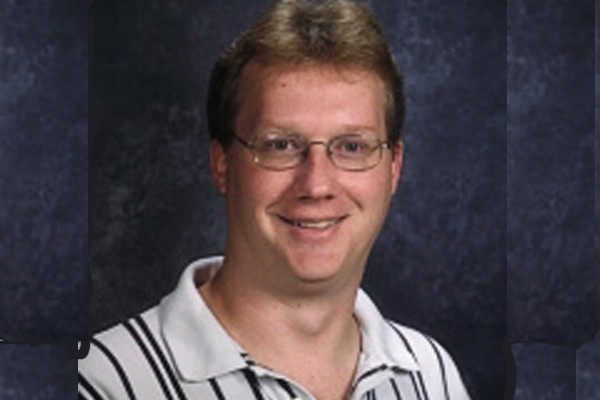
Lakota Teacher Busted for Child Porn made over $65K per year

Below is a story about the Lakota Teacher arrested for child pornography charges. For the thousands of you that follow this blog and know some of the history here, Ryan Fahrenkamp is #286 on my list of teachers that make more than $65,000 per year. Fahrenkamp made $69,456.00. That’s the kind of “quality” teacher that our tax money has purchased. My comments about the impact this has on Lakota are right after the Enquire portion of the article. Ironically, Doc Thompson did a piece about the value of teachers from a wage stand point as this story was breaking during his January 3, 2011 show. I think it is an interesting argument while at the same time reading the details of this child porn story.

Story from the Enquire by: dhorn@enquirer.com
A former elementary school teacher in West Chester was arrested Monday on charges of possessing child pornography.

FBI agents said Brant Fahrenkamp, 42, used his school-issued laptop computer to access pornographic websites and to store images of young men, including some former students, without their shirts on. Fahrenkamp is a former teacher at Endeavor Elementary School.

An FBI spokesman said their investigation began in May 2010 when Lakota school officials contacted the West Chester Police Department about a parent’s complaint that Fahrenkamp was sending text messages to a student.

FBI officials said a search of Fahrenkamp’s hotel room in May 2010 turned up a camera and the laptop, both of which had video files depicting a naked boy. Investigators believe the photos were taken in 2008………………………………………………..

Interesting choice of words, “former,” as mentioned above Fahrenkamp was receiving almost $70K a year while he was taking pictures of little boys at Endeavor Elementary with their shirts off. He was employed until August of 2010.

The first line of defense that other teachers would proclaim is that they cannot be judged by the actions of this demented man, Mr. Ryan Fahrenkamp. And I would say that’s true. There are always a few bad apples, and the actions of Fahrenkamp should not reflect on all teachers.

However,

How many times during the last levy campaign were we told that money bought us “quality” teachers? And if we didn’t pay the extra money in taxes, those teachers might leave Lakota. Right now, how many people out there think that Fahrenkamp was a “quality” teacher and what made him worth more than $65K per year?

On another philosophic debate, when talking about a utopia type of society, where teachers do the work of teaching our children while many parents trot off to work completely entrusting the lives of their children to people like Fahrenkamp, this incident proves that such an act is a folly. Fahrenkamp was using a school lap top to store images of several boys with their shirts off, several students from Endeavor Elementary, and if that cautious parent had not caught text messages going to their child, how far would this incident have gone and for how long?

The other issue is how the school system kept a cap on this story during the media blitz of the school levy of 2010. This teacher was arrested right after the first levy attempt of 2010 and all this investigation was going on during the last one that ended in November of 2010. How did everyone keep this story quiet, and why? This seems like the kind of story the community should have known about back in May. So since the Lakota School System kept the story so quiet, it makes you wonder what other stories they are keeping a tight lid on. I’m sure Fakrenkamp is not the only bad apple.

The pictures of the students with their shirts off from Endeavor Elementary dated back to 2008. The original arrest was on May 26th of 2010. The lag on this story is far too long. This shows that the Lakota School System was more interested in protecting their image than exposing the story. It is unlikely that the concerned parent was the first whistle-blower. It may have been the first alarm from “outside” the school system, but I’m certain there were other behavioral signs that some other co-worker was aware of. The choice was to keep it quiet when the public should have known. That says everything!

I’ll say again that Fakrenkamp does not reflect all teachers everywhere. But because of people like Fakrenkamp, schools will never be able to be 100% trusted with our students. Parents will always have to be a part of their children’s lives if they want to protect their children from people like Fakrenkamp. That might be an inconvenient truth. But it’s a fact of life that must be considered when assessing the value of the teaching profession.

Rich Hoffman
http://twitter.com/#!/overmanwarrior

www.overmanwarrior.com

Nameplate Gods: The Royalty of Politics

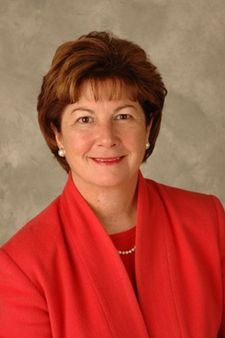
Something Doc Thompson said the other day sent me down a dark abyss of contorted anger. He mentioned Roxanne Qualls, who was at a budget meeting he attended.

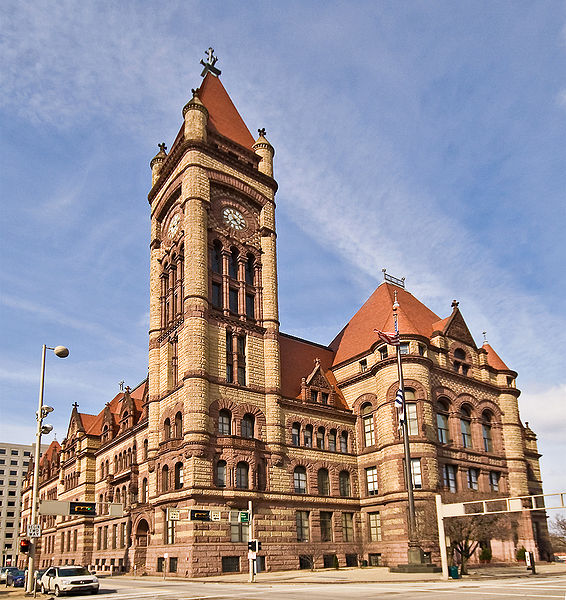
Roxanne used to be Mayor of Cincinnati, and I have some experience with politicians in that grand city hall. It was in that building that I learned at the early age of 25 the principles of politics.  (Pictures referenced from Wikipedia.  CLICK HERE to learn more.)

It was refreshing to hear Doc talk about his experiences with a city council member that gave him the cold shoulder at that budget meeting, when in fact that very same day, Doc had that council member on 700 WLW to explain how important his integrity was to him.

Doc’s comments were classic, and refreshing, because it confirmed in me that I am not alone in my experiences with politicians, and that at least one other person in the world had virtually the same opinion of them.

I sat in front of Roxanne Qualls in her large, opulent office while her staff worked outside the door and watched Qualls giggle smugly at my suggestion that she support lower taxes. Her look made me feel as if she were telling me, “you poor naive young man, you don’t understand that we’ve already made all the decisions. We only have the public meetings to facilitate the public into believing they play a part of the process.”

I learned much later that the technique used by virtually every politician is the Delphi Technique, or some variation of it. I received the same look when I explained to Todd Portune in his office how my idea for a non-alcoholic night club would benefit the pleas of desperate moms pleading with Cincinnati City Council to do something about the under aged drinking that was going on at the University of Cincinnati campus, specifically a nightclub called COOTERS.

A few weeks after my meeting with Mr. Portune the Corryville Business Association put pressure on the owner of the building I was trying to lease, and I couldn’t figure out for the life of me how they found out what I was up to. I knew they would be upset with my non-alcoholic nightclub idea, because back then, bars had to close at 2 AM. If I operated an establishment without a liquor license that would put a lot of pressure on the surrounding bar establishments that would lose some of their under-aged business to me, because kids under 21 don’t like the hassle of possibly being turned away, or getting caught with a fake ID, and I’d be able to stay open all night.

But my business idea died as quick as it rose. I found out that Mr. Portune at the time, a council member was also the attorney for that nightclub. So it had to be him that tipped off the nightclub to what I was doing.

It was a hard lesson of the nature of politics. It struck me hard with disillusionment and anger at the process that crushed fresh ideas before they ever had a chance to move forward. You find in every council meeting across the nation, every trustee meeting, every school board, every state congress and senate, and each federal congress and senate is that same blank elitism that Doc described.

I think it starts with a love of titles, and people who love them tend to crave positions of power, and the perception of politics is that being elected is a reception of power. It’s a puerile idea which appears to be inherited through the collective learning process gained over the centuries of human development.

The United States Constitution was designed to alleviate the need for much of this political trouble. But, unfortunately the weaker human minds, the ones that crave power, that crave material things, that crave the adoration of the public, they are the ones that run for office, and they are the ones that want to sit behind a desk and decide the fate of many. In their hearts, they truly want royalty and the false respect that comes with it.

As I’ve said, I’ve sat across the table from many of these types of people, and they all have the same glass-eyed blankness that seems more appropriate of a jack-o-lantern two weeks after Halloween.

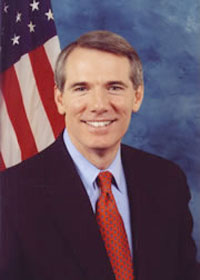
I shouldn’t say all. I’ve met a few here and there that had a light on behind their eyes. Rob Portman is one; I had several long talks with him in the early 90’s back when a thing called the Reform Party was making news in the papers. I also met a few of Ross Perot’s children and they were all bright-eyed and unspoiled. I could see the light on there as well. But those people are the very rare exceptions. Most of the rest are ready to make a deal, for there is no ethical avenue to guide their movements. After a public meeting the voting public just looks to each other for a moment of disbelief as if to wonder what just happened, because the deals had already been made well before anyone showed up for the meeting.

I once attended a meeting the Cincinnati City Council had with the public to figure out what to put on the river. They wanted ideas, this was sometime around 1993. I watched my friend and several other citizens give very impassioned speeches about how to develop the riverfront. The council members would scribble stuff down and nod their heads, and thank the speakers for their input.

After the meeting, the common people would go up and try to speak to the council members, but the council people were only interested in speaking to the developers, or in other words, the people who may contribute future campaign funds. My friend had made by far the best speech of anyone, and not a single council member wanted to shake his hand or would even look him in the eye. They shunned him because his input wasn’t really wanted. The whole process was just a show for the papers, to report to the public that the council people were listening to the people speak. The real deals were going on elsewhere.

I saw the same thing in zoning issues all over Liberty and West Chester Twp, and I’ve recently seen it within the Lakota School district at school board meetings.

Politicians are dangerous because most of what they crave is false, honor through title, respect by name plates, and wealth through side deals. In too many cases, they are hungry attorneys who use political contacts to bring business to their practice. They aren’t interested in being public servants.

That’s why they cower behind their little desks and office doors and cling to the frail appendages of reality they shape through public opinion. Because if you get too close to them, and gaze upon the soul that drives the body, you’ll find the seat vacant. Instead you’ll find the wires and gears responding to a remote control, and the real pilot no place to be found.

So goes the future of our country while the weak seek to govern the strong through the weapon of name plates.

Rich Hoffman
http://twitter.com/#!/overmanwarrior
www.overmanwarrior.com
Waltz of the Emo’s

Why call it a waltz, those patrons in our society that use emotion to justify the use of public money for their private needs? Because when the hard facts are put on the table, the emo’s dance around the issues, call names and attempt to side step the primary issues.

There was a wonderful disagreement on the Big One between Doc Thompson and Paul Daugherty of the Cincinnati Enquire over public education dollars being spent on special needs children.

Listen here:

This initial argument reminded me so closely to the disagreements taking place in virtually every school system across Ohio. For me, in the Lakota district when I put myself in the line of fire against the recent proposed school levy, it was stunning how similar the reaction people had towards me. The impulsive reaction of the otherwise cerebral Paul Daugherty and his literal intellectual attack on Doc Thompson, stating, “you could not write my article,” and “do you want to be quiet while I educate you or not,” speaks of the mentality behind such statements. 

Doc Thompson is understandably ruffling the feathers of established thinking and that is a very good and healthy thing. His position on this particular issue is one of questioning the validity of the costs in public education that are proving unsustainable. The comments Doc is making are the first honest examination of an avalanche which is about to fall upon us in programs created by government in recent history, that were well-intentioned, and are now accepted by the population in general, such as Paul Daugherty, and believe are “rights.”

When Paul attacked Doc, the motive was clearly one of intimidation, which is a normal strategy from parents that have become dependent on the services schools have been offering. Special needs children certainly bring about that reaction, but so do the children that want to participate in sports, or band. The standard defense reaction from people wanting those services from public money is to attack anyone that even brings up the question. In this case Paul came on the air, basically told Doc he was “wrong,” and that Doc lacked the intellect to write a column for the Enquire and that he needed to be educated. The unspoken desire is to impress upon Doc that if he speaks about something that is sensitive then maybe he’ll shut up next time and not ask the question.

I went through the same process during the Lakota Levy. “You couldn’t teach a class of students.” “If you have all the answers, why don’t you run for the school board,” were just a few of the comments. Anyone close to the story will note that during the Lakota Campaign, angry parents and teachers actually threatened WLW with very similar inflammatory comments because I had went on the air and revealed the real budget buster, that the wages of the top 30% exceeded 65K a year, and that was the reason the district didn’t have proper funding.

In 1990 a well-intentioned Congress passed the ADA act which is described below.
The Americans with Disabilities Act of 1990[1][2] (ADA) is a law that was enacted by the U.S. Congress in 1990. It was signed into law on July 26, 1990, by President George H. W. Bush, and later amended with changes effective January 1, 2009.[3]

 
The ADA is a wide-ranging civil rights law that prohibits, under certain circumstances, discrimination based on disability. It affords similar protections against discrimination to Americans with disabilities as the Civil Rights Act of 1964,[4] which made discrimination based on race, religion, sex, national origin, and other characteristics illegal. Disability is defined by the ADA as “a physical or mental impairment that substantially limits a major life activity.”

Quote by George Bush, “I know there may have been concerns that the ADA may be too vague or too costly, or may lead endlessly to litigation. But I want to reassure you right now that my administration and the United States Congress have carefully crafted this Act. We’ve all been determined to ensure that it gives flexibility, particularly in terms of the timetable of implementation; and we’ve been committed to containing the costs that may be incurred…. Let the shameful wall of exclusion finally come tumbling down.”

People now have forgotten what life was like before the ADA was enacted. And because it’s such an emotional issue, taken individually, the feel good stories are used to sell it. But now in hindsight, can we not say that the ADA has had a devastating effect on our expanding economy. Our competing nations don’t regulate themselves in such a way. People also assume that the Department of Education has always been in place, when in reality it’s only been implemented since 1979. Has the Department of Education made our students more successful? Or has the Department of Education only increased the cost of education? Is legislation like the ADA the government’s solution to fairness, if the cost is at the expense of our nation? And in sports, how did we arrive at a place where sports are considered an entitlement? Should public schools offer sports so children can have a crack at a scholarship? Is that the requirement of public education, so resident parents have the opportunity to have their children pursue a scholarship to higher education? Or preparing a child for college with electives offered by the district, is it the public’s responsibility to help a child accomplish their college goals once they’ve graduated? Who benefits, the community, or the parents of the community that save the extra education costs because pubic education assisted the cost of post-graduate prep? These are the emotional issues that instigate the type of character assassinations that are eerily similar to the exchange between Doc Thompson and Paul Daugherty.

Traditionally, it was churches, friends and family that cared for members of society that couldn’t care for themselves. When government injected itself into the situation, they have created a culture of entitlement, which we can not afford, and now the remnants of good intentions are crippling the very foundations that our society is built upon.

The only way to understand those foundations is to strip away all the things built upon it, and re-examine the condition. Again, I’d have to point out in the case of special needs issues; the total cost is but a fraction of staff wages that are excessively high across the entire school system payrolls. In Cincinnati the average per family income is $58,000 per home. At Lakota, it’s $62,000 per teacher. That is the bulk of cost, and no union member has yet to step forward and suggest restructuring their contracts. Instead, for weeks the Cincinnati Public School system negotiated with their teachers union over the cost of health care. So dealing with wages is a long way off. And the reason nobody asks the hard questions are because of what Doc went through on WLW on December 9, 2010 when a fellow member of the media took him to task on the air in an attempt to silence him.

And that is a waltz few sane individuals want to dance to. But let’s all be thankful that Doc can dance with the best of them.

Rich Hoffman
http://twitter.com/#!/overmanwarrior
www.NoLakotaLevy.com

Doc Thompson and the Ponzi Scheme of Busing Cuts

It was a cold day in December, approximately 1 month after the vote that defeated the Lakota School Levy when I went on the Doc Thompson show at The Big One. Two weeks earlier, the school board voted to cut the busing to over 9,000 students. Once that was announced, I received a fair amount of email proclaiming that it was my fault that busing was being cut.

This infuriated me. It’s one thing to have an intelligent discussion about budget issues. It’s quite another to have open extortion that is endorsed by organized political entities and leaving the blame on my doorstep. That is something that I will not put up with.

Doc Thompson shares with me a hope that we can cut through the extremist talk and arrive at a place where we can all have an intelligent conversation about education reform. Anybody with a brain can see that comments about cutting busing and not dealing with the excessive wage amounts is foolish. Wages and benefits comprise over 75%. Busing is less than 2% of the total budget. An intelligent group of budget analysts would obviously attack the 75% first. Not the 2%.

This led to a lively discussion on with Doc during his morning show. Click to listen to the segment.

Literally every education oriented law implemented; every mandate issued from the state has the imprint of the teacher’s unions in it, including the law that says the state must have step increases for teachers. What idiot legislature voted for that and made it a law?

That’s what we’re dealing with here folks. It’s a Ponzi scheme, except this one is created and enforced by government officials under the lobby power of the teachers union and their money. I understand that districts in Columbus pay out around $900 per teacher to the union, and that money then gets turned into political lobby power, typically toward the Democratic Party. In order for this to work, teachers need to make enough in salary to support their contributions to the union, so the union can continue to support the lobby power against the taxpayer by buying the votes of legislators. And as the wages continue to escalate in accordance with the step increases, at a rate in many cases of 9% a year, it doesn’t take long for a district to find itself in financial trouble once their tenured teachers arrive at their step increases at the same time.

That’s where Lakota finds itself. The public isn’t asking the school system to cut their budget of $160 million. We’re asking them not to let it grow any larger than that. But according to the school district, they are powerless to stop the increases to meet the step schedule, because the step increases are a state law.

What? You think calling this whole issue a Ponzi Scheme is unfair, or overly dramatic? Read below the definition of a Ponzi Scheme.

Ponzi scheme
From Wikipedia

A Ponzi scheme is a fraudulent investment operation that pays returns to separate investors from their own money or money paid by subsequent investors, rather than from any actual profit earned. The Ponzi scheme usually entices new investors by offering returns other investments cannot guarantee, in the form of short-term returns that are either abnormally high or unusually consistent. The perpetuation of the returns that a Ponzi scheme advertises and pays requires an ever-increasing flow of money from investors to keep the scheme going.Still think it’s too radical? The bail out comes in the form of property tax increases. And if you don’t pay, they’ll make sure the tax payer feels the pain. The game is intentionally made complicated so nobody can ever fix it, and the average tax payer doesn’t want to take the time to figure things out.

The system is destined to collapse because the earnings, if any, are less than the payments to investors. Usually, the scheme is interrupted by legal authorities before it collapses because a Ponzi scheme is suspected or because the promoter is selling unregistered securities. As more investors become involved, the likelihood of the scheme coming to the attention of authorities increases. While the system eventually will collapse under its own weight, the example of Bernard Madoff demonstrates the ability of a Ponzi scheme to delude both individual and institutional investors as well as securities authorities for long periods: Madoff’s variant of the Ponzi scheme stands as the largest financial investor fraud committed by a single person in history. Prosecutors estimate losses at Madoff’s hand totaling roughly $21 billion, as estimated by the money invested by his victims. If the promised returns are added the losses amount to $64.8 billion, but a New York court dismissed this estimation method during the Madoff trial.

The scheme is named for Charles Ponzi,[1] who became notorious for using the technique in early 1920. He had emigrated from Italy to the United States in 1903. Ponzi did not invent the scheme (Charles Dickens’ 1857 novel Little Dorrit described such a scheme decades before Ponzi was born, for example), but his operation took in so much money that it was the first to become known throughout the United States. His original scheme was in theory based on international reply coupons for postage stamps, but soon diverted investors’ money to support payments to earlier investors and Ponzi’s personal wealth.

Knowingly entering a Ponzi scheme, even at the last round of the scheme, can be rational economically if there is a reasonable expectation that government or other deep pockets will bail out those participating in the Ponzi scheme.[2]

But to intentionally mislead the taxpayers, and to force further impositions against the community with such silly cuts like busing, and special needs programs is ridiculous and deserves to be called what it is.

Extortion………………………………..

Again, here is the definition of extortion —-Extortion, outwresting, and/or exaction is a criminal offense which occurs when a person unlawfully obtains either money, property or services from a person(s), entity, or institution, through coercion. Refraining from doing harm is sometimes euphemistically called protection. Extortion is commonly practiced by organized crime groups. The actual attainment of money or property is not required to commit the offense. Making a threat of violence which refers to a requirement of a payment of money or property to halt future violence is sufficient to commit the offense. Exaction refers not only to extortion or the unlawful demanding and obtaining of something through force,[1] but additionally, in its formal definition, means the infliction of something such as pain and suffering or making somebody endure something unpleasant.[2]

Does cutting busing fall under “making somebody endure something unpleasant.”

This is a clear issue. Let’s call it what it is. And we have to know what it is before we can figure out how to fix it.

Rich Hoffman

http://twitter.com/#!/overmanwarrior
www.NoLakotaLevy.com

Doc Thompson makes a case for Education Reform

It was good to hear Doc Thompson cover the issue of needed education reform causing so much trouble in Ohio politics. The problem is a twofold issue. On one hand, the tendency of the state of Ohio to lean on property taxes to supply the funding for schools has allowed for politicians to ignore their constitutional mandate to supply adequate funding for schools within the state. The other problem is that staff wages and benefits have migrated too high to properly sustain, a fact that can no longer be overlooked. Case in point, Kevin Bright, superintendent of Mason Schools makes over $218,000 a year which is more than the governor of California makes. In fact, that’s more than any governor in the entire United States. Yet, somehow Mr. Bright believes that the work he’s doing in education has more value than the governor of a state. Kevin has been an instructor at Levy University at the OSBA’s Capital Conference and Trade Show, which school board members and superintendents all over Ohio attend each November to learn how to pass levies. Cutting busing is one of the strategies. I’ve been meeting with current and former school board members from multiple districts who have given me a step by step analysis of what goes on at that conference.

Currently, the amount of property tax that is paid in the Lakota School district is $11.29 per thousand dollars of home. So a home valued at 200,000 will pay around $2,258. So when the kid from Ohio State made a comment that the cost of the proposed levy would only cost $20 per 100,000 dollar per house, you would have to add $40 to the above figure, which is a lot.

One of the most ridiculous statements many people made toward me, and the rest of the No Lakota Levy group, and continue to make by the way, is that teachers deserve to make over $65,000 per year because they have master’s degrees, and are educating our future. And that those wages are on par with the rest of West Chester, and Liberty Twp. The problem is the wages really aren’t. West Chester is considered affluent with a household income of $73, 826. That means in most cases a husband and a wife are bringing home about $36,913 each to support that household. So in the case of the Lakota School System, we know that Lakota is spending over $31 million dollars a year on staff making over $65,000 per year each. That is almost twice the amount of the average resident taken individually.So it is quite an insult to the community for Lakota, and other school systems, to openly lie to the community and tell us that busing which only costs 2.8 million per year, or electives must be cut, when we have people that don’t work for the school system looking at these numbers and see the shell game for what it is.

It is with great relief that Doc Thompson joined The Big One recently, and took up the issue of these school levies particularly with Lakota, because as goes Lakota, so goes most of southern Ohio. Below, listen to Doc addressing this issue on the 18th and 19th of November, 2010. I didn’t contact him and ask him to do so. He did it on his own, the same with Darryl Parks and Scott Sloan. In many cases we’re all people who know a scam when we see it, and if any venture has formed between us, it is out of shared annoyance at the arrogance of school officials that are openly taking advantage of the tax payers. And Doc came here and saw this situation for himself, and his opinion is his own. He has not been influenced by anyone from the No Lakota group. And WLW is not bought and paid for by the republican party of Southern Ohio. I can personally proclaim the truth of that. But what we all have in common is that we do have conservative, and libertarian values whether it be as businessmen, entertainers, or radio personalities and we don’t like what we see. That’s why it was very refreshing to hear the fresh opinions of Doc Thompson coming to the immediate conclusion that reform needs to happen, and the unions need to get out of the way, quick.

Doc, is a native of the Buckeye State, growing up in a small town in Ohio. He spent most of his career in Cleveland but has also worked full-time in Lincoln, Las Vegas, and Albuquerque. He is a 5 time Marconi Award (the Academy Award of radio) winner for radio excellence. I’d like to welcome Doc and his Marconi’s to Cincinnati. I’ve listened to him for several weeks now. It was difficult at first because I was getting used to Scott Sloan in that 9 to 12 slot, and since Scott and I shared many ideas on what needs to happen in education it is only natural that you build a sense of loyalty. Doc has clearly earned my respect. In his discussion on education, he wasn’t shy about taking the complete education issues directly, and that is addressing phasing out the teachers unions, which is a conclusion I’ve come to realize is essential before true reform of education can be implemented. And besides, anyone that is on the radar of ThinkProgress, is a man who is good in my book. Listen to the clips in these articles, and be thankful that the Doc is in Cincinnati.

http://thinkprogress.org/2010/03/30/thompson-tanning-racism/

http://mediamatters.org/mmtv/200908200014

Such a task will take more than just ground troops and yard signs. These school systems have controlled for years newspapers, local politics, real estate firms, and television media, because in television there isn’t time to dig too deeply. A school like Lakota has direct access to over 18,000 students and their parents, so fliers sent home go directly to a potential voter. So it is extremely difficult to fight these types of tax initiatives.A radio station like WLW though and conservative radio in general is about ideas. It doesn’t have the luxury of relying on visual images to make their point. It’s only the voice behind the microphone and the idea behind the voice that can give weight to a concept. So the voice behind the microphone tends to be a person of great thought to start with, and such people are not easy to fool.

Welcome to Cincinnati, Doc. It’s great to hear that there is a great mind behind the microphone and that the power of the Big One can loom over these school districts and prevent the kind of manipulation that they are accustomed to. Because I am personally committed to holding off all of the levies, not just in Lakota but Little Miami, Mason, Talawanda, Fairfield, Lebanon, and Springboro, and forcing proper legislation committed to funding schools in Ohio.

I say that because leaders from all those districts have been meeting now, since the election, and we are forming a group called tentatively Educate Ohio. It will be a force to be reckoned with in 2011. And we will need allies at all levels to undo the destructive network that has formed under collective bargaining.

Rich Hoffman

www.NoLakotaLevy.com