
Sergio Leone at Liberty Center: Taking a step back to the lessons of classic spaghetti westerns

The very first movie I can remember seeing was A Fistful of Dollars when I was four years old. I had seen it a year before on Channel 19 but it was something I had watched with my mom while she canned tomatoes. Our house didn’t have air conditioning but I didn’t care. Our television back then was color, but it barely had good enough reception to see what was going on through the static. But when it did Sergio Leone’s westerns were the coolest thing on television and I watched them in pools of my own sweet as my first conscious memories. If it could be said that I had a primary influence on my life it was in those moments of watching Leone westerns with my mother well before I ever turned five. Back then all I remembered of A Fistful of Dollars was the end where Clint Eastwood chained a steel chest-plate to his chest hidden under his poncho and taunted Remon Rojos to aim for his heart. Each time a bullet struck Eastwood he’d fall down but keep getting up again until he closed in on the villain with honor and killed him with a great final standoff. I used to watch the entire film not understanding anything anybody was saying just so I could see that ending over and over again. Back then there were no DVDs so you’d have to wait for it to come back on television at some unforeseen time. So I learned to read by going through the TV guide and looking for old Sergio Leone westerns looking hoping A Fistful of Dollars would come on again. To learn more about Leone as a person and director watch this fantastic documentary on him to understand why I enjoyed his work so much.

Sergio Leone had more influence on me as a result of those continuous viewings than I’d typically give credit. Because I was always looking for A Fistful of Dollars I’d sometimes confuse the films with For A Few Dollars More, The Good, the Bad, and the Ugly, and Once Upon a Time in the West because I learned that they were directed by Sergio Leone which was easier to remember than the title of the movies. So I watched them all often disappointed that they weren’t the one where Clint Eastwood kept getting shot, yet continued to get back up. Sergio’s impact on cinema was incalculable. He directly influenced the Star Wars films and literally hundreds of future directors, actors, cinematographers and many others not even in the show business industry. His westerns were stunningly passionate yet dystopian. He did so much with so little money that each frame of film was made as if it were his last. His use of sound effects, music and the visual medium of film is something that very few directors were ever able to achieve. He was simply stunning.

Like me Sergio Leone loved classic American westerns, which were a primary export to his home country of Italy. Unlike me, he didn’t live in the United States, so when he met Americans for the first time coming to Rome as conquerors after World War II they didn’t live up to his expectations and the director sought to reconcile that disappointment with his westerns. After all Leone was living in a Marxist oriented European mindset looking to the West with a bit of hope—but the people from that land were less than valiant which put his unique spin on the American western—famously known as the spaghetti westerns.

That disappointment was never more clear than in Once Upon a Time in the West where the primary villain was the clear-eyed Henry Fonda—the star of many American westerns. He was a classic bad guy cast against a break-out role for the young Charles Bronson. The anger I felt toward Fonda because of the scene where the hired gun for the railroad tycoon known as Morton killed the land owner McBain and his children with a brutal hanging was excessive. That anger lasted most of my life, because I have since seen that type of evil firsthand. Sergio Leone as an Italian who was in love with the image of America was poised to make films that criticized the western while at the same time relishing in them. Leone captured the raw personality of evil in his films in a way that nobody else had or has since—never with such grandiose passion. But for me, the trilogy of films that embodied the “Once Upon” films, which would make eventual stars of many actors were not the best work of Leone. As he became older and had attended several film festivals, he leaned more toward Marxism—which was the home philosophy of Italy. The hope of his youth had left his films by the time he made Once Upon a Time in America. More and more Leone was obsessed with the evils of crony capitalism as if to justify his Marxist leanings which essentially helped fuel the Hollywood insurrection more toward the political left.

Quentin Tarantino who is about to release the modern western The Hateful Eight, which I’m eager to see and shares with me a love for Leone leans more toward the later part of Leone’s career as opposed to the front with the Fistful of Dollars trilogy. Most of Hollywood for that matter saw how Leone turned the American western on its head and thought that prevailing trend was “high art.” So they turned their eyes to Europe and made movies that punched even deeper holes into the American mythology of the Old West. But that approach was misguided and doomed from the start. While I really enjoyed Leone’s later work, especially his Once Upon the Time in the West, it was his Dollars films that I think are the hopeful musings of a would-be capitalist and his yearnings for the kind of America that it should have always been—as represented by the self-reliant individualist Clint Eastwood. Tarantino pays many tributes to Sergio in his films, but he never quite gets it, which I’m sure will be a continued problem in his The Hateful Eight. Tarantino is a broken person because he loved the wrong Leone.

But I didn’t, I saw through that conflict before I was age 7 and was beginning to understand these strange western films from a foreign director who couldn’t even speak English. People like Tarantino and his producers at the Weinstein Company gravitated toward the Marxist Leone, not the hopeful treasure hunter of The Good, the Bad and the Ugly—where the good guy played by Clint Eastwood gets the treasure, gets his revenge, and rides off into the sunset alone. He does the same thing in For A Few Dollars More and to a lesser degree in A Fistful of Dollars. In that first film released in 1964 Eastwood has more of a classic showdown with the bad guys as he comes back to town to save a friend of his from hanging. Hanging in these western films which are now 50 years old represented the brutality of unjust application of authority and the abuse of the strong against the weak. In those films Eastwood played a classic avenger, which he would go on to build a career on. Smartly, Eastwood turned down the role of the lead protagonist in Leone’s Once Upon a Time in the West—which was a brilliant film wonderfully shot, but did not have the capitalist message that had made Eastwood such a superstar. Good move on Eastwood’s part because even though Sergio Leone had larger budgets to work with and studio backing that he never dreamed of a decade before—like George Lucas his vision began to be tainted as his hope for America moved from tradition to progressivism. When most of their Hollywood friends were jealous European sympathizing Marxists and are all left-leaning at film festivals, the lens of their vision changed from hopeful capitalists to regulated Marxists. As a result the American public generally began to reject Leone films whereas critics began to praise them—because they were moving toward the left as well. American however stayed center-right and just stopped paying attention to Leone.

This was on my mind because I was shopping with my wife at Liberty Center and couldn’t help but notice a fashion trend that was emerging—perhaps 40 years too late, but it’s emerging. The influence of Leone’s spaghetti westerns is rising into the mainstream as many of the high-end clothing designed for affluent types look like they are coming straight off the screen of Leone’s classic westerns. This is a great thing as they are not the type of westerns that Tarantino loved, but the kind that I did. America is slowly beginning to wake up to the sleep it has been under and is turning back to its origins—sharing that bright-eyed hope that Sergio Leone once had that America could be a place for personal gain and intact justice. Clint Eastwood’s character in the Leone westerns never had doubt in himself and was always able to slug through any situation presented to him. He just kept getting up and up which my four-year-old eyes never forgot. That movie is as part of me as anything else is and it all started with my mother watching that film with me knowing that it would somehow be important. That’s why she’s such a good mom. She launched me in the right direction which apparently the rest of the world is just starting to understand—perhaps not deeply, but at least emotionally as it is started to show itself in our fashions.

For a long time I’ve had the hunch that all aspects of American culture needed to go back in time to that precipice of history to when A Fistful of Dollars was released, and start over. Instead of hating the crony capitalists Rojos as a reason to steer society toward Marxism we should focus on the capitalist that played both sides against the other for the personal gain of reward while doing good for those around him as a natural by-product. In those days nobody in the world understood capitalism better than Sergio Leone and his good friend Ennio Morricone. America should have listened then. But it’s not too late. I saw several women standing at the corner of Bales Street and Haskell who looked like they stepped right off the set of For A Few Dollars More. They may not have been aware of it, but it was obvious to me that the fashion designers for their clothing were clearly fans of early Sergio Leone westerns likely for the reasons I just mentioned. European Marxism has taken the world nowhere. So its time to re-evaluate our philosophy and to step back to that very first film, A Fistful of Dollars and see it through the eyes of its maker—and not make the same mistakes going forward. I received the message the first time, and I have never looked back and been with any doubt. Tarantino and the modern films schools have it wrong—they need to go back to Leone and understand what it was in the beginning that made him so great—and its not that he cast Henry Fonda as a villain.

Rich “Cliffhanger” Hoffman

 CLIFFHANGER RESEARCH & DEVELOPMENT

Listen to The Blaze Radio Network by CLICKING HERE.
Liberty Township’s Rodizio Grill: The perfect place for a business meeting–be sure to see Captain Hook

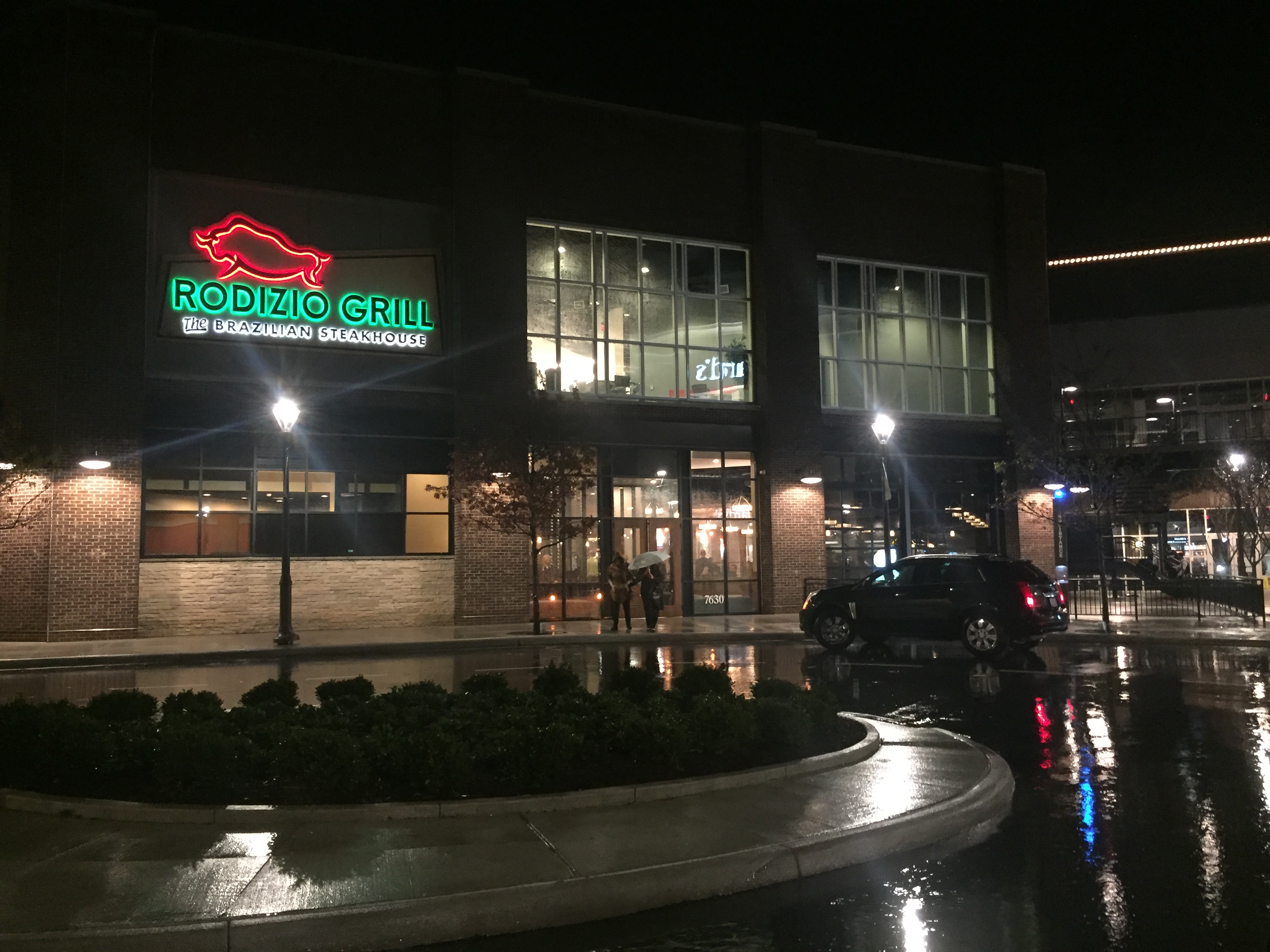
imageCaptain Hook isn’t just a pirate from the famous Peter Pan stories; he’s also the head chef at the Rodizio Grill at the new Liberty Center. On a VIP night he came to my table with his curled up mustache and eager attentiveness to inquire about the assessment of his food by my wife and me. It was a packed house and the girders of political and economic support behind West Chester and Liberty Township were there as the restaurant owners smartly wanted the buy-in of the community’s leaders before opening to the public. After two soft openings just ahead of their grand opening—a VIP dinning experience where everyone in the new restaurant was on a full court press to impress put their best foot forward and they were eager for some input.   So what did I tell Captain Hook, I’ll save that for the end? First you’ll want to know what Rodizio is, why it’s unique, and why having it cuddled away inside a very intimate part of Liberty Center is excessively important to the continued economic development of the region.image

Rodízio (pronounced [ʁoˈdʒiziu] in Brazil) is an all-you-can-eat style of restaurant service in Brazilian restaurants. In most areas of the world outside of Brazil, a rodízio restaurant refers to a Brazilian style steakhouse restaurant. Customers pay a fixed price (preço fixo) and the waiters bring samples of food to each customer at several times throughout the meal, until the customers signal that they have had enough. In churrascarias or the traditional Brazilian-style steakhouse restaurants, servers come to the table with knives and a skewer, on which are speared various kinds of quality cuts of meat, most commonly local cuts of beef, pork, chicken and sometimes exotic meats. While not as popular, there are other rodízio style restaurants in Brazil, such as ones serving pasta or pizza, where various pizzas and pastas are brought on trays. Rodízio style sushi restaurants are also common in Brazil.

Most rodízio courses are served right off the cooking spit, and are sliced or plated right at the table. Sometimes they are accompanied with fried potatoes, fried bananas, collard greens, black beans, and rice (served buffet style).

In many restaurants, the diner is provided with a colored card, red on one side and green on the other. Accordingly, the servers will only bring more meat if the card is flipped to the green side.

Rodizio Grill, The Brazilian Steakhouse, offers over a dozen rotisserie grilled meats, perfectly seasoned and carved tableside by Rodizio Gauchos. The grilling process is traditional to the Southern part of Brazil, specifically in Sao Paulo. The Rodizio Gaucho, in dress and our carving method, is what you would find if you were dining in Porto Alegre, Brazil.

As a result of the slow roasting and seasoning process, the rotisserie grilled meats melt in your mouth, satisfying even the most discriminating taste buds.

https://en.wikipedia.org/wiki/Rod%C3%ADzio

http://www.rodiziogrill.com/menu/

It was a pouring rain at the end of Gibson which migrates into a roundabout in front of Dillards, Pies and Pints and the entrance to the indoor portion of the Mall called The Foundry. We didn’t care if we were getting wet in a late October rain as leaves fell off the trees and littered the pavement. Liberty Center is an adult playground and my wife and I had been playing hard. She had just found a nice outfit at American Eagle and was very happy about it, so we entered the Rodizio Grill to a welcome best foot forward effort that was admirable. Of course the hostesses were friendly and all the managers were there to greet us. They were working hard to make a great first impression and they were successful. But as they took us to our seat my assessment was that the true test of the place would come many months later after the hype had died down—if they still exhibited the same energy. A VIP night is one thing—having the same passion every other day is quite something else. So I was skeptical as we took our seat and said hello to half a dozen other people also invited to the event that we knew.

For around $33 per person you get the all you can eat deal which is what Rodizio is all about. Our waitress explained it to us so we were excited to begin at the gigantic salad bar located toward the back of the room in the middle of the action, just ahead of the kitchen. At the window behind the bar were a small army of Gauchos getting fresh meat off the grill to hit the dinning room. My wife and I filled our plate and headed back to our table impressed with the massive selection of options that had so far been presented.

At Rodizio they put a block that looks like an hourglass, green on one side and red on the other at the end of your table. When you are ready for the Gauchos you flip it over so that the green side is up. When you want them to stop coming to your table you flip it to red. When you are done for the evening, you put it down on the table on its side. Very simple, yet there is a feeling of excitement in flipping it over to green because it’s like turning on a faucet. You really don’t know what’s going to happen, what meat the Gauchos will present first or who will bring it. We had five Gauchos assigned to our table, so there was a bit of randomness about the dinning experience that was certainly exciting. With a bit of a laugh we turned the block over and the Gauchos launched as if poised like snakes from the corners of the room and rushed to our side.

The Gauchos cut off various cuts of steak, chicken, pork, fish and even glazed pineapple which was amazingly delicious—much more so than I would have expected. It was all very exotic and obviously prepared with a lot of meticulous care. There were even cuts of glazed ham prepared in the same way as the pineapple—it was a carnivores dream. That was the first thought I had about the place, eating all that meat of different types invoked in me my inner T-Rex which is a nick-name that a lot of people who don’t like me often use to describe my temper. Sometimes during business you want to invoke that T-Rex and some red meat is good for bringing that kind of attitude to a deal you’re working on. That was the first thought I had about having power lunches at Rodizio, is that it puts you in that carnivore mood—which is good when that kind of mindset is needed. The endless supply of the meat is another aspect of that carnivorous rapture. If I had that much steak at a place like Jags in West Chester it would have cost $500 dollars. If you like to eat steak, and good steak at that, it’s hard to go wrong at Rodizio. When you are trying to close a deal or accomplish some difficult business endeavor, I can easily see a need to have lunch at Rodizio either with the people you are working with, or by yourself just to put your mind in the right condition. A little trick I use when I’m under pressure is I purposely eat red meat on the rare side, and Rodizio had several skewers of meat cooked just that way. It was delicious and invoked in me that T-Rex spirit that is often very helpful under pressure.

That’s when I had the next thought about Rodizio–it was essentially the perfect place to have a power meeting with clients. Often when dining with potential business partners, adversaries in business, or associates there are awkward pauses that are persistent with people who have little in common with each other but the project they are working on. For instance, I hate those meetings because I hate small talk. I love to go on and on about giant heady subjects with great enthusiasm, but not everyone is like that so I often have to turn off the afterburners to the point where I get really bored with the people I’m eating with. Not good when you’re trying to do some team building. Usually at these types of meetings you conduct small talk before you order drinks, usually it’s about sports. Then you order some appetizers and continue talking about sports. Then you order the entrees and are about done talking about sports because people usually have different teams that they like and you’ve exhausted all the topics that are safe without making them mad by that point. At Rodizio they have a natural solution to that problem. When you turn the block to green, the Gauchos flood your table side forcing the interaction of all your clients. Customers have to help pull the meat away as the Gauchos cut it, not in an awkward way, but one that is engaging and those awkward moments of silence with clients is filled with activity—constantly. If you want to talk about a serious subject to close a deal or make a point, turn the block to red, throw your issue on the table, then turn it to green again to get the action moving again while they simmer on your proposal. Rodizio has the ability to be a very powerful alley in the world of business, and I hope that area sales reps use it fully. Rodizio is your friend, trust me!

I watched Captain Hook, which was the actual nametag he was wearing, carefully tend to all the cooks in the kitchen and inspect the Gauchos as they worked the room. He paced around the salad bar making sure that everything was just perfect, and it was. So when he asked me what I thought about his food I told him that if he put the kind of love and care into the food that he had on this VIP night, he’d have a hit that this area would spectacularly support. Getting food of that quality in those quantities coupled with the ambitious service is an experience people will pay a lot of money for. Hook clearly had by natural inclination an understanding of the Metaphysics of Quality making me very excited about the dining experience at Rodizio not just for the VIP meal, but the future of Liberty Township. Clearly the appeal is a primal one cultivated into refinement. What’s not to like about endless supplies of meat cooked over an open fire? It’s good for romance, its good for business, its good for a mind in need of a primal charge. And Captain Hook was there to make sure everything stayed on the upside of quality. A good chef is the key to a restaurant, and the Rodizio at Liberty Center had one, and his name was Captain Hook. When you go, make sure to tell him what you think, because he cares.

The cost of the meal for two was around $100, which wasn’t bad for a quality experience. It’s about $66 for the meal, another $30 for drinks. Then there is the tip and the deserts which were so good I would think seriously about going there just for a drink at the bar and some desert even with Graters right around the corner. Their deserts were on the upside of good in comparisons to other deserts around the city of Cincinnati.   I’d put them on par with the best so they are worth the expense if you can muster the room in your stomach—which at the point where you put the block on its side to call it quits, there won’t be much room for more food. If you take your time to eat, likely you might manage some desert which is advisable. But don’t try to cram a trip to the Rodizio before a movie. Make sure to make the dinner at Rodizio the feature attraction of your day, because that’s what it deserves. Go after the movie. It takes time to appreciate the food, and to give your body time to enjoy it all. I happen to know that the tickets at the new theater are very reasonably priced for the luxury setting, so a night at the movies and dinner at the Rodizio will stay under a few hundred dollars—which is perfectly reasonable for a destination environment that might only be experienced on an out-of-town vacation. Of course the Cobb Theater at the other end of Liberty Center has their own fine dining options, which is why their ticket prices are so reasonable. But be sure to plan a trip to Rodizio often, not just a few times a year. I saw nothing but positives—a lot of ambition, a great product, a psychologically primal supplement and a bargain even at an above tier restaurant experience—which is what is expected at Liberty Center. I was invited to the VIP event to say nice things about the place, but it’s not hard to find enthusiasm for it. All I had to do is look at Captain Hook and witness how the rest of the staff fed off him—and it was obvious that Liberty Township had yet another fine treasure—not from a pirate, but a hell of a good chef. I will go back many times, but the most effective visit will be those business oriented dinners—because Rodizio has a setup that will make some of the most unpleasant meetings team building exercises constructed around the primal need for meat and the satisfaction of it cooked over an open fire while surrounded by luxury.

Rich “Cliffhanger” Hoffman

 CLIFFHANGER RESEARCH & DEVELOPMENT

Listen to The Blaze Radio Network by CLICKING HERE.
How the DOJ and Lois Lerner Demanded the need for more Guns: Government pleads stupidity as a defense

Let’s see if we can get this straight, the Department of Justice has used a legal criterion of incompetence to justify not prosecuting Lois Lerner as she abused her power at the IRS for political reasons. DOJ officials reported that “substantial evidence of mismanagement, poor judgment and institutional inertia leading to the belief by many tax-exempt applicants that the IRS targeted them based on their political viewpoints. But poor management is not a crime,” thus establishing forever by attorneys everywhere that government can act against private citizens so long as they can prove they were too incompetent to manage a situation. So in essence, the DOJ has given all government employees a future way out of any abuse of power situation—all anyone has to do is plead stupidity to be relieved of whatever crime they may have committed.

Well, isn’t that interesting. That means hypothetically that if the President of the United States is given intelligence data suggesting that someone like me is a threat to national security and they send a squad of people to apprehend me—hypothetically speaking of course—but they go to the wrong house and bump into one of my neighbors who then opens fire and a firefight ensues similar to something like what happened at Waco, Ruby Ridge and other places—and a lot of people are killed–that those guilty of the whole thing would be let off the hook at the DOJ because bad management is not illegal.

Or suppose that a Secretary of State sets up a private server that she runs all her top-secret email through so she can scrub the information later for deniability—but then gets caught—that all she has to do is plead stupidity and all will be forgiven. They will even get the opportunity to run for president—wait, that’s actually happening right now with Hillary Clinton. That is not a hypothetical, but you get the point.

The DOJ has just provided the primary reason that government is too large and needs to be scaled back. They have just established why Washington D.C. should not be one of the highest per capita employment regions in the country—because they are too incompetent as a collective group to occupy so much wealth. Through their labor unions there are no expectations of performance and now with the DOJ decision over the Lois Lerner case regarding the IRS, there is no legal expectation regarding performance either making the federal government fully motivated to hire the dumbest people they can get their hands on so there is always an escape if something goes wrong.

The Department of Justice further stated, “we found no evidence that any IRS official acted based on political, discriminatory, corrupt, or other inappropriate motives that would support a criminal prosecution. We also found no evidence that any official involved in the handling of tax-exempt applications or IRS leadership attempted to obstruct justice. Based on the evidence developed in this investigation and the recommendation of experienced career prosecutors and supervising attorneys at the department, we are closing our investigation and will not seek any criminal charges.” That statement was provided in a letter to selected members of congress by Assistant Attorney General Peter Kadzik. So let’s strip away the legalese rhetoric there and get to the heart of what Kadzik was saying. In essence the investigation was run by government employees against government employees for the end goal of protecting government employment. Lerner was told to plead the fifth, say nothing, get out of public office and let the government clean up the mess with a defense of stupidity to conceal their tracks. The government declared of itself that they were too stupid to properly conduct themselves with tax payer resources and that there will never be ramifications for incompetence in public office. Without question, we will get a lot more of the behavior as a result.

Now you know dear reader yet again—with evidence provided from the highest law enforcement office in the land—why we have a Bill of Rights established by the anti-Federalists during the formation of our Constitution at the start of the American concept. We have freedom of speech so that we can call such abuses of power by their true implication—because obviously the DOJ has no interest in doing anything but protecting government employment as a direct arm of radicalized union labor. And we have the right to arm ourselves in case our military and police fall under the malice of future incompetent idiots like Lois Lerner at the IRS. If the IRS can abuse its power why not the local National Guard post? We need guns to protect ourselves by the DOJ definition of incompetence, because they have shown that they will take the side of the fool over the righteous expecting the good to surrender their lives to the bad for the “greater good.” Greater in this case is established by all the hoards of knuckle-draggers who are employed by the federal government. Their employer actually permits stupidity so those of a sane mind out of the Beltway need a way to protect themselves from the stupid—because nobody else will take up the job.

Because of this ruling by the DOJ we now have evidence that under no circumstances we should reduce the number of firearms in our society, because in a time when the DOJ is using stupidity as a defense the only way we can enforce respect among the corrupt is by promising to end their life—because they don’t respect the law. So they must respect the guns we possess—because in reality, that’s all that really protects us from the bad management decisions of the federal government. When they think they can abuse their power—as they have many times and been caught—they are very inclined to continue the behavior. The IRS attacked my friend Justin Binik Thomas and my local Tea Party group at Liberty Township because they assumed that everyone were nice people not inclined toward rambunctious violance—so they were easy targets for showing the vast authority of the IRS as a way to build up their brand of enforcement. As nice as Justin was however, they didn’t expect him or the Liberty Township Tea Party to stick up for themselves using the First Amendment. So the situation backfired on the IRS in a spectacular way. The IRS was clearly guilty of abuse of power and the only way out for them was for the Obama controlled DOJ to plead stupidity to avoid prosecution. If the case had been allowed to fester, the original guilt would have put it within the White House through union connections which was the likely origin Lois Lerner’s radicalism.

These same idiots are the people declaring that we need fewer guns in society. It’s like a robber scouting out potential hits complaining that people have bars on their windows to prevent break-ins. The government wants easy targets and a compliant people, because they are too stupid to deal with a challenge or any philosophic position in favor of freedom, so they want to confiscate guns to have their way and be allowed to mismanage our society. Without guns people like Lois Lerner would be in charge of everything and the abuse of their offices completely unfettered. It is for this very reason that gun sales are so high in America right now. It makes us sleep better at night knowing we can at least take care of ourselves if something dreadful happens. It is quite obvious that we can’t count on the DOJ, the IRS, the White House, the Secretary of State, local law enforcement, the National Guard or even the local school, because they have been given the gift of stupidity to protect them from the ramifications of their own devastating decisions. In the end the thin blue line that resides between justice and chaos is not law enforcement led by more government employees—its in the Second Amendment and under the right to bear arms that Thomas Jefferson as Secretary of State authenticated, “A well regulated militia being necessary to the security of a free state, the right of the people to keep and bear arms shall not be infringed.” That militia is not a group of idiots ran by the federal government—its individuals fighting for their right to protect their private property and to take back their government when and if that government fails them in the future. With the decision by the DOJ over the IRS case—it is clear that there was a lot of wisdom in Thomas Jefferson’s assumptions. So the best thing to do is to protect yourself from future stupid people. Join the NRA if you haven’t already. Sign up for Second Call Defense. And buy a gun. If you already have one, or two, or a hundred—buy another gun so that the DOJ can get a taste of what their bad decisions cause regarding social behavior patterns.   And if you live near me, buy that gun from the good guys at Right 2 Arms, which is essentially at the end of my street in Liberty Township. It’s government’s problem for their bad decisions—not yours dear reader. Protect yourself from them by using the rights provided at the outset of the country. The lawyers, politicians and theatrical fools have strayed away—and Lois Lerner is the proof of just how bad it really is. The DOJ just confirmed it.

Rich “Cliffhanger” Hoffman

 CLIFFHANGER RESEARCH & DEVELOPMENT

Listen to The Blaze Radio Network by CLICKING HERE.



Attacking Gunslingers: Why “shooting from the hip” makes a great business leader

I have a bit of a reputation professionally and personally for shooting from the hip, metaphorically speaking. People who say that about me speak it as if it were a bad thing that indicates recklessness. They also say the same type of thing when professional quarterbacks are quick to throw the ball down the field under risky circumstances—they call those people “gunslingers,” as if the term concocted abandon of calculation and patience. So I need to set the record straight on a couple of things that I have been thinking about as I have contemplated the root cause of my sudden obsession with Cowboy Fast Draw. Like my bullwhip work, most of the targeting is done more through feeling than in properly lining up the barrel with a target with careful assessment. I happen to be good at quick targeting, as I have shown under many competitions of speed and accuracy with bullwhips and am routinely very good at the Ohio Bullwhip Fast Draw that we perform each year at the Annie Oakley Days in Greenville, Ohio. There is no time to take care and to aim the bullwhip at a target. I have learned through muscle memory where all the points of trajectory are, how wind affects my aim, and to consider all the factors of targeting under stressful, timed conditions. I have it down to seconds with a bullwhip, and my new obsession with Cowboy Fast Draw is to further speed up my thinking to the hundredths of a second instead of just a second or two. That’s why I’m personally attracted to those types of hobbies—but I find society’s labeling of those types of people to be disturbing and indicative of something much more symptomatic of an overall disease that is crippling our country.

There is a new breed of American, and world bureaucrat educated with modern scholastic emphasis on metaphorically taking more aim before one shoots in life who have deliberately, and maliciously sought to smear the name of the bold and the reckless that stand behind just about every profitable enterprise in the history of mankind.   This has left our nation and world in a state where the very timid and fragile minded rule the world through paperwork, regulations and an emphasis on calculation as the mode of representing quality instead of how quickly a target is hit. Using guns as a metaphor, the modern bureaucrat believes the quality of an endeavor is in the form of the aim, not in the objective of shooting. The reason of course is that since the masses cannot think and act fast, they have placed upon the world a mandate through democracy that the weakest and most timid can rule the corporate world by handcuffing the strong and decisive with mundane regulation and law that they create to give themselves a shot at equality.

With the Cowboy Fast Draw Association what I love most is that the aim and accuracy of the endeavor is all performed by shooting from the hip. If a shooter takes the time to aim, they will lose. Too much time is taken off the clock unless a shooter literally plucks the gun from their holster and levels the barrel just above the rim with a quick pivot and unleashes a shot within a hundredth of a second from seeing a light indicating that action needs to take place. I have thought about this concept for years with my bullwhip work and the net result for me is that when I need to make a hard decision fast, I can and do with tremendous accuracy. I have a great track record of making good decisions in a split second manner. But that’s not good enough for me. I want to be faster, so I am taking up Cowboy Fast Draw to improve myself. When I say that I intend my official career to be that of a gunfighter, this is part of why I reference it this way.

Just because something is shot from the hip or struck without a proper aim—traditionally defined, it does not mean the act is reckless or without skill. Quite the contrary—in many ways shooting from the hip for those skilled in the act is a way to encompass both speed and accuracy into as seamless of an action possible.   Whereas the typical academic is focused on only one of those elements, they have attempted to define the quality of an endeavor based on the time it takes. If speed is desired, then they instantly reference more people to accomplish the task because it plays into their overall collectivist mindset. They don’t like that an individual can provide both speed and accuracy when it comes to complicated tasks, so they have found countless ways to instill laborious monstrosities of inefficiency to give themselves more time to think—which they love to do. But they hate action—actually pulling the trigger at a decision gate.

That is why in many manufacturing fields across the United States, from aerospace to auto manufacturing our ability to produce has been greatly crippled by allowing these timid types who require of themselves to aim very carefully in order to hit a target to strangle our productivity because their primary objective in life has been to diminish the input of the traditional gunslinger—the bright eyed problem solver who shoots from the hip often and hits most of the time. Their jealousy and need for social equality have actually crippled our manufacturing capacity with mundane academics that are so timid to pull the trigger on anything for fear of not landing a mark that they shoot slowly and miss often. When they declare that “so and so” “shoots from the hip” they mean it as an insult, but what they reveal is the source of a vast detriment—the root cause for the declining effectiveness of American manufacturing through improper association toward definitions of quality.

In Cowboy Fast Draw the rules are strict, just as they are in the world of manufacturing. You must have your gun holstered and your hand cannot be in the trigger guard. You must use a single action firearm. The distances you shoot from are 15’, 18’, and 21’, which is quite a distance for a firearm. You cannot shoot before the light comes on. Within that context, you must figure out a way to draw your gun, hit your target and do it within a fraction of a second. If you miss, yet beat your rival to the draw, you don’t get a score. You must have speed and accuracy—just like in our bullwhip competitions. The goal of the skill is to develop both, not just be strong in one facet. You have to be accurate and fast, not just fast, not just accurate. By that unit of measure the timid fuddy-duddy is just as wrong as the hasty fool who is often referenced as a “gunslinger.” So when the bureaucrat says that the person who shoots from their hip is reckless, they are just as dangerous, because their inaction is just as detrimental as a mistake. Just because a shot isn’t taken doesn’t mean it wasn’t needed.

In the field of life, there are many targets and most of them have to be hit at 21’ or less, metaphorically speaking. And they require speed and accuracy to deal with them. Necessity dictates that the quickest to the target gets the prize, and in the competition of life, the first to draw and hit their target wins. Time does not wait for the timid to pull their gun, aim the sights, take a deep breath, let out half of it, then to squeeze the trigger at just the right moment. In life, you have to draw and shoot before an eye can blink. Bureaucrats try diligently to stop time itself with mountains of paperwork to hide the fact that they don’t have the courage to draw and fire. Both actions require decision-making rooted in having a conceptual understanding of the target and hitting it without the aid of eyes and time to guide the bullet to the intended destination. You have to know where the target is in space and time and trust yourself to hit it faster than a mind can think about it.

Those who are successful at shooting from the hip are those like the people in Cowboy Fast Draw. There they dress up in cowboy outfits from the late 1800s period of American history. But they might as well be the deal makers and job creators who have made the economy of America the greatest in the world. Shooting from the hip for them is necessary, and a skill that few have. In their hands, it’s a competent task. But in the hands of the bureaucrat it’s a serious risk that is nearly a guaranteed failure.   Bureaucrats are incorrect to assume that all people shooting from the hip are reckless just because the skill in being successful at it is something they lack. Rather, they should work hard to become better and to stop trying to stop the world with paperwork so that they can “feel” successful. In life you have to hit your targets and you have to do it quickly—before someone else does. The world doesn’t stop for anybody—especially those laced with indecision and timidity that lead to massive bureaucracy. Success finds those who shoot from the hip, because they are able to do things in life with the two ingredients necessary for accomplishment—to perform tasks with speed and accuracy. Nothing else is suitable for a definition of success—and that is why the term “gunslinger” has been slandered to hide the real incompetence of the typical bureaucrat.

Rich “Cliffhanger” Hoffman

 CLIFFHANGER RESEARCH & DEVELOPMENT

Listen to The Blaze Radio Network by CLICKING HERE.

Should Women Lose the Right to Vote: Ignoring the facts about Hillary Clinton

If women are so contaminated with collectivist ineptitude as they appear to be around sentiments regarding voting for Hillary Clinton—just because she’s an old hippie lady—then it begins to explain the logic as to why there were fears about their rights to vote in the first place—because they obviously aren’t functioning from the assembly of facts when making decisions. Of course it’s not all women, but as a collective group—they appear to be radically deficient on their ability to make decisions as individual people. That makes them a serious problem toward the maintenance of a Constitutional republic. I say all that because of two things really, Carly Fiorina’s comments about how in a general election Clinton, with all the baggage she has, would beat Donald Trump in a head to head election. Then of course it was the media reaction and obvious blind reference to the century long women’s suffrage movement by completely ignoring the facts of the 11 hour testimony Hillary Clinton gave to the Republican led Benghazi committee during the third week of October 2015—declaring her the winner. Some of these people were either smoking crack cocaine or they were just plain stupid. Here’s why.

The “media” obviously doesn’t have much of an attention span, and they blanked out while watching most of the hearing on Capital Hill. Hillary was caught in a serious lie, it was revealed that after the Benghazi attack which killed four people, including Ambassador Stevens, that Secretary of State Hillary Clinton knew that it was a terrorist attack, yet she knowingly mislead the American people the very next day, and upon meeting with the families of the victims with the false dialogue that the attack was caused by an anti-Islamic parody film. She revealed to people close to her information showing that she directly and knowingly mislead the American people. She abused her position as a public servant as a person of authority.

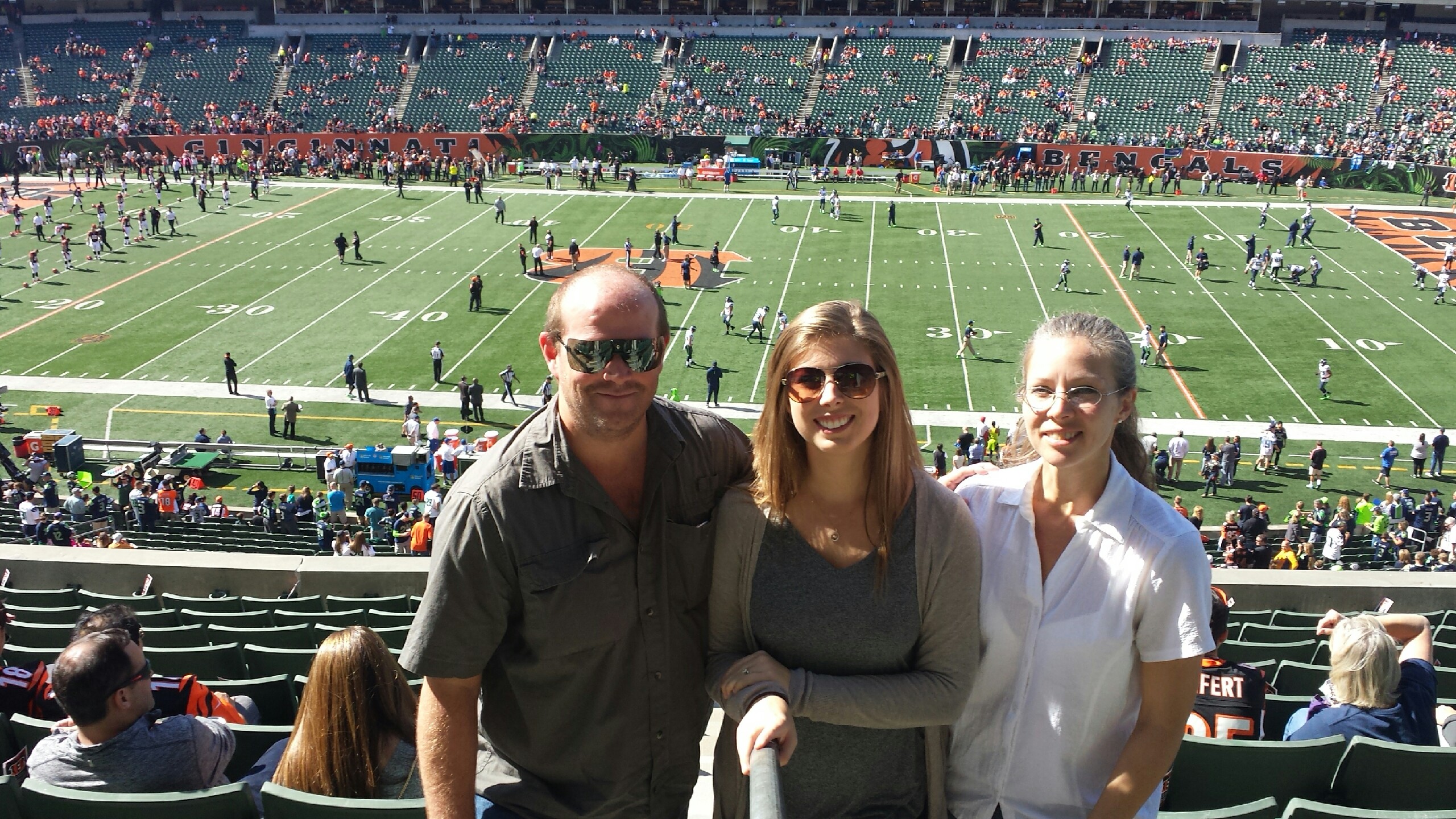
Recently while at a Bengals football game Adam Jones on a kick-off return signaled a fair catch—sort of half hearted, but he did lay down the signal calling off a Seattle Seahawk swarm that was poised to tackle him immediately. Once he caught the ball and defenders pulled off, he ran anyway for a large gain. The referees called the play back and gave Jones a penalty. The crowd around me erupted into anger feeling that the call was bogus and that the referees were being unfair. Yet I was sitting right there—I saw the same thing everyone else did, and even though I was rooting for the Bengals to win the game, which they eventually did, it was clear to me that Jones signaled a fair catch, then when he was caught he actually got into the face of the referees and argued his case against the call. The stadium erupted into further anger at the “bad call” and the Bengals sideline had to contain Jones to keep him from getting ejected—because he at this point had pulled off his helmet as if he was going to throw it. The NFL could have really come down on him but they didn’t. Within a few minutes play was reset, the Bengals scored a touchdown anyway, and everyone forgot about the Jones penalty as they were caught up in the elation of an overtime victory. But I thought about that call as I watched the media cover Hillary Clinton after her testimony. The media, like the Cincinnati Bengals fans, were clearly ignoring facts so that they could maintain the illusion of their personal success—and women as a collective group show that they are willing to do the same—which is detrimental to their cause as a legitimate voting bloc that encompasses half our population.

Hillary lied and she got caught doing it. That was the story of the Benghazi hearings and most everyone missed it, except for some conservative oriented outlets. Everyone else clearly didn’t want to look at the facts for what was presented; they had “collective amnesia,” males and females alike. They were just like the Bengals fans who refused to see that Adam Jones had called a fair catch, yet advanced the football anyway—and was penalized for it. Women as a voting bloc are notoriously guilty of that trait and Hillary seems to think that her dominance of various progressive voting mechanisms will be enough for her to win the presidency. Meanwhile, Republicans were lackluster when there was blood in the water as they patted at Hillary Clinton like a kitten with a ball of yarn—except that yarn was a poisonous snake—and they got bit a few times. Rather than attack Clinton the way she deserved, they listened to all the K-Street types who were afraid of a committee of Republican men cornering a defenseless woman over her job incompetency and looking like the bad guys to the voting public. Because the female voting bloc is a sensitive lot who vote not with logic most of the time, but emotion—and Republicans who are usually overly analytical find the topic like Kryptonite. They are paralyzed by it which is why Hillary requested a public hearing instead of a private one. She wanted to appear as the helpless victim to the public, not the incompetent loser that she really is.

So then comes the question of a head to head matchup with Donald Trump who has proven that he’ll do and say anything to win anything. He’s not a traditional Republican by any means and he has more media contacts that will stand by his bed and listen to everything he says than Hillary. There is no way he loses to Hillary Clinton. He will rub her into the ground and smear her to no end in a head to head election. He will take her record and her faults and expose them every time he opens his mouth. He’s not afraid of the women voters because he knows that many of them are just looking for a strong opinion, which he’s happy to provide. Trump because of his self-confidence is the best weapon that Republicans have in dividing the women vote from those blindingly adhering to progressive unification and those who actually do think for themselves but have not yet been given the opportunity to back anybody they actually like. Hillary lied and Trump will beat her to the end of time with the facts because he knows what leverage that is on a faulty candidate.

Much of what has been said about Hillary and a potential matchup with Donald Trump is media fantasies to protect their ideological investment into making a “first female president” with the power of persuasion. Its more of a collective ego satisfying exercise for them to declare Hillary a winner in all categories—in spite of the evidence—than it is of any reality presented. That reality says that Trump would destroy Hillary the way that no other Republican has yet and that Hillary is a confirmed liar who has likely committed serious perjury—just as her husband had. There is no way to hide from the facts of the matter—all it takes is someone who can present the case without fear of how voting blocs work or what political pundits might do with information presented in a way not favorable to Republicans.

I don’t think its time to take the right to vote away from women just because they tend to be collectively stupid—based on their polling, history, and ensuing trends. But it is time to break them up with the type of candidates who know how—such as someone like Trump. Its time for Republicans to stop being afraid of a bunch of girls and to keep their actions in the light of honor, and justice regardless of the sex. Its time for Republicans to truly liberate women the way they did with blacks during the Civil War—by standing up for what’s right, and to break up the collective unification of a voting bloc intent to maintain evil by hiding it behind women’s suffrage. Women who wanted the right to vote and to head the own destinies certainly didn’t do it by leaving behind the abusive drunk who beat her nightly and refused to let her drive a car because the man was afraid she might cheat on him. That woman jumped from those male abusers into the arms of even worse abusers—people like Hillary Clinton who openly lie, cheat, and steal to further her own intentions. The only difference is that Hillary hides her malice behind collective identity so that through radicalized behavior her vile acts of evil are hidden from scrutiny and the ramifications of poor opinions. Republicans need to truly free women from the abuse they are seeing conducted against them by progressive Democrats. And Donald Trump is the man to do it.

I say that women should be allowed to vote, but that Republicans need to truly free them into thinking for themselves instead of a bunch of Hillary Clinton supporters who put as much thought into being President of the United States as they do into purchasing a new purse. Is that derogatory toward women? Hey, I might have been the only person in that stadium besides the refs who thought Adam Jones called a fair catch. Well, I was right. I may be one of the few who will say what I have about women’s voting rights—democratic majorities cannot take a fact and make it into the shape of their desires. When women show that they are willing to think for themselves—as a group—I’ll respect that right a whole lot more. Hillary assumes that the female voting bloc will forgive her sins of stupidity. That assumption alone indicates a major failure of our election system and the philosophy backing it.

Rich “Cliffhanger” Hoffman

 CLIFFHANGER RESEARCH & DEVELOPMENT

Listen to The Blaze Radio Network by CLICKING HERE.

Welcome to the Future: Liberty Center opens and a city unfolds within a small town community

imageI really didn’t think it was possible. I always did love the Back to the Future films, especially the second one when they traveled from 1985 to October 21st 2015, which was just a few days ago as of this writing. So I had those old movies on my mind when Liberty Center opened in my neighborhood on October 22, 2015—one day after Back to the Future Day. I parked in the back parking garage behind the new movie theater a little displaced because for my entire life this area had been an empty field alongside I-75. I never imagined that anything of any importance would ever be where I parked my car on that sunny October day. I was meeting my family at the Rusty Bucket but wasn’t quite sure where lead to where, so I made my way south until I found the main road which ran through the center of the complex. It was ironically just like the scene in Back to the Future II, where I came out of an alley into the hard sun of a fall afternoon and the future hit me right in the face. It looked just like Hill Valley from that famous movie series, square and all.

Short of hover boards and flying cars, it was the future as I never would have imagined it. The stores were modern versions of the type I grew up with, but the way they were presented were very tech heavy and architecturally specific. Living space was stacked in creative ways to make a dynamic world that really has not been possible before in any other shopping experience I’ve ever seen. As I thought of some of the places I’ve been, such as Downtown Disney, La Isla in Cancun, or the Americana in Glendale, California, nothing was like what I saw at Liberty Center in my hometown. It was more astonishing than I thought it would be. The reason we ate at the Rusty Bucket was because it was next door to the Cobb movie theater which is extremely important to me. I wanted to talk to the owners about some upcoming plans, and that was why my family was there on opening day. It was as nice as I would have imagined a luxury theater to be that has made its mark in Tampa, Florida where another shopping destination that I love a lot, The International Mall is rather common.

As a guy, I don’t like shopping very much—my wife does, but I don’t like the task of actually shopping. I do love the exhibition of capitalism, especially when it’s as openly unapologetic as it is at Liberty Center. As I’ve said many times, I have a soft spot for developers because they are often the first cogs in the wheel toward economic development. Because of their creations money moves through an economy and in an age where the shopping experience is competing directly with online sales, something new has to be tried, and they did at Liberty Center—a long time in the making.

Yes they have an Apple Store. Yes, they have a really nice Victoria’s Secret which is good for me and my wife. She likes the quality of that store and it makes me happy to see her happy. Yes they have a number of upper crust restaurant experiences. Looming over the square I was in was a large facade of a Marriot hotel looking down into the action below. It replaced the clock tower in the Back to the Future film regarding iconic skyline. As I hiked and drove the back roads that used to pass through that location way back in 1985 I never would have imagined that in 2015 there would be terraced gardens exotic fountains, and advanced shopping destinations in such a place, unless I could have been placed into a time machine and shown first-hand.

And that’s where my family found me, they were perched above the shops on a patio waving to me to come up and join them in the sun. Step for step I felt just as Marty McFly when he first saw Hill Valley in 2015. It was a strange experience that I couldn’t have anticipated even as I watched them build the place brick by brick. Liberty Township instantly had a downtown district that was every bit as cultured and sophisticated as any of the big cities of America or the world for that matter. As I thought of the countless hours I’ve spent around Fountain Square in Cincinnati on business and pleasure surrounded by skyscrapers and dozens of neatly tucked restaurants situated everywhere, the rural community of Liberty Township had instantly built for itself a downtown that looked big time, but was small enough to still have the feel of a tight-knit community.

If engineers designing living conditions for intergalactic space travelers had to design something that divided function, luxury, and necessity into an all-encompassing package Liberty Center would be it. It was small and enormously large all at the same time and surrounded shoppers with an all-encompassing experience. People walked the streets without worrying about prostitutes and beggars—which is impossible in most big cities these days totally ruining the experience of economic frivolity. A quick trip down Times Square in New York or the strip in Vegas as a couple out for a night together means you are often molested by whores and malcontents. Vegas is terrible for that kind of thing. Times Square is nearly as bad. Liberty Center was free of that mess—but it had all the good things left behind. It was for all matters of thought a conservative utopia. If John Galt had built a shopping center, this is what he would have designed, from the famous novel Atlas Shrugged. It had all the plus elements of an economic development without all the trash created by liberal city governments who mismanage their downtowns into a trash heap of mixed values and nonsense. Liberty Center was built for people who like the good life, and know how to live it.

I heard up to his opening that Liberty Center would essentially be a carbon copy of The Greene in Dayton, or Newport on the Levy in Northern Kentucky—but it was obvious that it was different right from the start. It was the infusion of sophistication mixed with rural charm that really is unequal and reminded me almost of a movie set, something that is common at Universal Studios where complicated streets change the whole feel of a place just one block from a previous position. Clearly the designers had learned something from those entertainment complexes in Florida as far as space utilization where geographically the terrain may seem simple, but architecturally a visitor might feel like they had visited a new world getaway by the time they walked from one end to the other.

It was special more for me because I picked just the right spot to walk in at just the right time of day to nearly simulate a Back to the Future moment. As I stepped onto a sidewalk out into the Center square a car went by, a modern looking Cadillac nearly on queue with the events of when the same thing happened to Marty McFly. All that was missing were the flying cars and the holographs, but that technology isn’t that far off, and Liberty Center looks staged up to take advantage when it does hit the market. On one end was an enclosed mall that led to Dillards and Dick’s Sporting Good, both marvelous stores in their own right. At the other a Marriott hotel and a gorgeous movie theater that really was designed in one of my dreams—and in the middle was everything else.

It was for me, the future.

Rich “Cliffhanger” Hoffman

 CLIFFHANGER RESEARCH & DEVELOPMENT

Listen to The Blaze Radio Network by CLICKING HERE.
Metaphysics of Quality in Guns: Unexpected wonder in Cowboy Fast Draw Association products

With me it’s always about quality—as in the Metaphysics of Quality defined by the philosopher Robert Pirsig. As I get excited about something, like I often do when I take the time to write about things it is because whatever it is shows obvious signs of the Metaphysics of Quality. To me, that MOQ is very important. More important than most everything else, so when I see it, I get very excited and I gush about how wonderful it is. That is why I love architectural achievements like the Liberty Center shopping complex near my home—because it has obvious elements of MOQ within its construction, vision and implementation. I enjoy fine restaurants for the same reason even if I might stand against the social placement of those economic devices—if I see that there is a positive MOQ involved I get excited about whatever it is. I see MOQ as being more important than legal concerns or personal rights because not all people are of a “high quality.” That can be a dangerous road to travel down, but my criteria for judgment is contained with the Metaphysics of Quality as defined by the fine book Zen and the Art of Motorcycle Maintenance. It’s a very important concept to behold.

So I was rather stunned to open up the box from my new group, the Cowboy Fast Draw Association containing my membership information and my targeting equipment. I’ll have to admit, I know a lot of these cowboy types and over the years, most of them barely scrape by. As good of people as they are, they often don’t have much money and do live from paycheck to paycheck. Their idea of quality is usually something very tacky from a flea market. When I placed a very expensive order with the Cowboy Fast Draw Association, I’ll have to admit that I didn’t have very high expectations. I anticipated that what they’d send me I’d have to spend hours at Radio Shack trying to piece together additional parts. I had ordered a Cowboy Fast Draw shooting lane, which consists of a metal target, a light, sensor, a switch to start the timer and a clock that breaks down the time to thousands of a second. A lot of the equipment is fairly advanced stuff—so my expectations where that there would be issues with assembly.

The way the system works is that you buy a fast draw gun, for me it was a Vaquero, a speed draw custom holster, wax bullets for ammunition, special .45 Colt ammunition cases specially designed to hold a shotgun primer. Then you set all that up to the Fast Draw Target System.   A light comes on the target, you draw and shoot the metal plate and the time it takes to hit the target is recorded. There are a couple of different modes, there is competition mode and practice mode. Under practice the timer will randomly run through different start times so that the shooter can’t anticipate the light. That helps the shooter develop properly their reaction time to the start light. It is pretty sophisticated for a shooting range, but once built, makes shooting relatively cheap—about six cents per shot. The wax bullets are about $44 for a thousand and the primers can be obtained for a similar cost. Once it’s all set up, it’s easy to use and efficient.

Putting together the target assembly was simple; the wires were color coded, the sensors screwed to the target plate and the start light attached with a magnet behind the target that shines through a Plexiglas hole in the face. Within about 15 minutes I had the whole thing together—which surprised me greatly. I had budgeted about 3 hours for the effort, and it took a lot less time. Even more remarkable was that everything worked. That shouldn’t have shocked me, but it did. Even on all the little timers were label indicators for Cowboy Fast Draw very professionally done. If I didn’t know better I would have thought I bought the whole setup from Cabela’s for several thousand dollars. It was good enough to sell as a mass market item—not what I would have expected for an organization with not yet 5000 members.

That’s when it hit me that these people running the Cowboy Fast Draw Association were people functioning naturally from the MOQ philosophy by their very nature. I doubt it’s something they are consciously aware of, but they had taken the time to do all the little things very right—including the packaging of the equipment within the box they shipped it to me in. Everything was very carefully wrapped and complete—someone who really cared about the contents put the whole thing together. But even slicker was that somebody had figured out how to make all these things work together to make one of the best secrets of modern shooting possible. And they didn’t skimp on anything; all the components were good quality items built to stand the rigor of shooting at them with firearms.

That’s where I really started increasing my respect for the Cowboy Fast Draw Association. Part of what killed the Wild West Arts Club which I had been a part of for quite some time was that they over expensed themselves. They charged way too much money for items to cover areas of their operational costs that they had gone into the red on. The result is all that’s left of them is what consists of my little Annie Oakley group that meet each year in Greenville, Ohio during the last weekend of July. One of the reasons for me picking bullwhips to work with as opposed to firearms was because nobody had figured out how to make such a thing work in a neighborhood setting—a place that didn’t require 100 acres of land to go shooting—so there was no way to practice or get good. With this targeting system that the Cowboy Fast Draw Association had come up with, a typical gun range could be set up in a garage. The shotgun primers are not much louder than a cap gun and the bullets fly out about the same rate as a juiced up pellet gun. It really isn’t much harder than the projectiles used in paintball—which is perfect for practicing the western arts of fast draw and gun spinning. These guys had figured out a lot of very neat concepts and they weren’t trying to make a killing off it—they just want to expand the sport, so everything was very reasonably priced. It was priced for expansion—not grotesque profit. There is no way the Cowboy Fast Draw Association has large margins on their sales. Yet they still put all the effort into the job as if they were making millions of dollars. That was impressive.

It doesn’t happen very often. But when it does, I write about it. Cowboy Fast Draw is one of those associations that have their roots in the Metaphysics of Quality. Not only was the sport of Fast Draw something that is good for all American shooters, the association itself was filled with quality people who took the extra steps to exceed expectations. I find that same attention to detail with Brownells, they are always very conscious about what and how they ship items. For that matter gun companies in general are so pleasant to work with. They really put an emphasis on quality and customer service. Even down to an association like Cowboy Fast Draw, the emphasis on American ingenuity and quality is assumed as an afterthought. If I liked firearms a lot before I assembled my target lane from CFDA I really respected them after—because even a very specific field of endeavor such as fast draw brings out the best of what is left in America.

When people wonder what I expect from others it is best embodied by CFDA. I expected a group of people barely hanging on to throw some things in a box and toss it my way for the exchange of some easy money. What I received as a lot of love and care for firearms and tradition that was obvious by the way the box was taped up. The products were reasonably priced and still the people cared about what they were doing. America used to be filled with those types of people. Now it’s a rarity—so much so that I’m very happy when I meet people or organizations that possess a level of Metaphysics of Quality that are respectable. Especially when it is unexpected—if I pay $70 dollars for a steak dinner, I expect quality—if I’m buying wax bullets and fast draw targets, I expect the kind of service that you might find at a casino or flee market. And in the case of CFDA, I was extremely surprised to find a very quality organization equal to a fine steak dinner.

Rich “Cliffhanger” Hoffman

 CLIFFHANGER RESEARCH & DEVELOPMENT

Listen to The Blaze Radio Network by CLICKING HERE.

The Bengals Did Well: Carlos Dunlap saves Cincinnati

As a Tampa Bay Buccaneer fan I don’t put much investment emotionally into my hometown team of the Cincinnati Bengals. I’m not a fan of Mike Brown and think the stadium deal he made with the city was a bad one compounded by a mediocre product he has put on the field over the last several decades. Even though lately his teams have been in the playoffs year after year, they always end up a disappointment. But the Bucs haven’t been very good this year, as they weren’t last year. They seem to have fixed many of their offensive problems, but the defense just isn’t working—and for me and Tampa Bay, I get excited about defense. So it’s been a pretty mundane year so far. Because of all those elements, I don’t get to the local Bengal games very often. I have always loved the NFL experience, but don’t often get down to a game. However, it was a good week for me last week and I had a packed weekend full of activities and an opportunity to go to the Bengal game against the Seahawks presented itself so I went with my family.

image imageThe game itself was fabulous, an overtime thriller that nobody will forget anytime soon. It was a magnificent October afternoon and we spent some extra time before and after the game enjoying the new Banks developments and all the tailgating activities. It was sunny, warm—the leaves were changing color—it was a wonderful day for football and two very good teams were playing in the usual ramped up rock n roll environment typical of professional football. The Ohio State marching band was at the game performing—which was impressive—the game itself and all the festivities around it were just perfect including the overtime win that rocked the stadium with much deserved enthusiasm. I was very glad I went to that particular game at that particular time.

But those kinds of things to me are never just about the game—I enjoy the larger picture. I like Paul Brown Stadium because it’s the hometown arena even though I think it’s not nearly as spectacular as Raymond James Stadium in Tampa. The Club area at PBS is everything you’d want it to be—luxurious, well-managed, and optimistic. It was quite enjoyable to watch all the NFL games occurring from the lounge within the high intensity environment of the Bengal game. The Bengals have done a much better job of capitalizing off their mascot theme of a Bengal tiger the last several years. The video promotions shown around the stadium were much better than they have been in the past even though the stupid song they play with each touchdown sounds like a broken 45 vinyl record from a crusty old man’s treasure chest. It sounds outdated and lost—but the whole experience was otherwise very exciting and stimulating. The people were from all walks of life and in many cases had spent thousands of dollars to be there which put my nose on the economics of what was happening.

I love the NFL experience for the things connected to the events. The economic stimulus connected to the National Football League is staggering—everywhere there are advertisements for various products, promotion work for various cancer fighting awareness, and lots and lots of beer being sold. People generally stayed relaxed and enjoyed themselves for a much-needed four hours of bliss on a Sunday in October. The rock music, the video images, the connectivity to the entire stadium network around the country simultaneously is quite something to behold.

There are several interesting things going on at football games. Fans are quick to assimilate to the phrase “we” when talking about their favorite team. It’s a form of collectivism that is dangerous to our society as perfect strangers were brought together by rooting for their favorite team to score points. When the Bengals went to overtime with a last-minute field goal the stadium was nearly in an orgy of enthusiasm for each other. There were hugs and high-fives everywhere as people who normally wouldn’t speak to each other held one another in warm embrace. That was very interesting.   Clearly politicians utilize the same type of unifying force to solidify support for their various impositions. Yet in spite of that alarming trend the essence of capitalism was unmistakable. There was no way that the collective unification of the masses would adhere to any kind of communist banter if it meant robbing them of their Sunday afternoon football.

I enjoyed immensely the pre-game ceremonies of tail gating, the obvious recklessness of the activity being conducted on a mass scale. It wasn’t my first time of course, but with a football team that had a chance to be 5-0 after coming off a playoff year previously, there was a lot of hope in the air. Because the weather was warm there were the typical fair weather types mixed with the hard-core maniacs who come all dressed up to the stadium for war. Some people had fixed up school buses dedicated to the Bengals they tail gated out of, some had million dollar RVs all decorated up in the team colors. There was an obvious sizable investment that people had dedicated themselves to for the exclusive enjoyment of those three hours of battle. So it was even more intense that all the pent-up emotion before the game was released after the game with an overtime win against a good team. The economic engine driving the experience mandated a bold support of capitalism to generate that type of energy. There was no danger of Bolsheviks generating a communist revolution among NFL tailgaters. There was a lot of conflicting human behaviors on full display, but generally it was all very optimistic and healthy—and uniquely American.

If I had to pick a hero of that particular game it wasn’t the enthusiastic crowd, Andy Dalton, A.J. Green or the coaching staff—it was Carlos Dunlap. I watched him carefully between downs even when the fourth quarter started; the Seahawks had the ball and were up 17 points surely headed to a victory. Dunlap, number 96, was in position dancing around as enthusiastic as if the game were just starting. I put the victory on his shoulders because it was obvious that the Bengals as a team fed off his energy. His body language carried the crowd and the team in a time when it would have been acceptable to start looking toward the next game regarding the present one as hopeless. I thought he was the unsung hero of the day. It’s that kind of football that makes a distinct difference between the one that is played around the rest of the world with soccer and rugby. In American football, sure it’s a team sport, but the individual often has a more important role than the collective efforts of the team. Not everyone understands that, but it’s obvious if you know what you are looking for. Carlos Dunlap had it. It didn’t show up on the games I’ve watched on television, but it was sure present in the stadium while the TV audience was in commercial breaks. Dunlap was all energy all the time and that had to be the momentum killer for Seattle. I know the story of the game was that Dalton went after Sherman and all that—but it was Dunlap who led the way for the Bengals to win that game. In the fourth quarter that defense turned down the screws and that is what put the offense back on the field three times in the fourth to secure a tie, then an eventual win. That was the key to the game led by Carlos Dunlap.

Overall, the Bengals did a good job as an entire organization. I have been critical of them, but I admired the effort from the people behind the scenes who made all the graphics on the score board, to the sound guys, to the people who scheduled all the special guests—to the employees in the Club section who were professional and enthusiastic about providing a great experience for the people in those areas. Even the police outside trying to manage the traffic were in on the fun. It was a wonderful experience for me. I liked it so much that I almost bought a Carlos Dunlap jersey—almost. If there had been one in the pro shop outside my seat entry at the Club section, I would have bought it. The product of the Bengals had improved enough for me to consider it.

I waited for the crowd to clear after the game and sat in the lounge watching recaps of the other NFL games. My Tampa Bay Bucs had won 38 to 31 but that didn’t impress me because they gave up way too many points for my liking. Still, it was a pretty good day to cap off a nice week. The NFL offers a great product that is important to American philosophy—a mixture of not such good things with a whole lot of things that are. But one thing that it isn’t is calm, passive, or in any form conciliatory against fever pitched competition. And that’s what I loved most; the intensity, the furious melodrama of strategic objectives set against a ticking clock, and the high-pitched temperament of a packed crowd excited about a 5-0 start to the season after an overtime win on a beautiful afternoon. It was something I will always treasure as a sports fan.

Rich Hoffman

 CLIFFHANGER RESEARCH & DEVELOPMENT

Listen to The Blaze Radio Network by CLICKING HERE.

Gun Rights “Shall Not Be Infringed”: Philosophy trumps legality–get to know Senate Bill 199 and Senate Bill 180

I get really tired of all this talk about gun control. On Saturday Night Live shown on October 10, 2015 the obvious attack against guns was incredibly obvious. They did several skits attacking guns showing how the progressive New York culture sees the rest of America. Well, just for clarity not to the gun owners who read this site each day, but those progressive types who are way too politically left-winged, the Second Amendment is not up for debate. It is not up for negotiation. And there is no interpretation of the words “shall not be infringed,” that opens the door for more rules, confiscation, or government involvement. As lawyers do try to discuss the meaning of words which can take on different meanings as times change the Bill of Rights is an extension of American philosophy for which legal terms evolved. The intent of the Constitution therefore does not fall under the proper interpretation of legal minds, but philosophy. And the essence of that philosophy is that governments cannot be trusted—which is grossly evident in our modern news cycles. Here is how the terminology has been misinterpreted by legal minds giving the illusion that the Second Amendment can be modified to suit some progressive diatribe—such as those shown on left leaning news outlets and entertainment venues.

The Second Amendment of the United States Constitution reads: “A well regulated Militia, being necessary to the security of a free State, the right of the people to keep and bear Arms, shall not be infringed.” Such language has created considerable debate regarding the Amendment’s intended scope. On the one hand, some believe that the Amendment’s phrase “the right of the people to keep and bear Arms” creates an individual constitutional right for citizens of the United States. Under this “individual right theory,” the United States Constitution restricts legislative bodies from prohibiting firearm possession, or at the very least, the Amendment renders prohibitory and restrictive regulation presumptively unconstitutional. On the other hand, some scholars point to the prefatory language “a well-regulated Militia” to argue that the Framers intended only to restrict Congress from legislating away a state’s right to self-defense. Scholars have come to call this theory “the collective rights theory.” A collective rights theory of the Second Amendment asserts that citizens do not have an individual right to possess guns and that local, state, and federal legislative bodies therefore possess the authority to regulate firearms without implicating a constitutional right.

In 1939 the U.S. Supreme Court considered the matter in United States v. Miller. 307 U.S. 174. The Court adopted a collective rights approach in this case, determining that Congress could regulate a sawed-off shotgun that had moved in interstate commerce under the National Firearms Act of 1934 because the evidence did not suggest that the shotgun “has some reasonable relationship to the preservation or efficiency of a well-regulated milita . . . .” The Court then explained that the Framers included the Second Amendment to ensure the effectiveness of the military.

This precedent stood for nearly 70 years when in 2008 the U.S. Supreme Court revisited the issue in the case of District of Columbia v. Heller (07-290). The plaintiff in Heller challenged the constitutionality of the Washington D.C. handgun ban, a statute that had stood for 32 years. Many considered the statute the most stringent in the nation. In a 5-4 decision, the Court, meticulously detailing the history and tradition of the Second Amendment at the time of the Constitutional Convention, proclaimed that the Second Amendment established an individual right for U.S. citizens to possess firearms and struck down the D.C. handgun ban as violative of that right. The majority carved out Miller as an exception to the general rule that Americans may possess firearms, claiming that law-abiding citizens cannot use sawed-off shotguns for any law-abiding purpose. Similarly, the Court in its dicta found regulations of similar weaponry that cannot be used for law-abiding purposes as laws that would not implicate the Second Amendment. Further, the Court suggested that the United States Constitution would not disallow regulations prohibiting criminals and the mentally ill from firearm possession.

Thus, the Supreme Court has revitalized the Second Amendment. The Court continued to strengthen the Second Amendment through the 2010 decision in McDonald v. City of Chicago (08-1521). The plaintiff in McDonald challenged the constitutionally of the Chicago handgun ban, which prohibited handgun possession by almost all private citizens. In a 5-4 decisions, the Court, citing the intentions of the framers and ratifiers of the Fourteenth Amendment, held that the Second Amendment applies to the states through the incorporation doctrine. However, the Court did not have a majority on which clause of the Fourteenth Amendment incorporates the fundamental right to keep and bear arms for the purpose of self-defense. While Justice Alito and his supporters looked to the Due Process Clause, Justice Thomas in his concurrence stated that the Privileges and Immunities Clause should justify incorporation.

However, several questions still remain unanswered, such as whether regulations less stringent than the D.C. statute implicate the Second Amendment, whether lower courts will apply their dicta regarding permissible restrictions, and what level of scrutiny the courts should apply when analyzing a statute that infringes on the Second Amendment.

Recent case-law since Heller suggests that courts are willing to, for example, uphold

  • regulations which ban weapons on government property. US v Dorosan, 350 Fed. Appx. 874 (5th Cir. 2009) (upholding defendant’s conviction for bringing a handgun onto post office property);
  • regulations which ban the illegal possession of a handgun as a juvenile, convicted felon.  US v Rene, 583 F.3d 8 (1st Cir. 2009) (holding that the Juvenile Delinquency Act ban of juvenile possession of handguns did not violate the Second Amendment);
  •  regulations which require a permit to carry concealed weapon. Kachalsky v County of Westchester, 701 F.3d 81 (2nd Cir. 2012) (holding that a New York law preventing individuals from obtaining a license to possess a concealed firearm in public for general purposes unless the individual showed proper cause did not violate the Second Amendment.)

https://www.law.cornell.edu/wex/second_amendment

That’s just a bit of history on how the Second Amendment has been knocked back and forth over the years. Yet the trend in spite of New Yorkers like those found on Saturday Night Live around the rest of the country is for gun laws to become less stringent not more so. For instance in my home state of Ohio there are two pro-gun bills being introduced for discussion which are very important.   The Ohio Senate Civil Justice Committee had a hearing Wednesday, October 7, at 2:30 p.m. in the Finance Hearing Room to discuss two pro-gun bills.

Senate Bill 180, sponsored by Senator Joe Uecker (R-14), would allow an employee to store a firearm in their locked vehicle without fear of employer retribution.  Throughout the country, many employers have adopted “No Firearms” policies that extend beyond the physical workplace to include employee parking lots – areas often accessible to the general public and not secure.  In order to comply with these policies, many employees must choose between protecting themselves during their commutes and being subject to termination by their employer.

The fundamental right to self-defense should not stop simply because you park your car in a publicly accessible parking lot owned by your employer.  When companies invite employees to park on their property, they should not be allowed to dictate employees’ constitutional rights inside one’s own vehicle.

Senate Bill 199, also sponsored by Senator Uecker (R-14) and Senator Randy Gardner (R-2), would allow an active duty member of the military to carry a concealed firearm without obtaining a concealed carry license if the active duty member is carrying a valid military identification and a certificate indicating a small arms qualification.

If your company has such a misguided policy that impedes your inherent right to self-defense, please contact NRA-ILA’s State and Local Division at state&local@nrahq.org and share this information.

https://www.nraila.org/articles/20151006/ohio-nra-backed-bills-up-in-committee-this-week

And that’s where I stand, there needs to be a lot more guns out there, not less, and we need to be able to carry them in more places more often. The trend is clear and the necessity for more guns is obvious. Guns are not just instruments of death the way left leaning politics frames them—they are part of the philosophic American experience. They transcend legal interpretation as philosophy trumps legality because it is in thought that all law emerges. So to undo some of the laws misinterpreted by sissy-driven legal minds over the years, the Ohio Senate Civil Justice Committee is working to walk back the intrusions that gun owners have been conceding—illegally due to improper legal negotiations from the anti-gun lobby over previous decades. The activism displayed on Saturday Night Live and other anti-gun venues made a false assumption—that gun rights “shall not be infringed,” were up to debate. They aren’t under any circumstance. End of story. It’s not complicated. Guns=philosophy which trumps legality.

Rich Hoffman

 CLIFFHANGER RESEARCH & DEVELOPMENT

Listen to The Blaze Radio Network by CLICKING HERE.

What Carlos Todd and Donald Trump Had in Common: Eminent domain and the opening of Liberty Center

The Donald Trump speech from Norcross, Georgia at the North Atlanta Trade Center on Saturday October 10, 2015 was particularly telling of American politics. It was a great speech and it should be watched—seen below. Just a day later after the Sunday morning talk shows Trump continued to beat on the same kind of drum. Trump’s accusations were confirmed when Obama appeared on 60 Minutes later that same day after the football games and was grilled by Steve Kroft over the destabilization of the Middle East, also shown below. In that 60 Minutes segment was discussion over the upheavals in the Republican Party after a week of nobody wanting to be Speaker of the House—because of the Freedom Caucus. There is a lot going on, and it’s very clear that only someone like Donald Trump is equipped to handle the very volatile situation. Obama clearly is not privy to the current trends—he’s in extreme denial—as is most of the Beltway.

On issues regarding the Second Amendment, trade, immigration and economic growth, Trump is a far right conservative—so much so that Republicans should be drooling within the party at his intentions. He has the ability to market the Party in a new way they haven’t enjoyed since Ronald Reagan and they’d do well to embrace him. On the other hand, he is rather liberal regarding taxes, healthcare, and eminent domain. I could argue all day long with Trump on those issues—but they are his thoughts and he couldn’t do any worse than what we’ve had so far. I am willing to take what’s right with Trump metaphorically, and literally and offset the negatives because he is the kind of person who can get things done—and things need to get done. The Party bosses may not like Trump, but they’d be stupid to pass up on the chance of a lifetime. Trump would build a wall on the southern border, he’d expand the military, and he’d restructure the tax system all while stimulating the economy which are all things he’s capable as president to have a direct influence on, and at 70 years old, Trump has enough gas in the tank for one last spectacular decade of his life and America should give him a shot to go out with a bang. Obama has already embarrassed America—stepped all over the Constitution, and caused irreparable damage on Capital Hill. Only extreme success can fix the situation now.

As the Liberty Center shopping complex begins to open in my hometown it is ironic that one of the biggest Republican Party bosses in Butler County’s history was laid to rest. Essentially the Liberty Center shopping complex was made possible because of eminent domain. I was always against the Butler County Regional Highway construction which ran right through all the areas I used to play as a kid. Carlos Todd was a developer who built the Republican Party base in Butler County to essentially use crony capitalism to complete his building projects. Our political system is so dysfunctional that the only way to get projects done on a massive scale is to purchase politicians with money and loyalty—and Carlos Todd was one of the masters. He died at 77 eventually to his battle with cancer leaving quite a power vacuum in his wake.

I was in firm opposition to Todd and his Butler County associates Michael Fox and Bob Shelly as the Butler County Regional Highway used largely eminent domain to destroy my childhood home, a cemetery that had Revolutionary War soldiers in it, and several Indian Mounds that populated the area destroying a lot of potential archaeology. I thought of Todd as evil incarnate on the face of the earth because the Republican Party led by him was buying up property to develop for their projects stepping all over the rights of private citizens in the process. It was incredibly wrong and I was made even more furious when they took my father to a baseball game where the developers had a nice private box and convinced him to sell to Todd all in the name of progress. Their basic sales pitch was, sell and profit, or fight and be destroyed. They had the power of government to destroy, so he should take the money. I had been willing to fight them to the ends of the earth with any means necessary, but it was my father’s property—and his right to do with it whatever he wanted. So the developers got their way.

Well, Michael Fox eventually went to jail, Bob Shelley got into sexual harassment troubles and was pushed out of his trustee seat, and Todd drifted off into the shadows as his grandson took over the family business. There has been a lot of change and upheaval since then as the Regional Highway was built and slowly development began to appear around it. Bridgewater Falls is just such a development, which I have slowly come to enjoy over the years. Liberty Center is the latest, and most spectacular, but was it worth all the pain it caused people to run all over their property rights to build it?

When I started No Lakota Levy all the characters from those eminent domain fights joined together with me to fight the Lakota levy because the local public school was blocking out some of those developers from further work and the district had reached a saturation point. Developers had built all the buildings they could hope to ever construct leaving the taxes enormously high on all future development tipping the balance away from everything that had been built by them. I had always been against the explosive growth because of the sustainability of it, so now I was on the same side as people like Carlos Todd and the developers he largely controlled. It was strange to get to know all of them from a perspective on the other side of the fence. Most of the emails I sent or received had Carlos Todd copied on them so he was well aware of what we were doing and it threw me back to when I was in opposition with him and I was able to map out how he controlled things from a distance. My hatred subsided toward him because I saw what he was doing—he used government—which had stuck itself in every crevice it could over a long period of time—to hedge the bets for his projects in his favor. I couldn’t argue his method or reasoning. The developers were productive people making things that didn’t exist previously—and that was a good thing. Some of them I liked quite a lot, some I didn’t. I worked with them and just did my thing eventually doing as I always do—just sort of taking over. When the heat got too hot for them they checked out and we parted ways. Every time we’d meet toward the end they’d try to poke me into running for office, so I deliberately sabotaged the relationship with them to get out of that circle not because I disliked them, but because I needed to maintain my own course.

I’m sure Todd would have liked to see the Liberty Center open, but he didn’t quite make it. I am proud that its there, and of all the hard work many people endeavored to construct it. I think it’s a miracle of economic activity and the best minds of architecture. But was it worth it? Was it worth the building of the Butler County Regional Highway? The destroyed lives, the destroyed history and the integrity of Butler County politics? The answer is yes—even though it cost me personally. True, the world would have been better if everything had been left alone, but there’s a lot to be said about creating something from nothing and I appreciate that more than stagnation for the benefit of sentimentality.

The reason I told that story is that establishment Republicans, many of which were put in place because of people like Carlos Todd have mostly committed vast amounts of evil using eminent domain to destroy the lives of many. Donald Trump is not alone in that effort and he shares a lot in common with Carlos Todd, a developer who used politics to get what he needed to accomplish done. Getting to know Todd and his troops well from the other side of the fence I was able to see what was really in their heart. Sure, some people were bad, and they went to jail, lost their seats or ended up wiped from the face of the earth one way or another. But the good ones endured because through competition there really is no other way to sustain your essence, but through authenticity, and Carlos Todd was authentic—just as Donald Trump is. No question when you do things that relate to other people, they will have an opinion one way or the other. The judgment of a person’s character is determined by how they act under pressure. What people do under pressure validates their worth—and Todd showed that he had a lot. I might not always like what he planned to do, but his effort had purity to it. But within that purity there were many people who were trampled on and were smacked around quite a lot.

The real answer is to get politics out of development and remove many of the regulations that cause all this evil. Until that happens people like Carlos Todd and Donald Trump will work the system to their advantage. That is why I feel that Trump—after a lifetime of making deals and running over people can actually straighten out the mess of politics and its terrible relationship to business. Ideological people who have not built things themselves but were relegated to just giving their opinions about things do not have the benefit of my life where I’ve been very active on both sides and know clearly where the line is drawn. I can only treasure that opportunity because it gave me the philosophic foundations to understand all these complexities without losing sight of the real objective—economic growth, the sanctity of private property, and the evil of a system that the most clever among us learn to use to get things done—in spite of the desire of that system to destroy all thought and action. Donald Trump is an insider, and I would love to see what someone like him—who likely hates the system as much as I do, would commit himself to if given a chance to right the ship in ways that Carlos Todd never came close to achieving. But for Republicans to turn on Trump as a radical maniac who would wreck the party—they are in denial at what put them in office in the first place. They’d be wise to get behind Trump for the strength he provides and for giving them an opportunity to have their office seats. Because without people like Carlos Todd, Donald Trump and eminent domain—most of them would still be small time hacks looking for an opportunity that would never come otherwise.

The only way to change the system is from the inside by someone who knows it better than anybody. That’s why I’m voting for Trump. His use of eminent domain and the guilt I’m sure he feels about it I think would make a person determined to correct that situation for the benefit of economic wonder which everyone would eventually enjoy. Trump is in a position to morally build a philosophy of growth by utilizing the lessons learned from crony capitalism into a more laissez-faire system perhaps for the first time since the first few decades of America’s creation. And that would be wonderful.

Rich Hoffman

 CLIFFHANGER RESEARCH & DEVELOPMENT

Listen to The Blaze Radio Network by CLICKING HERE.