The Wonderful Work of English Heritage at Stonehenge: Looking 8000 years into the past at a truly global culture

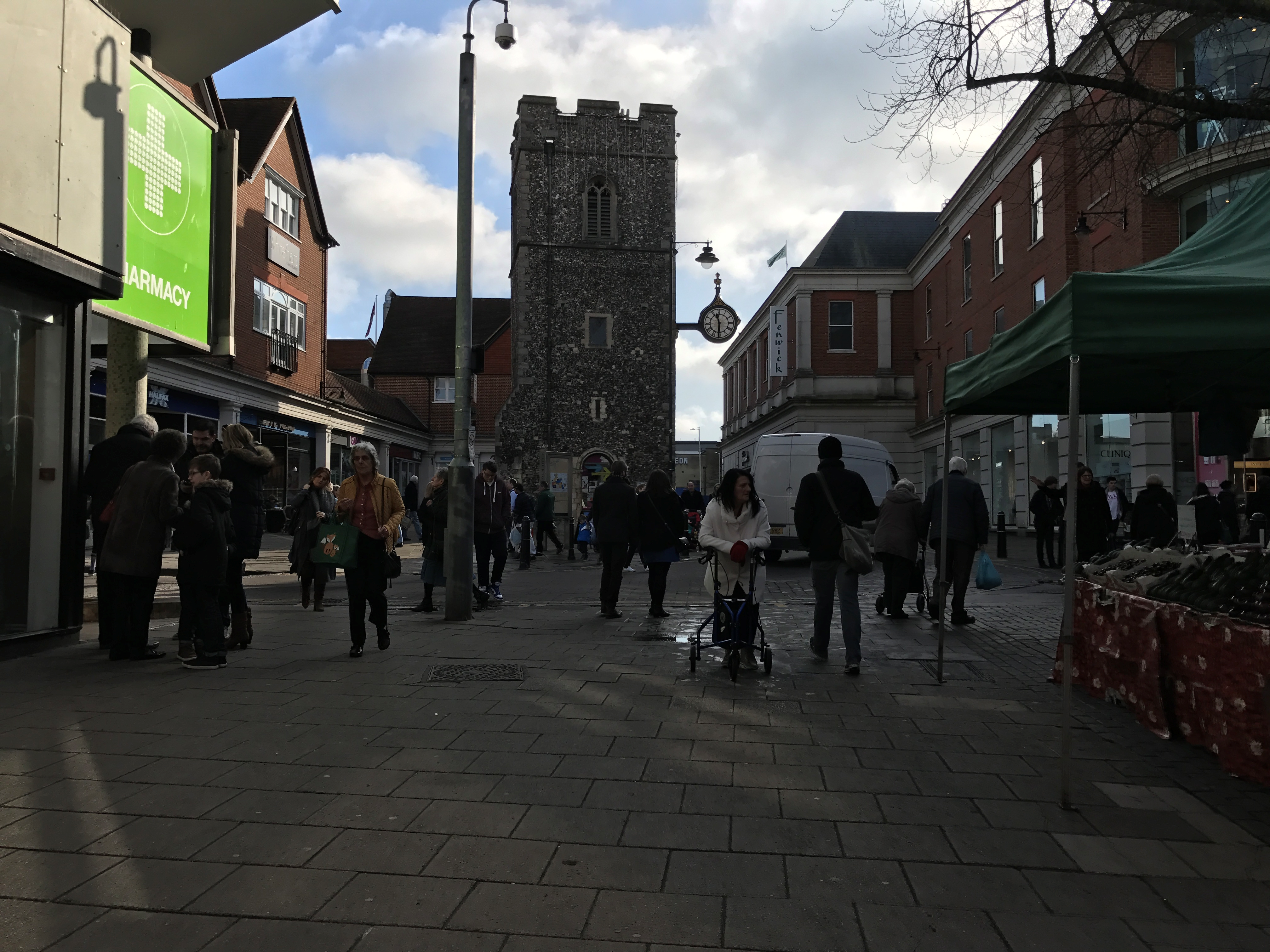
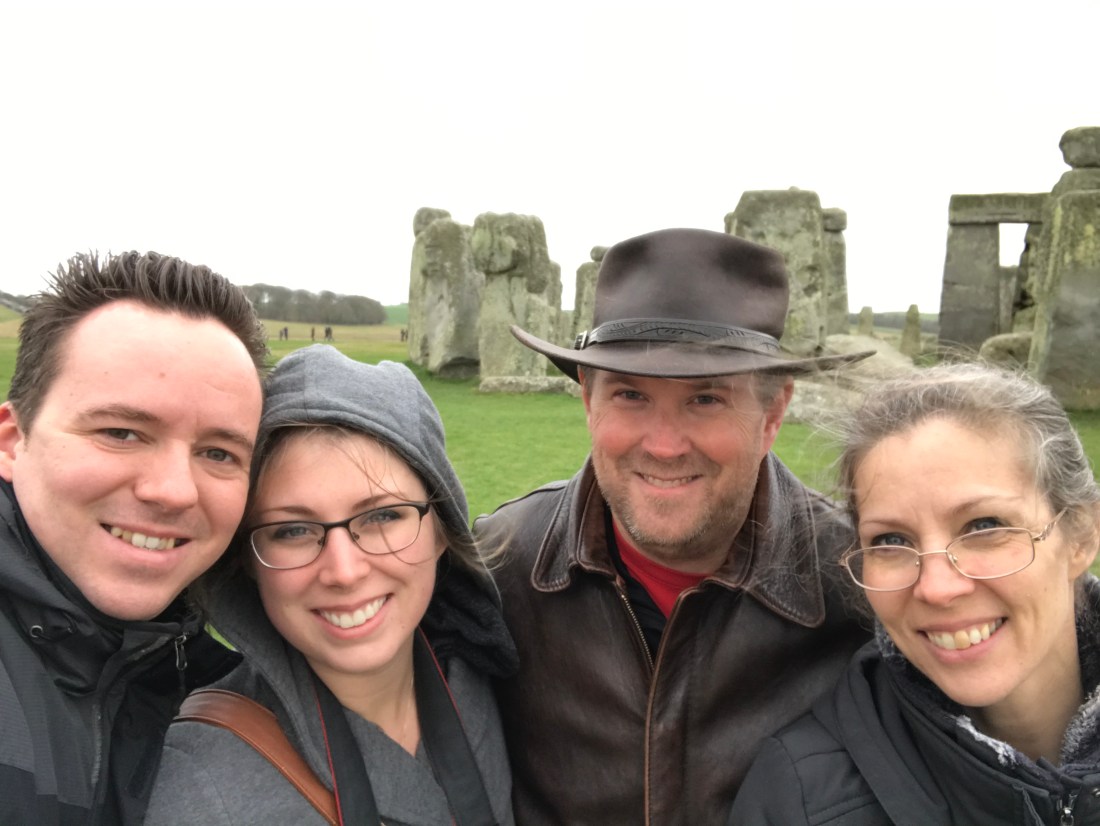
I am a hundred percent sure that when Saint Brendan’s mythic stories were told about sailing across the Atlantic into Canada around 512 AD—1000 years before Christopher Columbus—that the trade routes into the New World were already many thousands of years old. Saint Brendan was only one of the more recent visitors and I was able to confirm this by visiting the fabled wonder of the world—Stonehenge.  I’ve read and watched many documentaries about Stonehenge and the extremely mysterious earthworks all over the Salisbury Plain all the way up to Avebury including the famous Uffington White Horse and I’ve had my suspicions.  I knew there were mounds similar to what are in my home town of Ohio which are generally attributed to the Adena and Hopewell Indians—but upon arriving at the vast and newly refurbished Stonehenge Heritage site, it was clear beyond a reasonable doubt that the same culture of people who built the earthworks at Stonehenge were the same who built them in Ohio and the surrounding area within the United States meaning that there was trade and communication between Europe and America many thousands of years before modern times.  The evidence was extremely overwhelming.  As I stood at Stonehenge and looked 360 degrees in every direction I could see mound earthworks which all looked like those found in Fort Ancient, in Ohio.  And 20 miles north in Avebury was the Silbury Hill which was an even larger version of the Miamisburg Mound that I’ve spoken so much about.  At Stonehenge the great novel, Finnegan’s Wake came to life before my eyes as science merged with myth to confirm a reality that was all too distressing for the human race.IMG_3926.JPG
Before continuing, let me report something very positive. As much as my visit to The Louvre in Paris was extremely disappointing, the visit to the new Heritage Vistor’s Center at Stonehenge was completely positive in every way.  I continue to be extremely impressed with the Heritage people within the United Kingdom.  My membership with them is something that I will always treasure.  Everywhere I have gone from the Saint Augustine’s Abby, to Dover Castle, Old Sarum and several other sites, they always have a good staff on hand to promote the Heritage work and the featured site.  Most notably was the Old Sarum location just about 6 or 7 miles South of Stonehenge—which I will talk about in another article extensively because it was actually my target for exploration—not Stonehenge, and was absolutely spectacular.  That site was relatively remote yet the Heritage staff had a very nice acquaintance area with drinks, books, and even restrooms far better than The Louvre.  It was something to step across a long bridge over a deep ravine to come out on the other side and have a cozy little shed with the Heritage staff inside to get you off the windswept plains surrounding the magnificent monument.  But Stonehenge is kind of the capital monument for the Heritage team and the one that has received all the press over the years—so everyone knows it—and what those fine people did there was simply amazing.img_4010
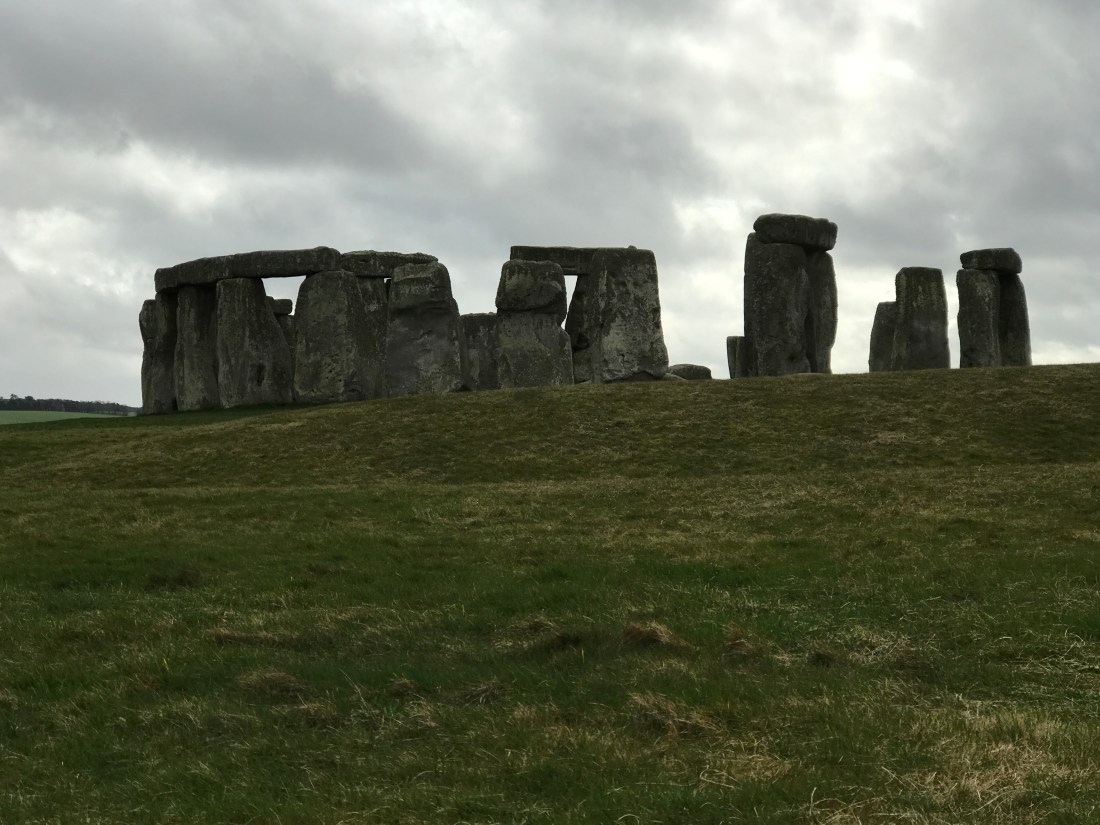
The big improvement is that the road that used to run immediately through Stonehenge had been removed and replaced with an almost amusement park like setting with the visitor’s center over a mile away from the ancient ruins. In year’s past the viewing area for the megaliths were out near the concentric circle which has always surrounded the temple area.  However, not anymore.  Under the English Heritage leadership the viewing area now takes you right up next to the site without destroying the ground under foot.  And by moving the visitor’s center way down the road they have separated the incoming tourist traffic with the sacredness of analysis at the actual site.  I thought it was just brilliant because really for the first time you could stand in the middle of what used to be a modern public road and look out all around at the region and that’s where all the mounds surrounding Stonehenge were extremely obvious—more so than in any documentary that I’ve ever seen on the subject.  There were hundreds of them, all like those at Fort Ancient, Ohio in size and technique.  These two cultures knew of each other and practiced similar mythic rituals—and that was no prehistoric accident.img_3929
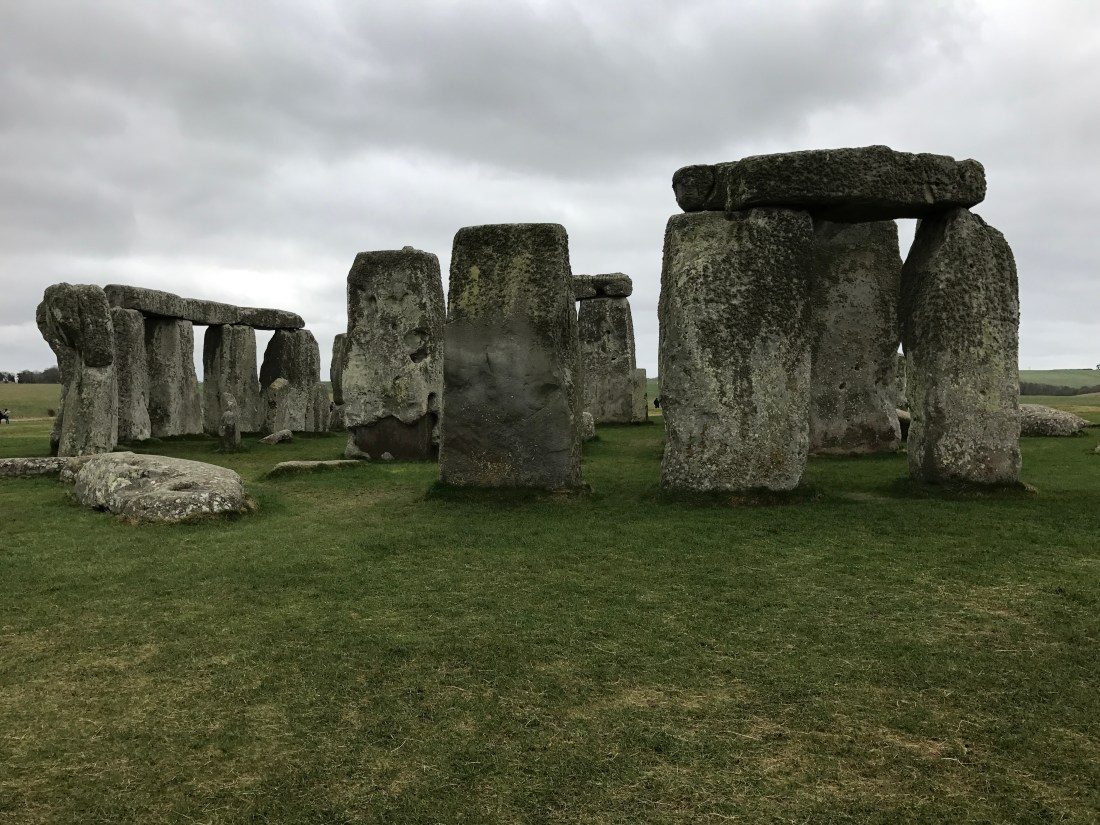
I photographed extensively, but all the earthworks around Stonehenge are just too massive to capture properly, only the human eye can put a scale to it properly. Much to my surprise archaeologists are now beginning to relax their apprehension to some of the extreme dates around Stonehenge—going back over 8000 years to some of the features—which is a whole new chapter on understanding human development particularly regarding the Stonehenge Cursus which is a very long runway type of earth feature that is over two miles long and 420 feet wide clearly meant to be seen from the sky at very high altitude.  On the ground it is nearly invisible, but it is so large and vast, that only from very high up can it really be seen.  It is every bit as mysterious as a Nazca line in Peru.  It would have been quite majestic to the ancient world and was a sign that a very ancient people knew how to make very straight lines over many miles from the vantage point of the ground which is not easy to do.  The way that the Heritage group was able to remove the road through the Stonehenge site allowed really for the first time a proper analysis of the entire area under modern scrutiny.  It’s one thing to look at some big rocks on the side of the road back when nearby Amesbury was being built 50 years ago and put all the emphasis on the stones.  But it is the surrounding mounds and earthworks that really tell the story—or begin to—which required someone to take the leadership to protect—which is what the English Heritage, the group, has been able to do over the last 10 years.

On the business side, Stonehenge was making a killing on a Sunday afternoon at the end of February. They had a fabulously large café with many people working the cash registers.  The gift shop was enormous and filled with people.  They had a great museum, not large, but effective.  And they had great bathrooms for an entertainment destination in a remote part of England, out on the edge of the western plains an hour outside of London.  It was cold outside and very wet, and breezy and the various commercial enterprises allowed for people to get out of the cold, which is actually a problem all through the year.  The style of the visitors center itself reminded me of the Space Port in New Mexico—meant to look integrated with the surrounding hillsides and unobtrusive.  From the parking lot my son-in-law thought the whole complex was a shack because it looked like a partially constructed giant barn of some kind with a very flat and waving roof.  But that was on purpose to fuse modern and ancient styles together into a unique work of art which was highly functional—and smart.  The complete opposite of The Louvre which is a place that had a lot more to work with, but lazily passed on the opportunity.  The English Heritage folks had made the most out of almost nothing and what they brought to the exhibit of Stonehenge was something that would have been at home at Disney World’s Epcot Center.  Making money helps preserve and uncover history and it is just so wonderful that at least in England they have the English Heritage people who are merging capitalism with historic preservation and unleashing the discoveries of the past at a record pace.  Put money into science and guess what, you get productivity.

But the most important aspect of Stonehenge which is now undeniable is the story around it—the vast complex of ancient earthworks that obviously migrated into North American and likely many other sites around the world. With all the criticism of western conquests and imperialism which we hear so much about in politics, if not for those attributes of an advanced civilization imposing itself on inferior ones—we wouldn’t have things like Stonehenge, and the British Museum.   If not for William the Conqueror making a mountaintop fortress out of Old Sarum to the south of Stonehenge, likely someone would have farmed up the ground and destroyed many of the earthworks which are still raw on the surface of the land.  But under the civilized guidance of England’s national superiority which expanded into a massive empire of its own eventually, such treasures would not be protected from the Vico cycle of terror that often comes when civilization moves from democracy, anarchy then back to theology.  It was England’s global superiority that has preserved Stonehenge for us all to see today.  Likely there were similar sites in China, Russia, all over the Middle East, and in North and South America—but the chaos of politics and land grabs have prevented adequate archaeology—which continues at Stonehenge.  That makes the English Heritage work to my mind one of the most important on planet earth because there at the site of Stonehenge is a glimpse into mankind’s real past which holds truths we are only beginning to admit to ourselves.  Because the big mystery is not why such an ancient people went to the trouble to move such large rocks from over 200 miles away to arrange them in the fashion they did at Stonehenge—it’s how they came to know how and why to do such things.  Additionally, who did they talk to and what was the real limit of their global influence?  That to me is the big question and the bookmark in history to the mystery of how civilization continues to follow the Vico cycle ever and ever again into the abyss of recreation.  And it is possible that the people of Stonehenge knew a lot of things that we have yet to learn, because they had already seen it many thousands of years before and like many people in search of the everlasting played their part in articulating the mysteries of the universe to put the brakes on human regional self-destruction through art revealed through great effort.

Rich Hoffman

 CLIFFHANGER RESEARCH & DEVELOPMENT

Sign up for Second Call Defense here:  http://www.secondcalldefense.org/?affiliate=20707  Use my name to get added benefits.

cropped-img_0202.jpg

Socialism is Destroying The Louvre: Capitalism is the best way to preserve art and history

For a museum that opened in 1793 and had been used as a personal residence of King Francis I and many others after him serving around 10 million visitors a year and is one of the most celebrated of its kind in the world, I had high expectations for The Louvre in Paris. I love museums, I absolutely adore the one in Cincinnati which I visit several times a year called The Museum Center.  However, I have always assumed that places like The Louvre were far superior—after all, when one thinks of Paris they think of two things, the Eiffel Tower and The Louvre so my pilgrimage to that historic museum was something I had thought about for decades.  Perhaps it was because I had been spoiled by the various Heritage sites across the English Channel in England.  My wife and I are members of English Heritage which gives us free access to important historic sites all over England from Stonehenge to Dover Castle and everything in between.  Even relatively small sites like St. Augustine’s Abbey in Canterbury have wonderful museums that go along with their preservation sites.  I had spent a week leading up to my visit to The Louvre visiting Heritage sites and spending a lot of time at the British Museum in London—and I have to say, I was in heaven.  They were so wonderfully organized and put together and the literature they offered was immense and provided me with years of reading.

Yet when I arrived at The Louvre I was greeted with chaos and socialist mayhem. Let me begin by saying that if The Louvre had been in the United States, it would be the greatest attraction in the world, including Disney World.  The building itself was immaculate, stunning even.  And the museum collection acquired under Napoleon rivaled anything else in the world.  It was remarkable.  The combination of contemporary design with the ancient was everything I hoped it would be.  But the main problem with The Louvre was that it is being operated by socialists who have no idea what they are doing.  They have this wonderful museum with all these people coming to it—but they literally have screwed up every aspect of the enterprise starting at the front gate.

My family arrived surprised to see an hour-long line outside the pyramid. We naturally assumed that this was the line to purchase tickets. So we stood in the cold needing to use the restroom for just a little over an hour only to find out that the line we were in was just for security.  The Louvre had enough visitors on a Wednesday afternoon at lunch time to populate a football stadium in the United States, yet the security forced everyone to go through two lines of airport like security which took forever.  Everyone understands that The Louvre is a target for terrorist attacks, but they should have at least had 7 to 8 security lines to properly handle all the museum visitors.  By the time we all got through security we all had to use the restroom—badly.  One of the worst things in France is that they don’t know how to give people places to use the restroom.  They have these ridiculous public restrooms on the sidewalks that hardly work.  Every time I tried to use one it malfunctioned and the seat would come up and the door would come up to the outside letting everyone in the world see you.  So we didn’t use those.  I thought we were in luck by the major tourist attraction of Notre Dame.  We followed the signs to the “toilets” only to go down a series of steps to find a group of east Europeans sitting in a group behind a steel cage charging 1 Euro to go through turnstile just to use the restroom.  So guess what, we turned around and decided to wait until we got to The Louvre thinking it would be like the Museum Center in Cincinnati—and would have like rows of places to use the restroom.  By the time we arrived in that hour long line, we had to go badly and it was almost unbearable by the time we got through security.  There certainly wasn’t any place to go in the courtyard around the pyramid.  Now that we were through security we rushed to the restrooms before buying tickets and found a line there too—especially for the women.

I told my family that I’d step into the men’s room, use the restroom, then I’d get our tickets. By the time I got through that line I thought the girls would have a chance to get through that massive women’s line.  Now keep in mind that this was a Wednesday afternoon in February.  It wasn’t Saturday in the middle of the summer.  For a museum of this size, there was no way there should be lines like what we saw at The Louvre.  Going into the restroom it was pandemonium, and there were as many women in there as men.  It was sheer chaos.  And there were only four urinals.  I managed to use one and did as I said and went to stand in another line to get admission tickets.  After standing in lines for over two hours we had our tickets and were ready to see the museum.  My wife and daughter gave up on the women’s restroom not moving at all for over twenty minutes and used the men’s room under the guidance of my son-in-law.  That solved one problem, now we had another one, we needed to eat.

The plan was always to eat at The Louvre so we didn’t stop at any of the many little restaurants on our way. We figured we grab a bite to eat, spend about 10 minutes eating it, then we’d get into the museum and get to work.  But no, they had only like three restaurants and all of them had half hour lines.  My wife and I managed to get some food as my daughter and her husband waited for an additional 15 minutes to get the same type of food.  The food itself was pretty good, but the means to get it was horrendous.  The employees were slow and unmotivated.  They didn’t care how big the crowds were, they weren’t getting into any kind of hurry.  Service in France is just unfathomably terrible.  Nobody cares about anything and everyone just exists.  And at The Louvre, customer service was not a priority.

Once we got through all that we enjoyed the museum, but the way the experience started put a bad taste in our mouth. If The Louvre had been in America there would have been about 10 restaurants all around the grand room and plenty of seating and bathrooms. Getting tickets for a museum, using the restroom and obtaining food should be easy things for such a large tourist attraction so that visitors could spend their time learning and doing things.  But under the socialist country of France, they even managed to screw up a slam dunk of a great tourist attraction, and turn it into sheer misery.

The whole thing told the story of why socialism is so terrible and how capitalism services society so much better.  Even in England they get it, the Heritage people understand how they make their money to offer services to a public which funds the preservation of art and history.  But The Louvre, they are missing millions of dollars of opportunities and are just living off their reputation—which won’t last forever.  They need approximately ten times the bathroom capacity and that much equally in restaurant availability.  They certainly have the room for it, but obviously not the business sense.  If I were running The Louvre I’d seek out a partnership with McDonald’s—someone who knows how to serve massive amounts of customers quickly.  I’d also bring in other American fast-food chains who are just as good—obviously, the French don’t know how to do that on their own and I’d set them all up on some of those blank walls in the main area under the pyramid outside of the ticketing area.

It isn’t cool to provide bad service, and it certainly doesn’t place people above the bourgeoisie of society to drag ass everything.   Bad service is just disrespectful and it says to visitors of The Louvre that the management doesn’t give a rat’s ass if anyone visits or not.  And from what I saw, The Louvre really doesn’t care if anyone comes.  They think they are entitled to the business and they think that because there really isn’t much else to do in Paris except visit museums that they’ll get by with this kind of thing for the foreseeable future.  But I’m sure I’m not the only visitor to The Louvre to come away feeling disenchanted by their terrible service.   They have a lot of lessons to learn, and for their own sake, they better start learning them.

Rich Hoffman

 CLIFFHANGER RESEARCH & DEVELOPMENT

Sign up for Second Call Defense here:  http://www.secondcalldefense.org/?affiliate=20707  Use my name to get added benefits.

cropped-img_0202.jpg

The Literature of Canterbury: Why America needs to embrace being smarter

I have to be critical of the United States in an unusual way, because my trip to Europe lately was not so much for leisure or extravagance, which has certainly been a part of it. It was to tie up loose ends started many decades ago in many facets of my life. If I didn’t enjoy making money, spending time with my family, and shooting guns—I would have been very happy to be a PHD scholar who spends all his time reading and going over old maps musing about the world and where it’s been and where it’s going.  To a smaller extent, I do that with this blog, which many people think is extensive and tenacious—but it is far from where I’d like to be if I could just commit all my time to literature which I would enjoy immensely.  Unfortunately, I can’t—you have to make decisions in life and time is not infinite—as much as it should be.  Literature for me is a hobby, a foundation for my soul and has always been my secret little joy that I do when everyone goes to bed, or runs out to a dance club.  It’s always been like that for me, and it always will.  So when I had a chance to go to Europe, eat at a three Michelan Star Chef Ramsey restaurant in Chelsea, England and live for a while on the streets of Canterbury, England where much of my favorite literature was born—I did it.canterbury13

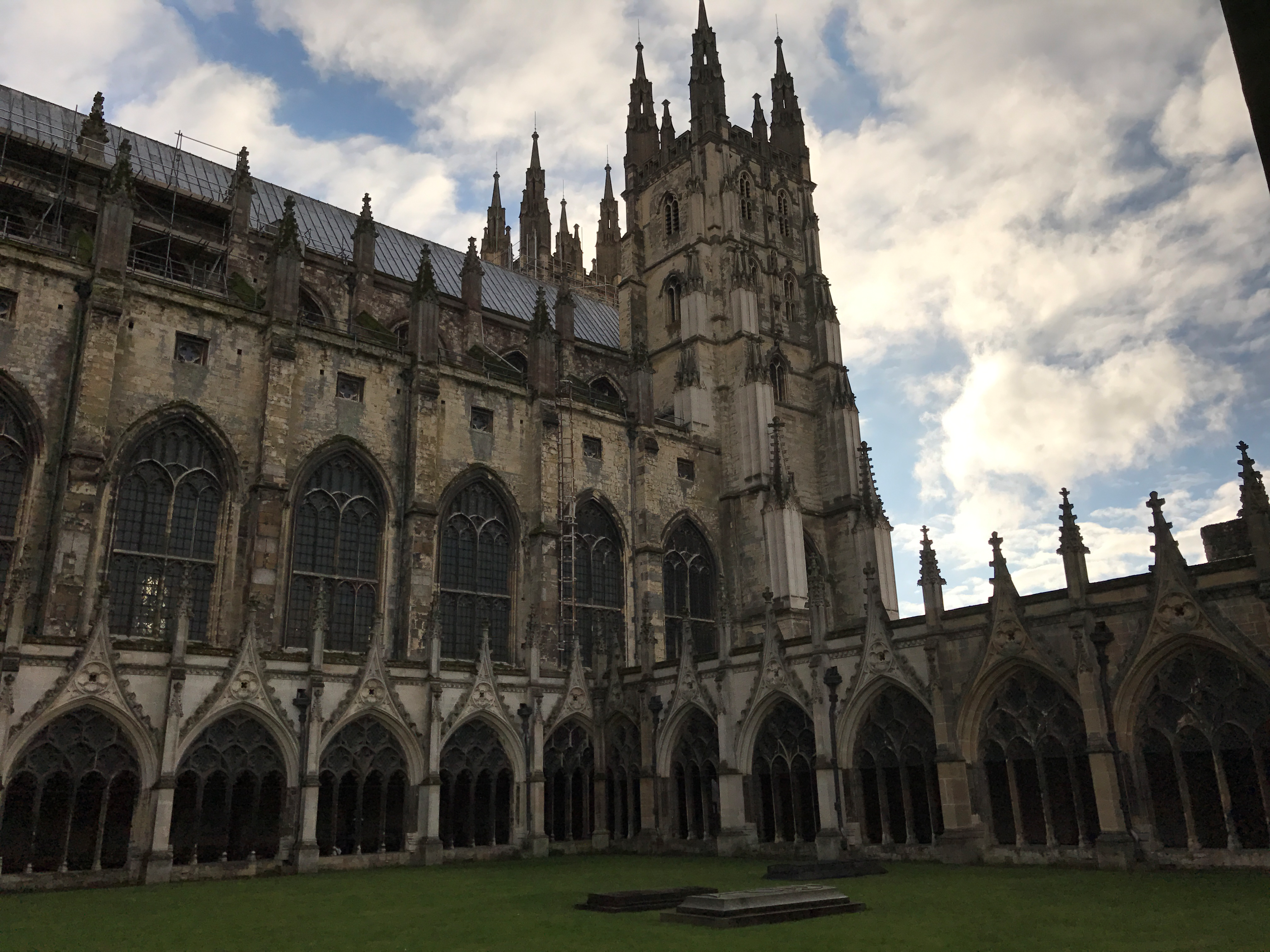
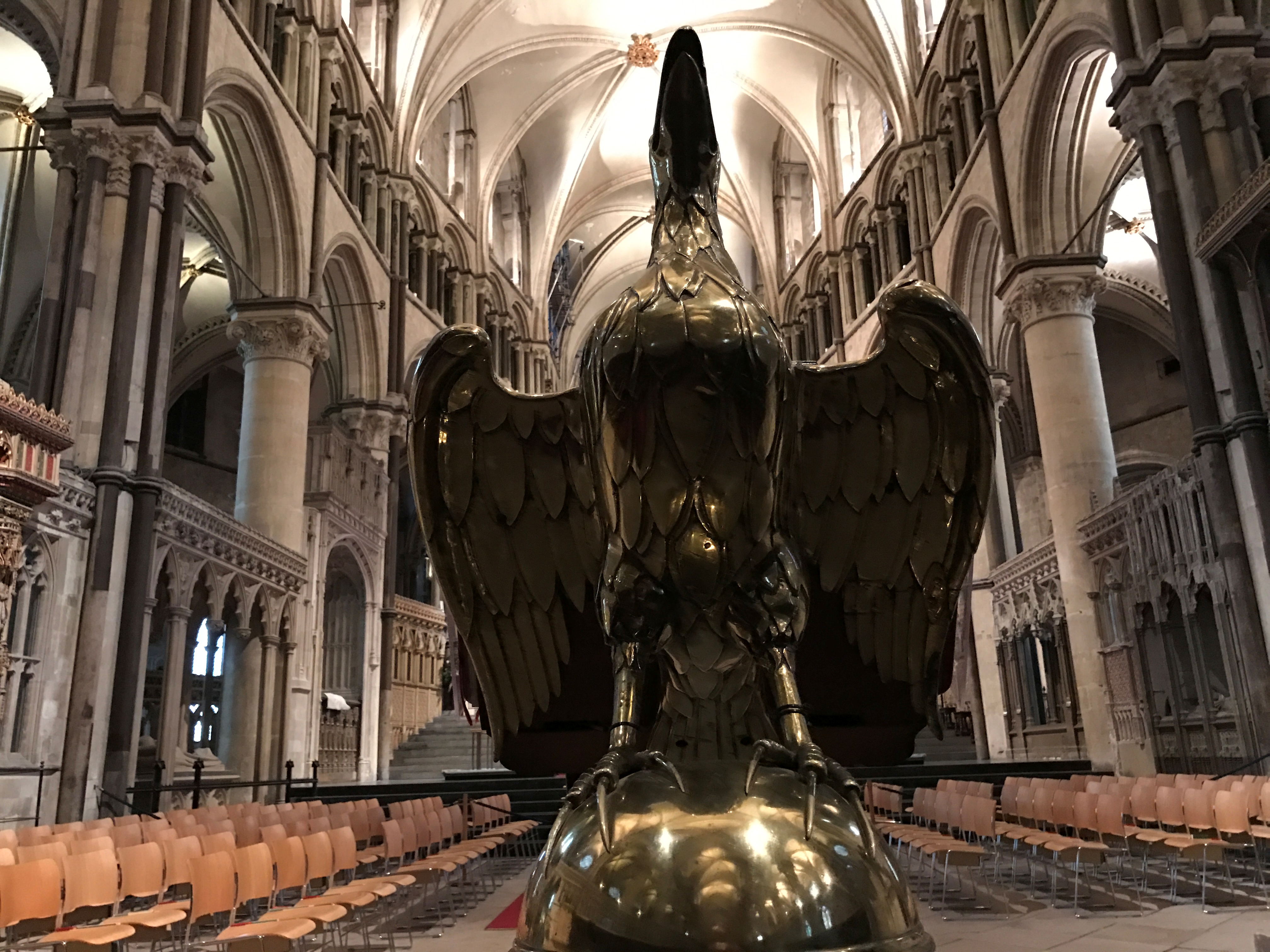
Before getting too far ahead however, I have to say that if Donald Trump had not been elected president—I would not have taken the trip. This visit to Canterbury is because of Donald Trump.  I see clearly that America avoided a very narrow precipice toward destruction and now there is a significant opportunity for a major cultural shift in America that will lead the world toward better things.  In all actuality, it reminds me of the Roman conquest of Briton and the pagan tribes which attempted to hold them back.  But it was no use, Rome was a superior culture and it moved into the area that would become Canterbury bringing with it a culture that would mold the future of England forever.  Once the Empire united the kingdom with Christianity Rome fell from power and by 500 AD leaving the area ripe for conquest and that’s when the Indo-Europeans (Celts) moved in and took over the culture.  Then the Vikings knocked on the door and by the time St Augustine was writing his City of God and setting up the first religious center in England just outside the city walls of Canterbury in AD 598 Canterbury has emerged as a hotbed of the foundations of what it met to be human.  It inherited an oriental religion from the Romans which destroyed the empire from the inside out—much the way communism has destroyed modern Europe—all collectivist based societies follow the same trend.  You see the Indo-European came from the region of the Black Sea and had exposure for years to the orient which had worked its way around the south of the Mediterranean Sea for a time.  Jesus Christ had picked up on some of this in the desert during his years of formulation developed through wondering until the events which led to his execution for disrupting the political order of the day.  So it was Catholicism that was inserted upon a culture in Briton which collided with the old pagan stories and gave rise to the Arthurian legends, then The Canterbury Tales, and eventually the work of Charles Dickens and a cast of characters in literature that exceeds description.  Many of the most powerful and persuasive literary figures of our modern times—from 500 AD to the present—worked within a 100 miles of Canterbury.  With that in mind dear reader, you might understand the context of this pilgrimage and why it was so important to me.canterbury15

Here I was walking the same streets that Geoffery Chaucer and Charles Dickens had along with the playwright Marlow and I was witnessing something remarkable. The people of England at least from London to the east coast may be a lot of things—but they were at least very literate.  They read books and they enjoyed the English language.  Now to be honest, part of that is that their roads are too small, so they can’t drive anywhere quick, and their television is terrible.  Their art and culture is certainly built on their reputations, not on their present actions but at least they read.  I was in several book stores in Canterbury during my time in living within the city recently and I saw titles that I had never seen displayed simply because people actually buy them in England.  Back home, the Barnes & Noble in West Chester which is quite large, or the same store on Newport on the Levee carry a lot of books, but they are more geared toward the trends of today—the things that sell in America—50 Shades of Grey, Harry Potter, and Game of Thrones.  In England, people still read for fun and they do it often—which shows directly in their language.

Even the stupid people in England are smarter than most people in the United States and you can tell that by the way people speak and how their minds frame ideas. In England people naturally treat their language with great emphasis on the intelligence from which it pours forth and they take the time to guard it—where in America we have adopted every slang term imposed on us by every trend that has emerged.  For example, one criticism that many have about me is that I use too many big words when speaking to them.  They think I’m purposely trying to make them feel stupid because they don’t have the same vocabulary range that I do.  But that’s not necessarily the case.  I have read so many books over the years that I speak that way naturally all the time—it is a function of being literate.  Just like a body builder might have big muscles, a person who reads a lot will have a well-defined intellect.  And in England they do.  I heard a homeless person just yesterday uttering rhetoric of insanity about the stars in the sky and he was using words in such a way that the average suburbanite in America never does—because it’s not part of their experience.  The American has given up on literature and actually embraces stupidity to make “others” feel better about their lackluster existence where in England they tend to look at such people as “rubbish” and treat them as such.  They figure if someone isn’t going to learn the proper words for things—then they probably don’t have much value for things and should be discarded.

As I provided this little history lesson to set up this idea, the English language of Canterbury and all the literature that followed was not indigenous to the area. Many cultures rose and fell before Geoffrey Chaucer wrote his masterpiece Canterbury Tales so it’s not like they are preserving some deep history.  It is just the nature of those people to embrace thinking even if the root cause of their economic depravity and lack of scientific invention is rooted in their incursion of an oriental religion—Christianity.  Their foundations into literature at least have elevated their culture to have a solid foundation to build from, and America would do well to adopt those same methods.canterbury14

I went to many museums around London, Paris, and Canterbury and I can report that the children are different from they are in America. Parents still teach their kids things in England and form strong bonds that last their lifetimes whereas in America too much Paris has migrated into our culture there and people are too rootless to teach children much of anything—and that is a mistake.  Intelligence should be celebrated and nurtured, not avoided and pissed upon—and in America we take it for granted.  We celebrate stupidity and it shows in our values for books and the process for learning.

The election of Donald Trump I know is going to make a lot of people unhappy, because like the cultures in Europe conquered by so many superior cultures, this new president is a game changer. He may be viewed in history the way William the Conqueror was in England, or even Napoleon in France.  As much as history baulks at such aggressive characters it is in their wake that great works of art have furthered the human race and the same will now happen in America—the “Trumpian age.”  So part of that new Trumpian age needs to embrace literature.  Trump himself may not be the most literate person in the world, but he doesn’t need to be.  The values that come out of his presidency however could—and that starts with embracing values that are positive and throwing away those that aren’t.  As I said at the beginning of this, if Hillary Clinton were still president, I would not have taken this trip to Europe.  I wouldn’t want to see what the progressives wanted to do to America.  But now I can visit and observe the mistakes and the successes, and bring home the summation of both to apply to American culture.  And the most obvious thing to me is the protection of the written word and elevating its value in our North American culture.   That alone would go a long way to solving many of our national problems—teaching people to read again and to enjoy the process would go a long way to enriching our American life to be the leader of the free world and all those wanting to become free.   It all starts with what you accept in your mind—which therefor comes out in your mouth.  And in Canterbury, England, they still love their literature and for me it was a relief to see.

Rich Hoffman

 CLIFFHANGER RESEARCH & DEVELOPMENT

Sign up for Second Call Defense here:  http://www.secondcalldefense.org/?affiliate=20707  Use my name to get added benefits.

cropped-img_0202.jpg

Mystery of the British Museum’s Crystal Skull: Why its not a fake, but many wish it were

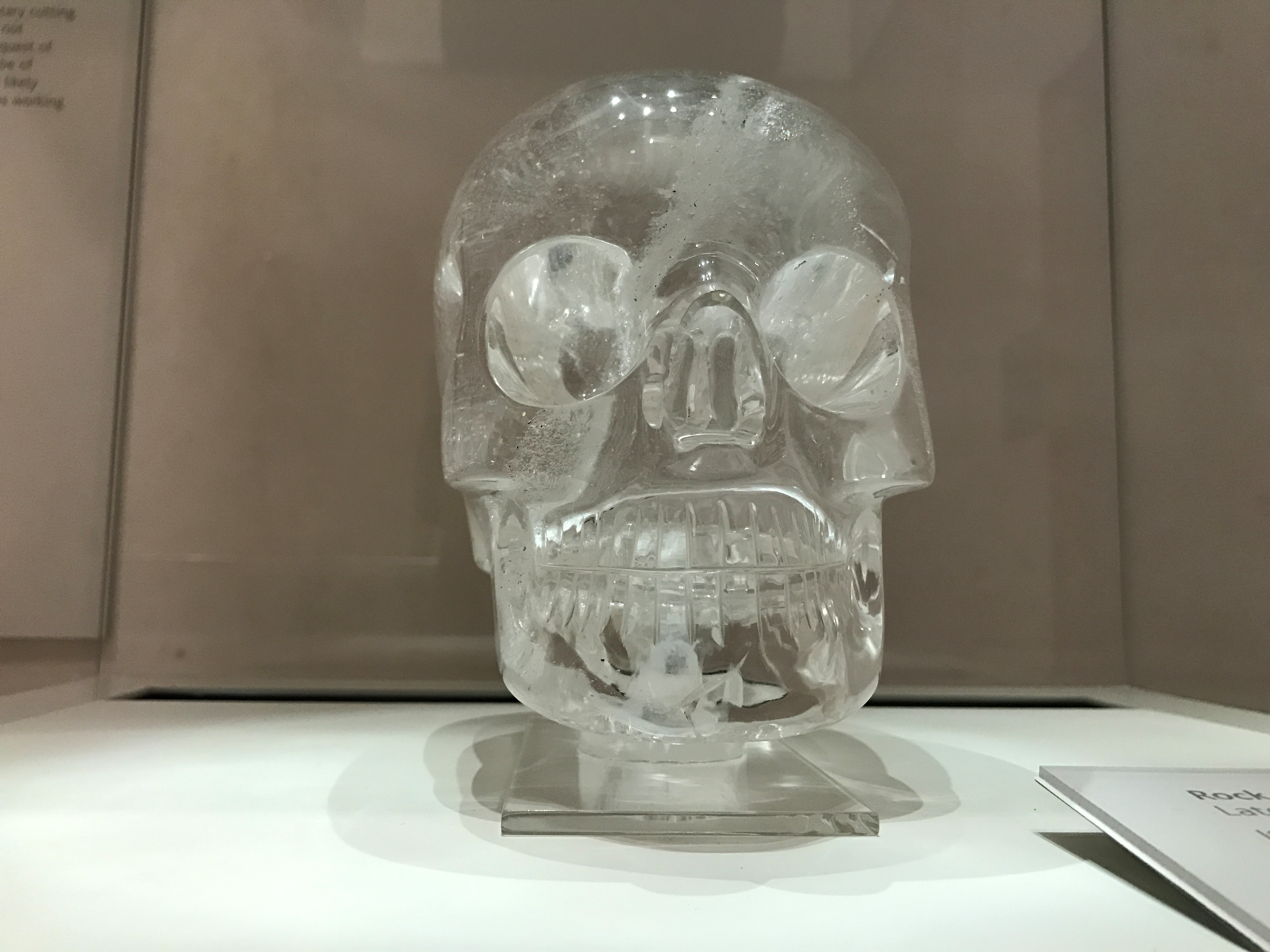
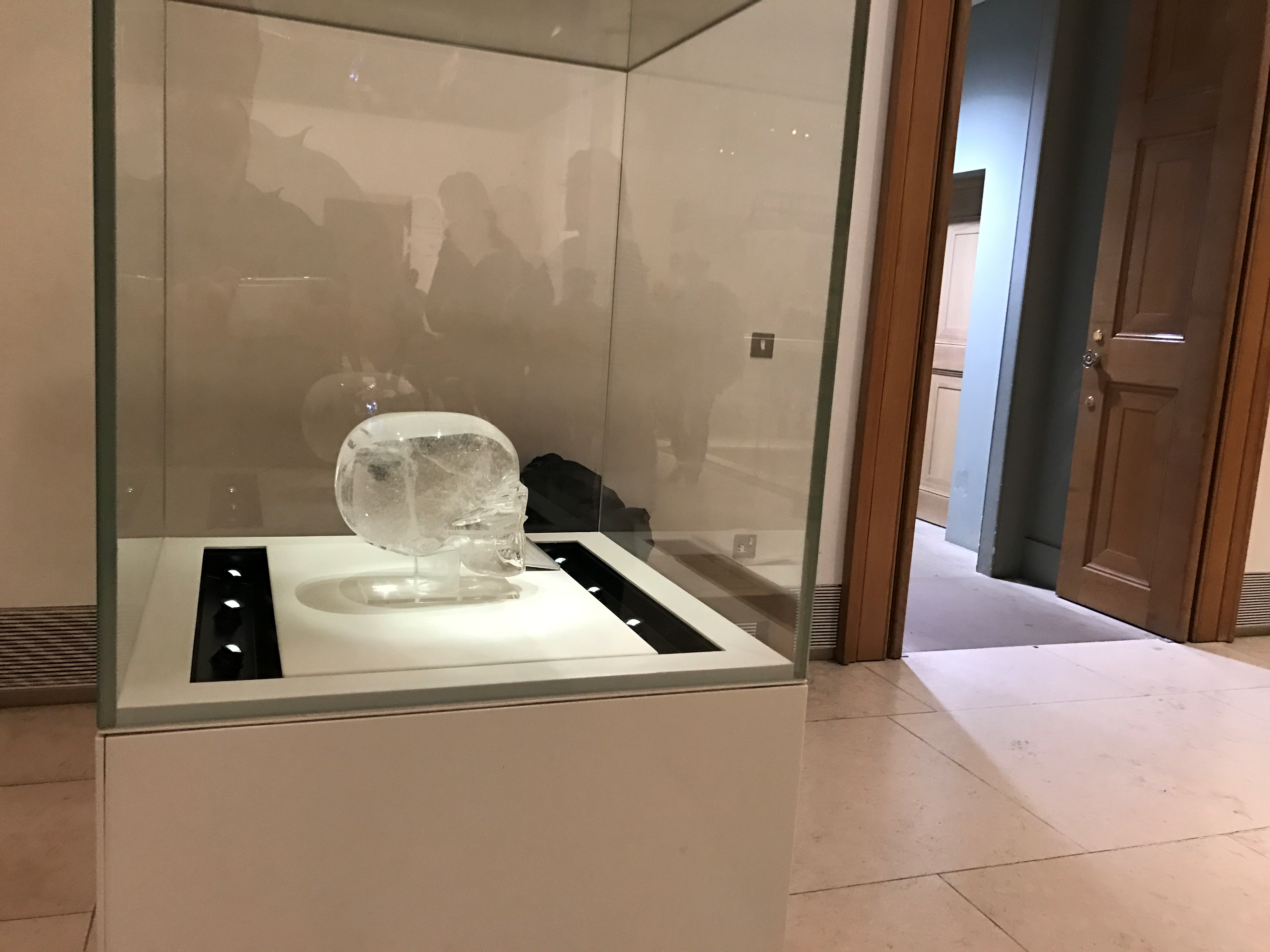
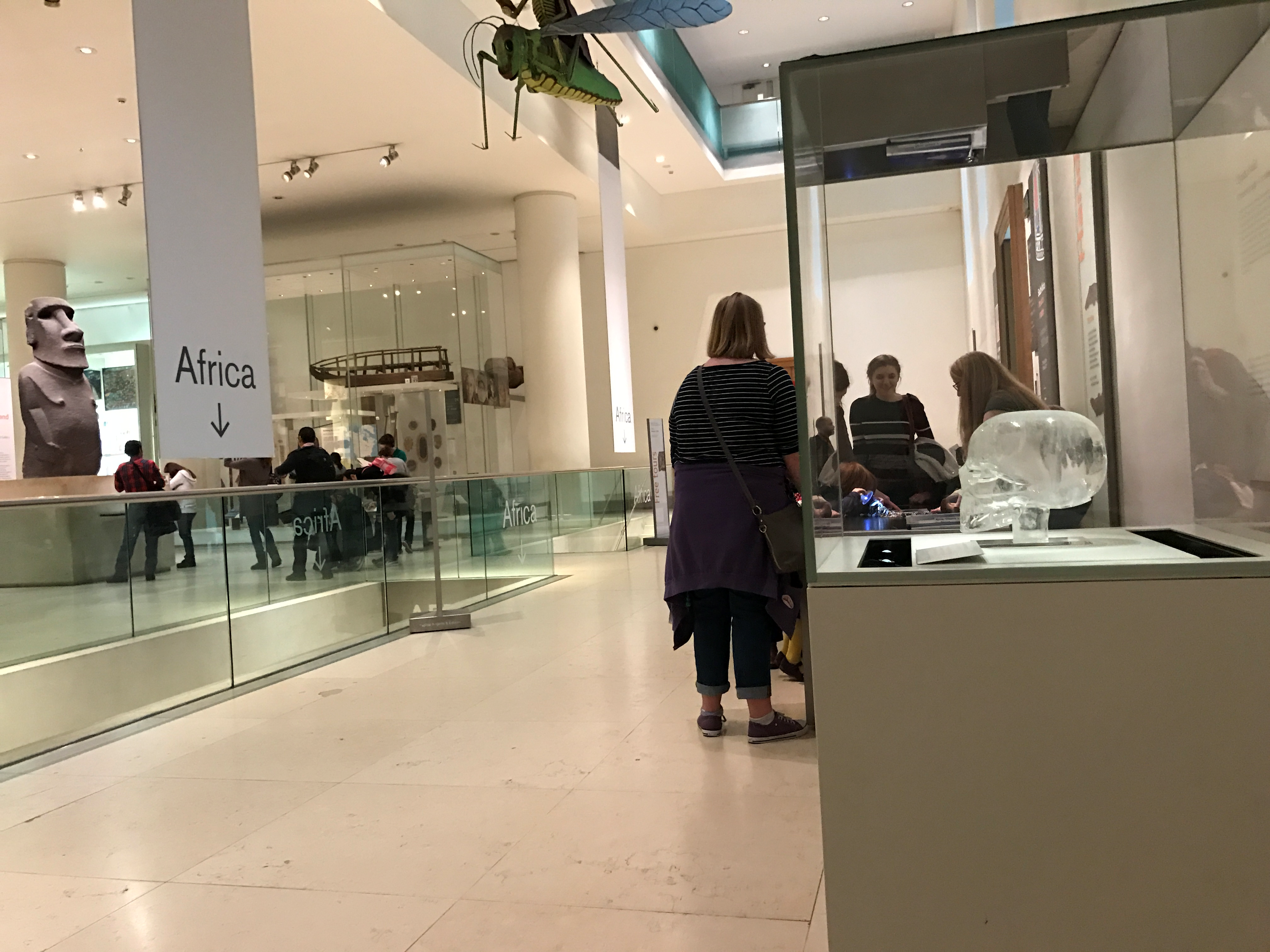
It was one of the things I most wanted to see in London—the famous crystal skull at the British Museum. The idea that an ancient civilization was able to carve such a fine sculpture out of quartz without obvious machining marks in the 14th century, or even before, is quite remarkable so I wanted to see it for myself.   The artifact is famous because it is one of the few of its kind in the world and it was acquired by the British Museum at that magical time of early archaeology when the British empire still held sway and was able to gather important items around the world before a new generation of politics and war would further destroy the art and relics of the Middle East, Europe, and the Americas—especially in Mexico where their Mexican Revolution at the start of the 20th Century has all but destroyed their economy leaving the people there impoverished.  If any crystal skulls were found today in those regions they would without question be in private collections sold off by locals who needed to feed themselves.  It was remarkable that the crystal skull featured here even made it to the British Museum as it was acquired from the Tiffany and Co. from New York in 1897 after being owned originally by Eughen Boban who was an early fortune hunter able to gather up objects from digs before the Smithsonian, and the British Museum were able to lay claim to the historic record.  For something that old, it certainly couldn’t have seen modern methods of cutting a quartz structure so for anybody to go to such trouble to make a crystal skull there had to be a good reason for it.crystal-skull

The skull is in the “living and dying” wing of the museum stuck away in the corner much the way that the Cincinnati Tablet is at the Museum Center in my home town of Cincinnati—they really don’t know what to do with it because it doesn’t fit their narrative of a primitive people. In Cincinnati the tablet doesn’t fit the profile of the Adena Indians and at the British Museum which many contributes have already laid claim to their version of history and feel they possess the narrative of history by being the first to report it—the crystal skull is sort of a mystery—so they put it in the corner of the room leaving it in limbo.  In fact it was so unobtrusive I had to ask where it was.  I found a museum worker who pointed it out to me then felt the need to let me know that the skull was a “fake” which irritated me greatly.  There was no need for the additional commentary, but the guy felt he needed to make sure I knew his opinion of the crystal skull which revealed a lot about what I had long suspected about this particular museum.

The collection at the British Museum is one of the finest in the world and it could be argued that their imperialism which acquired all the artifacts there robbed the home countries of their “birth rights” to those cultures. But as we’ve seen in Cairo, Baghdad and other places around the world, especially in Mexico City where the ruins of an Aztec civilization were literally buried underneath—new cultures usually destroy old cultures and the British Museum was able to save those artifacts in time because of their audacity to take them from their domestic lands—which were unstable to the historical record.  The museum has an extensive membership list that is very active, and they depend on their donations to keep everything on the upside—and they are very successful.  However, to preserve that funding model they need to lay claim to the historical narrative created by the British Museum, so to preserve the integrity of their members and donors.  That concern was reflected in the museum worker’s proclamation to me that the crystal skull was a fake—because he didn’t want me to be one of those guys to further perpetuate the many theories that the skull may belong to an undiscovered culture not yet in the museum—which is highly likely—and was the source of my interest.crystal-skull-2

The failure of the premise that the British Museum established, for which the worker represented was that it was inconceivable that the Spanish conquest of Mexico in 1521 was interacting with a superior culture at the time since it has been established that European culture was the dominate one and that everyone they interacted with was inferior. We see this with the discovery of America by Columbus—even though the Chinese were obviously already in America and trading around the world—and that the Vikings were likely already in America several centuries earlier.  Even more perplexing, which is obvious to me, the mound builders of England, Ireland and likely Scandinavia likely were trading with the Phoenicians from the south, maybe even Egypt and were in the New World building mounds like those at Nework in Ohio well before Christ was born.  The British Museum ignores all these issues and sticks to their story that Europe conquered the world and thus making them the authors of history.  Relics like the crystal skull challenge that.crystal-skull-3

After looking at the skull closely with an electron microscope scan, there is evidence that some of the features were carved using a rotary cutting wheel of some kind.   Note the word, “some.”  There are many parts of the crystal skull that defy even modern methods of manufacture so there is still great mystery as to how the thing was even made by today’s standards, let along done at a time before the telephone existed.  And there is evidence that what Spain conquered in Mexico was far advanced in many ways to the Europeans, especially in canal building and astronomy.  So there is guilt in the statement—the “crystal skull is fake.”  Guilt that the very things the British Museum is supposed to guard against—the loss of information advanced by the many cultures of the world—the evidence says that a lot of the world’s cultures have been lost and the Europeans are very guilty of building their Catholic religion on top of conquests to erase the memory of what came before—which I think the crystal skull represents most.brisish-museum2

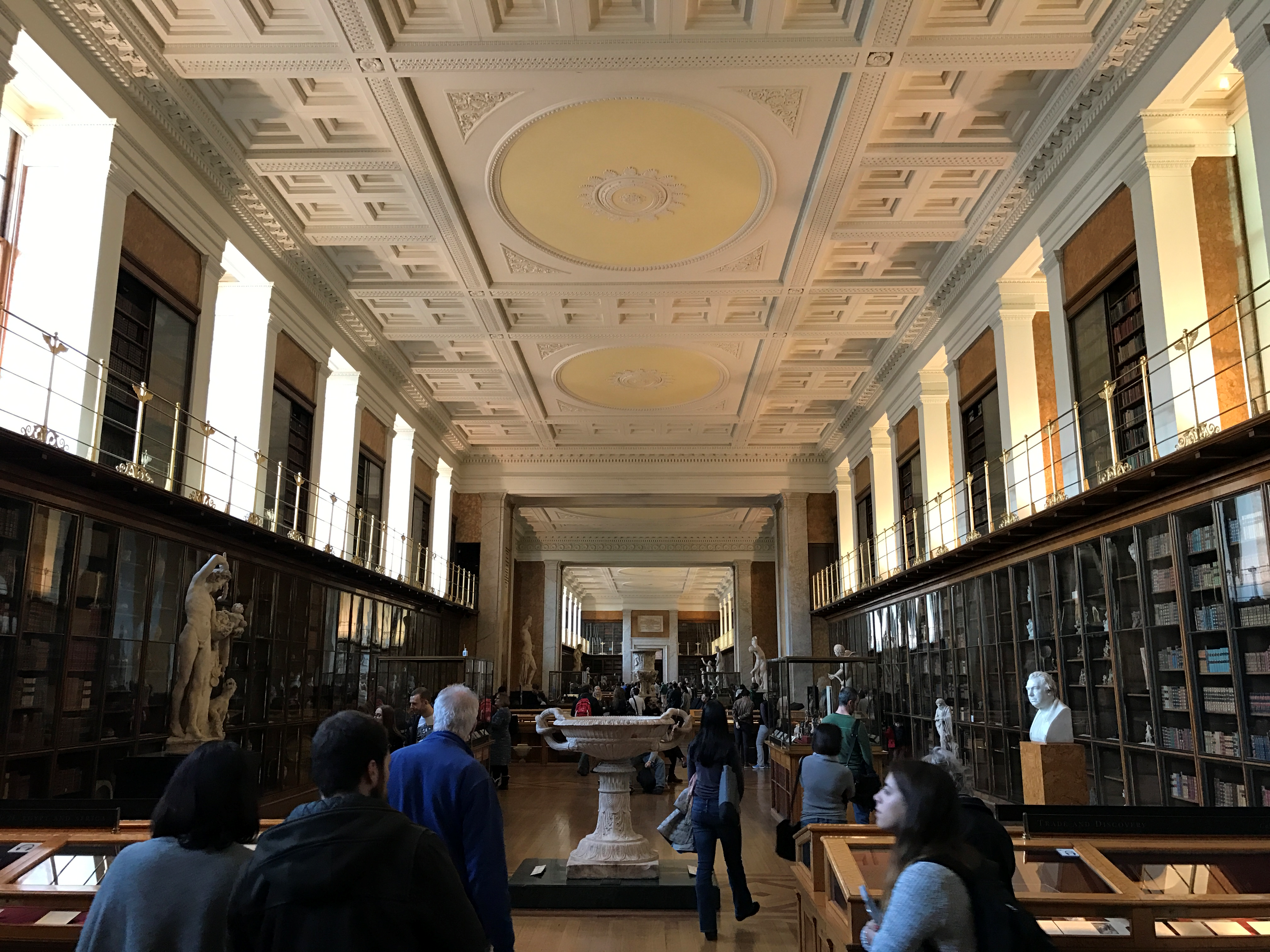
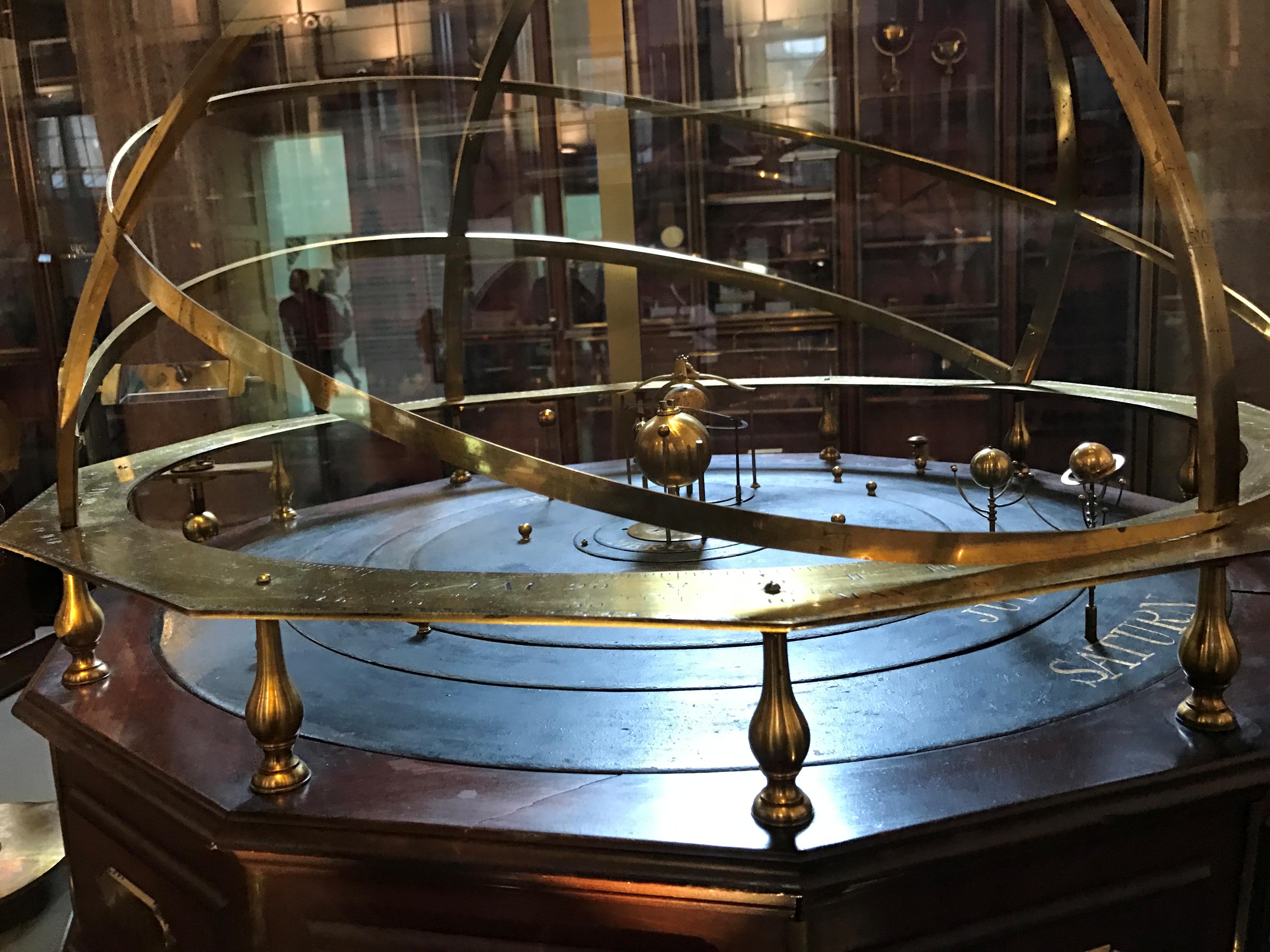
The science of history is in its infancy, even in the Room of Enlightenment—which was my favorite room in the museum—it is obvious that our grasp of history is rather shallow, and all we know is from the private collections of kings, or the little bits of junk acquired from dealers who looted tombs and cultures to sell on the black market. The best stuff is still out there locked away in private collections and museum basements lacking a proper explanation that fits with the story of history that has been told to us from our infancies.  History is much more complicated and to know it is to understand the crystal skull culture and other mysteries that are out there which have not been given a proper introduction to the world because too many people—especially of European decent—call things fake—when they are obviously not.  The crystal skull of the British Museum is more than just an artifact, it is a glimpse into the human race who had an obsession with death and wanted to face it literally—and an old habit of doing what should be impossible for the benefit of doing it and perplexing those from the future with the valor of their endeavors.britsh-museum

Rich Hoffman

 CLIFFHANGER RESEARCH & DEVELOPMENT

Sign up for Second Call Defense here:  http://www.secondcalldefense.org/?affiliate=20707  Use my name to get added benefits.

cropped-img_0202.jpg

What’s Behind the Trump Protests in London: Socialists fighting for the right to be lazy

What the media is not telling you dear reader about all these “spontaneous” riots of “concerned” people protesting Donald Trump around the world, and his immigration policies, is that they are organized by dirty, rotten scum bag socialists that draw like flies on shit the stink of the most lazy and uninformed of our human species. They are not “people” as reported by the media concerned over the direction of the world led by Donald Trump trying to challenge him wherever he may show up to cast an influence—but they are insurgents of the group Socialist International still attempting to cast the world into the doom of global communism, just like they had in the Soviet Union and as they do now in China.  The media which is advancing this plot that they learned in their public institutions as silly, drunken pre-adult losers mean to destroy Donald Trump because he is not only now the leader of the free world, but an unapologetic capitalist who is rebuilding the wealth of America at a rate that is terrifying to them.  Because capitalists and communists in any form cannot work together toward a common goal.  One side must lose to the other because their fundamental philosophies are just too different and the war we are witnessing can be summed up that simply.

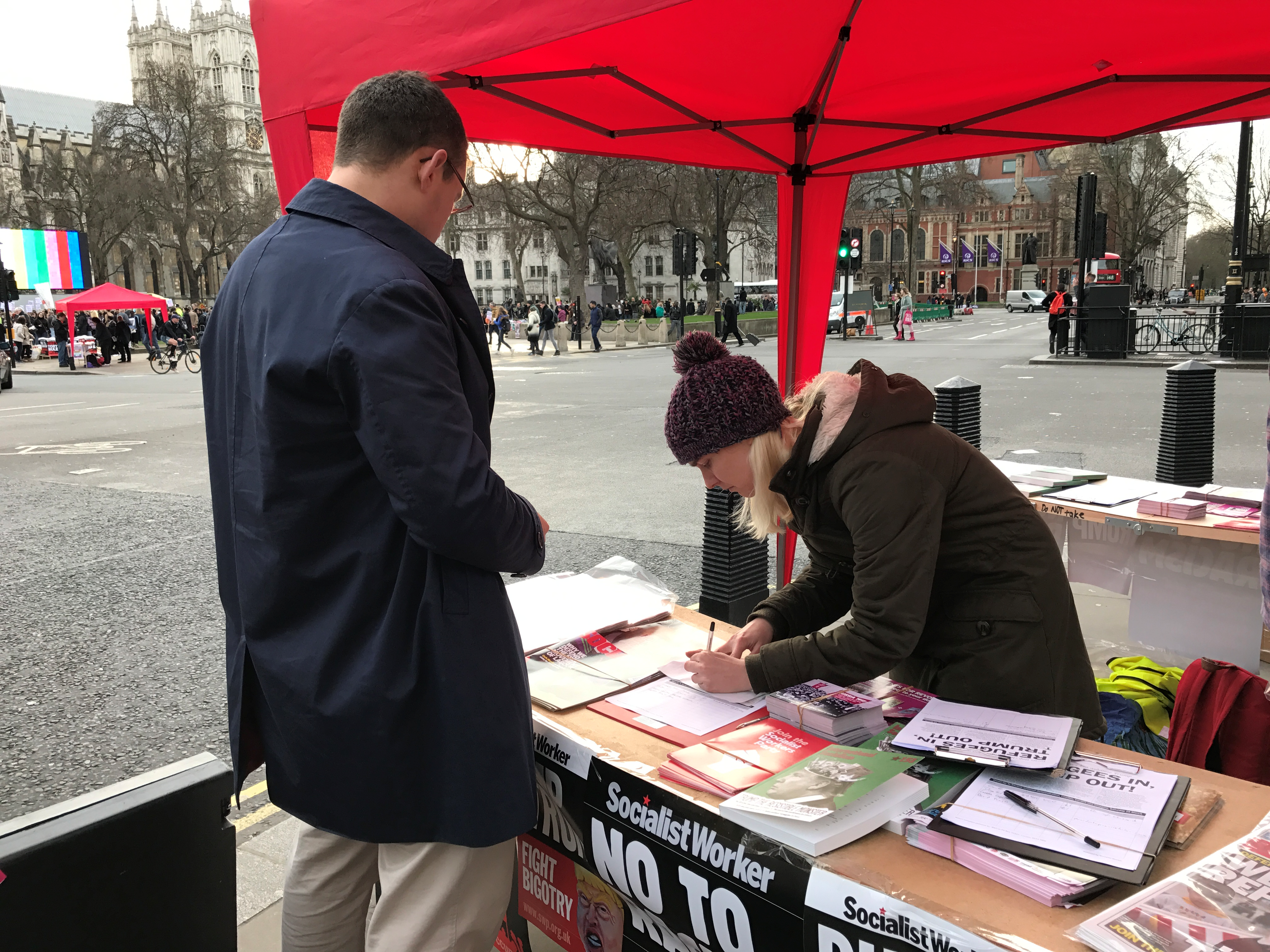
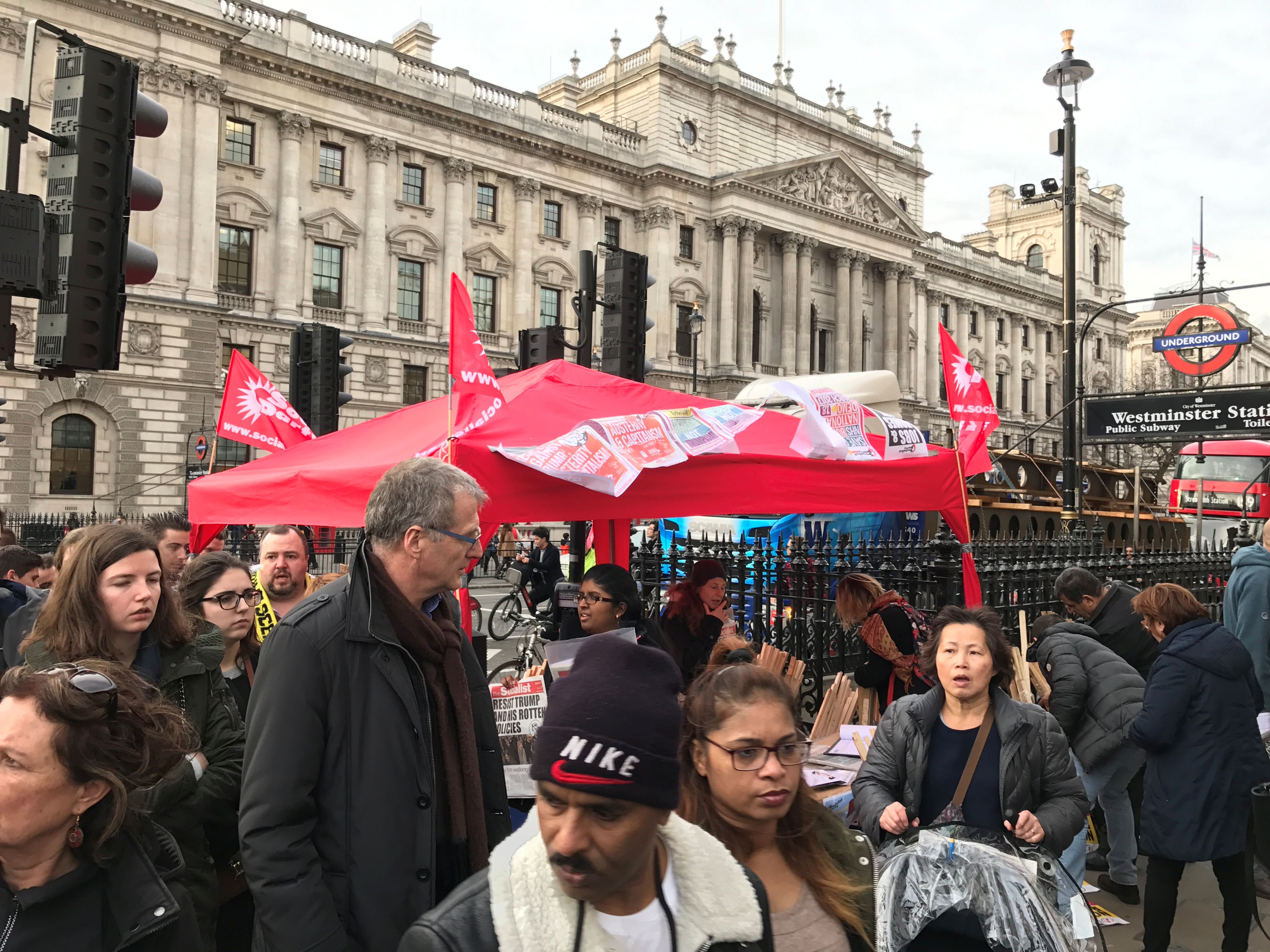
Of course you’ll want proof dear reader of my bombastic statements, especially in regard to these so-called “Not My President” rallies which “sprang up” across the world, particularly in the progressive cities of New York, Chicago and Los Angeles. I happened to be in London for a number of reasons, and was down by Parliament to see Theresa May defend Brexit from the House of Lords attempting to waver back in the direction of Tony Blair and the avocation of a “European Union” which again is a Socialist International plot to spread global socialism then communism to every corner of the world.  It was in fact in London where Karl Marx did most of his work toward that collective based monstrosity that leads directly to economic depravity. So I happened to be right next to the “spontaneous” group that gathered in the park across from parliament in the shadow of Big Ben which was made to look so much bigger on television than it really was.  And I gathered up the pictures you need as proof to understand what I’m saying and have been now for many years.  Socialist advocates are behind all these global protests, even the Black Lives Matter endeavors.  They do not want peace with anything in a capitalist country and cannot be reasoned with.  So as a civilization we must drag them kicking and screaming to a bitter bloody ending across the finish line of prosperity and ignore their utterings—because in the scheme of things they are completely worthless.trump-protests4

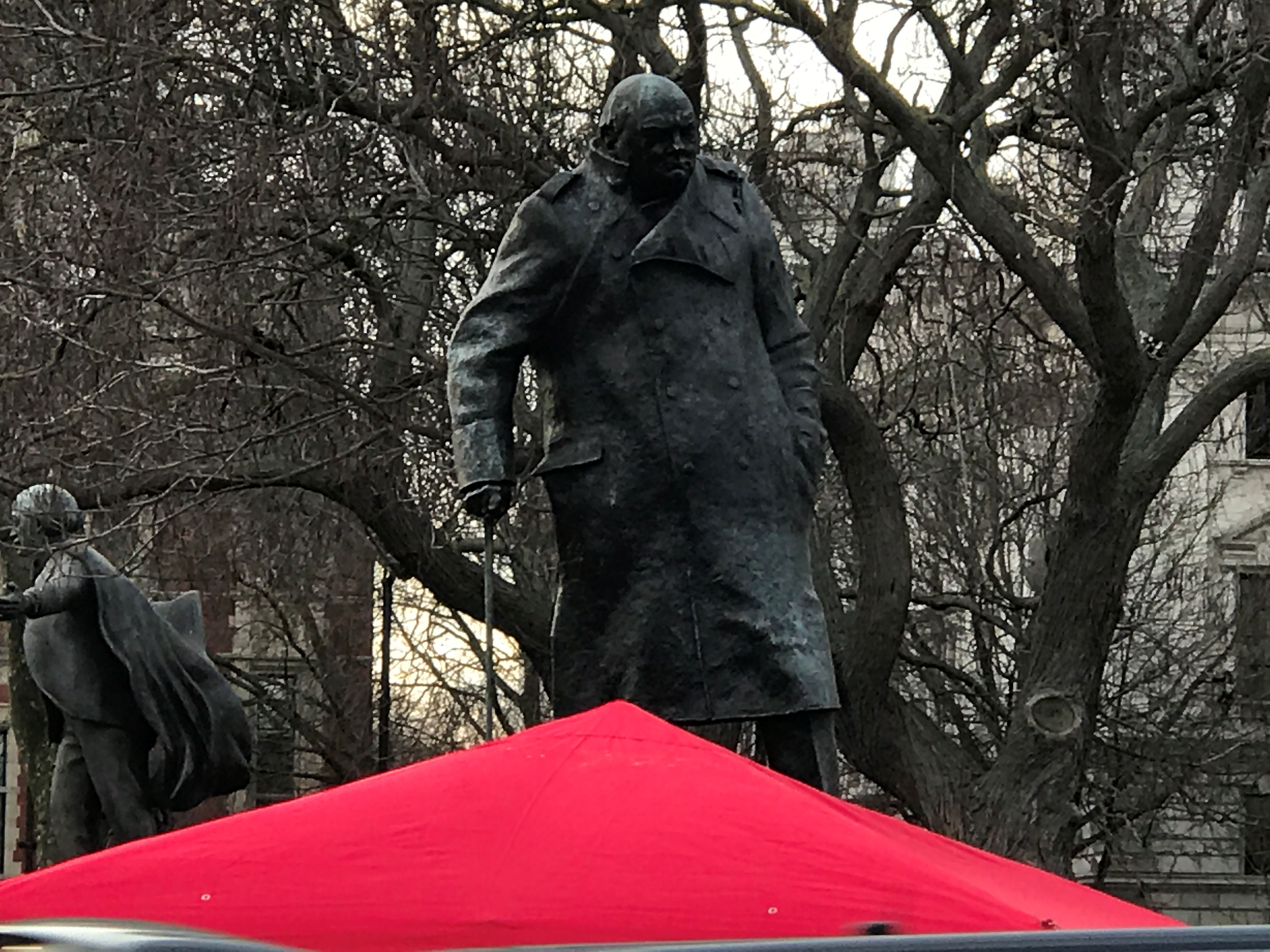
You will notice from the pictures I took at the London rally all the red tents—well those were there to pass out socialist literature—and there were a lot of them. In many ways, it broke my heart to see so many red flag waving socialists and their tents of Marxism set up at the feet of Winston Churchill’s statue.  He would be literally rolling over in his grave if he knew that—because it goes against everything we fought in World War II and many other wars.  The Marxist types who formed this destructive philosophy started in the mid-19th Century and everywhere they proposed themselves destruction and war has been in their wake.  Today their influence is everywhere, from the union strike of British Airways by their cabin crew looking for a “living wage” to the nearly complete conquest of the Asian countries by communism as it flowed down out of Russia into those villages of China, Korea, and Vietnam.  In fact that whole mess in China and Vietnam started just a few miles to the south of these London protests in Paris where the future Vietnamese leader wanted a voice at the Treaty Versailles convention.  He didn’t get it, so he went to the rickety little building across the street that was spreading communism in Paris and they did listen to him—so be became philosophically aligned and the rest is history.  The protests of the Vietnam War by the press wasn’t so much about the many deaths that the United States and other countries suffered among their young people fighting communism there—it was that those armies fighting Ho Chi Minh were trying to stop communism which the political left were trying to advance in the same manner that these protests in London against Donald Trump were being presented.trump-protests5

What was even stranger about the London protests is that the people participating were not people who voted for Donald Trump. In the United States, at least they could claim to be concerned about a president they didn’t vote for.  Heck, I never accepted Barack Obama as my president—and it had nothing to do with his color.  He was an idiot advocating global socialism which was why I rejected him.  So I can understand people who didn’t vote for Donald Trump being upset—because I have been for the last 24 years in not having a good president in the White House whom I could respect.   But in London, these people were so concerned about Donald Trump that they felt they had to protest as if he were already the president of the world—which actually tells you quite a lot about the role America plays in global matters.  The socialist know that Donald Trump could destroy all the progressive gains they’ve made against capitalism for the last 100 years, and it is that which they are fighting against.trump-protests2

The people at the rally in London were not just concerned moms afraid that they wouldn’t be able to kill a baby if they engaged in reckless sex with some libitard at a late night bar covered in cologne from Harrod’s on a wild night in London, or gay rights advocates hoping to water down the sexes so that expectations of behavior would be bent to the most lazy of our society allowing unclean losers to have a shot at more potential “partners” than they do now—or complacent idiots who want to play video games all day could with a “living wage” so they would not have to worry about working a real job and paying all their bills—their rent, their cars, and their online fees. They were pawns in a giant game of chess intent to weaken the human race.  As I looked at their faces close up their stories were obvious.  Most of the men were the type who had moms who did pay all their fees for online gaming because the women felt guilty at not providing strong role models for the young lads who were now stringy haired losers barely able to function in society.  The loudest voices at that rally were the type of young men who had watched many lovers enter their mother’s lives and dirty her up leaving them without the prospect of a good clean family life into their adulthoods—so they turned to collectivist philosophies as a way to normalize their personal tragedies—and now Donald Trump was a severe threat to their choices made so far in life.  But even the conditions which made those young protestors are the result of liberal policies—the young women their mom’s used to be were taught they could have the world and everything in it if only they asked for it.  If they wanted to sleep with lots of men, they had the pill.  If they acquired AIDS through reckless sex, they’d have Hollywood stars show up at their bedside and sing songs to the media.  They were taught that lives were conducted without consequence and that big daddy government would be the new husband while Hollywood helped cultivate the image that the great men of the world would now be versions of Homer Simpson.  Now the people who bought that view of the world most were forced to deal with an alpha male Donald Trump who had a gorgeous supermodel wife who was an immigrant herself which diffuses all their arguments toward socialism, and they are genuinely terrified.  This wasn’t the world they were promised as budding young socialists.  The capitalists were coming back in style and no matter what tricks they played, people weren’t listening.trump-protests3

So these protestors of Donald Trump are not normal people, they are rejects from a failed society who haven’t yet figured out that the greatest threat to the future of our species isn’t global warming, immigration, or even racism—its stupidity.  And stupidity flourishes under communism and socialism because it takes competition out of the equation which allows the half-baked stringy haired losers to have an equal opinion to the well-read orator who has spent their life perfecting ideas and concepts.  It just doesn’t work and that was the real summation of what was behind the London Trump protests.  The leaders weren’t well-intentioned citizens of the world, they were radicals fighting to keep the bar of human achievement low so that they could stay relevant.  And the media is in the bag for those insurgents because they are looking for the same assurances—and under a Trump presidency, they won’t get it.  And that is why they protest—and the only reason why.trump-protests

Rich Hoffman

 CLIFFHANGER RESEARCH & DEVELOPMENT

Sign up for Second Call Defense here:  http://www.secondcalldefense.org/?affiliate=20707  Use my name to get added benefits.

cropped-img_0202.jpg

Plugging up America’s Intelligence Leaks with Julian Assange: What Donald Trump could do to help “really” drain the swamp

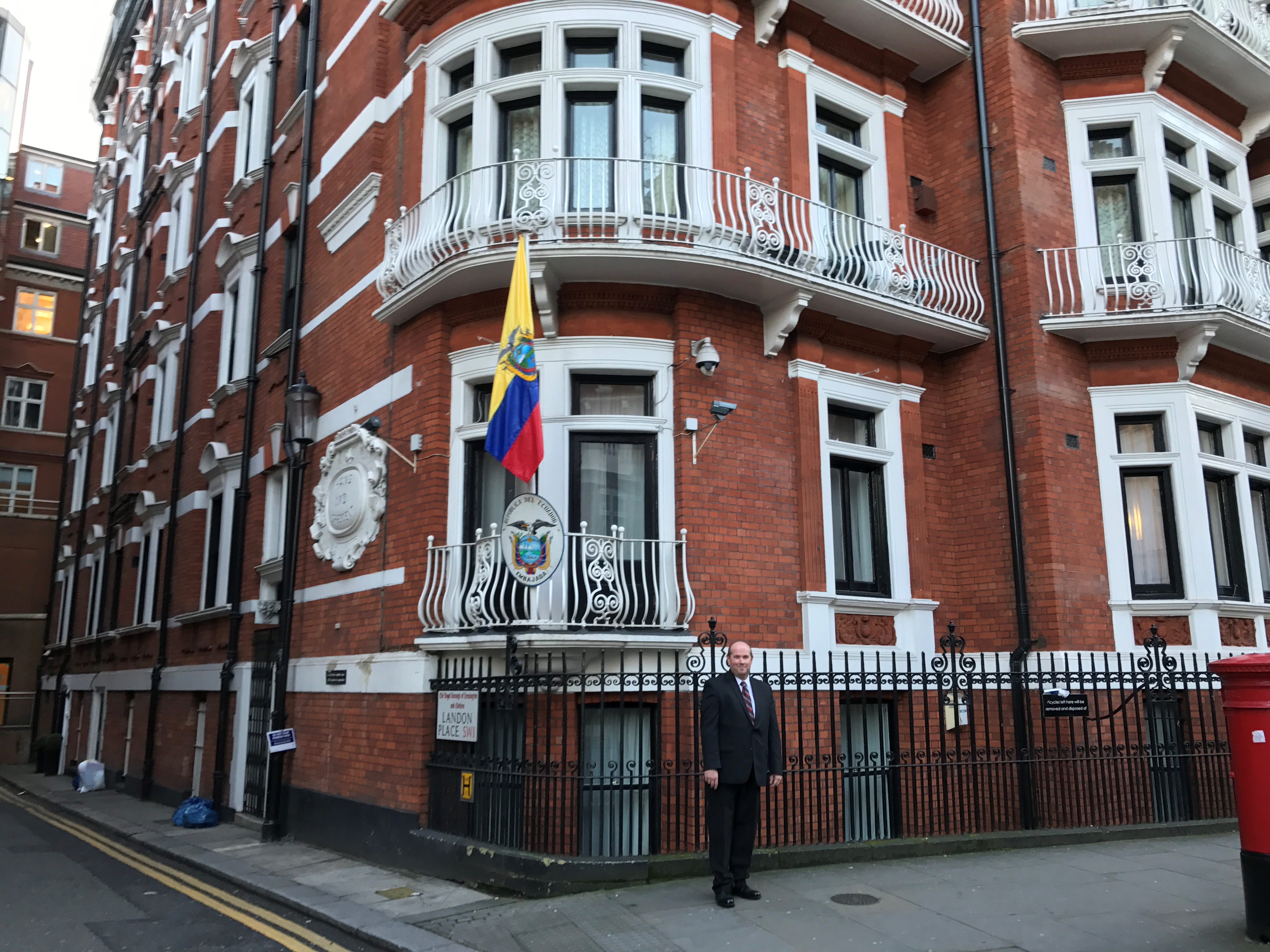
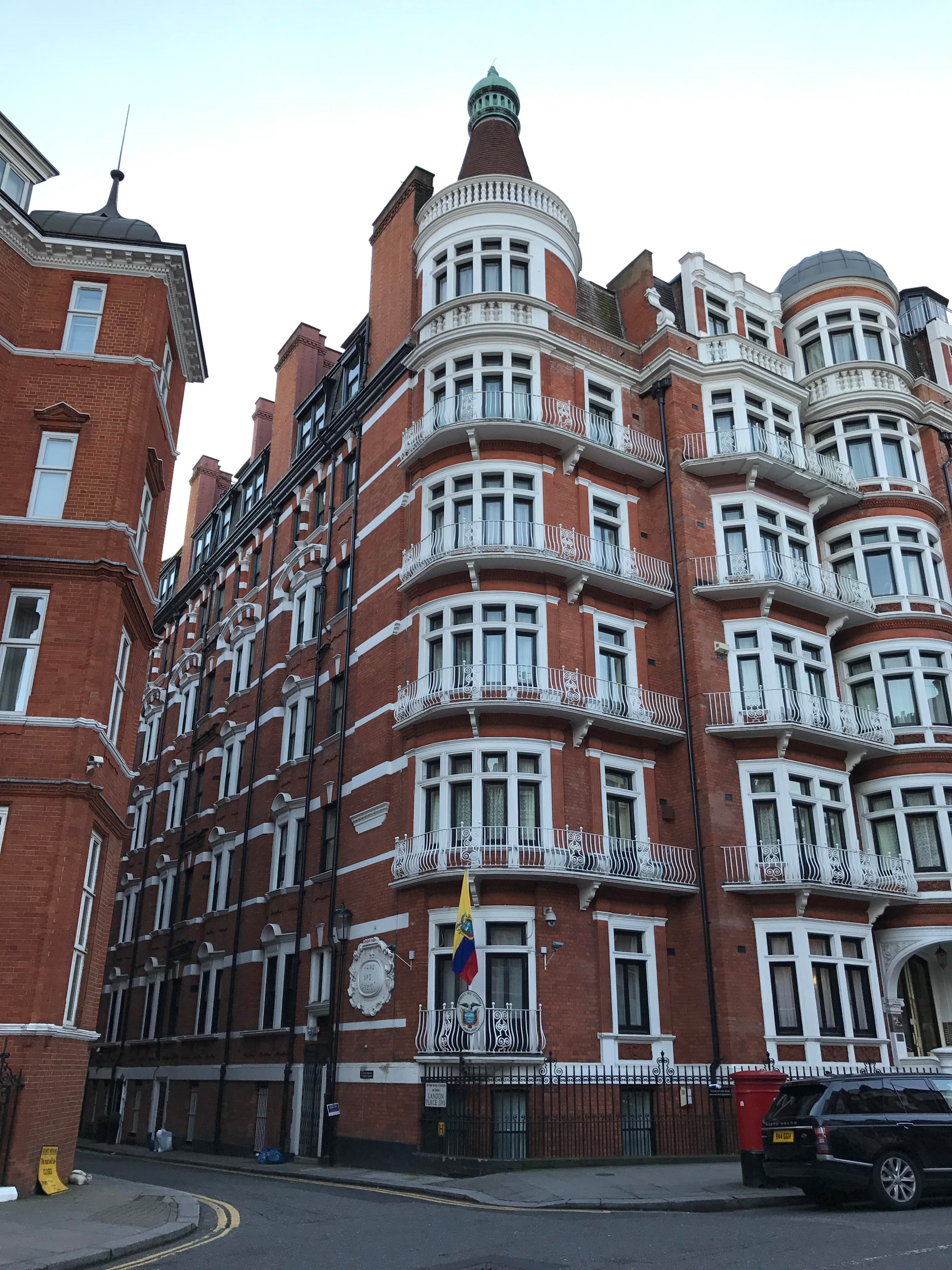
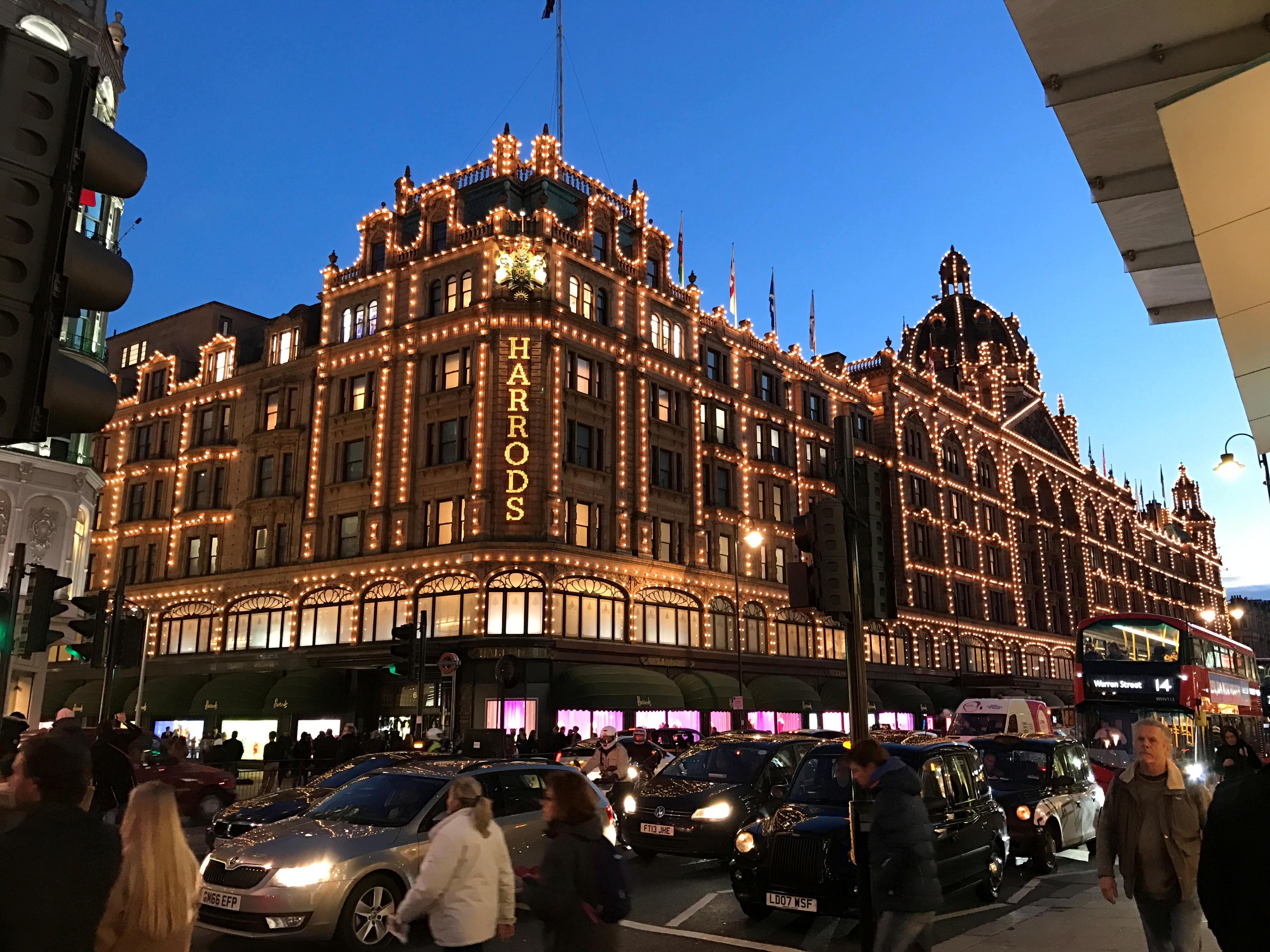
While my wife was shopping at Harrod’s in London I couldn’t resist but to walk just a few feet to the east and take a glance at the Ecuadorian Embassy where what I think is the most honest journalistic organization presently in the world is hiding the notorious Julian Assange behind the dainty curtains of the balcony I have watched so many historic press conferences. Assange cannot leave the embassy and due to a current Ecuadorian presidential race that may jeopardize his continued asylum there, I couldn’t help but think of ways where he could be more useful to a Trump administration being attacked from every corner—including its own intelligence community.  So I had my daughter take a rare tourist picture of me standing next to the window of the famous spot as I pondered ruthlessly the many ways that strategically this situation could be rectified better for the world at large.  Even with all the controversy surrounding Julian Assange—to me he is a similar character to American appeal that Wernher Von Braun was who converted as a Nazi rocket builder into one of the heads of NASA. Was America still the same country that could pull off something similar here—perhaps.  But it wouldn’t be easy.   As I listened to the world’s reaction to the Trump rally in Florida which went on just a few hours later that I watched live on my iPhone while my family continued to shop at Harrod’s—I couldn’t help but think Trump’s solution was just a few feet away from me hidden behind the windows of that Ecuadorian Embassy.assange

The media had already been aghast by Donald Trump’s fourth week in office before he had a rally in Melbourne. Florida where Melania Trump really stuck her thumb in the eye of the secular world by starting off a speech with the “Lord’s Prayer.” In the great classic book on military strategy The Art of War, it is important to unite people behind flags of commonality toward the great strategic objective of the enterprise, and clearly that was the purpose of Trump’s rally.   The media didn’t know what to do with it because their goal had been to chip away at him until there was nothing left causing a fissure between Trump supporters and the new president.  You see, the media sees itself as a fourth branch of government and they had decided long before Trump that they were going to carry America off a precipice of destruction for progressive goals.  After all, most of the media were somewhere between the ages of 40 for the really old people to about age 27, still just kids learning about how the world worked.  In their universities, they learned about progressive values and they were now expressing those values in their media occupations, and presently that meant they needed to destroy Donald Trump to preserve their century long task at maintaining their fourth branch of power.  Those checks and balances of course would be fine if their end goal was to preserve free speech and root out tyranny.  But that’s not what the American press was up to.  They were hell bent on shaping the world into a progressive philosophy formed many years ago toward globalism desires.  For instance, in England as I contemplated these things, a prime example of how a government looks to “nudge” people into the direction of their intentions is to alter behavior through inconvenience.  Such as—at Harrod’s, one of the most popular shopping areas in the world, it is very difficult to find a garbage can to throw away trash.  There is a reason for that—because the government wants its people to make decisions not to overly consume disposables so they make it hard to get rid of things.  Not to the point where people just throw things down in the street—but just enough to stave off careless purchases.  Also, when you go to an English restaurant of any kind, they don’t do refills like they do in America.  Obviously, that is to also stave off excess consumption.  Rather than create a rule like Michael Bloomberg attempted a few years ago in New York City with a soda tax to regulate consumption, progressives utilize inconvenience in their government processes to control human behavior and market conditions as they see the need.  The media, particularly in America, but also around the world is a bridge between government’s desires to control people and the people who change their behavior to accommodate the desired change.  People watch the news to hear the latest about Beyoncé’s pregnancy, or who won the latest award’s show of their favorite media artist, but then they stick around to hear news stories from a media trained by liberal institutions to sell progressivism in the byline stories.  It is that force which is presently attacking Donald Trump viciously—and why he had his Florida rally to step around a media quickly trying to box him in at the White House—ground they have up until this point controlled.assange-2

Trump has learned to spend his weekends at Mar-a-Lago in Florida to a property he has controlled for years, as opposed to the media haven at the White House where the press firmly has roots planted to over analyze everything Trump does. John McCain the so-called Republican senator has spent much of his recent life fighting everything Donald Trump does and the intelligence community has been doing much the same to preserve the swamp Trump wants to drain.  So with all these enemies, many which come from within the Republican Party, something needs to be done to reveal the ways that the intelligence community is hacking the White House to listen in on everything that is said—which then gets leaked to the press to use against Trump.  That whole process has to be stopped—which Trump has stated he intends to do.

Of course people like John McCain and the political left look at Julian Assange and see a villain, because Wikileaks threatens their very existence. The entire media empires of the world rely on this “nudging” that they do to shape people’s opinions in subtle ways, and they can’t compete with a news organization which seeks to put a blind eye toward reporting—the way things are actually supposed to be done.  Yes, I don’t like the secrets that were revealed by that Manning character—whatever “it” is, man or woman.  But I am more concerned about the behavior of my government revealed through the Wikileaks.  And to watch this latest election in America and the audacity that the media has attempted to put all the blame on the “Russians” even if it causes World War III says a lot about how much the media is terrified of Julian Assange.  So what I’d do if I were Trump is I’d find a way to legally grant Assange asylum and put him to work in solving the many leaks coming out of the intelligence community to root out the real villains operating under the cloak of media activism.  After watching the behavior of the media toward Michael Flynn who was forced to step down and the persistence to attack any member of the Trump team, from the little 10-year-old Barron Trump to Kellyanne Conway, something has to be done to strike back and if I were Trump, that alliance of aggression would be the Wikileaks founder.

If I were Trump I’d get Assange out of his situation and use his natural skills to “nudge” the media back to honest reporting which would favor Trump’s “sentimental honesty.” That type of honesty was what people showed up in Melbourne to hear and was the driving force behind the Trump White House, and was the target of the current media.  So Trump needs to attack that aggression directly, and Assange would make a wonderful ally.  For me, standing in front of that window of the Ecuadorian Embassy in London, the solution was as clear as it could be.  Give Wikileaks a real voice and free it from the confines it finds itself in, and use that ability to help root out the villains working against this current White House from within the NSA and other government organizations who are doing what we all feared years ago would be happening—that they’d use private information about us to “nudge” us all into a desired political behavior—just as you can’t get refills on drinks or have easy access to trash cans in England—US intelligence gathering does not favor freedom, it is to control our population toward the desires of liberalized senators like John McCain and many others who think they are smarter and better than all of us in a free market economy.

Clearly the markets are hoping that Trump is for real as the stock market is currently pushing new highs each and every week so far since he was elected. That money, that value is a pent-up desire to be free because the wealth created in a free market society requires a free press to keep everything honest, and right now Wikileaks is the only organization in the world that I know of which is attempting to provide that freedom to intellectual honesty.  Literally trillions of dollars which had been hidden away during the Obama years have suddenly flooded the marketplace and we are starting to see those effects around the world quite fast.  But before we can have the full effect and use that new-found wealth to pay down our national debt and infuse real economic growth into the American way of life—which the entire world depends on—the media has to be “nudged” back into honestly and for Trump, Assange is sitting right there poised to help in ways that are currently unimaginable.harrods

Yes there would be blowback, John McCain would be screaming about treason and every liberal in the world would be looking to get Donald Trump impeached by such a move toward Assange. But, they will do that anyway.  What Trump needs is a real offensive weapon against a corrupt media and the politicians that count on it to sustain their life in the swamp.  The leaks at the NSA, the FBI, and the CIA have to be plugged up and the media outlets themselves need to be exposed for their back-door tactics of progressive salesmanship.  And if not for Julian Assange and his Wikileaks organization, we wouldn’t know about CNN giving questions to Hillary Clinton for the debates, and we wouldn’t know about the Podesta “spirt cooking,” or even know how the heads of the major media companies gave money to the DNC and how bad things really were beyond our suspicions.  Without all that, we probably wouldn’t have a Donald Trump at all in the White House.  So why not go all the way and get Assange out of that Ecuadorian Embassy and let him do his thing honestly and openly—and apply his skills to really solving the problem of the many leaks coming out of the American government toward Trump?  What would we have to lose, really?

Rich Hoffman

 CLIFFHANGER RESEARCH & DEVELOPMENT

Sign up for Second Call Defense here:  http://www.secondcalldefense.org/?affiliate=20707  Use my name to get added benefits.

cropped-img_0202.jpg

The White Cliffs of Dover: Embracing adventure even when its not convenient

It was something that I had always wanted to see so when the opportunity came up to hike the White Cliffs of Dover at the point where France was closest to the United Kingdom I seized it. I knew when I was doing it that it was a unique opportunity not so much for the event in itself, but because my great photographer daughter was with me and was primed for a little adventure that she was feeling deprived of simply due to the realities of adult life.  As a little girl we did this kind of thing all the time, but now we don’t get to see each other in this way very much because we are all busy adults.  We get time together during a typical week to grab a bite to eat or go somewhere into town—but for adventures where we get to chase dreams, ideas, and the specter of “big thinking” there just aren’t many opportunities that allow for such things as grown-ups living different lives and raising families of their own.  When my kids were little I was able to set the pace because I was the parent, now they are parents of their own and have spouses who have things they want to do and see so things get pretty complicated sometimes just to do simple things together.  But, here my oldest daughter and I were in England together and everyone but us were tired from our previous visit to Dover Castle where the February temperature had dropped and a bank of cloudy fog had moved in choking off the rays of the sun into a dreary canopy that was freezing the other members of our group.  But my daughter—the professional photographer that she is couldn’t resist to get some shots for her portfolio that included the nearby cliffs, but also the light of the deep fog bank.  So we left our other members at the car and went for what we thought would be a 30 minute walk. We didn’t return until two and a half hours later.  Here is a shortened video version of our hike down to the beach of the White Cliffs of Dover.

We were able to see our destination before the heavy fog rolled in so we had an idea where we were going before we really committed to the area. What surprised me was how vast everything was, because in England most things especially in the cities were so small.  But they had built a nice park that reminded me of the kind in America where you could literally walk all day doing major hiking.  In that regard we were unprepared as we started off and discovered the ferry link to France far below our feet which was transporting enormous amounts of cargo and large trucks over to the European mainland.  Next to that was the English Channel looking very sinister in the cold of the day with the fog licking its surface and building up against the cliffs like a crowd waiting to get into a rock concert—anxious and frustrated—and thick.   My daughter and I wanted to get down to the beach which was around 350 feet below to 300 feet and part of the trail system had a means of getting down there with a series of steps and ladders.  So we were headed in that direction when the fog rolled in and took away all our visual reference points of the vast land.

It was easy to see why it was hard to invade England at this point, which was closest to the European mainland. For eight miles these cliffs faced their rivals over the centuries and fog like the one we were experiencing further frustrated such efforts.  The advantage was certainly in favor of the English under any armed attack—which is why one of the biggest castles in all of Europe was there at Dover.  What should have been a 30 minute walk turned out to be several hours because once you get atop of those cliffs and start walking east, they just go on and on.  The trail system was good, but there weren’t signs to say exactly where you were, you had to follow a map, and again, the fog took away our visual references.  So after a lot of walking and passing up the narrow corridor down to the beach a few times, we eventually found it.  At one point in the video I held my camera over the edge to record how far down it was to the beach and the jagged rocks below.  I am particularly proud of that shot not just because it showed the obvious danger of the cliffs.  We were able to walk right to the edge of them and look over, which was dangerous because everything was slippery from the constant dew that was on everything all the time.  But honestly, my new iPhone 7 Plus has a steadycam feature that made that shot possible.  Just a few years ago an over the edge shot like that would have been too jittery to really see what was going on as such a small camera would shake all over the place—even your heartbeat would move the camera looking over such a vast crevasse.  But with the new iPhone, the shot was easy which made recording such a thing so much more achievable spontaneously, which is what this little hike was all about.

Once we found the way down, we worked our way through to find eventually that the entire path had been washed out and destroyed by the erosion from above. A large rock had fallen and taken out the bridge that led over to the ladder which dropped everyone the additional forty feet down to the beach.  So we stopped there and took our pictures and soaked up the moment. We had been walking around for an hour and a half just to get to that point and knew it would take a while to get back, and that the rest of our family was waiting for us with a newborn baby.  But for that moment we didn’t worry about it.  We were just a dad and daughter relishing an adventure that comes so seldom.   We  embraced the moment without regret.  As we were looking at the ocean a little seal came up to the beach then retreated to the deep water again.  It was a nice moment.

We returned to the car an hour later to find our family patiently waiting. We were covered in sweat and chalk from the cliffs as we had to climb back up and out.  We had walked five miles and we felt it, especially the nearly vertical climb back up from the beach. And that moment became one for the record books.  We won’t ever forget it because it was a fine example of the benefit of spontaneity.  I have a reputation in my family of getting the most out of unplanned circumstances.  I’m not one that likes to plan things out with too much detail because I don’t want to miss the hidden opportunities that might come up while exploring something.  So I typically have a rough idea of what I want to do then improvise as I’m doing it adjusting to the situation as it presents itself.  But adulthood is all about schedules and deadlines, so it can be tricky business to live the way I do and most adults don’t enjoy it.  However, I raised my daughters with that kind of thinking so they crave it all the time—and most of the time are disappointed by the realities of life that does require plans and forethought.  Personally, it would have been easier to stay in the car and do something more conventionally, especially after exploring the castle at Dover.  But the opportunity was there so it’s good to take it when you can.  Many times, the best things in life come when we don’t see them or plan for them.  And that little moment in time with my oldest daughter was very special and a natural outgrowth of the spirit of adventure.  By the time we returned to the car, we had both grown a little from the experience and the exhaustion that often comes with doing things outside of one’s comfort zones carried us to a new level that defies explanation—but it sure makes you sleep well at night.

Rich Hoffman

 CLIFFHANGER RESEARCH & DEVELOPMENT

Sign up for Second Call Defense here:  http://www.secondcalldefense.org/?affiliate=20707  Use my name to get added benefits.

cropped-img_0202.jpg

Review of the Restaurant Gordon Ramsay in Chelsea, London: A culinary journey that starts at the door

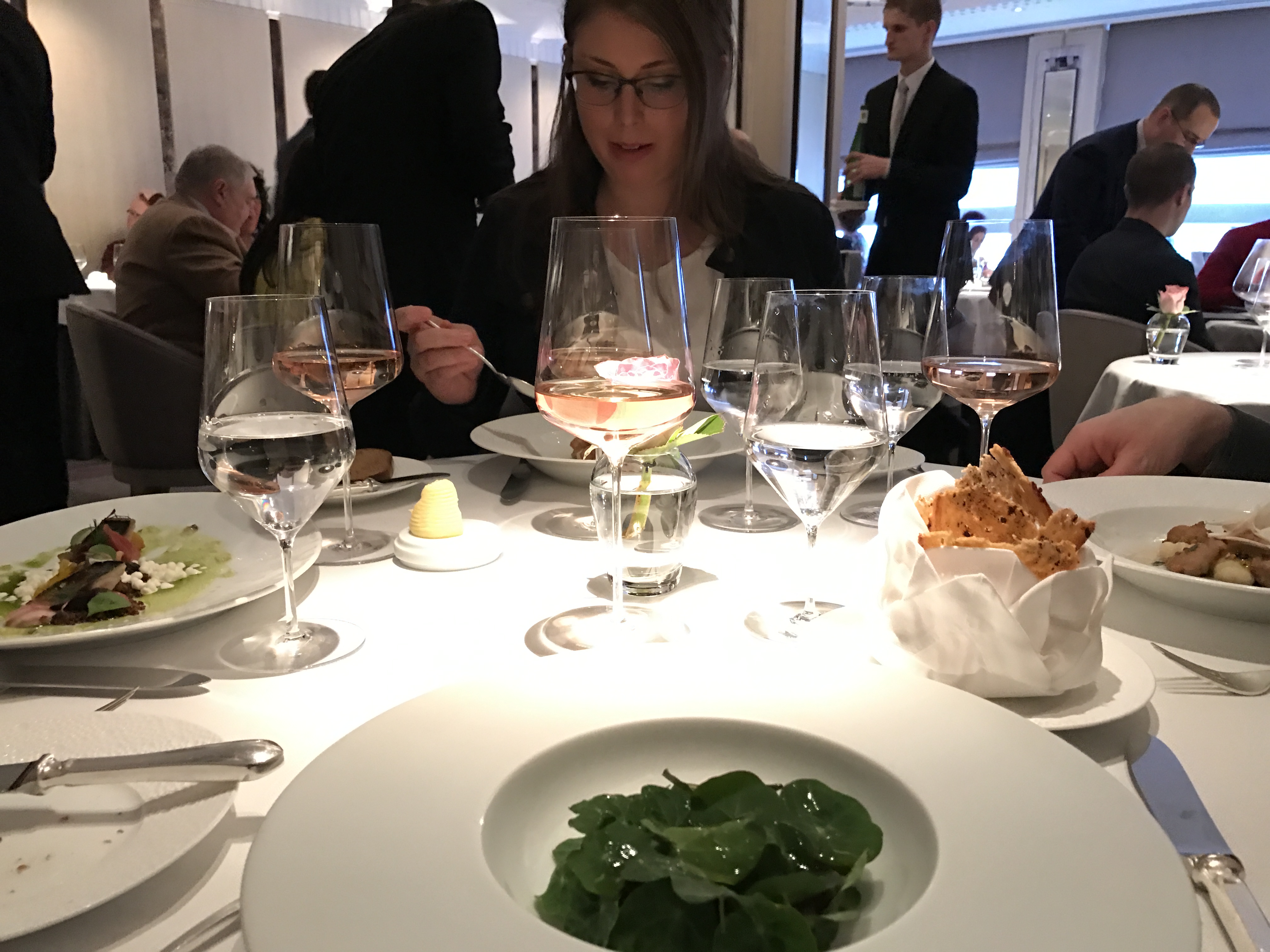
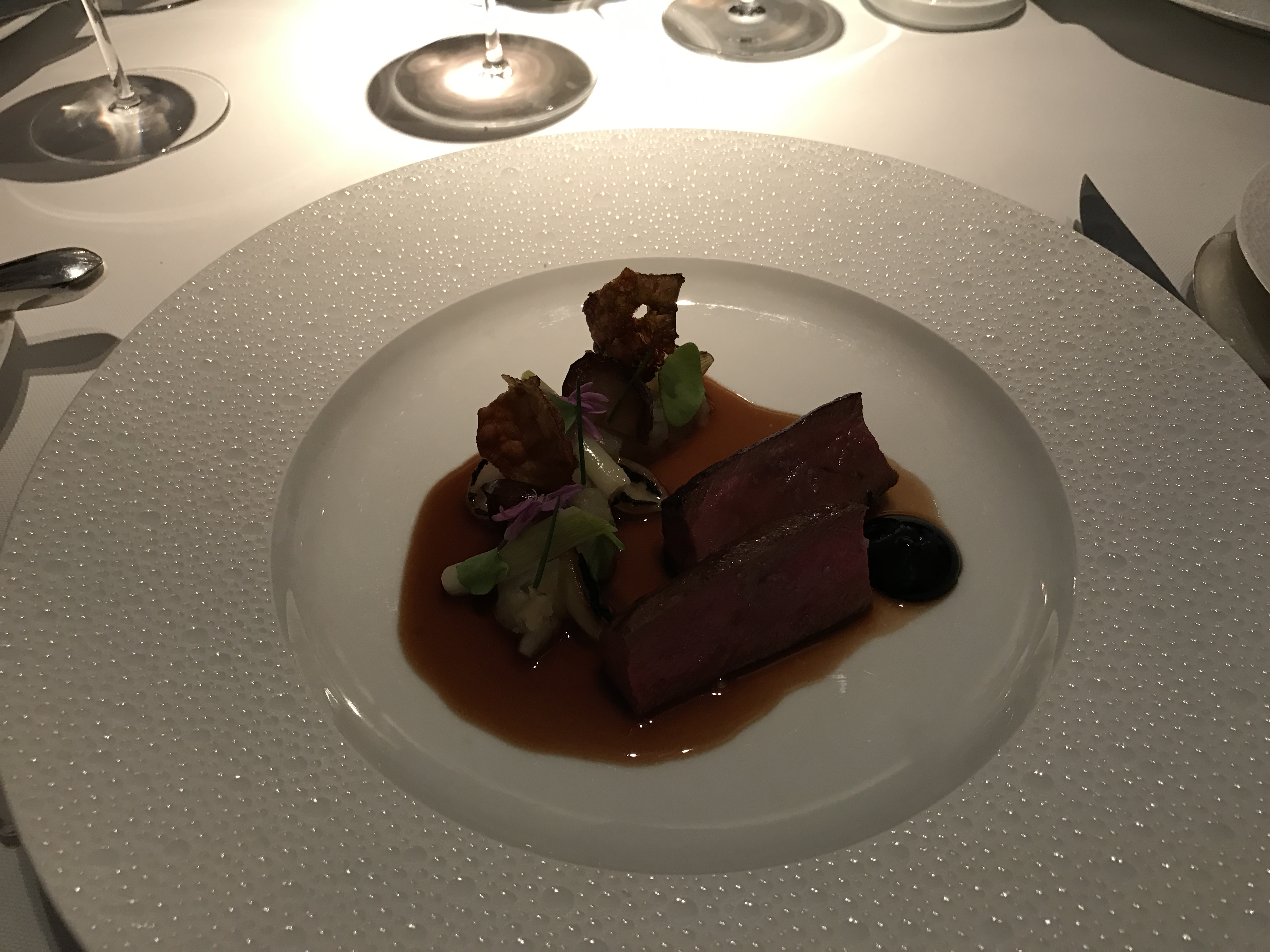
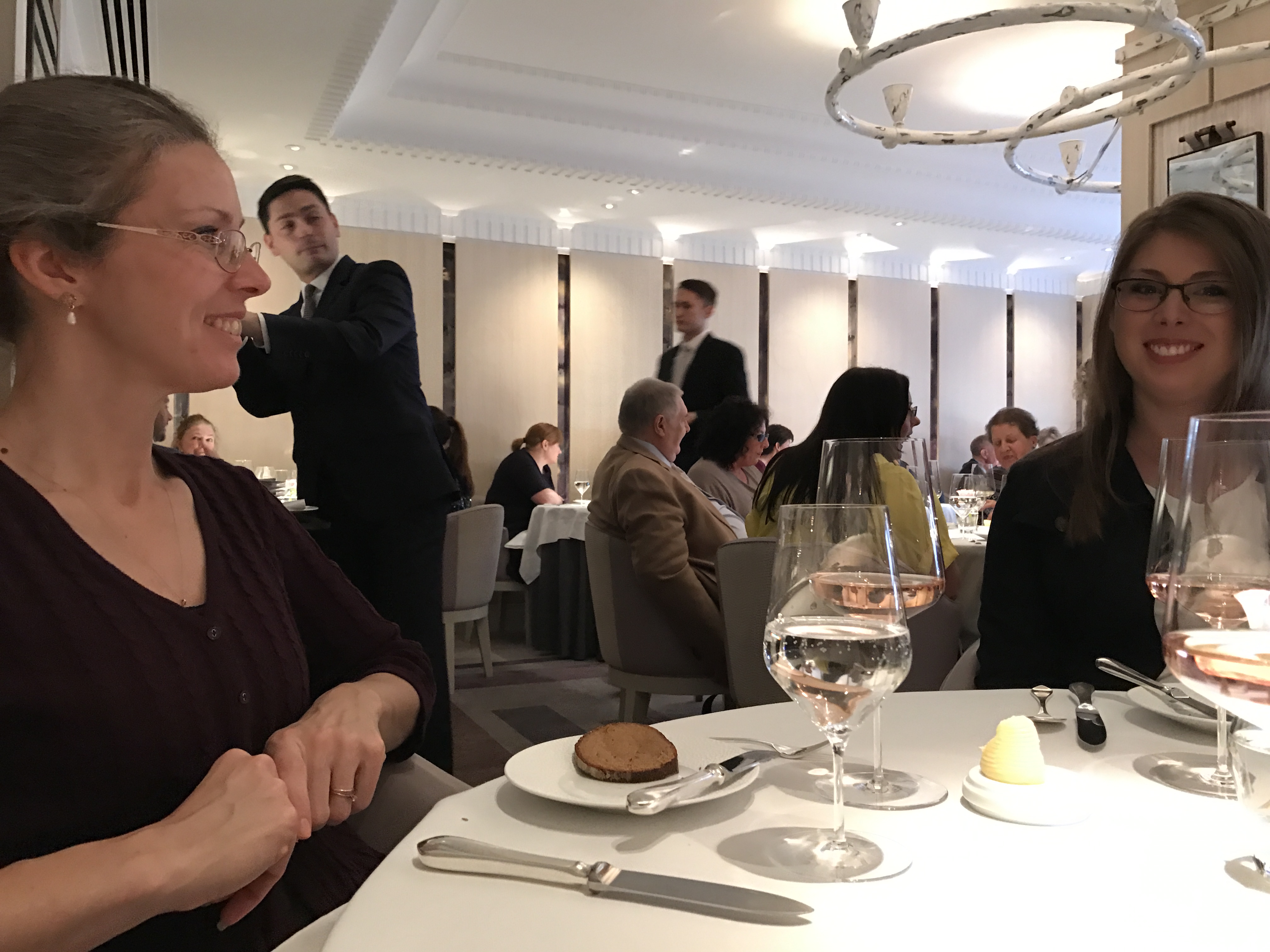
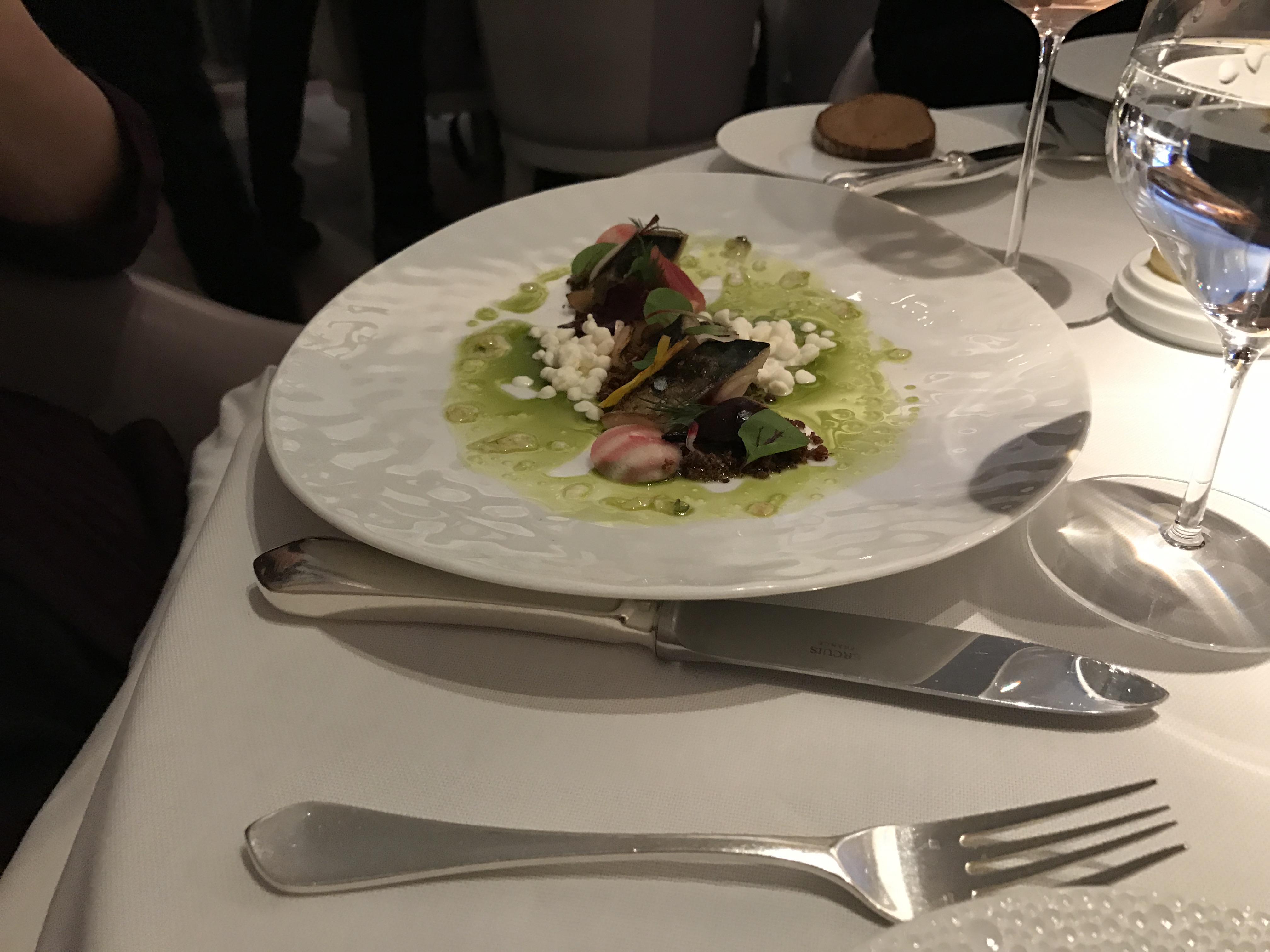
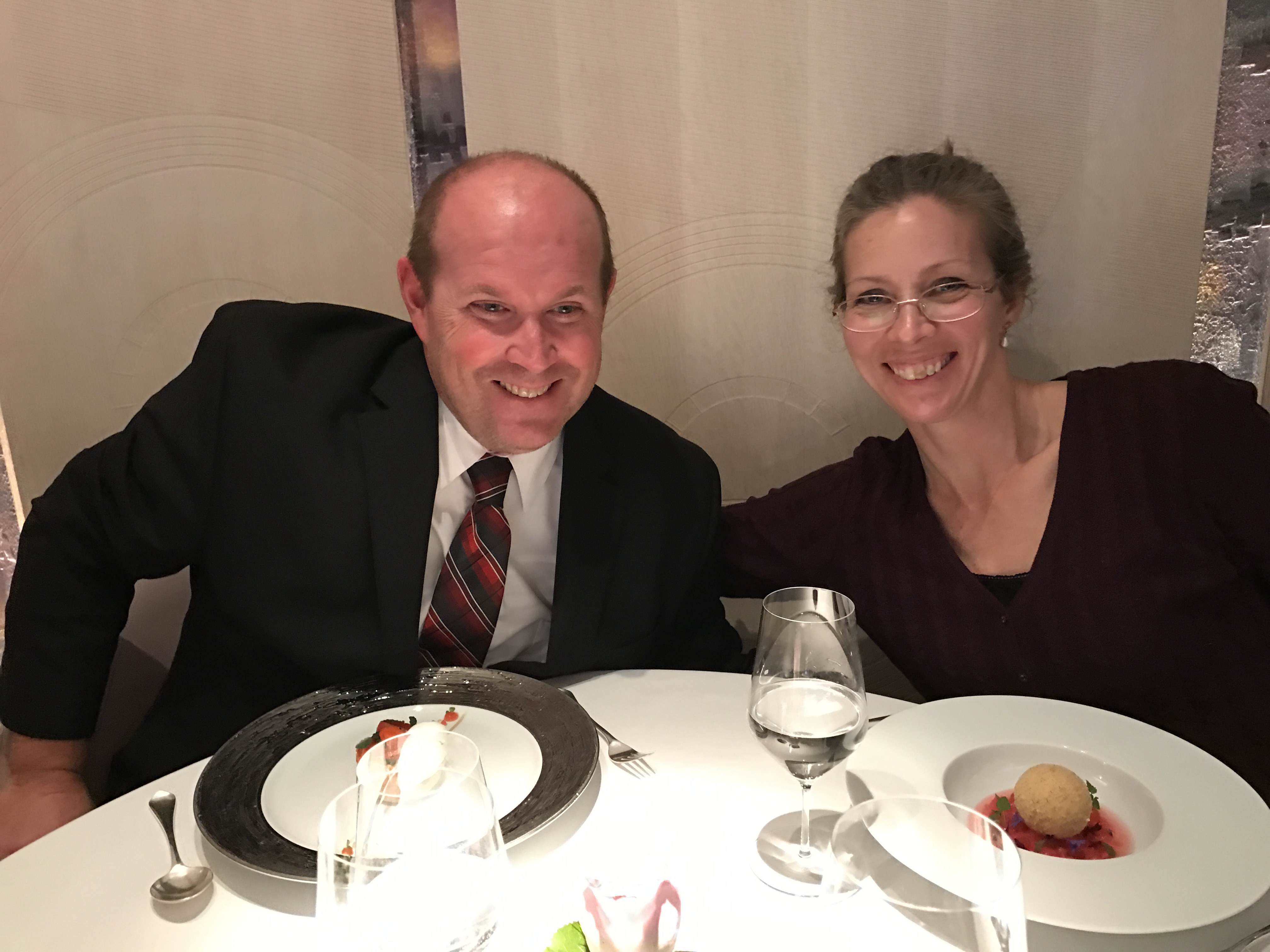
img_2418Seldom does something ever exceed the way it is envisioned in one’s mind, but when it does, the circumstances of its uniqueness, and quality, often haunt you with eternal wanting, hoping to duplicate the experiences which never does happen again. That’s what happened to my wife and I along with my oldest daughter and my son-in-law after celebrating my wife’s birthday at the Restaurant Gordon Ramsay in Chelsea, London.  It was an experience well beyond celebrity that deserves quite a discussion so please do sit down dear reader and take a bit of a literary journey, because it will be worth it.  I promise.

img_2413

It was a few weeks before Thanksgiving 2016 in the United States and my wife and I were watching several recorded Chef Ramsay shows on our DVR, which we had to catch up on due to the recent election which took a higher priority—and we were feeling good about things for the first time in a long time. So we were in a celebratory mood and started talking about her upcoming birthday—still many months off at that point—but the discussion arose and she revealed that if she could do anything in the world, she wanted to go to a Chef Ramsay restaurant.  Of course we discussed going to one of them in Las Vegas, or New York but neither of those options sounded good to her.  She wanted to go back to where his whole media empire started and taste the food from what is considered to be the best of his best restaurants—the tiny little thing he started in first which has maintained his three star Michelan-rating for almost two decades now.  After all, there are only three such restaurants in all of London making the Restaurant Gordon Ramsay one of the best restaurant’s in all of Europe—which is saying a lot considering how much emphasis food and wine are to the birthplace of western culture.  That was after all why my wife and I watch Chef Ramsay together  I like his management style—she likes his playful domestic manner and creativity in the kitchen—so his many television shows are something we enjoy as a couple.  img_2417So not surprising when I posed the question—where would you like to go on your birthday—no matter where in the world—what would it be, and she flatly stated she would like to go to the Restaurant Gordon Ramsay.  From there I found ways and reasons to make it happen and now that much is history.  We made reservations exactly 90 days in advance and booked our travel arrangements immediately.  The Restaurant Gordon Ramsay is the kind of place that penalizes you if you cancel so we understood that we were making a commitment to something half a world away that demanded we be there at a certain specific time and in a manner of dress—a “smart dress code.”   Once we made that reservation for us, there was no going back.img_2384

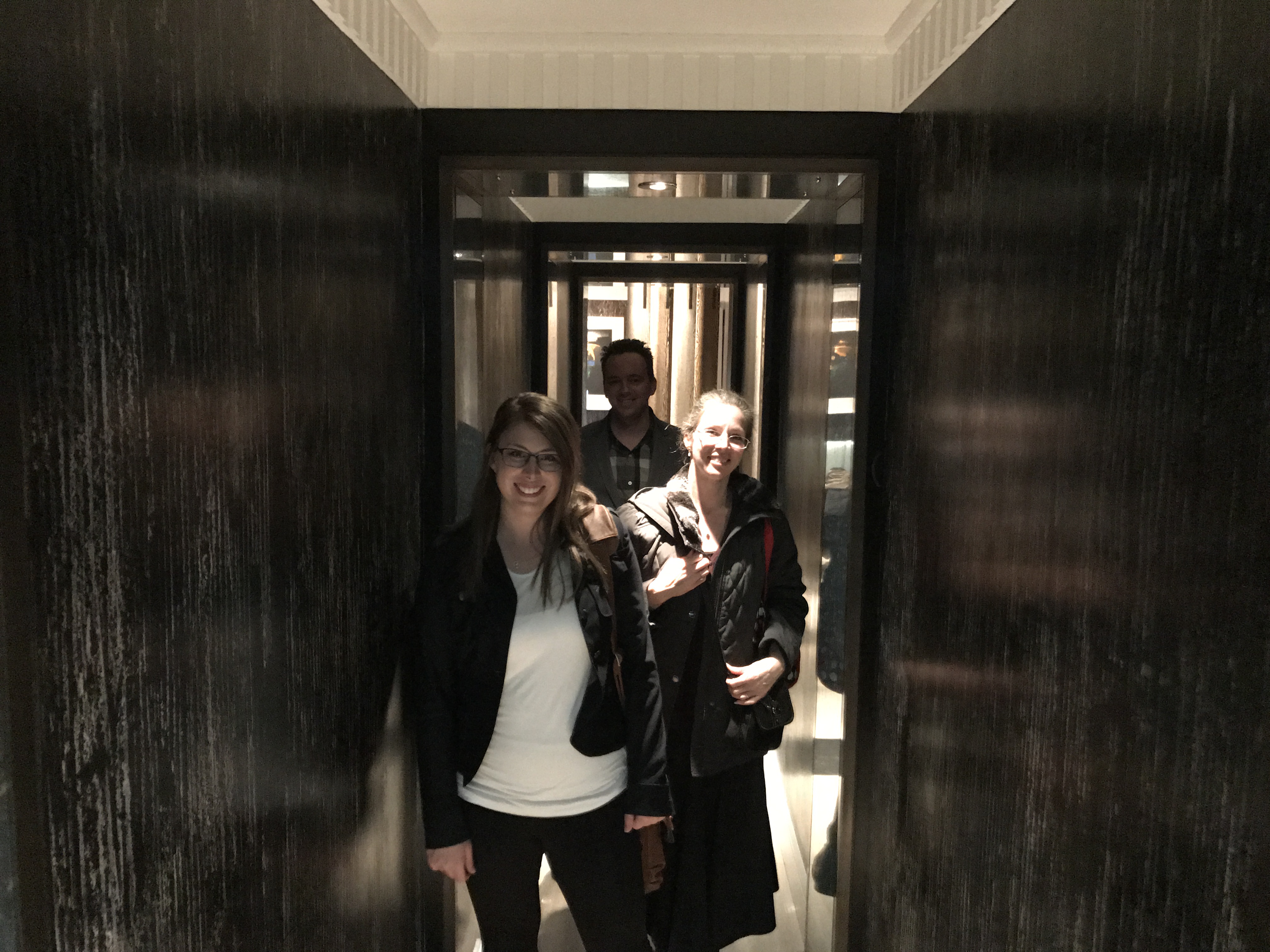
Fast forward to a bumpy plane ride across the Atlantic, a train ride from Canterbury where it is my daughter’s second home and a long walk from Charing Cross station way up in Westminster, London. We intended to walk to Chelsea and see the sites along the way dressed formally.  We knew the walk would be long so we gave ourselves an hour and a half to get to the restaurant and as it turned out, we barely made it by our 1 PM reservation.  My wife had brought walking shoes for the hike, and had to literally change into her high heeled boots once we arrived with three minutes to spare in front of the Restaurant Gordon Ramsay with three minutes to spare and sweat running down our faces from an unusually warm February afternoon.  It was from there that we were launched on a culinary journey which started down a long narrow hall that to me was quite purposeful, the entrance was very artistic in that it kept visitors from seeing the dining room until one entered the heart of the restaurant almost like the journey down a birth canal into a resurrection at the reception area.img_2387

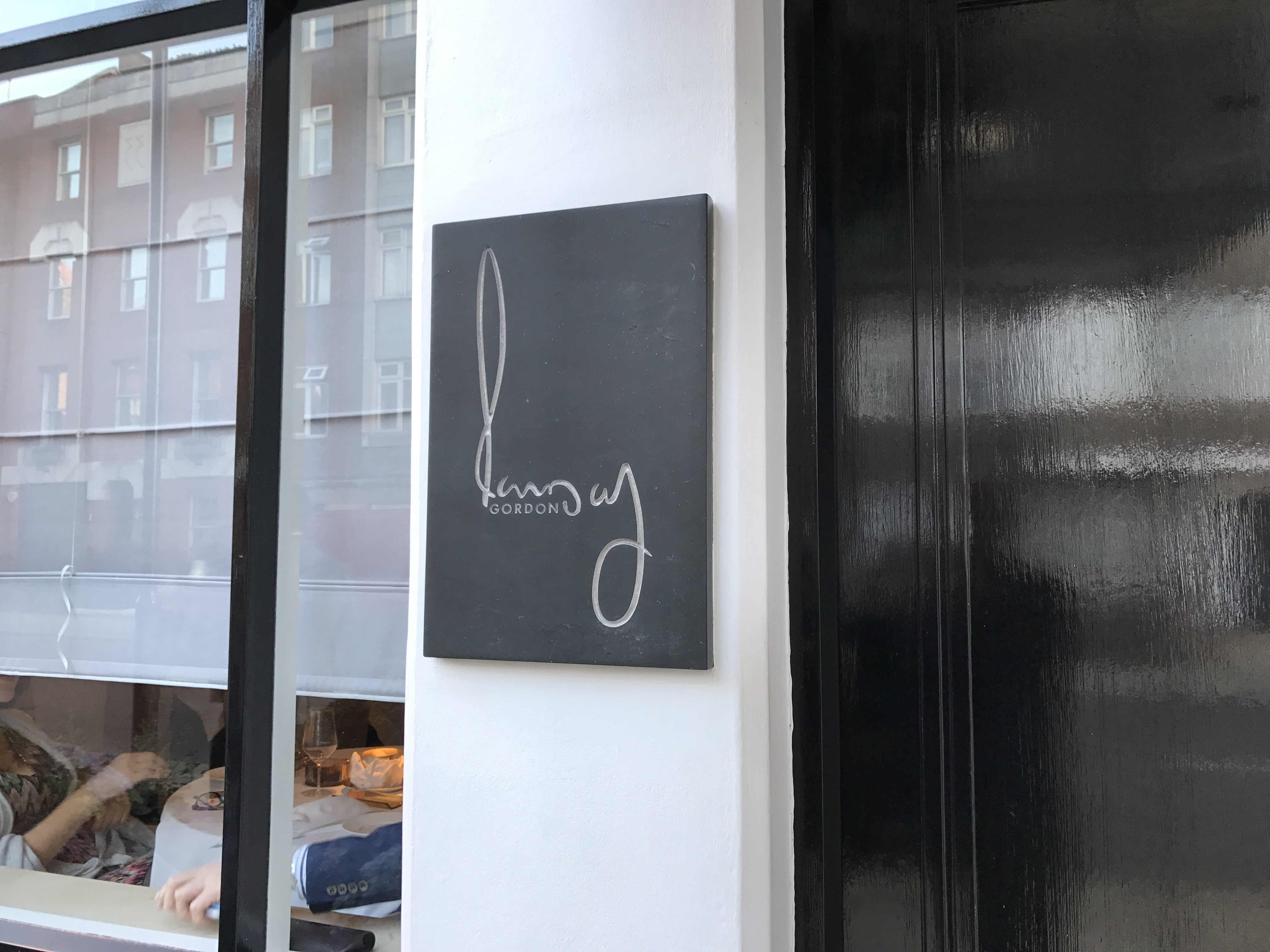
My curiosity about the place which persisted well into our meal was that for Chef Ramsay, who is a major star on the Fox television network in the United States—this restaurant in Chelsea for all its reputation is very, very small. It was all he could afford as a young 33-year-old entrepreneur trying to make it big in London for the first time after being taught in the high-pressure wringer of French society and the delicacies of being a top tier chef and among the best of the best.  You would think there would be large neon signs pointing to this little treasure—or that they’d move the location to someplace more spectacular.  Yet the little restaurant was situated along Royal Hospital Road just a few blocks up from the River Themes.  It was in a residential neighborhood hidden literally from the world with only a little autographed sign by the door to reveal what was hidden to the world inside.  Yet this little place that could barely hold 50 people was filled to the brim on a Friday afternoon and it stayed that way for our entire 3-hour culinary journey which never stopped trying to impress us even at the very end when we were given a tour of the kitchen by the maître d’hôtel which I thought was highly unusual. Yes, it was extraordinarily expensive as should be expected but it’s the kind of place that you don’t go unless you are prepared for that kind of thing, where a bill can easily run up over $1000 dollars US for a table of four. Most people dining with us at lunch looked to average about 375 GBD ($465 US) per person at a table especially those who ordered off the Prestige menu or took advantage of the A la carte menu which allowed visitors to really dive down deep into the culinary experience.  By the time you added a few bottles of wine such as the Chateau d’ Esclans ‘Garrus’ Cotes de Provence, the costs of the meal naturally escalated into the figures mentioned.  But you really don’t go to a restaurant like this thinking about the money.  You come to these places with disposable income and you don’t think about the bill otherwise you’ve defeated the experience.img_2389

With that in mind we ordered off the lunch menu which was more than sophisticated enough for us. I ordered a three-course meal which started with a Dexter beef tartare complete with nasturtiums and Manni olive oil, a Jerusalem artichoke, a Roast venison with Jerusalem artichoke, alliums, and elderberry ketchup followed finally by a Custard tart with blood orange, mint, and mascarpone sorbet.  That last bit of dessert was simply jaw dropping delicious.  It all was, but the desert really impressed me.  My family picked other items from the lunch menu and the diversity was too much for me to keep track of—and the chef was nice enough to throw in extra surprises as they called them—almost a whole new meal worth—and my wife was treated with a small chocolate dessert with a simple candle on it for her birthday that looked like it was art on a plate.  As we were asked how our meal had been I had told them that it was to die for—which the maître d’hôtel responded, “but don’t die yet—for we have more for you.”  That is when the staff would bring out little extra bits for us to try to swoon over until we realized that we had been eating for over three hours—which was the longest dinning experience I had ever had.img_2381

So how do they keep that valuable three-Michelan star rating—well, they were not short on staff. Even though the dining room was extremely small—as I said—it would be lucky to hold 50 people, they had literally enough staff to nearly fill that restaurant if you combined all the behind the line staff with the front of house.  My son-in-law went to the restroom at one point and his napkin fell on the floor.  My daughter picked it up to put it back in his chair thinking that it hadn’t violated the “5 second rule.”  But one of the dining room workers had swept in to gather it up and replace it with a clean one, and we didn’t even know anybody was watching us.  There was always someone there to pull out one of our chairs to let us up, or tuck us back in after returning to our table, to keep our tables free of used dishes or even to pluck up bread crumbs that had fallen away while eating bread samples.  One thing for sure, Chef Ramsay might have been in Hollywood most of the time now working on his television shows after getting this little restaurant in Chelsea off the ground with three intense years of hard work personally put forth by him as the foundation—but he wasn’t taking any chances with this place.img_2382

I watched the way they seated the dining room, which is why they were so strict on their reservations. To their benefit the Restaurant Chef Ramsay had built their business around guaranteed customers that would come in at specific times allowing the kitchen to work each table to maximum effect.  They knew each day how many tables they would have and how to provide their works of culinary art to the specifics of each table.  If the restaurant had been any bigger that would have been much more difficult—and this kept the kitchen from being overwhelmed by unpredictable walk-ins.  Ramsay had taken his reputation and marketed it in a way of extreme quality so that uniquely the kitchen paced the flow of work—not the spontaneity of the visiting public.  It was very smart and truly was one of the best restaurants in Europe—and it knew it. It had a swagger about it that was undeniable.img_2393

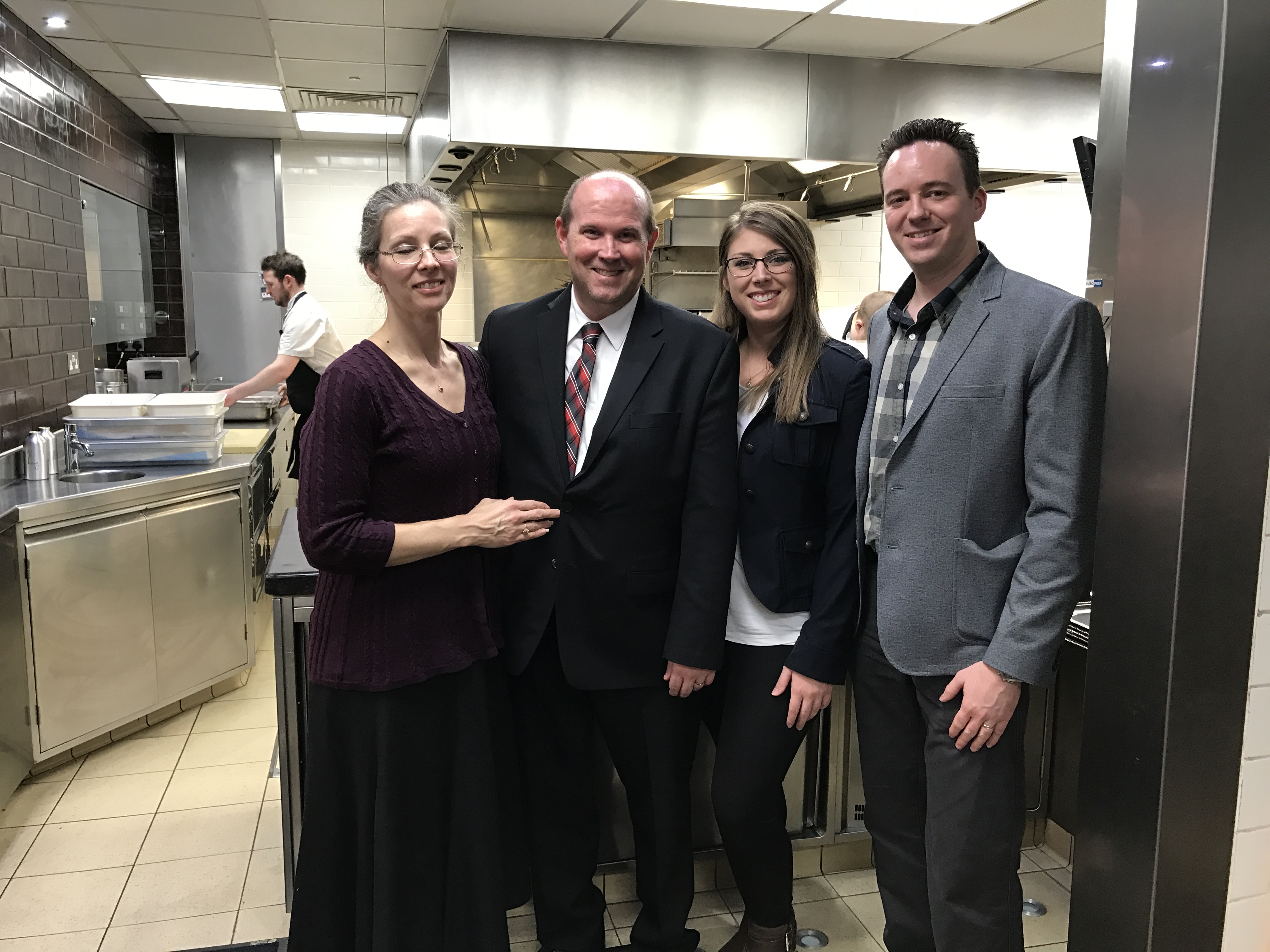
At the end the maître d’hôtel of course asked how everything was, and I replied that now we could all die happy.  He was an Italian who knew how to work the room, but over the last three hours we had come to some understandings about each other and he seemed to really enjoy our company, and our naiveté about the diversity of food they served there.  After all we had come so far to have dinner and had anticipated it for such a long time—and we were already fans of Chef Ramsay and wanted to like everything.  We had walked many miles in formal attire to get there through the streets of London on a tight deadline—so we were very open to a good experience and his staff obviously recognized that and enjoyed serving us—because of the positive feedback when they came to our table.  So he said to me, “Well, don’t die, but simply come back and do it again.”   Then he invited us into the kitchen for a look behind the scenes which for me was what I really wanted to do.  I had watched Gordon Ramsay in that very same kitchen on television trying to earn his first Michelin Star so I was very curious.  The kitchen was spotless.  The workers, very industries and attentive and it was quite impressive to see so much staff all working diligently toward a quest for perfection in the purest version of the word.  It was a perfect example of the Metaphysis of Quality which I talk about often.  Gordon Ramsay from a half a world away in Hollywood now is able to preserve his very first restaurant even from such a distance because he had established a very front of the train standard that now carries over into the culture of Restaurant Gordon Ramsay everyday by his staff who clearly understand the expectations.img_2421

So if you are ever in London and really want to eat in one of the finest restaurants on planet earth, then you must make the Restaurant Gordon Ramsay part of that quest. I’ve been to very nice restaurants in America and they weren’t like this—the people, the place, and the food were simply dedicated to the same objective as all the stained-glass windows served in Medieval Europe—to awe the public into grasping an everlasting divinity.  The food at Restaurant Gordon Ramsay was meant to awaken in the people eating it a majestic achievement and to defy the laws of mundane compliance to the basic essence of dietary sustenance. The place itself was a rebellion against normalcy and a yearning to be more than just human.  And yes, it was worth traveling over 4000 miles to visit.  It was worth all expectation and everything it took to get there—and I would do it again—and likely will have a bigger group of family members with me the next time.  It was an experience I’d want everyone to have if they could, and something that should be done at least once in a lifetime.   It was simply that good.

Rich Hoffman

 CLIFFHANGER RESEARCH & DEVELOPMENT

Sign up for Second Call Defense here:  http://www.secondcalldefense.org/?affiliate=20707  Use my name to get added benefits.

cropped-img_0202.jpg

The Trump Press Conference of February 16th: A world watching and learning what a tough American looks like

How big was the noon day press conference with President Trump announcing his new labor secretary and answering questions about Michael Flynn, the Russians, Iran, Fake News and the state of his White House? Well, I am writing this from the United Kingdom and I can report that it was carried live for the entire duration and the faces of Europe melted off in horror.  It was just wonderful.  In fact, it was another game changing press conference that altered the way presidents act toward the media in the future. It was a new standard of unprecedented aggressiveness and confidence that pushed back against a global media that had been ankle biting Trump constantly over the last couple of weeks fully expecting the president to do nothing but take it. The media, as a whole had been caught poking the dog too many times and now it had finally turned around and bit them in ways they never expected.

The honestly was refreshing. Obama administration left overs from the intelligence community had been spying on Donald Trump and his people then leaked news about Michael Flynn to the press in a highly illegal endeavor in order to utterly destroy the new administration.  The action was vicious, so they had what has been coming.  Trump had every right to do what he did and hold such an unusual press conference.  He had every right to stick it to the media.  Who did they think they were to lash out at him and not get it back?  That’s not what we elected Trump for.  Trump was elected to prevent a civil war, not to create one.  Trump is our offering to prevent armed conflict—or did the media already forget that?  The old way was never acceptable.

And in the wake of the press conference the media was aghast. In England it was all the talk of the day, it was on the front cover of every newspaper and served as wall to wall coverage on every channel.  In Europe, they had simply never seen anything like what the American Donald Trump had done to its media.  When Trump lacerated the BBC you would have thought that all of England was insulted—at least those progressive holdovers who didn’t understand that France was about to be overtaken by a conservative party—just as what was happening in the UK.  They were oblivious as to the lack of protocol Trump exhibited and it obviously scared the world who had learned to take it for granted that American presidents were paper tigers—and never followed up with anything.   When Trump indicated that he wasn’t going to tell the media what he was going to do to Iran, and North Korea for their recent hostile actions—the press seemed shocked that Trump had actually been thinking about it—and wasn’t waiting for some advisor to tell him what to do.  The thought that Trump wasn’t clamped to some advisors of the old world was more terrifying to them than what was actually said.

I was on a train to London watching the people reading the papers on the Friday after the press conference. It was my wife’s birthday and I had something really special planned for her and we were on our way.  The conversation on the train was curious disdain.  Many of the people riding were obviously people who supported staying with the European Union.  Some who sat quietly reading the newspapers with Trump’s image blasted on the covers digested the information quietly, perhaps they were supporters of Brexit.  But to the un-American minds of the world, they simply were shocked by Trump’s audacity which brought a smile to my face.  The impact wasn’t just in America, it was clearly a press conference that changed the world.  Normally presidents of the United States don’t command live coverage on foreign networks, but Trump had and the results had shocked everyone.

Everywhere I have gone in Europe Trump’s name has come up. People would ask me what I thought of the Yank and when they learned that I was a supporter they would shortly respond—“well, you can keep him then,” then change the subject to something more friendly.  But Trump was on their minds and he was making news in ways that most people just weren’t used to.  This was exactly why I voted for him—because honestly, I wanted to save people from the potential of armed conflict by putting someone like us in the White House who would never back down, would never yield to the media or the political machine and had a mind to utterly destroy the established order if it stood in his way.  In England the people have never had such personalities in their life, and if they ever did, they killed them during the many rebellions that had previously been crushed by the kings and the churches.  The English people who had survived were nice compliant people who didn’t like to disturb established orders.  They just simply overlooked the power-hungry and put up with them as a nuisance, so what was happening in America was simply unfathomable to them.  As a country, they have chosen a more passive aggressive course through life—so they aren’t used to people saying what they mean then acting on it.

Yet it made me proud to see President Trump fighting back the way I hoped he would all those months that I picked him to win and supported his candidacy, even when it was unpopular. Nothing against Ted Cruz and some of the other Republicans running—but it should be clear to them by now that they didn’t stand a chance in hell at standing up to these forces.  Only someone like Trump can do it—when you have your own spy agency eavesdropping on you working hand in hand with the mainstream media while hostile countries around the world tested the new president with pressure that would destroy any normal man—I always knew the game that had to be played to win, and Trump was my pick from the outset—and it’s nice to see everything coming together in my mind.   It was even better to see the reaction on foreign soil to really get a sense of the changes happening across the world as a result of Donald Trump.  Trump is pushing all these negative forces to their own collapse and that is better than any armed conflict.  What Trump is doing is the most humane way to preserve that beacon that the world looks to in America.  Even though they secretly resent America because they aren’t in the United States, most people around the world are better off because of America.  Even as foreigners in Europe snarl at American life as too fast paced and loose—they enjoy Kentucky Fried Chicken which is everywhere and the golden arches of McDonald’s.  Without American capitalism, most of the people in Europe wouldn’t have much to do but wait for some king to give them some land or a court appointment to raise their station in life.   Even on the trip to London, the people critical of Trump secretly rooted for him because he was the great underdog they dared not to be themselves, but hoped would stick his thumb in the eye of the world that suppressed them—yet they dared not admit such a thing publicly.   For their ancestors swung by the gallows for such thoughts—or were burned at the stake.  Not in America.  And especially not this American president.  Trump was something special, and I am so glad we have him—and it won’t take the world long to join me in that sentiment.

Rich Hoffman

 CLIFFHANGER RESEARCH & DEVELOPMENT

Sign up for Second Call Defense here:  http://www.secondcalldefense.org/?affiliate=20707  Use my name to get added benefits.

cropped-img_0202.jpg

The Canterbury Cathedral: A step on the way to eternity

canterbury-4It was something I’ve wanted to see for many years because of its place at the center of western civilization. Standing for over a millennium to shape the ideology of the civilized world—to be one of the only lasting vestiges of the Roman Empire for which it was born and gave birth to the nation of England in the form we know it today—the Cathedral of Canterbury is an awesome thing to behold.  It sits atop the highest point of that little pilgrimaging town protected by law not to have any rivals holding the progress of mankind to its history it still sits perched above all else in a way that just isn’t seen in America anywhere.  In New York skyscrapers would have long overtaken such a structure, but not in Canterbury where its Cathedral is still the star of the show and will remain that way for the rest of the foreseeable future.  In many ways the Canterbury Cathedral is the very definition of America’s desire to have a separation of “Church and State” as defined by our Constitution which essentially changed the world and launched the most productive country on earth because the pent-up abilities of the human race had been stuck for over two thousand years under the weight of places like the Canterbury Cathedral and the kings who held the throne in London—which evolved directly out of the Roman Empire in Italy.canterbury6

The figure I’ve long admired was Thomas Beckett the Archbishop of Canterbury. If you’ve ever wondered why there is a piece called “bishop” in the game of chess—you’d have to understand the role they played in monarchal politics as for many centuries they were directly challenged by power-hungry kings for the right to rule the minds of mankind.  And kings often used them to acquire power and to keep them busy so not to allow the church to impose itself on the aggressions of the monarchy.  So bishops—especially archbishops, had their role in European politics that were quite spectacular from the perspective of a scholar, but a pain to the public stuck between the church and the state.  In fact, it was in Canterbury that the pilgrims which left for America and started the Holiday Thanksgiving launched—because they had enough of being stuck between the church of Canterbury and the politics of London.canterbury7

Henry the II had pushed Thomas Beckett beyond his limits and provoked four knights to seek out the big man at the Cathedral to murder him in cold blood to appease the king. The reason was that Beckett refused to allow the king to believe he was superior to the papacy.  King Henry II really didn’t mean to, because Beckett had been his friend for a long time, but his quest for power overtook him to the point of murder.  Beckett was killed right in the Cathedral which made it an interesting place to visit, I wanted to stand in the spot where the knights had spilled out his entrails and stained the floor with blood.  I felt fortunate to go through the door where the knights had come through to kill Beckett and to stand and face a murder I had read about for years.  To me it was like visiting the site of the murders of Helter Skelter—an event of such evil and propensity that to attempt to understand it, you have to see and touch the surroundings.   After all, Beckett knew they were coming to kill him and he refused to lock the door to prevent it. And for the knights to approach the Cathedral knowing what they intended to do—I had to see it for myself.canterbury8

Once Beckett had been buried at the Cathedral down in the crypt which I was also able to see, pilgrims began to flock to Canterbury to visit the tomb of the slain and beloved Archbishop. It was this action that provoked the entire novel, (poem) The Canterbury Tales by Geoffrey Chaucer which chronicled the many pilgrimages to Beckett’s tomb from all levels of society—and is one of my favorite works in literature.  It was Chaucer in fact that launched the age of great literature which then launched the western world.  For me it was interesting to walk the streets that Charles Dickens, Chaucer and many others had walked before to see the roots of their musings.  But there was nothing like the Cathedral to lay eyes on because of the ruckus it caused in the minds of mankind in so many ways—and to see it, and touch it was something that was for me necessary.canterbury9

As my wife and I went to visit the site it was obvious the church had long lost its power and what we were seeing was simply a ghost from the past. Canterbury is stuck in the shadow of its own history as immigration has fundamentally changed the nature of the old town into something less English and more European.  The days of great literature were gone as the minds of the inhabitants either settled into those shadows or left for their own glory leaving behind directionless ambition to study the old monuments with open notebooks only to learn nothing applicable to the modern world.  The caretakers of the Cathedral were quick to emphasize that the place was a nondenominational church now.  In 1536 the Reformation was well underway and the government turned against the papacy once and for all.  After a hundred years of that the pilgrims tired of the struggle between church and state left for North America to live as freely as they could.  From the time of Beckett’s slaughter on December 29th 1170 to the writing of Chaucer’s Canterbury Tales in 1389 AD to the destruction and looting of Beckett’s tomb in 1538 a very careful and pointed ache of understanding had attached itself to the human race.  The kings of England had lost their godly justification to rule and turned more toward war to keep their people busy colonizing the world with empire pride to unify their kingdom.  These forces of course would collide once and for all in America—the pilgrims who had left centuries earlier with the immigrants fleeing the king’s influence now that the Reformation had destroyed the church which built their country and people became free for the first time in all of human civilization.  It was something to walk about the Cathedral and see the tomb of Henry the IV, the Black Prince, and the spot in the crypts where Beckett had rested—along with many hundreds of others buried in that historic place haunting the modern world with a foot back in time to when human beings were still trying to invent themselves in the wake of the Romans, the Greeks, and the Minoans (Atlanteans)—The Sumerians, and whatever came before them which is likely long gone now to the eyes of history. The Canterbury Cathedral served as a testament to mankind’s history and eventual evolution so it was a place to visit that was necessary.canterbury11

Whereas the church has lost its power in Europe the effort has not led to a gain of intelligence. It can’t be helped but to notice that people are not better off without the church and its influence, but worse.  Their freedom from religion and the state has not given them boundless philosophic presence, but left them standing naked and exposed to the cosmos—and an anxiety has emerged that cannot be covered up with drunkenness or upward social mobility.  At the Cathedral, monks spent their time reading and contemplating—thinking which was the real magic of the place.  If you take away religion, the scholarship offered by the church made people better because it at least encouraged people to be smarter.  These days the shaping of minds has moved from religion to our modern media—but the imprisonment of reason is the same.  To understand it, it helps to walk an ancient cathedral and visit the tombs of the most powerful people of their day and see how small their highest aims at life really where.  And to notice how the cathedral architecture aimed to be bigger than anything human beings should build for worldly affairs—to reach up and touch the majestic of something greater.  But they missed the point, and not all to their fault.  After all they were the first to get there and we today have the benefit of hindsight.  It is in that context that I found the Cathedral not a tomb of the dead, or place of the murdered, or even the destination of many pilgrimages over the centuries—but a step on the way to a heaven that isn’t so much “out there,” but much more personal.  It is certainly a place worth seeing, especially to those who love books and scholarship and the zeal to be greater than our terrestrial surroundings.canterbury5

Rich Hoffman

 CLIFFHANGER RESEARCH & DEVELOPMENT

Sign up for Second Call Defense here:  http://www.secondcalldefense.org/?affiliate=20707  Use my name to get added benefits.
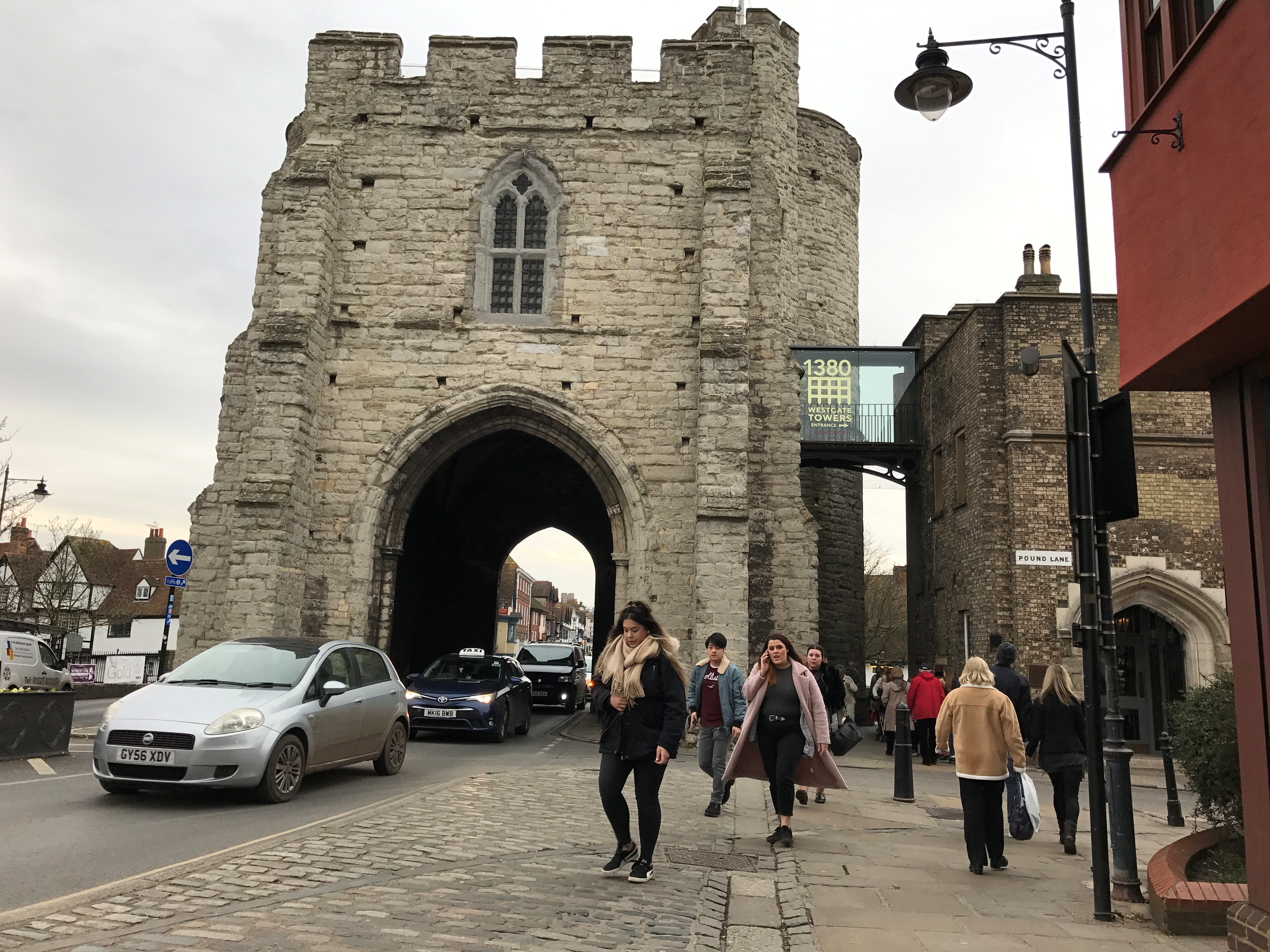
cropped-img_0202.jpg