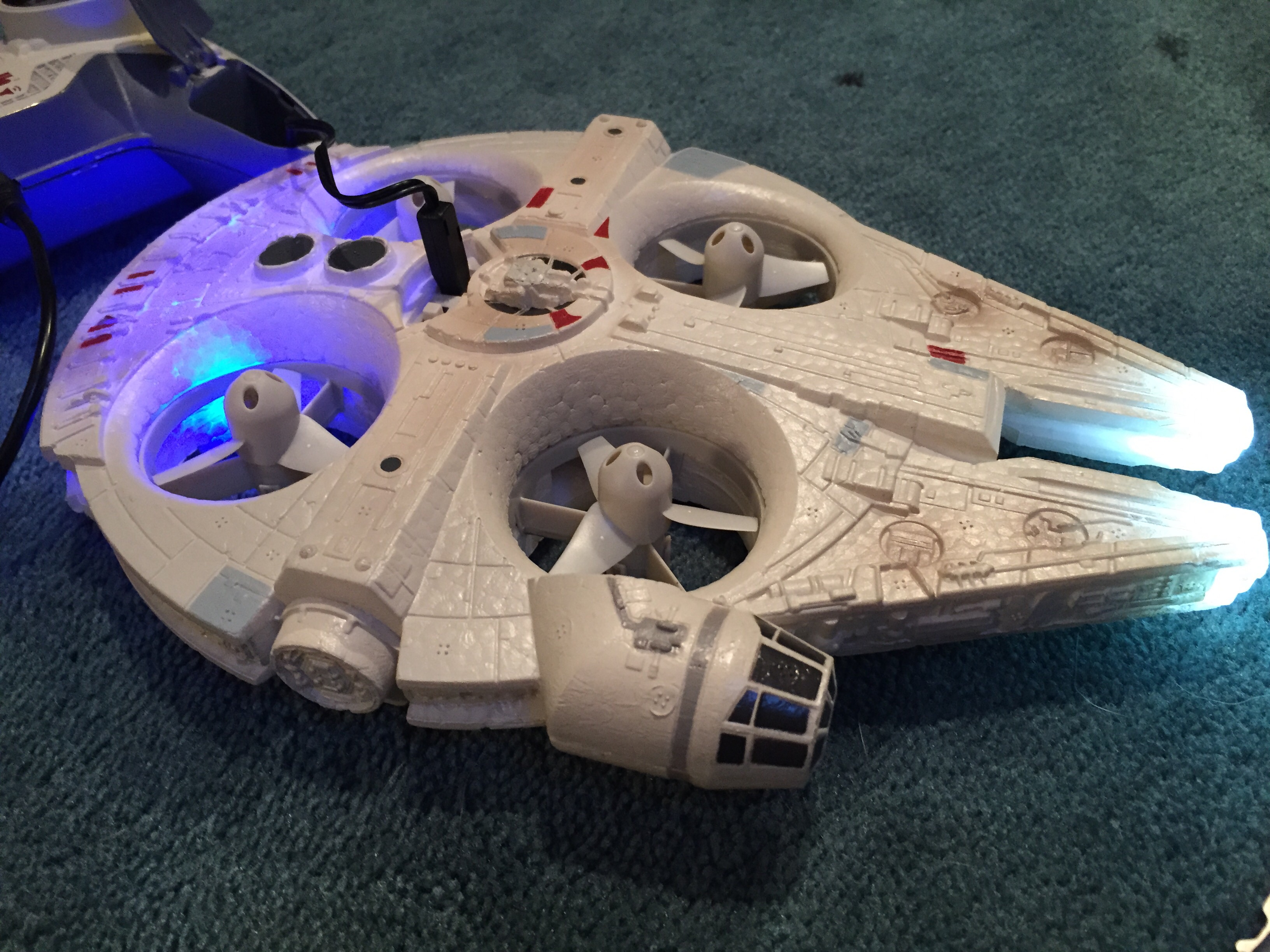
Corporation of Disney Versus Sole Proprietorship of George Lucas: Why the new Star Wars is so terrible

With all the accolades given to the new Star Wars film The Force Awakens I take a bit of pride in being one of the very few to point out the obvious problems with it, and the gross neglect it represents on not only American culture, but international civilization.  Star Wars has a responsibility provided to it by its half century long quest to play that part with the human race, so when it takes that role for granted, it is the job of people like me to point it out.  Anybody can do such a thing after others have already jumped on the bandwagon.  Presently, The Force Awakens is the fastest movie to hit $1 billion in global sales and it’s still moving along at a respectable rate.  By every box-office measure, The Force Awakens is a glorious success.  Yet I’m saying that it’s not successful, which to some may appear baffling.  Here’s why, Star Wars surrendered what it was to become something that it isn’t and that deduction can be reduced to a very simple social understanding of how things work outside of a mother’s womb.  To get the gist of what’s wrong with The Force Awakens watch the very interesting reviews shown below. Watch them all, they tell the whole story.  I’ll go a step further in my explanation, but it’s a good place to begin.

One of the most difficult things a job creator can do is make decisions to eliminate the jobs of the people who count on you.  It is excessively hard—I think it’s one of the hardest things a human mind does in a capitalist society—because a means to a living is the sustenance used to survive from day-to-day.  George Lucas wanted to retire at 70 years old but he had all these employees that he felt responsible for, so he went looking for a way to keep them all busy so that he could retire in good conscience feeling he did what was right by them.  He sold his company to Disney hoping that it was the closest company to his own methods that would respect his former property and do well for an entirely new generation.   I was a supporter of it, until I saw the results. It would have done more people more good to just leave Star Wars alone and laid-off all the Lucasfilm employees.  Laying off 2000 Lucasfilm employees would have been painful, but the results have been worse.  Because in destroying Star Wars, it has taken away the good meaning it has possessed to literally hundreds of millions of people who now consider it something of a religion.

When the sale of Lucasfilm to Disney took place, many proclaimed that it was a sale to the dark side, but they said so without really understanding why.  Corporations have a tendency to be viewed as evil, while individuals are given great latitude for forgiveness.  This is the heart of the problem.  As a fan of unlimited capitalism, I should be very supportive of corporations—which I am in that they provide jobs and great products to a free marketplace.  But, they are often very socialist in their nature and their employees bring that mentality with them to the voting booth. For instance, a worker at P&G or GE works in an environment that does not promote personal growth and individuality—they work in very team oriented environments where the greater good of the company is often the focus.  This is a standard in most corporations—so when Barack Obama or Hillary Clinton expresses the values of socialism most voters are already receptive to it because they live that life within the corporate world.  Corporations are collective based organizations that are often top-heavy and loaded with too much management at the back of the train defined by the Metaphysics of Quality.  Not enough people at the front providing leadership, and too many in the back which slows down the train from true productivity.  To hide this problem, corporations hire lobbyists to work K-Street in Washington on their behalf to prevent competition, so that the corporation can stay alive longer at the expense of more capitalist invention.

I’m not a fan of corporations, but I am a fan of the people who lead them, individuals like George Lucas, Steve Jobs, Bill Gates, and the original Walt Disney—among many others.  To me, once those strong leaders leave their corporations, everyone who follows are second handers.  This is why I am a fan of people like Carl Icahn who is the original corporate raider—who defined the term, “hostile takeover” by purchasing the stock of failing corporations and inserting new management with real leadership to make a sizable profit.  The introduction of competition to the corporate world makes everyone better and more honest and is needed in a capitalist society.  Without that behavior, you only get degrees of socialism which is terrible because it forces people to behave as collective entities proving detrimental to individual integrity.

Star Wars was always about the power of the individual, Luke Skywalker being the only hope for the Force to overthrow the emperor, Han Solo to always be functioning just outside the organized systems of the rebellion long enough to save everyone, and Obi-Wan residing in a desert all alone as the last of his kind to preserve goodness for a new generation.  Even the robot Artoo Detoo functions as a rogue individualist often breaking protocol to do what he thinks is right as C3PO representing the corporate world of doing as programmed berates him for comic relief.  In The Empire Strikes Back when Luke senses that Han and Leia are being tortured on Cloud City Yoda tells the young Jedi that he must stay and not be lured into a trap if he honors what they fight for.  The designation is clear, the relief of collective pain is not more important than the value of an individual who alone has the power to save the galaxy.  That is powerful stuff and why I along with millions of others have been a fan of Star Wars for over three decades.

The Force Awakens is a corporate movie made by the second handers of George Lucas and Walt Disney.  They are corporate minds who think in terms of sacrifice and the greater good before individual integrity, just as any corporation resents the individualist–those who do what they want in the corner cubical, and does not socialize during lunch with others and doesn’t follow orders from their superiors.  Rey the strong female who is obviously Jaina Solo from the Expanded Universe miraculously knows how to do everything which is a problem that many people have with the film upon viewing.  Many are willing to suspend their disbelief because the female hero is such a strong and compelling character that viewers are willing to overlook the problem initially.  The dilemma is that the characters in The Force Awakens are just along for the ride.  The Force is the hero of this movie and all the characters are subservient to it.  Rey is the victim of the sword that finds her, not because she finds it—her role is a passive participation in the adventure which is a direct violation of the “Hero’s Journey” that all Star Wars movies embody to some degree.  The Force uses her to get through impossible situations like flying the Falcon and fighting Kylo Ren at the end of the film.  She doesn’t survive them because she is an active participant.   She’s just “going with the flow,” and yielding to a mysterious Force that is guiding her actions.  Those are aspects of Star Wars that have always been weak, easily overshadowed by the efforts of Han Solo.

In the original films The Force was something to be listened to, but according to Obi-Wan, it also obeyed your commands—as an individual.  In The Force Awakens The Force is doing all the heavy lifting which is a corporate view of what Obi-Wan said in the film A New Hope, “there is no such thing as luck.”  This indicates that all the heroics of Han Solo in the past movies were not because of his skill as an individual pilot, or a decision that was made at a key time, but was due to The Force working through him.  This cheapens Star Wars considerably into a religion instead of a myth building tool to encourage people to follow their personal bliss.  It is the difference between a company run by a strong individual, and a corporation ran by a board of directors and a CEO as their representative.  One is an individual enterprise; the other is a collective based entity.

In time, once the fun of a new Star Wars movie fades, the impact that the films had will fade considerably as they will lose their meaning due to this corporate interpretation of The Force as opposed to the one that George Lucas nurtured.  The corporation puts up memos on a bulletin board and expects everyone to be appeased and to serve the needs of the collective entity—no matter who it is.  A company ran by a strong individual personally speaks to everyone and gives them guidance in developing their own individuality for the good of the company. It is a slight distinction that makes all the difference in the world regarding the end result.  Clearly George Lucas understands that distinction, and Disney as an organization collectively based, does not.  That is why The Force Awakens is a failure even though on paper immediately it appears successful.  Its mythology has been tampered with and is now changed forever—for the worse.  The message is one now of collectivism as opposed to individuality and that makes it very dangerous—and vile.

Now you should understand dear reader why you felt that The Force Awakens was a bad movie, but didn’t quite know how or why. It looked like Star Wars, sounded like Star Wars, had the same characters as the original Star Wars—but it wasn’t Star Wars.  It turned the overall message away from the rebellion of freedom fighters fighting for an individualized galactic republic and put the emphasis on collectivism and the reach and authority of corporations and the eventual tenacity to grind away everything that stands in their way.  And there isn’t much anybody can do about it but wait for some unseen Force to tell us what to do.  To those broken by corporate socialism into waiting for permission to use the rest room or get their vacations approved by a superior, they love Rey in the film because it’s all they can hope for in their lives after being beaten by collectivism for many years into no other option but to hope that they’ll win the lottery or gain an inheritance to earn their freedom from the grind.  But for hard-core Star Wars fans, Han Solo was the self-determined individual who functioned heroically not due to special powers or hooky religions—but by his own actions.  And in The Force Awakens, they killed off that character—for the “greater good.”  The message couldn’t have been clearer from the corporation known as Disney.

Rich “Cliffhanger” Hoffman

 CLIFFHANGER RESEARCH & DEVELOPMENT

Sign up for Second Call Defense here:  http://www.secondcalldefense.org/?affiliate=20707  Use my name to get added benefits.
 

Why Disney Destroyed Han Solo: Progressive activism and attacking “white, American, family men”

I knew there was trouble on June 3rd 2015 when Marvel comics announced that Han Solo had an ex-wife in its comic #6 issue.  I didn’t want to believe it, but after later seeing The Force Awakens, I am 100% sure that what I was watching Disney do was on the scale of the old medieval churches in Europe re-writing history with their printing of Bibles to control the mass population through religion.  Star Wars was becoming something of a religion around the world, and now that the Disney Corporation had paid 4 billion dollars for it they were taking great liberties with very important characters in an attempt to change their original meaning to the overall story.   They didn’t have to, because the property had already been developed by George Lucas over three decades into a positive household name with no signs of abating.  Even more alarming was that Han’s revisionist wife was a black woman named Sana Solo proving that Disney was more interested in establishing progressive values in their ownership of Star Wars instead of just continuing the story that so many loved.   Disney was deliberately smearing the market impression that Han Solo had on the Star Wars stories and they were doing it not to be more successful, but because they wanted to change the meaning and mythic impact of the overall story arc.  That is why if you were listening to WAAM today at 1 PM in the afternoon, you would have heard Matt Clark and I dismantling Disney’s ownership of the Star Wars franchise.  If you missed it, you can hear it again here and above this paragraph in two parts:

http://dorksideoftheforce.com/2015/06/03/meet-sana-solo-han-solos-wife-star-wars-6/

I am quite a believer that the Bible has been revised to such an extent by political forces over the years that it has lost much of its original meaning—so I don’t trust it.  One fine example is the missing Book of Enoch which would have been an important part of Genesis.  It is not considered by Jews and many other Christian groups to be part of the Biblical “canon” and knowing that one can only wonder what else has been left out, or added to the stories that have made three of the world’s religions, Jews, Christians and Muslims.  Like it or not, Star Wars has become something of a religion.  Another few hundred years and it will likely have more influence over mass populations than Christianity does today—and that all starts with these seemingly simple stories being shown in our lifetime.  So it concerned me greatly when Han Solo was introduced in Marvel #6 with a black wife—which I didn’t believe at the time.  My wife and I talked about it a bit, I was then involved in a large motorcycle accident which soaked up a lot of time and attention.  I was also involved in a massive international project that was taking a lot of time.  But my concern was so great that I stopped buying Star Wars merchandise at that moment.  I had been reading the books and comics to alleviate the daily pressure associated with my life.  But upon the release of Star Wars #6 under Marvel Comics, I stopped, immediately.

When Marvel took over the comics which were supposedly Pablo Hidalgo approved from the Star Wars story group six months earlier from Dark Horse I was curious that they didn’t show a desire to connect the story material between the two publishing conglomerates.  I didn’t let that bother me too much because comics I don’t consider to be as important as novels—especially the New York Times bestselling books that had taken over the Star Wars canon for two decades in a really positive way.  But under Disney’s ownership of Marvel they had introduced a black woman to be Han Solo’s wife in an effect to emphasize negative character traits of one of the most popular characters in Star Wars Solo was a white guy superman type of character, so I wondered if Disney’s direction was a political one.  Later when I saw The Force Awakens, it clarified it emphatically.   Disney had revised the Star Wars canon personally created by George Lucas to make the stories more progressive politically.  They were essentially destroying a major character for the sake of editing the impact the character had on established mythology.  This was equivalent to the way that progressives have attacked Thomas Jefferson as a real historic figure with the Sally Hemings allegations, or to attack Jesus and his relationship with Mary Magdalene, the prostitute in the Bible who traveled with Jesus and was there at his execution.  We have witnessed revised history taking place in our public schools and colleges for the purpose of erasing history and now it was happening in Star Wars—an entertainment property that was just supposed to be for fun.  Yet Disney was purposely destroying the character of Han Solo because of the impact he had on so many fans as being a very strong, and reliable character. My suspicions were confirmed at the beginning of September when a gay character was included in the new Star Wars novel Aftermath, which I reported a warning to Disney upon release.  CLICK HERE TO REVIEW. 

I’m not against black characters in Star Wars, or even alternative sexual types.  However, Star Wars has always been an updated western, a space opera intended to communicate mythic stories that propelled our society with foundation philosophies.  Until Star Wars comic #6, then the novel Aftermath followed by the confirmation of all my concerns with the movie The Force Awakens, I felt I could trust Lucasfilm with a story canon that was personally managed by George Lucas.   I could read a story in a book or comic and believe that it had meaning to the overall collection of stories that had been canon until the Disney acquisition of Lucasfilm from George Lucas.  Now in a very short time, Disney didn’t even try to cover their intentions with subtlety.   They disrespected the long-time fans so much that they counted on sheer numbers to justify their collective activism of taking a deeply traditional story like Star Wars and turning it into a progressive mess.  Disney was showing itself to be much more interested in selling the politics of the Obama White House than in just telling a story set in a galaxy far far away.   Disney was promoting gay sex and interracial marriages over protecting the value of what made Star Wars successful to begin with.  So for me, the only Star Wars canon is the one that took place before Disney took over.  The last official book in the Star Wars canon under the guidance of George Lucas was the very good book The Crucible.  It takes place 45 years after the Battle of Yavin in the film A New Hope  After watching A Force Awakens, which takes place around 15 years earlier I had thought that there was some time travel going on that gave the Star Wars story group an out if things went wrong with their progressive activism, but I’m now convinced that it’s too late.  Disney executives have made progressive concepts their priority which has ruined Star Wars forever, they can’t go back now—they are too committed.  Here is how The Crucible went and is officially the way that Han Solo and the other characters of the George Lucas canon rode off into the sunset of storytelling. 

http://www.starwarstimeline.net/

When Han and Leia Solo arrive at Lando Calrissian’s Outer Rim mining operation to help him thwart a hostile takeover, their aim is just to even up the odds and lay down the law. Then monstrous aliens arrive with a message, and mere threats escalate into violent sabotage with mass fatalities. When the dust settles, what began as corporate warfare becomes a battle with much higher stakes–and far deadlier consequences.

Now Han, Leia, and Luke team up once again in a quest to defeat a dangerous adversary bent on galaxy-wide domination. Only this time, the Empire is not the enemy. It is a pair of ruthless geniuses with a lethal ally and a lifelong vendetta against Han Solo. And when the murderous duo gets the drop on Han, he finds himself outgunned in the fight of his life. To save him, and the galaxy, Luke and Leia must brave a gauntlet of treachery, terrorism, and the untold power of an enigmatic artifact capable of bending space, time, and even the Force itself into an apocalyptic nightmare.

I have praised George Lucas often because I think he’s a great filmmaker.   He is too liberal for me, but I respect him greatly.  He does have a black wife, which I don’t think is a big deal and he supports Obama.  I gave high praise for his film Red Tails because it was an important story that needed to be told.   When he sold Star Wars to Disney he did it because he was 70 and wanted to retire—but he had a massive company with over 2000 employees.  It would have been better for Star Wars if Lucas would have just maintained control of his property, but then he couldn’t just let his employees rot—at least in his mind.  So he sold Star Wars to a corporation he thought might preserve it, and washed his hands of the responsibility of being a major employer.  I can understand all that.  I thought it was a good move so long as Disney respected what George Lucas had built.

There is a lot more of George Lucas in Han Solo than in any other character I think.  I’m sure George would say that he’s Artoo Detoo, or Yoda and that Star Wars is all about Luke Skywalker.  But Han Solo is the old drag racer that Lucas used to be—and in many ways still is.  I have read hundreds of Star Wars novels, most of them have Han Solo in the stories so I know the character very well—and he’s what George Lucas wanted to be.  And let me say, Han Solo would have never had a wife during A New Hope.  He had a long time girlfriend who was a drug addict prior to meeting Princess Leia, but he was not a sleep around.  He wanted to be as far away from attachments as possible to protect himself from the obligation of maintaining those relationships and violating his opportunities for freedom.  He wanted nothing more to limit his loyalties to his Wookie friend Chewbacca and to travel the galaxy in his hot rod Millennium Falcon.  Much of his gruffness toward others was an act, just as he deliberately kept the Millennium Falcon looking like a wreck to disguise the power within it—the ship was the embodiment of Han Solo himself.  Solo would have never had a wife, and once he did, he would have never left her. Han Solo is not the kind of character who gets drunk on Nar Shaddaa and wakes up with a wife.  Han Solo was the embodiment of all the cowboys that George Lucas grew up loving as a kid, and he created a character that modern kids could look up to.  That’s why he was always my favorite character, so it was very easy for me to see the revisionist history that Disney was attempting to perform without getting caught.  Only, they got caught.  I know too much about all this stuff not to see it.  I know Star Wars not just from the surface but the structure of it—where it all started from the perspective of the Joseph Campbell Foundation.  I was a member way back when George Lucas was on the Board with Campbell’s wife Jean running things.  I’m not just a fan boy who didn’t want to see Han Solo killed in The Force Awakens.  I’ve studied history and I know the impact of mythology, and why politics seeks to capture stories to control mass populations.  That’s what Disney is doing with Han Solo, destroying him so that they can rebuild him in a progressive way to satisfy their political activism.

Star Wars fans really want to like The Force Awakens.  I’m one of them.  My opinions as of now are in the extreme minority.  Just like a religion, when people find out something is wrong with a mythic device that contains all their foundation thoughts, people tend to get defensive—and some of that could be heard on the broadcast I did with Matt Clark on WAAM radio.  But being in the minority does not make me wrong.  A million fools cannot erase a truth and what Disney is doing will bite them in the ass—because they are changing essential portions of the Star Wars mythology to satisfy current political concerns.  But those concerns will change over the next 60 years and these gay subplots will seem silly to future readers—especially when they seek out the original stories under George Lucas and compare the activism that occurred under Disney.  Disney could have made a lot of money and done something really good by just leaving Star Wars alone and letting the profits from the endeavor follow.  But they chose to be activists politically—for progressive reasons.  Executives at Lucasfilm and Disney looked at Han Solo and noticed that he was a strong, traditional white male, and they wanted to dirty him up.  So they gave him a wife that he was cheating on, and she was a woman of color to make her more of a victim.  Then they had Han leave Leia in A Force Awakens to return to smuggling as if that was all Han Solo was ever good for without his marriage to a woman of stature and prestige.  They purposely muddied up the character to make a point and create more social diversity because that is their value system.  And that is why the Star Wars stories for me ended with The Crucible, a New York Times bestseller that has as much value to me as the novel Lord of the Rings, or The Bridges of Madison County.  Disney by corporate design to elevate minorities, gays, and women in their stories to appear more diverse, politically, took the strongest character in the Star Wars mythology and erased his essence with a revised canon that makes him into a scumbag more relatable to modern audiences.  We are living in an age where a lot of children cannot relate to a Han Solo type, a man who stays with his wife and is loyal to a fault. So Disney tried to weaken the character to appeal to younger audiences—but all they did was cause trouble for themselves.  I’m not the only fan who will reject their product.  Many others over the years to come will follow and Disney will only have themselves to blame.

For me this whole exercise has provided proof of something I’ve long suspected, that mythologies over time are radically redesigned by politics in all cultures to justify the failures of social mismanagement.   The Bible has certainly been altered over the years to reflect the values of the Roman Empire, and the churches of Europe who wanted to use religion as a natural extension of that imperial control.  Modern progressives are trying constantly to re-write history from the vantage point of the conquered Indian to erase the merits of cowboy capitalism in the West.  And China prohibits proper archaeological study of their many pyramid-shaped mounds to suppress the real history of their ancient culture.  Those are just a few examples.  And right in front of our faces we have watched Disney revise something in our lifetimes in spite of the many witnesses.  I read just the other day a defense of the movie A Force Awakens straying from the original plots created in the Expanded Universe by declaring that Solo had a wife in the EU.  No, Solo did not have a wife under the EU.  That plot device was created six months before the release of the 2015 Disney film to justify why Solo left Princess Leia after Return of the Jedi to become a typical white, American male—a Homer Simpson loser who can’t keep his pants on, and is unreliable to family life.  In Disney’s desire to make Star Wars more accessible to women, and minorities, they have deliberately tampered with what made Han Solo one of the most popular characters in the saga—and they did it out of political activism, not intellectual necessity.

Rich “Cliffhanger” Hoffman

 CLIFFHANGER RESEARCH & DEVELOPMENT

Sign up for Second Call Defense here:  http://www.secondcalldefense.org/?affiliate=20707  Use my name to get added benefits.

Why You Should Dump Disney Stock Now: The mistakes made on ‘Force Awakens’ will compound the failure of ESPN

On a day where every media outlet in the world is declaring the new Star Wars film an earth shattering success, I’ll take a little pride in being the only one to point at the doom on the horizon.  In a lot of ways I’ll admit hope, as often does happen—more than you’d think—that some executive at Disney will read what I write here and make the market corrections needed—and save the only company in the world truly dedicated to family entertainment.  But they won’t.  Disney is not run by a strong CEO like it was when Walt Disney ran the company years ago.  It’s now run by committees of people—and within those committees are people who seek such a management method because they lack personal courage.  Without personal courage and risk, the market potency of a company and its products surrenders box office appeal, and ultimately profits.  That is essentially what is wrong with the new Star Wars film, The Force Awakens.  As much as I wanted to like the film—and still do in fact—the business side of my brain sees more alarms going off in the cockpit of this starship than it can withstand.  Destruction is imminent.  So I’m headed for an escape pod before the entire thing falls apart.  If you have Disney stock, you should sell it right now because the value will tank very shortly and it will never recover.

Out of all the possibilities and horsepower of Lucasfilm—with all the talent at their disposal—they as a company elected to treat their long line of New York Times bestselling novels like a story treatment for a Hollywood movie.  The writing was on the wall when they released the comic series The Star Wars two years ago by Dark Horse comics justifying their decisions to mine the expanded universe and re-write it putting their committee stamp on the material proclaiming that what they did was better.  Rather than sit down with a good writer like Lawrence Kasdan is and have him write completely new material, like he did for the Empire Strikes Back and Raiders of the Lost Ark, Lucasfilm under Kathy Kennedy decided to make a reboot of A New Hope and populate it with what the “Star Wars Story Group” thought was the greatest hits of the long series of novels which had been produced carefully with George Lucas over two decades.  When they released the comic series showing how the original Star Wars script had evolved over time and necessity they were trying to justify what they were about to do hoping to sell their work as authentic.  What they did was infinitely disappointing.  At that point in time I had been buying all the comics and books I could get and was reading them all.  But when I realized what was happening, I just stopped waiting to see if Disney would do as I feared and just mine the stories that meant something very wonderful to many of the hard-core fans, or if they’d actually continue the story into new territory—which for me was the only justifiable option.   They picked the most lazy path possible at a great insult to the fans who kept the market value of Star Wars alive for so long.

The Force Awakens of course made a lot of money—it shattered records that Hollywood may never see again.  There was tremendous pent-up multi generational desire to see a new Star Wars film. So everyone who could went to see the movie over its opening weekend.  If I didn’t know better I would have thought it was a good movie–it had all the elements present, but it was clearly missing something.  That something was the conviction that a risk taking proprietor brings to a project—a leader who has put their reputation and soul on the line to make a product which clearly marked the first two Star Wars films—was missing.  The makers of The Force Awakens were happy young people writing stories from the comfort of Lucasfilm employment and the politics of the very progressive city of San Francisco.  Like spoiled brats driving their dad’s Mercedes out for a night at the country club to socialize at a charity function thinking they were saving the world—they made Star Wars: The Force Awakens without taking any real risks and mining the material of risk takers who came before them hoping that nobody would notice.  I did, and so did many other hard-core Star Wars fans upon leaving the theater for the first time.  When the fun dies down and these fans will think about what they’ve seen, Disney will find that they now have a dreadfully divided audience because of their choices which will dramatically affect the market share potential of all the future Star Wars films.  It will hurt their book sales, their merchandise, and their box office take for all subsequent films.  What they essentially did was brought Star Wars down to the level of the latest Star Trek movies—or the Avengers films.  They might make decent money, but Disney executives are planning on insane money—and they’ll need it to survive—because other aspects of Disney’s business portfolio has been wavering in these changing economic times.

Here’s how the Hollywood Reporter announced the pending doom on Friday December 18th as The Force Awakens opened to hungry fans across the world:

Star Wars: Episode VII – The Force Awakens made $57 million domestically Thursday, enough to set a record but not to satiate Wall Street’s fears over Walt Disney’s television business.

In midday trading on Friday, Disney shares were off 4 percent, twice that of the broader markets, as the conglomerate was the topic of at least two negative research notes in the past two days.

On Friday, BTIG analyst Richard Greenfield downgraded Disney to “sell” and put a $90 price target on the stock, suggesting it will fall about 17 percent in the next 52 weeks or so.

“Even The Force cannot protect ESPN,” Greenfield wrote, accusing management of “overpaying for sports rights based on overly aggressive multichannel video subscriber projections.”

Greenfield says Disney’s cable network operating income will shrink in fiscal-year 2017, causing total Disney operating income to be flat.

He also says Disney damaged its long-term prospects for cable in general “by aggressively licensing content to SVOD platforms such as Netflix to prop up near-term earnings.”

http://www.hollywoodreporter.com/news/walt-disney-stock-tumbles-as-850171

While the numbers look impressive at first glance, because of the changing market of the other business interests, such as ESPN and how cable subscribers are dumping their subscriptions in favor of Internet service for their smart phones the media empire of Disney is too reliant on Star Wars to save it from the downsides it’s facing.  The Marvel movies are beginning to fade as the newness of them is wearing away.  By the time Captain America: Civil War hits in 2016, the franchise will be in clear decline as a box office force.  The savor was always going to be Star Wars—and now they’ve screwed that up dividing the fan’s loyalties between a re-tread and the authentic novels.

It is always dangerous to base a movie off a book, because the reader often sees things differently than a film’s director.  As long as a movie producer stays close to the source material, often things are forgiven.  But regarding Star Wars, where the franchise was kept alive with cooperation between Del Rey publishing and Lucasfilm in close contact with George Lucas approving story details the novels were like the Bible and took on a meaning that Disney obviously didn’t understand.  After all, they had been re-writing great literary classics for years, so they had no problem changing things around to suit their market appraisal for the films they wanted to produce.

By insisting that the movies were cannon and not the books which were designed to connect the original movies with fresh material ultimately created by individual authors under the guidance of Lucasfilm—the creative team behind The Force Awakens assumed incorrectly that fans would forgive them.  Some will, but not everyone, and for Disney to succeed in this venture they needed everyone.  And when the smoke clears around The Force Awakens, they won’t have everyone.  And that means financial doom on the horizon within the next five years for Disney as a company.   Bob Iger will leave the next CEO at Disney with a terrible burden and there will be no recovery from it. With other aspects of the company losing money, such as ESPN based on inflated sports contracts, it needs a new explosion in growth which Star Wars was supposed to bring.

The Force Awakens felt like a small movie after reading about gigantic events in the novels over the years.  The sheer scale of the Star Wars novels would have had enormous production costs to duplicate on film.  I’m sure Lucasfilm made the decision to do what they did on The Force Awakens based on the vast number of characters that were in the Star Wars novels—which ultimately brings up the question should a novel be cannon or is the movie a superior product?  I clearly think what is written in a novel is the cannon in every case.  Movies are dumbed-down versions of books.  I can’t think of too many books that were made into movies that were overshadowed by the film version.   Star Wars started as a fresh movie experience, but it evolved into a literary journey which became much more powerful than the original films.  Lucasfilm made the mistake by trying to reverse that trend, and make a movie by committee instead of individuals and throwing out parts of the series which were too big to project on the silver screen.  Rather than trying to do that, they watered down a product that millions had fallen in love with and banked Disney’s future on the result.

Taken by itself Star Wars within Disney will hold its own financially.  The films will do fine, the merchandise will be respectable, and the other intellectual work will likely still sell for years to come.  But because of where the company as a whole is, with ESPN failing, the Avengers movies in decline, and the lack of new musicals coming from their children films every three years-Disney has serious problems.  It would have taken all the Star Wars fans to save them—and they clearly don’t have them all.  The Force Awakens proves it.  That problem won’t show itself immediately, but will begin to show up in their repeat business numbers within a month of the release.

Kathy Kennedy should have known better. On Twitter the Star Wars people put out a tag line when The Force Awakens opened showing Han Solo and Chewbacca in the Millennium Falcon declaring “we’re home.”   They were clearly marketing Harrison Ford’s return to the role of Han Solo to push the box office numbers over the top.  I replied to Kennedy’s tweet the reality of what I felt.  I said,” Yeah, we’re only home for the funeral.”  It was stunning to me with all their build-up that they killed off Han Solo, so to me, The Force Awakens became like going home to a funeral to visit family you hadn’t seen in a while—and likely may never see after.   We all knew that Han Solo would die in the movies at some point in time, but in the books he was still performing heroic acts 45 years after A New Hope, so if they had not gone back in time and killed off Han Solo and could have kept the heroics of his novel adventures intact in the canon, it would have been much more digestible.  Instead they not only killed Han Solo, but the best that hard-core Star Wars fans had fallen in love with–an epic story on a truly galactic scale.  What they gave us in The Force Awakens was the death of a favorite character and a highlight reel of the novels—stories we already knew—all chopped up and spit out with new names and a much smaller frame of reference.   Then to insist that an inferior product was the new canon spelled huge problems for the future of Star Wars which will compound into a much worse situation than what Disney is seeing currently with ESPN.   And I wish it wasn’t the case, because I love Disney and really wanted it to succeed.  But they made all the mistakes that they shouldn’t have—and arrogantly stood by those mistakes to the bitter end.

I don’t know if there is a way that Disney could fix the situation now.  I’m afraid it’s too late.  But maybe there is a way they can appeal to the hard-core fans before things get out of control.  They should try for the sake of everyone—mostly themselves.

Rich “Cliffhanger” Hoffman

 CLIFFHANGER RESEARCH & DEVELOPMENT

Sign up for Second Call Defense here:  http://www.secondcalldefense.org/?affiliate=20707  Use my name to get added benefits.
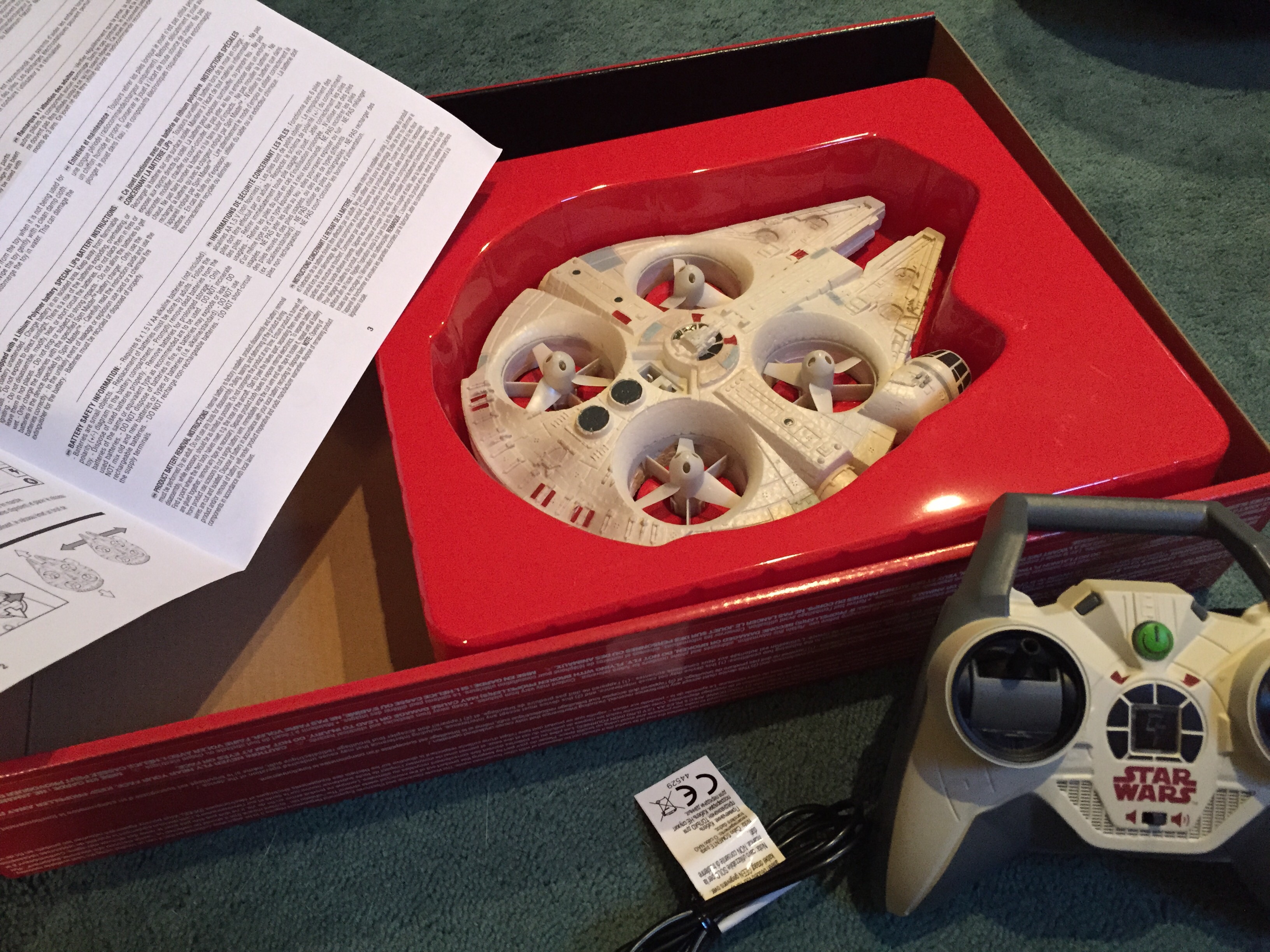
‘The Force Awakens’ Killed off Han Solo: Why the prequels were a lot better and how Disney blew it

Piiiiiiiiiiiiiiiiiiiiiiiiiiiiiiiiiiiiiiiiiiiiiiiiiiiissssssed off, that is the feeling I have walking out of The Force Awakens.  

Sadly, the news I was so excited about three years ago regarding the new Star Wars film is tragic—the worst of what I feared might happen, did.  Taken by itself, The Force Awakens is a very good movie, the acting is good, the special effects everything that you’d expect, the directing, the writing all very good—then there’s the music by John Williams—upper level wonder.  Unfortunately for Disney, Star Wars is much more than one movie now and Disney did exactly the wrong thing.  Like rumored, they abandoned the Expanded Universe and they killed off Han Solo in the first movie of a three-part trilogy which was my favorite character.  While on the business side I can understand why they did—Harrison Ford was 73 at the start of The Force Awakens, so it’s not a bad idea to start planting the seeds for future characters.  However, killing off Solo without having the context of the greater story developed over the last two decades is extremely problematic for the Star Wars franchise.  Here’s why.

About 15 years ago a super Star Wars fan was talking to me about the novels that came out every few months and wondered why I wasn’t reading them.  I explained that if the books didn’t come straight from the mind of George Lucas that I didn’t consider them part of the Star Wars canon.  However, the novels leaned very much on the character of Han Solo and his marriage to Princess Leia and their three children Jaina Jacen and Anakin.  So figured I’d give the books a try.  I had tried the Thrawn trilogy by Timothy Zahn and couldn’t accept it, but decided to try again with Vector Prime.  It was a great book—although Chewbacca died—and I was hooked.  I have since read most of the Expanded Universe novels which have greatly over-shadowed the original movies in sheer content and emotional story arcs.

I thought there was a whale of a story developing at the end of Apocalypse involving The Abeloth and that The Force Awakens would be about that massive galactic conflict—which would have been great.  Disney could have given the hard-core Star Wars fans what they wanted while giving a new generation of fans what they wanted.  The old characters could have faded out leaving the new very strong character of Jaina Solo to have filled the boots of her father nicely—and that would have been appropriate.  Everyone could have had what they wanted out of Star Wars.  But that’s not what Disney did with the help of J.J. Abrams, and Kathleen Kennedy.  They thought they knew better than all the minds who had been guiding the Star Wars stories through three decades of New York Times best sellers so they screwed with the story with a progressive agenda which was the worst of my fears.

If they had stayed with the Expanded Universe storyline, they could have still had a Latino lead character, a black character and a strong female lead to reach all their target demographics.  But they did more than that—they weakened Han Solo considerably and made him a self-sacrificial parent who threw himself on the sword of Kylo Ren at the end.  He and his marriage to Leia obviously went bad and the kids were damaged leading to his son (Ben) turning to evil.  Suddenly the very strong characters of the Expanded Universe were modernized into dysfunctional parents who had screwed up their children and felt guilty about it.  At the end of The Force Awakens, “General Leia” is alone with no signs of family—except the daughter Rey to find out who she truly is.  This is probably the most disappointing aspect of The Force Awakens—in the novels the son of Han, Jacen falls to the dark side over many books and his intentions were always good.  Han stayed with his wife for many years and they had a pretty good family life.  Han was always a rock solid person in those stories giving Star Wars geeks the father figure they didn’t have in real life—and it worked well in a mythological way.  The daughter Jaina was the new light of the next generation—The Sword of the Jedi.

J.J. Abrams and Lawrence Kasdan essentially took the big themes of the novels and retold the story of Jacen’s fall to the dark side moving around the names of the characters and having him confront his sister—in an epic lightsaber battle.  Knowing all that felt cheap to me.  It took Star Wars from an epic pinnacle of the highest mythological order and dumbed it down to be simply another Avengers movie.  It was fun to look at, but the content was certainly watered down from the types of bold stories that were told in the novels.  I will probably see future Star Wars movies just to see what they do and how they look—like I would a superhero type of film—the many times the Batman story has been told, or Spiderman—even Superman.  But with Star Wars, Disney had a unique opportunity to build on a massive story arc, and they screwed it up—rehashing the old by putting their own stamp on it in a way that did a disservice to the fans who helped carry the franchise for so long with their loyal support.  Clearly the emphasis by Disney and Kathleen Kennedy was to weaken the original characters from the bold embodiments of their youth into guilt driven losers in the future—which might make them relatable to a larger audience who feels the same anxieties.  Of course they had to plant the seeds of an interracial romance—which felt forced—and was distracting.  Han returned to his days as a smuggler instead of the reliable family man that he was in the books.  Luke was in hiding feeling guilt for creating Kylo Ren though his failure in teaching future Jedi—which in the books Luke had built an entirely new Jedi Order.  In the books all the lead characters were strong and determined personalities who had suffered through unimaginable sorrows, but were still people a reader could lean on and trust to do the right thing in the end.  In The Force Awakens it is obvious that the all the old characters were flawed, especially Han Solo.  This was obviously a conscious choice to make him more relatable to the modern viewing audience instead of just trusting the story the way it had evolved over the years with great success.

There has been an effort from The Alliance to Save the Star Wars Legends Expanded Universe shown at the link below to save the storyline of these movie from just this kind of misery.  But, Disney didn’t listen and they’ll pay for that.  The Force Awakens will make a lot of money, but it won’t be as much as they could have made.  They just handed the next generation a bunch of loser characters not quite sure of themselves putting an emphasis on progressive values instead of American traditional ones.  The Force Awakens is about sacrifice and the greater good whereas a theme which always ran through the original trilogy was individualism and following a personal bliss.  Han Solo as the individual always had the answers to save the Luke and Leias of the galaxy from their altruistic tendencies.  In The Force Awakens it is Han Solo that needs saving from his guilt over failing their son in ways that aren’t yet shown.  Essentially the decision to turn Han Solo from an Ayn Rand type of character into a Shakespearian tragedy was meant to erase his lineage of strength into something modern audiences could identify with.

https://www.facebook.com/AlliancetoSavetheStarWarsLegendsExpandedUniverse

http://twibbon.com/support/star-wars-legends-never-die

The result for me, and I’m sure many others, is that I completely reject these new stories by Disney.   I just came out of seeing a premier showing before it opened officially on December 18th 2015 and my sorted emotions tell me that this story in The Force Awakens is not real.  I can’t accept it as cannon.  It’s actually pretty stupid.  It represents another case of activist filmmakers trying to plant progressive Huffington Post values into a very traditional American story for the sake of unifying the world around common values.  To do that they dumbed down the American influences of individuality, and created a much more “inclusive” universe that was the obvious intent they had in making the film.  People like Arianna Huffington will love this new Star Wars.  John Wayne would have hated it.

I can deal with the death of my favorite character.  What I have a problem with is weakening their presence out of a desire to appeal to a weakened society—where movies are made by committee rather than by strong individuals.  The Force Awakens obviously understands that few people have intact families these days and that people can’t relate to the type of strength that Han Solo projected which has carried the franchise quite frankly for forty years.  They made a conscious decision to weaken Solo—hand over the Millennium Falcon to a “girl” (his daughter) and reflect the values of the present global community instead of the values of the story itself.  They cheapened Star Wars in ways that will be very costly in the years to come.  So while the movie was beautiful to look at and had many elements that are respectable on the surface, the underlining message was feeble and a tremendous disservice to the fans who have stuck with the story religiously all these years.  Star Wars had a chance to be above modern politics, but the filmmakers failed to carry it to those lofty heights.  Instead, they surrendered to the currents of modernism—and the movie shows it desperately.  The movie felt to me like a fake and something to reject—which is not what Disney wanted, I’m sure.  Forever for me, and many like me, there will always be the Expanded Universe where Han didn’t leave his wife and fail his children with some “force bending” scheme of time to save his daughter from the wrath of her brother, Han’s failed son—and the Jedi master Luke who lost his pupil to the dark side.  I’m sure there is a story of redemption in the next episodes, but by then—who cares.  Disney already screwed up the story with renamed characters and repeated themes which were already told in the novels years ago.  And in that respect, The Force Awakens fails in every way that it never intended.

The prequels were a LOT better.

Rich “Cliffhanger” Hoffman

 CLIFFHANGER RESEARCH & DEVELOPMENT

http://www.secondcalldefense.org/?affiliate=20707

The Liberal Radicalization of Disney: How progressive voters are built from youth

As I wrote this article it was during the election night of 2015. One year later we’d be electing the next President of the United States and several congressional and senate seats. As Ohio decided whether or not to legalize marijuana caving in to the endless amounts of money spent by progressive groups funded by George Soros types to essentially dumb down the public to the extent that there is no resistance to their global efforts—I can’t help but think of the American Indian who was given easy access to liquor to make them more easily conquerable. Pot advocating by progressives is intended to lower the morality of our nation so that we can be more easily conquered by global interest. It’s very clear that is the intention behind the effort and the money propelling it—the goal is to dismantle traditional America through drug induced emphasis followed by a progressive oriented government school program. And that radicalism is certainly present in the entertainment industry. That was the basis behind a discussion I recently had with Matt Clark on his WAAM radio show in Ann Arbor, Michigan. The topic was Star Wars and the Disney Corporation and how both were being shaped by progressive influences.

Lately I have been less interested with elections because they don’t have much effect currently. For instance, in Ohio if marijuana fails, it is a 100% chance that it will be back on the ballot likely within the year, just like school levies, and the casino issue from a few years ago. These idiots will keep putting it on the ballot until it passes—they will continue in spite of what voters indicate—their goal will be to wear down the public until they cave—so the effort should be viewed as a military exercise, not a democratic endeavor. I don’t see much hope in any of these elections until we get personalities in office who will stand up for the republic concept. Paul Ryan is a perfect example of this whole effort—he was elected a Tea Party darling, but has now moved toward establishment protector. He’s the new Speaker of the House based on his past reputation as a reformer, not as a current conquered personality. The process of lobbyists destroys good people and leaves us all yearning for authentic personalities which is too infrequent. I hope for a Donald Trump to shake up this mess. Without him, or someone like him—I don’t have much hope for the future of politics.

But I do find hope in Disney and the new Star Wars property, which Matt and I discussed in a way that should be very useful to all concerned minds. Disney doesn’t hear enough good criticism from their customer base to navigate by, and I sincerely hope that articles like this one, and the radio content that Matt and I provided helps them. The same lobbyists who bend politicians backwards, and constantly advocate on behalf of marijuana are those who push Disney as a company to move always to the political left—or to be threatened with lawsuits, boycotts and other types of radicalism designed to destroy a traditional social position. Disney out of all the production companies out there is best poised to stand for traditional American values, but there is a real risk that nutcases within the Disney organization will start populating Star Wars with gay characters and progressive tripe just to appease the elements of evil that are so prevalent in our present society.

I spent the last three articles on this topic because it is one of the most important of our time, a major movie is coming out that will touch just about everyone’s life in some way or another. But these filmmakers are not George Lucas of the 1980s, the conservative Ayn Rand type of dystopian individualist—it is the evolution of a tight group of friends from Kathy Kennedy all the way through Steven Spielberg who have mellowed over time and are now quite liberal in their activism. Wealth and the California culture have tamed their once conservative spirits. For instance, one of George Lucas’ best films is THX-1138 which was essentially a movie version of Ayn Rand’s Anthem. Lucas would not make a movie like that now—but when the first Star Wars came out, he was very much a limited government advocate where his Rebel Alliance would have been considered Tea Party Patriots in our contemporary world. Over time George become more like Darth Vader than Han Solo which was certainly reflected in the prequel films.

I actually think that Disney has become so radicalized that there is probably talk behind closed doors that two gay characters should have a legitimate romance in a future Star Wars movie. The reason Matt and I covered this topic on the radio is because there have been threats from more conservative groups looking at the new Star Wars and seeing the alarm signs that the new heroes are a woman, and a black guy, and the villains are mostly white males. While having women and dark-skinned protagonists isn’t a big deal to me, I can see why people would be concerned—because it certainly strays from the original formula—old white man, young white man, middle-aged white man, hairy beast that is a male—and a mouthy feminist. Then of course there are two male droids—unless R2D2 tries to pull a Bruce Jenner. Even worse is Kathy Kennedy’s comments to a women’s summit recently shown above where she specified that her goal as a CEO of Lucasfilm was to put more women in the movie making business.

Kennedy said she had been recently to a taping of a Saturday Night Live and noticed that most of the camera operators were men, not women. She attributed this to a possible union rules issue and bosses who hired men over women—which is a typical progressive belief. She went on to say that her goal was to inspire women to become more camera operators and behind the line talent. That was interesting. Then, if you consider recent statements by Carrie Fisher to the new young actress Daisy Ridley to not to allow herself to become sexualized in the future Star Wars films there is plenty of evidence that some serious progressive radicalism is percolating on the horizon of one of the most powerful entertainment vehicles in the history of the world.

What these old women represented by Fisher and Kennedy don’t understand about people is that a fair number of women want to be sexualized for the attention it gives them, and that the reason for that attention is biological. That is part of what made the original Star Wars films so powerful. Princess Leia went from a radical feminist to a conquered love interest. By the third film she was in a hot bikini looking very sexual and it went down in history as one of the most memorable costumes in history. If Kathy Kennedy thinks that she’ll expand the market share of Star Wars by going in reverse, she is sadly mistaken. Han Solo conquered Princess Leia through testosterone induced masculinity. When Lucas tried to soften the Han Solo character up for Return of the Jedi into being a nice, understanding equal to Princess Leia, the story doesn’t work. What did work was the metal bikini that Carrie Fisher wore. So there is a real risk that Kennedy is going to screw the whole thing up. I think people will still enjoy the movies, but they won’t be in the same passionate way. If Star Wars gets softened under progressive influence, there is a real risk of the whole thing being destroyed and with it, a major ray of hope that traditional families across the world have as an entertainment option that is safe for their children.

My interest in all this isn’t just because I like Star Wars or Disney. It’s because the release of this film is nearly on scale with the Biblical Armageddon. When this movie is released, it will soak up so much of the news cycle and the Christmas shopping efforts ahead of the Holiday that people will forget that Santa Clause and Jesus are central to the festivities. Star Wars will be all-encompassing. This is one of the biggest things to happen in our lifetimes. I know it’s only a movie, but it’s not. It’s much more than that. Only time will tell how well Disney navigates through this mine field. I’m not ready to boycott Disney over any of this. But if they try to cram gay rights, feminism, and gun control down our throats the way that marijuana, high taxes, and democratic tyranny through corrosive elections have been imposed on us, then I will drop Star Wars in less than a second as an entertainment option, and I know millions of others will as well. This year it’s not the elections that will determine our future—it’s a movie that comes out next month. And the fate of humanity literally hangs in the balance. We’ll see.

When the first Star Wars films were released, Nancy Reagan had a program urging children to say “NO” to drugs. Marijuana was used by kids—lots of kids, but it had a stigma against it imposed by the righteous forcing it underground. Now progressive parasites have put marijuana into the mainstream and they are seeking to break down the pillars of conservatism in Ohio hoping that all blocks of a delicate electorate will topple. If Issue 3 fails, activists will be right back at it for 2016, or 2017—however long it takes for them to impose their conquest. The foundation for the cause of that erosion comes from a lack of resolve established in the human understanding of good versus evil in a very black and white type of way. That is why Star Wars and the condition of Disney are more important than many of the ballot issues up for discussion during the 2015 election. If Disney fails and with it, Star Wars—there isn’t much for good-hearted people to put their effort behind. That is the risk that is before us and the merit of the pre-election coverage on WAAM radio with Matt Clark. The results of an election are less important than the condition of the minds of the people who vote in them. Cultural events, like the opening of a new Star Wars film and a corporation like Disney that was built on family values says a lot as to how elections will be conducted in the future—and that is what is at risk presently.

If you haven’t yet watched all the videos on this article, you should do that now, then read this article again.  It’s all very important to our future.

Rich “Cliffhanger” Hoffman

 CLIFFHANGER RESEARCH & DEVELOPMENT

Listen to The Blaze Radio Network by CLICKING HERE.

Robert Tracinski, Rich Hoffman and Matt Clark on WAAM: Why ‘Star Wars’ is better than ‘Star Trek’

Matt Clark had me on his show to actually co-host with him as we spoke to Robert Tracinski who writes for The Federalist. He had written an interesting article about how it was unlikely that J.J. Abrams could screw up the new Star Wars film, The Force Awakens, so long as he stuck with the formula. There were some condescending aspects to Tracisnski’s article which I was willing to overlook, because he was right about a lot of things. But more than anything Tracisnski had been dismissive of the original trilogy as not being very good—which I thought was odd. So I was eager to talk to him. It only took a few moments into the interview however to learn the root of his issues—he was a Star Trek fan and had only come to Star Wars through his children. His position was that Star Trek was philosophically superior to Star Wars and that these new movies were kid stuff that he was enjoying with his children. Listen to that interview here:

I don’t care much for Star Trek, to me it is the United Nations in space. While Robert Tracinski is not a liberal and is a pretty committed Objectivist, which is Ayn Rand’s philosophy—it was clear to me quickly why Robert didn’t like Star Wars much in his article. I disagree with him on a number of topics regarding the formula of Star Wars, or its appeal. I think the Star Wars films are deeply philosophical; especially The Empire Strikes Back—much more so than Star Trek. I mean, people are not lining up across the world to see the latest Star Trek movie, and Star Wars isn’t as popular as it is because it’s just adults living out their childhoods once again through a movie. It’s more complicated than that. As we were talking to Tracinski, because of his background with Ayn Rand I kept wondering if I had met him someplace before, so I wanted to cut him some slack. Everyone comes to things in their own time and if he came to Star Wars late in life through his kids—so be it. One aspect that Tracinski got right in his article was the perception that Han Solo is the key to the franchise—so I stuck to that topic in our conversation.

Matt and I spent the first segment of his Saturday WAAM show talking about Disney and their progressive activism with a gentle warning about messing with the formula of Star Wars and the impact that might have on their massive investment. Matt and I love Disney—the Uncle Walt version. I love that Disney is a family friendly entertainment group—so I am willing to overlook a little of their liberal activism. Something that Robert Tracinski did bring up on his show that was true.  George Lucas and Steven Spielberg were the best conservative filmmakers coming out of the 80s. I personally think they were both seduced by Bill Clinton in the 90s and have lost their minds since. The reason their early films were so successful was because they all had conservative leanings to them. Once both directors had achieved their monstrous success and essentially stepped away from the Objectivist roots of their film careers, their movies started making a lot less money. Without question George Lucas was at least attracted to Ayn Rand in his early days—when she was at the height of her influence—and Han Solo was a character that represented that struggle within George. As he become more liberal with age and success—perhaps feeling a little guilty that all his liberal employees were constantly berating him for his capitalist tendencies, he softened up on his stance for individualism and began to accept collectivism to a much higher degree, which was clearly represented in the prequel  films—which were noticeably absent of the Han Solo type of character.

Where I disagree with Tracinski about the prequel films is that I don’t think George Lucas ever intended those films to be successes. They were dark movies about the failure of a Republic—and have great political merit to them. They are very philosophical from the position of how poorly constructed philosophies can destroy a body of government. Even though Lucas had been moving to the left—politically, his message about the failure of groups to detect evil, and how institutional failure is indicative of all government cycles is powerful stuff that set the stage for some pretty deep storytelling. As much as people dismiss the prequel films as silly, they are important in the larger scope of the intended message. The movies did lack heroics on the scale of a Han Solo, but that was on purpose. A lot of characters including Yoda and Obi-wan Kenobi made mistakes that they spent the rest of their lives correcting. So the films were never supposed to be heroic repeats of the original trilogy. For that story Han Solo was the savior, he kept Luke alive, married his sister Leia and that set up the events of these new films. Solo is an Ayn Rand character and Disney even with all their activism against conservative causes—can’t ignore that the magic of Star Wars isn’t Luke Skywalker, or anything about the Force—it’s about Han Solo’s position against hooky religions and ancient weapons not being as competent as a good blaster at your side.

Just a few days before Matt and I had our radio show together Harrison Ford was on with Jimmy Kimmel dressed up for Halloween as a hot dog. It was a funny segment and of course Ford was asked about the new Star Wars film. I thought his comments were interesting to say the least. He stated that nobody would be disappointed—at all. That was a remarkable statement considering what’s at stake. He knows the potential cost of over-anticipated hype—so his comments had me very curious in relation to Disney’s strategy going forward. Han Solo is going to be playing a larger role in Star Wars than he has in the past largely because the character tests well demographically. His children will without question be the subject of the new stories but Disney will find every opportunity to insert a younger Han Solo into the movies at every juncture. To be successful at that, Disney will have no choice but to adopt the obvious aspects of Han Solo’s Objectivism view points—his natural conservatism and love of capitalist endeavors if they want Star Wars to continue being successful.

After Matt’s show I spent time at my children’s house going trick or treating with my grandkids—and kids. Late into the night my oldest daughter and I spent time talking about Han Solo and how it seems obvious now that Disney will find a way to put him in the stand alone films as much as possible just to use him as a springboard to success. Like Robert Tracinski and I spoke about on Matt’s show, without Han Solo, I think the Star Wars saga crashes and burns. If they try to turn him into a sacrificial collectivist Disney will lose a lot of money because people will reject the premise. The ticket buying public will only accept the Objectivist Han Solo—and nothing less—the hero who acts in his own self-interest. Even though the moment at the end of A New Hope was intended to show that Solo was able to act for others, the need to save Luke at the last moment was out of Solo’s self-interest because he was starting to like the kid. Like I said, Star Wars is a lot more philosophical than people give it credit for, and I’d think that as much as Tracinski likes Ayn Rand, that he’d prefer Star Wars over the United Nations in space—Star Trek and all that “needs of the many outweigh the needs of the few” crap. Screw Spock and his pointy ears—he’s a damn collectivist. Solo is a rugged, gun slinging individualist who acts out of his own self-interest. That’s why Star Wars is better than Star Trek.

We’ll see what happens, time will tell. It was a good conversation that was worth listening to, especially given what Star Wars will mean when it opens in a few weeks. There will be no escape; the opening of The Force Awakens will impact just about everyone no matter where they live. It will be impossible to not notice something about it as the merchandising around Christmas will be everywhere. Just watch the Duracell commercial shown above. Star Wars will literally be everywhere in just a few weeks of this writing. There will be nothing like it ever—history is being made both commercially and philosophically. The question will be whether or not The Force Awakens will be as anticipated on the 19th of December as it was on the 18th after people start seeing the movie. To be as successful as Disney needs it to be people will need to see the film several times. And to have that kind of power over the mind of fans—Han Solo will have to be a part of it with an Objectivist approach—otherwise the whole thing falls apart. It’s not the lightsaber battles and space antics that make Star Wars so great—it’s the Objectivist leanings of its basic premise:

Han Solo—“marching into the detention area is not what I had in mind.”

Luke Skywalker—“but she’s rich.”

Han Solo—“How rich?”

Luke Skywalker—“More wealth than you can imagine.”

Han Solo—“I don’t know, I can imagine quite a bit.”

Luke Skywalker—“you’ll get it.”

Han Solo—“I better!”

Luke Skywalker—“You will!”

Han Solo—“Alright kid, what’s your plan?”

That’s Star Wars—it’s an Objectivist love fest designed before George Lucas was overly liberalized. It’s also why twice during the broadcast with Matt that I uttered to his millions and millions of listeners—“Han shot first!” When Lucas changed Star Wars in 1997 to have the bounty hunter Greedo shoot at Han first in the Mos Eisley cantina fans were angry. It was a liberalized mistake for Lucas to cave under the pressure from the liberal film community to make Han Solo not appear as such a blood thirsty killer. But Solo acting out of self-interest shot first because that is the nature of his character—he’s an Ayn Rand survivalist and the heart of what makes Star Wars great.

Rich “Cliffhanger” Hoffman

 CLIFFHANGER RESEARCH & DEVELOPMENT

Listen to The Blaze Radio Network by CLICKING HERE.

Trump Offers Himself as a Superman President: A curious query into meekness and the assumption that its good

One thing that really disgusts me is when I’m around other men who make the statement, “I’m not superman” as a way to let themselves off the hook for underachieving. The statement usually comes when there is great pressure to do everything and be everything to all the needs of all who require solutions. The chicken thing to do is to declare—I’m not superman, “I’m not perfect,” “I’m just a man.” I don’t think there has ever been a single day in my life from a young boy until the present where I’ve just wanted to be “just a man.” Considering the name of this site is “overmanwarrior” that should be a pretty good indication of where my sentiments reside in the context of personal expectation. So when presented with problems, no matter how many or how difficult, I always lean in to solve them all and carry whatever burdens there are—no matter what the odds. To my mind that is what is expected out of men—all men of all races and ages. It is their job and if they fall short of that attempt—I don’t think much of them. That is why I am so interested in the Donald Trump campaign. He says and expects of himself much of what I do—which is the type of person I want for president. That was never more obvious than in an early October weekend interview with Trump by CNBC’s John Harwood who declared to the presidential candidate, that America doesn’t have “superman” presidents. Trump’s response was that “You will if you have Trump for president.” Watch for yourself.

What John Harwood said was actually a mouthful—it had meanings at many levels. But most obvious is that American presidents should be expected to be supermen—otherwise no nation can expect to maintain such an exclusive status as a dominating superpower. Ordinary men with their petty weaknesses have caused enough trouble over the years, from John Kennedy’s affairs, to LBJ’s womanizing, Bill Clinton’s obsession with sexual relationships, and the Bush family meekness, if the problems in our country were to really be traced back to an origin, it comes from human beings—especially people who are supposed to be leaders, lowering the bar of their own expectations to be viewed as simple men with humble origins. Society might teach that meekness is a positive trait in Sunday school, but in reality that just gets your ass kicked intellectually and physically. Meekness invites some dominating personality—or county to step in and push you around and that mentality needs to change if America is going to survive.

Men should expect themselves to be supermen. Teddy Roosevelt with all his faults pushed himself toward greatness nearly with every breath he took, daily. One of his life goals was to kill a man which he did on San Jaun Hill with his Rough Riders. He overcame illnesses, great opposition, and even finished a speech he was giving while he was shot. He was campaigning when an assassin’s bullet penetrated his body—he knew it—yet he finished his campaign speech anyway just to show how tough he was. That was not a guy who allowed himself to be “meek.” Andrew Jackson was another such personality. Over his lifetime he survived many duels and carried with him all his life an expectation toward a rough and ready approach to just about everything. It was because of Jackson that the United States currently has Florida, Texas and had a paid off debt during his time in office. Thomas Jefferson was another personality who expected of himself not great physical strength, but incredible intellectual strength. It was because of him that we have the Marines when he put together a force to go and fight the Barbary Pirates. I would expect every American president to exhibit similar behavior. Even though those presidents were far from perfect, they at least made attempts during their lives to be more than ordinary. They certainly tried and had personal expectations of greatness.

During westward expansion many men challenged themselves against fate for the potential of fortune. Most failed, but a few rose to the top and became larger than life characters largely on the backs of their personal bravado. Doc Holiday was one of those gun fighting characters that took a debilitating illness and pushed himself beyond the limits of fear to something he otherwise would not otherwise become as a gentleman gambler. Many don’t know it but likely the real inspiration for the Lone Ranger western character was a man named Bass Reeves. He was a black lawman who was obsessed with living with honor and a sense of justice for the innocent. The westward expansion period was an exciting time because there did emerge strong personalities that pushed themselves toward superhuman expectations, Jessie James was one, Wild Bill Hickok was another. After World War II many westerns were made in the movie business and on television that embodied something of an overman mindset, where men tried to live under a system of honor to protect their families and friends with a superhuman courage. John Wayne and Clint Eastwood built their careers around embodying those traits to the movie going public. For a lot of years there was an expectation among other males that they were expected to act whenever possible as something beyond mortal when pressed.

Most males today make me sick at their lack of bravado, and now we live in a time where such superhuman expectations have been abandoned. Even among our celebrities there are no longer many who even attempt to portray a larger-than-life personality. Yet John Harwood says it so easily that we don’t elect superman presidents. When have we decided not to? What ridiculous imposition of assumption dictated that we vote for the meek, week, losers of low self-confidence emitting from the “everyman” like sweat running through the crack of a gorilla’s ass? When did weakness become such a noble quality—because at such a point the instigator should be wrung up and cast through the folds of time into a boundless existence where they can do no further harm toward the fate of humanity. No wonder so many people dislike Trump’s boastfulness. Donald Trump doesn’t sit around crying like some modern man that his goldfish died. Trump doesn’t politely pretend to be stupid so some losers can feel like they belong at the tables of greatness. Over the last few weeks there have been several examples given of past Mit Romney campaigns along with John McCain as if they were the types of presidential candidates the Republicans were looking for in 2016.   Are you kidding me? Both of those idiots lost—because they took the advice of marketers and allowed themselves to be seen as “everyman” instead of “overman.” There is nothing noble or good about the belching, farting, insecure everyman. There is nothing endearing about such a creature. The universe is laughing at them daily—we don’t want them in the White House.

Trump has no trouble sticking up his hand and declaring he’s not an “everyman.” He states emphatically without apology, that he is and would be, a superman. That’s who I want at the wheel of a “superpower” that America is supposed to be under the capitalist style of government that we have. We don’t need another meek statesman who believes himself to be just another guy in a field of team players unimportant on the cosmic stage. We’ve had plenty of presidents like that—and they haven’t done us a good job. As a result, there are not enough men in the world willing to be a superman within the sphere of their personal contacts. Ask a wife who she’d rather sleep with, a crying fool ready to throw himself at the feet of a community and sacrifice himself to their qualms, or an unapologetic superman who always has the answers and is ready in a fraction of a second at all hours of the day to take her where she wants to go? What about the child who looks up at a father and wants someone who knows best 100% of the time, or the wavering reed of indecision who declares that they are just men among men—and nothing particularly special. Then who would that kid listen to when they ask what would happen if it were discovered they smoked pot for the first time. Typically the meek dad would say, “well son, I’ve smoked it and it wasn’t very smart, but you’ll have to make up your own mind. Who am I to judge or tell you anything, I’m just a man?” Compare that to the dad who tells the kid, “if I catch you smoking pot I’ll kick your ass off this fu**ing planet you little bitch. I’ve never smoked it and only pussies smoke it because they can’t handle the pressure of this life and seek to numb their minds from the pain of reality. That makes them weak and you don’t want to be weak.” Which is the correct answer dear reader? That is why the world needs more supermen. The meek types have done enough damage to last many lifetimes—and its time to change our approach. The world needs more supermen. Wives want them in their beds, kids want them as fathers, and nations need something to encourage them to be better people. So especially in the White House, we had better learn to elect such people. Because we all need to face a high bar and stop using humanity as a crutch for laziness, and cowardly dispositions. We have tried that and it doesn’t work.

Rich Hoffman

 CLIFFHANGER RESEARCH & DEVELOPMENT

Listen to The Blaze Radio Network by CLICKING HERE.

Air Hog’s Millennium Falcon: Another step closer to Moller’s Skycar

imageLately, I have had enough pressure and stress to kill a man nine times over. But I do enjoy life in the pressure cooker, so my participation was not reluctant. However, I do know how to manage that stress, and part of that is to put my mind some place fun to give it needed vacations from time to time. It was a perfect opportunity for Star Wars to have their Force Friday launch of the new toy lines Disney was unleashing for the Force Awakens film coming up this Christmas of 2015. My brother and kids did what millions of other people did and that was hit the stores at midnight on Thursday to get access to the first stuff. They began sending me pictures of merchandise at around 12:25 am through text messages and I was living the fun with them through their inputs. I chose to enjoy the rituals at home watching the live stream from Disney that took place nearly 20 straight hours from spots all across the world unboxing these new toys and demonstrating them. I wrote about the significance of this Star Wars ritual in yesterday’s article. CLICK HERE to review.

Star Wars toys are something that I have always enjoyed. I still have mine from when I was a kid and my grandson now plays with them when he comes over. I have always been impressed with the artistic detail of Star Wars toys. I still get them from time to time when I see something really cool. Typically my rule is that if the toy is a Millennium Falcon, I typically buy it. There are too many Star Wars toys to collect them all, so I stick to Millennium Falcons the famous pirate vessel from the original movies. I have a special relationship with the Millennium Falcon. CLICK HERE TO REVIEW.

So I was relaxing at home on Friday watching the live stream from Toronto, Canada. I thought the toys up to that point were cool, fun, and worth collecting at some point after I validated that the new movie justified it. But there was nothing I had to rush out to get, until the commentators in Toronto showed off the new line of Star Wars related products from Air Hogs—the miniature remote control helicopter company who is always well stocked at Target. I have been impressed with Air Hogs as a company as they have taken really expensive remote control technology and driven the prices down so that non professional RC users could enjoy them indoors. Some of the smartest engineers I know are members locally of The Greater Cincinnati Radio Control Club that actually has their own airfield across the river from my house in Trenton, Ohio. They have some really wonderful model airplanes that were recently on full display at the Butler County Regional Airport “Flying Circus.” Those planes cost several thousand dollars each and are quite sophisticated. Air Hogs has taken similar technology and advanced it to the level of indoor flight, which really requires light weight, but durable materials, powerful engines and unmatched control to keep from running into everything. I have one of the first Air Hog helicopters that pretty much went up and down, but had little control regarding pitch and yaw, and I was impressed with it—for something that only cost about $30. But I hadn’t flown some of the most recent models, which I knew had come a long way. That’s when I saw the new love of my life, the Toronto presenters brought out on the stage the new Air Hog Millennium Falcon, a quad engine drone essentially complete with flood lights and engine indicators. My next thought was to get to the store to buy it.

imageSince I wasn’t at the stores during the midnight rush, I doubted that I’d find such a wonderful device several hours after the great release. My wife was hopeful so we went to Walmart to see if we could find one. As I suspected, the shelves had been plucked through and there certainly wasn’t an Air Hog Millennium Falcon left. I even prodded the employees asking them if they had any hidden anywhere—which they said they hadn’t. The tornado of Star Wars fans had already ransacked everything until their next shipment—a week away—had left their shelves mostly empty. So we started to head for home, but before that we decided to stop by Target—just in case.

Again, what I have been saying about the cultural significance of Star Wars was beginning to be evident at Target. Stormtroopers were on the front doors of the Bridgewater location and a massive Chewbacca loomed to great guests as they came through the door. Space ship battles were on display hanging from the ceiling as even I was a bit surprised at the level of Target’s commitment to the Force Friday event. My hopes went up that they just might just have my Air Hog Millennium Falcon in stock, even though I knew it was unlikely. We made our way back to the Star Wars toy section and there it was. Target had three of them. I grabbed one. Additionally Target had the whole back corner of the store dedicated to Star Wars complete with Halloween costumes and more toys including two very vicious looking Huffy Star Wars bicycles. Customers were happy, people had smiles on their faces as they looked through the various Star Wars products and the enthusiasm was palatable. These weren’t the hard-core fans from the night before. These were just average people, and they were feeling the Force. I shuddered a bit at witnessing all this. The new movie hadn’t even hit theaters yet and already there was this much enthusiasm. I wondered if I had understated the importance of my previous article already indicated. I had written it while watching the day long podcast and as enthusiastic for the future as I was, I may have not captured the true potential of the upcoming Star Wars influence.image

Regardless, my wife and I rushed home, forgot to eat dinner and I played around with the Air Hog Millennium Falcon until the late hours of that night. The first thing I did the next day upon waking was play with it some more. The Air Hog Falcon is truly remarkable to me for several reasons. It’s pretty easy to fly; it has a wonderful gyrostabilization system controlling all four quad engines. The Falcon is a large odd-shaped vehicle not typically suited for aerodynamic flight. I had seen a very cleaver Millennium Falcon drone recently that was very expensive and very technical, as it had been hand-built. But this was a commercial craft and the Air Hog engineers had nailed a pretty difficult task—making a flat non-aerodynamic disk–fly—very well. Extremely well. I couldn’t stop flying it. It took about an hour to charge the vessel for about 7 minutes of flight. The internal Lithium Polymer battery had to be large enough to power the four quad engines, but small enough to keep the weight down. So Air Hogs elected to have a smaller battery to capture the proper performance. That is a bit frustrating because you can’t fly the ship long between charging, but the performance is worth the effort. It’s kind of like a drag racing car, fully fueled, it’s out of gas by the end of a quarter-mile. To get the performance you have to sacrifice storage capacity.

However I couldn’t help but think of how well the gyroscopic system worked on the Air Hogs Falcon. The small little toy was a perfect example of how Paul Moller’s Skycar will operate once people accept the technology as viable. The Air Hog Millennium Falcon was a perfect example of how those future flying cars will work. Each quad engine working independently controlled by computer input to add thrust or decrease it based on the needs of the vehicles gyrostablization sensors. For a toy, it was extremely sophisticated, and was certainly a hint of a mode of transportation that is coming fast. I couldn’t help but think that there were thousands of people just like me playing with some of these new Star Wars toys thinking the same thing. Once the film hits and everything escalates to a fevered pitch intellectually, the desire to have real Star Wars technology functioning in our actual lives will increase dramatically. The toys and films introduce the idea of possibly to us. Science finds ways to deliver those ideas, and Air Hogs simply nailed it with their Millennium Falcon. A remarkable device simply put.

I closed out Force Friday playing with my remote control Falcon hopeful for the world. All this fun of course is the work of unadulterated capitalism. Without capitalism the joy I witnessed across the world from Japan, China, Australia, France, England, Brazil, Canada and of course the United States would not have been possible. I wasn’t the only one excited that day to purchase a new Star Wars item. Capitalism is what put so much joy on people’s faces and introduced new technical inventions to a hungry public. The whole endeavor started with imagination and the capital investment to make them possible. I’m sure I wasn’t the only one who stopped by the local convenience store on the way home to buy a twenty pack of AA batteries, and also some more Mello Yello in the process. Life is good and we have capitalism to thank for it. Because at the heart of the Star Wars universe, particularly under Disney’s direction is capitalism—which is the source of joy so many people felt as a result of Force Friday. And it gave me a wonderful, much-needed distraction when I most needed it—and a cool new Millennium Falcon to add to my collection.

Rich Hoffman

 CLIFFHANGER RESEARCH & DEVELOPMENT

Listen to The Blaze Radio Network by CLICKING HERE.

Force Friday and Donald Trump: How the Chamber of Commerce machine is losing

I have been saying it for a long time; things are changing rapidly right in front of our faces. Of late, I haven’t felt a need to talk about every evil news story simply because a time has arrived that will launch us all into a new era. Part of it is political, part is pure entertainment—but it will never-the-less touch all our lives directly and indirectly. I am sometimes hard on world religions not because they are bad, but because they desperately need updated. You can’t expect young people to accept religion who have access to thousands of years of information on their cell phones, by talking about people who walked around in the dirt 2000 years ago concerned about things that were relevant only then. And you can’t ask people to get excited about politics when the Chamber of Commerce all across the nation has roped off candidates from the reality of living to serve their own functions. And that’s what has been happening leaving most people pretty numb to the world—which was done on purpose by those who thought they were in charge to continue controlling the masses. For decades the events that are about to unfold have been priming. Now they are ready to explode, and that reality is something that at this point is unavoidable.

For instance, you might have heard by now dear reader about Force Friday—it’s where retailers unleashed their new line of Star Wars toys to the public. People of all ages lined up for countless hours to be the first to put their hands on the new items giving just a slight preview to the upcoming massive blockbuster, The Force Awakens. Then of course there is Donald Trump who signed the pledge to the Republican Party during the previous day to Force Friday, to not run as a third-party candidate.   The old, lazy, Chamber of Commerce circle of losers who has continued to give us politicians liked Pete Beck of Mason—who is now in jail, have been running the show and they are losing their grip. (I knew Pete and wasn’t a fan.). Another is Ohio senator Bill Coley, the attorney who became a politician to bring business to his law practice—who holds the line of orthodox. Then there is John Boehner, the guy with just enough skeletons in his closet and lazy enough to prevent any real reform as Speaker of the House—as the last one was a gay sex addict. The worst that mankind can produce has been given to us by the Chamber of Commerce and their finance machines that put the candidates on the front line and keep everyone else out. Now for those of you in other parts of the world those three names mean little to you, but I promise in your local neighborhood, you are dealing with the same type of thing from the same type of people. Trump has entered the scene offering a totally different kind of candidate and he will change politics permanently from now on..

We are all trained from an early age in our education systems to accept this Chamber of Commerce way of conducting politics. In my local district of Lakota it was our local Chamber who provided leadership training to key members of the management team at the public school—so its all designed to maintain a status quo that has long passed its effectiveness. In public school peer pressure is taught to us to conform to the politics of the moment—usually shaped by whatever political class is in charge at the time. As a kid I was never one who responded to peer pressure. The more it was applied to me, the more rebellious I became. By high school I gave rebellion a new definition. And I was then, and still am extremely proud of it, because that rebelliousness preserved me into an intact, intellectual adult. I was raised a Christian who went to church nearly every Sunday, watched a lot of westerns, was taught from family members correctly that tattoos and long hair indicated a vagabond personality that was disreputable. I had a lot of values in a world that seemed to despise value. So I turned to Star Wars as a safe haven to my values which was like a permanent vacation from the stifling environment of public school.

Every Friday I would look forward to wearing one of my favorite t-shirts to school—which was usually a Star Wars shirt. It was the last day of the week where I’d get a chance to get out of prison for a few days, so I was very happy on Fridays and I expressed that happiness by wearing my Star Wars shirts. Of course the moment I stepped onto the school bus kids made fun of my shirt—because it wasn’t cool to like such things, it was considered geeky. Kids entering their double-digit years were supposed to be thinking of girls, not hairy wookies and galactic smugglers in hot rod starships. But Star Wars made me happy because my values were aligned within it, so I indulged in spite of public sentiment. I learned quickly to shut off the noise of the outside world because I knew instinctively that they were wrong and off-base. I was of course right. Every single person I grew up with, and I still know some of them, are presently unhappy people. Everyone who accepted that role of not wearing a Star Wars shirt because they were afraid to be made fun of, are today miserable, overweight slobs. They may be financially successful in various ways, they may have days of joy, but generally from dawn to dusk—except for their favorite television shows, they are miserable.

Now that Donald Trump is a serious candidate the establishment types are terrified, because he is doing one of two things. He will become the next president, or he is drawing fire so that people like Ben Carson can have a legitimate shot at the presidency as a Republican candidate in Trump’s wake. Either way, politics will never be the same again because of Donald Trump. We are just getting started on this journey and I’ve seen it coming for quite some time. So the tactic now being used against Trump fans is to make fun of them—to discredit them in a way that might make them shy away to a more Chamber of Commerce oriented candidate—and keep the establishment preserved. Our public school training has taught us that if we want to be popular, that we have to listen to that peer pressure. About 30% in public school are the geeky types who know they won’t be popular so they accept the ridicule. Those are some of the present Donald Trump supporters. They are not going to listen to the established Republicans who are now crying for a return to a machine that makes politicians like John Boehner by the busloads. But it won’t work anymore because people have had enough time to realize that they don’t want to become like the people who are applying the peer pressure—and they are turning away.

Many of the adults who turned out on Force Friday to purchase new Star Wars toys are those who buckled under the peer pressure of their youth and they want to rectify that experience with their own children. I was one of the absolute few who never buckled off my Star Wars kick. I drew pictures of Star Wars. I played Star Wars at recess. I read books during the reading hours. And during every class, algebra, English, science, history I escaped from those idiots into my own world thinking of building space ships and traveling the galaxy as a kind of off-world cowboy. Most kids one-on-one agreed with me. But when peer groups were applied, they were the first to play Judas to the orthodox and shy away from any public support. Many of those people who are now adults were those waiting in line to fix the cycle with their own children buying up Star Wars toys as quickly as they hit the shelves.

All these elements are going to hit our culture at the same time. Trump and the Iowa primary season just as Star Wars will hit theaters and dominate our entertainment culture in a way that nobody has yet realized the full impact—not even Disney. When valueless celebrities like Miley Cyrus are the established peer pressure of the day dedicated to promoting pot, easy sleazy sex, and mind numb intelligentsia, the moment these two massive cultural forces hit public sentiment at the same time, a truly defined new era will have arrived. It’s fresh, and it’s ours. It’s not from some far away land speaking to us from a perspective that is no longer relevant. It is here, and now. Many have learned hard lessons from the past and they aren’t willing to continue those mistakes in the future and they will coalesce around Donald Trump and Star Wars because within those political and entertainment spheres of influence is a new age for which people like me have been demanding for several decades. And it has arrived whether or not everybody is ready for it. To understand Donald Trump is to understand the type of people who waited outside of a Disney Store at midnight prior to September 5th 2015 to buy a new Star Wars toy with all the excitement of a night before Christmas as a young child. There is more to it than just geekdom. It’s a dawn to a new time that the Chamber of Commerce types out there just won’t like—because their way of life and the stale values they have protected is about to become extinct.

Please watch the videos above for support information. This is an important lesson, and you better be ready for it dear reader.

Rich Hoffman

 CLIFFHANGER RESEARCH & DEVELOPMENT

Listen to The Blaze Radio Network by CLICKING HERE.

It Will Always Be Mt. McKinley: The hidden reason behind a mountain name change

Consider that I am from Ohio and that President Mckinley was from that state, I will always think of Mt. McKinley in Alaska as the name it was before Obama and his progressive activists sought to change it to Denali. I don’t really care that since 1975 radical tree hugging hippies and pot smoking losers wanted to rename the highest mountain peak in North America after some “Great One” known by “native” language. If Obama wants to get technical, the Indians of the pre-Columbian era were just as guilty of migration as the European settlers—as the original story of the “Native American” are still being pieced together. Likely it was primarily the Chinese who were the real “Native Americans.” That story does not match the premise of the modern progressive who wants to use Indians as a springboard against American colonialism—and indirectly—capitalism. Here’s how the story was reported by USA Today:

WASHINGTON — President Obama’s three-day trip to Alaska this week will literally change the map of the nation’s 49th state.

Mount McKinley — the 20,237-foot mountain and the tallest in North America — has been renamed Denali, as it was originally known by Alaska Natives before it was renamed to honor President William McKinley.

The mountain, which sits in the 6 million-acre Denali national park, has been known as Denali in Alaska since 1975. Under an order signed by Interior Secretary Sally Jewell, the Denali name will also take effect for all federal usage and, therefore, on all official maps.

The order was signed Friday, but the White House asked that it be announced Monday as part of Obama’s trip to Alaska to highlight the effects of climate change in the Arctic. The White House said the name change “recognizes the sacred status of Denali to generations of Alaska Natives.”

http://www.usatoday.com/story/news/politics/2015/08/30/obama-rename-nations-tallest-mountain/71426656/

Denali (/dɨˈnɑːli/), officially called Mount McKinley from 1917 until it was formally renamed in 2015, is the highest mountain peak in North America, with a summit elevation of 20,237 feet (6,168 m) above sea level. At some 18,000 feet (5,500 m), the base-to-peak rise is considered the largest of any mountain situated entirely above sea level.[6] Measured by topographic prominence, it is the third most prominent peak after Mount Everest and Aconcagua. Located in the Alaska Range in the interior of the U.S. state of Alaska, Denali is the centerpiece of Denali National Park and Preserve.

https://en.wikipedia.org/wiki/Mount_McKinley

I have been to the top of peaks a third of that. I understand the cold and loss of oxygen at those altitudes, but as a statement of natural achievement, I’m not that impressed. I could climb to the top of McKinley right now, in my current health without any conditioning, so I’m not impressed with it. Sure it’s pretty to look at, but I wouldn’t be crying to reach the summit like some climbers do. McKinley has been conquered many times, and it’s no longer a big deal. And from space, it doesn’t look like much. However, to a bunch of primitives wearing animal skins in the hard winter months, climbing to the top of Mount McKinley was an ominous task, not really feasible to them. So from their perspective, it was a “great one.” But to a culture that routinely sends satellites into earth orbit and has settlers on the International Space Station all days of the year looking down from space—and has airplanes that travel at twice that altitude on routine flights across the country, McKinley is no longer a “Great One.”

The reason for the name change now is to incite among the American people a love for nature and a reversion back from the gains made through capitalism back to the primitive focus of indigenous people who function best from tribes always in need of a leader. That is why progressives are trying so hard to make a religion out of the “green movement” and why they think of the Indian as something of our national sacred history.

In 1896, a gold prospector named the mountain McKinley as political support for then-presidential candidate William McKinley, who became president the following year. The United States formally recognized the name Mount McKinley after President Wilson signed the Mount McKinley National Park Act of February 26, 1917.[22] The Alaska Board of Geographic Names changed the name of the mountain to Denali, which is how it is referred to locally. However, a 1975 request by the Alaska state legislature to the United States Board on Geographic Names to do the same was blocked by Ohio congressman Ralph Regula, whose district included McKinley’s hometown of Canton.[23]

To progressives like Obama, money and the creation of it is a bad thing. Money represents value and progressives hate value, or any identification of it. So of course Obama and his greenie weenies are against gold prospecting and everything that the Old West stood for regarding westward expansion. Alaska and the settling of it by the United States to him are all about oil and gold at the exploitation of Eskimos. But without the development of capitalism, Alaska today would be nearly as useless of a terrain as Siberia is right across the Bering Straight. Without gold prospecting or oil drilling Alaska would just be more earthly land not being applied to any productive task. To conservationists who are against human invention and development, that is a grand crusade worthy of sacrificing many to the gods of Mother Earth. But to capitalists who use free enterprise to improve the conditions of human existence, the gold from Alaska, and the wealth discovered through westward expansion set up the United States as an economic powerhouse throughout the world during the Twentieth Century. Of course Obama wants to erase that history—which he has been trying to undo through his economic policies, his EPA activism, and his desires to openly revert North America back to the times of the primitive.

Denali is the name of a primitive group of people who held the mountain in high regard due to their perspective victimization witnessed from their village huts. There’s nothing miraculous about pointing to a big rock on the horizon and declaring that it’s so large that man cannot climb it. But the wealth extracted from Alaska gold mining and oil drilling have created an economy that took mankind well off planet earth to look down on that small rock from space and point out Mount McKinley—a Republican that didn’t last long in office, but was reminiscent of a time when wealth was built and mankind stepped out of the shadows of their village huts. Mount McKinley isn’t a “great one.” It’s just a rock in the middle of Alaska, a state defined by its economic wealth and individualism. That extracted wealth is what sets Alaska apart from Siberia and makes all the difference between a great one and a mere rock on the horizon. And that’s what Obama and his gang of lost tribes are really desiring, a regression back to the time of the village living under the shadows of “Denali.” What they fail to understand is that mankind has overtaken the mountain and their limited perspective. And there is no going back now.

Rich Hoffman

 CLIFFHANGER RESEARCH & DEVELOPMENT

Listen to The Blaze Radio Network by CLICKING HERE.