Labor Unions Should Be Prosecuted Under the Sherman Act: The largest coercive monopolies in the world go unpunished

To prove that the government is involved in a coercive monopoly with labor unions both private and public, examine the evidence, and the path of behavior which delivered us to the conditions of 2013 where much is made over the size and ambition of virtually any company or financial entity endeavoring to make money.  The landmark case of the government against private business establishing the terms of what “the government” considers a financial monopoly can be seen in the United States v. Alcoa case from 1945.

United States v. Alcoa, 148 F.2d 416 (2d Cir. 1945), is a landmark decision concerning United States antitrust law. Judge Learned Hand‘s opinion is notable for its discussion of determining the relevant market for market share analysis and—more importantly—its discussion of the circumstances under which a monopoly is guilty of monopolization under section 2 of the Sherman Antitrust Act.

During the presidency of Franklin D. Roosevelt, the Justice Department charged Alcoa with illegal monopolization and demanded that the company be dissolved. Trial began on June 1, 1938. The trial judge dismissed the case four years later. The government appealed. Two years later in 1944, the Supreme Court announced that it could not assemble a quorum to hear the case so it referred the matter to the U.S. Court of Appeals for the Second Circuit. In the following year, Learned Hand wrote the opinion for the Second Circuit.

Alcoa argued that if it was in fact deemed a monopoly, it acquired that position honestly, through outcompeting other companies through greater efficiencies.

Learned Hand J held that he could consider only the percentage of the market in “virgin aluminum” for which Alcoa accounted. Alcoa had argued that it was in the position of having to compete with scrap. Even if the scrap was aluminum that Alcoa had manufactured in the first instance, it no longer controlled its marketing. But Hand defined the relevant market narrowly in accord with the prosecution’s theory. Hand applied a rule concerning practices that are illegal per se. It did not matter how Alcoa became a monopoly, since its offense was simply to become one. In Hand’s words,

“ It was not inevitable that it should always anticipate increases in the demand for ingot and be prepared to supply them. Nothing compelled it to keep doubling and redoubling its capacity before others entered the field. It insists that it never excluded competitors; but we can think of no more effective exclusion than progressively to embrace each new opportunity as it opened, and to face every newcomer with new capacity already geared into a great organization, having the advantage of experience, trade connections and the elite of personnel.

”

Hand acknowledged the possibility that a monopoly might just happen, without anyone’s having planned for it. If it did, then there would be no wrong, no liability, and no need to remedy the result. But that acknowledgement has generally been seen as an empty one in the context of the rest of the opinion; because of course rivals in a market routinely plan to outdo one another, at the least by increasing efficiency and appealing more effectively to actual and potential customers. If one competitor succeeds through such plans to the extent of 90% of the market, that planning can be described given Hand’s reasoning as the successful and illegal monopolization of the market.

http://en.wikipedia.org/wiki/United_States_v._Alcoa

The basics of the case were that Judge Hand decided that Alcoa Aluminum was guilty of operating as a monopoly because their superior manufacturing techniques had deemed them so much better than their competition and they had to be stopped so that other companies could compete.  This case set up the history for which much of the modern business landscape has been established for the worse, and is the direct example of “the government” sticking its nose into the business of potential revenue generation to micromanage Alcoa into become less threatening to its competition so that other, less productive companies could gain a helping hand from the government to stay in business.  These days we would call this “wealth redistribution,” as wealth and potential profit were stolen from Alcoa through the court system and delivered to its business rivals.  Many today have long forgotten about these antitrust laws allowing the government to behave in such a fashion.  Most people assume that things have always been as they are now.    But the government intrusion attacking capitalism with Karl Marx inspired socialist tendencies began roughly 40 years after the Communist Manifesto was published for the world to read paving the way for that collective based philosophy.  In Russia, the communist movement came on the heels of World War I and through the seductive words of Lenin in 1917.  In The United States because of the independent nature of the average American, it came subtly through government regulation beginning with the Sherman Antitrust Act in 1890, which was the measure used in the Alcoa case.

Sherman Antitrust Act, basic federal enactment regulating the operations of corporate trusts, passed by the U.S. Congress in July 1890, through the efforts of Senator John Sherman of Ohio. The act declared illegal “every contract, combination in the form of trust or otherwise, or conspiracy, in restraint of trade or commerce among the several States, or with foreign nations.” Criminal penalties were provided for violators of the law, and aggrieved persons were entitled to recover three times the amount of losses suffered as a result of the violation. The Sherman Act has been amended and supplemented by several subsequent enactments. Most notable among these enactments was the Clayton Antitrust Act of 1914. See Monopoly; Trusts.[1]

A few years later with the rise of progressive politics in America following the aggressive behavior of President Teddy Roosevelt, who was born with a silver spoon in his mouth, but never learned to make any real money of his own, progressives applied antitrust laws against “big business.” The Clayton Antitrust Act was passed in 1914.  Woodrow Wilson was president at the time and represented the most aggressive push in history where academic intellectuals attempted to gain power through regulation, as their theories could not compete head to head with the titans of industry.  So they used the government to perform coercive monopolies against any organization who thought they were too big to bow at the feet of the political class.  Wilson and the Roosevelts both Teddy and Franklin a few years later were deeply in love with European politics and were inspired by the works of Karl Marx and used progressive action by government to further strengthen the Sherman Act.

Clayton Antitrust Act, legislation passed by the Congress of the United States in 1914 to prohibit certain monopolistic practices that were then common in finance, industry, and trade (see Monopoly). Sponsored by Alabama congressman Henry De Lamar Clayton, the Clayton Antitrust Act was adopted as an amendment to the Sherman Antitrust Act. Designed to deal with new monopolistic practices, the act contained provisions covering corporate activities, remedies for reform, and labor disputes. Unfavorable court interpretations weakened the act, however, and additional legislation was required finally to carry out its aims.[2]

Fair Trade Laws, in commerce, legislation permitting manufacturers to set minimum resale prices for their branded products sold by retailers to consumers. The proliferation of chain stores prompted attempts to introduce such legislation in the 1920s to prevent the price-cutting policies characteristic of the chains, but passage of regulatory state laws did not occur until California led the way in 1931. By the 1940s all but three states had enacted fair trade laws governing intrastate transactions. Although the Sherman Antitrust Act prohibited all price-fixing agreements in or affecting interstate commerce, it was amended by the Miller-Tydings Act of 1937. This new act permitted resale price maintenance agreements on trademarked commodities sold in interstate commerce in states where contracts between manufacturers or wholesalers and retailers were sanctioned by state legislation. A 1951 Supreme Court ruling released all merchants who had not signed such contracts from the requirements of this act. The McGuire Act, passed by Congress in 1952 , reestablished the requirement that nonsigners abide by the same terms as signers of contracts. Although subsequent Supreme Court rulings upheld price fixing, the laws were challenged in state courts and enforcement became increasing difficult. In 1975 President Gerald Ford signed in law an act repealing the Miller-Tydings and McGuire acts, again making all resale price-fixing agreements affecting interstate commerce a violation of federal antitrust laws. Most states subsequently repealed their fair trade laws.[3]

This of course brings us to the modern age where companies terrified of being accused of a monopoly status must send lobbyists to Washington to pad the pockets of politicians with riches hoping to avoid the dreadful designations and court proceedings which can come out of an antitrust case.   Now, before anyone states that the events so far discussed are “ancient history” and not relevant to the modern age, let us examine the most recent example of government trust busting where it used The Justice Department to prosecute Microsoft for being too big using the Sherman Act to do so.

United States v. Microsoft Corporation 253 F.3d 34 (2001) is a US antitrust law case, ultimately settled by the Department of Justice, where Microsoft Corporation was accused of becoming a monopoly and engaging in abusive practices contrary to the Sherman Antitrust Act 1890 sections 1 and 2. It was initiated on May 18, 1998 by the United States Department of Justice (DOJ) and 20 states.Joel I. Klein was the lead prosecutor.

The plaintiffs alleged that Microsoft abused monopoly power on Intel-based personal computers in its handling of operating systemsales and web browser sales. The issue central to the case was whether Microsoft was allowed to bundle its flagship Internet Explorer(IE) web browser software with its Microsoft Windows operating system. Bundling them together is alleged to have been responsible for Microsoft’s victory in the browser wars as every Windows user had a copy of Internet Explorer. It was further alleged that this restricted the market for competing web browsers (such as Netscape Navigator or Opera) that were slow to download over a modem or had to be purchased at a store. Underlying these disputes were questions over whether Microsoft altered or manipulated its application programming interfaces (APIs) to favor Internet Explorer over third party web browsers, Microsoft’s conduct in forming restrictive licensing agreements with original equipment manufacturers (OEMs), and Microsoft’s intent in its course of conduct.

Microsoft stated that the merging of Microsoft Windows and Internet Explorer was the result of innovation and competition, that the two were now the same product and were inextricably linked together and that consumers were now getting all the benefits of IE for free. Those who opposed Microsoft’s position countered that the browser was still a distinct and separate product which did not need to be tied to the operating system, since a separate version of Internet Explorer was available for Mac OS. They also asserted that IE was not really free because its development and marketing costs may have kept the price of Windows higher than it might otherwise have been. The case was tried before Judge Thomas Penfield Jackson in the United States District Court for the District of Columbia. The DOJ was initially represented by David Boies.

http://en.wikipedia.org/wiki/United_States_v._Microsoft

It can be argued that Microsoft has never been the same company since that case.  A few years later, Bill Gates retired to philanthropy to become a guilt ridden ex-capitalist attempting to further expand the government education empire of which he rejected as a youth to wash away the sins exposed by the government prosecuting him for his lack of business altruism.  Microsoft prior to that case did not effectively use lobbyists in Washington to pay off the trolls of legislation, which is something they remedied after that case and many companies followed.  The message to business in America was that if a company decided that it wanted to corner the market through competitive superiority, then they would be punished—unless however a company sent representatives to K-Street to grease the wheels of politics away from prying eyes.

The government established itself as a crusader for “the people” in an attempt to create a “fair” business environment, as defined by socialists, communists, progressives, and other Karl Marx fans.  Yet their attention only gazes in one direction—toward money making enterprises.  They ignore however the antitrust of the labor unions who hijack business labor, especially in the public sector with excessively aggressive examples of coercive monopoly.  Unions avoid the ridicule because the antitrust laws have been designated toward the bourgeoisie producers of products to use Karl Marx’s term and ignores the actions of labor which is inserted as a competitor within any organization dealing with labor unions.  This action is most evident in the public sector unions of education where their behavior prevents competition, deliberately drives up the wage rates outside of market parameters, and is the grossest modern example of a coercive monopoly.   As defined by the government in their cases against Alcoa back in 1945 and Microsoft in 1998, teacher unions and education institutions in general are the absolute worst forms of coercive monopoly in existence.   Based on their behavior, they may be the worst to ever exist in the history of the world.  Education unions steal tax money by striking, preventing competition through force, protest, and lobbying having a sole purpose of maintaining a labor monopoly by excluding entry into their markets with “force.”  In this way, modern unions are far, far worse than Alcoa ever was as a monopoly power, or Microsoft ever came to be, yet no politician thinks to attempt prosecution against the labor unions in a way that Senator John Sherman of Ohio did back in 1890 toward business or Henry De Lamar Clayton did in 1914.  But why?

We have seen in Ohio and Wisconsin what happens when legislators attempt to apply such rules to unions; the unions use their coercive monopoly to apply physical harm to legislators who attempt to designate their actions in such a fashion.  CLICK HERE FOR AN OBVIOUS EXAMPLE BY THE SEIU IN OHIO.  Businesses like Alcoa and Microsoft didn’t act in such a fashion.  That is why they were picked on by the government.  Government like the labor unions of which both are products of socialism, achieve their goals trough coercive monopolies and they use their power, and desire to use force to extort from those too placid to fight back.  In the case of businesses like Alcoa and Microsoft, they were producers who have everything to lose; the government has nothing to lose since its sole function is to steal from others to fill itself.  In a conflict, this gives the government the upper hand.  This is the cause of the lobby influence in Washington to this day.  The goal of the lobbyists is to keep the government in their offices and away from prosecution using the Sherman Act to attack their companies with antitrust violations.  Yet the same doesn’t work the other way as it should.  Legislators fear applying the same antitrust terminology to a firefighter union, a police force, or any of the teacher unions even though they engage in exactly or worse antitrust violations than have ever occurred—anywhere, because the unions operate through fear, intimidation, and extortion.  Legislators instead of confronting them, attack people like Bill Gates, a computer geek who became wealthy inventing the computer industry from his garage as a college dropout.  No threat there.  Or they attack Alcoa for simply being too good at their business.

The hypocrisy is obvious, and demands serious analysis.  Labor unions in The United States are parasitic entities that only exist through coercive monopoly status.  They are the cause of continuous tax increases and unmanaged local budgets.  They don’t get paid based on the quality of their work, but from the fear they inspire into the political machine.  They, unlike Microsoft or Alcoa are not the best in their fields of endeavor, they are simply willing to use force to achieve their desires—and that means they should be prosecuted to the furthest extent of the law with the same gusto that The Sherman Act was created and for the same reasons.  The only reason they are not is because legislators are afraid to put such words into the public for fear that they will be examined by history for taking away the “rights” of such people.   What those politicians don’t know because they lack a study of history is that such rights do not exist—except in the mind of Karl Marx, where the labor unions were born using tactics that have built the worst coercive monopolies in the history of mankind—all on the backs of the American taxpayer, while the innocent are hung like thieves by the murderers of capitalism—labor unions and their government conspirators with their coercive monopoly which involves the legal system.


[1]Encarta® 98 Desk Encyclopedia © &  1996-97 Microsoft Corporation.

All rights reserved.

[2]Encarta® 98 Desk Encyclopedia © &  1996-97 Microsoft Corporation.

All rights reserved.

[3]Encarta® 98 Desk Encyclopedia © &  1996-97 Microsoft Corporation.

All rights reserved.

Rich Hoffman

166701_584023358276159_1119605693_n“If they attack first………..blast em’!”

www.tailofthedragonbook.com

Making of “Tail of the Dragon” Part IV: The meaning of Freedom and how it’s lost to obligation

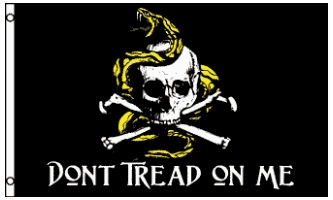
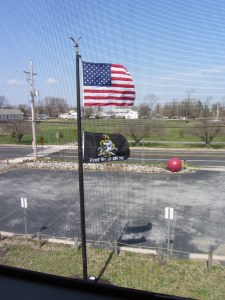
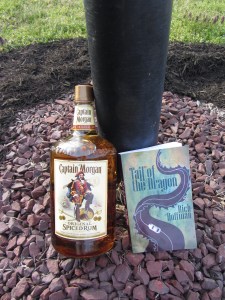
Overmanwarrior FlagIn front of a seafood restaurant in Delaware flies the flag readers of this website will proudly recognize, pictured on the left.  At the base of that flag pole are items the owner of the establishment greatly treasure, pictured on the right.   These pictures were posted by a fan of my new novel Tail of the Dragon.  The rum is a reference to an article I wrote about pirates a few weeks ago.  CLICK HERE TO REVIEW.  She has let me know that these are some of her current favorite things, and her idea of an exquisite evening is drinking some of that rum while reading Tail of the Dragon from her nightstand so that she can crawl into the mind of the novel’s hero Rick Stevens and enjoy his rebellious charisma from the greatest car chase in the history of car chases. Tail of the Dragon and RumAbout halfway through the first draft I realized that I wasn’t just going to tell the action packed story of a modern car chase, but the philosophic underpinnings of a society struggling under the pressure of “statism” and a rebellion against it.  This article is Part IV of a Making Of series for my recent novel which explores the path I took to arrive at its unique philosophy of freedom.  CLICK HERE to review the previous installments.  I had clear in my mind the locations I was writing about, and I understood the rebellious nature of the main protagonist, Rick Stevens, but one thing that still lingered in the back of my mind was the notion of freedom versus collectivism and how those two things are so closely associated sometimes within the same context.  For me, there is no greater example of this duality than in motorcycle riders who claim to be free and independent, yet tend to travel in gangs riding their motorcycles in formation whenever they gather.  This trait was as I saw it a failure of American philosophy so I wanted to become more acquainted.  This was the reason I joined the Suzuki Owner’s Club of North America and quickly became the Vice President of the Ohio Chapter.  One of the tasks of such a leadership position was to organize new membership drives, so the President and I organized a small ride to promote the organization.  The President was from Cleveland and I was from Cincinnati, so we agreed to meet up at a McDonald’s just south of Cleveland and head across the top of Ohio to the Fremont Suzuki dealer south of Sandusky and set up a booth to recruit new members.  It was a planned day trip that seemed like a simple endeavor on paper taking place just a few months after my wife and I traveled to Key West, from Part III.  The trip ended up being a 500 mile adventure that took us to many places throughout the day and would prove to be a memorable escapade that was more epic, than simple.

We left our home at 4:00 AM to meet the President and some of the other Suzuki Owner members at 7 AM.  It was not difficult to cover the vast distance between Cleveland and Cincinnati by motorcycle in such a short time.  With an average speed of 77 MPH, and just a few stops, we arrived at the designated McDonald’s ahead of the other riders.  I enjoyed my affiliation with the Club, but in the back of my mind was the nagging sensation that I felt constrained by my involvement.  I knew I shouldn’t feel this way, yet the closer to Cleveland we became, the more tense I was.  It wasn’t that I didn’t like the President or his riding partners, but it was the feeling that the closer I came to Cleveland the more I lost my individual identity.  I was honored that they invited me to become the VP of the Club after only a few short months, but VP was still a subordinate role, and I’m not a very good subordinate.  Typically if I’m not the leader of the pack, I’m not interested in any endeavor.  I just can’t stand taking a passive role on anything in my life, no matter what it is.

We arrived at the McDonald’s, ate a well deserved breakfast, and met up with the President and his riders outside.  After some brief introductions and typical motorcycle talk, we planned our route to the Fremont dealership roughly 70 miles away across very rural farmland.  There would not be any highway access, so we’d be traveling relatively slowly across God’s country of the Ohio north 40 to 50 miles south of Lake Erie.  Once the route was established on a map spread out across motorcycle fuel tanks we were off.  The President in such groups usually takes the point position on such rides which is slightly off-center to the left of the road.  Riders behind the leader take up positions of formation staggered behind.  I migrated to the back so I could observe the behavior and noticed that the other riders worked very hard to maintain the closest position behind the leader possible.

We traveled across the top of Ohio by many farms and several rain storms before arriving at the dealership right around 9:30 AM.  We were scheduled to arrive at 10 AM so we were a little early.  Once at the Fremont location the President set up a booth for the Club to promote itself.  We spent from 10 AM to 2 PM having lunch, telling biker stories, and talking about various wild adventures.  The company was good, but all the while I had a terribly uneasy feeling that was difficult to shake.  There were three times in my life prior to this bike ride where I had a similar feeling.  The first was in the fifth grade when some girls I knew set me up to “go steady” with the class beauty at the time.  She was a pretty girl, but I didn’t want the obligation to have to speak to her every night on the phone like boyfriends and girlfriends were required to do.  In the fifth grade I had just won the pull-up contest in the Winter Olympics and many people were projecting me to be a star athlete as I was clearly the fastest kid in the entire school.  I could shoot basketball, play hockey, and I was untouchable in dodge ball.    But I hated all those group sports, even though I was excessively good at them.  This drove my gym teacher nuts as he didn’t understand my reservations.  Because I was so good at these sports, this little girl wanted to be my girlfriend so her friends arranged it by nagging me until I said yes.  I went steady with the girl for about 2 hours.  Once I came home from school and was eating dinner and planning the activities of my evening which involved, reading, drawing pictures, playing war with my brother outside, and building a model car, I did not have time for the little girl when she called and wanted to talk on the phone for an hour.  I reluctantly told the girl I wanted to break up.  She cried, all her friends were mad at me for years, but I was free—and that made me happy.  I was free to read my books, draw my pictures, write my stories, and play outside—and that’s all I wanted out of life.  I reasoned that the only reason I wanted to go steady with the girl was because I wanted to see her naked—but that wasn’t a good enough reason to imprison my soul to another person.  When I broke up with her I was greatly relieved.  The second time was when I allowed myself to be talked into trying out for the Lakota soccer team during my freshman year.  I had a reputation as “The Animal,” because I was so vicious when I played the game.  I would often head butt other players intentionally to take out their star players.  I was good at disguising the effort as going for head balls to avoid the yellow cards, so many of my couches and parents who watched me often talked me into trying out for the school team.    The first day of tryouts I was miserable.  I thought the coach was an arrogant bastard and I couldn’t stand the body language of the guy.  He was clearly looking for butt kissers on his team, and that wasn’t me.  He didn’t like my aggressive playing style, or my rebellious attitude.  I also didn’t like the girls who seemed attracted to the school soccer players, the girls who hung out around the practice field and were always being passed around by the other players.  They were short-legged stubby girls with square faces and potato asses, not the kind of girls I was interested in.  So I became more and more belligerent as the tryouts went on for two weeks.  During a scrimmage I head butted our goalie who had called off the ball because he made fun of my haircut in the locker room.  My mother always cut my hair, but she did it in the classic “bowl cut.”  So I sent him home with a bloody nose that day and a loose tooth.  The coach made me run laps hoping I’d pass out, but I didn’t.  I stubbornly completed his assignment, but our relationship deteriorated.  I was relieved to learn that I had not made the team.  I knew everyone would finally leave me alone about trying out for all the stupid team sports, and I could go back to my books and stories without the constant nagging from the adults in my life who kept telling me to grow up and do something “productive.”  A few years later the high school football coach hinted that I should try out for the football team to direct my “aggression” in a positive direction.  But I had a reputation in school as a person who fought way too much, and was utterly unmanageable socially so their urgings quickly ebbed once they saw no light in my eyes over their promises of college football lights and easy girls.  I had no problem with girls, and the lights didn’t impress me, so they didn’t have much to offer.  The third time was when I was 18 and I had a modeling agent who booked me to do a lingerie show with a stage full of beautiful girls.  I had just met my wife and had a choice to go see her for the evening or go to the paying gig that my agent had set up.  The money was good, and there was a chance to meet not just a few beautiful women, but several.  Not the stubby fingered, potato butt girls, but the kind I liked, with long legs, round lips, eyes just perfectly spaced—the kind of girls who strive to become actresses and fashion models.  So I took the job and my future wife cried because she was afraid she’d lose me to the job assignment.  I found out prior to leaving my apartment that my task at the show was to “dance” around the girls lip-synching to David Lee Roth’s song, California Girls.   I was en route to the event, but instead of taking I-75 south, I took I-275 east and went to my future wife’s house.  My agent was furious as she had a stage full of beautiful fashion models but no David Lee Roth impersonator to dance on stage around them.  The show tanked, and I never worked as a model again.  But I did get married to my wife a year later.  She drew a line in the sand and told me that she didn’t care about making money if I had to make money doing stupid things like dancing on a stage to David Lee Roth songs.  Once I arrived at her house, I felt free of that social pressure to perform to expectations that the media culture valued, but were at odds with my own beliefs.

Now, that nagging feeling was there again in the motorcycle group at Fremont.  I was helping to register new members to a group that I was Vice President of, which I became a part of in much the same fashion as in the stories just told.  I was a reluctant participant.  My talents were desired for various reasons to serve collective institutions, and I have ALWAYS been reluctant to surrender my sovereignty to anybody ever, no matter how beautiful, how lucrative, or under any amount of pressure.  I have always turned obligation away in favor of freedom.  I often say yes initially because I like to help people, but when things get too cozy in the collectivism department, I always look for a way out.

I pulled my wife to the side and suggested to her that when the event was over at 2 PM that we not ride back to Cleveland with the Suzuki group but instead go up the road to Cedar Point and ride roller coasters the rest of the day, since we were close.  She shook her head knowing what was driving me, as after twenty plus years of marriage she had come to understand my decision-making processes.  When it was time to take down the tent, I informed the guys that my wife and I were going to Cedar Point, and not riding back in formation to Cleveland.  I got some puzzled looks, but they agreed to go on without us.  We spoke in a friendly manner as we parted promising to touch base by email when we all returned home.  The minute I was back on my motorcycle going north as they traveled east I felt the shackles coming off me and I enjoyed freedom once again.  That was the last time I would ever see those guys, and the email messages never came or went either way again.  That was my last day as Vice President of the Ohio Chapter Suzuki Owners Club of North America.

My wife and I had fun on the bike trip, but our day really opened up into a wonderful experience once we arrived at Cedar Point about 45 minute later.  It was a relief to not have to ride in formation, to recognize a leader of any kind, to adhere to any kind of pecking order, to go where we wanted when we wanted to go, and to have the freedom to make a decision and to act on that decision.  We spent the rest of the day at Cedar Point until the closing time of 10 PM that night.  Once they closed the doors on us, we got on our motorcycle and headed for home.  We arrived back around 3 AM–23 hours and 500 miles later.   It was a cold ride home, so we were fairly frozen.  We warmed up in our hot tub and I wrote notes on my laptop from the day while they were fresh in my mind as I hung over the side of the Jacuzzi typing madly.   The thoughts of that day made it into my opening chapter which went on for nearly thirty pages.  My editor had me cut it down to roughly the first 5 pages of the final Tail of the Dragon draft.

Freedom is a difficult concept to understand, especially for those who aren’t nearly as stingy with it as I am.  People find themselves agreeing to things they otherwise wouldn’t do because some collective force applies pressure to them to say “yes,” then once they do, they are stuck in rigid confinement.  Most people become used to accepting this gradual loss of freedom, so they don’t see the effects of socialism seeking to subtly impose itself upon their lives.  I never developed that problem, so it’s easy for me to see.  In Tail of the Dragon I had to create in the characters of Rick and Renee Stevens two characters who valued their freedom to such an extraordinary level that they would not yield to those tiny encroachments, so that their refusal would cause the next Civil War in America in an understandable way.  I wanted readers to see what freedom was supposed to look like, how it felt, and how tasted, because most people don’t know what freedom is at all—as they are encumbered with too many obligations.  Freedom is the essence of what Tail of the Dragon is all about, freedom from clubs, from socialites, from agents, from coaches, from all the pressures of life which desire to steer a human mind in a direction that is not authentic to the individual.  My experiment to investigate a collective entity had proved fruitful if it did only last about 2 months.  They were two months well spent, because the result found its way into literature for all time, and many years beyond.

And a special thanks are deserved for Kathy.  I appreciate her flying that flag in front of her Delaware seafood restaurant, and I appreciate the effort she put into making my day a little better by displaying Tail of the Dragon so proudly.  It was for such people I wrote the novel and I am happy to know that Captain Morgan is going on the adventure with her.

Rich Hoffman

CLICK HERE to see what my publisher had to say about my novel Tail of the Dragon.

Visit the Tail of the Dragon Store and meet Ron Johnson


“Like” Tail of the Dragon on Facebook by CLICKING HERE 

If the novel is SOLD OUT at Amazon.com try Barnes and Noble by CLICKING HERE.

 “If they attack first………..blast em’!” www.tailofthedragonbook.com
The Lakota Levy Cheerleaders: Ignoring facts, spewing hate, and spreading lies all in the name of children

“Even with these cuts, Lakota schools are still worth “cheering” for.  We are not part of a losing team, but our children and grandchildren could lose out on future opportunities if there isn’t more financial support.  So, let’s drown out the Rich Hoffmans of our community by making the next levy a successful one.  If that happens, we all win.” 

“GO TEAM GO…….HURRAHHHH”

The above statement was written by Lakota Levy cheerleader Laura Sanders, who responded to my Letter to the Editor in the Today’s Pulse April 14th edition.  The letter she is responding to I have placed below for ease of review.  As to Laura’s fantasy that she will drown out the Rich Hoffmans of the community, I have very bad news for her.  I can swim longer than anybody she knows and I can shout louder—far louder than I have so far displayed.  So if that is the path she and her levy cheerleaders wish to follow, I am looking forward to it.  I have also placed below the letter she put in the paper for analysis.  I will answer her assertions following her text.

First the letter I submitted:

The Lakota Levy Cheerleaders

Combined with the Lakota Superintendent’s articles here in the Journal, the “Community Conversations” program, along with a few pro Levy speeches, and I can’t help but feel that I’m watching a football game where the home team is losing 45 to 0 yet the cheerleaders are still on the sideline with their pom poms in hand completely oblivious to the events happening on the field of play still reciting the “cheers” they learned in practice.

Much to their dismay, the “Levy Addicts” who are pounding the drums for another tax increase this year and are attempting to soften the resistance with new strategies, the score up on the board is not in their favor.  Lakota as a district is about to see an influx of income from the Liberty Way Development, the Carriage Hill Development, and the continued growth of the Union Center corridor.  All the tax revenue coming in from these activities will be more than the previous year.  Combine that trend with the 10 year projection of declining student enrollment due to the number of homes in Lakota without children increasing–balancing the budget without a tax increase should be easy.

The old mantra that education is for the “kids” is old and worn out.  Nobody believes it any more just like nobody believes the home team is going to win when the score is so lopsided yet the cheerleaders are still on the sideline saying the same mindless drivel that they have the entire game.  What the levy supporters want with tax increases is simply a glorified community babysitting service.  What I have learned about public education these last couple of years does not lend credence to any kind of education quality even for so-called great schools like Lakota.  For the 18,000 people who have turned down these levies over the years for multiple reasons, we have no choice but to support the product now, which is currently too expensive.  It is simply unfathomable to ask for more, especially when the score is so lopsided—in spite of the mindless cheers.

Rich Hoffman

Now, Laura Sander’s response:

Lakota Schools Still Worth ‘Cheering’ For

Here we go again:”……levy addict…glorified community baby-sitting service.”

Wasn’t Rich Hoffman already discredited by the media one year ago because of phrases like this and previous comments such as “…crazy PTA moms and their minions of latte drinking despots with diamond rings the size of car tires and assess to match…”

Maybe Mr. Hoffman thinks its clever using metaphors comparing levy supporters to mindless cheerleaders (another attack on women).  Unlike his approach, I prefer to use facts.

Mr. Hoffman claims that Lakota will “see an influx” of tax revenue after new developments are built.  That sounds great, but it’s not reality. Commercial property contributes very little to school funding and has not kept pace with residential growth.  Gov. John Kasich cut $1.8 billion from schools over the last two years and his current budget increases funding for charter schools and proposes additional vouchers on private schools, once again depriving public education of money.

Ohio’s charter schools received $775 million from the state last year.  That amount of money could fund numerous public school districts.

Lakota Treasurer Jenni Logan predicts the district will face a $1.8 million dollar budget deficit by 2014.  This is after $35 million in cuts over the last three years, which has resulted in minimal bus transportation; larger classes; fewer days for art, music and gym; no reading specialists; a dismantled gifted program, etc.

Even with these cuts, Lakota schools are still worth “cheering” for.  We are not part of a losing team, but our children and grandchildren could lose out on future opportunities if there isn’t more financial support.  So, let’s drown out the Rich Hoffmans of our community by making the next levy a successful one.  If that happens, we all win.

Laura Sanders

Now to address Laura’s points:

  1. I never said the cheerleaders were women or girls.  Isn’t it sexist and presumptuous of to assume that all cheerleaders are “women?”  Just because they are traditionally women does not mean that cheerleaders are not men too.  They have men sometimes, especially in college.  Whether there are men or women, cheerleaders have a job to do and that is to engage the audience with positive entertainment no matter what the actual conditions of the game.  That job is more difficult if the score is so bad that it is obvious the team they are cheering for is going to lose.  It helps the cheerleader’s task to not pay too much attention to the facts on the field and just repeat what they have been taught in practice, no matter what the reality on the field displays to them.  It is a proper metaphor for what is going on at Lakota with the cries for yet another levy.  Laura and a handful of others have behaved very similarly to the metaphor I used.  But I never said the cheerleaders were women.
  2. Laura’s plan might have been to discredit me in the media with her fellow cheerleaders but what she didn’t understand was that rules have changed. (TO READ WHAT LAURA SAID ABOUT ME IN THE ENQUIRE CLICK HERE) For instance dear reader, have you ever been in a classroom atmosphere where a question was asked, and you knew the answer, but you were afraid to raise your hand for fear that you’d answer incorrectly and look like a fool.  Then as you look around you discover that only one guy in the class was raising their hand.  The rest of the class felt just as you do, and kept their hands down.  Then that one guy is called on and answers the question and then you are angry with yourself because he said the same answer that you had in your mind.   If you had only had the guts to raise your hand, you would have been right.  Well, I’m that guy with his hand up, and when I say something I am saying the same thing that most of everyone else is already thinking.  Most people agree with me.  After I called levy supporters “latté sipping despots with diamond rings the size of car tires and assess to match” I was saying what most everyone else was thinking, but was afraid to speak it public.  (CLICK TO READ MORE)  I brought up the PTA moms because I knew of a few cases, especially one at Cherokee Elementary where boycotts were organized against businesses that did not support the school levy.  (That would be the J.D. Stackerz Bar and Grill situation between a high-ranking administrator  calling PTA members personally to organize a boycott in direct violation of Ohio Revised Code ORC 3315.07 (C) (1) and (C) (2) described below.)

(C)(1) Except as otherwise provided in division (C)(2) of this section, no board of education shall use public funds to support or oppose the passage of a school levy or bond issue or to compensate any school district employee for time spent on any activity intended to influence the outcome of a school levy or bond issue election.

(2) A board of education may permit any of its employees to attend a public meeting during his regular working hours for the purpose of presenting information about school finances and activities and board actions, even if the purpose of the meeting is to discuss or debate the passage of a school levy or bond issue.

  • I sat on the story because the owner was terrified to come forward in fear of losing her business.  Well, guess what, she lost her business a few months later.  I took the story to The Enquirer—who didn’t cover it and I took the story right next door to the Pulse Journal who wouldn’t touch it.  With the kind of power the business owner felt was against her, she asked me to sit on the story, which I did.  Surely all the Levy Cheerleaders know all about it.  That kind of behavior is extortion, and is an attempt to win elections with coercion which if this wasn’t a government school would be considered criminal activity with jail time attached.  Because it’s a school with a tremendous public relations budget, no court would attempt to enforce Ohio Revised Code ORC 3315.07 (C) (1) and (C) (2).  I find stories like that one appalling, and made even worse because they are done behind the cover of children.  I consider anybody who would engage in that kind of activity to be morally bankrupt and a detriment to society.  You are lucky I held back my tongue on that comment because a lot more descriptive dialogue was on my mind.  Now, for the other case which I have document release, CLICK HERE to view. 
  • As to my being discredited let me shed some light on that little topic.  WLW was running dry, we covered education till we were blue in the face and it was starting to drag on the ratings.  They wanted to swing more toward sports talk radio; I wanted to take the rhetoric to a higher level because of the behavior by the school board after the third levy failure and the decision by Karen Mantia to not engage the teacher’s union with a pay reduction.  So we were going to part ways anyway, especially after Doc Thompson left.  Traditional newspapers like The Enquirer and The Pulse were stuck between pro levy people and me and they had to pick a side.  After Michael Clark’s behavior with the exclusive I gave him regarding Yes to Lakota Kids, I knew where he was going, in the direction where his wife was employed—in public education.  So traditional media did pull away, and I had been holding my tongue to keep them in my corner until I had a suitable network built that could sustain those loses when they occurred.  Once I had it secure, I let my tongue speak.  In addition apparently Laura missed this Channel 19 interview once it was announced that Lakota wouldn’t be seeking a levy in 2012.  CLICK HERE TO SEE FOR YOURSELF. So much for discredit.  

I.            I knew when Karen Mantia arrived in town that she would seek to attack No Lakota Levy diplomatically and split us from the inside.  That is after all what she did in Pickerington and the people from up there warned me ahead of time what her mode of operation was.  In a personal meeting I had with her I got a wonderful feel for how she was going to play her hand.  So I started to set up my operation independent of my partners in No Lakota Levy. If they stayed, great, if they broke, I could still proceed on as planned. They had showed signs of cracking earlier in the year, so I didn’t think they’d stay the course through a fourth attempt.  On the third levy, they handled the sign delivery around the community during the last two weeks of the campaign and little else.  I took care of all the media work, the blog postings, the debates and anything else that came up.  If I lost them politically for the fourth levy attempt, which I felt was Mantia’s strategy—based on our meeting, I would have to maintain my ability to continue.  In future levy attempts I would need the more radical members of the No Lakota Levy front to continue the fight.  Many of them were frustrated that I didn’t hit the school hard enough often enough.  My response was that a day would come when we would be able to hit as hard as they wanted.  But for now, in the early stage of these levy fights, we had to save the best tricks for later—which we have.  Most of the primary members of No Lakota Levy wanted to form Yes to Lakota Kids which I wasn’t crazy about, because they were tired of being called selfish businessmen—again by the PTA community.  The threats of boycotts and other harassing measures were unconscionable in my opinion, and I couldn’t get Michael Clark from The Enquirer to cover those stories either.  This left those members to strive for a public image campaign with Yes to Lakota Kids, which I felt was just feeding the monster.  The sports fees shouldn’t have been put in place and even though we were raising $10,000, it felt to me like a drop in the bucket.  So I wasn’t happy, but I represented their interests out of friendship.  In private, on my blog, and elsewhere I voiced my opinion.  Laura’s desire to make some of those comments one of sexism is a surrender on the pro levy position.  They know they cannot win based on their arguments, so they played the progressive “feminist” card in an attempt to remove me from the debate.  But, as predicted, there were a lot of silent handshakes and smirks about my comments from people who had been thinking the same thing.  I just gave them a vehicle to vent their frustrations.  A lot of the votes that the pro side wins from arm twisting, extortion, and other forms of coercion came back my way due to my controversial comments, which is what I needed to do on my side to prepare for the next try.  Voters were just waiting for someone to articulate what they were already feeling.

II.            Now as to facts………….I have delivered facts, upon facts, upon facts.  Laura’s statement that she is dealing with facts whereas I am not is typical of the pro education debate where they ignore all facts except the ones they wish to see.  It’s that cheerleader mentality again.  If they look up on the scoreboard they don’t want to see a 45 to 0 score.   They simply look at the clock to see what time it is.  They ignore the actual score because they have a show to perform, and can’t let the facts ruin their desired reality.  So here are the facts as she addressed them.

  1. Laura ignores in her statement that Lakota has a 10 year declining enrollment projection which means that student enrollment will be decreasing.  That means Lakota will have to lay off teachers, consolidate schools, and roll back their staff to accommodate the lower student levels.  With tax revenue staying the same, and enrollment going down, any idiot should be able to balance their budget.  That is unless they plan to give away the farm on the 2014 labor contract that is coming up with the LEA.
  2. Laura obviously doesn’t know anybody with commercial property who has to write a check on their property values at $1.5 to $5 million dollars.  Businesses are taxed at the same rate as residences, and there is a lot of business in the Lakota district.  To say that commercial business does not contribute much to school funding is like saying that the sun does not contribute to sun burn.  It’s a statement based on levy propaganda and a denial of the facts.
  3. Kasich did not take money away from Lakota in 2012 and the spending on school vouchers and charter schools is a very good thing which I support 100%.  Public schools need to become profit motivated and drive their costs down, not up.  I want to see a chart that shows the per pupil cost at Lakota going down each year, not trending up.  Education options are what drive down costs, and I am happy to see that Kasich put more money into charters.  To speak otherwise is to be a stooge for the labor unions who wish to maintain a monopoly status on public education.  If Kasich had thrown the $775 million dollars she discussed at Ohio’s public schools the unions would have gobbled it up like a black hole.  They’d be hungry for more money the very next year.  $775 million dollars does not go very far in public education.  Not when the budget just at Lakota is near $200 million with undeclared costs added of course.
  4. If Lakota is predicting a $1.8 million dollar deficit in 2014 it is because they have mismanaged the money the tax payers have already sent them.  The fact that Karen Mantia cut bus transportation, dismantled the gifted program, reading specialists, has fewer days for art, only says that she did exactly what she was taught in Levy University at the OSBA Conference in Columbus point for point.  If Lakota decided to cut those types of programs instead of doing what No Lakota Levy told the school board to do, and that was present a 5% reduction of wages to the union, they are guilty of mismanagement.  They have let the “tail wag the dog.”  They have failed to handle their labor contract, it’s that simple, and that failure is on her management style.  As a former teacher herself, Mantia aligned herself with the employees of Lakota and not the community who pays the bills.  That is her failure and if there is another levy, it will be due to her mismanagement of the finances provided, especially since student enrollment is on a sharp decline.

I spent a good part of this past Friday evening speaking to a reporter about virtually everything that I’ve said here.  We are living in a new age; traditional media doesn’t hold the same power that it once did so creativity and innovation favor those on the side of the truth.  The only thing that has held back others from jumping on the No Vote bandwagon was fear, because they have truth on their side, which is what I explained in a speech recently to a group I spoke to in Oxford.  CLICK HERE FOR REVIEW.  My hope after the third levy attempt was that I could inspire more people to step forward so that it wasn’t always Rich Hoffman doing everything, because that can only go on for so long.  To have a healthy resistance, the formations have to constantly change, and new players have to be rotated in and out just like in a military engagement—because that is what we are fighting.  Public education is not a nice institution that is protecting children as it’s sold; it’s a government propaganda machine and a babysitting service for parents too busy to care for their own children.  I really don’t care if that makes people angry, because it’s true, and there are enough residents at Lakota who have grown children who know that it is.   In the next levy attempt it is my hope that there are 20 levy fighters doing what I was doing in the first three at Lakota.  I think that will be the case, and if it’s not, then I will pick up the slack……………..gladly.  I’m happy to be civil if the pro levy people are, but if they wish to be uncivil—like they usually are, I will respond—as I have.  Meanwhile, my advanced position on all public education is that it should be abolished as a tax payer funded entity off property tax.  If Laura Sanders wants certain things for her child to learn, then she can pay for it.  I’m tired of paying money for people like her to benefit, while they constantly complain that other people should pay more taxes.  CLICK TO REVIEW THE KIND OF THINGS KIDS ARE BEING TAUGHT ABOUT EDUCTION FROM THE LAST CAMPAIGN. That kind of thing makes me absolutely sick.  And when she states that commercial businesses do not contribute much in property taxes, she’s clearly not up to speed.

So go ahead and test me Lakota people.  Go ahead and think that people are going to fall for the same old emotional arguments of the past, the accusations of sexism, selfishness, and compassion, and see where it gets you.  I have saved a lot of people hundreds of thousands of dollars around Lakota and I purposely kept the budgets low in the previous three levy attempts so that the coffers would be there when I needed it.  So when Laura Sanders says as she did in the opening of her letter………….. “Here we go again” that’s right.  If they want to go again, they will see more fireworks than they’ve ever seen before……especially since my next campaign will be using new media, not traditional media.  I don’t have to worry about offending people in the next attempt, now that the resistance network is built with fresh faces.  For me this is a moral argument now, not just a financial one.

I would say this to Lakota.  I am happy to do as I promised at the beginning of the deal in 2012 when it was agreed to not put a levy on the ballot.  I am happy to leave Lakota alone in my crusade against public education if Lakota keeps its head down and out of the voting booth.  Take the declined enrollment and ride off into the sunset, because if Lakota puts itself on my radar, it will be their own fault.  That is a bit of friendly advice.  Or, Lakota can listen to the winds of war from the pom poms of Lakota’s Levy Cheerleaders and see who can swim the longest and shout the loudest.  And I know where the Vegas odds makers will put their money—and it isn’t on Lakota.

Rich Hoffman

166701_584023358276159_1119605693_n“If they attack first………..blast em’!”
www.tailofthedragonbook.com

George Lang on 55 KRC with Brian Thomas: Success in West Chester, Ohio and why

It shouldn’t be astonishing to hear, but Brian Thomas of 55 KRC had difficulty hiding his surprise during an interview with George Lang, who is a trustee from West Chester, Ohio.  Lang was fresh off a vote where he stood against the other two trustees on the board who wanted to file for a federal grant to build a new sidewalk in the community he represents.  During the interview Lang explained to Thomas that building sidewalks was not a part of the core competency of local government and was irresponsible.  Brian Thomas has a history of advocating such small government positions and was noticeably impressed by Lang in a conversation that should be the standard for every politician in America.  Hear it for yourself at the clip below.

One of the most remarkable aspects of Lang’s comments is that he didn’t attempt to do as almost every politician has done for decades and take credit for the success of West Chester as a township due to his political leadership.  Instead George Lang made it known that the success of West Chester is not because of any policies of government.  The success of West Chester is not because of any law that was created by the trustees.  The success of West Chester is because politicians like Lang have managed to create an environment where businesses can make money, which brings jobs to the township, creates tax revenue, and feeds the economic life blood of the community.  Without jobs, there isn’t any money for anybody to spend on restaurants, shopping complexes, or on any form of charity.  George Lang understands that the secret to success in any community is to keep government off businesses backs as much as possible so that a friendly commerce environment is conducive to growth.

It is very tempting for a typical politician to declare that the success of a community like West Chester is due to the construction of sidewalks, or the quality of the schools.  But the truth is that communities are not built by government in any fashion, they are established for good or bad by the quality of the residents who live there.  In the case of West Chester, where there is a pro business environment, investment makes sense to entrepreneurs.  They come to West Chester to make money, not to serve some altruistic purpose.  The only reason that a business would endeavor to set up a place of exchange where they offer goods or services is for the benefit of profit.  The byproduct of that profit is in jobs provided to the community, and money to spend on other businesses.  Without business, a community is a failure.  There cannot be success if there is no business.  If there are no jobs, there is no money for other businesses, and there are no taxes for the government to loot from.  In essence, there is nothing without business.

Brian Thomas was surprised that George Lang understood this very basic economic principle, since it would appear that most of society at large has failed to come to grips with such an elementary idea.  The school system Lakota in West Chester is one of the largest in all of Ohio, and they are proud of their Excellence with Distinction awards obtained for over a decade of consecutive years.  The government workers at the school wish to believe that the cause of their excellence is in their wonderful skills as employees.  But they are wrong.  The cause is that the children who come to their schools and attend their classes are better than children from other classes in other schools.  With government schools, one teacher is not better than another since they are all trained the same way and are motivated by the same profit structure.  Collective bargaining in union contracts means that bad teachers get paid the same as good teachers so every school has good and bad teachers proportionately no matter what the school or the pay rates as pay is primarily dictated by years of service and not performance.  This means that the elements that make one school better than another is the quality of the children who attend, and that quality starts in the home.  In West Chester there are an above average number of homes with two parents, most of which have traditional families.  Unemployment is low with government dependence on welfare being nearly non-existent.  The children who show up at Lakota come from families that value private property and respect responsible behavior, and have parents who participate in children’s lives.  As I have said many times, all the employees of Lakota could be eliminated with a RIF and replaced with employees fresh out of college from every position, and Lakota would still be ranked Excellent with Distinction.  The children would perform the same, because the parents tend to care about their kids, and those parents tend to work in jobs in and around West Chester.

The quality of a community begins with the number of businesses in it, and the amount of money they can make.  For proof look at any community anywhere in the world where government has stuck its nose into the affairs of entrepreneurs and it will quickly be noticed that these places have empty buildings with signs in them looking for suckers to lease them.  But nobody in their right mind would sign a lease in a community that has a looting government that wishes to stick them on a cross to suck out their life in service to the altruistic aims of a pathetic name-plate addicted politician.  Most of the time politicians attempt to do as all government does, especially schools–they take credit for the success and efforts of others with collective ownership.  These types of politicians are like those football fans who leave a stadium after the quarterback of their favorite team throws a last second touchdown to win the game.  Upon leaving these fans declare, “WE WON.”  They are mistaken.  The quarterback won with his individual effort.  The fans simply sucked off his success to share in the glory of victory.  Government schools do this all the time, and politicians are notorious for performing such social looting.  They wish to believe that just because a business posts a profit after four quarters of activity that they had some input into that success because they built a sidewalk, or created some foolish zoning ordinance regulating signs and other forms of advertising.  But the politician is actually worthless.  All they can really do for their communities is fulfill their core competency obligations which is to protect private property.  Anything more than that is theft and looting of other people’s effort.

George Lang is only one of three trustees in West Chester.  One is a registered Democrat who is no different from the typical fan at a football game.  They proclaim “they” win but the reality is that they only sit on their ass and watch others do important things.  The other one is a registered Republican, but behaves like an extreme socialist from Greece.  That particular politician is the kind of football fan that watches the game at home and falls asleep in their chair with a bag of nachos lying across their bloated belly and wakes up four hours after the game is over and declares, “WE WON.”  Meanwhile the warriors on the field of battle who actually played the game have long showered and are at home playing video games on their Xbox unites.  With only one trustee of any real worth understanding that creating a pro business friendly environment is the key to economic growth and community prosperity West Chester has thrived.  If those other two trustees could be replaced with other politicians like George Lang the success West Chester could experience would be explosive.  But any community could have success if they thought like George Lang.  It is because they don’t that Brian Thomas was so surprised by an elected politician who actually understood that the key to success in politics is to sit down, shut up, and let the players on the field play the game.  Stay out-of-the-way of business, and politicians will bring wealth to their communities.  The more they tamper, the worse their economies will be.

Rich Hoffman

166701_584023358276159_1119605693_n“If they attack first………..blast em’!”
www.tailofthedragonbook.com

The NRA 500: I will be proudly watching!

I normally spend a lot of time articulating my thoughts on a matter, but to CBS This Morning, and Senator Chris Murphy on their reaction to The NRA 500 I will only say this……………..don’t be a pussy.

I support the NRA 100% and do not appreciate the kind of liberal extremists who seek to capitalize off the death of children in Connecticut by spewing their weak-kneed rhetoric on the nation’s airwaves and assuming that the values of Central America are the same as the latte sipping East Coast. A pussy is the only word I can think of for such pathetic, looting politicians and television commentators, and I have a rather extensive vocabulary. For goodness sake, what a bunch of wimps.  No wonder that kid in North Korea thinks he can attack The United States………………………and win.

A lot of America is made up of people like Ted Nugent seen below.  Most of the people I know are like him, and they are not the extremists.  They may seem that way compared to people afraid of their own shadow like Senator Murphy, but that is not a good measure of reality.  It is the Karl Marx loving pussies from the East Coast who look for every tragedy to advance their careers and they should be ashamed of themselves. Because of their comments I may actually watch all four hours of the NRA 500.

And I’m looking forward to the six guns at the end. Enjoy the show Senator Murphy!  NASCAR is obviously not your thing.  Enjoy a game of ping-pong, its more your speed.


Rich Hoffman

166701_584023358276159_1119605693_n“If they attack first………..blast em’!”

www.tailofthedragonbook.com

Barack Obama’s ‘The Road We’ve Traveled’ : Support given to Fabian Socialism’s “Free Enterprise into ‘X’”

How dangerous, and to what extent is Barack Obama a threat to The United States?  Well, if you happen to be a Fabian Socialist, he is a dream come true.  But if you happen to be constitutionally minded traditionalist who takes great pride in the history of America, Obama might as well be Satan.  Barack Obama appears to be so in love with Fabian Socialism that he named his Hollywood produced campaign video shown below after the famous book by socialist Stuart Chase, titled The Road We Are Traveling.  Obama called his video The Road We’ve Traveled, hosted by none other than Tom Hanks.  The comparison is more than a coincidence; it’s an insider’s nod to the kind of economic theory by Chase who helped give FDR’s New Deal its name – an act that Barack Obama reveres greatly.

The biggest difference between a Fabian Socialist and a regular socialist is that the Fabian believed in a long gradual, patient change to society rather than one brought about by revolution such as the method used in the U.S.S.R. to deliver that country to communism.  Fabianists rather took the slow route which was the preferred method of Stuart Chase.


Fa·bi·an (fâ¹bê-en) adjective

1.    a. Of or relating to the caution and avoidance of direct confrontation typical of the Roman general Quintus Fabius Maximus. b. Cautious or dilatory, as in taking action.

2.    Of, relating to, or being a member of the Fabian Society, which was committed to gradual rather than revolutionary means for spreading socialist principles.
[Latin Fabiânus, after Quintus Fabius Maximus Verrucosus.]

— Fa¹bi·an noun

— Fa¹bi·an·ism noun

— Fa¹bi·an·ist noun[1]

Fabian Society, British socialist educational organization that advocates social change through democratic reforms. It was founded in London in 1884 by a group of intellectuals who rejected the Marxist theory of class struggle but wished to promote equality through collective ownership and democratic control of the nation’s resources. Devoted primarily to education and social research, the Fabians never constituted themselves as a political party. However, in 1900 they participated in founding the Labour Representation Committee, now the Labour Party.[2]

Stuart Chase (March 8, 1888, Somersworth, New Hampshire – November 16, 1985) was an American economist and engineer trained at MIT.[1] His writings covered topics as diverse as general semantics and physical economy. Chase’s thought was shaped by Henry George, Thorstein Veblen and Fabian socialism.[2] Chase spent his early political career supporting “a wide range of reform causes: the single tax, women’s suffrage, birth control and socialism.” [2] Chase’s early books The Tragedy of Waste (1925) and Your Money’s Worth (1928) were notable for their criticism of corporate advertising and their advocacy of consumer protection.[3]

Chase was among the dozen or more prominent members of the temporary committee which conducted the affairs of the Technical Alliance which later formed into Technocracy Incorporated, (Technocracy movement).[4][5]

Although not a Marxist, Chase admired the planned economy of the Soviet Union, being impressed with it after a 1927 visit. Chase stated that “The Russians, in a time of peace, have answered the question of what an economic system is for”.[2]

It has been suggested that he was the originator of the expression a New Deal, which became identified with the economic programs of American president Franklin Delano Roosevelt. He wrote a cover story in The New Republic entitled “A New Deal for America”, during the week that Roosevelt gave his 1932 presidential acceptance speech promising a new deal, but whether Roosevelt’s speechwriter Samuel Rosenman saw the magazine is not clear.

His 1938 book The Tyranny of Words was an early (perhaps the earliest, predating Hayakawa) and influential popularization of Alfred Korzybski‘s general semantics.

Chase supported the isolationist movement and was against US entry in World War II, advocating this position in his 1939 book The New Western Front.[1]

In the 1960s, Chase lent his support to the Johnson administration’s Great Society policies.[1]

Chase is famous for the quote at the end of his book A New Deal, “Why should Russians have all the fun remaking a world?” — a reference to the “socialist experiment” in the Union of Soviet Socialist Republics (USSR).[6]

He is quoted in S. I. Hayakawa‘s Language in Thought and Action as having said, “Common sense is that which tells us the world is flat.”

On pages 95 and 96 of The Road We Are Traveling, under the heading of “Free Enterprise into ‘X'”, Chase listed 18 characteristics of political economy that he had observed among[8] Russia, Germany, Italy, Japan, and Spain between 1913[9] and 1942. Chase labeled this phenomenon “… something called ‘X'”.[7] Characteristics include the following:

  1. A strong, centralized government.
  2. An executive arm growing at the expense of the legislative and judicial arms.
  3. The control of banking, credit and security exchanges by the government.
  4. The underwriting of employment by the government, either through armaments or public works.
  5. The underwriting of social security by the government – old-age pensions, mothers’ pensions, unemployment insurance, and the like.
  6. The underwriting of food, housing, and medical care, by the government.
  7. The use of deficit spending to finance these underwritings.
  8. The abandonment of gold in favor of managed currencies.
  9. The control of foreign trade by the government.
  10. The control of natural resources.
  11. The control of energy sources.
  12. The control of transportation.
  13. The control of agricultural production.
  14. The control of labor organizations.
  15. The enlistment of young men and women in youth corps devoted to health, discipline, community service and ideologies consistent with those of the authorities.
  16. Heavy taxation, with special emphasis on the estates and incomes of the rich.
  17. Control of industry without ownership.
  18. State control of communications and propaganda.

Source Wikipedia

http://en.wikipedia.org/wiki/Stuart_Chase

It is clear that after watching Barack Obama for nearly five years as of this writing, he is attempting to bring to America the implementation of all 18 items on Stuart Chase’s list.  For political insiders, who Obama’s title for his campaign video was a wink and a nod to their real intentions as most Americans had no idea what a Fabian Socialist was, the intentions are extraordinarily clear.  Most people don’t even understand what the history of the Labour Party in England was, which was the party of Tony Blair who got along so very well with George W. Bush, so they won’t understand the subtle messages Barack Obama’s team used to communicate their intentions to the Fabian loyalists who currently make up so much of the current federal government in modern America.  The American people have been sideswiped by a modern president that is clearly working from the playbook of Fabian Socialists like Stuart Chase.  But the goal of the Fabians is not only as deep as Obama, but go back to the time of Franklin Delano Roosevelt and Lyndon B. Johnston.  It is the Fabian Socialists who put their mark on The New Deal ushering in the era of “Social Security” and the “Great Society” which gave us Medicaid and Medicare.  Those programs are now off the table of discussion as most Americans have found themselves using those socialist government concepts in some fashion, and as they will all say – “Of course I’m going to use the program.  I paid into it, so I’m going to get out of it what I can.”  Thus…………you can see the work of the Fabian Socialist—patient, calculating, manipulative, smug—knowing that once they made America addicted to socialism, voters would never turn it away.  The same mentality has been at work behind Obamacare.  The goal is not affordable health care, or even helping the poor.  The goal is gaining federal control of 1/5th of the American economy so that the government can dictate what we eat, where we go, what kind of jobs we perform, and what type of relationships we conduct ourselves with.  The recent endeavors of Mayor Bloomberg in New York City are just the tip of the ice berg when it comes to what the Fabian Socialists wish to do with the government of our American Republic.  In the video below, Glenn Beck provides video research into more aspects of Fabian Socialist, Stuart Chase, and their connection to modern-day President Obama.

The strategies of Stuart Chase were not the intentions of The American Revolution, our Declaration of Independence, or our state and federal Constitutions.  Rather, Fabian Socialists have sought a legal way to supersede our traditional governments with scams designed to erode away our sovereignty slowly over a long period of time.  The success in America that built the skyline of present day New York City, or virtually any business in The United States from “old money” came from the laissez-faire capitalism tendencies during the period directly after the Civil War.  What the Fabian Socialists originating from London, England did with their version of socialism has been far more destructive than their direct attempts to destroy America in either The Revolutionary War or the War of 1812.  Through the progressive era just ahead of Stuart Chase’s time, they have managed with patience to put the brakes on American economic development by saddling our politics with gradual elements of socialism aimed at specific demographic voting blocs.  The aims of the 18 items listed by Stuart Chase are being actively pursued through the American education system, nearly every government office, and nearly every business in America who must deal with federal audits and inspectors to whatever degree.  Fabian Socialism is in the life of virtually every American in every corner of the country, and they were put there with the Trojan Horse of kindness, compassion, and manipulative schemes.  They have been furthered in recent times with videos like the one produced by the Obama White House delivered with the pleasant voice of Tom Hanks and presented in a way that any logical viewer would conclude to be reasonable, and even beneficial.  But what the nice voice of Tom Hanks does not tell you with Obama’s subtle nod to one of his economic mentors in Stuart Chase was that David Axelrod, and the others who appeared in the video are the modern equivalents of the traditional Fabian Socialists.  They don’t call themselves such things by name for fear that the American public would reject them, but they believe in the kind of government Stuart Chase discussed in his book, The Road We Are Traveling.  So now dear reader, you know as Paul Harvey used to say, the rest of the story when you see propaganda films done about Barack Obama titled, The Road We’ve Traveled.  Obama intends to say that the road mentioned in Chase’s book has already happened.  In Stuart’s day America was traveling down that road, but under Barack Obama, Stuart’s goals have been obtained.  That is why Obama’s public relation handlers changed the title from “we are” to “we’ve.”  So observe what the enemy of capitalism is all about and their weapons which are in those 18 points.  They are already here, and will stay unless they are defeated and vanquished.  That is the reality of the Obama Presidency and the hidden intentions of its administration.


[1]Excerpted from The American Heritage® Dictionary of the English Language, Third Edition  © 1996 by Houghton Mifflin Company. Electronic version licensed from INSO Corporation; further reproduction and distribution in accordance with the Copyright Law of the United States. All rights reserved.

[2]Encarta® 98 Desk Encyclopedia © &  1996-97 Microsoft Corporation.

All rights reserved.

Rich Hoffman

166701_584023358276159_1119605693_n“If they attack first………..blast em’!”

www.tailofthedragonbook.com

Miguel’s Pizza at Red River Gorge: The best pizza I never had a chance to taste

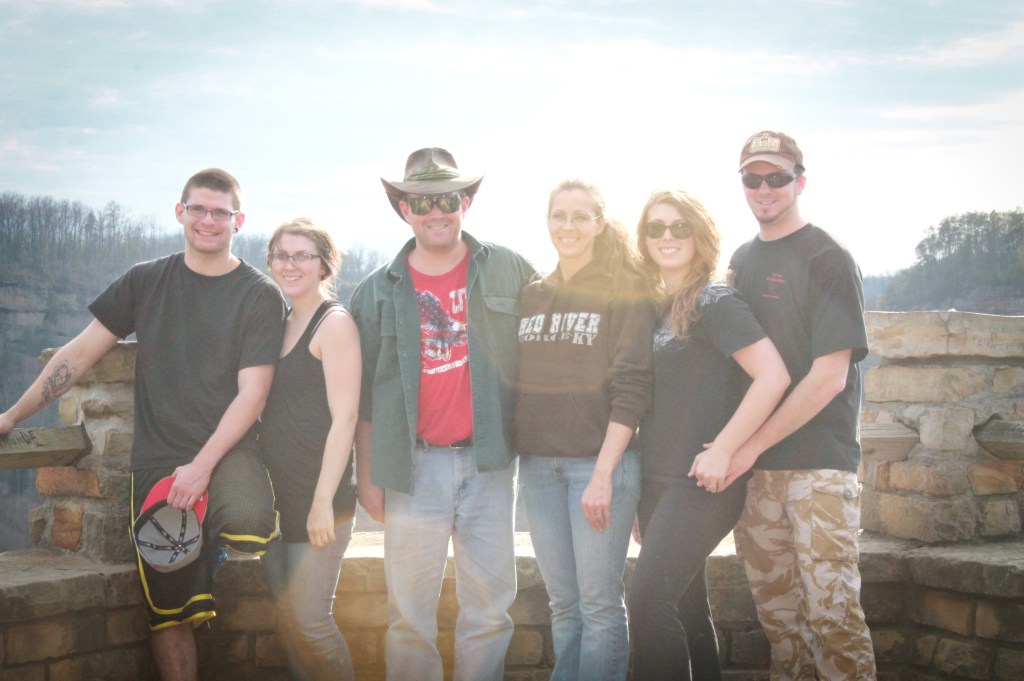
IMG_8640 PART 2When we celebrate birthdays we are celebrating the joys of life.  The whole point of any kind of birthday ritual is the act of acknowledging the value of life and the direct impact that life has on others who share your values.  Usually, this comes from family, who are attuned to the peculiarities of an individual’s value.  This was exactly the situation when my family elected to celebrate my 45th birthday in the rugged mountains of Red River Gorge.  My wife organized a day when my two daughters and their husbands could free themselves up at the same time to go rappelling with us on a journey to one of my favorite lands of adventure.  Before leaving, my wife stayed up late well after I had gone to bed and finished prior to my 4 AM wake up baking me a cake which she presented to me at the peak of Chimney Rock.  The road to Chimney Rock was rugged, featuring a 5 mile dirt road after a 4 mile paved stretch located at the entrance.  It is the only way to arrive at Chimney Rock unless of course a climber scaled up the side.  The presentation of the cake in such a place was unique and a nice touch by my family, which can be seen in the video below.
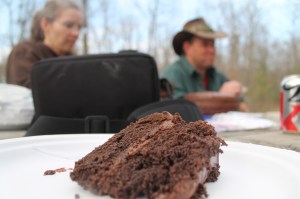
Among the many adventures and miles of hiking we did on this trip, it was my daughter and her husband who coaxed me into visiting Miguel’s pizza joint just down the road from the entrance to Natural Bridge.  As they suggested the meal I found myself between a rock and a hard place.  They were very adamant about wanting to take me there because they figured I would appreciate the style of the pizza place.  However, my wife had worked very hard to pack a wonderful meal that we planned to eat in picnic fashion.  The Miguel’s idea was something that my kids came up with spontaneously and upon hearing it, I was skeptical.  I was very concerned that I would not like the experience because Miguel’s pizza place looks like the dream of a deranged hippie.  The building is way too small, it’s bright yellow, only has one bathroom, and most of the dining room is outside the building scattered among beat up picnic tables and well-worn dirt void of any grass.  But most noticeable of all is the bizarre artwork that is displayed all over the building which looks like it belongs to an old “flower child.”  But after some urging, my daughter had talked me into it, so after celebrating my birthday on top of Chimney Rock, we headed to Miguel’s across the valley nearly an hour away.

IMG_8764Rock climbers from all over the world come to Red River Gorge, and their absolutely favorite place to dine is Miguel’s.  There isn’t even a close second.  Miguel’s in the rock climbing world is a Holy Place.  The owner of Miguel’s is Miguel Ventura from Portugal.  He describes himself as a pizza maker, an artist, a family man, and social servant.  Ventura, now aged 56 bought himself a slice of backwoods real estate in 1984, opening the Rainbow Door, an ice-cream shop the next year catering to the handful of climbers in the area. Now, 24 years later he slings pizza and climbing gear instead which is sold in the store with the pizzas.  On a busy spring or fall weekend there are upwards of 80 tents in his campground out back. (Miguel’s wife, Susan, and three kids, Dario, Sarah, and Mark, help run the bustling business.) Miguel makes large wood carvings, also, and if you’ve eaten his pizza, you’ve eaten from his garden.
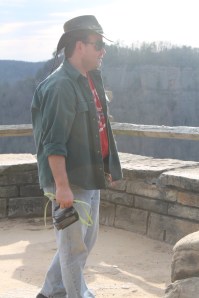
The Red River Gorge area is not a heavily populated area.  In fact, the area of Slade, Kentucky is considered remote.  So I was slightly stunned to see that the parking lot to Miguel’s was so large for such a small building, and it was full with cars belonging to adventurers from all over the world.  Naturally, the small restaurant never planned to hold every customer inside the little yellow shack, so there are tables set up haphazardly all around the building.  Behind the structure a basement was discovered which had additional seating and a small game room.  Directly behind Miguel’s was a large patio area for additional seating.  At these picnic tables were a wild array of climbers and campers cooking food of their own on Colman stoves and other propane driven portable units.

http://www.climbing.com/climber/miguel-ventura-pizza-maker-artist-family-man-social-servant-red-river-gorge-kentucky/

While we waited in line, I watched the employees rush around attempting to serve everyone.  There was a sense of urgency that was strangely calm.  In many ways, the place reminded me of all the reasons I love Key West, which I spoke about in a recent article.  CLICK HERE FOR REVIEW. After the climate of the place sunk in for me, the kitchen reported that everyone in line, which went out the door, were out of luck.  They had run out of food.  They couldn’t make one more pizza.  All they had left in the kitchen were three sandwiches.  Once we elected to leave and return some other day, the people behind us bought up the remainder of the kitchen’s offerings.   Looking into the kitchen one name came to my mind, Hugh Akston from the novel Atlas Shrugged.  Miguel’s Pizza restaurant nestled in the mountains of Kentucky reminded me of the small café where Hugh Akston worked as a cook in that famous fictional novel.   Akston was the college philosophy instructor of the three main characters in Atlas Shrugged and it was clear that Miguel Ventura had a quality of mind that has only been attempted in any novel the human mind has ever produced but Atlas Shrugged, and maybe The Fountainhead.

It was for this reason that my kids wanted to take me to Miguel’s Pizza.  Even though many of the visitors to the restaurant might find themselves repulsed through social conditioning to the concepts of Atlas Shrugged and Miguel himself clearly sees himself as a public servant, which is not how characters from the novel see themselves, there was a quality to the food and the place in general that was so exceptional that it has become a thriving world-wide business.  My kids wanted me to see first hand the thriving success of such a national treasure.  Miguel’s is the perfect example of how magical capitalism is.  Miguel from another country was able to move to the mountains of Kentucky where consumer traffic is about as poor as anywhere in the world, and build a thriving business because his product was superior.  In such a place if everyone had the ability to open a pizza place near Natural Bridge State Park and generate the kind of business Miguel does, they would.  Many have tried, and many have failed.  The fact that Miguel has succeed where others have fallen short speaks specifically to the kind of definitions attributed to the classic novel Atlas Shrugged–such examples that are so clear to the human eye and obvious no matter what their political affiliation is are not easy to find.  This was the gift my children wanted to give me for my birthday—an example of quality and capitalism that is unique and obvious defying confusing ideologies.

Because Miguel’s ran out of pizza, we packed up and left, going down the road to Natural Bridge State Park to have the fabulous meal that my wife prepared for us after.  We had the picnic area to ourselves which is how I like it, so we were able to enjoy a wonderful spring evening in the mountains discussing the philosophic reason that Miguel’s was such a successful enterprise.  We had hiked a lot, repelled a lot, climbed a lot, drove a lot and we were so hungry that the food my wife packed tasted like it came from a 5 star restaurant.  IMG_8656The cake on the mountaintop was something that I will never forget.  But intellectually, my trip to Miguel’s for some of their famously fresh pizza was the best event of the day.  Even though all I was able to do was smell their pizza from the kitchen, witnessing their success in the deep mountains of Kentucky was the best present I could have received, because it was an example of my foundation beliefs which I constantly preach about to my family.  This was why my kids were so obsessed with their desire to take me to a small yellow shack covered with hippie imagery, featuring a small unisex bathroom that was so small I had to duck my head to enter, a dining room stuffed with dirty, sweaty visitors and a sea of dust-covered cars parked outside with clientele that would look more at home at a Grateful Dead concert.  My children’s present to me was in showing how the heartbeat of capitalism beats hardest and fastest where government is GONE, and the rules are kept to a bare minimum.  If Miguel’s had tried to locate in any city, or township filled with looting politicians, they would have been put out of business years ago.  Yet, because of where it is, Miguel’s is one of the greatest, and most pure examples of lassie fair capitalism that could have been presented to me, and that is the kind of birthday present my children know to give me when the years become filled with wisdom, and the spontaneity of youth becomes more of an inconvenience.  Seeing Miguel’s run out of food due to too much business when the world outside of the Red River Gorge area is struggling under the red tape of government regulation made my dinner at Miguel’s Pizza the best pizza that I have never had the opportunity to eat.

Rich Hoffman

166701_584023358276159_1119605693_n“If they attack first………..blast em’!”

www.tailofthedragonbook.com

Cincinnati Freedom Expo: A showcase of liberty minded patriots reporting from the front

If you are a member of Socialist International, a labor union supporter, a left leaning school teacher, a government bureaucrat, a worthless administrator, a greenie weenie activist, a vegan, a member of the mainstream press, a member of Communist Party U.S.A, a member of NAMBLA, a supporter of the Cincinnati Streetcar, a Obama supporter, a fan of The Daily Show, think Bill Maher is intelligent, are living off government assistance, want Obamacare, think Hillary Clinton is honest, sleep past 9 AM, vote for school levies, give to charities for fear of social ridicule, are a latte sipping prostitute, think Agenda 21 is good, support The United Nations, support gun restrictions, support the NDAA Act, think $17 trillion in national debt is not bad, are a diabolical liar, a scum bag, an apathetic loser, and believe that money falls from the sky like rain, you might want to skip the fantastic event that is coming to the Northern Kentucky Convention Center at 5:30 PM on Friday April 19th, The Cincinnati Freedom Expo.  For everyone else who is normal, Constitution supporting Americans you can sign up to get your tickets at the link below.   The tickets are free, but do need to be registered prior to arrival.  The floor space is large, but we can’t pack the room infinitely, so tickets will be issued.  The event is free because some fantastic sponsors covered the cost and can also be seen at the link.

http://cincinnatifreedomexpo.com/

I wouldn’t miss the event as Ann Becker who is President of the West Chester Tea Party and also President of the Cincinnati Tea Party is one of the key organizers.  If Ann is involved, it will be successful.  So the event should be a lot of fun.  Brian Thomas of 55 KRC is the Master of Ceremonies which will feature a long list of speakers reporting back directly from the trenches of the freedom movement.

K Carl Smith is also a featured speaker this year at the Freedom Expo 2013.  He is a leader in the inspirational Fredrick Douglass Republicans.  Learn more about this great group here – http://frederickdouglassrepublican.com/

A father and grandfather, K Carl is an unyielding defender of the constitution and liberty. Inspired by the guiding principles of the Founding Fathers and holding fast to the oath taken during his service to our country, he launched The Conservative MESSENGER™  in 2009.

Captivating Messenger- A “grassroots” initiative, The Conservative MESSENGER’s mission has been to: Enlighten, Educate, Empower and Equip its members based on the Frederick Douglass Republican™ Methodology—a unique and powerfully effective strategy to: (1) Re-Ignite America’s Passion for Liberty; (2) Help the Republican Party recapture its political distinction; (3) Save the souls of the politically lost; (4) Promote racial unity; (5) Create an atmosphere for political dialogue without the accusation of racism or Uncle Tomism; (6) Trump the race card.

A Frederick Douglass Republican™- K Carl has taken what began as a mantra or rallying call and has spearheaded a movement that has climbed into the thousands. In 2011, The Conservative MESSENGER evolved into what is now the Frederick Douglass Republican™ Movement.

Political Motivator-K Carl captivates and inspires audiences with infectious energy, compassion and satire. He brings his expertise and provides down-to-earth solutions on how the conservative movement can broaden its base. K Carl leaves audiences ready to take action-action which could change the political landscape of America. Tea Party Groups, GOP organizations, collegiate institutions, and faith-based groups alike secure the services of K Carl for his stimulating and enrapturing LIFE-EMPOWERING message. His presentations serve as a “beacon of hope” for those who hold Liberty in high-esteem. As a result, K Carl recently authored Frederick Douglass Republicans: The Movement to Reignite America’s Passion for Liberty.

Servant/ Leader- K Carl hold to his credit, successful completion of both the Airborne and Air-Assault programs while on active duty in the U. S. Army. He is the former district leader (AL-7) ofAmericans for Fair Taxation. In 2009, he was appointed to the Amistad Commission by former Alabama Governor, Bob Riley. He was reappointed to that commission, where he currently serves. Additionally, he was recently appointed to the Affordable Homeowner’s Insurance Commission (AHIC) by Alabama Governor Robert Bentley.

Political Agitator- K Carl appeared on The 700 Club and FOXNews’ Huckabee Show. He was recently interviewed by Ginni Thomas for The Daily Caller and participated in a soon-to-be released documentary produced by Rev. C.L. Bryant, The Runaway Slave. K Carl has been featured in a myriad of publications to which he has been “greatly humbled”.

The son of Colonel (retired)  Earnest C. and Bessie Smith, Sr., KCarl is a native of Pine Bluff, Arkansas, was reared in Huntsville, Alabama. He is graduate of Alabama A&M University and makes his home in Trussville, Alabama. K Carl is the proud father of three children and five grandchildren.

Congressman Thomas Massie from the Fourth District of Kentucky will also be a speaker at Freedom Expo!

 U.S. Representative Thomas Massie entered Congress in November 2012 after serving as Lewis County Judge Executive. He represents Kentucky’s 4th Congressional District which stretches across Northern Kentucky and 280 miles of the Ohio River.

U.S. Representative Massie attended the Massachusetts Institute of Technology where he earned a Bachelor’s degree in Electrical Engineering and a Master’s Degree in Mechanical Engineering. During school, he invented a technology that enabled people to interact with computers using their sense of touch, and leveraged that technology to found SensAble Technologies, Inc., which raised over $32 million of venture capital, created 70 jobs, and obtained 24 patents. The hardware and software he developed is now used to design automobiles, jewelry, shoes, dental prosthetics, and even reconstructive implants for wounded soldiers.

In Congress, Thomas serves on three committees: the House Committee of Transportation & Infrastructure, the Committee on Oversight and Government Reform, and the Committee on Science, Space, and Technology.

The House Committee of Transportation & Infrastructure  has jurisdiction over roads, bridges, mass transit, railroads, aviation, maritime and waterborne transit. Thomas’s selection to the Oversight and Government Reform Committee puts him in a position to hold the federal government accountable to taxpayers. Further, Rep. Massie’s background from MIT and the high-tech business world makes him uniquely qualified to serve his state and country on the Science, Space, and Technology Committee.

Thomas lives on a cattle farm in Kentucky with his wife and high school sweetheart, Rhonda, and their four children.

These are just a few of the speakers who are confirmed to speak; many more will also be taking the stage throughout the evening to celebrate freedom in all its glory.  There will also be booths with venders and authors available to sign their books.  Matt Mayer will have his own booth where he will be signing copies of his Taxpayers Don’t Stand A Chance.  This event will certainly be one of the biggest of the year.  And for those who read here at Overmanwarrior’s Wisdom regularly and have been trying to peg me down for time, I will be there with my cowboy hat on.  So if you’d like to meet me or talk with me in person, this will be your opportunity.  This Freedom Expo is just what it sounds like, an evening to be around like-minded people away from the parasites of big government and slow-witted progressives.  I can’t think of a better way to spend a Friday evening, so I hope to see many of you there.  The price is right, the activity will be vigorous, and the company will be spectacular.  So make your plans for the April 19th today.

See you there!

Rich Hoffman

166701_584023358276159_1119605693_n“If they attack first………..blast em’!”

www.tailofthedragonbook.com

The Making of “Tail of the Dragon’ Novel: 3000 miles to Key West by motorcycle to rediscover FREEDOM

This article is Part III in The Making of Tail of the Dragon “the novel,” my latest literary endeavor.  CLICK HERE to visit Part II and Part I.  One of the needs I had while writing the book and flushing out the character of Rick Stevens and his wife Renee was an example of freedom that only pirates and other outlaws might have experienced.  I also had an intense need to explore the eastern parts of The Great Smoky Mountains as the western portion was explored extensively in Parts I and II.  In the novel the story takes Rick and Renee’s massive car chase into the mountains along I-40 and down into Ashville, North Carolina from the north, so I needed to scout that area out so I could put texture into my story.  There are several very intense sequences that take place in the novel along the I-40 corridor, so I needed to go and put my hands on those places tasting the air and see the sights for myself, taking notes along the way.  But I also needed to put myself in the role of Rick Stevens and see the world through his eyes.  For that reason I decided that while exploring Tennessee and North Carolina East of the Smoky Mountains that my wife and I would take a long trip of our own to the freest place I can think of on Earth, the ideal place where the philosophy of what America should be was easy to see – paradise – Key West.  From the driveway of our home in Cincinnati, Ohio we would ride our motorcycle all the way to Key West where U.S. 1 dumped into the ocean and there explore the mind of Rick Stevens.  Along the way there would be a lot of time to think, and observe as the distance was over 1,300 miles one way, and would involve three total campsites, one on the border of North Carolina and South Carolina, another in Kissimmee, Florida, with the final being in Key West.  The journey to the first campsite would give me the scouting report for the actual locations in the novel which is where the first stop in the video below occurred.  The remainder of the trip would be spent flushing out the character of Rick Stevens and his uniquely freedom loving mind.  The video shown documents the entire trip down to a very short documentary of only the highlights of the trip.  The vast distances were a challenge that neither my wife nor I will ever forget which proved to be the trip of a lifetime.  The second video below goes into more detail of that same trip and shows all the sites seen along the way.

It was fascinating to carry everything that two human beings could possibly need on the back of a motorcycle during a week around The Fourth of July.  I picked this date because Rick Stevens chooses to make his massive stand against the government of Tennessee and eventually the federal government on this day, so I wanted to get a good idea of the traffic patterns in the region during this time of year.  To pack food, shelter, and other necessities on a bike rack and backpack knowing that we would not stay in hotels, but live completely off the back of the motorcycle during the whole trip was a strangely independent feeling that placed in my mind a feeling of self-reliance that I have only experienced on hard backpacking trips into rugged mountains.  The sensation of being so self-sufficient while traveling with other people who were not in the same frame of mind along the highway drew out stark contrasts to me which ended up in the novel, particularly toward the end where the grand climax takes place on the south side of the Smoky Mountains.

In the book the $20 million supercar Firebird running off vegetable oil taken from waste containers at fast food restaurants travels at speeds of over 200 mph at times, so roaming the vast distances shown in Part II to the first stop in the video of Part III took only a few hours even though they are well over 100 miles apart.   I did get a good idea of where exits were and what kind of commercial establishments were located along the way for descriptions in the book which wiz by in lightning speeds.  Traveling at the much slower pace of 75 mph and facing the elements without a windshield of any kind is very punishing and toughens you up very quickly.   My wife had packed most of our food so we wouldn’t have to stop at restaurants too often, but deep in the mountains to our first major stop in North Carolina part of our lunch blew out of her backpack and splattered out all over the road.   The wind had worked the zipper loose opening up the pouch yanking a bag of Cheez-its and a couple of sandwiches out destroying them.  My wife had prepared that lunch for us from our kitchen and it depressed her a bit to have lost them on the highway because she had put great care into their construction.

The next day after a devastatingly hot ride from the top of South Carolina where our first campsite was to the Kissimmee location still sore from the previous day’s ride, it was almost too much.  Just south of Jacksonville, Florida my wife’s knees locked up on her from sitting in the same position in the extreme heat for such a long period of time using the muscles in her legs to stabilize herself against the constant punishing wind.  On my motorcycle, I refuse to use a windshield for the same reasons that Rick Stevens avoided them in the novel.  I also wasn’t using a sissy bar behind my wife so she couldn’t lean back against anything to relax.  She had to flex her muscles against the elements for the entire trip, something not even hardened motorcyclists do willingly.  But after a brief rest at a gas stop just above Daytona Beach, she thought she could walk off the pain and take another hour on the road, so I entered the I-4 corridor through Orlando for our stop at Kissimmee for a much-needed break at the next campsite.  Arriving at the Kissimmee site was like finding a puddle of water in a vast sun-baked desert.  We were scorched from the sun, beaten by the wind, dehydrated from a lack of water, and exhausted from 9 hours of solid riding across the heat of the south in July.

After a bit of rest and some long swims in the campsite pool we headed even further south down the Florida Turnpike past Miami and onto U.S. 1 across the Florida Keys.  The temperature was right around 106 actual degrees so there was no relief from the heat on a motorcycle.  The trip was absolutely brutal, but at the same time ecstatic.  It took roughly 6 to 7 hours of casual travel to arrive at our campground in Key West.  Once we set up camp, we spent a few hours in the pool bringing our body temperatures down then we headed into town at the famous Mallory Square to dine and enjoy the sunset.  Key West as I’ve written about before is the best example of what America was always intended to be, and as I watched the freedom lovers walk the streets of Duval Street I assembled my final thoughts about the essential character of Rick Stevens.  People in Key West like to be left alone to do as they please.  Crime tends to be very low on the island, but there are acts of extremism that could be considered socially dangerous, such as the all nude bar called Adam and Eve on the top floor of the Bull and Whistle, and the drag queens gathered on the south side of Duval.  The tolerance for such decadence has given rise to a large gay population in Key West, but even in the middle of the night when patrons were their drunkest; much of the debauchery that might otherwise be associated was absent.  Even in the strip clubs, guests were invited to strip down nude if they want while inside.  I noticed that all the parking lots of these establishments were packed with people, and most going into them were couples.

My wife and I stopped into Sloppy Joes for a beer just to visit the site where Hemmingway apparently spent much of his time.  I wrote notes for my own book on my hand, and on the napkin that was delivered under my beer, and that was the extent of the debauchery that my wife and I participated in, and it wasn’t hard to avoid.  My observation of Key West was that freedom to do as one pleased was the most important concern, and the evidence of what America would be like without politicians was easy to see.  In Key West, those who wish to do extremely sexually deviant acts were subdued off the beaten path not by regulation as much as it is out of economic necessity.  This is because human beings want to be able to take their children to such places without worry.  And once the taboo of such activities is removed, the appeal is greatly diminished.  This became the essence of the sex scene in Tail of the Dragon that took place on the balcony.  Once the taboos of regulation are surpassed, the true definitions of freedom can be explored.  For many, particularly those who stripped down nude in the strip houses, and Adam and Eve bar, their little act of didactic rebellion was in stepping away from social convention.  For my wife and me enjoying our margarita on Mallory Square at sunset, we had already achieved our personal rebellion with the trip down to Key West.  We had no need to break free of social convention because our motorcycle ride had moved the act to the higher chakras well beyond animal instincts.  It was that realization that I was after for articulating the motives of Rick Stevens in Tail of the Dragon.  His personal rebellion was something I understood on an intellectual level, but I needed to see, taste, and feel it in reality.  Ironically Key West didn’t give it to me, but the road on the way there did.  Key West was just the climax that allowed all the thoughts I had on the road to come hitting me one by one since the road ran out and there was no place else left to go.  I was at the end of the known Earth still under the jurisdiction and protection of The United States with Cuba only a few miles to the south.  Outside America, the world is a different place and such freedoms are not enjoyed in such a way.  They are contrived to fulfill market needs, but they do not occur naturally like they do in Key West. I attribute this to the protection of the United States Constitution and absence of political influence.  Politicians do not care about power in Key West so human beings are allowed to be free of their influence.  There isn’t much “Power of Pull” in Key West because nobody cares.

One of the grand themes in Tail of the Dragon is how public relations firms have been complaisant in ruining the concept of freedom in America by helping progressive causes appear to be bigger and better than they actually are.  At the Hogs Breath just down the road from Sloppy Joes I bumped into a couple of public relations executives from New York who were blasted in drunken bliss.  After a short conversation with them I realized what they were doing in Key West—they were in the process of evading—attempting to reset their moral compass from the evils of their daily jobs.  Their mental evasion through drunken splendor was purposeful and they were seeking to recalibrate themselves through debauchery.  The themes of my visit with them found its way into my novel.  In the story of Tail of the Dragon it is public relations that is the primary villain.  The characters involved on all sides are in constant attempts to shape it for causes specific to their personal philosophies.  The Rick Stevens rebellion is essentially against this form of public relations that has taken American Freedom and made it into raw consumerism though the subtle art of manipulation.

It was too hot to sleep in Key West as the temperature was still in the 80s at 2 AM.  My wife and I rolled around in our tent for many hours sweating profusely.  I spent much of my time in Key West sitting at the picnic table outside our tent upon the water’s edge writing my thoughts down for context later.  On the way back out of the Keys we traveled through the Everglades before stopping back at our campsite in Kissimmee once again.  Once I had written down all my thoughts in a feverish frenzy that went on for nearly 200 handwritten pages of thoughts feelings and opinions relevant to the motorcycle experience of traveling to Key West, the Eastern Smoky Mountains and the scorching trip down the East Coast from South Carolina we were ready to return home.  Compared to the heat in Key West the heat of Central Florida felt very comfortable, so we recovered from the heat quickly.

We left our campsite at 6 AM and hit I-75 about an hour later stopping at a McDonald’s to celebrate seeing once again the road that would take us directly home.  We traveled all day only stopping for fuel until we came to Chattanooga, Tennessee where we treated ourselves to a long needed meal at the Outback Steak House.  We ate like kings for a few hours.  My wife and I had lost about 10 pounds of water in just a few days, so the meal at the Outback was a real treasure.  We were planning to get a room at the same hotel where we started our journey in Part II, but after feeling refreshed from our meal, we elected to go the whole way home from Chattanooga since we knew the route from there to our home so well.  We hit Jelico Mountain which is where the novel Tail of the Dragon begins, at sunset.  We were tired, and sore beyond reason.  To make good time I was doing 110 mph going down the north side of the mountain passing cars and trucks like they were standing still.  I passed a Tennessee Highway Patrol officer who was set up for a speed trap but I was so close to the Kentucky border that he didn’t even bother.  As fast as I was going it would have taken him 14 miles to catch up to me from a dead stop so he abandoned the attempt.  I put on a bit more speed hoping that I’d get to the border before I saw police lights in my mirror.  While doing this my wife nudged me in the ribs and pointed off to the left at the setting sun.  My speedometer was bottomed out passed 120 and she was holding her arm as straight as an arrow out to her side to show me the beauty of the skyline splashed with brilliant shades of red and orange.

My wife had barely made the trip down past Jacksonville, but just a few days later she had hit another gear and showed a physical strength at excessively high speeds without any pretension of fear to enjoy a simple sunset that turned out to be the most glorious we have ever seen together in 25 years of marriage.  We will never forget that experience and in so doing I had defined the character of Rick Stevens solidified in that moment of rebellion with a police car hunting us from behind, and the open road coming at us down a massive mountain with a spectacular sunset over the rolling mountains at tremendous speeds.  We hit the Kentucky border and parked at the rest stop there in case the Tennessee cop had called into Kentucky providing our description.  We waited about a half hour before hitting the road again.  Four hours later we were in our driveway at the same spot we began.  It took me nearly a month to compile all these thoughts into the novel which was already outlined.  But the trip to Key West gave me the spirit I was looking for, and became the theme of the novel.

It was an unforgettable experience and now when readers wonder how Rick and Renee Stevens arrived at their rather obsessive pursuit of American authenticity and a definition of true freedom, they can know where those thoughts derived from.  They came from the roads of the entire south as my journey took us on a 3000 mile journey in just one week where every day was a punishing experience that defied comfort.  The literary worth is an achievement that I am excessively proud of, as the story became more than just a car chase tale.  Tail of the Dragon is the story of one man’s struggle to stand against the forces of innate human suppression, the need to manipulate, the need to yield to powerful forces, and the need to suppress inner needs to the benefit of collectivism.  Rick Stevens decided for himself that he had enough, and wasn’t going to do it anymore.  His decision is something visitors to Key West attempt to touch, but the only real way to jump into such an experience is on the back of a motorcycle with safety, security, and convention left at home and danger openly embraced not just for a moment, but for days on end.  It is in the heat of asphalt, the roar of engines, and the punishing elements of nature that Rick Stevens and his lovely wife Renee reside in the memories of legend becoming folklore to the few who admit to themselves their desires to engage in such an adventure.  For those who don’t wish to take such a journey themselves is the reason I wrote Tail of the Dragon, so that readers can engage in such an experience from the minds of Rick and Renee Stevens on an adventure that will last a lifetime.

Stay tuned for more MAKING OF videos and articles to satisfy the quandaries of curiosity coming in from the novel’s readers.  And thank you to those who have given Tail of the Dragon the benefit of your attention in the first two business quarters of its release.  CLICK HERE TO VISIT THE BOOK’S WEBSITE. 

CLICK HERE to see what my publisher had to say about my novel Tail of the Dragon and look for Part II on April 3rd.


“Like” Tail of the Dragon on Facebook by CLICKING HERE 

If the novel is SOLD OUT at Amazon.com try Barnes and Noble by CLICKING HERE.

Rich Hoffman

“If they attack first………..blast em’!”

www.tailofthedragonbook.com

The U.N. International Arms Treaty: Meet the Smith & Wesson .500 Magnum

UNITED NATIONS — The U.N. General Assembly voted overwhelmingly on April 2nd 2013  to create the first treaty regulating the international arms trade, a landmark decision that imposes new constraints on the sale of conventional arms to governments and armed groups that commit war crimes, genocide and other mass atrocities which sounds delightful from a distance.

The vote was hailed by arms-control advocates and scores of governments, including the United States, as a major step in the global effort to put in place basic controls on the $70 billion international arms trade. But the treaty was denounced by Iran, North Korea and Syria, which maintain that it imposes restrictions that prevent smaller states from buying and selling weapons to ensure their self-defense.

http://articles.washingtonpost.com/2013-04-02/world/38208395_1_legitimate-arms-trade-treaty-humanity-or-war-crimes

In short, the new United Nations treaty is step one in an international gun ban intended to spread across the world to disarm private citizens under the guise of the generally agreed upon measures of preventing the sale of conventional arms to governments or terrorist groups.  The treaty is simply lip service as even The United States will violate the treaty within moments of having signed it.  After all, these types of events are precisely what led to the arms debacle occurring under the Obama White House with Fast and Furious and apparently the Benghazi tragedy – so even the largest supporters of this new United Nations Treaty will openly break the terms then lie about it later leaving the only conclusion about the treaty intentions to be revealed, the actual intent of the United Nations is not to regulate the sale of firearms to hostile groups, but to establish in the mind of the world that 1. The United Nations is a powerful group with global influence, and 2. That citizens all over the world will find they can be brought together on common ground to take steps of disarmament surrendering their personal sovereignty to the “wisdom” of global government.  Such an audacious declaration from The United Nations justifies a response, and for me it comes in the video below.  I would like to introduce The United Nations to my good friend the Smith & Wesson .500 Magnum, the most powerful production revolver in the entire world.  It delivers an astonishing 2600 ft/lb of muzzle energy and has enough kick upon firing to dislocate a shoulder by the sheer power.  The gun is designed to stop elephants while on safari and can be effectively used to hunt the largest of big game animals, but more than that it is a wonderful self-defense weapon for protecting private property, should the tragic circumstances ever arrive.  The .500 Magnum can split the body of an attacker in two if wad cutters are used, and disable a get-a-way car by penetrating the engine block with a well placed shot into the valve assembly.  The bullets are so big they can sheer away the lug nuts that hold a tire to an axel making a rolling car’s wheels pop off upon impact leaving the escapees sitting ducks awaiting justice.  I would bet that not a single one of the pin heads who make up the United Nations General Assembly could fire the .500 Magnum with only one hand and hit a target square in the heart like I do in the video below, and it is due to their lack of skill, strength and logic that is the real motive behind their desire to ban firearms in the world is revealed.

None of the U.N. Assembly members would disclose in the light of day without the benefit of drunkenness their desire to ban firearms in the world is because they wish to be the governing force the world bows to, yet their actions deceive their intentions.  They know that so long as people like me have access to .500 Magnums that no military force, no policing force, or authority on Earth could force me into compliance to their socialist leaning tendencies.  So they must remove such tools from human civilization so that they can implement their further plans of global conquest.

For anyone who has read Agenda 21 which is a United Nations program, global control is clearly the intention even if Ambassadors reading this are saying to themselves that they have no such global desires.  The trouble with The United Nations is that they are a collective group driven by a force that is difficult to put the mind around.  CLICK HERE TO READ ABOUT “THE NOTHING.”  Generally such motives where collective organizations attempt to dominate the minds of individuals would be called evil, but it’s much deeper than that.   For instance, even as The United States signs such a treaty and the U.N. General Assembly pats themselves on the back for gaining the support of America even with the staunch support of the country’s Second Constitutional Amendment, arms trade is being conducted presently with shady governments hoping to topple rebellions, appease terrorist organizations, or set off gun violence so that the world will join together in solidarity against gun violence with cleverly disguised “false flags.”   So the United Nations treaty means nothing to the governments involved as they will continue to break such treaties as it suits them.

In The United States this is why we have a Second Amendment, because it keeps governments from packing up in a Humvee and showing up on our doorsteps to arrest rebels who plot against United Nation mandates, fight Common Core implementation of socialism into schools driving a “Global Marketplace,” or desire to protect their private property which a vast majority of the United Nations General Assembly desires to banish from human practice so that Mother Earth can live fruitfully till the sun eventually blots out destroying the planet in roughly 500 billion years.   When guns are taken from private citizens, they have no defense when organized governments decide they wish to grab power for themselves, and global governments like what the United Nations is attempting to become will not be tolerated by me in the United States due to this hidden intention.  The United Nations will never declare that they wish such things as a strong central government in charge of everything.  They simply wish to believe that they are making the world safer, just like the school teacher wishes to believe they are making children “better,” in American schools.  But the reality is that they are all servants to the evils of collectivism and nothing more.  The byproduct of collectivism is personal tyranny.

That is why in America every home should have their own .500 Magnum.  Ideally every household would have at least one human being under its roof that could fire the weapon one-handed, because such strength is needed to protect families from the perils of evil which do reside in the minds of man.  Such a threat is the only governing force that works in a civilized society, something the global academics have been terribly naive in understanding.  They believe falsely that words on a paper will change the course of evil, but it has only fed it throughout history.  Academics believe falsely that if they construct one more paragraph of legislation that evil will be banished from the Earth forever, but what they miss is that such evils grow with every legislative word constructed in the minds of a bureaucrat.

The truth is easy to see when visiting a gun range like Target World in Cincinnati, Ohio which is where I was in the video above holding the most powerful handgun in the world.  With the gun it is realized that even aircraft could be brought down with such a weapon and drones would have no chance if spotted.  The .500 caliber bullet could shatter such aerial surveillance with one shot because of the extreme size of the ammunition.  Upon that understanding, the mind is brought to peace as it is realized that those who hold a .500 Magnum in their hands and have learned to use it have nothing to fear from any assailant in the world, and that is freedom from tyranny—even the tyranny brought on by good intentions from pin heads and bureaucrats.  It is also realized that the true intentions behind the gun bans advocated particularly among socialist leaning politicians is that they are physically and mentally weak human beings to start with, and hope that they can be made to rule over the strong with the stroke of a pen, or new law built behind collective ambition.  The .500 Magnum would shatter the arm of the frail boned weaklings who make up the United Nations General Assembly, so they are naturally terrified of such weapons—and they should be, because they have the power to call armies to their disposal and put down rebels who stand against their Common Core education proposals and Agenda 21 schemes.  So for people like me, the .500 Magnum is the great equalizer.  I know as long as I have it that no government in the world even through collective force can organize against my property and my rights to protect my family.  I would never surrender such a task to the bureaucrats of The United Nations, The United States or even my local police department.  Instead, I entrust that task to my own two hands and the awesome power of the .500 Magnum which can decapitate an attacker upon demand.  It is within the 2600 ft/lb of muzzle energy produced by the Smith & Wesson .500 Magnum that freedom thrives, and the sovereignty of The United States can continue on into the next centuries well beyond the twenty-first.  The .500 Magnum is the tool with which freedom is obtained from the academic intentions of the dainty minded United Nations politician and their naive world view reflected in appalling constructs such as their first treaty regulating the international arms trade which is step one in a global gun ban they hope to enact within the next three decades.  With that in mind, please get to know my friend, the .500 Magnum.  And if I were you, I’d become intimately familiar and make friends with your own so that together the aims of The United Nations can be beaten back into submission from their intentions to rule over the affairs of life in America and every household within its borders.

Rich Hoffman

166701_584023358276159_1119605693_n“If they attack first………..blast em’!”

www.tailofthedragonbook.com