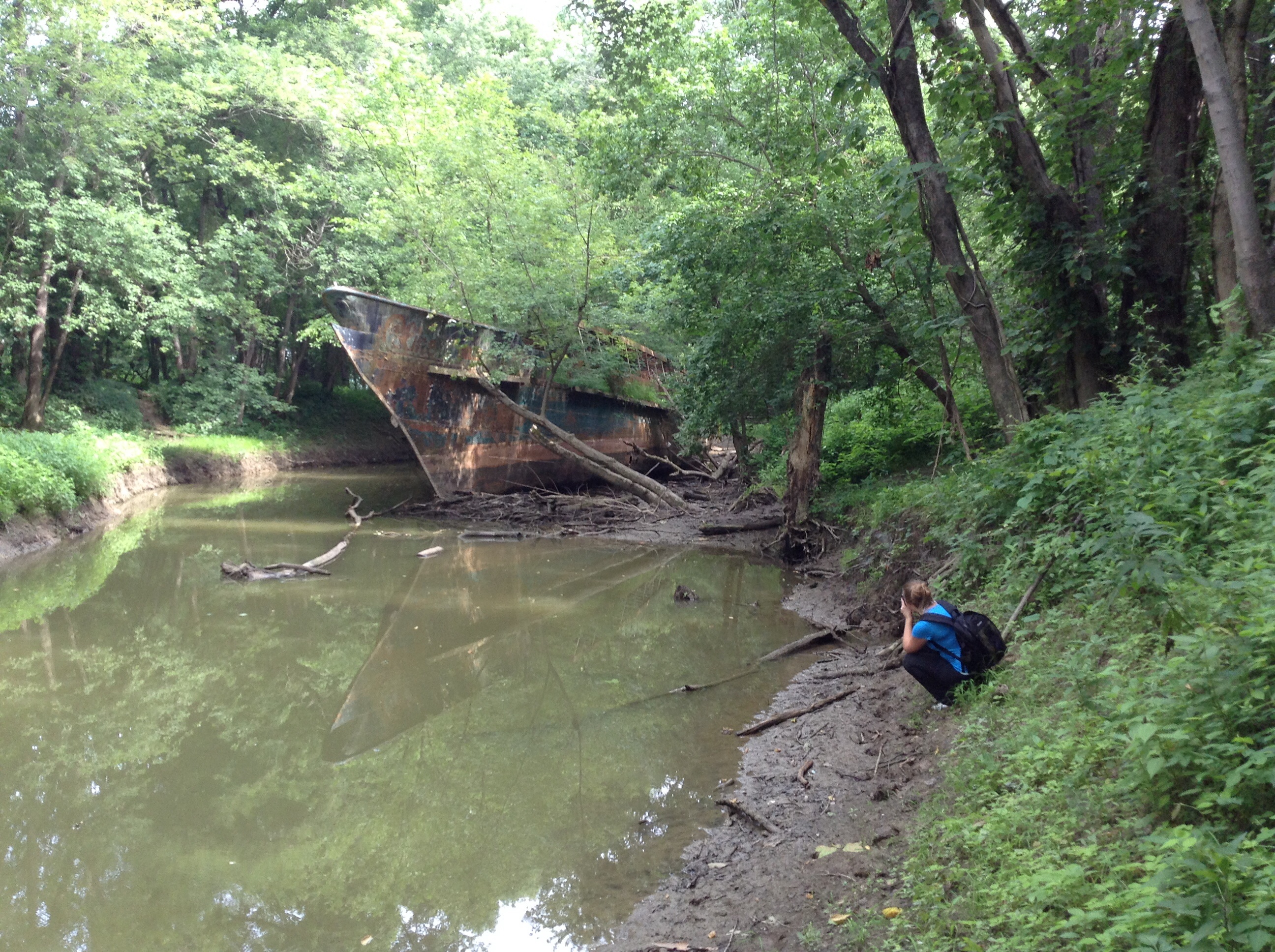
A Temple of Hope: The Ghost Ship photographic journey

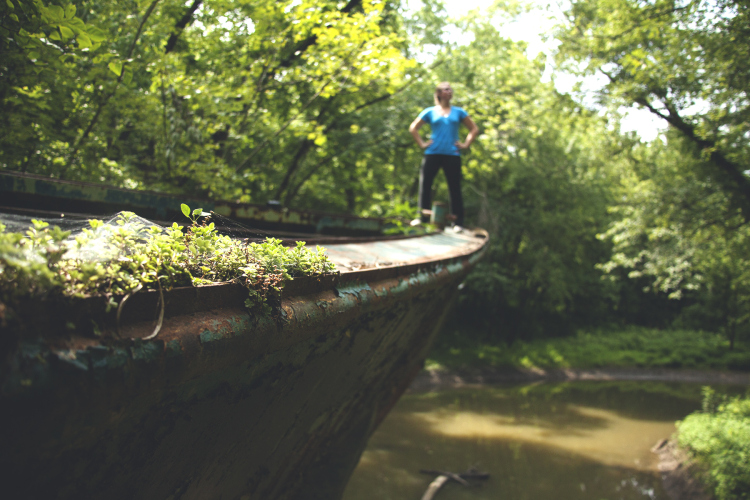
My family had a good laugh when the lunatic feminists in my home school district addicted to tax money accused me of being sexist.  The terminology clearly didn’t fit.   I raised two daughters and never gave them the indication of submission to anybody for any reason under any circumstances.  They are more technically liberated women than even the most rabid progressive feminist and it is quite a joy to watch them grow up and flower into everything that they feel inclined to develop about themselves.   However, it was very rewarding to see how one of them who is a professional photographer viewed a day we recently spent together.  She is pictured below on the bow of the Cincinnati Ghost Ship and can read her point of view at the following link.

http://adventuringphotographer.wordpress.com/2014/07/16/the-cincinnati-ghost-ship/img_7006
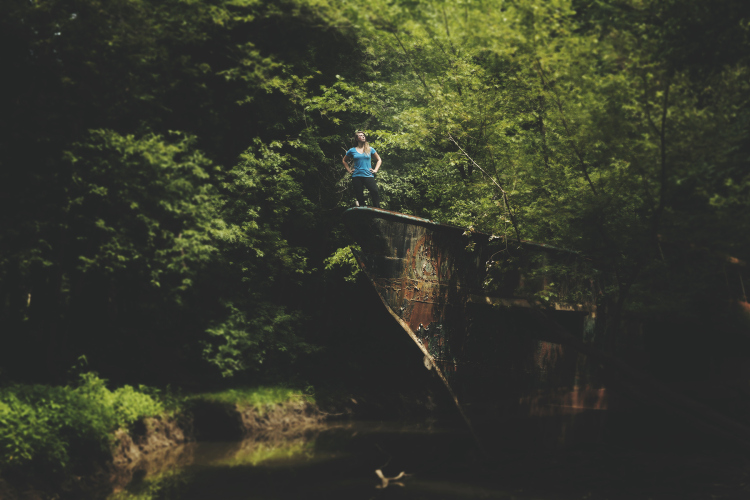
She has been an adult for long enough now to display her skills many times over and I haven’t been disappointed.  She is first and foremost an artist that wishes to embody all the elements I introduced to her as a child and it is wonderful to see all those elements come together into the person she is.  As I was raising her I never directly tried to shape her personality into something I would approve of, but simply removed the social shackles that often prevent the development of a mind properly.  My interest has never been social roles as society defined them, but as an individual does—so my parenting style was always focused on allowing my children to be exactly who they uniquely are—even in spite of my wishes—which I always made sure to contain.  When someone decides to become an artist of some type they leave themselves vulnerable to interpretation as their efforts are impossible to disguise.  What an artist produces becomes the culmination of their internal philosophy, which in my daughter’s case can be seen in the video below.


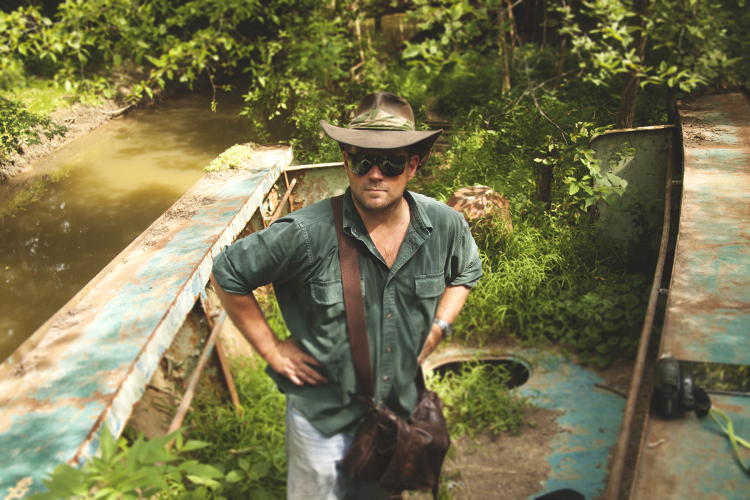
The day was not intended to be so monumental.  She and I have done that kind of thing many times.  As a little girl she trudged through many denser places, caves, trees, lakes and even confronted sometimes hostile inhabitants.  The standard equipment has always been a part of our life, satchels, loose clothing for easy climbing, hats to keep spiders and small rodents out of our hair, and my whips for climbing and diverting away hostile encounters.  Oddly enough on this trip to the Cincinnati Ghost Ship as an artist her natural focus was on most of those things which I take for granted as just part of everyday life.  As a photographer she brought them to the surface in a way that told me much of how she sees me—which is more beneficial to me than her.

Videography is a new skill she is adding to her arsenal.  She has been to film festivals with me several times and has met professionals who make movies—and has seen many artistic efforts from behind a lens.  So she has seen all the tricks and knows that there isn’t any way to hide her soul.  The way a camera operator and video director lights their subject, the focal point, the movement of the camera, and the way a piece is edited together ultimately reveals everything that there is to know about the artist behind the effort.  So her shot selection and ability to tell a story with moving pictures was very revealing regarding the kind of young woman she has become, and was a real treasure.  I didn’t know that at the beginning of our little adventure that I would come away with more than she did.img_6972
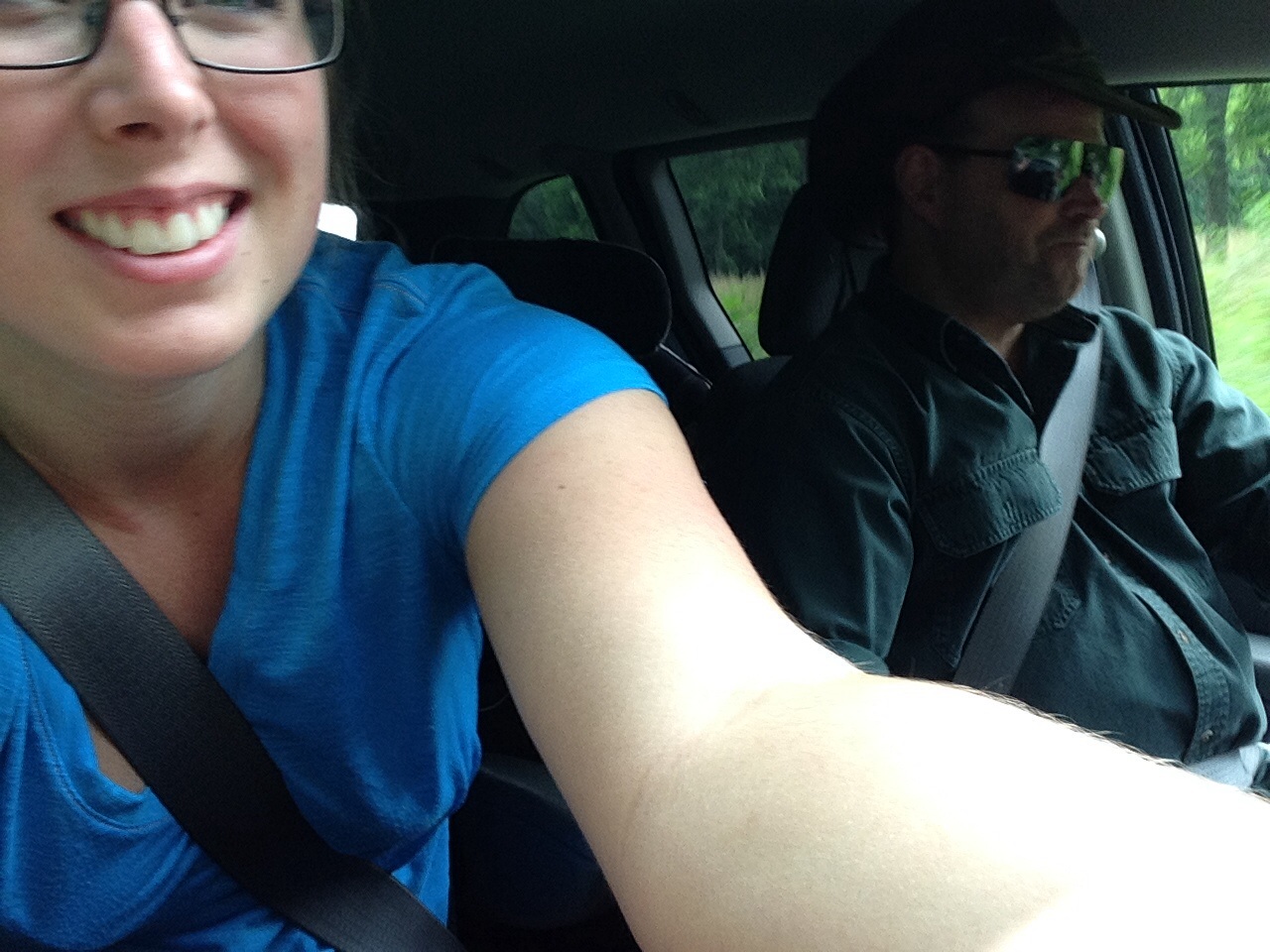
As the video was shot, we typically did not stop and pose for pictures.  We just did our thing and turned on the camera to capture footage as we were doing it.  The adventure always comes first; the attempt to document it is second which makes the job of a filmmaker more difficult.  Some things that show up in the video that were actually not filmed was the nice lunch she and I had at McDonald’s just prior to visiting the Ghost Ship.  Usually when she and I get together the rest of the family is with us, so she has been deprived of craved personal time with me.  Upon hitting the exit that would take us to the Ghost Ship off the highway the fuel light came on indicating that we were about to run out of gas.  So I turned around and got some gas down in Lawrenceburg before getting back into the hills of Northern Kentucky on an empty tank.   We were in the right area so I felt confident that time was on our side.  Getting gas was a little bit of an adventure so we decided to go ahead and grab a bite to eat before getting back into the woods.  The two of us had a Sausage McMuffin with Egg each—which the last time she had breakfast at McDonald’s with me was during a trip back from Florida the previous year so that breakfast tasted much better on the cusp of such an adventure.

As we sat and ate, and caught up on all the things we typically talk about, we looked over topographical maps of the area and contemplated strategies for getting there.  It turned out to be much easier than I anticipated which was nice considering that we had some really expensive camera equipment.  We were dressed to wade into the water and board the vessel if need be.  I typically carry with me a 12’ bull whip for those types of occasions.  I also typically have my rope bag that has 150’ of rope along with climbing gear, but that wouldn’t be needed for this.  The whip will get a person up small climbs most effectively.  I always have on my hip a whip holster that my friend Gery Deer designed especially for me.  I use it each year in the bull whip fast draw competition and when I walk around the house practicing.  It is designed for smaller whips but the 12’ whip can fit in it.  So that is what appeared in the video.  I didn’t know my daughter focused some of her shots on things like my whip and satchel, but they were nice bits of context from the adventure that surprised me.

When she was old enough to sit still I raised her on Indiana Jones and the Temple of Doom and each night when she went to sleep, she played the Raiders of the Lost Ark soundtrack and let it go on repeat throughout the night.  She had a healthy childhood filled with the yearning for adventure, likely due to the kind of material she had from her first conscious moments.  Our interest didn’t stop there; we actually expected to live that life to a certain degree and she has so far her entire life.  So our outing to the Ghost Ship was simply a reflection of who we were.  But watching her video of it, it was clear that there was some Indiana Jones in there—which makes sense.  Indiana Jones to me is one of the most wonderful characters ever created for film.  He can get dirty with the best of them then turn around and be among the most scholarly.  He reads, he’s smart, and he’s fearless—but better yet, he’s tenacious.  I knew what I wanted to be as a man when I saw Indiana Jones swing into the Temple of Doom and steal the Shankara Stones from the skull on the sacrificial altar.  To a large degree I do live that life as a man.  The film was a fun movie filled with comic book antics, but the substance of the story is something that both my daughter and I have carried with us every day of my life and hers.img_6977
After we explored the vessel, dripping with sweet, I was pulling bugs off my hat and we decided to go back to McDonald’s for lunch to cool off.  We looked at our footage and talked about what we saw and as we were sitting there I thought about the many times that I had shown her the Temple of Doom movie and realized that we were living that life.  One moment we were knee-deep in adventure, the next integrating the boon of our discoveries with the civilized world—sitting in the corner with my cut up cloths and sweat soaked shirt, with cobwebs still hanging from my hat.  More than a few people looked my way wondering what we had been doing.  Most of them had no idea that just across the river was a treasure that had been there for many years right under their noses yet they were blissfully ignorant.  The only trace of anything out of the ordinary was my daughter and I who had just stepped out of some story book adventure sitting in the corner eating ice cream.  But that was part of the fun for us.

It was those little moments from the adventure that filled her mind which ended up in her cut of the video and framed the way she photographed the day’s events.  It made me very happy and confirmed why I raised her the way I did—it was to nurture that spark of hopeful optimism that can always be present—even when the circumstances are quite scary.  There is a hope in the way my daughter photographs that is a liberating pleasure unmatched by anything else for me.  As an artist, the mind of the creator cannot hide so cynicism shows behind every attempt if it is present.  Adventure isn’t always about things “out there” but what’s really inside–the adventure of a Ghost Ship in our back yard, or a simple trip to McDonald’s, or running out of gas at a highway interchange with no stations in sight.  Adventure starts in the heart, not in the extraordinary and the best of those events happen  when a parent and their child get together for the fun of it—and joy, and lack of pretense just to live life and capture what comes as future memories.   A temple is a place of worship and our lives come together driven by mutual interest.  It is not the Temple of Doom that we share as a lifelong focus–but a Temple of Hope captured by photos for time to benefit.img_7024
Rich Hoffman   www.OVERMANWARRIOR.com


The Cincinnati Ghost Ship

This is from my daughter regarding a recent adventure we went on together, from her perspective.  The photos are quite good.  

Saving a Cincinnati ‘Ghost Ship’: History and methods of resurrecting the ‘Sachem’

This is part two of a story previously articulated. CLICK HERE TO SEE PART ONE.

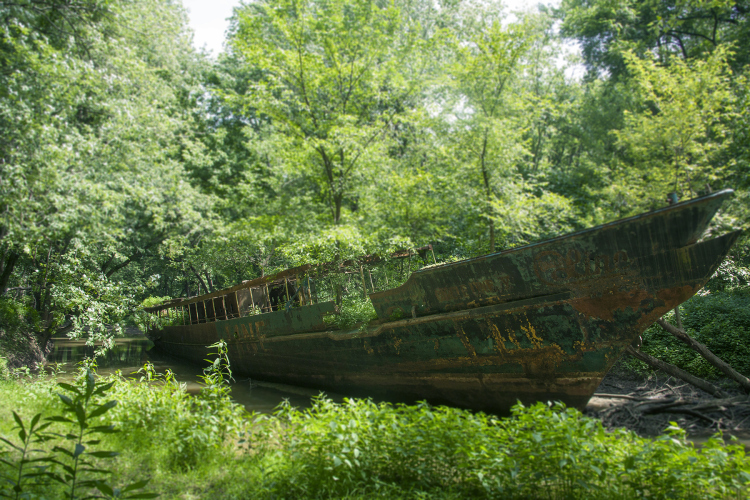
At first a visit I took to the “Ghost Ship” of Cincinnati was just to confirm that it was there and provide my daughter with an interesting subject to photograph, as she is a professional photographer. But after doing a little research it became quickly evident that there was more to the story of this ancient vessel rusting away in a tributary of the Ohio River across from Lawrenceburg, Indiana. The story of the ship was a compelling one describing a century of exotic adventures. It was certainly an oddity that such a historic vessel would end up beached in a completely foreign setting from the Caribbean Sea where it one time roamed. Upon seeing the ship after doing the research of its history it was easy to conclude that the Sachem had a tenacity which commanded respect and was in the fight for its life surrounded by a hostile forest environment that is trying desperately to denigrate it from rust to soil once again. So the trip my daughter and I took became more than a photographic voyage into the wooded areas of Northern Kentucky, it became an investigation into the viability of actually rescuing once again the ship that D’Andrea LaRosa is trying to raise money to save through her Lawrenceburg Art Foundation seen at the link below. The current owner Robert Miller out of money for many years now is in Mexico and had saved the ship once before but appears to not have the resources to do it again, leaving us to contemplate the condition of the ship during July when the water level was low and the ship could be seen from all angles feasibly. The walk about that ship can be seen in the video below with a visual commentary on what we were seeing.

http://www.dandrealarosaartfoundation.org/SachemCampaign.html

Looking into the life more of Robert Miller to discover if there was any way of helping the guy finish the restoration project of the Sachem which he so boldly attempted, I ran across the article below describing the conditions of the first rescue from the scrap yard as far back as 1985—which went into great detail of how the ship ended up from New York to Lawrenceburg on the Ohio River. Since the article is so old I am including it in its entirety for preservation purposes but link the original article following the text. It is quite a story describing a vessel that was much closer to being destroyed a long time ago than had been previously reported.

PROUD ‘LADY’ RESCUED FROM HUDSON SLUDGE

Frances Ingraham Staff writer

Section: LIVING TODAY,  Page: G1

Date: Sunday, September 14, 1986

The Sachem, a privately owned 187- foot yacht, built in 1902, once was an elegant lady of the sea. But time played its role, fortunes tossed it around, and by the time she was barely 50 years old, she was given up for dead.

However, that’s not to be. Not since Robert “Butch” Miller of Cincinnati surfaced and is determined to bring it back to life. “I’d been looking around probably eight or nine years for a steam yacht,” he said. “Not necessarily this one, and not with any intentions of purchase, because I figured it would be out of range financially for me. But I hadn’t seen any in a museum, any restored, any sunk on the bottom.. There just weren’t any around.”

However, stuck there in the sludge, where the Hudson twists into New Jersey, was the once-noble Sachem.

Seated in his cramped and cluttered living quarters on the ship that has now been raised, and docked at the Riverview Marina in Catskill, Cincinnati businessman Miller recalled how the forgotten ship became his.

He first saw it advertised for sale in Boats and Harbors magazine, but when he arrived at the site – in West, New York, N.J. – he discovered it was an endless hulk of rust bogged in the Hudson.

“The (seller) was selling his property,” he recalled, “and this was the last thing that was left. Everybody was afraid of it. They had tried to move it out a couple of times and it didn’t move. They tried to move it with bulldozers,” without success. Miller had no idea he would find it in this condition.

All the ad mentioned was that the vessel was a steel hull, it had an engine that wasn’t in running condition, and the size and the year the vessel was built.

“I thought, ‘Wow! That could be about the size of one of those old steam yachts!'” he recalled.

Miller decided to buy and restore the vessel, no matter what it took. So he paid the $7,500, called in the bulldozers and tugs and eventually prodded it in the Hudson, in the spring of ’85.

The upper deck was a shambles, leaving him the choice of sleeping outside or in the bathroom – which he didn’t recognize until he took a couple of inches of mud off it. The hull was sloshing with rain water. Parts of it leaked.

Miller wasn’t discouraged.

With his mother handling the family business of manufacturing auger bits and wire-stringing devices in Cincinnati, 35-year-old Miller has been living on, and patiently restoring, his “dream boat” ever since. Occasionally, he returns to be with his wife Deborah, a court stenographer in Cincinnati, and their five-year-old son.

One of these days, Miller says he hopes to sail the Sachem home – a 2,600-mile voyage through the Erie Canal, the Great Lakes and down the Mississippi to the Ohio River.

Just in case he should break down on his way, Miller has also bought a 12- foot, 1881 tug with a powerful engine for $1,250. Another reason he bought the tug was to save the $200 an hour it would have taken him to have the Sachem professionally tugged from Brooklyn to New Jersey before he could get his vessel going.

But why all the fuss? Why all the toil, the time away from home? Why has Miller already spent close to $50,000 to get the old tub going, and expects to spend close to $1 million before his dream boat no longer is a nightmare?

Because the Sachem isn’t just any boat, he reasoned.

The Sachem, a steel-hulled steam yacht, first named the Celt, was built by Pusey & Jones, Wilmington, Del., for a Manhattan entrepreneur J. Rogers Maxwell and launched in April 1902.

When he died, Maxwell’s widow sold it to a Matt B. Metcalf of New York City who continued to use it as a pleasure craft until 1917.

With World War I under way, the U.S. Navy requisitioned it. They thoroughly refitted the boat – removing the masts, sealed the ornate brass- fringed portholes with steel, raised the sides to make it ocean-worthy, added military navigational equipment…

By the time they were through with it, the yacht resembled a battleship.

She was pressed into service as a harbor patrol craft but was better known, at that time, as a floating laboratory for inventer Thomas A. Edison.

On board, Edison worked on and perfected more than 30 military aids, including underwater detection devices, the fog bomb, efficient nautical steering devices, underwater searchlights, airplane detectors, ship-to-ship telephonic communication.

After the war, in 1919, the Navy returned the Sachem to Metcalf who sold it to a Jake Martin. After using it for a years as a fishing charter boat out of Sheepshead Bay, L.I., the Sachem became the flagship of the Circle Line sightseeing service in Manhattan.

The vessel – close to 24 feet wide and sitting about 13 feet in the water – originally contained two deck houses, forward and aft, of solid mahogany with teak sills and brass handrails.

The furnished and accessorized state rooms, which were also finished in mahogany had adjoining bathrooms with mosaic-tiled floors, porcelain or vitreous walls that were five feet deep. It was equipped with modern plumbing and electric power throughout. The vessel was designed as a schooner, its stout masts made of Oregon pine. The engine was a four-cylinder powerhouse in an open engine room.

Miller added: “Norman Brauer, the curator of the South Street Seaport Museum (in New York City) said that there are only three of these steam engines left in the world.”

The past year “hasn’t been all unique experiences and fun for me,” said Miller. “You can’t just pull up to any ol’ dock and tie this boat up. You need a commercial-size dock and security for insurance and personal reasons.”

When he first rescued the ship, Miller he towed it to a lumber yard in Brooklyn and tied up to the loading docks.

With the engine in need of repairs, he said he would spend that time with interior renovations, then sail it to Cincinnati for further work.

It hasn’t quite worked out that way, though.

A gang of vandals applied an axe to the mahagony panels in the cabin, went to work with cans of spray paint, made off with the 2,000-pound anchor, most of Miller’s tools, a steam cleaner, band saws, paint remover, engine parts – even the garbage.

Late last September, it happened again: Vandals pitched the 900-pound engine heads overboard.

Miller tried to flee the damned area, but chronic engine problems had him grounded at the expensive Bay Street landing on Staten Island.

“It was kinda fun and scary,” Miller recalled. “I’d watch the Columbian freighters come in and vans from nowhere would pull up and park in the lot. The FBI kept an eye on me before the President’s arrival (for the Fourth of July Statue of Liberty celebrations). There was no protection or fences. Anybody, who wanted to come up on the boat, could.”

On the lighter side, while docked there, rock queen Madonna taped a fleeting moment of her new video “Papa Don’t Preach”in front of the boat’s bow.

During the past few months, Miller has shared his boat with an aging Afgahn hound. He said he has existed on a steady diet of canned goods, peanut butter, jelly, fruit and any produce he can buy.

One day soon, Miller hopes to be home with his “dream.”

“I’ve been interested in boats since I was 10 years old,” he said. “I always wanted to keep on going and not go back home at the end of the day. I thought that was the only way to go. My dad always had boats. I’ve never seen a boat or ship I didn’t want to have. I almost bought a 350-foot passenger cargo vessel once, and a P-T boat.”

Now that he’s skipper of his historic boat, Miller said: “I’m not going to make a disco, a floating shushi bar or sightseeing boat out of it. It’s just strictly my yacht; for me to be able to go whenever and wherever. Heck, I can use my 46-footer as the dingy for this boat!”

Miller always had the burning spirit of an adventurer in him, he said slowly, looking down in his cup of coffee. “Maybe now I qualify.”

http://alb.merlinone.net/mweb/wmsql.wm.request?oneimage&imageid=5453530

Surely enough Miller brought the ship across the country and boldly took it up a tributary with some idea of dry docking it for repairs. But at that point, as they often do, the adventure ran out, and reality caught up to the endeavor. The resources to repair the ship even back then would have been in the millions of dollars and now in the state it currently is, likely millions more, and there just aren’t many people out there who want to pour money into that kind of project just to preserve something. It wouldn’t make much economic sense—which has generated a very lukewarm reception of D’Andrea LaRosa’s fundraising campaign—even with the prestige of her family’s pizza empire at her back. This has left the Sachem in limbo—a kind of in between world squeezed by business finance, good intentions, historical value, and practicality. Yet as I looked at it beached in Northern Kentucky with the lush deciduous forest barking bird calls reminiscent of a rain forest in Peru I could think of many other instances where much more audacious efforts had been made for far less reason. What came to my mind were the many people who read Overmanwarrior’s Wisdom that contribute vast sums of wealth into political campaigns and if the same effort were given to the Sachem, the ship could be saved.image

As I was looking at the Sachem it appeared to be stable enough to sustain lifting it out of the creek bed with a large construction crane supported at multiple points under the hull. There is a large field directly to the south which could lean over the tree line and down into the creek. Access to the field appears to be reasonable with a large truck to carry all the equipment to the proper location. The ship could then be lifted out and placed on a barge or large flatbed tractor-trailer and taken out of the area for repairs. Given the cost of making the ship sea worthy, it is likely prohibitive, but might be better suited as a dry docked museum, restaurant, or both. It would be a wonderful exhibit at Newport on the Levy, the Cincinnati Banks project, the Museum Center in Cincinnati, or even the Edison Museum in Michigan. The top of the ship could be rebuilt with wood to look like it did leaving all the plumbing and engines out of the restoration equation to save cost.

To receive the investment dollars, unconventional explorations should be utilized, such as informing location scouts for motion pictures who have a need for a location like the one where the Sachem is. As I was looking at the vessel, it looked marvelous in the woods and would fit nicely as a ship wreck for a movie that needed that type of setting. It would cost a lot to build such a location and the land around the ship would easily accommodate a film crew. Again the land to the south is flat and relatively open allowing for trailers, tents, and equipment storage for location shooting.   An example of the location and how it could be filmed dramatically can be seen in the sample video my daughter and I put together during our visit seen at the start of this article. After collecting the footage we went over to McDonald’s in Lawrenceburg and cut it together as we had lunch. It was only about a 7 to 10 minute drive across the bridge from the ship to the McDonald’s so a film crew would have no trouble finding nice hotel accommodations that are very comfortable. The land around the Sachem was actually magnificent visually allowing film crews to shoot other scenes not directly related to a ship wreck and fees collected from the use could help fund the restoration of the Sachem. Film studios are usually sympathetic to these kinds of causes and might be entirely supportive. The key would be to let scouts know about the location so it could be used in this fashion. Hollywood is constantly looking for locations that offer tax incentives, which is why the new Avenger films are being shot in Ohio. Kentucky and Indiana have wonderful locations that could utilize the same resources. It is in this fashion that resurrecting the Sachem makes the most sense.image

Yes it is possible, and worthy—and would require a lot of people to do it for all the right reasons putting aside their need for private wealth, prestige, or other vanities and sincerely work to give new life to the Sachem—the Cincinnati Ghost Ship. An even better project would be to produce a series on the History Channel chronicling the life of the Sachem as a 7 or 8 part series and using the proceeds generated to actually save the ship. These are the only ways that I see a project of this scope happening—it certainly will take more than D’Andrea LaRosa’s kind efforts, or the other enthusiasts who have taken up the Sachem as a personal crusade. The money for the effort has to come from somewhere and it would be up to the parties involved to make it easy for that money to take up the cause—otherwise the ship will rot away on the banks of the Ohio River.

I certainly understand Robert Miller running out of gas on the project. He worked hard to get the ship saved from a New Jersey scrap yard, and his resources ran out once he got it to that creek and he hasn’t had the ability since then to continue. But he did his job as far as I’m concerned. Apparently the person he is now and the one described in the article is the result of many hard years and disappointments. But all hope is not lost. All that’s needed is a direction change and an emphasis on new methods to generate the funds required to save this remarkable ship filled with nautical history. It will take more than Robert Miller to save the Sachem this time—and it will take more than luck. But it is possible, and quite worth the effort.

Rich Hoffman

www.OVERMANWARRIOR.com