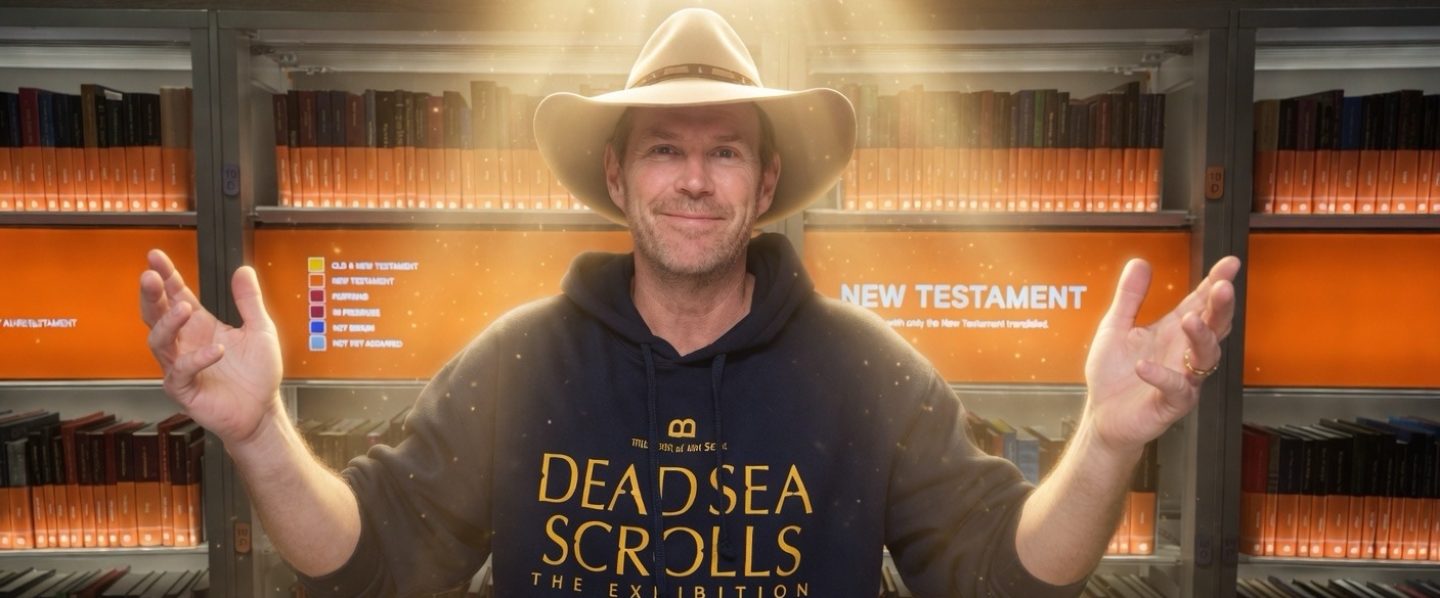
Hoffman Laissez Faire: A new style of management for the 22nd Century

The issue was not settled by Douglas McGregor from the MIT Sloan School of Management when he came up with Theory X and Theory Y concepts on how to utilize workforce motivation.  Rather constant innovation is always needed to push the boundaries and to refine previous thoughts until something new is revealed that nobody on the face of the earth has seen before.   Particularly, I have always disagreed with Theory X and have always found Theory Y to be entirely too relaxed.  So I spent the last 17 years refining a style of my own which was inspired by two people I consider to be some of the best leaders in history.  One is the football coach Sam Wyche from the Cincinnati Bengals and later Tampa Bay Buccaneers, the other is Claire Lee Chennault.  The football coach invented new aspects to an old game and was involved in developing Hall of Fame talent like Joe Montana, Warren Sapp, John Lynch and Derrick Brooks.  The other essentially prevented Japan from taking China during World War II—all by himself.   However, both men suffered from history as Theory X and Theory Y types have written the history books not sure or outright resentful of the success of their betters, which I have always found immensely interesting—actually I have been obsessed with that cause and effect.  This has prompted me to create my own management style which was developed to explain the conditions of the two leaders indicated.  I call it Hoffman Laissez Faire and I have just concluded a multi-decade research project that proves its dramatic success which I will explain the value for with some context.

In the United States, essentially created by the economist Adam Smith and his “invisible hand” concept of economic motivation and development, laissez fair capitalism is the best method of creating not only wealth for a country, but an entire race of people.  Since laissez faire capitalism scares 90 percent of the population who are not functioning from a proper personal value system that allows for that brand of economic motivation to manifest, it is important then to look at the various modes of personal management that drives people in their daily lives to understand why.  Most people live their lives in the easy way taught to them as children, the authoritarian system of Theory X which comes to them first from their parents—which they never escape.  That is the reason for the 50-year-old over-weight office employee who begins planning their lunch the moment they clock in for the day who is as productive as a flat tire shredded on the rim of a beat-up old car.  They have been taught Theory X management styles and accept them to the point that they no longer think from their own input, but from others.  In their homes, their parents controlled their first thoughts, and then it was their jobs.  So of course they vote that way and elect politicians who do the same things.  It is unreasonable to expect a company full of Theory X employees to vote in favor of a United States President who advocates laissez faire capitalism.  Rather, they would likely find socialism more appealing, because it most represents Theory X management styles.  So to fix the nation of America you cannot start at the top, but at the level of people’s personal management styles and fix that before any hope of a democratic republic can have hopes of success.

Theory X and Theory Y are models of the type of employees that managers may encounter in the workplace. These models are used to prepare tactics and protocols on how to deal with employees to maximize production and profit.

According to this theory, type X individuals are inherently lazy and unhappy with their jobs. Therefore, an authoritarian management style is required to ensure fulfillment of the individuals’ objectives. These workers need close supervision with comprehensive systems of control and a hierarchical structure is needed with tight controls at every level. According to this theory, employees will show little ambition without an enticing incentive program, and will avoid responsibility. According to Dr. Kumi Mark, if organizational goals are to be met, ‘Theory X’ managers must rely heavily on the threat of punishment to gain employee compliance. When practiced this theory can lead to mistrust, highly restrictive supervision and a punitive atmosphere. The ‘Theory X’ manager believes that all actions can be traced, and the responsible individual needs a direct reward or a reprimand according to the action’s outcomes. This managerial style is more effective when used to motivate a workforce that is not inherently motivated to perform. It is usually exercised in professions where promotion is infrequent, unlikely or even impossible and where workers perform repetitive tasks. One major flaw of this management style is that it limits employee potential and discourages creative thinking.

‘Theory Y’ managers assume employees can be ambitious, self-motivated and exercise self-control. Employees enjoy their mental and physical work duties and for them, work is as natural as play. They possess creative problem solving abilities, but their talents are underused in most organizations. ‘Theory Y’ managers believe that given the proper conditions, employees will learn to seek out and accept responsibility, exercise self-control and self-direction in accomplishing their objectives. A ‘Theory Y’ manager believes that, given the right conditions, most people will want to do well at work. They believe that the satisfaction of doing a good job is a strong motivation. Many people interpret ‘Theory Y’ as a positive set of beliefs about workers. A close reading of ‘The Human Side of Enterprise’ reveals that McGregor simply argues for managers to be open to a more positive view of workers and the possibilities that this creates. He thinks that ‘Theory Y’ managers are more likely than ‘Theory X’ managers to develop a climate of trust with employees required for employee development. This would include managers communicating openly with subordinates, minimizing the tension in superior-subordinate relationships, creating a comfortable environment in which subordinates can develop and use their abilities. This environment would include sharing of decision-making so that subordinates have a say in decisions that influence them.

Then of course there is Theory Z which came as a kind of off-spring in management evolution.  It’s a name for various theories of human motivation built on Douglas McGregor‘s Theory X and Theory Y. Theories X, Y and various versions of Z have been used in human resource management, organizational behavior, organizational communication and organizational development.

One Theory Z was developed by Abraham H. Maslow in his paper “Theory Z” and the other is Dr. William Ouchi’s so-called “Japanese Management” style popularized during the Asian economic boom of the 1980s. The third was developed by W. J. Reddin in Managerial Effectiveness.

McGregor’s Theory Y in contrast to Theory X, which stated that workers inherently dislike and avoid work and must be driven to it, and Theory Y, which stated that work is natural and can be a source of satisfaction when aimed at higher order human psychological needs.

For Ouchi, Theory Z focused on increasing employee loyalty to the company by providing a job for life with a strong focus on the well-being of the employee, both on and off the job. According to Ouchi, Theory Z management tends to promote stable employment, high productivity, and high employee morale and satisfaction.

Ironically, “Japanese Management” and Theory Z itself were based on Dr. W. Edwards Deming‘s famous “14 points“. Deming, an American scholar whose management and motivation theories were more popular outside the United States, went on to help lay the foundation of Japanese organizational development during their expansion in the world economy in the 1980s. (CLICK HERE TO READ MY OPINION OF DEMMING)  Deming’s theories are summarized in his two books, Out of the Crisis and The New Economics, in which he spells out his “System of Profound Knowledge”. He was a frequent advisor to Japanese business and government leaders, and eventually became a revered counselor. Deming was awarded the Second Order of the Sacred Treasures by the former Emperor Hirohito, and American businesses tried to use his “Japanese” approach to improve their competitive position.

https://en.wikipedia.org/wiki/Theory_X_and_Theory_Y

https://en.wikipedia.org/wiki/Theory_Z

Abraham Maslow, a psychologist and the first theorist to develop a theory of motivation based upon human needs produced a theory that had three assumptions. First, human needs are never completely satisfied. Second, human behavior is purposeful and is motivated by need for satisfaction. Third, these needs can be classified according to a hierarchical structure of importance from the lowest to highest (Maslow, 1970).

  1. Physiological need
  2. Safety needs
  3. Belongingness and love needs
  4. The esteem needs –self-confidence
  5. The need forself-actualization – the need to reach your full potential

Maslow’s hierarchy of needs theory helps the manager to understand what motivates an employee. By understanding what needs must be met in order for an employee to achieve the highest-level of motivation, managers are then able to get the most out of production. Theory X, Y and Z all play a role in how a company should manage successfully. Theory X and Theory Y were both written by Douglas McGregor, a social psychologist who is believed to be a key element in the area of management theory. In Mc.Gregor’s book The Human Side of Enterprise (1960), McGregor describes Theory X and Theory Y based upon Maslow’s hierarchy of needs, where McGregor grouped the hierarchy into a lower order (Theory X) needs and a higher order (Theory Y) needs. McGregor suggested that management could use either set of needs to motivate employees, but better results could be gained by the use of Theory Y, rather than Theory X (Heil, Bennis, & Stephens, 2000).

All those methods are insufficient to the modern task. The two great leaders I mentioned previously, Claire Lee Chennault and Sam Wyche were using something else which I would term a unique variation of laissez faire management styles.  The laissez-faire leadership style is where all the rights and power to make decisions is fully given to the worker. This was first described by Lewin, Lippitt, and White in 1938, along with the autocratic leadership and the democratic leadership styles. The laissez-faire style is sometimes described as a “hands off” leadership style because the leader delegates the tasks to their followers while providing little or no direction to the followers. If the leader withdraws too much from their followers it can sometimes result in a lack of productivity, cohesiveness, and satisfaction.[8]

Laissez-faire leaders allow followers to have complete freedom to make decisions concerning the completion of their work. It allows followers a high degree of autonomy and self-rule, while at the same time offering guidance and support when requested. The laissez-faire leader using guided freedom provides the followers with all materials necessary to accomplish their goals, but does not directly participate in decision making unless the followers request their assistance.

This is an effective style to use when:

  • Followers are highly skilled, experienced, and educated.
  • Followers have pride in their work and the drive to do it successfully on their own.
  • Outside experts, such as staff specialists or consultants are being used.
  • Followers are trustworthy and experienced.

This style should NOT be used when:

  • Followers feel insecure at the unavailability of a leader.
  • The leader cannot or will not provide regular feedback to their followers.[9]

https://en.wikipedia.org/wiki/Leadership_style

Obviously a society who is trying to have a laissez faire form of capitalism needs voters from a democratic republic who function best within a laissez faire form of personal management.  And in tomorrow’s article I’ll elaborate more how and why this form of management is far superior to all the other methods mentioned within this text. My Hoffman variation to the laissez faire system is not casual, as one might imagine it to be, or misdiagnosed from a distance.  It’s rather intense, but it never robs people of their merit or emotional investment in the task at hand, which is incredibly important.  It requires the manager to be uniquely good and diverse at many levels to understand the emotional climate that employees need to function within to fully utilize the gifts of their productivity. These definitions are important before moving into the more advance notions of laissez faire leadership which I will do in the next article on this topic.  This article is but a foundation to begin building upon so that everything that comes next can be referenced correctly to the curious mind.

Rich Hoffman

 CLIFFHANGER RESEARCH & DEVELOPMENT

Listen to The Blaze Radio Network by CLICKING HERE.
Being at the Front of the Train: Comprehending a Metaphysics of Quality

Perhaps Robert Pirsig’s work on the Metaphysics of Quality was one of the greatest discoveries of the 20th Century, and I include Einstein’s Theory of Relativity in that analysis.  He refined that metaphysics in only two books, one was Zen and the Art of Motorcycle Maintenance: An Inquiry in Values (1974), and the other was Lila: An Inquiry in Morals (1991).  Only a few very gifted individuals around the world have read and understood the first book written in 1971.  The book itself was a success, but practicing what one learned from it was far more difficult and many read it without being able to apply it to their lives. The 1991 book has an even more obscure audience—but is infinitely more complex and revelatory.  It is the work of genius without question, and tackles directly the problems we have in defining quality in any form.  I understood Pirsig easily—both books probably because I had a similar life experience as Pirsig as far as relationship to the outside world before electric shock pushed the core of his personality represented as Phaedrus deep within the author’s subconscious.  That is where he and I differ dramatically as I never have allowed myself to be abused the way he was by the static pattern system of an orthodox society.  I had one really good friend who was treated the way Pirsig was however, and I watched him go through the ordeal painfully.  However, my protection was my extreme rebelliousness, which preserved much of my youth for the benefit of my adulthood.  My work with bullwhips took me the rest of the way there and combined with the work of Ayn Rand put me in a special place that Pirsig didn’t have the advantage of.  It was hard for Pirsig to function as a genius in a world dedicated to static pattern commitment to systems defining quality as adherence to the pattern rather than intellectual assessment.  This is why I wrote the revelatory article about the ineffectiveness of Deming in business.  CLICK TO REVIEW.

Perhaps a decade from now I’ll write my own books about this Metaphysics of Quality. After all, I am in the middle of proving it applicable to modern society against the Deming addicts.  I think Deming’s work has been one of the great destroyers of capitalism instead of advancing quality, because quality is determined by a system of thought rather than a value judgment and this has afflicted perhaps 98% of the world into a sticky feet quandary of ineffectiveness.  I have been knocking on that Deming door for years looking for a way to break it down without destroying society, and I am presently undergoing that experiment.  The results will likely be reported in future books on the Metaphysics of Quality that I will write in my 50s an 60s that will be likely sequels Pirsig’s books only with an Aristotelian emphasis—instead of Plato.  Presently I am in the field with great opposition cast in my direction by those static pattern protectors of their own definitions of quality as defined by the statistician Deming.

Essentially the heart of Pirsig’s work is in his front of the train/back of the train analysis.  Deming is a back of the train guy, Pirsig is at the front.  CLICK HERE TO REVIEW—otherwise you will be lost dear reader.  There is no reason to rehash all that now for the sake of review.  This is a rather advanced article so the foundation understanding of the subject should be either read for the first time, or reviewed before proceeding.  Back of the train people are slow to act and think in a sluggish manner because they wait for analysis of the contents of the entire train before acting.  This is why our political system is in such a disastrous condition, because all of the Beltway politics is built around this back of the train positioning, intellectually.  Nothing is done before Deming types look statistically at all the data collected in a train and a consensus of action is built so a decision can be made.   However, this is extremely problematic because the trains we all ride through life are always moving, and decisions must be made far in advance to keep the train moving in the direction we desire.  With a long train especially, the front of the train is far ahead of the back of the train so by the time that those in the back analyze their data the decision points for the fate of the train have come and gone.  The right place to make decisions is at the front of the train, not the back.  Those in the back serve a function—a kind of retrospect analysis that can help with future decision-making, but they will not put the train on the right track.  So I won’t say they are useless, just ineffective in providing leadership.  They can tell you the score but they can’t tell you how to score.

Most of the world is crippled by this relationship and we are raised from little children to think from the back of the train.  We wait for politicians who are always late to the conclusions—because they wait for analysis of the train’s contents before speaking—to tell us how to conduct our lives which is a mistake.  We wait for poplar social magazines like People, Time, and US to instruct us how to live—again this is after the back of the train has reported the latest fashion trends and social priorities.  So we blindly accept a quality definition determined by analysis of where the train has been, but not where it’s going—and that sums up best the problems of our age.

I have an obsession with the leading edge of the great train.  For instance, before a very important meeting recently with very important people I was riding my motorcycle like I have everyday for the last 7 years.  Another driver ran into me randomly while I was sitting in traffic totaling my precious motorcycle with $10,000 in damage.  That in itself broke my heart and I was thinking about that as I evaded danger.  I had been watching the driver as I watch everyone while driving assuming always the worst, so before the crash, I did a dive roll off the motorcycle and ended up well out of danger before the crash.  Many looking at the crash from the police, witnesses sitting around me in traffic, and the insurance people assumed that because of the speed of the crash and where it occurred on my motorcycle that I had lost a leg, or that I should have.  To move so quickly out-of-the-way was not something that anybody could attribute to any known evasive action option.  All that they could say was that I was lucky.  But I wasn’t lucky; I was living at the front of the train of decision-making, and was well aware of the dangers around me.  So well before the driver carelessly ran into me destroying my precious motorcycle I was out of danger’s grasp before the occurrence had a chance to claim a victim.  That is the difference between being at the front of the train with our daily lives and at the back.  The back of the train—the Deming approach would have been to sit there, get hit and study the data so that new rules and regulations could be created to prevent the accident in the future.  I would have lost my leg; probably my life and much more would have been lost because of my vacancy.  But, as it turned out, I walked away and still made it to my meeting and executed the tasks of that day the way I needed to, without any excuses.  That is because I live at the front of the train and I climb out on that leading edge as far as I can.

Most people by nature are back of the train types.  Those who aren’t that way naturally, become that way from improper instruction from their childhoods. When a child asks “why” and the instructor says, “because I say so,” the poor child is being put at the back of the train of thought.  By the time they get to 8 or 9 years of age, they will just accept the static patterns of their society as reported from the back of the train and trust that system even to their own demise.  It’s a very sad condition.  But if the child is taught to make decisions from the front of the train based on their observed reality, then the answer might be, “because you can see that there are rocks across the tracks ahead and that we have to switch lanes before getting there, otherwise we’ll crash.”

As I said, I put this up now as a way to maybe help one or two people improve their lives.  I’ll do more with it later after I prove out some more concepts against the theater of reality, but until then this will have to do.  If you want to improve your life immediately, get out of the back of the train and come up to the front.  There’s plenty of room, and it’s much more comfortable.  All decisions in life should be made in the front, not the back. Because by the time the information gets to those analysis driven Deming types, the danger is already history, and nobody did anything to avert from it.  Understanding that is the key to success in life in every field.  Master that, and you will master the universe.

I’m just saying…………………………………….

Rich Hoffman

 CLIFFHANGER RESEARCH & DEVELOPMENT

Listen to The Blaze Radio Network by CLICKING HERE.
The Strategic Necessity of Donald Trump: Overcoming Glenn Beck’s opposition

I gave up a long time ago in hoping that there would be people as ethical as I am in public office.  I personally believe that Glenn Beck’s desire for a modern version of George Washington as president is ridiculous, because Washington was too nice for this political climate—he’d be chewed up and spit out quickly only to be lost to history like Calvin Coolidge.  Washington was fortunate enough to have lived at a pinnacle time in American history where valor and faith were considered attributes.  Our present time is much different and I find myself at odds with my friends at The Blaze, where Glenn Beck is not a supporter of Donald Trump for President, and I am becoming more so each day.  I have for a long time believed that successful businessmen needed to be in political office—people who don’t need the money and are proven in their fields of endeavor as opposed to community activists who would have a hard time having a job if they were not directly connected to politics.  Over the weekend, Donald Trump gave a speech to a packed house in Arizona which is seen below in its totality.  It is speeches like this that are winning me over as opposed to politicians like Ted Cruz and Scott Walker.  The current political climate in America is in such a shambles right now that I don’t think anybody but Trump could pull it from the brink because everything is so divisive and fragmented right now.  I support Trump because of speeches like this where he is willing to talk about how stupid our current politicians are and is offering himself as a proven solution in negotiating good deals for America’s position in the world.

I listen to Pat and Stu every single day from 5 pm until 7 pm, on The Blaze Radio Network and I like their opinions very much.  Below Stu breaks down several reasons to be cautious of Donald Trump, which are reasonable arguments—but rather than rehash the position of Glenn Beck at The Blaze, I must offer some tactical information in support of Trump for the sake of strategy that must be considered.  In 2010 Glenn Beck while he was at Fox News begged his audience for a character like Henry Reardon to emerge from the pages of Ayn Rand’s Atlas Shrugged–a successful business tycoon who would be willing to stick up for business and capitalism.  Since that time Beck himself has become rather wealthy, largely because of his Fox show, his friendship with Bill O’Reilly, and his personal connections to the billionaire John Huntsman.  The second-hander connections have helped him go from a successful radio personality to a reasonably successful business person.  Beck also had a sickness that threatened his life, so he sought more and more spiritual counsel with religious people like David Barton and is more evangelical now than he was when he first started his work toward dusting off American Excepetionalism.  As a former drug abuser Beck has went as far as he can and now preaches to his audience ways of changing people for the better, which is a similar message that one might expect from church.

That message of daily change for the better is not attractive to me.  I was never involved with drugs, alcohol abuse, cheating with women, political corruption or weakness in spirit in any way.  I have always been a good person strong on my personal beliefs and physically very resolute.  I’ve been that way from my earliest memories to my present time with no gaps in between where I can point to and say, “God, please forgive me—I want to be your humble servant to rectify my past behavior.”  So when Glenn Beck starts talking about that kind of thing I turn him off these days—because he’s going too soft for my liking.   When he tries to answer his past critics over his divisiveness with this present group hug mentality that is more appropriate in a church congregation I hear a broken man who is still the alcoholic from years past still trying to suppress their demons with faith.  The part of Glenn Beck that I always enjoyed was the entrepreneur who loved the novel Atlas Shrugged and the strong business personalities of that wonderful book.  On that we have common ground.  On being a spiritual advisor, I don’t take advice from former drug addicts.  I don’t belittle them for their past conduct.  I give them the ability to live better lives, but I will personally hold it against them as far as spiritual counsel.  I root for them to be better people, but I can’t relate to their quandary.

Donald Trump as I’ve said before is not a perfect person.  He’s been married too many times for me.  He’s not up to my moral standards.  But, he is a strong and proven leader.  Where Beck made his money in a second-hander fashion, Trump made his as a primary—in the context of a Henry Reardon type of character.  I think Trump over the years has worked the system to his advantage and used government to get what he wants because he knows that they are generally very stupid.  I know he has personal friendships with major Hollywood personalities including Oprah, and that doesn’t bother me at all.  I am sick of Republicans and their sissy slapping antics.  I despise Democrats politically—they are fundamentally socialists.  And I don’t like Libertarians, which is what Glenn Beck calls himself these days.  They are way too permissive about drug use for me.  There isn’t a candidate out there who represents me properly, morally, ethically, or spiritually.  I don’t need a leader to show me how to conduct my life because nobody is qualified.

What I do need is for people in our government to know what they are doing.  Our current federal government has screwed up the position of America around the world to such a devastating degree that it will take a very radical shift to right the faults of decades of political ineptness.   The best platform to fix America’s ship right now is in promoting the morality of capitalism over the encroaching socialism that is crushing the world presently under its feet.  And there isn’t a better person available who knows money better or the art of negotiations more dynamically than Donald Trump who is a billionaire fully in control of his own destiny.  I can see having moral discussions about the direction of America with future candidates like Cruz and Walker in 2024, but America must survive that long to get there.  Right now the most pressing issues that there is on the radar is the $18 trillion in debt that America currently has, and how to stop that bleeding before the situation is irreversible.

I personally think Trump stands to double or triple his money if he could return the American economy back to the Reaganomics of the 80s, which is how he made his money to begin with.  Ronald Reagan had a nice run as president selling capitalism until the assassination attempt on his life which caused him to back off his former strength considerably.  He was never the same man after that shooting, and progressives solidified their position for a gradual assault of the American economy as soon as George Bush Sr. was in office by 1988.  That’s why I as a strong conservative worked on behalf of Ross Perot in 1992 against the Republican Party, and why now in 2015 I am siding with Donald Trump.  I want businessmen in the White House who know what they are doing.  I don’t want activists or social appeasers.  I want people who will represent American capitalism stoically to the rest of the world, and who better to do that than an arrogant self-centered man who has made a fortune on his own and has the world eating out of his hand.

I can tell you want I don’t want, I don’t want more Mitch McConnell, John Boehner and Jeb Bush types ruining the Beltway with their addiction to easy money.  I want an American president who is wealthy beyond the reach of a lobbyist, who knows where the bodies are buried, and actually wants to become even wealthier by doing a good job.  And when the leftists in Hollywood want to criticize his wealth, he knows how to handle them—because most of them have worked with him in the past, or want to work for him in the future—and will keep their mouths shut so we can get this done.  There isn’t anybody else out there capable of performing the intellectual task of selling capitalism back to a world in desperate need of it than Donald Trump.  I want him to take his Art of the Deal to the world and get them to buy into it for their own sake, because the other options are simply off the table.  I think Ted Cruz could be a good president, but the establishment will fight him at every turn.  What we need now is someone who knows how to disarm the enemy from behind the scenes and there is right now nobody better than Trump.  When it comes to money and finance, there is nobody better and that’s what we need most.  Faith is fine for everlasting life.  But first we must care for the here and now—and capitalism is needed to maintain a morality that the world is starving for with an opposition poised to destroy it forever blasting humanity back to the stone age of intellectual aptitude.

Rich Hoffman

 CLIFFHANGER RESEARCH & DEVELOPMENT

Listen to The Blaze Radio Network by CLICKING HERE.

Politics of the Old Union School: Understanding the inner workings of preserving history

Well of course Ronald Hicks, vice president for SHP Leading Design defended his efforts with Patti Alderson and my old friend Bob Hutsenpiller from No Lakota Levy to demolish the Old Union School with a brand new Boys and Girls Club of West Chester/Liberty with a $6.5 million dollar facility—by saying, “If any entity other than an education-based organization wanted to function in the structure, the occupancy of the building would change.  That in turn would require a change of use for the facility, which would trigger ‘substantial wholesale upgrading of the building to current code requirements in order to change the function.”  As I listened to Hicks speak about such invisible mountains of opposition I turned to lock eyes with the leaders of West Chester development—they were literally in the room and could easily handle such a change of use.  But the elephant in the room wasn’t really about such concerns—it was a simple deflection to hide the real mechanisms of power percolating within the Lakota school district.  The accusation that any other option was simply too hard for the old historic building was intended to mask the politics at play, CLICK HERE to read how the Journal News reported the issue.

The June 30th 2015th event was a who’s who of local politics as many of the heavy hitters from behind the scenes of most things political in Butler County were present.  As I spoke to Randy Oppenheimer telling him honestly that I thought he was doing a good job as the Lakota spokesman, even if he was on the wrong side of things, another old friend of mine Mark Sennet was standing behind me talking to Lakota treasurer Jenni Logan and Karen Mantia about how the area developers have always been for Lakota schools.  Mark was also in No Lakota Levy with me and on this issue was against the tearing down of the old school.  But his dialogue was interesting.  The next time there is a levy fight, I won’t be using the developers as a way to defeat the levy.  It was in fact their lack of passion and commitment to hold strong that caused the last levy to be successfully passed.  They were all too willing to side with Patti Alderson because she’s always good for potential projects down the road, such as this Boys and Girls Club deal.  They were able to argue higher taxes and the impact to further development, but did not have the conviction to hold their line in such public forums, which was clearly what Mark was revealing quite openly.

To continue an answer to Randy about why I have so many blog postings and say so many things within those postings, it’s really to provoke thought from those who need to think more intensely about any given topic.  For instance, there are elements to this Old Union School discussion that I can cover at this site that you simply won’t read in the Cincinnati Enquirer or the Journal News.  Both news outlets were present, but they are not given the kind of space in their newspapers to cover the complete story, only the surface issues.  In this case going back to the year before the Alderson/Lakota deal I was leading No Lakota Levy against the next tax increase attempt, we had a nice little press conference at Bob Hutsenpeller’s office within view of the Lakota East high school facility.  I had Channel 19 there as well as Channel 5, and 9.  I also had the Cincinnati Enquirer there giving Michael Clark an exclusive on a story where Patti Alderson refused to work with me on helping kids pay for their high sports fees at Lakota—which was an extortion racket designed to build support for a tax increase.  Since Patti refused to help the kids then by working with No Lakota Levy—because of the politics of the situation, she and the Lakota school board worked directly with Michael Clark to write a hit peace on me hoping to break up No Lakota Levy.  When it really pissed me off to the point of near violence they asked for a two-year cease-fire to regroup.  During that time they went to work on Bob pulling him into an open alliance with Patti on this Boys and Girls Club project.  Bob is a good builder, and a good person.  He was the last one standing at the end, and it was hard for him.  This deal is an opportunity to repair some relationships and get involved in building something significant within the community.  Patti get’s to do some charity work which she likes to do, and the Lakota school system gets to marry together a major part of the tax increase resistance to an open levy supporter facilitator to deflect future opposition.  Everyone wins—right?  Wrong.  They left out some missing pieces to the puzzle.

I was surprised that Michael Clark didn’t want to come over and say hello to me.  Even with all our back and forth bickering, Karen Mantia said hello to me.  What many don’t know, and what I explained to Randy a little bit is that I primarily make my living pissing people off.  I work with people who outright hate me all the time, and I know that.  My goal in all these efforts is to dig out thoughts, to get to the root cause of any effort.  I don’t have a desire to be liked by anyone other than my wife, by anybody.  That gives me a lot of freedom to provoke honesty in people and their relationships to money.  Sure I’m angry at Clark.  On the day he wrote his hit piece against me I was on several professional conference calls around the city while radio stations were reading on the air the way he assembled many articles from this site into a context that greatly favored the pro levy crowd.  He all by himself threw turbo fuel on an already blazing inferno and he and the Lakota school board went for my jugular clearly.  But that wouldn’t be the first time that’s happened in my life, and it certainly wouldn’t be the last.  So it surprised me that he didn’t even say hello.  When Karen asked where I’ve been, I told her I had been busy.  Lakota passed their levy and this Old Union School deal has been some of the most recent activity since the 2013 levy passage.  I’ve been focused on making an argument for a nationwide abandonment of public education all together, so haven’t cared much about the daily workings at Lakota—other than I don’t want to pay the taxes. But this Old Union School deal is something that affects all of West Chester, so I attended this meeting with interest, and I will get more involved in the future when Lakota tries for another levy. So Clark might as well get used to the fact that he’s going to have to see me around town.  No Lakota Levy did not die with the alliance of Bob and Patti, the ruckus of all that controversy was a recruiting tool for me to bring new blood to the fight—because the developers were wavering in their resistance.  That should have been obvious to all the smart people in the room.  So I wanted to thank Michael Clark for the hit piece—it showed the cards of all involved and helped me tremendously.  And at its roots, that is what is behind the Boys and Girls Club—and why I am against it, because of the cards involved that are hidden from the public.

I said in the Journal article that the school board did not solicit enough opportunities for the Old Union School project.  They simply took Patti’s offer bringing Bob with her and went right to work hiring Hicks to design as the architect.  He’s put in considerable effort so of course he’ll defend the project.  But the Old Union School sits in a region where a conscious effort to preserve the historic nature of West Chester is taking place.  Once Patti stamped her name on the deal most area developers knew to stay away, so there wasn’t much solicitation as far as options involving an auction of the property.  There are many buildings like the Old Union School in Norwood, Ohio for instance that have been converted to office buildings.  On the outside they have the architecture of Norwood’s traditions while on the inside they are contemporary.  Such an option would be a prime utilization for the Old Union School which is just down the road from Union Center and is just a football throw away from I-75 access.  Just across the highway are wonderful restaurants for lunch rushes, I would find it hard to believe that there are no takers out there for that type of development. I also brought it up in the meeting but there wasn’t much time to get into the meat of it, that due to declining enrollment, Lakota is facing the possibility of further school properties coming available.  My point to them was that Lakota didn’t need to control the Old Union School property as an asset, that they could afford to let it go to someone who would love it, and nurse it back to health.  An office complex there would make more money for the township, so zoning approval should be achievable.  The leaders of the community were there to answer that question, but Hicks didn’t really want to talk about it.  Hicks and his response were equivalent to a kid in the back seat of a car saying that he wanted to go to Disneyworld from Cincinnati, but he didn’t want to ride in a car the whole way.  It’s just too hard to ask for a change of use—in his eyes.  What he really meant was that he wanted to protect his time in the project and the commitment his client, Patti Alderson has in the endeavor now that it’s public.  It doesn’t have anything to do with hard or not.  It’s political purely and nothing more.

As usual Danielle Richardson did a good job of bringing debate to the table.   Without her this whole deal would have just been rubber stamped and packaged into the Lakota win column with great fanfare at the expense of the community.  She composed herself quite valiantly even though she is coming up on a July 8th variance hearing with West Chester trying to keep her pet chickens.  Chickens like the Old Union School is part of West Chester history and makes our community unique.  The people who judge top 10 communities around the country are the same type of people who typically support school levies, so their opinions are skewed toward progressivism.  Danielle has given me eggs from her chickens and they are quite good, better than the eggs you can get at the grocery—because her chickens are happy, and healthy, and proud West Chester residents.  So she has more than enough fights to deal with, and she composed herself well considering the implications.  She’s an Ayn Rand purist and doesn’t think she should have to get a variance from the “state” to keep her chickens—which she’s right.  But there are elements of West Chester politics who are breathing heavily down the necks of leadership to be one of those top 10 national communities.  They see “progress” as new buildings over old ones and measure their success by erasing history and writing their own.  Danielle is fighting for more than just chickens or the preservation of the Old Union School.  She is fighting to keep West Chester’s history a treasured memory—something all the powerful people in the room at the Lakota school board meeting need to take into account as they take steps forward that they can never again retract once committed.

It’s a complicated web of entanglements, but all politics is that way.  What matters is not whether or not people like you.  They can hate me from now until eternity.  What matters is that the right things happen, and sometimes people need to be challenged in order to do the right things.  I like the idea of an office complex going into the Old Union School preserving its history for the next century along a historic area of West Chester that needs to retain its old style charm amid booming development.  I also like the idea of stopping by Danielle’s house for fresh eggs they way I did when I was growing up and farmers handed out eggs like trick or treat candy in this region.  Then I like to go over and have lunch at Jags spending $300 on a nice big Oscar steak and a bottle of wine.  I like to have options and in regard to the Old Union School, because of Patti’s involvement, the best options for Lakota were ignored—and in the end that will cost them money in lost opportunity, and a place in preserving the history of an old school-house that is one of the last remnants of a disappearing past.

Rich Hoffman

 CLIFFHANGER RESEARCH & DEVELOPMENT

Listen to The Blaze Radio Network by CLICKING HERE.

Gun Grabbing Obama: Attacking America from within by first disarming them

The communist oriented Democrats have been “community organizing” vigorously on the heels of the infamous June 2015 Supreme Court rulings going for what they think is the conservative jugular in the final year of Obama’s flamboyant rule as a socialist dictator.  Over the weekend I received several emails from them advocating fundraising and liberal activism.  Below is one such example from the Obama camp specifically targeting guns.  Here’s what it said.

Friend —

We’ve had to come together as a nation too many times to mourn after horrific acts of gun violence. And right now, it’s not good enough simply to show sympathy.

We need to acknowledge that there’s more work to do — that these tragedies have become far too commonplace. This is a conversation that folks need to have, and organizers like you are the ones who will move it forward.

People across the country are stepping up, and OFA supporters and volunteers are working to prevent gun violence state by state and city by city — join their fight today.

As we take the time to heal in the shadow of this most recent tragedy, we have to ask ourselves what more we can do as individuals and communities to prevent guns from getting into the hands of dangerous individuals.

The lack of movement in Congress on this issue is incredibly frustrating. But their refusal to act won’t stop progress. Because of organizers like you, states like Washington and Oregon ​have introduced successful restrictions on gun purchases, like common-sense background checks.

No single reform will eliminate violence. But we can’t give up, or act like this is some kind of new normal. We have to make progress where we can, and OFA and other groups have a real path forward.

There’s much more to do — so join OFA in working for it:

https://my.barackobama.com/Stand-Against-Gun-Violence

I’m not giving up, and I hope you won’t either. Every voice​ is important.​

Thank you,

Barack Obama


Remember, progress to a progressive is elimination one by one of the Bill of Rights, and the gun is highest on their priority list.  So defend the gun by sending a nice message to OFA and let them know how you feel.  Communists want a disarmed America for obvious reasons.  It’s your job dear reader to make sure they don’t get their way.  Send this article to everyone you know and make sure to take action and defend your rights—or you will lose them.

Rich Hoffman

 CLIFFHANGER RESEARCH & DEVELOPMENT

Listen to The Blaze Radio Network by CLICKING HERE.

A Rotten Rope up an Ominous Precipice: Treasure guarded by the Grim Reaper

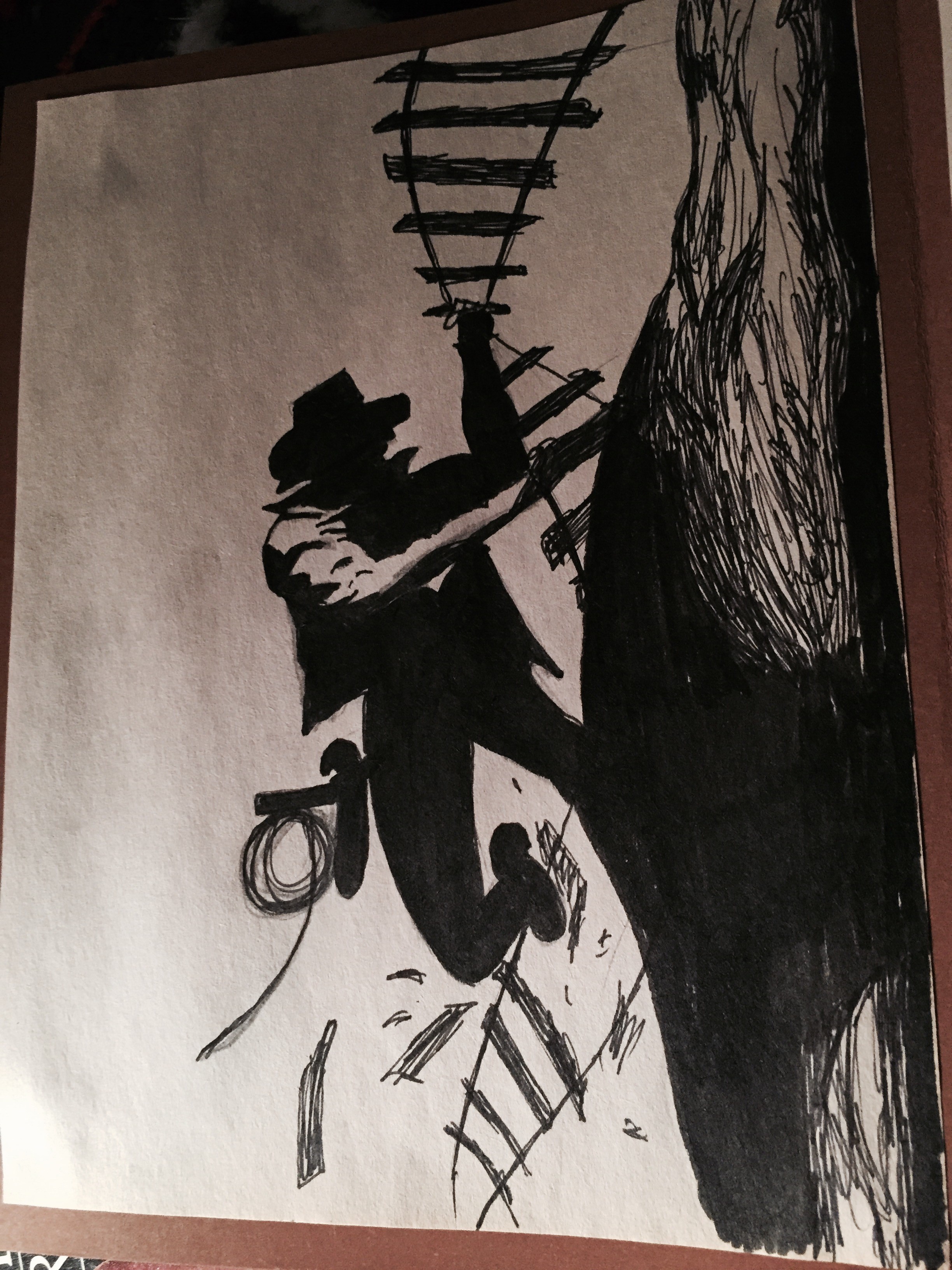
Naturally there are a lot of creative people in my family.  I of course have a lot of very creative skills, and my wife does as well.  Yet we protect those skills of their virtual with the guarded care of a church going virgin from previous centuries.  We don’t whore ourselves out to the modern world.  We offer our services on our terms.  My wife is even stricter about that practice than I am.  Her crafts would make a fortune in an open market, but she’s very introverted and doesn’t like to see her creations tended to recklessly in exchange for money.  She usually only makes things for members of our family and not the outside world.  Naturally my children are very creative as well, and are happiest when they can express themselves in some form of art.  That means that when it comes time for gift giving the members of my family usually make things for each other rather than just buying an impersonal gift.  That made this last Father’s Day interesting because I had just come off a week of extreme stress, and my oldest daughter was very concerned about me. She captured her feelings in a nice card with some art expressed with the following picture.image

My previous week was enough to flatten all but the excessively resolute.  It involved first and foremost a legal issue that I can’t talk about at this time because of the entanglements involved.  The Grim Reaper came calling.  But I take this overman stuff seriously, so I denied its wishes.   Just because death wants something, doesn’t mean it gets it.  Human beings are a lot more powerful in their self-determination than they are often willing to admit.  Additionally, professionally it was one of the most difficult weeks I’ve had in my life—just with all the elements of things coming together at the same time from so many factions of people.  When people want to argue the great novel Atlas Shrugged and wonder why there are always only a few people who are competent, they need to walk in my shoes for a week and they’ll understand.  Especially this last week.  Then at the end of the week there was the Matt Clark radio show which I enjoyed and wasn’t a serious time burden, but did require some focus that was desperately in need of rest.  That same morning leading up to the broadcast when I was trying to do some show prep, I had guests from the other side of the world trying to get on a plane to get home and a major meltdown in my professional endeavors that would not allow a retreat from productive enterprise.  My kids knew about all this, so my daughter captured my week with that drawing.

When I first saw the picture I thought of Indiana Jones from the movie Temple of Doom.  I raised my kids on that movie, so the metaphor was appropriate.  Yet it was customized to fit my circumstances appropriately.  The hat is more like the one I wear rather than the one Indiana Jones does, and the physical body is more akin to me rather than the linky Harrison Ford.  In the picture the hero is trying to climb out of danger on a frail little rope ladder up a treacherous precipice.  Parts of the ladder are breaking away leaving nowhere to go but to fail or succeed in climbing hanging on to whatever one can.  Even though the picture is a dramatization of reality, it was exactly how the previous week had felt.

There were times during this week of tribulations when I wondered, “why.”  Why should I even try to climb up such a rope ladder?  Why not just stay on the ground instead of going up such an ominous precipice with a rickety device.   The answer is of course for the treasure that resides at the top.  Yet I’m not all that interested in treasure, but people I’m loyal to are—so I climb it to retrieve it for them.  I climb because they can’t.   They want the treasure from the top; I want the adventure of getting it.  I actually enjoy the danger of the climb, and that’s what I get out of it.  But my kids want my company, they’d rather me stay next to the fire in camp.  They don’t want the treasure I retrieve, just my company.  So it gets to be quite a challenge to give everyone in your life what they want—including yourself.  My daughter understands that and was able to capture her feelings within that seemingly simple picture.

There is no such thing as too much.  The circumstances presented require us to succeed or fail, and experience says that the more you push yourself, the more that you can get done in spite of any precipice intent on our destruction.  Because in life there are two kinds of treasure, there are those that drop alongside the trails we travel through life.  Occasionally someone drops a $20 dollar bill and we might find it because they have traveled that path before us, and lost something we have later found.  Perhaps in other times it’s a gold nugget that can bring us riches.  But treasures are best found off the paved road, because let’s face it, if you stick to the roads that are paved for our travel, you will only be able to go in life where others have intended to direct you.  That’s where the real treasures in life are—the kind that are still unclaimed by any who have come before us.  So I spend a lot of time on my own path off of any paved roads looking for treasure that nobody else dares to retrieve.  That is where I get a lot of my personal philosophy—off that paved road.  But there is danger off that paved path and bad things do happen. The dangers are often hidden until it’s too late.  This means you must trust yourself to contend with those dangers in whatever form they present.  After a lot of practice, I have an understanding that I can handle anything.  But from those watching, it is a dramatic romp through uncharted territory—and can be a little scary.

Father’s Day came and went, but what remained was the nice card given to me that means more than just a picture reflective of a favorite movie.  It was an appropriate metaphor.  Truth be told I was happy to get back to the camp to enjoy some time with my family because there were times this past week where all the rungs in the ladder did break leaving me hanging by only a rickety rotten rope.  That’s when you dig your bloody fingertips into the sides of the cliff and keep climbing regardless of the pain even if only bare bone is left grinding away at the rocky surface.  What makes such moments truly worth the effort is the campfire stories that came after—and on Father’s Day 2015 we had more than a few to tell.

Rich Hoffman

 CLIFFHANGER RESEARCH & DEVELOPMENT

Listen to The Blaze Radio Network by CLICKING HERE.

Rich Hoffman is Running for President: The bad is no longer protected from the good

I made the announcement during my show on the Clarkcast over the weekend that I am running for president of the United States, along with a little single cell creature newly discovered on the Jupiter moon of Europa. Of course I was using a little metaphorical humor to convey how ridiculous it is that there are so many people running for president in 2016, and the number is still growing. I’d say the cause of that effect is that president Obama has been so terrible, and lowered the bar so low, that now everyone believes that they too could be president and gain the ability to rule the world.  That’s what happens when a standard is lowered to a level where common people with an average background gain an ability that should only encompass the best and brightest minds produced within the United States. Also during the June 20th show I covered Matt Clark’s secret mission which he called in to surmise. I then spoke about my history with bullwhips a bit, gave some statistical analysis about the perceived gun violence in the wake of the South Carolina church shooting, and introduced my friend Gery Deer to talk about the upcoming Annie Oakley Western Showcase in Darke County, Ohio. It was an entertaining radio show that can be heard in its entirety below. Following the clip is the rough script of the show to make navigation easier for sections you may want to hear again.

Radio Show WAAM Saturday June , 2015 1 PM WAAM Talk 1600  734-822-1600

5 min — Matt Clark’s secret mission update

8 min – Nice to hear from Roy Hill at Brownells as the extreme left seeks to exploit the Charleston, South Carolina church.  After nine people were killed by Dylann Roof, Obama immediately sought gun control.   The progressive elements of our society were quick to point out statistics from the United Nations indicating that 81,300 nonfatal injuries and 31,672 deaths a year involve guns, which are 308 shootings every day. That sounds truly terrible—yet context is conveniently left vacant. There are approximately 32,000 deaths a year by automobiles and yet nobody has a press conference that declares that we should get rid of cars.  What’s worse is that a whopping 44,000 people die every year from some form of drug overdose and the president supports more of that type of behavior even getting behind efforts to decriminalize it. Isn’t that hypocritical? Of course it is. The drama around the latest shooting rampage has nothing to do with the loss of innocent life—it’s all about building a case against guns so that Americans might be convinced to give them up in favor of some measure of safety. “The Fanned Flames of Racisim: Barack Obama’s role in the South Carolina shooting” at Overmanwarrior’s Wisdom.com

10 min – My history with bullwhips

17 min — Soft break

20 min – 30 years of history with bullwhips including movies, business instruction, and self-defense.  Lead in to my relationship with Gery Deer and the Annie Oakley Western Arts Showcase—home of the bullwhip fastdraw—invented in Ohio.  2015 event on Saturday July 25th.

30 min — Hard break

35 min – Introduction to Gery Deer – Gery Deer is the closest person I’ve ever met to a real life Bronco Billy. He has a background that is white-collar; he’s a writer, a television producer, a computer technician, a college graduate well versed and quite comfortable in professional settings. He’s been on America’s Got Talent and done films as a material supplier for projects like The Rundown. He also runs the only bullwhip studio in America from his home where he teaches the art form to students. He’s also a bit of a geek, and attends sci-fi conventions with boyish enthusiasm. But at his core he’s a western performer and vaudeville musician.   His band the Brothers and Company performs most weekends of the year and is a throwback to yesteryear with their compositions. He’s a very unique person who fits best in a motion picture screen rather than real life.

38 min – Gery conversation on the phone.

47 min — Soft break

50 min – Stories of the Annie Oakley Western Showcase and roots back to the stuntman great Alex Green.  Talk about the 2015 event, who, what, why, when, and where.

58 min — Exit to the top of the hour

imageAfter the show Matt sent me a picture of his view as he listened to the show from his hotel balcony in Hawaii at 7 AM in the morning. He had a nice little beverage there along with his laptop listening to the live broadcast from WAAM in Ann Arbor, Michigan over the Internet which I think is far superior to the old days of raw tower power. You get a much better signal over the Internet that goes much, much further. In this case the reach of WAAM was easily heard halfway around the world in real-time. As a host for Matt’s show I did it from my personal radio studio at my home while Derek at the home studio several hundred miles to the north worked the dials. All three of us worked together to put on the show you just heard from different places separated greatly by distance which I thought was a powerful breakthrough in radio. I know that The Blaze Radio is also doing something similar—and this is opening up a new frontier along the lines of talk radio. No longer are regional limitations necessary in talk radio. That means that those with the best message can now get it out no matter where they live and can reach audiences in every corner of the world without any restriction so long as they have Internet access. That is exactly why the FCC is trying to stick its nose into the Internet. It’s a very powerful tool for the crafty—and government hates it for that reason. Government intended to use the Internet for the opposite reason—as a population control mechanism—and yes porn is a form of population control. But people like Matt and the good people at WAAM are using the Internet to save the republic one broadcast at a time, which is why they put me on for a few weeks to advance the cause. It won’t be the last time I host a show—I’ll just say that.

A few years ago Darryl Parks at WLW radio told me that this was where radio was going, which meant that big stations owned by Clear Channel were in trouble. Back then there was some talk about me doing some weekend work at the Cincinnati juggernaut WLW—but there were some management changes, and reluctance on my part to get involved in that kind of thing. I am a very busy guy, and taking time out of my weekend to go down to the station to broadcast from a studio is just too great of an imposition. When they fired my friend Doc Thompson I had no choice but to pick sides against management and the rest is history. The station has been reducing its employees since then, and Lisa Wells filled the spot that I might have covered on Saturday mornings—hoping that a female might expand the station’s reputation from less of a sausage fest. But it really doesn’t.

Matt Clark asked me to guest host for him months ago and took measures to set me up at home with a complete studio so I could do the show from my home in Liberty Township, Ohio. That meant that I could do all my normal tasks and only block off an hour and a half to do Matt’s show—which was fine with me. I didn’t even have to live in Ann Arbor to be in the studio. Matt helped me set up a room in my house with a remote studio that worked just fine to produce what you just heard. Back in the day, such as at WLW, you’d have to drive to the station which is in a big building in Kenwood, park the car, go up one of the two elevators to the top floor, go through the sales office, walk down a hallway that is at least a 100 yards long, then camp out in the studio to do the show as the producer gave cues from behind the glass. It took me about a half hour to drive to the station, and an additional 15 minutes to park the car just to get to the studio. Then after the show it was the same amount of time to get back home. That in itself is an hour and a half of dead—unproductive time that I don’t have. Then you have the actual radio show which can be anywhere from 1 hour to 3 hours. A good part of the day would be completely consumed.

With the Clarkcast I was able to do my normal activities right up until the moment of the show. I went to my personal home studio, contacted the station producer, and he piped me in and off I went. After the show, I was back to what I was doing immediately. The total time was nothing more than a long telephone conversation and of a very little time impact. And Matt was able to monitor in real-time from the other side of the world. That is the power and reach of modern radio. It was fun, informative, and successful. We’ll definitely do it again. Because the world needs saving—and due to the power of the Internet, we can reach further more often than we’ve ever been able to before—and you can bet dear reader that we will continue to use those tools to preserve our republic well into the future. These tools allow the best and brightest to be heard so in a lot of ways, the bar has been removed so that many vindictive producers who control radio broadcast towers can no longer monopolize the airwaves protecting the bad from the good. In a lot of ways modern radio is seeing the opposite effect of the presidential race. Obama is so bad that he now has many challengers to his legacy because he has made the job look all too easy. Radio too is now decentralized—but now the very good can step around the big stations and get their message to the public without small-minded programmers getting in the way. And thanks to WAAM, we have all taken our first steps into a larger world.

Rich Hoffman

 CLIFFHANGER RESEARCH & DEVELOPMENT

Listen to The Blaze Radio Network by CLICKING HERE.

In Defense of Selfishness: Explaining the nature sex and relationships

Peter Schwartz from the Ayn Rand Instituted has been doing good publicity for his latest book released on June 2 titled In Defense of Selfishness: Why Self-Sacrifice is Unjust and Destructive. I thought the title odd as the word selfish has been so mischaracterized in our culture that it comes across as a negative. But Peter knows that and calculated that the opposition cast at him would set the trap for his philosophic argument—which is the point of the book. Schwartz has been successfully collecting the bounty of that trap with many interviews and making his point well.

I am of a mind that something really terrible happened in the pre-Deluge days of human history. What we have been told was sinful and wretched behavior may in fact have been translated by an insurrectionists revising historical perspective in a dominating need to rule over others. Somewhere in that struggle the word selfishness was destroyed of its meaning and the word “altruism” became synonymous with the word—“good.” All the religions that sprung forth from this period embraced altruism while they chastised self-interest forcing human beings to admit by their very birth an inclination to sin as defined by the quantity of self-sacrifice a given human being is willing to make on behalf of the greater good. Later this mentality would evolve into movements of communism and socialism, but the stage was set in religion.

However, for thinking people there are cracks into that façade which allow us to peer back into a time when such philosophic notions were not yet forged in such a destructive way and reveal a more sophisticated approach to pre-Socratic philosophy that has been defaced by the more recent translation in order to protect a desire to control the masses like sheep set to slaughter. It is on this stage that Peter Schwartz released his book described on his website as such:

In Defense of Selfishness is a cultural analysis of a deeply ingrained idea, one that influences our most important personal and political choices. The book makes the case—a sober, meticulous case—against the tenets of altruism. It shows that what altruism demands is not, as many superficially believe, that you respect the rights of your neighbor and refrain from acting like Attila the Hun, but that you subordinate yourself to others. Altruism entails not benevolence and cooperation, but servitude. Whether you are told to sacrifice by liberals in order to provide for the medically uninsured or by conservatives in order to preserve your community’s traditions, the code of altruism insists that the needs of others take precedence over your own interests. It declares that whenever you have something others lack, you have a duty to sacrifice for their sake.

The book asks why the fact that someone needs your money makes him morally entitled to it, while the fact that you’ve earned it, doesn’t. It explains why altruism leads to the opposite of social harmony: continual conflict. It scrupulously demonstrates, in theory and in nuts-and-bolts practice, the injustice and the destructiveness of self-sacrifice. And it offers a rational, non-predatory alternative.

People generally view the alternative—“selfishness”—as personified by conniving, murderous brutes, who embrace a do-whatever-you-feel-like-doing philosophy. People believe that our only choice is: sacrifice ourselves to others by being altruistic or sacrifice others to ourselves by being “selfish.” In Defense of Selfishness rejects this false alternative. It rejects the entire premise of sacrifice, under which one person’s gain comes only at the price of another’s loss. Instead, it proposes a true alternative to altruism, whereby people deal with one another not by sacrificing but by offering value for value, to mutual benefit, and by refusing to seek the unearned. This is an alternative, based on Ayn Rand’s ethics of rational self-interest, under which individuals live honest, self-respecting, productive lives. Because the truly selfish person lives by the guidance of reason, not by mindless impulses, he repudiates the unthinking, short-range mentality of the crook, the fly-by-nighter, the drug addict, the playboy, the drifter—all of whom are acting in contradiction to their self- interest.

http://peterschwartz.com/in-defense-of-selfishness/

To prove the merit of Peter’s theory all one needs to do is look toward the human activity of sex to understand. In sex those good at it understand that the selfish needs of their partner must first be met if they would like a return experience. Sex is largely driven by self-interest—it’s something that someone wants to do with—or to—someone else because of their selfish desire driven by animal impulses. Men known as bad lovers are those who do their business with a partner then the moment of their objective are no longer able to continue on. Men known as good lovers will make sure their partner reaches that point before they do so that the partner will want to do it again. The man is making a self-interested investment not only in the present but into the future by ensuring that his lover gets what they want as well.

The modern trend at three-way and group sex—along with the pornographic desensitizing of sex by cheapening it with a barrage of sexual addiction purely focused on imagery is a social attempt at the communal aspects of sex as opposed to the property rights of self-interest. The word “my” in such relationships is replaced with “we” or “us.” Instead of that being “my” wife or girlfriend, it becomes “our,” which then becomes an altruistic self-sacrificing practice. The woman who has miserable sex with a husband who is too busy thinking about other things to see her satisfied is an example of the religious sacrifice to a larger institution above her self-interest to enjoy herself. She will give him what he needs because the Bible tells her to ignoring her needs for the sacrifice of the Biblical laws of conduct. The corrupt man who is the bad lover is then in the power position to take advantage of his dedicated wife in the same way that a congregation might fall to the whims of a church leader of any denomination. The origin of the villainy is in the belief that altruism is the higher moral premise even in spite of the body’s desire for the needs of its terrestrial interests.

A happy couple will acknowledge their needs to one another and will tend to keep those needs within the self-possession of their relationship. Once those needs are met they can resume some other activity freely, and contentedly knowing that they will have another opportunity with a willing partner at their wish. That is because the needs of both parties are met—just like in a free market society. Sex and capitalism are very much applicable to the same moral premise. Orgies and swinging parties are indicative of progressive politics that lead to socialism because their emphasis is on the collective whole, and not their individual needs. The ecstasy of such an experience is on the social assimilation instead of the merit of an individual.

For instance, at a rock concert when a woman flashes her breasts to the stage or to the swarming hoard, she is declaring her sexuality to the group as a kind of sacrifice. When a woman holds the sight of her breasts to her chosen lover, she is giving him a gift intended for his possession in trade for a gratifying sexual experience. If she gives such a sight to many the effort is cheapened when in the privacy of a bedroom—because everyone has seen them. So there is nothing special in the exchange. It could be argued that breasts are breasts and are merrily sacks of fat—but in our culture they have meaning related to sex—so are symbolic of the exchanges made during such physical activity.

It is for this reason that we don’t have open topless beaches in a society that is overtly capitalist. It’s not because of religious origins, it’s because of the value of the one on one exchange with a sexual partner. In France where topless beaches are common, if a woman is topless with a male partner she is still advertising herself as either not in possession of a lover, or open to a new one if one happens by. She is a product of society not her individual sanctity. Society might declare her a liberated woman not afraid to show herself in public—but her sexual power has been marginalized because she will have less erotic capital with her potential mates because their self-interest desires to have a woman worthy of their efforts as individuals—not every guy who has found their way into the woman’s bed. There is nothing special about such a woman—that’s why men call such whores. Men may want first to take care of their needs, but they want the object of their desire to have some value. When sex is shared with many the capital investment of potential suitors is far less.

These are just examples that are easy to understand because everyone has sex who is human. So the correlation is easily assimilated. But the same mentality could be rolled over into virtually everything that involves value—for which money is but a symbol. Yet we have been taught the opposite in our culture, that money represents selfishness, and that communal activity is superior to individual merit.   Thousands of years of communal investments have proven to be wrong at their very core and that this whole mess started sometime after the Biblical Deluge. The entire philosophy of perhaps six thousand or more years has proven to be totally incorrect and in drastic need of revision. It is upon that foundation of thought that Peter Schwartz is making his argument. Selfishness is a dirty word in a culture that has been trained that altruism is far superior. However, to truly understand why altruism is a grand lie, just look to the satisfaction of your sex life and what works and doesn’t and apply those same values to everything else. It will then be discovered that Peter Schwartz is far more correct than Plato or Kant. And that society needs to reset their philosophy to a time before Moses built an ark during a world-wide flood.

Rich Hoffman

 CLIFFHANGER RESEARCH & DEVELOPMENT

Listen to The Blaze Radio Network by CLICKING HERE.

The American Gun: Remembering Adam Smith and the heroes of westward expansion

It does not escape me; especially when I travel or experience cultures abroad that the cultures mostly seem proud of their histories.  Of course the Japanese are proud of the samurai culture which is obvious in their business dealings.  Australians are proud of their outback ruggedness, the English of their Empire, the French of their topless beaches, wine and ability to throw down a rifle at the first sign of trouble thinking that Napoleon’s empire was enough to show they had testicular fortitude for the next millennia.  Only in America do we find this notion that we should forget our past and reject our historical figures.  Like the samurai America had a period of valiant heroes and desperate villains that were exacerbated during the period of time referred to as the Old West.  Unlike the samurai warriors of old the Wild West characters exemplified by this period were driven to their glory by guns instead of a sword, and allowed for what may be the first time in all of human history a true path toward individual achievement.  The samurai had some of the same noble tendencies as a typical Wild West gunfighter, but the Japanese warrior was usually bound in service to some noble land owner—whereas the cowboy was pursing their own unique life.  That is the dramatic difference.

The moment that a few rival motorcycle gangs in Texas fired shots at each other the national American media jumped all over the story personifying the incident as a shoot-out in the Old West hoping to throw logs on the fire of further gun restrictions to prevent the violence.  Progressives especially refer to the Old West as if our society had “moved on” beyond such primal achievements.  Then once an Amtrak train jumped off the tracks in New Jersey for some unknown reason they filled the airwaves and print media with demands for more tax dollars for such an ancient means of transportation—that was ironically invented during the Old West and the expansion across the New World to the opposite ocean.  We’re supposed to feel guilty that the Gold Rush brought out too much greed to mankind, that the saloons across the new nation were filled with gamblers and prostitutes and that the streets were often bathed in blood from so many human beings carrying around personal firearms.  We have been told by progressives that our society today is much better because of rules they made and that if only we listened to them, we might someday be more like Europe is today.  To accomplish this we are supposed to forget our heroes of the American West, give up our guns, our music, and our culture as if it never was—and that is a mistake of epic proportions.

I remember some of the stunned poetry of William Blake—whom many believed was part of the Illuminati movement that was taking place in America during his young years into the early period that would become the Wild West.  By the time there was an American Constitution he was in his mid-thirties and as a painter and poet watched as the New World throw off the chains of a kingly society for the first time in history.  There was no “leader” in America—no King Louis, Edward, or Henry and this was extremely unusual to the world stage.  In America people made their own way.   They were free to pursue their own dreams at risk of peril or plunder and as a result New York City rose up to rival Paris and London in just s few short years.  The world was shocked and the bloodshed was considerably less than all the battles between England, Spain and France during the previous centuries.  The story goes that the Bavarian Illuminati was the shadow government of the United States working to bring the Scottish Rite to public acceptance through backdoor means to overthrow the grip kings had on the world.  In this way “illuminated” individuals could rise up to their own levels of competency without having to suck up to a king in order to achieve success.  Blake watched as this experiment blossomed into an extraordinary success which led directly to the freeing of slaves to the invention of the most powerful economy the world had ever seen.  And for that the progressives want to erase the memory.

For many the Old West was a hard place.  It might have led to direct conflict with Indians, with some despot in a bar over a card game, or dying of ill-health while panning for gold.  But, for the first time in human history if a man wanted to make their way in the world to wealth, they could grab a horse, a gun, and head for the horizon to make a life anyway they saw fit.  This would be a byproduct of the capitalism invented by Adam Smith as he envisioned the invisible hand of enlightened self-interest in his great book, An inquiry into the Nature and Causes of the Wealth of Nations.  That enlightened self-interest would give rise to heroes like Davy Crockett, Wyatt Earp, Kit Carson, and Wild Bill Hickok.  It would also give rise to villains like Jessie James, Black Bart and many other railroad tycoons who would attempt to manipulate this new-found capitalism into something like the cronyism of old Europe.  But at the center of all this new-found individual independence was the gun which equaled out the big and strong from the weak and soft spirited.   Bill O’Reilly’s recent series Legends and Lie deals specifically with this period of western heroes and villains very well.

Progressives despise the Old West and seek at every turn to erase it from history’s memory—and with that the American gunfighter mythology.  The reason is that the gun embodies the utilization of westward expansion when mankind for the first time in history had gained individual mobility that gave rise to an economy the world envied terribly.  Yet to Americans the gun culture is every bit as important as the samurai sword is to the Japanese or a fortune cookie is to the Chinese.  The gun is the symbol in America of individual will and the ability to pursue it to advance the enlightened self-interest of enterprising human beings.  This gave rise to new money like the Rockefellers and J.P. Morgan and gave opportunity to inventors like Nicola Tesla and Thomas Edison.  The gun and violence of the Old West paved the way for the great inventions of the 20th Century—and without those inventions; mankind would still be in horse and buggies enslaved to kings, queens and stuffy nobility.  In America a new kind of economic freedom had emerged and it was driven forth by the gun—which is our history and source of pride.

Nobody ever said that the American West was perfect—or that innocent people were not killed.  The times of the samurai were not free of sadness and the Chinese certainly had their fair share of tragedy after being ruled by the Mongols then the subsequent Dynasties of emperors starting with the Yuan.  Yet, history remembers those times fondly in their cultures as pictures of ancient heroes litter their artwork.  In those cultures the people embrace their past even with all the sorrow left in the wake.  In America we are told to run away from history and invent something new—which is really a trick.  We are told by modern progressives to run away from Adam Smith and into the arms of Karl Marx and the philosophers of Europe.  We are told to give up our guns and independence so that we can be ruled once again by kings and nobility.  Those who know history of course avoid that fate.  Those who don’t are falling for the trap and future aggression is brewing because of it.  But there should never be an ounce of shame regarding the American West or its expansion.  For every memory of detriment was a blooming flower of opportunity for somebody who otherwise wouldn’t have had it—and the means for achieving such a feat was the American gun.  America became what it did in such a short time not because of any particular president, or any corporation—but because of the enlightened self-interest of Adam Smith’s economic theory and the American guns which preserved that right in the wild days of westward expansion.  While it’s true that many people suffered, many more lived for the first time a fate of their own design.  And for that we should always remember with great fondness the heritage of our Wild West and the cowboys who experimented for the first time with capitalism as free from government and pinheaded nobility as any human beings under the flag of a new country had ever conceived.  And for America it worked and should be copied across the entire world—starting with a reverence for the gun in all its glory.

Rich Hoffman

 CLIFFHANGER RESEARCH & DEVELOPMENT

Listen to The Blaze Radio Network by CLICKING HERE.

A Gringo Like Me: A day that’s coming

A Gringo Like Me: Keep your hand on your gun! 

There is no other song played on my iPod more over the years than the one below. My favorite song of all time is “Desert Chase” by John Williams which is an orchestral piece without any lyrics. But even that I have not listened to more than the lyrical masterpiece by Ennio Morricone from the movie Gunfight at Red Sands done with Peter Tevis.   The lyrics are a masterpiece that captured the spirit of the typical mythology of the American western and represent a time and attitude that built what is now considered the Greatest Generation. I firmly believe that the music of a culture directly influences the mind of it and you can directly tell the direction of a society by the type of music it enjoys. When the song “Gringo Like Me” was made, this was the kind of America that westerns portrayed, and while the modern hippie would bulk at the violent suggestions of the lyrics, there is an honesty to it that I find infinitely refreshing.

Here are the lyrics in all their masterful glory.

 Keep your hand on your gun

Don’t you trust anyone

There’s just one kind of man That you can trust That’s a dead man…

Or a gringo like me

Be the first one to fire

Every man is a liar

There’s just one kind of man Who tells the truth That’s a dead man…

Or a gringo like me

Don’t be a fool for a smile or a kiss Or your a bullet might miss Keep your eye on your goal

There’s just one rule That can save you your life It’s a hand on your knife And the Devil in your soul

Keep your hand on your gun

Don’t you trust anyone

There’s just one kind of man That you can trust That’s a dead man…

Or a gringo like me

Keep your hand on your gun

Don’t you trust anyone

There’s just one kind of man That you can trust That’s a dead man…

Or a gringo like me…

Or a gringo like me..

Or a gringo like me… …like me…


As a guy who’s been around more than a block, and been in conflict with other human beings—many times—I can say that there is an honesty in that song that is very sincere, so I listen to it often. That kind of brutal honesty was represented in the westerns of the past and is only hinted at today in movies like Star Wars and Mad Max. For me though, there will never be a better time than the kind of values shown in those old westerns, and that song embodies all those values.

Even though the temperature of the day is to wear the peace sign on our clothing and sing about world unity—the direction of society is headed back in the opposite direction. The experiments into progressivism will leave in its wake a world on the precipice of Vico’s anarchy and theocracy—and violence will be in the futures of most of us. We may not like that reality, but it’s coming, and the best way to deal with it is with the kind of mythology that evoked values that worked—and to stick with it. As of this writing it is being reported that American birthrates are down meaning that the legacy costs of government within just a few short years will leave the world scrambling for dollars in a vast wasteland. That wasteland may look more like Mad Max than the Gunfight at Red Sands but it will be an untamed world governed by what’s left of human failure.

We can see that failure of society at virtually every turn today. There is no way a dumbed down public that values intoxication over logic, and sex over family sustenance can survive long into the future. The money that was spent by baby boomers born of that Greatest Generation mismanaged virtually everything, and the top-heavy bureaucracy they created will collapse in our lifetimes. I think for the world of tomorrow—with all the opportunities provided by wonderful inventions coming from Elon Musk, and the legacy of Steve Jobs will provide decision gates. But I think it will be more valuable for a young man in the future to learn to shoot a gun than to study at a four-year college—just to survive and keep what they have worked hard to obtain. That is why that song for me is honest, not because it reminds me of the cowboy values of yesterday, but of the values it will take to live and preserve capitalism in the future.

Westerns essentially were about preserving individual value and defending private property as they were made from the 1920s to the 1950s. Clint Eastwood’s westerns took the cowboy individualism to an Ayn Rand level overman largely dropping the social aspects in favor of individual power. The spaghetti westerns that Ennio Morricone wrote some of his most memorable music for were operas on individualism—and they are just wonderful. In a few years when the stand alone Star Wars film is made about the origin of Boba Fett, it will be those Clint Eastwood spaghetti westerns that will be the model used to make the film. Just as the new Fury Road is an update on the original Mad Max, which was essentially a cowboy film transposing horses for cars. The honor in individualism is all there—the raw solitary figure standing against insanity represented by a band of collective bandits is a classic western tale.

In the future there will be hoards of young people raised by failed public schools who won’t be able to own private property, because the means for doing so will be out of their reach. They won’t respect the private property of those who do have it. They won’t respect our cars, our children, or our spouses. We are quickly arriving at a desperate age where those who don’t have the intellectual aptitude for owning private property will want to take it from those who do. When that day comes, and the law of the land has been suppressed and legislated out of existence—where the courts are so overloaded with cases that they can’t process them all, and attorneys have made mockeries of those that do go to court, there will be only one defense on that day—that of the gun. There will be only one thing that stands between those with property and those that want to take it—and that is the gun.

At that time when society falls into such a shambles, you will want to keep your hand on your gun. You won’t want to trust anyone. In that time there will be only one kind of man who you can trust, and that’s a dead man. And it will be that way because progressives failed in their social experiments and left the world a wasteland of shattered dreams and desperate souls low in intellect but hungry for material goods they can obtain by the only means their government schools taught them—by stealing it.

Learn to shoot, and keep you hand on your gun……………..always. I will miss the days where it was possible to go somewhere without worrying about someone trying to threaten you in some way. It has been relatively nice for a long time. But progressives thought they could manage violence away from human beings with the same stupidity that they thought they could eradicate poverty. They thought that government instruction and management would solve all those problems. But all they succeeded in doing was in making more of the behavior and ultimately placing society on a collision course with collapse and devastation. It is then that the individual must turn to the gun to protect themselves from the encroaching mob of collective stupidity democratically mandated to steal from those who have, and kill those who resist. In such a time there is only one rule that will be sufficient—you must be the first one to fire. Because there’s only one kind of man who you can truly trust in that future—and that’s a dead man. That’s also why I love that old Ennio Morricone song so much and why it holds so much truth not as a relic from our cinematic past, but of the prophetic times to come.

Rich Hoffman

 CLIFFHANGER RESEARCH & DEVELOPMENT

Listen to The Blaze Radio Network by CLICKING HERE.